WeOrthodox
EN UA

Orthodox discussions worth reading

Only the posts and videos that started a real conversation, with the most thoughtful opinions.

Father Moses YouTube discussion

Father Moses: Anxiety Comes from Wanting Our Outcome, Not God's

Father Moses: Anxiety Comes from Wanting Our Outcome, Not God's 8:19

Father Moses describes his lifelong struggles with depression and anxiety. He distinguishes between them: depression fades when behavior changes through the Holy Spirit because it is rooted in sin, while anxiety persists as a constant temptation tied to life's uncertainties. He defines anxiety simply as "my outcome," the insistence on a particular result according to one's own will rather than God's. Drawing on the Gospel account of Peter…

Father Moses describes his lifelong struggles with depression and anxiety. He distinguishes between them: depression fades when behavior changes through the Holy Spirit because it is rooted in sin, while anxiety persists as a constant temptation tied to life's uncertainties. He defines anxiety simply as "my outcome," the insistence on a particular result according to one's own will rather than God's. Drawing on the Gospel account of Peter walking on water and the teaching of the Church Fathers, he explains that anxiety arises from two root fears: not getting what we want and losing what we already have.

Both fears stem from fixing our eyes on circumstances instead of Christ. The moment we look at the wind instead of Christ, we start to sink.

The remedy is to surrender our desired outcome and ask for God's outcome, trusting that He opens and closes doors for our transformation. He illustrates this with the lives of the saints and the image of a log drifting on the ocean. God's will is mysterious and not aligned with our desires.

Father Moses recounts an elder's counsel during his difficult early priesthood: such trials are good. Those years revealed his lack of faith and deepened his reliance on Christ. The elder told him that the hardest years of his priesthood would become the most fruitful because they stripped away self-reliance.

Key moments

  1. 0:01 Depression fades with Holy Spirit cooperation because it is linked to sin; anxiety remains a constant temptation.
  2. 0:31 Anxiety equals "my outcome", insisting on a particular result based on one's own will rather than God's.
  3. 1:03 Peter walking on water illustrates anxiety: taking eyes off Christ to focus on circumstances causes sinking.
  4. 2:04 Church Fathers identify two root dilemmas: fear of not getting what we want or losing what we have.
  5. 2:34 Overcoming anxiety requires surrendering our outcome and asking for God's outcome.
  6. 3:05 God opens and closes doors for our protection and transformation; His will is mysterious and not aligned with our desires.
  7. 4:38 Saints' difficult circumstances lead to transformation and greater grace through alignment with God's will.
  8. 6:42 Elder's counsel during early priesthood: difficult years are good; they revealed lack of faith and deepened reliance on Christ.
8 opinions in the discussion I've always had trouble telling the difference between God's will and just being passive. In some situations I feel like I'm being too passive and making excuses for myself, and in others… Read the discussion
George Instagram discussion

Why prostrations matter: Christ's example in Gethsemane

The speaker once considered prostrations a monastic exaggeration and found no one practicing them. That changed after reading the Gospel account of Christ falling on his face in Gethsemane. The speaker reasons that if Christ stood physically present, a person would naturally fall to the ground; not prostrating in prayer may indicate a lack of belief in his presence. Prostrations strengthen faith, and church traditions teach the body and heart…

The speaker once considered prostrations a monastic exaggeration and found no one practicing them. That changed after reading the Gospel account of Christ falling on his face in Gethsemane. The speaker reasons that if Christ stood physically present, a person would naturally fall to the ground; not prostrating in prayer may indicate a lack of belief in his presence.

Prostrations strengthen faith, and church traditions teach the body and heart how to believe. They are practiced during Great Lent with the Prayer of Saint Ephraim and at home before a cross or relics. They are not done on Sundays or from Pascha to Pentecost, because those are resurrection days.

Key moments

  1. The speaker initially thought prostrations were only for monks and felt they were exaggerated.
  2. The speaker could not find anyone practicing prostrations nowadays.
  3. The speaker read the Gospel account of Jesus falling on his face in Gethsemane.
  4. The speaker reasons that if Jesus stood before a person, that person would fall to the ground, and not prostrating in prayer suggests a lack of belief in his presence.
  5. The speaker says prostrations strengthen faith and that church traditions teach the body and heart how to believe.
  6. The speaker notes prostrations are done during Great Lent with the Prayer of Saint Ephraim.
  7. The speaker notes prostrations are done at home before a cross or the relics of a saint.
  8. The speaker says prostrations are not done on Sundays or from Pascha to Pentecost because those are days of the resurrection.
9 opinions in the discussion The canon of St. Andrew during Lent is so beautiful, and we do tons of prostrations during Lent. I love the prayer of St Ephraim too. It's very much practiced liturgically at our Antiochian… Read the discussion

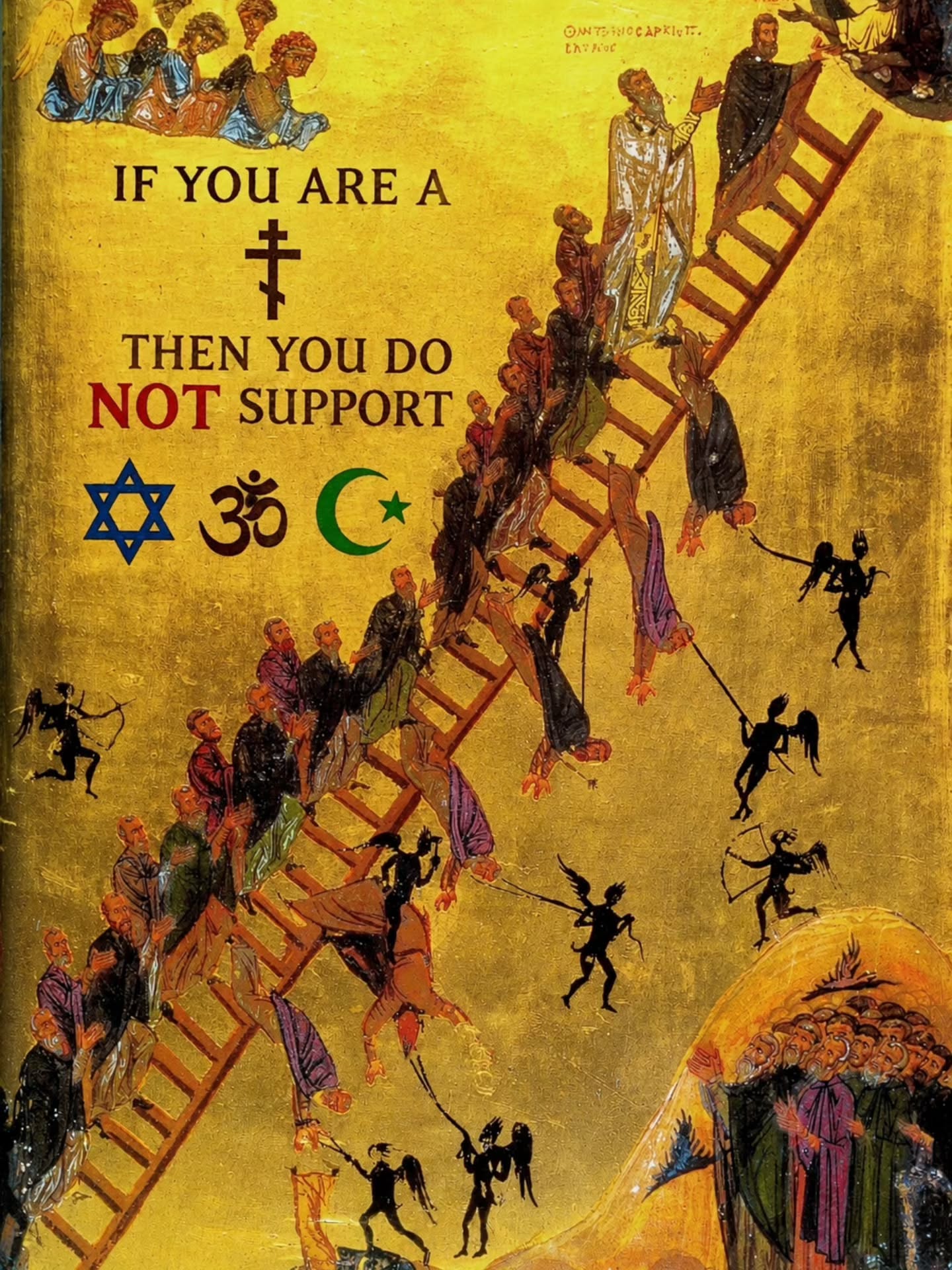
Christ is not one option among many: one Lord, one faith, one truth

Christianity does not present Christ as one option among many, one teacher among many, or one truth among many. Jesus Christ is the Way, the Truth, and the Life. There is one Lord, one faith, one baptism (Ephesians 4:5). Truth does not change with culture, feelings, or the spirit of the age. Scripture warns that behind idolatry and false worship there can be spiritual deception: "The things which the Gentiles sacrifice they sacrifice to demons…

Christianity does not present Christ as one option among many, one teacher among many, or one truth among many. Jesus Christ is the Way, the Truth, and the Life.

There is one Lord, one faith, one baptism (Ephesians 4:5). Truth does not change with culture, feelings, or the spirit of the age.

Scripture warns that behind idolatry and false worship there can be spiritual deception: "The things which the Gentiles sacrifice they sacrifice to demons and not to God" (1 Corinthians 10:20). That is why Christians are called to discernment: not every spiritual experience, teaching, or religion comes from God.

The apostles did not die proclaiming that every path leads to God. They proclaimed the crucified and risen Christ: "Nor is there salvation in any other, for there is no other name under heaven given among men by which we must be saved" (Acts 4:12).

Christ died. Christ conquered death. Christ is risen and alive forevermore. One Christ. One Gospel. One Faith. One Truth.

If you enjoy the content, feel free to follow and join the community. May Christ guide and strengthen you always.

  • Christ is the Way, the Truth, and the Life, not one option among many
  • One Lord, one faith, one baptism (Ephesians 4:5); truth does not change with culture or feelings
  • Behind idolatry there can be spiritual deception (1 Corinthians 10:20), so Christians need discernment
  • The apostles proclaimed salvation in Christ alone (Acts 4:12), not that every path leads to God
15 opinions in the discussion What's the problem with Judaism? It's the old testament anyway. Read the discussion

Father James: In Orthodoxy, holiness itself is evangelism

The post addresses how evangelism is understood in the Orthodox Church, using a clip of Father James, a former Young Life director who became an Orthodox priest. Father James compares evangelism models from his two contexts and says the power of evangelism in the Orthodox Church is holiness. A sanctified person who does their prayers, loves God, and loves people, and who lives their whole life in Christ, whether a bank teller, priest, mechanic, or housewife, is evangelism. One whole, complete person living in Christ is enough.

Key moments

  1. The speaker, a former Young Life director now an Orthodox priest, is asked how evangelism differs between the two contexts.
  2. He says the power of evangelism in the Orthodox Church is holiness: a person who does their prayers and loves God and loves people.
  3. Evangelism in the Orthodox Church is a sanctified person living their life, whether a bank teller, priest, mechanic, or housewife; one whole, complete person living in Christ is evangelism.
15 opinions in the discussion But is that really enough? People won't grasp and accept the gospel just from seeing a holy Christian. Read the discussion

Metropolitan Saba: seek out those absent from the church

Metropolitan Saba says: "We have an opportunity to search for those who have been absent from the church lest they fall away forever, seeking them out for the sake of their salvation."

  • Search for those absent from the church before they fall away forever
  • Seek them out for the sake of their salvation
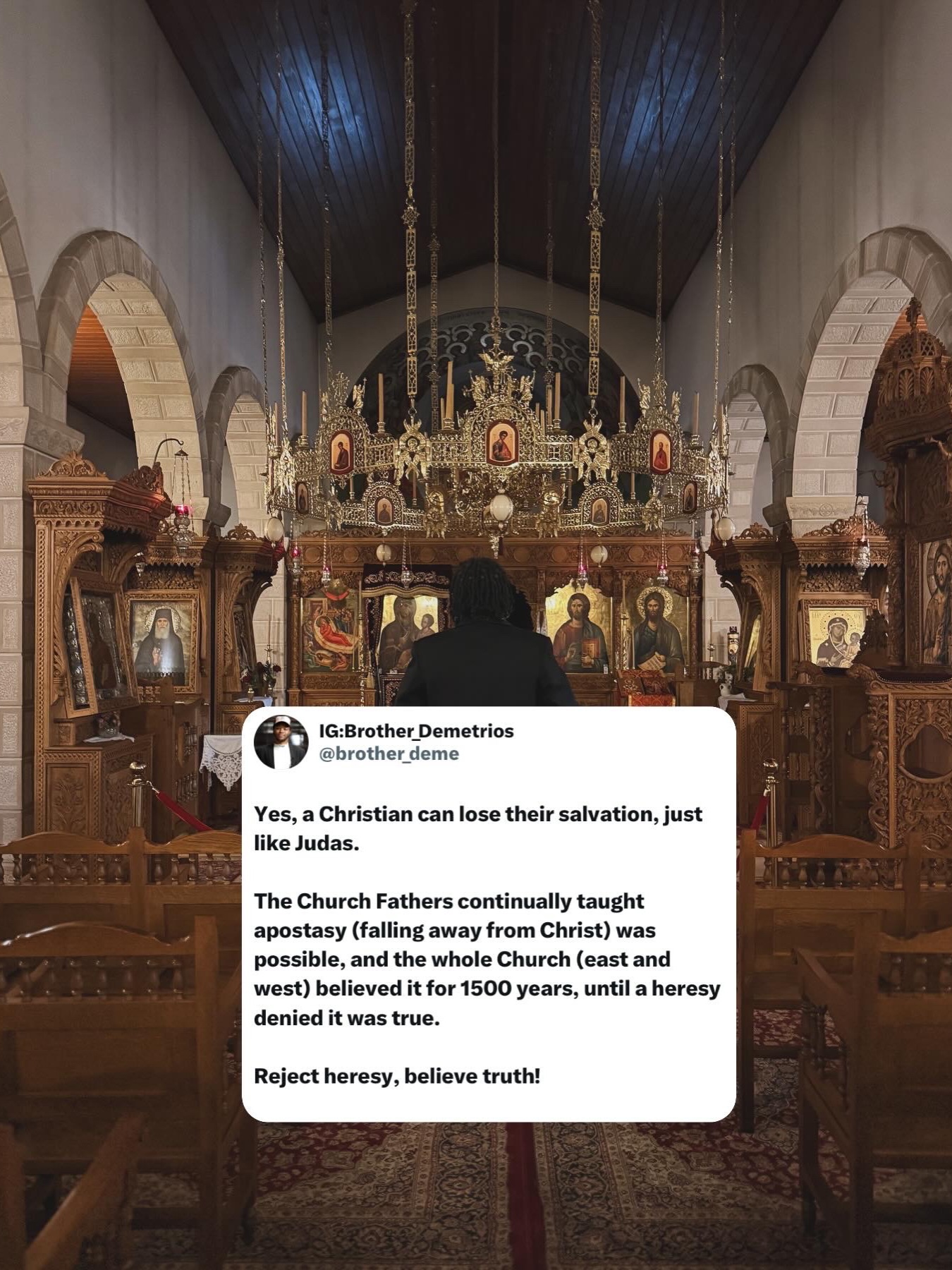
6 opinions in the discussion "Let anyone who thinks that he stands take heed lest he fall." 1 Corinthians 10:12 Read the discussion
Disgruntled Docs with TimothyNegrete Instagram discussion

Luther Added 'Faith Alone' to Romans 3:28

The speaker argues that the Protestant Reformation changed Scripture in two ways: by removing books from the Bible and by adding words to the biblical text. The key example given is Romans 3:28, where Martin Luther added the phrase 'faith alone' to his German translation, even though the phrase does not appear in the Greek text of Paul's letter. The speaker points out that in the Greek New Testament, the phrase 'faith alone' appears only once,…

The speaker argues that the Protestant Reformation changed Scripture in two ways: by removing books from the Bible and by adding words to the biblical text. The key example given is Romans 3:28, where Martin Luther added the phrase 'faith alone' to his German translation, even though the phrase does not appear in the Greek text of Paul's letter.

The speaker points out that in the Greek New Testament, the phrase 'faith alone' appears only once, in the Epistle of James, where it says the opposite of what Luther's addition implies: that a person is not saved by faith alone. From this the speaker draws a conclusion: if salvation by faith alone were a biblical teaching, Luther would not have needed to alter the text of Romans in order to prove it.

The change, in the speaker's view, shows that the doctrine required an adjustment of Scripture rather than support from it. The video closes with a call to return to the apostolic faith and a claim about who determines the canon of Scripture. The speaker argues that the canon was not settled by one man, such as Luther, but belongs to the reception of the entire Church.

The hashtags attached to the post indicate the intended audience: Christians generally, with particular reference to Catholicism and Orthodox Christianity. The argument as presented rests on the textual point about Romans 3:28 and the single occurrence of 'faith alone' in James, and it moves from that textual claim to the broader conclusion about Church authority over the canon.

Key moments

  1. Protestants removed books from the Bible and also added words to Scripture.
  2. Luther added the words 'faith alone' to Romans 3:28.
  3. In the Greek, 'faith alone' appears only in James, which says we are not saved by faith alone.
  4. If we are saved by faith alone, Luther would not have had to change the text to prove it.
  5. We must return to the apostolic faith and not let one man determine the canon, but the reception of the entire Church.
9 opinions in the discussion Revelation 22:18-19: "warn everyone who hears the words of the prophecy of this scroll: If anyone adds anything to them, God will add to that person the plagues described in this scroll. 19… Read the discussion

Why 'Scripture Alone' Falls Apart Without the Early Church

A speaker answers a commenter who asks why the early church should be treated as an infallible authority when its members were ordinary people filled with the same Holy Spirit. He responds that Christ promised to lead and guide his church, and that in the first century that church was the Orthodox Catholic Church, which he calls a historically undeniable fact. He then traces the sequence of schisms: the West split from the Orthodox Church a…

A speaker answers a commenter who asks why the early church should be treated as an infallible authority when its members were ordinary people filled with the same Holy Spirit. He responds that Christ promised to lead and guide his church, and that in the first century that church was the Orthodox Catholic Church, which he calls a historically undeniable fact.

He then traces the sequence of schisms: the West split from the Orthodox Church a thousand years after the church's establishment, Protestants split from the Catholics 500 years later, and another split 200 to 300 years after that produced non-denominational and Baptist type churches. Anyone in those groups, he argues, stands outside the body to whom the promise was made, so they can make correct inferences from Scripture but never reach certitude unless they rejoin the Orthodox Church.

He cites John 17, the high priestly prayer where Jesus prays that they may be one, and Acts 2, verses 42 through 46, as the fulfillment of that unity. He adds that a Protestant may hold correct teachings, such as monarchical Trinitarianism, but has no way to ground them. If such a person appeals to the early church while rejecting other early teachings, he is picking and choosing.

The discussion turns on whether authority rests in Scripture read privately or in the church that Christ promised to guide, and what it would take for someone outside the Orthodox Church to have certainty in doctrine.

Key moments

  1. 0:00 A commenter asks why the early church should be an infallible authority when its members were people like us, filled with the same Holy Spirit.
  2. 1:07 The speaker answers that Christ promised to lead and guide his church, and in the first century that church was the Orthodox Catholic Church, which he calls a historically undeniable fact.
  3. 1:07 He lists the schisms: the West split from the Orthodox Church 1000 years after the church's founding, Protestants split from Catholics 500 years later, and 200 to 300 years after that non-denominational and Baptist type churches emerged.
  4. 1:42 Anyone in those schismed groups is not part of the body the promise was made to, so they can make correct inferences from Scripture but never have certitude unless they rejoin the Orthodox Church.
  5. 2:17 He cites John 17, the high priestly prayer where Jesus prays that they may be one, and Acts 2 verses 42 through 46 as the fulfillment of that unity.
  6. 2:47 A Protestant may hold correct teachings like monarchical Trinitarianism, but cannot ground them, and appealing to the early church while rejecting other teachings is picking and choosing.
7 opinions in the discussion Well explained, but I don't get it. If you agree it's the "Orthodox" Catholic Church, why leave out the Orthodox part and be vague about whether you mean the Universal Catholic Church? Read the discussion

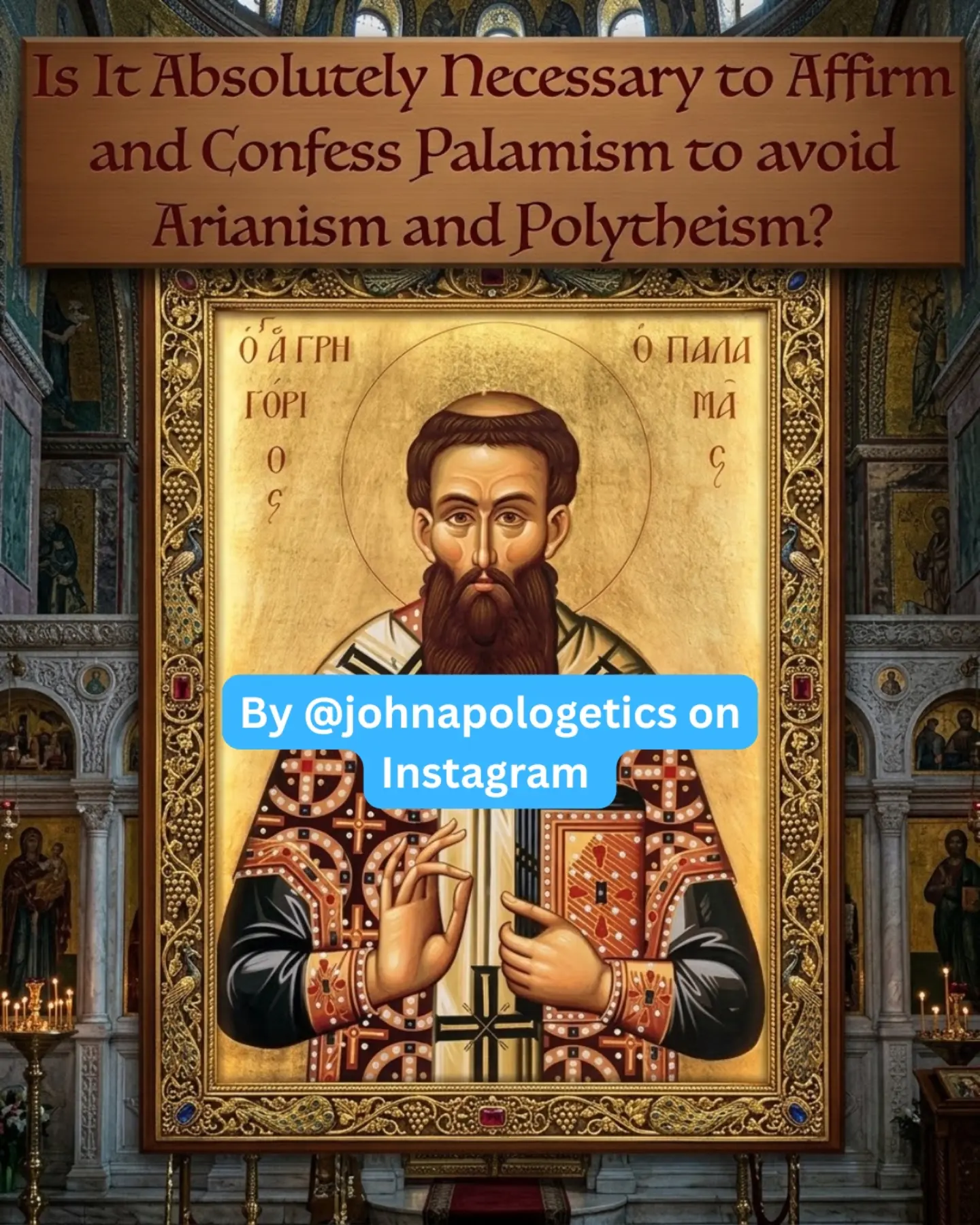
All Roads Lead To Constantinople: Thomism, Aquinas and the Church Fathers

The post consists of a short caption, 'All Roads Lead To Constantinople', followed by hashtags naming Thomism, Thomas Aquinas, the Church Fathers and Orthodoxy. No further text, argument or source material accompanies the caption, so the post itself offers only the slogan and the topics it points to. The phrase suggests a line of thought connecting Western scholastic theology, represented by Thomas Aquinas and the Thomist tradition, with the…

The post consists of a short caption, 'All Roads Lead To Constantinople', followed by hashtags naming Thomism, Thomas Aquinas, the Church Fathers and Orthodoxy. No further text, argument or source material accompanies the caption, so the post itself offers only the slogan and the topics it points to. The phrase suggests a line of thought connecting Western scholastic theology, represented by Thomas Aquinas and the Thomist tradition, with the Orthodox East and the Church Fathers, with Constantinople standing as the focal point.

Because the original post contains no body text, no claims can be attributed to its author beyond the caption and the choice of tags. Readers opening the thread will find the four tagged subjects: the theological system associated with Aquinas, the saint himself, the patristic writers of the early Church, and Orthodox Christianity.

The discussion that the tags imply would concern how these areas relate to one another, but the post does not state any position on that question. Anyone interested in the relationship between Latin scholasticism and Orthodox tradition, or in how the Fathers are read on both sides, will find here a prompt built around a single phrase and four topics rather than a developed argument.

  • The caption reads 'All Roads Lead To Constantinople'.
  • Hashtags name Thomism, Thomas Aquinas, the Church Fathers and Orthodoxy.
  • The post contains no body text beyond the caption and tags.
  • Constantinople is presented as the point toward which the tagged topics lead.
  • No argument or position is stated in the original post.
14 opinions in the discussion theres a good debate/discussion on youtube between a scholar and a dominican priest thats really pretty good. palamism "wins" in that discussion imo but its worth the watch and will dispel… Read the discussion
George Instagram discussion

Can an Orthodox Christian marry a non-Orthodox? A father's answer

A man whose son's mother is not religious and whom he has not married in the church answers whether an Orthodox Christian can marry a non-Orthodox person. The church, he says, can marry an Orthodox Christian to another Christian baptized in the name of the Father, the Son, and the Holy Spirit, but not to someone who is not baptized. A couple living together without a church marriage commits a sin that bars them from communion. He recalls that…

A man whose son's mother is not religious and whom he has not married in the church answers whether an Orthodox Christian can marry a non-Orthodox person. The church, he says, can marry an Orthodox Christian to another Christian baptized in the name of the Father, the Son, and the Holy Spirit, but not to someone who is not baptized.

A couple living together without a church marriage commits a sin that bars them from communion. He recalls that his village priest, who has known him since childhood, gave him communion once and then told him not to come again until he is married. That hurt, he says, but it was correct. He stopped receiving communion until he found a spiritual father and confessed everything in his first confession.

That spiritual father knows his partner and her heart, and gave him a blessing to receive communion again while he works through the situation. He says he will not force his partner to be baptized, because faith cannot be forced; he wants to show her by how he lives as his life changes. He warns listeners against looking for a priest who says yes, and urges them instead to be honest with the priest who knows them and accept what he says.

He cites Saint Peter's words that people can be won without a word, just by how we live. He closes by asking whether anyone is in a relationship like his.

Key moments

  1. The church can marry an Orthodox Christian to another Christian baptized in the name of the Father, the Son, and the Holy Spirit, but not to someone who is not baptized.
  2. A couple living together without a church marriage cannot receive communion, because it is a sin.
  3. His village priest, who has known him since childhood, gave him communion once and then told him not to come again until he is married.
  4. He stopped receiving communion until he found a spiritual father and confessed everything in his first confession.
  5. He will not force his partner to be baptized, because faith cannot be forced; he wants to show her by how he lives as his life changes.
  6. His spiritual father, who knows her and her heart, gave him a blessing to receive communion again while he works through the situation.
  7. He warns listeners not to look for a priest who says yes, but to be honest with the priest who knows them and accept what he says.
  8. He cites Saint Peter: people can be won without a word, just by how we live, and asks if anyone is in a relationship like his.
38 opinions in the discussion Married a Catholic Christian, got married in an Orthodox Church and baptized all my kids in an Orthodox Church. It can be done. Read the discussion

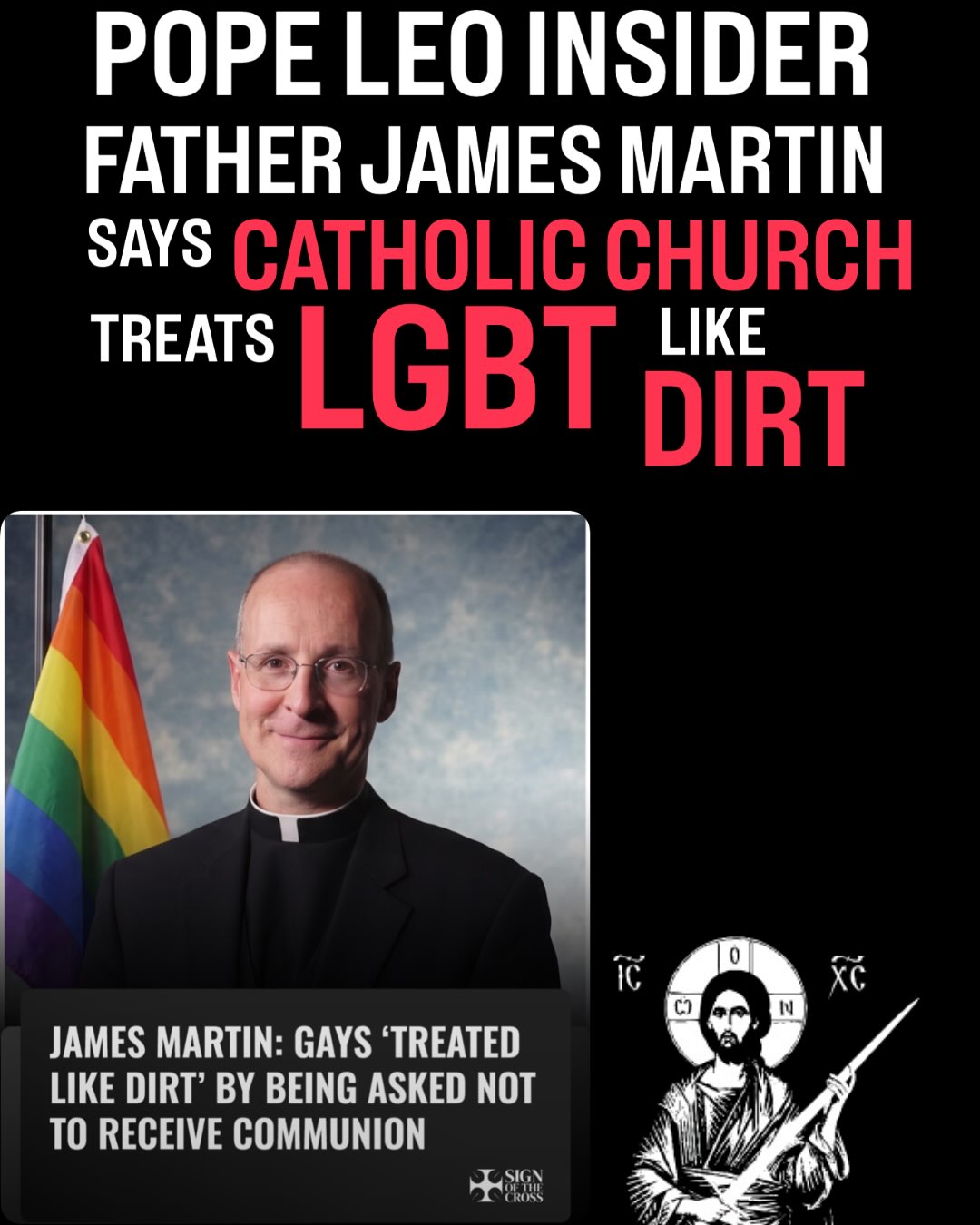
Fr James Martin says the Catholic Church treats LGBT people like dirt over the Eucharist

Fr James Martin says the Catholic Church treats LGBT people like dirt for not giving them the Eucharist.

  • Fr James Martin criticizes the Catholic Church for denying the Eucharist to LGBT people
28 opinions in the discussion Bro, if a priest knows you are in a state of mortal sin, they are required to withhold the Eucharist. Are they not? Read the discussion

How Three Can Be One: The Trinity Without Contradiction

A questioner asks how the Trinity, three co-equal and co-eternal persons, can really be one God. The answer states that the Trinity only sounds contradictory when it is defined badly. The Church does not say God is one person and three persons, or one God and three Gods. It affirms one divine essence existing in three hypostases. The persons are distinguished by their relations of origin. The Father is the one Arche, the source and cause within…

A questioner asks how the Trinity, three co-equal and co-eternal persons, can really be one God. The answer states that the Trinity only sounds contradictory when it is defined badly. The Church does not say God is one person and three persons, or one God and three Gods.

It affirms one divine essence existing in three hypostases. The persons are distinguished by their relations of origin. The Father is the one Arche, the source and cause within the Godhead. The Son is eternally begotten of the Father, and the Holy Spirit eternally proceeds from the Father.

The three are not divided in will, essence, power, or energy, so the distinction between them is hypostatic, not essential. St. Gregory the Theologian is quoted: the three have one nature, God, and the union is the Father, from whom and to whom the order of the persons runs its course. The discussion turns on how unity and distinction are held together.

Monarchy gives the unity, and relation gives the distinction. This holds without collapsing the three into one person or splitting God into three separate beings. The reply stays within classical trinitarian terminology: essence, hypostasis, begetting, procession, and monarchy of the Father.

The questioner's puzzle dissolves once the terms are used precisely, since the alleged contradiction comes from mixing categories of person and essence. The answer closes on the same point it opened with: the Church's formulation avoids both errors, the one that merges the persons and the one that divides the Godhead.

Key moments

  1. A questioner asks how three co-equal, co-eternal persons, Father, Son, and Holy Spirit, can be one God.
  2. The Trinity only sounds contradictory if defined badly; the Church affirms one divine essence in three hypostases, not one person and three persons or one God and three Gods.
  3. The Father is the one Arche, the source and cause within the Godhead.
  4. The Son is eternally begotten of the Father, and the Holy Spirit eternally proceeds from the Father; the persons are distinguished by relations of origin.
  5. The persons are not divided in will, essence, power, or energy; the distinction is hypostatic, not essential.
  6. St. Gregory the Theologian says the three have one nature, God, and the union is the Father, from whom and to whom the order of the persons runs its course.
  7. Monarchy gives the unity and relation gives the distinction, without collapsing the three into one person or splitting God into three.
10 opinions in the discussion The Nicene Creed lays it out too. I believe in ONE God the Father Almighty. The son is begotten and the spirit proceeds. So the son and the spirit share the same divine characteristics.… Read the discussion
Kyle YouTube discussion

Stop Blaming Modern Women: A Call to Men to Watch Their Own Heart

Stop Blaming Modern Women: A Call to Men to Watch Their Own Heart 26:29

A speaker addressing a mostly male audience tells men to stop blaming modern women for failed dating and to look at their own sins instead. He warns that constantly consuming content about how bad modern women are only feeds resentment, which is what the devil wants, and that the line between good and evil runs through each person's heart. Marriage, he says, is about salvation, not comfort, and a man must become what he seeks: a woman of…

A speaker addressing a mostly male audience tells men to stop blaming modern women for failed dating and to look at their own sins instead. He warns that constantly consuming content about how bad modern women are only feeds resentment, which is what the devil wants, and that the line between good and evil runs through each person's heart.

Marriage, he says, is about salvation, not comfort, and a man must become what he seeks: a woman of Proverbs 31 will have high standards, so a man must meet them himself. He rejects the phrase 'happy wife, happy life' because it makes the wife's happiness the highest goal instead of holiness. True headship, he argues, follows Christ's example: the King of Kings washed his disciples' feet and gave himself for his bride, the Church, so a husband serves rather than demands service.

He urges men to talk to real women instead of relying on rage-bait podcasts and TikTok clips, noting that many women are also frustrated with modern dating and want marriage, children, and a faithful husband. He looks for a virtuous woman in church communities and says to discern character over appearance, since virtue, not beauty, bears the burdens of marriage.

On 'the ick', he says social media promotes shallow judgments, but some cases reveal real immaturity, insecurity, poor hygiene, or emotional instability that show a man is not ready for marriage. He describes the Proverbs 31 woman as neither radically independent nor the passive, silent wife of some traditional circles: she is strong, wise, industrious, and her husband trusts her judgment.

Using Jane Eyre, he shows that a good woman will not follow a man into sin and will refuse both Rochester's immoral passion and St. John's loveless duty. He closes by urging men to build discipline and prayer now, to trust God's timing if marriage is delayed, and to become the man God wants them to be.

Key moments

  1. 0:02 The speaker tells men to stop blaming women and instead watch their own heart, focus on their sins, and repent daily, since the line between good and evil runs through every human heart.
  2. 2:04 Young men already know society is broken; the question is what they will do about it. Constantly consuming content about bad modern women makes a man more angry and bitter, feeding his passions rather than fighting them, which is exactly what the devil wants.
  3. 3:35 The phrase 'happy wife, happy life' wrongly makes the wife's happiness the highest goal instead of holiness and salvation. Marriage is about salvation, not comfort, and a virtuous woman wants a principled man who will correct and lead her.
  4. 5:38 Using 2 Corinthians on being unequally yoked, he explains that both spouses must pull together spiritually; virtue, not beauty, bears the burdens of marriage.
  5. 7:09 A king is not someone who demands submission but one who takes responsibility for those entrusted to him. Christ, the King of Kings, washed his disciples' feet and sacrificed himself for his bride, the Church, so husbands must love with crucified, selfless love.
  6. 9:43 To understand women, men must actually talk to them in the real world, not through TikTok clips or rage-bait podcasts. Many women are frustrated with modern dating too and want marriage, children, and a faithful husband.
  7. 13:20 He explains 'the ick': while social media promotes shallow judgments, some cases reveal real immaturity, insecurity, poor hygiene, or emotional instability showing a man is not ready for marriage. Women want a man they can respect.
  8. 16:24 The Proverbs 31 woman fits neither modern feminism's radically independent ideal nor the passive, silent wife of some traditional circles. She is strong, wise, industrious, and her husband trusts her judgment, as illustrated by Jane Eyre, who refuses both Rochester's immoral passion and St. John's loveless duty.
12 opinions in the discussion I'm 33 and never married. Connecting with women has been a struggle for me and still is. I quit playing the victim and whining, and instead turned toward Christ. I've learned to focus on… Read the discussion
George Instagram discussion

Horoscopes 'Just for Fun': Why the Church Says No

The video asks whether Christians may read horoscopes, even as entertainment, and answers from Scripture and church history. It cites the Old Testament ban on divination, omens and fortune telling, and a church council from 692 that ruled Christians who visit fortune tellers should abstain from communion for six years. The speaker gives two reasons horoscopes are a problem. First, they place trust in the stars rather than in God: instead of…

The video asks whether Christians may read horoscopes, even as entertainment, and answers from Scripture and church history. It cites the Old Testament ban on divination, omens and fortune telling, and a church council from 692 that ruled Christians who visit fortune tellers should abstain from communion for six years. The speaker gives two reasons horoscopes are a problem. First, they place trust in the stars rather than in God: instead of praying 'Lord, what is your will for me today?', a person checks what Mercury is doing.

Second, they claim a person's character and future are fixed by the day of birth, which contradicts the Christian belief that God made people free. The video says life is a relationship with the one who made the stars, not something decided by them. It adds that reading horoscopes can feel harmless but gradually teaches the heart to look for answers in the wrong place.

The practical advice: those who have read horoscopes should stop, bring the habit to confession, and pray when they want to know about the future instead of seeking it out.

Key moments

  1. The Old Testament forbids divination, reading omens and telling fortunes: 'there shall not be anyone among you who practices divination, reads omens, and tells fortunes.'
  2. In 692 a church council ruled that Christians who go to fortune tellers should stay away from communion for six years.
  3. First problem: horoscopes put trust in the stars instead of in God, so instead of praying 'Lord, what is your will for me today?' a person checks what Mercury is doing.
  4. Second problem: horoscopes claim your character and future are already written by the day you were born.
  5. Christians believe God made us free; life is not decided by the stars but is a relationship with the one who made the stars.
  6. Reading horoscopes can feel harmless but little by little teaches the heart to look for answers in the wrong place.
  7. If you have done it, stop and bring it to confession, and pray instead when you want to know about your future.
4 opinions in the discussion Numerology, astrology, Feng shui, every kind of superstition all share one thing: the belief that something besides God can affect your life. Read the discussion
Holy Resurrection YouTube discussion

St. Theodore and the Fathers on Illness as God's Love

St. Theodore and the Fathers on Illness as God's Love 7:46

The post draws on patristic sources to explain how Orthodox Christians should understand and endure illness. St. Theodore the Student teaches that sickness and sorrow come from God's love, not punishment, and should be met with gratitude and patience, saying "Thy will be done." Murmuring against afflictions leads to blaming others, hostility, hatred, desire for revenge, and spiritual darkness instigated by the devil. God sends illnesses out of…

The post draws on patristic sources to explain how Orthodox Christians should understand and endure illness. St. Theodore the Student teaches that sickness and sorrow come from God's love, not punishment, and should be met with gratitude and patience, saying "Thy will be done." Murmuring against afflictions leads to blaming others, hostility, hatred, desire for revenge, and spiritual darkness instigated by the devil.

God sends illnesses out of love according to our strength, granting patience to make us partakers of Christ's sufferings; whoever has not suffered for Christ will be tormented by conscience in the age to come. The holy fathers advise sanctifying medicine with holy water, not praying too insistently for healing, and relaxing the fast only out of necessity when ill.

St. Barcinius the Great recommended taking medicine with holy water. St. Ephraim the Recluse said the fast may be relaxed by a physician's advice out of necessity, not pleasure, and that patient endurance of illness ranks higher than other ascetic labors, cleansing sins and delivering from passions. If unable to attend church due to illness, one should not go but not complain, be grateful to caregivers, and pray for them; the Lord accepts patience and illness in place of fasting and prayer.

After recovery, it should be regarded as a reprieve to repent and correct life. The sick should not desire death, should thank caregivers, and endure even excessive demands patiently for abundant reward. Those who visit and serve the sick do so out of love, not for reward, comforting them with Scripture and prayer; such service delivers the visitor from pride and lust, and one should not refuse help from fear of illness.

Key moments

  1. 0:12 St. Theodore the student: be meek and patient during illness, endure with gratitude saying "Thy will be done," knowing God directs all for our good.
  2. 0:42 Murmuring against sickness leads to blaming others, hostility, hatred, desire for revenge; the devil leads the soul into darkness and despondency.
  3. 1:44 God sends illnesses out of love according to our strength, granting patience to make us partakers of Christ's sufferings; whoever has not suffered for Christ will be tormented by conscience in the age to come.
  4. 2:47 Holy fathers recommend sanctifying medicine: St. Barcinius the Great advised taking medicine with holy water; do not pray too insistently for healing.
  5. 3:20 St. Ephraim the recluse: when ill, may relax the fast by physician's advice out of necessity, not pleasure; patient endurance of illness ranks higher than other ascetic labors.
  6. 4:21 If unable to attend church due to illness, do not go but do not complain; be grateful to caregivers and pray for them; the Lord accepts patience and illness in place of fasting and prayer.
  7. 5:25 After recovery, regard it as a reprieve to repent and correct life; do not desire death when ill; endure demanding patients patiently for abundant reward.
  8. 6:27 Visit and serve the sick with patience, compassion, kind words, prayer, and divine reading; do not refuse help from fear of illness; such service delivers from demons of pride and lust.
3 opinions in the discussion It has been very fortuitous for me that several of the last videos have been about suffering patiently. All people suffer on a regular basis, and these messages are inspired by the Holy… Read the discussion
r/OrthodoxChristianity Reddit discussion

Interactive map of 217 Orthodox parishes in Great Britain and Ireland

Hello, brothers and sisters! I want to share a project I've been working on, a comprehensive directory of Eastern Orthodox parishes across the United Kingdom and the Republic of Ireland. So far, 217 individual parishes are listed, covering every canonical jurisdiction.

9 opinions in the discussion What a brilliant resource, thanks so much! Honestly this could or even should be its own app. One small problem though: the map legend doesn't say which colour stands for which jurisdiction. Read the discussion
r/OrthodoxChristianity Reddit discussion

Convert attendance dropping off after initial surge

It was encouraging to see the parish so full when I attended, but the numbers now seem to be falling away. I expected a summer dip with vacations and family visits, but now that fall has arrived many of those faces have not returned, at least not regularly. People have been saying for a while that most converts would drift off once Orthodoxy stopped being trendy, and that appears to be happening, which is disappointing. Even here you see…

It was encouraging to see the parish so full when I attended, but the numbers now seem to be falling away. I expected a summer dip with vacations and family visits, but now that fall has arrived many of those faces have not returned, at least not regularly. People have been saying for a while that most converts would drift off once Orthodoxy stopped being trendy, and that appears to be happening, which is disappointing.

Even here you see commenters who scoff or act surprised at basic Orthodox teaching, such as listening to your bishop.

Is this only my parish? Am I misreading the situation? All thoughts are appreciated. Thanks everyone.

  • Parish attendance surged with converts but has declined since summer
  • Expected seasonal dip has not reversed in fall
  • Concern that converts leave when Orthodoxy is no longer trendy
  • Observation of surprise at basic teachings like episcopal obedience
  • Question whether this is a local or wider phenomenon
21 opinions in the discussion We have 129 catechumens and around 90 inquirers at my parish. Even in summer most folks end up standing outside just to hear the liturgy on the speakers, and with two priests plus a deacon… Read the discussion

Orthodoxy as fullness of Christian faith, not added structure

Bryce recounts that many Orthodox people tell him he needs Orthodoxy. He notes that before a suicidal crisis he was advised that religious structure would bring safety, yet such structure outside Christianity does not satisfy. He says he loves tradition, sacraments, and similar things. He explains that Orthodoxy is not about adding rules or religious structure but about receiving the whole Christian faith: doctrine, worship, sacraments,…

Bryce recounts that many Orthodox people tell him he needs Orthodoxy. He notes that before a suicidal crisis he was advised that religious structure would bring safety, yet such structure outside Christianity does not satisfy. He says he loves tradition, sacraments, and similar things. He explains that Orthodoxy is not about adding rules or religious structure but about receiving the whole Christian faith: doctrine, worship, sacraments, spiritual life, and tradition.

He argues that loving tradition and sacraments but not belonging to the church that preserves them falls apart. He says the Eucharist, baptism, and apostolic succession belong to a certain understanding of the church and require existing within the life of that church. He concludes that people urge him toward holy Orthodoxy not for more religion but because without it he lacks the fullness of the Christian faith.

Key moments

  1. Bryce recounts that many Orthodox people tell him he needs Orthodoxy.
  2. He says that before a suicidal period people told him religious structure would make him safe.
  3. He observes that religious structure outside Christianity does not give satisfaction, significance, or security.
  4. He states that he loves tradition, sacraments, and similar things.
  5. He explains that Orthodoxy is not about adding rules or religious structure but about receiving the Christian faith as a whole, including doctrine, worship, sacraments, spiritual life, and tradition.
  6. He argues that loving tradition and sacraments but not belonging to the church that preserves them falls apart.
  7. He says the Eucharist, baptism, and apostolic succession belong to a certain understanding of the church and require existing within the life of that church.
  8. He concludes that people urge him toward holy Orthodoxy not for more religion but because without it he lacks the fullness of the Christian faith.
26 opinions in the discussion When will the Orthodox community online realize that if you keep harassing someone to join the Orthodox Church and if you keep calling them a heretic your pushing them away from the Church… Read the discussion
Kyle YouTube discussion

Stop Porn Now for Your Future Wife: Orthodox Men on Marriage Readiness

Stop Porn Now for Your Future Wife: Orthodox Men on Marriage Readiness 11:37

Two speakers discuss the wave of young men coming into the Orthodox Church, many of whom carry pornography addiction from growing up with little guidance. They describe how porn rewires the brain and becomes a burden men bring with them into church life. The speakers then address a pattern: men who quit porn often fall into a new set of sins, becoming prideful and judgmental toward women, sometimes shaped by red pill content about body counts,…

Two speakers discuss the wave of young men coming into the Orthodox Church, many of whom carry pornography addiction from growing up with little guidance. They describe how porn rewires the brain and becomes a burden men bring with them into church life. The speakers then address a pattern: men who quit porn often fall into a new set of sins, becoming prideful and judgmental toward women, sometimes shaped by red pill content about body counts, and growing bitter when they cannot find a partner.

They warn that blaming all women and putting them in one box signals something wrong, and that a woman with anything in her past can also repent. One speaker shares that he watched porn nearly every day from sixth or seventh grade until his freshman year of college, and notes that while you are forgiven when you repent, the damage of the sin remains.

They urge men to stop pornography now for the love of a future wife, saying the idea of stopping after marriage is terrible and that neuroplasticity makes relapse easier the longer you watched it. The discussion turns to repentance and humility: Orthodox saints focus on the evil within themselves, and you will be judged by the standard you judge others.

Men coming into the church flee evil in the world and then realize they are the problem, since the only thing they can control is themselves, and watching their own sins is a full-time job. The speakers close with practical advice on preparing for marriage: ask honestly whether the person you want would want you in your current state, and follow Father Josiah Trenham's advice to make a list of qualities you want in a spouse and turn it inward, because you attract what you are.

Marriage is described as a deep co-struggle where sins against one's wife are most frequent, and a man's sins or love vibrate outward into his family.

Key moments

  1. 0:00 Many young men are coming into the church, raised with little guidance and exposed to pornography, which rewires the brain and becomes a burden they carry.
  2. 1:02 Men who overcome porn can move from sins of the left hand to sins of the right, becoming prideful and judgmental toward women, sometimes influenced by red pill content about body counts, and growing bitter when they cannot find a partner.
  3. 2:05 The moment you blame all women and put them in one box, something is wrong; a woman with anything in her past can also repent, and a man who repents can be a good king worthy of a queen.
  4. 2:35 Stop pornography now for the love of your future wife; thinking you can stop after marriage is a terrible idea, and neuroplasticity makes relapse easier the longer you watched it.
  5. 3:37 One speaker watched porn nearly every day from sixth or seventh grade until his freshman year of college; you are forgiven when you repent, but the damage of the sin remains.
  6. 4:09 Orthodox saints focus on the evil within themselves; do not hold a repentant person's sins against them, because you will be judged by the standard you judge others.
  7. 5:43 You come into the church fleeing evil in the world and realize you are the problem, since the only thing you can control is yourself; focus on your own sins, which is a full-time job.
  8. 8:53 Ask honestly whether the person you want would want you in your current state; Father Josiah Trenham advises making a list of qualities you want in a spouse and turning it inward, because you attract what you are.
18 opinions in the discussion Maybe I should have my wife make a video about the failures of women in society. Since the supposed men who need to be leaders dance around the issue and shift the burden solely onto a… Read the discussion
George Instagram discussion

Hundreds of thousands queue in Romania to venerate Saint Paraskevi's relics

In Romania, hundreds of thousands of people wait for hours to venerate the relics of Saint Paraskevi on her feast day. She is known as Petka in Serbia and Bulgaria and as Sfânta Vineri in Romania. Born near Constantinople into a wealthy family, she heard Christ's words about self-denial as a young girl and began giving her fine clothes to the poor, upsetting her family. She left everything to live in prayer in the desert near the Jordan River…

In Romania, hundreds of thousands of people wait for hours to venerate the relics of Saint Paraskevi on her feast day. She is known as Petka in Serbia and Bulgaria and as Sfânta Vineri in Romania. Born near Constantinople into a wealthy family, she heard Christ's words about self-denial as a young girl and began giving her fine clothes to the poor, upsetting her family.

She left everything to live in prayer in the desert near the Jordan River until an angel directed her to return home. She lived quietly for two more years before dying at age 27. Her body was discovered incorrupt many years later. Her relics now rest in Iași, Romania, where pilgrims from many countries come to pray. She never sought recognition but simply followed Christ.

Key moments

  1. Hundreds of thousands in Romania wait hours to kiss Saint Paraskevi's relics on her feast day.
  2. She is called Petka in Serbia and Bulgaria, and Sfânta Vineri in Romania.
  3. Born near Constantinople to a wealthy family, she heard Jesus's words about self-denial as a young girl.
  4. She gave her fine clothes to the poor, angering her family, then left to live in the desert near the Jordan River.
  5. An angel told her to return home; she lived quietly for two more years and died at age 27.
  6. Her body was found incorrupt many years later.
  7. Her relics are now in Iași, Romania, drawing pilgrims from everywhere.
  8. She never sought fame but simply followed Christ, and God made her known worldwide.
16 opinions in the discussion It is Parascheva (Paraskeva) in Romanian, Sfânta Vineri is only a popular name, not the Saint's name. 🙏 Read the discussion

Priest's harsh confession demands called violence against the person

Priest's harsh confession demands called violence against the person 12:45

A layperson describes a confession where the rector, serving alone and visibly irritated, angrily refused a request to shorten the confession because of a long line. The priest demanded a detailed list of sins and criticized the layperson for missing the Saturday all-night vigil. The layperson explains that both they and their wife are full-time students undergoing expensive psychotherapy for serious mental health conditions, making Saturday…

A layperson describes a confession where the rector, serving alone and visibly irritated, angrily refused a request to shorten the confession because of a long line. The priest demanded a detailed list of sins and criticized the layperson for missing the Saturday all-night vigil. The layperson explains that both they and their wife are full-time students undergoing expensive psychotherapy for serious mental health conditions, making Saturday evening their only time to rest. The encounter left the wife in tears and both shaken before communion.

The responding priest calls the incident real violence against the human person. He argues that Christ invites the sick to communion, not the sinless, and that priests who impose formal barriers, mandatory canons, and vigil attendance act like border guards rather than physicians. He states that the only sin barring communion is unrepented enmity, citing the pre-communion prayer and Christ's command to reconcile before offering one's gift.

He contrasts this with the practice for clergy: priests in the Moscow diocese are required to confess only twice yearly, and their confession is never tied to each Eucharist they serve, unlike the heavy burdens they lay on the laity.

Key moments

  1. 0:00 The layperson recounts being forced into infrequent communion in 2020-21 due to excessive preparation requirements, later finding priests who explained the rules were not mandatory.
  2. 1:04 At today's liturgy, only the rector was present to serve and hear confessions simultaneously; he appeared irritable and angrily rejected the layperson's offer to skip a detailed sin list to save time.
  3. 1:34 The priest insisted on a formal confession, leading the layperson to list made-up sins, and criticized their absence from the Saturday all-night vigil.
  4. 2:05 The layperson explains they and their wife are in psychotherapy for a mental disorder and a personality disorder, are full-time students working to afford therapy costing far more than 500 rubles per session, and need Saturday evening to rest.
  5. 3:07 The wife left the church in tears, already in a spiritual crisis unable to accept God's love; both eventually communed but found the sermon on God's love and joy unbearable after the encounter.
  6. 4:43 The responding priest calls the incident real violence against the human person, emphasizing that the faithful come to God at communion, not to a priest acting as a controller.
  7. 5:45 The priest argues that treating confession as a checkpoint requiring sinlessness before communion contradicts Christ's words that the sick need a physician, and cites 1 John on sins leading to death versus the daily Christian state.
  8. 11:29 The priest notes that priests in the Moscow diocese are required to confess only twice yearly, their confession never tied to each Eucharist they serve, unlike the heavy burdens they lay on the laity.
11 opinions in the discussion So, Father Alexey! I don't have these problems anymore. I've been going to the same church for a long time. Our wise rector allowed me not to confess before communion if I haven't fallen… Read the discussion