WeOrthodox
EN UA

Orthodox discussions worth reading

Only the posts and videos that started a real conversation, with the most thoughtful opinions.

r/OrthodoxChristianity Reddit discussion

Does it ever bother you how few Orthodox Christians actually are in the world?

I came across recent studies placing Orthodox Christians at roughly ten percent of all Christians worldwide, about three hundred million people. That compares with 1.2 billion Catholics and 638 million Protestants. Growing up in a predominantly Orthodox country, the faith always felt like the default, so seeing how small we actually are on a global scale is startling. It leaves me uneasy, even worried, because we profess to be the original…

I came across recent studies placing Orthodox Christians at roughly ten percent of all Christians worldwide, about three hundred million people. That compares with 1.2 billion Catholics and 638 million Protestants. Growing up in a predominantly Orthodox country, the faith always felt like the default, so seeing how small we actually are on a global scale is startling.

It leaves me uneasy, even worried, because we profess to be the original Church from which the others separated, yet we are the smallest major branch, so small that many Christians probably have never heard of us.

35 opinions in the discussion What gets to me more is that there are far fewer actual Christians than people who just call themselves that. Take Serbia: churches sit nearly empty most of the time, yet on paper over 95%… Read the discussion
r/OrthodoxChristianity Reddit discussion

Hierarchs approve sign language lexicon and continue work on common catechism

The hierarchs have approved a sign language lexicon and are continuing work on a common catechism, according to the Orthodox Observer.

  • Hierarchs approved a sign language lexicon
  • Work continues on a common catechism
12 opinions in the discussion Three reasons: 1. Fr. John Romanides and figures like him still have a lot of influence on theology in the English-speaking world, especially under the Greek and Antiochian archdioceses.… Read the discussion

Orthodox response to penal substitutionary atonement

The speaker defines penal substitutionary atonement: penal means penalty for wrongdoing, substitutionary means in the place of, so Jesus receives the penalty in our place for atonement and peace with God. Some Orthodox Christians deny penal substitution, calling it wrong, unbiblical, and a violation of the Trinity, and they offer no biblical argument; they prefer to view Christ's death as an example. The speaker cites Isaiah 53:5 as clear…

The speaker defines penal substitutionary atonement: penal means penalty for wrongdoing, substitutionary means in the place of, so Jesus receives the penalty in our place for atonement and peace with God. Some Orthodox Christians deny penal substitution, calling it wrong, unbiblical, and a violation of the Trinity, and they offer no biblical argument; they prefer to view Christ's death as an example.

The speaker cites Isaiah 53:5 as clear biblical evidence that Christ bore the wrath of God. Orthodoxy does not deny substitution, sacrifice, satisfaction, or language about the wrath of God; the Fathers use all of that language. St. Gregory the Theologian asks to whom the blood was offered and why, and says the Father accepts Christ but neither asked for him nor demanded him.

The Council of Blachernae in 1157 affirmed that Christ offers himself in his humanity, and the Son receives that same sacrifice with the Father and the Holy Spirit. Orthodox writers such as Craig Trulia describe economic atonement as the whole saving work of God in Christ: Christ assumes humanity, enters death, heals corruption, reconciles us to God, and restores what Adam lost.

St. Gregory says Christ came to deliver us and overcome the tyrant; the cross is not exhausted by punishment. Father Daniel Cecil states substitutionary atonement is not heresy but an accurate though not exhaustive expression of orthodoxy.

Key moments

  1. The speaker defines penal substitutionary atonement: penal means penalty for wrongdoing, substitutionary means in the place of, so Jesus receives the penalty in our place for atonement and peace with God.
  2. Some Orthodox Christians deny penal substitution, calling it wrong, unbiblical, and a violation of the Trinity, and they offer no biblical argument; they prefer to view Christ's death as an example.
  3. The speaker cites Isaiah 53:5 as clear biblical evidence that Christ bore the wrath of God.
  4. Orthodoxy does not deny substitution, sacrifice, satisfaction, or language about the wrath of God; the Fathers use all of that language.
  5. St. Gregory the Theologian asks to whom the blood was offered and why, and says the Father accepts Christ but neither asked for him nor demanded him.
  6. The Council of Blachernae in 1157 affirmed that Christ offers himself in his humanity, and the Son receives that same sacrifice with the Father and the Holy Spirit.
  7. Orthodox writers such as Craig Trulia describe economic atonement as the whole saving work of God in Christ: Christ assumes humanity, enters death, heals corruption, reconciles us to God, and restores what Adam lost.
  8. St. Gregory says Christ came to deliver us and overcome the tyrant; the cross is not exhausted by punishment, and Father Daniel Cecil states substitutionary atonement is not heresy but an accurate though not exhaustive expression of orthodoxy.
18 opinions in the discussion Isn't the problem also the language of the Father damning the Son? Read the discussion
George Instagram discussion

Orthodox perspective on tattoos: no canon forbids them, but history and theology counsel caution

The video explains that no Orthodox canon explicitly forbids tattoos, though the Church has historically discouraged them. It cites the Old Testament prohibition against printing marks on the body and Saint Paul's teaching that the body is a temple of the Holy Spirit. The speaker notes two historical practices: Coptic Christians in Egypt have tattooed a small cross on the wrist for centuries to show they belong to Christ during persecution, and…

The video explains that no Orthodox canon explicitly forbids tattoos, though the Church has historically discouraged them. It cites the Old Testament prohibition against printing marks on the body and Saint Paul's teaching that the body is a temple of the Holy Spirit. The speaker notes two historical practices: Coptic Christians in Egypt have tattooed a small cross on the wrist for centuries to show they belong to Christ during persecution, and Orthodox pilgrims to Jerusalem received small cross tattoos to remember their pilgrimage.

The speaker shares his own experience: he got his tattoos while far from Christ, likes them, but would not get them again and has confessed them. He advises his children to think carefully and speak with a priest before getting permanent marks. The video concludes that tattoos do not prevent baptism, confession, or communion.

Key moments

  1. No Orthodox canon forbids tattoos
  2. The Church historically discouraged tattoos
  3. Old Testament prohibition against printing marks on the body
  4. Saint Paul teaches the body is a temple of the Holy Spirit
  5. Coptic Christians in Egypt tattooed a small cross on the wrist for centuries to show belonging to Christ during persecution
  6. Orthodox pilgrims to Jerusalem received small cross tattoos to remember their pilgrimage
  7. The speaker got tattoos while far from Christ, likes them but would not get them again, and has confessed them
  8. Tattoos do not prevent baptism, confession, or communion
24 opinions in the discussion I think it depends on what we are tattooing these days. My priest LOVES Orthodox tattoos and there is even a tattooer in my church. I plan to have him do an Orthodox tattoo on me because I… Read the discussion
P Paul Kingsnorth Substack discussion

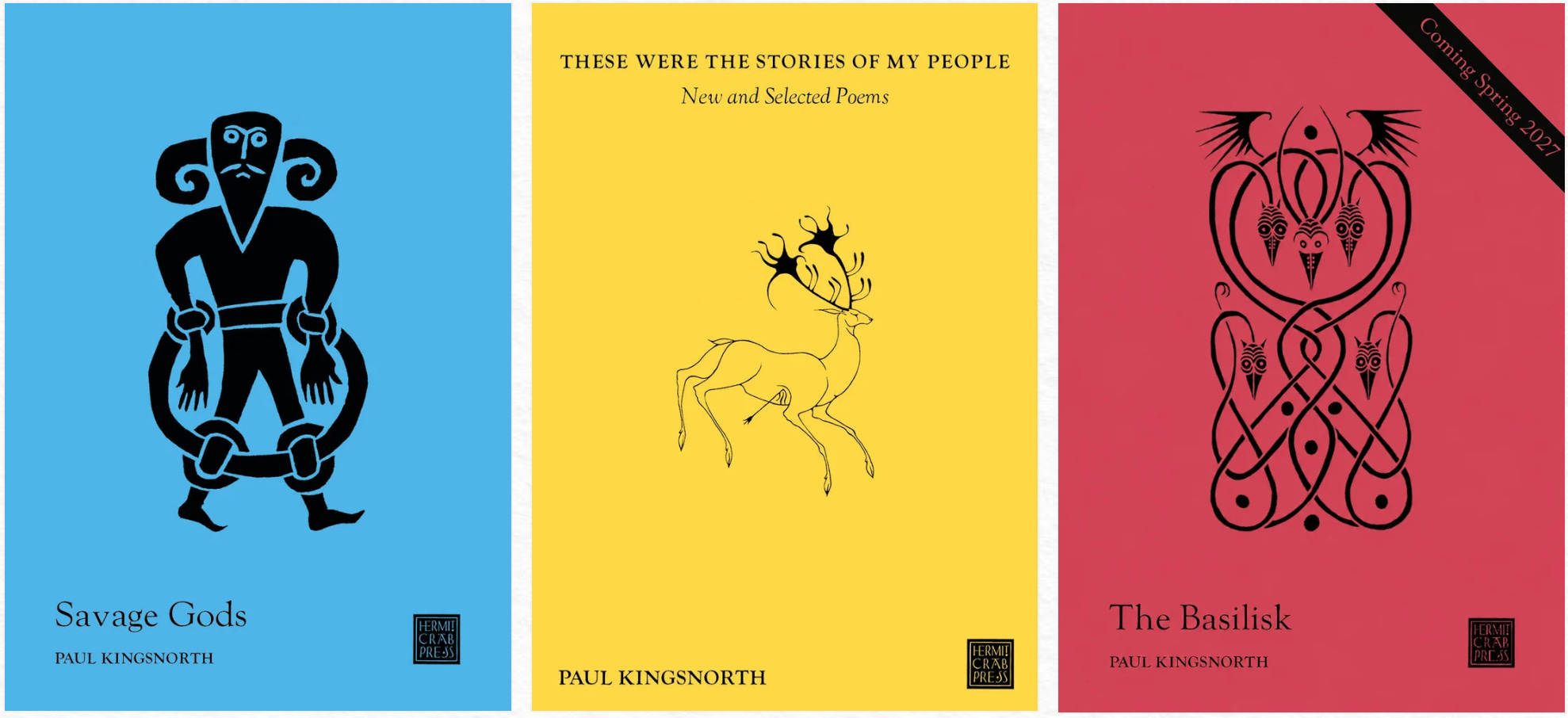
Launching Hermit Crab Press as a refuge from AI-generated words

Sometimes in life, there are moments when you step outside yourself for a second or two and look in. It's a strange thing that seems to happen unbidden. You see or hear yourself as a stranger might; then everything snaps back as if nothing happened. This happened to me for a moment last Saturday. I was in Dublin, giving a talk about AI and the Machine to an audience of young people. Suddenly, while I was talking, it was as if I was listening…

Sometimes in life, there are moments when you step outside yourself for a second or two and look in. It's a strange thing that seems to happen unbidden. You see or hear yourself as a stranger might; then everything snaps back as if nothing happened.

This happened to me for a moment last Saturday. I was in Dublin, giving a talk about AI and the Machine to an audience of young people. Suddenly, while I was talking, it was as if I was listening like an objective observer to the strange stories coming out of my mouth. Stories of people marrying chatbots, of corporate executives who believe they are creating god-like beings, of people who want to upload their minds into digital substrates.

Stories of the Pope gathering with these sci-fi people to talk about God and the soul and digital technology inside the marble halls of the Vatican.

These are strange times, disturbing at some very primeval level. Sometimes it's like being stuck inside a twentieth-century pulp sci-fi novel. I've long wondered whether the Masters of the Universe in Silicon Valley took inspiration from those novels, either consciously or otherwise.

I suppose the AIs have been trained on them too, which gives rise to an intriguing thought: are these machines acting out the plots of those novels, by accident or design? If so, which ones are they reading?

Those machines will be writing books soon enough, which leaves those of us who love words in an awkward position. Our relationship with words might have its ups and downs, but it's built on love. I have long loved books, and that love, which began as soon as I could read, later became a love of writing.

But now I find myself in a world flooded with words, more and more of which are literally inhuman. I'm getting sick of the things which once opened the world up to me. What am I to do about that?

Today I have one small answer: I'm launching my own publishing house. Welcome to Hermit Crab Press.

For a long time, my wife and I, who share the same sensibility on these matters, have been talking about building a little island of the actual in the midst of a virtual sea. Myself, I have wanted more and more to retreat from the internet - including from this page, if I'm honest - and to return to the love of writing I used to have.

Writing in pen or pencil in notebooks. Winding paper through an old typewriter. No comment sections or social media feeds. No audience capture. No culture war bilge. Just me and my pen. Paper and graphite and ink.

Books sent by post, arriving at the door of a reader far away. Words that can't be read on a screen. Pages that have to be turned.

Hermit Crab Press has been built to speak to this sensibility. It's about simple words, on paper and card, that can't be scrolled or pasted or scraped. It's about books as beautiful objects. It's a chance for me to write things that don't fit into any boxes and can't be fed into a devouring machine - at least without a lot of effort on the machine's part.

Our little home publishing house is based in our garden cabin here in County Galway. It's a family operation: a home economy. My wife Navjyoat and I will be running it, while my daughter Leela, who is currently studying for a degree in bookbinding, will be our in-house binder and leatherworker, making us special editions, bookmarks and other goodies to come.

Everything we do is as small scale as possible. We work with friends, and with family owned companies. We spurn AI at all stages of the production process. We try to keep our operations as ecological as we can. And we try to produce really good-looking - and good-feeling, and good-smelling - books. All our books are printed on high quality paper, with woodcut cover illustrations by the Abbey's in-house artist Ewan Craig. They're old fashioned, like us.

We're also selling them in as simple a way as we can.

  • The author experienced a moment of self-observation while giving a talk on AI in Dublin, hearing his own stories about chatbot marriages, mind uploading, and Vatican tech meetings as strange and disturbing.
  • He questions whether Silicon Valley's AI developments are unconsciously acting out plots from pulp sci-fi novels, since the AIs were trained on them.
  • He launches Hermit Crab Press, a family-run publishing house in a County Galway garden cabin, to create physical books that cannot be scraped or digitized.
  • The press uses no AI, no Amazon, no e-books, no ISBNs, and prints on high-quality paper with woodcut illustrations by Ewan Craig.
  • Initial publications include a poetry collection, a revised memoir, and a forthcoming short story collection, with future plans for saint pamphlets, leather-bound editions, and typed newsletters.
18 opinions in the discussion I think this is a lovely idea, but it also makes me sad. This is my world. I'm someone who delights in the idea of manuscript, of paper old and new, of real bound books and their smell and… Read the discussion
George Instagram discussion

Left Crete at 16 for karate, drifted from God for 20 years

1:33

The speaker recounts leaving his Cretan village of about 2,000 people at age 16 to rent a studio near his school, work after classes to pay the rent, and travel by boat to Athens on weekends for training with the national karate team. At the time he felt free and grown up, but looking back he recognizes he was seeking the attention he never received from an absent father and a mother who worked constantly, while his grandparents raised him.…

The speaker recounts leaving his Cretan village of about 2,000 people at age 16 to rent a studio near his school, work after classes to pay the rent, and travel by boat to Athens on weekends for training with the national karate team. At the time he felt free and grown up, but looking back he recognizes he was seeking the attention he never received from an absent father and a mother who worked constantly, while his grandparents raised him.

There was no one to sit with him and say, "Hey, slow down. Let's talk." With no one to slow him down or talk with him, he drifted from God not by a deliberate decision but because he was too young to hold on alone. For 20 years he attended church only for occasional weddings or a small chapel in nature.

He thought he was free but was actually a little boy trying to fill an empty place by himself. He asks the audience when they drifted away from God.

Key moments

  1. At 16, the speaker left his small village in Crete to rent a studio near school and live alone.
  2. He worked after school to pay rent and traveled by boat to Athens on weekends to train with the national karate team.
  3. He felt grown up and free at the time, but now sees he was seeking attention he missed because his father was absent and his mother worked constantly.
  4. His grandparents raised him, and there was no one to sit with him and say, "Hey, slow down. Let's talk."
  5. He let go of God not by decision but because he was too young to hold on alone.
  6. For 20 years he went to church only for a wedding here and there or a little chapel in nature.
  7. He thought he was free but was actually a little boy trying to fill an empty place by himself.
  8. He asks the audience when they drifted away from God.
6 opinions in the discussion As someone whose father was also never there, growing up in a small village while he was always travelling for work, I feel this deeper than you know. Thank you for being so honest and open… Read the discussion
George Instagram discussion

Theotokos: Why the Council of Ephesus Defended the Title

1:21

The speaker explains that Theotokos combines the Greek words Theos and Tokos to mean "the one who gave birth to God." In 431, Bishop Nestorius objected to the title, arguing Mary should be called only the mother of Christ to avoid saying God was born. The Council of Ephesus rejected Nestorius because if Jesus were merely a man, God would not have truly become human and could not have saved humanity. The bishops reasoned that the child Mary held…

The speaker explains that Theotokos combines the Greek words Theos and Tokos to mean "the one who gave birth to God." In 431, Bishop Nestorius objected to the title, arguing Mary should be called only the mother of Christ to avoid saying God was born. The Council of Ephesus rejected Nestorius because if Jesus were merely a man, God would not have truly become human and could not have saved humanity.

The bishops reasoned that the child Mary held must be truly God and truly man for salvation to be real. The title confesses this union of natures in one person, not that Mary is a goddess or pre-exists God. The Gospel supports this when Elizabeth greets Mary as "the mother of the Lord." The speaker concludes by asking the audience whether they knew what the name means.

Key moments

  1. Theotokos combines Theos (God) and Tokos (giving birth) to mean the one who gave birth to God.
  2. Bishop Nestorius said Mary should be called only the mother of Christ because he did not want to say God was born.
  3. The Council of Ephesus in 431 condemned Nestorius's view.
  4. The bishops reasoned that if the child were only a man, God never really became one of us and never really saved us.
  5. Calling Mary Theotokos does not make her a goddess or imply she existed before God.
  6. The title is a confession that Jesus is truly God and truly man.
  7. Elizabeth's greeting in the Gospel, "Why is this granted to me that the mother of the Lord should come to me?", supports the title.
  8. The speaker asks the audience whether they knew what the name means.
6 opinions in the discussion I already knew what it meant, but I really enjoy hearing all the background, how they understood it back then, and how much care went into the decision before it was made. Read the discussion

The priesthood as terrible beauty: bearing Christ's weight

The speaker describes the priesthood as terrible and beautiful, not a career but a bearing of Christ's priesthood that is fearful. God help us, the majority never understand the weight priests carry. In the Orthodox faith the priest hears confessions, baptizes children, buries the dead, and leads souls to Christ while carrying grief and helping with marriages and family life. The priest then goes home to love his wife as Christ loved the church,…

The speaker describes the priesthood as terrible and beautiful, not a career but a bearing of Christ's priesthood that is fearful. God help us, the majority never understand the weight priests carry. In the Orthodox faith the priest hears confessions, baptizes children, buries the dead, and leads souls to Christ while carrying grief and helping with marriages and family life.

The priest then goes home to love his wife as Christ loved the church, lead his family, account for his own soul, and navigate his own struggles. St. John Chrysostom said the priesthood is exercised on earth but ranks among heavenly ordinances. The speaker thanks priests for hearing confessions, serving the liturgy, answering calls, fielding questions, and helping solve problems, and asks everyone to pray for priests.

Key moments

  1. It's a terrible thing to be a priest. It's beautiful, you know, in some sense.
  2. It's not a career. It's something you just bear... the priesthood is Christ's, and so, you know, it's a fearful thing to be a priest.
  3. The majority of us will never understand the weight that our priests carry.
  4. The priest isn't just a guy who stands in front of the congregation and gives a weekly TED talk. He hears your most abhorrent confessions. He baptizes your children into the faith. He buries you when you die...
  5. ...and he does all of this to lead souls to Christ, whilst carrying our grief, dealing with our sins, and helping us maintain our own marriages and our family life.
  6. Then he goes home and still has his own wife that he needs to love like Christ loved the church, his own family that he needs to lead, his own soul that he needs to account for, and his own struggles that he needs to navigate.
  7. St. John Chrysostom said, the priesthood is exercised on Earth but ranks among heavenly ordinances.
  8. To every priest quietly hearing confessions, serving the liturgy, answering our phone calls, fielding our questions, helping us solve our problems, thank you, and to everyone else, pray for your priests. They're carrying more than we will ever know. All glory to God.
13 opinions in the discussion Brother, this video broke something in me when it started. Now it makes me angry how much in Protestantism priests get looked down on, like what they do is nothing. And confession, such an… Read the discussion
Kyle YouTube discussion

Orthodox View: Good Works Are Universal, Holiness Is the Goal

Orthodox View: Good Works Are Universal, Holiness Is the Goal 7:09

The speaker argues that good works such as hospitals, universities, and scientific advances are not unique to Western Christianity but appear across religions and non-religious groups because all people bear God's image. He notes that the Eastern Church and Byzantine Empire, citing St. Basil, originated many of these institutions. Charitable acts do not prove doctrinal truth, and the same "good fruit" argument could be made by Buddhists, Hindus,…

The speaker argues that good works such as hospitals, universities, and scientific advances are not unique to Western Christianity but appear across religions and non-religious groups because all people bear God's image. He notes that the Eastern Church and Byzantine Empire, citing St. Basil, originated many of these institutions.

Charitable acts do not prove doctrinal truth, and the same "good fruit" argument could be made by Buddhists, Hindus, or Muslims about their ancestors. The speaker references Gavin Ortlund and Reem Zumer, who make exclusive claims about Christianity's societal benefits; he points out that only 28% of the world is Christian, and that Calvinist regions historically cited by Zumer are now among the most atheistic.

He observes that every religious group makes exclusive claims, and a Buddhist, Hindu, or Muslim could mirror Ortlund's argument. The goal of Orthodoxy, he says, is holiness through repentance and transfiguration in Christ, not a political utopia. He cites the harrowing of Hades from 1 Peter 3, 1 Peter 4, and Acts 2, which shows Christ preached to the dead and offered salvation to those who lived before him.

Righteous pagans such as Abel, Enoch, Noah, Job, and Greek philosophers Plato, Socrates, and Aristotle possessed seeds of the Logos. St. Justin Martyr's logos theology allows positive enculturation: Christianity baptizes cultures, fulfilling what is good and removing what is bad. Orthodox missions historically used vernacular languages, as with Cyril and Methodius among the Slavs and St. Herman among the Aleuts, unlike Latin missionaries who imposed Latin.

The Catholic Church historically required Latin liturgy and only recently shifted, while Orthodoxy has always used the vernacular. The Orthodox Church in America continues this pattern, developing local expressions such as Appalachian chant. The speaker invites visiting an Orthodox parish and reading Scripture and the saints.

Key moments

  1. Good fruits such as hospitals, universities, and science originated in the Eastern Church and Byzantine Empire (e.g., St. Basil), not solely in Western Christianity; charitable acts by non-Christians do not prove doctrinal truth.
  2. People of other faiths or no faith can do good because they are made in God's image; Orthodox Christians acknowledge this, noting only 28% of the world is Christian, and the same exclusive-claim argument used by Gavin Ortlund and Reem Zumer would condemn ancestors of other religions.
  3. Every religious group makes exclusive claims; a Buddhist, Hindu, or Muslim could mirror Ortlund's argument. Reem Zumer credits Calvinism for societal success, yet historically Calvinist regions are now among the most atheistic.
  4. The Orthodox goal is holiness through repentance and transfiguration, not a political utopia; the harrowing of Hades (1 Peter 3, 1 Peter 4, Acts 2) provides a path for pre-Christian righteous to be saved.
  5. Righteous pagans (Abel, Enoch, Noah, Job, Plato, Socrates, Aristotle) had seeds of the Logos; St. Justin Martyr's logos theology holds that truth in any system points to Christ.
  6. Positive enculturation: Christianity fulfills and baptizes cultures, keeping the good and discarding the bad; Cyril and Methodius used Church Slavonic, while Latin missionaries imposed Latin.
  7. The Catholic Church historically required Latin liturgy (cultural supremacy) and only recently shifted; Orthodoxy has always used the vernacular, exemplified by St. Herman living with the Aleuts and translating Scripture.
  8. The Orthodox Church in America is developing a unique character (e.g., Appalachian chant), continuing the pattern of making the good full and removing the bad; the speaker invites visiting an Orthodox parish and reading Scripture and the saints.
6 opinions in the discussion The seeds of truth are scattered everywhere…… Buddhism had plenty of them, and practicing Buddhism in my 20s actually helped me grasp hesychasm,…. But it falls short. What it lacks is… Read the discussion
George Instagram discussion

40,000 followers in 27 days: pride and God's work

1:34

The speaker announces reaching 40,000 followers in 27 days with over 4.2 million views. He states the achievement is not due to personal talent but entirely about what God is doing in his life. He identifies pride as his biggest struggle and the first sin in the world. He explains that pride caused the devil's fall when the devil wanted to be like God, and the same temptation was offered to Adam and Eve. He cites St. John Climacus who calls…

The speaker announces reaching 40,000 followers in 27 days with over 4.2 million views. He states the achievement is not due to personal talent but entirely about what God is doing in his life. He identifies pride as his biggest struggle and the first sin in the world.

He explains that pride caused the devil's fall when the devil wanted to be like God, and the same temptation was offered to Adam and Eve. He cites St. John Climacus who calls pride a denial of God because it claims self-sufficiency, saying "I don't need you." He notes that pride hides and can grow from good deeds like prayer, fasting, and helping others.

To fight pride, he recommends humility: thanking God for every good thing, accepting corrections without defense, going to confession, and remembering that without God one could fall like anyone else. He ends by asking viewers where pride shows up in their lives today.

Key moments

  1. The speaker hit 40,000 followers in 27 days and more than 4.2 million views.
  2. He says the success is not about him but about God working in his life.
  3. Pride is his biggest struggle and the first sin in the world.
  4. The devil fell because he wanted to be like God; the same temptation was given to Adam and Eve.
  5. St. John Climacus calls pride a denial of God because it says "I don't need you."
  6. Pride hides and can grow from good deeds such as praying, fasting, and helping more.
  7. He suggests fighting pride with humility: thank God for every good thing, accept corrections without defending yourself, go to confession, remember that without God you could fall.
  8. He asks viewers where pride shows up in their lives today.
6 opinions in the discussion I always pray that God keeps my heart humble, that He reminds me every blessing comes from Him, and that real greatness isn't about being above anyone but about treating everyone with… Read the discussion

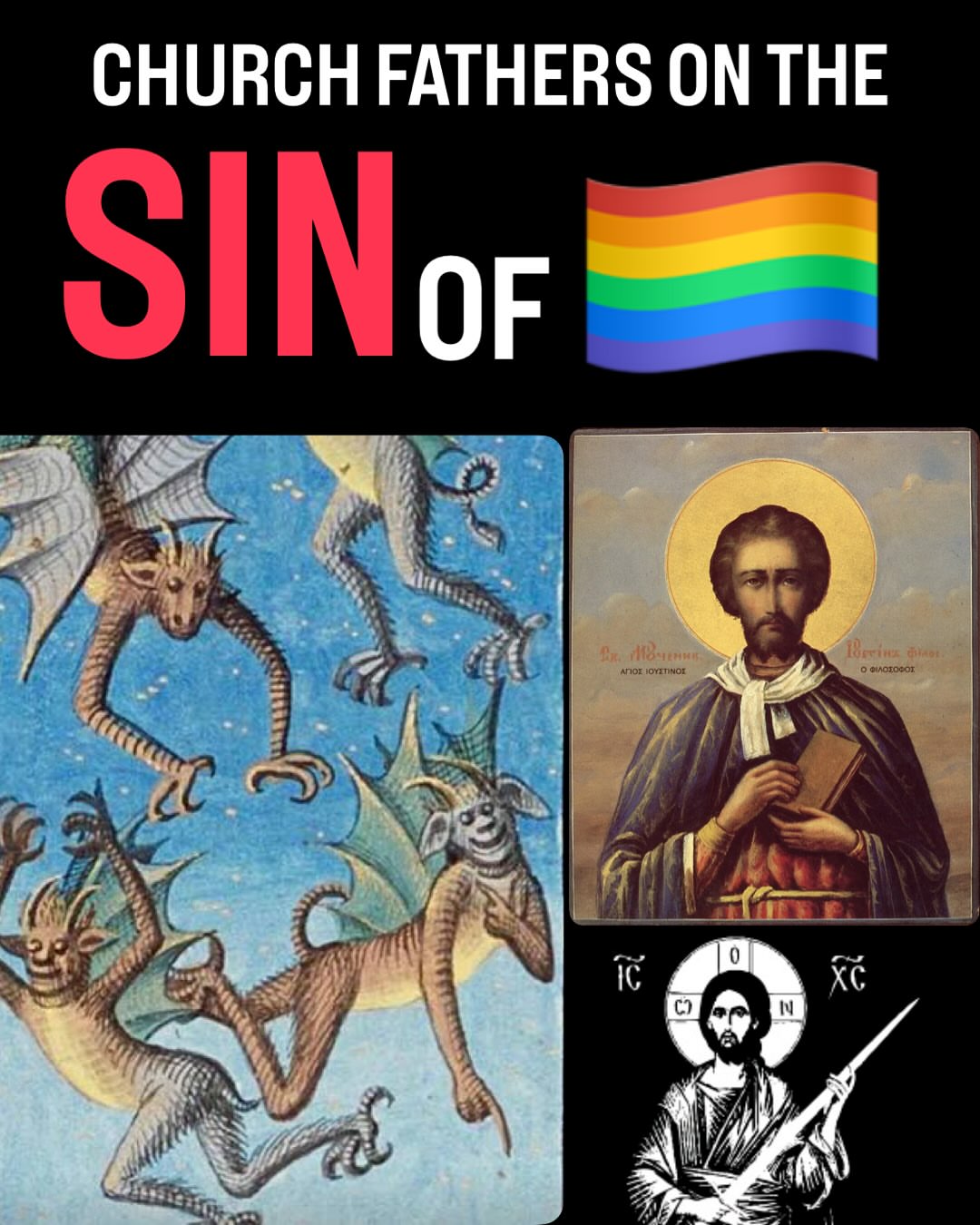
Post cites Church Fathers on homosexuality with Orthodox hashtags

The source text consists of a single line: "Church Fathers on the Sin of 🏳️‍🌈" followed by hashtags for Orthodox Christianity, apologetics, saints, and Christian quotes. No further content, quotations, discussion, or commentary is present in the provided material. The rainbow flag emoji indicates the subject is homosexuality or LGBTQ+ matters. The hashtags suggest the post is framed within Orthodox Christian apologetics and patristic…

The source text consists of a single line: "Church Fathers on the Sin of 🏳️‍🌈" followed by hashtags for Orthodox Christianity, apologetics, saints, and Christian quotes. No further content, quotations, discussion, or commentary is present in the provided material. The rainbow flag emoji indicates the subject is homosexuality or LGBTQ+ matters.

The hashtags suggest the post is framed within Orthodox Christian apologetics and patristic authority. Because the source contains only this title and tags, there is no discussion to summarize, no arguments to outline, and no specific patristic references to report.

  • Title references Church Fathers on the sin represented by the rainbow flag emoji
  • Hashtags identify the post as Orthodox, apologetic, saint-focused, and quote-oriented
  • No patristic quotations, names, or arguments appear in the source text
  • No discussion thread or commentary is included in the provided material
12 opinions in the discussion St. Justinian the Great made it a crime in his empire to be a homosexual. The penalty was death by fire. We have a lot to learn from our ancestors ways Read the discussion
George Instagram discussion

Holy water meant for daily use, not storage

1:17

The speaker explains that holy water is often misused by being stored in drawers or refrigerators and forgotten, then poured down the sink when it gets old. Holy water has been blessed by the prayers of the Church and the grace of the Holy Spirit is in it. It is not meant to be stored as decoration but to be used every day. The speaker instructs that one should drink a small amount each morning on an empty stomach after making the sign of the…

The speaker explains that holy water is often misused by being stored in drawers or refrigerators and forgotten, then poured down the sink when it gets old. Holy water has been blessed by the prayers of the Church and the grace of the Holy Spirit is in it. It is not meant to be stored as decoration but to be used every day.

The speaker instructs that one should drink a small amount each morning on an empty stomach after making the sign of the cross and saying a short prayer. It should be kept in a clean bottle near icons for regular use. It can also be sprinkled on the home, bed, and children while making the sign of the cross.

When disposal is necessary, it must never go down the drain but should be poured onto plants or clean ground where no one walks. Holy water is not a charm that works like magic; it works with faith, prayer, and a heart turning toward God.

Key moments

  1. Most people misuse holy water by storing it in a drawer or fridge and forgetting it, then pouring it down the sink when it gets old.
  2. Holy water has been blessed by the prayers of the Church and the grace of the Holy Spirit is in it.
  3. It is not meant to be stored as decoration but to be used every day.
  4. Drink a little in the morning on an empty stomach, make the sign of the cross, say a short prayer, and drink it with faith.
  5. Keep it in a clean bottle next to your icons as something you reach for daily.
  6. Sprinkle your home, your bed, and your children while making the sign of the cross.
  7. Never pour holy water down the drain; pour it into a plant or onto clean ground where no one will walk on it.
  8. Holy water is not a charm that works like magic; it works with faith, prayer, and a heart turning toward God.
6 opinions in the discussion Every morning antidoron and then holy water. Every day. Read the discussion
Prayer Orthodoxy ® Instagram discussion

What brought you closer to the Orthodox Church?

I am asking what drew you nearer to the Orthodox Church. Was it the Divine Liturgy, the saints, Holy Tradition, the sacraments, prayer, or something else? Please share your story in the comments.

Τι σας έφερε πιο κοντά στην Ορθόδοξη Εκκλησία; Ήταν η Θεία Λειτουργία, οι Άγιοι, η Ιερά Παράδοση, τα Μυστήρια, η προσευχή ή κάτι άλλο; Μοιραστείτε την ιστορία σας στα σχόλια.

5 opinions in the discussion The theology. Without Orthodoxy I couldn't understand how Jesus could be God when all through the bible he's clearly and explicitly calling on God, with some verses that really troubled me.… Read the discussion
T timotheos.orthodoxy Instagram discussion

Catechumen introduces Orthodox journey, fitness, business background

0:44

The post is a concise self-introduction published by Tim, who identifies himself as a catechumen of the Greek Orthodox Church. He writes that he is sharing his learnings and obstacles as he progresses toward full communion in the Orthodox Church. The opening phrase "Spiritual Warfare Ps:" serves as a topical marker, suggesting that the phenomenon of spiritual warfare, understood in Orthodox theology as the struggle against demonic temptation and…

The post is a concise self-introduction published by Tim, who identifies himself as a catechumen of the Greek Orthodox Church. He writes that he is sharing his learnings and obstacles as he progresses toward full communion in the Orthodox Church. The opening phrase "Spiritual Warfare Ps:" serves as a topical marker, suggesting that the phenomenon of spiritual warfare, understood in Orthodox theology as the struggle against demonic temptation and passions, may be a recurring subject in his posts.

This topical marker corresponds to the context described in the accompanying metadata, which indicates that a user had submitted a question about whether spiritual warfare intensifies as one draws nearer to the Orthodox Church, although no video transcript or detailed response was provided. In addition to his religious journey, Tim notes that he has been involved in fitness for almost twenty years, with some of that experience at a competitive level.

He also states that he has built a successful business. He frames these three areas, Orthodox Christian formation, physical training, and entrepreneurship, as a combined project for mutual growth and explicitly asks readers to follow his account so that they can grow together across these domains. The post does not elaborate on the specific obstacles he encounters in the catechumenate, the nature of his competitive fitness background, or the details of his business venture.

It ends with a brief liturgical closing: "Thank you All praise to the Lord Amen." No discussion threads, replies, or additional explanatory content are present in the supplied text. The post functions primarily as an invitation to an audience interested in the intersection of Orthodox spirituality, long-term fitness discipline, and business ownership.

  • Tim is a catechumen in the Greek Orthodox Church sharing his journey and obstacles
  • He has nearly 20 years of fitness experience, including competitive involvement
  • He has built a successful business
  • The post references "Spiritual Warfare" as a likely thematic focus
  • He invites followers to his account for combined growth in Orthodoxy, fitness, and business
8 opinions in the discussion Car problems. More stress at work. Marriage issues resurfacing. Health getting worse. But my wife and I will be baptized into Holy Orthodoxy together, hand in hand. Read the discussion
Father Moses YouTube discussion

Racism as Christological Heresy in Orthodox Teaching

Racism as Christological Heresy in Orthodox Teaching 7:04

Father Moses argues that racism is not merely a sin but a heresy about Christ himself. He cites St. Gregory the Theologian's principle that what Christ has not assumed He has not healed. Since God became man and took on the one human nature shared by every person, claiming another race is less human means Christ did not take on their nature and did not save them. St. Athanasius the Great taught that Christ entered the single race of mankind,…

Father Moses argues that racism is not merely a sin but a heresy about Christ himself. He cites St. Gregory the Theologian's principle that what Christ has not assumed He has not healed. Since God became man and took on the one human nature shared by every person, claiming another race is less human means Christ did not take on their nature and did not save them.

St. Athanasius the Great taught that Christ entered the single race of mankind, with ethnicities existing as cultures and pigments under that one nature. If Christ did not redeem every ethnicity, then no one could receive the Holy Spirit and be deified, which would invalidate saints from Africa, Asia, Alaska, and elsewhere. Father Moses insists that anyone bringing racist ideology to Orthodoxy must repent, because such views deny the incarnation and are antichrist.

He connects this to St. Paul's condemnation of the division between Jew and Gentile, saying today's racist ideologies on social media are equally anti-incarnation.

Key moments

  1. 0:02 The speaker's passion for defending the Orthodox Church stems from his love for her as Christ's bride and the salvation she brought him.
  2. 0:34 Racism is not an ideology but a christological heresy because it posits superior and inferior races.
  3. 1:06 Dividing mankind into races undermines the christology of the church fathers, especially St. Gregory Nazianzen's principle that whatever is not assumed is not redeemed.
  4. 1:36 If races are separate, Christ did not come as a white, black, or Chinese man, so he would not have redeemed those races.
  5. 2:07 St. Athanasius the Great taught that Christ became man and entered the single race of mankind, under which ethnicities exist as cultures and pigments.
  6. 3:41 Racism invalidates the incarnation for those not of Christ's ethnicity, which would eliminate saints from diverse backgrounds and deny the Holy Spirit's indwelling.
  7. 4:44 Anyone bringing racist ideology to Orthodoxy must repent, because mankind is one, redeemed in the incarnation, and every ethnicity can be deified.
  8. 6:20 St. Paul already condemned the division between Jew and Gentile; today's racist ideologies on social media are antichrist and anti-incarnation.
30 opinions in the discussion There's a big difference between believing there are distinctions between groups of people and believing that certain groups can't get into heaven. Read the discussion
r/OrthodoxChristianity Reddit discussion

What should I do with an AI-generated icon?

I ordered an icon of the Softener of Evil Hearts on Etsy, and I'm honestly disappointed in myself. The text and the Theotokos's body don't appear edited, but the surrounding parts are clearly AI-generated. Looking back at the seller, their profile picture is a terrible AI-generated person as well. I enjoy researching tech and tech news, and I'm frustrated that I wasn't more cautious. The question is what to do now. Should I dispose of this icon,…

I ordered an icon of the Softener of Evil Hearts on Etsy, and I'm honestly disappointed in myself. The text and the Theotokos's body don't appear edited, but the surrounding parts are clearly AI-generated. Looking back at the seller, their profile picture is a terrible AI-generated person as well. I enjoy researching tech and tech news, and I'm frustrated that I wasn't more cautious.

The question is what to do now. Should I dispose of this icon, and if so, how? I don't want to be disrespectful to the Theotokos since it's an image of her, but I don't see this as a real icon either.

Help me out, thanks.

16 opinions in the discussion Why does everyone insist they must be burned? If it's just a cheap knockoff that doesn't depict any actual person, what's with treating it like something sacred? Read the discussion

Seventh Council and the distinction between veneration and worship

1:04

The speaker addresses the biblical prohibition against making images for bowing down, found in the Ten Commandments, and contrasts it with the Seventh Ecumenical Council's decree that Christians must bow down to images. He argues that the iconoclastic position commits two category errors. First, the second commandment forbids idolatry, making an image and worshipping it as God, not images in general, since God later commanded golden cherubim for…

The speaker addresses the biblical prohibition against making images for bowing down, found in the Ten Commandments, and contrasts it with the Seventh Ecumenical Council's decree that Christians must bow down to images. He argues that the iconoclastic position commits two category errors. First, the second commandment forbids idolatry, making an image and worshipping it as God, not images in general, since God later commanded golden cherubim for the ark.

Second, veneration differs from worship; Scripture distinguishes acts of honor from the divine adoration owed to God alone. Orthodox Christians venerate the person depicted in an icon without offering sacrifice or divine adoration. The Seventh Council separated honor from true worship due to the divine nature.

The speaker contends that collapsing the distinction between icon and idol or veneration and worship fails to refute iconography and reveals a low view of worship.

Key moments

  1. The speaker references the biblical prohibition against making images to bow down to, found in the Ten Commandments.
  2. The speaker states the Seventh Ecumenical Council said "You must bow down to images."
  3. The iconoclastic argument makes two basic category errors.
  4. First error: the second commandment prohibits idolatry, making an image and worshipping it as God, not images in general; evidenced by God commanding golden cherubim for the ark five chapters later.
  5. Second error: veneration is not worship; Scripture distinguishes acts of honor and reverence from the worship owed uniquely to God.
  6. Orthodox Christians do not offer icons sacrifice or divine adoration; they venerate the person depicted.
  7. The Seventh Ecumenical Council distinguished honor from the true worship owed to the divine nature alone.
  8. Inability to distinguish an icon from an idol or veneration from worship collapses categories Scripture already distinguished and shows a low view of worship.
16 opinions in the discussion They say it's idol worship bc they don't even show God the same honor we show Saints. So ofc to them it looks like worship😂 Read the discussion

$uicideboy$ affiliate renounces nihilistic lyrics and affirms Orthodox faith

1:23

The post is a blessing sent to Ruby, an artist associated with the duo $uicideboy$, after a clip circulated in which Ruby, Cherry, and Scream say they have renounced their earlier dark nihilistic lyrics and cult affiliations. They identify as devout followers of Christ. One of them states a bucket list goal of saving 100,000 souls before death. On stage he thanks God for the chance to be alive that night rather than dead in a ditch, and he…

The post is a blessing sent to Ruby, an artist associated with the duo $uicideboy$, after a clip circulated in which Ruby, Cherry, and Scream say they have renounced their earlier dark nihilistic lyrics and cult affiliations. They identify as devout followers of Christ. One of them states a bucket list goal of saving 100,000 souls before death.

On stage he thanks God for the chance to be alive that night rather than dead in a ditch, and he credits his survival to the grace of Jesus Christ. He tells the audience he will speak about Jesus Christ whether or not the crowd agrees with him, and he acknowledges an Orthodox flag visible in the venue. He then recites prayer-like lyrics asking to have his soul washed clean in Christ's blood, to raise a sword against the enemy, to have his sins washed away by a mighty flood, and to be pressed out of chaos into righteousness.

The author of the post greets Ruby as a brother in Christ and asks the Lord to strengthen him to endure and remain steadfast in the faith. The post closes with the phrase Christ is in our midst and the Greek words Orthodoxy or death, followed by crosses and prayer bead emojis. The clip combines a public renunciation of the artists' former image with an unapologetic confession of faith before a crowd that may not share it.

Key moments

  1. The artists Ruby, Cherry, and Scream renounce their previous dark nihilistic lyrics and cult affiliations and identify as devout followers of Christ.
  2. A bucket list goal is stated: save 100,000 souls before death.
  3. Thanks God for the opportunity to be present tonight and not dead in a ditch.
  4. Credits survival to the grace of Jesus Christ, the Lord and Savior.
  5. Declares intention to talk about Jesus Christ regardless of whether the audience agrees.
  6. Gives a shout out to an Orthodox flag.
  7. Mentions a camera lighting adjustment.
  8. Recites a prayer or lyrics about washing the soul clean in Christ's blood, raising a sword against the enemy, asking for a mighty flood to wash sins away, and being pressed out of chaos into righteousness.
7 opinions in the discussion I was a big $B fan once, but as my faith got stronger I worried I'd eventually have to quit listening to them because of the blasphemous lyrics and all that. Then the new album dropped… Read the discussion