WeOrthodox
EN UA

Orthodox Life

Instagram 8 discussions · Open the original

•ᴅᴀɪʟʏ ᴏʀᴛʜᴏᴅᴏx ɪᴄᴏɴᴏɢʀᴀᴘʜʏ, ᴘʀᴀʏᴇʀꜱ, ᴀɴᴅ ꜱᴘɪʀɪᴛᴜᴀʟ ʀᴇꜰʟᴇᴄᴛɪᴏɴꜱ ☦️ •ᴛʜᴇᴏʟᴏɢʏ ɪɴ ᴄᴏʟᴏʀꜱ 🎨 | ᴡɪɴᴅᴏᴡꜱ ᴛᴏ ʜᴇᴀᴠᴇɴ 🪟 •“ᴛʜᴇ ʙᴇᴀᴜᴛʏ ᴏꜰ ᴏʀᴛʜᴏᴅᴏxʏ”🕊️

Orthodox Life Instagram

Saint Thomas the Apostle: From 'My Lord and my God' to Martyrdom in India
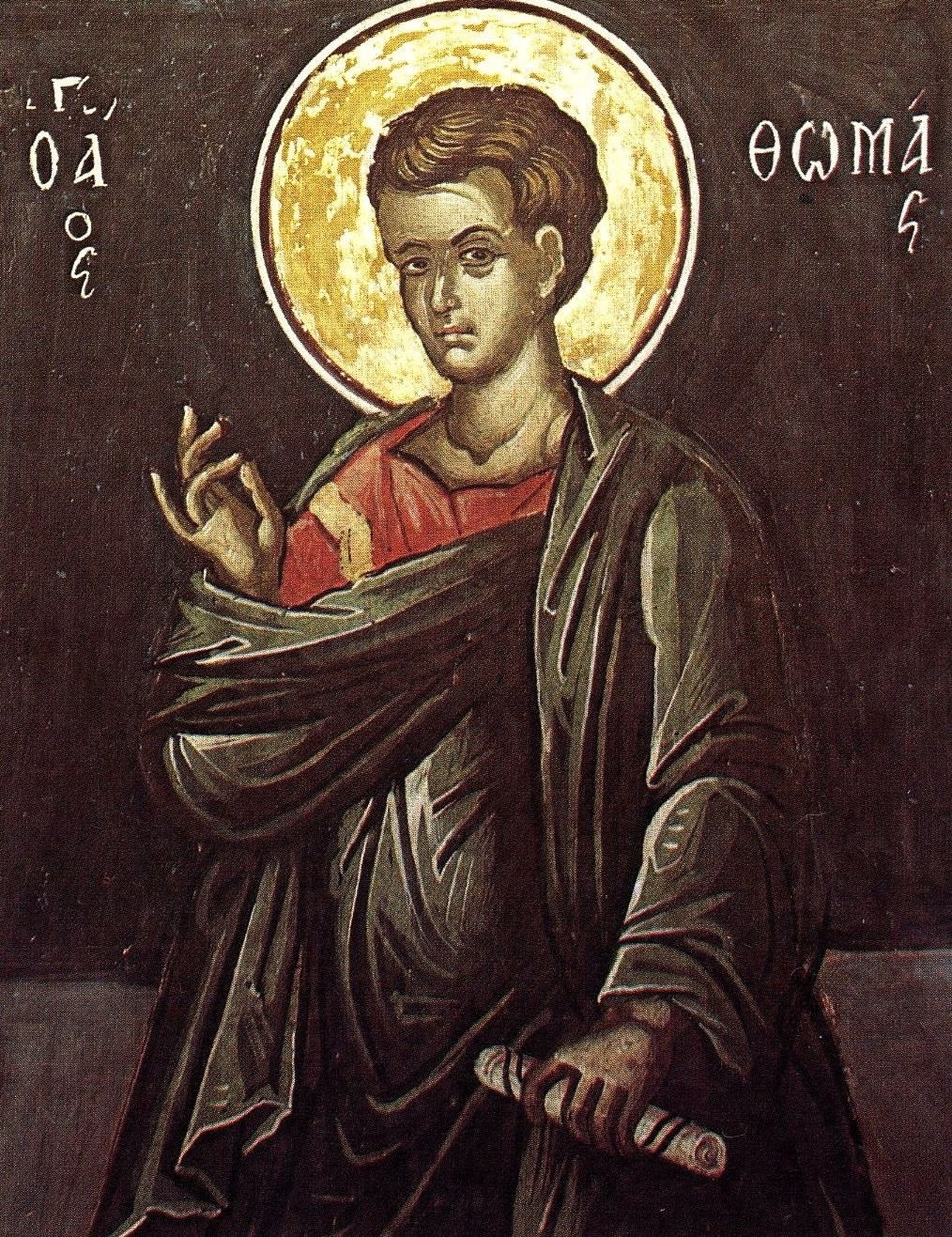
The post commemorates the Holy Apostle Thomas, one of the Twelve, on his feast day of October 6th. Thomas, also called Didymus, meaning the Twin, was a Galilean fisherman called by Jesus Christ. The author recalls that when Christ set out toward dangerous territory before the resurrection of Lazarus, Thomas urged the other disciples to go with Him, saying, 'Let us also go, that we may die with Him.' The post treats Thomas's doubt about the…

The post commemorates the Holy Apostle Thomas, one of the Twelve, on his feast day of October 6th. Thomas, also called Didymus, meaning the Twin, was a Galilean fisherman called by Jesus Christ. The author recalls that when Christ set out toward dangerous territory before the resurrection of Lazarus, Thomas urged the other disciples to go with Him, saying, 'Let us also go, that we may die with Him.' The post treats Thomas's doubt about the Resurrection as 'blessed unbelief' or 'saving doubt,' because it strengthened the Church's faith.

When Christ appeared to him eight days after Pascha and invited him to touch His wounds, Thomas confessed, 'My Lord and my God!' The post also recounts a tradition in which divine providence used Thomas to confirm the bodily assumption of the Virgin Mary. Arriving three days late to her burial in Jerusalem, he asked that her tomb be opened so he could venerate her.

The empty sepulcher showed her ascent into heaven, and the Mother of God comforted his grief by giving him her holy sash, a relic connected with the feast of the holy belt celebrated on August 31. After Pentecost, Thomas preached outside the Roman Empire in Palestine, Mesopotamia, Parthia, Ethiopia, and India, converting many and building churches.

His preaching provoked a pagan ruler in Meliapur, and he was martyred by being pierced with five spears.

  • Thomas, called Didymus the Twin, was a Galilean fisherman among the Twelve Apostles.
  • Before Lazarus's resurrection he urged the disciples, 'Let us also go, that we may die with Him.'
  • His doubt is called 'blessed unbelief' or 'saving doubt'; seeing Christ's wounds eight days after Pascha, he confessed, 'My Lord and my God!'
  • He arrived late to the Virgin Mary's burial; her empty tomb and the gift of her holy sash confirmed her assumption, remembered on August 31.
  • He preached in Palestine, Mesopotamia, Parthia, Ethiopia, and India, and was martyred in Meliapur by five spears.
Read more
Orthodox Life Instagram

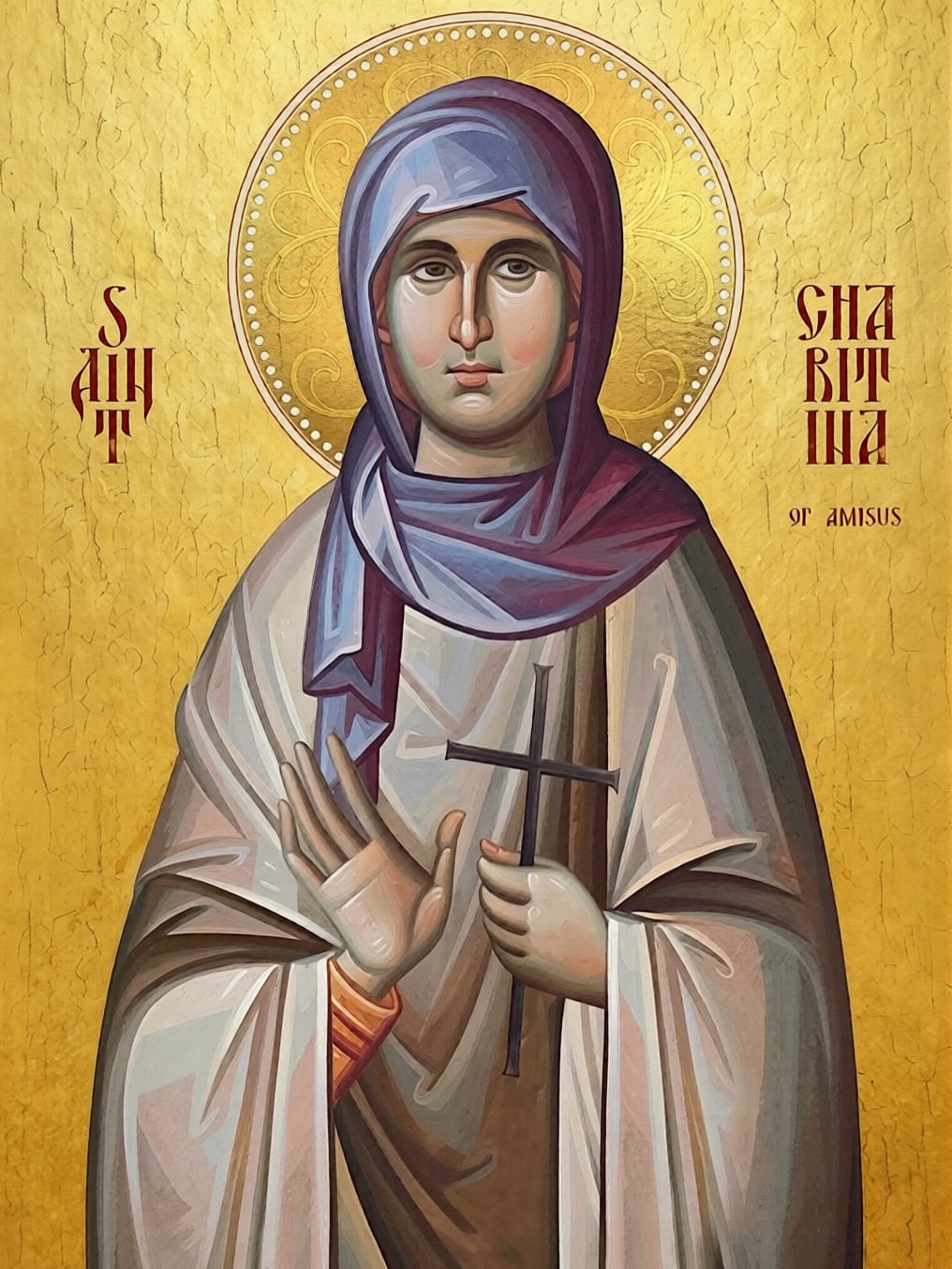
Saint Charitina of Amisus: Virgin and Martyr Under Diocletian

The post commemorates Saint Charitina of Amisus, an early Christian virgin and martyr of the late 3rd and early 4th centuries, whose feast falls on October 5th. Orphaned young in Amisus, modern-day Samsun in Turkey, she was raised by a pious Roman Christian named Claudius as his own daughter. Though not yet formally baptized, she was a Christian at heart, studied divine law day and night, and vowed perpetual virginity. Her example converted many…

The post commemorates Saint Charitina of Amisus, an early Christian virgin and martyr of the late 3rd and early 4th centuries, whose feast falls on October 5th. Orphaned young in Amisus, modern-day Samsun in Turkey, she was raised by a pious Roman Christian named Claudius as his own daughter. Though not yet formally baptized, she was a Christian at heart, studied divine law day and night, and vowed perpetual virginity.

Her example converted many pagans, which drew the attention of Governor Dometius, an official under Emperor Diocletian during his persecution of Christians. Ordered before a tribunal, Charitina confessed Christ and refused to sacrifice to idols. The judge subjected her to tortures: her head was shaved, burning coals were placed on her flesh, and she was thrown into the sea with a stone around her neck.

The post relates that, according to pious tradition, she was preserved or healed each time, and stepped from the sea unharmed, calling the immersion her baptism. The judge then ordered her to public dishonor by dissolute youths. To protect her purity, Charitina knelt and prayed for God to take her soul; she reposed peacefully in 304 AD before her attackers could touch her.

Her foster-father recovered her body after it washed ashore three days later and buried her honorably.

  • Saint Charitina of Amisus, orphaned young, was raised by the pious Christian Claudius and vowed perpetual virginity though not yet baptized.
  • Her conversions of pagans brought her before Governor Dometius during Diocletian's persecution.
  • She confessed Christ, refused sacrifice to idols, and endured shaving, burning coals, and drowning with a stone.
  • Tradition holds she emerged from the sea unharmed, declaring the immersion her baptism.
  • She reposed in prayer in 304 AD; her body washed ashore three days later and Claudius buried her honorably.
Read more
Orthodox Life Instagram

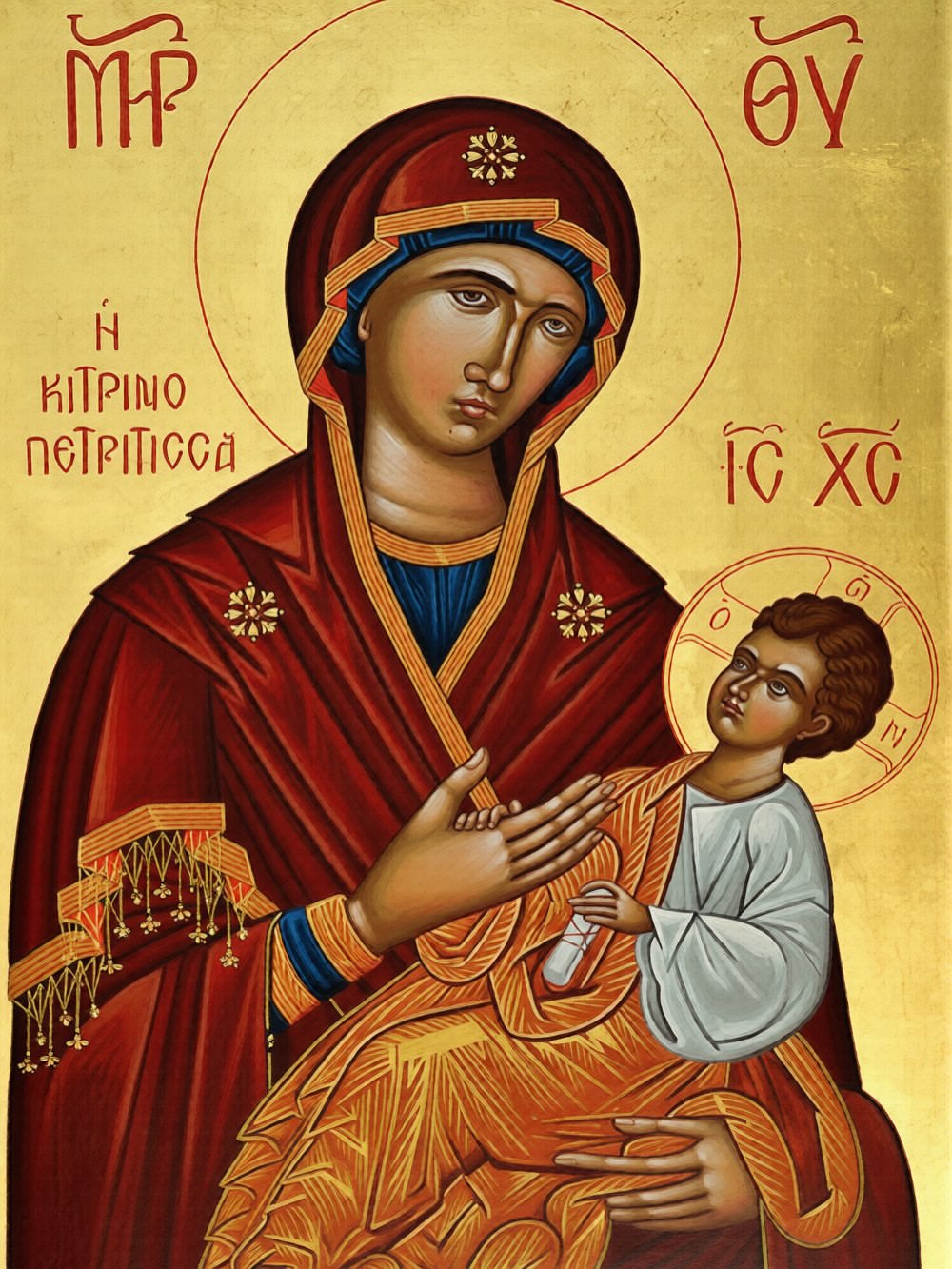
Panagia Kitrinopetritissa: the wonderworking icon of Yellow Rock, Australia

October 4 marks the commemoration of the holy icon of the Theotokos known as Panagia Kitrinopetritissa, Our Lady of Yellow Rock. The wonderworking icon is housed at the Holy Monastery of St George in Yellow Rock, New South Wales, and is described as the first miraculous Orthodox icon formally named after an Australian location. The Greek title translates as All-Holy Mother of the Yellow Rock. The account traces the icon's origin to prophetic…

October 4 marks the commemoration of the holy icon of the Theotokos known as Panagia Kitrinopetritissa, Our Lady of Yellow Rock. The wonderworking icon is housed at the Holy Monastery of St George in Yellow Rock, New South Wales, and is described as the first miraculous Orthodox icon formally named after an Australian location. The Greek title translates as All-Holy Mother of the Yellow Rock.

The account traces the icon's origin to prophetic visions received by a Greek woman, Eleni Federikou, while she lived in London. In these dreams the Virgin Mary commanded her to travel to a distant overseas country and build a church, showing her an unfamiliar landscape of wild bushland, winding creeks and native eucalyptus trees beneath a massive glowing silver cross in the sky.

Eleni and her husband Dimitrianos migrated to Australia in 1958. Their search, at first focused on northern Sydney, was redirected by another dream telling them to move further into the rural west. It ended when they reached the small village of Yellow Rock, which Eleni recognized as the exact property from her visions.

With the blessing of Archbishop Ezekiel, the couple purchased the land on October 4, 1962, laying the groundwork for Australia's first Orthodox monastery. The icon now stands in the monastery's main church and draws Greek Orthodox believers from across Australia and beyond, including students, parishioners and pilgrims seeking blessings and intercession.

  • The icon Panagia Kitrinopetritissa, Our Lady of Yellow Rock, is commemorated on October 4 and kept at the Holy Monastery of St George in Yellow Rock, New South Wales.
  • It is the first miraculous Orthodox icon formally named after an Australian location.
  • Eleni Federikou received visions in London showing bushland, creeks, eucalyptus trees and a glowing silver cross, with an instruction to build a church.
  • She and her husband Dimitrianos migrated to Australia in 1958 and found the site at Yellow Rock after a dream redirected their search westward.
  • With Archbishop Ezekiel's blessing they bought the land on October 4, 1962, founding Australia's first Orthodox monastery.
Read more
Orthodox Life Instagram

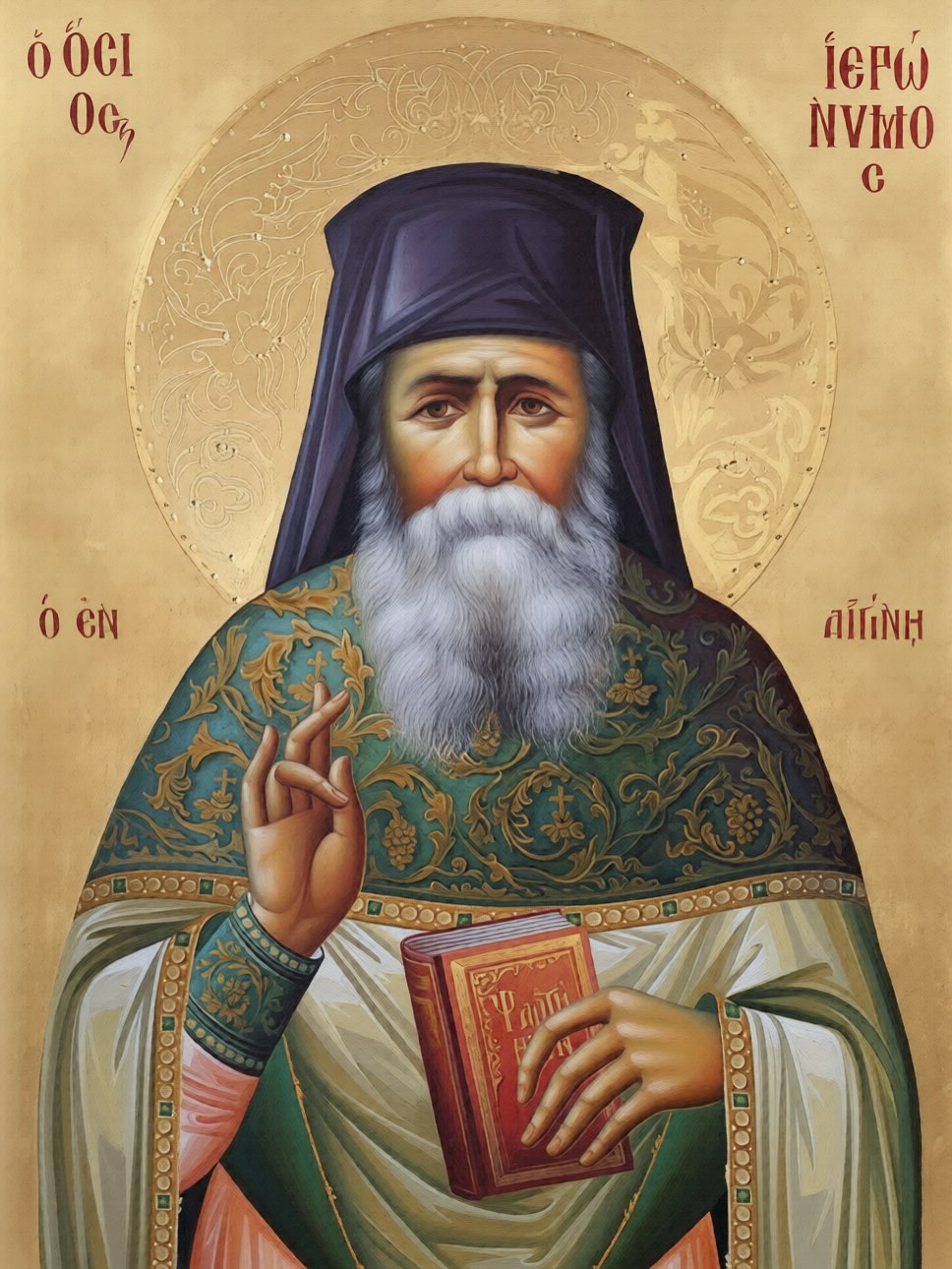
Saint Ieronymos of Aegina: Refugee Priest, Hermit, and Confessor Commemorated on October 3

The post commemorates Saint Ieronymos of Aegina, an Eastern Orthodox elder and ascetic remembered on October 3. He was born Basil Apostolides in 1883 in Gelveri, Cappadocia, in modern-day Turkey. As a child he was influenced by local cave-ascetics and an atmosphere of unceasing prayer. He was ordained a deacon in Constantinople and served in Asia Minor early in his ministry. After the collapse of the Ottoman Empire and the population exchange of…

The post commemorates Saint Ieronymos of Aegina, an Eastern Orthodox elder and ascetic remembered on October 3. He was born Basil Apostolides in 1883 in Gelveri, Cappadocia, in modern-day Turkey. As a child he was influenced by local cave-ascetics and an atmosphere of unceasing prayer. He was ordained a deacon in Constantinople and served in Asia Minor early in his ministry.

After the collapse of the Ottoman Empire and the population exchange of the 1920s between Greece and Turkey, he came to Greece as a refugee. He was ordained a hieromonk in 1923 and settled on the island of Aegina, where he spent the rest of his life. There he served as a hospital chaplain and built a hospital church dedicated to St. Dionysios.

He became known across Greece as a gifted father-confessor, a clairvoyant, and a healer of souls who cared for the poor and suffering. Later he founded the Hermitage of the Annunciation of the Theotokos and lived as a strict monastic hermit, practicing noetic prayer. After a vision of Christ's flesh and blood in the communion chalice, he stopped serving the Divine Liturgy out of holy awe, though crowds still traveled to his monastery for counsel.

In 1940 he returned to the traditional Old Calendar, seeing the Greek Church's calendar change as a compromise with secularization. He avoided factionalism, refused to condemn New Calendarists, and prioritized Christian love and church unity, so that Old and New Calendarists alike regarded him as a living saint. He reposed in an Athens hospital on October 3, 1966, and his relics were returned to his hermitage on Aegina.

  • Saint Ieronymos was born Basil Apostolides in 1883 in Gelveri, Cappadocia, and ordained a deacon in Constantinople.
  • He came to Greece as a refugee after the 1920s population exchange and was ordained a hieromonk in 1923.
  • On Aegina he served as a hospital chaplain, built a church dedicated to St. Dionysios, and founded the Hermitage of the Annunciation of the Theotokos.
  • After a vision of Christ's flesh and blood in the chalice, he ceased serving the Divine Liturgy out of holy awe.
  • In 1940 he returned to the Old Calendar while refusing to condemn New Calendarists; he reposed on October 3, 1966.
Read more
Orthodox Life Instagram

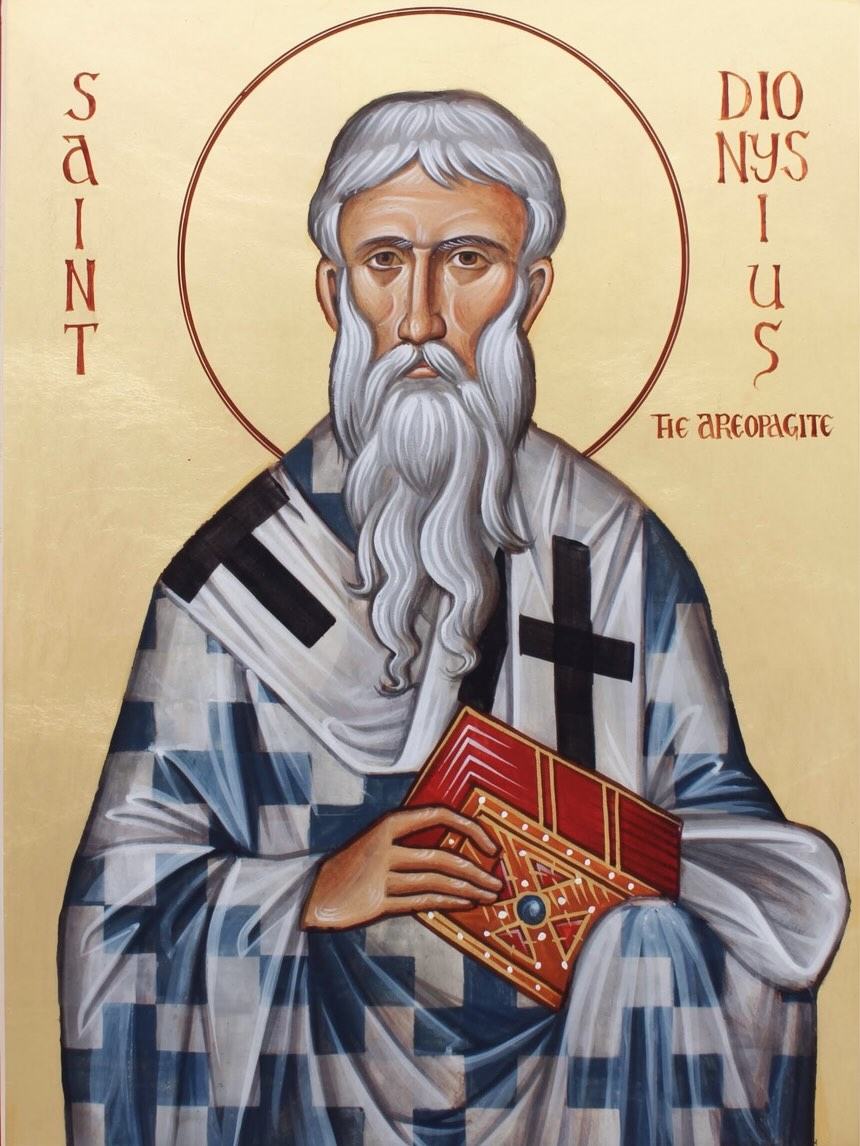
Saint Dionysios the Areopagite: judge, bishop, and the writings that shaped Christian mysticism

The post commemorates Saint Dionysios the Areopagite on October 3rd. Dionysios was a 1st-century Athenian judge who converted after hearing the Apostle Paul preach at the Areopagus. The Book of Acts names him as one of the few prominent citizens of Athens to accept the faith during Paul's visit, and later Christian tradition holds that he became the first bishop of Athens. The post then turns to the Corpus Areopagiticum, a collection of…

The post commemorates Saint Dionysios the Areopagite on October 3rd. Dionysios was a 1st-century Athenian judge who converted after hearing the Apostle Paul preach at the Areopagus. The Book of Acts names him as one of the few prominent citizens of Athens to accept the faith during Paul's visit, and later Christian tradition holds that he became the first bishop of Athens.

The post then turns to the Corpus Areopagiticum, a collection of influential theological writings that appeared under his name in the early 6th century. Modern scholars agree these texts were written centuries later by an anonymous author, called Pseudo-Dionysios. Even with the pseudonymous origin, the works permanently shaped Christian thought.

They connected Neoplatonic philosophy with Christian theology: the author used the frameworks of thinkers like Proclus to explain the nature of God, the celestial realms, and the soul's path toward the divine, giving early Christian mysticism an intellectual language. The post closes with a pious legend about the saint's death. It says he was beheaded around 96 AD, after which his headless body stood up, picked up the severed head, and walked several miles preaching a sermon of repentance.

He collapsed at the feet of a Christian woman named Catula, who buried his body. The discussion a reader will find is the combination of the biblical figure, the later pseudonymous writings attributed to him, and the martyrdom legend, all presented together in one commemoration.

  • Dionysios the Areopagite was a 1st-century Athenian judge who converted after hearing Paul preach at the Areopagus, as recorded in the Book of Acts.
  • Later tradition holds he became the first bishop of Athens.
  • The Corpus Areopagiticum appeared in the early 6th century under his name; scholars attribute it to an anonymous author known as Pseudo-Dionysios.
  • The writings used Neoplatonic philosophy, drawing on thinkers like Proclus, to describe God, the celestial realms, and the soul's path toward the divine.
  • A pious legend says he was beheaded around 96 AD, carried his head while preaching repentance, and was buried by a woman named Catula.
Read more
Orthodox Life Instagram

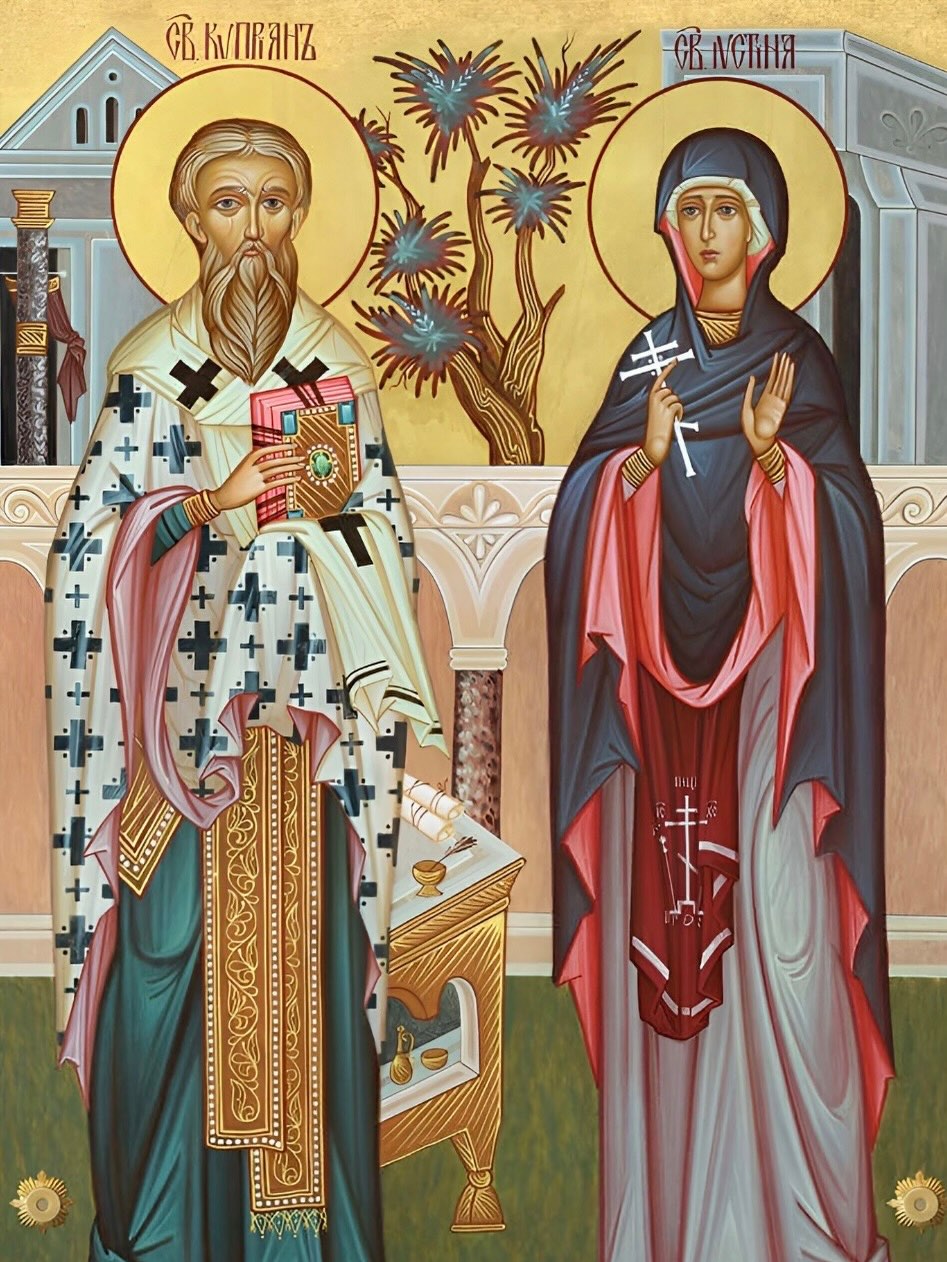
Saint Cyprian and Saint Justina: the sorcerer converted by a defeated demon

On October 2nd the Church commemorates the holy martyrs Cyprian and Justina, who suffered in Nicomedia during the persecutions under Emperor Diocletian. Before his conversion, Cyprian was a wealthy pagan sorcerer and philosopher in Antioch who dealt in dark magic and invoked demonic spirits. Justina was a devout Christian virgin who had converted her own pagan parents and dedicated her chastity to Christ. Their lives intersected when a wealthy…

On October 2nd the Church commemorates the holy martyrs Cyprian and Justina, who suffered in Nicomedia during the persecutions under Emperor Diocletian. Before his conversion, Cyprian was a wealthy pagan sorcerer and philosopher in Antioch who dealt in dark magic and invoked demonic spirits. Justina was a devout Christian virgin who had converted her own pagan parents and dedicated her chastity to Christ.

Their lives intersected when a wealthy pagan suitor, unable to win Justina's affections, hired Cyprian to use his magical arts to compromise her virtue and force her into marriage. Cyprian sent powerful demonic spirits to torment Justina, but she repelled every assault through fasting, intense prayer, and the sign of the Holy Cross.

After his demons were three times put to flight by the grace of Christ, Cyprian recognized the impotence of Satan's power. He repented, publicly burned his expensive magic books, and sought baptism from the local bishop. He later rose through the clergy to become a bishop, while Justina was ordained a deaconess and appointed abbess of a convent.

Under Diocletian both were arrested for their faith and tortured, including being thrown into a boiling cauldron, which they miraculously survived. They refused to sacrifice to pagan idols, so the authorities transferred them to Nicomedia, where the governor ordered their execution in 304 AD.

  • Cyprian was a wealthy pagan sorcerer in Antioch before his conversion; Justina was a Christian virgin who had converted her pagan parents.
  • A rejected suitor hired Cyprian to use magic against Justina, but she drove off his demons through fasting, prayer, and the sign of the Cross.
  • After his demons were three times defeated, Cyprian burned his magic books and was baptized by the local bishop.
  • Cyprian became a bishop; Justina became a deaconess and abbess of a convent.
  • Both were tortured under Diocletian, survived a boiling cauldron, and were executed in Nicomedia in 304 AD.
Read more
Orthodox Life Instagram

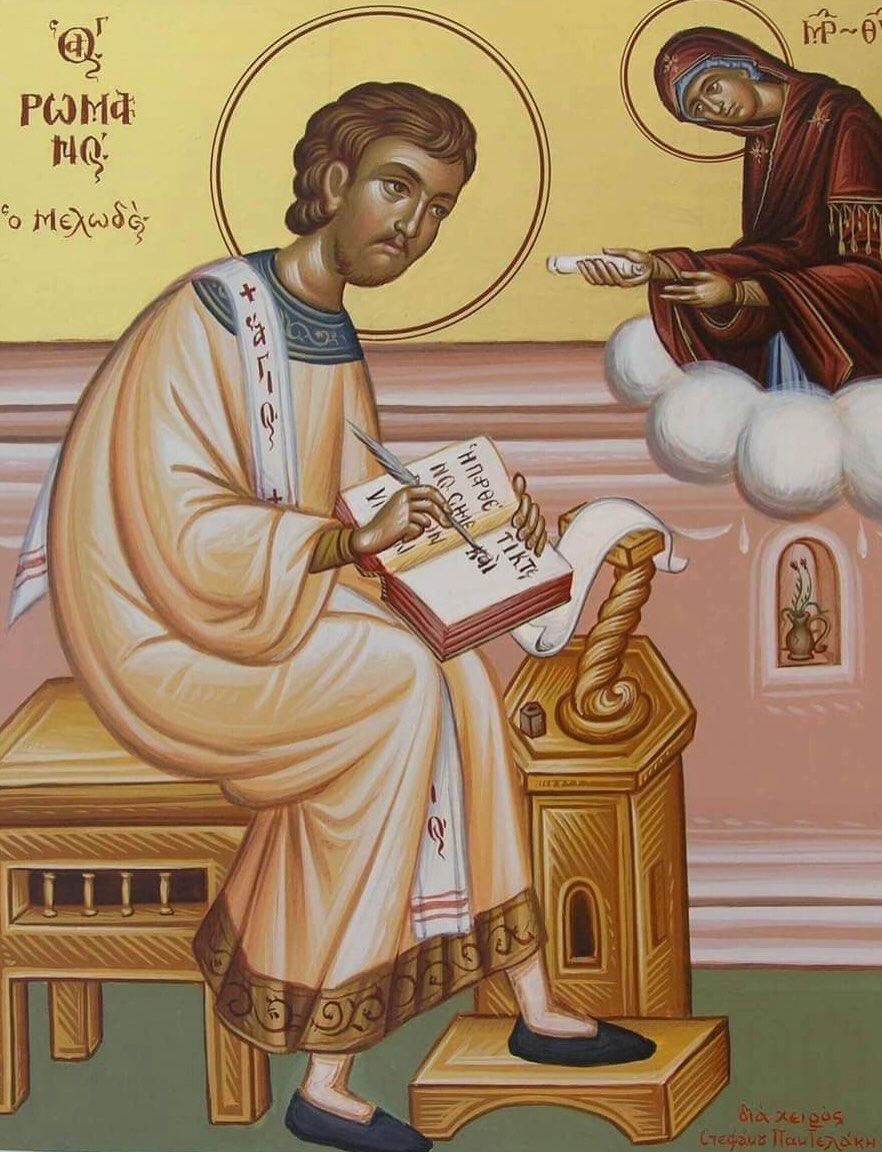
Saint Romanos the Melodist: From a Scroll Vision to a Thousand Hymns

The post commemorates Saint Romanos the Melodist, whose feast falls on October 1st. Romanos lived in the 6th century during the height of the Byzantine Empire and is counted among the greatest hymnographers of the Eastern Orthodox Church. Born in Syria, he served as a deacon in Beirut before moving to Constantinople during the reign of Emperor Justinian I. Church tradition holds that Romanos was not initially a gifted singer or writer, and his…

The post commemorates Saint Romanos the Melodist, whose feast falls on October 1st. Romanos lived in the 6th century during the height of the Byzantine Empire and is counted among the greatest hymnographers of the Eastern Orthodox Church. Born in Syria, he served as a deacon in Beirut before moving to Constantinople during the reign of Emperor Justinian I. Church tradition holds that Romanos was not initially a gifted singer or writer, and his weakness caused him embarrassment among his peers.

On Christmas Eve he received a vision of the Virgin Mary, who commanded him to swallow a scroll. After doing so, he was blessed with musical talent and a beautiful voice, and he stepped onto the ambo to chant his famous hymn on the Nativity. Romanos is credited with pioneering and perfecting the kontakion, a form of chanted verse sermon and a multi-stanza poem set to music.

His hymns combined biblical narratives with vivid dialogue, theological insight, and dramatic tension. They also served an educational purpose, explaining theological concepts to ordinary people in an accessible and emotionally stirring way. He is said to have composed over one thousand hymns, of which about eighty kontakia survive today.

His subjects included the lives of saints, major feast days, the Passion of Christ, and the Last Judgment. His poetic skill earned him the title of the 'Pindar of rhythmic poetry.' The saint reposed in 556 AD.

  • Saint Romanos the Melodist, a 6th-century deacon born in Syria, served in Beirut before moving to Constantinople under Emperor Justinian I.
  • Tradition says the Virgin Mary appeared to him on Christmas Eve and commanded him to swallow a scroll, after which he received a gift for hymnody.
  • He pioneered and perfected the kontakion, a chanted verse sermon that taught theology to the common people.
  • He is said to have written over one thousand hymns; about eighty kontakia survive, covering feast days, the lives of saints, the Passion, and the Last Judgment.
  • He was called the 'Pindar of rhythmic poetry' and reposed in 556 AD.
Read more
Orthodox Life Instagram

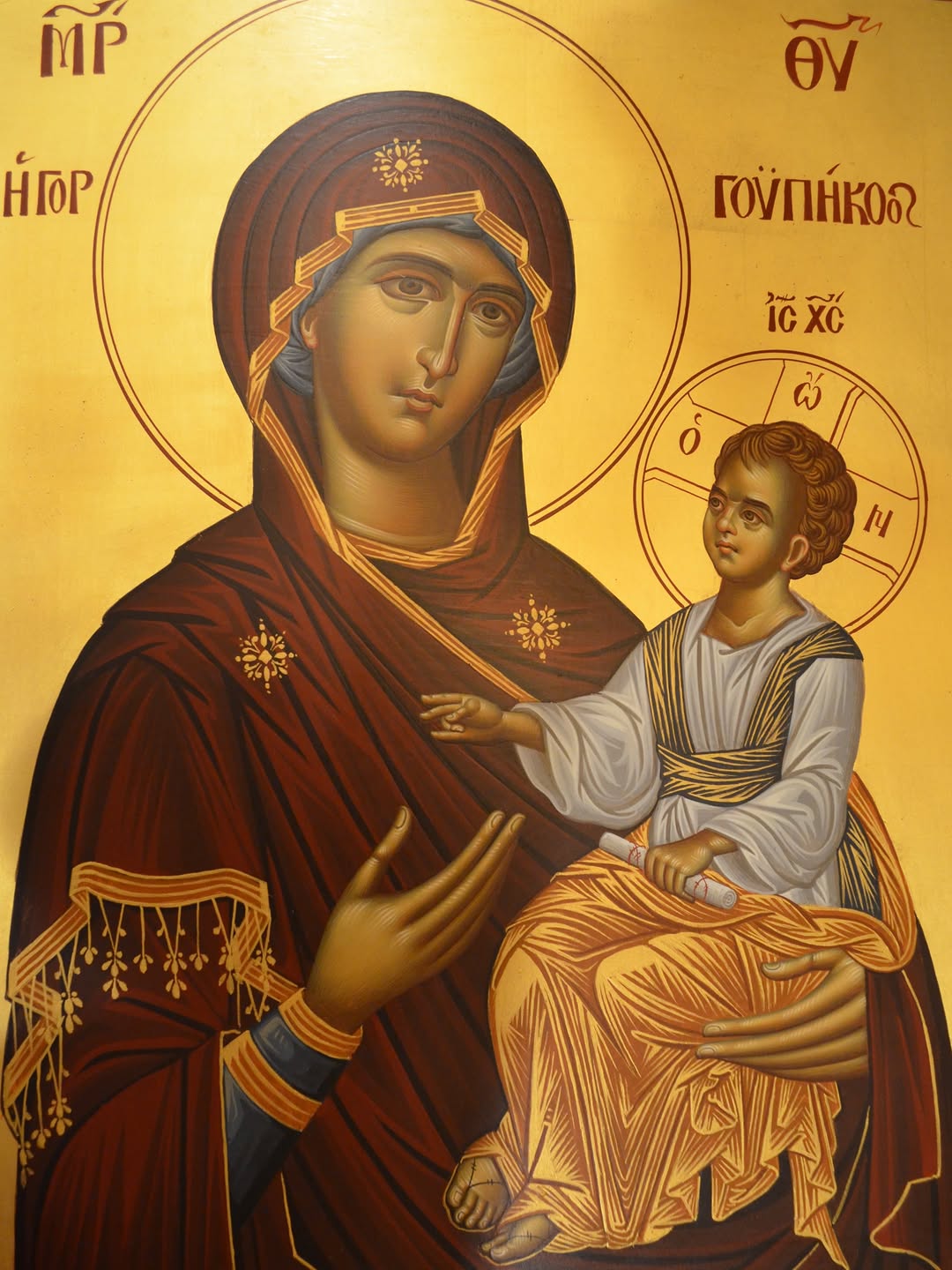
Panagia Gorgoepikoos: the Icon 'Quick to Hear' Commemorated on October 1

October 1 is the feast of the icon of the Mother of God called Panagia Gorgoepikoos, meaning 'She who is quick to hear' or 'She who grants requests quickly'. The title expresses the belief that the Mother of God swiftly responds to the prayers and intercessions of the faithful, and it is associated with a miraculous icon as well as churches and monasteries in Greece. The origin of the name comes from an 11th-century wall-painted icon at…

October 1 is the feast of the icon of the Mother of God called Panagia Gorgoepikoos, meaning 'She who is quick to hear' or 'She who grants requests quickly'. The title expresses the belief that the Mother of God swiftly responds to the prayers and intercessions of the faithful, and it is associated with a miraculous icon as well as churches and monasteries in Greece.

The origin of the name comes from an 11th-century wall-painted icon at Docheiariou Monastery on Mount Athos. Tradition records that in 1664 a monk named Neilos was temporarily blinded after repeatedly letting soot from his torch obscure the icon. After repentance and continuous prayer before the image, his sight was restored, and a voice from the icon proclaimed that the Virgin Mary would give swift aid to all who seek her protection.

The name is also tied to the Church of Panagia Gorgoepikoos in Athens, known as the 'Little Metropolis' or Agios Eleftherios, which stands in Mitropoleos Square next to the Metropolitan Cathedral of Athens. This compact Byzantine church dates to the late 12th or early 13th century and was built on the ruins of an ancient temple of Eileithyia, the pagan goddess of childbirth.

Its exterior is built entirely of ancient Greco-Roman marble blocks and spolia, with over 90 reused classical, Roman, and early Byzantine reliefs set into the walls. Pagan images such as zodiac signs and sphinxes were modified with embossed Christian crosses. Inside, most medieval frescoes have been lost, but a 13th-century depiction of the Virgin Mary survives in the apse.

  • The feast of Panagia Gorgoepikoos, 'She who is quick to hear', falls on October 1.
  • The title comes from an 11th-century wall-painted icon at Docheiariou Monastery on Mount Athos.
  • In 1664 the monk Neilos was blinded by soot from his torch; after repentance and prayer his sight returned, and a voice from the icon promised swift aid to those who seek her protection.
  • The Church of Panagia Gorgoepikoos in Athens, the 'Little Metropolis', dates to the late 12th or early 13th century and was built on ruins of a temple of Eileithyia.
  • The church's walls contain over 90 reused Greco-Roman reliefs, with pagan images modified by embossed Christian crosses; a 13th-century Virgin Mary remains in the apse.
Read more