WeOrthodox
EN UA

Orthodox discussions worth reading

Only the posts and videos that started a real conversation, with the most thoughtful opinions.

Father Alexey Uminsky on crisis of faith as encounter with God

Father Alexey Uminsky on crisis of faith as encounter with God 1:21:28

Father Alexey Uminsky describes crisis of faith as the collapse of rational certainties and external religious forms. He explains that a person discovers clergy can err, church history contains injustices, and emotional comfort in worship fades. The priest distinguishes between crisis as destructive judgment and crisis as divine light revealing truth. He argues that true faith begins not with rules or feelings but with a personal encounter with…

Father Alexey Uminsky describes crisis of faith as the collapse of rational certainties and external religious forms. He explains that a person discovers clergy can err, church history contains injustices, and emotional comfort in worship fades. The priest distinguishes between crisis as destructive judgment and crisis as divine light revealing truth.

He argues that true faith begins not with rules or feelings but with a personal encounter with God, as in Job's experience where God's presence, not explanations, became the answer. Father Alexey criticizes the church for imposing heavy burdens, confusing patriotism with the Gospel, and covering up abuse. He says faithfulness to Christ may require leaving familiar structures.

He emphasizes that spiritual fatherhood is not obligatory for laypeople, that freedom means trust not submission, and that suffering is not identical to the cross. Psychological healing and wise spiritual accompaniment are needed together, but many priests are now silenced from public ministry. The discussion also covers how converts encounter an overwhelming system of external rules, incomprehensible language, and aesthetic beauty that leaves no energy to seek God.

The Greek word 'crisis' means judgment: light entering a dark room reveals both good and evil, and the person either flees feeling deceived or goes deeper. Prayer is described not as sending an SMS to God but as desiring to know and speak with a Person; the liturgy originated from Christians gathering to pray and commune, not from ritual performance.

Father Alexey describes his former state of certainty where faith seemed rational and the path clear, with priests as reliable answer-givers. Crisis arrives when habitual answers lose meaning, the person doubts God and faith, and stands before a wall not knowing where to go. The crisis deepens when one realizes saints, priests, and bishops can err, and that hagiographies contain untruths.

Today's crisis for many thoughtful Christians stems from the church blessing weapons, declaring killing in war not a sin, and replacing the Gospel with patriotism. The way through crisis begins with the question 'Did you meet God?', Job's friends offered rational explanations, but Job insisted on speaking to God directly, and God's presence, not answers, became the resolution.

Key moments

  1. 4:10 Father Alexey describes his former state of certainty where faith seemed rational and the path clear, with priests as reliable answer-givers.
  2. 5:13 Crisis of faith arrives when habitual answers lose meaning, the person doubts God and faith, and stands before a wall not knowing where to go.
  3. 7:16 The crisis deepens when one realizes saints, priests, and bishops can err, and that hagiographies contain untruths.
  4. 11:27 A convert comes to church to learn faith but encounters an overwhelming system of external rules, incomprehensible language, and aesthetic beauty that leaves no energy to seek God Himself.
  5. 14:29 The Greek word 'crisis' means judgment: light entering a dark room reveals both good and evil, and the person either flees feeling deceived or goes deeper.
  6. 23:54 Today's crisis for many thoughtful Christians stems from the church blessing weapons, declaring killing in war not a sin, and replacing the Gospel with patriotism.
  7. 39:36 The way through crisis begins with the question 'Did you meet God?', Job's friends offered rational explanations, but Job insisted on speaking to God directly, and God's presence, not answers, became the resolution.
  8. 46:50 Prayer is not sending an SMS to God but desiring to know and speak with a Person; the liturgy originated from Christians gathering to pray and commune, not from ritual performance.
9 opinions in the discussion The crisis of faith is a very important topic. I came to faith in the late 80s. I joyfully took on all the traditional rules: fasting, morning and evening prayers, weekly services. I… Read the discussion
George Instagram discussion

Jesus the Only Way, His Church the Pillar of Truth

1:12

The speaker argues that the Bible does not claim Orthodoxy is the only way but makes a more radical assertion: Jesus himself is the way, the truth, and the life, and no one comes to the Father except through him, citing John 14:6. Jesus also said he would build his church, singular, not churches, and Scripture describes this church as the pillar and foundation of the truth. Because Christ established his church and entrusted it with the truth,…

The speaker argues that the Bible does not claim Orthodoxy is the only way but makes a more radical assertion: Jesus himself is the way, the truth, and the life, and no one comes to the Father except through him, citing John 14:6. Jesus also said he would build his church, singular, not churches, and Scripture describes this church as the pillar and foundation of the truth.

Because Christ established his church and entrusted it with the truth, the unavoidable question becomes what happened to that church founded two thousand years ago, whether it disappeared, changed, or remains today. The presentation frames the issue not as a denominational claim but as a historical and theological inquiry into the continuity of the church Christ founded.

Key moments

  1. The Bible does not say Orthodoxy is the only way but declares Jesus as the only way to the Father according to John 14:6.
  2. Jesus said he would build his church, singular, not multiple churches.
  3. The Bible calls the church the pillar and foundation of the truth.
  4. Christ established his church and entrusted it with the truth.
  5. The essential question is what happened to the church established by Christ and the apostles 2,000 years ago, did it disappear, change, or remain today?
15 opinions in the discussion In John 2:19 Jesus talked about destroying and rebuilding the temple, meaning his own body, but people back then took it literally. I believe the church is us, reborn in Him, one body,… Read the discussion
George Instagram discussion

The Liturgy as Journey: Why Arrival Time Matters for Communion

1:21

The video outlines the opening movements of the Divine Liturgy and explains a common pastoral teaching about late arrival. It begins with the priest's exclamation, "Blessed is the Kingdom of the Father, and of the Son, and of the Holy Spirit," which places the faithful at the doorway of God's Kingdom. The great litany follows, "In peace, let us pray to the Lord", where the congregation intercedes for the whole world, the sick, travelers, and all…

The video outlines the opening movements of the Divine Liturgy and explains a common pastoral teaching about late arrival. It begins with the priest's exclamation, "Blessed is the Kingdom of the Father, and of the Son, and of the Holy Spirit," which places the faithful at the doorway of God's Kingdom. The great litany follows, "In peace, let us pray to the Lord", where the congregation intercedes for the whole world, the sick, travelers, and all who suffer.

Then the Gospel book is carried out and read, and Christ speaks directly to the people. Many priests teach that arriving after the Gospel reading means one should not receive Holy Communion that day, because the Liturgy is a single journey from its beginning to the chalice, and hearing Christ's word precedes receiving His body and blood.

The video adds a pastoral note: those with small children, work obligations, or circumstances beyond their control should simply do their best, because God sees their situation.

Key moments

  1. The liturgy begins with the priest saying "Blessed is the Kingdom of the Father, and of the Son, and of the Holy Spirit," and from that moment the faithful stand at the doorway of the Kingdom of God.
  2. The great prayer of the church follows, "In peace, let us pray to the Lord", where the congregation prays for the whole world, the sick, travelers, and those who suffer as one family.
  3. The gospel book is carried out and the gospel is read, and Christ speaks to the people.
  4. Many priests say that if you come after the gospel, you should not receive communion that day because you have missed the part where we hear Christ before we receive him.
  5. The liturgy is a journey that the faithful work together from the beginning to the end, to the chalice.
  6. If you have little children, work, or something you cannot control, God sees that, so just do your best.
21 opinions in the discussion I grew up Lutheran and converted to Orthodoxy later in life. For me the thought of not being at liturgy from the beginning is unacceptable; also, the way people come and go during it is… Read the discussion
r/OrthodoxChristianity Reddit discussion

Unwelcome at a ROCOR parish, questioning ethnic focus

My wife and I are Orthodox. One Sunday we visited a ROCOR parish on a whim instead of our usual church, and the experience was rough. Everyone stared at us constantly. Even when we bought candles it was obvious they did not want us there, and they made us feel very unwelcome. They commented on our children. I get the feeling this is just how Russians are in general? Is ROCOR like this? We have never been treated this way by anyone. When we were…

My wife and I are Orthodox. One Sunday we visited a ROCOR parish on a whim instead of our usual church, and the experience was rough. Everyone stared at us constantly. Even when we bought candles it was obvious they did not want us there, and they made us feel very unwelcome. They commented on our children.

I get the feeling this is just how Russians are in general? Is ROCOR like this? We have never been treated this way by anyone. When we were Catholic everyone was quite happy to have us at their parish. It makes me wary to try any other parish besides our usual one, honestly. I do not understand why everything has to be so ethnically focused.

Sometimes it makes me remember and yearn for when we were Catholic and never had to worry about visiting any parish, or about suspicions directed at me and my family.

  • Visited a ROCOR parish and felt stared at and unwelcome
  • Treated poorly even when purchasing candles
  • Comments made about their children
  • Asks if this is typical of Russians or ROCOR specifically
  • Contrasts with Catholic parishes where they felt welcome; questions ethnic focus in Orthodoxy
19 opinions in the discussion Just last week a priest gave a very brief sermon in our monastery: a woman with two children came into the church wearing pants with her hair uncovered, and one of the older women… Read the discussion
r/OrthodoxChristianity Reddit discussion

Meaning of a hand gesture in an Orthodox icon

The post asks what a particular hand gesture in an Eastern Orthodox icon signifies. The image shows the standard Christogram inscriptions: IC XC (the Greek abbreviation for Jesus Christ) with additional letters ω and N visible. The question seeks an explanation of the symbolic meaning conveyed by the positioning of the fingers in the icon's depiction of Christ or a saint.

  • Question about symbolism of a specific hand gesture in an Orthodox icon
  • Image displays the Christogram IC XC with letters ω and N
  • Request for interpretation within Eastern Orthodox iconographic tradition
7 opinions in the discussion That's the way a priest gives a blessing with his hand. You put your thumb against your ring finger, cross the first two fingers, and keep the pinky sticking out. It sort of forms the… Read the discussion
George Instagram discussion

Faith Requires Daily Nurture, Not a Sudden Sign

1:28

George recounts how people who knew him before ask about his change from not attending church to speaking like a monk. He admits he was far from God for more than twenty years. He explains that faith does not arrive by waking up one day with magical belief; it is constant work that grows the more it is practiced. He compares faith to a relationship: on a first date love is not yet felt, but nurturing it with time, effort, and one's whole self…

George recounts how people who knew him before ask about his change from not attending church to speaking like a monk. He admits he was far from God for more than twenty years. He explains that faith does not arrive by waking up one day with magical belief; it is constant work that grows the more it is practiced. He compares faith to a relationship: on a first date love is not yet felt, but nurturing it with time, effort, and one's whole self makes it grow.

With God, one may not feel warm love or believe completely at first, but without nurturing through prayer, attending church, and confession, faith will never grow. Waiting for God to send a sign is not enough. God is always waiting, like the father in the parable of the prodigal son. The first step must be taken by the person, and the walking must continue.

Key moments

  1. People who knew George before ask how he changed from not going to church to talking like a monk.
  2. George admits he was far from God for more than 20 years.
  3. Faith does not work by waking up one day and magically believing; it is constant work that grows the more you do it.
  4. Faith is like a relationship: on a first date you do not feel love yet, but nurturing it with time, effort, and your whole self makes it grow.
  5. With God, you may not feel warm love or believe 100%, but without nurturing through prayer, going to church, and confession, it will never grow.
  6. Waiting for God to send a sign is not enough.
  7. God is always there waiting for you, like the father in the story of the prodigal son.
  8. You need to take the first step and keep walking.
7 opinions in the discussion My journey started two and a half years ago. Since then I've worked on nurturing my faith and my relationship with Orthodoxy and God. I've learned to love God more than my family. Because… Read the discussion
Kyle YouTube discussion

Fr. Seraphim Rose: From Nietzsche to Orthodoxy and Canonization

Fr. Seraphim Rose: From Nietzsche to Orthodoxy and Canonization 38:56

The video traces the life of Eugene Rose, an American intellectual who moved through atheism, Nietzsche, and Alan Watts before encountering René Guénon. Guénon taught him to seek truth above all and showed him the modern world, not himself, was abnormal. This led Rose to Chinese tradition and a genuine teacher, Ji Mingshen, contrasting with Watts' superficiality. A friend introduced him to Orthodox texts, and at his first Divine Liturgy in San…

The video traces the life of Eugene Rose, an American intellectual who moved through atheism, Nietzsche, and Alan Watts before encountering René Guénon. Guénon taught him to seek truth above all and showed him the modern world, not himself, was abnormal. This led Rose to Chinese tradition and a genuine teacher, Ji Mingshen, contrasting with Watts' superficiality.

A friend introduced him to Orthodox texts, and at his first Divine Liturgy in San Francisco he recognized it as home, realizing truth is a person, Christ, known through heart communion. He was received into the Orthodox Church in 1962 and with St. John Maximovitch founded a monastery in remote Platina, California, embracing extreme simplicity as spiritual medicine.

Fr. Seraphim taught that Orthodoxy must become a way of life transforming the whole person through prayer, fasting, repentance, and the sacraments, not merely intellectual knowledge. He emphasized acquiring an Orthodox mind through the Church's experience, balancing vigilance against modern deceptions with joy in Christ, and warned against seeking extraordinary spiritual experiences instead of the ordinary path of repentance and humility.

He viewed suffering as essential to the Christian life, a means to transcend this world and draw closer to Christ, and stressed remembrance of death as urgency for repentance now. He analyzed nihilism as the collapse of constructed meanings after God's removal from reality. After his death in 1982 at age 48, his grave became a pilgrimage site, his writings spread worldwide, especially in post-communist Russia, and a canonization process has advanced with a commission established in 2023 and bishops blessing preparations for glorification.

Priest Paul Baba testifies to his seriousness about salvation, obedience, turning work into prayer, and the call to repent where one is.

Key moments

  1. 1:02 Eugene Rose wrote that the only earnest reason to study religion is to come in contact with a reality deeper than everyday reality that changes, rots, and offers no lasting happiness.
  2. 2:04 In a drunken rage he cursed God, poured wine over a friend saying "I'm John the Baptist," dared God to damn him, then cried because he wanted to empirically know God exists even through damnation.
  3. 4:07 He concluded Alan Watts was a charlatan whose philosophy justified naturalistic hedonism by picking and choosing religious doctrines as toys, and Watts destroyed souls including his own.
  4. 5:40 René Guénon taught him to seek and love truth above all, showed the problem is the modernist spirit not the West, and led him to study Chinese tradition and become less antagonistic toward Christianity.
  5. 10:51 At his first Orthodox service in San Francisco he felt "this was home" and realized truth is not an abstract idea but a person, Christ, known through heart communion.
  6. 15:33 He deliberately chose a remote, primitive location for the monastery in Platina without electricity or running water, saying "This place is horrible" about a comfortable cabin, because he wanted genuine spiritual struggle.
  7. 21:46 He taught suffering drives one to seek happiness beyond this world, while pleasure makes one content with worldly things; God is kind to give suffering because in pain Christ speaks to us.
  8. 27:28 He analyzed nihilism as the collapse of constructed meanings after God disappears from the center of reality, and said Christianity answers that reality has meaning, truth exists, and man's purpose is communion with God.
10 opinions in the discussion I always imagined that America gaining a major modern Saint would signal the start of the country becoming holy. Separately, I know he is already considered required reading in theological… Read the discussion
George Instagram discussion

Preparation for Holy Communion begins days before the liturgy

1:12

The speaker explains that preparation for Holy Communion starts days before the Divine Liturgy, not only on Sunday morning. Most people mistakenly think skipping breakfast is sufficient, but the Church requires a broader discipline. Five steps frame this preparation. First, fasting from food and drink on the morning of communion and following the priest's guidance in the days prior, since different traditions observe this differently. Second,…

The speaker explains that preparation for Holy Communion starts days before the Divine Liturgy, not only on Sunday morning. Most people mistakenly think skipping breakfast is sufficient, but the Church requires a broader discipline. Five steps frame this preparation. First, fasting from food and drink on the morning of communion and following the priest's guidance in the days prior, since different traditions observe this differently.

Second, regular confession, especially when something heavy burdens the heart, with the priest or spiritual father determining the frequency. Third, reading the pre-communion prayers from an Orthodox prayer book the night before or in the morning to prepare the heart. Fourth, reconciling with anyone against whom one holds anger, following Christ's command to leave the gift at the altar and be reconciled first.

Fifth, arriving on time for the entire liturgy, because the whole service prepares the faithful to receive Christ himself, not a symbol.

Key moments

  1. Most people prepare for communion the wrong way by only skipping breakfast on Sunday morning, but preparation starts days before.
  2. On the morning of communion we do not eat or drink anything from when we wake up, and in the days before we fast as our priests guide us, since different traditions do this differently.
  3. Go to confession regularly and especially if something heavy is on your heart, with the priest or spiritual father determining the frequency.
  4. Read the prayers before Holy Communion found in every Orthodox prayer book the night before or in the morning to prepare the heart.
  5. If there is someone you are angry with, call them and forgive them, because Jesus said to leave your gift at the altar and first be reconciled with your brother.
  6. Come to the liturgy on time, not at the last minute, because the whole liturgy is the preparation for receiving Christ himself, not a symbol.
8 opinions in the discussion What we were taught is a minimum of 1 week of fasting every day, no meat or dairy (children 3 days). On the day of Communion, from midnight on, a total fast - no food, no water until… Read the discussion
r/OrthodoxChristianity Reddit discussion

ROCOR Mid-America requires written blessing for online ministry

ROCOR Mid-America has issued a policy for clergy and online ministry requiring a written blessing. I am not part of ROCOR, but I think this is probably a good step. It could get messy, though. I am wondering if other jurisdictions will follow. No need to offer names here.

  • ROCOR Mid-America now requires written blessing for clergy online ministry
  • Author thinks it is a good step but could get messy
  • Author wonders if other jurisdictions will follow suit
8 opinions in the discussion Every priest in that diocese with a "channel" or some personal platform is going to have his plans, agendas and content reviewed. Which was already the situation, but Vladyka Peter was old,… Read the discussion

Becoming the right husband before seeking a godly wife

Every man says he wants a loyal, God-fearing wife who values marriage and family. But are you actually becoming the kind of man who is ready for her? From an Orthodox Christian perspective, dating should never be driven by lust, loneliness, or physical attraction alone. It is about discernment, patience, intentionality, and finding someone who shares your desire to grow closer to Christ. Do not just look for beauty. Look for character, humility,…

Every man says he wants a loyal, God-fearing wife who values marriage and family. But are you actually becoming the kind of man who is ready for her? From an Orthodox Christian perspective, dating should never be driven by lust, loneliness, or physical attraction alone.

It is about discernment, patience, intentionality, and finding someone who shares your desire to grow closer to Christ. Do not just look for beauty. Look for character, humility, faith, and the qualities of a future mother and wife. And remember, while you are praying for a godly woman, she may be praying for a godly husband.

Before asking God for the right wife, work on becoming the right husband. Marriage is not simply about finding someone to love. It is about two people walking towards Christ together. Ephesians 5:25 says, "Husbands, love your wives, just as Christ also loved the church and gave Himself for her."

  • Every man wants a godly wife, but are you becoming the man ready for her?
  • Dating must be driven by discernment and shared desire for Christ, not lust or loneliness
  • Seek character, humility, and faith over physical beauty
  • While you pray for a godly wife, she may be praying for a godly husband
  • Marriage means two people walking toward Christ together, modeled on Christ's love for the Church
6 opinions in the discussion Why is all of this about what you want a wife to do for you, with no thought about what you bring to the table? Why would the woman you want even be interested in you? You can't change or… Read the discussion
r/OrthodoxChristianity Reddit discussion

Prayer request for job search and career

I'm finishing my senior year of college in the next six months. The job market looks very bleak, and I struggled to even secure an internship. I'm terrified. I haven't been able to sleep, study, concentrate, eat, or even pray properly because I've been worrying night and day. The fear has seized my stomach and made me physically sick. My fiancée and I are engaged and will marry this summer, and two years after that she starts medical school, at…

I'm finishing my senior year of college in the next six months. The job market looks very bleak, and I struggled to even secure an internship.

I'm terrified. I haven't been able to sleep, study, concentrate, eat, or even pray properly because I've been worrying night and day. The fear has seized my stomach and made me physically sick. My fiancée and I are engaged and will marry this summer, and two years after that she starts medical school, at which point I'll be the sole provider for both of us.

I majored in business administration and completed multiple internships, and I want to pursue a career in HR and healthcare administration. But the job market is so bleak I don't believe it's possible to land even a basic role.

Please, I know I'm not worthy of your prayers and this is an incredibly selfish request, but if you could pray for my success in finding a job, I cannot express my gratitude.

  • College senior facing bleak job market after struggling to land internships
  • Severe anxiety affecting sleep, study, eating, and prayer
  • Engaged, marrying in summer, will be sole provider when fiancée starts med school in two years
  • Majored in business administration with multiple internships, seeks HR/healthcare administration role
  • Asks for prayers despite feeling unworthy and selfish
8 opinions in the discussion Amen, I pray to God you will find a solid first job working for nice people, through Jesus Christ, our Lord. Also, please remember Matthew 6:25-34, do not worry. Read the discussion

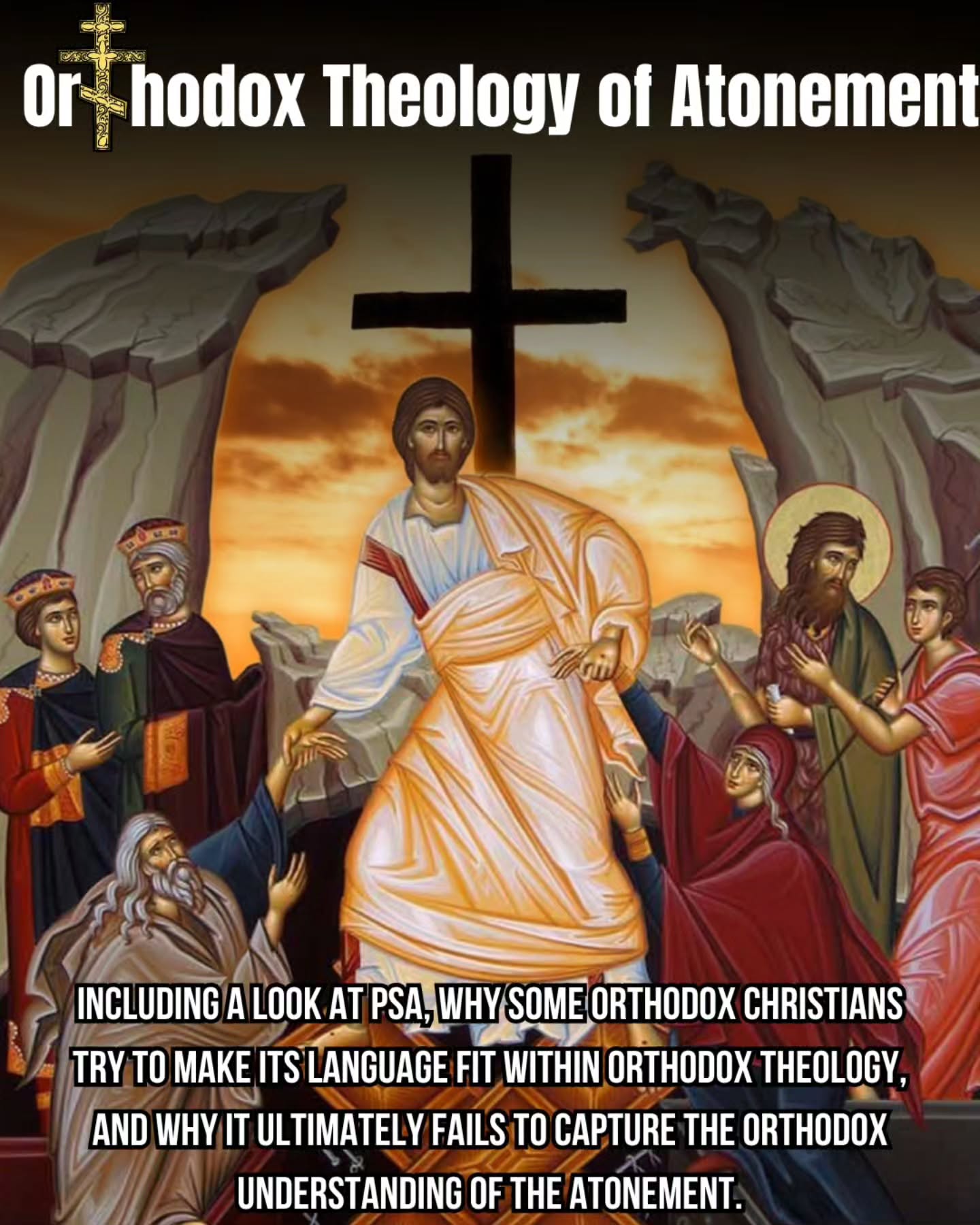
Making PSA compatible with Orthodoxy requires redefining its foundations

Attempting to reconcile penal substitutionary atonement with Orthodoxy forces a fundamental redefinition of its philosophical basis and theological structure. At that point you are no longer defending PSA; you are rebuilding it into Orthodox atonement theology.

5 opinions in the discussion Think about it: PSA goes against the very nature of God, because why would God "need" a legal payment for sin? God needs nothing, he's perfect and depends on nothing. The incarnation… Read the discussion
George Instagram discussion

Icons, idolatry, and the Incarnation: a response to the biblical objection

1:02

The speaker addresses the objection that kissing icons constitutes idolatry and that the Bible forbids images. He begins by citing Exodus 20, which prohibits making images for the purpose of worshiping them. He then points to Exodus 25, where God commands Moses to make two golden cherubim for the Ark of the Covenant, showing that not all images are forbidden. The Seventh Ecumenical Council, held in 787, formally distinguished between the worship…

The speaker addresses the objection that kissing icons constitutes idolatry and that the Bible forbids images. He begins by citing Exodus 20, which prohibits making images for the purpose of worshiping them. He then points to Exodus 25, where God commands Moses to make two golden cherubim for the Ark of the Covenant, showing that not all images are forbidden.

The Seventh Ecumenical Council, held in 787, formally distinguished between the worship due to God alone and the honor given to icons, explaining that the honor passes to the person depicted. The speaker illustrates this distinction with a personal analogy: kissing a photograph of his wife and son is an expression of love for them, not for the paper itself.

He quotes Saint John of Damascus, who wrote, "I do not worship matter. I worship the Creator of matter, who became matter for my sake." The Incarnation, in which God became a visible man, is the basis for depicting Christ in icons. The speaker concludes by asking the viewer what still bothers them about icons.

Key moments

  1. The speaker raises the question whether kissing icons is idolatry and whether the Bible forbids images.
  2. Exodus 20 prohibits making images to worship them.
  3. Exodus 25 records God commanding Moses to make two golden cherubim for the Ark of the Covenant.
  4. The Council of 787 taught that worship belongs to God alone while icons receive honor that passes to the person depicted.
  5. The speaker uses the analogy of kissing a photograph of his wife and son, the love is for them, not the paper.
  6. Saint John of Damascus is quoted: "I do not worship matter. I worship the Creator of matter, who became matter for my sake."
  7. The Incarnation, God becoming a visible man, is the basis for depicting Christ in icons.
  8. The speaker asks the viewer what still bothers them about icons.
13 opinions in the discussion Jesus said nothing about it, and none of the apostles did either. Jesus is our great high priest, our intercession and our great advocate who pleads our case in heaven before the Lord God. Read the discussion

Prayer request for Catholics converting to Orthodoxy

The post consists of a single sentence asking readers to pray for Catholics who are becoming Orthodox. It includes five hashtags identifying the topic: orthodox, catholic, orthodoxchristian, vatican, and orthodoxy. There is no additional text, no thread, no discussion, and no further details about who these Catholics are, how many, or what circumstances surround their conversion. The post functions as a brief intercessory request shared on a social media platform.

  • Author asks for prayers for Catholics converting to Orthodoxy
  • Post contains only one sentence and five hashtags
  • No further details or discussion provided
10 opinions in the discussion This is my second visit today to an Eastern Orthodox Church. I'm seriously thinking about converting. Read the discussion

Orthodox speaker challenges Maronite Catholic on Eucharist and conversion

An Orthodox speaker responds to a Maronite Catholic who acknowledges Orthodox dogmas such as the Filioque and papal claims but argues conversion is impractical because they already have access to saints, the Eucharist, tradition, and confession. The speaker denies that Maronites possess the Eucharist and states that prayer life and confession differ considerably in Orthodoxy. He accuses the questioner of choosing comfort over truth and placing…

An Orthodox speaker responds to a Maronite Catholic who acknowledges Orthodox dogmas such as the Filioque and papal claims but argues conversion is impractical because they already have access to saints, the Eucharist, tradition, and confession. The speaker denies that Maronites possess the Eucharist and states that prayer life and confession differ considerably in Orthodoxy.

He accuses the questioner of choosing comfort over truth and placing personal convenience above Christ and His exclusive Church. The speaker dismisses the claim that being Maronite is "basically Orthodox," calling it heterodox, and challenges the questioner to abandon worldly attachments and familial ties. He asks why the questioner does not adhere to even older familial ties of being Orthodox, comparing the situation to other cultural heritage claims.

The speaker urges the questioner to reject titles and comfort, submit to the truth, stop putting minor cares over the historic witness, and read the Holy Fathers on ecclesial exclusivity.

Key moments

  1. The questioner grants Orthodox dogmas such as the Filioque and papacy are true but argues conversion is impractical because they already have saint intercession, the Eucharist, tradition, and confession as a Maronite.
  2. The speaker denies that Maronites have the Eucharist and states that prayer life and confession are considerably different in Orthodoxy.
  3. The speaker accuses the questioner of putting ease over truth and personal comfort over the Lord Jesus Christ and His exclusive Church.
  4. The speaker challenges whether the process of becoming a catechumen and finding an Orthodox church truly outweighs the truth for the questioner.
  5. The speaker says this attitude is common and tells the questioner to let go of worldly attachments, including familial ties to being Maronite.
  6. The speaker asks why the questioner does not stick to even older familial ties of being Orthodox, comparing the situation to WASPs today or pseudo-heritage Catholics in the British Isles.
  7. The speaker declares that Maronite is not basically Orthodox but heterodox.
  8. The speaker urges the questioner to reject titles and comfort, submit to the truth, stop putting tiny cares over the historic witness, and read the Holy Fathers on exclusivity.
21 opinions in the discussion I said some really dumb stuff back when I was a Protestant too 😭💀 Read the discussion
Prayer Orthodoxy ® Instagram discussion

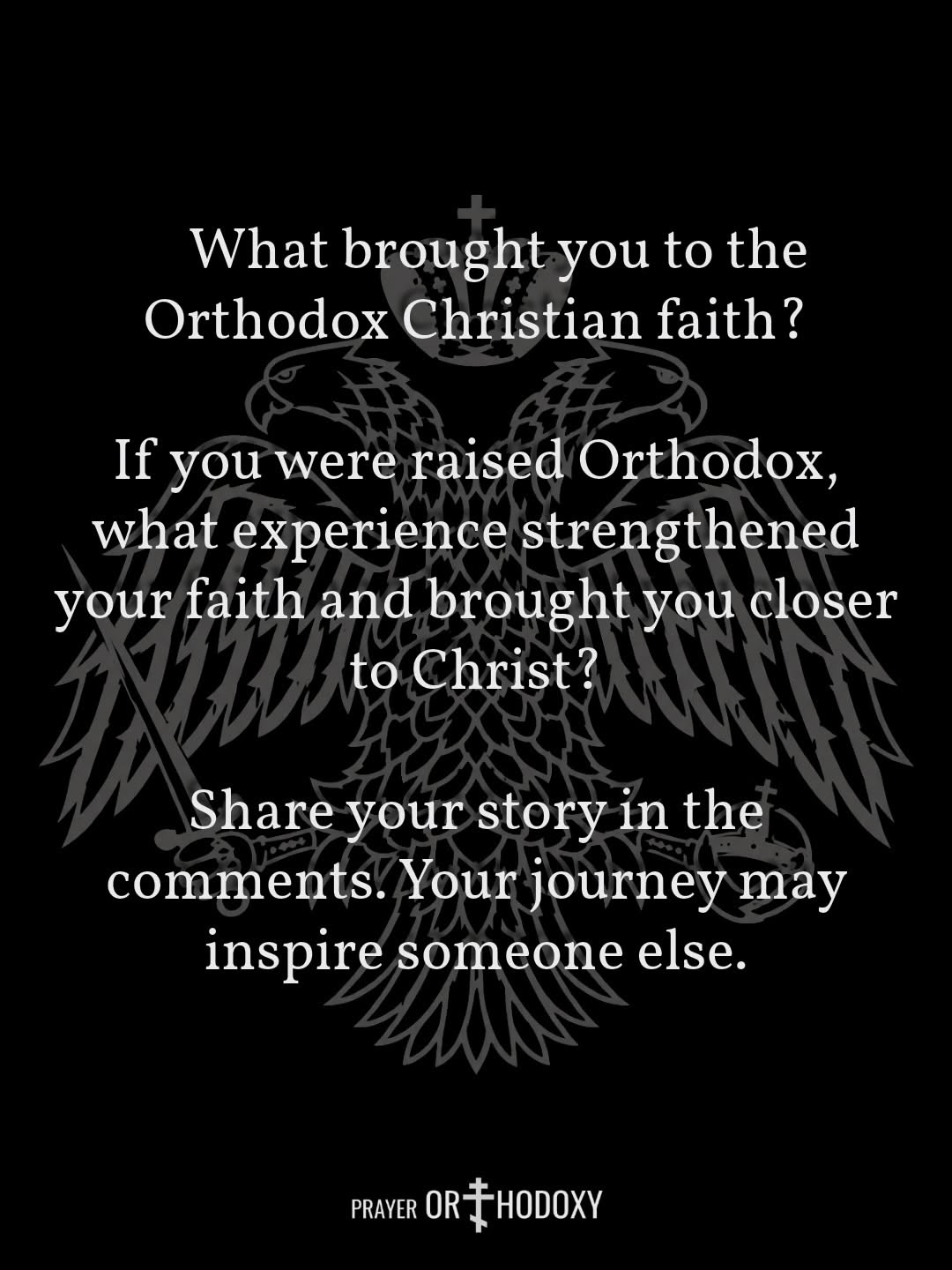
What Brought You to the Orthodox Faith?

What draws you to the Orthodox faith? Every journey of faith has a story.

What led you to the Orthodox Church? If you grew up Orthodox, what experience deepened your faith and drew you closer to Christ?

Share your story in the comments. Your testimony could inspire someone else on their spiritual journey.

The post also includes a Greek translation of these questions.

  • What brought you to the Orthodox Church?
  • If raised Orthodox, what experience strengthened your faith and brought you closer to Christ?
  • Share your story in the comments.
  • Your testimony may inspire someone on their spiritual journey.
8 opinions in the discussion I came out of Calvary Chapel. I got disillusioned when it went political and user friendly. I quit church entirely because I refused to sit in one that would bend with culture or the times.… Read the discussion
Disgruntled Docs with MaximosPTO Instagram discussion

Speaker links denial of ethnic distinctions in resurrection to Originist heresy

The speaker notes that every tribe, tongue, nation, and people group have members in the eschaton. He questions whether this means distinctions are wiped away in the resurrection, making people "grey goo." He asks if males become non-male in the eternal state. He identifies the erasure of identity and biology as the Originist heresy. He warns that claiming resurrection biology does not matter is Gnostic and Docetic. He connects this to…

The speaker notes that every tribe, tongue, nation, and people group have members in the eschaton. He questions whether this means distinctions are wiped away in the resurrection, making people "grey goo." He asks if males become non-male in the eternal state. He identifies the erasure of identity and biology as the Originist heresy.

He warns that claiming resurrection biology does not matter is Gnostic and Docetic. He connects this to Nestorianism by noting Christ assumed human nature through a specific Hebrew ethnicity. He argues that if ethnic distinctions vanish, the prophecies regarding every tribe and nation cannot be fulfilled.

He concludes this line of thought easily moves into Gnosticism. The original post affirms that ethnicities and people groups are real and that denying this has dangerous outcomes, stating this was not an issue until very recently.

Key moments

  1. The speaker notes that every tribe, tongue, nation, and people group have members in the eschaton.
  2. He questions whether this means distinctions are wiped away in the resurrection, making people "grey goo."
  3. He asks if males become non-male in the eternal state.
  4. He identifies the erasure of identity and biology as the Originist heresy.
  5. He warns that claiming resurrection biology does not matter is Gnostic and Docetic.
  6. He connects this to Nestorianism by noting Christ assumed human nature through a specific Hebrew ethnicity.
  7. He argues that if ethnic distinctions vanish, the prophecies regarding every tribe and nation cannot be fulfilled.
  8. He concludes this line of thought easily moves into Gnosticism.
19 opinions in the discussion The replacement of Whites in their native countries will be looked back on in history as one of the greatest evils of all time. Knowing the church has a responsibility to call this out and… Read the discussion
George Instagram discussion

Saint Porphyrios: children learn from parents' life, not lectures

The video presents Saint Porphyrios' teaching that children are formed by the daily life of their parents in the home rather than by rules, lectures, or discipline. He states that children's behavior improves through love, harmony, and understanding between parents, not through reprimands or strictness. Children observe how their parents speak to each other, how they react when tired, and whether they actually pray. The speaker recounts that his…

The video presents Saint Porphyrios' teaching that children are formed by the daily life of their parents in the home rather than by rules, lectures, or discipline. He states that children's behavior improves through love, harmony, and understanding between parents, not through reprimands or strictness. Children observe how their parents speak to each other, how they react when tired, and whether they actually pray.

The speaker recounts that his grandfather never lectured about God but simply prayed the Our Father with the family each night, a practice that left a lasting impression. Saint Porphyrios urges parents to become saints in their relationship to their children through mildness, patience, and love. The teaching concludes with the direct statement that if you want your children to love God, you must start with yourself.

Key moments

  1. Most parents think they raise good children by telling them what to do.
  2. Saint Porphyrios says what saves children is the life of the parents in the home, not rules or lectures.
  3. Children's behavior is not improved by reprimands, disciplining, or strictness.
  4. Children need love, harmony, and understanding between the parents.
  5. Children learn from what they see: how parents speak to each other, react when tired, and whether they pray.
  6. The speaker's grandfather never gave a lecture about God but prayed the Our Father with them every night.
  7. Saint Porphyrios says parents need to become saints through mildness, patience, and love.
  8. If you want your children to love God, start with yourself.
6 opinions in the discussion My parents divorced when I was young, but through the Grace of God I found my Faith. My parents taught me right from wrong and to respect my elders, but God blessed me with His love and… Read the discussion
Timothy Instagram discussion

Post contains only Orthodox and Catholic hashtags

1:06

The post consists of an Orthodox cross emoji and six hashtags: #orthodoxchristian, #christian, #orthodoxy, #catholic, #church. There is no accompanying text, thread, or discussion. The hashtags indicate topics related to Orthodox Christianity and Catholicism.

  • Orthodox cross emoji
  • Hashtag: #orthodoxchristian
  • Hashtag: #christian
  • Hashtag: #orthodoxy
  • Hashtag: #catholic
24 opinions in the discussion I used to like Phil right up until he started going after apostolic churches. Read the discussion