WeOrthodox
EN UA

Orthodox discussions worth reading

Only the posts and videos that started a real conversation, with the most thoughtful opinions.

Orthodox Health with Fr.TEDTalks Instagram discussion

Yoga's spiritual ambiguity and the case for Pilates

1:35

The post promotes Episode 81 of the Orthodox Health Podcast, 'When Life Falls Apart, You Need a Bunker,' featuring Fr. Ted Paraskevopoulos. It opens with the statement that a stretch can be physically useful without every practice built around that stretch being spiritually interchangeable. The post states that Christians are formed by more than propositions; practices teach us too. They shape what we attend to, what we repeat, what we…

The post promotes Episode 81 of the Orthodox Health Podcast, 'When Life Falls Apart, You Need a Bunker,' featuring Fr. Ted Paraskevopoulos. It opens with the statement that a stretch can be physically useful without every practice built around that stretch being spiritually interchangeable. The post states that Christians are formed by more than propositions; practices teach us too.

They shape what we attend to, what we repeat, what we normalize, and eventually the framework through which we interpret our own experience. That is why discernment matters. Someone deeply rooted in the Orthodox faith may recognize where ordinary mobility work ends and another spiritual anthropology begins. Someone who barely knows the Creed, rarely participates in the sacramental life, and is hungry for something 'mystical' is in a very different position.

The speaker distinguishes traditional Indian yoga from the commercialized North American version, calling the latter a bastardized form. Even the commercialized version can introduce meditation elements the speaker does not recommend. Most Orthodox Christians, especially cradle Orthodox, do not know their faith well enough to discern safe yoga from unsafe yoga.

The speaker recounts friends who abandoned Christianity after a yoga studio pushed spirituality; they accepted everything because they were ignorant of their faith. The danger comes from lack of discernment, not necessarily demonic forces. The speaker recommends Pilates for fitness, noting it was created by a Greek man in Germany and offers biomechanically optimal movements for mobility.

The speaker questions why people remain attached to the word 'yoga' when better exercise options exist. The first question to anyone considering yoga is how well they know their faith; if not well-versed, they should stay away and not dabble. The post also invites readers to comment 'BUNKER' to receive the full conversation with Fr. Ted.

Key moments

  1. Yoga in India and yoga in North America are two different things; the North American version is a bastardized, commercialized form.
  2. Even the commercialized version can be dangerous because it includes meditation elements the speaker does not recommend.
  3. Most Orthodox Christians, especially cradle Orthodox, do not know their faith well enough to discern safe yoga from unsafe yoga.
  4. The speaker knows friends who fell away from Christianity after a yoga studio pushed spirituality; they accepted everything because they were ignorant of their faith.
  5. The danger comes from lack of discernment, not necessarily from demonic forces.
  6. The speaker recommends Pilates for fitness, noting it was created by a Greek man in Germany and offers biomechanically optimal movements for mobility.
  7. The speaker questions why people are so attached to the word "yoga" when better exercise options exist.
  8. The speaker's first question to anyone considering yoga is how well they know their faith; if not well-versed, they should stay away and not dabble.
7 opinions in the discussion Repentant former certified yoga teacher here: NOPE. (Don't dabble) 🙏 Read the discussion

Greek vs Russian Orthodox Traditions

Yesterday I talked with a Greek Orthodox priest and asked him some questions about the church. His answers seemed to be the opposite of what I've read about Orthodoxy, and it left me confused. I asked him about head coverings and when I should wear one, and he said he thinks that was only an issue for the church in Corinth. He added that most of the women in his parish don't cover their heads. I also asked what the church teaches about…

Yesterday I talked with a Greek Orthodox priest and asked him some questions about the church. His answers seemed to be the opposite of what I've read about Orthodoxy, and it left me confused. I asked him about head coverings and when I should wear one, and he said he thinks that was only an issue for the church in Corinth.

He added that most of the women in his parish don't cover their heads. I also asked what the church teaches about submission in marriage, like what you say yes to and what you say no to. He surprised me by saying he doesn't believe in it at all, that marriage is simply a partnership and nothing more.

So now I'm confused. Does the Orthodox church not hold these beliefs? Whenever I see an Orthodox church online, the women are wearing head coverings, but maybe that's just a Russian tradition? I thought the churches were supposed to be unified in doctrine and belief, so I don't understand why this priest seems to be giving me his own opinions instead of the church's teaching.

  • A Greek Orthodox priest said head coverings were only an issue for the church in Corinth, and most women in his parish don't wear them
  • The priest said he doesn't believe in submission in marriage, calling marriage just a partnership
  • The author wonders if head coverings are only a Russian tradition
  • The author is confused because the churches are supposed to be unified in doctrine and belief
39 opinions in the discussion Russian Orthodox here. When my husband and I got married, our priest specifically pointed out that it's becoming a common misconception that women should submit. He said it's a wrong… Read the discussion
George Instagram discussion

How to Greet an Orthodox Priest: Ask for a Blessing

1:04

Many people feel awkward when greeting an Orthodox priest because they do not know whether to shake his hand, kiss it, or simply say hello. The video explains the proper greeting: ask for the priest's blessing. You place your right palm over your left, both facing up, and say, 'Father, bless me.' The priest then makes the sign of the cross over you, places his right hand in yours, and you kiss his hand. The video also explains the gesture the…

Many people feel awkward when greeting an Orthodox priest because they do not know whether to shake his hand, kiss it, or simply say hello. The video explains the proper greeting: ask for the priest's blessing. You place your right palm over your left, both facing up, and say, 'Father, bless me.' The priest then makes the sign of the cross over you, places his right hand in yours, and you kiss his hand.

The video also explains the gesture the priest makes while blessing. He shapes his fingers to form the letters IC XC, the short form of the name Jesus Christ in Greek. This means the priest blesses in Christ's name, not in his own.

Kissing the priest's hand is explained as a way of honoring the hands that hold the body and blood of Christ at every liturgy. The video closes with a simple instruction: the next time you see a priest, hold out your hands and say, 'Father, bless me.'

Key moments

  1. Many people feel awkward greeting a priest because they do not know whether to shake his hand, kiss it, or just say hello.
  2. The proper greeting is to ask for his blessing: put your right palm over your left, facing up, and say, 'Father, bless me.'
  3. The priest makes the sign of the cross over you, places his right hand in yours, and you kiss his hand.
  4. When blessing, the priest shapes his fingers into the letters IC XC, the short form of Jesus Christ in Greek, so he blesses in Christ's name, not his own.
  5. Kissing the priest's hand honors the hands that hold the body and blood of Christ at every liturgy.
  6. Next time you see a priest, hold out your hands and say, 'Father, bless me.'
15 opinions in the discussion Nope, nobody ever taught me either, so thank you for this. Read the discussion

Street evangelist Bryce Crawford tells a stranger what he 'senses' about his past

The post asks whether Bryce Crawford has always done what the poster calls the mind reading prophet thing, tagging it with orthodox, protestant, orthodoxchristian, apologetics and christianreels. The clip shows Crawford, a street evangelist, approaching a young man and telling him he senses in his heart that the man lost a friend between the ages of 8 and 10. He asks whether that is true, says he is going to check on him, calls him Tupac, and…

The post asks whether Bryce Crawford has always done what the poster calls the mind reading prophet thing, tagging it with orthodox, protestant, orthodoxchristian, apologetics and christianreels. The clip shows Crawford, a street evangelist, approaching a young man and telling him he senses in his heart that the man lost a friend between the ages of 8 and 10. He asks whether that is true, says he is going to check on him, calls him Tupac, and gives him a hug.

When the young man asks how he could know that, Crawford answers that he does not know, and that Jesus sees the man in his pain. He then asks the young man what he thinks about it. The question in the post invites viewers to weigh this style of evangelism: whether such statements about a stranger's private grief are a legitimate way of pointing someone to Christ, or a performance that borrows the language of prophecy.

The tags suggest the audience for the debate includes both Orthodox and Protestant Christians interested in apologetics, and the poster's phrasing hints at skepticism about the practice. The clip itself does not resolve the question; it only records the encounter and Crawford's own explanation, which attributes the knowledge to Jesus rather than to himself.

Key moments

  1. Bryce Crawford tells a young man he heard in his heart that the man lost a friend when he was 8 to 10 years old, and asks if it is true.
  2. He says he is going to go check on the man, calls him Tupac, and gives him a hug.
  3. Asked how he could know that, he says he does not know, and that it is because Jesus sees the man in his pain.
  4. He asks the young man what he thinks about this.
21 opinions in the discussion "When you were 8 to 10 years old". That's exactly how psychics and mediums work. A two-year window is not the kind of accuracy you see when the Holy Spirit actually operates. Read the discussion

Kissing Icons in Athens: Answering the Charge of Shirk from Exodus

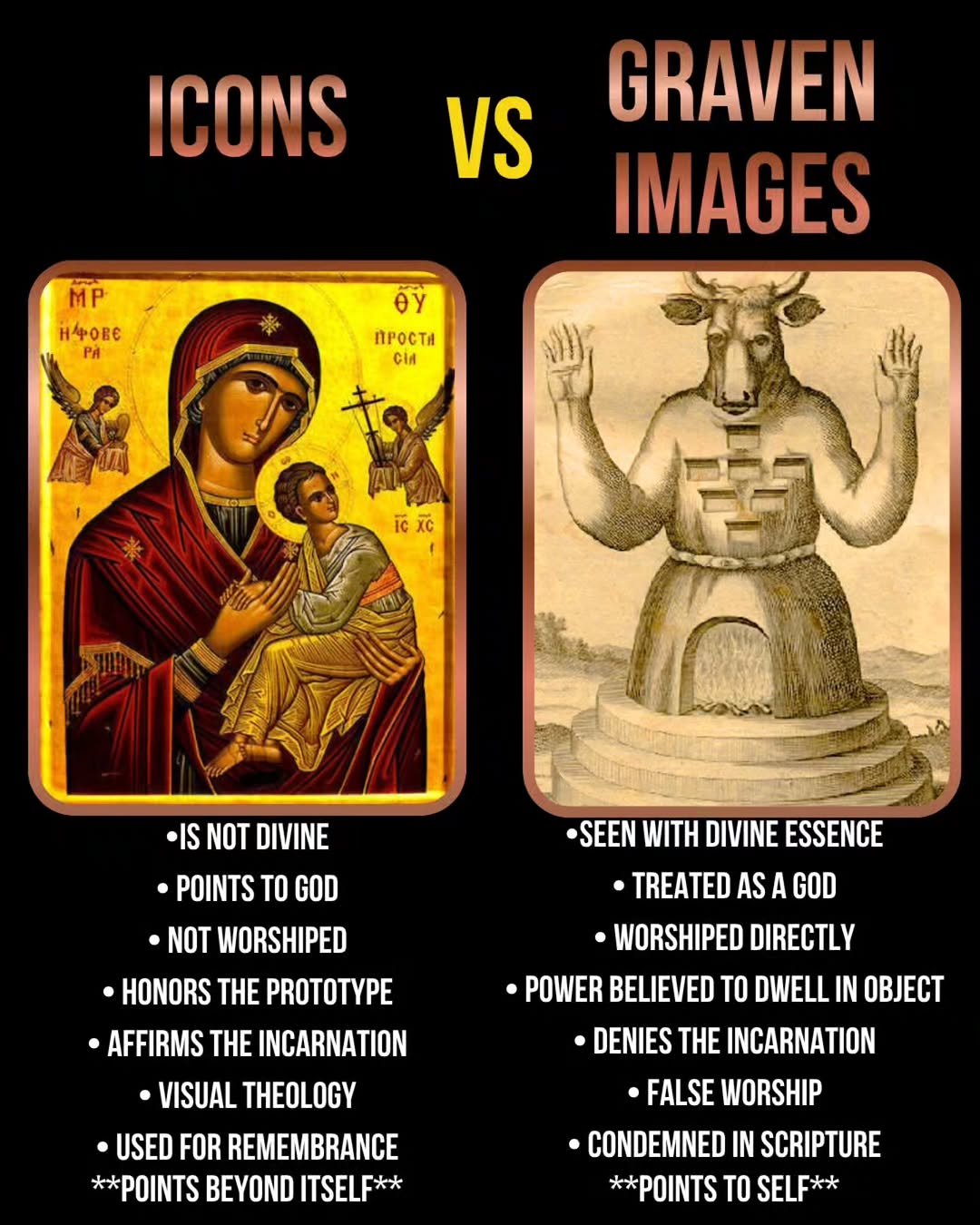
A man whispers inside a church in Athens, where people are praying, and takes up the objection that kissing icons violates Exodus 20:3-5, which forbids making images and bowing to them. He notes that the first thing Christians do on entering the church is kiss the icons. A Muslim caller had told him the practice is an innovation and shirk, and he answers the charge directly. His first argument is that Muhammad found images of Mary and Jesus in…

A man whispers inside a church in Athens, where people are praying, and takes up the objection that kissing icons violates Exodus 20:3-5, which forbids making images and bowing to them. He notes that the first thing Christians do on entering the church is kiss the icons. A Muslim caller had told him the practice is an innovation and shirk, and he answers the charge directly.

His first argument is that Muhammad found images of Mary and Jesus in the Kaaba and did not destroy them. He then turns to Scripture and cites Exodus 25, where God commands Moses to make images of cherubim and place them on the Ark of the Covenant. He reads Exodus 20 as a prohibition against idolatry rather than against images as such, and points to the golden calf episode in Exodus 32 as the example of what God condemned.

He adds a third biblical example: in Numbers 21 God told Moses to make a bronze serpent so that the people who looked at it would be healed. He says Jesus alluded to that serpent as a type of himself on the cross. The video moves quickly between the church setting, the caller's objection, and the biblical texts, keeping the focus on whether the command in Exodus 20 rules out the veneration Christians show to icons.

The examples from the Kaaba, the Ark, and the bronze serpent are the core of his case, and each one is meant to show a difference between honoring an image connected to God's work and worshiping an image as a god.

Key moments

  1. 0:00 The speaker is in a church in Athens and whispers because people are praying there; he quotes Exodus 20:3-5 forbidding images and worshiping them, and says the first thing one does entering the church is kiss the icons.
  2. 0:33 He answers a Muslim who calls the practice an innovation and shirk, saying Muhammad found a picture of Mary and Jesus in the Kaaba and did not destroy it.
  3. 1:06 He cites Exodus 25, where God commands Moses to make images of the cherubim and place them on the Ark of the Covenant.
  4. 1:46 He says Exodus 20 was a prohibition against idolatry, shown by God's displeasure with the golden calf in Exodus 32.
25 opinions in the discussion "I was an Orthodox Christian" **Proceeds to read Exodus and skip Orthodox History** Read the discussion
Prayer Orthodoxy ® Instagram discussion

What do you wish more people understood about Orthodoxy?

There are many misconceptions about the Orthodox Christian faith. Here is your chance to share something you wish others understood better about our worship, theology, traditions, or way of life. What would you tell them? Share your answer in the comments.

  • Many misconceptions exist about the Orthodox Christian faith
  • Readers are invited to share what they wish others understood about worship, theology, traditions, or way of life
24 opinions in the discussion Taking part in the Holy Sacraments with people of other denominations is a sin that requires confession and repentance. We are not united in one Church or one faith. We're called to love… Read the discussion
T timotheos.orthodoxy Instagram discussion

Catechumen reflects on how interior state changes experience of Divine Liturgy

0:19

Tim, a catechumen of the Greek Orthodox Church, introduces his account where he documents his path toward Orthodoxy alongside his background in fitness and business. He has been involved in fitness for nearly two decades, some of it competitive, and has built his own successful business. In the attached video, he reflects on how the perception of time during the Divine Liturgy shifts depending on one's interior state. The Divine Liturgy has a…

Tim, a catechumen of the Greek Orthodox Church, introduces his account where he documents his path toward Orthodoxy alongside his background in fitness and business. He has been involved in fitness for nearly two decades, some of it competitive, and has built his own successful business. In the attached video, he reflects on how the perception of time during the Divine Liturgy shifts depending on one's interior state.

The Divine Liturgy has a fixed structure but the perception of time shifts with interior state. When distracted, anxious, or tired, minutes drag and one notices repetitions and physical discomfort. When entering with attention or grace grants compunction, the same two hours vanish.

The chant carries you, readings settle into the heart, and the Anaphora becomes the center of the world. The Liturgy is an encounter; some days you show up, other days you are present.

Key moments

  1. The Divine Liturgy has a fixed structure but perception of time shifts with interior state.
  2. When distracted, anxious, or tired, minutes drag and one notices repetitions and physical discomfort.
  3. When entering with attention or grace grants compunction, the same two hours vanish.
  4. The chant carries you, readings settle into the heart, and the Anaphora becomes the center of the world.
  5. The Liturgy is an encounter; some days you show up, other days you are present.
6 opinions in the discussion Nah that's happened to me so many times, I almost feel like they get shorter every time I go. The first time I attended I could've sworn it took 4 hours but now it feels like 45 minutes. Read the discussion
T timotheos.orthodoxy Instagram discussion

Catechumen shares Orthodox journey, fitness background, and business experience

0:08

Please let everyone know.

I am Tim, a catechumen in the Greek Orthodox Church, and I share everything I am learning and every obstacle I face on the way to Orthodoxy. I have also spent nearly twenty years in fitness, some of it at a competitive level, and I have built a successful business of my own.

Follow along so we can grow together.

Thank you. All praise to the Lord. Amen.

15 opinions in the discussion Still a Catechumen, but: I'm becoming Orthodox because it's the original, unchanged Church, the one that gathered the Bible and still prays it as it was first written, and because its view… Read the discussion
Kyle YouTube discussion

Six Serbian Saints Who Kept Faith Through Centuries of Crisis

Six Serbian Saints Who Kept Faith Through Centuries of Crisis 26:43

An American convert received into a Serbian Orthodox parish describes how Serbian Orthodoxy preserved faith through Ottoman rule, communism, and war. The speaker's priest was born in Serbia, served under communism, faced pressure to spy on the church, and knew Patriarch Pavle personally. The video presents six saints who exemplify faithfulness under pressure. St. Sava, born Rastko around 1175, left royal status for Mount Athos, became a monk,…

An American convert received into a Serbian Orthodox parish describes how Serbian Orthodoxy preserved faith through Ottoman rule, communism, and war. The speaker's priest was born in Serbia, served under communism, faced pressure to spy on the church, and knew Patriarch Pavle personally. The video presents six saints who exemplify faithfulness under pressure.

St. Sava, born Rastko around 1175, left royal status for Mount Athos, became a monk, founded Hilandar Monastery with his father Simeon, and returned as first archbishop of the autocephalous Serbian Church. St. Lazar chose a heavenly kingdom over an earthly one at the 1389 Battle of Kosovo, accepting certain death; the military defeat became a spiritual cornerstone of Serbian identity.

St. Nikolai Velimirovich, called the Serbian Chrysostom, was imprisoned in Dachau and taught that enemies drive us toward God and that the real battle is between who we are and who God wants us to become. St. Justin Popovich, removed from his academic post under communism, taught that Orthodoxy is an experience to live, not a library to study, and that all truth derives from Christ the God-man.

St. Sebastian, the first American-born Orthodox priest, served as a poor missionary across the United States. Patriarch Pavle, who led the church from 1990 to 2009, lived in simplicity, used public transport, and urged "let us be human" during Yugoslavia's wars, showing faith made visible through humility and love for enemies. Each saint demonstrates the same gospel lived out in different circumstances, showing that holiness comes from denying oneself and following Christ.

Key moments

  1. 0:00 The speaker was received into Orthodoxy through a Serbian parish and found a culture of family, community, and living traditions centered on faith.
  2. 1:02 Serbia historically held back Ottoman expansion into Europe, suffering centuries of foreign domination while producing saints and martyrs who never gave up their faith.
  3. 2:04 The speaker's priest was born in Serbia, served under communism, was pressured to spy on the church, and personally knew Patriarch Pavle, a living saint.
  4. 4:40 St. Sava (born Rastko c. 1175) left royal status for Mount Athos, became a monk, founded Hilandar Monastery with his father Simeon, and returned as first archbishop of the autocephalous Serbian Church.
  5. 7:14 St. Lazar chose a heavenly kingdom over an earthly one at the 1389 Battle of Kosovo, accepting certain death; the military defeat became a spiritual cornerstone of Serbian identity.
  6. 11:24 St. Nikolai Velimirovich, the "Serbian Chrysostom," was imprisoned in Dachau; he taught that enemies drive us to God and that the real battle is between who we are and who God wants us to become.
  7. 17:39 St. Justin Popovich, removed from his academic post under communism, taught that Orthodoxy is an experience to live, not a library to study, and that all truth derives from Christ the God-man.
  8. 22:18 Patriarch Pavle (1990-2009) lived in simplicity, used public transport, and urged "let us be human" during Yugoslavia's wars, showing faith made visible through a life of humility and love for enemies.
19 opinions in the discussion Patriarch Pavle was genuinely one of a kind. He was the sort of man you might bump into while heading out to buy bread. He walked the city, rode the bus, chatted with people, would just say… Read the discussion
George Instagram discussion

A grandfather's nightly sign of the cross: a Cretan village childhood and a return to Orthodoxy

1:34

The speaker marks three weeks of the account, which has grown to more than 30,000 people, and begins telling his life story. He grew up in a small village in the mountains of Crete, and his grandfather was the one who brought him close to God. Every night his grandfather made the sign of the cross over him and his sister and prayed the Our Father. The children would not go to bed until he came, and they called him to come and cross them. On…

The speaker marks three weeks of the account, which has grown to more than 30,000 people, and begins telling his life story. He grew up in a small village in the mountains of Crete, and his grandfather was the one who brought him close to God. Every night his grandfather made the sign of the cross over him and his sister and prayed the Our Father.

The children would not go to bed until he came, and they called him to come and cross them. On Sundays the children of the village met at church, helped in the liturgy, wore little church robes, and entered the altar where the priest prepares Holy Communion. As a child he believed without doubt; when he was told that paradise exists, it was as real to him as life in the village.

He left home at 16 and lost a little of his faith for many years, but he never forgot those nights with his grandfather or the time spent helping in church. He says that memory is a big part of why he returned to Orthodoxy, and he named his son Manuel after his grandfather. He closes by asking viewers whether they remember the first person who taught them to pray.

Key moments

  1. The speaker notes the account reached more than 30,000 people in three weeks and begins sharing his life story.
  2. He grew up in a small village in the mountains of Crete, and his grandfather brought him close to God.
  3. Every night his grandfather made the sign of the cross over him and his sister and prayed the Our Father; they would not go to bed until he came and they called him to come and cross them.
  4. On Sundays the children of the village met at church, helped in the liturgy, wore little church robes, and went inside the altar where the priest prepares Holy Communion.
  5. As a child he believed without doubt; when told paradise exists, it was as real to him as life in the village.
  6. He left home at 16 and lost a little of his faith for many years, but never forgot the nights with his grandfather or helping in church.
  7. That memory is a big part of why he returned to Orthodoxy and why he named his son Manuel after his grandfather.
  8. He asks viewers: do you remember the first person who taught you to pray?
5 opinions in the discussion Yes. For me it was my uncle. As a kid I honestly hated the liturgy because it was so long and I barely understood anything (the language is Ge'ez), but afterwards he would always take me to… Read the discussion
George Instagram discussion

Returning to Church After a Painful Priest Encounter

1:25

The speaker addresses people who have stopped attending church because of a negative experience with a priest. He acknowledges that priests can be harsh or hurtful, and that they are human with varying levels of wisdom and humility. He emphasizes that one priest does not represent the entire Church, which is the Body of Christ with 2000 years of tradition, saints, sacraments, and prayers. The speaker encourages those who have left to return to…

The speaker addresses people who have stopped attending church because of a negative experience with a priest. He acknowledges that priests can be harsh or hurtful, and that they are human with varying levels of wisdom and humility. He emphasizes that one priest does not represent the entire Church, which is the Body of Christ with 2000 years of tradition, saints, sacraments, and prayers.

The speaker encourages those who have left to return to church life by visiting different parishes and monasteries and by speaking with spiritual fathers. He shares his own experience of staying away from the Church for many years and describes that decision as his biggest mistake. The talk centers on the distinction between an individual clergyman's failings and the fullness of the Church's life, urging listeners not to let one person's behavior separate them from the sacramental and communal life that has sustained Orthodox Christians for two millennia.

The argument rests on the theological understanding that the Church is not defined by any single minister but by its identity as the Body of Christ, carrying the weight of two thousand years of prayer, saintly witness, and sacramental grace. By pointing to the availability of other parishes, monasteries, and spiritual fathers, the speaker offers practical steps for those wounded by clergy to re-engage without ignoring their pain.

Key moments

  1. 0:00 People stop going to church because of one priest's behavior or words
  2. 0:30 Priests are human and can be wrong, with varying wisdom and humility
  3. 1:00 One priest is not the Church; the Church is the Body of Christ with 2000 years of tradition
10 opinions in the discussion I hear you loud and clear. But I have a question: suppose I don't particularly like my priest at my church, but I still go. So two questions: am I at fault for not liking him, even though… Read the discussion

How to handle unwanted advances from an older parishioner

I'm new to the Orthodox Church, recently baptized and chrismated, and I love my parish. I truly feel at home there. But there's one problem: an older man, probably twenty years older than me, who attends. When I first started coming, I made the mistake of giving him my number because I wanted to get involved and meet people. At the time he was running the classics book club, and I asked him to send me the details. After the liturgy he waits for…

I'm new to the Orthodox Church, recently baptized and chrismated, and I love my parish. I truly feel at home there. But there's one problem: an older man, probably twenty years older than me, who attends. When I first started coming, I made the mistake of giving him my number because I wanted to get involved and meet people. At the time he was running the classics book club, and I asked him to send me the details.

After the liturgy he waits for me before I go into agape. It's awkward because when I sit at a table with only women, he seeks me out and sits right where I am. I try to be polite, and I don't think he's a bad person, just not picking up on the hints and almost overbearing. I've excused myself multiple times. He texts me asking to go to lunch under the pretense of helping me in my faith.

I've declined politely, told him I'm seeing someone, and said I want to take my faith questions and concerns to my priest or my sponsor.

He keeps texting and tells me the priest is very busy. This is the same man who approaches me every time I receive communion because he only saw my baptism and not my chrismation, even though they were part of the same ceremony.

I don't want to be rude, but I don't know what else to say to make him get the point. I also don't want to cause any trouble. I guess the next step would be to tell my priest, but again, I don't want to be seen as a troublemaker. I've even started changing where I stand during the liturgy so he can't see me. Do I just block him and then run away when I see him? I'm trying to be an adult, but the old me wants to tell him to back off in not-so-nice words.

  • Older parishioner waits after liturgy and follows the author to women's tables
  • He texts invitations to lunch framed as spiritual guidance despite polite refusals
  • He questions the author at every communion because he missed the chrismation
  • Author has changed liturgy position to avoid him and fears being labeled a troublemaker
  • Asks whether blocking and avoiding him is the only remaining option
25 opinions in the discussion Talk to the priest's wife (matushka, presvytera, etc...). She and the Yiayias/Babushkas/etc. will get him set straight. Read the discussion
P Paul Kingsnorth Substack discussion

The Monthly Salon: October

October has arrived, which means autumn is here too, though right now it doesn't feel like it. Even the wind is hot in Ireland, and that's not normal. But then, there's no normal anymore. Everything is turning in strange directions and very little makes sense. Here I am typing words onto a screen, wondering how many non-human entities will read them. I think normal is over, and for quite some time to come. On the plus side, it's been a great…

October has arrived, which means autumn is here too, though right now it doesn't feel like it. Even the wind is hot in Ireland, and that's not normal. But then, there's no normal anymore. Everything is turning in strange directions and very little makes sense. Here I am typing words onto a screen, wondering how many non-human entities will read them. I think normal is over, and for quite some time to come.

On the plus side, it's been a great year for tomatoes. I'm still harvesting them.

Forgive the dark opening to this month's salon. I've been writing my talks for my upcoming brief trip to America, and they're focused on what it means to be human in the age of the singularity. I'm finding that things have changed a lot even since Against The Machine was published just thirteen months ago. Buckle up. It only gets faster from here.

On that note, the two talks I'll be giving Stateside next month are the Being Human Conference in Atlanta, Georgia on Friday 6th November, and the University of Wisconsin on Monday 9th November.

I'll also be speaking in the Netherlands a few weeks later, at the Nexus Institute annual conference.

Let me briefly discuss something much lighter: saints. Also holy wells, ruined abbeys, round towers, bullauns, high crosses, and the caves of hermits. I'll be taking a tour group around all of these things, and more, on my 2027 summer pilgrimage in the west of Ireland. This is a nine-day pilgrim tour of some of the most significant sites of early Christian Ireland, plenty of which have featured on this Substack over the years.

I'll be talking about early Celtic Christianity, the saints of Ireland, and the way the faith lingers in the landscapes here.

Since I first advertised this pilgrimage a few weeks back, it's proved popular. Most of the places are now booked: just ten remain. After that, there will be a waiting list. If you would like a place, now would be the time to pounce. Full details of the pilgrimage and booking details are available.

In other news this month: I appeared a few weeks back on the BBC Radio 4 programme Last Word, an obituary programme which tells the stories of the notable recently-deceased. I was asked on to talk about Wendell Berry. I haven't listened to it because, contrary to rumours, I hate the sound of my own voice. But if you are a Berry fan it may be worth dipping into.

I also appeared on a recent episode of the Resound Project podcast, talking about a subject which will surprise absolutely nobody at all.

The UK edition of Against The Machine is now out in paperback, if you're looking for a cheaper version of the book with some boastful quotes on the cover. If you want an even cheaper edition, and you like reading on Kindles, I'm told the e-book edition will be on sale for 99p for one day only on 27th October. Form an orderly queue.

That's enough advertising. Let's move on to the meat of the matter: what do you want to talk about? The Salon is a place for my readers to open up a conversation about anything at all. New voices are very much encouraged, as is swerving off the beaten track. Over to you. And thank you, as ever, for being here.

  • Normal is over and things are turning in strange directions
  • Upcoming talks in Atlanta (Nov 6), Wisconsin (Nov 9), and the Netherlands
  • 2027 Ireland pilgrimage has 10 spots left before waiting list
  • BBC Radio 4 appearance on Wendell Berry and Resound Project podcast
  • Against The Machine paperback out now; ebook 99p on Oct 27
27 opinions in the discussion Glad to hear your pilgrimage tours are doing well. You sound very cagey about what's happening in the world that I somehow stay ignorant of. Yesterday I made an important discovery: I think… Read the discussion

Funeral at 425 AD Gaza church for mother and daughter killed in airstrike

1:50

The post reports on a funeral held October 4 at Saint Porfidios Church in Gaza City, built in 425 AD, for Maysa and Mary, a mother and daughter killed in an Israeli airstrike inside their apartment. The church, which has survived 1,600 years of empires, was bombed in October 2023 while sheltering 450 Christians and Muslims, killing 19 people including eight children and five women. In December 2023, Israeli snipers and tanks fired on Holy Family…

The post reports on a funeral held October 4 at Saint Porfidios Church in Gaza City, built in 425 AD, for Maysa and Mary, a mother and daughter killed in an Israeli airstrike inside their apartment. The church, which has survived 1,600 years of empires, was bombed in October 2023 while sheltering 450 Christians and Muslims, killing 19 people including eight children and five women.

In December 2023, Israeli snipers and tanks fired on Holy Family Catholic Church and the Sisters of Charity, killing an elderly woman and her daughter as they walked to the bathroom. The pattern extends to 1979 when Father Philomenos, a Cypriot priest serving as hegumen at Jacob's Well in Nablus, the site where Jesus met the Samaritan woman, was murdered during Vespers by an attacker who threw a grenade and killed him with an axe.

Father Philomenos was canonized by the Patriarch of Jerusalem in 2009 as Saint Philomenos, a new hieromartyr of Jacob's Well. The speaker identifies a continuous pattern of attacks on churches and clergy: bombs on churches, snipers on nuns, axes in monasteries. The post argues that Christianity in the Holy Land is not dead but is being martyred in real time, and that the true church has bled there for over 2,000 years while the West teaches Christianity started 500 years ago in Europe.

The post concludes with a call to light a candle for Maysa, Mary, and Saint Philomenos, saying "Memory eternal."

Key moments

  1. 0:00 Christianity in the Holy Land is being martyred in real time; funeral for Maysa and Mary held at Saint Porfidios on October 4th after Israeli airstrike.
  2. 0:32 Saint Porfidios, built in 425 AD, bombed in October 2023 while sheltering 450 Christians and Muslims; 19 killed including eight children and five women.
  3. 0:32 In December 2023, Israeli snipers and tanks opened fire on Holy Family Catholic Church and Sisters of Charity, killing an elderly woman and her daughter.
  4. 1:07 In 1979, Father Philomenos, Hegumen at Jacob's Well in Nablus, was murdered during Vespers by a man who threw a grenade and killed him with an axe.
  5. 1:07 Father Philomenos was canonized by the Patriarch of Jerusalem in 2009 as Saint Philomenos, new hieromartyr of Jacob's Well.
  6. 1:40 The speaker identifies a pattern: 1979 Jacob's Well, 2023 Saint Porfidios, 2023 Holy Family, October 4th Saint Porfidios again; bombs, snipers, axes.
  7. 1:40 The West teaches Christianity started 500 years ago, but the true church has bled in the Holy Land for over 2000 years and never left.
  8. 1:40 Call to light a candle for Maysa, Mary, and Saint Philomenos; "Memory eternal. God bless you all."
10 opinions in the discussion It's not just about that. It's about the ethnic cleansing of native ethnic Christians who have kept these traditions since the time of Jesus, and replacing them with Western Jews. Before… Read the discussion

My dog died today. Please pray for her, her name is Ellie

I'm a huge sinner, and I honestly don't know what I believe theologically anymore. But I know God loved her dearly, and he loved me too, because he gave me the greatest gift of my life while I was still a child. She died peacefully in my childhood garden, where she always played.

  • The author asks for prayers for Ellie, their dog who died today.
  • They say they are a sinner and no longer know what they believe theologically.
  • They trust that God loved her and gave them this gift as a child.
  • She died peacefully in the garden where she always played.
7 opinions in the discussion I'm sorry for your loss. May God give you comfort right now, and may you, by his grace, see her again one day in that time when the wolf lives with the lamb and the leopard rests beside the… Read the discussion

The Bible belongs to the Church, not to private interpretation

0:14

Christ did not hand us a Bible and tell each person to interpret it as he sees fit. He founded His Church, entrusted authority to the Apostles, and pledged that the Holy Spirit would lead her into all truth (John 16:13). The New Testament itself arose from inside the life of this Church. Long before the New Testament was completely written, copied, gathered, and acknowledged, Christians were already worshipping, baptizing, celebrating the…

Christ did not hand us a Bible and tell each person to interpret it as he sees fit. He founded His Church, entrusted authority to the Apostles, and pledged that the Holy Spirit would lead her into all truth (John 16:13).

The New Testament itself arose from inside the life of this Church. Long before the New Testament was completely written, copied, gathered, and acknowledged, Christians were already worshipping, baptizing, celebrating the Eucharist, ordaining bishops, and guarding the apostolic faith.

That is why Saint Paul describes the Church as "the pillar and foundation of the truth" (1 Timothy 3:15). He also urges believers to "stand firm and hold to the traditions" they received, whether "by word of mouth or by letter" (2 Thessalonians 2:15). The apostolic faith was therefore passed down both in writing and through the living Tradition of the Church.

We see this same principle in Scripture itself. When the Ethiopian eunuch was reading Isaiah and was asked if he understood it, he replied, "How can I, unless someone guides me?" (Acts 8:31). And when a serious doctrinal disagreement arose in the early Church, Christians did not simply tell everyone to read the Bible and decide for themselves.

The Apostles and elders met together in Jerusalem, discerned the truth, and announced, "It seemed good to the Holy Spirit and to us" (Acts 15:28).

This does not mean Scripture is unimportant or that Christians should not read the Bible. The Orthodox Church honors Holy Scripture as the inspired Word of God. But Scripture was never meant to be cut off from the Church, the Apostolic Tradition, the Fathers, the Councils, and the worshiping life in which it was received and preserved.

The issue is not "Bible or Church." The Bible belongs to the Church.

Christ gave us neither private interpretation nor thousands of contradictory versions of Christianity. He gave us one Church, one faith, one baptism (Ephesians 4:4-5), and within that Church the Scriptures are read according to the apostolic faith handed down from generation to generation.

  • Christ established the Church with apostolic authority and promised the Holy Spirit's guidance, not private Bible interpretation.
  • The New Testament emerged from within the Church's life, which already worshipped, baptized, celebrated the Eucharist, and ordained bishops before the canon was settled.
  • Scripture itself shows the need for guidance (Ethiopian eunuch) and conciliar decision-making (Jerusalem Council).
  • The Orthodox Church venerates Scripture as inspired but insists it cannot be separated from the Church, Tradition, Fathers, Councils, and worship.
  • Christ gave one Church, one faith, one baptism, within which Scripture is read according to the apostolic faith handed down.
12 opinions in the discussion Where does it say he gave us the church to interpret the bible. Or did the orthodox interpret that the church is the only one who can interpret the bible? Read the discussion
George Instagram discussion

Receiving Communion Properly: Common Mistakes and Step-by-Step Guidance

1:21

The speaker says most Orthodox Christians receive communion incorrectly, a habit carried over from childhood, and admits he made the same mistakes himself. The errors he lists include approaching the chalice with lipstick on, crossing oneself right next to the chalice, pulling the head away too fast after receiving, rushing to kiss the icons afterward, and dropping crumbs of blessed bread on the floor. He grounds the instruction in Saint Paul's…

The speaker says most Orthodox Christians receive communion incorrectly, a habit carried over from childhood, and admits he made the same mistakes himself. The errors he lists include approaching the chalice with lipstick on, crossing oneself right next to the chalice, pulling the head away too fast after receiving, rushing to kiss the icons afterward, and dropping crumbs of blessed bread on the floor.

He grounds the instruction in Saint Paul's words that a man must examine himself before receiving, because communion is not a symbol but Christ himself. The practical guidance begins before the chalice: prepare with prayer, fasting and confession as your spiritual father directs, wipe off lipstick, and pray the thief's prayer on the way up: 'I will not give you a kiss like Judas, but like the thief, I confess you.

Remember me, Lord, in your kingdom.' At the chalice, cross yourself before reaching it, not next to it, so you do not knock it. Hold the red cloth under your chin, say your baptismal name, open your mouth, and receive without pulling away quickly. Afterward, wipe your lips with the cloth and do not rush to kiss the icons, since you have just received the one every icon points to.

Eat every crumb of the antidoron because it is blessed bread, and go home quietly to thank God.

Key moments

  1. Most Orthodox receive communion the wrong way since childhood; common mistakes include lipstick, crossing next to the chalice, pulling away too fast, rushing to kiss icons, and dropping crumbs of blessed bread.
  2. Saint Paul says to examine yourself before receiving, because communion is not a symbol but Christ himself.
  3. Prepare beforehand with prayer, fasting and confession, exactly as your spiritual father tells you.
  4. Wipe off lipstick and pray on the way up: 'I will not give you a kiss like Judas, but like the thief, I confess you. Remember me, Lord, in your kingdom.'
  5. Make the sign of the cross before reaching the chalice, not next to it, so you do not knock it.
  6. Hold the red cloth under your chin, say your baptismal name, open your mouth, receive, and do not pull away fast.
  7. Wipe your lips with the cloth and do not rush to kiss the icons, since you just received the one every icon points to.
  8. Eat every crumb of the antidoron because it is blessed bread, then go home quietly and thank God.
25 opinions in the discussion A priest told me not to touch the red cloth when I was actually receiving communion. Read the discussion
Kyle YouTube discussion

An Orthodox Critique of Modern Television's Spiritual Emptiness

An Orthodox Critique of Modern Television's Spiritual Emptiness 23:33

An Orthodox Christian content creator examines why contemporary television often feels spiritually corrosive, arguing that popular series routinely glorify sex, violence, and cynicism without offering redemption. The video opens with a reflection on humanity's innate draw to storytelling — life only makes sense within a narrative — and warns that the stories we consume shape our worldview and passions. Applying an Orthodox framework of…

An Orthodox Christian content creator examines why contemporary television often feels spiritually corrosive, arguing that popular series routinely glorify sex, violence, and cynicism without offering redemption. The video opens with a reflection on humanity's innate draw to storytelling — life only makes sense within a narrative — and warns that the stories we consume shape our worldview and passions.

Applying an Orthodox framework of discernment, the speaker evaluates several flagship shows: Game of Thrones is contrasted with The Lord of the Rings as a cynical fantasy that celebrates power and vice over hope; The Boys and Rick and Morty are faulted for subverting heroism and normalizing nihilism; Black Mirror and adult cartoons like Family Guy are cited for their spiritual emptiness and moral relativism.

Avatar: The Last Airbender receives qualified praise for portraying genuine moral growth and a redemption arc reminiscent of the Prodigal Son, though its pagan spirituality and ethic of balance rather than holiness are noted. The 1977 miniseries Jesus of Nazareth is recommended as a faithful, edifying depiction of Christ's life. The discussion in the comments echoes the video's concerns, with many viewers describing a growing inability to watch modern programming, a turn toward older and wholesome content, and an awareness of subtle ideological messaging embedded in entertainment.

Several commenters mention using classic shows like Little House on the Prairie as alternatives, while others note the difficulty of navigating workplace conversations centered on popular but spiritually harmful series.

Key moments

  1. 0:02 Critiques modern TV for excessive sexual and violent content, urging viewers to spend time in real life, reading, and with friends rather than binge-watching.
  2. 0:33 Explains that humans are drawn to storytelling because life only makes sense within a narrative, and TV shows influence our worldview.
  3. 3:08 Presents the Orthodox Christian approach: examine pagan stories with caution, taking what points to virtue and rejecting what feeds the passions.
  4. 6:45 Identifies five common themes in modern shows: glorification of vice, cynical/nihilistic worldview, absence of redemption, fascination with the dark/forbidden, and moral relativism.
  5. 9:50 Analyzes Game of Thrones as a cynical fantasy that glorifies power and vice, contrasting it with Lord of the Rings' redemptive, hopeful moral framework.
  6. 11:56 Critiques The Boys and Rick and Morty for subverting heroism, celebrating depravity, and normalizing nihilism without repentance.
  7. 17:39 Praises Avatar: The Last Airbender for character growth, moral responsibility, and a redemption arc akin to the Prodigal Son, but notes its pagan spirituality and balance-over-holiness ethic.
  8. 22:20 Recommends the 1977 series Jesus of Nazareth as a faithful, morally clear depiction of Christ's life that edifies viewers.
18 opinions in the discussion Once Avatar: The Last Airbender ended, every other cartoon just seemed shallow and disappointing by comparison. Read the discussion

Leaving a Baptist church for Orthodoxy: a wife's update on her husband's conversion

A woman shares an update on her family's journey toward Orthodoxy. A month earlier she posted about her husband considering the Orthodox church; now they have formally told their pastor that they will no longer participate at their current (Baptist-style) church, and they messaged the Bible study group he had led for two years. She herself is not yet convinced by Orthodox teaching, but she feels drawn to attend with her husband out of trust in…

A woman shares an update on her family's journey toward Orthodoxy. A month earlier she posted about her husband considering the Orthodox church; now they have formally told their pastor that they will no longer participate at their current (Baptist-style) church, and they messaged the Bible study group he had led for two years. She herself is not yet convinced by Orthodox teaching, but she feels drawn to attend with her husband out of trust in him and out of respect for his role as spiritual head of their household.

Her post is an honest expression of grief and fear rather than a declaration of conviction: she and her husband were deeply embedded in their old congregation—she sang in the worship band, he played drums—and she treasures the friendships there, especially with other mothers as a new mom. She admits to worrying what church members will think, though the pastor and his wife were supportive, as are both families.

Commenters respond with warmth and reassurance. Several note that becoming Orthodox does not require cutting off old friendships; one Orthodox reader describes attending Protestant Bible studies while remaining Orthodox. Others share their own painful but ultimately fruitful departures from Catholic or Protestant churches, encouraging her to let each spouse's journey unfold at its own pace.

One recalls a priest's image of husband and wife as gas and brakes—complementary, so long as it does not become a wedge. Mothers emphasize how welcoming Orthodox parishes are to babies and new mothers, and others describe how the meaning of the Divine Liturgy gradually unfolds for those coming from contemporary worship. The overall tone is pastoral: grief at leaving is normal, time and prayer matter, and the unknown can become home.

  • The couple formally told their pastor and Bible study group they are leaving their church as the husband moves toward Orthodoxy.
  • The wife is not yet convinced Orthodox teaching is true but trusts her husband and will attend with him.
  • She grieves leaving close friendships, worship ministry, and fears others' judgment.
  • Commenters reassure her: old friendships can continue, and each spouse's journey can proceed at its own pace.
  • Many share similar experiences of leaving Catholic or Protestant churches and finding a home in Orthodoxy.
12 opinions in the discussion Honestly, this sounds wonderful to me. And Orthodoxy isn't some cult either — you don't have to cut people off, so you can keep your friends. I do get why it feels scary though. Read the discussion