WeOrthodox
EN UA
P

Paul Kingsnorth

Substack ↗ 7 discussions

Writer, Orthodox Christian, reactionary radical, aspiring beekeeper.

P Paul Kingsnorth Substack

Hermit Crab Press sells nearly 400 books in three days, plus pilgrimages and a last Dark Mountain book
The author gives an update from Hermit Crab Press, the family publishing outfit launched three days earlier. The response has been strong: nearly 400 books sold, orders still arriving, and a second printing ordered of the poetry collection 'These Were the Stories of My People', something the author notes is rarely said of a poetry book. Some readers have also sent donations. The team is preparing and packing orders, with Nav putting time into…

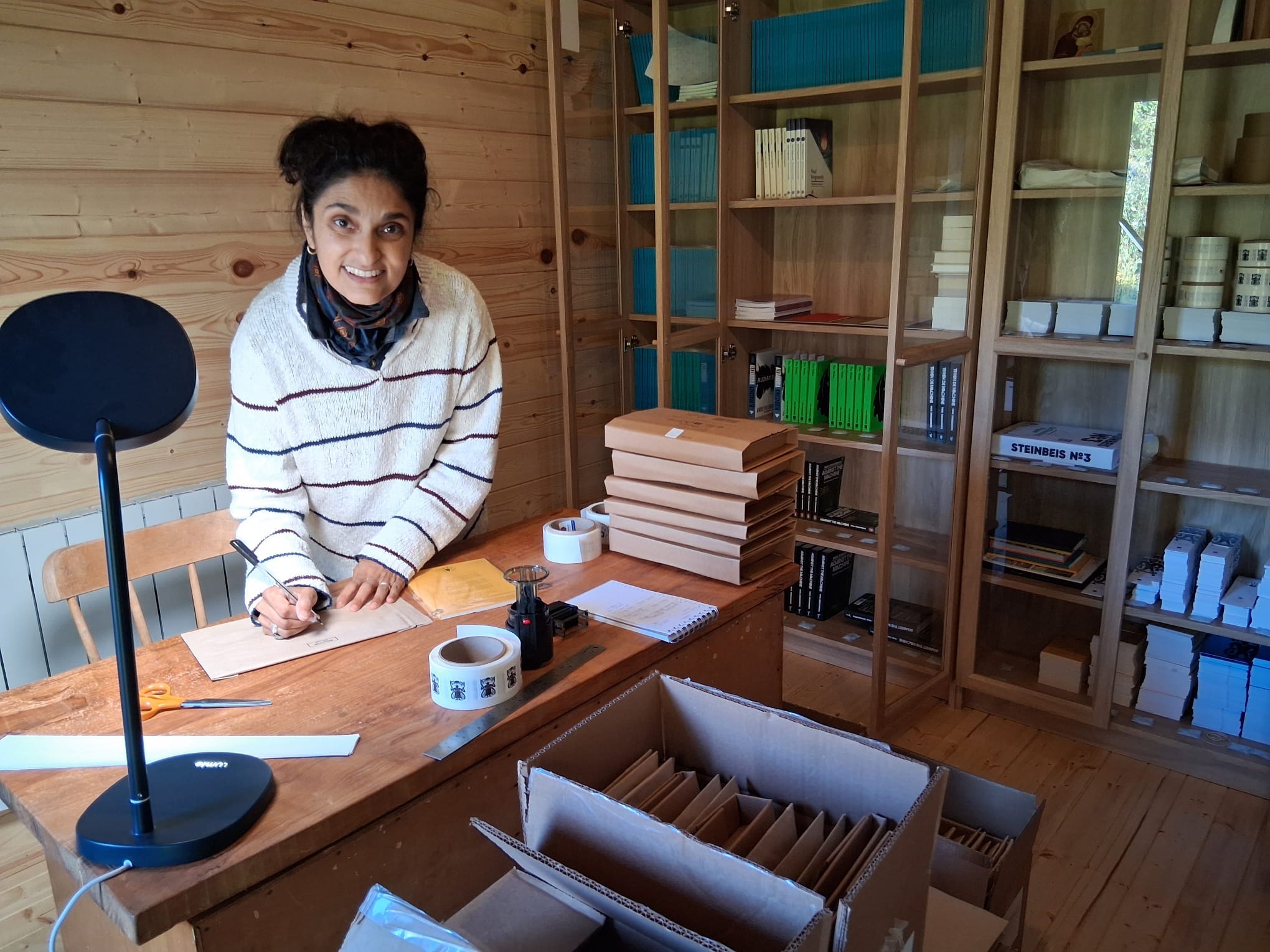
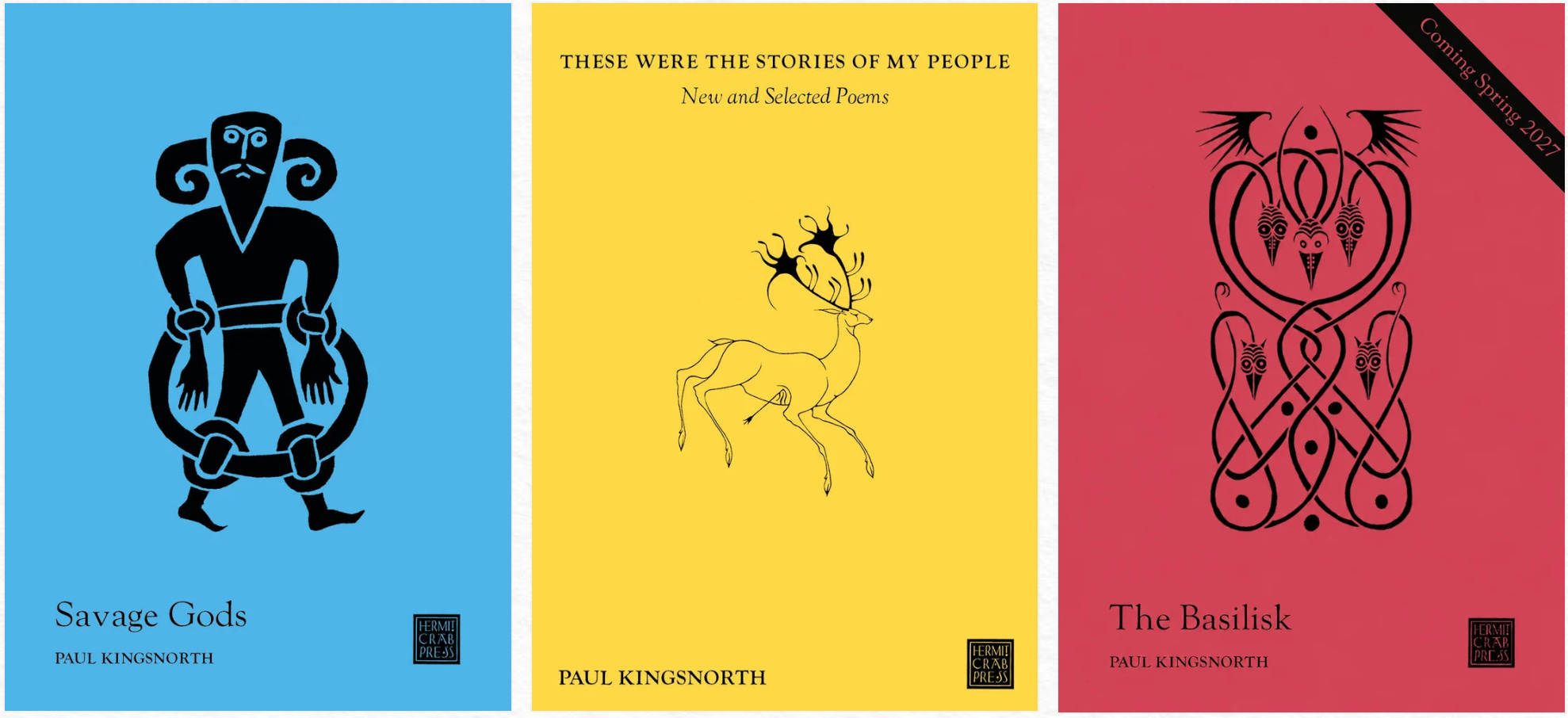
The author gives an update from Hermit Crab Press, the family publishing outfit launched three days earlier. The response has been strong: nearly 400 books sold, orders still arriving, and a second printing ordered of the poetry collection 'These Were the Stories of My People', something the author notes is rarely said of a poetry book.

Some readers have also sent donations. The team is preparing and packing orders, with Nav putting time into making each package a lovely item in itself. All envelopes are being handwritten rather than printed by machine, which takes time, and the author asks for patience while several big trips to the local post office are arranged.

A support button is offered for those who want to help buy envelopes or, jokingly, fund a giant AI robot to do the work.

On pilgrimage news, one place remains on the tour around Ireland the author will lead next summer; after that a waiting list begins. A second initiative has also appeared: a week-long pilgrimage to Iona, the ancient holy island of St Columba and now home to a new Orthodox monastery. The author will be one of three teachers alongside former Archbishop of Canterbury Rowan Williams and Marcus Plested, newly appointed Chair of Divinity at St Andrews University, whose recent inaugural lecture the author recommends.

The theme is 'the world as sacrament', with teaching sessions combined with silence, prayer and exploration. The author jokes about reading stories from the forthcoming Book of Wild Saints to get away with it in such company.

Finally, the last ever Dark Mountain book will be published at the end of this month, sixteen years after the first issue. The author has written a piece for it looking back on the project. A launch takes place in London on 30th October, which the author will miss, being in Florida. Two public talks in America are also coming, in Wisconsin and Atlanta.

  • Hermit Crab Press has sold nearly 400 books in three days, and a second printing of 'These Were the Stories of My People' has been ordered.
  • Orders are being packed by hand, with handwritten envelopes, ahead of several trips to the post office.
  • One place remains on next summer's pilgrimage around Ireland before a waiting list starts.
  • The author will teach on a week-long Iona pilgrimage with Rowan Williams and Marcus Plested, on the theme 'the world as sacrament'.
  • The last ever Dark Mountain book appears at the end of this month with a launch in London on 30th October; the author also has talks coming in Wisconsin and Atlanta.
Read more
P Paul Kingsnorth Substack discussion

Launching Hermit Crab Press as a refuge from AI-generated words

Sometimes in life, there are moments when you step outside yourself for a second or two and look in. It's a strange thing that seems to happen unbidden. You see or hear yourself as a stranger might; then everything snaps back as if nothing happened. This happened to me for a moment last Saturday. I was in Dublin, giving a talk about AI and the Machine to an audience of young people. Suddenly, while I was talking, it was as if I was listening…

Sometimes in life, there are moments when you step outside yourself for a second or two and look in. It's a strange thing that seems to happen unbidden. You see or hear yourself as a stranger might; then everything snaps back as if nothing happened.

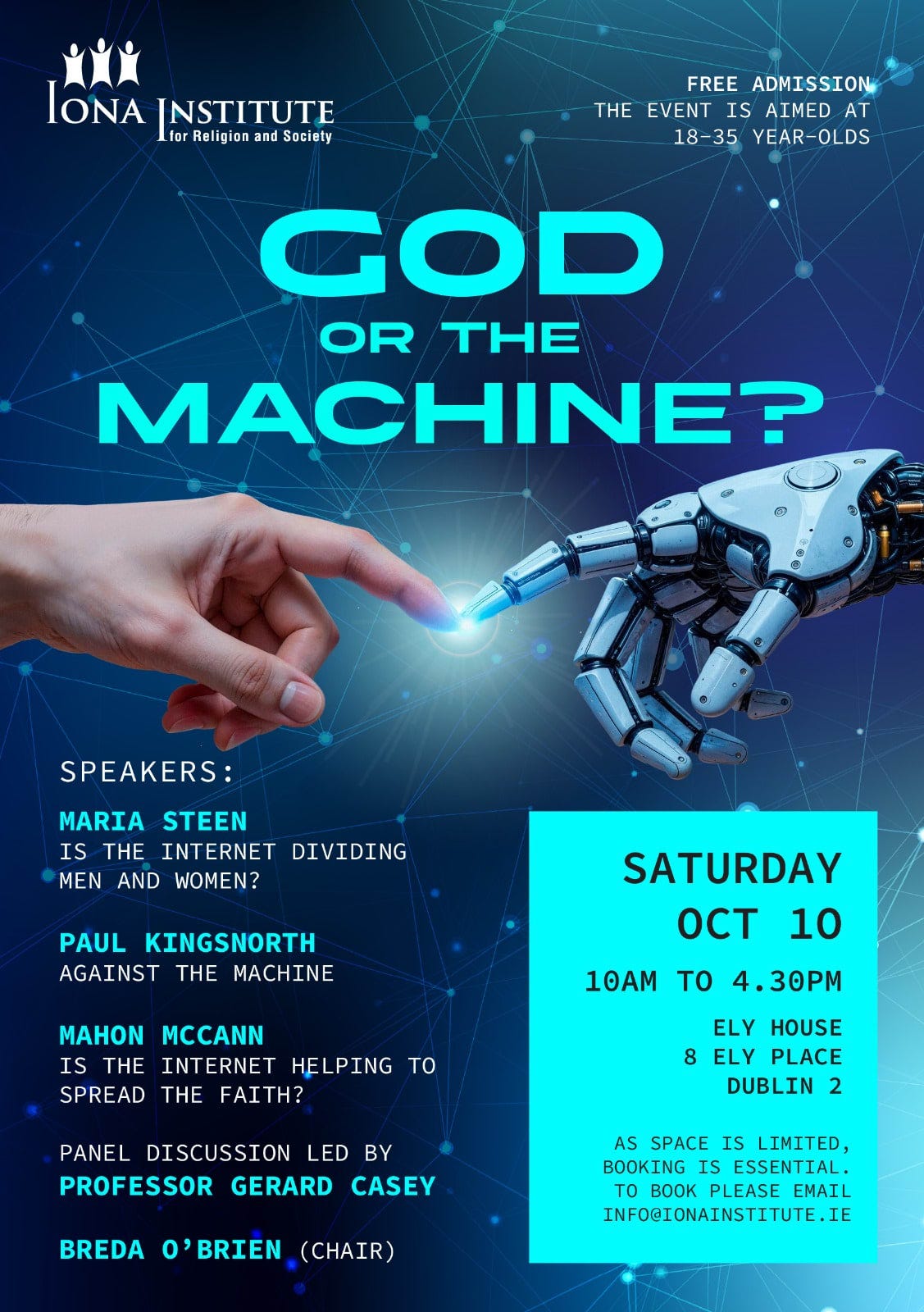
This happened to me for a moment last Saturday. I was in Dublin, giving a talk about AI and the Machine to an audience of young people. Suddenly, while I was talking, it was as if I was listening like an objective observer to the strange stories coming out of my mouth. Stories of people marrying chatbots, of corporate executives who believe they are creating god-like beings, of people who want to upload their minds into digital substrates.

Stories of the Pope gathering with these sci-fi people to talk about God and the soul and digital technology inside the marble halls of the Vatican.

These are strange times, disturbing at some very primeval level. Sometimes it's like being stuck inside a twentieth-century pulp sci-fi novel. I've long wondered whether the Masters of the Universe in Silicon Valley took inspiration from those novels, either consciously or otherwise.

I suppose the AIs have been trained on them too, which gives rise to an intriguing thought: are these machines acting out the plots of those novels, by accident or design? If so, which ones are they reading?

Those machines will be writing books soon enough, which leaves those of us who love words in an awkward position. Our relationship with words might have its ups and downs, but it's built on love. I have long loved books, and that love, which began as soon as I could read, later became a love of writing.

But now I find myself in a world flooded with words, more and more of which are literally inhuman. I'm getting sick of the things which once opened the world up to me. What am I to do about that?

Today I have one small answer: I'm launching my own publishing house. Welcome to Hermit Crab Press.

For a long time, my wife and I, who share the same sensibility on these matters, have been talking about building a little island of the actual in the midst of a virtual sea. Myself, I have wanted more and more to retreat from the internet - including from this page, if I'm honest - and to return to the love of writing I used to have.

Writing in pen or pencil in notebooks. Winding paper through an old typewriter. No comment sections or social media feeds. No audience capture. No culture war bilge. Just me and my pen. Paper and graphite and ink.

Books sent by post, arriving at the door of a reader far away. Words that can't be read on a screen. Pages that have to be turned.

Hermit Crab Press has been built to speak to this sensibility. It's about simple words, on paper and card, that can't be scrolled or pasted or scraped. It's about books as beautiful objects. It's a chance for me to write things that don't fit into any boxes and can't be fed into a devouring machine - at least without a lot of effort on the machine's part.

Our little home publishing house is based in our garden cabin here in County Galway. It's a family operation: a home economy. My wife Navjyoat and I will be running it, while my daughter Leela, who is currently studying for a degree in bookbinding, will be our in-house binder and leatherworker, making us special editions, bookmarks and other goodies to come.

Everything we do is as small scale as possible. We work with friends, and with family owned companies. We spurn AI at all stages of the production process. We try to keep our operations as ecological as we can. And we try to produce really good-looking - and good-feeling, and good-smelling - books. All our books are printed on high quality paper, with woodcut cover illustrations by the Abbey's in-house artist Ewan Craig. They're old fashioned, like us.

We're also selling them in as simple a way as we can.

  • The author experienced a moment of self-observation while giving a talk on AI in Dublin, hearing his own stories about chatbot marriages, mind uploading, and Vatican tech meetings as strange and disturbing.
  • He questions whether Silicon Valley's AI developments are unconsciously acting out plots from pulp sci-fi novels, since the AIs were trained on them.
  • He launches Hermit Crab Press, a family-run publishing house in a County Galway garden cabin, to create physical books that cannot be scraped or digitized.
  • The press uses no AI, no Amazon, no e-books, no ISBNs, and prints on high-quality paper with woodcut illustrations by Ewan Craig.
  • Initial publications include a poetry collection, a revised memoir, and a forthcoming short story collection, with future plans for saint pamphlets, leather-bound editions, and typed newsletters.
18 opinions in the discussion I think this is a lovely idea, but it also makes me sad. This is my world. I'm someone who delights in the idea of manuscript, of paper old and new, of real bound books and their smell and… Read the discussion
P Paul Kingsnorth Substack discussion

The Monthly Salon: October

October has arrived, which means autumn is here too, though right now it doesn't feel like it. Even the wind is hot in Ireland, and that's not normal. But then, there's no normal anymore. Everything is turning in strange directions and very little makes sense. Here I am typing words onto a screen, wondering how many non-human entities will read them. I think normal is over, and for quite some time to come. On the plus side, it's been a great…

October has arrived, which means autumn is here too, though right now it doesn't feel like it. Even the wind is hot in Ireland, and that's not normal. But then, there's no normal anymore. Everything is turning in strange directions and very little makes sense. Here I am typing words onto a screen, wondering how many non-human entities will read them. I think normal is over, and for quite some time to come.

On the plus side, it's been a great year for tomatoes. I'm still harvesting them.

Forgive the dark opening to this month's salon. I've been writing my talks for my upcoming brief trip to America, and they're focused on what it means to be human in the age of the singularity. I'm finding that things have changed a lot even since Against The Machine was published just thirteen months ago. Buckle up. It only gets faster from here.

On that note, the two talks I'll be giving Stateside next month are the Being Human Conference in Atlanta, Georgia on Friday 6th November, and the University of Wisconsin on Monday 9th November.

I'll also be speaking in the Netherlands a few weeks later, at the Nexus Institute annual conference.

Let me briefly discuss something much lighter: saints. Also holy wells, ruined abbeys, round towers, bullauns, high crosses, and the caves of hermits. I'll be taking a tour group around all of these things, and more, on my 2027 summer pilgrimage in the west of Ireland. This is a nine-day pilgrim tour of some of the most significant sites of early Christian Ireland, plenty of which have featured on this Substack over the years.

I'll be talking about early Celtic Christianity, the saints of Ireland, and the way the faith lingers in the landscapes here.

Since I first advertised this pilgrimage a few weeks back, it's proved popular. Most of the places are now booked: just ten remain. After that, there will be a waiting list. If you would like a place, now would be the time to pounce. Full details of the pilgrimage and booking details are available.

In other news this month: I appeared a few weeks back on the BBC Radio 4 programme Last Word, an obituary programme which tells the stories of the notable recently-deceased. I was asked on to talk about Wendell Berry. I haven't listened to it because, contrary to rumours, I hate the sound of my own voice. But if you are a Berry fan it may be worth dipping into.

I also appeared on a recent episode of the Resound Project podcast, talking about a subject which will surprise absolutely nobody at all.

The UK edition of Against The Machine is now out in paperback, if you're looking for a cheaper version of the book with some boastful quotes on the cover. If you want an even cheaper edition, and you like reading on Kindles, I'm told the e-book edition will be on sale for 99p for one day only on 27th October. Form an orderly queue.

That's enough advertising. Let's move on to the meat of the matter: what do you want to talk about? The Salon is a place for my readers to open up a conversation about anything at all. New voices are very much encouraged, as is swerving off the beaten track. Over to you. And thank you, as ever, for being here.

  • Normal is over and things are turning in strange directions
  • Upcoming talks in Atlanta (Nov 6), Wisconsin (Nov 9), and the Netherlands
  • 2027 Ireland pilgrimage has 10 spots left before waiting list
  • BBC Radio 4 appearance on Wendell Berry and Resound Project podcast
  • Against The Machine paperback out now; ebook 99p on Oct 27
27 opinions in the discussion Glad to hear your pilgrimage tours are doing well. You sound very cagey about what's happening in the world that I somehow stay ignorant of. Yesterday I made an important discovery: I think… Read the discussion
P Paul Kingsnorth Substack discussion

AI and the Imago Dei: A Christian Argument Against Outsourcing the Mind

The post shares an article by Andrew Caspersen that reframes the Christian debate on artificial intelligence. Rather than weighing AI’s potential benefits against its risks — the "fruits" of the technology — Caspersen examines the "tree" itself: what AI is by nature. Drawing on the Pygmalion myth and the doctrine of the imago Dei, he argues that the human intellect is a finite image of the infinite Word, given so that we may know and love God.…

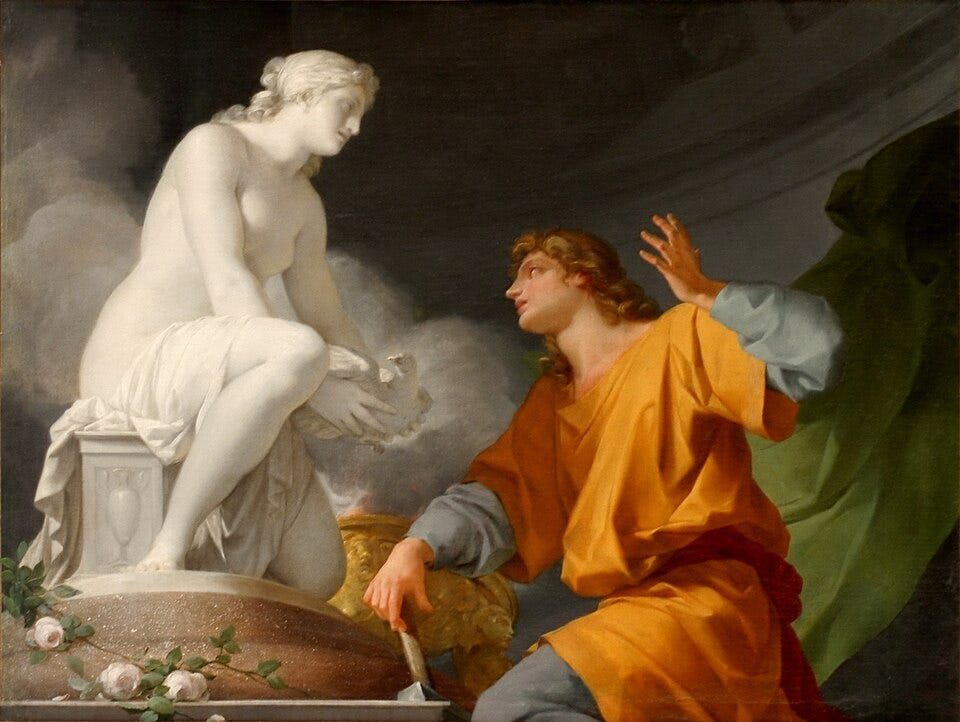
The post shares an article by Andrew Caspersen that reframes the Christian debate on artificial intelligence. Rather than weighing AI’s potential benefits against its risks — the "fruits" of the technology — Caspersen examines the "tree" itself: what AI is by nature. Drawing on the Pygmalion myth and the doctrine of the imago Dei, he argues that the human intellect is a finite image of the infinite Word, given so that we may know and love God.

AI, by simulating ideation, composition, analysis, and conversation, offers an "enhanced mind" that tempts us to outsource our God-given cognitive faculties. Accepting this man-made substitute treats the divine gift as inadequate and, by extension, treats the Giver as inadequate. The article addresses counter-arguments, such as the claim that AI is merely artificial and cannot truly replace human intelligence, contending that even a functional replacement constitutes a practical rejection of our created nature.

The discussion in the comments reflects both appreciation for the ontological approach and concern about equating the imago Dei with cognitive function, which could inadvertently devalue persons with impaired reasoning. Other contributors distinguish between tools that enhance human ability and devices that replace it, reference Orthodox and Catholic theological nuances, and share personal experiences of AI’s encroachment on thought and work.

  • AI should be evaluated by its nature, not only by its outcomes or utility.
  • The human intellect bears the imago Dei; outsourcing it to AI rejects that divine image.
  • Using AI as a substitute for thinking treats God’s gift as insufficient.
  • The "tool vs. device" distinction highlights AI’s replacement of human agency.
  • Commenters debate whether the argument risks a functionalist view of the imago Dei.
22 opinions in the discussion There's much to appreciate here, and the tree-and-branches framing rather than just the fruit is genuinely useful. My slight worry is that the piece drifts toward treating the imago dei as… Read the discussion
P Paul Kingsnorth Substack discussion

Paul Kingsnorth Announces Speaking Tour on AI and Human Identity

Paul Kingsnorth shares an update on his upcoming speaking engagements, all centered on the question of what it means to be human in the age of artificial intelligence. He notes that the rise of AI has forced this existential question into mainstream discourse, leading to invitations from major media outlets and event organizers. Over the next two months, he will speak at a youth-focused gathering in Dublin, a conference in Georgia (USA)…

Paul Kingsnorth shares an update on his upcoming speaking engagements, all centered on the question of what it means to be human in the age of artificial intelligence. He notes that the rise of AI has forced this existential question into mainstream discourse, leading to invitations from major media outlets and event organizers. Over the next two months, he will speak at a youth-focused gathering in Dublin, a conference in Georgia (USA) alongside Carl Trueman, a public talk at a university in Wisconsin, and a conference in Amsterdam addressing civilization in crisis.

Kingsnorth expresses reluctance about public speaking, feeling unqualified, but participates to contribute to the conversation. He concludes with a personal reflection on the simple human joy of being home for Christmas, contrasting it with what a robot could never appreciate. The comments reveal a mix of support and concern: several readers urge him to prioritize his health and limit travel, suggesting his writing may be a more sustainable vocation.

Others affirm the importance of his voice in secular forums, while discussing the spiritual and ethical dimensions of AI. A few commenters share personal encounters with his work in monastic settings, highlighting its reach beyond typical audiences.

  • Kingsnorth links the surge of public interest in human identity to the rise of AI.
  • Four events scheduled: Dublin (youth), Georgia conference, Wisconsin public lecture, Amsterdam conference.
  • He feels unqualified but participates to address spiritual and ethical implications of AI.
  • Comments emphasize concern for his health and debate the value of speaking versus writing.
  • Personal reflection on Christmas as a uniquely human experience beyond machine comprehension.
16 opinions in the discussion Ah... the very fact that this question even needs asking shows how adrift, uprooted and bewildered we've become. The game is over, surely... go quiet, as you always meant to...? I've no… Read the discussion
P Paul Kingsnorth Substack

Writer to Lead Celtic Christianity Pilgrimage Tour of Ireland in 2027

The author of the Abbey blog announces that they have been invited by Select International Tours, an American company specializing in Christian pilgrimages, to design and lead a week-long tour of Celtic Christian sites in Ireland in July 2027. The tour, titled "Celtic Christianity and Sacred Ireland," will visit locations the author has written about extensively, including holy wells in the Burren, St. Colman's cave, the monastic city of…

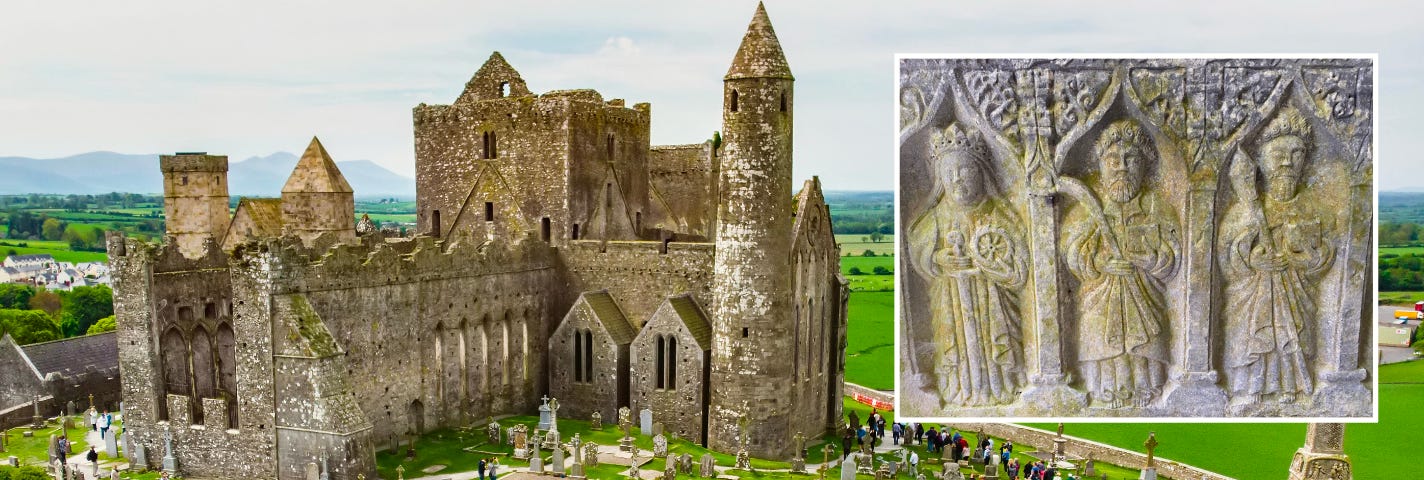
The author of the Abbey blog announces that they have been invited by Select International Tours, an American company specializing in Christian pilgrimages, to design and lead a week-long tour of Celtic Christian sites in Ireland in July 2027. The tour, titled "Celtic Christianity and Sacred Ireland," will visit locations the author has written about extensively, including holy wells in the Burren, St. Colman's cave, the monastic city of Clonmacnoise, the Aran Islands associated with St. Enda, the Rock of Cashel, Glendalough (St. Kevin's landscape), and the Book of Kells in Dublin.

The author will give illustrated talks on early Irish Christianity throughout the trip. The tour is open to anyone interested in the history and spirituality of these sites, regardless of denomination or nationality, though it is a paid tour with logistics handled by the company. Forty spots are available. The author describes the opportunity as a personal experiment and expresses hope that participants will gain a deep, memorable spiritual experience.

Additionally, the author lists four public speaking engagements for autumn 2024: an "Art of the Tamada" fundraiser in Florida, a conversation with Carl Trueman in Atlanta, events at a university in Madison, Wisconsin, and the Nexus Institute conference in Amsterdam. The author also mentions attending the Symbolic World Summit in Oxford as an audience member.

  • Author selected to design and lead a Celtic Christianity pilgrimage tour of Ireland in July 2027
  • Itinerary includes major early Christian sites: Burren holy wells, Clonmacnoise, Aran Islands, Rock of Cashel, Glendalough, Book of Kells
  • Tour organized by Select International Tours; open to all, not limited to Catholics or Americans
  • Author also announces autumn 2024 speaking events in Florida, Atlanta, Madison, and Amsterdam
  • Author views tour as spiritual experiment to deepen participants' faith through sacred landscape
Read more
P Paul Kingsnorth Substack discussion

Paul Kingsnorth Mourns Wendell Berry, Reflects on AI and Christian Writing

In his September Monthly Salon, Paul Kingsnorth marks the death of Wendell Berry at 92, recalling his personal encounters with the Kentucky agrarian writer and Berry's profound influence on his own thought. Kingsnorth edited the Penguin collection *The World-Ending Fire* and delivered the second Wendell Berry Lecture in Port Royal. He shares a recent podcast conversation with Irish philosopher Mahon McCann on Christianity in the age of the…

In his September Monthly Salon, Paul Kingsnorth marks the death of Wendell Berry at 92, recalling his personal encounters with the Kentucky agrarian writer and Berry's profound influence on his own thought. Kingsnorth edited the Penguin collection *The World-Ending Fire* and delivered the second Wendell Berry Lecture in Port Royal.

He shares a recent podcast conversation with Irish philosopher Mahon McCann on Christianity in the age of the Machine. Kingsnorth updates the Writers Against AI campaign he launched, noting its grassroots spread — including a family in Portland screen-printing campaign logos for free libraries. He explains his decision to make his Substack writing free, supported by voluntary donations, citing discomfort with charging for Christian-focused work.

However, he paywalled a recent essay, "The Trap," because its content on AI would itself be scraped for training data — a dilemma he acknowledges has no fixed solution. The comment thread reveals many readers discovered Berry through Kingsnorth, sharing how Berry's poetry and fiction shaped their sense of place, faith, and resistance to industrial modernity.

Others mention Ivan Illich's upcoming centenary and recommend the English agrarian writer Adrian Bell.

  • Wendell Berry died at 92; Kingsnorth honors his legacy as a Christian agrarian voice of global reach
  • Kingsnorth edited Berry's selected essays (*The World-Ending Fire*) and gave the 2024 Wendell Berry Lecture in Kentucky
  • New podcast with Mahon McCann explores Christianity confronting technological modernity
  • Writers Against AI campaign grows organically; citizens print and distribute resistance logos locally
  • Kingsnorth moves to donation-based model for Christian writing, but paywalls AI-critical pieces to avoid training-data scraping
36 opinions in the discussion I probably first came across Wendell Berry years ago through this author's work, but I only recently picked up the anthology of his writing, likely connected to Against the Machine. Wow. I… Read the discussion