WeOrthodox
EN UA

Orthodox posts, videos and discussions

We follow Orthodox channels, communities and blogs across the web, summarise every post and video, and highlight the conversations with real substance.

George Instagram discussion

Returning to Church After a Painful Priest Encounter

1:25

The speaker addresses people who have stopped attending church because of a negative experience with a priest. He acknowledges that priests can be harsh or hurtful, and that they are human with varying levels of wisdom and humility. He emphasizes that one priest does not represent the entire Church, which is the Body of Christ with 2000 years of tradition, saints, sacraments, and prayers. The speaker encourages those who have left to return to…

The speaker addresses people who have stopped attending church because of a negative experience with a priest. He acknowledges that priests can be harsh or hurtful, and that they are human with varying levels of wisdom and humility. He emphasizes that one priest does not represent the entire Church, which is the Body of Christ with 2000 years of tradition, saints, sacraments, and prayers.

The speaker encourages those who have left to return to church life by visiting different parishes and monasteries and by speaking with spiritual fathers. He shares his own experience of staying away from the Church for many years and describes that decision as his biggest mistake. The talk centers on the distinction between an individual clergyman's failings and the fullness of the Church's life, urging listeners not to let one person's behavior separate them from the sacramental and communal life that has sustained Orthodox Christians for two millennia.

The argument rests on the theological understanding that the Church is not defined by any single minister but by its identity as the Body of Christ, carrying the weight of two thousand years of prayer, saintly witness, and sacramental grace. By pointing to the availability of other parishes, monasteries, and spiritual fathers, the speaker offers practical steps for those wounded by clergy to re-engage without ignoring their pain.

Key moments

  1. 0:00 People stop going to church because of one priest's behavior or words
  2. 0:30 Priests are human and can be wrong, with varying wisdom and humility
  3. 1:00 One priest is not the Church; the Church is the Body of Christ with 2000 years of tradition
10 opinions in the discussion I hear you loud and clear. But I have a question: suppose I don't particularly like my priest at my church, but I still go. So two questions: am I at fault for not liking him, even though… Read the discussion
Orthodox Health with Fr.TEDTalks Instagram

The Church as a Spiritual Gym: Fr. Ted on How the Body Is Trained in the Faith

0:28

Fr. Ted Paraskevopoulos, speaking on Episode 81 of the Orthodox Health Podcast, describes the church as a spiritual gym. He argues that the body is catechized along with the mind: what we repeatedly do with the body shapes attention, appetite, endurance, humility, and eventually what we learn to love. This is why Orthodox worship is so physical. Christians do prostrations, fast, attend services, light candles, and kiss icons. He calls this…

Fr. Ted Paraskevopoulos, speaking on Episode 81 of the Orthodox Health Podcast, describes the church as a spiritual gym. He argues that the body is catechized along with the mind: what we repeatedly do with the body shapes attention, appetite, endurance, humility, and eventually what we learn to love. This is why Orthodox worship is so physical. Christians do prostrations, fast, attend services, light candles, and kiss icons.

He calls this psychosomatic training through ascetic practices, and says the Christian life forms a person through participation, repetition, restraint, effort, and communion. We are being trained, he says, long before every lesson can be perfectly explained. From this he draws a consequence for how we think about health.

Training the body cannot become a separate self-improvement project running alongside the spiritual life. Spiritual formation also cannot be reduced to having correct thoughts while the body stays irrelevant. The whole person is being formed. That is where askesis becomes bigger than religious discipline: it is training ordered toward becoming the kind of human being capable of offering himself to God.

He adds that when people do not engage in these practices, they tend to neglect other things in their lives, which creates an imbalance. The episode is titled When Life Falls Apart, You Need a Bunker.

Key moments

  1. The church is quite literally a spiritual gym, not something esoteric.
  2. The faith is not all in the mind or heart: people physically do prostrations, fast, attend services, light candles and kiss icons.
  3. This is psychosomatic training through ascetic practices.
  4. People who do not engage in these practices tend to neglect other things in their lives, which creates an imbalance.
Read more

How to handle unwanted advances from an older parishioner

I'm new to the Orthodox Church, recently baptized and chrismated, and I love my parish. I truly feel at home there. But there's one problem: an older man, probably twenty years older than me, who attends. When I first started coming, I made the mistake of giving him my number because I wanted to get involved and meet people. At the time he was running the classics book club, and I asked him to send me the details. After the liturgy he waits for…

I'm new to the Orthodox Church, recently baptized and chrismated, and I love my parish. I truly feel at home there. But there's one problem: an older man, probably twenty years older than me, who attends. When I first started coming, I made the mistake of giving him my number because I wanted to get involved and meet people. At the time he was running the classics book club, and I asked him to send me the details.

After the liturgy he waits for me before I go into agape. It's awkward because when I sit at a table with only women, he seeks me out and sits right where I am. I try to be polite, and I don't think he's a bad person, just not picking up on the hints and almost overbearing. I've excused myself multiple times. He texts me asking to go to lunch under the pretense of helping me in my faith.

I've declined politely, told him I'm seeing someone, and said I want to take my faith questions and concerns to my priest or my sponsor.

He keeps texting and tells me the priest is very busy. This is the same man who approaches me every time I receive communion because he only saw my baptism and not my chrismation, even though they were part of the same ceremony.

I don't want to be rude, but I don't know what else to say to make him get the point. I also don't want to cause any trouble. I guess the next step would be to tell my priest, but again, I don't want to be seen as a troublemaker. I've even started changing where I stand during the liturgy so he can't see me. Do I just block him and then run away when I see him? I'm trying to be an adult, but the old me wants to tell him to back off in not-so-nice words.

  • Older parishioner waits after liturgy and follows the author to women's tables
  • He texts invitations to lunch framed as spiritual guidance despite polite refusals
  • He questions the author at every communion because he missed the chrismation
  • Author has changed liturgy position to avoid him and fears being labeled a troublemaker
  • Asks whether blocking and avoiding him is the only remaining option
25 opinions in the discussion Talk to the priest's wife (matushka, presvytera, etc...). She and the Yiayias/Babushkas/etc. will get him set straight. Read the discussion
Athonite Audio YouTube

Christian Patience as Courageous Acceptance of Suffering

Christian Patience as Courageous Acceptance of Suffering 47:45

The speaker explains that Christian patience is not passive endurance but a courageous, grace-filled acceptance of suffering that perfects faith and leads to hope. He cites Scripture and Church Fathers to show that tribulation produces perseverance, character, and a hope that does not disappoint. Isaiah 40:31 promises renewed strength for those who wait on the Lord. John 15:2 indicates patience in trial bears fruit. Hebrews 10:36 links patience…

The speaker explains that Christian patience is not passive endurance but a courageous, grace-filled acceptance of suffering that perfects faith and leads to hope. He cites Scripture and Church Fathers to show that tribulation produces perseverance, character, and a hope that does not disappoint. Isaiah 40:31 promises renewed strength for those who wait on the Lord.

John 15:2 indicates patience in trial bears fruit. Hebrews 10:36 links patience to preserving faith and prayer alive. James 1:2-4 teaches that the testing of faith produces patience, and patience's perfect work makes one complete. James 1:12 declares blessed the man who endures temptation. Romans 8:18 states present sufferings are not worthy to be compared with future glory. Revelation 3:19 describes divine discipline as a kiss of God.

St. Basil the Great teaches that God grants help from under excessive affliction; tribulation leads to hope that does not disappoint, and we should not seek human help but pray fervently. The example of Job illustrates steadfast patience amid extreme loss and pain: he endured loss, disease, betrayal, yet remained firmer than a rock, and St. John Chrysostom commends his virtues.

From exile, Chrysostom encourages patience, urging believers to rejoice in sufferings because they burn away sins and brighten virtue. The martyrs and saints demonstrate that patience is the mark of spiritual strength. St. Ignatius compares the Christian to an anvil that endures blows.

Clement of Alexandria states we must endure to the end to be saved. Ultimately, the speaker says we must endure to the end, for only then will we receive the crown of life and sit with Christ on His throne.

Key moments

  1. 0:00 Introduction: pain and patience; those who wait on the Lord renew strength (Isaiah 40:31); patience in trial bears fruit (John 15:2).
  2. 0:31 Patience is not fatalistic tolerance but courageous acceptance through faith in the living God; it preserves faith and prayer alive (Hebrews 10:36).
  3. 1:36 Testing of faith produces patience, and patience's perfect work makes one complete (James 1:2-4); blessed is the man who endures temptation (James 1:12).
  4. 3:45 St. Basil the Great: God grants help from under excessive affliction; tribulation leads to hope that does not disappoint; we should not seek human help but pray fervently.
  5. 6:53 Patience in pain measures spiritual life and love for God; accepting pain with God-pleasing patience reveals its sacramental depth as the "kiss of God" (Revelation 3:19).
  6. 16:56 Job as classical example of patience: he endured loss, disease, betrayal, yet remained firmer than a rock; St. John Chrysostom commends his virtues.
  7. 24:49 St. John Chrysostom from exile encourages patience: present sufferings not worthy to be compared with future glory (Romans 8:18); we should endure courageously.
  8. 44:44 The martyrs and saints exemplify patience; St. Ignatius urges standing firm as an anvil; we must endure to the end to be saved (Clement of Alexandria).
radioimlemesou Instagram

Metropolitan Athanasios of Limassol: You cannot be well if your spouse is not well

Metropolitan Athanasios of Limassol speaks about marriage and about rejoicing in the joy of our brother. He says we should rejoice when our brother is well, peaceful and quiet. He quotes the prayer of St Basil the Great in the Divine Liturgy: 'Grant them, O Lord, a peaceful kingdom, so that we too, in their tranquillity, may lead a calm and peaceful life.' He applies this to marriage: if our wife or husband is well, peaceful and joyful, then we…

Metropolitan Athanasios of Limassol speaks about marriage and about rejoicing in the joy of our brother. He says we should rejoice when our brother is well, peaceful and quiet. He quotes the prayer of St Basil the Great in the Divine Liturgy: 'Grant them, O Lord, a peaceful kingdom, so that we too, in their tranquillity, may lead a calm and peaceful life.' He applies this to marriage: if our wife or husband is well, peaceful and joyful, then we are well too.

If our spouse is troubled, bitter, upset, wounded or in turmoil, then we are the same. He says we cannot be well when our brother or our spouse is not well, because people are communicating vessels, both in the physical relationship and in the spiritual one. The talk stays on this single theme: the state of the person next to us becomes our own state, and the peace of the other is the condition for our own peace, as the liturgical prayer of St Basil asks.

Key moments

  1. Να χαίρεται κανείς τη χαρά του αδελφού του όταν είναι ειρηνικός και ήσυχος.
  2. Ο ομιλητής παραθέτει τον Μέγα Βασίλειο στη Θεία Λειτουργία: «χάρισα αυτή την ειρηνικότητα το Βασίλειο, να και εμείς εν τη γαλήνη αυτού ηρεμούμεν».
  3. Αν η σύζυγος ή ο σύζυγος είναι καλοί και χαρούμενοι, είμαστε και εμείς καλά.
  4. Αν ο σύντροφος είναι στεναχωρημένος, πικραμένος, ανάστατος, πληγωμένος ή σε ταραχή, και εμείς είμαστε το ίδιο.
  5. Οι άνθρωποι είναι συγκοινωνούντα δοχεία, στη φυσική και στην πνευματική σχέση.
Read more
George Instagram

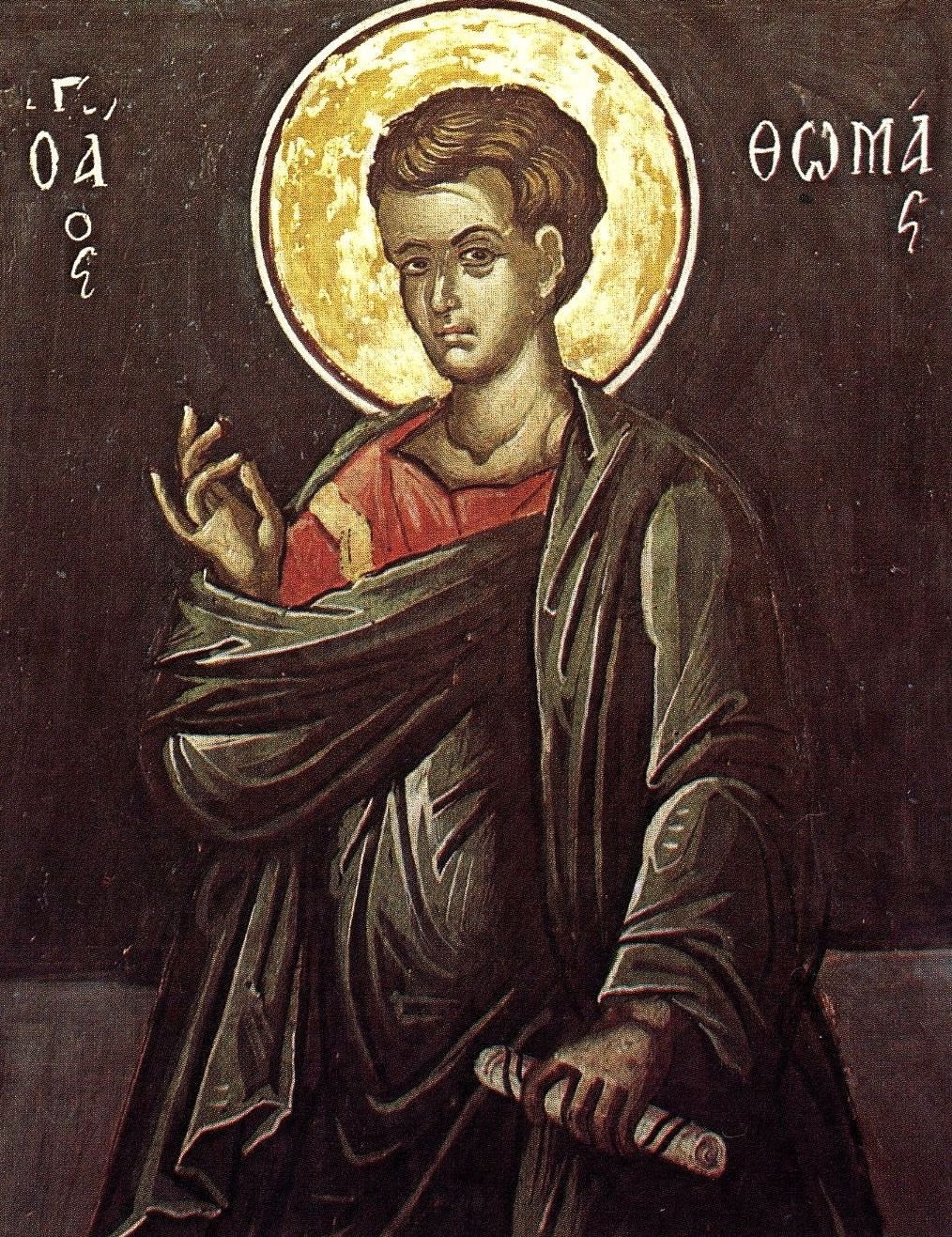
Saint Thomas: from "let us die with him" to "my Lord and my God"

1:13

The church celebrates Saint Thomas today. The speaker argues that his reputation as "doubting Thomas" is unfair. Before the resurrection, when Jesus decided to return to Judea where people wanted to kill him, the other disciples were afraid. Thomas said, "Let us also go, so that we may die with him." After the resurrection, Thomas was not present when Jesus appeared to the others. He said he would not believe until he touched the wounds himself.…

The church celebrates Saint Thomas today. The speaker argues that his reputation as "doubting Thomas" is unfair. Before the resurrection, when Jesus decided to return to Judea where people wanted to kill him, the other disciples were afraid. Thomas said, "Let us also go, so that we may die with him." After the resurrection, Thomas was not present when Jesus appeared to the others.

He said he would not believe until he touched the wounds himself. Eight days later Jesus appeared again for Thomas. Thomas did not need to touch anything but fell down and said, "My Lord and my God." The speaker notes this confession is one of the clearest in the gospel that Jesus is God.

Church tradition holds that Thomas preached as far as India and was martyred there with spears. The speaker shares that he lost his faith for many years and finds hope in Jesus returning for Thomas rather than rejecting him for his doubt. The speaker asks the audience if they have ever had a moment where they doubted.

Key moments

  1. Thomas is celebrated today but known mainly as doubting Thomas, which the speaker considers unfair
  2. Before the resurrection, when Jesus decided to return to Judea where people wanted to kill him, the other disciples were afraid but Thomas said "Let us also go, so that we may die with him"
  3. After the resurrection, Thomas was not present when Jesus appeared to the others and said he would not believe until he touched the wounds himself
  4. Eight days later Jesus appeared again for Thomas, who did not need to touch anything but fell down and said "My Lord and my God"
  5. This confession is described as one of the clearest in the gospel that Jesus is God
  6. Church tradition says Thomas preached as far as India and was killed there with spears
  7. The speaker lost his faith for many years and loves that Jesus did not reject Thomas for his doubt but came back for him
  8. The speaker asks the audience if they have ever had a moment where they doubted
Read more
Hellenic College Holy Cross Instagram

Opening the Scriptures: Orthodox Bible Study with Dean Pentiuc at Holy Cross

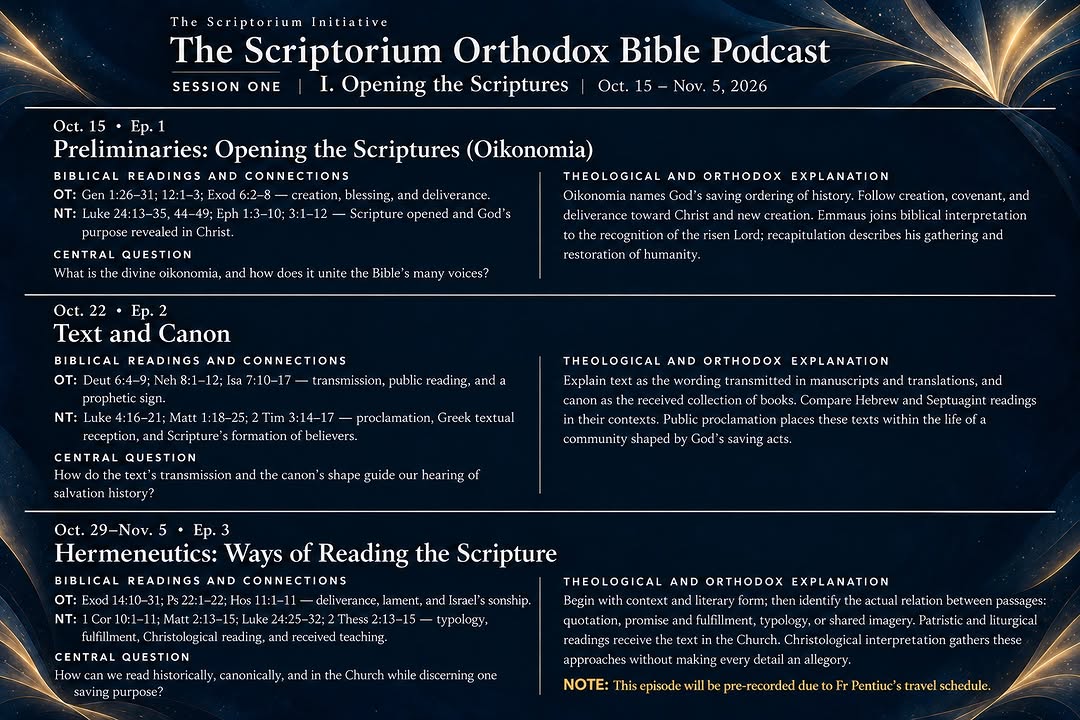
The post announces a weekly Orthodox Bible study series called Opening the Scriptures hosted at the Scriptorium with Rev. Dr. Eugen J. Pentiuc, Dean of Holy Cross Greek Orthodox School of Theology. The series explores Scripture through the richness of the Orthodox tradition, covering biblical interpretation, theology, the Church Fathers, and liturgy. Session One is scheduled for October 15 through November 5, 2026. The schedule and topics for…

The post announces a weekly Orthodox Bible study series called Opening the Scriptures hosted at the Scriptorium with Rev. Dr. Eugen J. Pentiuc, Dean of Holy Cross Greek Orthodox School of Theology. The series explores Scripture through the richness of the Orthodox tradition, covering biblical interpretation, theology, the Church Fathers, and liturgy.

Session One is scheduled for October 15 through November 5, 2026. The schedule and topics for each episode of Session One are included in an image posted with the announcement. A recurring Zoom link for the weekly sessions is available in the bio. The organizers express anticipation for participants to join.

  • Weekly Orthodox Bible study series Opening the Scriptures led by Rev. Dr. Eugen J. Pentiuc, Dean of Holy Cross
  • Explores Scripture through Orthodox tradition: biblical interpretation, theology, Church Fathers, liturgy
  • Session One runs October 15-November 5, 2026
  • Schedule and topics for Session One episodes provided in an image
  • Recurring Zoom link for weekly sessions available in bio
Lives of the Saints 🙏 Instagram

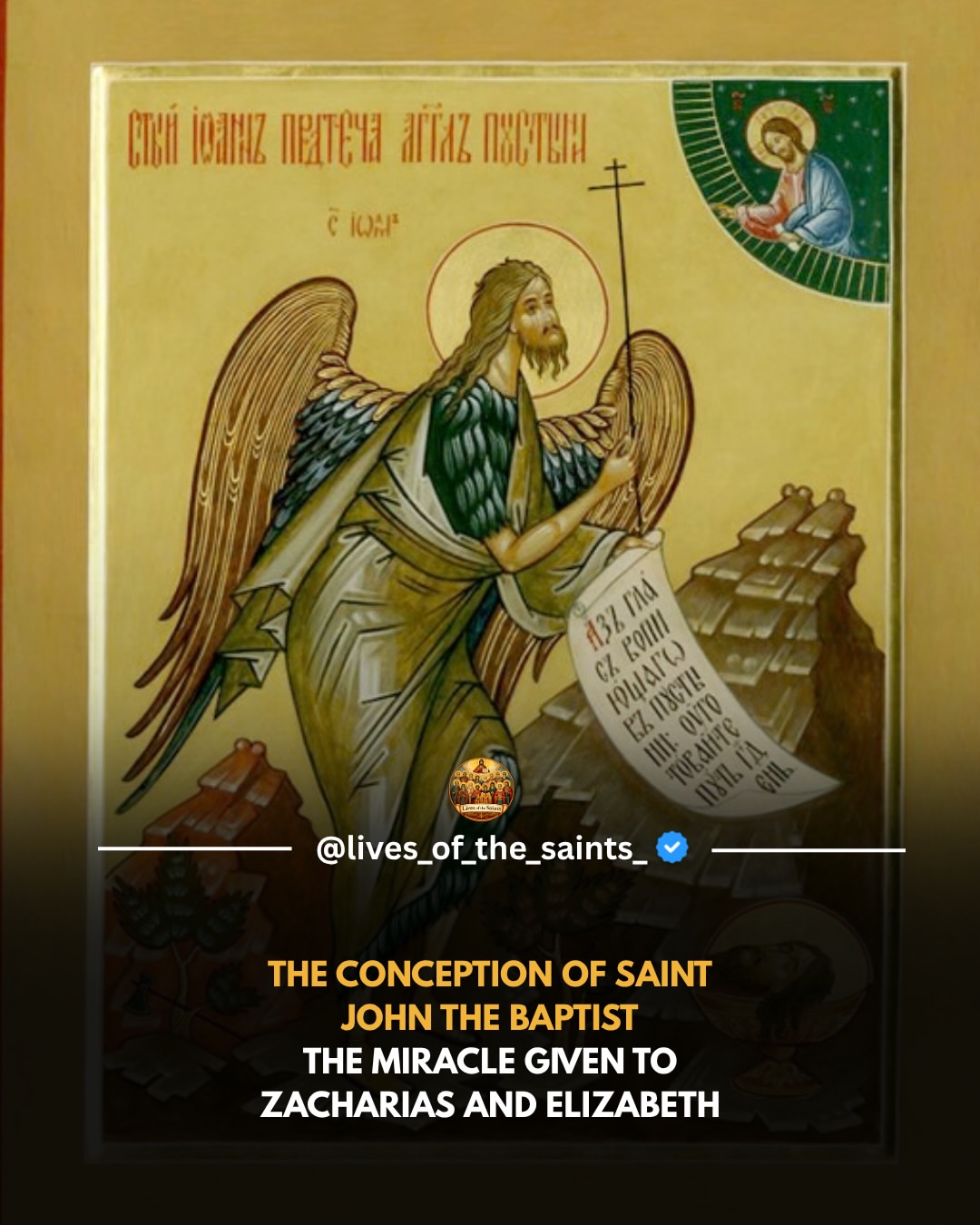
The Conception of Saint John the Baptist: God's Mercy Beyond Nature

The post marks the feast of the Conception of Saint John the Baptist, presenting it as a threefold revelation of God's mercy, miracle, and wisdom. Mercy appears in God's answer to the righteous parents Zacharias and Elizabeth, who spent their lives longing and praying for a child despite advanced age. The miracle lies in John's conception within Elizabeth's aged and barren womb. Wisdom emerges in God's plan for salvation, assigning John the role…

The post marks the feast of the Conception of Saint John the Baptist, presenting it as a threefold revelation of God's mercy, miracle, and wisdom. Mercy appears in God's answer to the righteous parents Zacharias and Elizabeth, who spent their lives longing and praying for a child despite advanced age. The miracle lies in John's conception within Elizabeth's aged and barren womb.

Wisdom emerges in God's plan for salvation, assigning John the role of Prophet, Forerunner, and Baptist of the Lord Jesus Christ. The author compares this event to two earlier biblical announcements: the birth of Isaac from barren Sarah and the birth of Samson from the barren wife of Manoah. In each case, an angel declared the coming child, and nature yielded to divine purpose.

The text argues that the question is not how such conception could happen according to human understanding, but who made it happen, the same Almighty God who created the world from nothing and formed Adam without parents. This feast reminds believers that God is never limited by nature, time, age, weakness, or impossibility. Where human hope ends, the mercy and power of God begin. The post closes with the invocation: Holy Prophet, Forerunner, and Baptist John, pray to God for us.

  • The Church celebrates the Conception of Saint John the Baptist as mercy, miracle, and wisdom of God.
  • Elderly Zacharias and Elizabeth, righteous and childless, conceived John after lifelong prayer.
  • The birth parallels Isaac from Sarah and Samson from Manoah's wife, barren women who bore children by divine intervention.
  • John was destined as Prophet, Forerunner, and Baptist of Jesus Christ.
  • The feast affirms God is not limited by nature, age, or impossibility; where human hope ends, God's power begins.
Lives of the Saints 🙏 Instagram

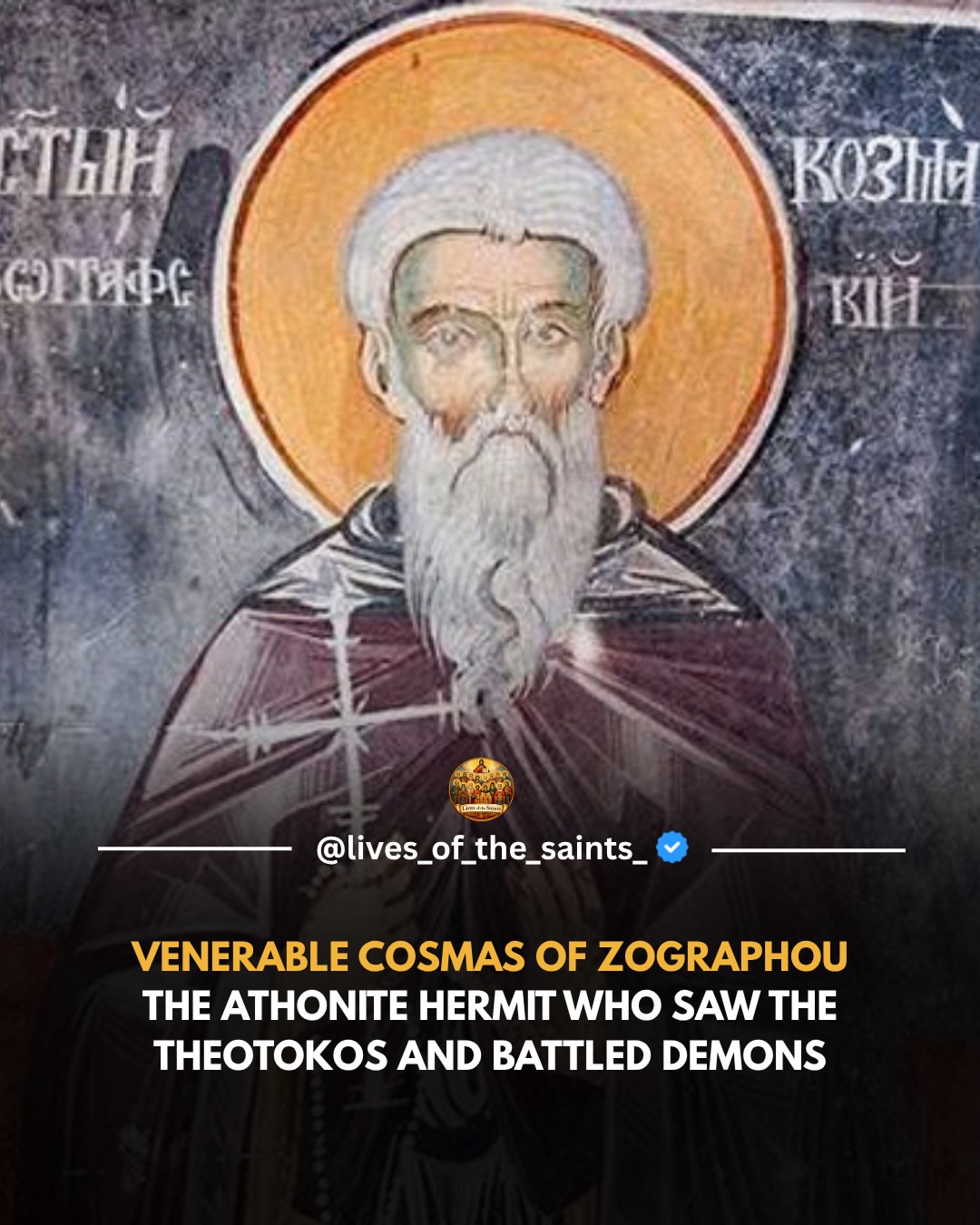
Venerable Cosmas of Zographou: Bulgarian noble who became Athonite wonderworker

The post recounts the life of Venerable Cosmas of Zographou, a Bulgarian nobleman who fled to Mount Athos when his parents arranged a marriage. He settled in a cave near the Monastery of Zographou, living as a hermit devoted to prayer, fasting, silence, and spiritual warfare. The Most Holy Theotokos appeared to him repeatedly, strengthening and guiding him. He became known as the greatest ascetic and wonderworker of Zographou. His cell, where he…

The post recounts the life of Venerable Cosmas of Zographou, a Bulgarian nobleman who fled to Mount Athos when his parents arranged a marriage. He settled in a cave near the Monastery of Zographou, living as a hermit devoted to prayer, fasting, silence, and spiritual warfare. The Most Holy Theotokos appeared to him repeatedly, strengthening and guiding him.

He became known as the greatest ascetic and wonderworker of Zographou. His cell, where he fought against demons, still stands northwest of the monastery. Cosmas possessed spiritual insight, perceiving events distant in time and place.

He reposed in old age on September 22, 1323. The post concludes that he exemplifies how a soul leaving the world for Christ loses nothing but gains the grace, light, and joy of the Kingdom.

  • Born into a noble Bulgarian family, fled to Mount Athos to avoid marriage
  • Lived as a hermit in a cave near Zographou Monastery, practicing prayer, fasting, and silence
  • The Theotokos appeared to him many times, offering guidance and strength
  • Recognized as the greatest ascetic and wonderworker of Zographou; his cell remains northwest of the monastery
  • Reposed on September 22, 1323, after a life of spiritual labor and insight
Read more
Lives of the Saints 🙏 Instagram

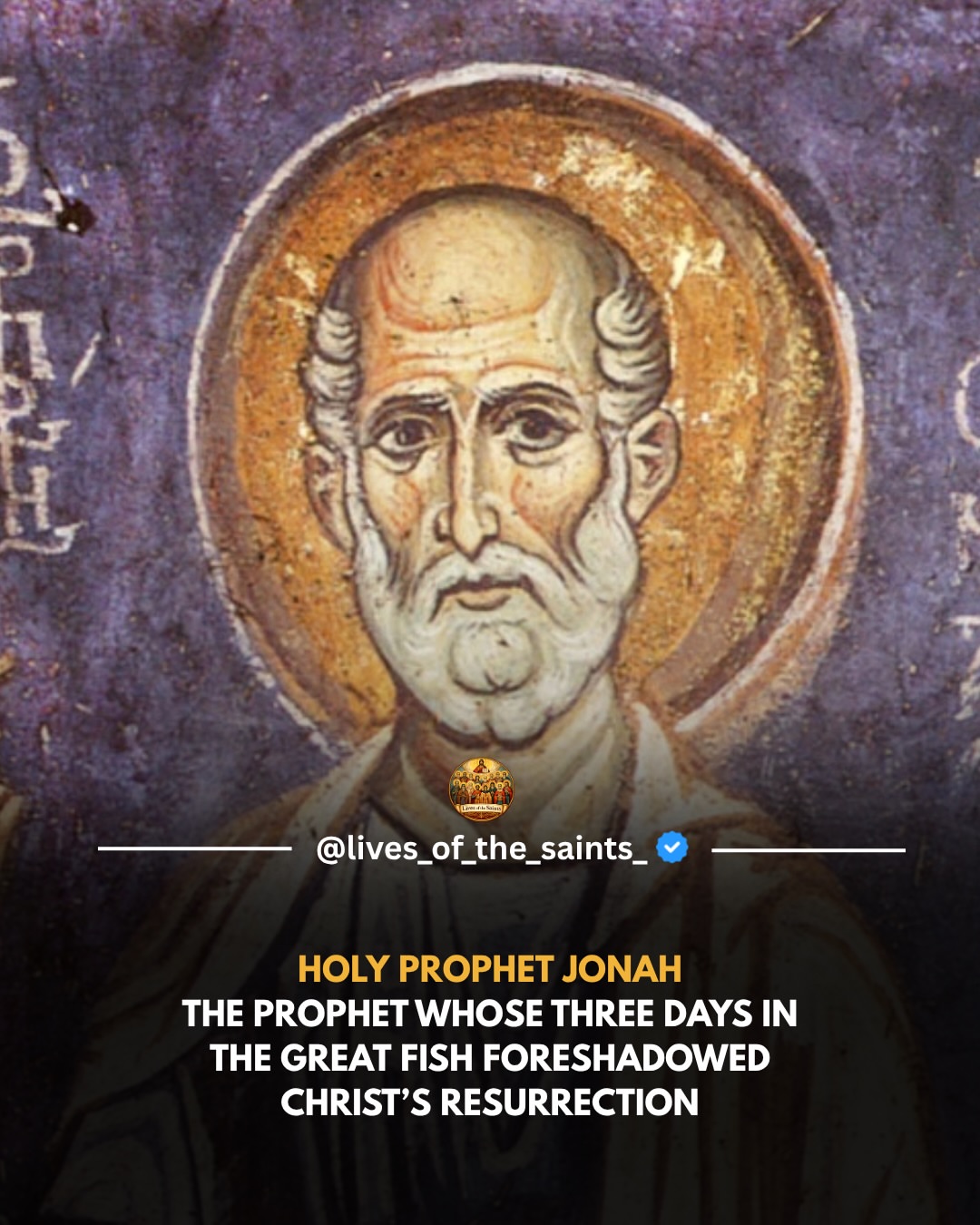
Prophet Jonah: Foreshadowing Christ's Resurrection and Mercy

The post presents the Holy Prophet Jonah, who lived more than 800 years before Christ. According to his life, he was the son of the widow of Zarephath, whom the Prophet Elijah raised from the dead. Jonah is known from the Old Testament book that bears his name. The post explains that his three days in the belly of the great fish became a holy foreshadowing of Christ's three days in the tomb. It notes that just as Jonah was brought out alive,…

The post presents the Holy Prophet Jonah, who lived more than 800 years before Christ. According to his life, he was the son of the widow of Zarephath, whom the Prophet Elijah raised from the dead. Jonah is known from the Old Testament book that bears his name.

The post explains that his three days in the belly of the great fish became a holy foreshadowing of Christ's three days in the tomb. It notes that just as Jonah was brought out alive, this mystery pointed toward the glorious Resurrection of the Lord from the dead. The post also describes the story as a reminder of repentance.

It recounts that when the people of Nineveh heard the warning of God, they humbled themselves, turned from sin, and received mercy. The post concludes with the lesson that no one can flee from God, but no one who repents is beyond His mercy. The post ends with a call to follow for more content and includes tags for Prophet Jonah, Orthodox Saints, Old Testament, Orthodox Faith, and Repentance.

  • Jonah lived more than 800 years before Christ and was the son of the widow of Zarephath raised by Elijah.
  • His three days in the fish foreshadow Christ's three days in the tomb and the Resurrection.
  • The Ninevites' repentance brought God's mercy.
  • No one can flee from God, but repentance brings mercy.
  • The post is tagged with Prophet Jonah, Orthodox Saints, Old Testament, Orthodox Faith, and Repentance.
Read more
Lives of the Saints 🙏 Instagram

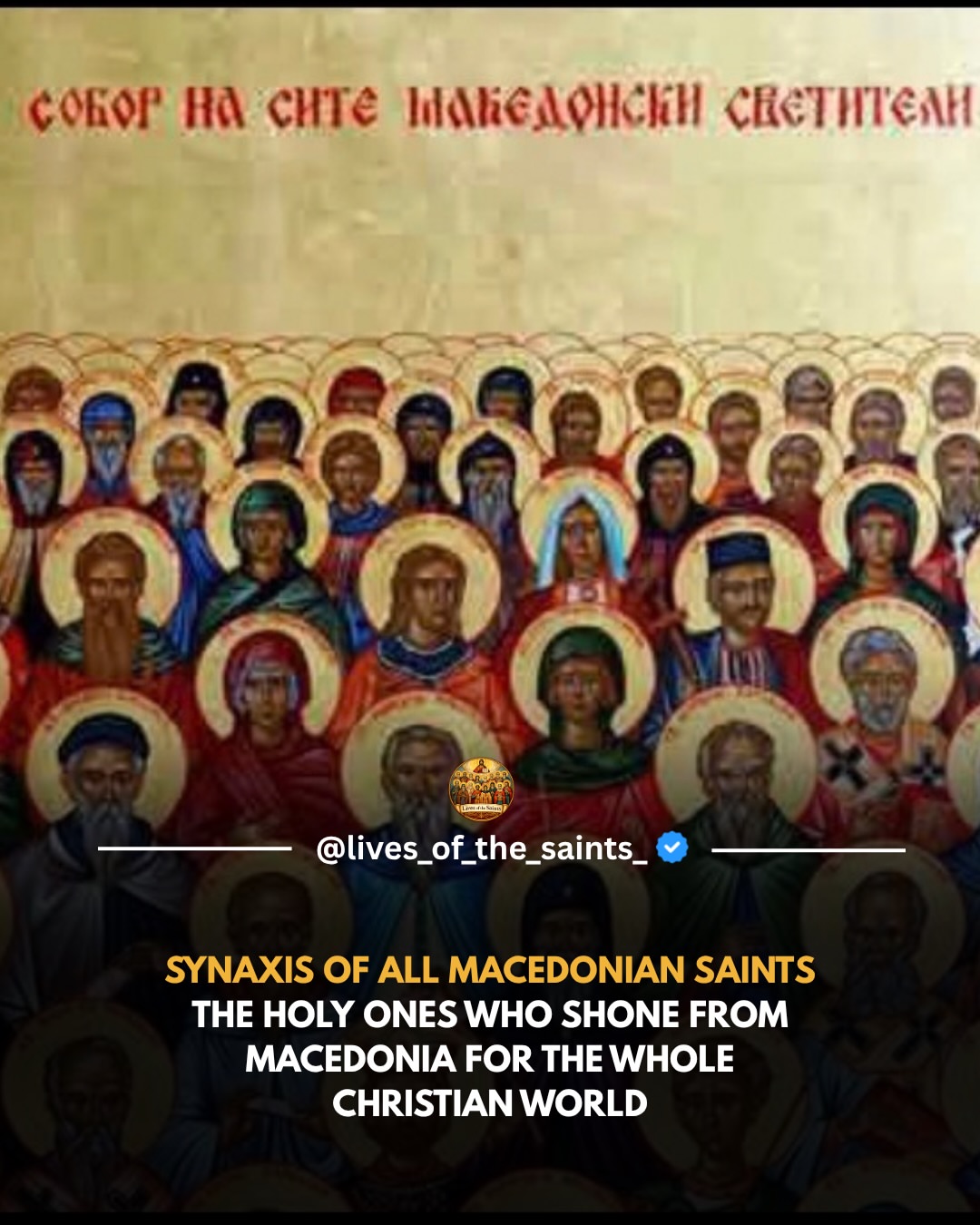
Synaxis of All Macedonian Saints Celebrated First Sunday of October

The Holy Macedonian Orthodox Church celebrates the Synaxis of All Macedonian Saints on the first Sunday of October. The post describes these saints as holy men and women who lived lives pleasing to God and became witnesses of Christ through faith, prayer, sacrifice, humility, and love. Their lives are presented as a blessing not only for the Macedonian people but for the whole Christian world. By their holy works they rose toward the divine life…

The Holy Macedonian Orthodox Church celebrates the Synaxis of All Macedonian Saints on the first Sunday of October. The post describes these saints as holy men and women who lived lives pleasing to God and became witnesses of Christ through faith, prayer, sacrifice, humility, and love. Their lives are presented as a blessing not only for the Macedonian people but for the whole Christian world.

By their holy works they rose toward the divine life and were crowned by God with eternal crowns of glory. The post lists the various roles they fulfilled: some served as bishops, monks, teachers, martyrs, confessors, and spiritual fathers, while others shone quietly through prayer, repentance, fasting, mercy, and obedience. Together they demonstrate that holiness is possible in every generation and every place where Christ is loved above all.

The Synaxis serves as a reminder to honor the spiritual inheritance, to remember those who walked before, and to follow their path toward the Kingdom of God. The post concludes with an invocation asking all Macedonian saints to pray to God for us.

  • The Synaxis of All Macedonian Saints is observed on the first Sunday of October by the Holy Macedonian Orthodox Church.
  • The saints are honored as witnesses of Christ through faith, prayer, sacrifice, humility, and love.
  • They include bishops, monks, teachers, martyrs, confessors, spiritual fathers, and those who lived quietly in prayer, repentance, fasting, mercy, and obedience.
  • Their collective example shows that holiness is attainable in every generation where Christ is loved above all.
  • The celebration calls the faithful to honor their spiritual inheritance, remember the saints, and follow their path to the Kingdom of God.
P Paul Kingsnorth Substack discussion

The Monthly Salon: October

October has arrived, which means autumn is here too, though right now it doesn't feel like it. Even the wind is hot in Ireland, and that's not normal. But then, there's no normal anymore. Everything is turning in strange directions and very little makes sense. Here I am typing words onto a screen, wondering how many non-human entities will read them. I think normal is over, and for quite some time to come. On the plus side, it's been a great…

October has arrived, which means autumn is here too, though right now it doesn't feel like it. Even the wind is hot in Ireland, and that's not normal. But then, there's no normal anymore. Everything is turning in strange directions and very little makes sense. Here I am typing words onto a screen, wondering how many non-human entities will read them. I think normal is over, and for quite some time to come.

On the plus side, it's been a great year for tomatoes. I'm still harvesting them.

Forgive the dark opening to this month's salon. I've been writing my talks for my upcoming brief trip to America, and they're focused on what it means to be human in the age of the singularity. I'm finding that things have changed a lot even since Against The Machine was published just thirteen months ago. Buckle up. It only gets faster from here.

On that note, the two talks I'll be giving Stateside next month are the Being Human Conference in Atlanta, Georgia on Friday 6th November, and the University of Wisconsin on Monday 9th November.

I'll also be speaking in the Netherlands a few weeks later, at the Nexus Institute annual conference.

Let me briefly discuss something much lighter: saints. Also holy wells, ruined abbeys, round towers, bullauns, high crosses, and the caves of hermits. I'll be taking a tour group around all of these things, and more, on my 2027 summer pilgrimage in the west of Ireland. This is a nine-day pilgrim tour of some of the most significant sites of early Christian Ireland, plenty of which have featured on this Substack over the years.

I'll be talking about early Celtic Christianity, the saints of Ireland, and the way the faith lingers in the landscapes here.

Since I first advertised this pilgrimage a few weeks back, it's proved popular. Most of the places are now booked: just ten remain. After that, there will be a waiting list. If you would like a place, now would be the time to pounce. Full details of the pilgrimage and booking details are available.

In other news this month: I appeared a few weeks back on the BBC Radio 4 programme Last Word, an obituary programme which tells the stories of the notable recently-deceased. I was asked on to talk about Wendell Berry. I haven't listened to it because, contrary to rumours, I hate the sound of my own voice. But if you are a Berry fan it may be worth dipping into.

I also appeared on a recent episode of the Resound Project podcast, talking about a subject which will surprise absolutely nobody at all.

The UK edition of Against The Machine is now out in paperback, if you're looking for a cheaper version of the book with some boastful quotes on the cover. If you want an even cheaper edition, and you like reading on Kindles, I'm told the e-book edition will be on sale for 99p for one day only on 27th October. Form an orderly queue.

That's enough advertising. Let's move on to the meat of the matter: what do you want to talk about? The Salon is a place for my readers to open up a conversation about anything at all. New voices are very much encouraged, as is swerving off the beaten track. Over to you. And thank you, as ever, for being here.

  • Normal is over and things are turning in strange directions
  • Upcoming talks in Atlanta (Nov 6), Wisconsin (Nov 9), and the Netherlands
  • 2027 Ireland pilgrimage has 10 spots left before waiting list
  • BBC Radio 4 appearance on Wendell Berry and Resound Project podcast
  • Against The Machine paperback out now; ebook 99p on Oct 27
27 opinions in the discussion Glad to hear your pilgrimage tours are doing well. You sound very cagey about what's happening in the world that I somehow stay ignorant of. Yesterday I made an important discovery: I think… Read the discussion

Panagia Portaitissa: the Keeper of the Gate of Mount Athos

The post introduces the story of Panagia Portaitissa, the Keeper of the Gate, one of the most revered icons of the Holy Mountain. It opens with three elements of the tradition: an icon entrusted to the sea, a mysterious pillar of light, and a story that has lived on Mount Athos for more than a thousand years. The title of the icon, the Keeper of the Gate, points to her role as protector of the entrance to the Holy Mountain, and the icon is kept…

The post introduces the story of Panagia Portaitissa, the Keeper of the Gate, one of the most revered icons of the Holy Mountain. It opens with three elements of the tradition: an icon entrusted to the sea, a mysterious pillar of light, and a story that has lived on Mount Athos for more than a thousand years. The title of the icon, the Keeper of the Gate, points to her role as protector of the entrance to the Holy Mountain, and the icon is kept at the gate of the Iviron monastery, from which she takes her name.

The post presents this as a story of the Athonite tradition rather than a modern account, reaching back over a millennium. The framing suggests a narrative that moves from the icon's journey by sea to its discovery under the sign of the pillar of light, and then to its place in the life of the monastery as an image venerated by pilgrims and monks.

The post serves as an invitation to learn the full account of how the icon arrived at the Holy Mountain and why it came to be called Portaitissa. No further details of the story, dates, names, or specific events are given in the text itself; the post names only the icon, its title, the pillar of light, the sea, and the thousand-year presence of the story on Athos.

  • The post tells the story of Panagia Portaitissa, the Keeper of the Gate, one of the most revered icons of Mount Athos.
  • The story includes an icon entrusted to the sea and a mysterious pillar of light.
  • The tradition has lived on Mount Athos for more than a thousand years.
  • The icon's title connects her with the keeping of the gate of the Holy Mountain.
Read more
F Fr. Barnabas Powell Substack

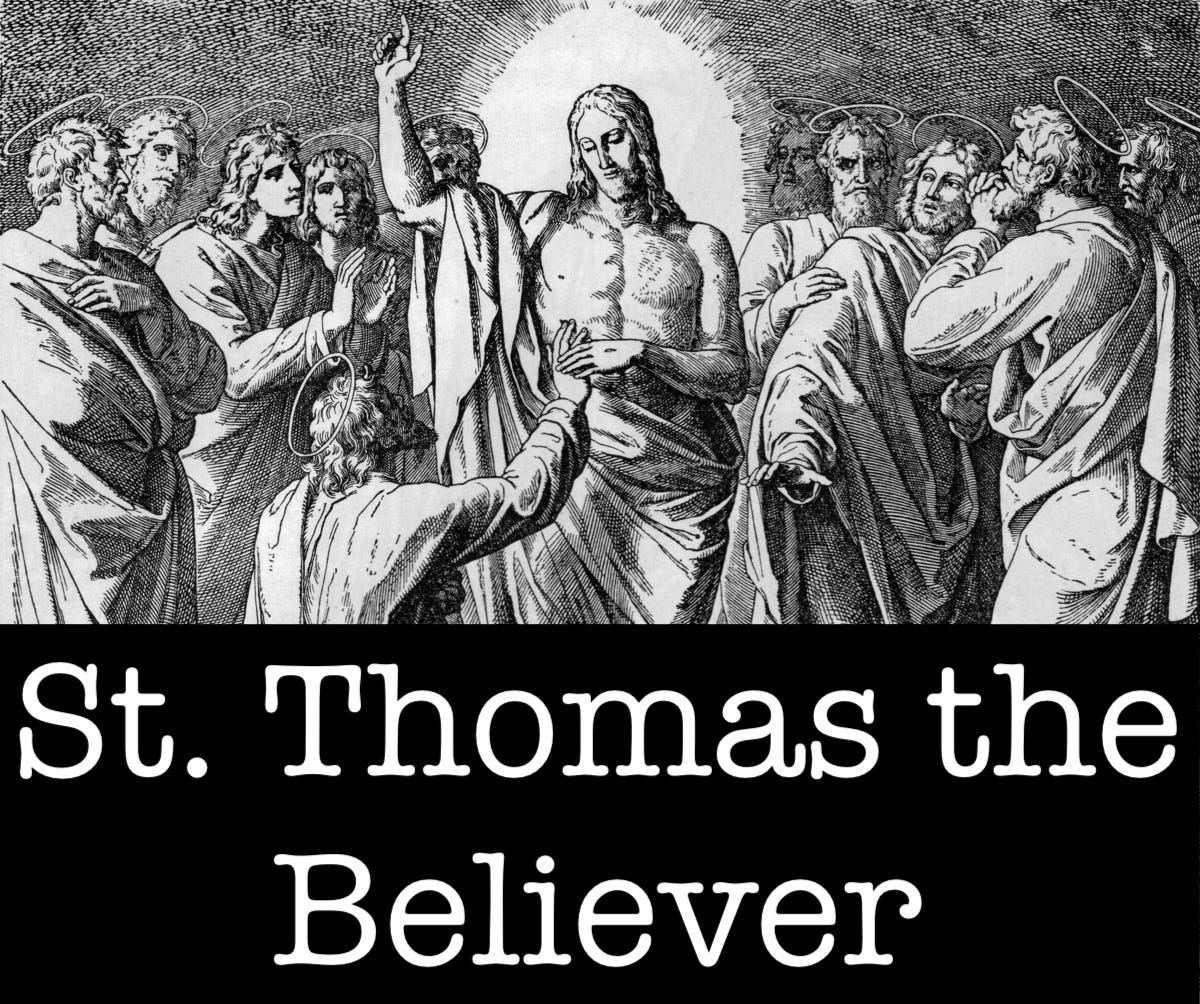
St. Thomas the Believer: Doubt as Path to Deeper Faith

The devotional examines John 20:19-31, where the risen Christ appears to the disciples and later to Thomas, who had insisted on seeing the nail prints and wound before believing. The author argues against the label "Doubting Thomas," preferring "Thomas the Believer," because God remembers how we finish, not only how we struggle. Christ does not scold Thomas; He shows His wounds and invites examination. The reflection draws three lessons. First,…

The devotional examines John 20:19-31, where the risen Christ appears to the disciples and later to Thomas, who had insisted on seeing the nail prints and wound before believing. The author argues against the label "Doubting Thomas," preferring "Thomas the Believer," because God remembers how we finish, not only how we struggle. Christ does not scold Thomas; He shows His wounds and invites examination.

The reflection draws three lessons. First, the Truth of Experience: past experience is real but insufficient alone. Thomas knew dead men do not rise, yet experience alone cannot protect against doubt's darker side. Second, the Truth of Expectation: adding God's grace to the equation.

Most people calculate the future using only themselves and others, leaving God out, which leads to despair. Faith is the courage to count on God's mercy, shaped by prayer, worship, and curiosity about the Faith. Third, the Truth of Execution: acting on belief weakens doubt's grip.

Thomas returned to the community eight days later; he kept showing up, praying, and coming to the Liturgy and Chalice. Faith grows in the doing. The author also recalls John 11:16, where Thomas said, "Let us also go, that we may die with Him," showing courage before his moment of doubt. His confession "My Lord and my God" remains one of the clearest declarations of Christ's divinity in Scripture.

  • Christ meets Thomas's doubt with wounds and invitation, not shame
  • Experience alone cannot sustain faith; grace must be added to expectation
  • Faith is the courage to count on God's mercy, formed by prayer and worship
  • Acting on belief, showing up in community and liturgy, drives out doubt
  • Thomas also declared willingness to die with Christ in John 11:16
Citations Orthodoxes ☦ Instagram

Saint Nicolas Cabasilas on maturity as condition for fruitfulness

The post presents a short saying in French attributed to Saint Nicolas Cabasilas. The saying opens with an observation about trees: their fruits indicate their vigor. It then states a natural constraint: before a tree reaches maturity, nature does not give it the capacity to produce fruits. The saying then draws a parallel with human life using the phrase "De même" (similarly). It asserts that no man is good for others if he is not first good…

The post presents a short saying in French attributed to Saint Nicolas Cabasilas. The saying opens with an observation about trees: their fruits indicate their vigor. It then states a natural constraint: before a tree reaches maturity, nature does not give it the capacity to produce fruits.

The saying then draws a parallel with human life using the phrase "De même" (similarly). It asserts that no man is good for others if he is not first good toward himself. The comparison equates the tree's maturity with a person's goodness toward himself, and the tree's fruits with a person's goodness toward others.

The logic implies that a proper ordering exists: inner condition precedes outer effect. The text does not elaborate on what constitutes maturity for a human being, nor does it describe the kinds of fruits that follow. It does not reference a specific scriptural passage or patristic work.

The attribution identifies the author as Saint Nicolas Cabasilas, but the post gives no further biographical or historical detail. The language of the original post is French. The saying functions as a standalone moral aphorism that uses a natural analogy to express a principle of spiritual priority.

  • The quote uses a tree analogy: fruits reveal vigor; maturity precedes fruitfulness.
  • Saint Nicolas Cabasilas applies this to humans: one must be good to oneself before being good to others.
  • The saying presents a natural order where inner condition enables outer benefit.
  • The text does not define what being good toward oneself entails.
  • The post is in French and attributes the saying to Saint Nicolas Cabasilas.

Elder Philimon: When a Person Feels Like Nothing, God Works Through Him

Elder Philimon, a elder of the Holy Koinobiotic Skete of the Prophet Elijah on Mount Athos, speaks about the emptiness of the self and the Grace of God. He says that when a person is emptied and feels like nothing, then God works through him. He contrasts this with the present state of Christians: today, he says, we live in pretense and call ourselves Christians, but a real Christian feels he is nothing. He uses stark images to describe this…

Elder Philimon, a elder of the Holy Koinobiotic Skete of the Prophet Elijah on Mount Athos, speaks about the emptiness of the self and the Grace of God. He says that when a person is emptied and feels like nothing, then God works through him. He contrasts this with the present state of Christians: today, he says, we live in pretense and call ourselves Christians, but a real Christian feels he is nothing.

He uses stark images to describe this inner state: a real Christian feels like an upside-down cockroach in a bathtub, a nobody, a piece of trash. Against this, he sets our actual condition: we swell up and deflate, and we cannot even bear being judged by a simple child. The talk is presented under the title about the nihilism of our ego and the Grace of God, and the themes are marked with the tags kenosis, egoism, the Grace of God, faith, Christianity and Orthodoxy.

The full video is available on the Pemptousia website of the Holy Skete. The discussion the talk opens concerns how the self must be emptied, in the sense of kenosis, so that divine Grace can act in a person, and how far our everyday Christian self-image stands from this humility. The elder's words place the measure of true Christianity not in outward identity but in the inner feeling of one's own nothingness before God.

Key moments

  1. When a person is emptied and feels like nothing, God works in him.
  2. Today we are Christians only in pretense, says the speaker.
  3. A true Christian feels he is nothing, like an upside-down cockroach in a bathtub, a nobody, a piece of trash.
  4. We swell up and deflate, and we cannot tolerate being judged even by a simple child.
Read more

Funeral at 425 AD Gaza church for mother and daughter killed in airstrike

1:50

The post reports on a funeral held October 4 at Saint Porfidios Church in Gaza City, built in 425 AD, for Maysa and Mary, a mother and daughter killed in an Israeli airstrike inside their apartment. The church, which has survived 1,600 years of empires, was bombed in October 2023 while sheltering 450 Christians and Muslims, killing 19 people including eight children and five women. In December 2023, Israeli snipers and tanks fired on Holy Family…

The post reports on a funeral held October 4 at Saint Porfidios Church in Gaza City, built in 425 AD, for Maysa and Mary, a mother and daughter killed in an Israeli airstrike inside their apartment. The church, which has survived 1,600 years of empires, was bombed in October 2023 while sheltering 450 Christians and Muslims, killing 19 people including eight children and five women.

In December 2023, Israeli snipers and tanks fired on Holy Family Catholic Church and the Sisters of Charity, killing an elderly woman and her daughter as they walked to the bathroom. The pattern extends to 1979 when Father Philomenos, a Cypriot priest serving as hegumen at Jacob's Well in Nablus, the site where Jesus met the Samaritan woman, was murdered during Vespers by an attacker who threw a grenade and killed him with an axe.

Father Philomenos was canonized by the Patriarch of Jerusalem in 2009 as Saint Philomenos, a new hieromartyr of Jacob's Well. The speaker identifies a continuous pattern of attacks on churches and clergy: bombs on churches, snipers on nuns, axes in monasteries. The post argues that Christianity in the Holy Land is not dead but is being martyred in real time, and that the true church has bled there for over 2,000 years while the West teaches Christianity started 500 years ago in Europe.

The post concludes with a call to light a candle for Maysa, Mary, and Saint Philomenos, saying "Memory eternal."

Key moments

  1. 0:00 Christianity in the Holy Land is being martyred in real time; funeral for Maysa and Mary held at Saint Porfidios on October 4th after Israeli airstrike.
  2. 0:32 Saint Porfidios, built in 425 AD, bombed in October 2023 while sheltering 450 Christians and Muslims; 19 killed including eight children and five women.
  3. 0:32 In December 2023, Israeli snipers and tanks opened fire on Holy Family Catholic Church and Sisters of Charity, killing an elderly woman and her daughter.
  4. 1:07 In 1979, Father Philomenos, Hegumen at Jacob's Well in Nablus, was murdered during Vespers by a man who threw a grenade and killed him with an axe.
  5. 1:07 Father Philomenos was canonized by the Patriarch of Jerusalem in 2009 as Saint Philomenos, new hieromartyr of Jacob's Well.
  6. 1:40 The speaker identifies a pattern: 1979 Jacob's Well, 2023 Saint Porfidios, 2023 Holy Family, October 4th Saint Porfidios again; bombs, snipers, axes.
  7. 1:40 The West teaches Christianity started 500 years ago, but the true church has bled in the Holy Land for over 2000 years and never left.
  8. 1:40 Call to light a candle for Maysa, Mary, and Saint Philomenos; "Memory eternal. God bless you all."
10 opinions in the discussion It's not just about that. It's about the ethnic cleansing of native ethnic Christians who have kept these traditions since the time of Jesus, and replacing them with Western Jews. Before… Read the discussion

My dog died today. Please pray for her, her name is Ellie

I'm a huge sinner, and I honestly don't know what I believe theologically anymore. But I know God loved her dearly, and he loved me too, because he gave me the greatest gift of my life while I was still a child. She died peacefully in my childhood garden, where she always played.

  • The author asks for prayers for Ellie, their dog who died today.
  • They say they are a sinner and no longer know what they believe theologically.
  • They trust that God loved her and gave them this gift as a child.
  • She died peacefully in the garden where she always played.
7 opinions in the discussion I'm sorry for your loss. May God give you comfort right now, and may you, by his grace, see her again one day in that time when the wolf lives with the lamb and the leopard rests beside the… Read the discussion
CHRISTIANITY UNITED Instagram

Children as blessing in Orthodox Christian life

The author states that children are a blessing, not a burden, in Orthodox Christian life. The post begins by describing the beauty of hearing a baby's laughter in church, saying this is where children belong, surrounded by prayer, icons, the Divine Liturgy, and people who love Christ. It cites Genesis where God tells humanity to be fruitful and multiply, and says life is not something Christians should fear or treat as an inconvenience. The…

The author states that children are a blessing, not a burden, in Orthodox Christian life. The post begins by describing the beauty of hearing a baby's laughter in church, saying this is where children belong, surrounded by prayer, icons, the Divine Liturgy, and people who love Christ. It cites Genesis where God tells humanity to be fruitful and multiply, and says life is not something Christians should fear or treat as an inconvenience.

The ability to bring new life is called one of the greatest gifts God has given humanity. For a Christian husband and wife, marriage is not meant to turn inward for comfort but to become fruitful by welcoming children when God grants them and raising them to know and love Him. Responsibility includes bringing them to church, teaching them to pray, letting them see adults pray, teaching them to make the sign of the Cross, to forgive, to recognize right from wrong, and to know Christ beyond Sunday.

The post acknowledges that not every person must marry, not every couple can have children, the Church honors celibacy and monasticism, and infertility does not make a marriage less valuable before God. When God gives children, they are not interruptions but become part of the responsibility and path toward salvation. The world needs another generation that knows Christ, beginning with a child feeling at home in the Church. The post ends with Mark 10:14: "Let the little children come to Me."

  • Children are a blessing, not a burden, and belong in church surrounded by prayer and liturgy.
  • Scripture commands to be fruitful and multiply; life is a gift not to be feared.
  • Marriage is called to fruitfulness through welcoming and raising children to know Christ.
  • Raising children includes bringing them to church, teaching prayer, the sign of the Cross, forgiveness, and moral discernment.
  • The Church also honors celibacy and monasticism; infertility does not diminish a marriage's value before God.
Orthodox Life Instagram

Saint Thomas the Apostle: From 'My Lord and my God' to Martyrdom in India

The post commemorates the Holy Apostle Thomas, one of the Twelve, on his feast day of October 6th. Thomas, also called Didymus, meaning the Twin, was a Galilean fisherman called by Jesus Christ. The author recalls that when Christ set out toward dangerous territory before the resurrection of Lazarus, Thomas urged the other disciples to go with Him, saying, 'Let us also go, that we may die with Him.' The post treats Thomas's doubt about the…

The post commemorates the Holy Apostle Thomas, one of the Twelve, on his feast day of October 6th. Thomas, also called Didymus, meaning the Twin, was a Galilean fisherman called by Jesus Christ. The author recalls that when Christ set out toward dangerous territory before the resurrection of Lazarus, Thomas urged the other disciples to go with Him, saying, 'Let us also go, that we may die with Him.' The post treats Thomas's doubt about the Resurrection as 'blessed unbelief' or 'saving doubt,' because it strengthened the Church's faith.

When Christ appeared to him eight days after Pascha and invited him to touch His wounds, Thomas confessed, 'My Lord and my God!' The post also recounts a tradition in which divine providence used Thomas to confirm the bodily assumption of the Virgin Mary. Arriving three days late to her burial in Jerusalem, he asked that her tomb be opened so he could venerate her.

The empty sepulcher showed her ascent into heaven, and the Mother of God comforted his grief by giving him her holy sash, a relic connected with the feast of the holy belt celebrated on August 31. After Pentecost, Thomas preached outside the Roman Empire in Palestine, Mesopotamia, Parthia, Ethiopia, and India, converting many and building churches.

His preaching provoked a pagan ruler in Meliapur, and he was martyred by being pierced with five spears.

  • Thomas, called Didymus the Twin, was a Galilean fisherman among the Twelve Apostles.
  • Before Lazarus's resurrection he urged the disciples, 'Let us also go, that we may die with Him.'
  • His doubt is called 'blessed unbelief' or 'saving doubt'; seeing Christ's wounds eight days after Pascha, he confessed, 'My Lord and my God!'
  • He arrived late to the Virgin Mary's burial; her empty tomb and the gift of her holy sash confirmed her assumption, remembered on August 31.
  • He preached in Palestine, Mesopotamia, Parthia, Ethiopia, and India, and was martyred in Meliapur by five spears.
Read more