WeOrthodox
EN UA

Orthodox posts, videos and discussions

We follow Orthodox channels, communities and blogs across the web, summarise every post and video, and highlight the conversations with real substance.

Orthodox Sound YouTube

Whoever Loves Himself Cannot Love God: St. Diadochos of Photiki on Love and Spiritual Knowledge

Whoever Loves Himself Cannot Love God: St. Diadochos of Photiki on Love and Spiritual Knowledge

The post presents a reading from St. Diadochos of Photiki's 'One Hundred Chapters on Spiritual Knowledge,' set to acoustic sound. The teaching centers on love as the foundation of the spiritual life. Man is not naturally good but becomes good through participation in God, using freedom to turn the will toward the good. Wisdom and spiritual knowledge strengthen the desire for good and distinguish good from evil, which has no existence of its own…

The post presents a reading from St. Diadochos of Photiki's 'One Hundred Chapters on Spiritual Knowledge,' set to acoustic sound. The teaching centers on love as the foundation of the spiritual life. Man is not naturally good but becomes good through participation in God, using freedom to turn the will toward the good.

Wisdom and spiritual knowledge strengthen the desire for good and distinguish good from evil, which has no existence of its own but arises from human desires.

Fervent love for God makes the remembrance of His glory life's deepest purpose, so that one counts personal glory as nothing and abandons worldly pleasures. This love produces good works, makes one known by God, and leads to deeper communion. Faith is joined to love and works, but the saint warns against arrogant speculation about divine mysteries, which darkens the mind.

After Adam's sin, human interests divided between heaven and the world, and perception split between understanding and the senses. The soul that withdraws to prayer sees God more clearly, while worldly attachment clouds vision. The Holy Spirit purifies the nous, but demons offer false consolation during sleep that leaves doubt; true consolation comes awake and brings serenity and sweet love for God.

Obedience leads to love of God, and self-control of body and soul is the supreme virtue for perfection. Food should be taken in measure, fasting joined to humility and love, wine in moderation, other alcohol avoided. Baths and medicines are permitted if hope remains in the Lord.

Signs of distancing from the world include forgiving wrongs, avoiding disputes and courts, distributing possessions, and embracing poverty, which frees the soul for dispassion, love, and joy. Prayer of the heart is superior to spoken prayer and brings warmth from the Holy Spirit. Grace dwells in the soul from baptism while demons act from outside; their struggle can become a means of perfection like martyrdom. Those who persevere taste God's sweetness and are numbered among the saints.

Key moments

  1. 0:00 Foundation of spiritual life is love; man becomes good through participation in God by using freedom rightly.
  2. 0:32 Wisdom and spiritual knowledge strengthen desire for good; evil has no existence but comes from human heart; fervent love for God makes His glory life's purpose.
  3. 1:04 Love bears fruits: good works, known by God, becomes His friend; follows holy fear and leads to deeper communion; faith joined to love but avoid arrogant speculation.
  4. 2:07 After Adam's sin interests divided; must labor to distinguish spiritual truth from evil spirits; withdrawal to prayer clears vision; Holy Spirit purifies nous; false vs true consolation distinguished.
  5. 3:39 Obedience leads to love; self-control of body and soul is supreme virtue; food in measure, fasting with humility; wine in moderation, other alcohol avoided; baths and medicines permitted with hope in Lord.
  6. 5:13 Life fleeting; become indifferent to world; demon of despondency driven away by remembrance of God and Jesus' name; signs of distancing: forgive wrongs, avoid disputes, distribute possessions, embrace poverty.
  7. 6:16 Progress through theology (understanding God moving heart to love) and spiritual knowledge (right conduct); prayer of heart superior to spoken prayer; warmth from Holy Spirit.
  8. 7:19 Two powers act on soul; fall divided will; Incarnation entered wounded nature; grace from baptism dwells in soul while demons act from outside; struggle purifies like martyrdom; true dispassion means not overcome by attacks; perseverance leads to sainthood.
Orthodox Health with Fr.TEDTalks Instagram

Jiu Jitsu Did Not Save Me: It Helped Me See What Was Already There

A cradle Orthodox Christian responds to critics who might claim he is equating jiu-jitsu with the church. He states plainly that Christ saves his life, not jiu-jitsu. Asked why the church's tools were not enough for him when he was semi-depressed, extremely overweight, and burned out seven years ago, he answers that the tools were there all along; he was not using them. Jiu-jitsu did not offer anything the church does not offer. Instead, it…

A cradle Orthodox Christian responds to critics who might claim he is equating jiu-jitsu with the church. He states plainly that Christ saves his life, not jiu-jitsu. Asked why the church's tools were not enough for him when he was semi-depressed, extremely overweight, and burned out seven years ago, he answers that the tools were there all along; he was not using them.

Jiu-jitsu did not offer anything the church does not offer. Instead, it became the lens through which his spiritual life came into focus, letting him see with fresh eyes what was already present. He says everything can become a vehicle if approached with the proper mindset, and in that sense jiu-jitsu has been invaluable and a good counterpart to his spiritual life.

The discussion centers on the relationship between physical discipline and Orthodox spiritual practice: the speaker does not treat martial arts as a substitute for the church but as something that helped him use what the church already provides. He credits the collaboration with Orthodox Health and mentions his Bunker Jiu Jitsu community, framing his experience with the hashtags for orthodoxy and discipline.

Key moments

  1. He insists Christ saves his life, not jiu-jitsu, anticipating online criticism.
  2. He says everything can become a vehicle if approached with the proper mindset, and he is not equating jiu-jitsu with the church.
  3. As a cradle Orthodox he had all the tools, yet was semi-depressed, extremely overweight, and burned out seven years ago.
  4. The tools were there; he just was not using them.
  5. Jiu-jitsu became the lens that helped him see what was already there, pull things into focus, and see with fresh eyes.
  6. In that sense it has been invaluable and a good counterpart to his spiritual life.
Read more
Ancient Faith YouTube

Sanctifying the Workday: The Orthodox Hours of Prayer

Sanctifying the Workday: The Orthodox Hours of Prayer 50:47

In this episode of a series on living the Orthodox Christian life, Deacon Seraphim explains the ancient practice of praying at fixed hours of the day—the First, Third, Sixth, and Ninth Hours—and shows how these brief services turn an ordinary workday into a remembrance of salvation history. He begins with the ancient context: in the Roman world, bells and public criers announced the hours as major civic events, and Christians adopted these…

In this episode of a series on living the Orthodox Christian life, Deacon Seraphim explains the ancient practice of praying at fixed hours of the day—the First, Third, Sixth, and Ninth Hours—and shows how these brief services turn an ordinary workday into a remembrance of salvation history. He begins with the ancient context: in the Roman world, bells and public criers announced the hours as major civic events, and Christians adopted these signals as summons to prayer.

The hours are reckoned from sunrise to sunset, so the first hour falls around 6 a.m., the third around 9 a.m., the sixth at noon, and the ninth around 3 p.m. The practice is deeply biblical. Daniel prayed three times a day, and the Acts of the Apostles shows the early Church keeping these times: the Holy Spirit descends at the third hour (Pentecost), Peter prays at the sixth, and Peter and John go up to the temple at the ninth.

Each Hour follows a stable, simple structure—Trisagion prayers, three psalms, troparia, the Lord's Prayer, forty repetitions of 'Lord have mercy,' and a concluding prayer—making them accessible to laypeople and communities without a priest.

Deacon Seraphim walks through the themes of each Hour: the First commends the day's work to God at sunrise; the Third recalls Pentecost and ties Psalm 50's plea for a clean heart to the Spirit's descent; the Sixth places us in the darkness of the Crucifixion at midday, with Psalm 90 warning against the 'noonday demon' of temptation; and the Ninth stands at Christ's death with the penitent thief, whose confession is reflected in the three-bar cross.

He also touches on Typika, Compline, the Midnight Office, and the Royal Hours, and closes with practical advice: laypeople need not imitate a monastic schedule, but can recover small moments of fixed prayer—especially the Sixth Hour—that free them from the tyranny of the clock and fill the day with Christ's presence.

Key moments

  1. 0:31 In the ancient world, bells and street criers announced the hours as major public events, and Christians used these signals as summons to prayer, remembering salvation history at the third, sixth, and ninth hours.
  2. 4:43 The hours are reckoned from sunrise to sunset with variable-length hours: the first hour is about 6 a.m., the third about 9 a.m., the sixth is noon, and the ninth about 3 p.m.
  3. 6:48 The practice is rooted in Scripture: Daniel prayed three times a day, and Acts shows the apostles keeping fixed hours—the Spirit descends at the third hour, Peter prays at the sixth, and Peter and John worship at the ninth.
  4. 8:22 Each hour has a stable form: Trisagion prayers, three psalms, troparia, the Theotokion, the Lord's Prayer, 'Lord have mercy' forty times, and a concluding prayer—making them suitable for lay people, readers, and communities without priests.
  5. 11:25 The first hour (sunrise) uses Psalms 5, 89, and 100 to place the day's work under God's care, remembering Christ brought before Pilate and praying to Christ the true light.
  6. 13:33 The third hour (9 a.m.) recalls Pentecost and the descent of the Holy Spirit; Psalm 50's petitions for a clean heart and the Spirit's presence join Pentecost to personal repentance, and the clergy quietly repeat this prayer during the epiclesis of the liturgy.
  7. 19:22 The sixth hour (noon) places us at the darkness of Great Friday, joining Christ crucified to Adam's sin on the sixth day; Psalm 90's 'noonday demon' warns against midday laziness and temptation, and this is the hour most recommended for lay people to add to daily prayer.
  8. 25:38 The ninth hour (3 p.m.) remembers Christ's death and the penitent thief; the cross is interpreted as the balance beam of righteousness (reflected in the slanted footrest of the three-bar cross), and the ninth hour normally leads into vespers.
Read more
George Instagram

Eight Roots of Sin: What the Desert Fathers Prescribed for Each One

1:24

The speaker opens with a struggle many will recognize: you confess a sin, promise not to repeat it, and a week later you fall into it again. They say they have been there many times and that this cycle is human, not a sign that one person alone is failing. The help they found came from the desert fathers, who wrote 1600 years ago that almost every sin grows from eight roots: gluttony, lust, love of money, anger, sadness, acedia, vainglory and…

The speaker opens with a struggle many will recognize: you confess a sin, promise not to repeat it, and a week later you fall into it again. They say they have been there many times and that this cycle is human, not a sign that one person alone is failing. The help they found came from the desert fathers, who wrote 1600 years ago that almost every sin grows from eight roots: gluttony, lust, love of money, anger, sadness, acedia, vainglory and pride.

The point of this teaching is not to name sins but to find the root underneath them, because fighting the same sin over and over means the root has not been treated. For every root the fathers gave a medicine that is its opposite. The speaker lists them: fasting against gluttony, guarding your eyes against lust, giving against love of money, patience against anger, hope against sadness, staying against acedia, doing good in secret against vainglory, and humility against pride.

The speaker then turns to themselves and names their own root as pride, which they say they still fight every day. They close by inviting viewers to identify which of the eight roots is theirs, framing the question as a way to start working on the root rather than only the sin that keeps returning. The post is addressed to anyone caught in the cycle of repeated confession and repeated falls, offering the fathers' list as a practical map: find your root, find its opposite, and treat the cause instead of the symptom.

Key moments

  1. The speaker describes the recurring sin you keep falling into even after confessing it and promising not to repeat it, saying they have been there many times and it is human.
  2. The desert fathers wrote 1600 years ago that almost every sin grows from eight roots: gluttony, lust, love of money, anger, sadness, acedia, vainglory and pride.
  3. For every root there is a medicine that is its opposite: fasting for gluttony, guarding your eyes for lust, giving for love of money, patience for anger, hope for sadness, staying for acedia, doing good in secret for vainglory, and humility for pride.
  4. The speaker says their own root is pride, which they still fight every day, and asks viewers which one is theirs.
Read more
Orthodox Sound YouTube

Does God like the way I live? Elder Proclu Nicău on humility

Does God like the way I live? Elder Proclu Nicău on humility 11:19

Elder Proclu Nicău teaches that humility is the virtue God loves most. He says God forgives every sin except pride, because pride drives away the Holy Spirit. When the Holy Spirit abandons a person, that person falls, and from the fall he learns humility. The elder points to the saints, who all considered themselves worthless, and warns that anyone who claims to be a saint has been deceived by the devil. He gives practical advice for keeping…

Elder Proclu Nicău teaches that humility is the virtue God loves most. He says God forgives every sin except pride, because pride drives away the Holy Spirit. When the Holy Spirit abandons a person, that person falls, and from the fall he learns humility. The elder points to the saints, who all considered themselves worthless, and warns that anyone who claims to be a saint has been deceived by the devil.

He gives practical advice for keeping humility. A person should tell himself that anyone is better than he is. When the desire for revenge comes, he should answer it with the words 'not today' and pray instead of repaying evil with evil; then the Holy Spirit drives the evil thought away. In church he should think everyone else is better than he is, pray 'Lord, also receive me in my humility,' attend carefully to the liturgy, and leave in peace. Measuring or despising others may cause the Holy Spirit to abandon him.

The elder warns that the demons of hell have escaped to work on the earth and attack Christians wherever two or three gather. Christians today are weak, and only humility frees them from the devil's hook. He urges frequent confession, saying that through the confession of sins the soul finds relief and God will not forsake the humble.

He also says the end times are near and the years of affliction have begun, so whoever sees this clearly has only weeping left, weeping for the afterlife rather than this passing life.

He tells of a five-year-old girl who was cruelly told that her mother had got rid of her siblings. He aches for those who have had abortions but says they need repentance, contrition, and confession, not despair. He closes with advice to three important men who visited him: find a father confessor, become a church-going Christian, forgive others as the Lord's Prayer requires, and do to no one what one would not want done to oneself.

Key moments

  1. 0:00 God favors the humble; all the saints considered themselves worthless, and anyone claiming to be a saint has been deceived by the devil.
  2. 0:31 God forgives all sins but not pride; the proud fall into fornication because the Holy Spirit abandons them, and from the fall they learn humility.
  3. 1:03 To keep the Holy Spirit, tell yourself anyone is better than you; when wanting revenge, answer 'not today,' pray instead, and the Holy Spirit will drive the evil thought away.
  4. 2:05 All the demons of hell have escaped to work on the earth, attacking wherever two or three Christians gather; Christians today are weak and escape the devil's hook only through humility.
  5. 2:35 In church, think everyone else is better than you, pray 'Lord, also receive me in my humility,' attend to the liturgy, and leave in peace; measuring or despising others may cause the Holy Spirit to abandon you.
  6. 4:07 He honors Christians who have a father confessor, because through confession of sins the soul finds relief and God will not forsake the humble.
  7. 4:38 The end times are almost here and the years of affliction have begun; whoever sees this clearly has only weeping left, weeping for the afterlife rather than this passing life.
  8. 6:12 A woman cruelly told a five-year-old girl that her mother had got rid of her siblings; he aches for those who have had abortions but says they need repentance, contrition, and confession, not despair.

The Bible belongs to the Church, not to private interpretation

0:14

Christ did not hand us a Bible and tell each person to interpret it as he sees fit. He founded His Church, entrusted authority to the Apostles, and pledged that the Holy Spirit would lead her into all truth (John 16:13). The New Testament itself arose from inside the life of this Church. Long before the New Testament was completely written, copied, gathered, and acknowledged, Christians were already worshipping, baptizing, celebrating the…

Christ did not hand us a Bible and tell each person to interpret it as he sees fit. He founded His Church, entrusted authority to the Apostles, and pledged that the Holy Spirit would lead her into all truth (John 16:13).

The New Testament itself arose from inside the life of this Church. Long before the New Testament was completely written, copied, gathered, and acknowledged, Christians were already worshipping, baptizing, celebrating the Eucharist, ordaining bishops, and guarding the apostolic faith.

That is why Saint Paul describes the Church as "the pillar and foundation of the truth" (1 Timothy 3:15). He also urges believers to "stand firm and hold to the traditions" they received, whether "by word of mouth or by letter" (2 Thessalonians 2:15). The apostolic faith was therefore passed down both in writing and through the living Tradition of the Church.

We see this same principle in Scripture itself. When the Ethiopian eunuch was reading Isaiah and was asked if he understood it, he replied, "How can I, unless someone guides me?" (Acts 8:31). And when a serious doctrinal disagreement arose in the early Church, Christians did not simply tell everyone to read the Bible and decide for themselves.

The Apostles and elders met together in Jerusalem, discerned the truth, and announced, "It seemed good to the Holy Spirit and to us" (Acts 15:28).

This does not mean Scripture is unimportant or that Christians should not read the Bible. The Orthodox Church honors Holy Scripture as the inspired Word of God. But Scripture was never meant to be cut off from the Church, the Apostolic Tradition, the Fathers, the Councils, and the worshiping life in which it was received and preserved.

The issue is not "Bible or Church." The Bible belongs to the Church.

Christ gave us neither private interpretation nor thousands of contradictory versions of Christianity. He gave us one Church, one faith, one baptism (Ephesians 4:4-5), and within that Church the Scriptures are read according to the apostolic faith handed down from generation to generation.

  • Christ established the Church with apostolic authority and promised the Holy Spirit's guidance, not private Bible interpretation.
  • The New Testament emerged from within the Church's life, which already worshipped, baptized, celebrated the Eucharist, and ordained bishops before the canon was settled.
  • Scripture itself shows the need for guidance (Ethiopian eunuch) and conciliar decision-making (Jerusalem Council).
  • The Orthodox Church venerates Scripture as inspired but insists it cannot be separated from the Church, Tradition, Fathers, Councils, and worship.
  • Christ gave one Church, one faith, one baptism, within which Scripture is read according to the apostolic faith handed down.
12 opinions in the discussion Where does it say he gave us the church to interpret the bible. Or did the orthodox interpret that the church is the only one who can interpret the bible? Read the discussion
Orthodox Health Instagram

"I don't get any judgment on the mats. I get plenty of judgment in parish."

0:44

Fr. Ted Paraskevopoulos, speaking on the Orthodox Health Podcast, describes a discomforting contrast between his parish and his Brazilian jiu-jitsu gym. On the mat, he says, nobody cares that he is a priest, and nobody cares that the podcast host is a doctor. Titles, status, politics, and resumes disappear quickly when somebody takes your back. He receives no judgment in that setting, while in the parish, where brothers and sisters in Christ are…

Fr. Ted Paraskevopoulos, speaking on the Orthodox Health Podcast, describes a discomforting contrast between his parish and his Brazilian jiu-jitsu gym. On the mat, he says, nobody cares that he is a priest, and nobody cares that the podcast host is a doctor. Titles, status, politics, and resumes disappear quickly when somebody takes your back.

He receives no judgment in that setting, while in the parish, where brothers and sisters in Christ are supposed to be forgiving, he receives plenty of it. He adds that he has had more respectful conversations and more acceptance in jiu-jitsu circles than he often finds in the church. The host frames the observation carefully: this is not an argument that jiu-jitsu has something Christ forgot to give the Church.

It is an uncomfortable observation about Christians themselves. Sometimes a secular room displays patience, fraternity, humility, respect, and forgiveness more visibly than the Christians who already know they are commanded to practice those virtues. The host says the proper response to that contrast is not defensiveness but repentance.

Fr. Ted finds it humbling that a place that does not worship Christ can exemplify virtues of community life that the church is supposed to practice and often does not. The discussion comes in Episode 81 of the Orthodox Health Podcast, titled "When Life Falls Apart, You Need a Bunker," and the host offers to send the full conversation with Fr. Ted to anyone who comments.

Key moments

  1. He gets no judgment on the mat but plenty of judgment in his parish, where brethren and sisters in Christ are supposed to be forgiving.
  2. At his dojo no one cares whether he is a priest; everybody is equal on the mat, which he finds comforting.
  3. He has had more respectful conversations and acceptance in Jiu-Jitsu circles than often in the church.
  4. He says Jiu-Jitsu is not offering something the church does not have, but it holds a mirror to the church and exposes its weaknesses.
  5. It humbles him that a place not worshipping Christ exemplifies virtues of community life the church is supposed to have and often does not.
Read more
George Instagram discussion

Receiving Communion Properly: Common Mistakes and Step-by-Step Guidance

1:21

The speaker says most Orthodox Christians receive communion incorrectly, a habit carried over from childhood, and admits he made the same mistakes himself. The errors he lists include approaching the chalice with lipstick on, crossing oneself right next to the chalice, pulling the head away too fast after receiving, rushing to kiss the icons afterward, and dropping crumbs of blessed bread on the floor. He grounds the instruction in Saint Paul's…

The speaker says most Orthodox Christians receive communion incorrectly, a habit carried over from childhood, and admits he made the same mistakes himself. The errors he lists include approaching the chalice with lipstick on, crossing oneself right next to the chalice, pulling the head away too fast after receiving, rushing to kiss the icons afterward, and dropping crumbs of blessed bread on the floor.

He grounds the instruction in Saint Paul's words that a man must examine himself before receiving, because communion is not a symbol but Christ himself. The practical guidance begins before the chalice: prepare with prayer, fasting and confession as your spiritual father directs, wipe off lipstick, and pray the thief's prayer on the way up: 'I will not give you a kiss like Judas, but like the thief, I confess you.

Remember me, Lord, in your kingdom.' At the chalice, cross yourself before reaching it, not next to it, so you do not knock it. Hold the red cloth under your chin, say your baptismal name, open your mouth, and receive without pulling away quickly. Afterward, wipe your lips with the cloth and do not rush to kiss the icons, since you have just received the one every icon points to.

Eat every crumb of the antidoron because it is blessed bread, and go home quietly to thank God.

Key moments

  1. Most Orthodox receive communion the wrong way since childhood; common mistakes include lipstick, crossing next to the chalice, pulling away too fast, rushing to kiss icons, and dropping crumbs of blessed bread.
  2. Saint Paul says to examine yourself before receiving, because communion is not a symbol but Christ himself.
  3. Prepare beforehand with prayer, fasting and confession, exactly as your spiritual father tells you.
  4. Wipe off lipstick and pray on the way up: 'I will not give you a kiss like Judas, but like the thief, I confess you. Remember me, Lord, in your kingdom.'
  5. Make the sign of the cross before reaching the chalice, not next to it, so you do not knock it.
  6. Hold the red cloth under your chin, say your baptismal name, open your mouth, receive, and do not pull away fast.
  7. Wipe your lips with the cloth and do not rush to kiss the icons, since you just received the one every icon points to.
  8. Eat every crumb of the antidoron because it is blessed bread, then go home quietly and thank God.
25 opinions in the discussion A priest told me not to touch the red cloth when I was actually receiving communion. Read the discussion
Kyle YouTube discussion

An Orthodox Critique of Modern Television's Spiritual Emptiness

An Orthodox Critique of Modern Television's Spiritual Emptiness 23:33

An Orthodox Christian content creator examines why contemporary television often feels spiritually corrosive, arguing that popular series routinely glorify sex, violence, and cynicism without offering redemption. The video opens with a reflection on humanity's innate draw to storytelling — life only makes sense within a narrative — and warns that the stories we consume shape our worldview and passions. Applying an Orthodox framework of…

An Orthodox Christian content creator examines why contemporary television often feels spiritually corrosive, arguing that popular series routinely glorify sex, violence, and cynicism without offering redemption. The video opens with a reflection on humanity's innate draw to storytelling — life only makes sense within a narrative — and warns that the stories we consume shape our worldview and passions.

Applying an Orthodox framework of discernment, the speaker evaluates several flagship shows: Game of Thrones is contrasted with The Lord of the Rings as a cynical fantasy that celebrates power and vice over hope; The Boys and Rick and Morty are faulted for subverting heroism and normalizing nihilism; Black Mirror and adult cartoons like Family Guy are cited for their spiritual emptiness and moral relativism.

Avatar: The Last Airbender receives qualified praise for portraying genuine moral growth and a redemption arc reminiscent of the Prodigal Son, though its pagan spirituality and ethic of balance rather than holiness are noted. The 1977 miniseries Jesus of Nazareth is recommended as a faithful, edifying depiction of Christ's life. The discussion in the comments echoes the video's concerns, with many viewers describing a growing inability to watch modern programming, a turn toward older and wholesome content, and an awareness of subtle ideological messaging embedded in entertainment.

Several commenters mention using classic shows like Little House on the Prairie as alternatives, while others note the difficulty of navigating workplace conversations centered on popular but spiritually harmful series.

Key moments

  1. 0:02 Critiques modern TV for excessive sexual and violent content, urging viewers to spend time in real life, reading, and with friends rather than binge-watching.
  2. 0:33 Explains that humans are drawn to storytelling because life only makes sense within a narrative, and TV shows influence our worldview.
  3. 3:08 Presents the Orthodox Christian approach: examine pagan stories with caution, taking what points to virtue and rejecting what feeds the passions.
  4. 6:45 Identifies five common themes in modern shows: glorification of vice, cynical/nihilistic worldview, absence of redemption, fascination with the dark/forbidden, and moral relativism.
  5. 9:50 Analyzes Game of Thrones as a cynical fantasy that glorifies power and vice, contrasting it with Lord of the Rings' redemptive, hopeful moral framework.
  6. 11:56 Critiques The Boys and Rick and Morty for subverting heroism, celebrating depravity, and normalizing nihilism without repentance.
  7. 17:39 Praises Avatar: The Last Airbender for character growth, moral responsibility, and a redemption arc akin to the Prodigal Son, but notes its pagan spirituality and balance-over-holiness ethic.
  8. 22:20 Recommends the 1977 series Jesus of Nazareth as a faithful, morally clear depiction of Christ's life that edifies viewers.
18 opinions in the discussion Once Avatar: The Last Airbender ended, every other cartoon just seemed shallow and disappointing by comparison. Read the discussion

Satirical Roman Town Hall Mocks Persecution of the Theban Legion

1:01

The post presents a satirical video framed as a Q3 corporate town hall meeting in the Roman Empire, addressing the Theban Legion and their commander, Saint Maurice. Using modern business jargon — KPIs, circle back, mandatory team building — the speaker delivers a grim report: 80,000 Christians persecuted this quarter, a rise of 9,000, with sacrifices up 25%. Despite acknowledging Christianity’s growth, the speaker insists the Empire is well…

The post presents a satirical video framed as a Q3 corporate town hall meeting in the Roman Empire, addressing the Theban Legion and their commander, Saint Maurice. Using modern business jargon — KPIs, circle back, mandatory team building — the speaker delivers a grim report: 80,000 Christians persecuted this quarter, a rise of 9,000, with sacrifices up 25%.

Despite acknowledging Christianity’s growth, the speaker insists the Empire is well positioned, citing Emperor Maximian’s optimism and the Empire’s strong brand recognition. The meeting closes with reminders to complete an employee survey and collect refreshments — bread and vinegar water. The humor lies in the jarring contrast between sterile corporate language and the brutal reality of martyrdom.

The Theban Legion, historically a Christian unit executed en masse for refusing to sacrifice or persecute fellow believers, is here ironically praised for its discipline while being pressured to comply. The post uses absurdity to highlight the courage of Maurice and his companions, who chose death over idolatry. No discussion thread is present, but the piece functions as a darkly comic meditation on faithfulness under pressure, corporate complicity in evil, and the inversion of values when power sanitizes violence with bureaucracy.

Key moments

  1. Speaker welcomes attendees to Q3 Town Hall and addresses the Theban Legion and Commander Maurice.
  2. Praises the Theban Legion's discipline and values, stating Maurice will never let them down.
  3. Reports 80,000 Christians persecuted, up 9,000 from last quarter.
  4. Notes sacrifices are up 25%.
  5. Acknowledges Christianity is growing but claims the Empire is well positioned.
  6. Cites Western SVP Emperor Maximian as optimistic and confident.
  7. References the Roman Empire's strong brand recognition.
  8. Reminds attendees to complete the employee survey and mentions bread and vinegar water available.
Fr.TEDTalks Instagram

Archbishop Apostolos visits parish, tonsures nineteen servers and readers

1:28

The parish community welcomed His Eminence Archbishop Apostolos for his hierarchical pastoral visit. The Archbishop presided over the Divine Liturgy and offered his blessing to the parish community. A significant moment occurred when His Eminence tonsured sixteen altar servers and three readers, blessing them as they continue their service to the Church. The parish expresses gratitude to God for the Archbishop's presence among them and describes…

The parish community welcomed His Eminence Archbishop Apostolos for his hierarchical pastoral visit. The Archbishop presided over the Divine Liturgy and offered his blessing to the parish community. A significant moment occurred when His Eminence tonsured sixteen altar servers and three readers, blessing them as they continue their service to the Church.

The parish expresses gratitude to God for the Archbishop's presence among them and describes the day as beautiful and memorable, one they will remember for years to come. The post concludes with a prayer that God grant His Eminence many years of health, strength, and faithful service to His Church, followed by the traditional Greek acclamation meaning many years, Master.

Key moments

  1. Bless the Lord, all works of the Lord; praise and exalt him to all ages.
  2. Bless the Lord, angels of the Lord; heavens of the Lord, bless the Lord.
  3. Bless the Lord, all waters above the heavens; all powers of the Lord, bless the Lord.
  4. Bless the Lord, sun and moon; stars of heaven, bless the Lord.
  5. Bless the Lord, light and darkness; nights and days, bless the Lord.
Read more
Treadwell YouTube

The Cost of Unforgiveness: A Warning from the Gospel

The Cost of Unforgiveness: A Warning from the Gospel 3:05

The speaker delivers a sobering reflection on Christ's teaching that our forgiveness from God is directly tied to our willingness to forgive others. Drawing from the gospel, he emphasizes that harboring resentment or grudges is not merely a personal struggle but a spiritual barrier that blocks entry into the kingdom of God. The message is urgent: a hard, unforgiving heart leads to a repetitive, unfulfilled life and risks eternal loss. Listeners…

The speaker delivers a sobering reflection on Christ's teaching that our forgiveness from God is directly tied to our willingness to forgive others. Drawing from the gospel, he emphasizes that harboring resentment or grudges is not merely a personal struggle but a spiritual barrier that blocks entry into the kingdom of God. The message is urgent: a hard, unforgiving heart leads to a repetitive, unfulfilled life and risks eternal loss.

Listeners are called to immediate action — to kneel in prayer, seek God's forgiveness, and extend that same forgiveness to those who have wronged them, before the day ends. The speaker connects the world's cruelty to humanity's collective failure to forgive, presenting forgiveness as both a divine command and the pathway to healing. There is no room for delay; the stakes are nothing less than one's soul.

Key moments

  1. 0:00 Opening invocation and introduction to the gospel message about forgiveness.
  2. 0:31 The Lord's warning: if there is anyone you have not forgiven, He will not forgive you.
  3. 1:03 Holding a grudge means the Lord has not forgiven your sins; dying without forgiveness means you will not see the kingdom of God.
  4. 1:33 The world's cruelty stems from our inability to forgive; our forgiveness is dependent on how we forgive others.
  5. 2:05 Urgent call to get on your knees, ask God to forgive you, and forgive that person before you go home or to bed, because you're losing your soul.
  6. 2:36 If life repeats and doesn't improve, it's because your heart is hard and lacks forgiveness; ask the Lord to forgive you and then forgive the person, otherwise you are lost.
F Fr. Barnabas Powell Substack

"I Am Sure": St. Paul's Well-Placed Confidence in Philippians

This reflection opens with a personal anecdote: the author was once criticized for being 'sure of himself,' and a wiser man explained that confident people often make those without confidence nervous—sometimes revealing a life driven by fear rather than faith. From there, the post turns to St. Paul's Epistle to the Philippians (Philippians 1:1-7), focusing on three small words: 'I am sure.' Writing from prison about ten years after planting the…

This reflection opens with a personal anecdote: the author was once criticized for being 'sure of himself,' and a wiser man explained that confident people often make those without confidence nervous—sometimes revealing a life driven by fear rather than faith. From there, the post turns to St. Paul's Epistle to the Philippians (Philippians 1:1-7), focusing on three small words: 'I am sure.' Writing from prison about ten years after planting the church in Philippi—a strategic, cosmopolitan trade city in northern Greece—Paul expresses confidence not in himself or his circumstances, but in God: 'he who began a good work in you will bring it to completion at the day of Jesus Christ.' The author distinguishes this from arrogance: arrogance trusts itself, while faith trusts the One who began the work.

The 'day of Jesus Christ' connects to the Liturgy's prayer for 'a Christian end to our life... and a good defense before the awesome judgment seat of Christ.' Paul's confidence was also grounded in what he witnessed in the Philippians—their 'partnership in the gospel from the first day until now,' including St. Epaphroditus, remembered by tradition as their faithful bishop who personally served Paul in hardship.

Well-placed confidence grows from watching God's faithfulness in real people and real circumstances. Finally, the author draws a practical lesson: a life centered on Christ brings clarity of purpose that may discomfort others. Be kind, humble, and patient with the 'Eeyores' in your life, but don't let their discomfort steer your choices.

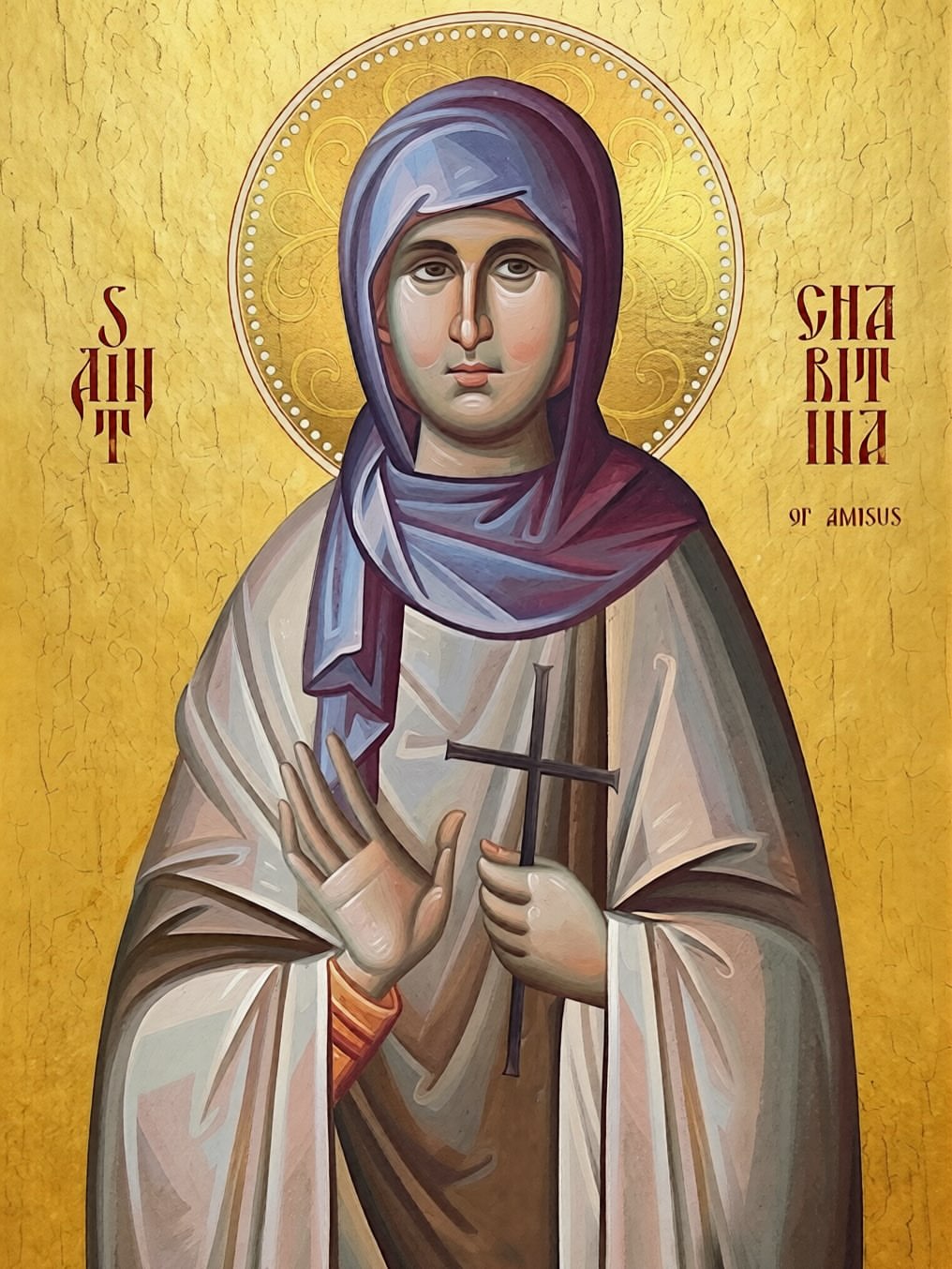
The post closes with the commemoration of St. Charitina, a young orphaned martyr under Diocletian who boldly confessed Christ and died in prayer—embodying the same confidence that the One who began a good work would complete it. Readers are invited to ask what they are truly sure of, and to remember God's past faithfulness.

  • St. Paul's 'I am sure' (Philippians 1:1-7) expresses confidence in God, not in himself or his circumstances—he wrote it from prison.
  • The difference between arrogance and faith: arrogance trusts itself; faith trusts the One who began the work and promised to finish it.
  • Paul's confidence was confirmed by the Philippians' lived 'partnership in the gospel,' including St. Epaphroditus's faithful service.
  • Confidence rooted in Christ brings clarity of purpose; be kind and patient with those it makes uncomfortable, but don't let their discomfort steer your life.
  • St. Charitina, a young martyr under Diocletian, exemplifies this well-placed confidence—sure only of the One who would complete His work in her.

'Attention and prayer': Elder Maximos' counsel to a monk on the road of life

A monk on Mount Athos recalls the advice he received from Elder Maximos, who served as prosmonarios, the guest-master, at the Monastery of Iviron, at the Panagia Portaitissa. The elder compared life to driving: a person may drive well, but he is not alone on the road, and someone beside him, perhaps drunk or looking at his phone, may crash into him. For this reason, the elder said, we must be very careful. The speaker, Father Ioakim, says that…

A monk on Mount Athos recalls the advice he received from Elder Maximos, who served as prosmonarios, the guest-master, at the Monastery of Iviron, at the Panagia Portaitissa. The elder compared life to driving: a person may drive well, but he is not alone on the road, and someone beside him, perhaps drunk or looking at his phone, may crash into him.

For this reason, the elder said, we must be very careful. The speaker, Father Ioakim, says that every time he went to confess and seek counsel, Elder Maximos gave him the same two-word answer: 'Father Ioakim, attention and prayer.' The elder explained that a person watches out as far as it is humanly possible, and then the grace of God, together with prayer, opens the mind so that one makes fewer mistakes.

The video was posted by the Holy Church of Saint Demetrius in the municipality of Saint Demetrius, and the speaker is Elder Philemon, Dikaios of the Holy Coenobitic Skete of the Prophet Elias of Pantokrator on Mount Athos. The post points viewers to the full video on YouTube. The short clip centers on one theme: human effort alone is not enough, and vigilance must be joined to prayer so that divine grace can guard a person where his own strength ends.

Key moments

  1. The speaker compares life to driving: you may drive well, but you are not alone, and another driver, drunk or distracted, may hit you, so we must be very careful.
  2. The speaker's elder was Father Maximos, prosmonarios at the Monastery of Iviron, at the Panagia Portaitissa.
  3. Every time the speaker went to confess and ask counsel, Elder Maximos told him, 'Father Ioakim, attention and prayer.'
  4. Elder Maximos explained that one watches out as far as humanly possible, and God's grace with prayer opens the mind to make fewer mistakes.
Read more

Vigil for Saint Romanos the Melodist at Hagia Sophia in Thessaloniki

The post shares an excerpt from a sacred all-night vigil (Agrypnia) held in honor of Saint Romanos the Melodist at the Church of Hagia Sophia in Thessaloniki. The caption is given in both Greek and English, identifying the saint and the church where the vigil took place. Saint Romanos the Melodist is remembered in the Orthodox Church as a hymnographer, and a vigil in his honor centers on the singing of hymnography in the tradition associated…

The post shares an excerpt from a sacred all-night vigil (Agrypnia) held in honor of Saint Romanos the Melodist at the Church of Hagia Sophia in Thessaloniki. The caption is given in both Greek and English, identifying the saint and the church where the vigil took place. Saint Romanos the Melodist is remembered in the Orthodox Church as a hymnographer, and a vigil in his honor centers on the singing of hymnography in the tradition associated with his name.

The excerpt captures the chant of the service as it was sung in the church, allowing viewers to hear the vigil as it sounded in that setting. The post does not give a date for the vigil, the names of the clergy or chanters, or further details about the program of the service; it presents the recording itself as the content. The church named in the post, Hagia Sophia in Thessaloniki, is a historic Byzantine church in the city, distinct from the cathedral of the same name in Constantinople.

The recording is offered without additional commentary, so the discussion around it, if any, would concern the chant heard in the excerpt and the liturgical tradition of vigils held for the Melodist. Viewers opening the post will find the excerpt from the vigil and the bilingual caption identifying the occasion, the saint being honored, and the place where the service was held.

Key moments

  1. Whoever lives in the shelter of the Most High rests in the shadow of the Almighty: 'I will say of the Lord: He is my refuge and my fortress, my God, in whom I trust.'
  2. God delivers from the fowler's snare and deadly pestilence, covering with His feathers; His truth is shield and buckler.
  3. No fear of the terror by night, the arrow by day, the pestilence in darkness, or the destruction at midday; a thousand fall at one side and ten thousand at the other, but it will not come near.
  4. The Lord is my refuge and the Most High my habitation; no evil shall befall, no plague come near the tent.
  5. God gives His angels charge to guard all ways; they bear one up in their hands so the foot does not stumble on a stone.
  6. One will tread on the lion and the asp, trampling the young lion and the serpent.
  7. Because he loved Me, I will deliver him and set him on high, for he has known My name.
  8. He shall call on Me and I will answer; I will be with him in trouble, deliver and glorify him, satisfy him with long days, and show him My salvation.
Read more
Citations Orthodoxes ☦ Instagram

Saint Theophan the Recluse on the path to communion with God

Saint Theophan the Recluse states that it is true that one can know the final purpose of man: communion with God. He adds that one can also describe the path that leads to this purpose: faith and living according to the Commandments, with the help of divine grace. He then says that it suffices to say in addition: here is the path, start walking. The quote consists of three sentences. The first sentence affirms that the final purpose of man is…

Saint Theophan the Recluse states that it is true that one can know the final purpose of man: communion with God. He adds that one can also describe the path that leads to this purpose: faith and living according to the Commandments, with the help of divine grace. He then says that it suffices to say in addition: here is the path, start walking.

The quote consists of three sentences. The first sentence affirms that the final purpose of man is knowable and identifies it as communion with God. The second sentence asserts that the path to this purpose is also describable and names two elements: faith and living according to the Commandments, and notes the assistance of divine grace.

The third sentence gives a direct command to begin walking on that path. The language is French. The attribution is to Saint Theophan the Recluse, a recognized Orthodox saint and spiritual writer. The quote does not provide further explanation of what communion with God entails, nor does it detail the content of faith or the specific Commandments.

It does not discuss the nature of divine grace beyond mentioning its help. It does not address potential obstacles or stages of the path. The statement functions as a concise summary of the Christian life as understood in the Orthodox tradition: a known goal, a known way, and a call to immediate action.

The quote is presented as a standalone aphorism. It uses the first person plural to indicate general accessibility of this knowledge. The phrase suggests that the only remaining step after knowing the goal and the way is the decision to act. The exclamation carries urgency. The name is the French form of Saint Theophan the Recluse, a 19th-century Russian bishop and ascetic writer.

His works often emphasize the practical application of Orthodox theology. This quote reflects that emphasis on practice. The text does not cite a specific work or date. The source text provided contains only this quote; there is no accompanying discussion or commentary.

  • The final purpose of man is communion with God.
  • The path to this purpose is faith and living according to the Commandments.
  • Divine grace assists on this path.
  • Saint Theophan the Recluse urges immediate action: start walking.
  • The quote is in French and attributed to Saint Theophan the Recluse.
Holy Resurrection YouTube

St. Paisios on Mobilizing Prayer to Avert War and Heal the Heart

St. Paisios on Mobilizing Prayer to Avert War and Heal the Heart 6:16

The post shares excerpts from St. Paisios the Athonite’s Spiritual Counsels on prayer, focusing on the Elder’s urgent call for fervent intercession to prevent war and calamity. He recounts a spiritual assurance to pray intensely that a Turkish attack be restrained, giving thanks to the Theotokos for protection. St. Paisios teaches that all people are brothers by descent from Adam and Eve, but Orthodox Christians share a deeper spiritual bond,…

The post shares excerpts from St. Paisios the Athonite’s Spiritual Counsels on prayer, focusing on the Elder’s urgent call for fervent intercession to prevent war and calamity. He recounts a spiritual assurance to pray intensely that a Turkish attack be restrained, giving thanks to the Theotokos for protection. St. Paisios teaches that all people are brothers by descent from Adam and Eve, but Orthodox Christians share a deeper spiritual bond, compelling them to pray with greater pain for those suffering.

He clarifies that prayer is not a mechanical guarantee of national salvation but an expression of heartfelt sorrow that invites God’s intervention. The Elder calls for spiritual warriors like the Maccabees, urging monastics to prioritize prayer above all tasks because the world is in turmoil. He explains that passions — pride, self-will, shamelessness — act like rusted wires that short-circuit communion with God.

Using a radio analogy, he illustrates that to communicate with God we must tune our transmitter to love and our receiver to humility, laboring to acquire divine contact so the mind remains continually with God.

Key moments

  1. 0:00 The Elder reveals he has been mobilizing prayer from spring to autumn to avert war, and received spiritual assurance to pray fervently that the Turks be restrained from attacking on October 16th, thanking the Panagia for protection so far.
  2. 1:03 He explains that all humans are brothers descended from Adam and Eve; Orthodox Christians are brothers in both flesh and spirit, while others are brothers only in flesh, so we must pray for them with greater pain.
  3. 1:34 Regarding Greece's trials, the Elder says salvation does not depend on one's prayer rope, but persistent prayer shows pain for the homeland and seeks God's intervention.
  4. 2:04 He calls for God to raise up spiritual men like Maccabees, because good must war against evil as lawlessness becomes law and sin becomes fashion, yet we should not fear because God will help.
  5. 2:34 The Elder urges leaving everything aside to devote all strength to prayer, as the world is in turmoil; monastics especially must set aside urgent tasks and pray fervently.
  6. 3:05 He reminds monastics that their purpose is the salvation of their souls and helping the world through prayer, encouraging them to strive as good monastics with prayer ropes and prostrations.
  7. 3:39 Passions hinder prayer like rusted wires causing short circuits; one must guard against pride, egotism, self-will, and shamelessness, cleansing the heart to become a good conductor of grace.
  8. 4:43 Using a radio analogy, he teaches that to communicate with God we must tune our transmitter to love and receiver to humility, laboring to acquire divine contact so the mind remains continually with God.
Read more

Leaving a Baptist church for Orthodoxy: a wife's update on her husband's conversion

A woman shares an update on her family's journey toward Orthodoxy. A month earlier she posted about her husband considering the Orthodox church; now they have formally told their pastor that they will no longer participate at their current (Baptist-style) church, and they messaged the Bible study group he had led for two years. She herself is not yet convinced by Orthodox teaching, but she feels drawn to attend with her husband out of trust in…

A woman shares an update on her family's journey toward Orthodoxy. A month earlier she posted about her husband considering the Orthodox church; now they have formally told their pastor that they will no longer participate at their current (Baptist-style) church, and they messaged the Bible study group he had led for two years. She herself is not yet convinced by Orthodox teaching, but she feels drawn to attend with her husband out of trust in him and out of respect for his role as spiritual head of their household.

Her post is an honest expression of grief and fear rather than a declaration of conviction: she and her husband were deeply embedded in their old congregation—she sang in the worship band, he played drums—and she treasures the friendships there, especially with other mothers as a new mom. She admits to worrying what church members will think, though the pastor and his wife were supportive, as are both families.

Commenters respond with warmth and reassurance. Several note that becoming Orthodox does not require cutting off old friendships; one Orthodox reader describes attending Protestant Bible studies while remaining Orthodox. Others share their own painful but ultimately fruitful departures from Catholic or Protestant churches, encouraging her to let each spouse's journey unfold at its own pace.

One recalls a priest's image of husband and wife as gas and brakes—complementary, so long as it does not become a wedge. Mothers emphasize how welcoming Orthodox parishes are to babies and new mothers, and others describe how the meaning of the Divine Liturgy gradually unfolds for those coming from contemporary worship. The overall tone is pastoral: grief at leaving is normal, time and prayer matter, and the unknown can become home.

  • The couple formally told their pastor and Bible study group they are leaving their church as the husband moves toward Orthodoxy.
  • The wife is not yet convinced Orthodox teaching is true but trusts her husband and will attend with him.
  • She grieves leaving close friendships, worship ministry, and fears others' judgment.
  • Commenters reassure her: old friendships can continue, and each spouse's journey can proceed at its own pace.
  • Many share similar experiences of leaving Catholic or Protestant churches and finding a home in Orthodoxy.
12 opinions in the discussion Honestly, this sounds wonderful to me. And Orthodoxy isn't some cult either — you don't have to cut people off, so you can keep your friends. I do get why it feels scary though. Read the discussion
St Anthony’s Youth SA ☦︎ Instagram

Life's purpose is union with God; all actions gain meaning in Christ

The post opens by declaring that the purpose of this life is union with God. It then lists the main areas of human activity: all actions, marriage, the raising of children, work, and relationships among people. These areas acquire meaning only when they are carried out in Christ. The text specifies that in marriage there are three participants: the two spouses and Christ. Regarding children, it says they are known in Christ; they have a father…

The post opens by declaring that the purpose of this life is union with God. It then lists the main areas of human activity: all actions, marriage, the raising of children, work, and relationships among people. These areas acquire meaning only when they are carried out in Christ.

The text specifies that in marriage there are three participants: the two spouses and Christ. Regarding children, it says they are known in Christ; they have a father and a mother, but they pray the Our Father, addressing God directly as Father. The post concludes with a reference to the Apostle Paul, who saw that Christ is all and in all.

The overall message is that Christ is the center and the meaning of every dimension of life. Marriage is not a merely human contract but a reality that includes Christ. Parenthood is not only biological or social but is grounded in the child's own prayer to God.

Work and daily relationships are not secular spheres separate from faith; they are the context in which union with God is lived out. The citation of Paul places this vision within the apostolic witness. The post does not provide further exposition or application; it states the principle that all of life finds its significance in Christ.

  • Purpose of life is union with God
  • All actions gain meaning when done in Christ
  • Marriage includes the two spouses and Christ
  • Children are known in Christ and pray the Our Father
  • Apostle Paul saw Christ as all and in all
Read more
Orthodox Life Instagram

Saint Charitina of Amisus: Virgin and Martyr Under Diocletian

The post commemorates Saint Charitina of Amisus, an early Christian virgin and martyr of the late 3rd and early 4th centuries, whose feast falls on October 5th. Orphaned young in Amisus, modern-day Samsun in Turkey, she was raised by a pious Roman Christian named Claudius as his own daughter. Though not yet formally baptized, she was a Christian at heart, studied divine law day and night, and vowed perpetual virginity. Her example converted many…

The post commemorates Saint Charitina of Amisus, an early Christian virgin and martyr of the late 3rd and early 4th centuries, whose feast falls on October 5th. Orphaned young in Amisus, modern-day Samsun in Turkey, she was raised by a pious Roman Christian named Claudius as his own daughter. Though not yet formally baptized, she was a Christian at heart, studied divine law day and night, and vowed perpetual virginity.

Her example converted many pagans, which drew the attention of Governor Dometius, an official under Emperor Diocletian during his persecution of Christians. Ordered before a tribunal, Charitina confessed Christ and refused to sacrifice to idols. The judge subjected her to tortures: her head was shaved, burning coals were placed on her flesh, and she was thrown into the sea with a stone around her neck.

The post relates that, according to pious tradition, she was preserved or healed each time, and stepped from the sea unharmed, calling the immersion her baptism. The judge then ordered her to public dishonor by dissolute youths. To protect her purity, Charitina knelt and prayed for God to take her soul; she reposed peacefully in 304 AD before her attackers could touch her.

Her foster-father recovered her body after it washed ashore three days later and buried her honorably.

  • Saint Charitina of Amisus, orphaned young, was raised by the pious Christian Claudius and vowed perpetual virginity though not yet baptized.
  • Her conversions of pagans brought her before Governor Dometius during Diocletian's persecution.
  • She confessed Christ, refused sacrifice to idols, and endured shaving, burning coals, and drowning with a stone.
  • Tradition holds she emerged from the sea unharmed, declaring the immersion her baptism.
  • She reposed in prayer in 304 AD; her body washed ashore three days later and Claudius buried her honorably.
Read more