WeOrthodox
EN UA

Pilgrimage ✙ Guide to Mount Athos & worldwide shrines

Instagram ↗ 5 discussions

Αγόροι [aˈɣori] Your trusted guide to Mount Athos ⠀ Full support & travel assistance ⠀ 🪽For souls seeking the face of God Book your journey ↓

Fasting as preparation of the heart in Orthodoxy

The post explains that Orthodox fasting is a journey of the heart rather than a diet. It cites Matthew 6:17-18, where Christ says to anoint your head and wash your face when you fast. The Church asks believers to avoid meat, dairy, and eggs on fast days; fish may be eaten on certain feast days. Wednesdays and Fridays are fast days throughout the year, and longer seasons such as Great Lent require more. The Nativity Fast began on 15 November; the…

The post explains that Orthodox fasting is a journey of the heart rather than a diet. It cites Matthew 6:17-18, where Christ says to anoint your head and wash your face when you fast. The Church asks believers to avoid meat, dairy, and eggs on fast days; fish may be eaten on certain feast days.

Wednesdays and Fridays are fast days throughout the year, and longer seasons such as Great Lent require more. The Nativity Fast began on 15 November; the Dormition Fast runs from 1 to 14 August. Fasting works alongside prayer, charity, and patience; its goal is love, not hunger.

The post quotes Galatians 5:15, warning not to bite and devour one another, and urges fasting from anger as well as food. It describes the monastic table on Mount Athos: meals are mostly plant-based, lentil soup, bread, olives, and vegetables, eaten in silence while one monk reads aloud. The post presents fasting as a way to make room for God by cultivating prayer, humility, patience, and love.

  • Fasting is a preparation of the heart, not merely dietary restriction
  • Church practice: avoid meat, dairy, eggs on fast days; fish allowed on certain feasts
  • Weekly fast days: Wednesdays and Fridays; major seasons: Nativity Fast, Great Lent, Dormition Fast
  • Fasting accompanied by prayer, charity, patience; goal is love, not hunger
  • Monastic example: Mount Athos meals are plant-based, eaten in silence with reading aloud
Read more

St. Paisios on prayer from the heart, not perfect words

The post presents St. Paisios of Mount Athos' teaching that prayer is about a heart turned toward God with humility, love, and trust rather than perfect words or complicated rituals. It highlights the Jesus Prayer, "Lord Jesus Christ, Son of God, have mercy on me, a sinner", as central to Orthodox spiritual life and deeply cherished by St. Paisios, who encouraged believers to repeat it with attention and humility so that prayer becomes part of…

The post presents St. Paisios of Mount Athos' teaching that prayer is about a heart turned toward God with humility, love, and trust rather than perfect words or complicated rituals. It highlights the Jesus Prayer, "Lord Jesus Christ, Son of God, have mercy on me, a sinner", as central to Orthodox spiritual life and deeply cherished by St. Paisios, who encouraged believers to repeat it with attention and humility so that prayer becomes part of everyday life.

A specific daily prayer attributed to St. Paisios is included, asking for mercy, guidance, patience in difficulties, humility in actions, love for everyone met, protection for those who suffer, comfort for the lonely, and peace for those in need. The post emphasizes that prayer does not belong only inside churches and monasteries; even a few sincere words offered to God during a busy day can reconnect a person with Him.

No perfect moment is required, only the decision to begin. A practical reminder suggests turning thoughts toward God before reaching for one's phone in the morning. The post concludes with Greek text stating that love and humility are the keys of Paradise.

  • St. Paisios taught prayer comes from the heart, not perfect words or rituals
  • The Jesus Prayer is central to Orthodox life and was cherished by St. Paisios
  • A daily prayer attributed to St. Paisios asks for mercy, guidance, patience, humility, and love
  • Prayer belongs in everyday life, not only in churches or monasteries
  • Begin the day by turning to God before reaching for a phone
Read more

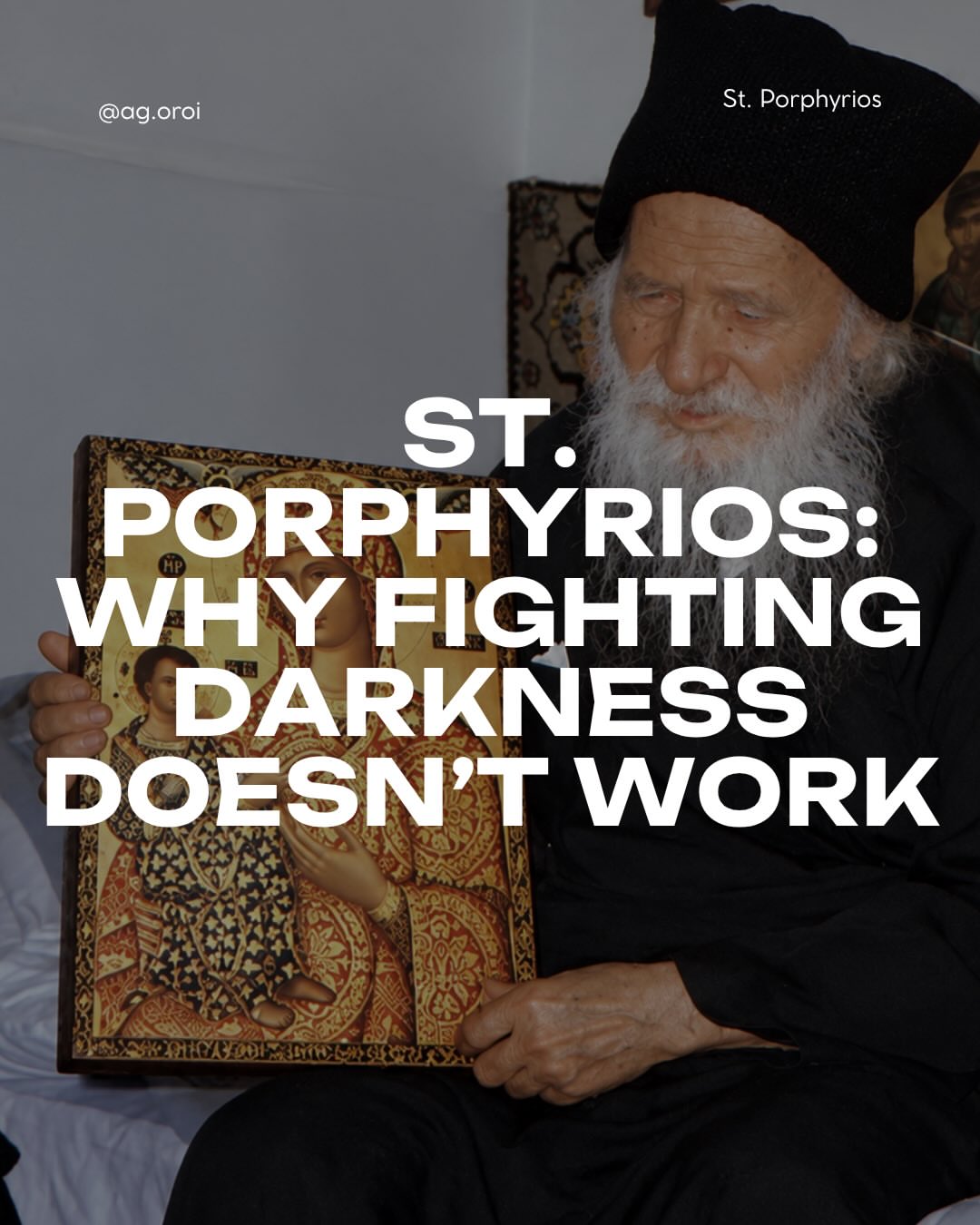
St. Porphyrios on overcoming darkness through love for Christ

The post shares a teaching from St. Porphyrios on how to overcome spiritual darkness. The saint taught that obsessing over weaknesses is not the path. Instead, he said we should fill our hearts with love for Christ. The reason is that darkness does not disappear when we fight it directly, but when we bring in the light. The post presents this as a shift in focus from struggling against sin to cultivating love for Christ.

  • St. Porphyrios taught that fighting darkness directly is not the way to overcome it
  • The alternative is to fill the heart with love for Christ
  • Darkness disappears when light enters, not through direct combat
  • The teaching shifts focus from weaknesses to relationship with Christ
Read more

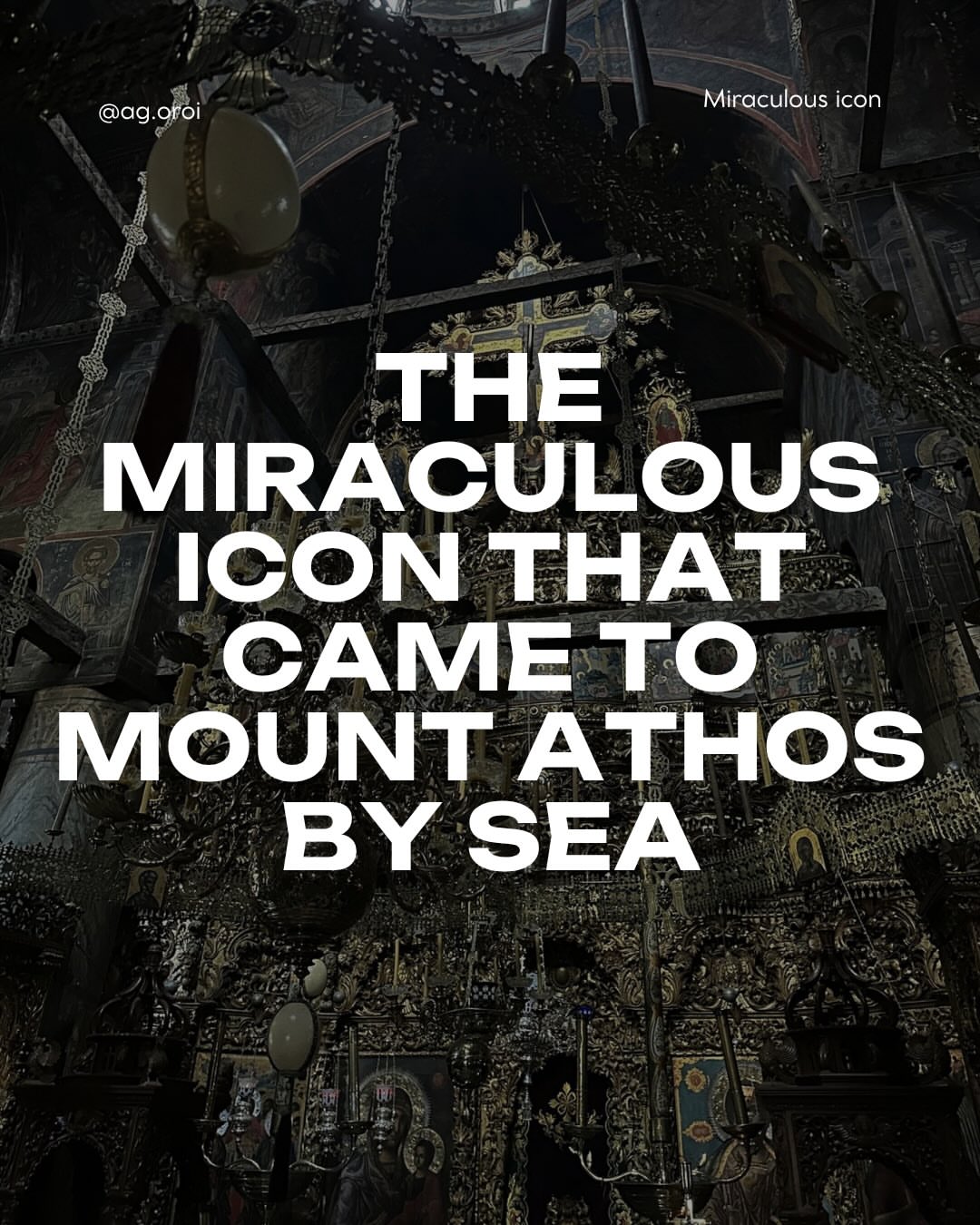
Panagia Portaitissa: the Keeper of the Gate of Mount Athos

The post introduces the story of Panagia Portaitissa, the Keeper of the Gate, one of the most revered icons of the Holy Mountain. It opens with three elements of the tradition: an icon entrusted to the sea, a mysterious pillar of light, and a story that has lived on Mount Athos for more than a thousand years. The title of the icon, the Keeper of the Gate, points to her role as protector of the entrance to the Holy Mountain, and the icon is kept…

The post introduces the story of Panagia Portaitissa, the Keeper of the Gate, one of the most revered icons of the Holy Mountain. It opens with three elements of the tradition: an icon entrusted to the sea, a mysterious pillar of light, and a story that has lived on Mount Athos for more than a thousand years. The title of the icon, the Keeper of the Gate, points to her role as protector of the entrance to the Holy Mountain, and the icon is kept at the gate of the Iviron monastery, from which she takes her name.

The post presents this as a story of the Athonite tradition rather than a modern account, reaching back over a millennium. The framing suggests a narrative that moves from the icon's journey by sea to its discovery under the sign of the pillar of light, and then to its place in the life of the monastery as an image venerated by pilgrims and monks.

The post serves as an invitation to learn the full account of how the icon arrived at the Holy Mountain and why it came to be called Portaitissa. No further details of the story, dates, names, or specific events are given in the text itself; the post names only the icon, its title, the pillar of light, the sea, and the thousand-year presence of the story on Athos.

  • The post tells the story of Panagia Portaitissa, the Keeper of the Gate, one of the most revered icons of Mount Athos.
  • The story includes an icon entrusted to the sea and a mysterious pillar of light.
  • The tradition has lived on Mount Athos for more than a thousand years.
  • The icon's title connects her with the keeping of the gate of the Holy Mountain.
Read more

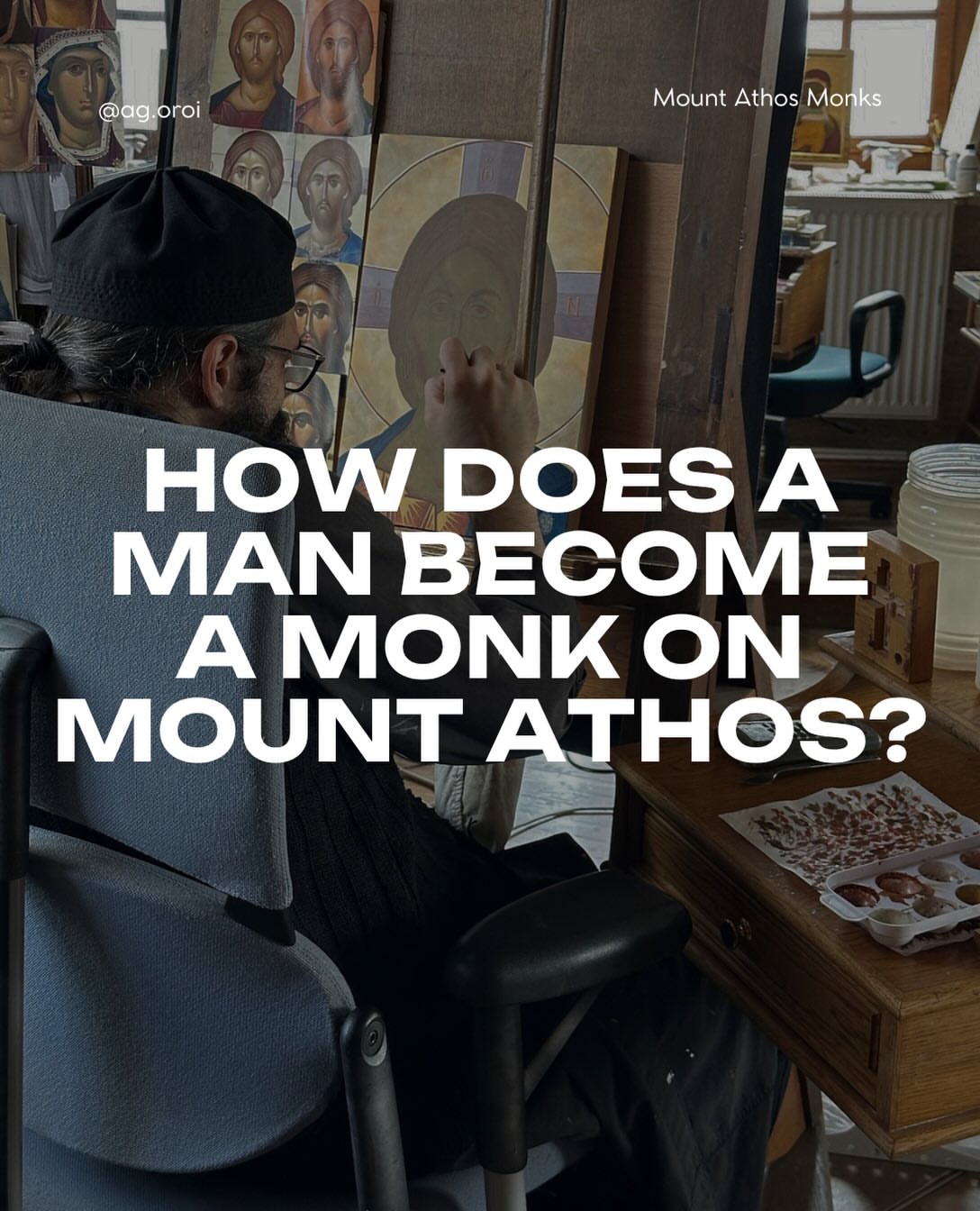
Becoming a Monk on Mount Athos: A Path of Discernment and Obedience

Monastic life on Mount Athos does not begin with a single decision. The post presents becoming a monk on the Holy Mountain as a path that unfolds through discernment, obedience, and dedication to God. A man who feels drawn to the monastic life does not simply arrive and take up the habit; the post describes the beginning of monastic life as a gradual process in which a candidate tests and grows into his calling. Discernment comes first: the call…

Monastic life on Mount Athos does not begin with a single decision. The post presents becoming a monk on the Holy Mountain as a path that unfolds through discernment, obedience, and dedication to God. A man who feels drawn to the monastic life does not simply arrive and take up the habit; the post describes the beginning of monastic life as a gradual process in which a candidate tests and grows into his calling.

Discernment comes first: the call to leave the world and dedicate oneself wholly to God must be recognized and confirmed over time. Obedience follows, as the newcomer places himself under the guidance of the community and its spiritual father, learning the rhythm of prayer, work, and submission to the will of others that marks life on the Holy Mountain.

Dedication to God stands at the center of the whole path, giving direction to each step a candidate takes. The post invites readers to discover what this journey looks like in practice and how monastic life actually begins on Mount Athos, rather than offering a simplified picture of a man arriving one day and becoming a monk the next.

The framing corrects a common assumption: the step into the monastic life is not an instant act of will but a way of life entered slowly, with the guidance of those already living it. The post speaks to readers curious about Orthodox monasticism, to those considering a monastic calling themselves, and to anyone who wonders how the first stages of life on the Holy Mountain take shape.

Its central message is that the door into Athonite monasticism opens through a long path of discernment, obedience, and dedication to God, and that understanding this path changes how one sees the monastic life itself.

  • Becoming a monk on Mount Athos is a path, not a single decision.
  • The path involves discernment, obedience, and dedication to God.
  • The post describes how monastic life begins on the Holy Mountain.
  • It addresses readers who want to know what the journey to monastic life actually looks like.
Read more