
St. Thomas the Believer: Doubt as Path to Deeper Faith
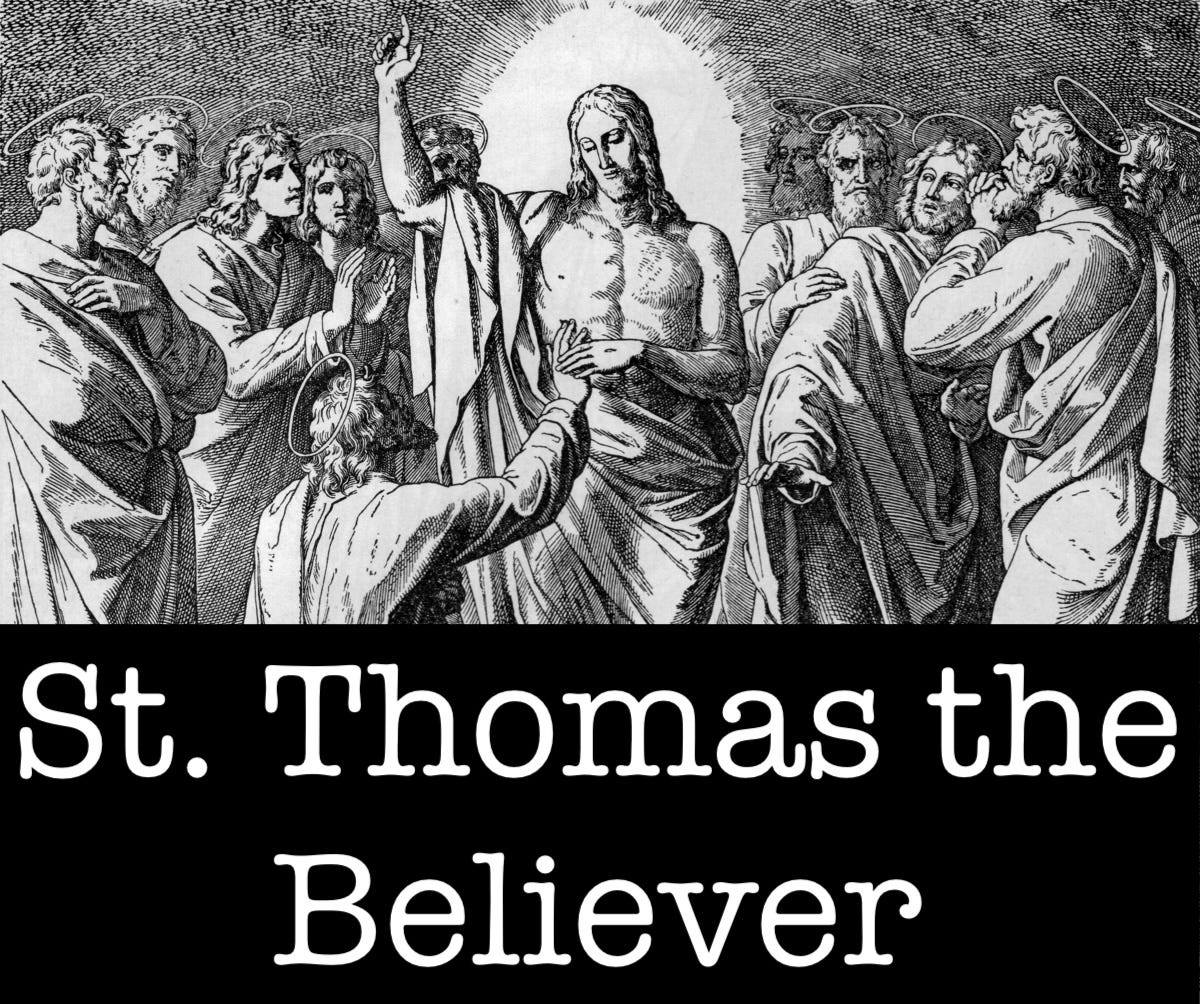
The devotional examines John 20:19-31, where the risen Christ appears to the disciples and later to Thomas, who had insisted on seeing the nail prints and wound before believing. The author argues against the label "Doubting Thomas," preferring "Thomas the Believer," because God remembers how we finish, not only how we struggle. Christ does not scold Thomas; He shows His wounds and invites examination.
The reflection draws three lessons. First, the Truth of Experience: past experience is real but insufficient alone. Thomas knew dead men do not rise, yet experience alone cannot protect against doubt's darker side. Second, the Truth of Expectation: adding God's grace to the equation.
Most people calculate the future using only themselves and others, leaving God out, which leads to despair. Faith is the courage to count on God's mercy, shaped by prayer, worship, and curiosity about the Faith. Third, the Truth of Execution: acting on belief weakens doubt's grip.
Thomas returned to the community eight days later; he kept showing up, praying, and coming to the Liturgy and Chalice. Faith grows in the doing. The author also recalls John 11:16, where Thomas said, "Let us also go, that we may die with Him," showing courage before his moment of doubt. His confession "My Lord and my God" remains one of the clearest declarations of Christ's divinity in Scripture.
Main points
- Christ meets Thomas's doubt with wounds and invitation, not shame
- Experience alone cannot sustain faith; grace must be added to expectation
- Faith is the courage to count on God's mercy, formed by prayer and worship
- Acting on belief, showing up in community and liturgy, drives out doubt
- Thomas also declared willingness to die with Christ in John 11:16