
 Lives of the Saints 🙏
Instagram
Lives of the Saints 🙏
Instagram
The Conception of Saint John the Baptist: God's Mercy Beyond Nature
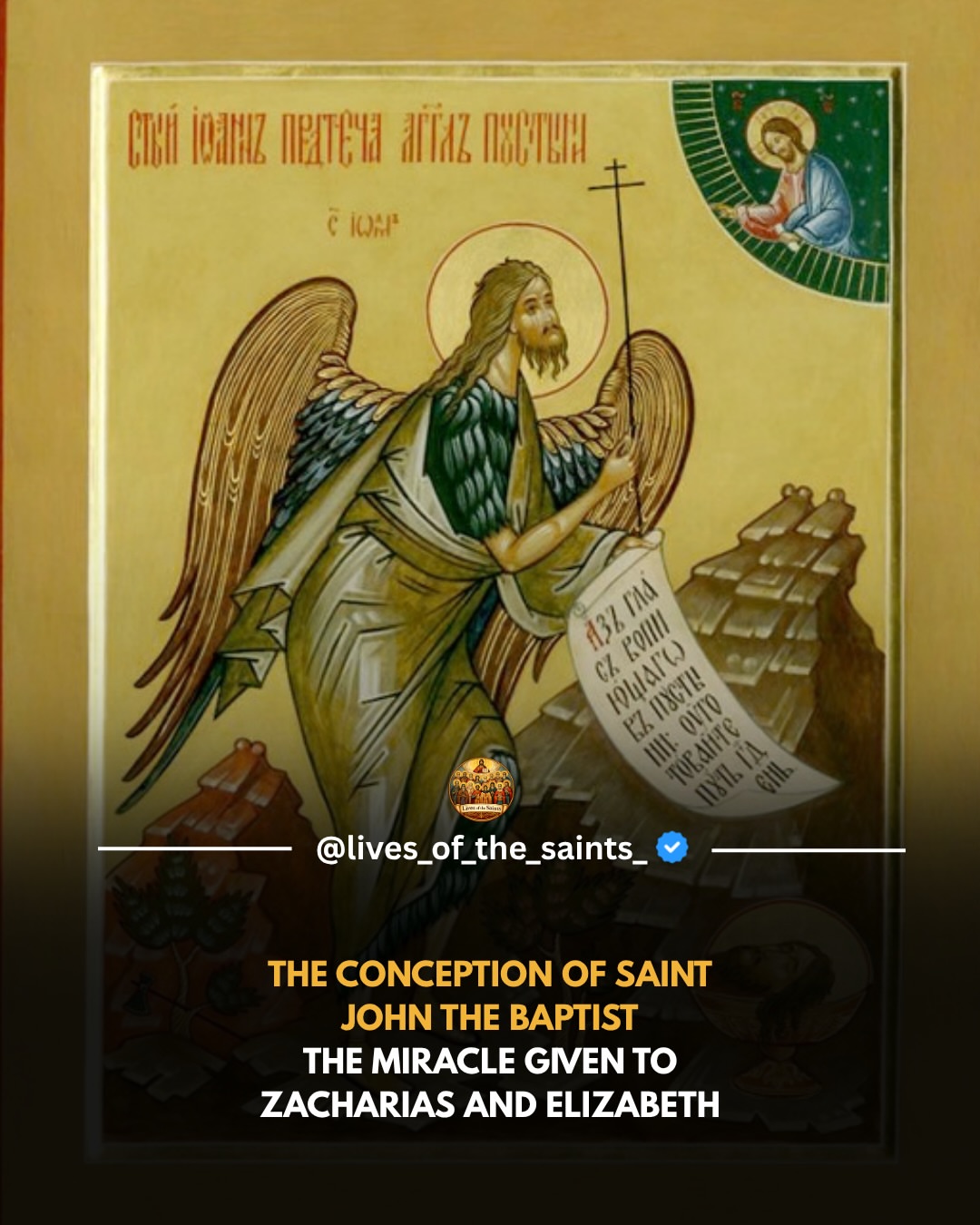
The post marks the feast of the Conception of Saint John the Baptist, presenting it as a threefold revelation of God's mercy, miracle, and wisdom. Mercy appears in God's answer to the righteous parents Zacharias and Elizabeth, who spent their lives longing and praying for a child despite advanced age. The miracle lies in John's conception within Elizabeth's aged and barren womb.
Wisdom emerges in God's plan for salvation, assigning John the role of Prophet, Forerunner, and Baptist of the Lord Jesus Christ. The author compares this event to two earlier biblical announcements: the birth of Isaac from barren Sarah and the birth of Samson from the barren wife of Manoah. In each case, an angel declared the coming child, and nature yielded to divine purpose.
The text argues that the question is not how such conception could happen according to human understanding, but who made it happen, the same Almighty God who created the world from nothing and formed Adam without parents. This feast reminds believers that God is never limited by nature, time, age, weakness, or impossibility. Where human hope ends, the mercy and power of God begin. The post closes with the invocation: Holy Prophet, Forerunner, and Baptist John, pray to God for us.
Main points
- The Church celebrates the Conception of Saint John the Baptist as mercy, miracle, and wisdom of God.
- Elderly Zacharias and Elizabeth, righteous and childless, conceived John after lifelong prayer.
- The birth parallels Isaac from Sarah and Samson from Manoah's wife, barren women who bore children by divine intervention.
- John was destined as Prophet, Forerunner, and Baptist of Jesus Christ.
- The feast affirms God is not limited by nature, age, or impossibility; where human hope ends, God's power begins.