WeOrthodox
EN UA

Orthodox posts, videos and discussions

We follow Orthodox channels, communities and blogs across the web, summarise every post and video, and highlight the conversations with real substance.

Kissing Icons in Athens: Answering the Charge of Shirk from Exodus

A man whispers inside a church in Athens, where people are praying, and takes up the objection that kissing icons violates Exodus 20:3-5, which forbids making images and bowing to them. He notes that the first thing Christians do on entering the church is kiss the icons. A Muslim caller had told him the practice is an innovation and shirk, and he answers the charge directly. His first argument is that Muhammad found images of Mary and Jesus in…

A man whispers inside a church in Athens, where people are praying, and takes up the objection that kissing icons violates Exodus 20:3-5, which forbids making images and bowing to them. He notes that the first thing Christians do on entering the church is kiss the icons. A Muslim caller had told him the practice is an innovation and shirk, and he answers the charge directly.

His first argument is that Muhammad found images of Mary and Jesus in the Kaaba and did not destroy them. He then turns to Scripture and cites Exodus 25, where God commands Moses to make images of cherubim and place them on the Ark of the Covenant. He reads Exodus 20 as a prohibition against idolatry rather than against images as such, and points to the golden calf episode in Exodus 32 as the example of what God condemned.

He adds a third biblical example: in Numbers 21 God told Moses to make a bronze serpent so that the people who looked at it would be healed. He says Jesus alluded to that serpent as a type of himself on the cross. The video moves quickly between the church setting, the caller's objection, and the biblical texts, keeping the focus on whether the command in Exodus 20 rules out the veneration Christians show to icons.

The examples from the Kaaba, the Ark, and the bronze serpent are the core of his case, and each one is meant to show a difference between honoring an image connected to God's work and worshiping an image as a god.

Key moments

  1. 0:00 The speaker is in a church in Athens and whispers because people are praying there; he quotes Exodus 20:3-5 forbidding images and worshiping them, and says the first thing one does entering the church is kiss the icons.
  2. 0:33 He answers a Muslim who calls the practice an innovation and shirk, saying Muhammad found a picture of Mary and Jesus in the Kaaba and did not destroy it.
  3. 1:06 He cites Exodus 25, where God commands Moses to make images of the cherubim and place them on the Ark of the Covenant.
  4. 1:46 He says Exodus 20 was a prohibition against idolatry, shown by God's displeasure with the golden calf in Exodus 32.
25 opinions in the discussion "I was an Orthodox Christian" **Proceeds to read Exodus and skip Orthodox History** Read the discussion

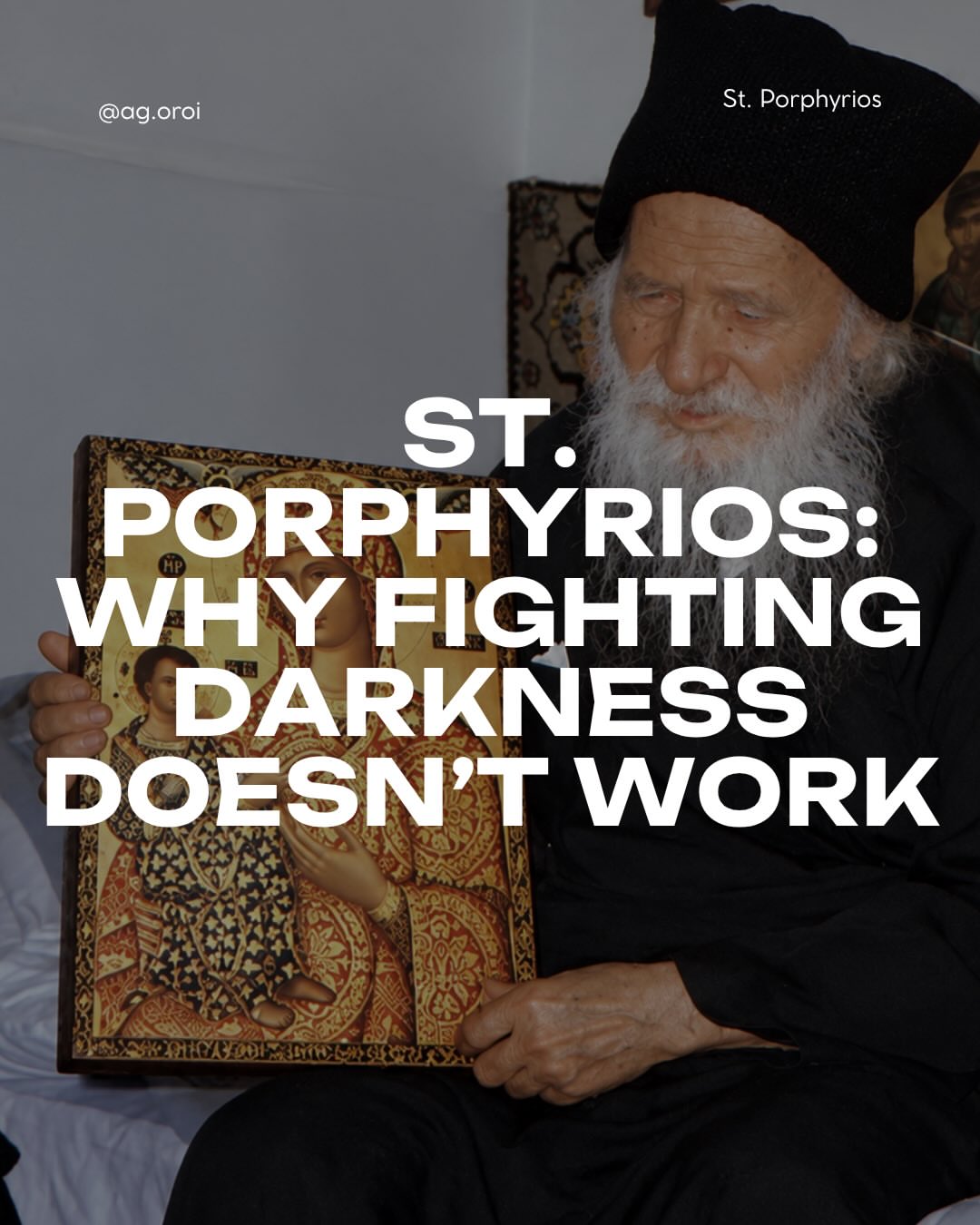
St. Porphyrios on overcoming darkness through love for Christ

The post shares a teaching from St. Porphyrios on how to overcome spiritual darkness. The saint taught that obsessing over weaknesses is not the path. Instead, he said we should fill our hearts with love for Christ. The reason is that darkness does not disappear when we fight it directly, but when we bring in the light. The post presents this as a shift in focus from struggling against sin to cultivating love for Christ.

  • St. Porphyrios taught that fighting darkness directly is not the way to overcome it
  • The alternative is to fill the heart with love for Christ
  • Darkness disappears when light enters, not through direct combat
  • The teaching shifts focus from weaknesses to relationship with Christ
Read more
Prayer Orthodoxy ® Instagram discussion

What do you wish more people understood about Orthodoxy?

There are many misconceptions about the Orthodox Christian faith. Here is your chance to share something you wish others understood better about our worship, theology, traditions, or way of life. What would you tell them? Share your answer in the comments.

  • Many misconceptions exist about the Orthodox Christian faith
  • Readers are invited to share what they wish others understood about worship, theology, traditions, or way of life
24 opinions in the discussion Taking part in the Holy Sacraments with people of other denominations is a sin that requires confession and repentance. We are not united in one Church or one faith. We're called to love… Read the discussion
Lives of the Saints 🙏 Instagram

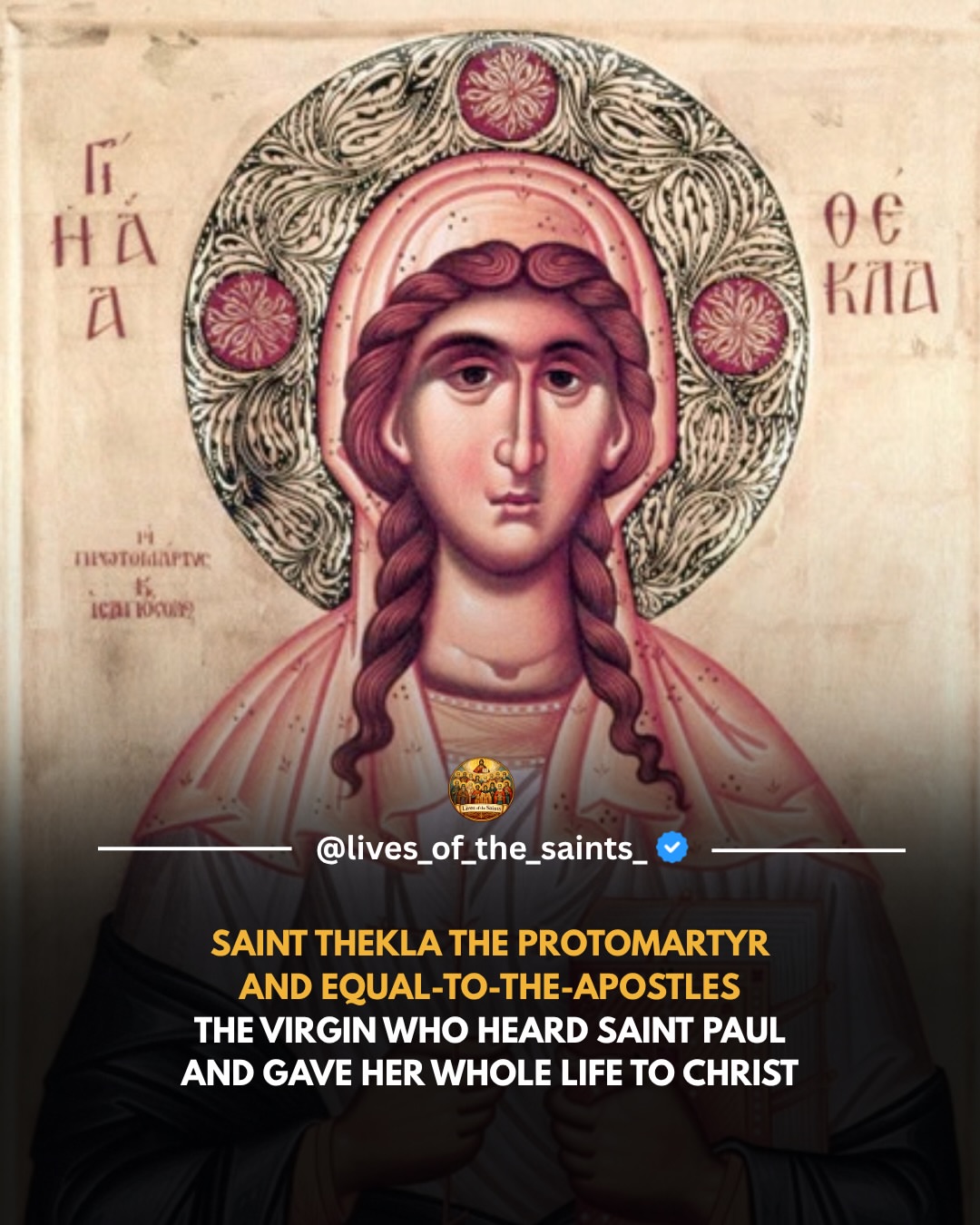
Saint Thekla: Fire, Beasts, and a Rock That Opened

The post recounts the life of Saint Thekla, born in Iconium to noble pagan parents. At eighteen, engaged to marry, she heard the Apostle Paul preach for three days and three nights alongside Barnabas. Her heart turned to Christ and she vowed virginity as a bride of the Lord. Her mother first tried to persuade her, then mistreated her, and finally handed her over to the judge demanding she be burned. The judge cast Thekla into the fire, but God…

The post recounts the life of Saint Thekla, born in Iconium to noble pagan parents. At eighteen, engaged to marry, she heard the Apostle Paul preach for three days and three nights alongside Barnabas. Her heart turned to Christ and she vowed virginity as a bride of the Lord.

Her mother first tried to persuade her, then mistreated her, and finally handed her over to the judge demanding she be burned. The judge cast Thekla into the fire, but God preserved her unharmed. After this, Thekla followed the Apostle Paul to Antioch. There a powerful man tried to take her by force, but she escaped.

He accused her before the ruler because she was a Christian and rejected his sinful desire. She was thrown before wild beasts, but the beasts did not touch her. Amazed, the ruler asked: "Who are you, and what power is in you, that nothing can harm you?"

She answered: "I am the servant of the living God." Released from death, Saint Thekla preached the Gospel and brought many souls to the true Faith. Later, with Saint Paul's blessing, she withdrew near Seleucia, where she lived in ascetic struggle, healed the sick, and continued leading many to Christ. When evil men tried to dishonor her, she prayed before a rock, and by the power of God the rock opened and hid her.

The post states that Saint Thekla reminds us that the soul filled with Christ cannot be conquered by fire, beasts, violence, or fear.

  • Born in Iconium, heard Paul preach for three days at age eighteen
  • Vowed virginity, survived burning unharmed by God's power
  • Followed Paul to Antioch, escaped assault, beasts did not touch her
  • Answered ruler: "I am the servant of the living God"
  • Lived near Seleucia in asceticism, healed sick, rock opened to hide her
Read more
Fr.TEDTalks Instagram

ChatGPT, asked which Christianity it would choose, answers Eastern Orthodoxy

The speaker ran a short experiment with ChatGPT, asking the AI what kind of Christian it would be. The AI answered that, if it were a human convinced Christianity was true, and if it had to choose among the major Christian traditions on the basis of history, theology, ecclesiology, worship and continuity with the early church, it would choose Eastern Orthodoxy. The speaker shares the answer with amusement, joking that there might be hope for the…

The speaker ran a short experiment with ChatGPT, asking the AI what kind of Christian it would be. The AI answered that, if it were a human convinced Christianity was true, and if it had to choose among the major Christian traditions on the basis of history, theology, ecclesiology, worship and continuity with the early church, it would choose Eastern Orthodoxy.

The speaker shares the answer with amusement, joking that there might be hope for the future. The AI did not stop at naming a tradition: it also gave examples of reasons it would pick Orthodoxy over other denominations, drawing on the criteria it had listed, such as the church's historical continuity and its worship. The speaker says the answer amazed him. The post is light in tone, marked with a 'lol', and presents the exchange as a curious result rather than a serious argument.

The discussion around it turns on what the AI said and the examples it offered for preferring Orthodoxy to the other major traditions.

Key moments

  1. 0:00 The speaker asked ChatGPT what kind of Christian it would be.
  2. 0:00 The AI said that, if it were a human convinced Christianity was true, choosing among major traditions based on history, theology, ecclesiology, worship and continuity in the early church, it would choose Eastern Orthodoxy.
  3. 0:30 The AI gave examples of why it would choose Orthodoxy over other denominations.
F Fr. Barnabas Powell Substack

St. Paul's Challenge: To Live Is Christ

The author reflects on Philippians 1:20-27, where St. Paul writes, "For to me to live is Christ, and to die is gain." He admits he cannot honestly say this himself and confronts common excuses: that St. Paul was a saint who had a Damascus vision, so the standard does not apply. The author identifies three lessons from the passage. First, facing mortality honestly clarifies what matters. St. Paul wrote from prison, likely facing execution, and…

The author reflects on Philippians 1:20-27, where St. Paul writes, "For to me to live is Christ, and to die is gain." He admits he cannot honestly say this himself and confronts common excuses: that St. Paul was a saint who had a Damascus vision, so the standard does not apply. The author identifies three lessons from the passage. First, facing mortality honestly clarifies what matters.

St. Paul wrote from prison, likely facing execution, and his purpose became clear. Second, "to live is Christ" makes a person truly free. St. Paul says Christ will be honored in his body whether by life or by death; no outcome can threaten him. He weighs departing to be with Christ against remaining for the Philippians' progress and joy in the faith.

Third, this freedom carries a calling: "Let your manner of life be worthy of the gospel of Christ." The author notes St. Paul says "worthy," not "perfect." The post commemorates St. Pelagia the Righteous, a fifth-century actress and courtesan in Antioch who heard Bishop Nonnus preach on judgment and mercy, repented, was baptized, gave away her wealth, and lived in a cell on the Mount of Olives fasting and praying.

Her life shows the standard is not reserved for apostles. The author asks readers to name one excuse keeping them from the challenge and bring it to confession or prayer.

  • St. Paul's declaration "to live is Christ, and to die is gain" challenges lukewarm faith
  • Common excuses dismiss the standard as only for saints or those with dramatic conversions
  • Facing mortality burns away distractions and clarifies priorities
  • Freedom from fear of death allows St. Paul to choose service over personal desire
  • St. Pelagia's repentance shows a life worthy of the Gospel is possible for anyone
Giovanni Guaita YouTube

Hieromonk John (Guaita) on Catholic-Orthodox cultural roots and the 1054 myth

Hieromonk John (Guaita) on Catholic-Orthodox cultural roots and the 1054 myth 1:18:46

Hieromonk John (Guaita), a Westerner who studied in Lausanne and Geneva and has lived most of his life in Russia within the Russian Orthodox Church, delivers a lecture at the Alexander Solzhenitsyn Cultural Center on March 11, 2026. He examines how cultural differences between Greek and Latin Christianity shaped European peoples' self-consciousness long before doctrinal disputes. The speaker argues that the 1054 excommunications did not…

Hieromonk John (Guaita), a Westerner who studied in Lausanne and Geneva and has lived most of his life in Russia within the Russian Orthodox Church, delivers a lecture at the Alexander Solzhenitsyn Cultural Center on March 11, 2026. He examines how cultural differences between Greek and Latin Christianity shaped European peoples' self-consciousness long before doctrinal disputes.

The speaker argues that the 1054 excommunications did not constitute a real schism. He cites the absence of the event in Byzantine chronicles, subsequent mutual anathemas, and figures like Anthony the Roman and Maximus the Greek who moved freely between East and West. Anthony the Roman, a Westerner, founded Novgorod monasticism and was accepted by Bishop Nikita around 1147.

The summer Nicholas feast, celebrating the 1087 translation of relics to Bari, was observed in Rus with a canon praising the 'pious city of Bari.' Maximus the Greek, a 16th-century Russian saint, was a former Dominican in Florence before becoming an Athonite monk. The deeper rupture began with Photius in the ninth century and Charlemagne's coronation in 800. The West declared the imperial throne vacant because a woman, Empress Irene, ruled in Constantinople after blinding her son Constantine VI.

The Lorsch Annals called Byzantium 'femineum imperium' to justify this. Polemical literature flourished on both sides as vernacular languages emerged in the West and Old Russian literature formed in the East, hardening mutual stereotypes. The Oaths of Strasbourg in 842 mark the first Old French, arising because soldiers no longer understood Latin.

In the East, anti-Latin polemics became one of the first genres of Old Russian literature after the baptism of Rus. The speaker traces opposing mentalities to pre-Christian patterns: Rome centralized with one Latin language, Greece decentralized with many dialects and the invention of koine. Catholicism reflects papacy, centralization, and Latin until Vatican II; Orthodoxy reflects autocephalous churches and vernacular liturgy.

Catholics act as natural progressives creating new dogmas; Orthodox never consider new dogmas. He concludes that reconciliation requires deeper mutual knowledge and respect, not theological compromise.

Key moments

  1. 0:00 Speaker introduction: a Westerner with no Russian or Armenian blood who studied in Lausanne and Geneva, lived most of his life in Russia within the Russian Orthodox Church, now lives in Paris; lecture title: "Representations of Western and Eastern Christians about each other, their role in the development of self-consciousness of European peoples."
  2. 3:23 Catholics and Orthodox as heirs of Latin and Greek cultures, similar but in some ways opposite; cultural, psychological, and daily-life differences preceded doctrinal ones and determined the physiognomy of European peoples.
  3. 5:51 Ricardo Picchio's term "Slavia Orthodoxa" (cultural-linguistic community of Orthodox South and East Slavs from 10th century) versus "Slavia Romana"; three Slavic groups: Western (Czechs, Slovaks, Poles, Western mentality), Eastern (Orthodox), Southern split: Croats and Slovenes Western (Austro-Hungarian mentality), Serbs and Bulgarians Eastern, determined by church and Cyrillic alphabet.
  4. 13:28 The 1054 date (July 16, Cardinal Humbert's bull on Hagia Sophia altar) is not the real schism, "fake news"; no trace in Byzantine chronicles, subsequent mutual anathemas prove it was not a schism (cannot anathematize an already schismatic).
  5. 16:08 Evidence of continued communion: Anthony the Roman (Western founder of Novgorod monasticism, accepted by Bishop Nikita c. 1147); summer Nicholas feast (translation of relics to Bari 1087) celebrated in Rus with canon praising "pious city of Bari"; Maximus the Greek (16th-century Russian saint, former Dominican in Florence, later Athonite monk).
  6. 27:28 Charlemagne's coronation (800) as deeper rupture: West recognized a barbarian as emperor while Byzantium had Empress Irene (who blinded her son Constantine VI); Lorsch Annals call Byzantium "femineum imperium" (female empire) to justify the throne as vacant.
  7. 34:55 Vernacular languages rise in West (Oaths of Strasbourg 842, first Old French, because soldiers no longer understood Latin); anti-Latin polemical works become one of the first genres of Old Russian literature after baptism of Rus; Latin's death in France (842) coincides with Photius conflict (863), in Italy (11th century) with 1054 incident.
  8. 1:00:10 Pre-Christian cultural patterns explain church differences: Rome centralized (all roads lead to Rome, one language Latin), Greece decentralized (poleis, many dialects, invented koine); Catholicism = papacy/centralization/Latin until Vatican II; Orthodoxy = autocephalous churches/vernacular liturgy; Catholics as natural progressives creating new dogmas, Orthodox never considering new dogmas; reconciliation through mutual knowledge and respect, not only theology.
Read more

Elder Philimon of Mount Athos: From earthly death to true life

Elder Philimon, a clergyman of the Holy Coenobitic Skete of the Prophet Elias of Pantokrator on Mount Athos, speaks in a talk titled 'From earthly death to true life' about the trial of loss. He begins with a detail about the Greek language: a child who loses a parent is called an orphan, yet Greek, despite being a rich language, has no word for a parent who loses a child and must describe it in a roundabout way. From this observation he moves…

Elder Philimon, a clergyman of the Holy Coenobitic Skete of the Prophet Elias of Pantokrator on Mount Athos, speaks in a talk titled 'From earthly death to true life' about the trial of loss. He begins with a detail about the Greek language: a child who loses a parent is called an orphan, yet Greek, despite being a rich language, has no word for a parent who loses a child and must describe it in a roundabout way.

From this observation he moves to the Christian answer to grief. Sorrow, he says, gives way to resurrection, because life does not end when it is seen in Christ. He argues that there is no need to grieve over things that are unreal, since the body we feed and care for one day says 'I am leaving'.

To make the point lighter, he tells an anecdote about two grandfathers who ask Death to become their best man, or koumbaros, and try to hide from him in a kindergarten, but Death finds them anyway. He closes with the statement that we do not fear death. The talk was published on YouTube by the channel 'Parish Life - Holy Church of Saint Demetrios of Piraeus', and the post shares the full video link along with hashtags on death, life, faith, Christianity and Orthodoxy in Greek and English.

The discussion around the post centers on how the elder combines a word about grief with humor, and on his central claim that death loses its terror when viewed in Christ.

Key moments

  1. Το παιδί που χάνει τον πατέρα του ορφανεύει, αλλά η ελληνική γλώσσα δεν έχει λέξη για τον γονιό που χάνει το παιδί του.
  2. Μέσα από τη θλίψη έρχεται η ανάσταση, γιατί η ζωή δεν τελειώνει όταν το βλέπουμε εν Χριστώ.
  3. Δεν χρειάζεται να λυπόμαστε για πράγματα που είναι ψεύτικα.
  4. Το σώμα μας το ταΐζουμε και το φροντίζουμε, αλλά μια μέρα λέει «φεύγω».
  5. Ανέκδοτο: δύο παπούδες ζητούν από τον Χάρο να γίνει κουμπάρος και κρύβονται σε παιδικό σταθμό, αλλά ο Χάρος τους βρίσκει.
  6. Εμείς δεν φοβόμαστε, να μας πάει ο Χάρος άτα.
Read more
radioimlemesou Instagram

Deny Yourself: Metropolitan Athanasios on Christ's Condition for Following Him

Metropolitan Athanasios of Limassol explains the words of Christ: "Whoever wills to come after me, let him deny himself." He says that to follow Christ a person must first deny himself, that is, deny the old man with his passions, sins, and bad inclinations, all the things we like but which are not according to God. The Metropolitan admits this is not easy, because these things are kneaded into a person's inner world. Yet he insists that without…

Metropolitan Athanasios of Limassol explains the words of Christ: "Whoever wills to come after me, let him deny himself." He says that to follow Christ a person must first deny himself, that is, deny the old man with his passions, sins, and bad inclinations, all the things we like but which are not according to God. The Metropolitan admits this is not easy, because these things are kneaded into a person's inner world.

Yet he insists that without self-denial there is no progress, and progress corresponds to the measure of denial. Whoever denies ten percent advances ten percent; whoever denies seventy percent advances seventy percent. He calls this a law and stresses that Christ said it clearly: whoever wills to come after me, let him deny himself.

Key moments

  1. Όποιος θέλει να ανθεί πρέπει πρώτα να απαρνηθεί τον εαυτό του, τον παλαιό άνθρωπο με τα πάθη και τις επιθυμίες.
  2. Πρέπει να απαρνηθούμε τα πάθη, τις αμαρτίες και τις κακές ροπές, όσα μας αρέσουν αλλά δεν είναι κατά Θεόν.
  3. Η απαρνητή δεν είναι εύκολη, γιατί αυτά τα πράγματα είναι ζυμωμένα μέσα στον ψυχικό κόσμο.
  4. Χωρίς απαρνητή δεν προχωράς, και προχωράς κατά το μέτρο που απαρνηθείς: 10% απαρνητή σημαίνει 10% πρόοδο, 70% σημαίνει 70%.
  5. Ο Χριστός το είπε ξεκάθαρα: όστις θέλει οπίσω μου ελθείν, να απαρνηθεί τον εαυτόν.
Read more
Holy Resurrection YouTube

Fasting Subdues the Body for Inward Progress, Not Because Food Is Unclean

Fasting Subdues the Body for Inward Progress, Not Because Food Is Unclean 3:16

The speaker addresses common justifications for not observing the Church's appointed fasts. He cites Jesus' words that nothing entering from outside defiles a man and Paul's statement that food does not commend us to God as texts used by those who reject the fasts. The speaker explains that fasting was established as ascetic labor to subdue the body for inward spiritual progress, not because foods are unclean; those who teach that foods are…

The speaker addresses common justifications for not observing the Church's appointed fasts. He cites Jesus' words that nothing entering from outside defiles a man and Paul's statement that food does not commend us to God as texts used by those who reject the fasts. The speaker explains that fasting was established as ascetic labor to subdue the body for inward spiritual progress, not because foods are unclean; those who teach that foods are unclean are heretics.

If inward progress is obligatory, then fasting as its necessary means is also obligatory, a truth confirmed by conscience. Excuses such as compensating by other means or fasting only when one chooses are unfounded, since no one masters the flesh without fasting and the Church is one body with common rules. Only one who leaves the Church can abandon her common rules; a member cannot act independently of them.

The health exemption is real but applies to very few people, because fasting aims to kill passions not destroy the body. The speaker concludes that the only real cause for not fasting is absence of willingness, adding that no one enters paradise against his will while the unwilling are still cast into hell.

Key moments

  1. 0:04 Jesus' words that nothing entering from outside defiles a man, and Paul's statement that food does not commend us to God, are cited by those who reject the Church's fasts.
  2. 0:35 Fasting was established not because foods are unclean but to subdue the body through ascetic labor for inward progress; those who call foods unclean are heretics.
  3. 1:06 If inward progress is obligatory, then fasting as its necessary means is also obligatory, which conscience confirms.
  4. 1:37 Excuses like compensating by other means or fasting only when one chooses are unfounded: no one masters the flesh without fasting, and separating from the Church's common rules contradicts her constitution.
  5. 2:08 Only one who leaves the Church can abandon her common rules; a member cannot act independently of them.
  6. 2:40 Those whose health is truly harmed by fasting are released from dietary restrictions, since fasting aims to kill passions not destroy the body, but such people are very few.
  7. 3:10 The only real cause for not fasting is absence of willingness; no one enters paradise against his will, but the unwilling are still cast into hell.
Orthodox Life Instagram

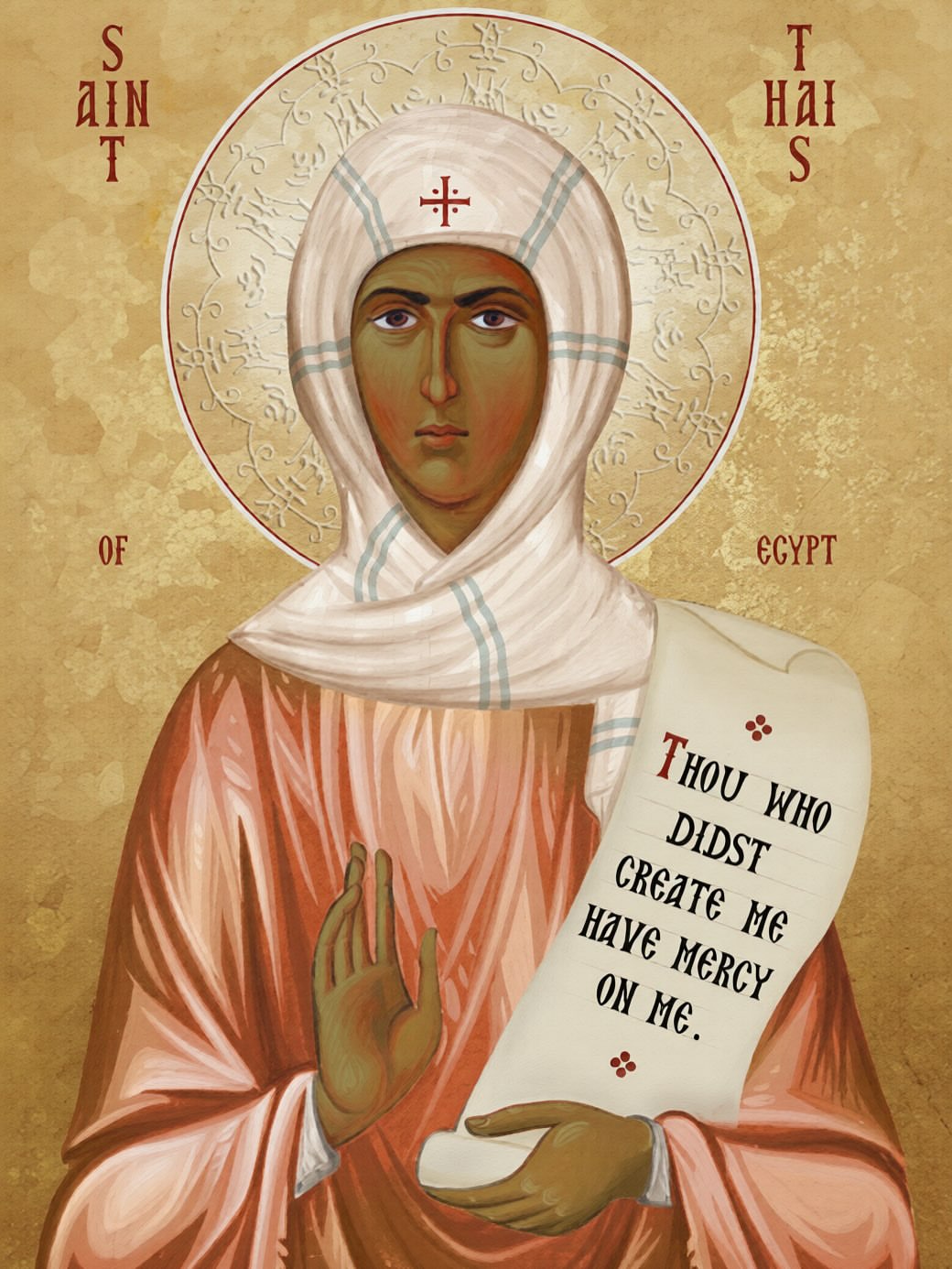
Saint Thais: the Alexandrian courtesan who burned her jewels and spent three years in a desert cell

The post commemorates Saint Thais, the repentant harlot, whose memory is kept on October 8th. Thais was a fourth-century Egyptian woman living in Alexandria, known for her exceptional beauty and her work as a wealthy courtesan. She drew many men into ruinous infatuation: they squandered their fortunes and even fought violently for her favor. Though she enjoyed luxury and notoriety, the post describes her as living without spiritual purpose,…

The post commemorates Saint Thais, the repentant harlot, whose memory is kept on October 8th. Thais was a fourth-century Egyptian woman living in Alexandria, known for her exceptional beauty and her work as a wealthy courtesan. She drew many men into ruinous infatuation: they squandered their fortunes and even fought violently for her favor.

Though she enjoyed luxury and notoriety, the post describes her as living without spiritual purpose, embedded in the sins of her profession. Her life changed when Saint Paphnutius, a desert hermit, heard of her reputation and set out to save her soul. He disguised himself as a worldly suitor, paid to see her in private, and asked whether there was a place they could go where only God could see them.

Thais answered that she believed in God and knew nothing could be hidden from Him. Paphnutius then described the eternal consequences of her way of life, and her conscience was pierced. She was moved to tears and publicly rejected her past: she gathered her costly garments, gold, and jewels in the city square and burned them, cutting all ties to her former wealth.

She followed Paphnutius into the desert for a life of penance under his direction. He placed her in a small, sealed monastic cell with only a tiny opening for food and water. For three years she lived in isolation, weeping and praying.

When she asked how she should pray, Paphnutius told her she was unworthy to utter the name of God; instead she was to look east and repeat, "You who created me, have mercy on me." Thais fell ill and reposed peacefully fifteen days later. The post presents her as a symbol of divine mercy and redemption.

  • Saint Thais was a fourth-century Alexandrian courtesan whose beauty led men to ruin their fortunes and fight for her favor.
  • Saint Paphnutius visited her disguised as a suitor and asked where they could go where only God could see them.
  • Thais burned her garments, gold, and jewels in the city square and followed Paphnutius into the desert.
  • She spent three years in a sealed cell, praying the words: "You who created me, have mercy on me."
  • She fell ill and reposed fifteen days later; her feast is October 8th.
Read more
Orthodox Christian TV YouTube

Emmy-Winning Orthodox Producer on Faith, Filmmaking, and Saying No

Emmy-Winning Orthodox Producer on Faith, Filmmaking, and Saying No 35:13

Fr. Chris Metropulos interviews Archon Nick Furris, an Emmy Award-winning producer and founder of Spectrum Films, about working in media as an Orthodox Christian. Furris explains that the craft of filmmaking is the same whether he serves Fortune 500 clients or the Church, but his faith guides his decisions and sometimes makes him refuse work. He describes filming major Church events, including the meeting of Pope Francis and Patriarch…

Fr. Chris Metropulos interviews Archon Nick Furris, an Emmy Award-winning producer and founder of Spectrum Films, about working in media as an Orthodox Christian. Furris explains that the craft of filmmaking is the same whether he serves Fortune 500 clients or the Church, but his faith guides his decisions and sometimes makes him refuse work.

He describes filming major Church events, including the meeting of Pope Francis and Patriarch Bartholomew in Jerusalem and the Holy and Great Council in Crete. He finds the liturgy easier to film than secular projects because it engages all the senses and nothing is by accident, so he studies the services to know what should be shown.

When his company opened in 1999, a California production firm asked them to help produce pornography; the three partners refused within thirty seconds and set a rule: if their children cannot watch it, they will not produce it. Furris also describes the Orthodox Public Affairs Committee (OPAC), which he co-founded after Hagia Sophia was converted into a mosque.

The organization raises awareness of persecution of Christians worldwide, has smuggled Bibles into certain countries, and has supported priests in the Middle East and Africa. The conversation turns to media strategy for younger audiences: Furris argues for using Instagram, YouTube, and other platforms to share the faith. He calls for a collective Orthodox condemnation of the war in Ukraine, where Orthodox are killing Orthodox, and says clergy bear a heavier responsibility before God, citing Chrysostom.

The discussion closes on the Church's use of every available platform to spread the faith.

Key moments

  1. 0:42 Nicholas Hurus, Emmy award-winning producer and founder of Spectrum Films, has created over 200 documentaries for the Greek Orthodox Archdiocese and produces content for Fortune 500 companies.
  2. 1:45 Hurus has produced coverage of Pope Francis and Patriarch Bartholomew in Jerusalem, Pope Benedict's visit to Constantinople, and the Holy and Great Council in Crete, which had not convened in over a thousand years.
  3. 2:50 His passion for the Church began at home with his mother and his parish priest of blessed memory, Father George Magakis; he says true faith is with you 24/7 and is your measuring stick.
  4. 3:53 He finds the Orthodox Church easier to film than secular clients because the liturgy engages all the senses, everything has meaning, and nothing is by accident, so he must study the services to know what should be shown.
  5. 9:04 At the National Religious Broadcasting Association, when marketing firms asked who the star of his program was, Father Christopher answered, 'Jesus Christ is the star of the program,' which surprised them.
  6. 12:11 When his company opened in 1999, a California production company asked them to help produce pornography; the three partners decided in under 30 seconds to refuse, setting the rule: if their children cannot watch it, they will not produce it.
  7. 18:57 Hurus co-founded the Orthodox Public Affairs Committee (OPAC), now in its fifth year, to make noise about the daily persecution of Christians worldwide; it has smuggled Bibles into certain countries, supported a priest in the Middle East who wanted a wall around his church, and shared footage of a woman in Africa beheaded for refusing to renounce Christ.
  8. 28:25 Hurus calls for a collective condemnation within the Orthodox Church of the war in Ukraine, where Orthodox are killing Orthodox, and says clergy bear a heavier responsibility before God, as Chrysostom wrote.
Anthony’s Cell YouTube

Christ Our Passover: Old Testament Type and New Testament Reality

Christ Our Passover: Old Testament Type and New Testament Reality 4:17

The audio reading presents the article "Christ Our Passover" from the Orthodox Study Bible. The article defines Passover as the central rite of Judaism commemorating the Hebrews' liberation from Egypt, its name deriving from the Lord passing over Hebrew homes and the Hebrews passing over the Red Sea. Passover celebrates God's steadfast love and freedom, signifying God's rescue and forging of Israel throughout the Old Testament. Christ becomes…

The audio reading presents the article "Christ Our Passover" from the Orthodox Study Bible. The article defines Passover as the central rite of Judaism commemorating the Hebrews' liberation from Egypt, its name deriving from the Lord passing over Hebrew homes and the Hebrews passing over the Red Sea. Passover celebrates God's steadfast love and freedom, signifying God's rescue and forging of Israel throughout the Old Testament. Christ becomes our Passover, bringing liberation from sin, death, and the devil.

Saint Paul declares Christ "our Passover sacrificed for us" (1 Cor 5:7-8), the Paschal Lamb offered once for all to reconcile us with God (Heb 10:10-14). At every Pascha the Church sings of Christ as the new, holy, mystical Pascha worthy of veneration.

Four typological details connect the Old Testament Passover to Christ: the unblemished male lamb whose blood was smeared on doorposts in the sign of the cross; the blood saving the Hebrew firstborn from death; the lamb's unbroken bones; and the passage through the Red Sea prefiguring holy baptism, where Christians are baptized into Christ's death and raised in the likeness of His resurrection.

Saint John Chrysostom reflects that if the shadow of the blood had such power in Egypt, the reality of Christ's blood saves souls, washing them more gleaming than gold. Believers, sustained by this blood, journey daily toward the eternal promised kingdom.

Key moments

  1. 0:22 Passover defined as central rite of Judaism based on liberation of Hebrews from Egypt; name comes from Lord passing over Hebrew homes and Hebrews passing over Red Sea.
  2. 0:54 Passover celebrates God's steadfast love and freedom; throughout Old Testament it signifies God's rescue and forging of Israel; Christ becomes our Passover (Pascha) bringing liberation from sin, death, and devil.
  3. 1:26 Saint Paul: "Christ our Passover was sacrificed for us. Therefore, let us keep the feast" (1 Cor 5:7-8); He is Paschal Lamb offered once for all (Heb 10:10-14) to reconcile us with God.
  4. 1:56 At every Pascha the Church sings: "Today a sacred Pascha is revealed to us, a new and holy Pascha, a mystical Pascha, a Pascha worthy of veneration, a Pascha which is Christ the Redeemer."
  5. 2:27 First typology: Passover lamb male without blemish, blood smeared on doorposts in sign of cross; Jesus male without blemish died on cross.
  6. 2:57 Second: Blood of Passover lamb saved Hebrew firstborn from death; blood of Christ saves believers from eternal death. Third: Passover lamb had no bones broken; Jesus had no bones broken. Fourth: Hebrews escaped slavery through Red Sea; Christians pass from sin through waters of holy baptism, baptized into Christ's death and raised in likeness of His resurrection.
  7. 3:28 Saint John Chrysostom: If the type of the blood had such power in Egypt, much more the reality; if death shuddered at the shadow, how much more would it dread the reality; the blood is salvation of souls, washing them more gleaming than gold.
  8. 3:59 Sustained by the blood of Christ our Passover, we resume daily our journey to the eternal promised land, the promised kingdom to come.
Prayer Orthodoxy ® Instagram

The Great Schema: Highest Degree of Orthodox Monastic Life

The post explains the Great Schema as the highest degree of Orthodox monastic life. The monk who receives it offers his life completely to Christ through repentance, prayer, obedience, and the struggle against the passions. Its symbols point to the Passion of Christ and the calling to die to the old man so that Christ may live within him. The same explanation is provided in Greek. The post is identified as an original production of Prayer Orthodoxy.

  • The Great Schema is the highest degree of Orthodox monastic life
  • The monk offers his life completely to Christ through repentance, prayer, obedience, and struggle against passions
  • Its symbols reference the Passion of Christ
  • The calling is to die to the old man so Christ may live within
  • The explanation appears in both English and Greek
Orthodox Sound YouTube

St. John of Tobolsk on Why God Permits Evil

St. John of Tobolsk on Why God Permits Evil 22:02

The speaker presents St. John of Tobolsk's teaching from The Sunflower on the distinction between God's permission of evil and human inaction. Confusing the two is identified as a grave error. God allows two categories of evil: general misfortunes such as sickness, poverty, insults, and death, which function as bitter medicines for spiritual healing; and sin, which is not a reality but a fantasm or anti-reality resulting from rational beings…

The speaker presents St. John of Tobolsk's teaching from The Sunflower on the distinction between God's permission of evil and human inaction. Confusing the two is identified as a grave error. God allows two categories of evil: general misfortunes such as sickness, poverty, insults, and death, which function as bitter medicines for spiritual healing; and sin, which is not a reality but a fantasm or anti-reality resulting from rational beings refusing to submit to God.

God wills the first category as punishment or chastisement but does not desire sin; he merely suffers it. God permits sin in order to bring good from evil, as illustrated by Joseph's brothers selling him into slavery, Saul's persecution of David, Daniel in the lions' den, and the crucifixion of Christ. The saints ascribe all events to God's will. Blessed Augustine is cited teaching that God transforms evil into good rather than preventing it, and that the Father gives up the Son while Judas's intention remains sinful.

The speaker uses the analogy of a ship's captain directing a vessel through stormy seas to the best end. Practical counsel is given: when offended, one should turn to the just God who permitted the offense rather than complain against the perpetrator, because the evildoer's intention is toothless without God's permission. The sinner's fault remains undiminished even if God brings greater good from it, illustrated by an arsonist whose victim receives a better house through another's charity.

Key moments

  1. 0:00 Confusing God's permission with human inaction is a grave error; human inaction leads to evils when one could have warned or prevented them.
  2. 1:03 Two kinds of evils God allows: general misfortunes (insults, sickness, death) which are bitter medicines for healing, and sin which is the only true evil.
  3. 1:34 Sin is not real but a fantasm, anti-reality, nothing; it exists only as the result of created beings refusing to submit to God, occurring against God's will.
  4. 2:36 God allows sin to create good from evil, truth from lies, for admonition and correction, letting people see sin's consequences.
  5. 3:36 Examples: Joseph's brothers' envy saved Egypt; Saul's persecution benefited David and Israel; Daniel in lions' den led to glory; Christ's crucifixion brought salvation.
  6. 6:13 Analogy of ship captain: God's providence directs through stormy seas to best end; evil intentions of unrighteous can turn to their benefit and honor.
  7. 11:24 Saints ascribe all events to God's will; Augustine: God transforms evil into good; Theophilus: God intervenes in sins to correct them, making evildoers unconscious instruments.
  8. 16:43 Practical counsel: turn to God when offended, submit to his permission; the sinner's fault remains even if God brings good from it (arsonist example).
☦️An Orthodox Blog☦️ Instagram

Athan: an Orthodox app for daily prayer, Scripture and the saints

The speaker presents Athan, an app made for Orthodox Christians who want to carry their spiritual life with them everywhere. The app offers daily reading of the Bible, with the possibility to go deeper into each day's Gospel reading and into the teachings of the holy fathers of the Church. Beyond reading, Athan helps users organize their prayer life and learn to put into practice what they read, so that the texts become part of daily action…

The speaker presents Athan, an app made for Orthodox Christians who want to carry their spiritual life with them everywhere. The app offers daily reading of the Bible, with the possibility to go deeper into each day's Gospel reading and into the teachings of the holy fathers of the Church. Beyond reading, Athan helps users organize their prayer life and learn to put into practice what they read, so that the texts become part of daily action rather than remaining on the page.

A second area of the app concerns the saints: each day the app shows which saints the Church celebrates, users can read their lives, ask for their prayers, and also pray for other people. The speaker notes this as a way to connect with the communion of saints in a daily rhythm. For those looking for a local community, the app shows Orthodox parishes near the user's location, which can help people find a church to attend.

The speaker describes Athan overall as a simple tool with three purposes: to teach you, to remind you, and to help you live your faith every day. The presentation stays at the level of the app's features: Scripture reading, the daily Gospel and patristic teachings, prayer organization, the lives of the saints of the day, intercession for others, and the parish finder.

No technical details, pricing, platform availability or user reviews are mentioned in the source; the description is limited to what the app contains and the uses the speaker names for it.

Key moments

  1. Athan is an app for Orthodox Christians who want to carry a spiritual life everywhere.
  2. It lets you read the Bible, go deeper into each day's Gospel and the teachings of the holy fathers of the Church.
  3. You can organize your prayer life and learn to put into practice what you read.
  4. You can learn about the saints celebrated each day, read their lives, ask for their prayers and pray for others.
  5. The app helps you find Orthodox parishes near you.
  6. The speaker calls it a simple tool to teach you, remind you and live your faith every day.
T timotheos.orthodoxy Instagram

Catechumen asks how Orthodoxy helps achieve ambitious goals

0:33

Tim, a catechumen of the Greek Orthodox Church, introduces himself as someone who has spent nearly two decades in fitness, including competitive experience, and has built a successful business. He states he never held Orthodox or Christian beliefs until now and describes himself as obsessed with setting and reaching ambitious goals. He asks other believers to share success stories about how Orthodox faith has helped them achieve their life…

Tim, a catechumen of the Greek Orthodox Church, introduces himself as someone who has spent nearly two decades in fitness, including competitive experience, and has built a successful business. He states he never held Orthodox or Christian beliefs until now and describes himself as obsessed with setting and reaching ambitious goals.

He asks other believers to share success stories about how Orthodox faith has helped them achieve their life goals. The post combines a personal introduction with a request for testimony about practical outcomes of faith. He invites followers to grow together in Orthodoxy, fitness, and business.

Key moments

  1. The speaker asks how Orthodoxy helped people reach their goals.
  2. He describes himself as obsessed with setting and achieving big, ambitious goals.
  3. He says he never had Orthodox belief or much Christian belief until now.
  4. He requests success stories in the comments about how Orthodox faith helped with life goals.
Read more
T timotheos.orthodoxy Instagram discussion

Catechumen reflects on how interior state changes experience of Divine Liturgy

0:19

Tim, a catechumen of the Greek Orthodox Church, introduces his account where he documents his path toward Orthodoxy alongside his background in fitness and business. He has been involved in fitness for nearly two decades, some of it competitive, and has built his own successful business. In the attached video, he reflects on how the perception of time during the Divine Liturgy shifts depending on one's interior state. The Divine Liturgy has a…

Tim, a catechumen of the Greek Orthodox Church, introduces his account where he documents his path toward Orthodoxy alongside his background in fitness and business. He has been involved in fitness for nearly two decades, some of it competitive, and has built his own successful business. In the attached video, he reflects on how the perception of time during the Divine Liturgy shifts depending on one's interior state.

The Divine Liturgy has a fixed structure but the perception of time shifts with interior state. When distracted, anxious, or tired, minutes drag and one notices repetitions and physical discomfort. When entering with attention or grace grants compunction, the same two hours vanish.

The chant carries you, readings settle into the heart, and the Anaphora becomes the center of the world. The Liturgy is an encounter; some days you show up, other days you are present.

Key moments

  1. The Divine Liturgy has a fixed structure but perception of time shifts with interior state.
  2. When distracted, anxious, or tired, minutes drag and one notices repetitions and physical discomfort.
  3. When entering with attention or grace grants compunction, the same two hours vanish.
  4. The chant carries you, readings settle into the heart, and the Anaphora becomes the center of the world.
  5. The Liturgy is an encounter; some days you show up, other days you are present.
6 opinions in the discussion Nah that's happened to me so many times, I almost feel like they get shorter every time I go. The first time I attended I could've sworn it took 4 hours but now it feels like 45 minutes. Read the discussion
T timotheos.orthodoxy Instagram

Catechumen shares how daily prayer routine reshapes his day

0:48

Tim, a catechumen of the Greek Orthodox Church, describes how adopting the Orthodox morning and evening prayer routine changed his daily experience. He explains that beginning the day with prayer places the following hours in a different frame, while the expectation of bedtime prayer is a reminder throughout the day. He keeps icons in his house and carries a prayer rope in his pocket; both are constant prompts to turn his attention toward…

Tim, a catechumen of the Greek Orthodox Church, describes how adopting the Orthodox morning and evening prayer routine changed his daily experience. He explains that beginning the day with prayer places the following hours in a different frame, while the expectation of bedtime prayer is a reminder throughout the day. He keeps icons in his house and carries a prayer rope in his pocket; both are constant prompts to turn his attention toward prayer.

Tim also notes his background: he has spent nearly two decades in fitness, including competitive experience, and has built a successful business. He invites followers interested in Orthodoxy, fitness, and business to join him as he shares his learnings and obstacles on the path toward the Church.

Key moments

  1. Morning prayer frames the entire day differently
  2. Evening prayer anticipation reminds throughout the day
  3. Icons in the house serve as constant reminders to pray
  4. Touching the prayer rope in the pocket makes life more conscious
Read more
T timotheos.orthodoxy Instagram discussion

Catechumen shares Orthodox journey, fitness background, and business experience

0:08

Please let everyone know.

I am Tim, a catechumen in the Greek Orthodox Church, and I share everything I am learning and every obstacle I face on the way to Orthodoxy. I have also spent nearly twenty years in fitness, some of it at a competitive level, and I have built a successful business of my own.

Follow along so we can grow together.

Thank you. All praise to the Lord. Amen.

15 opinions in the discussion Still a Catechumen, but: I'm becoming Orthodox because it's the original, unchanged Church, the one that gathered the Bible and still prays it as it was first written, and because its view… Read the discussion