WeOrthodox
EN UA

Orthodox posts, videos and discussions

We follow Orthodox channels, communities and blogs across the web, summarise every post and video, and highlight the conversations with real substance.

T timotheos.orthodoxy Instagram discussion

Catechumen shares Orthodox journey, fitness background, and business experience

0:08

Please let everyone know.

I am Tim, a catechumen in the Greek Orthodox Church, and I share everything I am learning and every obstacle I face on the way to Orthodoxy. I have also spent nearly twenty years in fitness, some of it at a competitive level, and I have built a successful business of my own.

Follow along so we can grow together.

Thank you. All praise to the Lord. Amen.

15 opinions in the discussion Still a Catechumen, but: I'm becoming Orthodox because it's the original, unchanged Church, the one that gathered the Bible and still prays it as it was first written, and because its view… Read the discussion
The Burning Bush Instagram

Stuart Knechtle to Join Burning Bush Podcast for Live Discussion

The host of the Burning Bush Podcast announces an upcoming live conversation with Stuart Knechtle. The discussion will cover Christianity, evangelism, and apologetics, along with other topics. The live stream is scheduled for Monday, October 12 at 6 PM Pacific time on the podcast's YouTube channel.

The host thanks readers for their support of a previous post and invites them to tune in for the broadcast. No further details about the topics or the guests appear in the announcement.

  • The Burning Bush Podcast host announces a live conversation with Stuart Knechtle.
  • Topics include Christianity, evangelism, and apologetics, among other things.
  • The live discussion airs on YouTube at 6 PM Pacific time on Monday, October 12.
  • The host thanks everyone who supported the previous post.
  • The announcement closes with the host's blessing to readers.
Read more
T timotheos.orthodoxy Instagram

Filming videos deepens a catechumen's grasp of Orthodoxy

0:41

Tim, a catechumen of the Greek Orthodox Church, introduces himself with the phrase "Solely documenting, of course!" He shares that he is posting his learnings and obstacles on the path toward Orthodoxy. He also brings nearly two decades of fitness experience, some of it competitive, and a successful business he built. He invites those interested in Orthodoxy, fitness, and business to follow his account and grow together, closing with "Thank you…

Tim, a catechumen of the Greek Orthodox Church, introduces himself with the phrase "Solely documenting, of course!" He shares that he is posting his learnings and obstacles on the path toward Orthodoxy. He also brings nearly two decades of fitness experience, some of it competitive, and a successful business he built.

He invites those interested in Orthodoxy, fitness, and business to follow his account and grow together, closing with "Thank you All praise to the Lord Amen." In a video, he explains that filming videos has helped him understand Orthodoxy better. He describes how recording requires him to reflect on what he has learned and to put it into his own words.

He contrasts this active reproduction with passive consumption through reading, listening, or watching, and says the reproduction part is extremely helpful for him. The discussion turns on the value of creating content as a tool for deeper theological comprehension, and on the intersection of faith, physical discipline, and entrepreneurship in his life.

Key moments

  1. Filming videos on Instagram helped the speaker understand Orthodoxy better
  2. Recording requires reflecting on what you have learned and putting it into your own words
  3. It is not just consuming content through reading, listening, or watching
  4. The reproduction part is extremely helpful for the speaker
T timotheos.orthodoxy Instagram

Catechumen shares Orthodox journey with fitness and business background

0:11

Tim introduces himself as a catechumen of the Greek Orthodox Church who is documenting his path toward Orthodoxy. He has been involved in fitness for nearly two decades, including competitive experience, and has built a successful business. He invites readers to follow his account @timotheos.orthodoxy where he shares learnings and obstacles from his spiritual journey alongside his fitness and business insights. The post ends with a doxology giving praise to the Lord.

Key moments

  1. I have no preference for microphone type or recording method.
  2. Clear audio with minimal background noise produces the best results for transcription.
  3. Both dedicated microphones and phone microphones can work well if the audio quality is good.
  4. I process whatever transcript or audio you provide without bias toward the recording equipment.
M mysteries_of_christendom Instagram

Laila describes Saint George's torture with heated iron sandals

Laila, the Eastern Orthodox host of Mysteries of Christendom, introduces an episode focused on the torture of Saint George. She describes a particular method in which iron sandals fitted with upward-pointing nails were heated until red-hot and then forced onto the saint's feet. The episode also incorporates dragons as part of the narrative. Laila references a historically documented emperor who carried out persecution against Christians. She…

Laila, the Eastern Orthodox host of Mysteries of Christendom, introduces an episode focused on the torture of Saint George. She describes a particular method in which iron sandals fitted with upward-pointing nails were heated until red-hot and then forced onto the saint's feet. The episode also incorporates dragons as part of the narrative.

Laila references a historically documented emperor who carried out persecution against Christians. She then poses a direct question to the audience, asking whether they could endure such suffering for the sake of their faith. The presentation serves as an introduction to the episode's content, combining historical persecution details with the hagiographical elements associated with Saint George.

Key moments

  1. Laila describes the torture method: iron sandals with nails heated red-hot forced onto George's feet.
  2. She mentions the episode includes dragons.
  3. She references a historically documented emperor who tortured Christians.
  4. She poses the question of whether the listener could endure such things for God and faith.
  5. She introduces herself as Laila, Eastern Orthodox host of Mysteries of Christendom.
Read more
Ancient Faith YouTube

STORIES NOT IN THE BIBLE: A New Book Coming October 13th, 2026

STORIES NOT IN THE BIBLE: A New Book Coming October 13th, 2026 1:01

Ancient Faith Publishing announces the upcoming release of STORIES NOT IN THE BIBLE, scheduled for October 13th, 2026. The post is a book trailer promoting the title, with the publisher directing readers to its online store to find the book. Alongside the announcement, Ancient Faith Ministries promotes its other offerings: podcasts, a daily devotional, and Scripture teachings available through the Ancient Faith Radio app, which can be downloaded…

Ancient Faith Publishing announces the upcoming release of STORIES NOT IN THE BIBLE, scheduled for October 13th, 2026. The post is a book trailer promoting the title, with the publisher directing readers to its online store to find the book. Alongside the announcement, Ancient Faith Ministries promotes its other offerings: podcasts, a daily devotional, and Scripture teachings available through the Ancient Faith Radio app, which can be downloaded for Apple and Android devices.

The post also lists the ministry's social media presence on Instagram and Facebook and invites readers to support Ancient Faith Ministries financially. The ministry describes its mission as carrying out the Great Commission of Jesus Christ through accessible and well-crafted publications and creative media that educate, edify, and evangelize, leading to a living experience of God through His Holy Orthodox Church.

Ancient Faith Ministries operates with the blessing of the Antiochian Orthodox Christian Archdiocese of North America. The post carries hashtags related to the Orthodox Church, Eastern Orthodoxy, Orthodoxy, Ancient Faith, and Christianity. No further details about the book's content, author, or subject matter are given in the post itself; the trailer serves as the announcement of the release date and availability through the Ancient Faith store.

  • STORIES NOT IN THE BIBLE is scheduled for release on October 13th, 2026 by Ancient Faith Publishing.
  • The book can be found at the Ancient Faith store online.
  • Ancient Faith Ministries offers podcasts, a daily devotional, and Scripture teachings through the Ancient Faith Radio app on Apple and Android.
  • The ministry states its mission is to carry out the Great Commission through publications and media that educate, edify, and evangelize.
  • Ancient Faith Ministries operates with the blessing of the Antiochian Orthodox Christian Archdiocese of North America.
George Instagram

Why George now wears his cross where no one can see it

1:30

George answers a viewer's question about whether he wears his cross. When he started his account, he wore it over his t-shirt, thinking it would help people connect with his words about Christ. As he learned more about Orthodox tradition, he came to understand that many Orthodox Christians keep the cross under their clothes, close to the heart, because it is not jewelry. He observes people wearing large crosses as fashion statements, sometimes…

George answers a viewer's question about whether he wears his cross. When he started his account, he wore it over his t-shirt, thinking it would help people connect with his words about Christ. As he learned more about Orthodox tradition, he came to understand that many Orthodox Christians keep the cross under their clothes, close to the heart, because it is not jewelry.

He observes people wearing large crosses as fashion statements, sometimes alongside a zodiac sign or the evil eye. For most Orthodox Christians, the cross is the one received at baptism and marks belonging to Christ. It is worn for the wearer, not to display one's beliefs to others.

Many kiss the cross in the morning and before sleep with a short prayer, and George says he does this sometimes as well. He now wears his cross where it cannot be seen and asks viewers how they wear theirs.

Key moments

  1. George says he usually did not wear his cross on top of his clothes, but when he started his account he wore it over his t-shirt so people would connect with what he says about Christ.
  2. The more he learned about Orthodox traditions, the more he understood that many Orthodox Christians keep their cross under their clothes, close to the heart, because it is not jewelry.
  3. He sees many people wearing the cross for the wrong reasons, as big crosses worn as a fashion statement, sometimes next to a zodiac sign or the evil eye.
  4. For most Orthodox Christians, the cross is the one received at baptism and is a sign that they belong to Christ.
  5. The cross is not there to show people what one believes; it is worn close to the heart to remind the wearer daily who they belong to.
  6. Many Orthodox kiss the cross in the morning and before sleep and say a short prayer, which George says he also does sometimes.
  7. George says he wears his cross, just not for others to see anymore, and asks viewers how they wear theirs.
Read more
Disgruntled Docs Instagram

Humility and Repentance: The Beginning of Healing, Not Weakness

The post presents humility and repentance as the start of healing in the Orthodox Christian life, not signs of weakness. Repentance, metanoia, is described as more than feeling guilty: it is a change of mind and heart, a continual turning back toward Christ. It means learning to see ourselves truthfully before God without excuses, self-justification, or despair. The Jesus Prayer expresses this spirit: "Lord Jesus Christ, Son of God, have mercy…

The post presents humility and repentance as the start of healing in the Orthodox Christian life, not signs of weakness. Repentance, metanoia, is described as more than feeling guilty: it is a change of mind and heart, a continual turning back toward Christ. It means learning to see ourselves truthfully before God without excuses, self-justification, or despair.

The Jesus Prayer expresses this spirit: "Lord Jesus Christ, Son of God, have mercy on me, a sinner." The post notes that the saints did not grow proud as they became holy; the closer they drew to God, the more they recognized their need for His mercy. True humility does not mean hating ourselves. It means recognizing that every good thing in us is a gift of grace.

Repentance is not a one-time event but a lifelong path through prayer, confession, fasting, forgiveness, and participation in the sacramental life of the Church. Humility opens the heart to grace, repentance turns the heart back to Christ, and through both God restores us. The accompanying talk makes the same two themes concrete. The speaker says we must repent of our pride, which shows itself constantly in daily life.

He gives the example of a long drive: when someone cuts you off, you can swear and get worked up, or give thanks to God that you were not in an accident and pray for that person's safety. Putting pride aside this way makes a person a little bit humble, and this can happen in every walk we take. He adds that none of us is perfect.

Key moments

  1. The speaker names two issues: humility and repentance, saying we must repent of our pride.
  2. He uses driving as a test of pride and humility: when someone cuts you off on a 9-hour drive, you can swear and get worked up, or give thanks to God you were not in an accident and pray for his safety.
  3. Putting pride aside this way makes a person a little bit humble, and this can happen in every walk we take. None of us is perfect.
Read more
St Anthony’s Youth SA ☦︎ Instagram

The purpose of pain in Christian life: forgiveness and salvation

The text presents a theological explanation of pain's purpose in Christian life. It identifies a single, unique purpose: the forgiveness of sins here on earth through every kind of illness, distress, and affliction, together with the purification and salvation of the soul. The text draws a sharp distinction between two responses to pain. For those who do not wish to be corrected and do not repent, pain functions as a pledge of eternal torments.…

The text presents a theological explanation of pain's purpose in Christian life. It identifies a single, unique purpose: the forgiveness of sins here on earth through every kind of illness, distress, and affliction, together with the purification and salvation of the soul. The text draws a sharp distinction between two responses to pain.

For those who do not wish to be corrected and do not repent, pain functions as a pledge of eternal torments. For those who receive pain with patience and gratitude toward God while living in repentance, pain acts as the best road toward correction and forgiveness of their sins, because through it they are redeemed from the eternal afflictions of hell.

  • Pain's purpose for Christians is forgiveness of sins and the soul's salvation
  • Illnesses, distresses, and afflictions are the means
  • For the unrepentant, pain is a pledge of eternal torment
  • For the patient and grateful, pain leads to correction and forgiveness
  • Acceptance with repentance redeems from hell's eternal afflictions
Read more

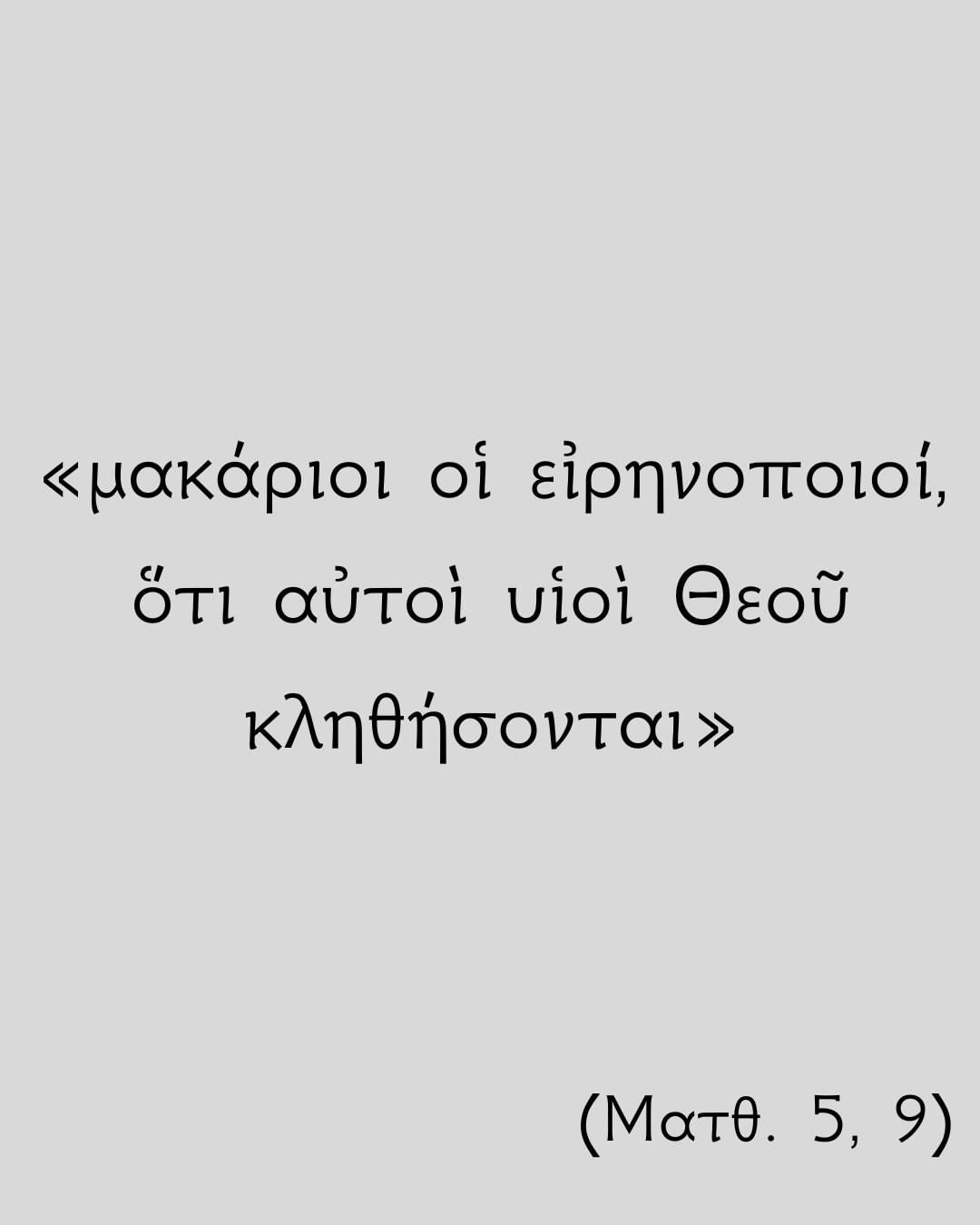
Blessed are the peacemakers: Matthew 5:9 interpreted by Trembelas

The post presents the ninth beatitude from Matthew 5:9 in Greek: "Blessed are those who have peace within themselves, which comes from the sanctification of the soul, and transmit it to others, making peace with their fellow human beings and with God; for they shall be recognized and proclaimed in the heavenly world as sons of God." The text cites the verse reference. A short interpretation accompanying the image comes from the book "The New…

The post presents the ninth beatitude from Matthew 5:9 in Greek: "Blessed are those who have peace within themselves, which comes from the sanctification of the soul, and transmit it to others, making peace with their fellow human beings and with God; for they shall be recognized and proclaimed in the heavenly world as sons of God."

The text cites the verse reference. A short interpretation accompanying the image comes from the book "The New Testament with Brief Interpretation" by the late Professor Panagiotis N. Trembelas of the Theological School of the University of Athens and the Brotherhood of Theologians "O Soter" (11th edition, May 2025, Athens). The post shares this scriptural passage and its patristic-style commentary without additional discussion.

  • Quote of Matthew 5:9 in Greek with emphasis on inner peace from sanctification
  • Peace transmitted to others and with God
  • Identification as sons of God in the heavenly world
  • Source: Trembelas and Brotherhood of Theologians "O Soter" commentary
  • 11th edition published May 2025 in Athens
Read more
Mount Athos Legacy Facebook

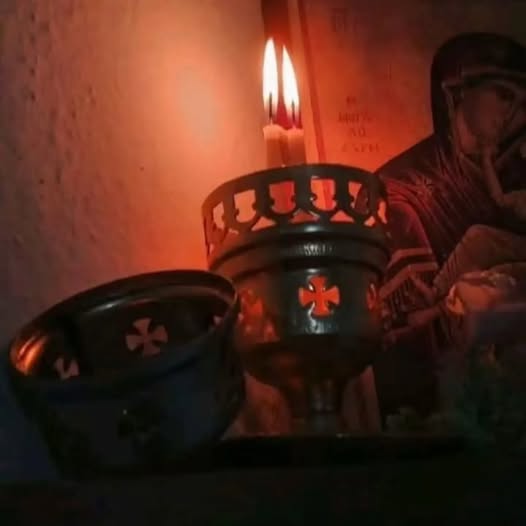
The Burning Vigil Lamp Cries 'Have Mercy' to God for the One Who Lit It

Elder Ephraim of the Skete of St Andrew teaches that a lit vigil lamp is itself a prayer. For as long as the lamp burns, it cries 'Eleison, Eleison, Eleison', that is, 'Have mercy', to God for the person who lit it. The elder says the devil knows this, and so he plants logismoi, tempting thoughts, in people's minds, suggesting that keeping a lit lamp poses a danger of fire. The elder also speaks about the oil. He says we should always put the…

Elder Ephraim of the Skete of St Andrew teaches that a lit vigil lamp is itself a prayer. For as long as the lamp burns, it cries 'Eleison, Eleison, Eleison', that is, 'Have mercy', to God for the person who lit it. The elder says the devil knows this, and so he plants logismoi, tempting thoughts, in people's minds, suggesting that keeping a lit lamp poses a danger of fire.

The elder also speaks about the oil. He says we should always put the best oil in the vigil lamp. Then he adds a humble qualification of his own: he would say, humbly, that a person may put in whatever oil he can afford. What matters is that he offers the best oil of his heart together with whatever oil he can manage at the time, so that he keeps at least one vigil lamp burning.

Such a lamp, he writes, is 'presves eleous', an intercessor of mercy, toward Heaven. The saying ends with the signature of the elder himself, Gerontas Ephraim of the Skete of St Andrew. The whole text rests on two points: the burning lamp prays for the one who lights it, and the enemy attacks this practice with thoughts of danger in order to stop it.

The elder's answer to the temptation is to keep the lamp lit, with the best oil one has, and above all with the oil of the heart.

  • A lit vigil lamp cries 'Eleison' ('Have mercy') to God for as long as it burns, for the person who lit it.
  • The devil knows this and plants thoughts that a lit lamp is a fire hazard, to make people stop keeping one.
  • The best oil should always be put in the vigil lamp.
  • The elder humbly adds that one may use whatever oil he can afford, as long as he offers the best oil of his heart with it.
  • Keeping even one lamp burning makes it an intercessor of mercy toward Heaven.
Read more
Saint Wisdom Instagram

Saint Theophan the Recluse: What to Do When Your Mind Wanders in Prayer

A paraphrased teaching of Saint Theophan the Recluse addresses a common struggle in prayer: the mind that keeps wandering away from God. The speaker tells listeners not to abandon prayer because their thoughts drift. Wandering attention is not a reason to stop praying; it is the very situation in which the practice of prayer continues. The instruction is to quietly bring the mind back each time it leaves God during prayer, without anger or…

A paraphrased teaching of Saint Theophan the Recluse addresses a common struggle in prayer: the mind that keeps wandering away from God. The speaker tells listeners not to abandon prayer because their thoughts drift. Wandering attention is not a reason to stop praying; it is the very situation in which the practice of prayer continues.

The instruction is to quietly bring the mind back each time it leaves God during prayer, without anger or agitation, and then to do the same again the next time it wanders. The speaker acknowledges that this can happen many times, and says a person should not be discouraged even if they have to return the mind a hundred times. Each return is not wasted effort. According to the teaching, every time a person brings the mind back to God, that return makes them stronger against wandering the next time.

The struggle itself becomes a means of growth: the repeated effort of gathering one's attention and turning it back to God trains the soul. The teaching therefore reframes distraction during prayer. Instead of seeing a wandering mind as a sign of failure that justifies giving up, the speaker presents the repeated returning as the work of prayer itself.

The card presents this counsel in three movements: do not abandon prayer because of distraction, quietly return the mind to God each time it wanders, and do not lose heart over repeated returns, because each one strengthens a person against the next wandering. The hashtags in the original post place the teaching in the context of love, Orthodoxy, and the saints.

Key moments

  1. Do not abandon prayer because your mind keeps wandering.
  2. When the mind leaves God, quietly bring it back, and bring it back again each time it wanders.
  3. Do not be discouraged by returning a hundred times; each return makes you stronger to resist wandering.
Read more

Commemoration of Venerable Pelagia the Penitent on 8 October

1:00

The post notes the commemoration of the Venerable Pelagia the Penitent on 8 October. No further details about her life, the liturgical service, or the discussion are provided in the source text.

Key moments

  1. Call to praise the Lord and exalt Him unto all ages.
  2. Command to light and darkness to bless the Lord.
  3. Command to nights and days to bless the Lord.
  4. Call to humanity to bless the Lord.
  5. Call to Israel to bless the Lord.
  6. Repetition of praise to the Lord unto all ages.
  7. Blessing of the Father, Son, and Holy Spirit.
  8. Final affirmation of hymning and exalting the Lord unto all ages.
Read more
Fr.TEDTalks with Orthodox Health Instagram

Fr. Ted Paraskevopoulos on doing the right thing without feeling like it

1:00

The post opens with an observation that faithfulness often feels less impressive from the inside than it appears from the outside. The author notes that people tend to give enormous authority to motivation, treating desire as the measure of whether an action counts. When enthusiasm disappears, the question arises whether the commitment still matters. The author argues that some of the most formative actions happen precisely when enthusiasm has…

The post opens with an observation that faithfulness often feels less impressive from the inside than it appears from the outside. The author notes that people tend to give enormous authority to motivation, treating desire as the measure of whether an action counts. When enthusiasm disappears, the question arises whether the commitment still matters.

The author argues that some of the most formative actions happen precisely when enthusiasm has left: praying tired, training tired, serving family tired, keeping commitments without emotional reward. Feelings matter but make unreliable masters. Repeated action can train attention, appetite, character, and eventually desire. This reflects ascetic practice where obedience precedes inclination, and sometimes the right thing is done kicking and screaming.

The post references Episode 81 of the Orthodox Health Podcast with Fr. Ted Paraskevopoulos. In the episode, the priest says doing the right thing does not require feeling grateful or happy about it. He tells people he only cares about what they do, not what they say in confession: "I don't care what you say, I don't care what you do.

I don't care. I really don't care how much lip service you give me in confession. All I care about is what you do." He admits that as a priest he sometimes wakes up on Sundays exhausted and does not want to get up for services, perhaps after being up all night with a fever. That reluctance does not mean he loves the Lord or the church less; it means he is human and must do his duty because no one else can replace him.

He argues that forced prayer is more powerful than prayer that comes naturally because the struggle shows love for God: "When we fight to pray, when we don't want to, the Lord sees that, and he sees that we try because we love him. That is a stronger test of character." He concludes that doing the right thing despite not wanting to is admirable.

Key moments

  1. It's enough. Everyone thinks you got to do the right thing and you also got to be grateful, happy about it. No.
  2. If we can muster enough willpower to do the right thing, even kicking and screaming, it's still something.
  3. I tell people all the time, "I don't care what you say, I don't care what you do. I don't care. I really don't care how much lip service you give me in confession. All I care about is what you do."
  4. I'll confess it. I don't care. I'm a priest. I love the church, I love the services. There are Sundays when I wake up and I don't want to get up. Maybe I've been up all night, like I just had a fever, I'm exhausted, and physically I don't want to get up. I wish I could sleep.
  5. It doesn't mean I don't love the Lord. It doesn't mean I don't love my ministry. It doesn't mean I don't love the church. It just means I'm a human being and I'm exhausted, but there's nobody to replace me, so I got to get up and do my job, kicking and screaming, and I got to put on a smile as well.
  6. But I don't think that's a failure. Prayer that is forced is more powerful than prayer that comes naturally. When we fight to pray, when we don't want to, the Lord sees that, and he sees that we try because we love him. That is a stronger test of character.
  7. Good for you if you did the right thing, even though you didn't want to do it. And I think that's admirable.
  8. I feel better now of a sudden. I feel better now. I feel better.
Read more
George Instagram

Fasting as Freedom: Starting Small with Wednesday and Friday

1:25

The speaker addresses the large number of fasting days in Orthodoxy, which can feel overwhelming. He says the important thing is not how many days you fast but understanding what fasting does to you. He began with Wednesdays and Fridays; Wednesday marks Judas's agreement to betray Jesus, and Friday marks the crucifixion. Fasting is not about food but about freedom. In a world where every desire is instantly met, those comforts begin to control…

The speaker addresses the large number of fasting days in Orthodoxy, which can feel overwhelming. He says the important thing is not how many days you fast but understanding what fasting does to you. He began with Wednesdays and Fridays; Wednesday marks Judas's agreement to betray Jesus, and Friday marks the crucifixion.

Fasting is not about food but about freedom. In a world where every desire is instantly met, those comforts begin to control us. By saying no to small things through fasting, we learn to say no to larger sins like anger and pride. Many people delay starting, but Jesus said "when you fast," not "if you fast."

The speaker suggests beginning this Friday and speaking with a priest about how to grow, because small steps make the difference.

Key moments

  1. Many fasting days in Orthodoxy can feel overwhelming, but the important thing is understanding what fasting does to you, not how many days you fast.
  2. The speaker started with Wednesdays and Fridays; Wednesday marks Judas's agreement to betray Jesus, Friday marks the crucifixion.
  3. Fasting is not about food but about freedom from the control of instant gratification.
  4. Modern life provides food, phones, and comfort instantly, and these things slowly take control of our lives.
  5. Saying no to small things through fasting teaches us to say no to bigger things like anger, pride, and recurring sin.
  6. People often postpone fasting, but Jesus said "when you fast," not "if you fast."
  7. The speaker suggests starting this Friday and talking to a priest about how to grow from there.
  8. Small steps make the difference.
Read more
Kyle YouTube discussion

Six Serbian Saints Who Kept Faith Through Centuries of Crisis

Six Serbian Saints Who Kept Faith Through Centuries of Crisis 26:43

An American convert received into a Serbian Orthodox parish describes how Serbian Orthodoxy preserved faith through Ottoman rule, communism, and war. The speaker's priest was born in Serbia, served under communism, faced pressure to spy on the church, and knew Patriarch Pavle personally. The video presents six saints who exemplify faithfulness under pressure. St. Sava, born Rastko around 1175, left royal status for Mount Athos, became a monk,…

An American convert received into a Serbian Orthodox parish describes how Serbian Orthodoxy preserved faith through Ottoman rule, communism, and war. The speaker's priest was born in Serbia, served under communism, faced pressure to spy on the church, and knew Patriarch Pavle personally. The video presents six saints who exemplify faithfulness under pressure.

St. Sava, born Rastko around 1175, left royal status for Mount Athos, became a monk, founded Hilandar Monastery with his father Simeon, and returned as first archbishop of the autocephalous Serbian Church. St. Lazar chose a heavenly kingdom over an earthly one at the 1389 Battle of Kosovo, accepting certain death; the military defeat became a spiritual cornerstone of Serbian identity.

St. Nikolai Velimirovich, called the Serbian Chrysostom, was imprisoned in Dachau and taught that enemies drive us toward God and that the real battle is between who we are and who God wants us to become. St. Justin Popovich, removed from his academic post under communism, taught that Orthodoxy is an experience to live, not a library to study, and that all truth derives from Christ the God-man.

St. Sebastian, the first American-born Orthodox priest, served as a poor missionary across the United States. Patriarch Pavle, who led the church from 1990 to 2009, lived in simplicity, used public transport, and urged "let us be human" during Yugoslavia's wars, showing faith made visible through humility and love for enemies. Each saint demonstrates the same gospel lived out in different circumstances, showing that holiness comes from denying oneself and following Christ.

Key moments

  1. 0:00 The speaker was received into Orthodoxy through a Serbian parish and found a culture of family, community, and living traditions centered on faith.
  2. 1:02 Serbia historically held back Ottoman expansion into Europe, suffering centuries of foreign domination while producing saints and martyrs who never gave up their faith.
  3. 2:04 The speaker's priest was born in Serbia, served under communism, was pressured to spy on the church, and personally knew Patriarch Pavle, a living saint.
  4. 4:40 St. Sava (born Rastko c. 1175) left royal status for Mount Athos, became a monk, founded Hilandar Monastery with his father Simeon, and returned as first archbishop of the autocephalous Serbian Church.
  5. 7:14 St. Lazar chose a heavenly kingdom over an earthly one at the 1389 Battle of Kosovo, accepting certain death; the military defeat became a spiritual cornerstone of Serbian identity.
  6. 11:24 St. Nikolai Velimirovich, the "Serbian Chrysostom," was imprisoned in Dachau; he taught that enemies drive us to God and that the real battle is between who we are and who God wants us to become.
  7. 17:39 St. Justin Popovich, removed from his academic post under communism, taught that Orthodoxy is an experience to live, not a library to study, and that all truth derives from Christ the God-man.
  8. 22:18 Patriarch Pavle (1990-2009) lived in simplicity, used public transport, and urged "let us be human" during Yugoslavia's wars, showing faith made visible through a life of humility and love for enemies.
19 opinions in the discussion Patriarch Pavle was genuinely one of a kind. He was the sort of man you might bump into while heading out to buy bread. He walked the city, rode the bus, chatted with people, would just say… Read the discussion
T timotheos.orthodoxy Instagram

Catechumen runs 30 minutes on treadmill repeating Jesus Prayer while staring at wall

0:42

Tim, a catechumen of the Greek Orthodox Church, describes running on a treadmill for 30 minutes yesterday evening while staring at a wall and repeating the Jesus Prayer continuously. He has almost two decades of fitness experience, some of it competitive, and built his own successful business. He normally runs outside but used the gym due to bad weather and limited clothing as a traveler. He does not listen to music and avoids treadmills facing…

Tim, a catechumen of the Greek Orthodox Church, describes running on a treadmill for 30 minutes yesterday evening while staring at a wall and repeating the Jesus Prayer continuously. He has almost two decades of fitness experience, some of it competitive, and built his own successful business. He normally runs outside but used the gym due to bad weather and limited clothing as a traveler.

He does not listen to music and avoids treadmills facing a television. He wonders if he is alone in this practice and asks viewers to comment if they do the same. He shares his learnings and obstacles toward Orthodoxy along with fitness and business content.

Key moments

  1. The speaker ran on a treadmill for 30 minutes yesterday evening.
  2. He stared at a wall and repeated the Jesus Prayer continuously.
  3. He normally runs outside but used the gym due to bad weather and limited clothing as a traveler.
  4. He does not listen to music and avoids treadmills facing a TV.
  5. He wonders if he is alone in this practice and asks viewers to comment.
Read more

The Fast God Rejects: Five Modern Saints on True Fasting

The Fast God Rejects: Five Modern Saints on True Fasting 16:59

The video challenges fasting that only removes meat and dairy, opening with Isaiah 58, where God rejects fasting accompanied by quarrels and oppression. True fasting, it says, requires loosening the bonds of injustice and sharing bread with the hungry. Saints Paisios the Athonite, Gabriel the Fool for Christ, Gavrilia, Archimandrite Justin Pîrvu, and Eldress Galaktia of Crete describe three common mistakes. The first is treating fasting as…

The video challenges fasting that only removes meat and dairy, opening with Isaiah 58, where God rejects fasting accompanied by quarrels and oppression. True fasting, it says, requires loosening the bonds of injustice and sharing bread with the hungry. Saints Paisios the Athonite, Gabriel the Fool for Christ, Gavrilia, Archimandrite Justin Pîrvu, and Eldress Galaktia of Crete describe three common mistakes.

The first is treating fasting as optional: St. Gavrilia notes that people endure diets for the body but not fasts for the soul, and St. Paisios warns against updating tradition as if God had changed. The second is making fasting a goal in itself rather than a tool to calm the mind, subdue passions, and acquire humility. The third is stopping at the bodily fast: true fasting abstains from all evil, beginning with the tongue, including gossip, judgment, pride, and lies.

St. Gabriel the Fool for Christ teaches to eat just enough not to be hungry, and that true fasting is repentance that makes a person forget hunger; prayer and fasting cast out demons. Eldress Galaktia says God asks simple things: fast, confess, commune, forgive, give alms in secret, and share bread with the hungry. The central danger is pride, feeling superior because one fasts strictly while judging those who do not.

The repeated answer from the saints is to fast under obedience to a spiritual father, keeping the triad of fasting, confession, and communion without adding or subtracting on one's own initiative. The video also answers common questions: sick people may adjust their diet, according to St. Paisios, and health matters should be discussed with a spiritual father and doctor.

Key moments

  1. 0:00 Superficial fasting from food alone fails to benefit the soul and can fill a person with pride
  2. 1:01 Isaiah 58 shows God rejects fasting with strife and oppression; true fast is loosing bonds of injustice and sharing bread with the hungry
  3. 2:38 First mistake: dismissing fasting as outdated; St. Gavrilia notes people endure diets for body but not fasts for soul; St. Paisios warns against updating tradition as if God changed
  4. 4:09 Second mistake: treating fasting as a goal rather than a tool to calm the mind, control passions, and acquire humility
  5. 5:11 St. Gabriel the Fool for Christ: eat just enough not to be hungry; true fasting is repentance that makes you forget hunger; prayer and fasting cast out demons
  6. 7:16 Third mistake: stopping at bodily fast; true fasting is abstaining from all evil, beginning with the tongue (gossip, judgment, pride, lies)
  7. 9:20 Eldress Galaktia: God asks simple things, fast, confess, commune, forgive, give alms in secret, share bread with the hungry
  8. 11:29 The trap of pride escapes by not fasting alone: consult spiritual father, follow his rule without adding or subtracting; the triad of fasting, confession, communion appears repeatedly
George Instagram

Does the Orthodox Church Believe in the Evil Eye? The Speaker Answers

1:29

The speaker answers a question about whether the Orthodox Church believes in the evil eye. He explains that the church recognizes vaskania, a word drawn from envy, meaning to look at someone with jealousy. The church has a priestly prayer against vaskania that asks God to protect people from envy and evil. He warns against trusting amulets, charms or rituals, including the blue eye, saying protection comes from God rather than from an object. If…

The speaker answers a question about whether the Orthodox Church believes in the evil eye. He explains that the church recognizes vaskania, a word drawn from envy, meaning to look at someone with jealousy. The church has a priestly prayer against vaskania that asks God to protect people from envy and evil.

He warns against trusting amulets, charms or rituals, including the blue eye, saying protection comes from God rather than from an object. If someone wears something, he recommends the cross, worn not as a charm but as a sign of trust in Christ. He also cautions against blaming every headache or bad day on someone giving the eye, since that becomes superstition.

Orthodox Christians, he says, put their trust in Christ, in prayer, in the cross and in the life of the church. He closes by advising viewers to consult their priest or spiritual father rather than take his word as final authority.

Key moments

  1. The church recognizes vaskania, a word that comes from envy, looking at someone with jealousy.
  2. The church has a prayer against vaskania, read by a priest, asking God to protect us from envy and evil.
  3. Orthodoxy does not teach putting faith in the blue eye, amulets, charms or rituals; protection comes from God, not an object.
  4. If you wear something, let it be your cross, not as a charm but as a sign that you trust in Christ.
  5. Do not live in fear thinking every headache or bad day comes from someone giving the eye; that becomes superstition.
  6. Orthodox Christians put their trust in Christ, in prayer, in the cross and in the life of the church.
  7. The speaker tells viewers to talk to their priest or spiritual father rather than take his word as final authority.
Read more

Byzantine Engagement with Augustine and Aquinas

Byzantine Engagement with Augustine and Aquinas 6:21

Prof. Marcus Plested of Marquette University examines how the Byzantine East received Western theological figures. Orthodox councils recognize Augustine as a church father but read him within the broader patristic symphony alongside Athanasius, the Cappadocians, and Maximus the Confessor, not as an infallible authority. Byzantine thinkers studied Thomas Aquinas seriously, though they did not consider him a Father of the Church. Demetrius…

Prof. Marcus Plested of Marquette University examines how the Byzantine East received Western theological figures. Orthodox councils recognize Augustine as a church father but read him within the broader patristic symphony alongside Athanasius, the Cappadocians, and Maximus the Confessor, not as an infallible authority. Byzantine thinkers studied Thomas Aquinas seriously, though they did not consider him a Father of the Church.

Demetrius Cydones, prime minister of the Byzantine Empire, learned Latin specifically to read Aquinas and translated the Summa contra Gentiles into Greek on 24 December 1354 at 3:00 PM. He admired Aquinas for his mastery of Greek philosophy, especially Aristotle, his engagement with the Greek fathers, and his clarity and theological method.

The encounter with Islam made Aquinas's rational arguments particularly valuable to the Byzantines. Gennadius Scholarius, the first patriarch after the 1453 fall of Constantinople, used Cydones's translations and carried Aquinas summaries with him after the sack of the city. Scholarius declared himself Aquinas's greatest admirer in East or West while firmly rejecting Western dogmas including the Filioque, papal claims, purgatory, and the essence-energies distinction.

This Byzantine approach demonstrates an Orthodoxy confident enough to engage Western theology discerningly without surrendering its dogmatic integrity, contrasting with the uniformly negative reception of Aquinas that characterized twentieth-century Orthodox thought.

Key moments

  1. 0:00 Byzantines liked Aquinas for arguments based on reason that could be used against Muslims.
  2. 0:30 Augustine is recognized as a church father in the councils; Orthodox listen to him in the broader patristic symphony without expecting infallibility.
  3. 1:33 Demetrius Cydones translated the Summa contra Gentiles into Greek on 24 December 1354 at 3:00 PM; he was prime minister of the Byzantine Empire and learned Latin to read Aquinas.
  4. 2:04 Cydones admired Aquinas for his use of Greek philosophy, especially Aristotle, his engagement with the Greek fathers, and his clarity and method.
  5. 3:06 The encounter with Islam made Aquinas's rational arguments particularly valuable to the Byzantines.
  6. 3:37 Gennadius Scholarius, first patriarch after the 1453 fall, used Cydones's translations and carried Aquinas summaries with him after the sack.
  7. 4:40 Gennadius declared himself Aquinas's greatest fan in East or West but disagreed on the Filioque, papal claims, purgatory, and the essence-energies distinction.
  8. 5:42 This Byzantine model shows a mature Orthodoxy that engages Western theology robustly while maintaining firm disagreements, unlike the uniformly negative 20th-century Orthodox reception of Aquinas.