
 Anthony’s Cell
YouTube
Anthony’s Cell
YouTube
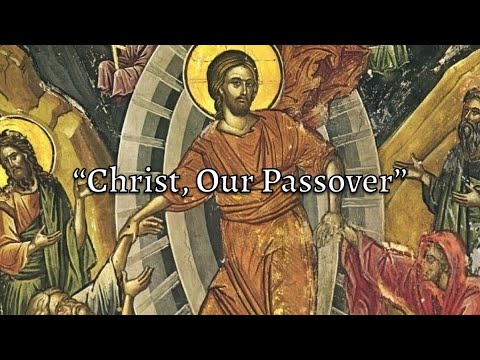
Christ Our Passover: Old Testament Type and New Testament Reality
 4:17
4:17
What the video says
The article from the Orthodox Study Bible explains that Passover, the central rite of Judaism commemorating the Hebrews' liberation from Egypt, becomes Christ our Passover through His saving work. Saint Paul declares Christ our Passover sacrificed for us, the Paschal Lamb offered once for all to reconcile us with God. At every Pascha the Church sings of Christ as the new, holy, mystical Pascha worthy of veneration.
Four typological details connect the Jewish Passover to Christ: the unblemished male lamb whose blood was smeared in the sign of the cross, the blood saving from death, the unbroken bones, and the passage through the Red Sea prefiguring baptism. Saint John Chrysostom marvels that if the shadow of the blood had such power in Egypt, the reality of Christ's blood saves souls, washing them more gleaming than gold. Sustained by this blood, believers journey daily toward the eternal promised kingdom.
Key moments
- Passover defined as central rite of Judaism based on liberation of Hebrews from Egypt; name comes from Lord passing over Hebrew homes and Hebrews passing over Red Sea.
- Passover celebrates God's steadfast love and freedom; throughout Old Testament it signifies God's rescue and forging of Israel; Christ becomes our Passover (Pascha) bringing liberation from sin, death, and devil.
- Saint Paul: "Christ our Passover was sacrificed for us. Therefore, let us keep the feast" (1 Cor 5:7-8); He is Paschal Lamb offered once for all (Heb 10:10-14) to reconcile us with God.
- At every Pascha the Church sings: "Today a sacred Pascha is revealed to us, a new and holy Pascha, a mystical Pascha, a Pascha worthy of veneration, a Pascha which is Christ the Redeemer."
- First typology: Passover lamb male without blemish, blood smeared on doorposts in sign of cross; Jesus male without blemish died on cross.
- Second: Blood of Passover lamb saved Hebrew firstborn from death; blood of Christ saves believers from eternal death. Third: Passover lamb had no bones broken; Jesus had no bones broken. Fourth: Hebrews escaped slavery through Red Sea; Christians pass from sin through waters of holy baptism, baptized into Christ's death and raised in likeness of His resurrection.
- Saint John Chrysostom: If the type of the blood had such power in Egypt, much more the reality; if death shuddered at the shadow, how much more would it dread the reality; the blood is salvation of souls, washing them more gleaming than gold.
- Sustained by the blood of Christ our Passover, we resume daily our journey to the eternal promised land, the promised kingdom to come.
The audio reading presents the article "Christ Our Passover" from the Orthodox Study Bible. The article defines Passover as the central rite of Judaism commemorating the Hebrews' liberation from Egypt, its name deriving from the Lord passing over Hebrew homes and the Hebrews passing over the Red Sea. Passover celebrates God's steadfast love and freedom, signifying God's rescue and forging of Israel throughout the Old Testament. Christ becomes our Passover, bringing liberation from sin, death, and the devil.
Saint Paul declares Christ "our Passover sacrificed for us" (1 Cor 5:7-8), the Paschal Lamb offered once for all to reconcile us with God (Heb 10:10-14). At every Pascha the Church sings of Christ as the new, holy, mystical Pascha worthy of veneration.
Four typological details connect the Old Testament Passover to Christ: the unblemished male lamb whose blood was smeared on doorposts in the sign of the cross; the blood saving the Hebrew firstborn from death; the lamb's unbroken bones; and the passage through the Red Sea prefiguring holy baptism, where Christians are baptized into Christ's death and raised in the likeness of His resurrection.
Saint John Chrysostom reflects that if the shadow of the blood had such power in Egypt, the reality of Christ's blood saves souls, washing them more gleaming than gold. Believers, sustained by this blood, journey daily toward the eternal promised kingdom.
Main points
- The article from the Orthodox Study Bible examines how the Old Testament Passover prefigures Christ's saving work.
- Saint Paul identifies Christ as "our Passover sacrificed for us" (1 Cor 5:7-8) and the Paschal Lamb offered once for all (Heb 10:10-14).
- Four typological parallels: unblemished male lamb, blood on doorposts in sign of cross, unbroken bones, Red Sea crossing as baptism prefiguration.
- Saint John Chrysostom contrasts the shadow of the Old Testament blood with the reality of Christ's blood that washes souls more gleaming than gold.
- Christians sustained by Christ's blood journey daily toward the eternal promised kingdom.