WeOrthodox
EN UA

Orthodox posts, videos and discussions

We follow Orthodox channels, communities and blogs across the web, summarise every post and video, and highlight the conversations with real substance.

radioimlemesou Instagram

Talk by Elder Justin Mamalou on Jacob's Well Shrine Available Online
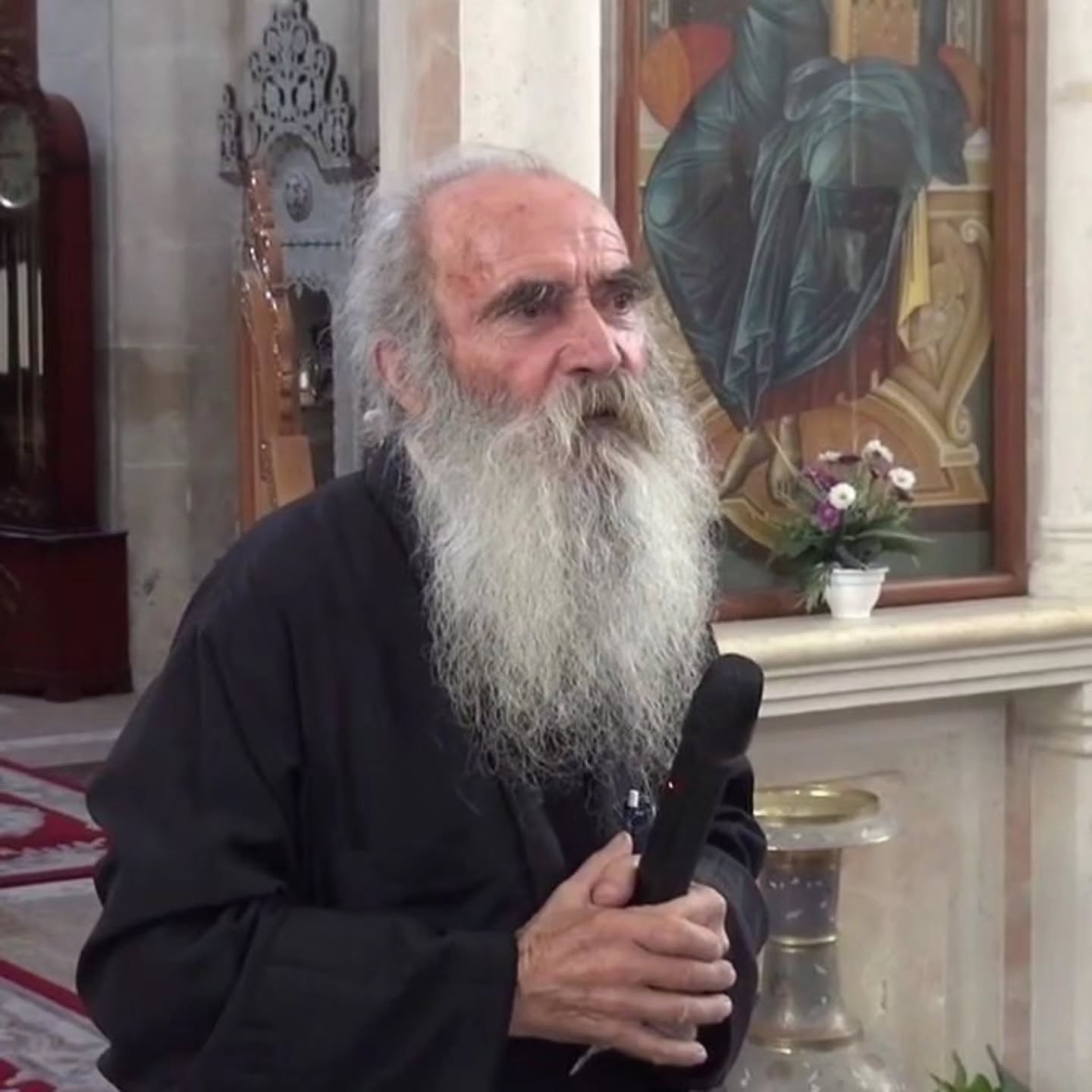
The post announces that a talk given by the blessed Elder Justin Mamalou, the Renovator of the Holy Shrine of Jacob's Well, is available for viewing on the Metropolis's YouTube channel. The talk took place at the Metropolis in November 2023. Elder Justin Mamalou is recognized for his role in the restoration and spiritual renewal of the Holy Shrine of Jacob's Well, a significant biblical site associated with the Samaritan woman's encounter with…

The post announces that a talk given by the blessed Elder Justin Mamalou, the Renovator of the Holy Shrine of Jacob's Well, is available for viewing on the Metropolis's YouTube channel. The talk took place at the Metropolis in November 2023. Elder Justin Mamalou is recognized for his role in the restoration and spiritual renewal of the Holy Shrine of Jacob's Well, a significant biblical site associated with the Samaritan woman's encounter with Christ (John 4:5-42).

The shrine, located near Nablus in the West Bank, has been a place of pilgrimage and veneration. The Elder's talk likely addresses the history, spiritual significance, and contemporary life of this holy site, as well as his personal ministry there. The Metropolis shares this recording to make the Elder's teaching accessible to a wider audience.

  • Talk by Elder Justin Mamalou, Renovator of Jacob's Well Shrine
  • Delivered at the Metropolis in November 2023
  • Available on the Metropolis YouTube channel
  • Elder Justin known for restoring the Holy Shrine of Jacob's Well
  • Shrine is biblical site of Christ's meeting with the Samaritan woman
Read more

Vigil for St Roman the Melodist at Holy Sophia in Thessaloniki

The post shares a fragment of an all-night vigil held in honor of St Roman the Melodist at the Church of Holy Sophia in Thessaloniki. The description is given in Romanian and Greek, naming the saint, the church and the city. The transcript of the recording contains sung lines, repeated throughout, that ask for light. The singer repeats the word 'luz', light, asking for it 'em nós', in us, and calls it 'a luz da alvorada', the light of dawn. The…

The post shares a fragment of an all-night vigil held in honor of St Roman the Melodist at the Church of Holy Sophia in Thessaloniki. The description is given in Romanian and Greek, naming the saint, the church and the city. The transcript of the recording contains sung lines, repeated throughout, that ask for light.

The singer repeats the word 'luz', light, asking for it 'em nós', in us, and calls it 'a luz da alvorada', the light of dawn. The lyrics also speak of 'essa imensidão de amarguras', this immensity of bitterness, and ask that the light lead the singer. There is no spoken teaching or narration in the transcript, only these repeated sung lines.

The recording therefore pairs the vigil setting with a chanted or sung text centered on the request for light amid bitterness.

Key moments

  1. The lyrics repeat the word 'luz', light, throughout.
  2. The singer asks for light 'em nós', in us.
  3. The light is called 'a luz da alvorada', the light of dawn.
  4. The singer mentions 'essa imensidão de amarguras', this immensity of bitterness, and asks the light to lead them.
Read more
Orthodox Life Instagram

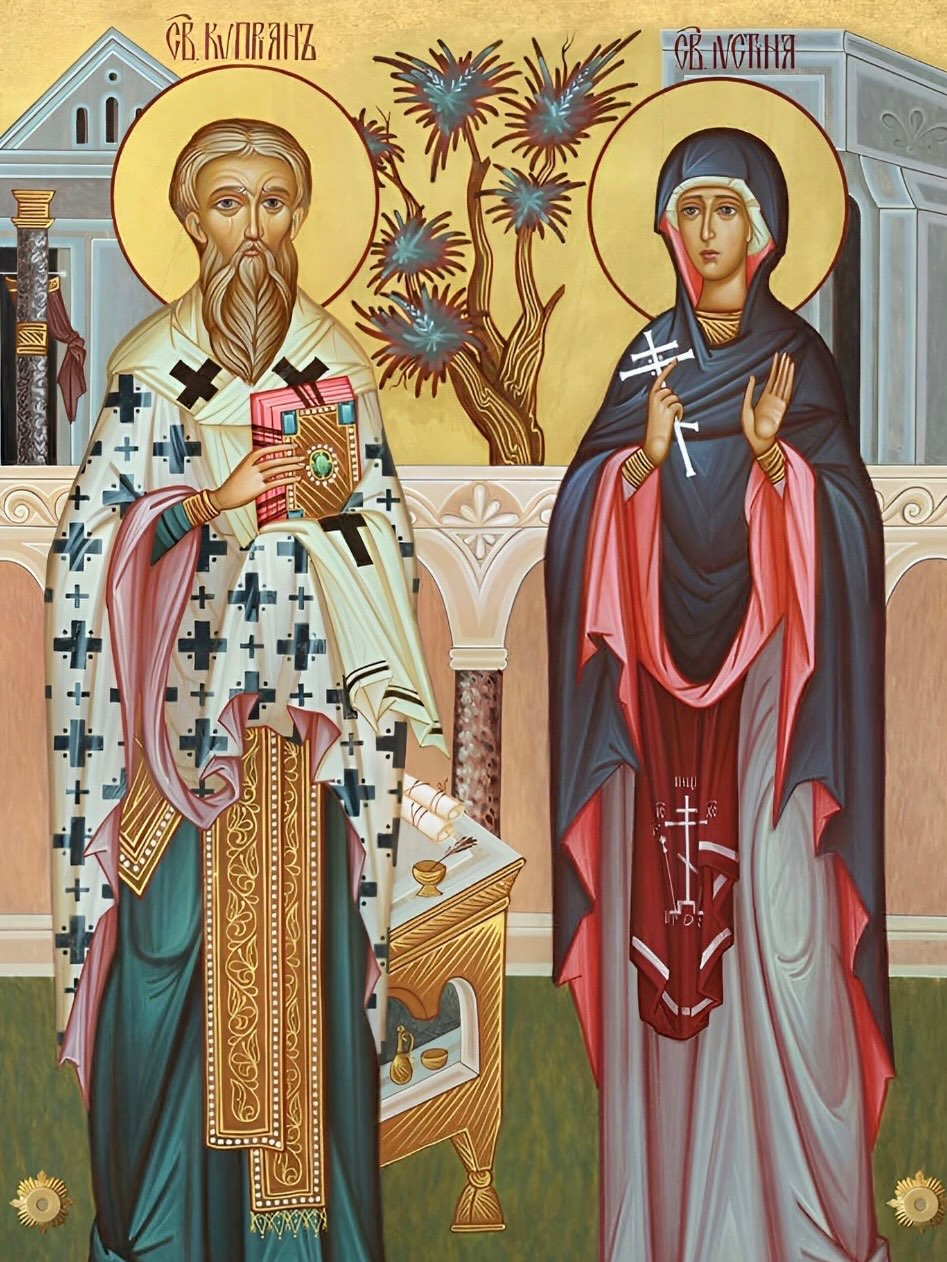
Saint Cyprian and Saint Justina: the sorcerer converted by a defeated demon

On October 2nd the Church commemorates the holy martyrs Cyprian and Justina, who suffered in Nicomedia during the persecutions under Emperor Diocletian. Before his conversion, Cyprian was a wealthy pagan sorcerer and philosopher in Antioch who dealt in dark magic and invoked demonic spirits. Justina was a devout Christian virgin who had converted her own pagan parents and dedicated her chastity to Christ. Their lives intersected when a wealthy…

On October 2nd the Church commemorates the holy martyrs Cyprian and Justina, who suffered in Nicomedia during the persecutions under Emperor Diocletian. Before his conversion, Cyprian was a wealthy pagan sorcerer and philosopher in Antioch who dealt in dark magic and invoked demonic spirits. Justina was a devout Christian virgin who had converted her own pagan parents and dedicated her chastity to Christ.

Their lives intersected when a wealthy pagan suitor, unable to win Justina's affections, hired Cyprian to use his magical arts to compromise her virtue and force her into marriage. Cyprian sent powerful demonic spirits to torment Justina, but she repelled every assault through fasting, intense prayer, and the sign of the Holy Cross.

After his demons were three times put to flight by the grace of Christ, Cyprian recognized the impotence of Satan's power. He repented, publicly burned his expensive magic books, and sought baptism from the local bishop. He later rose through the clergy to become a bishop, while Justina was ordained a deaconess and appointed abbess of a convent.

Under Diocletian both were arrested for their faith and tortured, including being thrown into a boiling cauldron, which they miraculously survived. They refused to sacrifice to pagan idols, so the authorities transferred them to Nicomedia, where the governor ordered their execution in 304 AD.

  • Cyprian was a wealthy pagan sorcerer in Antioch before his conversion; Justina was a Christian virgin who had converted her pagan parents.
  • A rejected suitor hired Cyprian to use magic against Justina, but she drove off his demons through fasting, prayer, and the sign of the Cross.
  • After his demons were three times defeated, Cyprian burned his magic books and was baptized by the local bishop.
  • Cyprian became a bishop; Justina became a deaconess and abbess of a convent.
  • Both were tortured under Diocletian, survived a boiling cauldron, and were executed in Nicomedia in 304 AD.
Read more
Saint Wisdom Instagram

Saint Silouan: Hatred Wounds You Twice, Prayer for Enemies Restores Peace

The video presents a teaching attributed to Saint Silouan on loving one's enemies, adapted for a short format. The core claim is that hatred toward another person destroys your own peace of soul, even when the hurt you suffered was real. The person who wronged you may have betrayed you or treated you unjustly, and the video does not deny that the injury happened. Instead, it describes what hatred does to the one who carries it: when hatred takes…

The video presents a teaching attributed to Saint Silouan on loving one's enemies, adapted for a short format. The core claim is that hatred toward another person destroys your own peace of soul, even when the hurt you suffered was real. The person who wronged you may have betrayed you or treated you unjustly, and the video does not deny that the injury happened.

Instead, it describes what hatred does to the one who carries it: when hatred takes root in your heart, the other person's sin wounds you a second time. The first wound came from the wrong itself; the second comes from holding hatred in response to it. The teaching states plainly that you cannot hate another person and still expect your own soul to remain at peace.

The remedy given is prayer for enemies. The video closes with the instruction to pray for your enemies, and peace will return. The post is tagged with #love, #orthodox, #saints, #bible, and #christianity, and is presented as an adapted excerpt from Saint Silouan's teaching rather than a full text. The video stays within this single teaching and does not expand into other topics.

Key moments

  1. You cannot hate another person and still expect your own soul to remain at peace.
  2. The other person may have genuinely hurt, betrayed, or treated you unjustly.
  3. When hatred takes root in your heart, their sin begins to wound you twice.
  4. Pray for your enemies and peace will return.
Read more
Fr.TEDTalks Instagram

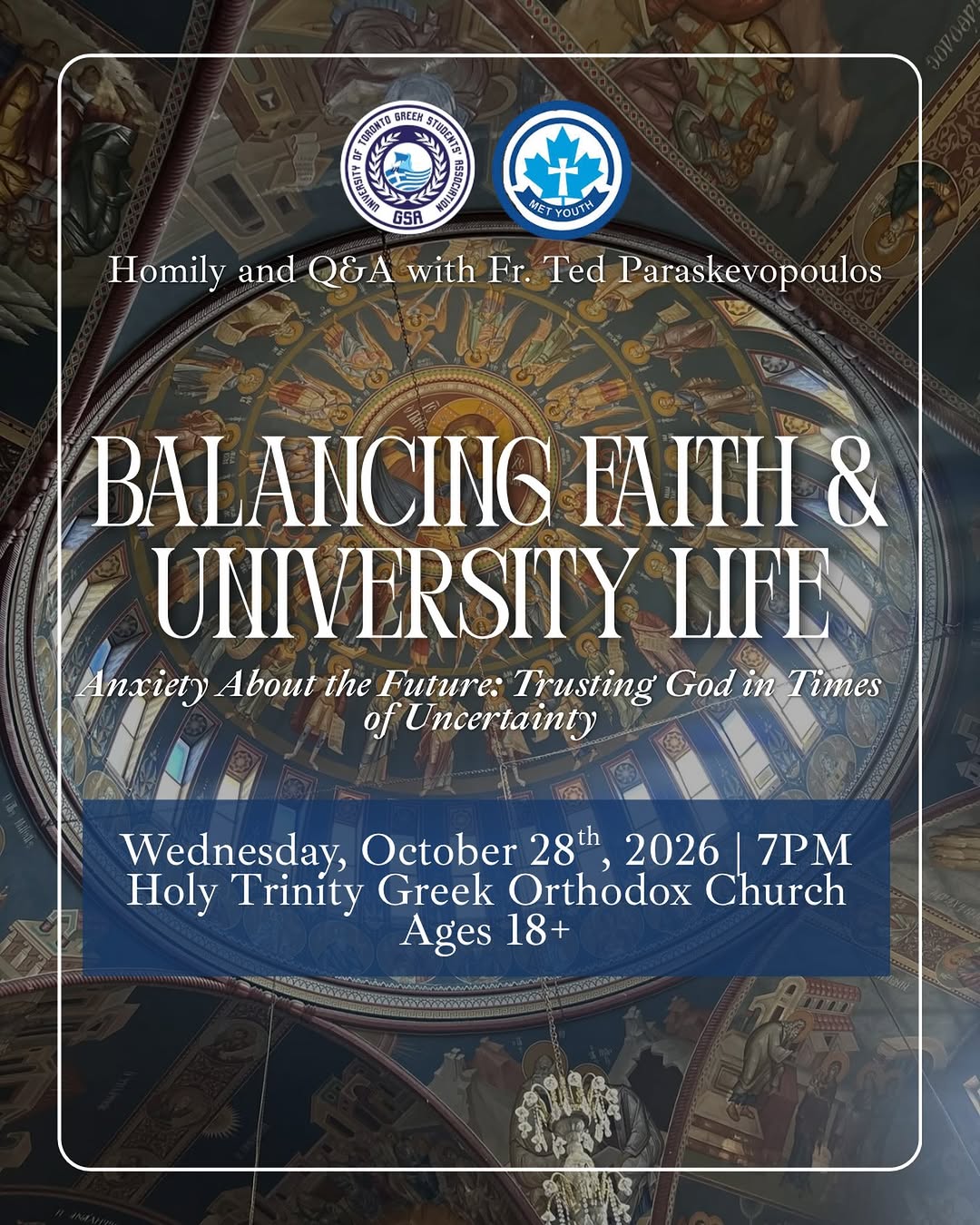
Fr. Ted Paraskevopoulos to speak on anxiety about the future at university youth event

A joint event with Met Youth is planned for university students and young adults on balancing faith with university life. Fr. Ted Paraskevopoulos will give a homily on dealing with anxiety about the future and trusting God in times of uncertainty. After the homily there will be an open Q&A where attendees can ask questions about faith, university, and everything in between. The evening begins with Paraklesis at 6:00 PM, followed by the main…

A joint event with Met Youth is planned for university students and young adults on balancing faith with university life. Fr. Ted Paraskevopoulos will give a homily on dealing with anxiety about the future and trusting God in times of uncertainty. After the homily there will be an open Q&A where attendees can ask questions about faith, university, and everything in between.

The evening begins with Paraklesis at 6:00 PM, followed by the main event at 7:00 PM at Holy Trinity Greek Orthodox Church. The event is for ages 18 and up, and all are welcome. Organizers ask attendees to bring their questions and invite a friend.

  • Collab event with Met Youth on navigating faith during university years
  • Fr. Ted Paraskevopoulos gives a homily on anxiety about the future and trusting God in uncertainty
  • Open Q&A on faith, university, and related questions
  • Paraklesis at 6:00 PM, event at 7:00 PM at Holy Trinity Greek Orthodox Church
  • Ages 18+, all are welcome; attendees are asked to bring questions and invite a friend
Read more
M mysteries_of_christendom Instagram

Saint Callistratus, Roman soldier martyred under Diocletian, converts 184 soldiers through miracles

The post recounts the martyrdom of Saint Callistratus, a Roman soldier serving under Emperor Diocletian during a period of intense persecution. Callistratus practiced Christianity in secret while fulfilling his military duties. His faith was discovered when fellow soldiers observed him praying. He was arrested and brought before officials who demanded he sacrifice to idols. Callistratus refused to renounce Christ. The authorities beat him…

The post recounts the martyrdom of Saint Callistratus, a Roman soldier serving under Emperor Diocletian during a period of intense persecution. Callistratus practiced Christianity in secret while fulfilling his military duties. His faith was discovered when fellow soldiers observed him praying.

He was arrested and brought before officials who demanded he sacrifice to idols. Callistratus refused to renounce Christ. The authorities beat him severely and forced him to swallow a vat of water. They then sewed him inside a sack and threw him into the sea.

The sack tore open, and two dolphins carried Callistratus safely to shore. Forty-nine soldiers witnessed this miracle, repented, and confessed faith in Christ. While imprisoned together, Callistratus taught the new converts.

The next day, all fifty men were bound and thrown into deep water. Their bonds broke miraculously, and they rose unharmed. A voice from heaven encouraged them, and a pagan idol fell and shattered. After witnessing these events, another 135 soldiers confessed Christ.

The commander ordered Callistratus and the original forty-nine converts cut into pieces. Years later, a church was built at the site of their martyrdom.

Key moments

  1. 0:00 Callistratus serves as a Roman soldier under Diocletian and practices Christianity in secret.
  2. 0:34 Officials discover his faith, he refuses to renounce Christ, is beaten and forced to swallow a vat of water.
  3. 1:07 He is sewn into a sack and thrown into the sea; the sack tears open and two dolphins carry him to shore.
  4. 1:07 Forty-nine soldiers witness the miracle, repent, and confess faith in Christ.
  5. 1:38 Callistratus teaches the converts in prison; the next day all fifty are bound and thrown into deep water.
  6. 2:14 Their bonds miraculously break, they rise unharmed, a heavenly voice encourages them, and a pagan idol falls and shatters.
  7. 2:14 Another 135 soldiers confess Christ after witnessing these events.
  8. 2:46 The commander orders Callistratus and the original 49 cut into pieces; years later a church is built on the martyrdom site.
Read more
Orthodox Sound YouTube

Elder Paisios of Sihla on Weariness, Falls, and Patience

Elder Paisios of Sihla on Weariness, Falls, and Patience 23:52

The video presents teachings of Elder Paisios of Sihla, drawn from A Little Corner of Paradise: The Life and Teachings of Elder Paisius of Sihla by Archimandrite Ioanichie (Bălan), translated by the Sisters of St. Nilus Skete. It addresses the weariness a soul feels from unanswered prayers, repeated falls, and slow spiritual progress, and the dangerous thought that there is no point in getting back up. Elder Paisios answered this weariness with…

The video presents teachings of Elder Paisios of Sihla, drawn from A Little Corner of Paradise: The Life and Teachings of Elder Paisius of Sihla by Archimandrite Ioanichie (Bălan), translated by the Sisters of St. Nilus Skete. It addresses the weariness a soul feels from unanswered prayers, repeated falls, and slow spiritual progress, and the dangerous thought that there is no point in getting back up.

Elder Paisios answered this weariness with patience: remaining with God while waiting, continuing to pray and hope when the heart is discouraged. He advised a small daily rule of prayer, comparing the struggle to drawing water from a deep well with a short rope and small bucket. He warned that pride can hide inside spiritual efforts when we compare our praying, fasting, or knowledge with others, and that real humility is found when we are contradicted, insulted, or forced to accept our weakness.

He told listeners not to demand to become a saint in one day, but to pray, go to confession and church, receive Communion with their spiritual father's guidance, and begin again and again. His final years of illness and near-blindness showed that he lived what he taught, praying the Psalter, praying to the Mother of God, and calling on Christ for mercy through pain and weakness.

From humility comes patience, and from patience comes love, shown in caring for the suffering, serving without recognition, forgiving, and refusing to condemn. The remembrance of death restrains sin and helps one live deliberately. The video closes with his frequent farewell, 'May we meet one another at the door of paradise,' and a call to do what depends on us today and entrust the rest to God's mercy.

Key moments

  1. 0:00 The soul becomes tired not from unbelief but from carrying too much, and the dangerous thought is that there is no point in getting back up.
  2. 1:05 Elder Paisios constantly exhorted patience: in temptations, with other people, with ourselves, and while waiting for the grace of God.
  3. 2:07 Prayer is a gift from God; establish a small daily rule, comparing the struggle to drawing water from a deep well with a short rope and small bucket.
  4. 4:44 Pride can appear inside spiritual efforts when we compare our praying, fasting, or knowledge with others; real humility is discovered when we are contradicted, insulted, or forced to accept weakness.
  5. 6:21 Do not demand to become a saint in one day; pray, go to confession and church, receive Communion with your spiritual father's guidance, and begin again and again.
  6. 9:30 In his final years Elder Paisios suffered illness and near-blindness, yet continued to pray the Psalter, pray to the Mother of God, and call on Christ for mercy, living the patience he had taught.
  7. 13:10 From humility comes patience, and from patience comes love, shown in caring for the suffering, serving without recognition, forgiving, and refusing to condemn.
  8. 17:48 The remembrance of death restrains sin and helps us live deliberately; Elder Paisios' farewell was, 'May we meet one another at the door of paradise.'
Timothy Instagram discussion

Real Presence Requires Actual Body and Blood, Speaker Argues

1:44

The speaker responds to an objection that believing the Eucharist literally becomes Christ's body and blood is a "big no-no" and potential idolatry. The objector claims to affirm a real presence without a molecular change. The speaker counters that defining real presence apart from Christ's actual body and blood simply redefines the Eucharist. He cites Jesus's statement "this is my body" and the discourse in John 6, where Christ uses a Greek…

The speaker responds to an objection that believing the Eucharist literally becomes Christ's body and blood is a "big no-no" and potential idolatry. The objector claims to affirm a real presence without a molecular change. The speaker counters that defining real presence apart from Christ's actual body and blood simply redefines the Eucharist.

He cites Jesus's statement "this is my body" and the discourse in John 6, where Christ uses a Greek verb meaning "gnaw" or "chew" and allows disciples to walk away rather than clarify a symbolic meaning. The speaker references Saint Paul's use of "koinonia," which indicates participation in the body and blood of Christ. He explains that the term "anamnesis," translated as remembrance, is biblical and liturgical memorial language, not merely mentally recalling something absent.

Historical evidence from Saint Ignatius writing around 107 AD confirms the early church confessed the Eucharist as the flesh of Jesus Christ, noting that heretics do not confess this. The speaker states there was no major challenge to this historic view until Berengar of Tours in the 11th century. The speaker concludes that claiming the real presence while denying Christ's actual body and blood is a contradiction dressed as a compromise and has never been Christian doctrine.

Key moments

  1. The transcript opens with an objection that believing the Eucharist literally becomes Christ's body and blood is a "big no-no" and potential idolatry, while the objector claims to believe in a real presence without a molecular change.
  2. The speaker responds that defining real presence apart from Christ's actual body and blood simply redefines the Eucharist.
  3. The speaker cites Jesus's statement "this is my body" and John 6, where Jesus uses a Greek verb meaning "gnaw" or "chew" and lets disciples walk away rather than clarify a symbolic meaning.
  4. The speaker references Saint Paul's term "koinonia," meaning participation in the body and blood of Christ.
  5. The speaker explains the word "anamnesis" (remembrance) is biblical, liturgical memorial language, not merely mentally recalling something absent.
  6. The speaker cites Saint Ignatius writing around 107 AD that heretics do not confess the Eucharist to be the flesh of Jesus Christ.
  7. The speaker notes there was no major challenge to this historic view until Berengar of Tours in the 11th century.
  8. The speaker concludes that claiming the real presence while denying Christ's actual body and blood is a contradiction dressed as a compromise and has never been Christian doctrine.
16 opinions in the discussion Also the verse right after, John 6:60, literally has the disciples calling it "a hard teaching" and questioning how anyone could accept it. I don't see how he could've been speaking… Read the discussion
Orthodox Health Instagram

Saying 'You Got Me' Without an Asterisk: Humility After a Loss

0:45

The speaker, drawing on Brazilian jiu-jitsu, says the hardest sentence to say is 'you got me', with no footnote, asterisk, or amendment to the official record. What matters is not the loss itself but what happens immediately after it, because the ego is fast. Within half a second of tapping out, he says, the defensive attorney shows up with excuses: the opponent was younger, trained more, or one's own exhaustion or injury explains the result.…

The speaker, drawing on Brazilian jiu-jitsu, says the hardest sentence to say is 'you got me', with no footnote, asterisk, or amendment to the official record. What matters is not the loss itself but what happens immediately after it, because the ego is fast. Within half a second of tapping out, he says, the defensive attorney shows up with excuses: the opponent was younger, trained more, or one's own exhaustion or injury explains the result.

The speaker admits these explanations can be completely legitimate. Injury, a big weight difference, or exhaustion are real, and humility does not require pretending the circumstances were irrelevant. The problem is the urgency with which the explanation appears the moment reality hands us an outcome we do not like.

He distinguishes between understanding context and using context to protect the version of ourselves we would rather keep intact. Sometimes you lost. Sometimes you were wrong. Sometimes somebody else was simply better that day. Being able to say that without an asterisk, he argues, may tell us more about our spiritual condition than the loss itself.

Humility, in his framing, gives us enough freedom to receive what is true without immediately negotiating with it. The post promotes Episode 80 of the Orthodox Health Podcast, titled 'Why You Need to Be Bad at Something: The Humility of Being a Beginner'.

Key moments

  1. The hardest sentence is 'you got me', with no footnote, asterisk, or amendment to the official record.
  2. The interesting part is not that you lost but what happens immediately after you lose.
  3. The ego is fast: within half a second of tapping, the defensive attorney shows up with excuses like 'he's younger', 'I'm exhausted', or 'my shoulder's been bothering me'.
  4. Sometimes the explanation is completely legitimate: injury, a big weight difference, or exhaustion are real.
  5. It is revealing how badly we want the explanation available instead of just saying 'you got me'.
Read more
Kyle YouTube

Why Orthodox Christians Ask the Saints to Pray for Them

Why Orthodox Christians Ask the Saints to Pray for Them 11:18

This video offers a defense of the Orthodox practice of asking the saints for their intercession, responding to common Protestant objections that it amounts to worship or detracts from Christ. The speaker argues that 'prayer' in this context simply means a request: asking a saint to pray for us is no different from asking a fellow Christian on earth to do the same. He grounds the practice in Scripture, citing the powerful intercessions of…

This video offers a defense of the Orthodox practice of asking the saints for their intercession, responding to common Protestant objections that it amounts to worship or detracts from Christ. The speaker argues that 'prayer' in this context simply means a request: asking a saint to pray for us is no different from asking a fellow Christian on earth to do the same.

He grounds the practice in Scripture, citing the powerful intercessions of Abraham, Moses, and Mary, and pointing to Revelation, where the saints in heaven actively pray for those on earth while incense is offered. Because the saints are partakers of the divine nature and dwell with Christ, who is the God of the living and not the dead, their prayers are understood as especially efficacious, with the Theotokos holding the highest place of honor.

The video also addresses difficult phrases from Orthodox hymnography, explaining that calling Mary the 'gate of salvation' refers to salvation entering the world through her womb, and that 'Most holy Theotokos, save us' means 'save us through your prayers'—not that Mary is a savior in Christ's place. Historical evidence is presented as well: ancient liturgies of St. Mark, St. John Chrysostom, and St. Basil, along with the account of Polycarp's martyrdom, show that belief in the saints' intercession and veneration of relics go back to the earliest Church.

The speaker notes that organized opposition to the practice arose only with the Protestant Reformation, arguing that such a late break implies a denial of the Holy Spirit's guidance of the Church through the centuries. The overall thrust is that venerating the saints does not diminish God's glory but recognizes His glory at work in His people, and that salvation is communal rather than purely individual.

Key moments

  1. 0:02 Intercession is biblical: Abraham's prayer saved Lot, Moses' prayer saved Israel, and Mary's prayer caused Jesus' first miracle.
  2. 0:32 Prayer means requesting; we ask saints to pray for us just as we ask people on earth, and Revelation 4-5 shows the saints alive in heaven with incense, which Orthodox worship preserves.
  3. 1:03 Psalm 82 and 1 Corinthians 6:2-3 show the saints are part of the divine council who will judge the world, meaning they can know our prayers as partakers of the divine nature (2 Peter).
  4. 1:34 Venerating saints does not take from God's glory; it recognizes God's glory working in His people, since God has always worked through people.
  5. 2:38 The saints are alive in heaven with Christ, as shown in the parable of Lazarus, Daniel 3, and Luke 20 ('God of the living, not the dead'); Mary's intercession is powerful and asking her to pray is not worship.
  6. 4:43 Saying 'save us through your prayers' does not make saints our savior; salvation is communal, as 1 Timothy says one can 'save both yourself and your hearers,' and Sirach glorifies Elijah without dialectic with God.
  7. 6:16 Akathist hymns like 'rejoice, gate of salvation' and 'Most holy Theotokos, save us' mean salvation entered the world through Mary's womb, and 'save us' means 'through your prayers'; no Orthodox person believes Mary is our savior.
  8. 8:53 Ancient liturgies (St. Mark, St. John Chrysostom, St. Basil) and the martyrdom of Polycarp show relics presuppose the saints' intercession; the first critique of this practice came only with the Protestant Reformation in the 1600s, which would deny the Holy Spirit guiding the church.
Read more
Orthodox Life Instagram

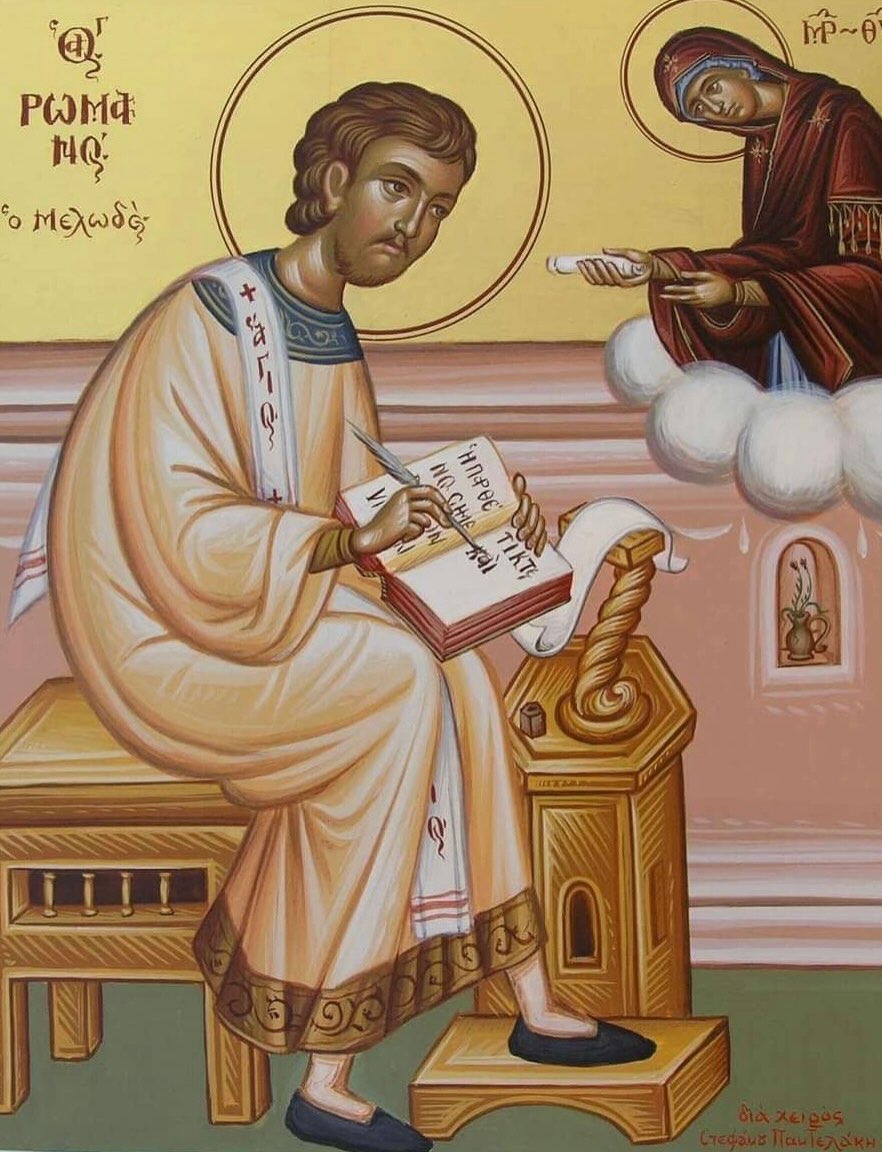
Saint Romanos the Melodist: From a Scroll Vision to a Thousand Hymns

The post commemorates Saint Romanos the Melodist, whose feast falls on October 1st. Romanos lived in the 6th century during the height of the Byzantine Empire and is counted among the greatest hymnographers of the Eastern Orthodox Church. Born in Syria, he served as a deacon in Beirut before moving to Constantinople during the reign of Emperor Justinian I. Church tradition holds that Romanos was not initially a gifted singer or writer, and his…

The post commemorates Saint Romanos the Melodist, whose feast falls on October 1st. Romanos lived in the 6th century during the height of the Byzantine Empire and is counted among the greatest hymnographers of the Eastern Orthodox Church. Born in Syria, he served as a deacon in Beirut before moving to Constantinople during the reign of Emperor Justinian I. Church tradition holds that Romanos was not initially a gifted singer or writer, and his weakness caused him embarrassment among his peers.

On Christmas Eve he received a vision of the Virgin Mary, who commanded him to swallow a scroll. After doing so, he was blessed with musical talent and a beautiful voice, and he stepped onto the ambo to chant his famous hymn on the Nativity. Romanos is credited with pioneering and perfecting the kontakion, a form of chanted verse sermon and a multi-stanza poem set to music.

His hymns combined biblical narratives with vivid dialogue, theological insight, and dramatic tension. They also served an educational purpose, explaining theological concepts to ordinary people in an accessible and emotionally stirring way. He is said to have composed over one thousand hymns, of which about eighty kontakia survive today.

His subjects included the lives of saints, major feast days, the Passion of Christ, and the Last Judgment. His poetic skill earned him the title of the 'Pindar of rhythmic poetry.' The saint reposed in 556 AD.

  • Saint Romanos the Melodist, a 6th-century deacon born in Syria, served in Beirut before moving to Constantinople under Emperor Justinian I.
  • Tradition says the Virgin Mary appeared to him on Christmas Eve and commanded him to swallow a scroll, after which he received a gift for hymnody.
  • He pioneered and perfected the kontakion, a chanted verse sermon that taught theology to the common people.
  • He is said to have written over one thousand hymns; about eighty kontakia survive, covering feast days, the lives of saints, the Passion, and the Last Judgment.
  • He was called the 'Pindar of rhythmic poetry' and reposed in 556 AD.
Read more
Orthodox Life Instagram

Saint Ananias of Damascus, Apostle of the Seventy, who baptized Paul

Saint Ananias is commemorated on October 1st. He was numbered among the Seventy Apostles sent by Christ and served as the first Bishop of Damascus, where he led the nascent Christian community during a period of intense hostility and persecution. His name means "God is gracious." According to Acts 9, after Saul of Tarsus was blinded on the road to Damascus, the Lord appeared to Ananias in a vision and commanded him to find Saul at the house of…

Saint Ananias is commemorated on October 1st. He was numbered among the Seventy Apostles sent by Christ and served as the first Bishop of Damascus, where he led the nascent Christian community during a period of intense hostility and persecution. His name means "God is gracious." According to Acts 9, after Saul of Tarsus was blinded on the road to Damascus, the Lord appeared to Ananias in a vision and commanded him to find Saul at the house of Judas on Straight Street.

Despite his initial hesitation and fear of Saul's reputation as a notorious persecutor, Ananias obeyed the divine command, laid hands on Saul, and restored his physical and spiritual sight. Ananias declared that God had chosen Saul to bear Christ's name before Gentiles and kings, and baptized him, establishing the foundational step for the man who would become the Apostle Paul.

Following this event, Ananias continued to boldly and openly preach the faith to both the local Jewish populations and pagans in Damascus, refusing to let imminent dangers silence his testimony. Church tradition holds that he preached the gospel with miracles and converted many. The prefect Lycian ordered Ananias arrested and tortured for refusing to sacrifice to pagan idols.

Ananias completed his earthly journey through martyrdom when torturers dragged him outside the city and stoned him to death in 60 AD at Eleutheropolis. Echoing the forgiveness of Christ, the saint prayed for his executioners as he died. His sacred relics were later returned to Damascus and eventually transferred to Constantinople.

Key moments

  1. 0:00 Saint Ananias, also known as Ananias of Damascus, was a first-century Christian disciple and one of the seventy apostles sent by Jesus Christ to spread the gospel.
  2. 0:37 Acts 9 records that Ananias, residing in Damascus, received a divine vision commanding him to seek out Saul of Tarsus, a persecutor blinded on the road to Damascus.
  3. 1:07 Ananias obeyed, went to the house of Judas on Straight Street, laid hands on Saul, restored his sight, declared God had chosen him to bear his name before Gentiles and kings, and baptized him.
  4. 1:07 Saul subsequently became the Apostle Paul, one of the most influential figures in Christian history.
  5. 1:43 Church tradition holds that Ananias became the first bishop of Damascus, preached the gospel, performed miracles, and converted many.
  6. 1:43 Lycian ordered Ananias arrested and tortured for refusing to sacrifice to pagan idols.
  7. 1:43 Ananias was martyred by stoning outside the city walls in 60 AD.
Read more
Lives of the Saints 🙏 Instagram

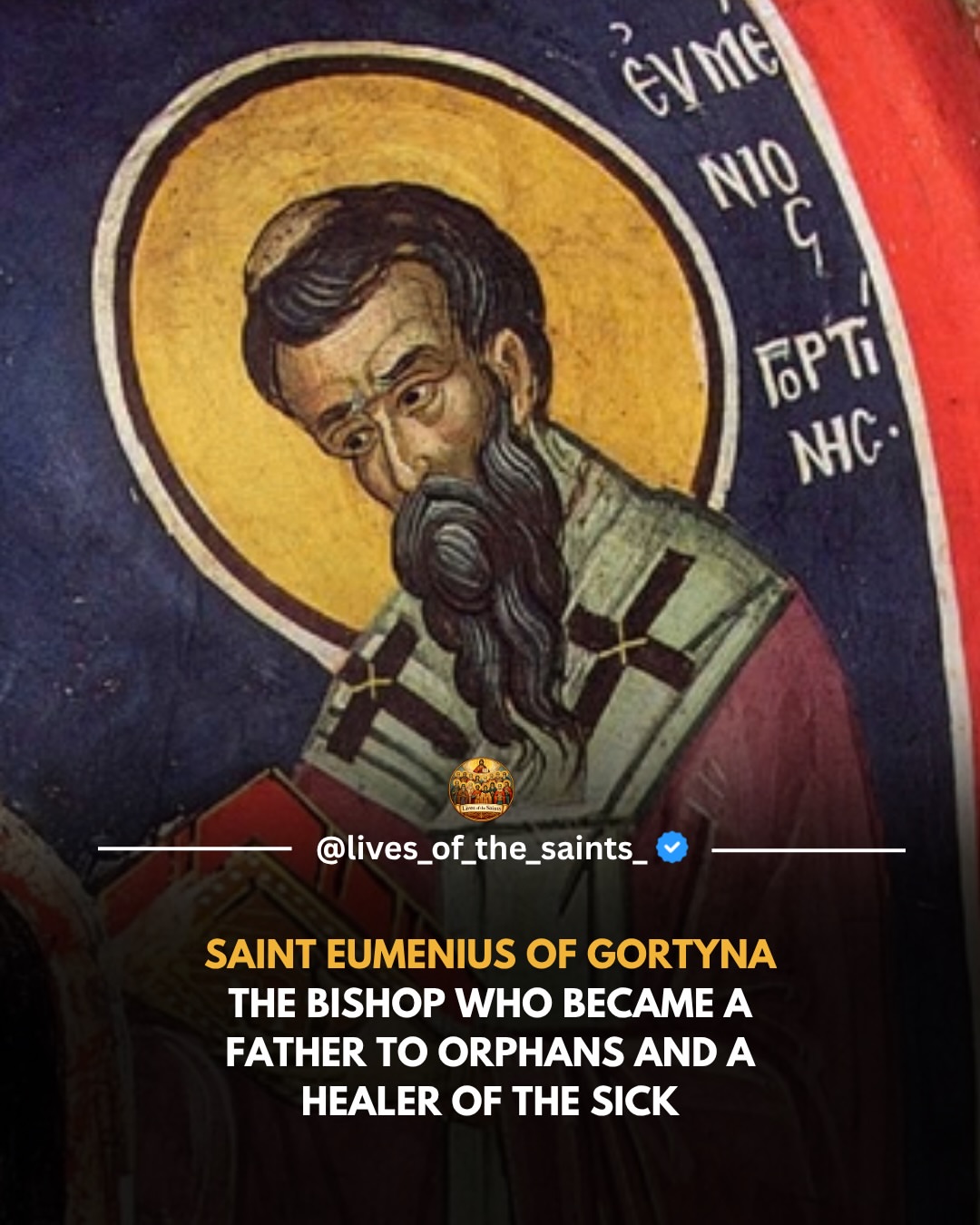
Saint Eumenius of Gortyna: bishop, healer, and miracle-worker of the 7th century

The post recounts the life of Saint Eumenius of Gortyna, a seventh-century bishop of Crete. From youth he followed Christ with all his heart. He freed himself from two heavy burdens: the burden of wealth and the burden of the passions. He gave away all his possessions to the poor and needy, and he disciplined his body through great fasting. First he healed his own soul, and then by the grace of God he began bringing healing to others. Filled…

The post recounts the life of Saint Eumenius of Gortyna, a seventh-century bishop of Crete. From youth he followed Christ with all his heart. He freed himself from two heavy burdens: the burden of wealth and the burden of the passions. He gave away all his possessions to the poor and needy, and he disciplined his body through great fasting.

First he healed his own soul, and then by the grace of God he began bringing healing to others. Filled with the Holy Spirit, he shone with a light that could not be hidden. As Bishop of Gortyna he guided the flock of Christ like a good shepherd.

He was a father to orphans, wealth to the poor, comfort to the sorrowful, healer of the sick, and a wonderful miracle-worker. Through prayer he worked many miracles. He destroyed a dangerous serpent, cast out demons, healed the sick, and helped people not only in his own land but also in Rome and the Thebaid. In the Thebaid, during a time of drought, he prayed and received rain from God.

There he completed his earthly life and passed into the eternal dwellings of his Lord. The post concludes that he reminds us when a person gives everything to Christ, his life becomes light, healing, and mercy for others.

  • Lived in the 7th century as Bishop of Gortyna in Crete
  • Gave away all possessions to the poor and practiced great fasting
  • Performed miracles including destroying a serpent, casting out demons, and healing the sick
  • Ministered beyond Crete in Rome and the Thebaid
  • Prayed for rain during a drought in the Thebaid and died there
Read more
Lives of the Saints 🙏 Instagram

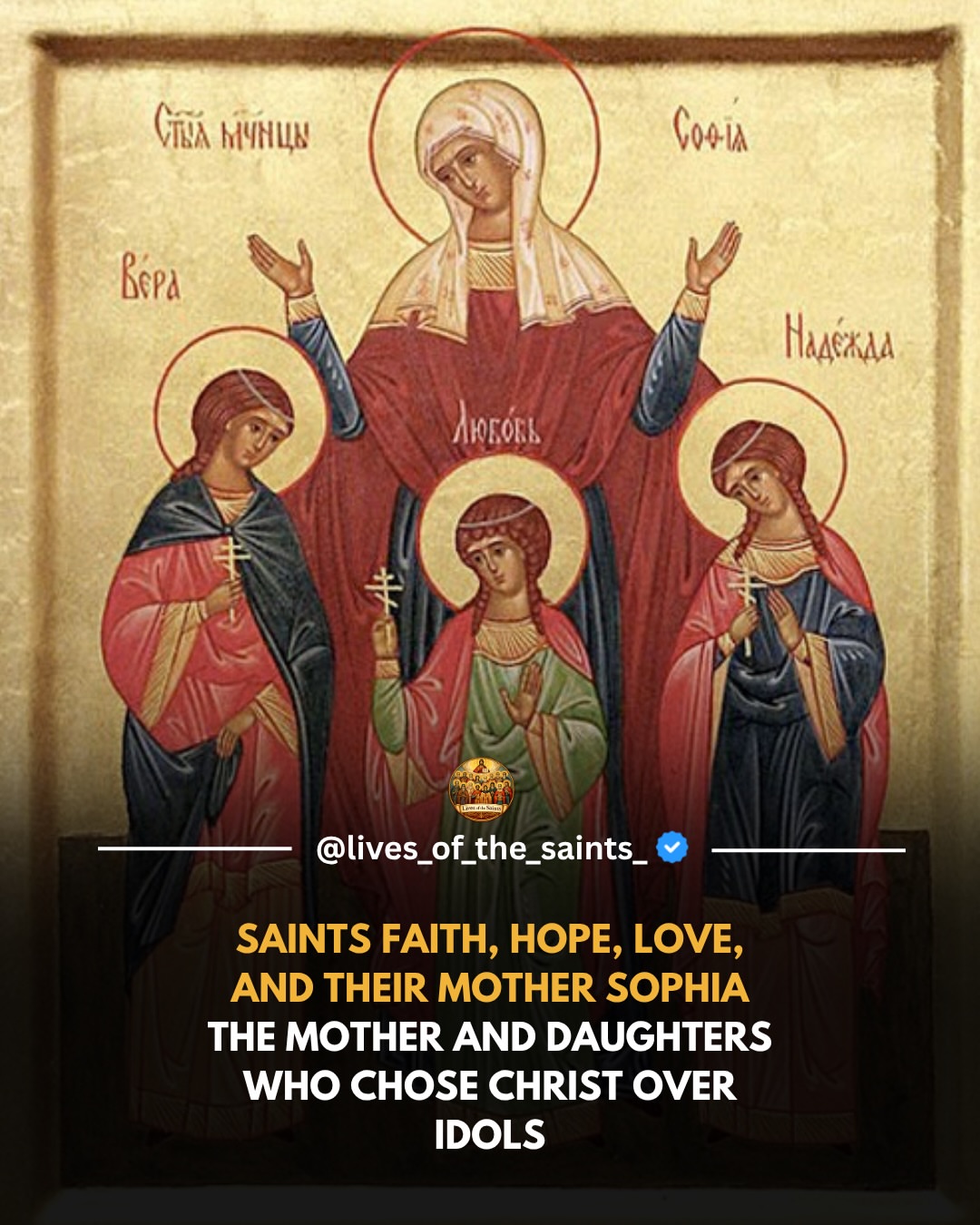
Saint Sophia and Her Daughters Faith, Hope, Love Martyred Under Hadrian

The post recounts the martyrdom of Saint Sophia and her three daughters in Rome during the reign of Emperor Hadrian. Sophia, whose name means wisdom, was a widow who raised her daughters in the Christian faith. At the time of their arrest, Faith was twelve, Hope was ten, and Love was nine. Brought before the emperor, the mother and daughters held hands and confessed Christ, refusing to sacrifice to the idol Artemis. Before the torture, Sophia…

The post recounts the martyrdom of Saint Sophia and her three daughters in Rome during the reign of Emperor Hadrian. Sophia, whose name means wisdom, was a widow who raised her daughters in the Christian faith. At the time of their arrest, Faith was twelve, Hope was ten, and Love was nine.

Brought before the emperor, the mother and daughters held hands and confessed Christ, refusing to sacrifice to the idol Artemis. Before the torture, Sophia strengthened her daughters by reminding them that their heavenly Bridegroom, Jesus Christ, would grant them eternal life and clothe them in incorruption. The daughters were tortured and killed one by one: first Faith, then Hope, then Love.

Sophia retrieved their bodies, buried them outside the city with honor, and remained at their grave for three days and three nights in prayer. After that, she peacefully gave up her soul and joined her daughters in the heavenly Kingdom. The account concludes with the observation that even children can bear the courage of saints when their hearts belong to Christ.

  • Saint Sophia lived in Rome under Emperor Hadrian and raised her daughters Faith, Hope, and Love as Christians.
  • The daughters were twelve, ten, and nine years old at the time of their martyrdom.
  • They confessed Christ before the emperor and refused to sacrifice to Artemis.
  • Sophia encouraged them before their torture, and they were killed in sequence: Faith, Hope, then Love.
  • Sophia buried them, prayed at their grave for three days and nights, then died peacefully.
Read more

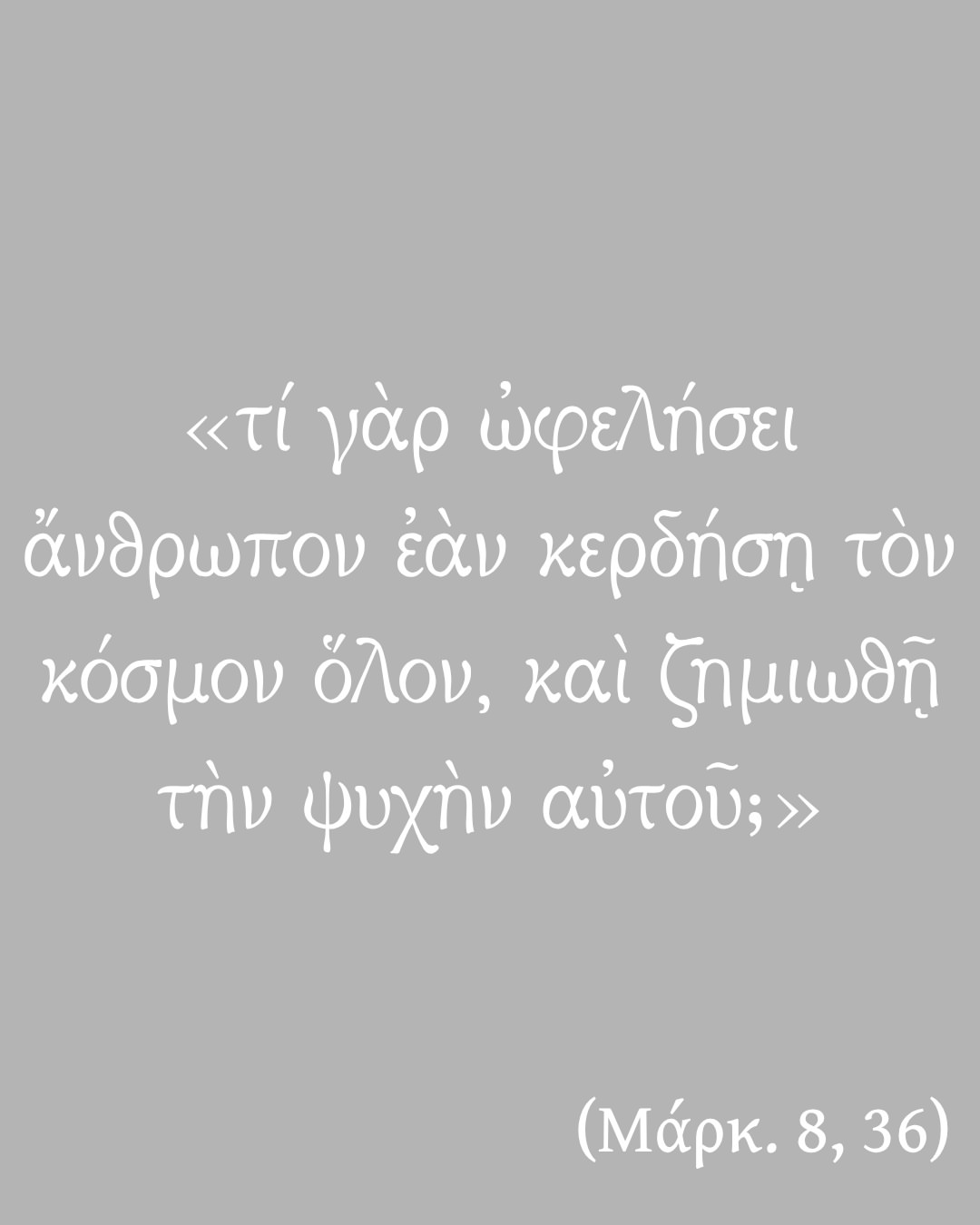
What profit if you gain the world but lose your soul?

The post presents Christ's question from Mark 8:36 about the value of gaining the whole material world while losing one's soul. The verse states that the soul, being spiritual and eternal, cannot be compared to any material good of this perishable world. The brief interpretation accompanying the image comes from the book "The New Testament with Brief Interpretation" by the late Professor Panagiotis N. Trembelas of the Theological School of the…

The post presents Christ's question from Mark 8:36 about the value of gaining the whole material world while losing one's soul. The verse states that the soul, being spiritual and eternal, cannot be compared to any material good of this perishable world. The brief interpretation accompanying the image comes from the book "The New Testament with Brief Interpretation" by the late Professor Panagiotis N. Trembelas of the Theological School of the University of Athens and the Brotherhood of Theologians "O Soter," 11th edition published May 2025 in Athens.

  • Christ's question from Mark 8:36 on worldly gain versus the soul
  • The soul is spiritual and eternal, not comparable to material goods
  • Interpretation sourced from Trembelas and the "O Soter" brotherhood
  • Book edition: 11th, May 2025, Athens
Read more
Lives of the Saints 🙏 Instagram

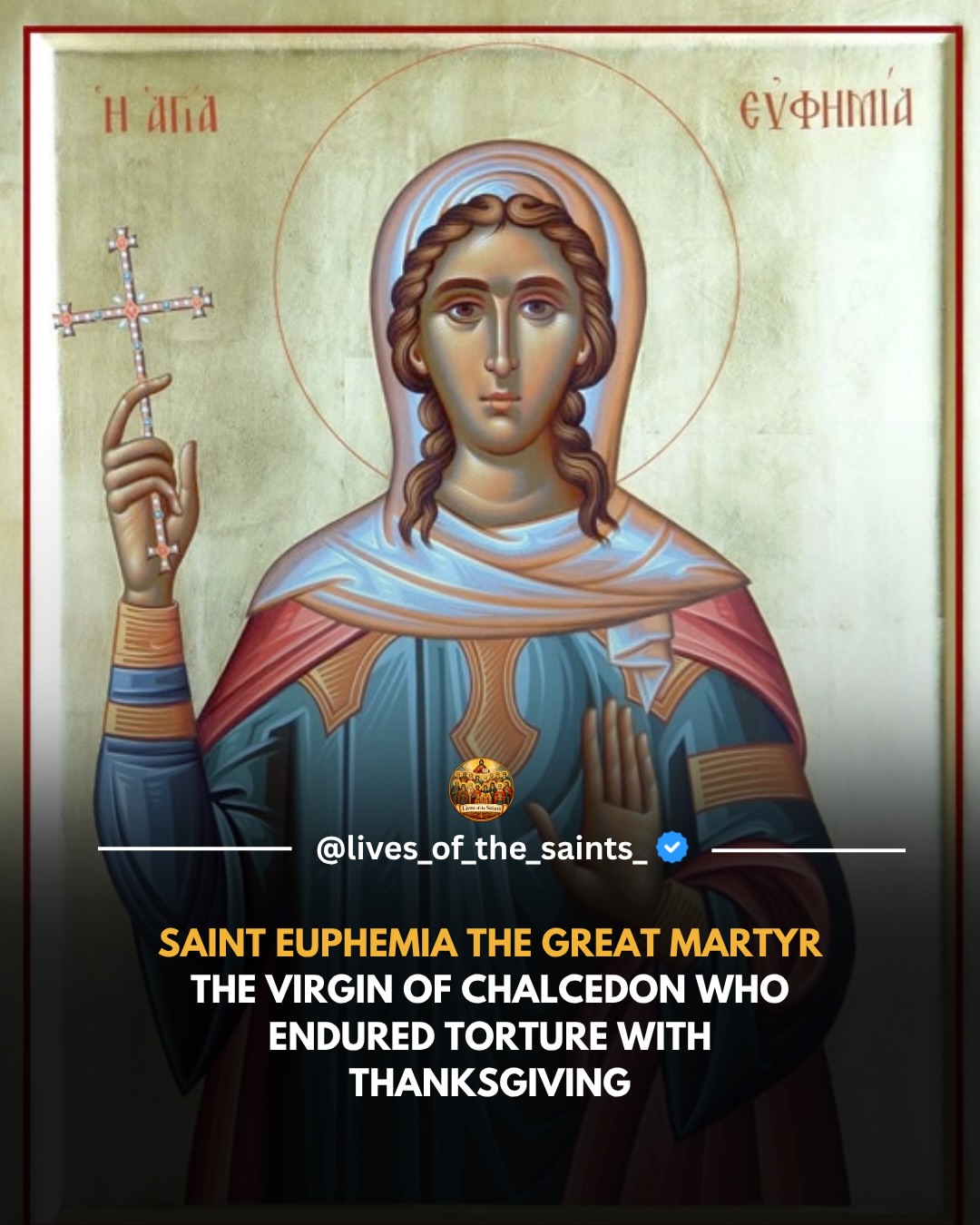
Saint Euphemia's martyrdom under Governor Priscus in 304

The post recounts the life and martyrdom of Saint Euphemia, born in Chalcedon to the senator Philophron and his wife Theodorisia. She is described as beautiful in body and soul, filled with purity, courage, and love for Christ. When the governor Priscus commanded a pagan sacrifice to Ares, forty-nine Christians hid to avoid idolatry. They were discovered and brought before Priscus. Asked why they refused, they answered that earthly authority…

The post recounts the life and martyrdom of Saint Euphemia, born in Chalcedon to the senator Philophron and his wife Theodorisia. She is described as beautiful in body and soul, filled with purity, courage, and love for Christ. When the governor Priscus commanded a pagan sacrifice to Ares, forty-nine Christians hid to avoid idolatry.

They were discovered and brought before Priscus. Asked why they refused, they answered that earthly authority must be obeyed only when it does not contradict the heavenly God. For nineteen days they were tortured daily. On the twentieth day Priscus separated Euphemia from the others and tried to flatter her because of her beauty, hoping to turn her from Christ.

She remained firm. She was placed on a torture wheel, but an angel of God appeared and broke the wheel. She was thrown into a fiery furnace and remained unharmed by God's power. Seeing this, two soldiers, Victor and Sosthenes, believed in Christ and were martyred.

Euphemia was then cast into a pit filled with water and poisonous filth; she made the sign of the Cross and was untouched. Finally she was thrown before wild beasts. She prayed with thanksgiving and gave her soul into God's hands. The post states she suffered for Christ in the year 304 and entered eternal joy.

It concludes that she reminds believers that purity is not weakness and that a soul united to Christ can face torture, fire, beasts, and death with peace.

  • Born in Chalcedon to Philophron and Theodorisia
  • Refused pagan sacrifice with forty-nine other Christians
  • Endured nineteen days of torture and further torments
  • Miraculously preserved from wheel, furnace, pit, and beasts
  • Martyred in 304; two soldiers converted and died with her
Read more
CHRISTIANITY UNITED Instagram

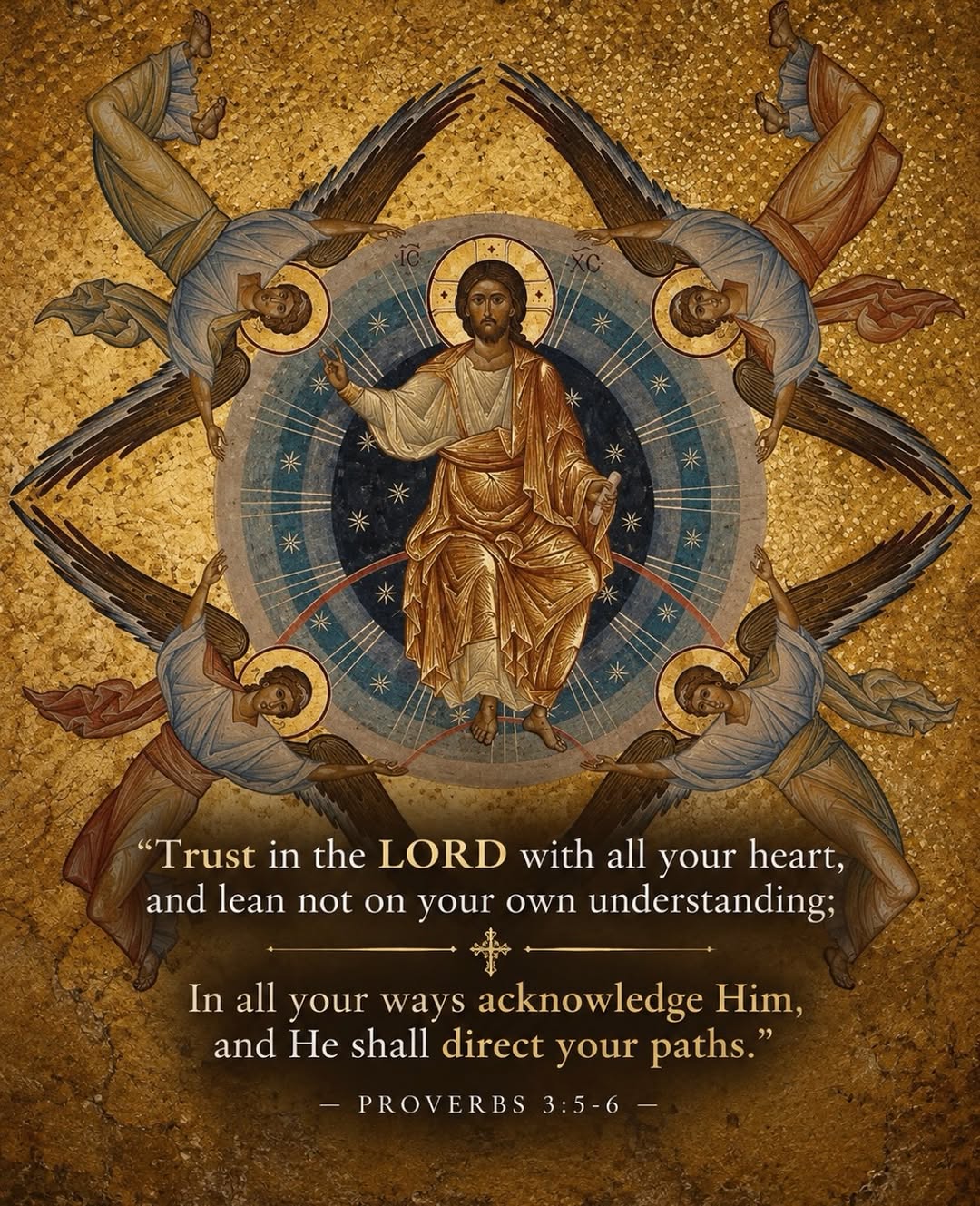
Trusting God When Life Doesn't Make Sense

The post addresses seasons when life does not make sense, we pray for one thing and something completely different happens, a door we were sure would open suddenly closes, plans fall apart, people leave, and we find ourselves somewhere we never expected to be, wondering what God is doing. The author observes that trusting God is easy when everything is going according to our plans, but trust becomes real faith when a person can still say, "Lord,…

The post addresses seasons when life does not make sense, we pray for one thing and something completely different happens, a door we were sure would open suddenly closes, plans fall apart, people leave, and we find ourselves somewhere we never expected to be, wondering what God is doing. The author observes that trusting God is easy when everything is going according to our plans, but trust becomes real faith when a person can still say, "Lord, I don't understand this, but I trust You," when nothing seems clear.

Proverbs is cited as a reminder not to depend completely on one's own understanding, because we see only what is in front of us while God sees the whole road. That does not mean we stop thinking, planning, or making decisions; it means we bring those decisions before God through prayer and remain willing to accept that His direction may be different from what we originally wanted.

The author notes that sometimes we understand why God allowed something years later, and sometimes we may never understand it in this life. But our peace does not have to come from having every answer; our peace can come from knowing who is leading us. The practical counsel is to pray, do what is right, take the next step we can see, and when we cannot see what comes after that, trust God with the rest.

  • Trust becomes faith when we say "Lord, I don't understand this, but I trust You" despite confusion
  • Proverbs warns against depending completely on our own understanding
  • God sees the whole road; we see only what is in front of us
  • Peace comes from knowing who leads, not from having every answer
  • Practical steps: pray, do what is right, take the next visible step, trust God with the rest
Read more
Discover Orthodox Christianity Facebook

Miracle of Panagia Gorgoepikoos: Healing from Death's Door

The post recounts a documented miracle attributed to the icon of Panagia Gorgoepikoos (the Theotokos "Quick to Hear"), commemorated on October 1. The testimony comes from Thekla Periorellis of Piraeus, Athens, describing events from the summer of 1987. Her husband suffered an acute myocardial infarction complicated by pulmonary edema and was declared dying by Dr. Papoutsakis at the General State Hospital in Nicea. Holding an icon of Panagia…

The post recounts a documented miracle attributed to the icon of Panagia Gorgoepikoos (the Theotokos "Quick to Hear"), commemorated on October 1. The testimony comes from Thekla Periorellis of Piraeus, Athens, describing events from the summer of 1987. Her husband suffered an acute myocardial infarction complicated by pulmonary edema and was declared dying by Dr. Papoutsakis at the General State Hospital in Nicea.

Holding an icon of Panagia Gorgoepikoos, Mrs. Periorellis placed it in her husband's arms as her only hope, then withdrew to the hallway to pray fervently for his life, their children, and herself. Within ten minutes, the physician emerged from the intensive care unit visibly confused and announced, "A miracle happened." The unexpected recovery was immediate and medically inexplicable.

The account emphasizes the icon's longstanding reputation for swift intercession, reflecting the meaning of the title Gorgoepikoos — "She who hears speedily." The post concludes by noting the feast day of this miraculous icon, inviting the faithful to seek the Virgin's protection and quick aid. No discussion comments are provided, so the card focuses solely on the presented testimony and its liturgical context.

  • Icon of Panagia Gorgoepikoos known for swift intercession
  • 1987 testimony: husband near death from heart attack and pulmonary edema
  • Wife placed icon in his arms and prayed in hospital hallway
  • Doctor emerged within minutes declaring a miracle had occurred
  • Feast day commemorated October 1
Read more
F Fr. Barnabas Powell Substack

Twelve Again: How Christ Fulfills the Pattern of Israel

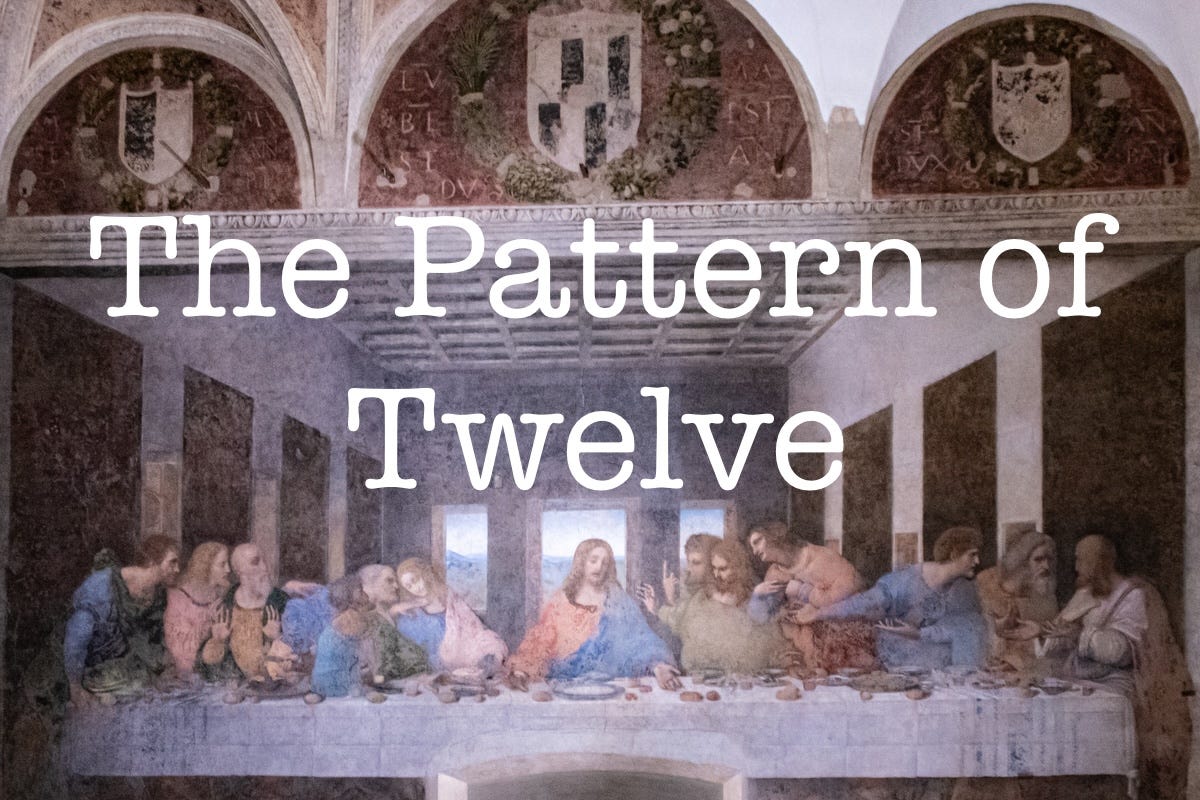
This reflection on Luke 6:12-19 argues that Jesus did not come to found a new religion but to fulfill the promises made to Abraham and to recreate the People of God as a new humanity. Drawing on Matthew 5:17 and Ephesians 2:15, the author presents the choice of the twelve Apostles as a deliberate repetition of the twelve tribes of Israel: the same God who formed one people from the sons of Jacob now forms the New Israel, the Church, through…

This reflection on Luke 6:12-19 argues that Jesus did not come to found a new religion but to fulfill the promises made to Abraham and to recreate the People of God as a new humanity. Drawing on Matthew 5:17 and Ephesians 2:15, the author presents the choice of the twelve Apostles as a deliberate repetition of the twelve tribes of Israel: the same God who formed one people from the sons of Jacob now forms the New Israel, the Church, through twelve 'sent ones.' The Fathers call this pattern recapitulation—God gathering up what He began, fulfilling it, and making it more beautiful and more inclusive.

The post walks through the Gospel passage in three movements. First, Christ prays all night before choosing Twelve, showing that the number is no accident but the foundation of a renewed people. Second, immediately after choosing them, He descends to a level place and teaches, heals, and frees the demonized—demonstrating what the new community is for.

That same power, given to the Apostles at Pentecost, continues in the Church and reaches each believer through Chrismation. Third, the list of names shows God choosing ordinary, unimpressive people—fishermen, a tax collector, a Zealot—and even one who would betray Him; Matthias later restored the number, showing that God's grace, not human credentials, is the point.

The post closes with St. Romanos the Melodist, a sixth-century deacon who, according to tradition, received a scroll from the Theotokos in a dream and composed the Nativity kontakion the Church still sings—an ordinary man made a gift to the whole Church. The discussion invitation asks readers whether they believe they fit into God's pattern, encouraging prayer before major decisions and trust that God's pattern of grace includes them.

  • Christ fulfills, not abolishes: the choice of Twelve recapitulates the twelve tribes, founding the New Israel.
  • Before choosing the Apostles, Jesus prays all night—the number twelve is deliberate, not accidental.
  • Right after choosing them, He teaches, heals, and delivers crowds, showing what the new community is meant to do.
  • God chooses ordinary people—fishermen, a tax collector, a Zealot; even Judas' betrayal did not break the pattern, as Matthias restored the Twelve.
  • St. Romanos the Melodist, commemorated today, exemplifies the same pattern: an unqualified man chosen and gifted for the whole Church.

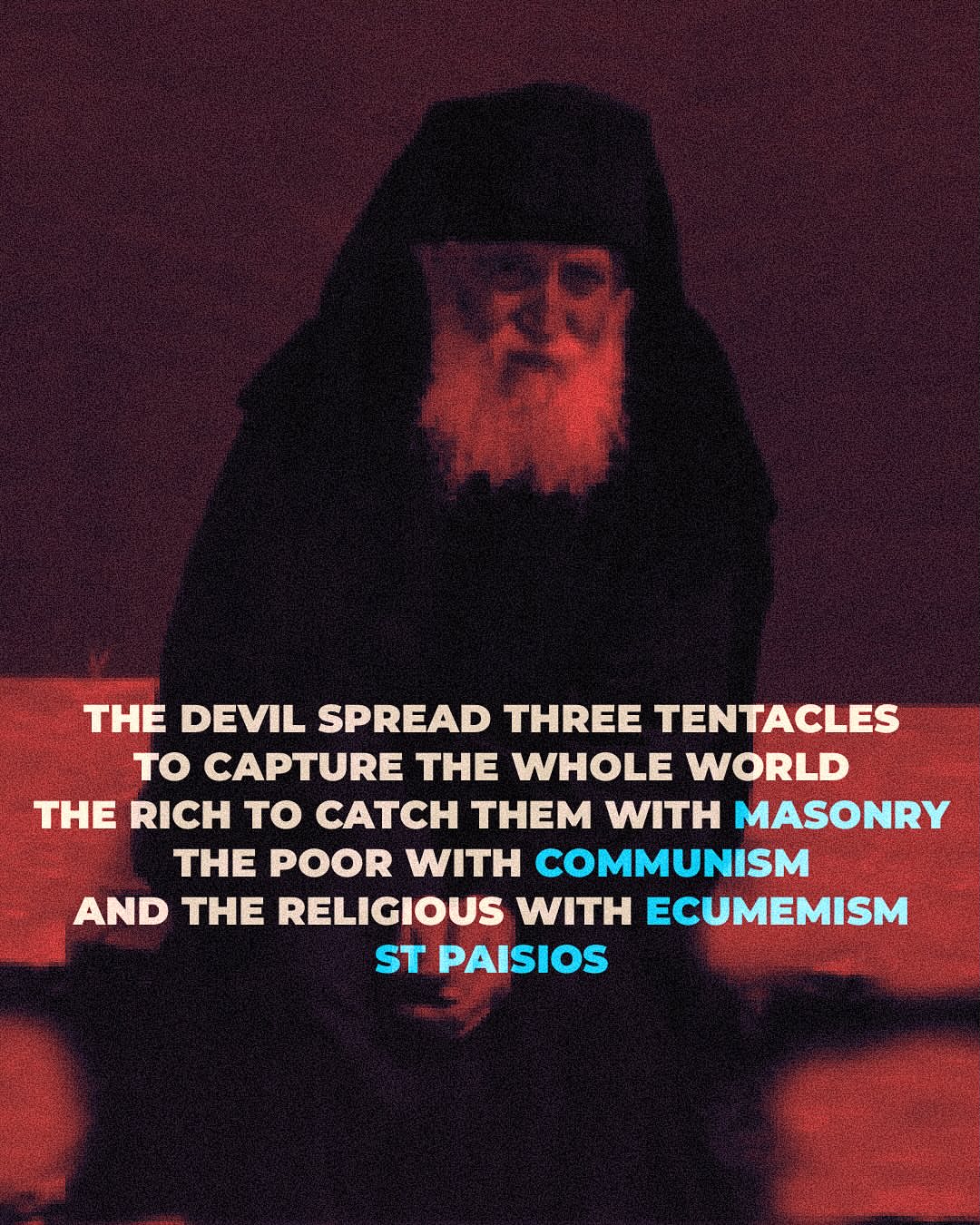
Fifteen saintly quotes condemn ecumenism as betrayal of Christ and Orthodoxy

I have gathered fifteen quotes from the saints on ecumenism. They show how the movement places unity with heretics above truth and amounts to a betrayal of Christ and Orthodox doctrine. This comes as the Ecumenical Patriarch moves toward reunion with Rome.

Read all fifteen passages, then take them to your clergy and metropolitans who have not studied what the Church has taught on ecumenism, beginning with Canon 33. You cannot erase the boundaries of Orthodoxy and still call it Orthodoxy.

  • Fifteen quotes from saints condemn ecumenism
  • Ecumenism prioritizes unity with heretics over truth
  • Ecumenism is called a betrayal of Christ and Orthodox doctrine
  • Recent news: Ecumenical Patriarch plans reunion with Rome
  • Urges readers to confront clergy and metropolitans starting with Canon 33
35 opinions in the discussion When we stand before God and He asks why His bride was divided, are we going to answer, "but they used a different number of fingers to make the sign of the cross! How could your grace… Read the discussion