
 Kyle
YouTube
Kyle
YouTube
Why Orthodox Christians Ask the Saints to Pray for Them
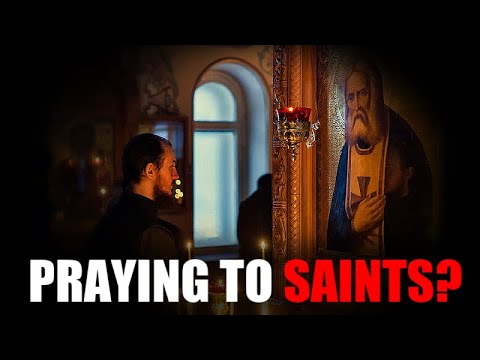 11:18
11:18
What the video says
This video defends the Orthodox practice of asking the saints for their intercession against Protestant objections, arguing it is thoroughly biblical and part of ancient church tradition. The speaker shows that prayer is simply a request, so asking saints to pray for us is not worship, just as we ask fellow Christians on earth to pray for us.
Biblical examples like Abraham, Moses, Amos, and Mary demonstrate that the prayers of righteous people are powerful, and Revelation shows the saints alive in heaven praying for us. Since the saints are partakers of the divine nature and closer to God, their prayers are even more efficacious, with Mary as Theotokos holding the highest place.
The video also explains phrases from akathist hymns, such as calling Mary the 'gate of salvation,' and cites early church evidence like the martyrdom of Polycarp, noting that opposition to saintly intercession only arose with the Protestant Reformation in the 1600s.
Key moments
- Intercession is biblical: Abraham's prayer saved Lot, Moses' prayer saved Israel, and Mary's prayer caused Jesus' first miracle.
- Prayer means requesting; we ask saints to pray for us just as we ask people on earth, and Revelation 4-5 shows the saints alive in heaven with incense, which Orthodox worship preserves.
- Psalm 82 and 1 Corinthians 6:2-3 show the saints are part of the divine council who will judge the world, meaning they can know our prayers as partakers of the divine nature (2 Peter).
- Venerating saints does not take from God's glory; it recognizes God's glory working in His people, since God has always worked through people.
- The saints are alive in heaven with Christ, as shown in the parable of Lazarus, Daniel 3, and Luke 20 ('God of the living, not the dead'); Mary's intercession is powerful and asking her to pray is not worship.
- Saying 'save us through your prayers' does not make saints our savior; salvation is communal, as 1 Timothy says one can 'save both yourself and your hearers,' and Sirach glorifies Elijah without dialectic with God.
- Akathist hymns like 'rejoice, gate of salvation' and 'Most holy Theotokos, save us' mean salvation entered the world through Mary's womb, and 'save us' means 'through your prayers'; no Orthodox person believes Mary is our savior.
- Ancient liturgies (St. Mark, St. John Chrysostom, St. Basil) and the martyrdom of Polycarp show relics presuppose the saints' intercession; the first critique of this practice came only with the Protestant Reformation in the 1600s, which would deny the Holy Spirit guiding the church.
This video offers a defense of the Orthodox practice of asking the saints for their intercession, responding to common Protestant objections that it amounts to worship or detracts from Christ. The speaker argues that 'prayer' in this context simply means a request: asking a saint to pray for us is no different from asking a fellow Christian on earth to do the same.
He grounds the practice in Scripture, citing the powerful intercessions of Abraham, Moses, and Mary, and pointing to Revelation, where the saints in heaven actively pray for those on earth while incense is offered. Because the saints are partakers of the divine nature and dwell with Christ, who is the God of the living and not the dead, their prayers are understood as especially efficacious, with the Theotokos holding the highest place of honor.
The video also addresses difficult phrases from Orthodox hymnography, explaining that calling Mary the 'gate of salvation' refers to salvation entering the world through her womb, and that 'Most holy Theotokos, save us' means 'save us through your prayers'—not that Mary is a savior in Christ's place. Historical evidence is presented as well: ancient liturgies of St. Mark, St. John Chrysostom, and St. Basil, along with the account of Polycarp's martyrdom, show that belief in the saints' intercession and veneration of relics go back to the earliest Church.
The speaker notes that organized opposition to the practice arose only with the Protestant Reformation, arguing that such a late break implies a denial of the Holy Spirit's guidance of the Church through the centuries. The overall thrust is that venerating the saints does not diminish God's glory but recognizes His glory at work in His people, and that salvation is communal rather than purely individual.
Main points
- Asking saints to pray for us is a request, not worship—just like asking living Christians to pray for us.
- Scripture shows the prayers of the righteous are powerful: Abraham, Moses, Amos, and Mary all interceded effectively.
- Revelation depicts the saints alive in heaven, praying for the faithful with incense, which Orthodox worship preserves.
- Hymn phrases like 'Theotokos, save us' mean 'save us through your prayers'; no Orthodox teaching makes Mary a savior.
- Ancient liturgies and the martyrdom of Polycarp attest to the practice; opposition arose only with the Reformation.