WeOrthodox
EN UA

Orthodox posts, videos and discussions

We follow Orthodox channels, communities and blogs across the web, summarise every post and video, and highlight the conversations with real substance.

Elder Filimon on screens, fasting, and artificial intelligence

The post shares a YouTube video from the Association of Friends of Mount Athos Heraklion featuring Gerontas Filimon, the righteous of the Holy Communal Pantocrator Skete of Prophet Elijah on Mount Athos. In the video, Gerontas Filimon recalls an elder who said the true fast is not abstaining from meat but avoiding the screen for a day. That elder promised communion to anyone who could give up television, even if they ate meat. The speaker…

The post shares a YouTube video from the Association of Friends of Mount Athos Heraklion featuring Gerontas Filimon, the righteous of the Holy Communal Pantocrator Skete of Prophet Elijah on Mount Athos. In the video, Gerontas Filimon recalls an elder who said the true fast is not abstaining from meat but avoiding the screen for a day.

That elder promised communion to anyone who could give up television, even if they ate meat. The speaker observes that today everyone, young and old, watches screens that show lies, and not everything seen is true, especially with artificial intelligence being pushed on people. He acknowledges that AI has many good things, but warns that we must avoid the trap of virtual reality.

He says we should have images, but images of God. The video is available on the association's YouTube channel.

Key moments

  1. The best fast is not eating meat but not looking at the tablet for a day.
  2. The Elder said if you avoid television you can eat meat and he will commune you.
  3. The television of that time is referenced.
  4. Now we all, young and old, see lies on screens; not everything is true.
  5. Artificial intelligence is being used to pass things to us.
  6. AI has many good things.
  7. God protect us from falling into the trap of virtual reality.
  8. We should have images, but images of God.
Holy Resurrection YouTube

How Can We Be Called Christians If We Have Nothing of Christ Within Us?

How Can We Be Called Christians If We Have Nothing of Christ Within Us? 7:40

This post presents a penitential homily drawn from St. Maximus the Confessor's 'Discourse on the Ascetic Life' (chapters 31–34), as found in the Russian edition of his Selected Works translated by A. I. Sidorov. The homily is a sober examination of conscience: it laments that Christians who have received God's grace often live in negligence and vice, and asks pointedly how we can bear the name of Christ while having nothing of Christ within us.…

This post presents a penitential homily drawn from St. Maximus the Confessor's 'Discourse on the Ascetic Life' (chapters 31–34), as found in the Russian edition of his Selected Works translated by A. I. Sidorov. The homily is a sober examination of conscience: it laments that Christians who have received God's grace often live in negligence and vice, and asks pointedly how we can bear the name of Christ while having nothing of Christ within us.

The speaker weaves together the voices of Scripture—Jeremiah's fountain of tears, Moses' warning that Jacob grew fat and forsook God, Micah's mourning that the godly man has perished from the earth, the Psalmist's 'there is none who does good,' and the Apostle Paul's prophecy to Timothy about lovers of self and money in the last days—showing that these ancient laments are fulfilled in us today.

The heart of the message is that by living according to the flesh rather than the Spirit, we forfeit the name of sons of God and become temples of evil instead of temples of God. Like the Jews who claimed God as their father but were told 'you are of your father the devil,' we risk the same rebuke if we transgress the commandments.

True children of God are led by the Spirit and bear its fruits—love, joy, peace, longsuffering—while faith without works is dead, for 'even the demons believe and tremble.' Those in whom Christ truly lives bless those who revile them; those who act against His commandments make of themselves a den of thieves instead of a house of prayer.

The post also includes appeals to support the building of a parish church and links to the channel's other resources.

Key moments

  1. 0:12 The homily opens with Jeremiah's lament—'who will give water to my head and a fountain of tears'—over those deemed worthy of grace yet remaining negligent.
  2. 0:43 Moses' words about Jacob growing fat and forsaking God, and Micah's mourning that 'the godly man has perished from the earth,' are applied to us.
  3. 1:14 The Psalmist and the Apostle Paul's words—'there is none who does good,' throats like open tombs, feet swift to shed blood—are cited as descriptions of our state.
  4. 2:17 Paul's prophecy to Timothy about the last days—lovers of self and money, boasters, blasphemers, unthankful, unholy—is said to be fulfilled in us.
  5. 2:48 A long series of rhetorical questions asks whether we are not all gluttons, wrathful, envious, hypocrites, and negligent of the Savior's commandments, having become temples of idols instead of temples of God.
  6. 3:51 Like the Jews who claimed God as father but were told 'you are of your father the devil,' we who transgress the commandments risk hearing the same rebuke.
  7. 4:23 True sons of God are led by the Spirit and bear its fruits—love, joy, peace, longsuffering—but we possess everything contrary, making us children of the adversary rather than of God.
  8. 5:25 Faith alone is insufficient—'even the demons believe and tremble' and 'faith without works is dead'; true believers in whom Christ lives bless those who revile them, while we, acting against all His commandments, have become a den of thieves instead of a house of prayer.
Read more
Orthodox Life Instagram

Saint John Koukouzelis: Byzantine chanter who fled court for Mount Athos

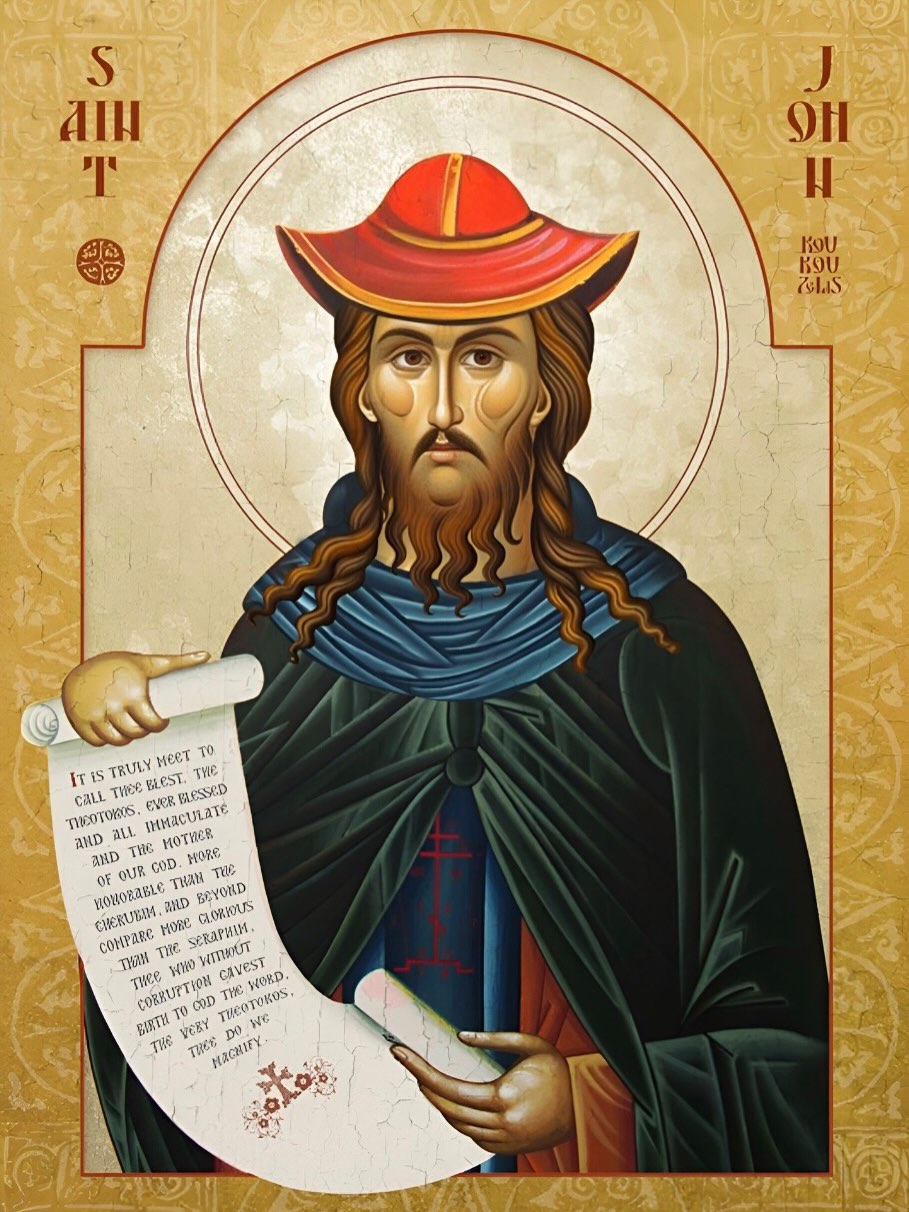
The post commemorates Saint John Koukouzelis on October 1st. Born in Dyrrhachium, modern Durrës in Albania, he was orphaned at a young age. His vocal talent earned him a place at the prestigious imperial court vocal school in Constantinople. He quickly became a favorite of the Byzantine emperor and served as chief musician of the palace choir. His surname Koukouzelis originated as a nickname during his school days. When classmates asked what he…

The post commemorates Saint John Koukouzelis on October 1st. Born in Dyrrhachium, modern Durrës in Albania, he was orphaned at a young age. His vocal talent earned him a place at the prestigious imperial court vocal school in Constantinople. He quickly became a favorite of the Byzantine emperor and served as chief musician of the palace choir.

His surname Koukouzelis originated as a nickname during his school days. When classmates asked what he had eaten for dinner, he replied with the Greek "koukia" for broad beans and the Slavic "zelia" for cabbage greens. Despite the luxury of the imperial palace, the pious chanter felt burdened by courtly excess and sought spiritual devotion.

To escape an imperial marriage arranged by the emperor, John fled Constantinople and sought refuge at the Great Lavra Monastery on Mount Athos. He concealed his famous identity and entered monastic life as an illiterate shepherd assigned to tend goats in the remote wilderness. His anonymity ended when a local hermit overheard him chanting divine hymns to his flock, witnessing the animals stand entirely spellbound by his singing.

As a pioneer of sacred music, Koukouzelis revolutionized the Eastern Orthodox tradition by introducing the melodious kalophonic style of chanting. He expanded traditional hymns with elaborate vocal ornamentation and structured complex musical formulas, most notably compiling the Mega Ison to teach musical intervals. He also created a didactic pedagogical system called the wheel, or trochos, which served as an essential solfège guide for generations of future chanters.

  • Born in Dyrrhachium, orphaned, trained at imperial court school in Constantinople
  • Served as chief musician of the palace choir under the Byzantine emperor
  • Fled to Great Lavra on Mount Athos to avoid arranged marriage, hid as shepherd
  • Discovered chanting to goats, animals spellbound by his voice
  • Developed kalophonic chant, Mega Ison, and the trochos pedagogical system
Orthodox Life Instagram

Panagia Gorgoepikoos: the Icon 'Quick to Hear' Commemorated on October 1

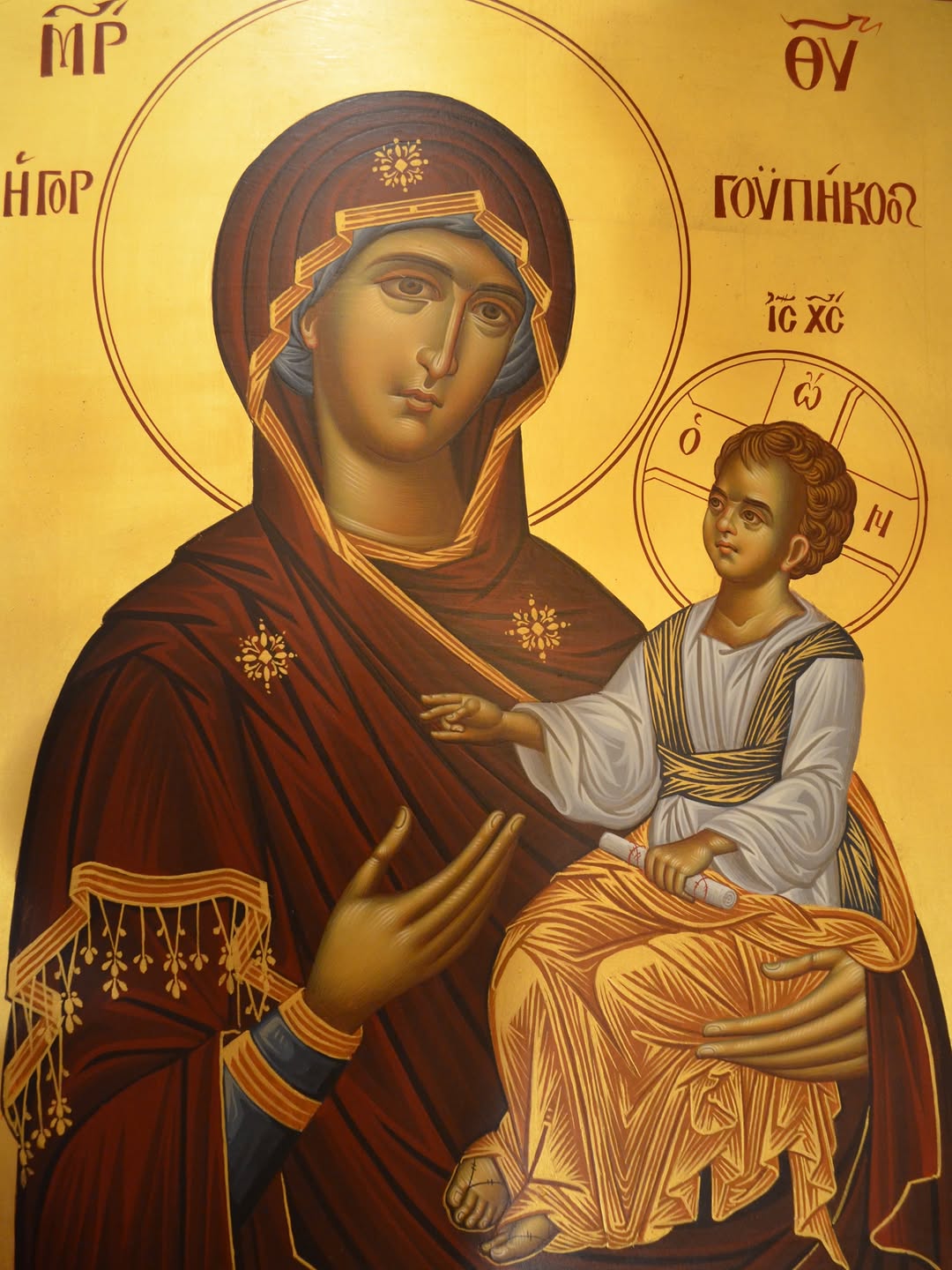
October 1 is the feast of the icon of the Mother of God called Panagia Gorgoepikoos, meaning 'She who is quick to hear' or 'She who grants requests quickly'. The title expresses the belief that the Mother of God swiftly responds to the prayers and intercessions of the faithful, and it is associated with a miraculous icon as well as churches and monasteries in Greece. The origin of the name comes from an 11th-century wall-painted icon at…

October 1 is the feast of the icon of the Mother of God called Panagia Gorgoepikoos, meaning 'She who is quick to hear' or 'She who grants requests quickly'. The title expresses the belief that the Mother of God swiftly responds to the prayers and intercessions of the faithful, and it is associated with a miraculous icon as well as churches and monasteries in Greece.

The origin of the name comes from an 11th-century wall-painted icon at Docheiariou Monastery on Mount Athos. Tradition records that in 1664 a monk named Neilos was temporarily blinded after repeatedly letting soot from his torch obscure the icon. After repentance and continuous prayer before the image, his sight was restored, and a voice from the icon proclaimed that the Virgin Mary would give swift aid to all who seek her protection.

The name is also tied to the Church of Panagia Gorgoepikoos in Athens, known as the 'Little Metropolis' or Agios Eleftherios, which stands in Mitropoleos Square next to the Metropolitan Cathedral of Athens. This compact Byzantine church dates to the late 12th or early 13th century and was built on the ruins of an ancient temple of Eileithyia, the pagan goddess of childbirth.

Its exterior is built entirely of ancient Greco-Roman marble blocks and spolia, with over 90 reused classical, Roman, and early Byzantine reliefs set into the walls. Pagan images such as zodiac signs and sphinxes were modified with embossed Christian crosses. Inside, most medieval frescoes have been lost, but a 13th-century depiction of the Virgin Mary survives in the apse.

  • The feast of Panagia Gorgoepikoos, 'She who is quick to hear', falls on October 1.
  • The title comes from an 11th-century wall-painted icon at Docheiariou Monastery on Mount Athos.
  • In 1664 the monk Neilos was blinded by soot from his torch; after repentance and prayer his sight returned, and a voice from the icon promised swift aid to those who seek her protection.
  • The Church of Panagia Gorgoepikoos in Athens, the 'Little Metropolis', dates to the late 12th or early 13th century and was built on ruins of a temple of Eileithyia.
  • The church's walls contain over 90 reused Greco-Roman reliefs, with pagan images modified by embossed Christian crosses; a 13th-century Virgin Mary remains in the apse.
Read more
Hellenic College Holy Cross Instagram

Flexible Online Learning at HCHC: Continue Your Studies Wherever You Are

This post is a promotional announcement from Hellenic College Holy Cross (HCHC), the Greek Orthodox institution of higher learning in Brookline, Massachusetts, inviting readers to consider its online learning opportunities. The message acknowledges that life is often busy and that many people cannot relocate or commit to a traditional on-campus schedule, yet still wish to deepen their education. It encourages prospective students not to postpone…

This post is a promotional announcement from Hellenic College Holy Cross (HCHC), the Greek Orthodox institution of higher learning in Brookline, Massachusetts, inviting readers to consider its online learning opportunities. The message acknowledges that life is often busy and that many people cannot relocate or commit to a traditional on-campus schedule, yet still wish to deepen their education.

It encourages prospective students not to postpone their studies, presenting flexible online programs and courses as a way to continue learning from wherever they happen to be. The post directs readers to a carousel of images (to be swiped through) that showcases the school's online programs and course offerings. No comments or discussion accompany the post, so the thread consists solely of the announcement itself.

For an Orthodox Christian audience, the post speaks to those who want to grow in theological knowledge and faith while balancing work, family, and parish life. HCHC is known for preparing clergy and lay leaders for the Church and for offering theological education to the wider community; its online offerings extend that mission to people who cannot study in residence.

The card invites readers to explore what distance learning at HCHC might look like, whether for personal enrichment, professional development, or a step toward a degree, and to view the details of available programs in the accompanying slides.

  • HCHC promotes flexible online programs and courses for busy learners.
  • The message: education does not have to wait; study from wherever you are.
  • A swipe-through carousel presents the available online offerings.
  • Aimed at those balancing work, family, and other commitments.
  • No reader discussion in the thread; it is an announcement.
Anthony’s Cell YouTube

One God, Three Persons: How Scripture Reveals the Holy Trinity

One God, Three Persons: How Scripture Reveals the Holy Trinity 5:22

An audio reading presents an article from the Orthodox Study Bible titled 'The Holy Trinity: Creator and Savior,' read aloud with singing at the beginning and end. The reading explains that the Holy Trinity is one God in three persons, Father, Son, and Holy Spirit, distinct but not separate and not three gods, one in essence or nature. The Father is the unbegotten fountainhead of deity, the Son is eternally begotten of the Father, and the Holy…

An audio reading presents an article from the Orthodox Study Bible titled 'The Holy Trinity: Creator and Savior,' read aloud with singing at the beginning and end. The reading explains that the Holy Trinity is one God in three persons, Father, Son, and Holy Spirit, distinct but not separate and not three gods, one in essence or nature.

The Father is the unbegotten fountainhead of deity, the Son is eternally begotten of the Father, and the Holy Spirit proceeds from the Father. The article traces the Trinity's work in creating the world through Genesis: the Father made heaven and earth, the Spirit hovered over creation and co-created, and the Son as the Word of God made the light, all with creative power and equality.

In Genesis 1:26, the pronouns 'us' and 'our' reveal a plurality of divine persons operating in unity out of the one divine nature. The reading then shows how the Trinity saves the world: the Father is our redeemer, the Son inherits the people saved by him, and the words 'holy, holy, holy' in Isaiah 6 declare the three persons who save us.

Isaiah 44:3 shows the Father pouring out his Spirit like water on dry ground, and Isaiah 48:16-17 shows the Son declaring that the Father and the Spirit sent him to redeem the world. Although the Son alone became a man, all three persons save mankind. The New Testament affirms the Trinity in the Old Testament: the Word was with the Father at creation, Jesus identifies himself as existing before Abraham as 'I am,' appearing to Moses in the burning bush, and the Spirit's descent at Pentecost affirms his Old Testament presence.

Hebrews 1:8-10 affirms the Father speaking to the Son in the Psalms, acknowledging the Son as God and creator of the world. The incarnate Son fully reveals the Trinity: at the Annunciation the Holy Spirit overshadowed the Virgin Mary, and at the baptism in the Jordan the Father's voice was heard and the Spirit descended like a dove.

As the main hymn for Theophany says, when you, oh Lord, were baptized in the Jordan, the worship of the Trinity was made manifest.

Key moments

  1. 0:33 The Holy Trinity is one God in three persons, Father, Son, and Holy Spirit, distinct but not separate, one in essence or nature. The Father is the unbegotten fountainhead of deity, the Son is eternally begotten of the Father, and the Holy Spirit proceeds from the Father.
  2. 1:04 The Trinity created the world: the Father made heaven and earth, the Spirit hovered over creation and co-created, and the Son as the Word of God made the light, all with creative power and equality.
  3. 1:36 In Genesis 1:26, the pronouns us and our reveal a plurality of divine persons operating in complete unity out of the one divine nature.
  4. 2:08 The Trinity saves the world: the Father is our redeemer, the Son inherits the people saved by him, and the words holy, holy, holy in Isaiah 6 declare the three persons who save us.
  5. 2:39 Isaiah 44:3 shows the Father pouring out his Spirit like water on dry ground, and Isaiah 48:16-17 shows the Son declaring the Father and the Spirit sent him to redeem the world. Although the Son alone became a man, all three persons save mankind.
  6. 3:09 The New Testament affirms the Trinity in the Old Testament: the Word was with the Father at creation, Jesus identifies himself as existing before Abraham as I am, appearing to Moses in the burning bush, and the Spirit's descent at Pentecost affirms his Old Testament presence.
  7. 4:12 Hebrews 1:8-10 affirms the Father speaking to the Son in the Psalms, acknowledging the Son as God and creator of the world.
  8. 4:42 The incarnate Son fully reveals the Trinity: at the Annunciation the Holy Spirit overshadowed the Virgin Mary, and at the baptism in the Jordan the Father's voice was heard and the Spirit descended like a dove. As the main hymn for Theophany says, when you, oh Lord, were baptized in the Jordan, the worship of the Trinity was made manifest.
Ancient Faith YouTube

Teaching Children Floral Arts for Orthodox Worship

Teaching Children Floral Arts for Orthodox Worship 35:32

In this episode of Mirror of Paradise, Hannah Hunt demonstrates how to involve children in creating floral arrangements for Orthodox liturgical use, turning the craft of flower wiring into a formative spiritual activity. The session centers on wiring hyacinths and carnations, constructing a crown for the myrrh-bearing girls' Holy Friday procession, and building a garland for an icon frame. Hannah begins by referencing the Wisdom of Solomon on…

In this episode of Mirror of Paradise, Hannah Hunt demonstrates how to involve children in creating floral arrangements for Orthodox liturgical use, turning the craft of flower wiring into a formative spiritual activity. The session centers on wiring hyacinths and carnations, constructing a crown for the myrrh-bearing girls' Holy Friday procession, and building a garland for an icon frame.

Hannah begins by referencing the Wisdom of Solomon on perceiving the Creator through creation's beauty, framing the work as a way to foster children's love for God through hands-on engagement with the natural world. Hyacinths are introduced as a spring flower rich in symbolism — their fragrance and form evoking the beauty of the New Jerusalem, majesty, and divine authority — making them especially fitting for Holy Week.

Children Colt and Adelaide actively participate, wiring individual hyacinth florets on 22-gauge wire for placement on the tomb of Christ, the royal doors, or processional lanterns. Hannah then crafts a hyacinth crown for Adelaide, explaining the tradition of myrrh-bearing girls who, dressed in white and crowned, process around the epitaphios on Holy Friday sprinkling petals.

The demonstration continues with two wiring methods for carnations — a simple pick and a traditional wired stem using floral tape — noting carnations' durability out of water. Spray roses are prepared by removing guard petals and sepals before taping, allowing wired stems to be bent outward for better visibility. Finally, Hannah constructs a garland by hand on a heavy bind-wire spine for shape control, using lemon leaf, leather leaf, ming fern, cedar, wax flower, and wired roses in a bespoke English garden style.

The garland is attached to a custom PVC pipe frame fitted to an icon with felt pads for protection, secured with chenille stems for reusable, adjustable fastening. Throughout, the emphasis remains on forming children in the liturgical life of the Church through beauty, symbolism, and shared labor.

Key moments

  1. 0:32 Hannah references Wisdom on perceiving the Creator through creation's beauty, emphasizing involving children in liturgical floral design to foster love for creation and God.
  2. 1:03 Introduces hyacinths as a spring flower suitable for Holy Week, noting their fragrance and symbolism of the beauty of New Jerusalem, majesty, and divine authority.
  3. 2:07 Children Colt and Adelaide wire individual hyacinth florets on 22-gauge wire for hanging on the tomb of Christ, royal doors, or processional lanterns.
  4. 5:17 Hannah makes a hyacinth crown for Adelaide, explaining the myrrh-bearing girls' tradition on Holy Friday where girls in white dresses and crowns process around the epitaphios sprinkling petals.
  5. 10:33 Demonstrates two wiring methods for carnations: a simple pick for insertion and a traditional wired stem using floral tape, noting carnations hold well out of water.
  6. 13:08 Shows wiring spray roses, removing guard petals and sepals, then taping the stem; wired flowers can be bent to face outward for better visibility.
  7. 16:22 Builds a garland by hand on a heavy bind-wire spine for shape control, using lemon leaf, leather leaf, ming fern, cedar, wax flower, and wired roses in a bespoke English garden style.
  8. 27:37 Attaches the garland to a custom PVC pipe frame fitted to an icon with felt pads for protection, using chenille stems for reusable, adjustable fastening.
Orthodox Health Instagram

Being Wronged Does Not Excuse Our Own Anger: A Lesson from Abba Dorotheus

0:30

The speaker reflects on a teaching attributed to Abba Dorotheus about anger and blame, arguing that being sinned against does not give us permission to stop examining ourselves. Someone may have genuinely wronged you through cruelty, dishonesty, insult, or betrayal, and their sin does not become acceptable because God can use the experience for your repentance. But their wrongdoing also does not make every response that follows from us…

The speaker reflects on a teaching attributed to Abba Dorotheus about anger and blame, arguing that being sinned against does not give us permission to stop examining ourselves. Someone may have genuinely wronged you through cruelty, dishonesty, insult, or betrayal, and their sin does not become acceptable because God can use the experience for your repentance.

But their wrongdoing also does not make every response that follows from us righteous. Orthodoxy, the speaker says, gives room to condemn what was actually wrong without using another person's sin as an excuse to ignore what our own anger, resentment, pride, or loss of self-control may have exposed. The speaker warns against fooling yourself into believing another person created the passion inside you.

The one who spoke did not put him in a bad mood; he only showed that the passion already existed in him, and the speaker admits it is a brutal one. He says he cannot blame the other person for the fact that he lost his mind. He stresses the distinction: Abba Dorotheus is not saying the other person was right to offend you, and what they did may have been wrong, possibly probably so.

The question is what his own response revealed about him. The post asks two questions: not merely, "What did they do to me?" but also, "What did this reveal in me that still needs healing?" That second question does not absolve the offender. It refuses to let their sin become an excuse for ours. The post promotes Episode 80 of the Orthodox Health Podcast, titled "Why You Need to Be Bad at Something: The Humility of Being a Beginner," and invites readers to comment to receive the full episode.

Key moments

  1. Do not fool yourself into believing the other person created the passion inside you.
  2. The one who spoke did not put him in a bad mood; he only showed that the passion already existed in him.
  3. The speaker admits the passion in him is brutal and that he cannot blame the other person for losing his mind.
  4. Abba Dorotheus is not saying the other person was right to offend you; what they did was possibly, probably wrong.
  5. The real question is what his response revealed about himself.
T timotheos.orthodoxy Instagram

Catechumen combines Orthodox journey with fitness and business experience

0:15

Tim introduces himself as a catechumen of the Greek Orthodox Church who is sharing his journey toward Orthodoxy. He notes nearly two decades of fitness experience, including some competitive background, and that he has built a successful business. He invites readers to follow his account for content that combines Orthodoxy, fitness, and business. The post concludes with "All praise to the Lord Amen."

  • Tim is a catechumen in the Greek Orthodox Church
  • He shares his journey toward Orthodoxy
  • He has nearly 20 years of fitness experience, some competitive
  • He has built a successful business
  • He invites followers for combined Orthodox, fitness, and business content
Read more
radioimlemesou Instagram

Why God Doesn't Need Our Praise — But We Do

Metropolitan Athanasios of Limassol answers the question of how we receive the grace of God, centering his teaching on the practice of blessing, thanking, and glorifying God's name. He is careful to make clear that God has no need whatsoever of our doxology; the praise we offer is not for Him but for us. It is the human person who stands in need of blessing the name of God, and in doing so we receive grace, strength, and what he calls the energy…

Metropolitan Athanasios of Limassol answers the question of how we receive the grace of God, centering his teaching on the practice of blessing, thanking, and glorifying God's name. He is careful to make clear that God has no need whatsoever of our doxology; the praise we offer is not for Him but for us. It is the human person who stands in need of blessing the name of God, and in doing so we receive grace, strength, and what he calls the energy of grace.

The act of blessing and thanksgiving is not an empty ritual but a means by which the heart is transformed: through it, our heart acquires the right stance toward God and becomes eucharistic — a heart that gives thanks. The teaching underscores that knowing how to pray is itself an important skill for the spiritual life, and that gratitude is the proper disposition of the soul before God.

The post presents a concise Orthodox teaching on the relationship between doxology and grace: praise does not change God, but it changes the one who praises, orienting the whole person toward humility, thanksgiving, and receptivity to divine grace.

Key moments

  1. It is important for a person to know how to pray, to bless the name of God, and to glorify God.
  2. God has no need of our doxology; it is we who need to bless His name.
  3. By blessing the name of God, a person receives grace, strength, and the energy of grace.
  4. Blessing, thanking, and glorifying God gives our heart the right stance toward Him, making it eucharistic — a thankful heart.
Read more
Saint Wisdom Instagram

Saint Theophan the Recluse: Examine Your Life and See God's Mercy

Saint Theophan the Recluse gives a short instruction on recognizing God's mercy in one's own life. He tells the reader to examine their life and they will find many instances when God showed His unmistakable mercy to them. Trouble was brewing, but for some reason it passed them by. God delivered them. The saint's point is that these deliverances often go unnoticed because a person does not stop to look back at how events unfolded. What seemed…

Saint Theophan the Recluse gives a short instruction on recognizing God's mercy in one's own life. He tells the reader to examine their life and they will find many instances when God showed His unmistakable mercy to them. Trouble was brewing, but for some reason it passed them by. God delivered them.

The saint's point is that these deliverances often go unnoticed because a person does not stop to look back at how events unfolded. What seemed like a near miss or a fortunate turn was in fact God's hand at work. Theophan asks the reader to acknowledge these moments and to thank God, who loves them.

The instruction ties gratitude to memory: the person who recalls specific occasions of rescue and protection gains a concrete sense of God's love rather than an abstract idea of it. The post is presented under the themes of love, Orthodoxy, and the saints, and the text itself stays within this single exhortation: look back, identify the times trouble passed you by, name them as God's mercy, and give thanks for them.

Key moments

  1. Look back over your life and you will find many times God showed His unmistakable mercy to you.
  2. Trouble was brewing but passed you by for some reason; God delivered you.
  3. Acknowledge these deliverances and thank God, who loves you.
Read more
Kyle YouTube

Christ Blesses Peacemakers, Not Peacekeepers: Why Suppressing Conflict Is Not Peace

Christ Blesses Peacemakers, Not Peacekeepers: Why Suppressing Conflict Is Not Peace 16:12

This video draws a sharp distinction between peacekeeping and peacemaking in the Christian life. The speaker argues that modern culture equates peace with the mere absence of conflict, but Christ blesses peacemakers, not peacekeepers. True peace is not the quieting of a dispute but reconciliation rooted in truth, repentance, forgiveness, and communion with God. When we play the peacekeeper—saying 'peace, peace' when there is no peace—we only…

This video draws a sharp distinction between peacekeeping and peacemaking in the Christian life. The speaker argues that modern culture equates peace with the mere absence of conflict, but Christ blesses peacemakers, not peacekeepers. True peace is not the quieting of a dispute but reconciliation rooted in truth, repentance, forgiveness, and communion with God.

When we play the peacekeeper—saying 'peace, peace' when there is no peace—we only push resentment beneath the surface, where it festers. Genuine peacemaking, by contrast, often requires walking into uncomfortable conversations, following Christ's command to go to our brother alone when he has sinned against us, and to be reconciled before offering our gift at the altar.

A substantial portion of the talk focuses on what makes a real apology. Empty words, defensiveness, excuses, and repeated apologies that produce no change are not true repentance; they are simply a way of making ourselves feel better. The speaker offers practical guidance: acknowledge what you did, take full responsibility without excuses, understand the impact on the other person, express genuine repentance, and commit to change—and do it today, in light of the daily remembrance of death.

The video also warns against self-righteous confrontation. Correction must flow from humility and love, not from a desire to win; one must remove the plank from one's own eye first, listen before speaking, and be willing to say the words pride hates most: 'Forgive me.' Discernment for such conversations, the speaker stresses, comes only from a life of prayer, confession, and the Eucharist.

The discussion culminates in the point that Christ himself is our peace: before we can have peace with one another, we need peace with God through repentance, confession, and forgiveness. The Christian life is presented as a lifelong spiritual battle in which we make peace by entering conflict with humility, truth, and love.

Key moments

  1. 0:00 Modern people equate peace with the absence of conflict, but Christ blesses peacemakers, not peacekeepers—genuine peace is rooted in Christ, truth, repentance, and reconciliation.
  2. 2:06 Superficially healing wounds by saying 'peace, peace when there is no peace' leaves resentment under the surface; suppressing conflict does not produce reconciliation.
  3. 2:38 Christ commands us to go to our brother alone when he sins against us, and to be reconciled before offering our gift at the altar—reconciliation may require uncomfortable conversations.
  4. 4:12 Empty, defensive, and repeated apologies are not real apologies; apology without change is just a way to make yourself feel better—real change matters more than words.
  5. 6:14 Tips for a good apology: acknowledge what you did, take responsibility without excuses, understand the impact, express true repentance, and commit to change—do it today, since we remember death daily.
  6. 8:21 Confrontation must be done with discernment, from humility and love, not self-righteousness; remove the plank from your own eye first, and speak the truth in love.
  7. 11:28 Peacemaking often requires listening first, admitting mistakes, and saying the words pride hates: 'Forgive me'—lead with an apology and affirmation rather than self-justification.
  8. 14:03 Christ himself is our peace; before peace with one another we need peace with God through repentance, confession, and forgiveness—the Christian life is a lifelong spiritual battle.
Read more
F Fr. Barnabas Powell Substack

Ready, Not Surprised: Watchfulness Rooted in Love, Not Fear

This reflection on Matthew 24:42-47, the Lord's call to "Watch, for you do not know on what day your Lord is coming," explores how Christians should rightly order their expectations about Christ's return. Opening with Alexander Pope's cynical maxim about expecting nothing, the author argues that the problem is not having expectations but having the wrong ones—and that grounding expectation in the reality of Christ transforms one's priorities and…

This reflection on Matthew 24:42-47, the Lord's call to "Watch, for you do not know on what day your Lord is coming," explores how Christians should rightly order their expectations about Christ's return. Opening with Alexander Pope's cynical maxim about expecting nothing, the author argues that the problem is not having expectations but having the wrong ones—and that grounding expectation in the reality of Christ transforms one's priorities and choices.

The Gospel passage, drawn from the Olivet Discourse, deliberately withholds details about the timing of the Second Coming. The author presents this lack of specifics as intentional: it keeps our expectation rooted in love for Christ Himself rather than in fear or speculation. This stands in sharp contrast to sensationalistic "end times" systems—rapture theories, blood moons, supposed secret knowledge—whose very sensationalism reveals their incompatibility with the sober, peaceful message of the Faith.

People caught up in such speculation typically fix their attention on temporary things: politics, cultural turmoil, headlines. The healthier focus is anchoring anticipation entirely in love for Christ and living in preparation for being with Him forever. The reflection also distinguishes motivations: fear may initially wake us (as an alarm clock does), but the spiritually mature move from fear to the sustainable motivation of love, once they truly see how lovely Christ is.

The rhythm of worship, prayer, and practice turns faith from something we merely know into Someone we genuinely love—so that His return, or our own death, finds us simply awake. The post closes with the commemoration of St. Gregory the Illuminator, apostle to Armenia, who endured over a decade of imprisonment with his anticipation fixed on Christ alone, and whose witness led Armenia to become the first nation to officially embrace Christianity.

  • The Lord deliberately withholds details of His return so our expectation stays rooted in love, not fear or speculation
  • Sensational end-times theories reveal their falseness by their very sensationalism and fixation on temporary things like politics and headlines
  • Fear may initially prompt watchfulness, but love for Christ is the mature and sustainable motivation
  • The rhythm of worship, prayer, and practice transforms faith from something we know into Someone we love
  • St. Gregory the Illuminator models this watchfulness, remaining fixed on Christ through years of imprisonment

St. Anthony's prideful thought answered by a blind shoemaker

The post shares a story told by Elder Joachim, a monk of the Holy Monastery of Pantokratoros Skete of Prophet Elijah on Mount Athos. The elder recounts how St. Anthony the Great experienced a logismos of pride, wondering whether another ascetic in the desert fasted more strictly than he did. God sent an angel during the night to protect Anthony and show him someone greater. The angel did not lead Anthony deeper into the desert but to Alexandria,…

The post shares a story told by Elder Joachim, a monk of the Holy Monastery of Pantokratoros Skete of Prophet Elijah on Mount Athos. The elder recounts how St. Anthony the Great experienced a logismos of pride, wondering whether another ascetic in the desert fasted more strictly than he did. God sent an angel during the night to protect Anthony and show him someone greater.

The angel did not lead Anthony deeper into the desert but to Alexandria, to a basement where a blind shoemaker lived. The shoemaker explained that he worked humbly, producing ten eggs each day. He gave five eggs to the poor and kept five for his children.

Anthony was humbled by this encounter and ceased the prideful reasoning. The video appears on the YouTube channel "Friends of Byzantine Music" with a link provided. The post includes hashtags referencing logismoi, pride, faith, St. Anthony the Great, Christianity, Orthodoxy, Elder Joachim, and the Holy Skete of Prophet Elijah on Mount Athos.

Key moments

  1. The reasoning of pride is terrifying.
  2. The speaker refers to the Great Anthony, his fellow disciple, to explain the logismos of pride.
  3. Anthony himself had the thought: is there a greater ascetic who fasts more than he does?
  4. God sent an angel at night to protect him and show him someone greater.
  5. The angel took Anthony to Alexandria, not the inner desert.
  6. In a basement they met a blind shoemaker, a man of God.
  7. The shoemaker explained he works humbly, produces ten eggs daily, gives five to the poor and five to his children.
  8. Anthony was humbled and no longer entertained the prideful reasoning.
Read more

The Katholikons of Mount Athos and the Panagia as Abbess of the Holy Mountain

The post presents the Katholikon, the main church at the heart of every Athonite monastery, described as filled with centuries of prayer, sacred frescoes, relics, and holy icons. It notes that throughout the Holy Mountain the Panagia holds a place of special honor as its Protectress and Abbess. The text appears in both English and Greek, with hashtags pointing to Athos, the Panagia, and monastic life, and is identified as an original production…

The post presents the Katholikon, the main church at the heart of every Athonite monastery, described as filled with centuries of prayer, sacred frescoes, relics, and holy icons. It notes that throughout the Holy Mountain the Panagia holds a place of special honor as its Protectress and Abbess. The text appears in both English and Greek, with hashtags pointing to Athos, the Panagia, and monastic life, and is identified as an original production of Prayer Orthodoxy.

The video accompanying the post is a prayer to the Panagia spoken by a monk. He thanks her for the renewal of her monastery and for bringing back those who had left the faith, saying no one was lost. He offers himself to her will, even to go to the desert of Sinai if she so wills.

He asks her to drive out every thought of pride and to enlighten the darkness of his soul, so that he may see himself as the last of men. He asks not to feel pride when praised, nor sorrow when insulted or accused. He mentions a sting he felt in his heart when a priest spoke, and says he helps his brethren for the love of Christ.

He asks her help to remain with the small, weak and persecuted brethren, to be beneath them as the least. He closes by reminding her that she gave birth to the Savior of the world and was never proud, and asks her to take away every thought.

Key moments

  1. He thanks the Panagia: her monastery was renewed through her maternal care, those who left the faith returned, and no one was lost.
  2. He places himself in her will, ready to go to the desert of Sinai if that is her will.
  3. He asks her to drive out every thought of pride and to enlighten the darkness of his soul, to see that he is the last of men.
  4. He asks not to feel proud when praised, nor saddened when insulted or accused.
  5. He felt a sting in his heart when the priest spoke, and says he helps his brethren for the love of Christ.
  6. He asks her help to stay close to his brethren, the small, weak and persecuted, and to be beneath them as the least.
  7. He reminds her that she gave birth to the Savior of the world and was never proud, and asks her to take away every thought.
Read more
Orthodox Sound YouTube

Do Not Be Afraid, Only Believe: Saints on Fear and Anxiety

Do Not Be Afraid, Only Believe: Saints on Fear and Anxiety 14:00

The post gathers Scripture and sayings of Orthodox saints on how a Christian answers fear and anxiety. It opens with Christ's words to Jairus, whose daughter had died: 'Do not be afraid; only believe' (Mark 5:36, Luke 8:50). Christ does not promise the absence of difficult news; he calls for faith. He teaches not to be anxious about life or tomorrow, pointing to the birds of the air and the lilies of the field (Matthew 6:25-34), and says that in…

The post gathers Scripture and sayings of Orthodox saints on how a Christian answers fear and anxiety. It opens with Christ's words to Jairus, whose daughter had died: 'Do not be afraid; only believe' (Mark 5:36, Luke 8:50). Christ does not promise the absence of difficult news; he calls for faith.

He teaches not to be anxious about life or tomorrow, pointing to the birds of the air and the lilies of the field (Matthew 6:25-34), and says that in the world there is tribulation, but he has overcome the world (John 16:33). Saint Paul commands the faithful to bring everything to God in prayer with thanksgiving, with the promise of God's peace (Philippians 4:6-7), and Peter and the Psalmist call believers to cast their cares upon the Lord (1 Peter 5:7, Psalm 55:22).

The Fathers speak in the same key. Saint Macarius the Great says that if a person knew who was with him, he would fear nothing the world offers. Saint Paisios the Athonite teaches that God calls us continually, that people often turn to God only when danger appears, and that whatever happens, God will have the last word. Saint Basil the Great rejects the idea that events happen by chance, and Saint Elias Minjatios connects providence with the command to cast our cares on God.

Saint Silouan the Athonite says that when a person does not feel God's love, he should remember the Lord's mercy and continue in trust. Saint John Climacus and Saint Ephraim the Syrian teach that the fear of God sets worldly fear in order. The Philokalia compares trials to loads fitted to a beast's strength and pottery timed in the fire: God knows the measure of testing for each soul.

The post states that the Christian will still suffer and face uncertainty, but fear is answered by faith, anxiety by prayer, and suffering by perseverance in Christ.

Key moments

  1. 0:00 Christ tells Jairus, whose daughter had died, 'Do not be afraid, only believe.'
  2. 1:02 Christ says 'Do not worry about your life,' pointing to the birds of the air and lilies of the field, and teaches that sufficient for the day is its own trouble.
  3. 2:36 Christ says 'In the world you will have tribulation, but be of good cheer. I have overcome the world'; Christian peace is the presence of Christ in trials, not their absence.
  4. 3:07 Elder Aimilianos of Simonopetra says to leave everything to God, who weighs and measures every cross for our spiritual growth.
  5. 4:11 Saint Paisios the Athonite says God calls us constantly, and that 'no matter what happens, God will have the last word.'
  6. 5:45 Saint Elias Miniatis and Saint Paul teach that God cares for all things: 'Be anxious for nothing,' and the peace of God will guard hearts and minds.
  7. 8:21 Saint John Climacus and Saint Ephraim the Syrian teach that the fear of God places all other fears in order: 'Whoever fears God stands above all manner of fear.'
  8. 11:01 The Philokalia compares providence to a man loading a beast according to its strength and a potter timing the fire, showing God knows the measure of trial for each soul.
Read more
Saint Wisdom Instagram

Saint Ambrose of Optina: pray rather than overthink

The speaker presents Saint Ambrose of Optina as a teacher of the simple life. The teaching is that a simple life is best, and that a person should not overthink. Instead of weighing every option and worrying over circumstances, one should pray to God, who will arrange everything. The speaker says a person should not torture himself wondering what to do or how to cope. Rather than straining to control outcomes, one should let things be as they…

The speaker presents Saint Ambrose of Optina as a teacher of the simple life. The teaching is that a simple life is best, and that a person should not overthink. Instead of weighing every option and worrying over circumstances, one should pray to God, who will arrange everything.

The speaker says a person should not torture himself wondering what to do or how to cope. Rather than straining to control outcomes, one should let things be as they happen and entrust them to God. The post is framed with the tags love, orthodox and saints, and it presents this counsel as the heart of Saint Ambrose's approach to daily life.

The message stays close to the saint's words: pray, and leave the rest to God's arrangement.

Key moments

  1. Living a simple life is the best.
  2. Do not think too hard about anything; just pray to God, for he will arrange everything.
  3. Do not torture yourself thinking about what to do and how to cope; simply let it be as it happens.
Read more
Orthodox Health Instagram

Counterfeit Humility: When Self-Condemnation Keeps You at the Center

0:23

The author warns against a counterfeit humility that sounds pious because it speaks constantly about how terrible, weak, or unworthy we are. If every thought still circles back to me, my failures, my inadequacy, my shame, my image of myself, the ego may simply have changed costumes. Christian humility is described as more sober: it allows us to see ourselves truthfully before God, with gifts without vanity, weakness without theater, sin without…

The author warns against a counterfeit humility that sounds pious because it speaks constantly about how terrible, weak, or unworthy we are. If every thought still circles back to me, my failures, my inadequacy, my shame, my image of myself, the ego may simply have changed costumes. Christian humility is described as more sober: it allows us to see ourselves truthfully before God, with gifts without vanity, weakness without theater, sin without despair, and correction without needing to collapse or defend ourselves.

Repentance can say, 'I was wrong,' and then turn toward God. It does not require spending the rest of the day staring at ourselves for having been wrong. The post promotes Episode 80 of the Orthodox Health Podcast, titled 'Why You Need to Be Bad at Something: The Humility of Being a Beginner.' The episode develops the same theme: false humility keeps the self at the center, so saying 'I'm terrible, I'm worthless, I'm the worst' is still talk about you.

Despair is called the inversion of pride, because both are still about you. The Christian life is not about cultivating a more negative obsession with yourself, but about becoming truthful enough that the self no longer has to dominate every room. Readers are invited to comment to receive the full episode.

Key moments

  1. False humility still has the self at the center.
  2. Despair is the inversion of pride, because both are still about you.
  3. The Christian life is not a more negative obsession with yourself, but becoming truthful enough that the self no longer dominates every room.
Read more

The Tears of Repentance: Elder Philemon on Tears as a Second Baptism

Elder Philemon, Dikaios of the Holy Koinobiotic Skete of the Prophet Elias of Pantokrator on Mount Athos, speaks about tears of repentance in a video published by the Holy Church of Saint Demetrios in the Municipality of Agiou Dimitriou. He calls tears the second baptism: when we repent and weep, God sees it. To show what this means, he tells a story about a father who was about to leave the world and asked those around him to bring him a gift.…

Elder Philemon, Dikaios of the Holy Koinobiotic Skete of the Prophet Elias of Pantokrator on Mount Athos, speaks about tears of repentance in a video published by the Holy Church of Saint Demetrios in the Municipality of Agiou Dimitriou. He calls tears the second baptism: when we repent and weep, God sees it. To show what this means, he tells a story about a father who was about to leave the world and asked those around him to bring him a gift.

One person brought bread, another brought a glass of cold water, and a third searched and found the tear of a repentant person. The father chose the tear and said, 'This is what I want.' Elder Philemon asks whether this is not a parable: Christ and our God seek from us our repentance and our tears. The video is available in full on YouTube through the link in the post, and the post carries hashtags in Greek and English on tears, repentance, faith, Christianity and Orthodoxy.

Key moments

  1. Tears are the second baptism, because we repent, weep, and God sees it.
  2. A father, about to leave the world, asked for a gift from each person.
  3. One brought bread, another a glass of cold water, and a third found the tear of a repentant person.
  4. The father chose the tear, saying, 'This is what I want.'
  5. The speaker says this is like a parable: Christ seeks our repentance and our tears.
Read more

Two Desert Fathers, Two Insults: Abba Moses and the Humility He Said He Hadn't Reached

This episode explores a striking pairing of stories from the Desert Fathers about how two saints responded to public humiliation at church. Abba Moses, once a violent and vengeful man, was thrown out of church with a racially charged insult, yet he did not retaliate. When asked whether the humiliation angered him, he answered, 'I am not like Abba John'—deferring to an even higher standard of humility. The episode then recounts the story of Abba…

This episode explores a striking pairing of stories from the Desert Fathers about how two saints responded to public humiliation at church. Abba Moses, once a violent and vengeful man, was thrown out of church with a racially charged insult, yet he did not retaliate. When asked whether the humiliation angered him, he answered, 'I am not like Abba John'—deferring to an even higher standard of humility.

The episode then recounts the story of Abba John the Short, who was slapped and expelled by an elder, went quietly to his cell to pray, and was seen with angels praising God around him. When the elders later apologized, Abba John had no memory of the offense at all—he had completely forgotten the insult in his heart. The contrast is the heart of the episode: even a saint of Moses' stature, transformed from a life of violence to meekness, recognized that complete forgetfulness of insults was a level of holiness he had not yet attained.

The discussion invites viewers to consider how humility and meekness are measured not merely by restraint from retaliation, but by the heart's ability to let go of offenses entirely. The episode is presented as part of a series on the saints, holiness, and meekness, drawing on classic desert monastic tradition to challenge modern assumptions about dignity, grievance, and forgiveness.

Key moments

  1. Abba Moses, once a vengeful man who would kill over stolen goods, was kicked out of church with a racially charged insult ('You black man, there's no place for you here'), yet he did not retaliate.
  2. When asked if the humiliation angered him, Abba Moses replied, 'I am not like Abba John,' deferring to a greater example of humility.
  3. Abba John the Short was slapped across the face and kicked out of church by an elder who called him a runt with no place there.
  4. Abba John simply went to his cell and prayed; his spiritual fathers saw angels praising God around him through the window.
  5. When the elders apologized for the elder's treatment of him, Abba John had no recollection of the incident—he had completely forgotten the insult in his heart.
Read more