
 Orthodox Life
Instagram
Orthodox Life
Instagram
Saint Romanos the Melodist: From a Scroll Vision to a Thousand Hymns
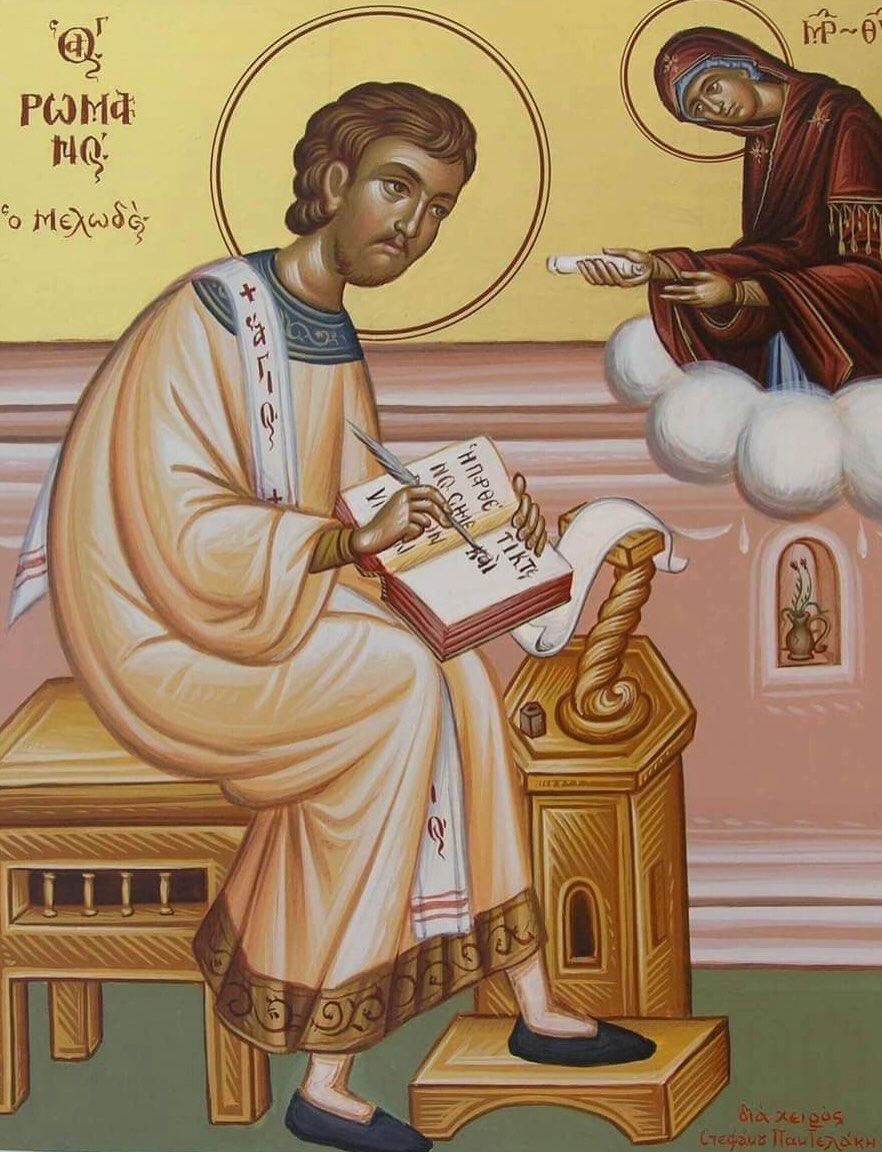
The post commemorates Saint Romanos the Melodist, whose feast falls on October 1st. Romanos lived in the 6th century during the height of the Byzantine Empire and is counted among the greatest hymnographers of the Eastern Orthodox Church. Born in Syria, he served as a deacon in Beirut before moving to Constantinople during the reign of Emperor Justinian I. Church tradition holds that Romanos was not initially a gifted singer or writer, and his weakness caused him embarrassment among his peers.
On Christmas Eve he received a vision of the Virgin Mary, who commanded him to swallow a scroll. After doing so, he was blessed with musical talent and a beautiful voice, and he stepped onto the ambo to chant his famous hymn on the Nativity. Romanos is credited with pioneering and perfecting the kontakion, a form of chanted verse sermon and a multi-stanza poem set to music.
His hymns combined biblical narratives with vivid dialogue, theological insight, and dramatic tension. They also served an educational purpose, explaining theological concepts to ordinary people in an accessible and emotionally stirring way. He is said to have composed over one thousand hymns, of which about eighty kontakia survive today.
His subjects included the lives of saints, major feast days, the Passion of Christ, and the Last Judgment. His poetic skill earned him the title of the 'Pindar of rhythmic poetry.' The saint reposed in 556 AD.
Main points
- Saint Romanos the Melodist, a 6th-century deacon born in Syria, served in Beirut before moving to Constantinople under Emperor Justinian I.
- Tradition says the Virgin Mary appeared to him on Christmas Eve and commanded him to swallow a scroll, after which he received a gift for hymnody.
- He pioneered and perfected the kontakion, a chanted verse sermon that taught theology to the common people.
- He is said to have written over one thousand hymns; about eighty kontakia survive, covering feast days, the lives of saints, the Passion, and the Last Judgment.
- He was called the 'Pindar of rhythmic poetry' and reposed in 556 AD.