
 Lives of the Saints 🙏
Instagram
Lives of the Saints 🙏
Instagram
Saint Euphemia's martyrdom under Governor Priscus in 304
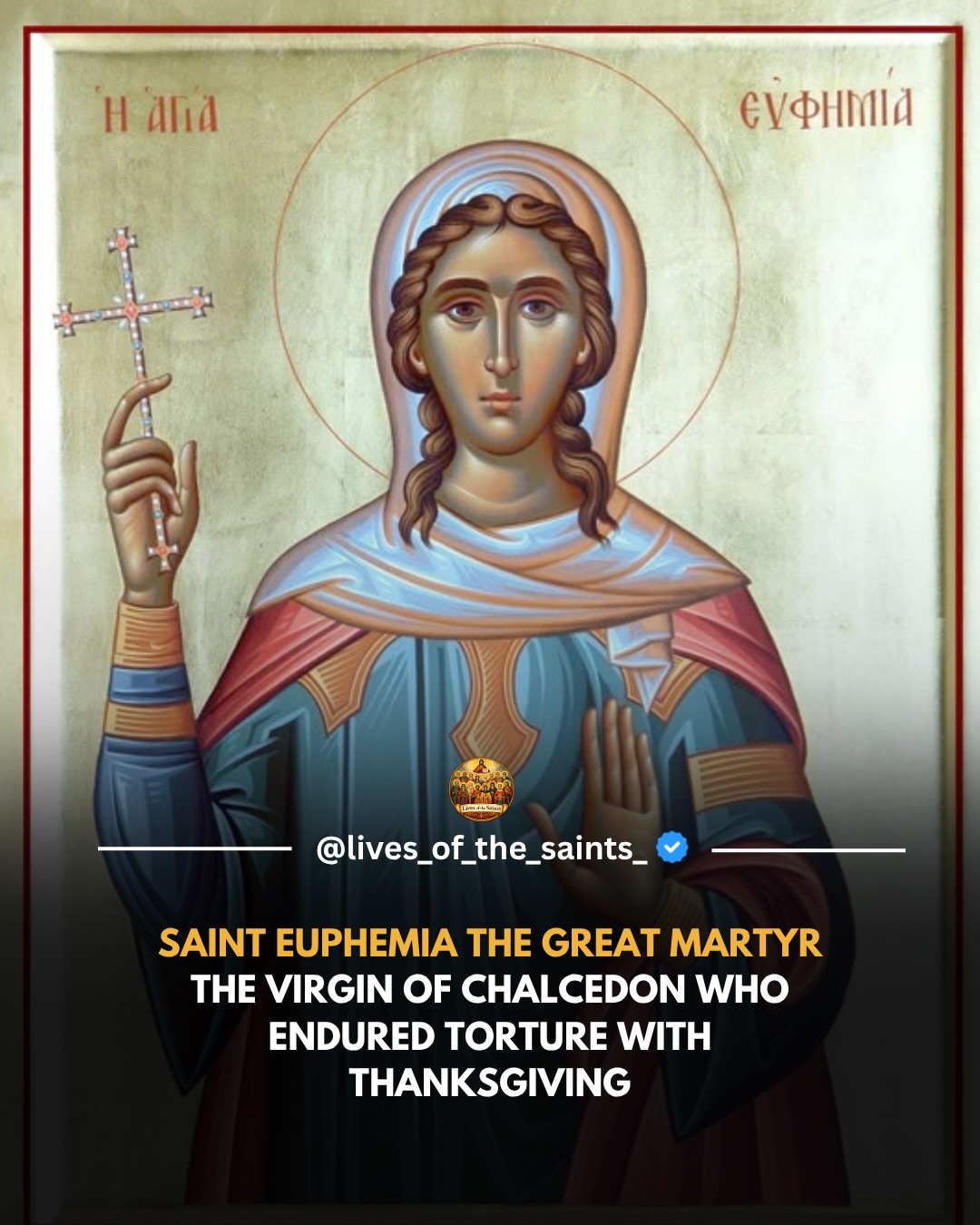
The post recounts the life and martyrdom of Saint Euphemia, born in Chalcedon to the senator Philophron and his wife Theodorisia. She is described as beautiful in body and soul, filled with purity, courage, and love for Christ. When the governor Priscus commanded a pagan sacrifice to Ares, forty-nine Christians hid to avoid idolatry.
They were discovered and brought before Priscus. Asked why they refused, they answered that earthly authority must be obeyed only when it does not contradict the heavenly God. For nineteen days they were tortured daily. On the twentieth day Priscus separated Euphemia from the others and tried to flatter her because of her beauty, hoping to turn her from Christ.
She remained firm. She was placed on a torture wheel, but an angel of God appeared and broke the wheel. She was thrown into a fiery furnace and remained unharmed by God's power. Seeing this, two soldiers, Victor and Sosthenes, believed in Christ and were martyred.
Euphemia was then cast into a pit filled with water and poisonous filth; she made the sign of the Cross and was untouched. Finally she was thrown before wild beasts. She prayed with thanksgiving and gave her soul into God's hands. The post states she suffered for Christ in the year 304 and entered eternal joy.
It concludes that she reminds believers that purity is not weakness and that a soul united to Christ can face torture, fire, beasts, and death with peace.
Main points
- Born in Chalcedon to Philophron and Theodorisia
- Refused pagan sacrifice with forty-nine other Christians
- Endured nineteen days of torture and further torments
- Miraculously preserved from wheel, furnace, pit, and beasts
- Martyred in 304; two soldiers converted and died with her