
 Orthodox Life
Instagram
Orthodox Life
Instagram
Saint Cyprian and Saint Justina: the sorcerer converted by a defeated demon
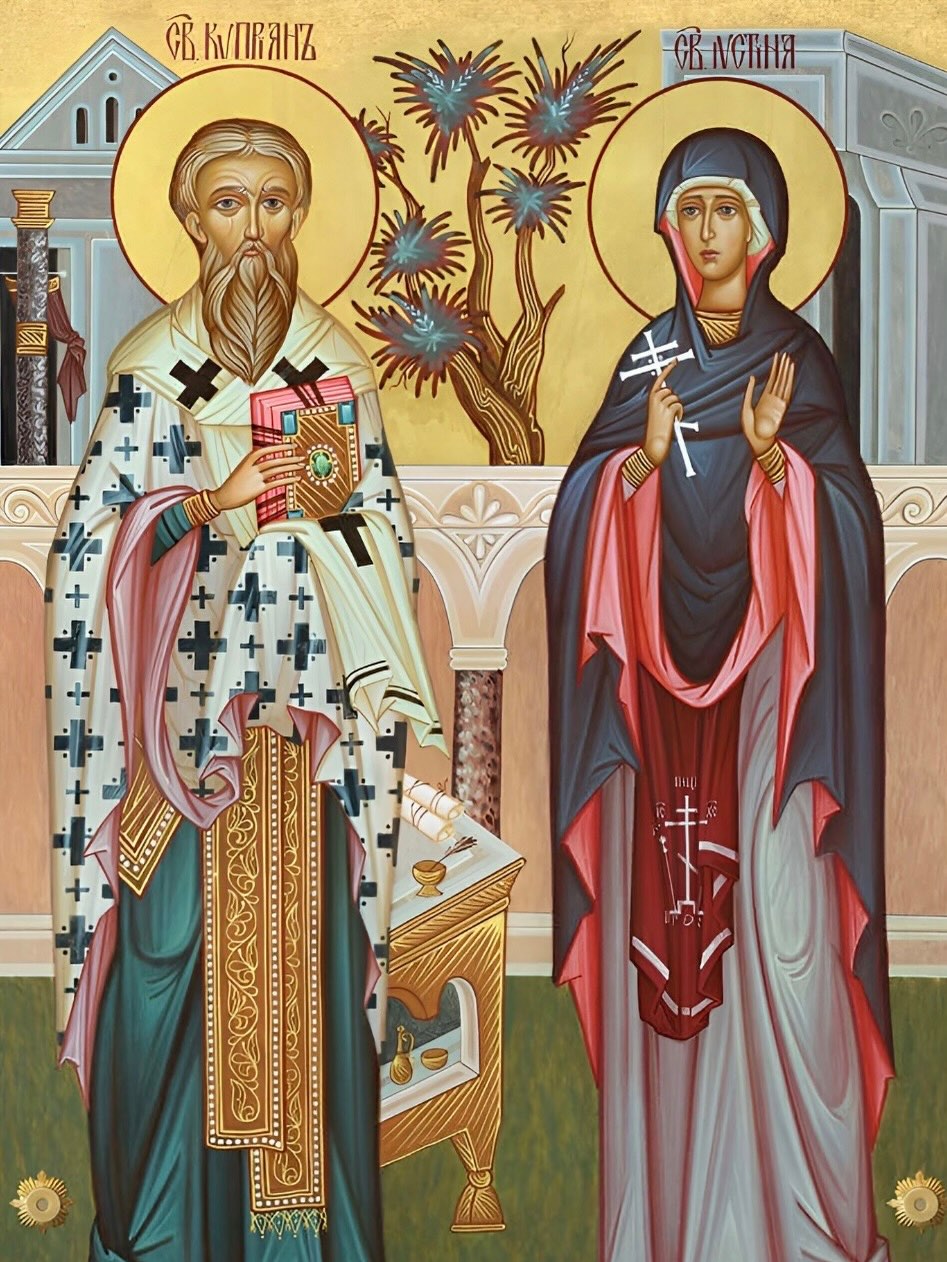
On October 2nd the Church commemorates the holy martyrs Cyprian and Justina, who suffered in Nicomedia during the persecutions under Emperor Diocletian. Before his conversion, Cyprian was a wealthy pagan sorcerer and philosopher in Antioch who dealt in dark magic and invoked demonic spirits. Justina was a devout Christian virgin who had converted her own pagan parents and dedicated her chastity to Christ.
Their lives intersected when a wealthy pagan suitor, unable to win Justina's affections, hired Cyprian to use his magical arts to compromise her virtue and force her into marriage. Cyprian sent powerful demonic spirits to torment Justina, but she repelled every assault through fasting, intense prayer, and the sign of the Holy Cross.
After his demons were three times put to flight by the grace of Christ, Cyprian recognized the impotence of Satan's power. He repented, publicly burned his expensive magic books, and sought baptism from the local bishop. He later rose through the clergy to become a bishop, while Justina was ordained a deaconess and appointed abbess of a convent.
Under Diocletian both were arrested for their faith and tortured, including being thrown into a boiling cauldron, which they miraculously survived. They refused to sacrifice to pagan idols, so the authorities transferred them to Nicomedia, where the governor ordered their execution in 304 AD.
Main points
- Cyprian was a wealthy pagan sorcerer in Antioch before his conversion; Justina was a Christian virgin who had converted her pagan parents.
- A rejected suitor hired Cyprian to use magic against Justina, but she drove off his demons through fasting, prayer, and the sign of the Cross.
- After his demons were three times defeated, Cyprian burned his magic books and was baptized by the local bishop.
- Cyprian became a bishop; Justina became a deaconess and abbess of a convent.
- Both were tortured under Diocletian, survived a boiling cauldron, and were executed in Nicomedia in 304 AD.