WeOrthodox
EN UA

Orthodox posts, videos and discussions

We follow Orthodox channels, communities and blogs across the web, summarise every post and video, and highlight the conversations with real substance.

Orthodox Health Instagram

Acedia: When the Escape Itself Becomes the Temptation

The post draws on the Desert Fathers to describe acedia, the restlessness Evagrius called the noon-day demon. It does not always look dramatic. It can look like boredom, irritability, watching the clock, or looking for someone to interrupt you. It can also look like convincing yourself that relief is always somewhere else, a feeling familiar to anyone facing career burnout or endless distraction. The ancient prescription the post offers is…

The post draws on the Desert Fathers to describe acedia, the restlessness Evagrius called the noon-day demon. It does not always look dramatic. It can look like boredom, irritability, watching the clock, or looking for someone to interrupt you. It can also look like convincing yourself that relief is always somewhere else, a feeling familiar to anyone facing career burnout or endless distraction.

The ancient prescription the post offers is uncomfortable: stay, pray, work, and discern whether the thing you want to escape is actually the problem, or whether the escape itself has become the temptation. The full conversation is Episode 82 of the Orthodox Health Podcast, titled "The Noonday Demon: Why You Feel Trapped in Your Career," with Fr. Michael Butler.

In the episode, the speaker explains acedia as a Christian term, translating it as lethargy or despondence. He recounts Evagrius' image of the monk pacing back and forth in his cell like a lion, looking out the window to see if a brother might be coming by to talk, and wondering how long until lunch. Evagrius' advice is direct: this restlessness is just a temptation, so stay in your cell.

If you want to leave, sit back down and work. The discussion centers on recognizing acedia in ordinary modern forms and on the old remedy of remaining in place rather than seeking escape.

Key moments

  1. Evagrius speaks of acedia, translated as lethargy or despondence, and calls it the noon-day demon.
  2. The monk paces back and forth in his cell like a lion and looks out the window to see if a brother is coming to talk, wondering how long until lunch.
  3. Evagrius' advice: this is just a temptation, stay in your cell. If you want to leave, sit back down and work.
Fr.TEDTalks with Ally ☦︎ Instagram

The Exaltation of the Cross: an instrument of death becomes the means of salvation

The author shares a video of the feast of the Exaltation of the Holy and Life-Giving Cross, which they had kept for a few weeks before posting. The feast commemorates the finding and exaltation of the Precious Cross of Christ. During the service, the Cross is solemnly elevated before the faithful, who bow in reverence. The author notes that through the Cross, what was once an instrument of suffering and death became the means of our salvation.…

The author shares a video of the feast of the Exaltation of the Holy and Life-Giving Cross, which they had kept for a few weeks before posting. The feast commemorates the finding and exaltation of the Precious Cross of Christ. During the service, the Cross is solemnly elevated before the faithful, who bow in reverence.

The author notes that through the Cross, what was once an instrument of suffering and death became the means of our salvation. The post expresses that witnessing these ancient traditions, preserved and lived within the Orthodox Church to this day, is moving. The author closes with the festal hymn: 'Before Thy Cross, we bow down in worship, O Master, and Thy Holy Resurrection we glorify.' There is no discussion in the thread; the post is a devotional share of the feast and its liturgy.

  • The post shares a video of the feast of the Exaltation of the Holy and Life-Giving Cross.
  • The feast commemorates the finding and exaltation of the Precious Cross of Christ.
  • During the service, the Cross is elevated before the faithful, who bow in reverence.
  • The author reflects that the Cross, once an instrument of suffering and death, became the means of our salvation.
  • The post ends with the hymn: 'Before Thy Cross, we bow down in worship, O Master, and Thy Holy Resurrection we glorify.'
Read more

Orthodox author questions if Baptists worship same God after pastor smashes Marian statue

The author states he is not sure Baptists worship the same God as Orthodox Christians. He describes a video clip in which Pastor Shelly directs children to smash statues of Mary. The pastor quotes the commandment against graven images and tells the children to take a swing. He calls the action awesome and lets them choose their victim, presenting a statue of Mary "for all the Catholics" and declaring "Mary is going down, Catholics." The pastor…

The author states he is not sure Baptists worship the same God as Orthodox Christians. He describes a video clip in which Pastor Shelly directs children to smash statues of Mary. The pastor quotes the commandment against graven images and tells the children to take a swing.

He calls the action awesome and lets them choose their victim, presenting a statue of Mary "for all the Catholics" and declaring "Mary is going down, Catholics." The pastor strikes the statue repeatedly, saying "Bam! All right. Bam! Nailed it. No head now" and compares it to Baal. The author challenges the pastor: "If you claim Jesus is your God, why would you smash images of his mother?" He says he would not want to be the pastor at the judgment and prays "Lord, have mercy."

Key moments

  1. The author states he is not sure Baptists worship the same God as Orthodox Christians.
  2. He describes a clip where Pastor Shelly has children smash statues of Mary.
  3. Pastor Shelly quotes "Thou shall not make unto thee any graven image" and tells the children to take a swing.
  4. Pastor Shelly calls the action awesome and lets the children choose their victim.
  5. Pastor Shelly presents a statue of Mary "for all the Catholics" and says "Mary is going down, Catholics."
  6. Pastor Shelly strikes the statue, saying "Bam! All right. Bam! Nailed it. No head now" and compares it to Baal.
  7. The author challenges the pastor: "If you claim Jesus is your God, why would you smash images of his mother?"
  8. The author says he would not want to be the pastor at the judgment and prays "Lord, have mercy."
Read more
Kyle YouTube discussion

Stop Porn Now for Your Future Wife: Orthodox Men on Marriage Readiness

Stop Porn Now for Your Future Wife: Orthodox Men on Marriage Readiness 11:37

Two speakers discuss the wave of young men coming into the Orthodox Church, many of whom carry pornography addiction from growing up with little guidance. They describe how porn rewires the brain and becomes a burden men bring with them into church life. The speakers then address a pattern: men who quit porn often fall into a new set of sins, becoming prideful and judgmental toward women, sometimes shaped by red pill content about body counts,…

Two speakers discuss the wave of young men coming into the Orthodox Church, many of whom carry pornography addiction from growing up with little guidance. They describe how porn rewires the brain and becomes a burden men bring with them into church life. The speakers then address a pattern: men who quit porn often fall into a new set of sins, becoming prideful and judgmental toward women, sometimes shaped by red pill content about body counts, and growing bitter when they cannot find a partner.

They warn that blaming all women and putting them in one box signals something wrong, and that a woman with anything in her past can also repent. One speaker shares that he watched porn nearly every day from sixth or seventh grade until his freshman year of college, and notes that while you are forgiven when you repent, the damage of the sin remains.

They urge men to stop pornography now for the love of a future wife, saying the idea of stopping after marriage is terrible and that neuroplasticity makes relapse easier the longer you watched it. The discussion turns to repentance and humility: Orthodox saints focus on the evil within themselves, and you will be judged by the standard you judge others.

Men coming into the church flee evil in the world and then realize they are the problem, since the only thing they can control is themselves, and watching their own sins is a full-time job. The speakers close with practical advice on preparing for marriage: ask honestly whether the person you want would want you in your current state, and follow Father Josiah Trenham's advice to make a list of qualities you want in a spouse and turn it inward, because you attract what you are.

Marriage is described as a deep co-struggle where sins against one's wife are most frequent, and a man's sins or love vibrate outward into his family.

Key moments

  1. 0:00 Many young men are coming into the church, raised with little guidance and exposed to pornography, which rewires the brain and becomes a burden they carry.
  2. 1:02 Men who overcome porn can move from sins of the left hand to sins of the right, becoming prideful and judgmental toward women, sometimes influenced by red pill content about body counts, and growing bitter when they cannot find a partner.
  3. 2:05 The moment you blame all women and put them in one box, something is wrong; a woman with anything in her past can also repent, and a man who repents can be a good king worthy of a queen.
  4. 2:35 Stop pornography now for the love of your future wife; thinking you can stop after marriage is a terrible idea, and neuroplasticity makes relapse easier the longer you watched it.
  5. 3:37 One speaker watched porn nearly every day from sixth or seventh grade until his freshman year of college; you are forgiven when you repent, but the damage of the sin remains.
  6. 4:09 Orthodox saints focus on the evil within themselves; do not hold a repentant person's sins against them, because you will be judged by the standard you judge others.
  7. 5:43 You come into the church fleeing evil in the world and realize you are the problem, since the only thing you can control is yourself; focus on your own sins, which is a full-time job.
  8. 8:53 Ask honestly whether the person you want would want you in your current state; Father Josiah Trenham advises making a list of qualities you want in a spouse and turning it inward, because you attract what you are.
18 opinions in the discussion Maybe I should have my wife make a video about the failures of women in society. Since the supposed men who need to be leaders dance around the issue and shift the burden solely onto a… Read the discussion
CHRISTIANITY UNITED Instagram

Orthodoxy as right faith and right worship rooted in Greek and Slavic terms

The author explains that the word Orthodox comes from Greek orthos meaning right or correct and doxa meaning both belief and glory. In Slavic languages the term Pravoslavlje expresses right glory. The text states that for Orthodox Christians faith is not simply believing God exists or knowing Scripture but living that faith through prayer repentance fasting the Holy Mysteries and worship of the Holy Trinity. What we believe and how we worship…

The author explains that the word Orthodox comes from Greek orthos meaning right or correct and doxa meaning both belief and glory. In Slavic languages the term Pravoslavlje expresses right glory. The text states that for Orthodox Christians faith is not simply believing God exists or knowing Scripture but living that faith through prayer repentance fasting the Holy Mysteries and worship of the Holy Trinity.

What we believe and how we worship cannot be separated. The Orthodox Church has preserved the apostolic faith through centuries of persecution political changes theological disputes and attempts to alter Christian teaching. The same faith confessed by the Apostles was defended by the Holy Fathers proclaimed by the Seven Ecumenical Councils and continues to be celebrated in the Divine Liturgy today.

The author writes that truth should not change because the world changes. Defending Orthodoxy should not become an excuse for pride hatred or looking down on others. There is no point in defending truth with words if we refuse to live it with humility and love.

The calling is to know the Orthodox faith live it preserve it and pass it on to the next generation.

Key moments

  1. Orthodox means it has two meanings. One means the right opinion, the right the truth.
  2. But it's interesting that when it was translated into the Greek word, orthodox was it's a Greek word. Was translated into Slavic, they translated it from a Slavic which meant "right glory".
  3. Because doxa in Greek could also mean glory.
  4. So it means opinion and glory. So it's like right worship or right faith, that's that's what it means.
Read more
George Instagram discussion

Hundreds of thousands queue in Romania to venerate Saint Paraskevi's relics

In Romania, hundreds of thousands of people wait for hours to venerate the relics of Saint Paraskevi on her feast day. She is known as Petka in Serbia and Bulgaria and as Sfânta Vineri in Romania. Born near Constantinople into a wealthy family, she heard Christ's words about self-denial as a young girl and began giving her fine clothes to the poor, upsetting her family. She left everything to live in prayer in the desert near the Jordan River…

In Romania, hundreds of thousands of people wait for hours to venerate the relics of Saint Paraskevi on her feast day. She is known as Petka in Serbia and Bulgaria and as Sfânta Vineri in Romania. Born near Constantinople into a wealthy family, she heard Christ's words about self-denial as a young girl and began giving her fine clothes to the poor, upsetting her family.

She left everything to live in prayer in the desert near the Jordan River until an angel directed her to return home. She lived quietly for two more years before dying at age 27. Her body was discovered incorrupt many years later. Her relics now rest in Iași, Romania, where pilgrims from many countries come to pray. She never sought recognition but simply followed Christ.

Key moments

  1. Hundreds of thousands in Romania wait hours to kiss Saint Paraskevi's relics on her feast day.
  2. She is called Petka in Serbia and Bulgaria, and Sfânta Vineri in Romania.
  3. Born near Constantinople to a wealthy family, she heard Jesus's words about self-denial as a young girl.
  4. She gave her fine clothes to the poor, angering her family, then left to live in the desert near the Jordan River.
  5. An angel told her to return home; she lived quietly for two more years and died at age 27.
  6. Her body was found incorrupt many years later.
  7. Her relics are now in Iași, Romania, drawing pilgrims from everywhere.
  8. She never sought fame but simply followed Christ, and God made her known worldwide.
16 opinions in the discussion It is Parascheva (Paraskeva) in Romanian, Sfânta Vineri is only a popular name, not the Saint's name. 🙏 Read the discussion
Orthodox Life Instagram

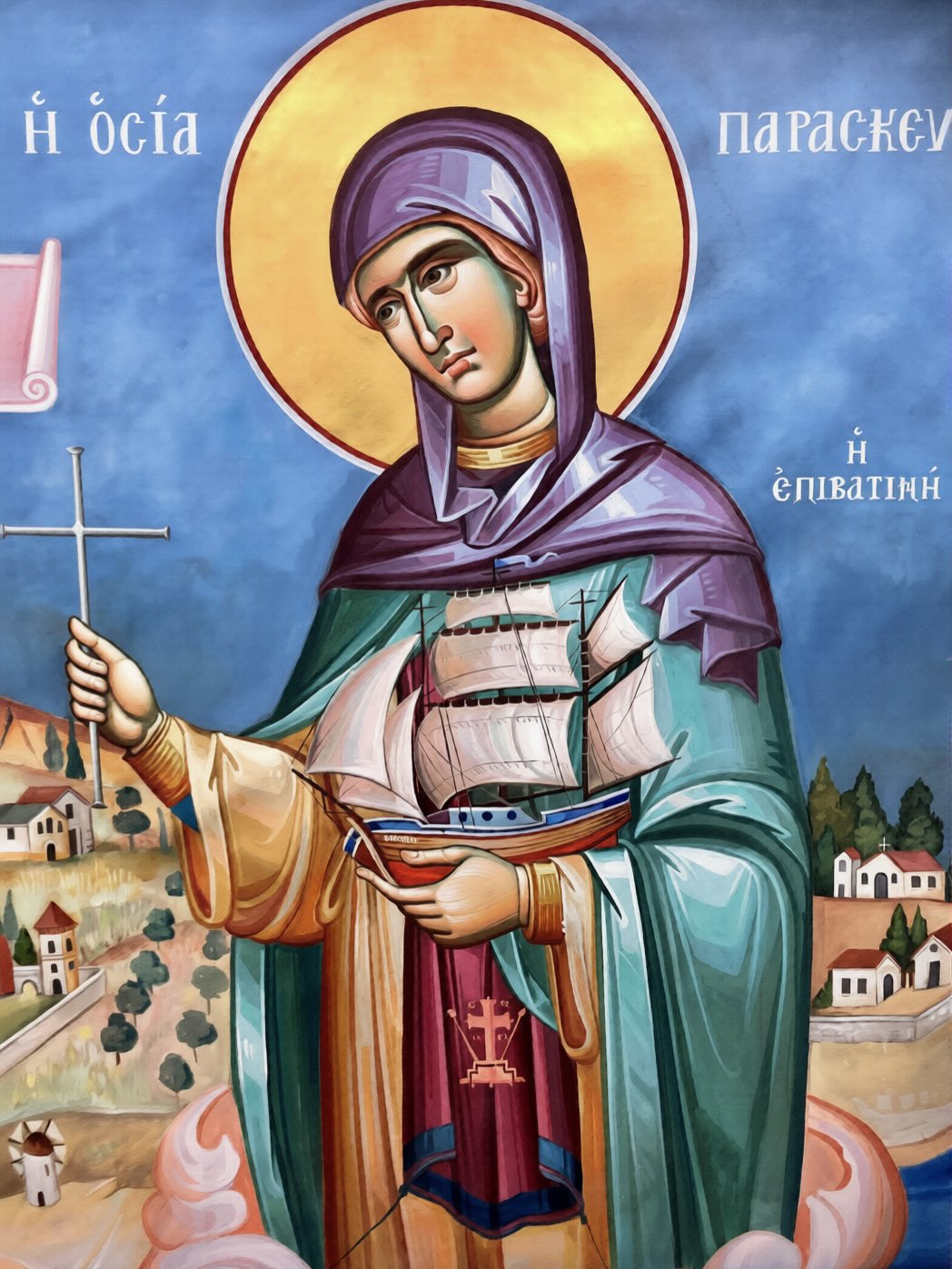
Saint Paraskeva of Epivato: 11th-century ascetic who became protector of the sick

The post commemorates Saint Paraskeva of Epivato on October 14. Born in Epivates near modern Istanbul to a wealthy pious family, she gave away expensive clothing to the poor from a young age, angering her parents. Her older brother Euthymius later became Bishop of Madytos. After her parents died, the fifteen-year-old Paraskeva distributed her inheritance and entered monastic life. She fled to Constantinople, spent five years at a monastery in…

The post commemorates Saint Paraskeva of Epivato on October 14. Born in Epivates near modern Istanbul to a wealthy pious family, she gave away expensive clothing to the poor from a young age, angering her parents. Her older brother Euthymius later became Bishop of Madytos. After her parents died, the fifteen-year-old Paraskeva distributed her inheritance and entered monastic life.

She fled to Constantinople, spent five years at a monastery in Heraclea Pontica, then made a pilgrimage to Jerusalem and lived as a hermit in the Jordanian desert enduring temptations and deprivation. At age twenty-five an angel appeared in a vision and commanded her to return to her homeland to surrender her body to the earth. She obeyed, spent her final two years in Epivato in secrecy, fasting, and continuous prayer, and reposed at twenty-seven.

Buried near the sea as an ordinary stranger, her uncorrupted sweet-scented body was discovered years later after divine dreams revealed its location to villagers. Her relics were placed in the Church of the Holy Apostles in Epivato and became a source of physical and spiritual healings for over a century. Because of the extensive miracles attributed to her, she became one of the most beloved and widely venerated protectors of the sick and marginalized throughout the Balkans.

  • Born in Epivates to wealthy parents; gave away clothing to the poor from youth
  • Brother Euthymius became Bishop of Madytos
  • Entered monastic life at fifteen after parents' death; lived in Constantinople, Heraclea Pontica, Jerusalem, and the Jordanian desert
  • Angelic vision at twenty-five commanded return to Epivato; died at twenty-seven
  • Incorrupt relics discovered after divine dreams; placed in Church of the Holy Apostles; source of healings for over a century
Read more
Robel࿇🕊️ Instagram

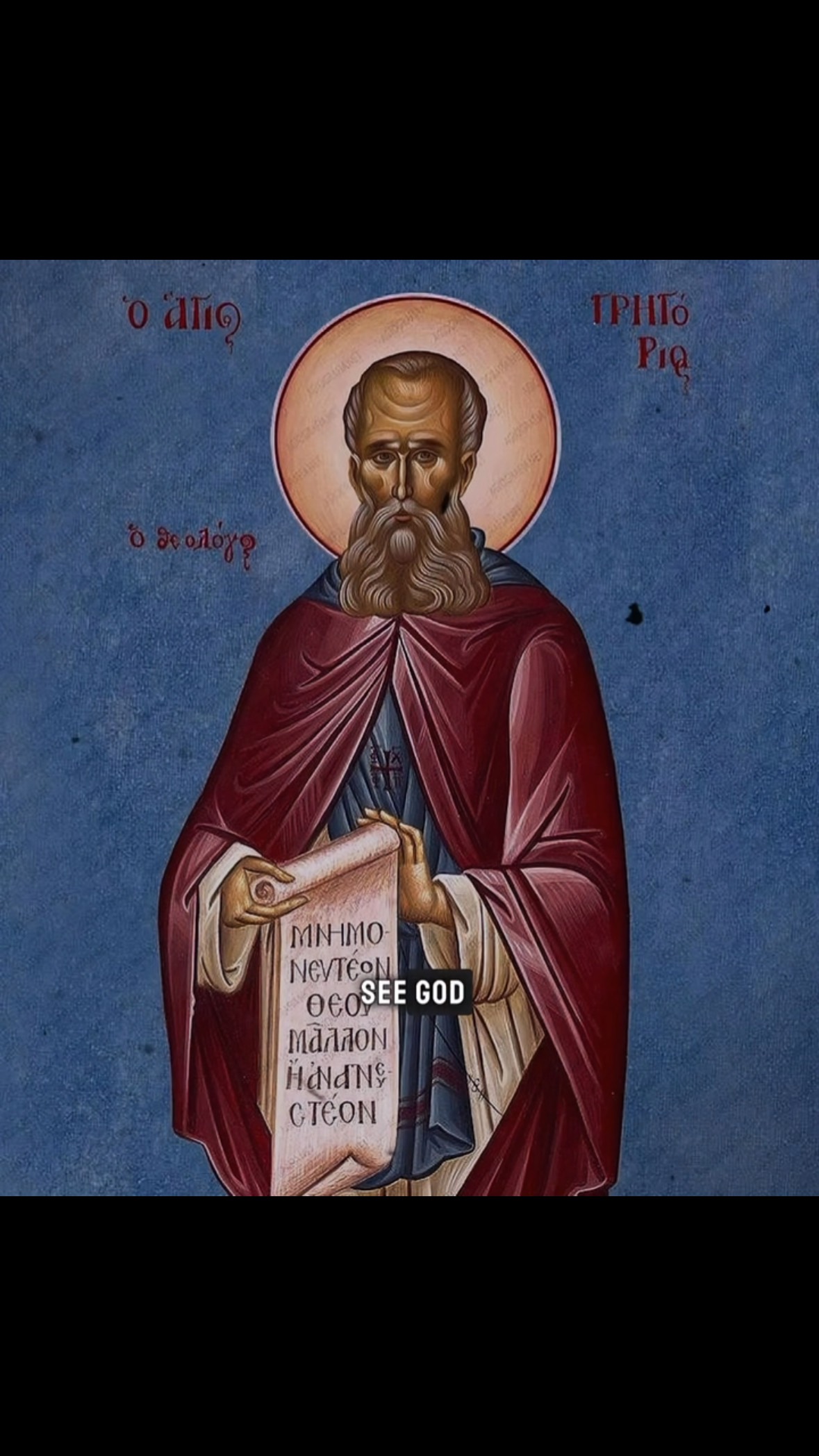
Saint Gregory the Theologian glimpses God's glory, not essence

The post presents Saint Gregory the Theologian's account of seeking to see God. He runs up a mountain as far as possible and withdraws his mind from outward distractions. When he looks up, he barely sees the back of God while sheltered by the rock, which he identifies as the Word of God made flesh.

Looking more closely, he realizes the pure and unmingled nature of the Holy Trinity cannot be seen. The Trinity dwells beyond all created things. Only the glory and majesty of God as manifested among creatures is visible to him.

Key moments

  1. The speaker runs to see God and goes up the mountain as far as possible.
  2. The speaker withdraws within, gathering the mind away from outward distractions.
  3. When looking up, the speaker barely sees the back of God.
  4. The speaker is sheltered by the rock, who is the Word of God made flesh.
  5. Looking more closely, the speaker realizes the pure and unmingled nature of the Holy Trinity cannot be seen.
  6. The Holy Trinity dwells beyond all created things.
  7. The speaker sees only the glory and majesty of God as manifested among His creatures.
Read more

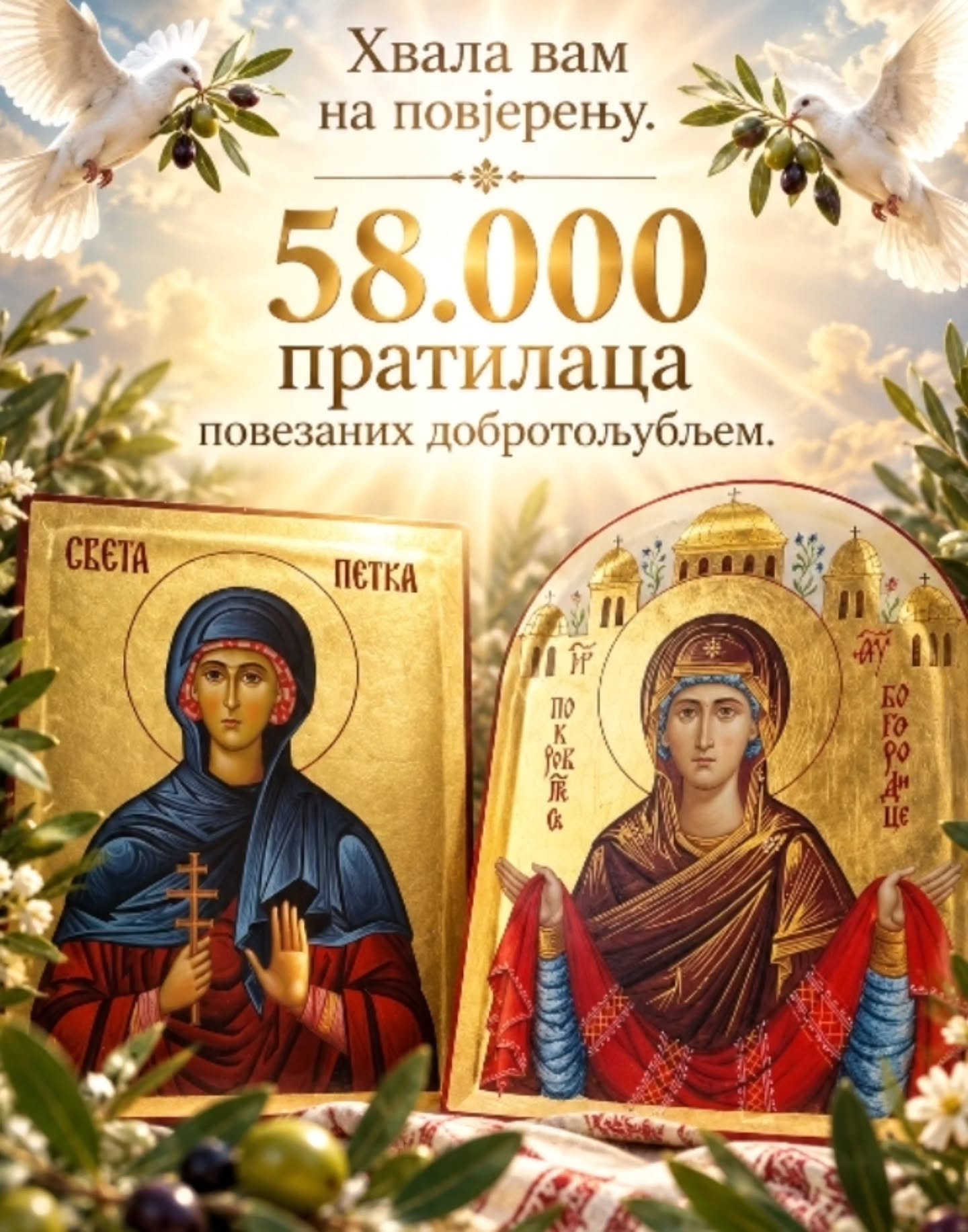
Feast of the Protection: 180,000 venerate relics in Iași, humanitarian work noted

The post opens with a greeting for the Feast of the Protection of the Most Holy Theotokos on October 14, asking that the Theotokos cover the faithful with her honorable omophorion, keep them in peace and love, and intercede before her Son and God. It reports that a pilgrimage in Iași, Romania, where the relics of St. Paraskeva and St. Paisios of Mount Athos rest, drew about 180,000 faithful from October 8 to the feast day. Over 28,000 attended…

The post opens with a greeting for the Feast of the Protection of the Most Holy Theotokos on October 14, asking that the Theotokos cover the faithful with her honorable omophorion, keep them in peace and love, and intercede before her Son and God. It reports that a pilgrimage in Iași, Romania, where the relics of St. Paraskeva and St. Paisios of Mount Athos rest, drew about 180,000 faithful from October 8 to the feast day.

Over 28,000 attended the festal Liturgy. The author, Jelena Vukićević, founder of the page "pojedinac_porodica_i_drustvo," thanks the 58,000 followers for living love, peace, and fellowship together and for manifesting benevolence through works of mercy. She notes their participation in 72 one-time humanitarian actions across Serbia, Montenegro, and Bosnia and Herzegovina over three years, and that many also actively help people in Kosovo and Metohija.

She specially thanks those who, through the "Measure of My Soul" personal development model based on work in the spirit of Orthodox dogmatics, have witnessed how much it is possible to change oneself, grow spiritually, and become a better person. The message closes with three Scripture verses: "Blessed are the merciful, for they shall obtain mercy" (Mt. 5:7), "Inasmuch as you did it to one of the least of these My brethren, you did it to Me" (Mt. 25:40), and "Little children, love one another" (1 Jn. 4:7), urging that these words remind the faithful to become better people day by day and confirm love by deeds wherever possible.

The post is signed by Vukićević, Isaiah, Christina, and Nikola, with iconography credited to Rada Nestorović and Branka Raković.

  • Feast of the Protection celebrated October 14 with major pilgrimage to Iași, Romania
  • About 180,000 faithful venerated relics of St. Paraskeva and St. Paisios from October 8
  • Over 28,000 attended the festal Liturgy
  • Page community of 58,000 enabled 72 humanitarian actions in three countries over three years
  • Personal development model "Measure of My Soul" based on Orthodox dogmatics cited

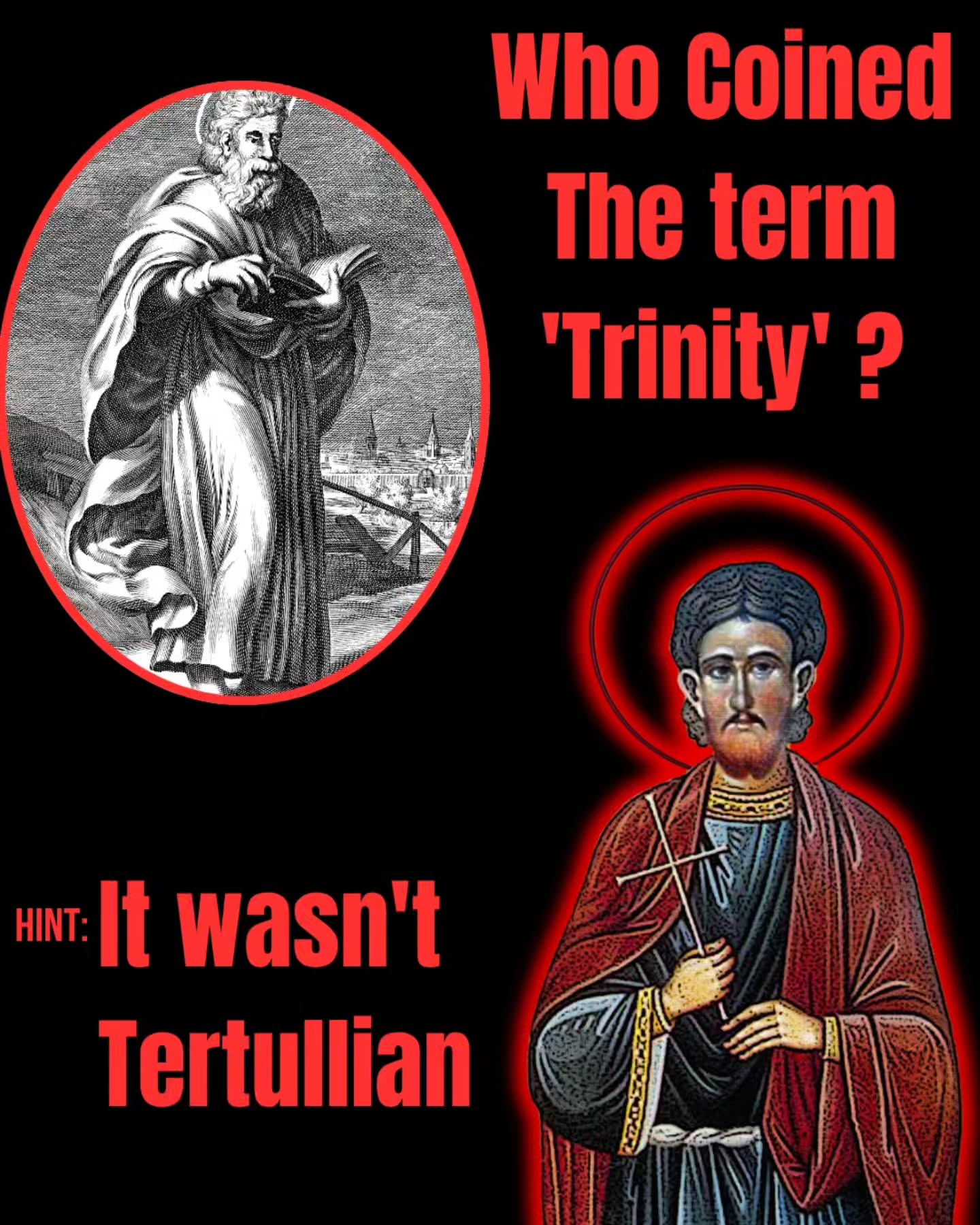
St. Theophilus of Antioch and the earliest use of "Trinity" around 180 AD

The post notes that on October 13 the Orthodox Church commemorates St. Theophilus of Antioch, a second-century bishop and early Christian apologist. Around 180 AD, in his work To Autolycus, he provided the earliest surviving Christian use of the Greek term Trias, meaning "Trinity." He described God, His Word, and His Wisdom, presenting an early Trinitarian framework roughly 145 years before the Council of Nicaea. The post includes hashtags for Christianity, trinity, God, and orthodoxy.

  • St. Theophilus of Antioch commemorated October 13
  • Second-century bishop and apologist
  • Earliest surviving Christian use of "Trias" (Trinity) around 180 AD
  • Found in his work To Autolycus
  • Early Trinitarian framework 145 years before Council of Nicaea
Read more

Priest's harsh confession demands called violence against the person

Priest's harsh confession demands called violence against the person 12:45

A layperson describes a confession where the rector, serving alone and visibly irritated, angrily refused a request to shorten the confession because of a long line. The priest demanded a detailed list of sins and criticized the layperson for missing the Saturday all-night vigil. The layperson explains that both they and their wife are full-time students undergoing expensive psychotherapy for serious mental health conditions, making Saturday…

A layperson describes a confession where the rector, serving alone and visibly irritated, angrily refused a request to shorten the confession because of a long line. The priest demanded a detailed list of sins and criticized the layperson for missing the Saturday all-night vigil. The layperson explains that both they and their wife are full-time students undergoing expensive psychotherapy for serious mental health conditions, making Saturday evening their only time to rest. The encounter left the wife in tears and both shaken before communion.

The responding priest calls the incident real violence against the human person. He argues that Christ invites the sick to communion, not the sinless, and that priests who impose formal barriers, mandatory canons, and vigil attendance act like border guards rather than physicians. He states that the only sin barring communion is unrepented enmity, citing the pre-communion prayer and Christ's command to reconcile before offering one's gift.

He contrasts this with the practice for clergy: priests in the Moscow diocese are required to confess only twice yearly, and their confession is never tied to each Eucharist they serve, unlike the heavy burdens they lay on the laity.

Key moments

  1. 0:00 The layperson recounts being forced into infrequent communion in 2020-21 due to excessive preparation requirements, later finding priests who explained the rules were not mandatory.
  2. 1:04 At today's liturgy, only the rector was present to serve and hear confessions simultaneously; he appeared irritable and angrily rejected the layperson's offer to skip a detailed sin list to save time.
  3. 1:34 The priest insisted on a formal confession, leading the layperson to list made-up sins, and criticized their absence from the Saturday all-night vigil.
  4. 2:05 The layperson explains they and their wife are in psychotherapy for a mental disorder and a personality disorder, are full-time students working to afford therapy costing far more than 500 rubles per session, and need Saturday evening to rest.
  5. 3:07 The wife left the church in tears, already in a spiritual crisis unable to accept God's love; both eventually communed but found the sermon on God's love and joy unbearable after the encounter.
  6. 4:43 The responding priest calls the incident real violence against the human person, emphasizing that the faithful come to God at communion, not to a priest acting as a controller.
  7. 5:45 The priest argues that treating confession as a checkpoint requiring sinlessness before communion contradicts Christ's words that the sick need a physician, and cites 1 John on sins leading to death versus the daily Christian state.
  8. 11:29 The priest notes that priests in the Moscow diocese are required to confess only twice yearly, their confession never tied to each Eucharist they serve, unlike the heavy burdens they lay on the laity.
11 opinions in the discussion So, Father Alexey! I don't have these problems anymore. I've been going to the same church for a long time. Our wise rector allowed me not to confess before communion if I haven't fallen… Read the discussion
Citations Orthodoxes ☦ Instagram

Saint Basil on the immortal soul and mortal body

The post presents a quotation from Saint Basil of Caesarea urging self-examination and knowledge of one's nature. He states that the body is mortal while the soul is imperishable. He describes two lives: one belonging to the flesh that passes quickly, and another belonging to the soul that admits no end. The text frames this distinction as something to be learned through self-knowledge.

  • The body is mortal, the soul imperishable
  • Two lives: the brief life of the flesh and the endless life of the soul
  • Self-examination and knowledge of one's nature are necessary
radioimlemesou Instagram

Metropolitan Athanasios of Limassol shares memories of Fr. Eustathios Papageorgiou

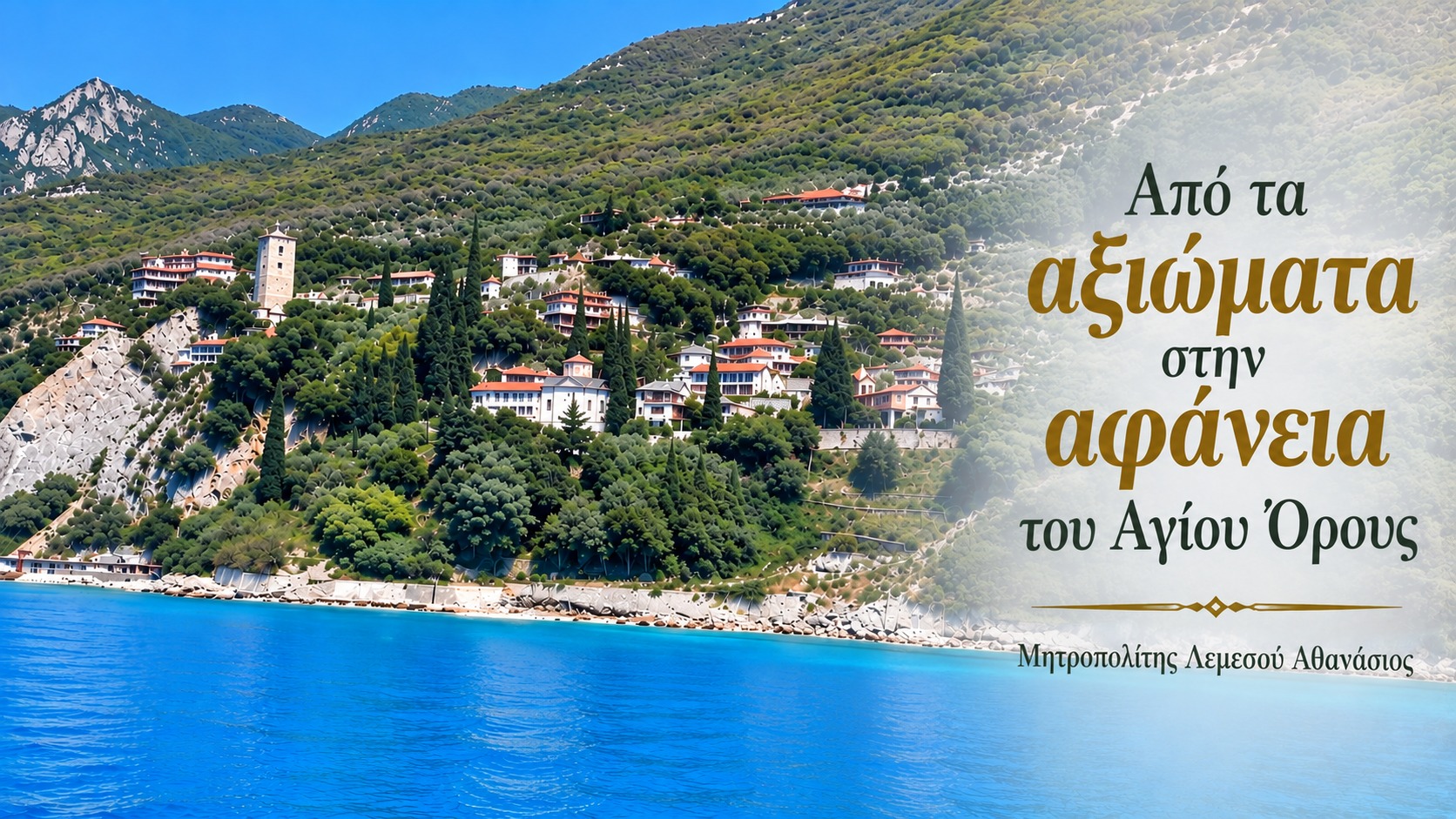
The post functions as a brief announcement for a video excerpt. It identifies the speaker as Metropolitan Athanasios of Limassol, referred to with the honorific Panierotatos. The program title is given in Greek: "Καρδιακός Λόγος, Αγιασμένων Μορφών Νοσταλγία", which translates as "Heartfelt Word - Nostalgia of Holy Forms". The Metropolitan speaks about Father Eustathios Papageorgiou, identified as makaristou, meaning the late or of blessed…

The post functions as a brief announcement for a video excerpt. It identifies the speaker as Metropolitan Athanasios of Limassol, referred to with the honorific Panierotatos. The program title is given in Greek: "Καρδιακός Λόγος, Αγιασμένων Μορφών Νοσταλγία", which translates as "Heartfelt Word - Nostalgia of Holy Forms".

The Metropolitan speaks about Father Eustathios Papageorgiou, identified as makaristou, meaning the late or of blessed memory. The Metropolitan shares personal experiences and wonderful incidents from Father Eustathios's life. Through these memories, he outlines the personality and spiritual journey of Father Eustathios.

Two main phases are mentioned: the years of his ministry as Archbishop's Representative of Ammochostos, and his repose as a monk at the New Skete of Mount Athos. The post concludes by directing the audience to the channel's YouTube page to view the excerpt. The text does not quote any specific story, nor does it give dates, locations beyond Ammochostos and Mount Athos, or other names.

It serves as an announcement for the video content. The language of the original post is Greek.

  • Metropolitan Athanasios of Limassol appears in an excerpt from "Heartfelt Word - Nostalgia of Holy Forms"
  • He recounts personal experiences and remarkable incidents from the life of the late Fr. Eustathios Papageorgiou
  • The memories cover Fr. Eustathios's service as Archbishop's Representative of Ammochostos
  • They also cover his later life and repose as a monk at the New Skete of Mount Athos
  • The post directs viewers to the channel's YouTube page to watch the excerpt

Father Dragan greets from Svetitskhoveli Monastery in Georgia

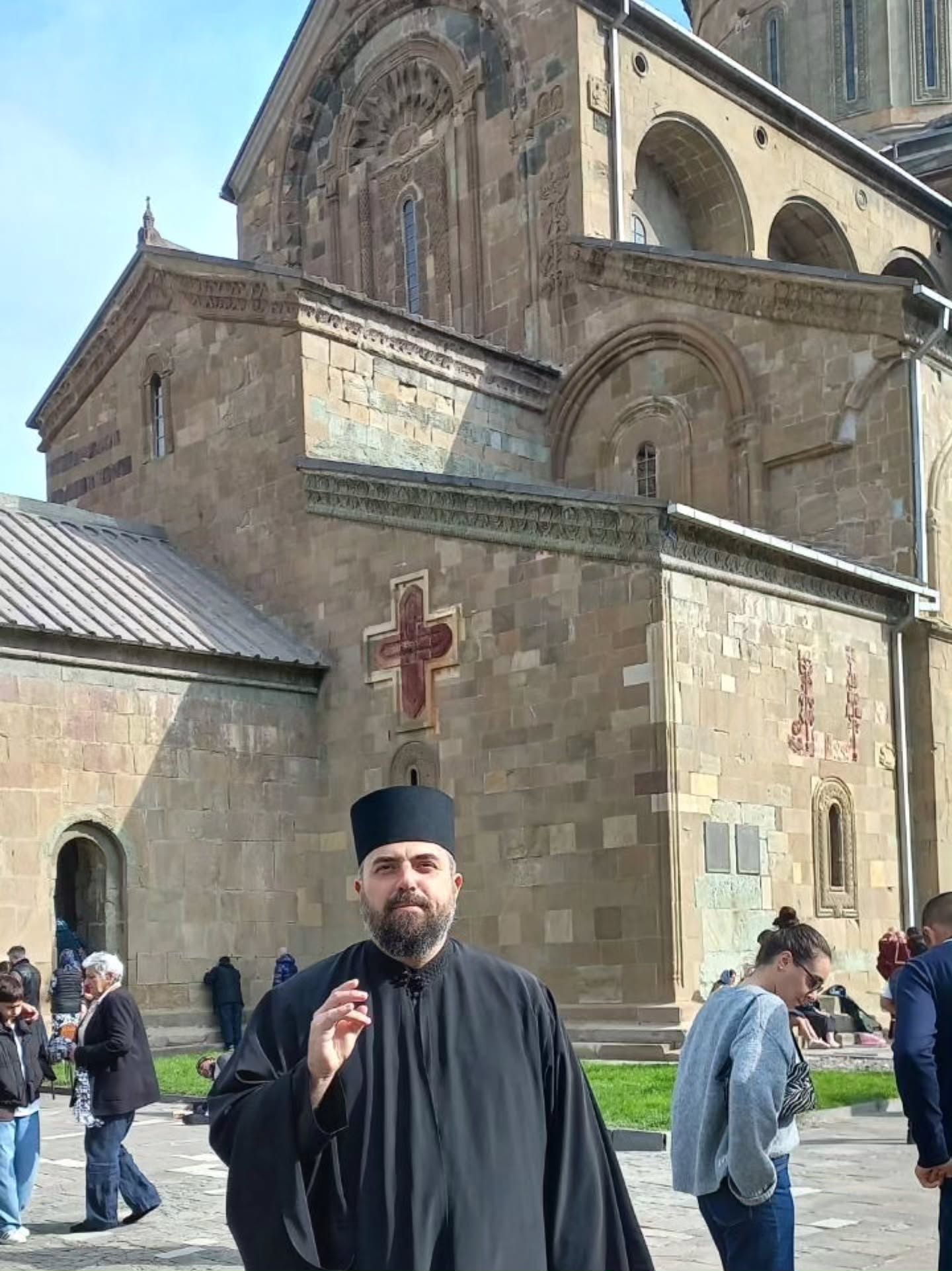
Father Dragan publishes a short message to mark the feast of Svetitskhoveli. He begins with a festal greeting, wishing a happy and blessed celebration. The greeting is sent from the Svetitskhoveli Monastery, located in the city of Mtskheta in Georgia. Father Dragan refers to Georgia as holy Georgia. He identifies the monastery as a shrine, and he states that, according to church tradition, this shrine holds three specific sacred objects. The…

Father Dragan publishes a short message to mark the feast of Svetitskhoveli. He begins with a festal greeting, wishing a happy and blessed celebration. The greeting is sent from the Svetitskhoveli Monastery, located in the city of Mtskheta in Georgia.

Father Dragan refers to Georgia as holy Georgia. He identifies the monastery as a shrine, and he states that, according to church tradition, this shrine holds three specific sacred objects. The first is the tunic of the Lord. The second is the mantle of the Holy Prophet Elijah. The third is a portion of the relics of the Holy Apostle Andrew the First-Called.

The post does not provide additional historical detail, theological explanation, or personal reflection beyond this list. It does not quote any scripture or hymn. The author signs the message with his name, Father Dragan. The text is written in Serbian using the Cyrillic alphabet. There is no indication of a conversation or thread; the post stands alone as a greeting.

The message shares a greeting for the feast and lists the relics associated with the monastery. It names the feast, the place, the tradition, the relics, and the sender. No other persons, dates, or events are mentioned.

  • Father Dragan greets the faithful on the feast of Svetitskhoveli
  • The greeting comes from Svetitskhoveli Monastery in Mtskheta, Georgia
  • According to church tradition the monastery keeps the Lord's tunic
  • Also kept are the mantle of the Prophet Elijah and a portion of the relics of the Apostle Andrew the First-Called
  • The post is a brief prayerful announcement signed by Father Dragan
Read more

Feast of Svetitskhoveli marked from Mtskheta monastery

Father Dragan sends a prayerful greeting for the feast of Svetitskhoveli from the Svetitskhoveli Monastery in Mtskheta, Georgia. The monastery is identified as the shrine where, according to church tradition, the Lord's Tunic, the mantle of the Prophet Elijah, and a portion of the relics of the Apostle Andrew the First-Called are preserved. The message marks the celebration of the feast associated with this cathedral and its relics.

  • Feast of Svetitskhoveli celebrated
  • Greeting sent from Svetitskhoveli Monastery in Mtskheta, Georgia
  • Monastery holds the Lord's Tunic per tradition
  • Also preserves mantle of Prophet Elijah
  • Contains relics of Apostle Andrew the First-Called
Read more
☦️An Orthodox Blog☦️ with Orthodoxy ☦︎ Instagram

Great Doxology chanted in English and Greek

The video presents the Great Doxology, a hymn of praise used in Orthodox Christian worship. The text is chanted first in English, then in the original Greek. The hymn addresses the Trinity: God the Father Almighty, Jesus Christ the only-begotten Son and Lamb of God, and the Holy Spirit. It asks for mercy, receives prayer, and affirms that Christ alone is holy, Lord, and most high. The English text opens with "Glory be to You who has shown the…

The video presents the Great Doxology, a hymn of praise used in Orthodox Christian worship. The text is chanted first in English, then in the original Greek. The hymn addresses the Trinity: God the Father Almighty, Jesus Christ the only-begotten Son and Lamb of God, and the Holy Spirit.

It asks for mercy, receives prayer, and affirms that Christ alone is holy, Lord, and most high. The English text opens with "Glory be to You who has shown the light, Glory in the highest to God, and on earth peace good will among men." It continues with praise: "We praise You, we bless You, we worship You, we glorify You, we give thanks for Your great glory."

The hymn addresses God the Father Almighty, the Heavenly King. It addresses the only-begotten Son, Jesus Christ, and the Holy Spirit, calling Christ the Lamb of God who takes away the sin of the world. The petition asks: "have mercy on us, receive our prayer, You who sit at the right hand of the Father."

The confession states: "You alone are holy, You alone are Lord, You alone are most high, Jesus Christ, with the Holy Spirit, in the glory of God the Father. Amen." The Greek text begins "Δοξολογία ἐν ὑψίστοις Θεῷ καὶ ἐπὶ γῆς εἰρήνη ἐν ἀνθρώποις εὐδοκία" and concludes with the same Trinitarian confession in Greek: "Ὅτι σὺ εἶ μόνος Ἅγιος. Σὺ εἶ μόνος Κύριος. Σὺ εἶ μόνος ὕψιστος, Ἰησοῦ Χριστέ, μετὰ τοῦ Ἁγίου Πνεύματος, εἰς δόξαν Θεοῦ Πατρός. Ἀμήν."

Key moments

  1. 0:00 The English text begins: Glory be to You who has shown the light, Glory in the highest to God, and on earth peace good will among men.
  2. 0:00 The hymn continues with praise: We praise You, we bless You, we worship You, we glorify You, we give thanks for Your great glory.
  3. 0:00 It addresses God the Father Almighty, the Heavenly King.
  4. 0:32 It addresses the only-begotten Son, Jesus Christ, and the Holy Spirit, calling Christ the Lamb of God who takes away the sin of the world.
  5. 0:32 The petition: have mercy on us, receive our prayer, You who sit at the right hand of the Father.
  6. 0:32 The confession: You alone are holy, You alone are Lord, You alone are most high, Jesus Christ, with the Holy Spirit, in the glory of God the Father. Amen.
  7. 1:12 The Greek text begins: Δοξολογία ἐν ὑψίστοις Θεῷ καὶ ἐπὶ γῆς εἰρήνη ἐν ἀνθρώποις εὐδοκία.
  8. 2:16 The Greek concludes with the same Trinitarian confession: Ὅτι σὺ εἶ μόνος Ἅγιος. Σὺ εἶ μόνος Κύριος. Σὺ εἶ μόνος ὕψιστος, Ἰησοῦ Χριστέ, μετὰ τοῦ Ἁγίου Πνεύματος, εἰς δόξαν Θεοῦ Πατρός. Ἀμήν.
Orthodox Sound YouTube

Elder Savva distinguishes true humility from its counterfeit

Elder Savva distinguishes true humility from its counterfeit 11:14

Schema-Archimandrite Savva Ostapenko examines false humility in his chapter "False Humility" from "Seeds of Satan and the Love of Christ." He draws on Matthew 6:1-6 concerning the practice of righteousness before God rather than for human praise. The teaching identifies false humility as a counterfeit that reveals itself through words of self-abasement and outward meekness. A person may repeatedly call themselves sinful, wretched, abnormal, or…

Schema-Archimandrite Savva Ostapenko examines false humility in his chapter "False Humility" from "Seeds of Satan and the Love of Christ." He draws on Matthew 6:1-6 concerning the practice of righteousness before God rather than for human praise. The teaching identifies false humility as a counterfeit that reveals itself through words of self-abasement and outward meekness.

A person may repeatedly call themselves sinful, wretched, abnormal, or foolish, but reacts with anger and hostility when others agree, regarding the agreer as an enemy. Two types are described: deliberate hypocrisy for selfish purpose, and unconscious error from not understanding spiritual laws. The unconscious type divides into those sincerely seeking salvation but revealing everything and emptying themselves, and those using humility as a disguise for vanity.

A story illustrates this: a monk wanted chains without blessing; the abbot instructed a blacksmith to test him by striking his cheek; the monk struck back, revealing false humility. St. Basinufius and St. Ignatius Brianov teach that true humility conceals itself, and it is better to appear proud outwardly while keeping a humble heart than to display false humility.

Outward displays of humility through words strengthen vanity and pride, empty the soul through idle talk, and become stumbling blocks leading to judgment, envy, and idle talk. Testing those who put themselves down can reveal genuine versus feigned humility; reminding them of known faults can bring recovery, though the relationship may be damaged temporarily before the person may later love the corrector.

Key moments

  1. 0:00 False humility defined as counterfeit feigned form revealing through self-abasement words and outward meekness; experienced spiritual person recognizes it as mania for appearing humble, a form of hidden pride.
  2. 1:01 Example: person laments insignificance calling self sinful, wretched, abnormal, foolish; when someone agrees, attitude changes to anger and hostility, regards agreer as enemy.
  3. 2:03 Story of monk wanting chains without blessing; abbot instructs blacksmith to test by striking cheek; monk strikes back, revealing false humility.
  4. 3:06 Testing those who put themselves down reveals genuine vs feigned humility; reminding them of known faults can bring recovery; relationship may be damaged temporarily but person may later love corrector.
  5. 4:42 False humility arises from negligence, laziness, vanity; person too lazy to work on self, takes path of false humility, boasts of it, cannot bear correction.
  6. 5:42 Outward display of piety (frequent crossing, pronouncing God's name) mistaken for true religion; true piety keeps spiritual life hidden; taking God's name in vain in ordinary conversation and jokes is great sin.
  7. 7:17 Two kinds of feigned humility: deliberate malicious (conscious hypocrisy for selfish purpose) and unconscious (doesn't understand spiritual laws); unconscious divides into those sincerely seeking salvation but revealing everything (emptying themselves) and those using humility as disguise for vanity.
  8. 9:23 Outward display of humility through words harms salvation three ways: strengthens vanity and pride, empties soul through idle talk, becomes stumbling block leading to judgment envy and idle talk; St. Basinufius and St. Ignatius Brianov teach humility must be concealed.

Gerontas Filimon on joy as fruit of the Holy Spirit

The post shares a video from the YouTube channel "Nectar of the Soul" featuring Gerontas Filimon, a righteous elder of the Holy Communal Skete of the Pantocrator of Prophet Elijah on Mount Athos. The video addresses joy as a gift of God and a fruit of the Holy Spirit. The elder begins by noting that joy is often misunderstood as foolish cheerfulness without reason. He also points out that the beatitude about those who mourn can create confusion…

The post shares a video from the YouTube channel "Nectar of the Soul" featuring Gerontas Filimon, a righteous elder of the Holy Communal Skete of the Pantocrator of Prophet Elijah on Mount Athos. The video addresses joy as a gift of God and a fruit of the Holy Spirit. The elder begins by noting that joy is often misunderstood as foolish cheerfulness without reason.

He also points out that the beatitude about those who mourn can create confusion about how joy relates to mourning. To illustrate the proper understanding, the elder cites a Romanian saying: weep in the evening over sins, but laugh in the day because each day is new, God is great, and we live according to His will. He explains that this joy does not mean denying the reality of sin; rather, it means trusting in God's forgiveness and drawing courage from that trust.

The elder identifies despair that says "I am not saved" as the worst spiritual condition. He teaches that joy and courage arise from the awareness that God, the guardian angel, and the Panagia are near. Finally, he observes that joy cannot be hidden; it spreads hope to others, while despair withers everyone around.

Key moments

  1. Joy is a gift of God and a fruit of the Holy Spirit.
  2. Joy is often misunderstood as foolish cheerfulness without reason.
  3. The beatitude "blessed are those who mourn" can cause confusion.
  4. The Romanians say: weep in the evening for sins, laugh in the day because each day is new and God is great.
  5. Joy does not mean denying sins; it means trusting God's forgiveness and taking courage.
  6. Despair that says "I am not saved" is the worst state.
  7. Joy and courage come from awareness of God's presence, the guardian angel, and the Panagia.
  8. Joy is contagious and transmits hope to others, while despair withers those around.
Read more
radioimlemesou Instagram

Metropolitan Athanasios on the need for both mother and father and maternal tenderness in spiritual fatherhood

Metropolitan Athanasios of Limassol speaks on the necessity of both maternal and paternal roles in human life. He asserts that a person requires both a mother and a father, and that each parent should embody qualities of the other: the mother needs fatherhood and motherhood, while the father must have maternal affection toward his children. The metropolitan references Saint Sophronios, whom he identifies as their elder, who taught that a…

Metropolitan Athanasios of Limassol speaks on the necessity of both maternal and paternal roles in human life. He asserts that a person requires both a mother and a father, and that each parent should embody qualities of the other: the mother needs fatherhood and motherhood, while the father must have maternal affection toward his children.

The metropolitan references Saint Sophronios, whom he identifies as their elder, who taught that a hegumen, or spiritual father, must possess the tenderness of a mother toward his monks. He then provides a vivid illustration of this maternal care, quoting the kind of attentive words a mother speaks: "Dress yourself, do not get cold.

Come home early. Pay attention to this, pay attention to that." Metropolitan Athanasios explains that this tenderness surpasses the physical father's relationship and carries a subtlety that may cause slight discomfort yet brings joy. He concludes by describing this maternal subtlety as beautiful and good.

Key moments

  1. A person needs both mother and father; the mother needs fatherhood and motherhood, the father needs maternal affection for the children.
  2. Saint Sophronios, their elder, said a spiritual father must have the tenderness of a mother toward his monks.
  3. The speaker illustrates maternal care with examples: "dress up," "don't get cold," "come home early," "pay attention to this, pay attention to that."
  4. This tenderness surpasses the physical father's relationship and has a subtlety that makes one think.
  5. The speaker calls this maternal subtlety beautiful and good.
Read more

Metropolitan Hierotheos on the heart as spiritual centre and its purification

The post presents Metropolitan Hierotheos's teaching from his book Orthodox Psychotherapy on the nature and purpose of the human heart. He explains that the heart is the spiritual centre of the human person, not merely the centre of emotions. It is the place where we are called to encounter God. The metropolitan references two scriptural passages to support this understanding. In Ephesians 3:17, the Apostle Paul writes that Christ dwells in the…

The post presents Metropolitan Hierotheos's teaching from his book Orthodox Psychotherapy on the nature and purpose of the human heart. He explains that the heart is the spiritual centre of the human person, not merely the centre of emotions. It is the place where we are called to encounter God. The metropolitan references two scriptural passages to support this understanding.

In Ephesians 3:17, the Apostle Paul writes that Christ dwells in the heart through faith. In Romans 5:5, Paul states that God's love has been poured into the heart through the Holy Spirit who has been given to us. He states that a condition exists for this indwelling: the purification of the heart.

This purification occurs through several practices that he lists explicitly: repentance, prayer, humility, obedience to God's commandments, and the guarding of the nous. The post emphasises that the Kingdom of God is not something we should only seek externally. Christ calls us to discover his presence within us. The final question posed is not simply whether one believes in God, but whether one is actively purifying the heart to receive him.

  • The heart is the spiritual centre of the person, not just the emotional centre.
  • Christ dwells in the heart through faith (Ephesians 3:17).
  • God's love is poured into the heart through the Holy Spirit (Romans 5:5).
  • Purification of the heart requires repentance, prayer, humility, obedience, and guarding the nous.
  • The Kingdom of God is found within through a purified heart.
Read more