WeOrthodox
EN UA

Orthodox posts, videos and discussions

We follow Orthodox channels, communities and blogs across the web, summarise every post and video, and highlight the conversations with real substance.

Archim. Christódoulos Papadeas Instagram

Blessings from Patmos: Saint Christodoulos and Saint John the Theologian

The speaker records a message from the Monastery of Saint John the Theologian on the island of Patmos. The monastery was built by Saint Christodoulos in the eleventh century. The speaker sends blessings from Saint Christodoulos and Saint John the Theologian to everyone listening. He stands before the relics of Saint Christodoulos and bows while holding many names in his heart and mind. He asks Saint Christodoulos to receive the prayers of those…

The speaker records a message from the Monastery of Saint John the Theologian on the island of Patmos. The monastery was built by Saint Christodoulos in the eleventh century. The speaker sends blessings from Saint Christodoulos and Saint John the Theologian to everyone listening.

He stands before the relics of Saint Christodoulos and bows while holding many names in his heart and mind. He asks Saint Christodoulos to receive the prayers of those whose names he carries. He calls upon the blessing of God, Saint Christodoulos, and Saint John the Theologian. He notes that Saint John the Theologian taught that God is love.

Key moments

  1. The speaker is at the Monastery of Saint John the Theologian, built by Saint Christodoulos in the 11th century.
  2. He sends blessings from Saint Christodoulos and Saint John the Theologian to everyone.
  3. He bows before the relics of Saint Christodoulos with many names in his heart and mind.
  4. He asks Saint Christodoulos to receive their prayers.
  5. He invokes the blessing of God, Saint Christodoulos, and Saint John the Theologian, noting that Saint John taught God is love.
Read more
Prayer Orthodoxy ® with stavfirst Instagram

Byzantine Chant 'We Praise You' in First Mode by Taliadoros

The post presents a recording of the Greek Orthodox Byzantine chant "We Praise You" (Σὲ ὑμνοῦμεν) performed in the First Mode (Ἦχος Α΄). The composition is attributed to H. Taliadoros (Χ. Ταλιαδώρος) and chanted by Stavros (Σταύρος). The recording is dated October 2026. The text provides the title in both English and Greek, the mode, the composer, the chanter, and the date. No further description or discussion accompanies the post.

  • Chant title: "We Praise You" (Σὲ ὑμνοῦμεν)
  • Mode: First Mode (Ἦχος Α΄)
  • Composer: H. Taliadoros (Χ. Ταλιαδώρος)
  • Chanter: Stavros (Σταύρος)
  • Date: October 2026
Orthodox Sound YouTube

St. Nektarios consoles St. Daniel after deception and loss

St. Nektarios consoles St. Daniel after deception and loss 22:15

St. Daniel of Katounakia was deceived by a man posing as a publisher who promised to deliver the works of St. John Chrysostom. Daniel borrowed money from the Great Lavra to pay for the books, but the publisher disappeared with the funds. Daniel wrote to his spiritual father, St. Nektarios of Aegina, describing his sorrow and financial loss. St. Nektarios responded not with correction but with brotherly affection. He sent fourteen substantial…

St. Daniel of Katounakia was deceived by a man posing as a publisher who promised to deliver the works of St. John Chrysostom. Daniel borrowed money from the Great Lavra to pay for the books, but the publisher disappeared with the funds. Daniel wrote to his spiritual father, St. Nektarios of Aegina, describing his sorrow and financial loss.

St. Nektarios responded not with correction but with brotherly affection. He sent fourteen substantial volumes of St. John Chrysostom from his own library to Daniel's hermitage at Katounakia. In his letter, St. Nektarios directed Daniel to Romans 8:28, that all things work together for good to those who love God, and to Christ's words in John 16:33: in the world you have tribulation, but be of good cheer, I have overcome the world.

St. Nektarios taught that suffering is not holy in itself; pain does not become holy merely because it hurts, and God is not the author of deceit or sin, citing James 1:13. The deceiver bears responsibility. Trials educate the soul in patience, which is the foundation of virtue, leading to experience and hope, as Romans 5:3-5 states.

St. James calls believers to count it joy when falling into diverse temptations, knowing the trying of faith works patience; this joy is not a denial of grief but the deeper recognition that suffering need not be spiritually fruitless. St. Nektarios himself endured accusation, rejection, deprivation, and humiliation, yet did not allow these to harden his heart.

He wrote to Daniel: from this day you are more perfected than you were before. Cease grieving and glorify the Lord, confessing that divine mercy remains present even within circumstances we would never have chosen.

Key moments

  1. 0:00 St. Daniel was deceived by a man posing as a publisher who promised the works of St. John Chrysostom; Daniel borrowed money from the Great Lavra and suffered financial loss and disappointment.
  2. 0:32 Daniel wrote to his spiritual father St. Nectarios, who entered into his sorrow with brotherly affection and sent 14 substantial volumes of St. John Chrysostom from his own collection to the hermitage at Katunakia.
  3. 2:05 St. Nectarios directed Daniel to the promise of Romans 8:28, all things work together for good to those who love God, and to Christ's words in John 16:33: in the world you have tribulation, but be of good cheer, I have overcome the world.
  4. 5:14 St. Nectarios taught that Christian suffering is not pursued for its own sake; pain does not become holy merely because it hurts, and God is not the author of deceit or sin (James 1:13), the deceiver bears responsibility.
  5. 7:50 Trials are instructors that educate the soul in the love of true wisdom; patience is the foundation upon which other virtues are established, and through tribulation comes patience, experience, and hope (Romans 5:3-5).
  6. 11:02 St. James calls believers to count it joy when falling into diverse temptations, knowing the trying of faith works patience; this joy is not a denial of grief but the deeper joy that suffering need not be spiritually fruitless.
  7. 12:05 St. Nectarios himself endured accusation, rejection, deprivation, and humiliation, yet did not allow these to harden his heart; he served at the Rizario Ecclesiastical School and the monastery on Aegina with humility and love.
  8. 16:17 St. Nectarios wrote to Daniel: 'from this day you are more perfected than you were before. Cease grieving and glorify the Lord', thanksgiving confesses God's mercy remains present even within circumstances we would never have chosen.
Saint Wisdom Instagram

Saint Siseos the Great on humility as the foundation of spiritual life

The video presents a teaching from Saint Siseos the Great on humility. He warns against thinking highly of oneself for remembering God often or practicing many spiritual disciplines. According to the saint, a greater achievement is to regard oneself as beneath everyone else. He urges that humility be learned first, because it is humility that teaches the soul how to stand rightly before God and before other people. The teaching frames humility…

The video presents a teaching from Saint Siseos the Great on humility. He warns against thinking highly of oneself for remembering God often or practicing many spiritual disciplines. According to the saint, a greater achievement is to regard oneself as beneath everyone else.

He urges that humility be learned first, because it is humility that teaches the soul how to stand rightly before God and before other people. The teaching frames humility not as a secondary virtue but as the necessary foundation that orients the soul correctly in its relationship with God and with others. The video isolates this single saying and offers it as a direct exhortation to prioritize humility over the quantity or visibility of spiritual practices.

Key moments

  1. Do not think highly of yourself because you remember God often or practice many spiritual things. A greater thing is to regard yourself as beneath everyone else. Learn humility first, because it is humility that teaches the soul how to stand rightly before God and before other people.
Read more

St. Justin Popović on the Theotokos as protectress and refuge

St. Justin Popović writes that the faithful put their trust in the Theotokos and flee to her for safety. He states that under her covering not a hair of the head will perish. The text presents a direct address to her as Protectress and Most Holy Virgin, asking her to cover the faithful with her veil. The prayer requests that she hide them in the evil day, citing Psalm 26:5 according to Septuagint numbering. The quote reflects a theology of…

St. Justin Popović writes that the faithful put their trust in the Theotokos and flee to her for safety. He states that under her covering not a hair of the head will perish. The text presents a direct address to her as Protectress and Most Holy Virgin, asking her to cover the faithful with her veil.

The prayer requests that she hide them in the evil day, citing Psalm 26:5 according to Septuagint numbering. The quote reflects a theology of Marian intercession where the Virgin's protection is described as complete and effective against all harm. The language emphasizes both trust and active seeking of her shelter, with the Psalm reference grounding the petition in scriptural language about divine hiding in times of trouble.

The passage functions as both a statement of confidence in her intercessory role and a liturgical form of petition for her covering presence during periods of danger or spiritual darkness.

  • St. Justin Popović expresses trust in the Theotokos as protectress
  • The faithful flee to her for safety and covering
  • Under her protection no harm comes to the faithful
  • A prayer addresses her as Protectress and Most Holy Virgin
  • The petition cites Psalm 26:5 (Septuagint) for hiding in the evil day
Read more

Beloved Akathist Shared for Feast of the Protection of the Theotokos

The author shares one of the most beloved akathists for the eve of the Feast of the Protection of the Most Holy Theotokos, asking whether listeners have heard it before. The akathist addresses the Theotokos as Queen of heaven and earth, exalted above all creation. It recalls a specific event: her coming to a Vlach church in prayer and offering worthy worship with thanksgiving. The faithful, describing themselves as living in the darkness of…

The author shares one of the most beloved akathists for the eve of the Feast of the Protection of the Most Holy Theotokos, asking whether listeners have heard it before. The akathist addresses the Theotokos as Queen of heaven and earth, exalted above all creation. It recalls a specific event: her coming to a Vlach church in prayer and offering worthy worship with thanksgiving.

The faithful, describing themselves as living in the darkness of modern softening, flee to her bright omophorion for protection. They petition her, who possesses invincible power, to deliver them from all distress so they may cry out to her as their joy and shelter from all evil. The post marks the blessed eve of the feast known as Pokrov, using the hashtags for Orthodoxy, joy, and the feast itself.

The akathist functions as a prayer of intercession, positioning the Theotokos as both exalted ruler and accessible protector. Its language contrasts the faithful's perceived spiritual condition, darkness and softening, with the Theotokos's bright omophorion and invincible power. The request for deliverance from all distress aims toward a specific outcome: the ability to cry out to her as joy and shelter from all evil.

The author's question at the end invites engagement from the audience about their familiarity with this particular composition.

Key moments

  1. Addresses the Theotokos as Queen of heaven and earth, exalted above all creation.
  2. Recalls her coming to a Vlach church in prayer, bringing worthy worship with thanksgiving.
  3. Describes the faithful as being in the darkness of modern softening.
  4. Says they flee to her bright omophorion for protection.
  5. Asks her, having invincible power, to deliver them from all distress.
  6. Seeks to cry out to her as their joy and shelter from all evil.
Read more
Disgruntled Docs with history.anastasia Instagram

The Protection of the Mother of God: Vision at Blachernae

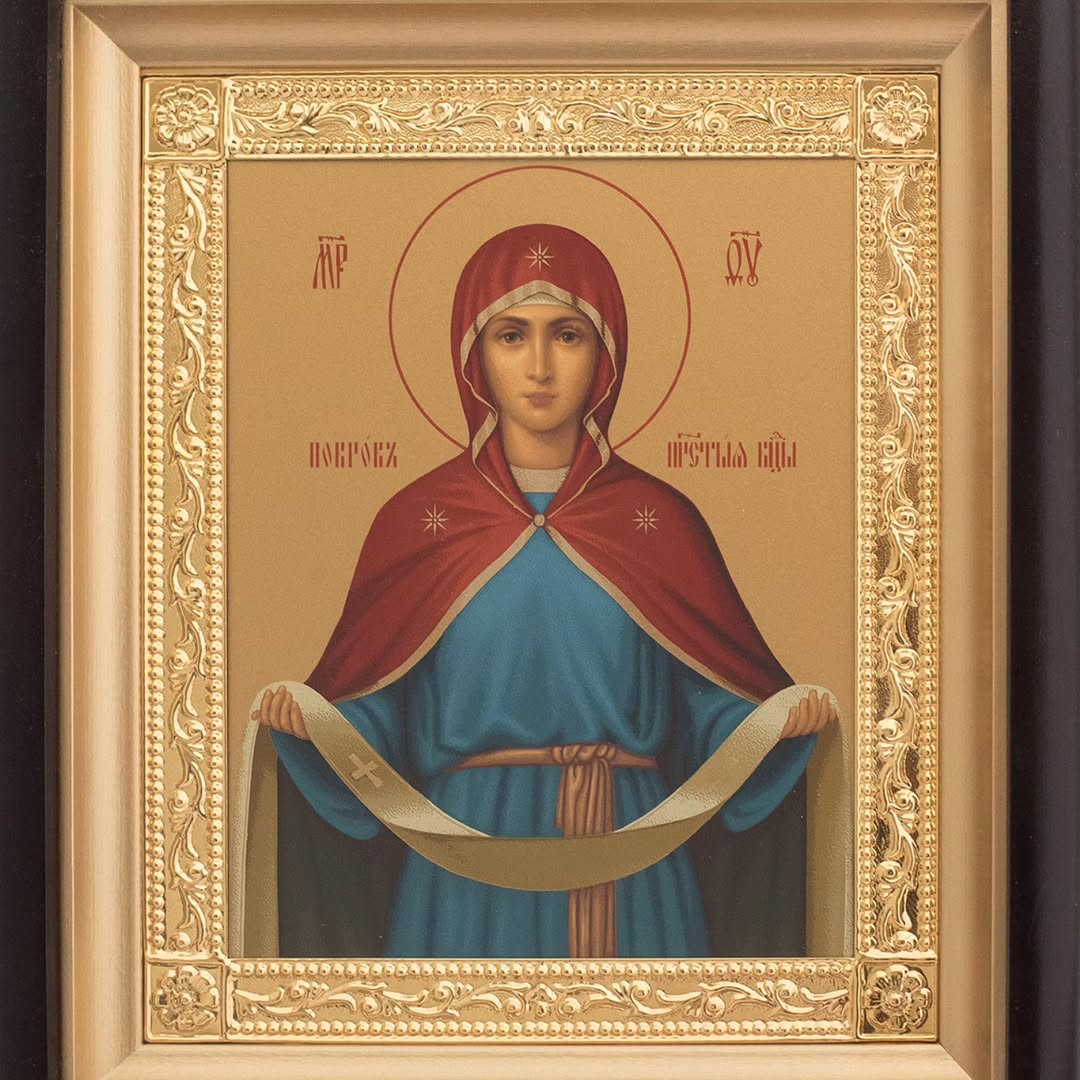
The post describes the feast of the Protection of the Most Holy Mother of God, known as Pokrov, celebrated on October 1st or October 14th according to the Julian calendar. The event commemorated occurred in the mid-tenth century in Constantinople at the Blachernae Church, where the Mother of God's veil was kept. During an all-night vigil, Saint Andrew the Fool-for-Christ and his disciple Epiphanius saw the Theotokos walking in the air, shining…

The post describes the feast of the Protection of the Most Holy Mother of God, known as Pokrov, celebrated on October 1st or October 14th according to the Julian calendar. The event commemorated occurred in the mid-tenth century in Constantinople at the Blachernae Church, where the Mother of God's veil was kept. During an all-night vigil, Saint Andrew the Fool-for-Christ and his disciple Epiphanius saw the Theotokos walking in the air, shining with heavenly light and surrounded by angels and saints.

She knelt and prayed at length for humanity. Then she approached the altar, removed her radiant veil, and spread it over the people in the church as protection from visible and invisible enemies. While she remained, the veil was visible and shone brighter than the sun; after her departure it became invisible, though her grace remained with the people.

The feast was established to honor this miraculous vision of protection and intercession. The post includes a traditional prayer: "Remember us in your prayers, O Lady Virgin Mother of God, that we may not perish... cover us from every evil, for in You we hope."

  • Feast celebrated October 1st or 14th (Julian calendar)
  • Vision occurred mid-tenth century at Blachernae Church in Constantinople
  • Saint Andrew the Fool-for-Christ and disciple Epiphanius witnessed the Theotokos
  • She spread her veil over the congregation as protection
  • Veil visible during her presence, invisible afterward while grace remained
George Instagram

Choosing Personal Spiritual Work Over Online Religious Debates

The speaker explains they avoid online religious debates because they have enough work to do on themselves. They see Christians, Muslims, and atheists fighting online to prove who is right. Many followers have asked why the speaker never joins these debates. The speaker does not criticize those who debate and acknowledges they may know more. For this season of life, the speaker chooses to close eyes and ears to debates to focus on personal…

The speaker explains they avoid online religious debates because they have enough work to do on themselves. They see Christians, Muslims, and atheists fighting online to prove who is right. Many followers have asked why the speaker never joins these debates.

The speaker does not criticize those who debate and acknowledges they may know more. For this season of life, the speaker chooses to close eyes and ears to debates to focus on personal spiritual work. The goal is to live the faith practically: in daily speech, loving family, and fighting personal sins.

The speaker does not think proving others wrong brings them closer to Christ. A changed life may speak louder than any debate and help someone else change. The speaker admits they might be wrong and apologizes to those who trust the account.

Key moments

  1. The speaker sees Christians, Muslims, and atheists fighting online to prove who is right.
  2. Many followers have asked why the speaker never joins these debates.
  3. The speaker does not criticize those who debate and acknowledges they may know more.
  4. For this season of life, the speaker chooses to close eyes and ears to debates to focus on personal spiritual work.
  5. The goal is to live the faith practically: in daily speech, loving family, and fighting personal sins.
  6. The speaker does not think proving others wrong brings them closer to Christ.
  7. A changed life may speak louder than any debate and help someone else change.
  8. The speaker admits they might be wrong and apologizes to those who trust the account.
Read more
Citations Orthodoxes ☦ with lucciantheosis Instagram

The Orthodox Ascetic Path: From Mortifying the Passions to Theosis

A spiritual exhortation, written as the voice of an elder addressing a disciple, sets out the Orthodox ascetic path from the mortification of the passions to theosis. The elder warns against confusing outward austerity with true holiness: the desert of the body is not enough if the heart remains captive to pride and the passions. Orthodox ascesis is described as perpetual metanoia, a purification of the nous and a progressive crucifixion of the…

A spiritual exhortation, written as the voice of an elder addressing a disciple, sets out the Orthodox ascetic path from the mortification of the passions to theosis. The elder warns against confusing outward austerity with true holiness: the desert of the body is not enough if the heart remains captive to pride and the passions.

Orthodox ascesis is described as perpetual metanoia, a purification of the nous and a progressive crucifixion of the old man. The means named are fasting, vigilance (nepsis), unceasing prayer and compunction, through which the soul learns to cooperate with divine grace, not to earn God, but to open itself to His presence. The text corrects two common misunderstandings. Apatheia is not insensitivity but liberation from the tyranny of the passions, and theosis is participation, by grace, in the uncreated energies of God.

The disciple is told to seek neither extraordinary visions nor spiritual glory, but deep humility, because any ascesis without charity risks becoming an illusion of pride. The closing counsel is to persevere in silence, repent without despairing, and pray without presumption. The final aim given is not self-glorification but letting Christ transfigure the whole of one's being. The post carries hashtags on Christianity, Orthodoxy, hesychasm, wisdom and theosis.

  • Outward austerity is not true holiness if the heart stays captive to pride and the passions.
  • Ascesis is perpetual metanoia: purification of the nous and crucifixion of the old man, through fasting, nepsis, unceasing prayer and compunction.
  • The soul cooperates with grace not to merit God but to open itself to His presence.
  • Apatheia means liberation from the tyranny of the passions; theosis is participation by grace in God's uncreated energies.
  • Seek humility rather than visions or spiritual glory, since ascesis without charity becomes an illusion of pride.
Read more
r/OrthodoxChristianity Reddit discussion

Does it ever bother you how few Orthodox Christians actually are in the world?

I came across recent studies placing Orthodox Christians at roughly ten percent of all Christians worldwide, about three hundred million people. That compares with 1.2 billion Catholics and 638 million Protestants. Growing up in a predominantly Orthodox country, the faith always felt like the default, so seeing how small we actually are on a global scale is startling. It leaves me uneasy, even worried, because we profess to be the original…

I came across recent studies placing Orthodox Christians at roughly ten percent of all Christians worldwide, about three hundred million people. That compares with 1.2 billion Catholics and 638 million Protestants. Growing up in a predominantly Orthodox country, the faith always felt like the default, so seeing how small we actually are on a global scale is startling.

It leaves me uneasy, even worried, because we profess to be the original Church from which the others separated, yet we are the smallest major branch, so small that many Christians probably have never heard of us.

35 opinions in the discussion What gets to me more is that there are far fewer actual Christians than people who just call themselves that. Take Serbia: churches sit nearly empty most of the time, yet on paper over 95%… Read the discussion

Commemoration of Saint Cosmas the Hymnographer, October 14

The post marks the commemoration of Saint Cosmas the Hymnographer, Bishop of Maiuma, on October 14. The accompanying video presents the text of the Great Doxology. It opens with the angelic hymn: glory to God in the highest, and on earth peace, good will among men. The prayer continues with praise, blessing, worship, glorification, and thanksgiving for God's great glory. It addresses the Lord heavenly King, God the Father almighty. It addresses…

The post marks the commemoration of Saint Cosmas the Hymnographer, Bishop of Maiuma, on October 14. The accompanying video presents the text of the Great Doxology. It opens with the angelic hymn: glory to God in the highest, and on earth peace, good will among men. The prayer continues with praise, blessing, worship, glorification, and thanksgiving for God's great glory.

It addresses the Lord heavenly King, God the Father almighty. It addresses the only-begotten Son, Jesus Christ, and the Holy Spirit. It addresses the Lord God, Lamb of God, Son of the Father, who takes away the sin of the world.

The video summary and points follow the sequence of the Doxology, listing each address and acclamation in order.

Key moments

  1. Glory to God in the highest, and on earth peace, good will among men.
  2. We praise you, we bless you, we worship you, we glorify you, we give thanks to you for your great glory.
  3. Address to the Lord heavenly King, God the Father almighty.
  4. Address to the only-begotten Son, Jesus Christ, and the Holy Spirit.
  5. Address to the Lord God, Lamb of God, Son of the Father, who takes away the sin of the world.

Eastern Catholicism and the Problem of Palamas

The speaker considered Eastern Catholicism as a potential middle ground between East and West. After investigation, the speaker concluded it presents a significant problem for Roman Catholics. The specific issue is the veneration of Saint Gregory Palamas. Palamas stated that the devil was speaking through the Latins concerning the Filioque doctrine. The speaker quotes this as meaning the Latins are the devil. Pope John Paul II placed an icon of…

The speaker considered Eastern Catholicism as a potential middle ground between East and West. After investigation, the speaker concluded it presents a significant problem for Roman Catholics. The specific issue is the veneration of Saint Gregory Palamas.

Palamas stated that the devil was speaking through the Latins concerning the Filioque doctrine. The speaker quotes this as meaning the Latins are the devil. Pope John Paul II placed an icon of Palamas at the Vatican next to Thomas Aquinas.

The speaker acknowledges the placement as notable. The speaker sees a contradiction in venerating as a saint someone who spoke that way about the Latin West.

Key moments

  1. The speaker entertained the idea of Eastern Catholicism because it appeared to offer the best of both worlds.
  2. After a brief investigation, the speaker concluded that Eastern Catholicism is a huge problem for Roman Catholics.
  3. The specific problem cited is the veneration of Saint Gregory Palamas.
  4. Palamas said the devil was speaking through the Latins with the doctrine of the Filioque, which the speaker quotes as saying the Latins are the devil.
  5. Pope John Paul II placed an icon of Palamas at the Vatican right next to Thomas Aquinas.
  6. The speaker thinks the icon placement is pretty cool.
  7. The speaker sees a problem in venerating as a saint someone who spoke that way about the Latin West.
Read more
Citations Orthodoxes ☦ with xristos.pax Instagram

Icons of Faith and Hope: A Sign for Home or Gift

The post presents handmade Orthodox icons as more than images, calling them a sign of faith and hope. The author invites readers to discover icons that touch heart and soul, whether for one's home or as a special gift, and points to the website Xrpx.de with the hashtags #xristospax, #orthodox, #orthodoxfaith, #ikonen and #Handmade. The accompanying song is the traditional 'S neba se zvezda sjajno vidi'. Its lyrics describe a star shining…

The post presents handmade Orthodox icons as more than images, calling them a sign of faith and hope. The author invites readers to discover icons that touch heart and soul, whether for one's home or as a special gift, and points to the website Xrpx.de with the hashtags #xristospax, #orthodox, #orthodoxfaith, #ikonen and #Handmade.

The accompanying song is the traditional 'S neba se zvezda sjajno vidi'. Its lyrics describe a star shining brightly from the sky and a dark night resembling a road. The singer's beloved, 'moj se damo', is mentioned. Angels trumpet and the righteous cry out, announcing the coming of the Lord.

The song calls for earth and water to vanish, asking 'what more do we need them for' ('našto nam više'). The post combines the invitation to acquire an icon with the text of this Nativity song, joining the visual sign of faith with the sung announcement of the Lord's coming.

Key moments

  1. A star shines brightly from the sky and the night is dark, like a road.
  2. The singer's beloved ('moj se damo') is mentioned in the song.
  3. Angels trumpet and the righteous cry out, announcing the Lord.
  4. The song calls for earth and water to vanish, asking 'what more do we need them for' ('našto nam više').
Read more
r/OrthodoxChristianity Reddit discussion

Hierarchs approve sign language lexicon and continue work on common catechism

The hierarchs have approved a sign language lexicon and are continuing work on a common catechism, according to the Orthodox Observer.

  • Hierarchs approved a sign language lexicon
  • Work continues on a common catechism
12 opinions in the discussion Three reasons: 1. Fr. John Romanides and figures like him still have a lot of influence on theology in the English-speaking world, especially under the Greek and Antiochian archdioceses.… Read the discussion
Giovanni Guaita YouTube

Hieromonk John Guaita on the Feast of the Protection and a mother's coat

Hieromonk John Guaita on the Feast of the Protection and a mother's coat 5:17

Hieromonk Giovanni Guaita published a meditation on the Feast of the Protection of the Mother of God on October 14, 2024 (October 1 Old Style). The feast commemorates an apparition during a siege of Constantinople when the fools for Christ Andrew and Epiphanius saw the Mother of God remove her veil and spread it over the city at the Blachernae Church, after which the enemies retreated and the city was saved. Guaita notes the feast became popular…

Hieromonk Giovanni Guaita published a meditation on the Feast of the Protection of the Mother of God on October 14, 2024 (October 1 Old Style). The feast commemorates an apparition during a siege of Constantinople when the fools for Christ Andrew and Epiphanius saw the Mother of God remove her veil and spread it over the city at the Blachernae Church, after which the enemies retreated and the city was saved.

Guaita notes the feast became popular in the Russian Orthodox Church, with many churches built in its honor in the 12th century, including the Church of the Intercession on the Nerl, yet it is absent from the Greek calendar and Byzantine liturgical tradition and is perceived as a purely Russian feast. The historical siege referenced remains uncertain; Constantinople faced sieges by Saracens and Bulgarians in the 10th century and by the Rus' in the 9th century during their first appearance in Byzantine chronicles.

Some preachers hypothesize that Andrew and Epiphanius were of Rus' origin, and Guaita finds it interesting if the Rus' were the besiegers, showing history's unpredictability. Falling in mid-autumn when cold sets in, the feast recalls Lermontov's phrase "warm intercessor of the cold world" (Lermontov 1814 to 1841), pointing to a need for spiritual warmth and protection.

Guaita compares the Mother of God's protection to a childhood memory: at age three or four, he fell and hurt himself while his mother was absent; he hugged her coat, smelled her scent, and felt comforted. He says the Mother of God protects similarly in cold, difficult times. The meditation is available in English, Russian, Italian, French, and Spanish.

Key moments

  1. 0:00 Feast of Protection of Mother of God celebrated Oct 14 (Oct 1 Old Style), commemorates apparition during siege of Constantinople at Blachernae Church.
  2. 0:33 Fools for Christ Andrew and Epiphanius saw Mother of God remove veil and spread it over city; enemies retreated, city saved.
  3. 1:08 Feast very popular in Russian Orthodox Church; 12th century many churches built in its honor, notably Church of Intercession on Nerl.
  4. 1:41 Greeks hardly know this feast; not in their calendar or Byzantine liturgical tradition; perceived as purely Russian feast; unclear which historical siege it refers to.
  5. 2:14 Constantinople besieged many times: 10th century by Saracens and Bulgarians; 9th century by Rus' during their first appearance in Byzantine chronicles.
  6. 2:51 Some preachers hypothesize Andrew and Epiphanius were of Rus' origin; speaker finds it interesting if Rus' were the besiegers, showing history's unpredictability.
  7. 3:29 Feast falls in mid-autumn when cold; reminds of intercessor, "warm intercessor of the cold world" (Lermontov 1814-1841); need spiritual warmth and protection.
  8. 4:02 Speaker's childhood memory: at age 3-4, fell, hurt, mother absent, hugged her coat with her scent, felt comforted; Mother of God protects similarly in cold difficult times.
Read more

Orthodox response to penal substitutionary atonement

The speaker defines penal substitutionary atonement: penal means penalty for wrongdoing, substitutionary means in the place of, so Jesus receives the penalty in our place for atonement and peace with God. Some Orthodox Christians deny penal substitution, calling it wrong, unbiblical, and a violation of the Trinity, and they offer no biblical argument; they prefer to view Christ's death as an example. The speaker cites Isaiah 53:5 as clear…

The speaker defines penal substitutionary atonement: penal means penalty for wrongdoing, substitutionary means in the place of, so Jesus receives the penalty in our place for atonement and peace with God. Some Orthodox Christians deny penal substitution, calling it wrong, unbiblical, and a violation of the Trinity, and they offer no biblical argument; they prefer to view Christ's death as an example.

The speaker cites Isaiah 53:5 as clear biblical evidence that Christ bore the wrath of God. Orthodoxy does not deny substitution, sacrifice, satisfaction, or language about the wrath of God; the Fathers use all of that language. St. Gregory the Theologian asks to whom the blood was offered and why, and says the Father accepts Christ but neither asked for him nor demanded him.

The Council of Blachernae in 1157 affirmed that Christ offers himself in his humanity, and the Son receives that same sacrifice with the Father and the Holy Spirit. Orthodox writers such as Craig Trulia describe economic atonement as the whole saving work of God in Christ: Christ assumes humanity, enters death, heals corruption, reconciles us to God, and restores what Adam lost.

St. Gregory says Christ came to deliver us and overcome the tyrant; the cross is not exhausted by punishment. Father Daniel Cecil states substitutionary atonement is not heresy but an accurate though not exhaustive expression of orthodoxy.

Key moments

  1. The speaker defines penal substitutionary atonement: penal means penalty for wrongdoing, substitutionary means in the place of, so Jesus receives the penalty in our place for atonement and peace with God.
  2. Some Orthodox Christians deny penal substitution, calling it wrong, unbiblical, and a violation of the Trinity, and they offer no biblical argument; they prefer to view Christ's death as an example.
  3. The speaker cites Isaiah 53:5 as clear biblical evidence that Christ bore the wrath of God.
  4. Orthodoxy does not deny substitution, sacrifice, satisfaction, or language about the wrath of God; the Fathers use all of that language.
  5. St. Gregory the Theologian asks to whom the blood was offered and why, and says the Father accepts Christ but neither asked for him nor demanded him.
  6. The Council of Blachernae in 1157 affirmed that Christ offers himself in his humanity, and the Son receives that same sacrifice with the Father and the Holy Spirit.
  7. Orthodox writers such as Craig Trulia describe economic atonement as the whole saving work of God in Christ: Christ assumes humanity, enters death, heals corruption, reconciles us to God, and restores what Adam lost.
  8. St. Gregory says Christ came to deliver us and overcome the tyrant; the cross is not exhausted by punishment, and Father Daniel Cecil states substitutionary atonement is not heresy but an accurate though not exhaustive expression of orthodoxy.
18 opinions in the discussion Isn't the problem also the language of the Father damning the Son? Read the discussion
Orthodox Health Instagram

The Noonday Demon: Why Changing Jobs Doesn't Heal the Heart

The post promotes Episode 82 of the Orthodox Health Podcast, titled "The Noonday Demon: Why You Feel Trapped in Your Career," featuring Fr. Michael Butler. The episode addresses a common pattern: modern career advice assumes that misery at work is solved by changing the environment, a new job, a new boss, a new city, or starting one's own venture. While such changes are sometimes exactly what needs to happen, the Orthodox ascetic tradition…

The post promotes Episode 82 of the Orthodox Health Podcast, titled "The Noonday Demon: Why You Feel Trapped in Your Career," featuring Fr. Michael Butler. The episode addresses a common pattern: modern career advice assumes that misery at work is solved by changing the environment, a new job, a new boss, a new city, or starting one's own venture.

While such changes are sometimes exactly what needs to happen, the Orthodox ascetic tradition introduces a more uncomfortable category: acedia, often called the noonday demon. Acedia appears as restlessness, boredom, despondency, and the constant sense that contentment would arrive if only one were somewhere else. The conversation explores how this interior condition follows a person from one position to another.

When the same pattern of dissatisfaction repeats across multiple jobs, the example given is four jobs, the problem may not be the job but the heart. Changing jobs provides a new desk but cannot by itself heal the underlying restlessness. The discussion turns on the need for discernment: if the misery is mostly personal and internal, marked by an inability to sit still or remain present, then external changes will not resolve it; the person will remain restless and despondent wherever they go.

Instead, one must examine what is happening inside, "check under the hood," to function properly. The episode frames this examination as a prerequisite for any fruitful vocational decision, rooting the analysis in the ascetic vocabulary of the Orthodox tradition rather than in contemporary self-help language. The phrase "sometimes the cage follows you" captures the central metaphor: the confinement is not the office but the interior state that travels with the person.

Fr. Butler and the host discuss how acedia masquerades as a vocational problem while actually being a spiritual one, and why the remedy requires attention to the heart rather than the resume. The post invites listeners to comment "CAGE" to receive the full episode and includes hashtags for Orthodox Health, Orthodox Christianity, acedia, Christian men, and men's health.

Key moments

  1. Job misery that is mostly personal and internal shows up as restlessness, boredom, and despondency.
  2. That misery may indicate an issue in your own heart, not the job itself.
  3. If the problem is internal, changing jobs will not help; you will still be restless and despondent.
  4. If you have been through four jobs and still cannot sit still at a desk, the problem is you, not the job.
  5. You need to check under the hood and figure out what is going on so that you can function.
George Instagram discussion

Orthodox perspective on tattoos: no canon forbids them, but history and theology counsel caution

The video explains that no Orthodox canon explicitly forbids tattoos, though the Church has historically discouraged them. It cites the Old Testament prohibition against printing marks on the body and Saint Paul's teaching that the body is a temple of the Holy Spirit. The speaker notes two historical practices: Coptic Christians in Egypt have tattooed a small cross on the wrist for centuries to show they belong to Christ during persecution, and…

The video explains that no Orthodox canon explicitly forbids tattoos, though the Church has historically discouraged them. It cites the Old Testament prohibition against printing marks on the body and Saint Paul's teaching that the body is a temple of the Holy Spirit. The speaker notes two historical practices: Coptic Christians in Egypt have tattooed a small cross on the wrist for centuries to show they belong to Christ during persecution, and Orthodox pilgrims to Jerusalem received small cross tattoos to remember their pilgrimage.

The speaker shares his own experience: he got his tattoos while far from Christ, likes them, but would not get them again and has confessed them. He advises his children to think carefully and speak with a priest before getting permanent marks. The video concludes that tattoos do not prevent baptism, confession, or communion.

Key moments

  1. No Orthodox canon forbids tattoos
  2. The Church historically discouraged tattoos
  3. Old Testament prohibition against printing marks on the body
  4. Saint Paul teaches the body is a temple of the Holy Spirit
  5. Coptic Christians in Egypt tattooed a small cross on the wrist for centuries to show belonging to Christ during persecution
  6. Orthodox pilgrims to Jerusalem received small cross tattoos to remember their pilgrimage
  7. The speaker got tattoos while far from Christ, likes them but would not get them again, and has confessed them
  8. Tattoos do not prevent baptism, confession, or communion
24 opinions in the discussion I think it depends on what we are tattooing these days. My priest LOVES Orthodox tattoos and there is even a tattooer in my church. I plan to have him do an Orthodox tattoo on me because I… Read the discussion
Orthodox Life Instagram

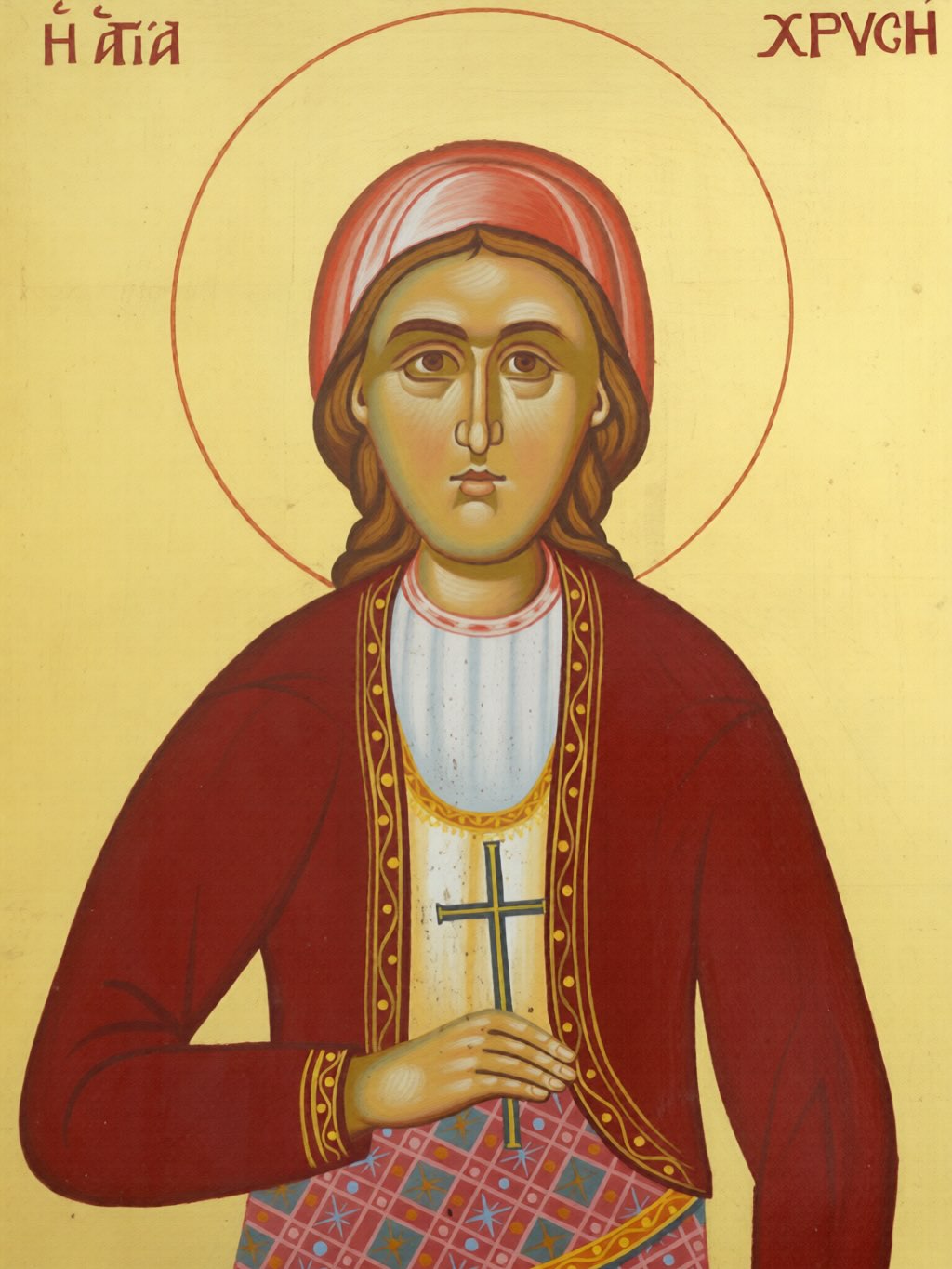
Saint Chryse (Zlata) of Slatina: Martyred October 13, 1795

The post commemorates Saint Chryse (Zlata) the New Martyr, who was cut in pieces at Slatina in 1795. She was an 18th-century Christian martyr venerated for her faith and courage under persecution. Born in the village of Slatina, in what is today North Macedonia, she grew up in a poor and pious Christian family during the period of Ottoman rule. The author notes that she was known both for her spirituality and for her physical beauty, which drew…

The post commemorates Saint Chryse (Zlata) the New Martyr, who was cut in pieces at Slatina in 1795. She was an 18th-century Christian martyr venerated for her faith and courage under persecution. Born in the village of Slatina, in what is today North Macedonia, she grew up in a poor and pious Christian family during the period of Ottoman rule.

The author notes that she was known both for her spirituality and for her physical beauty, which drew the attention of a local Muslim man. He abducted her and took her to his home, demanding that she convert to Islam so that she could become his wife, and threatened her with severe consequences if she refused. Chryse refused, declaring that Jesus Christ was her only bridegroom and that she would never deny her faith.

Her captors then brought in her own parents and sisters, who wept and begged her to convert outwardly, at least in appearance, to save her life. She refused them as well, saying that when it came to Christ she no longer recognized her earthly family. For many months she was tortured: her captors beat her daily, stripped the flesh from her body with knives, and seared her wounds with hot irons.

The author writes that she remained conscious throughout and prayed continuously, and that her endurance astonished her torturers and further angered them. When it became clear that no amount of torment would force her to deny her faith, she was killed. The post states that she completed her earthly course on October 13, 1795, remaining steadfast in her conviction until her final breath.

The post closes with a cross emoji and no further discussion; it is a hagiographical notice for her feast day rather than a debate thread.

  • Saint Chryse (Zlata) the New Martyr was cut in pieces at Slatina in 1795 and is commemorated on October 13.
  • She was born in Slatina, in modern-day North Macedonia, to a poor, pious Christian family under Ottoman rule.
  • A local Muslim man abducted her and demanded she convert to Islam to marry him; she refused, calling Christ her only bridegroom.
  • Her parents and sisters begged her to convert outwardly to save her life; she refused, saying she no longer recognized her earthly family when it came to Christ.
  • After months of beatings, knifing, and burning with hot irons, during which she prayed continuously, she was martyred on October 13, 1795.
Read more
P Paul Kingsnorth Substack discussion

Launching Hermit Crab Press as a refuge from AI-generated words

Sometimes in life, there are moments when you step outside yourself for a second or two and look in. It's a strange thing that seems to happen unbidden. You see or hear yourself as a stranger might; then everything snaps back as if nothing happened. This happened to me for a moment last Saturday. I was in Dublin, giving a talk about AI and the Machine to an audience of young people. Suddenly, while I was talking, it was as if I was listening…

Sometimes in life, there are moments when you step outside yourself for a second or two and look in. It's a strange thing that seems to happen unbidden. You see or hear yourself as a stranger might; then everything snaps back as if nothing happened.

This happened to me for a moment last Saturday. I was in Dublin, giving a talk about AI and the Machine to an audience of young people. Suddenly, while I was talking, it was as if I was listening like an objective observer to the strange stories coming out of my mouth. Stories of people marrying chatbots, of corporate executives who believe they are creating god-like beings, of people who want to upload their minds into digital substrates.

Stories of the Pope gathering with these sci-fi people to talk about God and the soul and digital technology inside the marble halls of the Vatican.

These are strange times, disturbing at some very primeval level. Sometimes it's like being stuck inside a twentieth-century pulp sci-fi novel. I've long wondered whether the Masters of the Universe in Silicon Valley took inspiration from those novels, either consciously or otherwise.

I suppose the AIs have been trained on them too, which gives rise to an intriguing thought: are these machines acting out the plots of those novels, by accident or design? If so, which ones are they reading?

Those machines will be writing books soon enough, which leaves those of us who love words in an awkward position. Our relationship with words might have its ups and downs, but it's built on love. I have long loved books, and that love, which began as soon as I could read, later became a love of writing.

But now I find myself in a world flooded with words, more and more of which are literally inhuman. I'm getting sick of the things which once opened the world up to me. What am I to do about that?

Today I have one small answer: I'm launching my own publishing house. Welcome to Hermit Crab Press.

For a long time, my wife and I, who share the same sensibility on these matters, have been talking about building a little island of the actual in the midst of a virtual sea. Myself, I have wanted more and more to retreat from the internet - including from this page, if I'm honest - and to return to the love of writing I used to have.

Writing in pen or pencil in notebooks. Winding paper through an old typewriter. No comment sections or social media feeds. No audience capture. No culture war bilge. Just me and my pen. Paper and graphite and ink.

Books sent by post, arriving at the door of a reader far away. Words that can't be read on a screen. Pages that have to be turned.

Hermit Crab Press has been built to speak to this sensibility. It's about simple words, on paper and card, that can't be scrolled or pasted or scraped. It's about books as beautiful objects. It's a chance for me to write things that don't fit into any boxes and can't be fed into a devouring machine - at least without a lot of effort on the machine's part.

Our little home publishing house is based in our garden cabin here in County Galway. It's a family operation: a home economy. My wife Navjyoat and I will be running it, while my daughter Leela, who is currently studying for a degree in bookbinding, will be our in-house binder and leatherworker, making us special editions, bookmarks and other goodies to come.

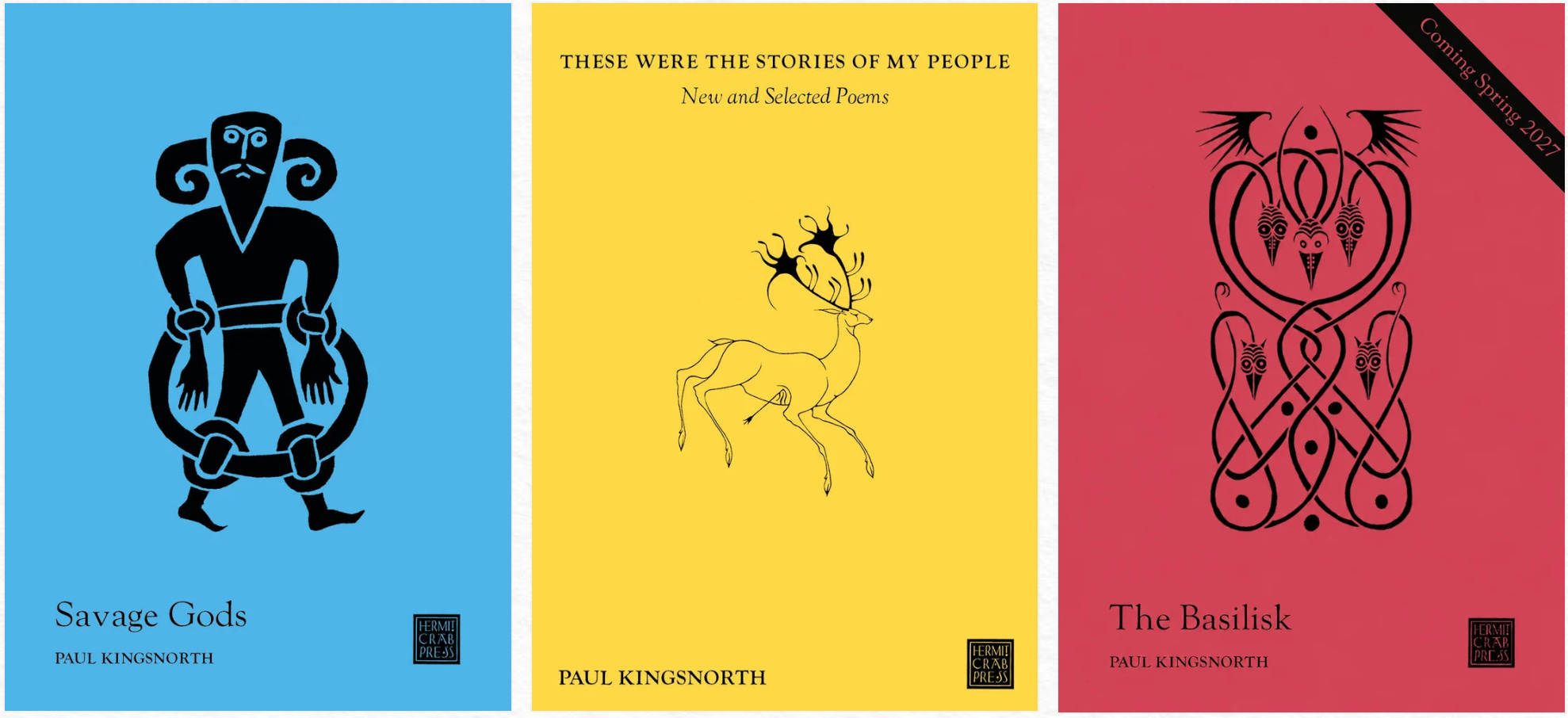
Everything we do is as small scale as possible. We work with friends, and with family owned companies. We spurn AI at all stages of the production process. We try to keep our operations as ecological as we can. And we try to produce really good-looking - and good-feeling, and good-smelling - books. All our books are printed on high quality paper, with woodcut cover illustrations by the Abbey's in-house artist Ewan Craig. They're old fashioned, like us.

We're also selling them in as simple a way as we can.

  • The author experienced a moment of self-observation while giving a talk on AI in Dublin, hearing his own stories about chatbot marriages, mind uploading, and Vatican tech meetings as strange and disturbing.
  • He questions whether Silicon Valley's AI developments are unconsciously acting out plots from pulp sci-fi novels, since the AIs were trained on them.
  • He launches Hermit Crab Press, a family-run publishing house in a County Galway garden cabin, to create physical books that cannot be scraped or digitized.
  • The press uses no AI, no Amazon, no e-books, no ISBNs, and prints on high-quality paper with woodcut illustrations by Ewan Craig.
  • Initial publications include a poetry collection, a revised memoir, and a forthcoming short story collection, with future plans for saint pamphlets, leather-bound editions, and typed newsletters.
18 opinions in the discussion I think this is a lovely idea, but it also makes me sad. This is my world. I'm someone who delights in the idea of manuscript, of paper old and new, of real bound books and their smell and… Read the discussion