WeOrthodox
EN UA

Orthodox posts, videos and discussions

We follow Orthodox channels, communities and blogs across the web, summarise every post and video, and highlight the conversations with real substance.

Athonite Audio YouTube

Why Do the Righteous Suffer? Job, the Prophets, and the Fathers Answer

Why Do the Righteous Suffer? Job, the Prophets, and the Fathers Answer 32:06

The episode, about 32 minutes long, is part of a series on the benefits of pain and takes up the question of why the righteous are afflicted while the impious prosper. It opens with Isaiah 33:2 and traces the question through Scripture: Jeremiah asks why the way of the wicked prospers, Habakkuk asks why God is silent when the wicked swallow the more righteous, and the psalms voice the feeling of being forgotten by God. Job stands at the center.…

The episode, about 32 minutes long, is part of a series on the benefits of pain and takes up the question of why the righteous are afflicted while the impious prosper. It opens with Isaiah 33:2 and traces the question through Scripture: Jeremiah asks why the way of the wicked prospers, Habakkuk asks why God is silent when the wicked swallow the more righteous, and the psalms voice the feeling of being forgotten by God.

Job stands at the center. He loudly questions his torments, asks how many are his iniquities, complains that the wicked live and reach old age, and describes his life as an unending martyrdom while protesting his innocence. Yet he does not investigate the cause of his calamity; he tries to prove his innocence while keeping unshakable faith in God's justice, believing that God's love is expressed through afflictions.

The holy fathers saw in Job's pained face a model of the suffering Christ, which is why the Orthodox Church reads the book of Job during Holy Week. The study presents trials as pedagogical and expiatory: 2 Maccabees 6:12 says trials are allowed not for destruction but for chastening, and St. Anthony the Great compares God's difficult providences to a doctor's bitter medicines.

Basil the Great teaches that the kingdom is attained through pain, tears, prayers, and patience, and that saying the righteous should not suffer is like saying an athlete should have no opponent. Macarios of Egypt, John Chrysostom, and Eusebius of Caesarea likewise teach that afflictions train the soul, keep the saints from pride, and prepare them for the kingdom, since through many tribulations we must enter the kingdom of God.

The episode closes by saying the pain of the righteous and the death of little children can be explained only under the criterion of eternity and life in the kingdom of God, where pain accepted with faith becomes a dialogue of love with Christ and a proof of adoption.

Key moments

  1. 0:00 The study opens with Isaiah 33:2 and the question of why the righteous are afflicted, a question that grows when the impious prosper.
  2. 1:03 Jeremiah asks why the way of the wicked prospers, Habakkuk asks why God is silent when the wicked swallow the more righteous, and the psalms voice the feeling of being forgotten by God.
  3. 2:04 Job loudly questions his torments, asks how many are his iniquities, complains that the wicked live and reach old age, and describes his life as an unending martyrdom while protesting his innocence.
  4. 6:46 The holy fathers saw in the pained face of Job the model of the suffering Christ, and the Orthodox Church reads the book of Job during Holy Week.
  5. 7:18 Job does not investigate the cause of his calamity but tries to prove his innocence while keeping unshakable faith in God's justice, believing God's love is expressed through afflictions.
  6. 8:19 2 Maccabees 6:12 says trials are allowed not for destruction but for chastening, and St. Anthony the Great compares God's difficult providences to a doctor's bitter medicines.
  7. 10:55 Basil the Great teaches that the kingdom is attained through pain, tears, prayers, and patience, and that saying the righteous should not suffer is like saying an athlete should have no opponent.
  8. 22:27 The pain of the righteous and the death of little children can be explained only under the criterion of eternity and life in the kingdom of God, and pain is understood by those who live a Christlike life, as a dialogue of love with Christ and a proof of adoption.
Saint Wisdom Instagram

Saint Theophan the Recluse: Pray Fewer Words with Attention, Not More Without It

The card presents advice attributed to Saint Theophan the Recluse on how to pray, shared in a paraphrased form. The saint warns readers against hurrying through prayer just to reach the end, that is, praying quickly so they can say they have finished the set rule. He contrasts two ways of praying: completing a long rule of prayer carelessly, and saying fewer words with reverence and attention. Of these, the second is better. The measure of…

The card presents advice attributed to Saint Theophan the Recluse on how to pray, shared in a paraphrased form. The saint warns readers against hurrying through prayer just to reach the end, that is, praying quickly so they can say they have finished the set rule. He contrasts two ways of praying: completing a long rule of prayer carelessly, and saying fewer words with reverence and attention.

Of these, the second is better. The measure of prayer is not the number of words said but the attention and reverence with which they are said. The post states that a single sincere prayer from the heart outweighs many prayers spoken without attention. The framing of the post is brief: it is tagged with topics such as love, Orthodoxy, saints, the Bible, and Christianity, and it is explicitly marked as a paraphrase rather than a direct quotation.

The content stays on one theme throughout, so the discussion point is a single teaching rather than an argument with several parts: the quality of attention in prayer matters more than the quantity of words or the completion of a long rule. Readers open the card to find a short, concrete rule of prayer: do not rush, say fewer words with reverence and attention, and let at least one prayer come sincerely from the heart.

Key moments

  1. Never hurry through prayer simply so that you can say you have finished it.
  2. It is better to pray fewer words with reverence and attention than to complete a long rule carelessly.
  3. Even one sincere prayer from the heart is better than many prayers spoken without attention.
Read more
Orthodox Christian TV YouTube

OPAC founders describe direct aid to persecuted Christians worldwide

OPAC founders describe direct aid to persecuted Christians worldwide 9:17

Nick Furris explains how he, Andrew Veniopoulos, and George Gigicos founded the Orthodox Public Affairs Committee after the Turkish government converted Hagia Sophia into a mosque. The organization was created to make noise about daily Christian persecution worldwide. OPAC assists persecuted communities directly. One example involved helping a Middle Eastern priest build a wall around his church and educate both Christian and Muslim children.…

Nick Furris explains how he, Andrew Veniopoulos, and George Gigicos founded the Orthodox Public Affairs Committee after the Turkish government converted Hagia Sophia into a mosque. The organization was created to make noise about daily Christian persecution worldwide. OPAC assists persecuted communities directly. One example involved helping a Middle Eastern priest build a wall around his church and educate both Christian and Muslim children.

The group also smuggles Bibles into restricted countries and protects the identities of those they help. Furris describes documented atrocities including a woman in Africa beaten and beheaded for refusing to renounce Christ, and a Catholic priest in Nigeria tied to a tree, beaten, and beheaded with his collar left on his body in 2025.

The organization never solicits funds but receives unsolicited donations, including checks for $100,000 from anonymous trusts. Furris emphasizes defending religious freedom for all faiths, not only Christians. He recalls Ecumenical Patriarch Bartholomew telling Pope Francis at the Holy Sepulchre that martyrs' blood in the Middle East makes no distinction between Catholic and Orthodox.

Key moments

  1. 0:30 Founding of OPEC triggered by Turkish government converting Hagia Sophia into a mosque
  2. 1:32 Formation of nonprofit to make noise about daily Christian persecution worldwide
  3. 2:34 Direct assistance to persecuted communities including Middle Eastern priest needing church wall and education for Christian and Muslim children
  4. 3:35 Smuggling Bibles into restricted countries and protecting identities of those helped
  5. 4:07 Video evidence of woman in Africa beaten and beheaded for refusing to renounce Christ
  6. 5:10 Unsolicited donations received including $100,000 checks from anonymous trusts
  7. 7:14 Catholic priest in Nigeria tied to tree, beaten, and beheaded with collar left on body in 2025
  8. 8:46 Ecumenical Patriarch Bartholomew tells Pope Francis at Holy Sepulchre that martyrs' blood makes no distinction between Catholic and Orthodox
Hellenic College Holy Cross Instagram

HCHC representatives attend three young adult conferences over Columbus Day weekend

Hellenic College Holy Cross sent representatives to three conferences over Columbus Day weekend. Presvytera Katie Stakias, the college's regional representative, attended the Metropolis of Atlanta YAL Conference. Presvytera Despina Murray participated in the third annual Archdiocesan District YAL Conference in New York City. Stacey Stathulis, director of marketing and annual giving, represented the college at ΧΟΡΟΣ (XOROS), the Metropolis of…

Hellenic College Holy Cross sent representatives to three conferences over Columbus Day weekend. Presvytera Katie Stakias, the college's regional representative, attended the Metropolis of Atlanta YAL Conference. Presvytera Despina Murray participated in the third annual Archdiocesan District YAL Conference in New York City.

Stacey Stathulis, director of marketing and annual giving, represented the college at ΧΟΡΟΣ (XOROS), the Metropolis of Detroit Hellenic Dance Conference held in Dayton, Ohio. The representatives met with young adults and members of the Greek Orthodox community at these gatherings and shared the mission of Hellenic College Holy Cross.

  • Presvytera Katie Stakias attended the Metropolis of Atlanta YAL Conference
  • Presvytera Despina Murray joined the third annual Archdiocesan District YAL Conference in New York City
  • Stacey Stathulis represented HCHC at the Metropolis of Detroit Hellenic Dance Conference in Dayton, Ohio
  • The conferences took place over Columbus Day weekend
  • Representatives shared the mission of Hellenic College Holy Cross with young adults and community members
Read more

St. Isaac the Syrian on solitude and mercy

A brother asks St. Isaac the Syrian why solitaries honor solitude more than mercy when Christ defined mercy as similitude to the greatness of the Father in heaven. St. Isaac acknowledges the Gospel comparison is good and tested. He states that solitude is not opposed or rejected as superfluous. Solitaries do not honor solitude without mercy. They try to remain far from care and trouble but do not deny necessary things when they arise. They care…

A brother asks St. Isaac the Syrian why solitaries honor solitude more than mercy when Christ defined mercy as similitude to the greatness of the Father in heaven. St. Isaac acknowledges the Gospel comparison is good and tested. He states that solitude is not opposed or rejected as superfluous.

Solitaries do not honor solitude without mercy. They try to remain far from care and trouble but do not deny necessary things when they arise. They care for solitude because in it they are constantly with God and holy virtues, purifying disturbance and approaching quiet of mind. When necessary, they will not neglect mercifulness. They compel themselves to be inwardly full of mercy toward all rational beings at all times.

Those not wholly under solitude's rule, meeting once a week, do not cut themselves off from showing mercy. Only the very devoted solitary avoids the sight of men. Without love of fellow man the mind cannot become illuminated, but love unto God exists.

Key moments

  1. 0:00 The brother asks why solitaries honor solitude more than mercy when Christ defined mercy as similitude to the greatness of the Father in heaven.
  2. 0:30 St. Isaac acknowledges the Gospel comparison is good and tested; solitude is not opposed or rejected as superfluous.
  3. 1:02 Solitaries do not honor solitude without mercy; they try to remain far from care and trouble but do not deny necessary things when they arise.
  4. 1:32 They care for solitude because in it they are constantly with God and holy virtues, purifying disturbance and approaching quiet of mind.
  5. 2:04 When necessary, they will not neglect mercifulness; they compel themselves to be inwardly full of mercy toward all rational beings at all times.
  6. 2:36 Those not wholly under solitude's rule (meeting once a week) do not cut themselves off from showing mercy; only the very devoted solitary avoids the sight of men.
  7. 2:36 Without love of fellow man the mind cannot become illuminated, but love unto God exists.
r/OrthodoxChristianity Reddit discussion

Interactive map of 217 Orthodox parishes in Great Britain and Ireland

Hello, brothers and sisters! I want to share a project I've been working on, a comprehensive directory of Eastern Orthodox parishes across the United Kingdom and the Republic of Ireland. So far, 217 individual parishes are listed, covering every canonical jurisdiction.

9 opinions in the discussion What a brilliant resource, thanks so much! Honestly this could or even should be its own app. One small problem though: the map legend doesn't say which colour stands for which jurisdiction. Read the discussion
r/OrthodoxChristianity Reddit discussion

Convert attendance dropping off after initial surge

It was encouraging to see the parish so full when I attended, but the numbers now seem to be falling away. I expected a summer dip with vacations and family visits, but now that fall has arrived many of those faces have not returned, at least not regularly. People have been saying for a while that most converts would drift off once Orthodoxy stopped being trendy, and that appears to be happening, which is disappointing. Even here you see…

It was encouraging to see the parish so full when I attended, but the numbers now seem to be falling away. I expected a summer dip with vacations and family visits, but now that fall has arrived many of those faces have not returned, at least not regularly. People have been saying for a while that most converts would drift off once Orthodoxy stopped being trendy, and that appears to be happening, which is disappointing.

Even here you see commenters who scoff or act surprised at basic Orthodox teaching, such as listening to your bishop.

Is this only my parish? Am I misreading the situation? All thoughts are appreciated. Thanks everyone.

  • Parish attendance surged with converts but has declined since summer
  • Expected seasonal dip has not reversed in fall
  • Concern that converts leave when Orthodoxy is no longer trendy
  • Observation of surprise at basic teachings like episcopal obedience
  • Question whether this is a local or wider phenomenon
21 opinions in the discussion We have 129 catechumens and around 90 inquirers at my parish. Even in summer most folks end up standing outside just to hear the liturgy on the speakers, and with two priests plus a deacon… Read the discussion

Commenter questions Rick Rubin wearing Orthodox vestments on red carpet

A commenter on a social media post asks why Rick Rubin, who is Jewish, appeared on a red carpet alongside Jay-Z wearing what appears to be Orthodox priestly vestments including a pectoral cross. The commenter questions whether this constitutes mockery of Orthodoxy or a form of role-play, using the term "larping." The post includes hashtags related to Orthodoxy, Orthodox Christian content, Christian reels, the Orthodox Church, and is framed as a…

A commenter on a social media post asks why Rick Rubin, who is Jewish, appeared on a red carpet alongside Jay-Z wearing what appears to be Orthodox priestly vestments including a pectoral cross. The commenter questions whether this constitutes mockery of Orthodoxy or a form of role-play, using the term "larping." The post includes hashtags related to Orthodoxy, Orthodox Christian content, Christian reels, the Orthodox Church, and is framed as a meme.

The commenter expresses exasperation with the situation, writing "What are we doing at this point?" The video summary identifies the commenter as the source of the observation and the questions. The discussion centers on the appropriateness of a non-Christian public figure wearing clerical attire associated with the Orthodox Church, and whether the act is intended as parody or something else.

The commenter notes Rubin's Jewish background, the red carpet appearance with Jay-Z, the specific vestments resembling those of an Orthodox priest, and the presence of a pectoral cross. The commenter then raises two possibilities: that the appearance is mockery of Orthodoxy, or that it is a kind of role-play. The commenter concludes with a rhetorical expression of frustration.

No further context about the event, Rubin's explanation, or additional responses is provided in the source.

Key moments

  1. Commenter notes Rick Rubin is Jewish and appeared on a red carpet with Jay-Z dressed like an Orthodox priest.
  2. Commenter observes Rubin is wearing a pectoral cross.
  3. Commenter questions whether this is mockery of Orthodoxy or larping.
  4. Commenter expresses exasperation: "What are we doing at this point?"
Read more
T timotheos.orthodoxy Instagram

Catechumen shares Orthodox journey alongside fitness and business experience

Tim, a catechumen in the Greek Orthodox Church, introduces himself and his account. He states he is sharing his learnings and obstacles on the path toward Orthodoxy. He also notes nearly two decades of fitness experience, including competitive work, and that he has built a successful business. He invites followers to grow together through his account and closes with "All praise to the Lord Amen."

  • Tim is a catechumen in the Greek Orthodox Church
  • He shares learnings and obstacles toward Orthodoxy
  • He has nearly 20 years of fitness experience, some competitive
  • He has built a successful business
  • He invites followers to his account for combined content
Read more
T timotheos.orthodoxy Instagram

Training Is Ascesis: Doing It Anyway

Tim, a catechumen of the Greek Orthodox Church, connects physical training with ascesis, the ascetic discipline of the Christian life. He introduces himself as someone almost two decades into fitness, including some competitive experience, who has also built his own successful business. On his account he shares his learnings and obstacles on the way toward Orthodoxy, and he invites readers to follow him to grow together in faith, fitness and…

Tim, a catechumen of the Greek Orthodox Church, connects physical training with ascesis, the ascetic discipline of the Christian life. He introduces himself as someone almost two decades into fitness, including some competitive experience, who has also built his own successful business. On his account he shares his learnings and obstacles on the way toward Orthodoxy, and he invites readers to follow him to grow together in faith, fitness and business.

The core of his message is a short phrase he says can change a life: "I do it anyways." He lists the obstacles that stand in the way of any discipline: tiredness, lack of support, fear of loss, fear of failure and fear of rejection. After each one he gives the same answer. Tired, I do it anyways.

No support, I do it anyways. Scared of loss, I do it anyways. Afraid of failure, I do it anyways. Fear of rejection, I do it anyways. The repetition is the point: the obstacles change, the response does not.

He frames this persistence as training in the ascetic sense, the same willingness to continue despite resistance that ascetic practice asks of a Christian. He closes with thanksgiving: "All praise to the Lord. Amen."

Key moments

  1. Four words that will change your life.
  2. I do it anyways.
  3. Tired, I do it anyways.
  4. No support, I do it anyways.
  5. Scared of loss, I do it anyways.
  6. Afraid of failure, I do it anyways.
  7. Fear of rejection, I do it anyways.
Read more
Disgruntled Docs with Goose’s secret meme page Instagram

Person sings Spanish folk song about homeland and love

A video shows a person performing a Spanish-language song. The lyrics consist of two alternating refrains. The first refrain states "Ay, qué bonito es mi tierra, qué bonito es mi querer" which translates as "Oh, how beautiful is my land, how beautiful is my love." The second refrain states "Ay, mi amor, mi vida, ay, mi amor, mi querer" meaning "Oh, my love, my life, oh, my love, my love." The singer repeats these lines in sequence several times:…

A video shows a person performing a Spanish-language song. The lyrics consist of two alternating refrains. The first refrain states "Ay, qué bonito es mi tierra, qué bonito es mi querer" which translates as "Oh, how beautiful is my land, how beautiful is my love." The second refrain states "Ay, mi amor, mi vida, ay, mi amor, mi querer" meaning "Oh, my love, my life, oh, my love, my love."

The singer repeats these lines in sequence several times: the first refrain appears three times and the second refrain appears three times, interleaved. The performance is delivered without visible accompaniment or additional commentary in the source. The song expresses affection for one's homeland and for a beloved person using simple, repetitive poetry typical of folk traditions. No further context about the singer, the setting, or the song's origin is provided.

Key moments

  1. 0:10 Ay, qué bonito es mi tierra, qué bonito es mi querer, ay, qué bonito es mi tierra, qué bonito es mi querer. Ay, mi amor, mi vida, ay, mi amor, mi querer. Ay, qué bonito es mi tierra, qué bonito es mi querer. Ay, mi amor, mi vida, ay, mi amor, mi querer.
Read more

Discerning the priesthood begins with presence, not action

The speaker advises those discerning a call to the priesthood to first seek spiritual guidance and accountability. He cites a Russian saying that the only thing a person can do alone is perish, emphasizing the need for spiritual fathers, accountability partners, priests, wives, and people in one's life to talk through a call to ministry. In Orthodoxy, he explains, the initial call is not to act but to be present with God and be formed by Him.…

The speaker advises those discerning a call to the priesthood to first seek spiritual guidance and accountability. He cites a Russian saying that the only thing a person can do alone is perish, emphasizing the need for spiritual fathers, accountability partners, priests, wives, and people in one's life to talk through a call to ministry.

In Orthodoxy, he explains, the initial call is not to act but to be present with God and be formed by Him. The first step is to sit at the feet of God and be informed by that presence. The process requires honest conversation with one's priest about the discernment, gentleness toward oneself, and patience over years to see if the call bears fruit. He urges allowing years for the call to come to fruition, if it is God's call.

Key moments

  1. We all need spiritual fathers and accountability partners, priests, wives, people in our lives, to talk through a call to ministry.
  2. A Russian saying states that the only thing a person can do alone is perish.
  3. The first step is to sit at the feet of God and be formed and informed by Him.
  4. In Orthodoxy, you are called first to be, to be present with God, not to act immediately.
  5. In time, you see what happens with that presence.
  6. Have an honest conversation with your priest about the discernment.
  7. Be gentle with yourself and patient.
  8. Allow years for the call to come to fruition, if it is God's call.
Disgruntled Docs with Dēmḗtrios(Dema)☦️ Instagram

St. John Chrysostom on sin as a spark in the ocean of God's mercy

The post shares a passage from St. John Chrysostom that compares human wickedness to a spark falling into the wide sea, where it is immediately quenched and overwhelmed by the multitude of waters. The accompanying video summary explains the analogy further: sins are like a burning coal that could burn a hand, a house, or an entire village, while God's mercy is an ocean that extinguishes the coal at once. The sea does not grow smaller because of…

The post shares a passage from St. John Chrysostom that compares human wickedness to a spark falling into the wide sea, where it is immediately quenched and overwhelmed by the multitude of waters. The accompanying video summary explains the analogy further: sins are like a burning coal that could burn a hand, a house, or an entire village, while God's mercy is an ocean that extinguishes the coal at once.

The sea does not grow smaller because of the coal, nor does the coal remain fire. When repentance is sincere, the fire of sin is put out by the abundance of mercy. Chrysostom warns against saying, "I have sinned much, how can I be saved?" because a multitude of sins cannot exhaust the loving kindness of God any more than a single drop can empty the sea.

The discussion turns on the call not to turn away but to draw near with repentance so that the ocean of mercy will swallow up the sinner.

Key moments

  1. Do not be afraid because of the greatness of your sins; look instead at the greatness of God's mercies.
  2. Your sins are like a burning coal that can burn your hand, your house, or an entire village.
  3. God's mercy is an ocean; even if you throw a burning coal into the sea, it is immediately put out.
  4. The sea does not grow smaller because of the coal, nor does the coal remain fire.
  5. When repentance is sincere, the fire of sin is extinguished by the abundance of God's mercy.
  6. Do not say, "I have sinned much, how can I be saved?"
  7. You cannot exhaust the mercy of God; a single drop cannot empty the sea, so neither can a multitude of sins overcome the loving kindness of God.
  8. Only do not turn away, but come near with repentance and the ocean of mercy will swallow you up.
Read more
Prayer Orthodoxy ® Instagram

He Still Gives Repentance: A Prayer of Contrition

The post opens with the first verse of Psalm 50(51): "Have mercy upon me, O God, according to Your lovingkindness; according to the multitude of Your tender mercies, blot out my transgressions." It follows with the Jesus Prayer: "Lord Jesus Christ, Son of God, have mercy on us and save us." The accompanying talk contrasts what Christ gives with how people respond. Jesus gave his cross, and people refused to carry their own. He gave light, and…

The post opens with the first verse of Psalm 50(51): "Have mercy upon me, O God, according to Your lovingkindness; according to the multitude of Your tender mercies, blot out my transgressions." It follows with the Jesus Prayer: "Lord Jesus Christ, Son of God, have mercy on us and save us." The accompanying talk contrasts what Christ gives with how people respond.

Jesus gave his cross, and people refused to carry their own. He gave light, and they chose darkness. He gave forgiveness, and they withheld it from others. He gave the path to his kingdom, and they crucified him. Even after this, he continues to give repentance, forgiveness, and eternal life, while people continue to sin.

The talk closes with a prayer asking the Lord to forgive sins and blot out all transgressions, to deliver from the evil one, to cleanse hearts, to renew a right spirit, and to grant walking in God's light all the days of life. The themes are sin, repentance, and the mercy of God, marked with the hashtags jesus, orthodox, church, sin, and repentance.

Key moments

  1. Jesus gave us his cross, and we refused to carry ours.
  2. Jesus gave us light, and we chose darkness.
  3. Jesus gave us his forgiveness, and we withheld it from others.
  4. Jesus gave us the path to his kingdom, and we crucified him.
  5. Yet he still gives us repentance, forgiveness, and eternal life.
  6. And still we continue to sin.
  7. The speaker asks the Lord to forgive sins and blot out all transgressions.
  8. The speaker asks for deliverance from the evil one, cleansing of hearts, renewal of a right spirit, and to walk in God's light all days.
Read more

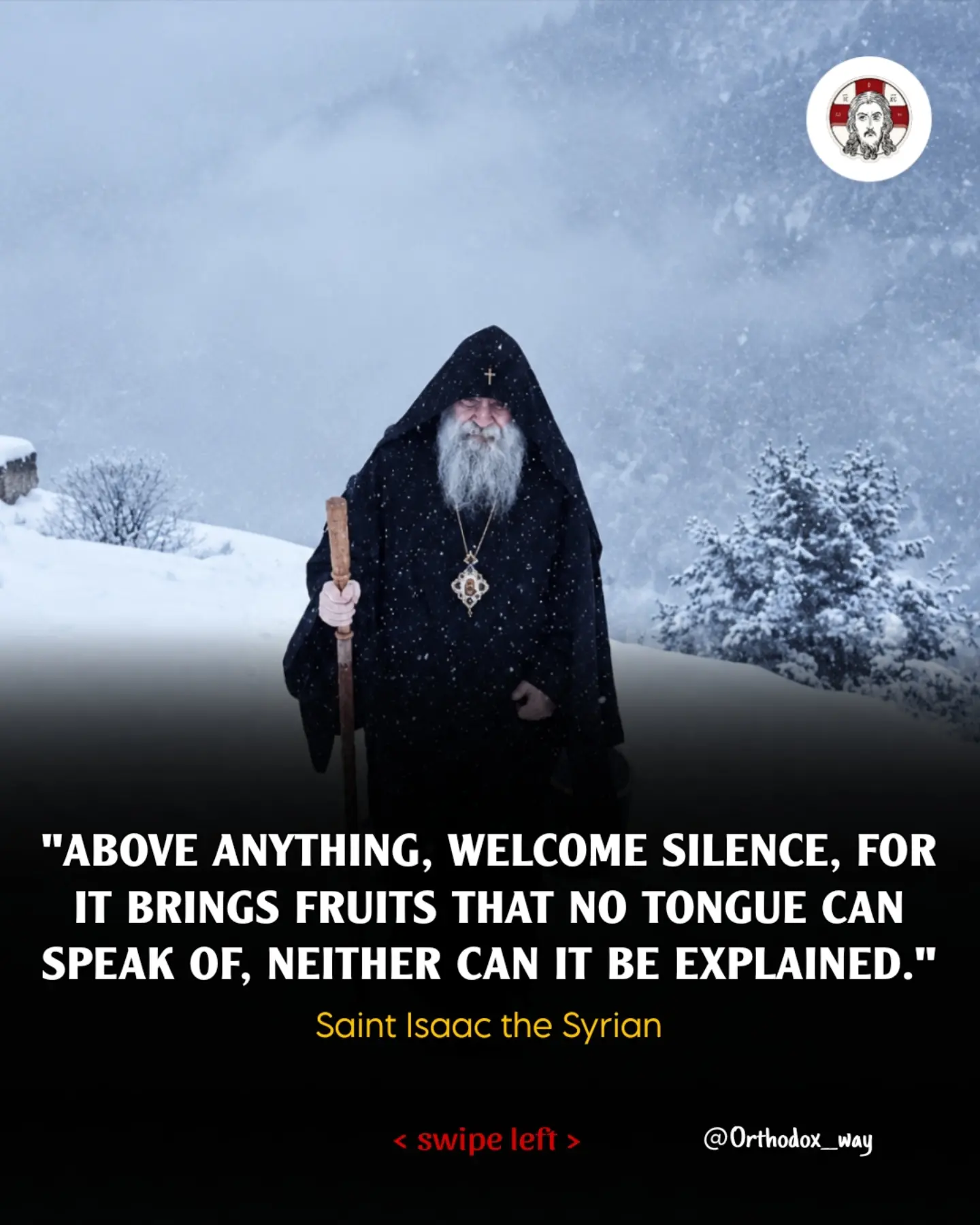
Saint Isaac the Syrian: Bishop, Ascetic, Teacher of Divine Mercy

Saint Isaac the Syrian lived in the seventh century as a bishop, theologian, and ascetic within the Syriac Christian tradition. He accepted consecration as Bishop of Nineveh but held the office only briefly before withdrawing to pursue the solitary life of a monk. In solitude he devoted himself to fasting, vigils, and unceasing prayer, seeking deeper communion with God through silence and repentance. Isaac taught that true spiritual knowledge…

Saint Isaac the Syrian lived in the seventh century as a bishop, theologian, and ascetic within the Syriac Christian tradition. He accepted consecration as Bishop of Nineveh but held the office only briefly before withdrawing to pursue the solitary life of a monk. In solitude he devoted himself to fasting, vigils, and unceasing prayer, seeking deeper communion with God through silence and repentance.

Isaac taught that true spiritual knowledge arises not from books alone but from a purified heart and a life of humility before God. His Ascetical Homilies remain treasured spiritual writings that guide Christians toward inner stillness, tears of repentance, and the transformation of the soul. He is especially remembered for his teaching on the infinite mercy and love of God, which he said extends to the whole of creation.

Isaac urged believers to cultivate a heart full of compassion for every living being, reflecting the boundless love of the Creator. His life demonstrates that the path to holiness is found in humility, silence, prayer, and complete surrender to God's will.

  • Seventh-century Syriac bishop, theologian, and ascetic
  • Briefly served as Bishop of Nineveh before withdrawing to monastic solitude
  • Embraced fasting, vigils, and unceasing prayer as means to communion with God
  • Authored Ascetical Homilies guiding believers toward inner stillness and repentance
  • Taught God's infinite mercy extends to all creation, urging universal compassion
Read more
Mount Athos Legacy Facebook

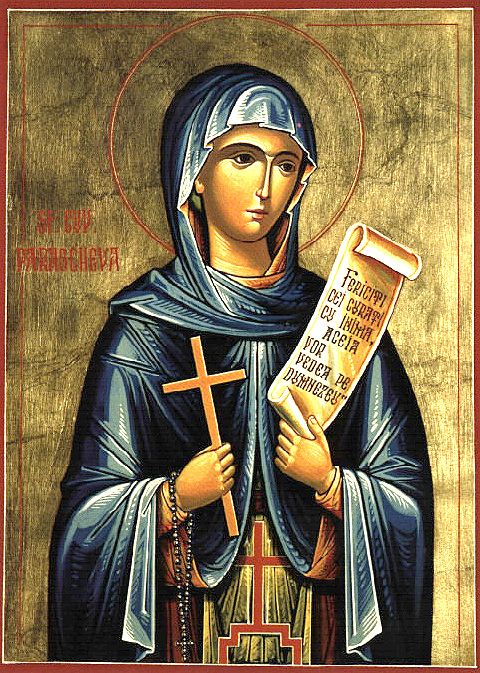
Saint Paraskevi the New of Epivates commemorated today

The post commemorates Saint Paraskevi the New, known as the Epivatini, who originated from Epivates near Selymbria in Thrace. From childhood she performed good works. As an adult she left her parental home and traveled to Constantinople to venerate the holy relics of the saints. From there she went to Heraclea of Pontus, where she undertook the care of a church for five years. She then departed for the Holy Places and settled in a women's…

The post commemorates Saint Paraskevi the New, known as the Epivatini, who originated from Epivates near Selymbria in Thrace. From childhood she performed good works. As an adult she left her parental home and traveled to Constantinople to venerate the holy relics of the saints. From there she went to Heraclea of Pontus, where she undertook the care of a church for five years.

She then departed for the Holy Places and settled in a women's monastery, where she practiced virtue for several years. Later she returned to Constantinople and then went to Kallikrateia in southeastern Thrace, where she remained for two years at the church of the Holy Apostles and reposed there peacefully. The liturgical service for her feast was composed by Syrigos Meletios, and her life was written by Euthymios, Archbishop of Tornovo.

  • Born in Epivates near Selymbria, Thrace
  • Traveled to Constantinople to venerate holy relics
  • Cared for a church in Heraclea of Pontus for five years
  • Practiced virtue in a women's monastery in the Holy Places
  • Reposed in Kallikrateia at the church of the Holy Apostles
☦️An Orthodox Blog☦️ with Orthodoxy ☦︎ Instagram

Commemoration of Martyr Lucian of Antioch with Greek chants

The post marks the commemoration of the Martyr Lucian the Presbyter of Antioch on 15 October. The accompanying video presents two liturgical texts chanted in Greek. The first is Psalm 17:1-2 according to the Septuagint: "I will love Thee, O Lord, my strength; the Lord is my firmament, my refuge, and my deliverer. My God is my helper and I will hope in Him." The second is the Trisagion hymn: "Holy God, Holy Mighty, Holy Immortal, have mercy on…

The post marks the commemoration of the Martyr Lucian the Presbyter of Antioch on 15 October. The accompanying video presents two liturgical texts chanted in Greek. The first is Psalm 17:1-2 according to the Septuagint: "I will love Thee, O Lord, my strength; the Lord is my firmament, my refuge, and my deliverer.

My God is my helper and I will hope in Him." The second is the Trisagion hymn: "Holy God, Holy Mighty, Holy Immortal, have mercy on us," followed by the doxology "Glory to the Father and the Son and the Holy Spirit." The post includes hashtags identifying the content as Christian, Orthodox, church-related, and connected to the church fathers.

Key moments

  1. 0:00 Psalm 17:1-2 (LXX) chanted in Greek: "I will love Thee, O Lord, my strength; the Lord is my firmament, my refuge, and my deliverer. My God is my helper and I will hope in Him."
  2. 0:30 The Trisagion hymn chanted in Greek: "Holy God, Holy Mighty, Holy Immortal, have mercy on us. Glory to the Father and the Son and the Holy Spirit."
M mysteries_of_christendom Instagram

Photographer reveals hidden image on Shroud of Turin in 1898

A new episode of Mysteries of Christendom examines the 1898 moment when photographer Secondo Pia developed a glass plate of the Shroud of Turin. As the picture appeared in his darkroom, Pia saw the image of a man with a face showing real shading and depth, closed eyes, and a beard. The marks of wounds on the body were as clear as a photograph of a living person. Pia was so shocked that the glass plate almost slipped from his hands. He realized…

A new episode of Mysteries of Christendom examines the 1898 moment when photographer Secondo Pia developed a glass plate of the Shroud of Turin. As the picture appeared in his darkroom, Pia saw the image of a man with a face showing real shading and depth, closed eyes, and a beard. The marks of wounds on the body were as clear as a photograph of a living person.

Pia was so shocked that the glass plate almost slipped from his hands. He realized the faint stains on the cloth were not random marks at all. A real, detailed picture of a man had been hidden inside them.

For centuries nobody could see it until a camera finally brought it out. Somehow a picture had been hidden in the cloth hundreds of years before cameras were invented. The episode presents this discovery as the starting point for more than a century of scientific investigations, controversy, and continuing questions about whether the shroud is the burial cloth of Jesus Christ.

Key moments

  1. The picture slowly appears on the glass plate.
  2. Pia sees the image of a man with a face showing real shading and depth, closed eyes, and a beard.
  3. The marks of wounds on the body are as clear as a photograph of a real person.
  4. Pia is so shocked the glass plate almost slips from his hands.
  5. He realizes the faint stains on the cloth are not random stains.
  6. A real, detailed picture of a man was hidden inside the stains.
  7. Nobody could see the image for years until a camera brought it out.
  8. A picture had been hidden in the cloth hundreds of years before cameras were invented.
Read more
George Instagram

Grandfather's nightly prayer and cross contrast with today's distracted faith

The speaker reflects that one or two generations ago, before the internet and modern life, people's faith was much stronger. Grandparents had no books, podcasts, or videos, and some could not read yet lived their faith better than most today. The speaker's grandfather exemplified this by making the sign of the cross over the speaker and sister every night, praying the Our Father, never missing a night, and never explaining theology, and he lived…

The speaker reflects that one or two generations ago, before the internet and modern life, people's faith was much stronger. Grandparents had no books, podcasts, or videos, and some could not read yet lived their faith better than most today. The speaker's grandfather exemplified this by making the sign of the cross over the speaker and sister every night, praying the Our Father, never missing a night, and never explaining theology, and he lived it.

That generation practiced daily rituals: they made the cross before eating, fasted without complaining, lit the vigil lamp every evening, and the whole village attended church on Sunday, filling the building. Their lives were simpler and harder, and they had less and depended on God for everything, and the day provided silence for prayer, thought, and being with people.

Everything changed, and today comfort, money, and phones fill every quiet moment. The speaker notes that we now have more information about God than any previous generation but less actual time with Him, and the fire of faith goes out without notice. The speaker does not advocate returning to the old life but suggests reviving small daily habits: a short prayer, the sign of the cross, a fast, and Sunday church attendance.

Key moments

  1. Just one or two generations ago, before the internet and modern life, people's faith was much stronger.
  2. Grandparents had no books, podcasts, or videos; some could not read yet lived their faith better than most today.
  3. The speaker's grandfather made the sign of the cross over the speaker and sister every night, prayed the Our Father, never missed a night, and never explained theology, he just lived it.
  4. That generation made the cross before eating, fasted without complaining, lit the vigil lamp every evening, and the whole village attended church on Sunday.
  5. Life was simpler and harder; they had less and depended on God for everything, with silence in the day for prayer, thought, and being with people.
  6. Everything changed fast; today we have comfort, money, and phones that fill every quiet moment.
  7. We have more information about God than any previous generation but less time with Him, and the fire of faith goes out slowly without notice.
  8. The speaker does not advocate returning to the old life but suggests bringing back daily practices: a small prayer, the sign of the cross, a fast, and Sunday church.
Read more

Orthodoxy as fullness of Christian faith, not added structure

Bryce recounts that many Orthodox people tell him he needs Orthodoxy. He notes that before a suicidal crisis he was advised that religious structure would bring safety, yet such structure outside Christianity does not satisfy. He says he loves tradition, sacraments, and similar things. He explains that Orthodoxy is not about adding rules or religious structure but about receiving the whole Christian faith: doctrine, worship, sacraments,…

Bryce recounts that many Orthodox people tell him he needs Orthodoxy. He notes that before a suicidal crisis he was advised that religious structure would bring safety, yet such structure outside Christianity does not satisfy. He says he loves tradition, sacraments, and similar things. He explains that Orthodoxy is not about adding rules or religious structure but about receiving the whole Christian faith: doctrine, worship, sacraments, spiritual life, and tradition.

He argues that loving tradition and sacraments but not belonging to the church that preserves them falls apart. He says the Eucharist, baptism, and apostolic succession belong to a certain understanding of the church and require existing within the life of that church. He concludes that people urge him toward holy Orthodoxy not for more religion but because without it he lacks the fullness of the Christian faith.

Key moments

  1. Bryce recounts that many Orthodox people tell him he needs Orthodoxy.
  2. He says that before a suicidal period people told him religious structure would make him safe.
  3. He observes that religious structure outside Christianity does not give satisfaction, significance, or security.
  4. He states that he loves tradition, sacraments, and similar things.
  5. He explains that Orthodoxy is not about adding rules or religious structure but about receiving the Christian faith as a whole, including doctrine, worship, sacraments, spiritual life, and tradition.
  6. He argues that loving tradition and sacraments but not belonging to the church that preserves them falls apart.
  7. He says the Eucharist, baptism, and apostolic succession belong to a certain understanding of the church and require existing within the life of that church.
  8. He concludes that people urge him toward holy Orthodoxy not for more religion but because without it he lacks the fullness of the Christian faith.
26 opinions in the discussion When will the Orthodox community online realize that if you keep harassing someone to join the Orthodox Church and if you keep calling them a heretic your pushing them away from the Church… Read the discussion