WeOrthodox
EN UA

Orthodox posts, videos and discussions

We follow Orthodox channels, communities and blogs across the web, summarise every post and video, and highlight the conversations with real substance.

Torn between Catholicism and Orthodoxy: how did you finally decide?

Hi everyone! Short version: I was born and raised in an atheist country and now live in the US Midwest. About a year ago I started reading the Bible seriously, and that is how I became a Christian. For a long time I read alone at home, but a few months ago I felt I wanted to join an actual community. I tried a few non-denominational churches, but that was not it. I work in marketing, and the whole experience struck me as brilliant marketing:…

Hi everyone!

Short version: I was born and raised in an atheist country and now live in the US Midwest. About a year ago I started reading the Bible seriously, and that is how I became a Christian. For a long time I read alone at home, but a few months ago I felt I wanted to join an actual community.

I tried a few non-denominational churches, but that was not it. I work in marketing, and the whole experience struck me as brilliant marketing: everything was built around me, the visitor, to make the experience as good as possible. It did not feel real.

So I kept searching, because I was convinced there must be a church I could trace all the way back to Jesus. That led me to Catholic and Orthodox parishes. I have been attending both, talking with people at both, and taking part in OCIA and Inquirers' classes.

Now I am torn. Both feel authentic in different ways, and I do not think either one is the wrong choice. At Catholic masses and Orthodox Liturgies alike I feel I am exactly where I should be, and my relationship with God deepens in both.

Has anyone else been torn between Catholicism and Orthodoxy? What helped you finally decide?

  • Raised atheist, came to Christianity through reading the Bible a year ago
  • Non-denominational churches felt like marketing aimed at the visitor
  • Wants a church traceable back to Jesus, so exploring Catholic and Orthodox parishes
  • Attends both, joins OCIA and Inquirers' classes, feels at home in both
  • Asks what helped others make the final decision
35 opinions in the discussion I genuinely love the Mass, the Rosary, and Gregorian chant. If I went purely by what I personally prefer, I'd pick Roman Catholicism every single time without hesitation. But the truth is… Read the discussion
Anthony’s Cell YouTube

Ancestral Sin: What We Inherit From Adam, and What We Do Not

Ancestral Sin: What We Inherit From Adam, and What We Do Not 4:39

This audio reading presents the article on Ancestral Sin from the Orthodox Study Bible. It begins with God creating mankind, establishing paradise, and commanding Adam not to eat from the tree of the knowledge of good and evil, saying that on the day he ate from it he would die by death (Genesis 2:16-17). Since Adam and Eve did not physically die that day, the words 'you shall die' point to a spiritual death through separation from God, the…

This audio reading presents the article on Ancestral Sin from the Orthodox Study Bible. It begins with God creating mankind, establishing paradise, and commanding Adam not to eat from the tree of the knowledge of good and evil, saying that on the day he ate from it he would die by death (Genesis 2:16-17). Since Adam and Eve did not physically die that day, the words 'you shall die' point to a spiritual death through separation from God, the source of life.

Ancestral sin is Adam's willing disobedience, by which he fell from God's path to perfection. The reading lists the consequences of the fall: mortality, an inclination toward sin, and the fall of the divine image in man, along with sweat, toil, hunger, thirst, weariness, sorrow, pain, suffering, sickness, tribulations, tragedy, and tears.

It draws on Saint Gregory the Theologian, who says death cuts off sin so evil may not be everlasting, turning God's punishment into a mercy. On the question of guilt, the article states that we are not guilty because of Adam's sin but because of our own. Yet because mankind fell from God's grace through Adam's disobedience, people now have a propensity toward sin, since sin enters through fear of death.

The divine image in man is fallen but not totally corrupted or obliterated. Human nature remains inherently good, and people are still capable of doing good, though bondage to death and the devil can dull their perception of what is good. The intellectual, desiring, and irascible aspects of the soul remain natural and neutral after the fall; they can be used for good or harm, like iron made into a plow or into a sword.

The reading closes with Christ's death and resurrection, by which he conquered the devil and death, freed mankind from the fear of death, and made possible communion with God in which people become partakers of the divine nature (2 Peter 1:4).

Key moments

  1. 0:34 God created mankind, established paradise, and commanded Adam not to eat from the tree of the knowledge of good and evil, saying that on the day he ate from it he would die by death (Genesis 2:16-17).
  2. 1:04 Since Adam and Eve did not physically die the day they ate, the words 'you shall die' indicate a spiritual death through separation from God. Ancestral sin is Adam's willing disobedience, by which he fell from God's path to perfection.
  3. 1:34 The fall made mankind subject to mortality. Saint Gregory the Theologian says death cuts off sin so evil may not be everlasting, so God's punishment is changed into a mercy.
  4. 2:06 We are not guilty because of Adam's sin but because of our own. Yet because mankind fell from God's grace through Adam's disobedience, people now have a propensity toward sin, since sin enters through fear of death.
  5. 2:38 The divine image in man is fallen but not totally corrupted or obliterated. Human nature remains inherently good, and people are still capable of doing good, though bondage to death and the devil can dull their perception of what is good.
  6. 3:10 Adam's fall brought mortality and sin into the world, along with sweat, toil, hunger, thirst, weariness, sorrow, pain, suffering, sickness, tribulations, tragedy, and tears.
  7. 3:41 The intellectual, desiring, and irascible aspects of the soul remain natural and neutral after the fall. They can be used for good or harm, like iron made into a plow or into a sword.
  8. 4:13 Christ, by his death and resurrection, conquered the devil and death, freeing mankind from the fear of death and making possible communion with God in which people become partakers of the divine nature (2 Peter 1:4).
Fr.TEDTalks Instagram

Archbishop Apostolos Preaches Forgiveness at Prophet Elias Church

Archbishop Apostolos visited the Church of Prophet Elias for the Divine Liturgy, marking his first visit to the parish. In his sermon he preached on the Gospel of Luke, citing the command to love enemies and to do to others as you wish done to yourself. He explained that loving only those who love you brings no credit, since even sinners do that, and that the core of the Gospel is forgiving enemies as Christ did on the cross when He said,…

Archbishop Apostolos visited the Church of Prophet Elias for the Divine Liturgy, marking his first visit to the parish. In his sermon he preached on the Gospel of Luke, citing the command to love enemies and to do to others as you wish done to yourself. He explained that loving only those who love you brings no credit, since even sinners do that, and that the core of the Gospel is forgiving enemies as Christ did on the cross when He said, "Father, forgive them," calling us to imitate Him.

The archbishop pointed to the thief on the cross who asked forgiveness and heard Jesus say, "today you will be with me in paradise," presenting forgiveness as the key to salvation and the door to paradise. He quoted the call to be merciful as the Father is merciful and recounted denying communion to those who refuse to forgive family members, because we cannot expect God's mercy if we withhold our own mercy.

The archbishop described the Church as hierarchical with bishops as successors of the apostles, noting the Ecumenical Patriarch succeeds Saint John Chrysostom and the Apostle Andrew, that Constantinople was the first Christian state, and that the Gospel has been kept unchanged for centuries. He called the young people present the present and future of the Church, identifying them as leaders, teachers, parents, and supporters of Sunday school and Greek education, and urged unity, support for ministries, and opening family doors to Christ so the Church continues its mission for coming generations.

The archbishop also noted that the prophet Elias connects the Old and New Testaments, and that the Gospel gives directions on how believers should behave toward all people, requiring generosity toward everyone when we have the ability, and emphasized that the Church, established by Christ's blood on the cross, is unshakeable.

Key moments

  1. 0:00 First visit to Church of Prophet Elias; Prophet Elias connects Old and New Testament; Gospel gives directions on how believers should behave toward all people
  2. 0:41 Gospel of Luke: "As you wish men would do to you, do so to them", the Lord's clear direction on communication and behavior
  3. 1:21 Loving only those who love you brings no credit; even sinners do that; we must be generous to everyone when we have the ability
  4. 2:06 Core message: love your enemies; Christ on the cross said "Father, forgive them," calling us to imitate Him; forgiveness opens the door to paradise
  5. 3:34 The thief on the cross asked forgiveness and Jesus said "today you will be with me in paradise", forgiveness is the key of salvation
  6. 4:47 "Be merciful, even as your Father is merciful"; archbishop refused communion to those who would not forgive family members, because we cannot expect God's mercy if we withhold our own
  7. 7:00 Young people are the present and future of the Church; the Church needs them as leaders, teachers, parents, and supporters of Sunday school and Greek education
  8. 9:13 The Church is hierarchical with bishops as successors of the apostles; the Ecumenical Patriarch succeeds Saint John Chrysostom and the Apostle Andrew; Constantinople was the first Christian state; the Gospel has been kept unchanged for centuries
Read more
CHRISTIANITY UNITED Instagram

Psalm 91: Trust in God Amid Spiritual Dangers

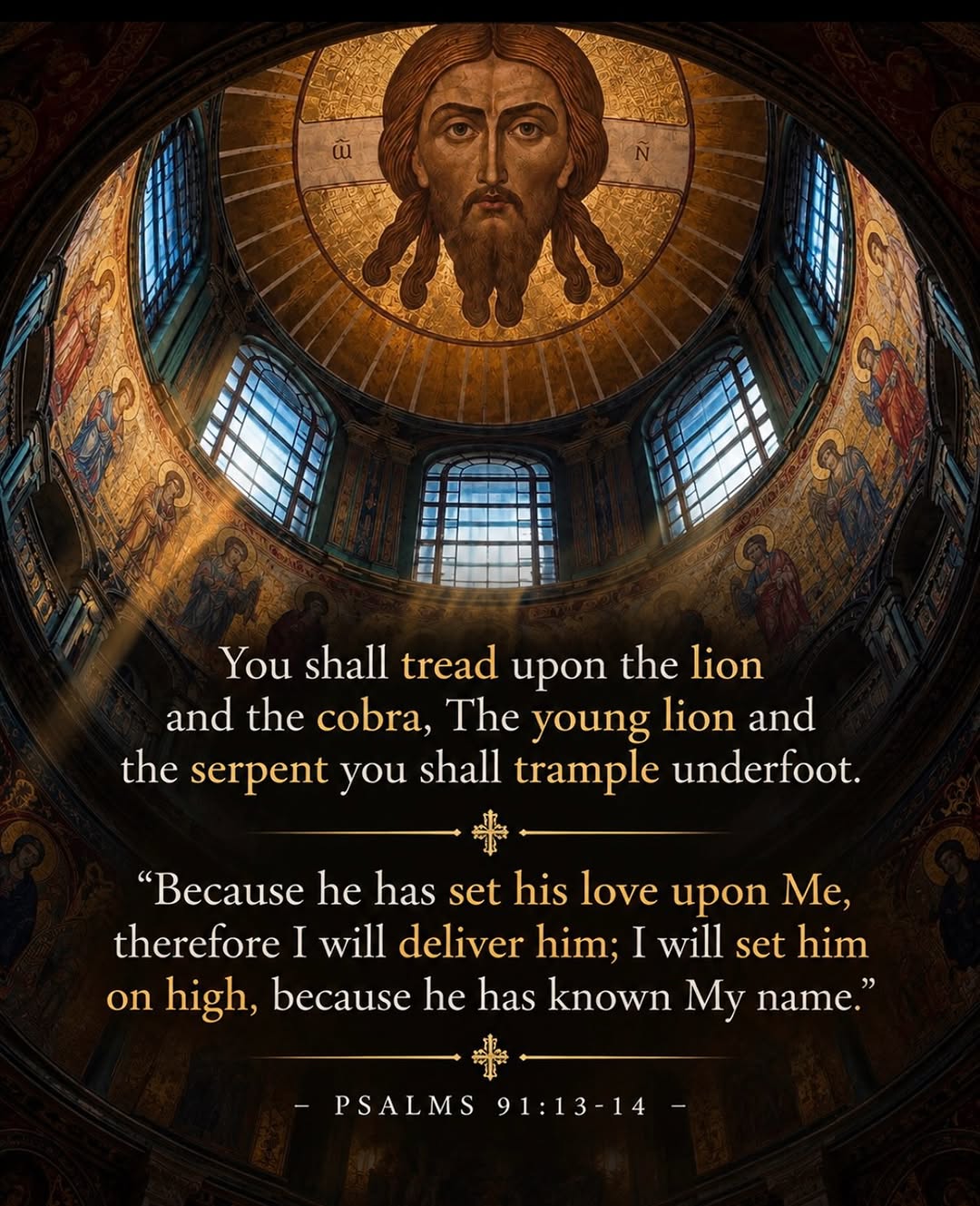
The post opens with the statement that when your heart belongs to God, you are never alone. It then reflects on Psalm 91 as one of the most powerful prayers of trust in all of Scripture. The author notes that the psalm mentions the lion, the cobra, and the serpent as images of real danger, but Christians have long understood them spiritually. There are things that hunt the soul too: temptation, fear, despair, pride, hatred, lust, and the attacks…

The post opens with the statement that when your heart belongs to God, you are never alone. It then reflects on Psalm 91 as one of the most powerful prayers of trust in all of Scripture. The author notes that the psalm mentions the lion, the cobra, and the serpent as images of real danger, but Christians have long understood them spiritually.

There are things that hunt the soul too: temptation, fear, despair, pride, hatred, lust, and the attacks of the enemy. The author quotes the verse: "Because he has set his love upon Me, therefore I will deliver him," and identifies this as the heart of these verses. The author explains that our strength does not come from believing that nothing bad can ever happen to us.

Christians still suffer. The apostles suffered. The martyrs suffered. Even Christ went willingly to the cross. Our confidence comes from knowing that nothing has greater power than God and that even suffering and death cannot separate those who belong to Christ from him. The author also comments on the phrase "because he has known My name," saying that to know God is more than simply knowing that he exists.

It means learning to trust him, calling upon him in prayer, returning to him when we fall, and slowly giving him our whole heart. The post concludes with practical advice: when fear comes, pray. When temptation comes, pray. When you feel surrounded and cannot see a way forward, remember who stands above everything you fear. Set your heart upon Christ and keep walking.

  • Psalm 91 is a prayer of trust; its images of lion, cobra, serpent represent spiritual dangers like temptation, fear, despair, pride, hatred, lust, and enemy attacks.
  • God promises deliverance to those who set their love on him: "Because he has set his love upon Me, therefore I will deliver him."
  • Christian confidence is not that suffering is absent; apostles, martyrs, and Christ suffered, but nothing can separate believers from God.
  • Knowing God's name means more than acknowledging existence; it involves trust, prayer, repentance, and giving one's whole heart.
  • Practical response: pray when fear or temptation comes, remember God's supremacy, set heart on Christ and keep walking.
Read more
Orthodox Life Instagram

Saint Hierotheos of Athens: Philosopher, Bishop, Hymnographer at the Dormition

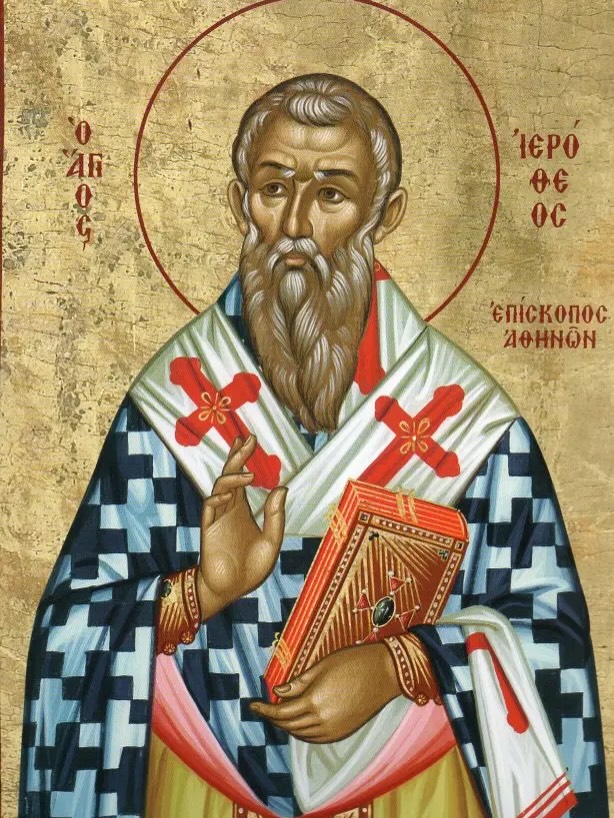
The post commemorates Saint Hierotheos, first Bishop of Athens, on October 4. Before his conversion around 52-53 AD, he was a Platonic philosopher and member of the Areopagus, holding the title Thesmothete. When Apostle Paul preached at Mars Hill, Hierotheos and Saint Dionysius the Areopagite accepted baptism. Paul consecrated Hierotheos as bishop of the nascent Athenian church. Hierotheos became spiritual mentor to Dionysius; Paul provided…

The post commemorates Saint Hierotheos, first Bishop of Athens, on October 4. Before his conversion around 52-53 AD, he was a Platonic philosopher and member of the Areopagus, holding the title Thesmothete. When Apostle Paul preached at Mars Hill, Hierotheos and Saint Dionysius the Areopagite accepted baptism. Paul consecrated Hierotheos as bishop of the nascent Athenian church.

Hierotheos became spiritual mentor to Dionysius; Paul provided foundational teaching while Hierotheos initiated Dionysius into deeper mystical secrets, which Dionysius later expanded. Ecclesiastical tradition records that the Holy Spirit transported Hierotheos and Dionysius to Jerusalem for the Dormition of the Virgin Mary. There Hierotheos distinguished himself as a divine hymnographer, transported outside himself while singing spiritual songs in praise of the Theotokos.

He died a martyr in the late first century after defending the faith and evangelizing the pagan population of Athens.

  • First Bishop of Athens, converted by Apostle Paul at Mars Hill circa 52-53 AD
  • Former Platonic philosopher and Areopagus member with title Thesmothete
  • Mentored Saint Dionysius the Areopagite in mystical theology
  • Transported by the Holy Spirit to the Dormition of the Virgin Mary
  • Martyred in late first century while evangelizing Athens
Read more
Archim. Christódoulos Papadeas Instagram

The Golden Rule and a Pilgrim's Blessing from Greece

The post centers on Christ's teaching of the Golden Rule from Luke 6:31-36, presented in both English and Greek: "As you would have men do unto you, do likewise unto them... Become merciful, just as your Father is merciful." This scriptural foundation is accompanied by a video reflection from a pilgrim on the coast of Iraki, Greece, who has just attended holy vespers at the church of Panagia Evangelistria on the eve of the feast of St. Methodia…

The post centers on Christ's teaching of the Golden Rule from Luke 6:31-36, presented in both English and Greek: "As you would have men do unto you, do likewise unto them... Become merciful, just as your Father is merciful." This scriptural foundation is accompanied by a video reflection from a pilgrim on the coast of Iraki, Greece, who has just attended holy vespers at the church of Panagia Evangelistria on the eve of the feast of St. Methodia of Tinos.

The speaker recounts a recent visit to the monastery of St. Nectarios on Aegina and warmly encourages others to make the pilgrimage if they are able. The reflection weaves together the call to mercy with the living presence of the saints, affirming that they are alive and present everywhere. It concludes with a blessing invoking the grace of St. Nectarios, St. Methodia, the Theotokos, and Christ, linking the ethical command of the Gospel to the concrete life of pilgrimage, feast days, and saintly intercession in the Orthodox spiritual tradition.

Key moments

  1. Greeting from Greece, specifically the coastal location of Iraki.
  2. Just finished holy vespers at the church of Panagia Evangelistria.
  3. Tomorrow is the feast day of St. Methodia of Tinos.
  4. Came from the island of Aegina after visiting the monastery of St. Nectarios.
  5. Encourages others to visit the monastery of St. Nectarios if they can.
  6. Affirms that the saints are alive and present everywhere.
  7. Offers a final blessing invoking the grace of St. Nectarios, St. Methodia, the Panagia, and Christ.
Read more
Orthodox Sound YouTube

When Life Passes in Vanity: Counsel from the Elders of Optina

When Life Passes in Vanity: Counsel from the Elders of Optina 42:37

This narration presents spiritual counsels of the Holy Elders of Optina, drawn from the book Living Without Hypocrisy: Spiritual Counsels of the Holy Elders of Optina, edited by George Schaefer and published by Holy Trinity Publications. The teaching begins with the claim that every person is destined to be a dwelling of the Holy Spirit, but God abides only in a pure heart. One must therefore purify the passions, pray, and make the Gospel the…

This narration presents spiritual counsels of the Holy Elders of Optina, drawn from the book Living Without Hypocrisy: Spiritual Counsels of the Holy Elders of Optina, edited by George Schaefer and published by Holy Trinity Publications. The teaching begins with the claim that every person is destined to be a dwelling of the Holy Spirit, but God abides only in a pure heart.

One must therefore purify the passions, pray, and make the Gospel the rule of life. Humility stands at the center: without it the heart cannot receive the teachings of Christ, and the listener is urged to implore the Lord to bestow this gift. Pride destroys every virtue, compared to banknotes burned in a fire or a laden ship that sinks for lack of a harbor.

The counsels name repentance, the Jesus prayer, and the consciousness of one's sinfulness, like the publican's, as the path to salvation, and they warn against despondency and despair as mortal dangers. Self-praise and self-justification conceal a pride God abhors; after sinning one must flee to repentance and recount each night all transgressions in deed, word, and thought.

Sorrows and sicknesses come by God's permission for healing and instruction, and the elders call for thanking God in every trial, saying 'Glory to thee, O Lord'. Love for God is proven by mercy toward one's neighbor, forgiveness of offenses, and self-reproach instead of judging others. The teaching also urges trust in God's will, guarding the faith, attending church services and communion without condemnation, and enduring sorrows, since without them one will not enter into peace.

The narration closes on the name of Jesus, which it calls powerful, and the resolve to endure for His sake.

Key moments

  1. 0:01 Every person is a house of God destined to be a dwelling of the Holy Spirit, but God abides only in a pure heart, so one must purify the passions and pray, making the Gospel the rule of life.
  2. 1:05 Without humility one cannot be a disciple of Christ; the heart does not receive or assimilate the teachings of Christ without it, and one must implore the Lord to bestow this gift.
  3. 3:12 Pride destroys all virtues: like 500 ruble notes thrown into fire that turn to useless ashes, or a great ship laden with valuable cargo that sinks for lack of a safe harbor.
  4. 4:48 Self-praise and self-justification conceal pride which God abhors; after sinning one must flee to the quiet harbor of heartfelt repentance, recounting each night all transgressions in deed, word, and thought.
  5. 5:51 Mankind divides into Pharisees and publicans: the former perish, the latter are saved; the publican was saved by the consciousness of his sinfulness and by hope in God's mercy.
  6. 6:53 The chief enemies are the demons who fight through our passions; humility is the most powerful weapon against them, for they cannot stand against it, and only humility can escape their fine nets.
  7. 18:13 Sorrows and sicknesses are an indication of God's mercy, for whom the Lord loveth he chasteneth; they instruct us, cleanse us of sins, and no holy man passed his life without enduring something.
  8. 20:17 With childlike submission endure both the pleasant and the unpleasant, saying 'Glory to thee, O Lord' in every sorrow and illness, and 'I will endure this for Jesus Christ,' for the name of Jesus is powerful.
Timothy Instagram discussion

Post tagged with Orthodox, Catholic, and atheist topics

2:03

The post contains only hashtags: #orthodoxchristian, #christian, #orthodoxy, #catholic, #atheist. No additional text or discussion is present.

  • Hashtags reference Orthodox Christianity
  • Includes Catholic and atheist tags
  • No substantive content or discussion
20 opinions in the discussion "Constantinople II teaches papal supremacy" 😭😭 that's why the pope got thrown in jail and forced to submit to the council even though he demanded they submit to his apostolic authority Read the discussion

Beyond Good Works: The Mystical Heart of Orthodox Life

Beyond Good Works: The Mystical Heart of Orthodox Life 4:32

Fr. Andreas Houpos reflects on the essential balance between active service and the mystical life that defines Orthodox Christianity. While feeding the poor, clothing the needy, and serving the community are good and necessary, they are not unique to Christianity; many non-Christians perform similar works. What distinguishes Orthodox life is communion with Christ through the mysteries of the Church — repentance, prayer, the noetic life of the…

Fr. Andreas Houpos reflects on the essential balance between active service and the mystical life that defines Orthodox Christianity. While feeding the poor, clothing the needy, and serving the community are good and necessary, they are not unique to Christianity; many non-Christians perform similar works. What distinguishes Orthodox life is communion with Christ through the mysteries of the Church — repentance, prayer, the noetic life of the heart, and above all the Divine Liturgy and the Eucharist.

The priest emphasizes that we gather not first for a sermon, social activity, or moral encouragement, but to encounter the Lord and receive His life in the Eucharist. True Orthodox service must flow from this deeper sacramental foundation, beginning in awe before the mystery of God and continuing as a lifelong journey of transformation in Christ.

The discussion highlights how an overemphasis on hands-on service often stems from a desire to participate in community and is influenced by Protestant models that prioritize activism over sacramental and noetic life. Protestantism tends to emphasize service and activity at the expense of the mysteries, repentance, and the descent of the mind into the heart.

Orthodox parishes that adopt charitable activities from other Christians face the challenge of maintaining focus on the mystical life in Christ. Converts from Protestantism frequently experience a transformative shift when they encounter the Divine Liturgy and the centrality of the Eucharist, which opens their hearts to a deeper understanding of worship and discipleship.

Even clergy must remain in continual awe and exploration of the mysteries such as baptism and the Eucharist, recognizing that a mystery easily comprehended is no mystery at all — God cannot be contained in human understanding.

Key moments

  1. 0:00 Good works are good but not sufficient; the mystical life in Christ is essential and sets Christians apart.
  2. 0:32 The emphasis on service arises from the community's desire to give back and pass on tradition, and is influenced by Protestant models of lay ministry.
  3. 1:03 Protestantism emphasizes service and activity over sacramental life, repentance, the noetic life, and the descent of the mind into the heart.
  4. 1:34 Orthodox parishes adopt charitable activities from other Christians, creating a challenge to maintain focus on the mystical life in Christ.
  5. 2:05 Anyone can perform good works; what distinguishes Orthodox Christians is faith in Christ and the Church He established.
  6. 2:36 A mystery that is easy to comprehend is not a mystery; God cannot be contained in human understanding.
  7. 3:07 Converts from Protestantism are transformed by experiencing the Divine Liturgy and the Eucharist as the center of worship, not the sermon or fellowship.
  8. 4:10 Understanding faith is an internal, ongoing process; even clergy must remain in awe and continually explore the meaning of mysteries like baptism.
Robel࿇🕊️ Instagram

Saint Jerome's Sharp Wit on Display

0:40

The post highlights Saint Jerome's reputation for biting humor and rhetorical skill through a video illustrating his satirical style. The clip dramatizes Jerome's technique of using exaggerated, conditional flattery as a setup for a devastating insult — praising a target named Onassis with absurd hyperbole (women fighting over him, roses blooming beneath his feet) only to undercut it with crude advice: hide your nose and shut your mouth to…

The post highlights Saint Jerome's reputation for biting humor and rhetorical skill through a video illustrating his satirical style. The clip dramatizes Jerome's technique of using exaggerated, conditional flattery as a setup for a devastating insult — praising a target named Onassis with absurd hyperbole (women fighting over him, roses blooming beneath his feet) only to undercut it with crude advice: hide your nose and shut your mouth to appear handsome and eloquent.

This mirrors Jerome's historical polemics, where he wielded irony and invective against theological opponents and personal rivals alike. The discussion likely centers on how Jerome's acerbic wit served his theological rigor, his translation work, and his complex legacy as both a Doctor of the Church and a master of literary aggression.

Viewers may debate whether such rhetoric befits a saint or reflects the cultural norms of late antiquity.

Key moments

  1. The speaker opens with conditional flattery, suggesting praise will soothe Onassis if exposing his faults made him angry.
  2. Exaggerated compliments follow: wishing women fight over him, that he becomes the ideal husband, and that the ground becomes roses beneath his feet.
  3. The speaker reveals the true intent: after the false kindness, they offer 'advice' to make Onassis look his best.
  4. The insult is delivered: Onassis should show no nose and keep his mouth shut, giving him a chance to be considered handsome and eloquent.
Read more
Athonite Audio YouTube

Elder Ephraim defines Orthodoxy as royal path of Gospel on Three Hierarchs feast

Elder Ephraim defines Orthodoxy as royal path of Gospel on Three Hierarchs feast 11:24

Elder Ephraim of Philotheou and Arizona delivered a homily on the feast of the Three Hierarchs defining Orthodoxy as the truth handed down from Christ through the apostles, evangelists, and spirit-bearing fathers from Polycarp to St. Nicodemus the Hagiorite. The homily presents Orthodoxy as a synthesis of dogma and ethos formally delineated by the ecumenical councils and confirmed by millions of martyrs from the amphitheaters of Rome to the…

Elder Ephraim of Philotheou and Arizona delivered a homily on the feast of the Three Hierarchs defining Orthodoxy as the truth handed down from Christ through the apostles, evangelists, and spirit-bearing fathers from Polycarp to St. Nicodemus the Hagiorite. The homily presents Orthodoxy as a synthesis of dogma and ethos formally delineated by the ecumenical councils and confirmed by millions of martyrs from the amphitheaters of Rome to the concentration camps of Russia.

The elder describes Orthodoxy expressing itself in liturgical worship joining the natural with the supernatural, in monasticism as a spiritual army for freedom and perfection, and in philanthropy beginning with the seven deacons in Jerusalem and continuing through St. Basil's Basiliad in Caesarea, daily meals in Constantinople, and obstetric centers in Alexandria.

He recounts the Church's heroism against heresies and persecutions from Julian the Apostate to the Iconoclasts, naming St. Athanasius, St. Basil, St. John Chrysostom, St. Theodore the Studite, St. Maximus the Confessor, and St. Mark the Gentle among the confessors. The faith was transmitted to barbaric nations without proselytizing but by radiating the Gospel with love.

The Three Hierarchs shine as stars guiding this royal path that preserves moderation and harmony against Eastern mysticism, the Papal Caesarian coalition, and Protestant rationalism. The speaker urges the faithful to know Orthodoxy not in theory but in practice, to live its full breadth and depth so they can convey it to others, because it is not a museum piece but life, creation, and light.

Key moments

  1. 0:01 Introduction on the feast of the Three Hierarchs; the speaker calls the faithful to become familiar with the entire spectrum of Orthodoxy's holiness, noting that Orthodox Christians are often unaware of its height, depth, and breadth.
  2. 0:32 Orthodoxy is defined as the truth, the correct dogma of God, man, and the world, handed down by the incarnate God through his teaching, life, and sacrifice, detailed by the Apostle Paul, St. John the Evangelist, the other evangelists and apostles, the Holy Spirit, and the fathers of Alexandria, Constantinople, Cappadocia, Syria, Palestine, and Mount Athos from Polycarp to St. Nicodemus the Hagiorite.
  3. 1:35 Orthodoxy is the synthesis of dogma and ethos, theory and practice, formally delineated by the holy ecumenical synods; the God-bearing fathers amassed knowledge of the human soul and, guided by the divine Spirit, answered the greatest spiritual problems and laid the foundations of spiritual civilization.
  4. 2:36 An army of millions of martyrs, men, women, and children, from the amphitheaters of Rome to the concentration camps of Russia confirmed the truth of Orthodoxy with their blood, proving Christianity is not a theory but truth and life itself, a victory over violence and tyranny.
  5. 3:07 Orthodoxy is extolled through its liturgical worship and hymnology, which combine the natural with the supernatural, the earthly with the heavenly; in the Divine Liturgy the faithful participate in the sacrifice of the God-man, and monasticism is described as a spiritual army that refashions the soul through the renewal of the mind, leading to true philosophy and deification.
  6. 5:09 Philanthropy in the full sense, complete compassion toward man, is a fundamental attribute; social services began in Jerusalem after the Resurrection with the seven deacons (Acts), St. Paul organized collections (1 Corinthians 16:1-2), bishops continued this work, and St. Basil built the Basiliad in Caesarea, a free hospital, orphanage, senior home, and care center that became a prototype.
  7. 7:12 Heroism continued beyond the early martyrs against Julian the Apostate, Arians, Monophysites, Iconoclasts, and Latin-minded monastics; the heroic phalanx includes St. Athanasius, St. Basil, St. John Chrysostom, St. Theodore the Studite, St. Maximus the Confessor, St. Mark the Gentle, and an infinite multitude of confessors.
  8. 8:16 The Church transmitted Christianity and civilization to barbaric nations without proselytizing, radiating the Gospel with love and gentleness; the Three Hierarchs are the three shining stars of the Church's noetic firmament; Orthodoxy walks the royal path, preserving moderation and harmony against Eastern mysticism, the Papal Caesarian coalition, and Protestant rationalism, never erring because the fathers were guided by the Holy Spirit, sanctifying all it touches and giving rise to modern civilization.
Read more

What would Church reunification mean?

Recent talks between the Pope in Rome and Orthodox leaders have opened a dialogue aimed at full communion, which would reunite the Church. What would this mean for you? Would you want to see a united Church? Pressure toward sin is growing everywhere, in almost every institution, and especially in those targeting our youth. Whatever differences exist, we hold a shared, clear view of what is evil, and we all face the same tribulations with sin. As…

Recent talks between the Pope in Rome and Orthodox leaders have opened a dialogue aimed at full communion, which would reunite the Church. What would this mean for you? Would you want to see a united Church?

Pressure toward sin is growing everywhere, in almost every institution, and especially in those targeting our youth. Whatever differences exist, we hold a shared, clear view of what is evil, and we all face the same tribulations with sin. As the forces against Christianity come together, shouldn't Christianity come together against them?

Shouldn't we fight the devil and his influence rather than fighting our brothers and sisters? Please give your comments and thoughts below.

  • Recent Catholic-Orthodox talks aim for full communion and Church reunification
  • Asks what reunification would mean personally and whether one desires a united Church
  • Notes rising sinful pressures in institutions, especially those targeting youth
  • Argues Christians share a common view of evil and face the same spiritual battles
  • Questions why Christians fight each other instead of uniting against the devil
31 opinions in the discussion It's either the death of Orthodoxy or the death of Catholicism. Both can't survive inside one church, not after a thousand years of theological divergence. Read the discussion

Taking Up the Cross as a Joyful Response to Love

Taking Up the Cross as a Joyful Response to Love 7:57

Fr. Alexey Uminsky's homily for the Exaltation of the Cross reinterprets Christ's call to deny oneself and take up the cross not as a heavy obligation but as a voluntary invitation born of love. The priest explains that the Gospel words — "deny yourself, take up your cross, and follow Me" — are often perceived as the most severe and frightening in Scripture because they seem contrary to human nature. However, Fr. Alexey argues that true…

Fr. Alexey Uminsky's homily for the Exaltation of the Cross reinterprets Christ's call to deny oneself and take up the cross not as a heavy obligation but as a voluntary invitation born of love. The priest explains that the Gospel words — "deny yourself, take up your cross, and follow Me" — are often perceived as the most severe and frightening in Scripture because they seem contrary to human nature.

However, Fr. Alexey argues that true self-denial happens naturally and joyfully when one loves deeply: the lover forgets themselves, making the beloved the center of life. This divine self-denial brings happiness, light, and freedom, not cruelty or heaviness. The "cross" Christians are called to bear is not worldly suffering, illness, or misfortune; rather, it is the Gospel itself — the good news of Christ's sacrificial love and resurrection.

As the Church sings, "Through the Cross joy has come to all the world." Therefore, taking up the cross means embracing a life according to the Gospel, imitating Christ in selfless love. This burden is light and liberating because it is chosen freely in response to love, not imposed by force.

God does not send crosses; a person voluntarily takes them up. The homily concludes that following Christ means denying only oneself, not Christ, and that such a life is marked by the joy of the resurrection.

Key moments

  1. 0:00 The feast of the Exaltation of the Cross concludes; the Gospel reading (Mark) states that to follow Christ one must deny oneself, take up the cross, and follow Him.
  2. 0:31 These words are described as the most troubling and severe in the Gospel, similar to the command to love Christ more than family, because they seem alien to human nature.
  3. 1:35 The concepts of self-denial and the cross are hardest to accept; the cross is usually perceived negatively as something heavy, gloomy, and frightening.
  4. 2:38 Christ's appeal is a calling, not a command; no one is forced or handed a cross—God does not send crosses, a person voluntarily takes it up.
  5. 3:10 Self-denial is explained through the experience of deep love: when one truly loves, they forget themselves joyfully, making the beloved the center of life.
  6. 4:13 Selflessness is identified as happiness and the lightness of love; divine self-denial brings joy, light, and freedom, not cruelty or heaviness.
  7. 5:17 The cross offered by Christ is not life's misfortunes or illnesses; the Church sings 'Through the Cross joy has come to all the world,' identifying the Cross with the Gospel of resurrection and eternal life.
  8. 6:21 Taking up the cross means taking up the Gospel and a life according to it (imitation of Christ); one cannot deny Christ but only oneself, and this burden is light and joyful.
Read more
Orthodox Life Instagram

Saint Dumitru Stăniloae: Theologian, Philokalia translator, confessor under communism

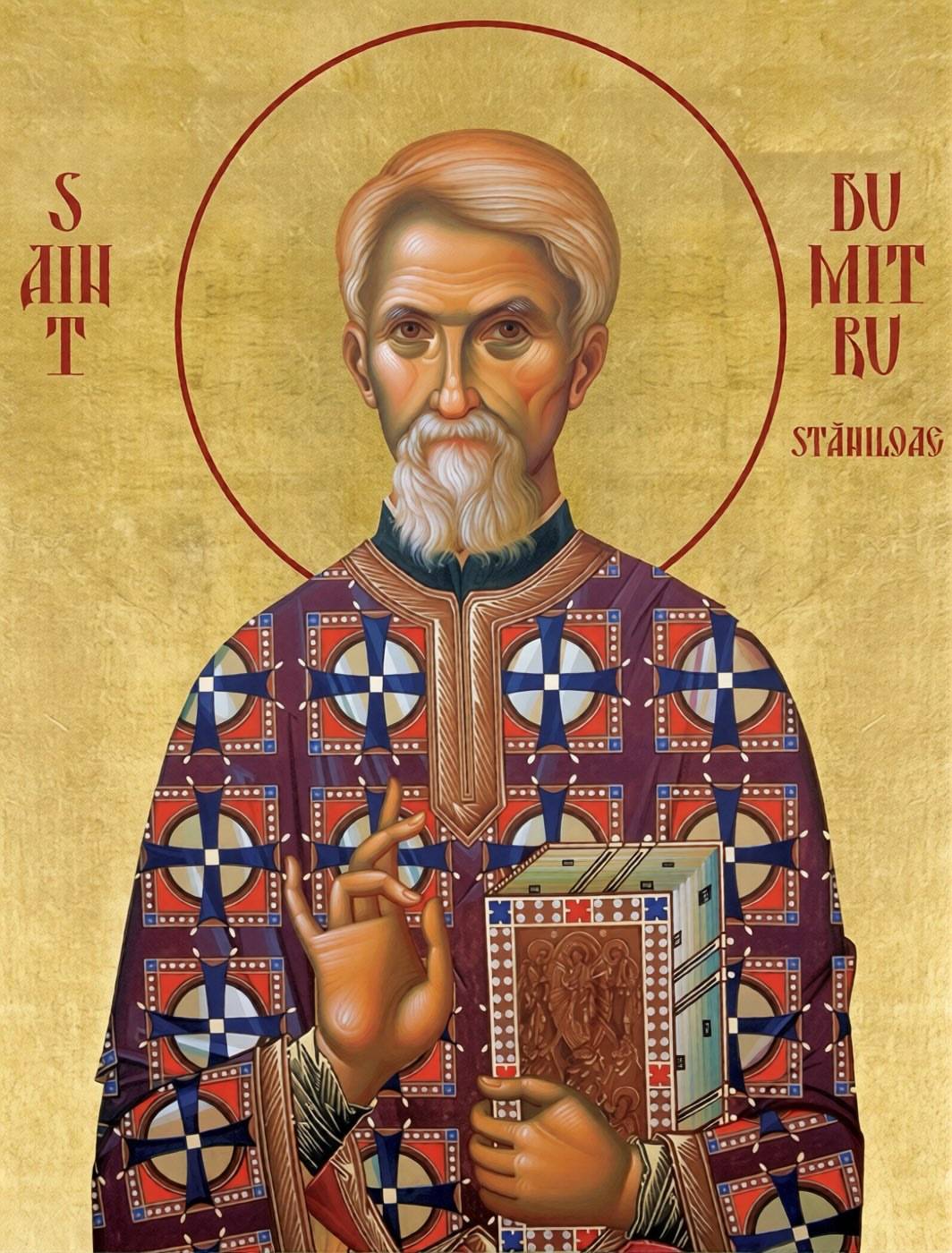
Today marks the commemoration of Saint Dumitru Stăniloae, born in Romania in 1903 and recognized as one of the most influential Eastern Orthodox theologians of the 20th century. He spent his life revitalizing Orthodox theology by blending deep patristic tradition with contemporary existential relevance. His work earned him international acclaim, and he is widely regarded as a modern Father of the Church, known for making profound spiritual…

Today marks the commemoration of Saint Dumitru Stăniloae, born in Romania in 1903 and recognized as one of the most influential Eastern Orthodox theologians of the 20th century. He spent his life revitalizing Orthodox theology by blending deep patristic tradition with contemporary existential relevance. His work earned him international acclaim, and he is widely regarded as a modern Father of the Church, known for making profound spiritual truths accessible to the modern world.

His greatest monumental achievement was the translation and expansion of the Romanian Philokalia, a massive 12-volume collection of mystical texts written by early Christian saints. Rather than just translating the ancient words, Stăniloae added extensive commentary that bridged the gap between historical monastic spirituality and the daily lives of ordinary Christians.

This work sparked a widespread spiritual and monastic renewal across Romania. Stăniloae's theological teaching centered on the theology of love and the Holy Trinity. He viewed the universe not as a mechanical accident, but as a gift from God intended to facilitate a loving dialogue between the Creator and humanity.

For him, the ultimate goal of human life was theosis (deification), the process of becoming more like God through a relationship of love, prayer, and community. His faithfulness to the church came at a great personal cost during the rise of the communist regime in Romania. In 1958, he was arrested by the authorities due to his involvement with the "Burning Bush" (Rugul Aprins) spiritual movement.

He endured five years of harsh imprisonment and forced labor, an experience that deepened his humility and solidified his theological insights through real-world suffering. Following his release, he returned to writing and teaching, becoming a crucial voice in global ecumenical dialogues until his repose in 1993.

  • Commemoration of Saint Dumitru Stăniloae on October 4
  • Born 1903 in Romania; influential 20th-century Orthodox theologian and modern Father of the Church
  • Translated and expanded the Romanian Philokalia into 12 volumes with commentary, sparking spiritual renewal
  • Theology focused on love, Holy Trinity, and theosis as the goal of human life
  • Arrested in 1958 for Burning Bush movement involvement; endured five years imprisonment; later key ecumenical voice until 1993
Read more

Hilandar Monastery on Mount Athos: Founded in 1198 by Saint Sava

0:42

The post presents the Holy Monastery of Hilandar on Mount Athos, giving its history and treasures in both English and Greek. It states that the monastery was founded in 1198 by Saint Sava of Serbia and Saint Simeon. Hilandar is one of the 20 ruling monasteries of Mount Athos and serves as the spiritual center of Serbian Orthodox monasticism. The monastery is dedicated to the Presentation of the Theotokos. It is home to the wonderworking icon of…

The post presents the Holy Monastery of Hilandar on Mount Athos, giving its history and treasures in both English and Greek. It states that the monastery was founded in 1198 by Saint Sava of Serbia and Saint Simeon. Hilandar is one of the 20 ruling monasteries of Mount Athos and serves as the spiritual center of Serbian Orthodox monasticism.

The monastery is dedicated to the Presentation of the Theotokos. It is home to the wonderworking icon of the Panagia Tricherousa. The post is bilingual, with the Greek text repeating the same facts: the founding year and founders, the monastery's place among the 20 ruling monasteries of the Holy Mountain, its role as the spiritual center of Serbian Orthodox monasticism, its dedication to the Entry of the Theotokos into the Temple, and its keeping of the wonderworking Panagia Tricherousa icon.

The post carries hashtags for Orthodoxy, Hilandar, Athos, Monastery, and Serbia, and is credited as an original production of Prayer Orthodoxy.

  • Hilandar Monastery on Mount Athos was founded in 1198 by Saint Sava of Serbia and Saint Simeon.
  • It is one of the 20 ruling monasteries of Mount Athos.
  • It is the spiritual center of Serbian Orthodox monasticism.
  • The monastery is dedicated to the Presentation of the Theotokos.
  • It keeps the wonderworking icon of the Panagia Tricherousa.
Read more
Citations Orthodoxes ☦ Instagram

Gaza Orthodox women killed in strike, buried at Saint Porphyrius Church

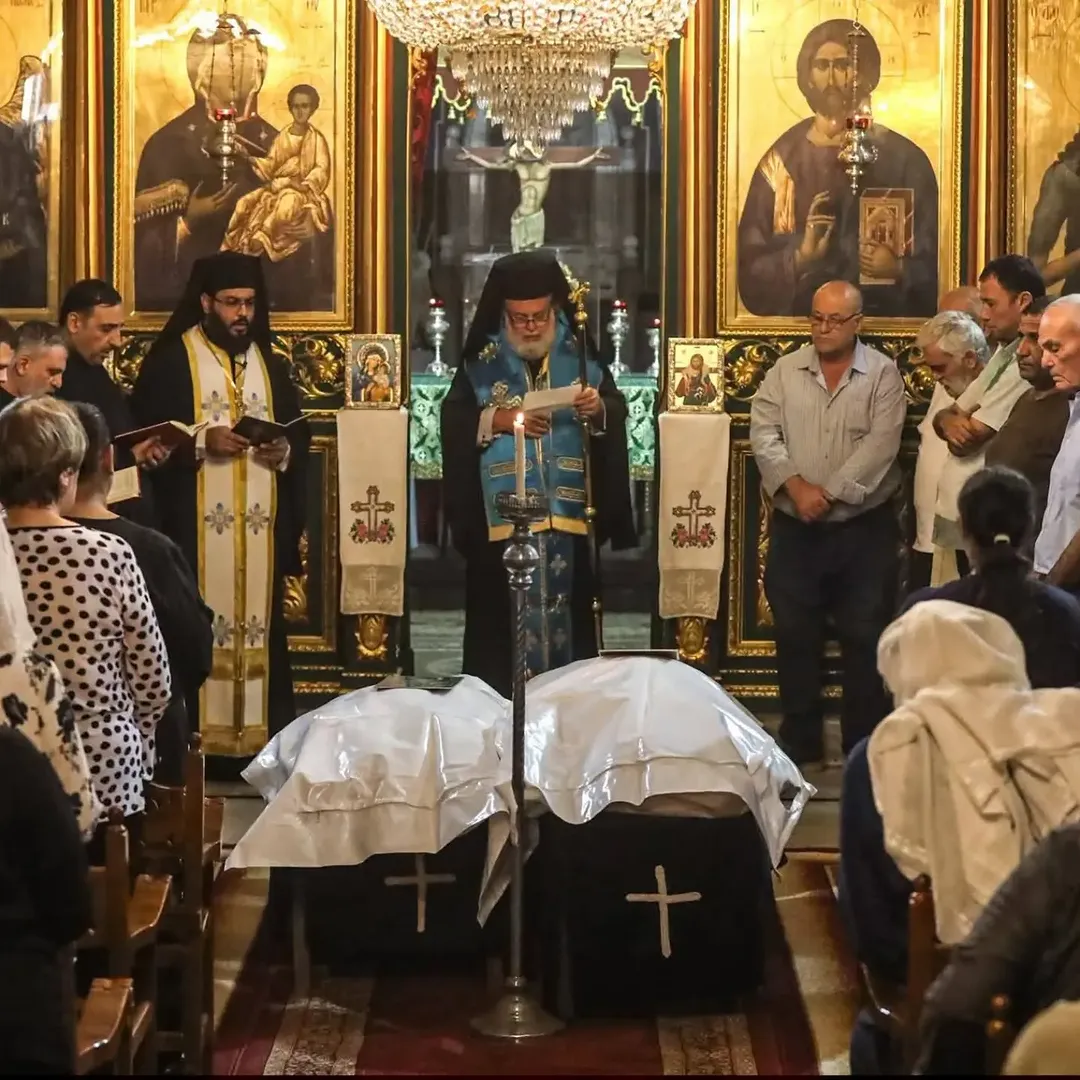
On the night of October 2 to 3, an Israeli strike struck an apartment in the Rimal neighborhood of Gaza City. Maysa Khader Ibrahim Abu Daoud and her daughter Mary Hafez Michel Najjar, members of the Orthodox Church of Gaza, were killed. They were among five Palestinians who died in the attack, four of them women. The Orthodox community gathered at Saint Porphyrius Church to celebrate their funerals. The two women were well known in the parish…

On the night of October 2 to 3, an Israeli strike struck an apartment in the Rimal neighborhood of Gaza City. Maysa Khader Ibrahim Abu Daoud and her daughter Mary Hafez Michel Najjar, members of the Orthodox Church of Gaza, were killed. They were among five Palestinians who died in the attack, four of them women.

The Orthodox community gathered at Saint Porphyrius Church to celebrate their funerals. The two women were well known in the parish and had devoted much of their time to helping the faithful and displaced persons. The text asks that the Lord receive them into His Kingdom and grant strength and consolation to their families, the entire Church of Gaza, and the victims. Eternal memory.

  • Israeli strike on Rimal apartment kills two Orthodox women on night of October 2-3
  • Victims: Maysa Khader Ibrahim Abu Daoud and daughter Mary Hafez Michel Najjar
  • Five Palestinians killed total, four women among them
  • Funerals held at Saint Porphyrius Church in Gaza
  • Both women known for serving parish faithful and displaced persons
Read more
radioimlemesou Instagram

When You Are Wronged: Metropolitan Athanasios on Loving Those Who Hurt Us

A short reflection by Metropolitan Athanasios of Limassol on how a Christian should respond when treated unjustly. Speaking plainly, he notes that Scripture and the Gospel give clear guidance: we are called to show love even to the person who slanders us, accuses us, mistreats us, or wrongs us in any way. The Christian response is not revenge, nor words of malice directed back at the offender, but patient love. The metropolitan acknowledges that…

A short reflection by Metropolitan Athanasios of Limassol on how a Christian should respond when treated unjustly. Speaking plainly, he notes that Scripture and the Gospel give clear guidance: we are called to show love even to the person who slanders us, accuses us, mistreats us, or wrongs us in any way. The Christian response is not revenge, nor words of malice directed back at the offender, but patient love.

The metropolitan acknowledges that this is difficult, and his counsel is practical: begin with these simple things—refusing retaliation and evil speech—and continue onward step by step. What makes this possible, he says, is keeping always before our eyes the love of Christ toward us; His love for us sinners is both the model and the strength for loving our enemies.

The message echoes the Gospel command to love those who hate us and to do good to those who persecute us, presenting forgiveness not as an optional ideal but as the ordinary path of the Christian life. The post, shared in Greek with hashtags pointing to Orthodox faith and the Diocese of Limassol, drew no recorded discussion in the comments, leaving the bishop's words to stand on their own as a brief exhortation for anyone nursing a grievance or weighing how to answer an injustice.

Key moments

  1. The Gospel tells us clearly how to act.
  2. We must show love to those who hate, accuse, mistreat, or wrong us.
  3. We should not take revenge or respond with words of malice.
  4. Begin with these simple things and continue to the next, always keeping Christ's love for us before our eyes.
Read more
Holy Resurrection YouTube

St. Nikolaj Velimirović on the Miraculous Catch: All Labor Is Vain Without Christ

St. Nikolaj Velimirović on the Miraculous Catch: All Labor Is Vain Without Christ 6:56

This post shares an excerpt from St. Nikolaj Velimirović's homily for the 18th Sunday after Pentecost, focusing on the Gospel account of the miraculous catch of fish (Luke 5:1–11). The saint reflects on the nature of miracles as divine gifts given to awaken humanity from the spiritual dullness caused by sin. In paradise, every moment would be perceived as a miracle, but sin has made God's constant providence seem like mere habit. To rouse us,…

This post shares an excerpt from St. Nikolaj Velimirović's homily for the 18th Sunday after Pentecost, focusing on the Gospel account of the miraculous catch of fish (Luke 5:1–11). The saint reflects on the nature of miracles as divine gifts given to awaken humanity from the spiritual dullness caused by sin. In paradise, every moment would be perceived as a miracle, but sin has made God's constant providence seem like mere habit.

To rouse us, God grants extraordinary signs — like the catch of fish — that reveal His sovereignty over creation and our total dependence on Him. St. Nikolaj emphasizes that human wisdom, labor, and enterprise are utterly fruitless apart from God's blessing. He contrasts the Tower of Babel, a monument to human pride that was scattered, with the Church and monasteries, which endure because they are built by God.

The Gospel scene illustrates this perfectly: the disciples toiled all night and caught nothing, but at Christ's word their nets broke with fish. The lesson is clear: obedience to Christ, not human effort alone, brings true success. The post also includes a brief appeal for monthly support to build a parish church, framing even that material project as a work that must be founded in the heart and blessed by God.

Key moments

  1. 0:06 God is the giver of all good gifts; miracles are perfect gifts that fill men with wonder.
  2. 0:38 In paradise, every moment would be seen as a miracle, but sin makes God's countless miracles seem like a dull habit.
  3. 1:10 God performs additional miracles to awaken humanity from spiritual blindness and remind them of His providence.
  4. 1:41 Human wisdom and labor cannot produce good apart from God; any apparent success is due to God's mercy.
  5. 2:44 The delusion of self-sufficiency leads either to repentance or to loss of human dignity and enslavement to evil.
  6. 3:16 Viewing the world as a miracle allows one to discern providence, as expressed by St. Paul: "I planted, Apollos watered, but God gave the increase."
  7. 4:21 Human endeavors against God's will, like the Tower of Babel, are scattered, while God's works (the Church, monasteries) endure through centuries.
  8. 6:25 The Gospel miracle of the catch of fish demonstrates that human labor is vain without Christ's command and blessing.
Orthodox Life Instagram

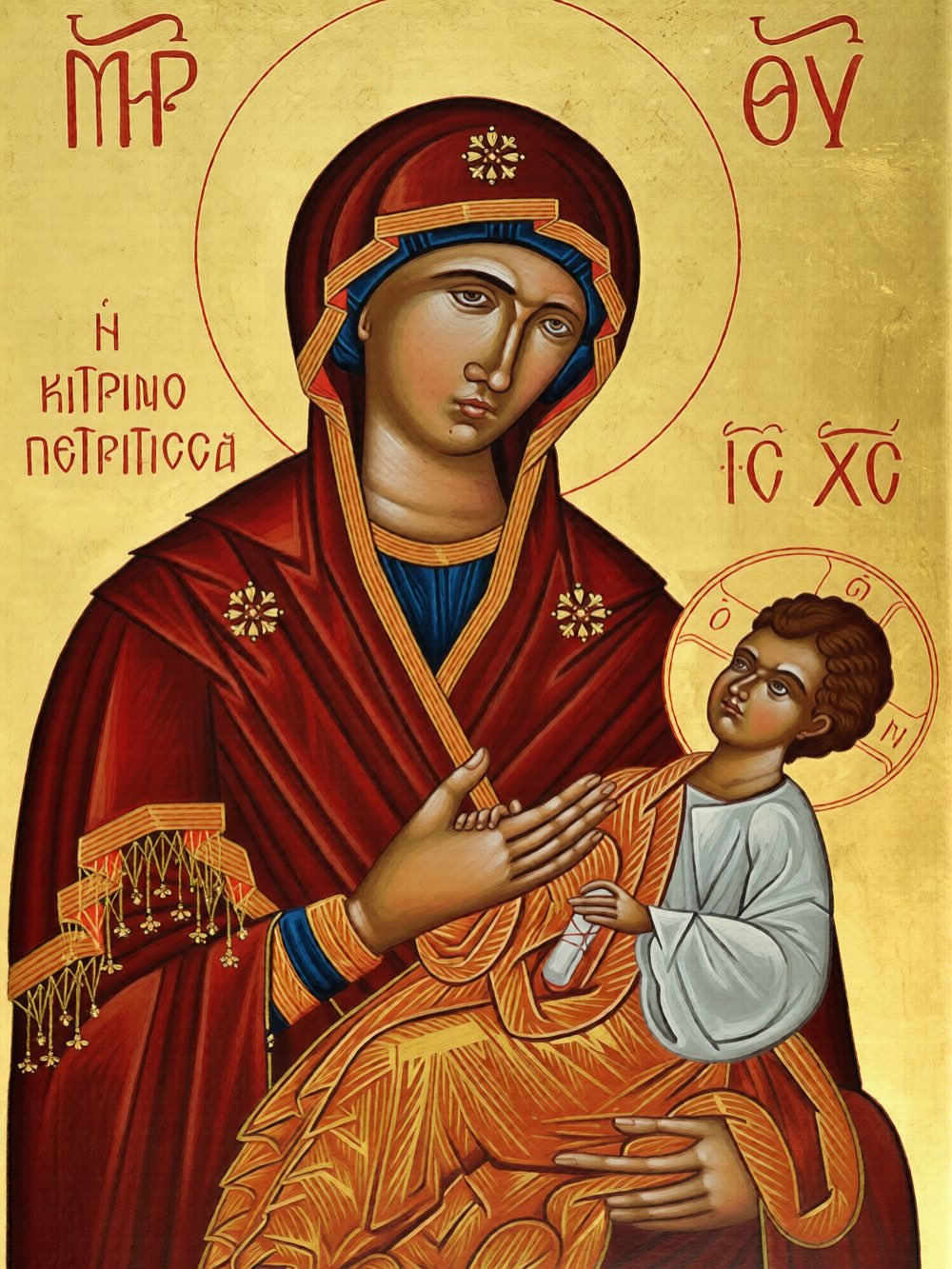
Panagia Kitrinopetritissa: the wonderworking icon of Yellow Rock, Australia

October 4 marks the commemoration of the holy icon of the Theotokos known as Panagia Kitrinopetritissa, Our Lady of Yellow Rock. The wonderworking icon is housed at the Holy Monastery of St George in Yellow Rock, New South Wales, and is described as the first miraculous Orthodox icon formally named after an Australian location. The Greek title translates as All-Holy Mother of the Yellow Rock. The account traces the icon's origin to prophetic…

October 4 marks the commemoration of the holy icon of the Theotokos known as Panagia Kitrinopetritissa, Our Lady of Yellow Rock. The wonderworking icon is housed at the Holy Monastery of St George in Yellow Rock, New South Wales, and is described as the first miraculous Orthodox icon formally named after an Australian location. The Greek title translates as All-Holy Mother of the Yellow Rock.

The account traces the icon's origin to prophetic visions received by a Greek woman, Eleni Federikou, while she lived in London. In these dreams the Virgin Mary commanded her to travel to a distant overseas country and build a church, showing her an unfamiliar landscape of wild bushland, winding creeks and native eucalyptus trees beneath a massive glowing silver cross in the sky.

Eleni and her husband Dimitrianos migrated to Australia in 1958. Their search, at first focused on northern Sydney, was redirected by another dream telling them to move further into the rural west. It ended when they reached the small village of Yellow Rock, which Eleni recognized as the exact property from her visions.

With the blessing of Archbishop Ezekiel, the couple purchased the land on October 4, 1962, laying the groundwork for Australia's first Orthodox monastery. The icon now stands in the monastery's main church and draws Greek Orthodox believers from across Australia and beyond, including students, parishioners and pilgrims seeking blessings and intercession.

  • The icon Panagia Kitrinopetritissa, Our Lady of Yellow Rock, is commemorated on October 4 and kept at the Holy Monastery of St George in Yellow Rock, New South Wales.
  • It is the first miraculous Orthodox icon formally named after an Australian location.
  • Eleni Federikou received visions in London showing bushland, creeks, eucalyptus trees and a glowing silver cross, with an instruction to build a church.
  • She and her husband Dimitrianos migrated to Australia in 1958 and found the site at Yellow Rock after a dream redirected their search westward.
  • With Archbishop Ezekiel's blessing they bought the land on October 4, 1962, founding Australia's first Orthodox monastery.
Read more
Tzanetos Kavaliotis YouTube discussion

When God Stays Silent: St. Silouan's Fifteen Years of Darkness and St. Sophrony's Three Seasons of Grace

When God Stays Silent: St. Silouan's Fifteen Years of Darkness and St. Sophrony's Three Seasons of Grace 20:19

The video takes up a familiar experience: a person once felt God's presence in prayer, at a liturgy, or after confession, and then one year the same prayers and services return nothing. People often draw wrong conclusions from that silence, deciding that God is angry, that they were never believers, or that it was only a phase, while the world offers its own vocabulary of burnout and deconstruction. Against this, the video sets the teaching of…

The video takes up a familiar experience: a person once felt God's presence in prayer, at a liturgy, or after confession, and then one year the same prayers and services return nothing. People often draw wrong conclusions from that silence, deciding that God is angry, that they were never believers, or that it was only a phase, while the world offers its own vocabulary of burnout and deconstruction.

Against this, the video sets the teaching of St. Sophrony of Essex, who wrote that no tribulation is harder to bear than the soul losing grace. He taught that the Christian life passes through three seasons: grace given as a gift, grace withdrawn, and grace returning at another level of being. The withdrawal is not punishment but a planned test that shows whether a person loves God or the feeling of God.

Sophrony compares it to a father letting go of his son's hands while the boy learns to walk: it looks like abandonment, but the father never stops watching. The Lord withdraws only the perception of grace, while communion continues unbroken, and Sophrony called this season a privilege and a chance to manifest free will. The story of St. Silouan the Athonite anchors the teaching. Silouan saw the living Christ at vespers on Mount Athos a few months after arriving in 1892, then endured fifteen years of darkness he could only describe as demons, until he received the answer: keep thy mind in hell and despair not.

Sophrony himself was flooded with uncreated light on Holy Saturday 1924 in Paris, and the light left him as soon as he began to analyze the experience with his reason. Sophrony gave three reasons for God's hiding: protection from pride, the revelation of true freedom and love, and Christ's words in John 16:7 that his going away was for our good. The video closes with practical instructions for the season of silence.

Key moments

  1. 0:05 Many remember a first real encounter with God, at a liturgy, in prayer, or after confession, and then one year the same prayers and services feel empty and silent.
  2. 1:38 People draw wrong conclusions from the silence: that God is angry, that they were never believers, or that it was just a phase, and the world offers vocabulary like burnout and deconstruction.
  3. 2:09 Saint Sophrony of Essex wrote that no tribulation is harder to bear than the soul losing grace, and taught that the Christian life passes through three seasons: grace given as a gift, grace withdrawn, and grace returning at another level of being.
  4. 4:11 The withdrawal is like a father letting go of his son's hands while teaching him to walk; it looks like abandonment but the father never stops watching.
  5. 4:43 Sophrony himself was flooded with uncreated light on Holy Saturday 1924 in Paris, and the light left him as soon as he began to analyze the experience with his reason.
  6. 6:17 The Lord withdraws only the perception of grace while communion with man continues unbroken; Sophrony saw this season as a privilege and an opportunity to manifest free will, echoed in Song of Songs 5:6.
  7. 7:49 Silouan the Athonite saw the living Christ at vespers on Mount Athos, then endured fifteen years of darkness before receiving the answer: keep thy mind in hell and despair not.
  8. 11:00 Sophrony gave three reasons for God's hiding: protection from pride, the revelation of true freedom and love, and Christ's own words in John 16:7 that his going away was for our good; the video ends with practical instructions, including keep praying, refuse the verdict of despair, tell your spiritual father, pray for others, and have a cup of tea.
6 opinions in the discussion 1. Keep doing what grace taught you 2. Refuse to accept a verdict (silence will try to tell you what it means) 3. Look for pride, gently 4. Tell your spiritual father 5. Pray for someone… Read the discussion