
Launching Hermit Crab Press as a refuge from AI-generated words
Sometimes in life, there are moments when you step outside yourself for a second or two and look in. It's a strange thing that seems to happen unbidden. You see or hear yourself as a stranger might; then everything snaps back as if nothing happened.
This happened to me for a moment last Saturday. I was in Dublin, giving a talk about AI and the Machine to an audience of young people. Suddenly, while I was talking, it was as if I was listening like an objective observer to the strange stories coming out of my mouth. Stories of people marrying chatbots, of corporate executives who believe they are creating god-like beings, of people who want to upload their minds into digital substrates.
Stories of the Pope gathering with these sci-fi people to talk about God and the soul and digital technology inside the marble halls of the Vatican.
These are strange times, disturbing at some very primeval level. Sometimes it's like being stuck inside a twentieth-century pulp sci-fi novel. I've long wondered whether the Masters of the Universe in Silicon Valley took inspiration from those novels, either consciously or otherwise.
I suppose the AIs have been trained on them too, which gives rise to an intriguing thought: are these machines acting out the plots of those novels, by accident or design? If so, which ones are they reading?
Those machines will be writing books soon enough, which leaves those of us who love words in an awkward position. Our relationship with words might have its ups and downs, but it's built on love. I have long loved books, and that love, which began as soon as I could read, later became a love of writing.
But now I find myself in a world flooded with words, more and more of which are literally inhuman. I'm getting sick of the things which once opened the world up to me. What am I to do about that?
Today I have one small answer: I'm launching my own publishing house. Welcome to Hermit Crab Press.
For a long time, my wife and I, who share the same sensibility on these matters, have been talking about building a little island of the actual in the midst of a virtual sea. Myself, I have wanted more and more to retreat from the internet - including from this page, if I'm honest - and to return to the love of writing I used to have.
Writing in pen or pencil in notebooks. Winding paper through an old typewriter. No comment sections or social media feeds. No audience capture. No culture war bilge. Just me and my pen. Paper and graphite and ink.
Books sent by post, arriving at the door of a reader far away. Words that can't be read on a screen. Pages that have to be turned.
Hermit Crab Press has been built to speak to this sensibility. It's about simple words, on paper and card, that can't be scrolled or pasted or scraped. It's about books as beautiful objects. It's a chance for me to write things that don't fit into any boxes and can't be fed into a devouring machine - at least without a lot of effort on the machine's part.
Our little home publishing house is based in our garden cabin here in County Galway. It's a family operation: a home economy. My wife Navjyoat and I will be running it, while my daughter Leela, who is currently studying for a degree in bookbinding, will be our in-house binder and leatherworker, making us special editions, bookmarks and other goodies to come.
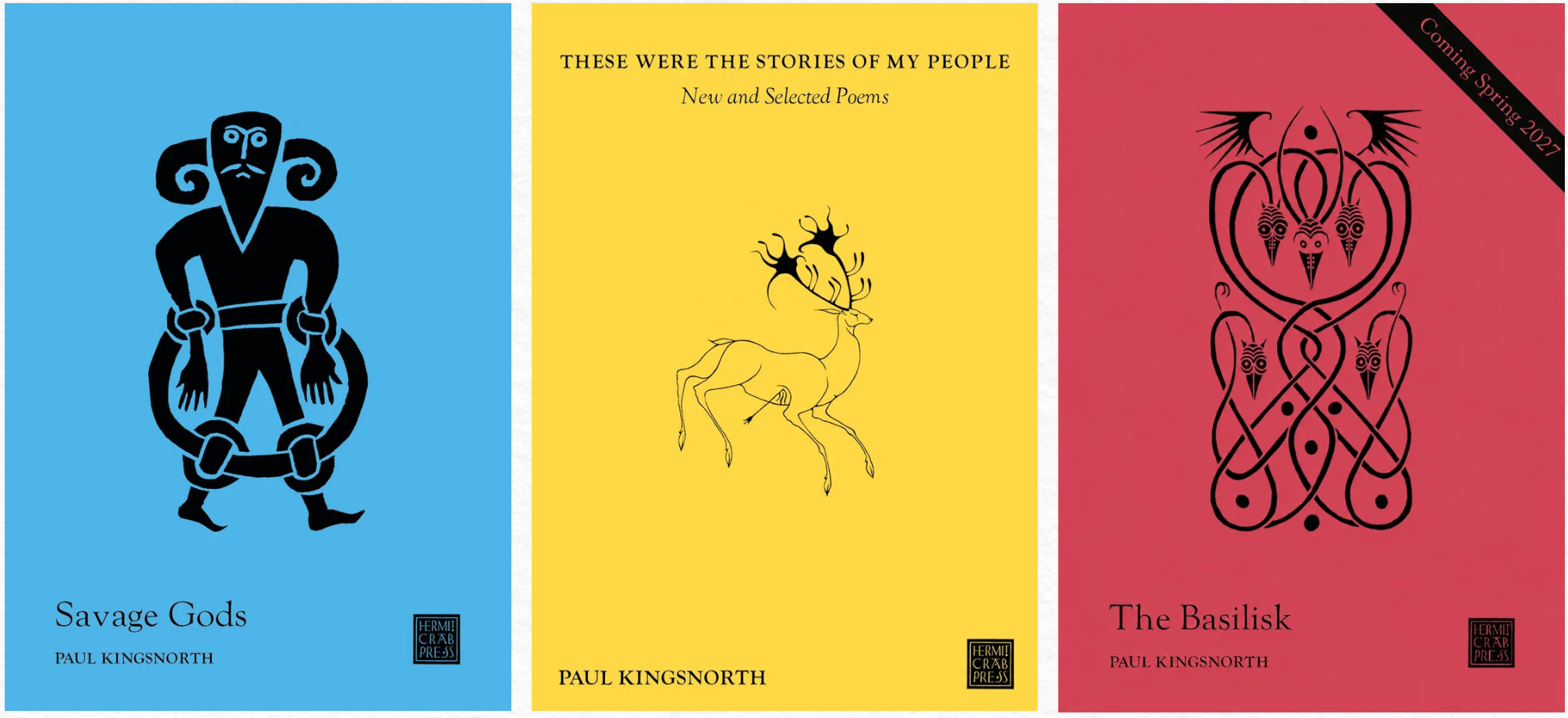
Everything we do is as small scale as possible. We work with friends, and with family owned companies. We spurn AI at all stages of the production process. We try to keep our operations as ecological as we can. And we try to produce really good-looking - and good-feeling, and good-smelling - books. All our books are printed on high quality paper, with woodcut cover illustrations by the Abbey's in-house artist Ewan Craig. They're old fashioned, like us.
We're also selling them in as simple a way as we can.
Main points
- The author experienced a moment of self-observation while giving a talk on AI in Dublin, hearing his own stories about chatbot marriages, mind uploading, and Vatican tech meetings as strange and disturbing.
- He questions whether Silicon Valley's AI developments are unconsciously acting out plots from pulp sci-fi novels, since the AIs were trained on them.
- He launches Hermit Crab Press, a family-run publishing house in a County Galway garden cabin, to create physical books that cannot be scraped or digitized.
- The press uses no AI, no Amazon, no e-books, no ISBNs, and prints on high-quality paper with woodcut illustrations by Ewan Craig.
- Initial publications include a poetry collection, a revised memoir, and a forthcoming short story collection, with future plans for saint pamphlets, leather-bound editions, and typed newsletters.