WeOrthodox
EN UA

Orthodox discussions worth reading

Only the posts and videos that started a real conversation, with the most thoughtful opinions.

P Paul Kingsnorth Substack discussion

AI and the Imago Dei: A Christian Argument Against Outsourcing the Mind
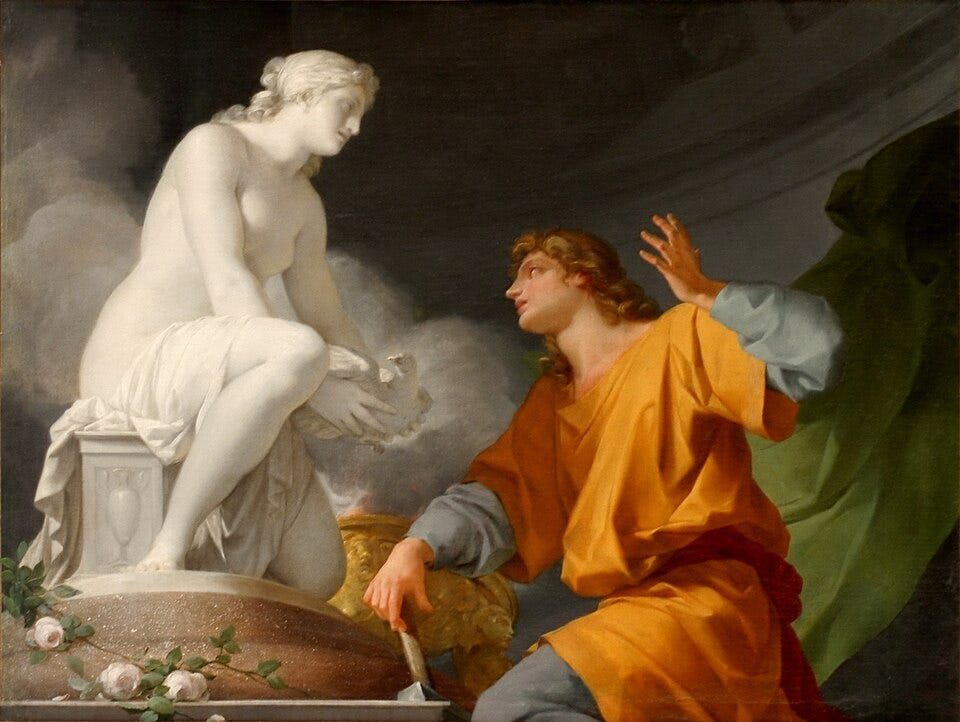
The post shares an article by Andrew Caspersen that reframes the Christian debate on artificial intelligence. Rather than weighing AI’s potential benefits against its risks — the "fruits" of the technology — Caspersen examines the "tree" itself: what AI is by nature. Drawing on the Pygmalion myth and the doctrine of the imago Dei, he argues that the human intellect is a finite image of the infinite Word, given so that we may know and love God.…

The post shares an article by Andrew Caspersen that reframes the Christian debate on artificial intelligence. Rather than weighing AI’s potential benefits against its risks — the "fruits" of the technology — Caspersen examines the "tree" itself: what AI is by nature. Drawing on the Pygmalion myth and the doctrine of the imago Dei, he argues that the human intellect is a finite image of the infinite Word, given so that we may know and love God.

AI, by simulating ideation, composition, analysis, and conversation, offers an "enhanced mind" that tempts us to outsource our God-given cognitive faculties. Accepting this man-made substitute treats the divine gift as inadequate and, by extension, treats the Giver as inadequate. The article addresses counter-arguments, such as the claim that AI is merely artificial and cannot truly replace human intelligence, contending that even a functional replacement constitutes a practical rejection of our created nature.

The discussion in the comments reflects both appreciation for the ontological approach and concern about equating the imago Dei with cognitive function, which could inadvertently devalue persons with impaired reasoning. Other contributors distinguish between tools that enhance human ability and devices that replace it, reference Orthodox and Catholic theological nuances, and share personal experiences of AI’s encroachment on thought and work.

  • AI should be evaluated by its nature, not only by its outcomes or utility.
  • The human intellect bears the imago Dei; outsourcing it to AI rejects that divine image.
  • Using AI as a substitute for thinking treats God’s gift as insufficient.
  • The "tool vs. device" distinction highlights AI’s replacement of human agency.
  • Commenters debate whether the argument risks a functionalist view of the imago Dei.
22 opinions in the discussion There's much to appreciate here, and the tree-and-branches framing rather than just the fruit is genuinely useful. My slight worry is that the piece drifts toward treating the imago dei as… Read the discussion
Kyle YouTube discussion

You Will Die: Why the Orthodox Church Tells You to Remember It Daily

You Will Die: Why the Orthodox Church Tells You to Remember It Daily 16:46

This video is a direct, urgent reflection on the ancient Christian practice of remembering death. The speaker argues that sickness and suffering, for all their pain, have a strange gift hidden in them: they strip the passions of their appeal and drive the soul to cry out, 'God, help me.' In health, by contrast, we easily forget God and assume there will always be another day to pray, repent, and forgive. The Orthodox tradition of remembrance of…

This video is a direct, urgent reflection on the ancient Christian practice of remembering death. The speaker argues that sickness and suffering, for all their pain, have a strange gift hidden in them: they strip the passions of their appeal and drive the soul to cry out, 'God, help me.' In health, by contrast, we easily forget God and assume there will always be another day to pray, repent, and forgive.

The Orthodox tradition of remembrance of death is presented not as morbidity or despair, but as a wake-up call that cuts through the illusion that tomorrow is guaranteed. The speaker is careful to note that pain itself is not good—Christ healed the sick and the Church prays for healing—but that God can use suffering for our salvation, just as the cross became the path to resurrection.

The video then turns practical: if tonight were your last night, you would pray, repent, love, and forgive rather than nurse resentment—so live that way every day, 'dying daily' to sin as St. Paul says. In marriage this means never going to sleep with unresolved anger, reconciling and saying 'I love you' each night, echoing the Scripture 'do not let the sun go down on your wrath' and the evening prayer asking that the bed may become a coffin.

Finally, the speaker contrasts Christian remembrance of death with nihilism: because Christ conquered death, remembering it leads not to hopelessness but to remembering eternity, judgment, the resurrection, and Christ Himself. The challenge posed to the viewer is uncomfortable but simple: why do we need a fever or a scare to remember God, and can we carry the clarity of sickness into our days of health?

Key moments

  1. 0:00 Sickness and pain make temptations lose their appeal and lead naturally to calling on the name of the Lord, while health makes it easy to forget God.
  2. 0:31 The Orthodox Church teaches remembrance of death to wake us up, cutting through the illusion that there will always be another day to repent, pray, or forgive.
  3. 1:32 In weakness the prayer of the heart becomes clear—'God, help me'—so we should give glory to God in both the best and worst moments.
  4. 2:34 Pain itself is not good; Christ healed the sick and we pray for healing, but God can use suffering for our salvation, as the cross became the path to resurrection.
  5. 3:06 The uncomfortable question: why do we need fever or fear before we remember God? The lesson of sickness should continue after health returns.
  6. 4:09 If tonight were your last night, you would pray, repent, love, and forgive rather than feed resentment—this is how we should live every day, dying to sin daily as St. Paul says, 'I die daily.'
  7. 10:25 In marriage, remembering death means not going to sleep with resentment; reconcile, forgive, and say 'I love you' each night, following 'do not let the sun go down on your wrath' and the evening prayer 'this bed may become my coffin.'
  8. 14:33 Christian remembrance of death differs from nihilism: because death is not the end and Christ conquered it, remembering death leads to remembering eternity, judgment, the resurrection, and Christ—so repent, love, and learn to live now.
11 opinions in the discussion I know what I believe and I feel sure about it. But the moment I actually sit and think about death and what comes after, I'm filled with fear. I am genuinely terrified of my own death. Read the discussion

The More You Sleep, the Less You Sin? A Sermon on Risking the Gifts of God

The More You Sleep, the Less You Sin? A Sermon on Risking the Gifts of God 12:04

This post presents a sermon by Protopriest Alexiy Uminsky for the 16th Sunday after Pentecost, the Sunday before the Exaltation of the Holy Cross. The sermon reflects on two Gospel readings that at first seem contradictory: John 3, where Christ says He came not to judge the world but to save it, and the Parable of the Talents from Matthew 25, which speaks of judgment. The preacher shows that the two readings illuminate one another. The talents,…

This post presents a sermon by Protopriest Alexiy Uminsky for the 16th Sunday after Pentecost, the Sunday before the Exaltation of the Holy Cross. The sermon reflects on two Gospel readings that at first seem contradictory: John 3, where Christ says He came not to judge the world but to save it, and the Parable of the Talents from Matthew 25, which speaks of judgment.

The preacher shows that the two readings illuminate one another. The talents, he explains, are not modern 'abilities' but a vast sum of money entrusted to servants at great risk; likewise, the Lord entrusts each Christian with far greater wealth—Christ Himself, grace, faith, and love—which must be risked and multiplied through living, active faith.

He cites St. Athanasius the Great ('God became man so that man might become god') to describe the Christian calling to ascend with Christ. The sermon contrasts this with the third servant, who buried his talent out of fear: he represents the merely 'religious' person who seeks safety in rules, correct candle-lighting, fasting, and rote prayer rules, but never prays from the heart or risks anything for God.

Such a person, the preacher warns, judges himself and lives in self-imposed darkness, for God is not a cruel master but love and mercy, like the father who welcomed the prodigal son. The ironic saying in the title—'the more you sleep, the less you sin'—captures the spirit of this fearful, self-protective piety that the sermon calls Christians to overcome.

Key moments

  1. 0:00 On the Sunday before the Exaltation of the Cross, two Gospels are read: John 3, where Christ comes into the world to save it, not to judge it, including the words 'For God so loved the world...'
  2. 1:04 The Parable of the Talents from Matthew 25 is about judgment; the two seemingly contradictory readings actually explain each other.
  3. 2:09 The calling of every Christian is to ascend to heaven as Christ did, becoming a son of God just as the Son of God became a son of man—'God became man so that man might become god' (St. Athanasius the Great).
  4. 3:43 A talent is not modern 'ability' but a large sum of money; the master entrusts his servants with great wealth, which involves huge risk of loss.
  5. 5:21 If we fear risking money, how much more does the Lord entrust us with Himself: the gifts of the Holy Spirit and grace are Christ Himself, His word and life, which must multiply and bear fruit.
  6. 6:26 The Apostle writes that Christians are known by all though nobodies, killed yet alive, poor yet making many rich, having nothing yet possessing everything—do we resemble such Christians today?
  7. 7:30 The Lord distributes gifts to each according to their strength; faith, love, and prayer are not guarantees of comfort but great labor—seeking, doubt, trust, standing for truth—so take risks and be a living Christian.
  8. 8:33 The third servant represents the merely religious person who seeks safety in rules, correct candle-lighting, fasting, and rote prayer rules, never praying from the heart or risking anything—'the more you sleep, the less you sin'—and such a person judges himself, for God is love and mercy, like the father who welcomed the prodigal son.
13 opinions in the discussion God, this sermon turned out to be so unexpectedly saving for me right now — I was ready to drown in despair! I cannot stop our catastrophe, but I can stand firm in trust in Christ — that… Read the discussion
Holy Resurrection YouTube discussion

God Creates Inequality: A Homily on the Parable of the Talents

God Creates Inequality: A Homily on the Parable of the Talents 5:08

This post shares a homiletic reflection by St. Nikolaj Velimirović for the 16th Sunday after Pentecost, presented by an Orthodox priest, on a provocative theme: that God deliberately creates inequality among people. Drawing on the Gospel parable of the talents, the homily argues that human rebellion against inequality is ancient—Adam and Eve sought equality with God, and Cain murdered Abel over unequal sacrifices. According to the teaching, God…

This post shares a homiletic reflection by St. Nikolaj Velimirović for the 16th Sunday after Pentecost, presented by an Orthodox priest, on a provocative theme: that God deliberately creates inequality among people. Drawing on the Gospel parable of the talents, the homily argues that human rebellion against inequality is ancient—Adam and Eve sought equality with God, and Cain murdered Abel over unequal sacrifices.

According to the teaching, God wills inequality in outward things such as wealth, power, rank, and learning, but forbids rivalry in them, commanding instead that believers compete in multiplying inward treasures: faith, love, mercy, humility, and obedience. Outward goods, shared even with animals, are meant to serve the inward and eternal; one who spends spiritual gifts acquiring worldly things is like a son trading inherited gold for ashes.

Those who fight for outward equality, the homily suggests, are those who do not know how—or dare not—look within themselves, for God looks not at outward condition but at the heart. The parable of the talents reveals the great inward inequality of spiritual gifts placed in every soul, and whoever understands and lives it attains eternal salvation.

The discussion in the comments engaged the theme earnestly: some affirmed that human inequality exists so that people may love and help one another, one commenter cited 1 Samuel 16 on the Lord looking at the heart rather than appearance, and another provocatively called equality the tyranny of the weak. A more personal comment wrestled with the pain of the question—why some are given talent, intellect, or beauty and others are not—showing the homily touches a real spiritual wound for many readers.

Key moments

  1. 0:02 God creates inequality for the good, beauty, and love of mankind, yet men murmur against it, unable to perceive its wisdom—this is mankind's ancient rebellion.
  2. 1:06 Adam and Eve sought equality with God, and Cain killed Abel over unequal sacrifices; sinful men have struggled against inequality ever since, while God continues creating it, even among the angels.
  3. 1:37 God wills inequality in outward things—wealth, power, rank, learning—and forbids rivalry in them, commanding 'Do not seek the places of honor'; instead He desires competition in inward treasures like faith, goodness, mercy, love, meekness, humility, and obedience.
  4. 2:10 Outward goods are shared with animals, but the treasury of inward spiritual gifts is carried only in human souls; therefore God requires more from men.
  5. 2:41 Outward and temporal things are appointed to serve the inward and eternal; one who spends spiritual gifts acquiring worldly goods is like a son squandering inherited gold on ashes.
  6. 3:11 For those who perceive God's gifts within their souls, outward things become unimportant; only the ignorant struggle for outward goods, while the wise struggle to multiply inward treasures.
  7. 3:42 Those who fight for outward equality are those who do not know how or dare to look within themselves; God does not look at outward condition but upon the heart—inward progress in spirit and truth.
  8. 4:12 Today's Gospel, the parable of the talents, reveals the great inward inequality of spiritual gifts in every soul and spans the whole history of the human soul; whoever understands and fulfills it attains eternal salvation.
5 opinions in the discussion Great point — most folks fail to grasp that inequality is simply a natural feature of our world. Read the discussion
Father Moses YouTube discussion

A Former Protestant Priest's Case: Why Protestantism Falls Short of Christianity

A Former Protestant Priest's Case: Why Protestantism Falls Short of Christianity 10:26

Father Moses, a former Protestant who is now Orthodox, explains why he no longer takes Protestantism seriously as a religious system, while distinguishing his critique of the system from judgment of individual Protestants. He structures his talk around five major problems he observed during his years in Protestant churches. First, the business church model: most congregations lack financial transparency, with no public budgets or member votes,…

Father Moses, a former Protestant who is now Orthodox, explains why he no longer takes Protestantism seriously as a religious system, while distinguishing his critique of the system from judgment of individual Protestants. He structures his talk around five major problems he observed during his years in Protestant churches. First, the business church model: most congregations lack financial transparency, with no public budgets or member votes, turning members into customers.

He contrasts this with Orthodox parish practice, where budgets are reviewed and voted on openly, a transparency that once amazed a visitor. Second, tolerated sexual sin: many people coming from Baptist backgrounds live with boyfriends or girlfriends, and he cannot make them catechumens until they marry or separate. Third, the absence of any call to repentance: pastors knew of cohabitation and drug use but said nothing, there is no repentance before baptism, and people live the same afterward.

Fourth, what he calls a cross-less Christianity: claims that Christians face no temptations are false, since if the devil leaves a person alone, that person poses no threat and is not growing in righteousness. Bearing the cross includes everyday struggles such as raising children, and rejecting new life while claiming to be pro-life contradicts Christ's command of self-denial.

Fifth, teaching that contradicts or reinterprets Christ's own words: denying baptism for the remission of sins and reworking Christ's words about eating His body and drinking His blood to fit human theology. His central claim is that a Christianity without the cross loses everything else, and that a religion which corrects the Lord rather than obeying Him may not deserve the name Christian. The post also promotes the building of a new Orthodox parish.

Key moments

  1. 0:00 If your Christianity goes against Christ, the title 'Christian' may not fit; without bearing the cross and following Christ, it isn't Christianity.
  2. 1:35 The business church model: most Protestant churches lack financial transparency, no public budget vote, and members become customers rather than voting members.
  3. 2:35 Orthodox churches contrast with annual budgets, review of spending, full transparency, and parish-wide votes; a visitor was amazed by this openness.
  4. 3:37 Rampant sexual sin: many coming from Baptist churches live with boyfriends or girlfriends; the speaker cannot make them catechumens until they marry or separate.
  5. 4:39 No call to repentance: Protestant pastors knew of cohabitation and drug use but said nothing; there is no repentance before baptism and people live the same afterward.
  6. 6:42 Cross-less Christianity: claims that Christians face no temptations are false; if the devil leaves you alone, you pose no threat and are not growing in righteousness.
  7. 7:47 Bearing the cross includes struggles like raising children; rejecting new life while claiming to be pro-life contradicts the self-denial Christ commands.
  8. 8:49 Antichrist words: Protestants deny baptism for the remission of sins and reinterpret Christ's words on eating His body and drinking His blood, correcting the Lord to fit their theology.
30 opinions in the discussion "I dismiss Protestantism based on ten minutes of bad-faith arguments that don't describe actual Christians. Also, buy my supplements with my code so you can fast without feeling hunger or… Read the discussion
Kyle YouTube discussion

AI Won't Destroy Us — the Real Danger Is Measuring Human Worth by Productivity

AI Won't Destroy Us — the Real Danger Is Measuring Human Worth by Productivity 33:48

This video argues that the greatest threat posed by artificial intelligence is not a science-fiction takeover but a spiritual one: the temptation to define human value by productivity and output. The speaker traces how a materialist worldview already reduces people to producers and consumers, and how AI's superiority at tasks sharpens that reduction into a crisis: if machines can do everything better, what is a human being for? Christianity…

This video argues that the greatest threat posed by artificial intelligence is not a science-fiction takeover but a spiritual one: the temptation to define human value by productivity and output. The speaker traces how a materialist worldview already reduces people to producers and consumers, and how AI's superiority at tasks sharpens that reduction into a crisis: if machines can do everything better, what is a human being for?

Christianity answers with a different anthropology — human dignity rests on being created in God's image and on the calling to theosis, communion with God, not on economic usefulness.

The discussion reviews OpenAI's shift from a nonprofit mission to a for-profit arms race, noting the industry's paradox of warning about extinction risk while racing to build ever more powerful systems, with fear functioning as marketing. Science fiction is surveyed as a mirror of our anxieties: hubris in Frankenstein, misalignment in 2001, weapons control in Terminator, dependence in The Matrix, artificial intimacy in Her, and questions of personhood in Blade Runner.

The speaker's diagnosis is that the root problem is fallen human intelligence — AI magnifies passions but cannot heal sin and death.

The practical response offered is distinctly Orthodox: use AI as a tool, never as an authority; guard the heart; pray, worship, love one's neighbor, do manual work, and live sacramentally, keeping repentance and theosis at the center. Commenters extended the discussion in several directions — memories of underestimating the smartphone's social impact, concern about people treating AI as an unquestionable authority, skepticism about machine sentience on theological and technical grounds (model collapse), and debates about what a true AGI would mean for elites and society.

The overall tone is sober rather than alarmist: the machine is not the enemy, but uncritical dependence on it is a real spiritual danger.

Key moments

  1. 0:00 Historical fears of technology; AI as a tool that becomes dangerous when it becomes the standard by which we measure human value.
  2. 1:01 Modern worldview reduces humans to production and consumption; AI's superiority in tasks forces the question: what is a human being for?
  3. 2:02 Christian anthropology: human dignity comes from being created in God's image, called to theosis (communion with God), not productivity.
  4. 3:35 OpenAI's origin as a nonprofit for AGI benefit, creation of a for-profit subsidiary, and ChatGPT's release transforming public access to AI.
  5. 6:10 AI industry's paradox: companies warn of extinction risk while racing to build; fear functions as marketing for power and investment.
  6. 10:47 Science fiction explores man-machine relationships: hubris (Frankenstein), alignment (2001), weapons control (Terminator), dependence (Matrix), artificial intimacy (Her), personhood (Blade Runner/AI), dependence on artificial thought (Dune).
  7. 15:56 Core Christian diagnosis: the problem is fallen human intelligence—AI magnifies passions but cannot heal sin and death.
  8. 26:48 Practical Christian response: use AI as a tool, not an authority; guard heart, love neighbor, worship, pray, do manual work, live sacramentally, focus on repentance and theosis.
10 opinions in the discussion My priest wrote a book on AI, its dangers, and how it relates to Christianity. I haven't read it yet because it's written in academic-level Greek, but I suppose I'll have to make the effort… Read the discussion
George Instagram discussion

From a Cretan village to 40 countries: learning Orthodoxy by choice, not birth

1:20

The speaker grew up in a small village in Crete, where going to church and helping in the church were part of everyday life. He says he was Orthodox mostly because of how he was raised, not because he understood the faith. After leaving home young, he lost his daily connection with God, though he never stopped believing, wore his cross, and called himself a Christian. He then traveled to more than 40 countries across five continents and met…

The speaker grew up in a small village in Crete, where going to church and helping in the church were part of everyday life. He says he was Orthodox mostly because of how he was raised, not because he understood the faith. After leaving home young, he lost his daily connection with God, though he never stopped believing, wore his cross, and called himself a Christian.

He then traveled to more than 40 countries across five continents and met Muslims, Buddhists, atheists, and Christians. He found that conversations with these people kept bringing him back to his own faith. That experience changed what he wants from Orthodoxy: he no longer wants to follow it by birth alone but to understand it and live it, through prayer, fasting, reading scripture, and going to church.

He states clearly that he is not teaching others how to be Orthodox. He is learning to become a better Orthodox Christian himself, and he will share that process as it unfolds. The account moves between two settings: the childhood faith of a Cretan village, where church life was simply part of the day, and the years of travel that put his inherited belief in contact with people of other religions and of none.

The discussion centers on the difference between belonging to a faith by upbringing and choosing it deliberately, and on what it looks like for an adult to take up practices he grew up around but never practiced with understanding.

Key moments

  1. He grew up in a small village in Crete, went to church and helped there as a child, and was Orthodox mostly because of how he was raised.
  2. After leaving home young, he lost his daily connection with God but never stopped believing, wore his cross, and called himself a Christian.
  3. He traveled to over 40 countries on five continents and met Muslims, Buddhists, atheists, and Christians; those conversations kept bringing him back to his own faith.
  4. He now wants to understand Orthodoxy and live it: to pray, fast, read scripture, and go to church.
  5. He says he is not here to teach how to be Orthodox but to learn how to become a better one himself, and he will share that journey.
6 opinions in the discussion I agree. I was raised Orthodox, and while I never doubted who God was or that Jesus sacrificed Himself for me, I didn't have *a relationship* with Christ. After a 10 year detour through New… Read the discussion
Kyle YouTube discussion

The Real Revolution Is Repentance, Not Politics

The Real Revolution Is Repentance, Not Politics 11:02

This video reflects on the quote 'Christ is the only exit from this world,' arguing that seeking ultimate fulfillment in pleasure, political utopia, or wealth are blind alleys ending in death. Only Christ leads beyond corruption—not by rejecting creation as evil, but by freeing it from sin and death through union with Him. The true revolution, the host argues, begins in the human heart through repentance rather than political conquest. The…

This video reflects on the quote 'Christ is the only exit from this world,' arguing that seeking ultimate fulfillment in pleasure, political utopia, or wealth are blind alleys ending in death. Only Christ leads beyond corruption—not by rejecting creation as evil, but by freeing it from sin and death through union with Him. The true revolution, the host argues, begins in the human heart through repentance rather than political conquest.

The centerpiece is a clip from a conversation with Luke Smith, an influential Orthodox YouTuber, responding to a critic who dismissed his quiet village life as a 'waste' and called him an 'Orthodox LARPer.' Luke rejects the idea that one must attack the system directly as a political agitator, calling that mindset a trap the system itself lures people into.

Believing one will change the system from within—after getting tenure, for example—is delusional, he says; it is better for one's salvation to build something better outside it. He explains that his village life is simply normal human life, that he wants to build rather than fight, and that he does not want his children fighting the battles he fought.

Having produced enough content, he wants to actually live what he has preached rather than repeat videos forever, though more releases are planned.

The discussion also touches on his video about the Logos, how Christianity transformed pagan philosophy, and how Orthodoxy is intellectually serious yet accessible at every level—a 'buffet' with saints for everyone, from philosophers to fools for Christ.

Viewers responded thoughtfully: one former leftist revolutionary noted that repentance transformed Rome and can transform America; another quoted a priest saying, 'We are not trying to win the system, we are building an alternative to it.' Others pushed back, arguing that some political resistance is necessary to avoid persecution, and that history shows every human system decays except the Church.

Key moments

  1. 0:00 The quote 'Christ is the only exit from this world' means that seeking ultimate salvation through pleasure, politics, or wealth are blind alleys ending in death; only Christ leads beyond corruption.
  2. 1:00 Christ as the exit doesn't mean escaping creation as evil, but escaping the bondage of sin and death through union with Christ—a distinctly Orthodox understanding.
  3. 1:31 The world says to change the system and defeat enemies; Christianity says to die to the ego, repent, and love your enemies—the true revolution begins in the heart.
  4. 2:33 Luke Smith responds to criticism that he wastes his life as an 'Orthodox LARPer,' rejecting the assumption that one must directly attack the evil system as a political agitator.
  5. 3:35 Luke says believing you'll change the system from inside (e.g., after getting tenure) is delusional; it's better for salvation to build something better outside it.
  6. 4:36 Luke explains he doesn't want to repeat the same videos until age 70—at some point one must actually live what one preaches.
  7. 5:08 We are not supposed to fight celestial battles ourselves; we must focus on our own salvation, or there will be no true alternative even if politics 'wins.'
  8. 8:15 Orthodoxy is intellectually serious yet accessible to every IQ level—like a buffet with more than one person can consume, with saints for everyone from philosophers to fools for Christ.
8 opinions in the discussion This video was exactly what I needed. As someone who used to be a leftist with revolutionary leanings, I've come to see that revolution isn't necessary. Repentance can transform whole… Read the discussion
P Paul Kingsnorth Substack discussion

Paul Kingsnorth Announces Speaking Tour on AI and Human Identity

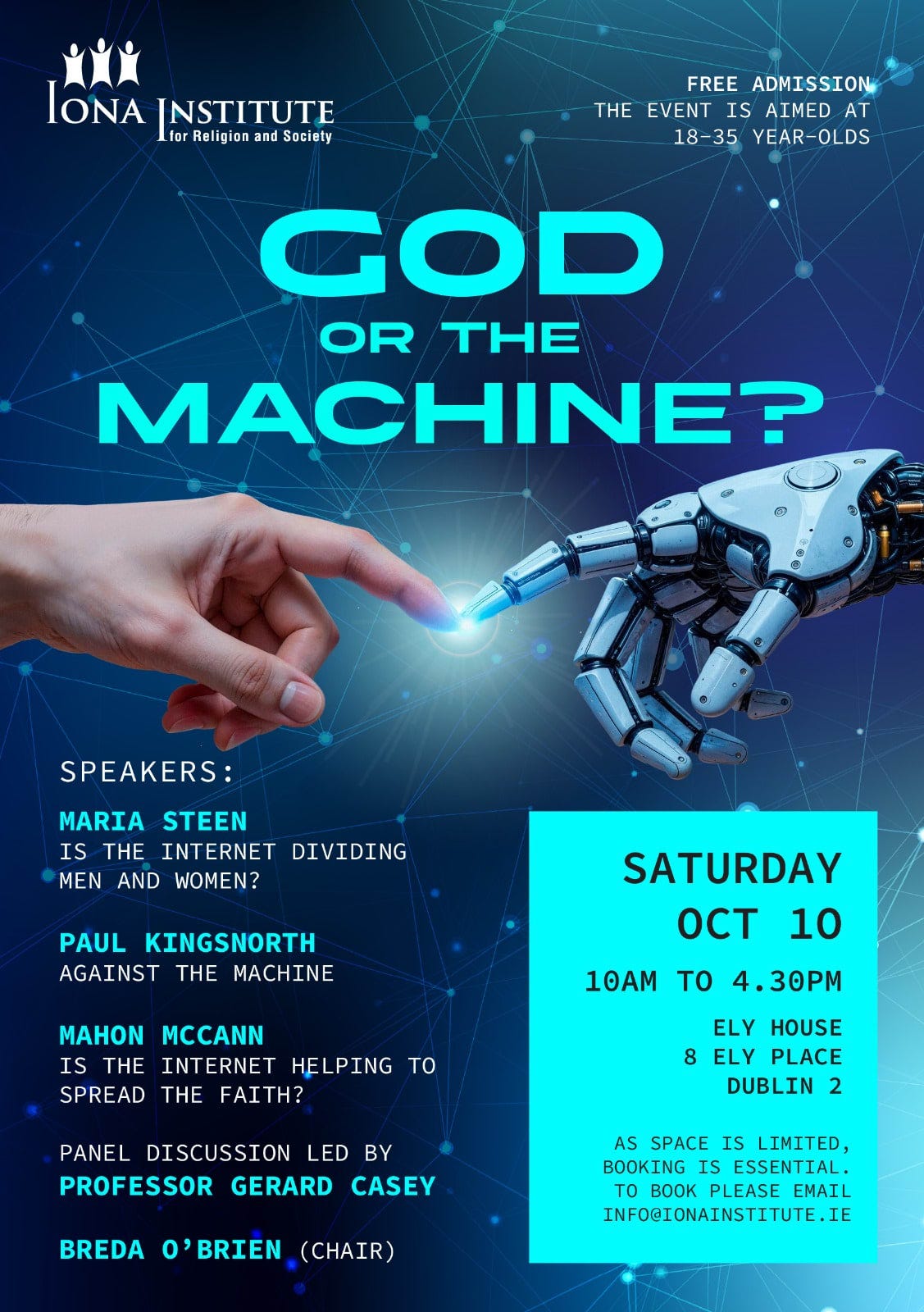
Paul Kingsnorth shares an update on his upcoming speaking engagements, all centered on the question of what it means to be human in the age of artificial intelligence. He notes that the rise of AI has forced this existential question into mainstream discourse, leading to invitations from major media outlets and event organizers. Over the next two months, he will speak at a youth-focused gathering in Dublin, a conference in Georgia (USA)…

Paul Kingsnorth shares an update on his upcoming speaking engagements, all centered on the question of what it means to be human in the age of artificial intelligence. He notes that the rise of AI has forced this existential question into mainstream discourse, leading to invitations from major media outlets and event organizers. Over the next two months, he will speak at a youth-focused gathering in Dublin, a conference in Georgia (USA) alongside Carl Trueman, a public talk at a university in Wisconsin, and a conference in Amsterdam addressing civilization in crisis.

Kingsnorth expresses reluctance about public speaking, feeling unqualified, but participates to contribute to the conversation. He concludes with a personal reflection on the simple human joy of being home for Christmas, contrasting it with what a robot could never appreciate. The comments reveal a mix of support and concern: several readers urge him to prioritize his health and limit travel, suggesting his writing may be a more sustainable vocation.

Others affirm the importance of his voice in secular forums, while discussing the spiritual and ethical dimensions of AI. A few commenters share personal encounters with his work in monastic settings, highlighting its reach beyond typical audiences.

  • Kingsnorth links the surge of public interest in human identity to the rise of AI.
  • Four events scheduled: Dublin (youth), Georgia conference, Wisconsin public lecture, Amsterdam conference.
  • He feels unqualified but participates to address spiritual and ethical implications of AI.
  • Comments emphasize concern for his health and debate the value of speaking versus writing.
  • Personal reflection on Christmas as a uniquely human experience beyond machine comprehension.
16 opinions in the discussion Ah... the very fact that this question even needs asking shows how adrift, uprooted and bewildered we've become. The game is over, surely... go quiet, as you always meant to...? I've no… Read the discussion
Father Moses YouTube discussion

Why You Don't Love God: Self-Love and the Misdirected Heart

Why You Don't Love God: Self-Love and the Misdirected Heart 14:08

A priest, Father Moses, examines why love for God often feels absent in the Christian life, arguing that the Holy Fathers identify love of self as the root of every sin. The heart, he says, has a limited capacity for love, and when it is given over to things like possessions, money, compliments, and comfort, little room remains for God. Love for God therefore grows only as the heart is purified of these misplaced attachments—a spiritual reality,…

A priest, Father Moses, examines why love for God often feels absent in the Christian life, arguing that the Holy Fathers identify love of self as the root of every sin. The heart, he says, has a limited capacity for love, and when it is given over to things like possessions, money, compliments, and comfort, little room remains for God.

Love for God therefore grows only as the heart is purified of these misplaced attachments—a spiritual reality, not merely a psychological one. He illustrates this with a personal story: after noticing how much he enjoyed the compliments his Nike jacket attracted, he gave it away to a homeless man at the prompting of his spiritual father, recognizing how such small attachments consume the heart.

The talk also addresses the modern 'self-love' gospel: the Gospel commands love of God and neighbor but never love of self, because we already struggle with excessive self-regard. Even self-hatred, shame, and harsh self-criticism in confession are revealed as forms of pride and self-obsession rather than humility. Sin, he explains, is not the destruction of natural desires but their misdirection—intimacy becomes lust, hunger becomes gluttony, work becomes greed, and time meant for repentance becomes busyness.

Drawing on the desert fathers, he recounts Abba Anthony's bold claim to love God more than a monk who fasted and prayed more, showing that love for God is a gift given to those open to self-denial, and that God bestows grace according to what each person is willing to receive, as in the parable of the talents. The talk culminates in the claim that Christ offers each of us a crucifixion proportioned to our willingness, for there is no resurrection without crucifixion—and little crucifixion means little love for Christ.

Key moments

  1. 0:00 Christ wants to give us crucifixion so we can participate in the fullness of resurrection; each person must decide the degree to which they are willing to be crucified, and little crucifixion means little love for Christ.
  2. 0:31 The heart's capacity to love is often misdirected toward wrong things—boots, sports teams, money—so we must be purified, and as we are, more of the heart is given over to the love of God.
  3. 1:32 We must strive to purify our hearts of what we love, and God will incrementally fill it with His love; this is a deep spiritual reality, not a psychological one.
  4. 2:05 A personal story: the speaker loved the compliments he received from a Nike jacket, and at the prompting of Father Turbo gave the jacket to a homeless man, recognizing that such attachments take up our heart's capacity.
  5. 4:11 A saint compared himself to a prickly pear—no matter how thrown, it lands prickles down—because all sins and struggles distill down to one thing: the love of self.
  6. 5:14 The gospel commands love of God and neighbor but not love of self, since we already struggle with too much self-love; even self-criticism and shame in confession ('I can't believe I did this') are actually self-obsession and pride, not humility.
  7. 6:49 All sins are misdirected natural desires—intimacy into lust, food into gluttony, work into greed, and time given for repentance into busyness and skipping church.
  8. 8:26 From the desert fathers: Abba Anthony, though another monk fasted and prayed more, said 'I love God more than he does,' showing that love for God is a spiritual gift given to those open to self-denial; God bestows grace according to what we are willing and able to receive and work with, as in the parable of the talents.
11 opinions in the discussion Ever since I sold my Camaro I've wanted another one. Watching this made me realize that what I actually miss isn't the car itself, but the attention it brought me. Maybe I don't actually… Read the discussion
Kyle YouTube discussion

Was Patriarch Cyril Lucaris Really a Calvinist? A Point-by-Point Rebuttal

Was Patriarch Cyril Lucaris Really a Calvinist? A Point-by-Point Rebuttal 39:22

This video responds to a Protestant claim that Patriarch Cyril Lucaris of Constantinople was a committed Calvinist, 'the Luther of the East.' The creator argues this is a serious overstatement, marshaling historical evidence for Cyril's Orthodox life and work: his canonization of saints, support for Mount Athos, printing of Orthodox texts, promotion of Orthodox education, homilies on the Theotokos, icons, and the Eucharist, and his martyrdom…

This video responds to a Protestant claim that Patriarch Cyril Lucaris of Constantinople was a committed Calvinist, 'the Luther of the East.' The creator argues this is a serious overstatement, marshaling historical evidence for Cyril's Orthodox life and work: his canonization of saints, support for Mount Athos, printing of Orthodox texts, promotion of Orthodox education, homilies on the Theotokos, icons, and the Eucharist, and his martyrdom while in communion with the Church.

He highlights Cyril's 1634 and 1637 letters warning against Calvinist heresies, and notes that in 1629 Cyril opposed a Protestant ruler attempting to impose Calvinism on Romanians, calling Calvinism farther from Orthodoxy than Roman Catholicism. On the disputed 1629 Confession, the video stresses that the Synod of Jerusalem (1672) did not anathematize Cyril, as the critic claimed, but declared him innocent of authoring it, condemning him only conditionally 'if' he held Calvinist views.

The speaker also notes that the scholar his opponent cited herself revised her position in 2018 to 'Not Quite a Calvinist,' showing no settled scholarly consensus exists. The video includes an honest apology: the creator admits he used a Reddit user's summary without credit and now provides full sources, including the Acts of the Synod of Jerusalem, academic articles, and Ecumenical Patriarchate materials.

Beyond Lucaris, the video critiques the opponent's arguments on the ELCA, apostolic succession, monasticism, and the Synod of Jerusalem's teaching on Scripture reading, arguing the council warned against untrained private interpretation rather than banning Scripture, since Orthodoxy reads Scripture constantly in its services. The creator explains why he declines to debate someone he judges to be arguing in bad faith.

Commenters add nuance: some note Cyril's icon-related quotes are misread, since Orthodoxy also rejects divine worship of icons; others discuss martyrdom, canonization, vernacular Scripture translations, and 17th-century theological controversies.

Key moments

  1. 0:02 Protestant claims that Cyril Lucaris was a Calvinist 'Luther of the East' are false; his patriarchal work included canonizing saints, supporting Mount Athos, printing Orthodox works, and promoting Orthodox education, and he died a martyr.
  2. 1:05 The speaker admits he copied a Reddit summary without giving credit and apologizes, now providing all sources in this video.
  3. 5:14 Cyril's own words—that the mere opinions of men are held in suspicion while Scripture and the Gospel are true and infallible—are fully Orthodox, referring to human traditions, not holy tradition.
  4. 6:46 The 1629 Confession is unlike his other writings; even if he signed it, political pressure (as at Florence) does not mean he composed it, and in 1634 he warned against Calvinism's heresies.
  5. 8:49 The scholar SeaWorks cites herself revised her view in 2018 to 'Not Quite a Calvinist,' showing there is no settled scholarly consensus.
  6. 12:58 In 1629 Cyril opposed a Protestant king trying to force Calvinism on Romanians, saying Calvinism was farther from Orthodoxy than Catholicism.
  7. 18:10 SeaWorks falsely claimed the Synod of Jerusalem anathematized Cyril; the 1672 council actually declared him innocent of authoring the Confession, only conditionally condemning him 'if' he were a Calvinist heretic.
  8. 30:06 The Synod of Jerusalem's restriction on Scripture reading is not a ban but a warning against untrained private interpretation, while Orthodoxy reads Scripture constantly in its services and encourages its reading within the life of the Church.
12 opinions in the discussion Great work! The problem with CWorks' argument is that he dwells on side issues and stretches them far past what they actually demonstrate. The icon point is a case in point: Cyril rejecting… Read the discussion
Father Moses YouTube discussion

Seven Minutes on Fighting Lust: An Orthodox Call to Guard the Eyes and Mind

Seven Minutes on Fighting Lust: An Orthodox Call to Guard the Eyes and Mind 6:56

An Orthodox Christian speaker addresses men directly about the daily battle for sexual purity, framing it as a spiritual war with eternal stakes. Lust, he argues, is not a harmless weakness but a weapon the devil uses to degrade a man's mind, defile his vision of women, and separate him from God. The fight begins with the eyes: cutting off every provocative image immediately, taking no second looks, looking only at a woman's face, and shutting…

An Orthodox Christian speaker addresses men directly about the daily battle for sexual purity, framing it as a spiritual war with eternal stakes. Lust, he argues, is not a harmless weakness but a weapon the devil uses to degrade a man's mind, defile his vision of women, and separate him from God. The fight begins with the eyes: cutting off every provocative image immediately, taking no second looks, looking only at a woman's face, and shutting down lustful thoughts at once with the Jesus Prayer.

He insists there are no days off and no partial concessions—giving lust even an inch lets the devil become your ruler. Women must be seen as bearers of God's image, never as objects; a man living in fantasy is 'no man at all.' Though perfection is impossible, men must continually re-enter the fight, since purity of heart is necessary to see and love God.

The comment section became a space of raw honesty and mutual support. One commenter described decades of addiction to pornography and asked for prayer, while others spoke of the internet itself as a near occasion of sin for those struggling with lust. A woman reflected on realizing, after forty years, how her manner of dress had affected men, and now chooses modesty.

Another shared that seeing the Theotokos reflected in women transformed his outlook, and that he is switching to a flip phone to remove temptation. Others noted the link between pornography and human trafficking. The speaker's post also promotes a men's accountability community, with a portion of proceeds supporting the building of a new Orthodox church in Texas.

Key moments

  1. 0:00 Desexualizing begins with cutting out every image and provocation—a daily battle with no days off.
  2. 0:30 The devil fights to degrade a man's mind and heart so he cannot see or connect with God, seeking to drag him into hell through idolatry and the worship of lust.
  3. 1:02 The battle must start with the eyes and mind; the key to overcoming lust is learning to hate and revile it as degrading and dehumanizing.
  4. 2:02 Women must be seen either as made in the image of God or as objects for pleasure—giving lust even an inch lets the devil become your ruler.
  5. 2:34 Every image, whether online or in real life, must be cut off and never used to feed the inclination to sin; zero ground, zero seconds given to viewing women as objects.
  6. 3:05 All corresponding fantasies and thoughts must be cut off—a man living in fantasy is no man at all, while a grounded man honors women as bearers of God's image.
  7. 4:06 Practical steps: look at the face, not below the shoulders, no second takes, and immediately cut off thoughts with the Jesus prayer.
  8. 5:40 If we treat our neighbor as an object, we cannot love God; without taking this battle seriously we risk hell regardless of church attendance, but striving for purity transforms how we see women.
5 opinions in the discussion Once it hits you that every single piece of porn is tied to human trafficking, you'll never want to watch it again. Read the discussion
The Burning Bush Instagram discussion

Does the Miracle of St. Euphemia Really Prove Chalcedon? A Critical Look

This video responds to a popular claim in Orthodox-Coptic polemics: that at the Council of Chalcedon (451), both parties placed confessions of faith in the tomb of St. Euphemia the Great Martyr, and that she miraculously chose the Tome of Leo, thereby proving Chalcedonian Christianity true and Oriental Orthodoxy false. The speaker subjects this miracle claim to historical scrutiny. He notes that the Acts of Chalcedon are the most thoroughly…

This video responds to a popular claim in Orthodox-Coptic polemics: that at the Council of Chalcedon (451), both parties placed confessions of faith in the tomb of St. Euphemia the Great Martyr, and that she miraculously chose the Tome of Leo, thereby proving Chalcedonian Christianity true and Oriental Orthodoxy false. The speaker subjects this miracle claim to historical scrutiny.

He notes that the Acts of Chalcedon are the most thoroughly documented acts of any council in the first five centuries of the Church, yet the miracle appears nowhere in them — a strange omission if it had been a public, decisive vindication. The closest contemporary evidence is a letter from the Chalcedonian bishops to Pope Leo the Great stating that St. Euphemia blessed their gathering, but without any mention of the tomb miracle or of Dioscorus's confession being placed there.

Even Evagrius Scholasticus, a sympathetic Chalcedonian historian who describes Euphemia's shrine in detail and narrates the council at length, never mentions the miracle. The earliest attestation of the story comes roughly five centuries after the events, around the 10th century. The speaker's broader conclusion is methodological: believers should not automatically accept miracle claims deployed to discredit their own church; miracles must be tested against Scripture and sound evidence.

The comment section reflects the wider debate. One commenter dismisses the historical argument and instead points to the historical fortunes of Chalcedonian versus Oriental churches under Islam as a kind of 'proof.' Another raises a substantive theological question, asking how Oriental Orthodox apologists can object to Leo's Tome while making seemingly similar distinctions themselves, such as saying Christ died 'according to the flesh' or that the divinity is not consumed in the Eucharist.

The thread thus combines historical criticism of the miracle tradition with live Christological debate between Chalcedonian and Oriental Orthodox perspectives.

Key moments

  1. 0:00 The usual claim: at Chalcedon, both sides placed confessions in St. Euphemia's tomb, and she chose Leo's tome, supposedly proving Chalcedonian Christianity true and Oriental Orthodoxy false.
  2. 1:46 The miracle is nowhere mentioned in the Acts of Chalcedon, the most well-documented council of the first 500 years, which is strange if it were a real public victory.
  3. 2:32 The closest contemporary evidence is a letter of Chalcedonian bishops to Leo the Great saying St. Euphemia blessed them, but without mentioning the miracle itself.
  4. 2:32 Evagrius Scholasticus, a Chalcedonian scholar, describes Euphemia's shrine in detail and narrates Chalcedon, yet never mentions the miracle.
9 opinions in the discussion Help me grasp your position. Regarding that first quote from Leo's Tome — I've heard Oriental Orthodox say things like 'Christ died according to the flesh' or that in the Eucharist you… Read the discussion
P Paul Kingsnorth Substack discussion

Paul Kingsnorth Mourns Wendell Berry, Reflects on AI and Christian Writing

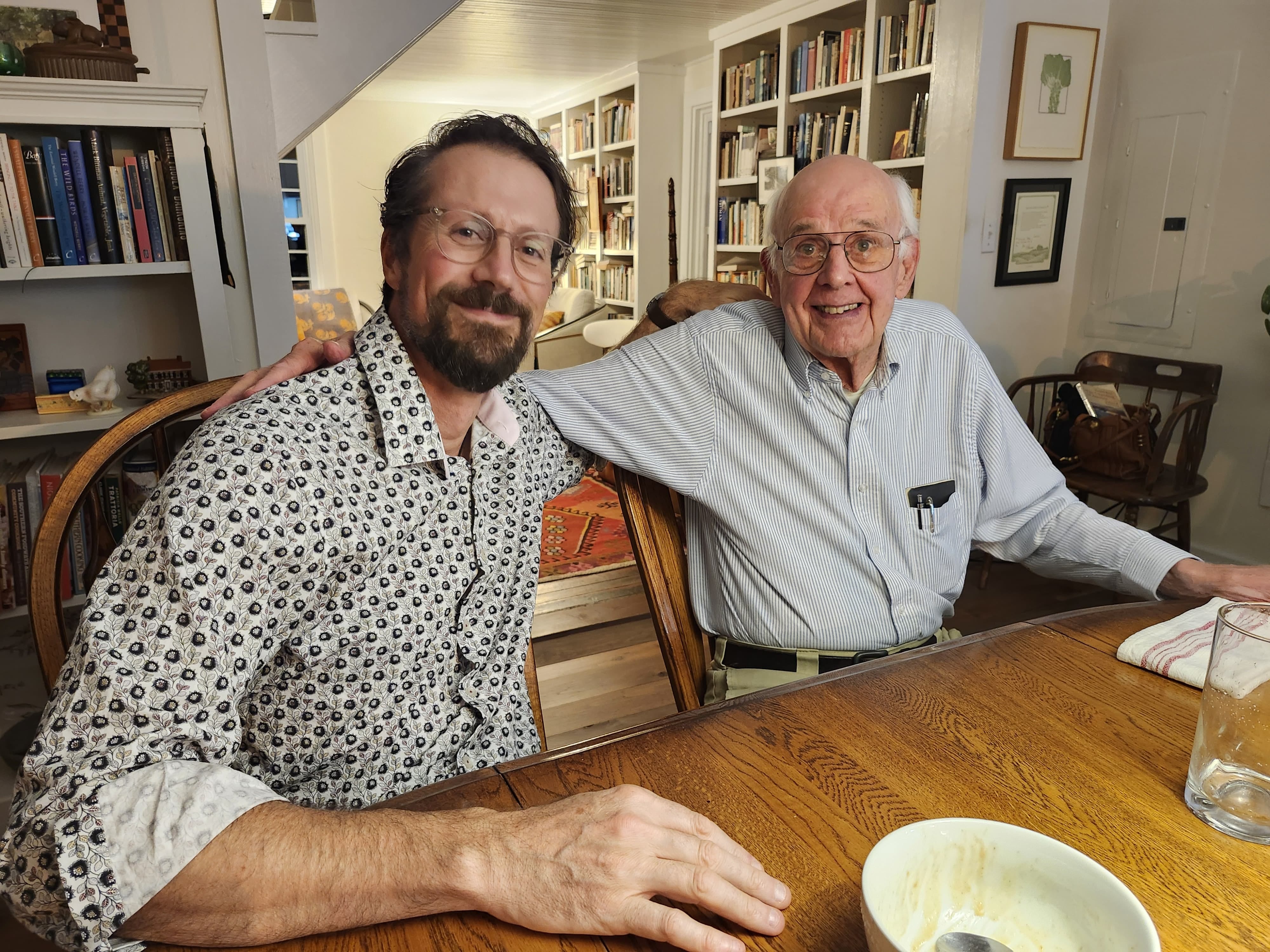
In his September Monthly Salon, Paul Kingsnorth marks the death of Wendell Berry at 92, recalling his personal encounters with the Kentucky agrarian writer and Berry's profound influence on his own thought. Kingsnorth edited the Penguin collection *The World-Ending Fire* and delivered the second Wendell Berry Lecture in Port Royal. He shares a recent podcast conversation with Irish philosopher Mahon McCann on Christianity in the age of the…

In his September Monthly Salon, Paul Kingsnorth marks the death of Wendell Berry at 92, recalling his personal encounters with the Kentucky agrarian writer and Berry's profound influence on his own thought. Kingsnorth edited the Penguin collection *The World-Ending Fire* and delivered the second Wendell Berry Lecture in Port Royal.

He shares a recent podcast conversation with Irish philosopher Mahon McCann on Christianity in the age of the Machine. Kingsnorth updates the Writers Against AI campaign he launched, noting its grassroots spread — including a family in Portland screen-printing campaign logos for free libraries. He explains his decision to make his Substack writing free, supported by voluntary donations, citing discomfort with charging for Christian-focused work.

However, he paywalled a recent essay, "The Trap," because its content on AI would itself be scraped for training data — a dilemma he acknowledges has no fixed solution. The comment thread reveals many readers discovered Berry through Kingsnorth, sharing how Berry's poetry and fiction shaped their sense of place, faith, and resistance to industrial modernity.

Others mention Ivan Illich's upcoming centenary and recommend the English agrarian writer Adrian Bell.

  • Wendell Berry died at 92; Kingsnorth honors his legacy as a Christian agrarian voice of global reach
  • Kingsnorth edited Berry's selected essays (*The World-Ending Fire*) and gave the 2024 Wendell Berry Lecture in Kentucky
  • New podcast with Mahon McCann explores Christianity confronting technological modernity
  • Writers Against AI campaign grows organically; citizens print and distribute resistance logos locally
  • Kingsnorth moves to donation-based model for Christian writing, but paywalls AI-critical pieces to avoid training-data scraping
36 opinions in the discussion I probably first came across Wendell Berry years ago through this author's work, but I only recently picked up the anthology of his writing, likely connected to Against the Machine. Wow. I… Read the discussion
Father Moses YouTube discussion

When Your Spouse Won't Come to Church: A Priest's Counsel on Winning, Not Arguing

When Your Spouse Won't Come to Church: A Priest's Counsel on Winning, Not Arguing 14:28

A priest addresses one of the most common and painful situations in parish life: one spouse is drawn to Orthodoxy while the other stays home. His central claim is that marriage is a shared venture—drawing on the Orthodox marriage service, he notes that spouses must 'win together,' because in marriage if one wins, the other loses. Pressuring, nagging, or contending with a spouse over church attendance is therefore self-defeating. Instead, he…

A priest addresses one of the most common and painful situations in parish life: one spouse is drawn to Orthodoxy while the other stays home. His central claim is that marriage is a shared venture—drawing on the Orthodox marriage service, he notes that spouses must 'win together,' because in marriage if one wins, the other loses.

Pressuring, nagging, or contending with a spouse over church attendance is therefore self-defeating. Instead, he calls for patience, faith, and attraction: the unbelieving or hesitant spouse is to be won over by witnessing genuine, positive transformation in the other, not by argument. He then offers gender-specific counsel. Wives are urged to give their husbands respect and honor, following St. Paul, even when the husband seems unworthy—this, he says, is a wife's martyrdom within marriage.

Wives should also provide information, since men tend to be logical and analytical; some will decide quickly, others slowly. Husbands, in turn, are told to love: speak kindly and gently, cherish their wives, listen daily, connect emotionally, and make clear their affection belongs to her alone. Orthodoxy, he adds, offers men tangible structure—prayer, fasting, services—through which they can grow into genuine spiritual headship of the family.

The discussion closes with St. Silouan's maxim: change yourself, and you can change the world. The post also promotes a paid community offering courses on marriage, dating, and fitness, and links the text of the Orthodox Service of Crowning.

Key moments

  1. 0:30 The big picture: read the Orthodox marriage ceremony; both spouses must 'win together' since in marriage if one wins, the other loses.
  2. 1:32 A wife who complained about her husband was asked where her respect, honor, and love were—becoming a better wife should draw him in rather than create contention.
  3. 2:35 You must have faith that God will see you through the process, even if it takes years, without demanding your own will or pressuring your spouse.
  4. 3:40 Conversion must be an attraction: spouses are won over by seeing genuine positive transformation in each other, not by arguments.
  5. 4:41 For wives: respect and honor your husband, per St. Paul—this is her martyrdom in marriage, and it applies regardless of whether he seems worthy.
  6. 7:17 Wives should also give their husbands information, since men tend to be logical and analytical; some decide quickly, others slowly and steadily.
  7. 8:19 For husbands: love—speak kindly and gently, cherish your wife, listen daily, connect emotionally, and show her your affection is directed only at her.
  8. 11:26 Orthodoxy gives men tangible structure (prayers, fasting, services) to become the spiritual head of the family; don't argue anyone into the faith—work on yourself, as St. Silouan said, 'You can change the whole world by changing yourself.'
12 opinions in the discussion I started bringing my spouse along to services and kept praying that she would come to faith. Through the Mother of God she discovered where she belonged in the church, and she was baptized… Read the discussion
Father Moses YouTube discussion

A Priest on Talking to Women at Church, the Psalter, and Finding a Spouse

A Priest on Talking to Women at Church, the Psalter, and Finding a Spouse 10:59

Father Moses answers practical questions from men in his online community about everyday Orthodox Christian living. The most discussed topic is how to speak with women at church without awkwardness: he advises keeping it simple and normal—wait for coffee hour after the dismissal, introduce yourself, ask ordinary questions like a person's name and how long they have been Orthodox, avoid strange conversation topics, listen well, and, if things go…

Father Moses answers practical questions from men in his online community about everyday Orthodox Christian living. The most discussed topic is how to speak with women at church without awkwardness: he advises keeping it simple and normal—wait for coffee hour after the dismissal, introduce yourself, ask ordinary questions like a person's name and how long they have been Orthodox, avoid strange conversation topics, listen well, and, if things go well, suggest getting coffee.

He frames the whole matter as an exercise in normalcy rather than technique. Other questions cover whether to read the Psalter silently or aloud; he says both are fine, since the goal is attention, and reading aloud can help when the mind wanders, much like saying the Jesus prayer aloud when tired. On confidence, he teaches that it grows through accomplishment, which comes through repeated failure—the real problem is giving up rather than addressing weaknesses.

Asked about working in female-dominated environments, he points to the summary of the commandments: love God and love neighbor. On keeping the commandments, he emphasizes keeping the eye of the soul rooted in Christ through the Jesus prayer and remembrance of death, and loving others with humility, patience, and forgiveness. Regarding an addiction to music, he recommends cutting back, avoiding constant listening (for example while driving), and steering away from music that stirs anger, bitterness, or depression—music is not inherently bad, but imbalance harms the soul.

Finally, on finding a spouse within the Church, he affirms that seeking marriage is legitimate since both monasticism and marriage are paths of salvation, but stresses synergy: pray, and also make effort by visiting other parishes, monasteries, and young adult conferences, because God's energy works together with ours. Throughout, the thread's tone is pastoral and practical, stressing balance, effort, and ordinary human decency.

Key moments

  1. 0:00 To talk to someone of the opposite gender at church, wait until after the dismissal during coffee hour, introduce yourself, and ask normal conversational questions like their name and how long they've been Orthodox.
  2. 1:01 Avoid odd questions (favorite spider, anime, watching trains), let the other person speak, give simple answers, and if things go well, suggest getting coffee to get to know each other.
  3. 2:05 Reading the Psalter aloud engages multiple senses and helps focus, similar to saying the Jesus prayer aloud when the mind is tired; silent reading is also fine—there's no right or wrong way, only the goal of staying focused.
  4. 3:07 Confidence is born from accomplishment, and accomplishment comes through repeated failure; the problem with those who lack confidence is not failing but giving up instead of addressing weaknesses.
  5. 5:10 Working in female-dominated jobs is not a problem—the commandments are summarized as loving God and loving neighbor.
  6. 5:42 We keep the commandments by keeping the eye of the soul rooted on Christ through the Jesus prayer and remembrance of death, and by loving our neighbor with humility, patience, and forgiveness, exemplifying Christ's gentleness.
  7. 7:19 For music addiction: cut back as much as possible, avoid listening while driving or repetitively, and avoid music that stirs anger, bitterness, or depression—music isn't inherently bad, but imbalance is harmful.
  8. 8:51 It is legitimate to seek a spouse at church since monasticism and marriage are both paths of salvation; pray but also make effort—visit other parishes, monasteries, and young adult conferences, since God's energy works together with ours.
11 opinions in the discussion I know the dating scene well, young man. It's barren out there. Let me tell you, I must have approached hundreds of women before I met my wife. Keep going, brothers! I did it in person,… Read the discussion
The Burning Bush Instagram discussion

Did Chalcedon Contradict the Fifth Ecumenical Council? An Oriental Orthodox Case

This post presents an Oriental Orthodox argument that the Council of Chalcedon (451) erred by rehabilitating figures and writings later condemned as Nestorian by the Fifth Ecumenical Council (Constantinople II, 553). The speaker focuses on the so-called Three Chapters: the writings of Theodore of Mopsuestia, Theodoret of Cyrus, and the letter of Ibas of Edessa. He cites the tenth session of Chalcedon, where Roman legates declared Ibas's letter…

This post presents an Oriental Orthodox argument that the Council of Chalcedon (451) erred by rehabilitating figures and writings later condemned as Nestorian by the Fifth Ecumenical Council (Constantinople II, 553). The speaker focuses on the so-called Three Chapters: the writings of Theodore of Mopsuestia, Theodoret of Cyrus, and the letter of Ibas of Edessa.

He cites the tenth session of Chalcedon, where Roman legates declared Ibas's letter orthodox after it was read aloud—a letter in which Ibas calls St. Cyril of Alexandria an Apollinarian and praises Theodore of Mopsuestia as a teacher of the faith. Theodoret, likewise, was restored after merely anathematizing Nestorius, without his writings being examined or condemned.

The speaker concludes that Chalcedon directly contradicts Constantinople II, and argues that even a Chalcedonian interlocutor concedes the tension, casting doubt on whether the Holy Spirit guided Chalcedon. The discussion in the comments is substantive and two-sided. Supporters of the argument add that Chalcedon omitted Cyril's Third Letter to Nestorius and the Twelve Anathemas, suggesting Cyril's reception there was instrumental rather than genuine, and invoke Cyril's own letters to show he objected to two-natures language without proper qualifications.

Critics respond that the Three Chapters were not dogmatic decrees of Chalcedon but matters concerning persons and writings; that Constantinople II condemned specific Nestorian writings, not Chalcedon itself, and explicitly reaffirmed Chalcedon; and that Theodoret and Ibas were received only after making orthodox confessions. Others raise the parallel question of the Second Council of Ephesus and Eutyches, and debate whether the miaphysite formula's origins undermine the Oriental position.

The thread thus turns on whether the Fourth and Fifth Councils are genuinely irreconcilable, or whether later condemnation of specific writings is compatible with Chalcedon's earlier restorations.

Key moments

  1. 0:00 The Orthodox objection against Pope Vigilius is that by accepting the Three Chapters he embraced Nestorianism, making him a bishop of Rome who taught heresy.
  2. 0:37 The Council of Chalcedon (451) accepted the Three Chapters, which the Fifth Ecumenical Council condemned as Nestorian.
  3. 1:27 In the tenth session of Chalcedon, the letter of Ibas of Edessa was read to determine whether Ibas was Nestorian.
  4. 1:51 In the letter, Ibas calls Cyril an Apollinarian and praises Theodore of Mopsuestia as a teacher of the faith, criticizing those who condemn him.
  5. 2:07 The Roman legates at Chalcedon declared the letter perfectly orthodox and rehabilitated Ibas, showing acceptance of both the first and third chapters.
  6. 2:27 Theodore of Cyrus was tried at Chalcedon, claimed he was raised among the orthodox (including Theodore of Mopsuestia), and was rehabilitated after only anathematizing Nestorius, without any of his writings being condemned.
31 opinions in the discussion The Three Chapters were not propositions dogmatically accepted at Chalcedon and then repudiated at Constantinople II. Rather, they concerned persons and writings associated with bishops… Read the discussion
Father Moses YouTube discussion

The Devil's Strategy: Cutting You Off From Your Supply Lines

The Devil's Strategy: Cutting You Off From Your Supply Lines 13:42

A priest, Father Moses, presents spiritual warfare through a military metaphor: just as armies win by cutting the enemy off from supply lines, the devil fights believers not only through direct temptation but by severing them from the sources that sustain their spiritual life. He identifies four such 'supply lines' and explains how each is undermined. The first is the Church itself: the devil uses headaches, oversleeping, illness, and schedule…

A priest, Father Moses, presents spiritual warfare through a military metaphor: just as armies win by cutting the enemy off from supply lines, the devil fights believers not only through direct temptation but by severing them from the sources that sustain their spiritual life. He identifies four such 'supply lines' and explains how each is undermined.

The first is the Church itself: the devil uses headaches, oversleeping, illness, and schedule disruptions—especially on Sundays—to keep people away from the place where they are renewed by the Holy Spirit. The second is one's priest and the sacrament of confession. The devil plants critical thoughts about the priest ('he is harsh, distant, uncaring') to drive a wedge between penitent and confessor.

The priest shares how his own confessor handled complaints by offering a three-way meeting with the priest in question—no one ever accepted, revealing that people often prefer complaining to reconciliation. He also addresses shame about confession: waiting until one has 'improved' misunderstands the sacrament, since humility is valuable and pride is the root of sin; one young man's practice of calling his priest after every fall helped him stop the sin entirely.

The third target is prayer and fasting: skipping the prayer rule makes the day more anxious, and the devil whispers 'how can you live without meat?' but never 'how can you live without the Kingdom of Heaven?' Believers are urged to focus only on today's struggle. The fourth is forgiveness: Christ warned that the Father will not forgive those who do not forgive others from the heart; resentment suffocates the Holy Spirit like a filthy house God cannot enter, while forgiveness, prayer, and fasting cleanse the soul as a dwelling for Him.

The talk closes with an encouragement to persevere daily like good soldiers, and an invitation to join an online brotherhood for mutual support in the struggle.

Key moments

  1. 0:31 The devil doesn't only attack with temptations; if that fails, he tries to cut you off from your sources of support.
  2. 1:02 First target: the Church. The devil uses illness, headaches, schedule changes, oversleeping, and any obstacle to keep you from attending, because the Church is where God's soldiers are renewed by the grace of the Holy Spirit.
  3. 2:33 Second target: your priest and confession. The devil plants negative thoughts and judgments about the priest—calling him harsh, distant, or uncaring—to drive a wedge between you and your spiritual leader.
  4. 4:07 The priest recounts how his confessor advised him to respond to complaints about another priest by offering to arrange a three-way meeting; no one ever accepted, showing people prefer complaining to resolving.
  5. 5:07 People avoid confession out of shame, saying they'll return only when they've improved, not realizing that humility and shame are actually good, since pride is the root of sin. A young man's rule of calling his priest after falling into sin helped him stop the sin entirely.
  6. 6:39 Third target: prayer and fasting. Skipping the prayer rule makes the day more anxious and difficult; prayer is the water of the soul that keeps a soldier in the fight.
  7. 8:12 The devil whispers 'How can you live without meat?'—never 'How can you live without the Kingdom of Heaven?' We should simply focus on today's task, for each day has enough trouble of its own.
  8. 10:14 Fourth target: forgiveness. Christ said that if we do not forgive others from our hearts, the Father will not forgive us; harboring resentment suffocates the Holy Spirit like a dusty, filthy house God cannot enter—while forgiveness, prayer, and fasting clean the soul for Him to dwell in.
13 opinions in the discussion I came to your church on Tuesday — you may have noticed me near the front. It was my first time ever inside a church, and I was fighting the strongest inner voice imaginable telling me I… Read the discussion
Robel࿇🕊️ Instagram discussion

Did St. John Chrysostom Refute 'Faith Alone'? Commenters Disagree

The post presents a video arguing that, according to St. John Chrysostom, belief in the Son by itself is not sufficient for eternal life. The video cites Christ's warning that 'not everyone who says to me, Lord, Lord, shall enter the kingdom of heaven,' and notes that blasphemy against the Holy Spirit alone is enough to condemn a person. Although Scripture states that 'he that believes in the Son has eternal life,' the many commandments of the…

The post presents a video arguing that, according to St. John Chrysostom, belief in the Son by itself is not sufficient for eternal life. The video cites Christ's warning that 'not everyone who says to me, Lord, Lord, shall enter the kingdom of heaven,' and notes that blasphemy against the Holy Spirit alone is enough to condemn a person.

Although Scripture states that 'he that believes in the Son has eternal life,' the many commandments of the Gospels show that faith must be joined to a right manner of life rather than mere mental assent. The post is framed as Chrysostom 'debunking' the doctrine of faith alone, with hashtags appealing to Orthodox, Catholic, and general Christian audiences.

The comment section quickly became a debate between Orthodox and Protestant readers. Several commenters asked where the quote comes from, while others pushed back, citing Romans 11:6 and Ephesians 2:8-9 to argue that no works can merit justification, otherwise salvation would not be grace. A recurring theme in the discussion was definitional: some Protestants argued that sola fide was never meant as mere intellectual assent, and that genuine faith naturally produces good works, so Chrysostom's words do not contradict them.

One commenter claimed Chrysostom actually taught something like sola fide, noting his homilies on 1 Timothy speak of being raised by faith alone, while still affirming that faith without works is insufficient. Another suggested the dispute hinges on what 'sufficient for salvation' means: if it concerns meriting forgiveness, the quote would refute sola fide, but if it concerns presuming final salvation, Protestants can agree.

The thread thus illustrates that both sides often agree that true faith must bear fruit in a right life, while differing on how faith, works, and grace relate to justification.

Key moments

  1. Belief in the Son alone is not enough for eternal life.
  2. Christ said, 'Not everyone who says to me, Lord, Lord, shall enter the kingdom of heaven.'
  3. Blasphemy against the Holy Spirit is by itself enough to cast a man into hell.
  4. The many commandments in the Gospels show that faith must be accompanied by a right manner of life.
41 opinions in the discussion Works prove your faith, but works don't give salvation, yet faith without works is dead. Read the discussion
The Burning Bush Instagram discussion

Answering the Claim That Orthodox Exclusivism Is Unkind

This video responds to an argument popularized by Protestant apologists such as Gavin Orland, sometimes called the 'Eirenicum argument,' which portrays Orthodoxy as harshly exclusivist while presenting Protestantism as more inclusive and charitable. The speaker offers four rebuttals. First, Protestants cannot avoid treating the Orthodox as heretics: if icon veneration is idolatry, the intercession of saints is necromancy, or Orthodoxy is a…

This video responds to an argument popularized by Protestant apologists such as Gavin Orland, sometimes called the 'Eirenicum argument,' which portrays Orthodoxy as harshly exclusivist while presenting Protestantism as more inclusive and charitable. The speaker offers four rebuttals. First, Protestants cannot avoid treating the Orthodox as heretics: if icon veneration is idolatry, the intercession of saints is necromancy, or Orthodoxy is a works-based salvation, then the Orthodox fall under anathema (Galatians 1).

Second, Protestants are themselves exclusivist but lack epistemic grounding—Presbyterians exclude non-denominationalists and vice versa—because they do not claim to be the concrete institution Christ founded with a charism of authority, as the Orthodox do. Third, the Reformers were exclusivist: they called the papacy the seat of Antichrist, Luther deemed Zwingli a heretic over the Eucharist, and Protestant authorities executed heretics.

Fourth, Protestant missionary activity in historically Orthodox lands such as Ethiopia and Egypt demonstrates that Protestants regard the Orthodox as outside the church—otherwise there would be no reason to proselytize them. The comment section reflects a wide range of reactions. Some Protestants dispute the characterization of Orland's argument as a strawman and ask for direct quotations.

Others object to lumping all non-Anglican, non-Lutheran, non-Reformed groups under 'Protestant.' Several Protestants reject the premise that they view icons as idolatry or Orthodoxy as works-based. A Catholic commenter notes similar experiences of being called unkind. Others debate whether pre-Reformation Orthodoxy ever held that heretics might be saved outside institutional boundaries, and some commenters argue that denominational identity matters less than faith in Christ.

The thread thus turns into a broader debate over exclusivism, ecclesiology, and charity across confessional lines.

Key moments

  1. 0:00 The speaker introduces a response to the 'Eirenicum argument' used by Protestant apologists like Gavin Orland, which portrays Orthodoxy as mean and exclusivist.
  2. 0:31 Protestants cannot avoid viewing Orthodox as heretics: if icon veneration is idolatry, intercession of saints is necromancy, or Orthodoxy is works-based salvation, then Orthodox are idolaters or anathema per Galatians 1.
  3. 1:05 Protestants are exclusivist but lack epistemic grounding—Presbyterians exclude non-denominationalists and vice versa—because they don't claim to be the concrete institution Christ founded with the charism of infallibility, which the Orthodox claim.
  4. 1:28 The Reformers were exclusivist: they called the papacy the office of the Antichrist, Luther deemed Zwingli a heretic over the Eucharist, Zwingli rejected the Anabaptists, and Protestant princes executed heretics.
  5. 1:59 Protestant missionary work in Orthodox countries like Ethiopia and Egypt proves Protestants view the Orthodox as outside the church—otherwise there would be no need to proselytize them.
11 opinions in the discussion As a former evangelical pastor who wrestled with the question "what is a church" seven years ago, I now see that the Church is the body of Christ, the Bride of Christ, and Christ Himself. I… Read the discussion