St Ephraim and St Joseph, pray for us sinners
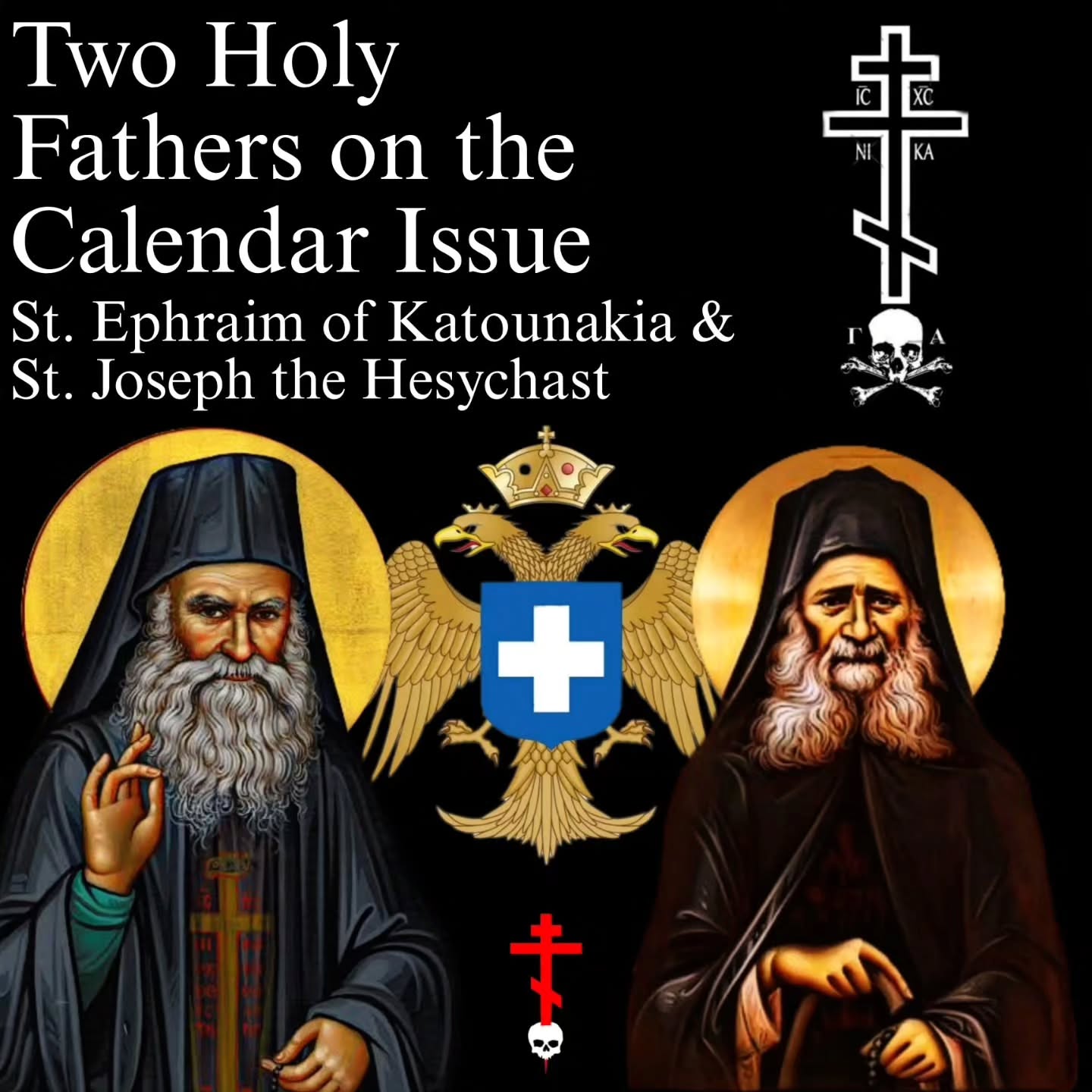
I ask St Ephraim and St Joseph to intercede before Christ our God for all of us who are sinners.
We follow Orthodox channels, communities and blogs across the web, summarise every post and video, and highlight the conversations with real substance.
I ask St Ephraim and St Joseph to intercede before Christ our God for all of us who are sinners.
 Појединац, Породица и Друштво
Instagram
A priest tells the story of a woman who was somewhat older and had never married. She had never even had a boyfriend. Around the age of 35, or perhaps closer to 40, she met a fine man. Both she and the man were devout, and they came to be married in church. The priest then describes the usual wedding questions that are asked during the service. He addresses the bride, calling her for example Dragana, and asks whether she has a good and unforced…
A priest tells the story of a woman who was somewhat older and had never married. She had never even had a boyfriend. Around the age of 35, or perhaps closer to 40, she met a fine man. Both she and the man were devout, and they came to be married in church.
The priest then describes the usual wedding questions that are asked during the service. He addresses the bride, calling her for example Dragana, and asks whether she has a good and unforced will to take this man as her husband. She answers: yes, honorable father. He then asks whether she has promised herself to anyone else.
She answers that she has not, and adds that she had not even hoped for this. The account centers on the exchange at the wedding itself: the priest's questions and the bride's answers. The detail that she had not even hoped for marriage is the point where the story ends.
The post presents the story as told by the priest, with no further events or commentary beyond the wedding questions and the woman's replies.
A memorial service took place at an Orthodox youth camp in Zedelgem, Belgium, with the abbot of the Athonite monastery of Pantokratoros presiding. The service included prayers for the departed. According to the video transcript, the prayer states that the continuation is for all, for everyone. It asks God to quicken the souls of his servants because he alone is immortal. It affirms that God is the one for ages of ages. It declares that God alone…
A memorial service took place at an Orthodox youth camp in Zedelgem, Belgium, with the abbot of the Athonite monastery of Pantokratoros presiding. The service included prayers for the departed. According to the video transcript, the prayer states that the continuation is for all, for everyone. It asks God to quicken the souls of his servants because he alone is immortal.
It affirms that God is the one for ages of ages. It declares that God alone is pure and the way and the truth. The post includes hashtags in English and Dutch referencing Orthodoxy and the Orthodox Church.
Појединац, Породица и Друштво
Instagram
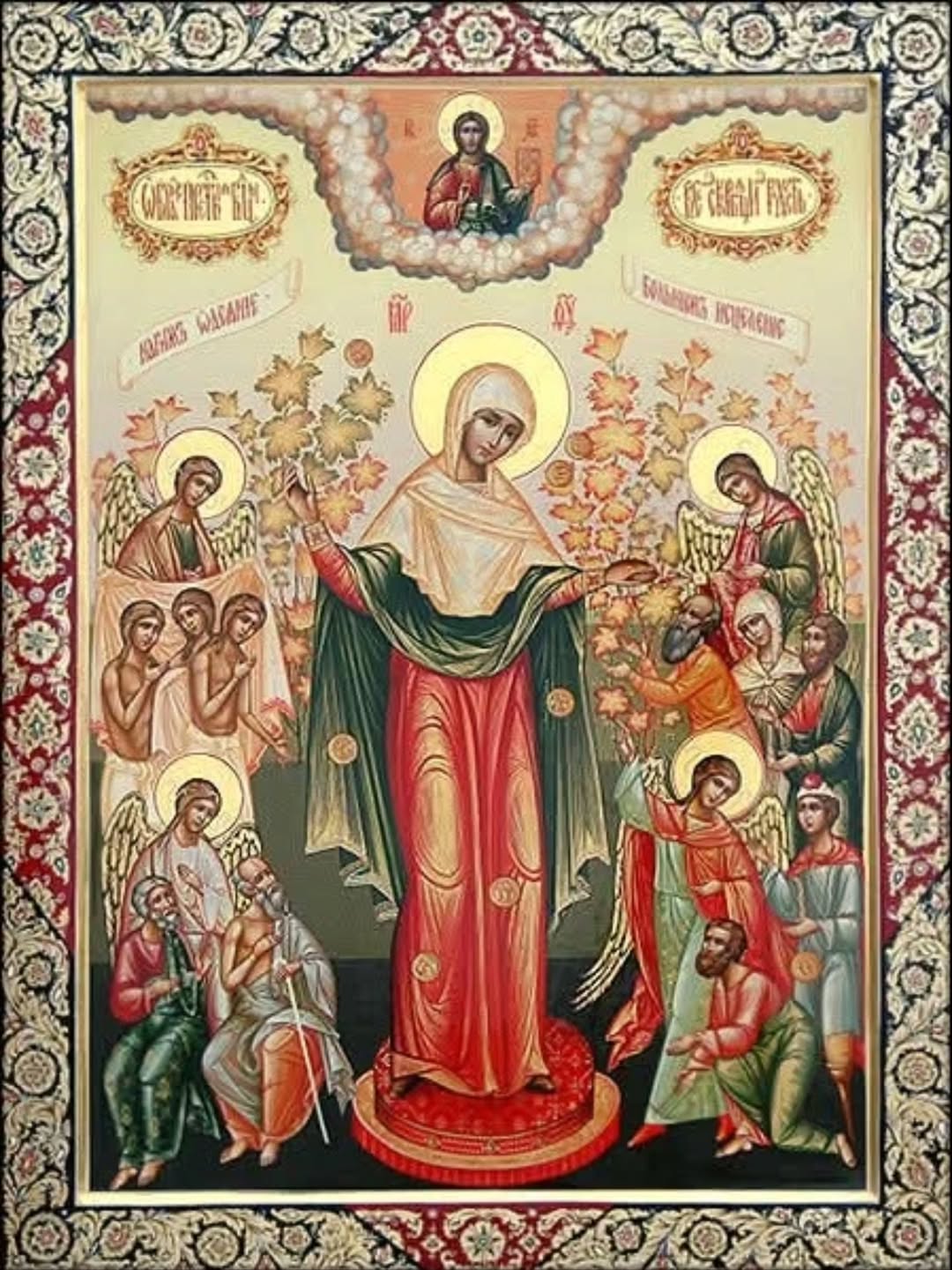
A prayer in Serbian addressed to the Most Holy Mother of God in honour of her icon 'Joy of All Who Sorrow' ( Svih žalosnih Radost ). The prayer calls her more honourable than the Cherubim and beyond compare more glorious than the Seraphim, the God-chosen Bride, and asks her to give consolation, since the faithful have no other refuge or help. It names her the only advocate of our joy, and as Mother of God and Mother of mercy standing before the…
A prayer in Serbian addressed to the Most Holy Mother of God in honour of her icon 'Joy of All Who Sorrow' ( Svih žalosnih Radost ). The prayer calls her more honourable than the Cherubim and beyond compare more glorious than the Seraphim, the God-chosen Bride, and asks her to give consolation, since the faithful have no other refuge or help.
It names her the only advocate of our joy, and as Mother of God and Mother of mercy standing before the throne of the Most Holy Trinity, able to help, because none of those who come to her ever goes away shamed. Those praying turn to her icon on a day of sorrow and ask with tears that she drive away all the griefs and sorrows of this temporary life, that she not deprive them of her all-powerful intercession, and that she grant eternal, boundless joy in the Kingdom of her Son and our God. The prayer closes with Amen.
Појединац, Породица и Друштво
Instagram
A short poetic post reflects on the Little Prince and his rose, standing together on his small planet under the same moon. The opening line says that all miracles in time become ordinary, but that the rose, or the one who is loved, remains the same. The author writes that time passes, yet what we love and keep in our heart never fades. The post is framed as a poetic moment of silence, nostalgia, and a light that does not go out, marked with…
A short poetic post reflects on the Little Prince and his rose, standing together on his small planet under the same moon. The opening line says that all miracles in time become ordinary, but that the rose, or the one who is loved, remains the same. The author writes that time passes, yet what we love and keep in our heart never fades.
The post is framed as a poetic moment of silence, nostalgia, and a light that does not go out, marked with hashtags about the Little Prince, art, and a poetic moment. The accompanying video adds a spoken address to someone the speaker wants to take somewhere to show care, though the place is described as cold and in the middle of nowhere.
The speaker mentions having bought diamonds and a pretty string, but says these gifts will not fly. The overall tone of the post is gentle and lyrical, drawing on the well-known image of the prince caring for his single rose, and it invites the reader to pause for a quiet moment rather than argue or discuss. The discussion, if any, would center on the sentiment that love and care outlast time and that ordinary things become extraordinary through the attention we give them, the same theme Saint-Exupery's story is known for.
The author describes a visit to the Annunciation Monastery, where frescoes or images of the saints give the impression that the saints themselves have come alive at the monastery walls. The writer focuses on two figures in particular. The first is St. Seraphim of Sarov: the author draws attention to his deep, piercing gaze and writes that it seems to see the very essence of a person's soul, offering consolation and answers to questions that were…
The author describes a visit to the Annunciation Monastery, where frescoes or images of the saints give the impression that the saints themselves have come alive at the monastery walls. The writer focuses on two figures in particular. The first is St. Seraphim of Sarov: the author draws attention to his deep, piercing gaze and writes that it seems to see the very essence of a person's soul, offering consolation and answers to questions that were never spoken aloud.
The second is St. Nicholas the Wonderworker: in his face the author reads a wise far-sightedness, as if he were looking through the centuries and protecting everyone who comes to him with faith. The post closes with the thought that a fairy tale comes to life right there, at the monastery walls, and the author tags the monastery as a place of spiritual strength.
The text is short and devotional in tone: it is a personal impression of standing before the images of these two saints rather than an account of the monastery's history or the lives of the saints. There is no discussion in the thread, since the post consists only of this reflection and its hashtags. The writer invites the reader to look closely at the gaze of Fr. Seraphim of Sarov and at the face of Nicholas the Wonderworker, and describes what happens in the heart during that looking: consolation, answers, and a sense of being guarded across the ages.
 Eastern Orthodoxy Daily He/Who/Is
with
George Demo | Faith | Fitness | Entrepreneur, Disgruntled Docs
Instagram
The author responds to claims that Jesus Christ never established a Church, never wanted to be worshipped, and that Christianity distorted His original teachings. The answer is built on Scripture: Christ said, "I will build My Church" (Matthew 16:18), His disciples worshipped Him (Matthew 28:17), and He instituted the Holy Eucharist at the Last Supper (Luke 22:19). From these passages the author argues that Christ founded a Church and intended…
The author responds to claims that Jesus Christ never established a Church, never wanted to be worshipped, and that Christianity distorted His original teachings. The answer is built on Scripture: Christ said, "I will build My Church" (Matthew 16:18), His disciples worshipped Him (Matthew 28:17), and He instituted the Holy Eucharist at the Last Supper (Luke 22:19).
From these passages the author argues that Christ founded a Church and intended worship. The post then describes how the early Church preserved the apostolic writings, recognised the New Testament canon over time, and handed down the Christian faith through Holy Scripture and Holy Tradition. The Eastern Orthodox Church, according to the author, maintains this apostolic faith to this day.
The author addresses the objection that Christ criticised religious corruption: Christ condemned hypocrisy and corruption, but He did not condemn the Church He established. The closing warning is that people cannot reinvent Jesus Christ to suit their own beliefs and then claim to be following the original Christ. The post carries apologetic hashtags and is written as a defense of Orthodox Christianity against claims that the historical Church departed from the teachings of Jesus.
The post opens with the assertion that people groups are real and that liberalism denies this, framing the opposition as part of a globalist agenda, and invokes Saint Moses the Black. The accompanying video features a speaker who asks why Saint Moses the Black is depicted as black in icons rather than gray, and he argues that this depiction demonstrates that ethnicity remains part of individual identity after conversion. He explains that…
The post opens with the assertion that people groups are real and that liberalism denies this, framing the opposition as part of a globalist agenda, and invokes Saint Moses the Black. The accompanying video features a speaker who asks why Saint Moses the Black is depicted as black in icons rather than gray, and he argues that this depiction demonstrates that ethnicity remains part of individual identity after conversion.
He explains that individual identity retains its layers, including ethnicity, and is not reduced to a radical individualism. He states that identity includes family and other groupings that constitute real metaphysical, ontological links, and that these links do not disappear upon conversion, just as gender does not disappear upon conversion.
He references Paul's declaration that there is neither Jew nor Greek, slave nor free, and he cites Augustine's commentary on Galatians for clarification. Augustine explains that in the eschaton judgment is based on keeping Christ's commandments, yet historical and biological realities remain. The speaker observes that the same Galatians passage is often invoked to claim gender is not real because "in Christ there is no male nor female."
He counters that making masculinity or weight lifting an idol does not invalidate the created order of nations and ethnicities, and that such an argument amounts to castigating God for creating various ethnicities and nations. The discussion centers on the persistence of created distinctions such as ethnicity and gender within the Christian life, and on the misuse of a Pauline text to deny those distinctions.
 Holy Resurrection
YouTube
 4:00
The video presents carelessness as the devil's most dreadful weapon against the body. It takes hold through pleasure and sorrow, which are contrary to human nature as created. Because humanity is sold under sin, the irrational element strives to subdue a person, and escape requires ascetic struggle and laborious effort, though a person often gives up at this point. Diligence and watchfulness are the tools that drive spiritual progress, but the…
The video presents carelessness as the devil's most dreadful weapon against the body. It takes hold through pleasure and sorrow, which are contrary to human nature as created. Because humanity is sold under sin, the irrational element strives to subdue a person, and escape requires ascetic struggle and laborious effort, though a person often gives up at this point.
Diligence and watchfulness are the tools that drive spiritual progress, but the enemy attacks to hinder them.
Carelessness arises from natural causes such as the passions, ordinary life conditions, climate, poor nutrition, excessive labor, and unusual events. It also arises from unnatural causes including contempt for duties, enslavement to passions and habits, breaking moral laws, and falling into anger, revenge, judgment, and betrayal. All of this strengthens carelessness and gradually destroys a person; it is death itself.
Salvation lies in perseverance on the chosen spiritual path and consistency in fulfilling duties. This is attained through persistent adherence to spiritual rules, continual remembrance of death, the dread judgment, the place of condemned sinners, endless eternal punishment, the Lord's passion, the struggles of ascetics, and the martyrs who did not love their lives unto death.
To discern whether carelessness comes from natural causes, one must examine labor, eating, and conduct; if no excessive exhaustion is found, it is a battle from Satan that must be resisted. The true answer and solution come only through prayer and self-reproach.
 Orthodox Life
Instagram
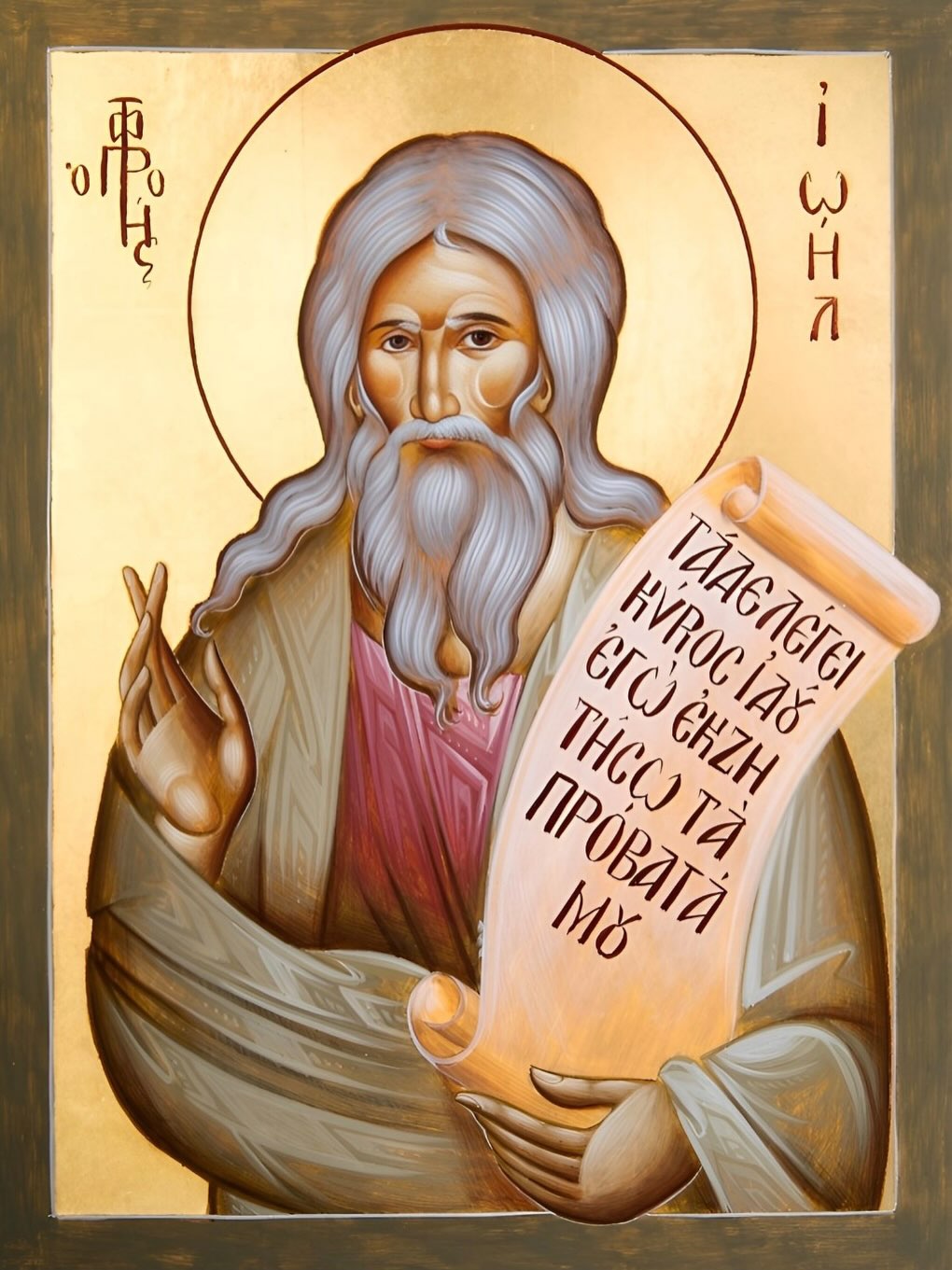
The post commemorates the Holy Prophet Joel on October 19th. It identifies him as one of the twelve Minor Prophets in the Eastern Orthodox tradition, from the tribe of Reuben, who lived several centuries before Christ. Many Orthodox scholars place his ministry during the reign of King Joash of Judah. His name means "The Lord is God," which the post says reflects the central theme of his message: a call for absolute fidelity to the true God. The…
The post commemorates the Holy Prophet Joel on October 19th. It identifies him as one of the twelve Minor Prophets in the Eastern Orthodox tradition, from the tribe of Reuben, who lived several centuries before Christ. Many Orthodox scholars place his ministry during the reign of King Joash of Judah. His name means "The Lord is God," which the post says reflects the central theme of his message: a call for absolute fidelity to the true God.
The post describes the opening of Joel's book as a devastating locust plague that lays waste to the land. The Church interprets this both historically and mystically. In Orthodox theology, the physical catastrophe serves as a warning of the "Day of the Lord."
Joel uses the crisis to awaken the spiritual conscience of the people, urging them to recognize the disaster as a consequence of sin and a call to immediate repentance. The post quotes Joel's command to "rend your hearts and not your garments," noting that this phrase is frequently chanted during Orthodox Lenten services. It explains that true repentance must be deeply internal rather than merely ritualistic, and that outer fasting and mourning are meaningless without inner transformation and a genuine turning back to God's mercy and compassion.
The pinnacle of Joel's prophecy, according to the post, is his vision of the outpouring of the Holy Spirit upon all flesh. The Orthodox Church recognizes this as the ultimate prophecy of Pentecost. During the Great Vespers of Pentecost, this exact passage from Joel is read aloud, celebrating the fulfillment of his words when the Holy Spirit descended upon the Apostles, birth-giving the Church.
Finally, the post notes that Joel looks ahead to the Final Judgment in the Valley of Jehoshaphat, where God will judge all nations. It concludes by calling Joel a profound theologian of renewal who shows that after the devastation of sin and judgment, God restores His creation, bridging the Old Covenant with the New and pointing directly to the sacramental life of the Church filled with the Holy Spirit.
The author announces OrthoCraft, a Minecraft server for Orthodox Christians. Players have constructed iconostases, candle stands, monasteries, and double-headed eagles block by block. The server welcomes Orthodox Christians, catechumens, and anyone curious about the faith. The post provides the server address play.orthocraft.net, a store at shop.orthocraft.net, and a Discord link at discord.gg/Orthocraft. The author uses hashtags to categorize…
The author announces OrthoCraft, a Minecraft server for Orthodox Christians. Players have constructed iconostases, candle stands, monasteries, and double-headed eagles block by block. The server welcomes Orthodox Christians, catechumens, and anyone curious about the faith.
The post provides the server address play.orthocraft.net, a store at shop.orthocraft.net, and a Discord link at discord.gg/Orthocraft. The author uses hashtags to categorize the post: orthodoxminecraft, orthocraft, minecraftserver, orthodoxchristian, minecraftbuilds. The post functions as an open invitation to join the community and participate in building. No further discussion is recorded in the source.
 Prayer Orthodoxy ®
Instagram
The post presents prayer and devotion for the Dormition of the Theotokos at the Church of Panagia Fidousa in Kefalonia, Greece. The church is known for the miraculous appearance of small snakes each August. The video features chanting by Archimandrite Cherouvim Tsinoglou and is an original production of Prayer Orthodoxy.
 CHRISTIANITY UNITED
Instagram
The author shares a message from Bishop Mar Mari Emmanuel urging believers to surrender their lives to Christ. The bishop belongs to an independent Syriac Christian church, not the Eastern Orthodox or Coptic Orthodox churches, and the author notes that sharing the message does not imply agreement with all his teachings. The author begins by describing a common human struggle: we make plans, chase opportunities, and try to control the future,…
The author shares a message from Bishop Mar Mari Emmanuel urging believers to surrender their lives to Christ. The bishop belongs to an independent Syriac Christian church, not the Eastern Orthodox or Coptic Orthodox churches, and the author notes that sharing the message does not imply agreement with all his teachings. The author begins by describing a common human struggle: we make plans, chase opportunities, and try to control the future, convincing ourselves we know what is best.
Years of following our own desires may bring no peace. The hardest prayer, the author says, is to admit, "Lord, I have tried doing things my way. Teach me to live according to Yours." In the Orthodox spiritual life, surrender does not mean abandoning responsibilities or expecting God to make every decision. It means putting aside pride, repenting of sins, and no longer insisting that everything happen according to our will.
The author then presents the bishop's prayer as a model. The bishop urges the listener to kneel in their room tonight and say, "Lord, all my life I've done it my way." The prayer confesses failure, calling it miserable failure, and pleads for God to take over because the speaker can no longer do it alone. The author links this to Christ's prayer in Gethsemane, "Nevertheless, not My will, but Yours, be done" (Luke 22:42).
The post concludes by reminding readers that surrender is a daily choice, not a single event, and encourages a sincere heart over perfect words.
A feminist criticized a Catholic priest after he warned his congregation about what he called the Islamic invasion of the West. The priest used the phrase "woke left" and said that people who practice Islam want to kill us. The feminist accused him of being a Zionist because he does not support Islam, stating that it sounded like a Zionist was speaking inside the church. She then posted the priest's parish and contact information in the comments…
A feminist criticized a Catholic priest after he warned his congregation about what he called the Islamic invasion of the West. The priest used the phrase "woke left" and said that people who practice Islam want to kill us. The feminist accused him of being a Zionist because he does not support Islam, stating that it sounded like a Zionist was speaking inside the church.
She then posted the priest's parish and contact information in the comments so that people could harass him. The video creator says he is sick of feminists trying to ruin men's lives for speaking what they consider the truth.
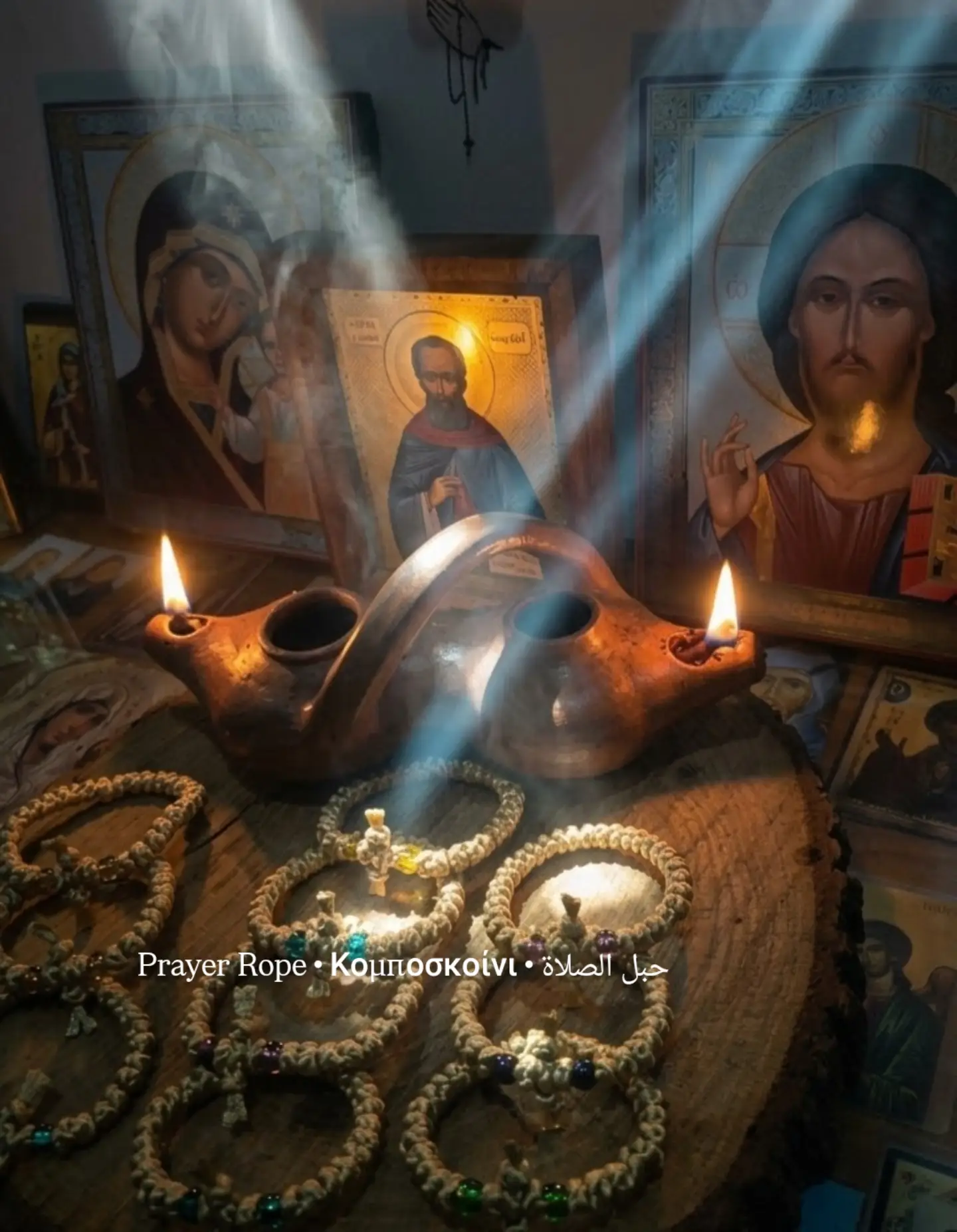
The post opens with a traditional description of prayer as a harbor in the storm, a refuge in distress, light in darkness, and a staff for the weak. It then announces handmade Orthodox prayer ropes available in three standard sizes: thirty-three knots, fifty knots, and one hundred knots. The maker states each rope is woven with prayer and love. Interested buyers are directed to send a message through the page or via WhatsApp for orders and…
The post opens with a traditional description of prayer as a harbor in the storm, a refuge in distress, light in darkness, and a staff for the weak. It then announces handmade Orthodox prayer ropes available in three standard sizes: thirty-three knots, fifty knots, and one hundred knots. The maker states each rope is woven with prayer and love. Interested buyers are directed to send a message through the page or via WhatsApp for orders and questions.
The text closes with the Jesus Prayer: "Lord Jesus Christ, have mercy on me, a sinner." No further discussion or commentary appears in the source.
 Ancient Faith
YouTube
 1:03:38
Father Evan Armatas and Simon host a mailbag episode of Orthodoxy Live recorded on October 18, 2026. They address listener questions on four topics. On nightly repentance, Father Evan shares a personal story of a man transformed by daily practice and describes his own family routine of evening prayers, Psalm 50/51, the Jesus Prayer, and prostrations. For a listener facing anticipatory grief over a nine-year-old dog while struggling to conceive,…
Father Evan Armatas and Simon host a mailbag episode of Orthodoxy Live recorded on October 18, 2026. They address listener questions on four topics. On nightly repentance, Father Evan shares a personal story of a man transformed by daily practice and describes his own family routine of evening prayers, Psalm 50/51, the Jesus Prayer, and prostrations.
For a listener facing anticipatory grief over a nine-year-old dog while struggling to conceive, he advises stewardship of creation, staying present, prayer with gratitude, entrusting the outcome to God's will, and asking Saint Anna's intercession. On icon veneration, he argues the practice is universal to human experience and rooted in the incarnation, citing archaeological evidence of art in early Christian and Jewish worship and the unified decree of the Seventh Ecumenical Council.
For overcoming pride, he draws on the parable of the Publican and Pharisee, emphasizing making space for God and others, focusing on one's own brokenness, cultivating a warm heart, and practicing gratitude. He also explains how the church uses physical space liturgically to correspond to spiritual states, citing the exonarthex, narthex, and nave for stages of repentance, the baptismal service's movement from west to east, and saints like Mary of Egypt and stylites who embraced spatial separation for God.
 Saint Wisdom
Instagram
The speaker conveys Saint John of Climacus's teaching on lust. When lust feels stronger than you, the saint directs you not to rely on your own strength. Instead, you should admit your weakness before God and offer the struggle to him. The speaker explains that chastity is not something you gain by pride or by willpower alone. Rather, chastity comes as a gift. You receive this gift when you recognize your weakness and depend on God for help. The…
The speaker conveys Saint John of Climacus's teaching on lust. When lust feels stronger than you, the saint directs you not to rely on your own strength. Instead, you should admit your weakness before God and offer the struggle to him.
The speaker explains that chastity is not something you gain by pride or by willpower alone. Rather, chastity comes as a gift. You receive this gift when you recognize your weakness and depend on God for help. The discussion centers on the contrast between self-reliance and divine dependence in the pursuit of purity.
The speaker emphasizes that the struggle itself is offered to God, not conquered by human effort. This approach reframes the battle against lust as an act of humility rather than a test of personal fortitude.
 Athonite Audio
YouTube
 24:56
Elder Ephraim of Philotheou and Arizona preaches on Christ's words to Martha that one thing is needed: the salvation of the immortal soul. He contrasts Martha's anxiety over material preparations with Mary's choice to sit at Jesus' feet and hear His teaching, a blessing that will not be taken from her. The elder warns that death can come at any moment, after which each person faces judgment, the toll houses, and an eternal destiny of either…
Elder Ephraim of Philotheou and Arizona preaches on Christ's words to Martha that one thing is needed: the salvation of the immortal soul. He contrasts Martha's anxiety over material preparations with Mary's choice to sit at Jesus' feet and hear His teaching, a blessing that will not be taken from her. The elder warns that death can come at any moment, after which each person faces judgment, the toll houses, and an eternal destiny of either light with God or darkness with the demons.
The soul, created by God's breath, cannot be satisfied by anything material; it rejoices only when drawing near to God through prayer, virtue, and repentance. The devil deceives people with worldly distractions like a mesmerizing film while recording every sin in detail, but God's compassion exceeds all human sin like the ocean exceeds a handful of sand.
The guardian angel weeps when we sin and prays with us when we pray; at death, angels battle demons for the soul. Hell is a real, spiritual state of fire and darkness prepared for the devil and those who imitate his works, not merely a troubled conscience. The speaker urges immediate repentance, confessing sins, weeping, amending life while breath remains, so that at death we may enter paradise rather than hear "Depart from Me."
The post consists of a single sentence asking readers to pray for Catholics who are becoming Orthodox. It includes five hashtags identifying the topic: orthodox, catholic, orthodoxchristian, vatican, and orthodoxy. There is no additional text, no thread, no discussion, and no further details about who these Catholics are, how many, or what circumstances surround their conversion. The post functions as a brief intercessory request shared on a social media platform.
 Orthodox Sound
YouTube
 18:15
St. Anastasius the Sinaite answers the question of what marks a true Christian by drawing on Scripture and the Church Fathers. He teaches that a true Christian is a dwelling place of Christ held together by correct belief and good works. Citing Jesus' words, he states that those who love Christ keep His words and become God's home. Faith without works is dead, as are works without faith, and one must keep clean from foul deeds lest the devil…
St. Anastasius the Sinaite answers the question of what marks a true Christian by drawing on Scripture and the Church Fathers. He teaches that a true Christian is a dwelling place of Christ held together by correct belief and good works. Citing Jesus' words, he states that those who love Christ keep His words and become God's home.
Faith without works is dead, as are works without faith, and one must keep clean from foul deeds lest the devil enter the soul like a thief.
The devil recognizes Christ's absence by observing anger, oaths, foul language, condemnation, hatred, injustice, conceit, boasting, excessive laughter, lack of habitual prayer, and failure to remember death. Scripture from Deuteronomy, David, Isaiah, Solomon, and Sirach consistently teaches that God requires fear, love, obedience, hatred of evil, and justice for the vulnerable, while rejecting vain worship and hypocrisy.
The Apostolic Constitutions and St. Gregory of Nyssa warn that calling God "Father" with an unclean conscience insults God and invokes the devil instead, since light has no fellowship with darkness. St. Cyril of Jerusalem and St. John Chrysostom affirm that the name "Christian" and the prayer "Our Father" demand a corresponding life of justice, purity, and truth, for one cannot serve both God and mammon.
St. Basil the Great and the Apostle teach that whoever commits sin becomes sin's servant and the devil's child. St. John Chrysostom insists that defiled hands from theft or evil actions and a defiled mouth from blasphemy, abuse, and insult prevent prayer from ascending, requiring cleansing through weeping, alms, confession, and reconciliation.
St. John of the Ladder, Mark the Monk, and Maximus the Monk all affirm that faith without matching life is useless, and true Christian wisdom pursues commandments to free the mind from passions, dogma to know truth, and faith to contemplate the Holy Trinity.