WeOrthodox
EN UA

Orthodox posts, videos and discussions

We follow Orthodox channels, communities and blogs across the web, summarise every post and video, and highlight the conversations with real substance.

Orthodox Health Instagram

Fr. Michael Marcantoni on how passions make us passive

0:38

The social media post promotes Episode 83 of the Orthodox Health Podcast, titled "Why You Can't Find Real Peace," featuring Fr. Michael Marcantoni. The post opens with the phrase "I don't know what came over me," which the priest says reveals more than we realize. Fr. Marcantoni points out that the passions make us passive before them. A person is no longer simply acting but doing the bidding of the passion. This can manifest as anger, alcohol,…

The social media post promotes Episode 83 of the Orthodox Health Podcast, titled "Why You Can't Find Real Peace," featuring Fr. Michael Marcantoni. The post opens with the phrase "I don't know what came over me," which the priest says reveals more than we realize. Fr. Marcantoni points out that the passions make us passive before them.

A person is no longer simply acting but doing the bidding of the passion. This can manifest as anger, alcohol, or any habit or desire that reaches the point where the person is no longer in control. The priest frames the question as larger than addiction: are you still free enough to say no?

The video summary elaborates that the speaker describes how passions make a person passive, using the Greek term pathos to explain that one becomes acted upon rather than acting. He shares his personal experience with alcohol addiction, noting it developed incrementally. There was a period of moderate drinking before a line was crossed.

After that point, interaction with the substance meant he was no longer in control. The video points add that everyone has experienced losing their cool and apologizing by saying they don't know what overcame them. Passions make you passive; pathos means you are passive before it and do its bidding.

The speaker's addiction to alcohol was incremental. There was a time when he could drink moderately and did so for a period. A line was crossed at some point. After that line, when he interacted with alcohol, he was no longer in control.

Key moments

  1. Everyone has experienced losing their cool and apologizing by saying they don't know what overcame them.
  2. Passions make you passive; pathos means you are passive before it and do its bidding.
  3. The speaker's addiction to alcohol was incremental.
  4. There was a time when he could drink moderately and did so for a period.
  5. A line was crossed at some point.
  6. After that line, when he interacted with alcohol, he was no longer in control.
Read more
T timotheos.orthodoxy Instagram

Seven lessons from an Orthodox catechumen

Tim, a catechumen in the Greek Orthodox Church, shares seven lessons from his time preparing for baptism. He writes that spiritual warfare is real, and that asking a priest about important matters is normal. He says learning church history is essential, and that the lives of the saints provide precious examples for Christian living. The teachings of the Church Fathers, he notes, explain the Orthodox mindset. Prayer, he has found, is not only…

Tim, a catechumen in the Greek Orthodox Church, shares seven lessons from his time preparing for baptism. He writes that spiritual warfare is real, and that asking a priest about important matters is normal. He says learning church history is essential, and that the lives of the saints provide precious examples for Christian living.

The teachings of the Church Fathers, he notes, explain the Orthodox mindset. Prayer, he has found, is not only words but must involve the heart, and consistency in a prayer routine is essential. He ends by asking others what they have learned during their own catechism.

The post appears as a series of slides with each point numbered. Tim identifies himself as a catechumen of the Greek Orthodox Church who has been involved in fitness for nearly two decades, including competitive experience, and has built a successful business. He presents the list as part of sharing his learnings and obstacles on the path toward Orthodoxy.

The final slide repeats an invitation to follow for more content on becoming Orthodox, athletic training, and an accountability group, along with a free habit tracker. The post closes with "All praise to the Lord Amen."

  • Spiritual warfare is real
  • Asking a priest about important matters is normal
  • Learning church history is essential
  • The lives of the saints are precious examples for Christian living
  • Prayer must involve the heart and be practiced consistently
Read more

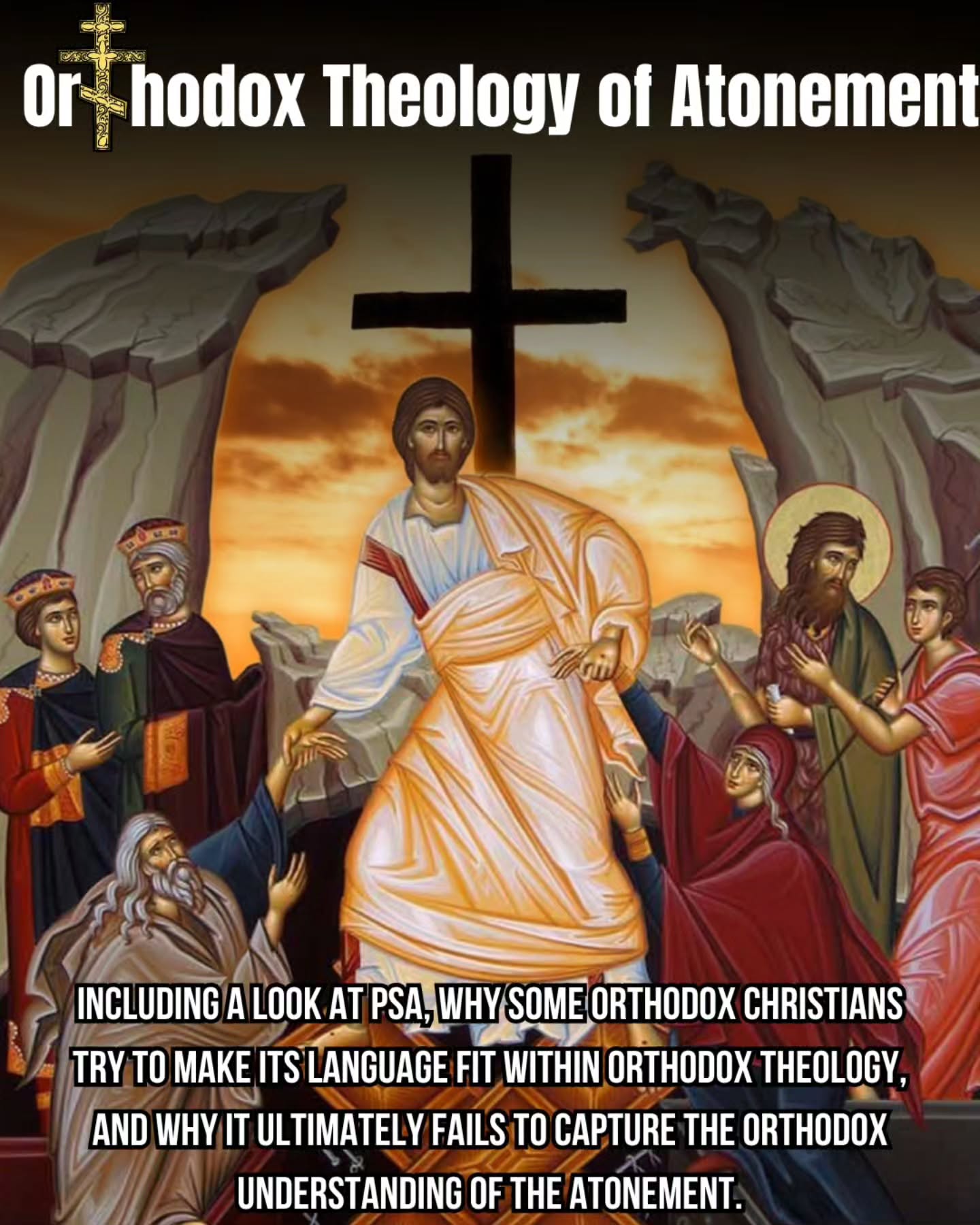
Making PSA compatible with Orthodoxy requires redefining its foundations

Attempting to reconcile penal substitutionary atonement with Orthodoxy forces a fundamental redefinition of its philosophical basis and theological structure. At that point you are no longer defending PSA; you are rebuilding it into Orthodox atonement theology.

5 opinions in the discussion Think about it: PSA goes against the very nature of God, because why would God "need" a legal payment for sin? God needs nothing, he's perfect and depends on nothing. The incarnation… Read the discussion
George Instagram

St. Paul's image of water and sea: earthly life slips away while eternity waits

1:12

The speaker describes a scene from the film Paul, Apostle of Christ in which Saint Paul holds his hand in seawater and watches it run through his fingers until his hand is empty. He uses the picture to explain life: the water in the hand is earthly life; the sea before him is eternity, the kingdom of God. The speaker observes that most people spend their whole life staring at the little water in their hand, money, plans, problems, phones, trying…

The speaker describes a scene from the film Paul, Apostle of Christ in which Saint Paul holds his hand in seawater and watches it run through his fingers until his hand is empty. He uses the picture to explain life: the water in the hand is earthly life; the sea before him is eternity, the kingdom of God. The speaker observes that most people spend their whole life staring at the little water in their hand, money, plans, problems, phones, trying to hold on to something already slipping away while the sea remains right in front of them, ignored.

The speaker then turns to Scripture. Saint Paul wrote in Second Corinthians that the things which are seen are temporary, but the things which are not seen are eternal. Jesus taught in Matthew not to store up treasures on earth but to store up treasures in heaven. The speaker acknowledges that the water in hand still matters; it is meant to be used for the sea.

Each day offers a chance to love, to forgive, to pray, and to draw nearer to God. The speaker ends by asking the listener what they are holding on to too tightly.

Key moments

  1. Scene from the movie Paul, Apostle of Christ: hand in sea water, water runs through fingers until the hand is empty.
  2. Saint Paul uses the picture to explain life: the water in your hand is your life on earth; the sea is eternity, the kingdom of God.
  3. Most people spend their whole life staring at the little water in their hand, money, plans, problems, phone, trying to hold on to something already slipping away while the sea is right in front of them.
  4. The real Saint Paul wrote: the things which are seen are temporary, but the things which are not seen are eternal.
  5. Jesus says: do not store up treasures on earth, but store up treasures in heaven.
  6. The water in your hand does matter; it means we use it for the sea.
  7. Every day we have is a chance to love, to forgive, to pray, to come closer to God.
  8. The speaker asks: what are you holding on to too tightly?
Read more

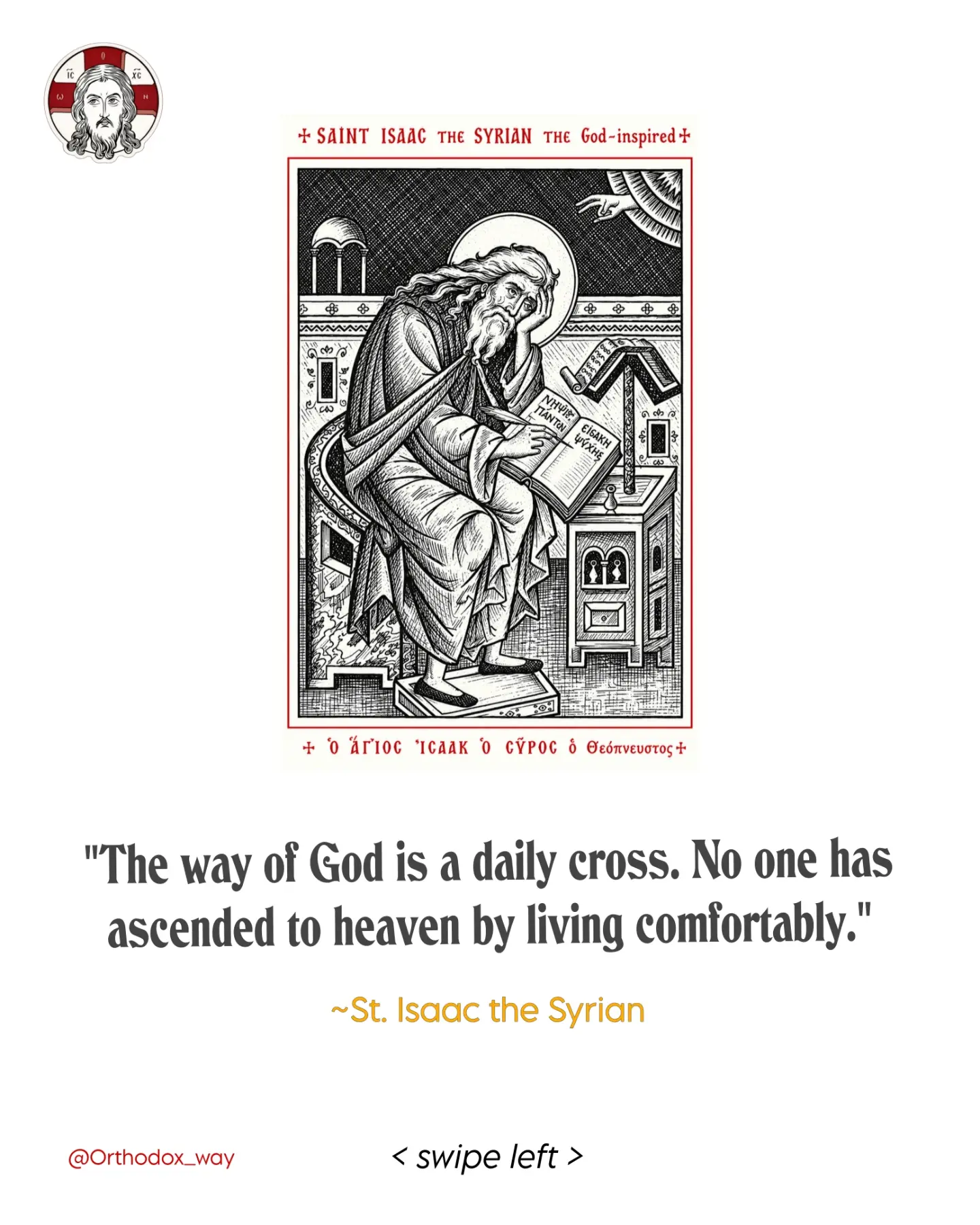
St. Isaac the Syrian on mercy, humility, and boundless love

The post presents St. Isaac the Syrian's teaching that God's love and mercy exceed human understanding. It outlines his view that true spiritual wisdom begins with humility, that repentance opens the door to transformation, and that prayer purifies the heart to perceive God's presence. The text describes his celebrated teaching on the merciful heart, a soul so filled with compassion that it burns with love for all creation, for humanity, for…

The post presents St. Isaac the Syrian's teaching that God's love and mercy exceed human understanding. It outlines his view that true spiritual wisdom begins with humility, that repentance opens the door to transformation, and that prayer purifies the heart to perceive God's presence. The text describes his celebrated teaching on the merciful heart, a soul so filled with compassion that it burns with love for all creation, for humanity, for animals, for enemies, and even for those who cause suffering.

For St. Isaac, holiness is not merely the avoidance of sin but the transformation of the entire human person through the grace of God. He calls believers beyond superficial religion into the hidden depths of the heart, where silence becomes prayer, repentance becomes healing, and compassion becomes the reflection of Christ Himself.

He urges Christians not to judge their neighbour but to recognise their own need for God's mercy. The post concludes that the true measure of closeness to God is not how much one speaks about Him but how deeply one loves His creation, and that to know God is to be transformed by His love; and to be transformed by His love is to learn to love without boundaries.

  • God's love and mercy surpass human understanding
  • Spiritual wisdom begins with humility; repentance and prayer lead to transformation
  • The merciful heart burns with compassion for all creation, including enemies
  • Holiness is transformation of the whole person through grace, not just sin avoidance
  • Closeness to God is measured by depth of love for creation, not words about Him
Read more

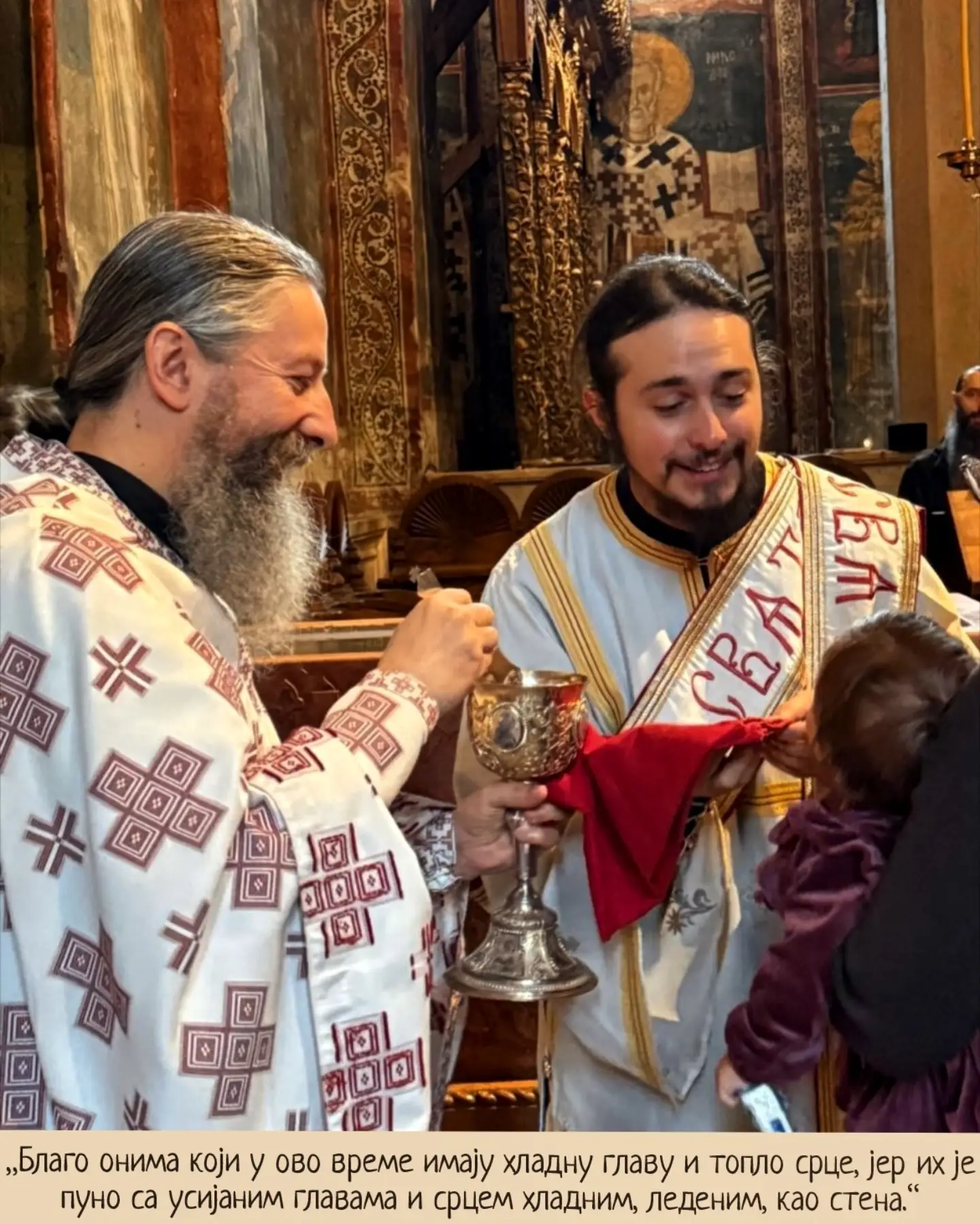
Saint Nikolai's Prayer for a Cool Head and Warm Heart

The post presents a prayer attributed to Saint Bishop Nikolai of Žiča. The prayer opens by calling blessed those who in this time possess a cool head and a warm heart, noting that many have heated heads and hearts cold as ice, like a wall. It addresses God as the all-merciful Lord and asks that the heart be anointed with the oil of divine mercy so that compassion does not dry up within it and the coldness of the world does not take up residence…

The post presents a prayer attributed to Saint Bishop Nikolai of Žiča. The prayer opens by calling blessed those who in this time possess a cool head and a warm heart, noting that many have heated heads and hearts cold as ice, like a wall. It addresses God as the all-merciful Lord and asks that the heart be anointed with the oil of divine mercy so that compassion does not dry up within it and the coldness of the world does not take up residence there.

The prayer continues with a request to cleanse the mind of proud thoughts and to preserve it in sobriety and peace, so that the one praying may see in every person a brother and God's living creation. It asks the Lord not to allow the whirlwind of the times to carry the petitioner away, but to establish them on the rock of God's commandments, that they may bear witness to divine love where hatred reigns and to divine peace where turmoil reigns.

The text is accompanied by hashtags linking it to Visoki Dečani monastery, Orthodoxy, the Serbian Orthodox Church, Kosovo and Metohija, and Serbia.

  • Saint Bishop Nikolai's prayer asks for a cool head and warm heart
  • Seeks anointing with oil of mercy to prevent compassion from drying up
  • Requests cleansing of mind from proud thoughts and preservation in sobriety
  • Asks to see every person as a brother and God's living creation
  • Prays to stand firm on God's commandments amid the whirlwind of the times
Read more
Eastern Orthodoxy Daily He/Who/Is with Timothy Instagram

Orthodox response: justification requires church, not Christ alone

1:35

The speaker responds to a claim that Jesus and the cross alone place someone in right standing, apart from tradition or theology. He argues that Orthodoxy holds a both/and position rather than either/or, and that the word Catholic is misunderstood in the West because of what he calls papal Protestantism. From the Orthodox perspective, the first Protestant was the Pope, who protested and walked away from the church saying "I know better." The…

The speaker responds to a claim that Jesus and the cross alone place someone in right standing, apart from tradition or theology. He argues that Orthodoxy holds a both/and position rather than either/or, and that the word Catholic is misunderstood in the West because of what he calls papal Protestantism. From the Orthodox perspective, the first Protestant was the Pope, who protested and walked away from the church saying "I know better."

The speaker grants that tradition and the fathers do not replace Christ's work on the cross. He points out that saying Christ justifies us is itself a theological claim, and that faith alone is an even more specific theological claim. He asks what epistemic criteria show that one's understanding of justification is apostolic.

The speaker notes an inconsistency in dismissing theology while insisting that one's own theology of justification is correct. Father Peter's remark about the Pope targets the principle of separating from the church while claiming doctrinal correctness. Orthodoxy holds that the Christ who saved us established a church, and that the head cannot be separated from the body.

The discussion turns on whether justification can be known apart from the church that Christ established, and whether an individual's interpretation of Scripture can serve as its own epistemic foundation.

Key moments

  1. The speaker addresses a claim that Jesus and the cross alone justify, not tradition or theology.
  2. In Orthodoxy it is both/and; nothing is left out because Catholic is misunderstood due to papal Protestantism.
  3. From the Orthodox perspective, the first Protestant was the Pope, who protested and walked away saying "I know better."
  4. Tradition and the fathers do not replace Christ's work on the cross.
  5. Saying Christ justifies us is a theological claim; faith alone is an even more specific one.
  6. It is inconsistent to dismiss theology while insisting your theology of justification is correct.
  7. The speaker asks what epistemic criteria show one's understanding of justification is apostolic.
  8. Father Peter's remark about the Pope targets separating from the church while claiming doctrinal correctness.
Read more

Infant baptism defended through circumcision parallel and historical continuity

0:21

The speaker presents an argument for infant baptism by drawing a parallel between baptism and circumcision. Paul writes in Colossians that baptism is a new circumcision, and since infants were circumcised in the Old Testament, the speaker concludes this supports baptizing babies. The argument extends to historical practice, noting that infant baptism was observed continuously throughout Christian history until the 16th century. The Anabaptists…

The speaker presents an argument for infant baptism by drawing a parallel between baptism and circumcision. Paul writes in Colossians that baptism is a new circumcision, and since infants were circumcised in the Old Testament, the speaker concludes this supports baptizing babies. The argument extends to historical practice, noting that infant baptism was observed continuously throughout Christian history until the 16th century.

The Anabaptists are identified as the first group to reject the practice. The speaker then poses a question about how a tradition that contradicts both biblical precedent and historical practice can be maintained.

Key moments

  1. Paul says in Colossians that baptism is a new circumcision.
  2. In the Old Testament, babies were circumcised.
  3. Infant baptism has been a Christian teaching throughout history up to the 16th century.
  4. The Anabaptists in the 16th century were the first group to stop baptizing infants.
  5. The speaker questions how one can follow a man-made tradition that goes against all Christian history and biblical evidence.
Read more
☦️An Orthodox Blog☦️ with Orthodoxy ☦︎ Instagram

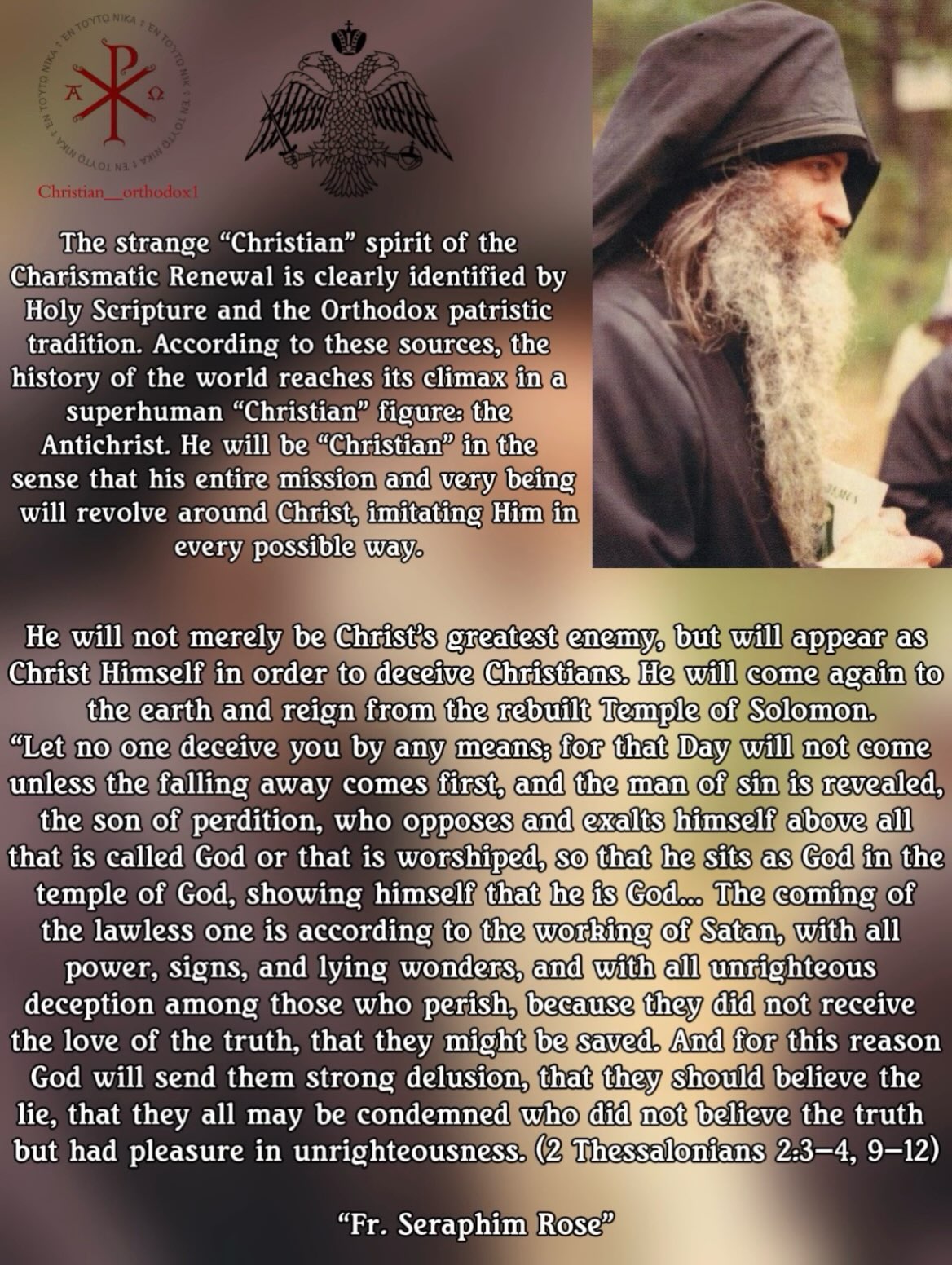
The Antichrist as a counterfeit Christ in Scripture and patristic tradition

The post identifies a "strange 'Christian' spirit" in the Charismatic Renewal through the lens of Scripture and Orthodox patristic tradition. It presents the Antichrist as the climax of world history, a superhuman figure whose mission and very being revolve around Christ, imitating Him in every possible way to deceive Christians. The Antichrist will not merely be Christ's greatest enemy but will appear as Christ Himself. He will come again to…

The post identifies a "strange 'Christian' spirit" in the Charismatic Renewal through the lens of Scripture and Orthodox patristic tradition. It presents the Antichrist as the climax of world history, a superhuman figure whose mission and very being revolve around Christ, imitating Him in every possible way to deceive Christians.

The Antichrist will not merely be Christ's greatest enemy but will appear as Christ Himself. He will come again to the earth and reign from the rebuilt Temple of Solomon. The post quotes 2 Thessalonians 2:3-4, 9-12 at length: the "man of sin" is revealed, the "son of perdition" who opposes and exalts himself above all that is called God or worshiped, sitting as God in the temple of God and showing himself that he is God.

The coming of the lawless one is according to the working of Satan, with all power, signs, and lying wonders, and with all unrighteous deception among those who perish, because they did not receive the love of the truth that they might be saved. For this reason God will send them strong delusion, that they should believe the lie, that they all may be condemned who did not believe the truth but had pleasure in unrighteousness.

The text ends with an attribution to Fr. Seraphim Rose, though the exact work or context is not specified in the post.

  • The Charismatic Renewal is characterized by a "strange 'Christian' spirit" identified in Scripture and patristic tradition
  • The Antichrist will imitate Christ in every way to deceive Christians
  • He will reign from a rebuilt Temple of Solomon, presenting himself as God
  • 2 Thessalonians 2 describes his coming with lying wonders and strong delusion for those who reject truth
  • The passage is attributed to Fr. Seraphim Rose
George Instagram discussion

Icons, idolatry, and the Incarnation: a response to the biblical objection

1:02

The speaker addresses the objection that kissing icons constitutes idolatry and that the Bible forbids images. He begins by citing Exodus 20, which prohibits making images for the purpose of worshiping them. He then points to Exodus 25, where God commands Moses to make two golden cherubim for the Ark of the Covenant, showing that not all images are forbidden. The Seventh Ecumenical Council, held in 787, formally distinguished between the worship…

The speaker addresses the objection that kissing icons constitutes idolatry and that the Bible forbids images. He begins by citing Exodus 20, which prohibits making images for the purpose of worshiping them. He then points to Exodus 25, where God commands Moses to make two golden cherubim for the Ark of the Covenant, showing that not all images are forbidden.

The Seventh Ecumenical Council, held in 787, formally distinguished between the worship due to God alone and the honor given to icons, explaining that the honor passes to the person depicted. The speaker illustrates this distinction with a personal analogy: kissing a photograph of his wife and son is an expression of love for them, not for the paper itself.

He quotes Saint John of Damascus, who wrote, "I do not worship matter. I worship the Creator of matter, who became matter for my sake." The Incarnation, in which God became a visible man, is the basis for depicting Christ in icons. The speaker concludes by asking the viewer what still bothers them about icons.

Key moments

  1. The speaker raises the question whether kissing icons is idolatry and whether the Bible forbids images.
  2. Exodus 20 prohibits making images to worship them.
  3. Exodus 25 records God commanding Moses to make two golden cherubim for the Ark of the Covenant.
  4. The Council of 787 taught that worship belongs to God alone while icons receive honor that passes to the person depicted.
  5. The speaker uses the analogy of kissing a photograph of his wife and son, the love is for them, not the paper.
  6. Saint John of Damascus is quoted: "I do not worship matter. I worship the Creator of matter, who became matter for my sake."
  7. The Incarnation, God becoming a visible man, is the basis for depicting Christ in icons.
  8. The speaker asks the viewer what still bothers them about icons.
13 opinions in the discussion Jesus said nothing about it, and none of the apostles did either. Jesus is our great high priest, our intercession and our great advocate who pleads our case in heaven before the Lord God. Read the discussion

Elder Porphyrios on Confession: Knowing God Before Listing Sins

The speaker describes how Saint Elder Porphyrios approached confession differently from common practice. Instead of allowing people to list their sins, the elder would stop them and ask about their relationship with God. His questions were direct: Do you know God? Do you recognize Him? Do you love God? The speaker identifies the failure to know God as the greatest problem and the source of all other problems. Without knowing God, a person cannot…

The speaker describes how Saint Elder Porphyrios approached confession differently from common practice. Instead of allowing people to list their sins, the elder would stop them and ask about their relationship with God. His questions were direct: Do you know God? Do you recognize Him?

Do you love God? The speaker identifies the failure to know God as the greatest problem and the source of all other problems. Without knowing God, a person cannot have trust in Him or genuine love for Him. The elder taught that one must love God essentially and deeply, more than oneself.

The speaker summarizes the essence of the Gospel as the two commandments: to love God with this depth and to love one's neighbor. These two commandments constitute the whole Gospel. The discussion centers on the priority of relationship over legalistic accounting of sins, and on knowledge of God as the foundation for trust, love, and the fulfillment of the commandments.

Key moments

  1. Saint Elder Porphyrios would stop people at confession and ask about their relationship with God instead of focusing on sins.
  2. He would ask: Do you know God? Do you recognize Him? Do you love God?
  3. The speaker identifies not knowing God as the greatest problem and the source of all other problems.
  4. Without knowing God, a person cannot have trust in Him or love Him.
  5. One must love God essentially and deeply, more than oneself.
  6. The two commandments, love God and love neighbor, constitute the whole Gospel and its essence.
Read more

Refusing Wednesday and Friday fasts reveals unwillingness, not inability

The speaker states that a person who refuses to observe Wednesday and Friday fasts acts from unwillingness, not inability. This refusal constitutes a failure to honor God in a minimal way. Because of this, the speaker argues such a person cannot be trusted.

The reasoning is that if someone will not keep commitments to God, they will not keep their word or promises to other people either. The discussion connects fasting discipline directly to personal reliability and trustworthiness.

Key moments

  1. A person who does not honor Wednesday and Friday does so out of unwillingness, not inability.
  2. One cannot have confidence in such a person.
  3. If someone cannot minimally honor God, they will not keep their word or promises when called to something else.
  4. Failure to keep commitments to God means they will not keep commitments to people either.
Read more
Saint Wisdom Instagram

St. John Cassian on guarding memory and imagination against lust

The post presents a paraphrased teaching from St. John Cassian on overcoming lust. The speaker explains that the struggle requires guarding not only the body but also the memory and imagination. Just as the body must be deprived of opportunities for sin, the mind must be deprived of thoughts and recollections that sustain the passion. The teaching emphasizes that lust is fed by mental images and memories as much as by physical actions, so the…

The post presents a paraphrased teaching from St. John Cassian on overcoming lust. The speaker explains that the struggle requires guarding not only the body but also the memory and imagination. Just as the body must be deprived of opportunities for sin, the mind must be deprived of thoughts and recollections that sustain the passion.

The teaching emphasizes that lust is fed by mental images and memories as much as by physical actions, so the ascetic effort must address both dimensions. The speaker draws on Cassian's monastic wisdom to show that purity of heart depends on controlling what enters and remains in the mind.

Key moments

  1. To overcome lust, guard your memory and imagination as well as your body; deprive the mind of thoughts and recollections that keep the passion alive.
Read more

Relics of St. Thomas kept at Patmos monastery

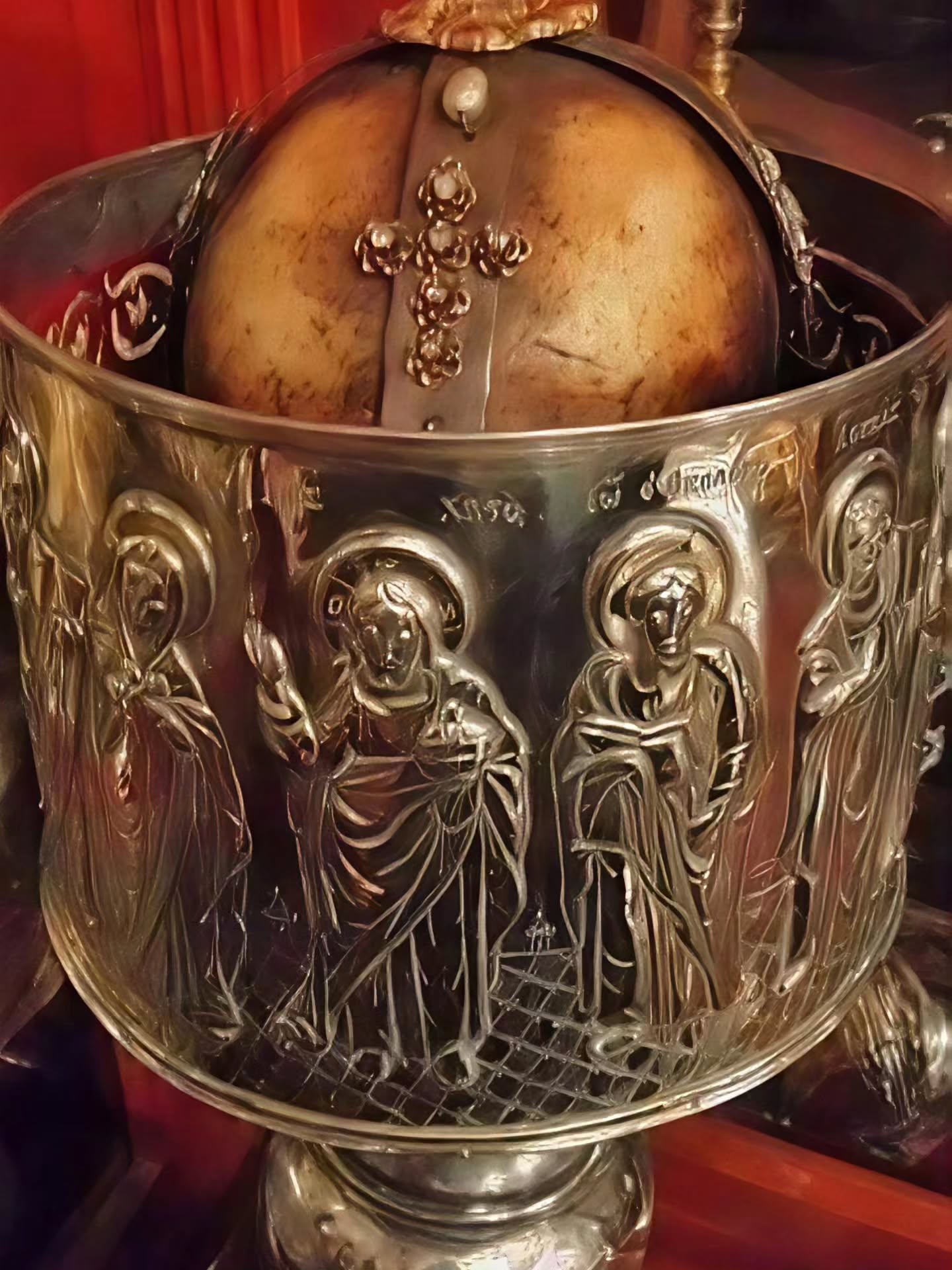
The post states that according to published church sources, the head of St. Thomas the Apostle is preserved at the Monastery of St. John the Theologian on the island of Patmos. A prayer to St. Thomas follows. The prayer addresses him as the chosen disciple who received authority to heal the sick, cleanse lepers, raise the dead, and cast out demons. It recounts how Thomas clung to Christ out of love, willing to die with him, but was absent when…

The post states that according to published church sources, the head of St. Thomas the Apostle is preserved at the Monastery of St. John the Theologian on the island of Patmos. A prayer to St. Thomas follows. The prayer addresses him as the chosen disciple who received authority to heal the sick, cleanse lepers, raise the dead, and cast out demons.

It recounts how Thomas clung to Christ out of love, willing to die with him, but was absent when the risen Savior first appeared to the other disciples. Thomas did not believe until he placed his finger in the nail wounds and his hand in Christ's side. The Lord fulfilled the desire of Thomas's heart and confirmed him in faith.

The prayer asks Thomas to open the eyes of faith so believers may perceive with spiritual vision what physical eyes cannot see, to grant hope in God's condescension so that sinful despair does not prevail, to reveal the blessedness of love which is strong as death, and to help the faithful serve Christ on earth so that with Thomas and all the saints they may glorify the all-holy and magnificent name of the Father, Son, and Holy Spirit.

  • Head of St. Thomas preserved at Monastery of St. John the Theologian on Patmos
  • Prayer addresses Thomas as chosen disciple with authority to heal and cast out demons
  • Recounts Thomas's doubt and belief after touching Christ's wounds
  • Asks for spiritual sight, hope against despair, and blessedness of love
  • Seeks grace to glorify the Trinity with all saints
Read more
Prayer Orthodoxy ® Instagram

History of Cross Styles from Anchor to Three-Bar Cross

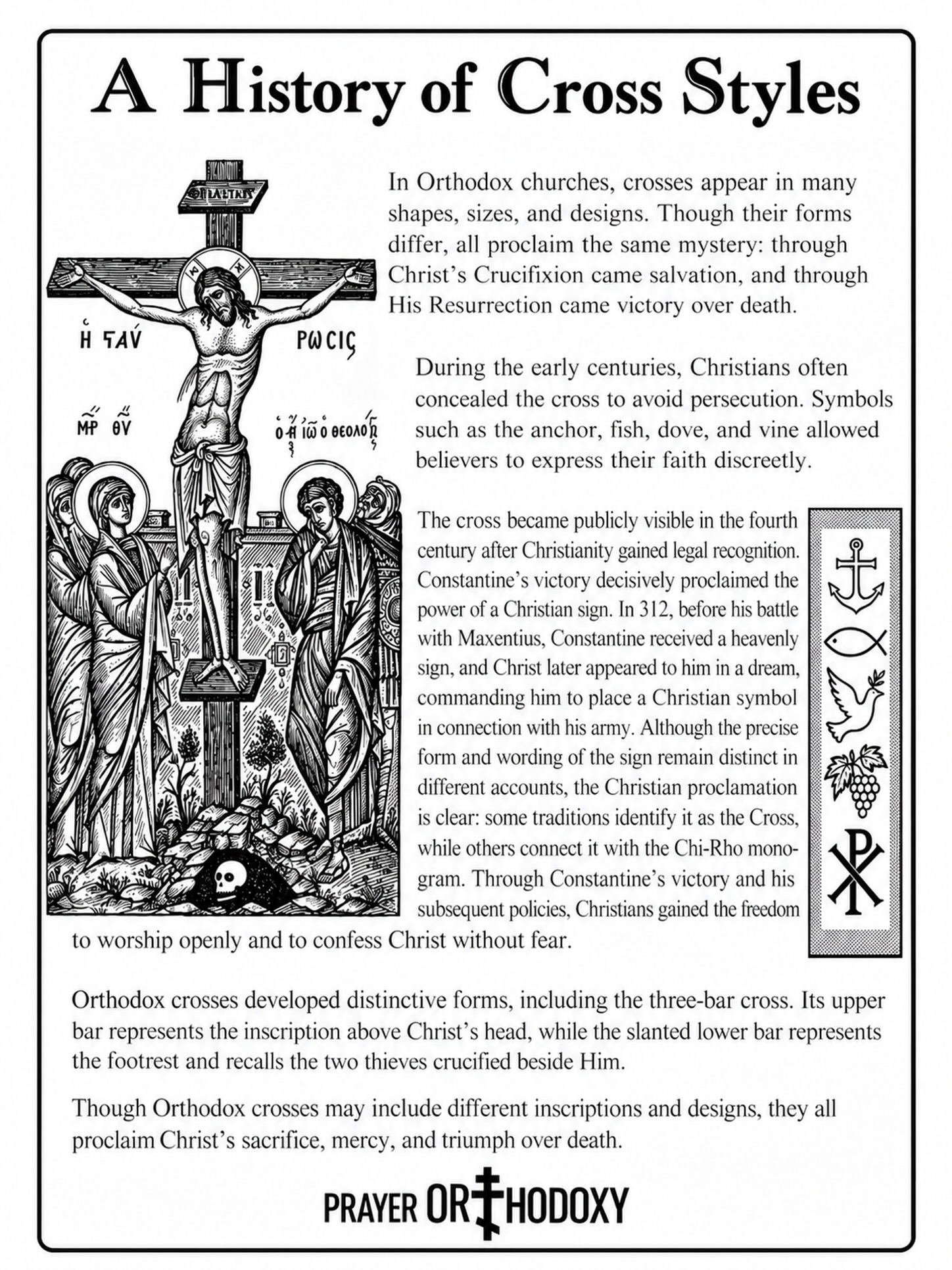
The post outlines a history of cross styles across centuries. It states that the cross remains the symbol of Christ's sacrifice and victory over death. It identifies early Christian symbols such as the anchor and the Chi Rho. It notes the distinctive Orthodox three-bar cross. It says each form carries a rich history and spiritual meaning. It affirms that through his crucifixion and resurrection Christ conquered death and opened the way to…

The post outlines a history of cross styles across centuries. It states that the cross remains the symbol of Christ's sacrifice and victory over death. It identifies early Christian symbols such as the anchor and the Chi Rho.

It notes the distinctive Orthodox three-bar cross. It says each form carries a rich history and spiritual meaning. It affirms that through his crucifixion and resurrection Christ conquered death and opened the way to eternal life. The post is presented in both English and Greek. It is an original production of Prayer Orthodoxy.

  • The cross symbolizes Christ's sacrifice and victory over death.
  • Early Christian symbols included the anchor and the Chi Rho.
  • The Orthodox three-bar cross is a distinctive later form.
  • Each cross style carries its own history and spiritual meaning.
  • Christ's crucifixion and resurrection conquered death and opened the way to eternal life.
Read more

Apostle Thomas: Doubt, Mission to India, Martyrdom

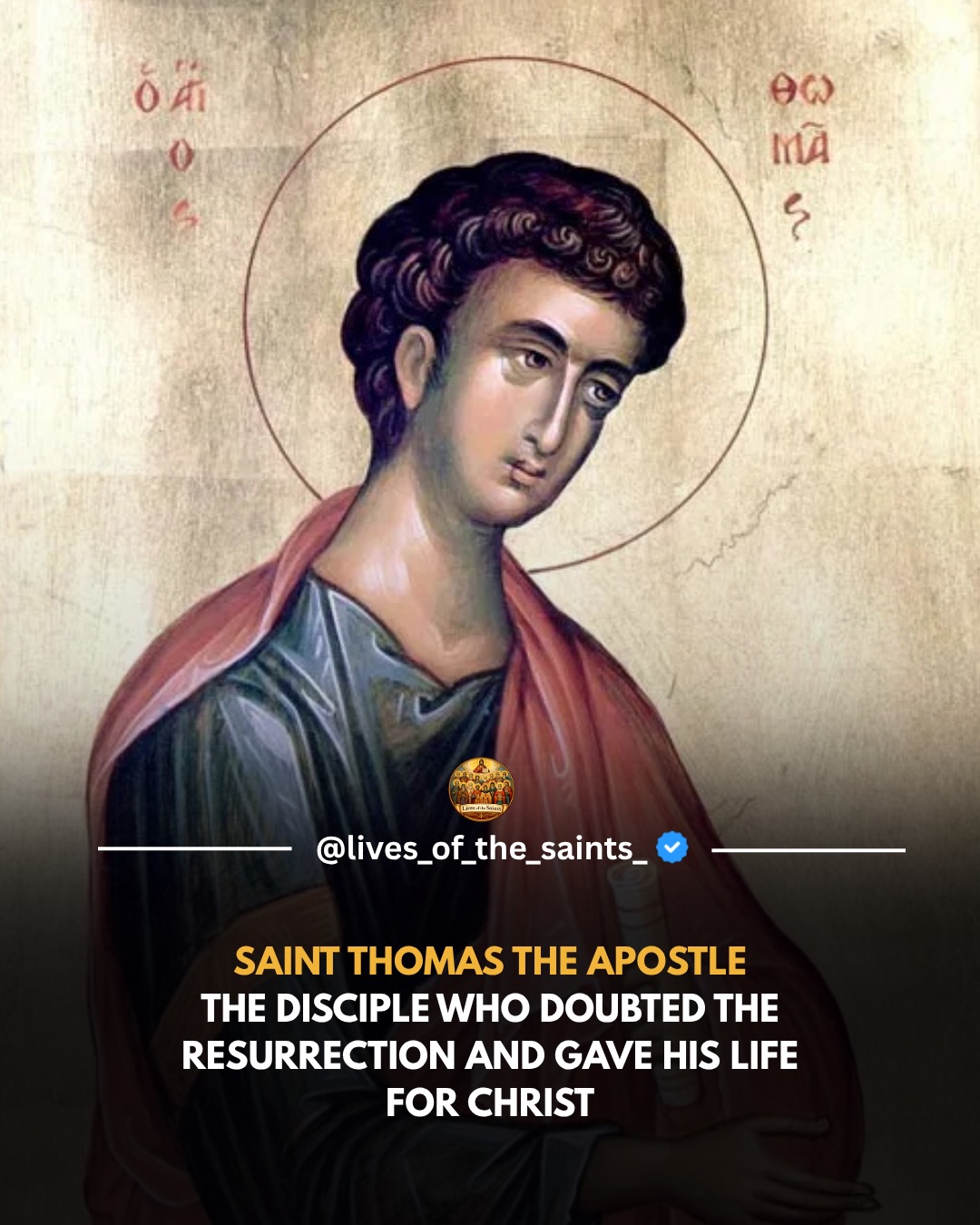
The post recounts the life of Saint Thomas, one of the Twelve Apostles of Jesus Christ. It opens with the episode of his doubt concerning the Resurrection. When the risen Christ appeared to the Apostles, He invited Thomas to touch His wounds and said, "Do not be unbelieving, but believing." Thomas responded, "My Lord and my God," a confession recorded in John 20:28. After the descent of the Holy Spirit, the Apostles cast lots to assign…

The post recounts the life of Saint Thomas, one of the Twelve Apostles of Jesus Christ. It opens with the episode of his doubt concerning the Resurrection. When the risen Christ appeared to the Apostles, He invited Thomas to touch His wounds and said, "Do not be unbelieving, but believing."

Thomas responded, "My Lord and my God," a confession recorded in John 20:28. After the descent of the Holy Spirit, the Apostles cast lots to assign missionary territories. Thomas received India. He was initially troubled by the great distance, but the Lord appeared to him and strengthened his heart. In India Thomas preached Christ to both the wealthy and the poor, converted many people, established churches, and ordained priests and bishops.

Among the converts were members of noble families who later suffered for their faith. His preaching also provoked persecution. An Indian ruler named Muzdius condemned Thomas to death. Five soldiers pierced the Apostle with five spears, and he surrendered his soul to Christ.

According to Holy Tradition, Thomas was also miraculously brought to the burial of the Most Holy Theotokos, but he arrived too late. When the Apostles opened her tomb at his request, they discovered that her body was no longer there. The post draws a parallel: just as Thomas's doubt helped confirm the Resurrection of Christ, his late arrival revealed the miraculous glorification of the Mother of God.

The author concludes that Saint Thomas reminds believers that doubt need not be the end of faith; when one sincerely seeks Christ, uncertainty can become conviction, and conviction can become a life of complete devotion to Him.

  • Thomas doubted the Resurrection until Christ invited him to touch His wounds, prompting the confession "My Lord and my God."
  • After Pentecost he was assigned to India, where he preached widely, founded churches, and ordained clergy.
  • Noble converts suffered persecution; the ruler Muzdius ordered Thomas's execution by five spears.
  • Tradition holds that Thomas was miraculously transported to the Theotokos's burial but arrived late; her empty tomb confirmed her glorification.
  • The post presents Thomas as an example that sincere doubt can lead to firm faith and total devotion.
Read more

Saint Charitina the Martyr: Faithful unto death

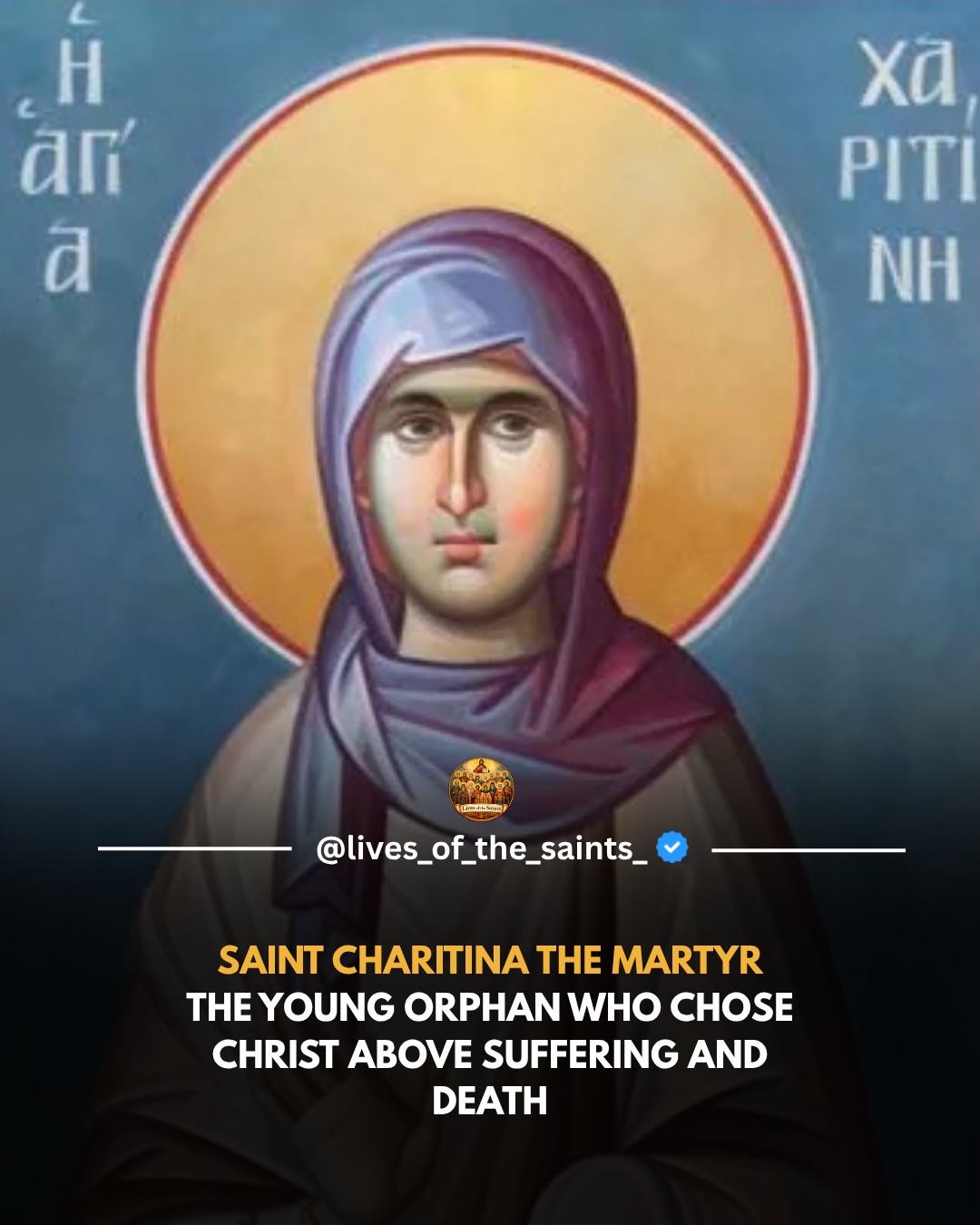
The post recounts the life and martyrdom of Saint Charitina. She was an orphan raised by a noble Christian named Claudius, who loved her as a daughter. From childhood she devoted herself to learning the law of God, praying day and night, and living in purity as a bride of Christ. Her faith led her to bring others to Christ and encourage holy living. During the persecution under Emperor Diocletian, the governor Domitian ordered her arrest. Before…

The post recounts the life and martyrdom of Saint Charitina. She was an orphan raised by a noble Christian named Claudius, who loved her as a daughter. From childhood she devoted herself to learning the law of God, praying day and night, and living in purity as a bride of Christ.

Her faith led her to bring others to Christ and encourage holy living. During the persecution under Emperor Diocletian, the governor Domitian ordered her arrest. Before the judge she confessed she was a Christian and denied deceiving anyone, saying she led the lost to the path of truth.

The judge ordered her hair cut off and burning coals poured on her head, but she remained unharmed by God's power. She was thrown into the sea and delivered by the Lord. Bound to a wheel of torture, an angel stopped the wheel and protected her. Finally, the persecutor ordered she be dishonored. Rather than suffer violation, Charitina knelt and prayed that God would receive her soul.

While praying, the Lord called her into His eternal kingdom. The post concludes that holiness does not depend on age, wealth, or worldly power but on a heart faithful to Christ through every trial, and asks for her intercession.

  • Orphan raised by Claudius, devoted to prayer and purity from childhood
  • Led others to Christ during Diocletian's persecution
  • Arrested by governor Domitian, confessed faith courageously
  • Endured tortures, burning coals, sea, wheel, unharmed by divine power
  • Prayed to avoid dishonor, died while praying, held up as model of faithfulness
Read more

Video repeats Jesus Prayer in Russian; caption mentions St. John of Kronstadt

The post features a video that consists solely of the Jesus Prayer recited continuously in Russian. The prayer text is "Господи Иисусе Христе, Сыне Божий, помилуй мя грешного." Each repetition is identical, and there is no additional speech or explanation in the video. The accompanying text reads "St. John of Kronstadt Quotes" and includes hashtags for orthodox, quotes, saint, john, and kronstadt. The video does not contain any quotations from…

The post features a video that consists solely of the Jesus Prayer recited continuously in Russian. The prayer text is "Господи Иисусе Христе, Сыне Божий, помилуй мя грешного." Each repetition is identical, and there is no additional speech or explanation in the video.

The accompanying text reads "St. John of Kronstadt Quotes" and includes hashtags for orthodox, quotes, saint, john, and kronstadt. The video does not contain any quotations from St. John of Kronstadt; it only presents the prayer. The source material provides no discussion or commentary beyond the video and caption.

Key moments

  1. The Jesus Prayer is recited repeatedly.
Read more
☦️An Orthodox Blog☦️ with Orthodoxy ☦︎ Instagram

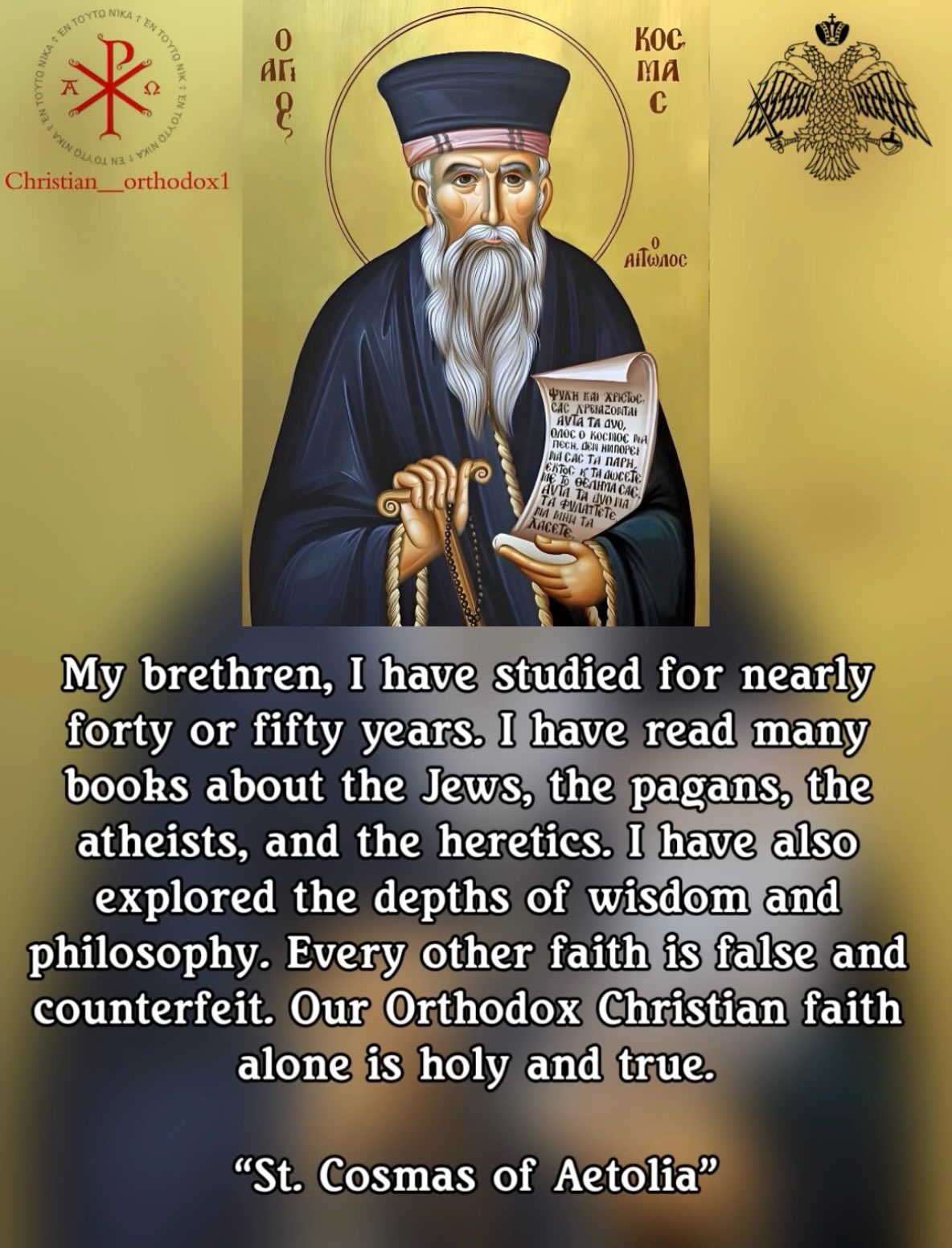
St. Cosmas of Aetolia: Orthodox faith alone true after decades of study

The post shares a quotation attributed to St. Cosmas of Aetolia. The quote opens with an address to "my brethren" and asserts that the speaker has studied for nearly forty or fifty years. It lists the subjects of that study: many books about the Jews, the pagans, the atheists, and the heretics, as well as an exploration of the depths of wisdom and philosophy. On the basis of this study, the speaker declares that every other faith is false and…

The post shares a quotation attributed to St. Cosmas of Aetolia. The quote opens with an address to "my brethren" and asserts that the speaker has studied for nearly forty or fifty years. It lists the subjects of that study: many books about the Jews, the pagans, the atheists, and the heretics, as well as an exploration of the depths of wisdom and philosophy.

On the basis of this study, the speaker declares that every other faith is false and counterfeit, and that the Orthodox Christian faith alone is holy and true. The quotation is followed by a series of hashtags that tag the post with the topics christian, orthodox, church, saints, and churchfathers. The source text contains no additional commentary, no replies, and no discussion thread.

The post functions as a standalone declaration of Orthodox exclusivity grounded in the personal intellectual journey of a recognized saint.

  • St. Cosmas of Aetolia claims nearly forty or fifty years of study
  • He read books about Jews, pagans, atheists, and heretics
  • He explored the depths of wisdom and philosophy
  • He concludes every other faith is false and counterfeit
  • He asserts the Orthodox Christian faith alone is holy and true
Read more
Discover Orthodox Christianity Facebook

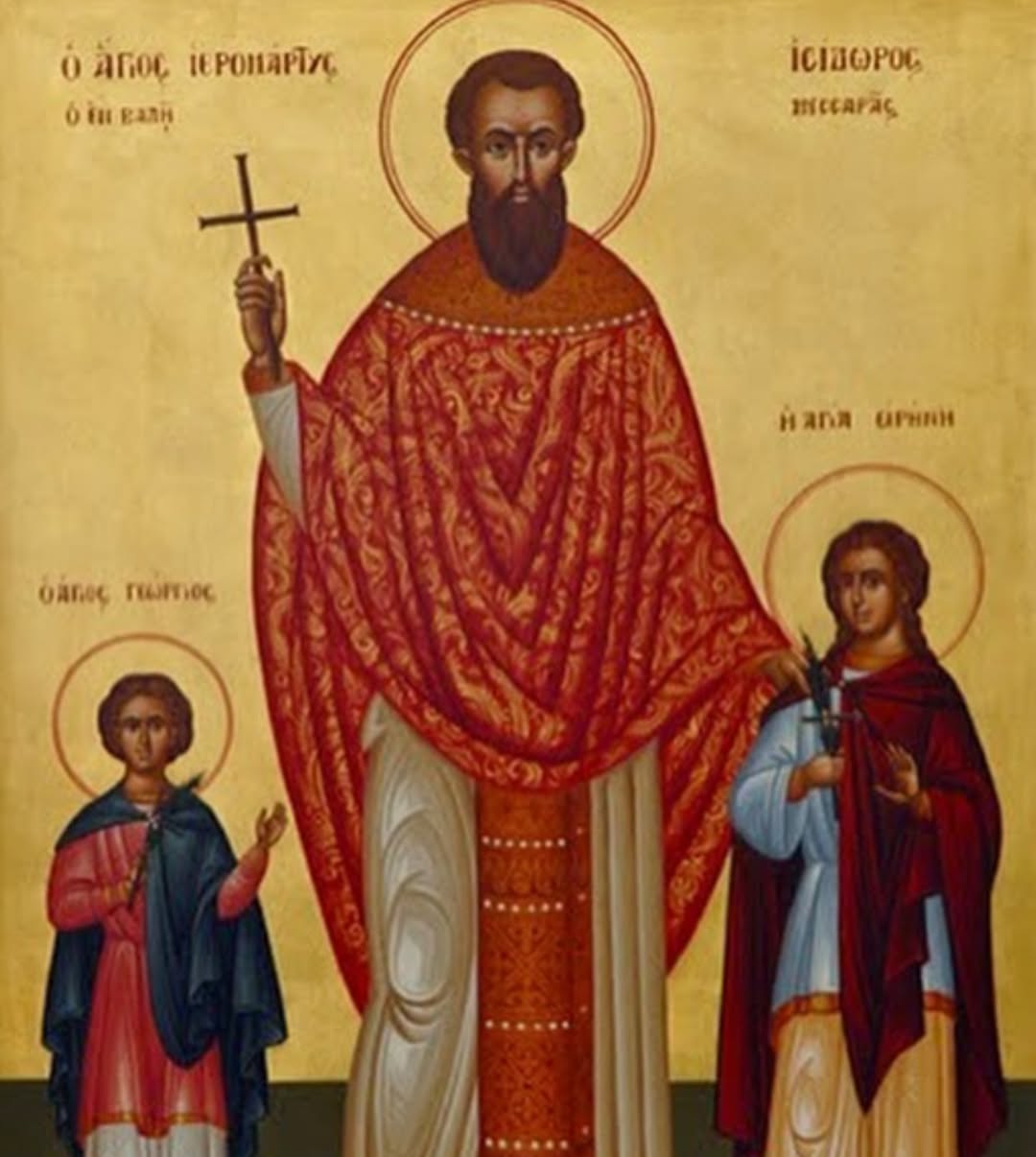
Saint Isidore and his children revealed in 1953 Crete

In the spring of 1953 a priest began appearing in dreams to villagers of Vali in Crete. A grocer and chanter named Demetrios saw a priest who told him to dig at a specific place on the grounds of the old primary school to "remove" him from there. The priest identified himself as Papa-Tsiteris and said he had been slaughtered by the Saracens during the initial Turkish raids on the island before the 1650s, together with his two children Irene and…

In the spring of 1953 a priest began appearing in dreams to villagers of Vali in Crete. A grocer and chanter named Demetrios saw a priest who told him to dig at a specific place on the grounds of the old primary school to "remove" him from there. The priest identified himself as Papa-Tsiteris and said he had been slaughtered by the Saracens during the initial Turkish raids on the island before the 1650s, together with his two children Irene and George.

Demetrios wrote the name on a shoe carton and fell asleep again. The priest appeared a second time saying "Wake up, and do what I told you." Demetrios went to the location and dug, uncovering three skeletons, an adult and two children.

Further revelations to the residents disclosed that the priest had been beheaded with his children in the church he served while celebrating the Divine Liturgy. Christians had gathered their relics and buried them with heads placed at their feet, and the skeletons were found in exactly that position. The account is compared to the revelation of the Holy New Martyrs Raphael, Nicholas, and Irene in 1959 on Lesvos.

On October 18, 1953 the relics were translated to the Church of Saint Demetrios in Vali. In September 2003 the people of Vali erected a church in his honor, and at the behest of the Metropolitan it was named "Saint Isidore the New Martyr." Today only portions of the relics remain for veneration because an impious nun stole the greater portion.

The memory of the newly revealed Saints Isidore, Irene, and George is celebrated on October 18.

  • Priest Papa-Tsiteris appeared in dreams to villagers of Vali, Crete in spring 1953
  • Demetrios dug at indicated site and found three skeletons matching the vision
  • Saints identified as Hieromartyr Isidore (Papa-Tsiteris) and his children Irene and George, martyred by Saracens before 1650s
  • Relics translated to Church of Saint Demetrios on October 18, 1953; church dedicated to Saint Isidore built in 2003
  • Greater portion of relics stolen by a nun; memory celebrated October 18
Read more