WeOrthodox
EN UA

Eastern Orthodoxy Daily He/Who/Is

Instagram ↗ 112 discussions

Scripture, Saints & Satire Left Rome for Home 📍Illinois USA📍 ╬☦️ Dyophysite Eastern Orthodox ☦️╬

How the New Testament emerged from the life of the early Church

The video addresses a common Western misconception that the Bible appeared as a complete book, similar to the Quran. When Paul and Christ refer to scripture, they mean the Hebrew scriptures, because the New Testament writings did not yet exist. The gospel accounts were written twenty to thirty years after the events they describe. During those decades Christians worshiped, partook of the body and blood of Christ, and were formed by the Hebrew…

The video addresses a common Western misconception that the Bible appeared as a complete book, similar to the Quran. When Paul and Christ refer to scripture, they mean the Hebrew scriptures, because the New Testament writings did not yet exist. The gospel accounts were written twenty to thirty years after the events they describe.

During those decades Christians worshiped, partook of the body and blood of Christ, and were formed by the Hebrew scriptures. The texts of the New Testament were produced by the church community; scripture emerged from the life of the church, not the church from scripture. Chapter and verse divisions were added much later.

Key moments

  1. The Western idea that the Bible fell from the sky like the Quran is ahistorical.
  2. Paul's references to scripture mean the Hebrew scriptures, not New Testament books which did not yet exist.
  3. Chapter and verse divisions were added much later.
  4. The gospel accounts were written 20 to 30 years after the events they describe.
  5. During those decades Christians worshiped, partook of the body and blood of Christ, and were formed by the Hebrew scriptures.
  6. The texts of the New Testament were written out of the community of the church, not prior to it.
Read more

Elder Thaddeus of Vitovnica on Humility and Guarding Thoughts

Elder Thaddeus of Vitovnica (1914-2003) was a Serbian Orthodox monk and spiritual father born Tomislav Štrbulović. He devoted his life to prayer, humility, repentance, and love for Christ. Despite illness, war, and suffering, he became known for his gentle spirit and spiritual wisdom. As a spiritual father he guided many people toward inner peace and a deeper relationship with God. He taught that true Christian life is not merely outward…

Elder Thaddeus of Vitovnica (1914-2003) was a Serbian Orthodox monk and spiritual father born Tomislav Štrbulović. He devoted his life to prayer, humility, repentance, and love for Christ. Despite illness, war, and suffering, he became known for his gentle spirit and spiritual wisdom.

As a spiritual father he guided many people toward inner peace and a deeper relationship with God. He taught that true Christian life is not merely outward religious practice but the transformation of the heart through God's grace. His most widely known teaching is preserved in the book Our Thoughts Determine Our Lives.

In it he emphasizes the importance of guarding our thoughts because they influence our hearts, relationships, and spiritual lives. He taught that anger, pride, judgment, and resentment disturb inner peace, while prayer, humility, forgiveness, and love help us grow closer to God. Rather than trying to change everyone around us, we must first allow Christ to transform our own hearts.

His life reflects the words of Christ: "Blessed are the peacemakers, for they shall be called the sons of God" (Matthew 5:9). The post also includes three sayings attributed to Elder Thaddeus: "Until you have suffered much in your heart, you cannot learn humility." "It is our duty to pray sincerely for all men, that God may grant peace and joy to all." "If we ourselves do not learn humility, God will not stop humbling us."

  • Elder Thaddeus (1914-2003) was a Serbian Orthodox monk and spiritual father known for humility and prayer.
  • His book Our Thoughts Determine Our Lives teaches that thoughts shape the heart and spiritual life.
  • He identified anger, pride, judgment, and resentment as disturbances to inner peace.
  • He stressed prayer, humility, forgiveness, and love as means to grow closer to God.
  • Three quoted sayings highlight suffering as a path to humility and the duty to pray for all.
Read more
Eastern Orthodoxy Daily He/Who/Is with Ben Instagram

Baptist pastor uses AI to depict himself as demon smashing Marian statue

0:25

A Baptist pastor named Shelly, who previously gained attention for having children smash statues of the Blessed Theotokos, has released an AI-generated video. In it, he portrays himself as Rumpelstiltskin, a demonic figure from folklore, wielding a hammer to destroy a statue of the Virgin Mary. The author of the post points out an apparent contradiction: Shelly's tradition rejects graven images, yet he employs artificial intelligence to create a…

A Baptist pastor named Shelly, who previously gained attention for having children smash statues of the Blessed Theotokos, has released an AI-generated video. In it, he portrays himself as Rumpelstiltskin, a demonic figure from folklore, wielding a hammer to destroy a statue of the Virgin Mary. The author of the post points out an apparent contradiction: Shelly's tradition rejects graven images, yet he employs artificial intelligence to create a detailed visual representation of the very figure he opposes venerating.

The author argues that the choice to depict himself as a demon attacking the image suggests the hostility is directed at Mary herself, not merely at the physical object of a statue. The video raises questions about the consistency of iconoclast arguments when modern technology is used to produce the images they condemn.

Key moments

  1. Baptist pastor Shelly went viral for having kids smash statues of the Blessed Theotokos.
  2. Shelly has now AI-generated a video of himself as Rumpelstiltskin, a demon, smashing a statue of the Virgin Mary with a hammer.
  3. The author questions why Shelly would AI-generate an image of the Virgin Mary if his position opposes graven images.
  4. The author argues the depiction looks like anger directed at Mary herself, not just at statues.
Read more

Debate on Scripture's authority and the Church

0:23

A debate examines the foundation for knowing truth when discussing the canon of Scripture. One participant asks what foundational truth the other holds and how they know what is true. Another cites John 17:17 as the standard if the Church is rejected. A third argues that appealing to Scripture to prove Scripture is circular reasoning. A fourth counters that Jesus, as God, declares truth by his own authority, not by appealing to Scripture. The…

A debate examines the foundation for knowing truth when discussing the canon of Scripture. One participant asks what foundational truth the other holds and how they know what is true. Another cites John 17:17 as the standard if the Church is rejected.

A third argues that appealing to Scripture to prove Scripture is circular reasoning. A fourth counters that Jesus, as God, declares truth by his own authority, not by appealing to Scripture. The exchange centers on whether Scripture authenticates itself or requires the Church's witness, and whether Christ's divine authority makes his words self-authenticating.

Key moments

  1. The speaker asks what the other's foundational truth is and how they know what is true.
  2. Another speaker says that if the church is rejected, John 17:17 states what is true.
  3. A participant responds that this appeal uses scripture to prove scripture.
  4. Another replies that Jesus did the same.
  5. A different voice disagrees, stating that Jesus is God and his word is true because he is God, not because he appeals to scripture.
Read more

Saint Porphyrios on loving Christ as the path to holiness

The post presents the life and teaching of Saint Porphyrios of Kavsokalyvia (1906-1991), a monk of Mount Athos recognized as a saint in the Eastern Orthodox Church. From childhood he sought to give himself entirely to Christ. On Athos he pursued prayer, repentance, and humility while enduring physical illness. He devoted himself to spiritual guidance and comfort for many who came to him. The elder taught that Christians draw near to God not by…

The post presents the life and teaching of Saint Porphyrios of Kavsokalyvia (1906-1991), a monk of Mount Athos recognized as a saint in the Eastern Orthodox Church. From childhood he sought to give himself entirely to Christ. On Athos he pursued prayer, repentance, and humility while enduring physical illness. He devoted himself to spiritual guidance and comfort for many who came to him.

The elder taught that Christians draw near to God not by battling darkness directly but by turning the heart toward Christ, who is the Light. He said the Christian life should be rooted in love for Christ rather than fear of sin. Genuine repentance, prayer, and humility gradually transform the heart. He encouraged a living relationship with Christ through Scripture, the mysteries of the Church, and unceasing prayer, especially the Jesus Prayer.

Saint Porphyrios insisted that holiness comes not through pride, judgment, or outward appearances but through a heart filled with divine love. Love for Christ naturally overflows into love for every person. Prayer offered with faith and humility brings peace to troubled souls. He summarized his message: "The more you love Christ, the less you fear sin, and the more your heart is transformed by His grace."

The post includes nine direct quotations. Among them: "You won't become saints by hounding after evil. Ignore evil. Look towards Christ and He will save you." "Somebody who is Christ's must love Christ, and when he loves Christ he is delivered from the Devil, from hell and from death." "Whoever wants to become a Christian must first become a poet."

"With humility you attract the grace of God... even if you do all in the world, you achieve nothing if you haven't acquired humility." He described Christ as friend, brother, and everything good and beautiful. He taught that all created things, flowers, for example, are little loves through which we attain the great Love that is Christ.

He noted that what is not expressed often has greater power than words. The post also references the book "Wounded by Love: The Life and the Wisdom of Saint Porphyrios."

  • Saint Porphyrios (1906-1991) lived as a monk on Mount Athos and became a spiritual father to many despite chronic illness.
  • He taught that turning toward Christ as Light, not fighting darkness, is the path to God.
  • Love for Christ, not fear of sin, should root the Christian life; humility attracts divine grace.
  • The Jesus Prayer, Scripture, and the Church's mysteries nurture a living relationship with Christ.
  • Nine direct quotations illustrate his emphasis on love, humility, and poetic sensitivity to God's presence.
Read more

Orthodox Response to James White: Kissing Icons Shows Love to Christ, Not Wood

The speaker responds to James White's criticism of the Orthodox practice of kissing icons. According to the speaker, White made a significant error by comparing the veneration of icons to the handling of a photograph of a deceased loved one. White reportedly said that it would be inappropriate for parents but appropriate for children to lovingly frame, decorate, and kiss such a photograph at a funeral, placing this behavior within the bounds of…

The speaker responds to James White's criticism of the Orthodox practice of kissing icons. According to the speaker, White made a significant error by comparing the veneration of icons to the handling of a photograph of a deceased loved one. White reportedly said that it would be inappropriate for parents but appropriate for children to lovingly frame, decorate, and kiss such a photograph at a funeral, placing this behavior within the bounds of Christian freedom.

The speaker then challenges the audience to consider whether anyone can show the same kind of visual affection to an image of Christ or the saints. He answers his own question negatively, explaining that the audience lacks personal knowledge of the persons depicted in those images. However, the speaker asserts that believers can indeed know Jesus at a personal level and enter into a relationship with him.

It is this personal relationship, he concludes, that explains why Orthodox Christians kiss icons: the act expresses love toward the person represented, not toward the material wood and paint. The discussion thus turns on the distinction between a photograph of a family member, which only those who knew the person can meaningfully venerate, and an icon of Christ, which all believers can venerate because all can know Christ personally.

The speaker's argument defends the theological basis of icon veneration against the charge of idolatry by grounding it in a living relationship with the prototype.

Key moments

  1. The speaker claims James White makes a massive blunder.
  2. It is inappropriate for parents but appropriate for a lot of children to lovingly frame, decorate, and kiss the picture of a dead loved one at a funeral.
  3. That practice is within the realm of Christian freedom.
  4. The speaker asks whether anyone in the audience can show identical visual affection to an image of Christ or the saints.
  5. The speaker answers no, because they did not have personal knowledge of the person in the image.
  6. We can know Jesus at a personal level and have a relationship with him.
  7. That is why when we kiss an icon, we show love to him, not the actual wood and paint.
Read more
Eastern Orthodoxy Daily He/Who/Is with Ethan Instagram

The Incarnation: Biblical Proof and Patristic Refutation of Objections

The post presents a comprehensive defense of the Incarnation, arguing that the eternal Word became flesh without ceasing to be God. It begins by establishing the hypostatic union, one Person in two natures, unconfused and indivisible, as the apostolic core of Christian revelation. Scriptural proofs are drawn from the Johannine prologue (John 1:1-14), where Greek grammar shows the Word possesses full deity; the Philippians 2 hymn, distinguishing…

The post presents a comprehensive defense of the Incarnation, arguing that the eternal Word became flesh without ceasing to be God. It begins by establishing the hypostatic union, one Person in two natures, unconfused and indivisible, as the apostolic core of Christian revelation. Scriptural proofs are drawn from the Johannine prologue (John 1:1-14), where Greek grammar shows the Word possesses full deity; the Philippians 2 hymn, distinguishing Christ's eternal form of God from His voluntary kenosis by adding human nature; Colossians 2:9, using theotes for divine essence; 1 Timothy 3:16 ("God was manifested in the flesh"); Titus 2:13 and Romans 9:5, applying the Granville Sharp rule to identify Jesus as "our great God and Savior"; and Old Testament prophecies (Isaiah 9:6, 7:14, Micah 5:2, Zechariah 12:10) with patristic interpretation.

Patristic witnesses include St. Clement of Alexandria, St. Athanasius, St. Gregory the Theologian, St. John Chrysostom, St. Irenaeus, St. Cyril of Jerusalem, St. Ignatius, St. Augustine, St. Ambrose, and St. Gregory of Nyssa. The second part refutes seven common objections using the patristic rule of two-nature exegesis: distinguishing theologia (divine nature) from oikonomia (human nature).

Objections addressed: John 14:28 ("the Father is greater"), explained as relational origin not nature; Mark 13:32 ("neither the Son knows"), where oida means "to declare"; Colossians 1:15 and Revelation 3:14 ("firstborn," "beginning of creation"), meaning preeminent heir and active source; Proverbs 8:22 (Wisdom "possessed" not created); John 17:3 and 1 Corinthians 8:6 ("only true God"), contrasting idols not the Son; Mark 10:18 and John 20:17 ("why call me good," "my God"), testing the ruler and distinguishing natures; and Numbers 23:19, 1 Corinthians 15:28, 1 Timothy 2:5 (immutability, mediation, subjection), fulfilled in the divine economy.

The post concludes with a historical timeline from St. Ignatius (107 AD) through the Councils of Ephesus and Chalcedon, affirming the unbroken consensus that Jesus Christ is true God and true man, echoing Thomas's confession, "My Lord and my God."

  • The hypostatic union, one Person in two natures, is the foundation of Christian faith.
  • Scriptural proofs from John 1, Philippians 2, Colossians 2, 1 Timothy 3, Titus 2, Romans 9, and Old Testament prophecies.
  • Patristic witnesses from Ignatius to Chalcedon affirm the Incarnation.
  • Seven objections refuted using the two-nature exegetical rule (theologia vs. oikonomia).
  • Historical continuity from 107 AD to the ecumenical councils confirms the unbroken consensus.

God Desires All to Be Saved; Free Will Not Overruled by Foreknowledge

The speaker rejects the claim that God creates some people for hell before they are born. He cites First Timothy, which says God desires all people to be saved and to come to the knowledge of the truth. He also references St John, who writes that God created humanity to partake of eternal blessings, not to be cast into hell.

Christ says he came so that the world might be saved through him. The speaker adds that God's foreknowledge does not determine human choices; God knows what will be chosen but humans still have free will.

Key moments

  1. The Bible is said to teach that God creates some people specifically for hell before birth, not as punishment for sin.
  2. God has already decided each person's fate, not based on their choices or actions.
  3. The idea that God creates people only to burn in hell contradicts all of Scripture.
  4. First Timothy states that God desires all people to be saved and to come to the knowledge of the truth.
  5. St John writes that God created humanity to partake of eternal blessings, not to be cast into hell.
  6. Christ says he came in order that the world might be saved through him.
  7. God's foreknowledge does not determine human choices; He knows what will be chosen but humans still have free will.

Why Constantine didn't create Nicene Christianity

The post refutes the claim that Emperor Constantine created Nicene Christianity or dictated the Council of Nicaea's outcome in 325. It cites primary sources: Eusebius of Caesarea's Life of Constantine, Socrates Scholasticus's Ecclesiastical History, and Athanasius's On the Decrees of Nicaea and Defense Against the Arians. Arius, a presbyter of Alexandria, taught the Son had a beginning, sparking controversy before the council. Constantine…

The post refutes the claim that Emperor Constantine created Nicene Christianity or dictated the Council of Nicaea's outcome in 325. It cites primary sources: Eusebius of Caesarea's Life of Constantine, Socrates Scholasticus's Ecclesiastical History, and Athanasius's On the Decrees of Nicaea and Defense Against the Arians. Arius, a presbyter of Alexandria, taught the Son had a beginning, sparking controversy before the council.

Constantine convened the council because theological divisions threatened church and imperial unity. His correspondence in Eusebius (Life of Constantine II.64-72) shows he initially viewed the dispute as unnecessary and sought reconciliation, not a theological definition. The bishops debated and formulated the creed; an icon of the council depicts the infant Christ in the altar, the Gospel as head, bishops conversing, Constantine sitting silently, and Arius beneath them.

After Nicaea, Constantine reversed course, allowed Arius to return from exile, and ordered his restoration to communion. He also exiled Athanasius in 335 on political and ecclesiastical charges, not for rejecting the creed. Arian influence grew under later emperors, which would be inexplicable if Constantine had invented Nicene orthodoxy.

Pre-Nicaea writers such as Ignatius of Antioch, Irenaeus of Lyons, and Origen already affirmed Christ's divinity, though with different terminology. The post acknowledges Constantine's political influence, he convened, supported, and enforced the council's decisions, but insists political sponsorship is not theological creation. The argument turns on the distinction between Constantine's role as convener and the episcopate's role as doctrinal formulators, and on the historical trajectory after 325. Nicaea defended the apostolic understanding of Christ's divinity against Arian theology.

  • Constantine convened Nicaea to address existing divisions, not to invent doctrine.
  • The bishops formulated the Nicene Creed; Constantine did not dictate its theology.
  • Post-Nicaea events, Constantine's reconciliation with Arius and exile of Athanasius, contradict the claim he authored the creed.
  • Pre-Nicaea fathers (Ignatius, Irenaeus, Origen) already taught Christ's divinity.
  • Political sponsorship of the council differs from theological creation; Nicaea defended apostolic faith against Arianism.
Read more

Becoming the right husband before seeking a godly wife

Every man says he wants a loyal, God-fearing wife who values marriage and family. But are you actually becoming the kind of man who is ready for her? From an Orthodox Christian perspective, dating should never be driven by lust, loneliness, or physical attraction alone. It is about discernment, patience, intentionality, and finding someone who shares your desire to grow closer to Christ. Do not just look for beauty. Look for character, humility,…

Every man says he wants a loyal, God-fearing wife who values marriage and family. But are you actually becoming the kind of man who is ready for her? From an Orthodox Christian perspective, dating should never be driven by lust, loneliness, or physical attraction alone.

It is about discernment, patience, intentionality, and finding someone who shares your desire to grow closer to Christ. Do not just look for beauty. Look for character, humility, faith, and the qualities of a future mother and wife. And remember, while you are praying for a godly woman, she may be praying for a godly husband.

Before asking God for the right wife, work on becoming the right husband. Marriage is not simply about finding someone to love. It is about two people walking towards Christ together. Ephesians 5:25 says, "Husbands, love your wives, just as Christ also loved the church and gave Himself for her."

  • Every man wants a godly wife, but are you becoming the man ready for her?
  • Dating must be driven by discernment and shared desire for Christ, not lust or loneliness
  • Seek character, humility, and faith over physical beauty
  • While you pray for a godly wife, she may be praying for a godly husband
  • Marriage means two people walking toward Christ together, modeled on Christ's love for the Church
6 opinions in the discussion Why is all of this about what you want a wife to do for you, with no thought about what you bring to the table? Why would the woman you want even be interested in you? You can't change or… Read the discussion

The 300 Aragvian Martyrs: Defending Faith and King in 1795

The post presents the story of the 300 Aragvian martyrs through a series of illustrated slides. In 1795, three hundred Georgian warriors from the Aragvi region gathered at Saint George's Church as Persian Muslim invaders surrounded Tbilisi. They made a pledge to fight to the death defending their people, their brotherhood, and the city. When the Georgian defenses began to collapse, the Aragvians positioned themselves between the attackers and…

The post presents the story of the 300 Aragvian martyrs through a series of illustrated slides. In 1795, three hundred Georgian warriors from the Aragvi region gathered at Saint George's Church as Persian Muslim invaders surrounded Tbilisi. They made a pledge to fight to the death defending their people, their brotherhood, and the city.

When the Georgian defenses began to collapse, the Aragvians positioned themselves between the attackers and King Erekle II, holding back the Persian advance while the king escaped. They continued fighting despite massive casualties. Their sacrifice did not prevent the overall defeat, but their resistance enabled the king's survival.

In 2008, the Georgian Orthodox Church glorified them as holy martyrs for their sacrifice in defense of their Christian homeland and resistance to Islamic conquest. The post includes their troparion, which honors their steadfast courage and sacrifice, then asks them to intercede with Christ so that the faithful may stand firmly in His commandments.

The hymn includes the line: "May we stand as firmly in obedience to Christ as they stood in battle." A Georgian folk song tribute to the 300 Aragvians is noted as accompanying the presentation and available on Spotify.

  • 300 Aragvian warriors gathered at Saint George's Church in 1795 and pledged to fight to the death against Persian Muslim invaders.
  • They shielded King Erekle II during the collapse of Georgian defenses, allowing his escape while suffering massive casualties.
  • Their resistance did not prevent defeat but secured the king's survival.
  • The Georgian Orthodox Church glorified them as holy martyrs in 2008 for defending their Christian homeland.
  • Their troparion asks for their intercession to stand firmly in obedience to Christ's commandments.
Read more

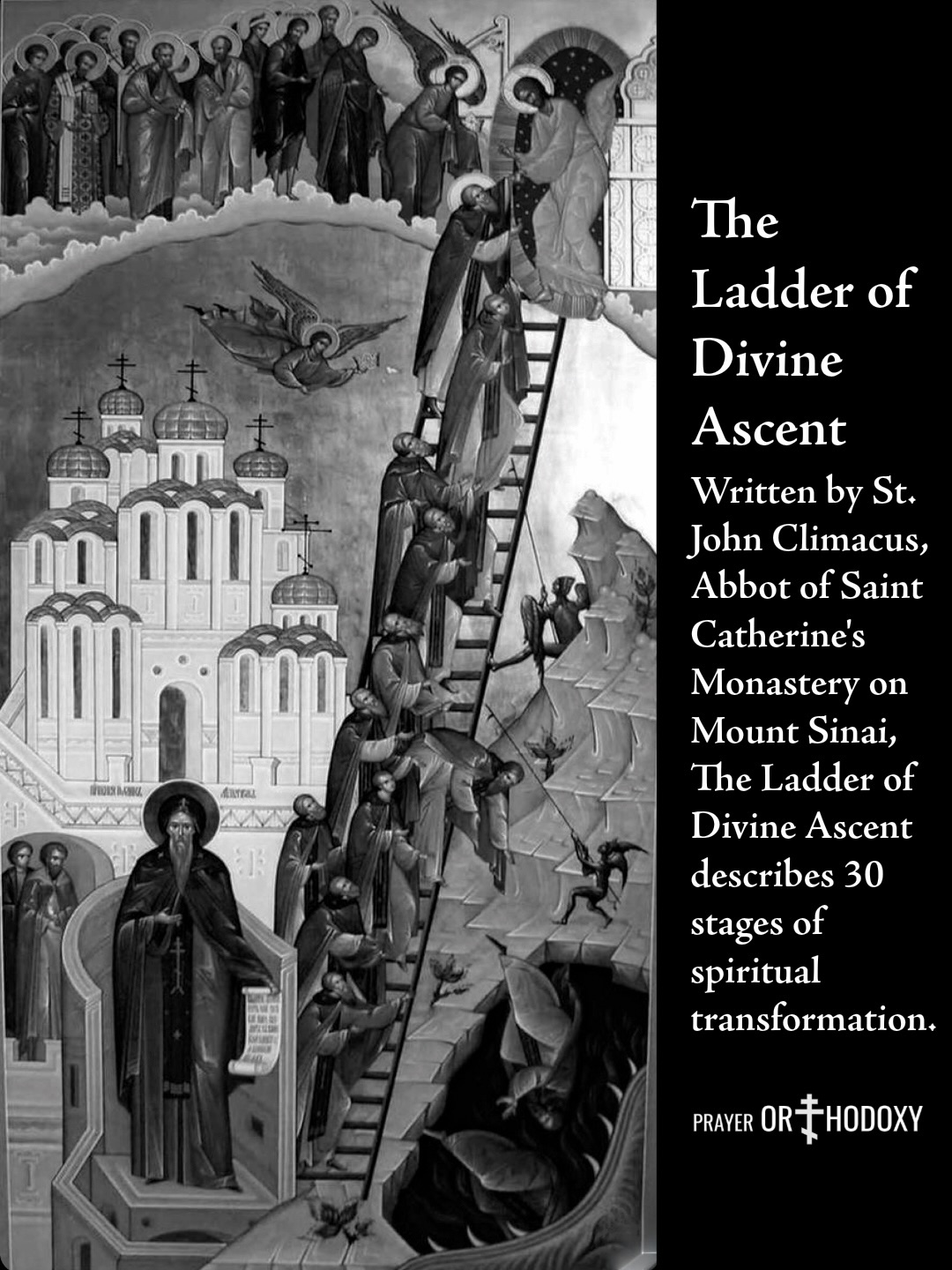
St. John Climacus's Ladder of Divine Ascent: 30 steps toward God

The post presents St. John Climacus's teaching from The Ladder of Divine Ascent. The saint outlines a spiritual journey of 30 steps that leads toward Christ. Each step represents progress in virtues including repentance, humility, prayer, and perseverance. The text identifies love as the highest virtue at the summit of the ladder. The post appears in both English and Greek, with the Greek text naming the work as Η Κλίμακα της Θείας Ανόδου and…

The post presents St. John Climacus's teaching from The Ladder of Divine Ascent. The saint outlines a spiritual journey of 30 steps that leads toward Christ. Each step represents progress in virtues including repentance, humility, prayer, and perseverance.

The text identifies love as the highest virtue at the summit of the ladder. The post appears in both English and Greek, with the Greek text naming the work as Η Κλίμακα της Θείας Ανόδου and the author as Ο Άγιος Ιωάννης της Κλίμακος. The content is marked as an original production of Prayer Orthodoxy.

  • St. John Climacus teaches a 30-step spiritual ascent toward Christ
  • The steps require repentance, humility, prayer, and perseverance
  • Love is identified as the highest virtue
  • The teaching appears in both English and Greek
  • The post is an original production of Prayer Orthodoxy
Read more

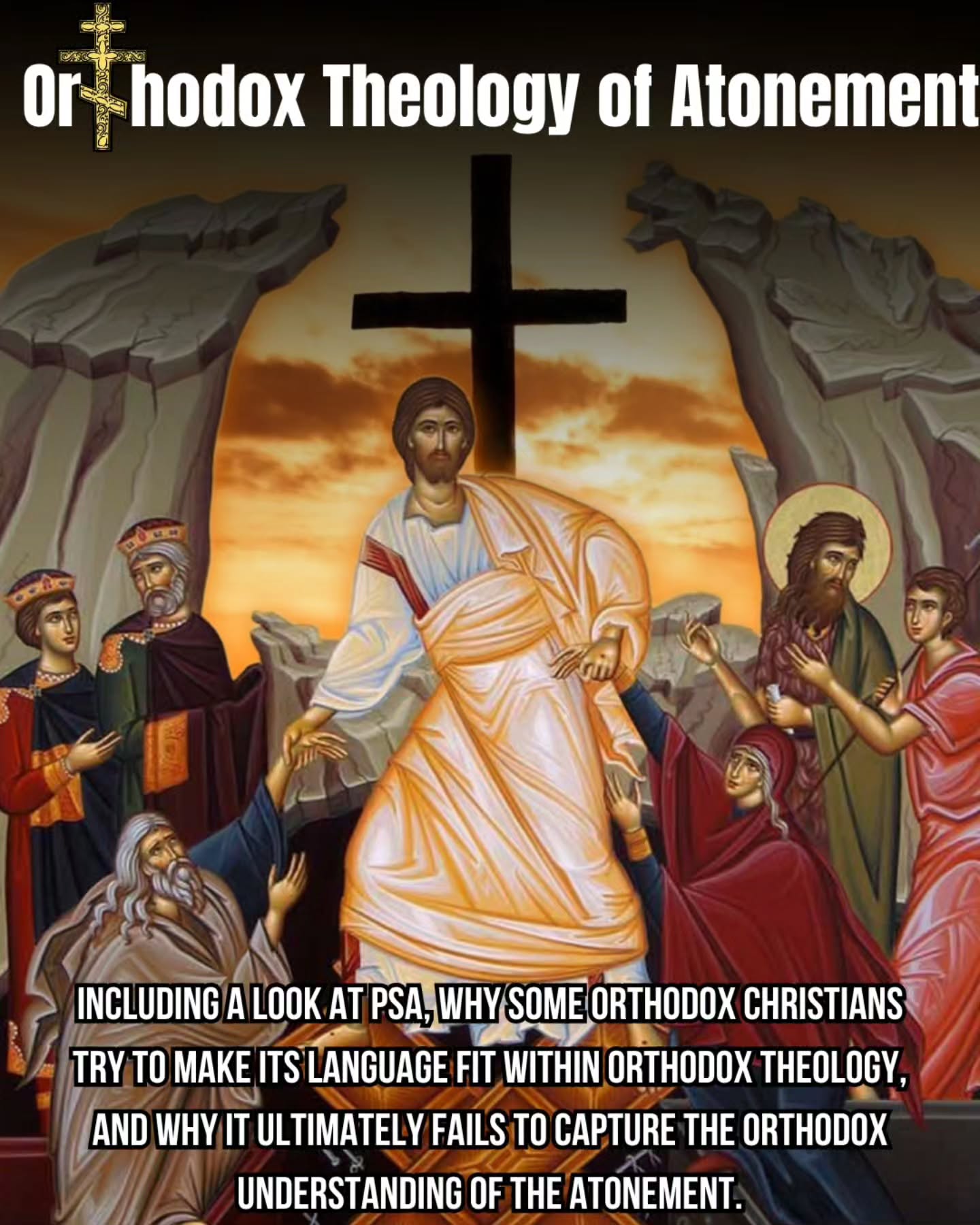
Making PSA compatible with Orthodoxy requires redefining its foundations

Attempting to reconcile penal substitutionary atonement with Orthodoxy forces a fundamental redefinition of its philosophical basis and theological structure. At that point you are no longer defending PSA; you are rebuilding it into Orthodox atonement theology.

5 opinions in the discussion Think about it: PSA goes against the very nature of God, because why would God "need" a legal payment for sin? God needs nothing, he's perfect and depends on nothing. The incarnation… Read the discussion

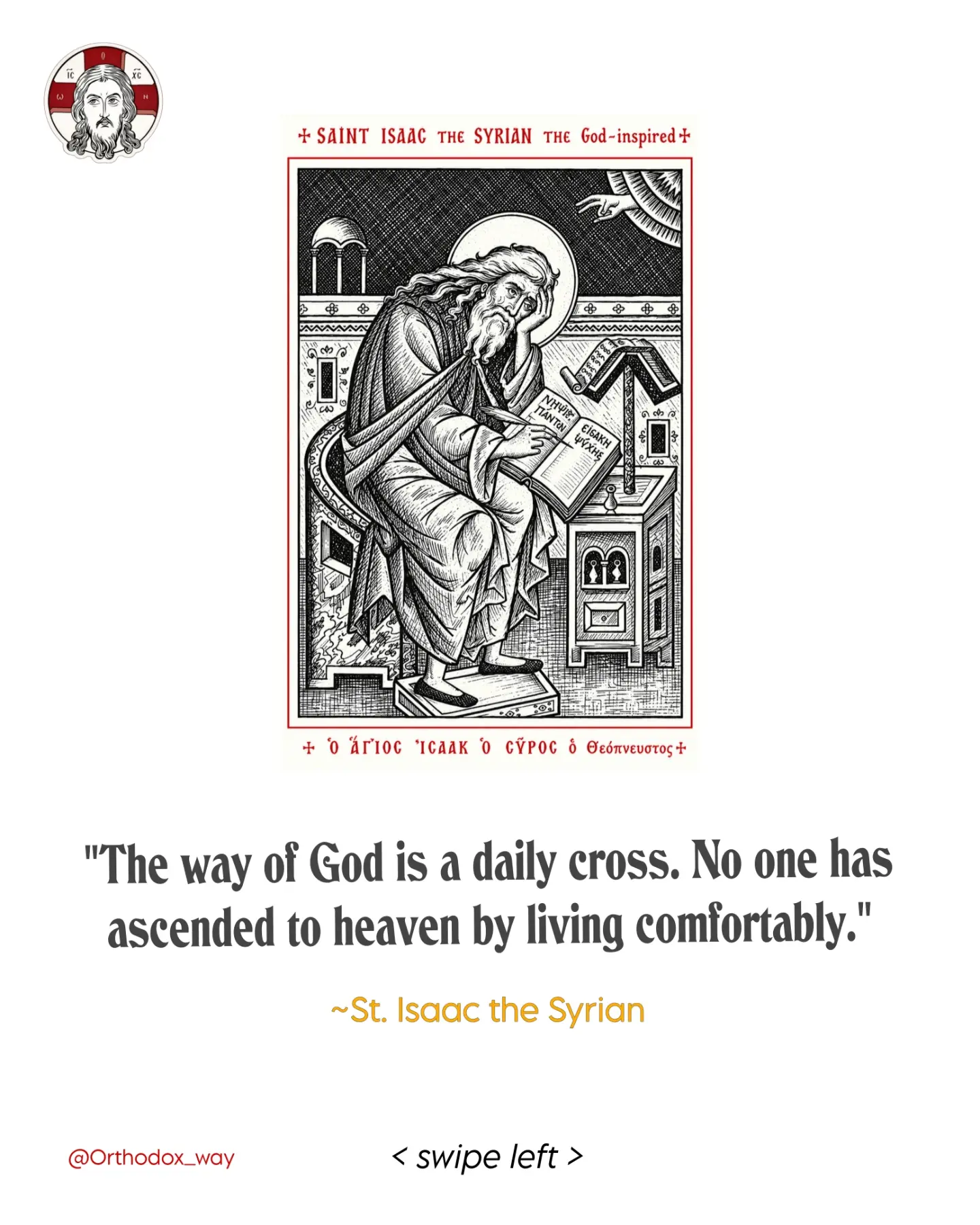
St. Isaac the Syrian on mercy, humility, and boundless love

The post presents St. Isaac the Syrian's teaching that God's love and mercy exceed human understanding. It outlines his view that true spiritual wisdom begins with humility, that repentance opens the door to transformation, and that prayer purifies the heart to perceive God's presence. The text describes his celebrated teaching on the merciful heart, a soul so filled with compassion that it burns with love for all creation, for humanity, for…

The post presents St. Isaac the Syrian's teaching that God's love and mercy exceed human understanding. It outlines his view that true spiritual wisdom begins with humility, that repentance opens the door to transformation, and that prayer purifies the heart to perceive God's presence. The text describes his celebrated teaching on the merciful heart, a soul so filled with compassion that it burns with love for all creation, for humanity, for animals, for enemies, and even for those who cause suffering.

For St. Isaac, holiness is not merely the avoidance of sin but the transformation of the entire human person through the grace of God. He calls believers beyond superficial religion into the hidden depths of the heart, where silence becomes prayer, repentance becomes healing, and compassion becomes the reflection of Christ Himself.

He urges Christians not to judge their neighbour but to recognise their own need for God's mercy. The post concludes that the true measure of closeness to God is not how much one speaks about Him but how deeply one loves His creation, and that to know God is to be transformed by His love; and to be transformed by His love is to learn to love without boundaries.

  • God's love and mercy surpass human understanding
  • Spiritual wisdom begins with humility; repentance and prayer lead to transformation
  • The merciful heart burns with compassion for all creation, including enemies
  • Holiness is transformation of the whole person through grace, not just sin avoidance
  • Closeness to God is measured by depth of love for creation, not words about Him
Read more
Eastern Orthodoxy Daily He/Who/Is with Timothy Instagram

Orthodox response: justification requires church, not Christ alone

1:35

The speaker responds to a claim that Jesus and the cross alone place someone in right standing, apart from tradition or theology. He argues that Orthodoxy holds a both/and position rather than either/or, and that the word Catholic is misunderstood in the West because of what he calls papal Protestantism. From the Orthodox perspective, the first Protestant was the Pope, who protested and walked away from the church saying "I know better." The…

The speaker responds to a claim that Jesus and the cross alone place someone in right standing, apart from tradition or theology. He argues that Orthodoxy holds a both/and position rather than either/or, and that the word Catholic is misunderstood in the West because of what he calls papal Protestantism. From the Orthodox perspective, the first Protestant was the Pope, who protested and walked away from the church saying "I know better."

The speaker grants that tradition and the fathers do not replace Christ's work on the cross. He points out that saying Christ justifies us is itself a theological claim, and that faith alone is an even more specific theological claim. He asks what epistemic criteria show that one's understanding of justification is apostolic.

The speaker notes an inconsistency in dismissing theology while insisting that one's own theology of justification is correct. Father Peter's remark about the Pope targets the principle of separating from the church while claiming doctrinal correctness. Orthodoxy holds that the Christ who saved us established a church, and that the head cannot be separated from the body.

The discussion turns on whether justification can be known apart from the church that Christ established, and whether an individual's interpretation of Scripture can serve as its own epistemic foundation.

Key moments

  1. The speaker addresses a claim that Jesus and the cross alone justify, not tradition or theology.
  2. In Orthodoxy it is both/and; nothing is left out because Catholic is misunderstood due to papal Protestantism.
  3. From the Orthodox perspective, the first Protestant was the Pope, who protested and walked away saying "I know better."
  4. Tradition and the fathers do not replace Christ's work on the cross.
  5. Saying Christ justifies us is a theological claim; faith alone is an even more specific one.
  6. It is inconsistent to dismiss theology while insisting your theology of justification is correct.
  7. The speaker asks what epistemic criteria show one's understanding of justification is apostolic.
  8. Father Peter's remark about the Pope targets separating from the church while claiming doctrinal correctness.
Read more

Infant baptism defended through circumcision parallel and historical continuity

0:21

The speaker presents an argument for infant baptism by drawing a parallel between baptism and circumcision. Paul writes in Colossians that baptism is a new circumcision, and since infants were circumcised in the Old Testament, the speaker concludes this supports baptizing babies. The argument extends to historical practice, noting that infant baptism was observed continuously throughout Christian history until the 16th century. The Anabaptists…

The speaker presents an argument for infant baptism by drawing a parallel between baptism and circumcision. Paul writes in Colossians that baptism is a new circumcision, and since infants were circumcised in the Old Testament, the speaker concludes this supports baptizing babies. The argument extends to historical practice, noting that infant baptism was observed continuously throughout Christian history until the 16th century.

The Anabaptists are identified as the first group to reject the practice. The speaker then poses a question about how a tradition that contradicts both biblical precedent and historical practice can be maintained.

Key moments

  1. Paul says in Colossians that baptism is a new circumcision.
  2. In the Old Testament, babies were circumcised.
  3. Infant baptism has been a Christian teaching throughout history up to the 16th century.
  4. The Anabaptists in the 16th century were the first group to stop baptizing infants.
  5. The speaker questions how one can follow a man-made tradition that goes against all Christian history and biblical evidence.
Read more

Christ Declared He Would Build His Church: An Orthodox Answer to Skeptics

The author responds to claims that Jesus Christ never established a Church, never wanted to be worshipped, and that Christianity distorted His original teachings. The answer is built on Scripture: Christ said, "I will build My Church" (Matthew 16:18), His disciples worshipped Him (Matthew 28:17), and He instituted the Holy Eucharist at the Last Supper (Luke 22:19). From these passages the author argues that Christ founded a Church and intended…

The author responds to claims that Jesus Christ never established a Church, never wanted to be worshipped, and that Christianity distorted His original teachings. The answer is built on Scripture: Christ said, "I will build My Church" (Matthew 16:18), His disciples worshipped Him (Matthew 28:17), and He instituted the Holy Eucharist at the Last Supper (Luke 22:19).

From these passages the author argues that Christ founded a Church and intended worship. The post then describes how the early Church preserved the apostolic writings, recognised the New Testament canon over time, and handed down the Christian faith through Holy Scripture and Holy Tradition. The Eastern Orthodox Church, according to the author, maintains this apostolic faith to this day.

The author addresses the objection that Christ criticised religious corruption: Christ condemned hypocrisy and corruption, but He did not condemn the Church He established. The closing warning is that people cannot reinvent Jesus Christ to suit their own beliefs and then claim to be following the original Christ. The post carries apologetic hashtags and is written as a defense of Orthodox Christianity against claims that the historical Church departed from the teachings of Jesus.

  • The author cites Matthew 16:18, where Christ says, "I will build My Church."
  • Disciples worshipped Christ (Matthew 28:17), and He instituted the Holy Eucharist at the Last Supper (Luke 22:19).
  • The early Church preserved apostolic writings and recognised the New Testament canon over time.
  • The faith was handed down through Holy Scripture and Holy Tradition, which the Eastern Orthodox Church maintains today.
  • Christ condemned hypocrisy and corruption, but did not condemn the Church He established.
Read more

Feminist doxxes Catholic priest over Islamic invasion warning

A feminist criticized a Catholic priest after he warned his congregation about what he called the Islamic invasion of the West. The priest used the phrase "woke left" and said that people who practice Islam want to kill us. The feminist accused him of being a Zionist because he does not support Islam, stating that it sounded like a Zionist was speaking inside the church. She then posted the priest's parish and contact information in the comments…

A feminist criticized a Catholic priest after he warned his congregation about what he called the Islamic invasion of the West. The priest used the phrase "woke left" and said that people who practice Islam want to kill us. The feminist accused him of being a Zionist because he does not support Islam, stating that it sounded like a Zionist was speaking inside the church.

She then posted the priest's parish and contact information in the comments so that people could harass him. The video creator says he is sick of feminists trying to ruin men's lives for speaking what they consider the truth.

Key moments

  1. A feminist put her priest on blast for warning his congregation against the Islamic invasion of the West.
  2. The priest used words like the woke left and said people who practice Islam want to kill us.
  3. The feminist accused him of being a Zionist because he is not supportive of Islam.
  4. She said it sounded like a Zionist was speaking inside the church.
  5. She posted all his parish information and contact information in the comments for harassment.
  6. The speaker says he is sick of feminists trying to ruin men's lives for speaking the truth.
Read more

Prayer request for Catholics converting to Orthodoxy

The post consists of a single sentence asking readers to pray for Catholics who are becoming Orthodox. It includes five hashtags identifying the topic: orthodox, catholic, orthodoxchristian, vatican, and orthodoxy. There is no additional text, no thread, no discussion, and no further details about who these Catholics are, how many, or what circumstances surround their conversion. The post functions as a brief intercessory request shared on a social media platform.

  • Author asks for prayers for Catholics converting to Orthodoxy
  • Post contains only one sentence and five hashtags
  • No further details or discussion provided
10 opinions in the discussion This is my second visit today to an Eastern Orthodox Church. I'm seriously thinking about converting. Read the discussion

Kissing Icons: Honor to the Person, Not Worship of Wood

The speaker addresses whether Christians should kiss icons by comparing the act to a soldier kissing a photograph of his family. The gesture honors the person represented, not the paper or ink. He cites Exodus, where God commands images of angels on the ark, and Joshua, who bows before the ark, as biblical precedents for making and venerating sacred images. For centuries, icons taught the gospel to Christians who could not read. St. Basil the…

The speaker addresses whether Christians should kiss icons by comparing the act to a soldier kissing a photograph of his family. The gesture honors the person represented, not the paper or ink. He cites Exodus, where God commands images of angels on the ark, and Joshua, who bows before the ark, as biblical precedents for making and venerating sacred images.

For centuries, icons taught the gospel to Christians who could not read. St. Basil the Great writes that honor paid to an image passes to its prototype. Icons function as windows into heaven that direct the heart toward God and the saints who dedicated their lives to him.

The speaker emphasizes that worship remains reserved for God alone; wood and paint are not worshiped.

Key moments

  1. The question "Should we kiss icons?" is answered with a battlefield analogy: kissing a picture of a wife or daughter shows honor and love to the person, not worship of the picture.
  2. In Exodus, God commands the making of images of angels on the ark.
  3. In Joshua, he bowed down before the ark.
  4. For centuries, Christians used icons because they could not read, and icons were how they learned the gospel.
  5. St. Basil the Great writes that the honor paid to the image passes to the prototype.
  6. We do not worship wood and paint.
  7. Icons are windows into heaven to remind our hearts of God and the saints who dedicated their lives to him.
  8. Ultimately, we only worship God alone.
Read more