WeOrthodox
EN UA

Eastern Orthodoxy Daily He/Who/Is

Instagram ↗ 112 discussions

Scripture, Saints & Satire Left Rome for Home 📍Illinois USA📍 ╬☦️ Dyophysite Eastern Orthodox ☦️╬

Saint Paisios: The Hermit Who Carried the World's Pain to God
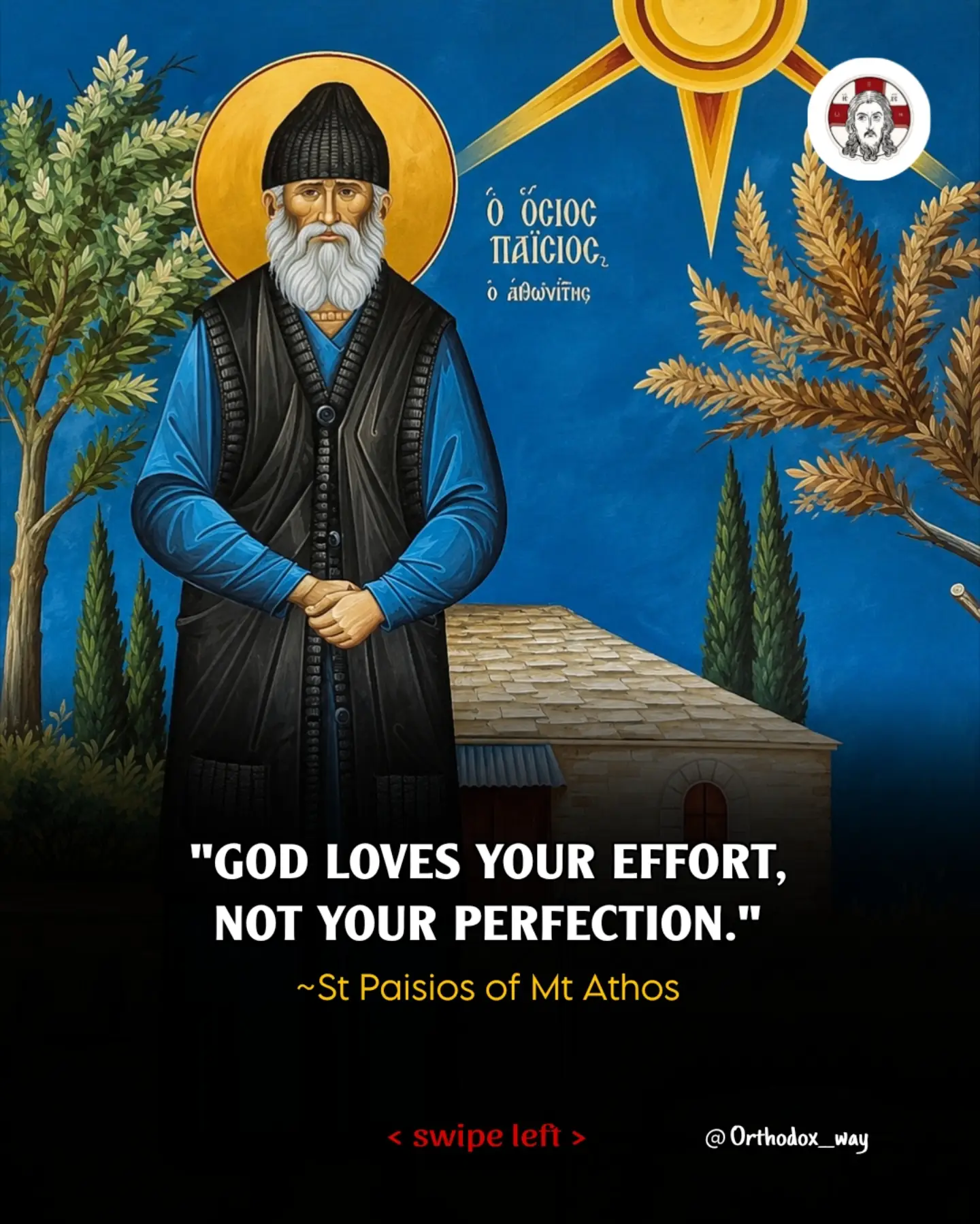
Saint Paisios of Mount Athos (1924-1994) was born Arsenios Eznepidis in Cappadocia. He served as a radio operator during the Greek Civil War, volunteering for the most dangerous missions to spare his comrades. After the war he withdrew to the Holy Mountain of Athos and embraced strict asceticism in primitive hermitages such as the cell of Panagouda. His discipline included radical self-denial, intense fasting, and endless hours of nocturnal…

Saint Paisios of Mount Athos (1924-1994) was born Arsenios Eznepidis in Cappadocia. He served as a radio operator during the Greek Civil War, volunteering for the most dangerous missions to spare his comrades. After the war he withdrew to the Holy Mountain of Athos and embraced strict asceticism in primitive hermitages such as the cell of Panagouda.

His discipline included radical self-denial, intense fasting, and endless hours of nocturnal prayer. He lived on meager rations of dry bread and tea and endured freezing winters without heating. Through these struggles he sought to subdue egoism and cultivate continuous noetic prayer.

Despite his love for solitary silence, his hermitage became a refuge for thousands of pilgrims. He spent his days listening to the brokenhearted, offering psychological and spiritual guidance, and comforting the sick, often sacrificing his own rest so that no visitor left empty-handed. He viewed asceticism not as rigid rules but as a labor of love for God and humanity.

He described himself as a "radio operator" who intercepted the prayers and agonies of the world to pass them along to God. The Ecumenical Patriarchate canonized him in 2015. His legacy continues to inspire millions as an example of how extreme self-denial can blossom into boundless compassion and joy.

  • Born Arsenios Eznepidis in Cappadocia; served as radio operator in Greek Civil War
  • Embraced strict asceticism on Mount Athos in hermitages like Panagouda
  • Lived on dry bread and tea, endured freezing winters without heating
  • Received thousands of pilgrims, offering guidance and comfort at cost of his rest
  • Canonized by Ecumenical Patriarchate in 2015; saw himself as a spiritual radio operator
Read more

Orthodox speaker challenges Maronite Catholic on Eucharist and conversion

An Orthodox speaker responds to a Maronite Catholic who acknowledges Orthodox dogmas such as the Filioque and papal claims but argues conversion is impractical because they already have access to saints, the Eucharist, tradition, and confession. The speaker denies that Maronites possess the Eucharist and states that prayer life and confession differ considerably in Orthodoxy. He accuses the questioner of choosing comfort over truth and placing…

An Orthodox speaker responds to a Maronite Catholic who acknowledges Orthodox dogmas such as the Filioque and papal claims but argues conversion is impractical because they already have access to saints, the Eucharist, tradition, and confession. The speaker denies that Maronites possess the Eucharist and states that prayer life and confession differ considerably in Orthodoxy.

He accuses the questioner of choosing comfort over truth and placing personal convenience above Christ and His exclusive Church. The speaker dismisses the claim that being Maronite is "basically Orthodox," calling it heterodox, and challenges the questioner to abandon worldly attachments and familial ties. He asks why the questioner does not adhere to even older familial ties of being Orthodox, comparing the situation to other cultural heritage claims.

The speaker urges the questioner to reject titles and comfort, submit to the truth, stop putting minor cares over the historic witness, and read the Holy Fathers on ecclesial exclusivity.

Key moments

  1. The questioner grants Orthodox dogmas such as the Filioque and papacy are true but argues conversion is impractical because they already have saint intercession, the Eucharist, tradition, and confession as a Maronite.
  2. The speaker denies that Maronites have the Eucharist and states that prayer life and confession are considerably different in Orthodoxy.
  3. The speaker accuses the questioner of putting ease over truth and personal comfort over the Lord Jesus Christ and His exclusive Church.
  4. The speaker challenges whether the process of becoming a catechumen and finding an Orthodox church truly outweighs the truth for the questioner.
  5. The speaker says this attitude is common and tells the questioner to let go of worldly attachments, including familial ties to being Maronite.
  6. The speaker asks why the questioner does not stick to even older familial ties of being Orthodox, comparing the situation to WASPs today or pseudo-heritage Catholics in the British Isles.
  7. The speaker declares that Maronite is not basically Orthodox but heterodox.
  8. The speaker urges the questioner to reject titles and comfort, submit to the truth, stop putting tiny cares over the historic witness, and read the Holy Fathers on exclusivity.
21 opinions in the discussion I said some really dumb stuff back when I was a Protestant too 😭💀 Read the discussion

Zacharias and Elizabeth: God's timing in Luke 1

The post examines Luke 1:5-25 through a reading and commentary. The speaker begins by introducing the problem of unanswered prayers, then reads verses 5-7, which describe Zacharias and Elizabeth as righteous and blameless before God, yet childless because Elizabeth was barren and both were advanced in years. He then reads verses 13-15, where the archangel Gabriel appears to Zacharias in the temple and tells him that his prayer is heard and…

The post examines Luke 1:5-25 through a reading and commentary. The speaker begins by introducing the problem of unanswered prayers, then reads verses 5-7, which describe Zacharias and Elizabeth as righteous and blameless before God, yet childless because Elizabeth was barren and both were advanced in years. He then reads verses 13-15, where the archangel Gabriel appears to Zacharias in the temple and tells him that his prayer is heard and Elizabeth will bear a son named John, who will be great before the Lord and filled with the Holy Spirit from the womb.

The speaker reads verses 18-20, where Zacharias questions the promise because of their old age, and Gabriel identifies himself as one who stands before God and declares that Zacharias will be mute until the promise is fulfilled because he did not believe the words. The speaker notes that this promised son becomes Saint John the Baptist, the forerunner of Christ who prepares people for the Lord.

The commentary observes that Zacharias and Elizabeth suffered childlessness for years despite their righteousness, but God had not forgotten them. The speaker states that righteousness does not mean freedom from suffering, disappointment, or unanswered prayers, and that even faithful people can struggle with doubt. He emphasizes that God's timing is not our timing, and our responsibility is to remain faithful and trust His wisdom, as His plans may be far greater than we imagine.

Key moments

  1. 0:00 Introduction about unanswered prayers and Luke 1:5-7 describing Zacharias and Elizabeth as righteous and blameless before God
  2. 0:37 Luke 1:13-15 read: Gabriel tells Zacharias his prayer is heard, Elizabeth will bear a son named John who will be great, filled with the Holy Spirit from the womb
  3. 1:15 Luke 1:18-20 read: Zacharias asks for a sign due to old age, Gabriel identifies himself and says Zacharias will be mute until fulfillment because he did not believe
  4. 1:47 Commentary: Zacharias and Elizabeth suffered childlessness for years despite righteousness, but God had not forgotten them
  5. 1:47 The promised son becomes Saint John the Baptist, forerunner of Christ preparing people for the Lord
  6. 2:22 Lesson: righteousness does not mean freedom from suffering, disappointment, or unanswered prayers
  7. 2:22 Even faithful people can struggle with doubt
  8. 2:22 God's timing is not our timing; responsibility is to remain faithful and trust His wisdom, as His plans may be far greater than imagined
Read more

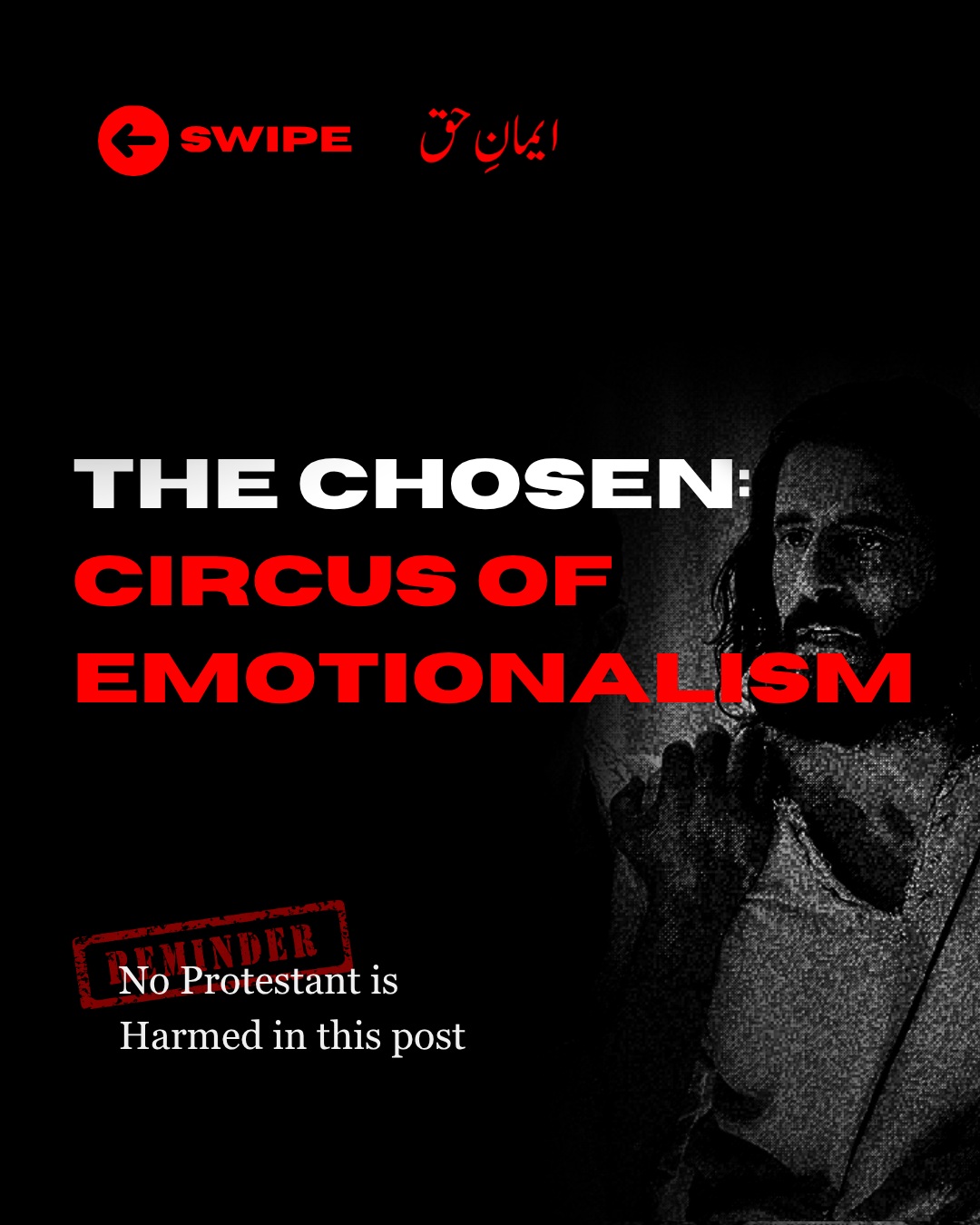
The Chosen's portrayal versus the Rule of Faith

The post addresses the television series The Chosen and its depiction of Jesus Christ. It argues that the series presents a portrayal that can make emotional experience feel like the foundation of faith. The author states that Christianity is not about reconstructing Jesus according to feelings, personal preferences, or cinematic imagination. Instead, it is about knowing the incarnate Son of God as revealed in Scripture, confessed by the…

The post addresses the television series The Chosen and its depiction of Jesus Christ. It argues that the series presents a portrayal that can make emotional experience feel like the foundation of faith. The author states that Christianity is not about reconstructing Jesus according to feelings, personal preferences, or cinematic imagination.

Instead, it is about knowing the incarnate Son of God as revealed in Scripture, confessed by the Apostles, and preserved in the Holy Tradition of the Orthodox Church. The Rule of Faith safeguards the truth about Christ. Theosis calls believers beyond emotional attachment toward genuine transformation and communion with God. The central question is not whether a portrayal moves someone emotionally, but whether it faithfully directs toward the Christ whom the Church confesses, worships, and receives in her sacramental life.

  • The Chosen makes emotional experience the foundation of faith
  • Christianity is knowing the incarnate Son of God revealed in Scripture and Tradition
  • The Rule of Faith safeguards the truth about Christ
  • Theosis calls beyond emotion toward transformation and communion with God
  • The test is whether a portrayal directs to the Christ the Church confesses and receives sacramentally

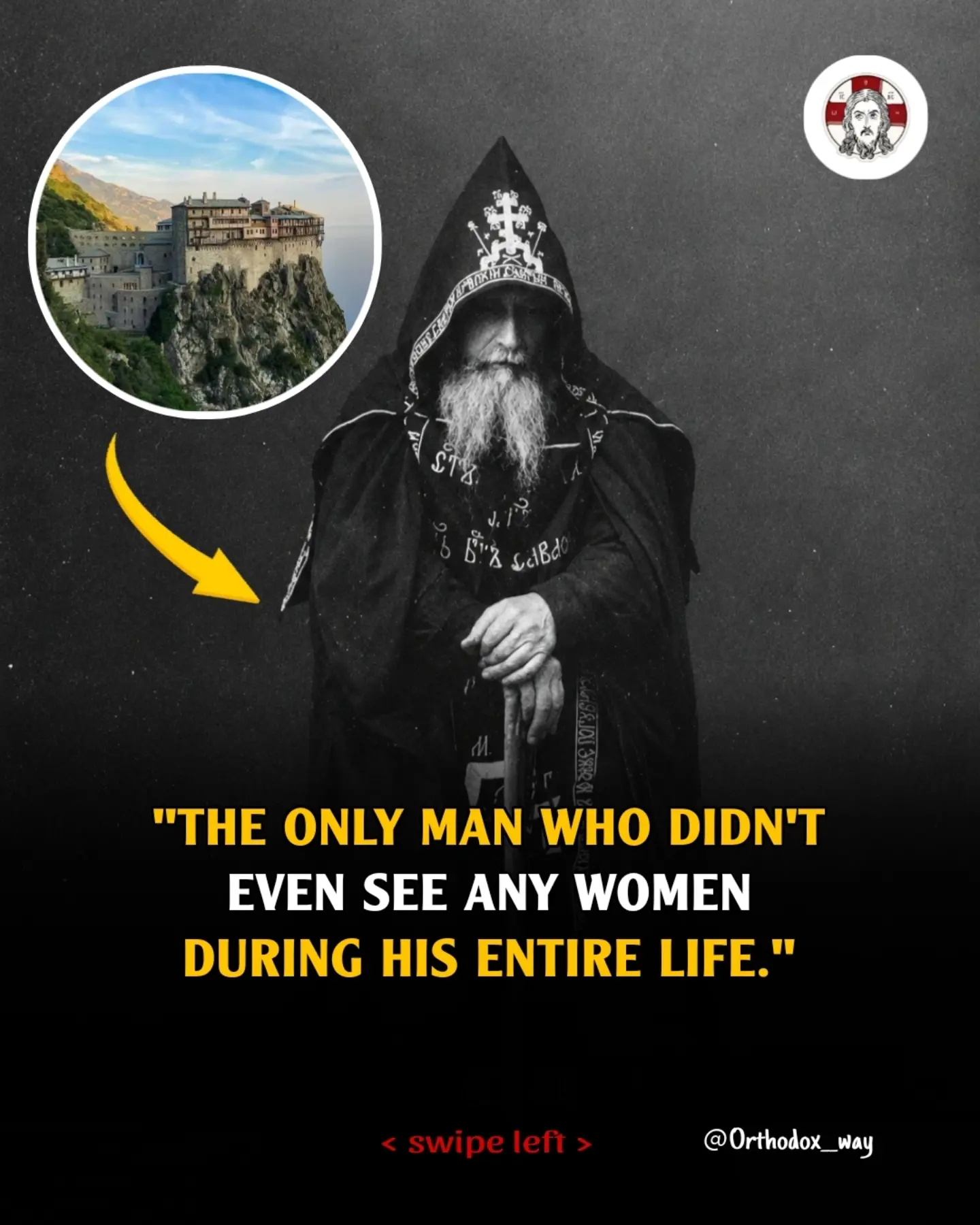
Monk Mihailo Tolotos lived 82 years on Mount Athos without seeing a woman

The text recounts the life of Mihailo Tolotos, a monk born around 1855 on Mount Athos, the Holy Mountain of Eastern Orthodox Christianity in Greece. He lost his mother shortly after birth and was raised by Orthodox monks who brought him up in a life of prayer, worship, obedience, and ascetic discipline. According to tradition, he died in 1938 at the age of 82 without ever having seen a woman. This claim is associated with the Avaton, the ancient…

The text recounts the life of Mihailo Tolotos, a monk born around 1855 on Mount Athos, the Holy Mountain of Eastern Orthodox Christianity in Greece. He lost his mother shortly after birth and was raised by Orthodox monks who brought him up in a life of prayer, worship, obedience, and ascetic discipline. According to tradition, he died in 1938 at the age of 82 without ever having seen a woman.

This claim is associated with the Avaton, the ancient prohibition that bars women from entering the Athonite peninsula. The account presents his story as an illustration of the solitude and devotion that characterize Athonite monasticism, where monks renounce worldly distractions to draw closer to God through humility and continuous prayer.

No further details about his specific monastic duties, writings, or interactions with other monks are provided in the source.

  • Born around 1855, orphaned at birth, raised by monks on Mount Athos
  • Lived under the Avaton, the prohibition against women entering the peninsula
  • Tradition states he died in 1938 without ever seeing a woman
  • Practiced prayer, worship, obedience, and ascetic discipline
  • His life illustrates the Athonite ideal of solitude and devotion
Read more

How to Cense Your Home: Order and Prayers from an Orthodox Family Tradition

This guide walks through the practice of censing the home, from lighting the charcoal to the final blessing of the rooms. After the charcoal is lit and incense or blessed olive leaves are added, one says a prayer before censing: 'Let my prayer be set forth before You as incense; the lifting up of my hands as an evening sacrifice. Hear me, O Lord. We offer incense to You, O Christ our God, as a sweet spiritual fragrance. Having received it upon…

This guide walks through the practice of censing the home, from lighting the charcoal to the final blessing of the rooms. After the charcoal is lit and incense or blessed olive leaves are added, one says a prayer before censing: 'Let my prayer be set forth before You as incense; the lifting up of my hands as an evening sacrifice.

Hear me, O Lord. We offer incense to You, O Christ our God, as a sweet spiritual fragrance. Having received it upon Your heavenly altar, send down upon us in return the grace of your All-Holy Spirit.' The censer is then taken in the right hand. The order of honors follows: the Holy Trinity, Jesus Christ the Son, and the Holy Spirit.

Each honor is given by moving the censer three times in a circular motion while saying, 'In the name of the Father, and of the Son, and of the Holy Spirit. Amen.' For Christ, one turns toward the cross or his icon in the prayer corner. A family tradition from Greece and Cyprus adds a first step: going outside and censing toward the open air in honor of God.

After the Holy Trinity, the icons are censed in one of two ways, either by moving the censer over the icon three times or by making the sign of the cross over the icon three times with the censer, repeating the same words each time. Once all the icons have been censed, one censes oneself, one's loved ones, and the rooms of the home.

The video closes with the reminder that as the incense rises, our prayer also rises before God.

Key moments

  1. Before censing, say the prayer: 'Let my prayer be set forth before You as incense; the lifting up of my hands as an evening sacrifice. Hear me, O Lord. We offer incense to You, O Christ our God, as a sweet spiritual fragrance. Having received it upon Your heavenly altar, send down upon us in return the grace of Your All-Holy Spirit.'
  2. Pick up the censer with the right hand to begin censing.
  3. First honor is given to the Holy Trinity: raise the censer and move it three times in a circular motion while saying 'In the name of the Father, and of the Son, and of the Holy Spirit. Amen.'
  4. In the family tradition from Greece and Cyprus, one first steps outside and censes toward the open air, honoring God.
  5. Second honor is given to Jesus Christ the Son: turn toward the cross or icon of Christ in the prayer corner and cense it three times with the same words.
  6. Third honor is given to the Holy Spirit: raise the censer and cense three times, repeating the same words.
  7. Cense the holy icons in one of two ways: move the censer over the icon three times, or make the sign of the cross over the icon three times with the censer, repeating the same words.
  8. After all icons are censed, cense yourself, your loved ones, and the rooms of your home; as the incense rises, our prayer also rises before God.
Read more

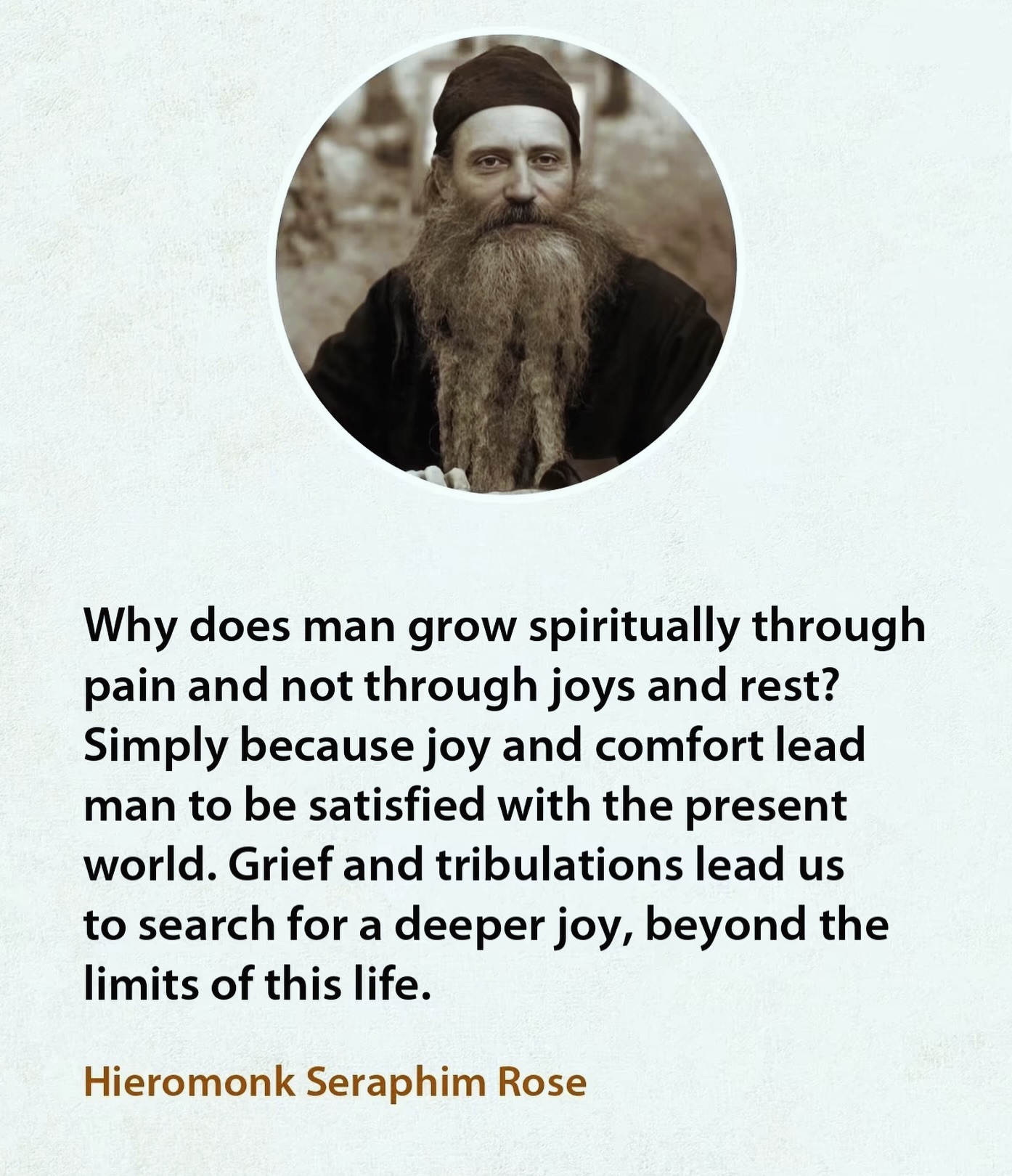
Tribulation as a School of Repentance in the Wisdom of the Holy Fathers

The post sets out a patristic understanding of tribulation: hardship becomes a school of repentance, humility, and purification of the heart. When earthly comforts fade, the author writes, the soul awakens to its longing for the Kingdom of God and cries out more earnestly for Christ. The post quotes the Lord's words from John 16:33: "In the world you will have tribulation; but be of good cheer, I have overcome the world." The author draws a…

The post sets out a patristic understanding of tribulation: hardship becomes a school of repentance, humility, and purification of the heart. When earthly comforts fade, the author writes, the soul awakens to its longing for the Kingdom of God and cries out more earnestly for Christ. The post quotes the Lord's words from John 16:33: "In the world you will have tribulation; but be of good cheer, I have overcome the world."

The author draws a distinction to guard against a misunderstanding: suffering itself is not glorified. What is honored is the grace of God that sustains a person through it. The post then places suffering within the sequence of the Christian life: the Cross precedes the Resurrection, and the path of repentance leads toward the Kingdom.

It closes with a prayer: "Through the prayers of our Holy Fathers, Lord Jesus Christ, have mercy on us and save us. Amen." The post is a short devotional reflection rather than a discussion piece. It presents a single teaching in the voice of the tradition, anchored in one Gospel verse, and ends with a petition rather than an argument.

There is no debate or exchange of views attached to it; the text stands as a statement of belief offered to readers who follow the feed for devotional content. Its key claims are that tribulation can serve the soul's purification, that Christ's victory is the ground of cheerfulness amid trouble, and that the Cross comes before the Resurrection in the order of salvation.

  • Tribulation is described as a school of repentance, humility, and purification of the heart.
  • When earthly comforts fade, the soul awakens to its longing for the Kingdom of God and cries out more earnestly for Christ.
  • The post quotes John 16:33: "In the world you will have tribulation; but be of good cheer, I have overcome the world."
  • The author states that suffering itself is not glorified; the grace of God that sustains us through it is.
  • The Cross precedes the Resurrection, and the path of repentance leads toward the Kingdom; the post closes with a prayer for mercy through the prayers of the Holy Fathers.
Read more

What the Heart Is: Grace Within, the Devil Without

A chapter from the book Orthodox Psychotherapy, titled 'What the Heart Is', describes the heart as the center of the spiritual life and the place of the greatest battle. After Holy Baptism the grace of God is present in the center of the heart, while the devil works from outside. Scripture shows Satan invading hearts: the Apostle Peter asked Ananias why Satan filled his heart to lie to the Holy Spirit, and the devil put into the heart of Judas…

A chapter from the book Orthodox Psychotherapy, titled 'What the Heart Is', describes the heart as the center of the spiritual life and the place of the greatest battle. After Holy Baptism the grace of God is present in the center of the heart, while the devil works from outside. Scripture shows Satan invading hearts: the Apostle Peter asked Ananias why Satan filled his heart to lie to the Holy Spirit, and the devil put into the heart of Judas Iscariot to betray Christ.

The Lord teaches that out of the heart proceed evil thoughts, murders, adulteries, fornications, thefts, false witness and blasphemies. At the same time the heart is the supernatural center where the grace of Christ is active. The Apostle Paul writes that God sent the Spirit of His Son into our hearts crying 'Abba Father', and that the love of God has been poured out in our hearts.

Saint Thalassius writes that a good heart produces good thoughts, because its thoughts correspond to its store of treasure. Saint Diadochus says the grace given at baptism conceals its presence in the baptized, waiting to see which way the soul inclines; when one keeps the commandments and remembers the name of Christ unceasingly, the fire of divine grace spreads to the outward organs of perception and burns up the tears in the field of the soul.

Good and evil thoughts come from the heart, but grace and Satan are not in the same place at the same time. Evil ideas are born from the remembrance of evil and from the attacks of the demons, though we feel they arise from the heart. The breath of the Holy Spirit extinguishes the fiery darts of the devil while they are still in mid-air.

When Christ conquers in the heart, inner and outer peace comes, so the combatant's most important work is to enter his own heart and wage war with Satan.

Key moments

  1. 0:00 After Holy Baptism the grace of God is present in the center of the heart, while the devil works from the outside.
  2. 0:00 The Apostle Peter asked Ananias why Satan filled his heart to lie to the Holy Spirit, and the devil put into the heart of Judas Iscariot to betray Christ.
  3. 0:35 The Lord teaches that out of the heart proceed evil thoughts, murders, adulteries, fornications, thefts, false witness and blasphemies.
  4. 0:35 The heart is also the supernatural center where the grace of Christ is active: Paul writes that God sent the Spirit of His Son into our hearts crying 'Abba Father', and that the love of God has been poured out in our hearts.
  5. 1:05 Saint Thalassius writes that a good heart produces good thoughts, because its thoughts correspond to its store of treasure.
  6. 1:05 Good and evil thoughts come from the heart, but grace and Satan are not in the same place at the same time; evil ideas are born from the remembrance of evil and from the attacks of the demons, though we feel they arise from the heart.
  7. 1:36 Saint Diadochus says the grace of God given at baptism conceals its presence in the baptized, waiting to see which way the soul inclines; when one keeps the commandments and remembers the name of Christ unceasingly, the fire of divine grace spreads to the outward organs of perception and burns up the tears in the field of the soul.
  8. 2:07 The breath of the Holy Spirit extinguishes the fiery darts of the devil while they are still in mid-air; the greatest battle takes place in the heart, and when Christ conquers there, inner and outer peace comes, so the combatant's most important work is to enter his own heart and wage war with Satan.
Read more

A Muslim presses an Orthodox priest to recite the shahada on camera

The video records a street encounter in which a Muslim man addresses an Orthodox priest, greeting him as 'Papaz, my friend', and tries to get him to say the Islamic declaration of faith. The shahada is recited twice in the clip: 'Ashhadu alla ilaha illallah, wa ashhadu anna Muhammadan abduhu wa rasuluh', which confesses that there is no god but Allah and that Muhammad is his servant and messenger. The priest is the person being pressed to repeat…

The video records a street encounter in which a Muslim man addresses an Orthodox priest, greeting him as 'Papaz, my friend', and tries to get him to say the Islamic declaration of faith. The shahada is recited twice in the clip: 'Ashhadu alla ilaha illallah, wa ashhadu anna Muhammadan abduhu wa rasuluh', which confesses that there is no god but Allah and that Muhammad is his servant and messenger.

The priest is the person being pressed to repeat these words, and the exchange is framed by its uploader as an example of harassment tied to apologetics debates between Muslims and Orthodox Christians. The available transcript is fragmentary. After the recitations, the speaker says 'My history, my, alhamdulillah', and the recording offers little further content, so the priest's responses and how the encounter ended cannot be established from the text alone.

The clip is tagged with #islam, #orthodox, #orthodoxchristian, #muslim and #apologetics, indicating it was shared as material in ongoing religious polemics. Readers should treat it as a short, one-sided fragment of a longer conversation rather than a complete record of the exchange.

Key moments

  1. A speaker greets another with 'Papaz, my friend'.
  2. The shahada is recited twice: 'Ashhadu alla ilaha illallah, wa ashhadu anna Muhammadan abduhu wa rasuluh'.
  3. The speaker says 'My history, my, alhamdulillah'.
Read more

Converts from Protestantism and Catholicism are reaching out to an Orthodox priest daily

The author, an Orthodox priest, writes that he receives messages nearly every day from people who are coming into the Orthodox Church. He says these inquirers and converts come from Protestant backgrounds, Catholic backgrounds, and other groups. He is careful to attribute the movement to God rather than to himself, writing that it has nothing to do with him and that all glory belongs to God. In his words, God is moving and calling His people…

The author, an Orthodox priest, writes that he receives messages nearly every day from people who are coming into the Orthodox Church. He says these inquirers and converts come from Protestant backgrounds, Catholic backgrounds, and other groups. He is careful to attribute the movement to God rather than to himself, writing that it has nothing to do with him and that all glory belongs to God.

In his words, God is moving and calling His people into the Ark of Salvation, a traditional Orthodox image for the Church. The post carries hashtags for Orthodox Christianity, Catholicism, Protestantism, and apologetics, and it ends with an Orthodox cross symbol. Because the post is short, the substance is the priest's own testimony: a steady, near-daily stream of messages from people outside Orthodoxy who are seeking to join the Church.

He presents this as evidence of God's action rather than as the result of his own work or outreach. The post does not name specific individuals, numbers, or stories, and no further discussion or replies are included in the source text. It stands as a brief public witness from a priest who says he is personally witnessing a flow of converts from other Christian traditions into Orthodoxy.

  • The author says he receives similar messages nearly every day from people coming into the Orthodox Church.
  • Those reaching out come from Protestant, Catholic, and other groups.
  • He attributes the movement to God, not to himself: 'It has nothing to do with me. All Glory to God.'
  • He describes God as calling His people into the Ark of Salvation, an image for the Church.
  • The post is tagged with Orthodox, Catholic, Protestant, and apologetics hashtags.
Read more

Metropolitan Saba: seek out those absent from the church

Metropolitan Saba says: "We have an opportunity to search for those who have been absent from the church lest they fall away forever, seeking them out for the sake of their salvation."

  • Search for those absent from the church before they fall away forever
  • Seek them out for the sake of their salvation
6 opinions in the discussion "Let anyone who thinks that he stands take heed lest he fall." 1 Corinthians 10:12 Read the discussion

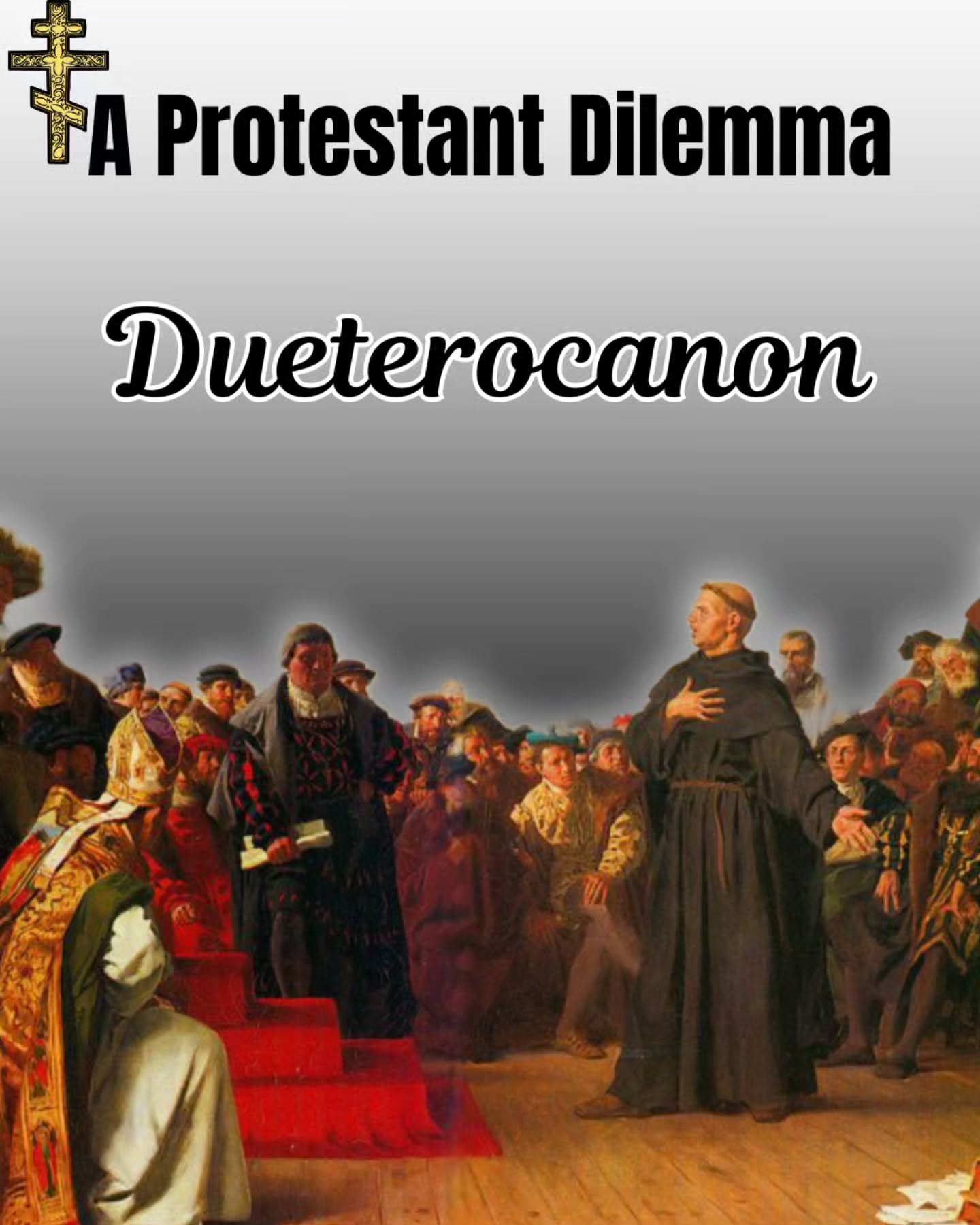
Another question for Protestants: who decided which books are Scripture?

The author raises a familiar but persistent objection to the Protestant rejection of the Deuterocanon, the books such as Tobit, Judith, Wisdom, and the Maccabees that Catholics and Orthodox receive as Scripture but that Protestants place in the Apocrypha. The author notes this is not a first attempt at the topic; they have written on it several times before. What they want to press this time is not the usual historical argument about whether…

The author raises a familiar but persistent objection to the Protestant rejection of the Deuterocanon, the books such as Tobit, Judith, Wisdom, and the Maccabees that Catholics and Orthodox receive as Scripture but that Protestants place in the Apocrypha. The author notes this is not a first attempt at the topic; they have written on it several times before.

What they want to press this time is not the usual historical argument about whether those books belonged in the canon, but an epistemological one: a question about how anyone knows which books are Scripture in the first place. The framing points to the historical Church, the formation of the biblical canon, and the authority that was used to determine which writings count as Scripture.

The implied challenge is that a Protestant who rejects the Deuterocanon must appeal to some standard for making that rejection, and the author suggests that standard deserves examination. If the canon is not self-evident, then some authority, whether the early Church's discernment, councils, or individual judgment, had to settle the list of books, and that authority question cuts against a position that sets Scripture against Church tradition.

The post is short and framed as a prompt for discussion rather than a developed argument, tagged for a general Christian audience. It invites readers to consider how the canon was recognized in the early Church and what that means for the Protestant position on the Deuterocanon.

  • The author has critiqued the Protestant rejection of the Deuterocanon several times before and returns to the topic again.
  • This critique focuses on an epistemological question rather than the usual historical arguments.
  • The question concerns how anyone knows which books are Scripture.
  • The author points to the historical Church, the biblical canon, and the authority used to determine Scripture.
  • The post is framed as a prompt for discussion, not a developed argument.
Read more

Pastor has children smash statue of Mary, says he would smash one of Jesus too

The speaker reacts to a Baptist pastor named Shelly who had children smash statues of the Blessed Theotokos. The pastor added that if somebody sends him a statue of Jesus, he would have them destroy it the same way. The speaker says he is convinced that Baptists do not worship the same God as Orthodox Christians, and he calls the practice disgusting. He objects especially to the fact that children are being made to do the smashing, saying it is…

The speaker reacts to a Baptist pastor named Shelly who had children smash statues of the Blessed Theotokos. The pastor added that if somebody sends him a statue of Jesus, he would have them destroy it the same way. The speaker says he is convinced that Baptists do not worship the same God as Orthodox Christians, and he calls the practice disgusting.

He objects especially to the fact that children are being made to do the smashing, saying it is worse that images of Jesus Christ are destroyed this way by children. The post carries hashtags pointing to Catholic and Orthodox audiences and to apologetics discussions.

Key moments

  1. The speaker states he is fully convinced Baptists do not worship the same God as Orthodox Christians.
  2. He mentions Baptist pastor Shelly, who had children smash statues of the Blessed Theotokos.
  3. The pastor says that if somebody sends him a statue of Jesus, he will do the same thing to the statue of Jesus.
  4. The speaker calls the practice disgusting and objects that children are being made to smash images of Jesus Christ.
Read more

Why 'Scripture Alone' Falls Apart Without the Early Church

A speaker answers a commenter who asks why the early church should be treated as an infallible authority when its members were ordinary people filled with the same Holy Spirit. He responds that Christ promised to lead and guide his church, and that in the first century that church was the Orthodox Catholic Church, which he calls a historically undeniable fact. He then traces the sequence of schisms: the West split from the Orthodox Church a…

A speaker answers a commenter who asks why the early church should be treated as an infallible authority when its members were ordinary people filled with the same Holy Spirit. He responds that Christ promised to lead and guide his church, and that in the first century that church was the Orthodox Catholic Church, which he calls a historically undeniable fact.

He then traces the sequence of schisms: the West split from the Orthodox Church a thousand years after the church's establishment, Protestants split from the Catholics 500 years later, and another split 200 to 300 years after that produced non-denominational and Baptist type churches. Anyone in those groups, he argues, stands outside the body to whom the promise was made, so they can make correct inferences from Scripture but never reach certitude unless they rejoin the Orthodox Church.

He cites John 17, the high priestly prayer where Jesus prays that they may be one, and Acts 2, verses 42 through 46, as the fulfillment of that unity. He adds that a Protestant may hold correct teachings, such as monarchical Trinitarianism, but has no way to ground them. If such a person appeals to the early church while rejecting other early teachings, he is picking and choosing.

The discussion turns on whether authority rests in Scripture read privately or in the church that Christ promised to guide, and what it would take for someone outside the Orthodox Church to have certainty in doctrine.

Key moments

  1. 0:00 A commenter asks why the early church should be an infallible authority when its members were people like us, filled with the same Holy Spirit.
  2. 1:07 The speaker answers that Christ promised to lead and guide his church, and in the first century that church was the Orthodox Catholic Church, which he calls a historically undeniable fact.
  3. 1:07 He lists the schisms: the West split from the Orthodox Church 1000 years after the church's founding, Protestants split from Catholics 500 years later, and 200 to 300 years after that non-denominational and Baptist type churches emerged.
  4. 1:42 Anyone in those schismed groups is not part of the body the promise was made to, so they can make correct inferences from Scripture but never have certitude unless they rejoin the Orthodox Church.
  5. 2:17 He cites John 17, the high priestly prayer where Jesus prays that they may be one, and Acts 2 verses 42 through 46 as the fulfillment of that unity.
  6. 2:47 A Protestant may hold correct teachings like monarchical Trinitarianism, but cannot ground them, and appealing to the early church while rejecting other teachings is picking and choosing.
7 opinions in the discussion Well explained, but I don't get it. If you agree it's the "Orthodox" Catholic Church, why leave out the Orthodox part and be vague about whether you mean the Universal Catholic Church? Read the discussion

Attracting a Woman Is Not the Same as Being Ready for Marriage

A viewer messaged the speaker after one of his videos, saying he works on himself yet watches less disciplined, more lustful men get girlfriends. The speaker answers that getting a girlfriend proves nothing about readiness for a relationship. Many relationships turn dysfunctional, many marriages end in divorce, and many couples stay together while miserable, so simply entering a relationship is not the goal. He warns against the belief that a…

A viewer messaged the speaker after one of his videos, saying he works on himself yet watches less disciplined, more lustful men get girlfriends. The speaker answers that getting a girlfriend proves nothing about readiness for a relationship. Many relationships turn dysfunctional, many marriages end in divorce, and many couples stay together while miserable, so simply entering a relationship is not the goal.

He warns against the belief that a woman will fill an inner emptiness. That belief loads her with a burden she was never designed to carry. For a Christian man the order of priorities matters: God first, then purpose, character, and responsibilities, then the woman he is called to love.

The speaker quotes Matthew 6:33: 'Seek first the kingdom of God and His righteousness, and all these things shall be added to you.' He clarifies that this does not require becoming perfect before dating. The real question is different: instead of asking why others have girlfriends while you do not, ask whether you are becoming a man capable of loving a wife properly when she arrives.

In the written text accompanying the video, the speaker says attraction and building a faithful, lasting marriage are two different things. He tells men not to compare themselves to men who seem to have what they want. A man should work on faith, discipline, integrity, and responsibility, prepare for the duties of marriage, and put God first while building his character and pursuing his purpose.

The closing line of the video: a girlfriend is not the reward for becoming a better man; becoming a better man means becoming the person God called you to be, whether you are single or not.

Key moments

  1. A viewer messaged the speaker saying he is improving himself but sees more lustful men without their lives together still getting girlfriends.
  2. The speaker replies that getting a girlfriend is not proof you are ready for a relationship.
  3. Many relationships become dysfunctional, many marriages end in divorce, and many people stay together while miserable, so simply getting into a relationship is not the goal.
  4. Men who think a woman will make their life complete place on her a responsibility she was never designed to carry.
  5. For a Christian man the order is God first, then purpose, character, and responsibilities, then the woman you are called to love.
  6. He quotes Matthew 6:33: 'Seek first the kingdom of God and His righteousness, and all these things shall be added to you.'
  7. This does not mean becoming perfect before dating; instead of asking why others have girlfriends, ask whether you are becoming a man capable of loving a wife properly when she arrives.
  8. A girlfriend is not the reward of becoming a better man; becoming a better man is becoming the person God called you to be whether you are single or not.

All Roads Lead To Constantinople: Thomism, Aquinas and the Church Fathers

The post consists of a short caption, 'All Roads Lead To Constantinople', followed by hashtags naming Thomism, Thomas Aquinas, the Church Fathers and Orthodoxy. No further text, argument or source material accompanies the caption, so the post itself offers only the slogan and the topics it points to. The phrase suggests a line of thought connecting Western scholastic theology, represented by Thomas Aquinas and the Thomist tradition, with the…

The post consists of a short caption, 'All Roads Lead To Constantinople', followed by hashtags naming Thomism, Thomas Aquinas, the Church Fathers and Orthodoxy. No further text, argument or source material accompanies the caption, so the post itself offers only the slogan and the topics it points to. The phrase suggests a line of thought connecting Western scholastic theology, represented by Thomas Aquinas and the Thomist tradition, with the Orthodox East and the Church Fathers, with Constantinople standing as the focal point.

Because the original post contains no body text, no claims can be attributed to its author beyond the caption and the choice of tags. Readers opening the thread will find the four tagged subjects: the theological system associated with Aquinas, the saint himself, the patristic writers of the early Church, and Orthodox Christianity.

The discussion that the tags imply would concern how these areas relate to one another, but the post does not state any position on that question. Anyone interested in the relationship between Latin scholasticism and Orthodox tradition, or in how the Fathers are read on both sides, will find here a prompt built around a single phrase and four topics rather than a developed argument.

  • The caption reads 'All Roads Lead To Constantinople'.
  • Hashtags name Thomism, Thomas Aquinas, the Church Fathers and Orthodoxy.
  • The post contains no body text beyond the caption and tags.
  • Constantinople is presented as the point toward which the tagged topics lead.
  • No argument or position is stated in the original post.
14 opinions in the discussion theres a good debate/discussion on youtube between a scholar and a dominican priest thats really pretty good. palamism "wins" in that discussion imo but its worth the watch and will dispel… Read the discussion

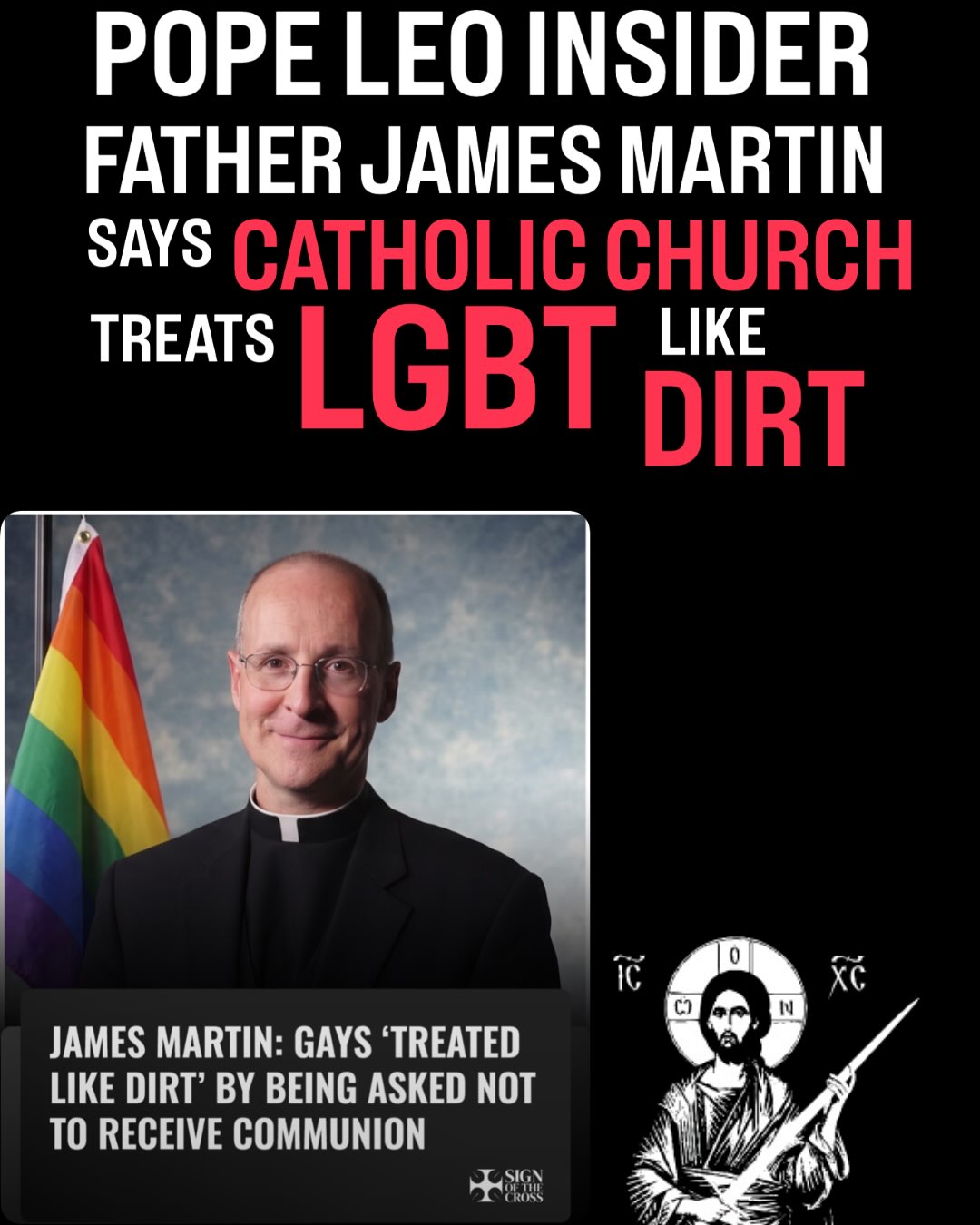
Fr James Martin says the Catholic Church treats LGBT people like dirt over the Eucharist

Fr James Martin says the Catholic Church treats LGBT people like dirt for not giving them the Eucharist.

  • Fr James Martin criticizes the Catholic Church for denying the Eucharist to LGBT people
28 opinions in the discussion Bro, if a priest knows you are in a state of mortal sin, they are required to withhold the Eucharist. Are they not? Read the discussion
Eastern Orthodoxy Daily He/Who/Is Instagram

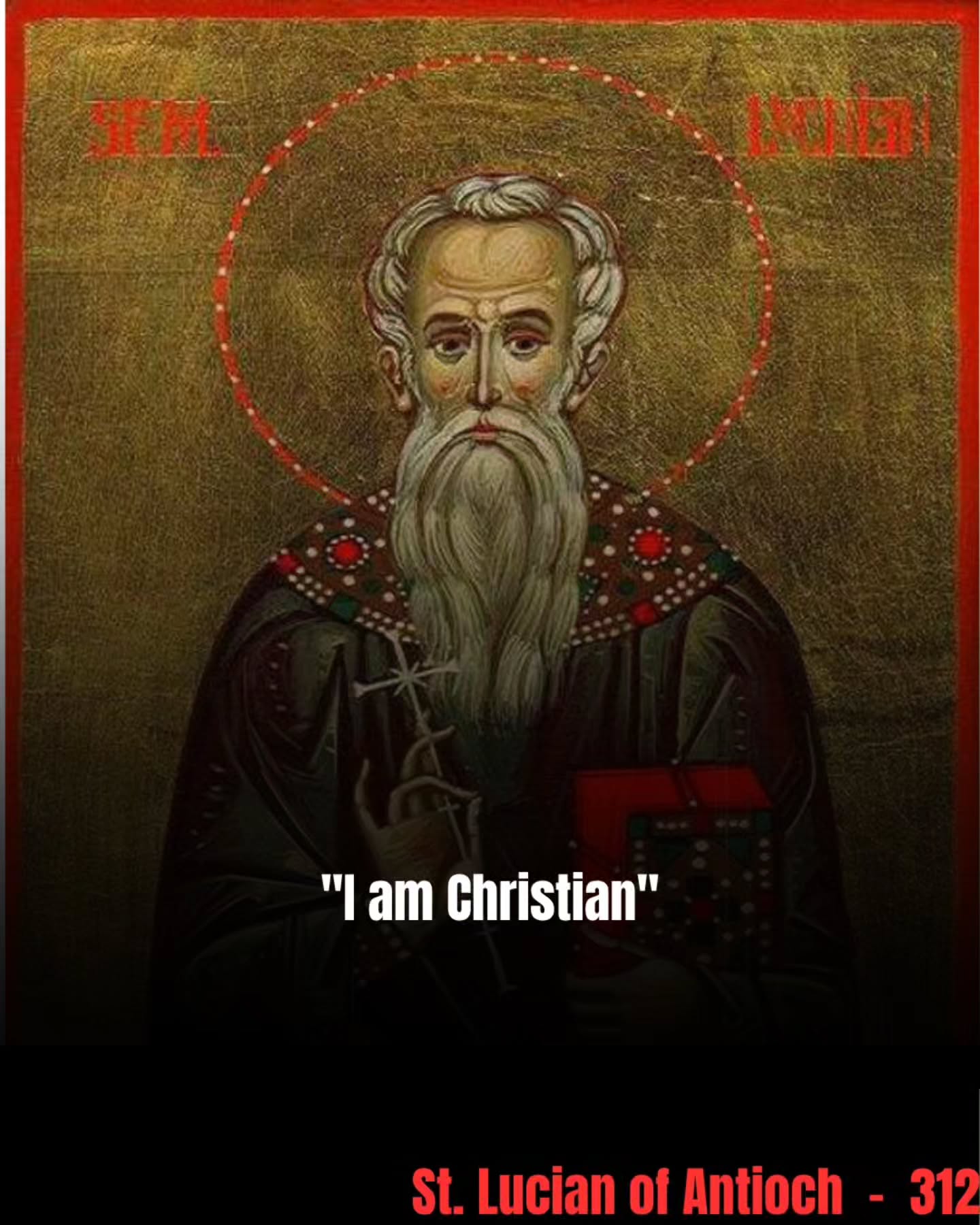
St. Lucian of Antioch: The Martyr Who Celebrated the Eucharist on His Own Chest

The post commemorates St. Lucian of Antioch, a priest, scholar and early Christian martyr remembered on October 15. Lucian died around 312 during the persecution under Emperor Maximinus Daia. The post describes his imprisonment and torture for refusing to renounce Christ: he endured starvation and was forced to lie on sharp pottery fragments. According to the sources the post cites, he celebrated his final Eucharist while in prison, using his…

The post commemorates St. Lucian of Antioch, a priest, scholar and early Christian martyr remembered on October 15. Lucian died around 312 during the persecution under Emperor Maximinus Daia. The post describes his imprisonment and torture for refusing to renounce Christ: he endured starvation and was forced to lie on sharp pottery fragments.

According to the sources the post cites, he celebrated his final Eucharist while in prison, using his own chest as the altar. When he was questioned about his faith, his confession was the short statement: 'I am a Christian.' The post gives his final words before death as the same simple declaration. The text presents these details as an account of loyalty to Christ under persecution and closes with hashtags marking it as a prayer post on Orthodox saints and Christianity.

There is no further discussion in the post itself; it stands as a brief notice of the saint's feast day and the circumstances of his witness and death.

  • St. Lucian of Antioch, priest and scholar, is commemorated on October 15 as a martyr.
  • He died around 312 under Emperor Maximinus Daia after imprisonment and torture for refusing to renounce Christ.
  • He endured starvation and was made to lie on sharp pottery fragments.
  • Sources say he celebrated his final Eucharist in prison, using his own chest as the altar.
  • Questioned about his faith, he confessed: 'I am a Christian,' given as his final words before death.
Read more

Paid spiritual mentorship versus the free keys to the Kingdom

The author recalls a conflict on TikTok with a former felon who built a platform on his criminal record, made money in trucking, and then sold courses to vulnerable people from similar backgrounds. The author says those courses actually taught freight fraud and cheated buyers. He sees the same pattern among new age spiritual creators: they may give real guidance and have testimonies to support it, but exceptions do not change the rule. The world…

The author recalls a conflict on TikTok with a former felon who built a platform on his criminal record, made money in trucking, and then sold courses to vulnerable people from similar backgrounds. The author says those courses actually taught freight fraud and cheated buyers. He sees the same pattern among new age spiritual creators: they may give real guidance and have testimonies to support it, but exceptions do not change the rule.

The world is hurting and people are lost, and selling recycled philosophy as comfort instead of offering humility is something he cannot accept. In the Orthodox view, the keys to the Kingdom are free, given by the God-man Jesus Christ, and their proof is the Gospel and the lives of the Saints. Christ, the Apostles, and the Saints never charged money for healing or miracles.

In the accompanying video, the speaker responds to a clip he identifies as new age, Gnostic, or pantheist. He agrees that God is not a man in the sky apart from us, and Orthodox prayers say God is everywhere present and fills all things. But he objects to mixing God with creation: God made the world from nothing and is present in it without being made of it, and confusing the two is what Saint Paul calls worshipping the creature rather than the creator.

He contrasts sellers of secret knowledge with the Orthodox Church, which hides nothing; monasteries freely teach prayer, fasting, repentance, and humility. He closes by saying such philosophy is meaningless because it does not solve death, which only the God-man Christ solved for all mankind, and that charging thousands of dollars for one-on-one mentorship shows its center is money, not spirituality.

Key moments

  1. 0:00 The speaker identifies the video as new age, Gnosticism, or pantheism, and says this spirituality misses salvation.
  2. 0:30 God made the world from nothing; he is present in it but not made of it, and mixing the two is what Saint Paul calls worshipping the creature rather than the creator.
  3. 0:30 The creator is not the creation; he came to meet us in it, and the invitation is to know him, not just feel him.
  4. 1:01 New age and Gnostic creators sell secret knowledge through courses and mentoring, but there is no secret in the Orthodox Church; monasteries freely teach prayer, fasting, repentance, and humility.
  5. 1:31 The playbook of the saints and elders is laid out for everyone, and new age information is repackaged and recycled philosophy.
  6. 2:03 This philosophy and progress are meaningless if they do not solve the fact that we die; only the God-man Christ solved death, and he solved it for all mankind.
  7. 2:03 The speaker criticizes the lack of humility in charging thousands of dollars for a one-on-one mentorship while people are lost and searching for meaning.
  8. 2:33 The creator says 'F the system' while being part of it, because at the center of it all is money, not spirituality.
Read more

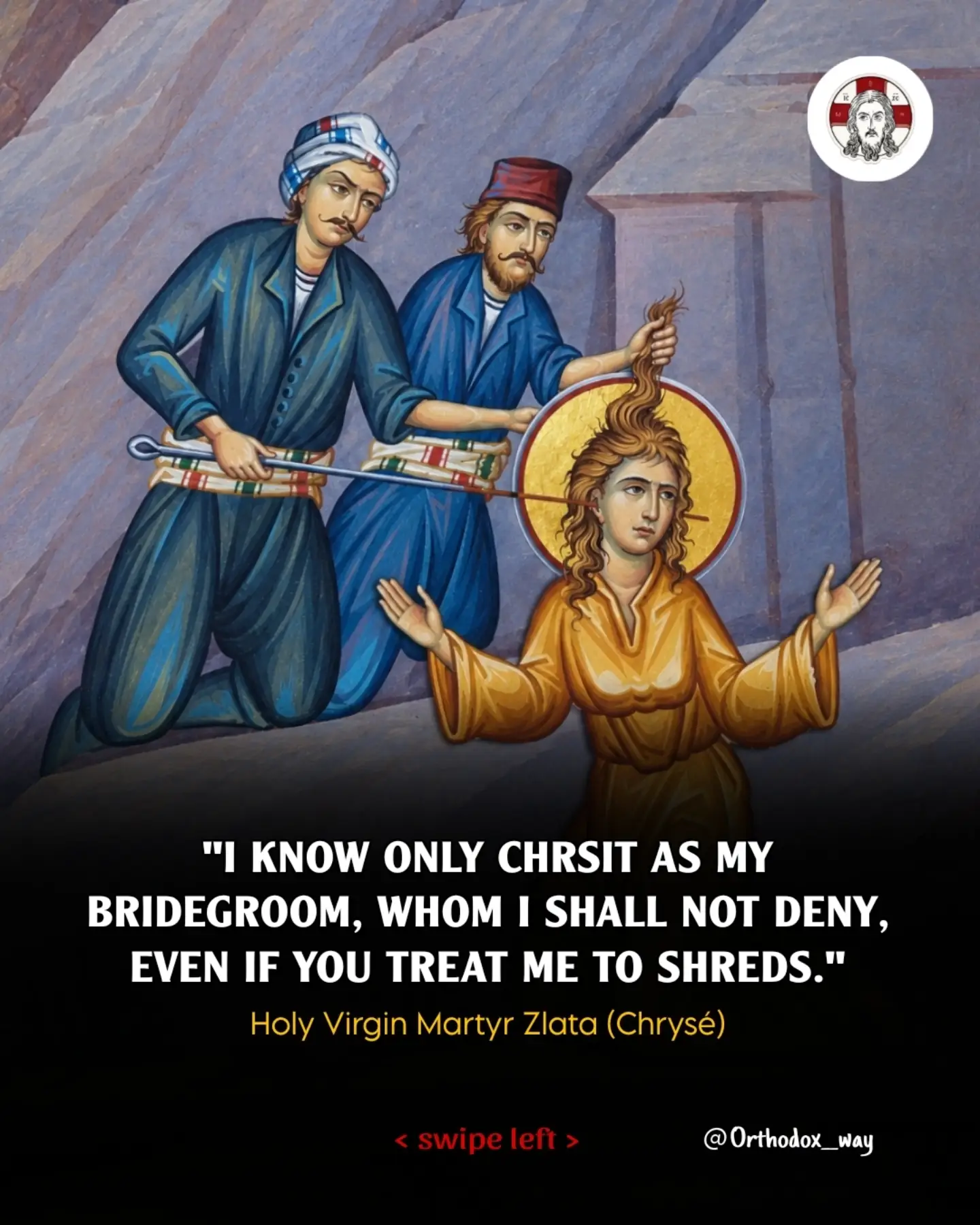
Saint Zlata of Meglena: A New Martyr Who Refused to Renounce Christ

The post tells the life of Saint Zlata of Meglena, a New Martyr of the Eastern Orthodox Church. Zlata was born in the 18th century to a poor peasant family in the village of Slatina in the Meglen region, in what is now Greece, at a time when the Balkans were under Ottoman rule. She grew up known for her piety and virtue. Her life changed when a local Ottoman man kidnapped her and demanded that she convert to Islam and marry him. For months she…

The post tells the life of Saint Zlata of Meglena, a New Martyr of the Eastern Orthodox Church. Zlata was born in the 18th century to a poor peasant family in the village of Slatina in the Meglen region, in what is now Greece, at a time when the Balkans were under Ottoman rule. She grew up known for her piety and virtue. Her life changed when a local Ottoman man kidnapped her and demanded that she convert to Islam and marry him.

For months she endured pressure, false promises of wealth, and psychological manipulation, and she refused to give up her Christian faith. When her captors saw that her resolve could not be broken, they tortured her: she was locked in a dark cell and flogged daily for months. The local authorities then brought her family to the prison, using her weeping parents and sisters to pressure her through fear for their safety.

She refused again and said that her true family was Christ, the Virgin Mary, and the saints. Having exhausted every means of coercion, her tormentors took her outside, tied her to a tree, and cut her body to pieces on October 18, 1795. Local Christians secretly gathered her relics. The Church canonized her as a New Martyr, and the post presents her as an example of steadfast faith under persecution.

  • Saint Zlata was born in the 18th century in Slatina, in the Meglen region of modern-day Greece, to a poor peasant family under Ottoman rule.
  • An Ottoman man kidnapped her and demanded she convert to Islam and marry him; she refused despite months of pressure, promises of wealth, and manipulation.
  • She was imprisoned and flogged daily, and her family was brought to the prison to pressure her; she said her true family was Christ, the Virgin Mary, and the saints.
  • She was martyred on October 18, 1795, tied to a tree and cut to pieces after her captors exhausted all means of coercion.
  • Local Christians secretly collected her relics, and the Eastern Orthodox Church canonized her as a New Martyr.
Read more