WeOrthodox
EN UA

Disgruntled Docs

Instagram ↗ 117 discussions

Doc posting memes ☦️ Reader Nektarios Veteran owned All my opinions are my own

What the Heart Is: Grace Within, the Devil Without

A chapter from the book Orthodox Psychotherapy, titled 'What the Heart Is', describes the heart as the center of the spiritual life and the place of the greatest battle. After Holy Baptism the grace of God is present in the center of the heart, while the devil works from outside. Scripture shows Satan invading hearts: the Apostle Peter asked Ananias why Satan filled his heart to lie to the Holy Spirit, and the devil put into the heart of Judas…

A chapter from the book Orthodox Psychotherapy, titled 'What the Heart Is', describes the heart as the center of the spiritual life and the place of the greatest battle. After Holy Baptism the grace of God is present in the center of the heart, while the devil works from outside. Scripture shows Satan invading hearts: the Apostle Peter asked Ananias why Satan filled his heart to lie to the Holy Spirit, and the devil put into the heart of Judas Iscariot to betray Christ.

The Lord teaches that out of the heart proceed evil thoughts, murders, adulteries, fornications, thefts, false witness and blasphemies. At the same time the heart is the supernatural center where the grace of Christ is active. The Apostle Paul writes that God sent the Spirit of His Son into our hearts crying 'Abba Father', and that the love of God has been poured out in our hearts.

Saint Thalassius writes that a good heart produces good thoughts, because its thoughts correspond to its store of treasure. Saint Diadochus says the grace given at baptism conceals its presence in the baptized, waiting to see which way the soul inclines; when one keeps the commandments and remembers the name of Christ unceasingly, the fire of divine grace spreads to the outward organs of perception and burns up the tears in the field of the soul.

Good and evil thoughts come from the heart, but grace and Satan are not in the same place at the same time. Evil ideas are born from the remembrance of evil and from the attacks of the demons, though we feel they arise from the heart. The breath of the Holy Spirit extinguishes the fiery darts of the devil while they are still in mid-air.

When Christ conquers in the heart, inner and outer peace comes, so the combatant's most important work is to enter his own heart and wage war with Satan.
Key moments

  1. 0:00 After Holy Baptism the grace of God is present in the center of the heart, while the devil works from the outside.
  2. 0:00 The Apostle Peter asked Ananias why Satan filled his heart to lie to the Holy Spirit, and the devil put into the heart of Judas Iscariot to betray Christ.
  3. 0:35 The Lord teaches that out of the heart proceed evil thoughts, murders, adulteries, fornications, thefts, false witness and blasphemies.
  4. 0:35 The heart is also the supernatural center where the grace of Christ is active: Paul writes that God sent the Spirit of His Son into our hearts crying 'Abba Father', and that the love of God has been poured out in our hearts.
  5. 1:05 Saint Thalassius writes that a good heart produces good thoughts, because its thoughts correspond to its store of treasure.
  6. 1:05 Good and evil thoughts come from the heart, but grace and Satan are not in the same place at the same time; evil ideas are born from the remembrance of evil and from the attacks of the demons, though we feel they arise from the heart.
  7. 1:36 Saint Diadochus says the grace of God given at baptism conceals its presence in the baptized, waiting to see which way the soul inclines; when one keeps the commandments and remembers the name of Christ unceasingly, the fire of divine grace spreads to the outward organs of perception and burns up the tears in the field of the soul.
  8. 2:07 The breath of the Holy Spirit extinguishes the fiery darts of the devil while they are still in mid-air; the greatest battle takes place in the heart, and when Christ conquers there, inner and outer peace comes, so the combatant's most important work is to enter his own heart and wage war with Satan.
Read more

A Muslim presses an Orthodox priest to recite the shahada on camera

The video records a street encounter in which a Muslim man addresses an Orthodox priest, greeting him as 'Papaz, my friend', and tries to get him to say the Islamic declaration of faith. The shahada is recited twice in the clip: 'Ashhadu alla ilaha illallah, wa ashhadu anna Muhammadan abduhu wa rasuluh', which confesses that there is no god but Allah and that Muhammad is his servant and messenger. The priest is the person being pressed to repeat…

The video records a street encounter in which a Muslim man addresses an Orthodox priest, greeting him as 'Papaz, my friend', and tries to get him to say the Islamic declaration of faith. The shahada is recited twice in the clip: 'Ashhadu alla ilaha illallah, wa ashhadu anna Muhammadan abduhu wa rasuluh', which confesses that there is no god but Allah and that Muhammad is his servant and messenger.

The priest is the person being pressed to repeat these words, and the exchange is framed by its uploader as an example of harassment tied to apologetics debates between Muslims and Orthodox Christians. The available transcript is fragmentary. After the recitations, the speaker says 'My history, my, alhamdulillah', and the recording offers little further content, so the priest's responses and how the encounter ended cannot be established from the text alone.

The clip is tagged with #islam, #orthodox, #orthodoxchristian, #muslim and #apologetics, indicating it was shared as material in ongoing religious polemics. Readers should treat it as a short, one-sided fragment of a longer conversation rather than a complete record of the exchange.

Key moments

  1. A speaker greets another with 'Papaz, my friend'.
  2. The shahada is recited twice: 'Ashhadu alla ilaha illallah, wa ashhadu anna Muhammadan abduhu wa rasuluh'.
  3. The speaker says 'My history, my, alhamdulillah'.
Read more
Disgruntled Docs with Trust God ☦︎︎︎ Instagram

St John Chrysostom on Guarding the Tongue

The post shares a short quotation attributed to St John Chrysostom: 'Lest us always guard our tongue; not that it should always be silent, but that it should speak at the proper time.' The saying draws a distinction between silence and discretion. Guarding the tongue, in the saint's words, does not mean never speaking; it means speaking at the proper time. The post presents the quote as a stand-alone saying for readers, with hashtags marking it…

The post shares a short quotation attributed to St John Chrysostom: 'Lest us always guard our tongue; not that it should always be silent, but that it should speak at the proper time.' The saying draws a distinction between silence and discretion. Guarding the tongue, in the saint's words, does not mean never speaking; it means speaking at the proper time.

The post presents the quote as a stand-alone saying for readers, with hashtags marking it as a saints' quote and Orthodox Christian quote. There is no further commentary, story, or discussion attached to the post; it consists of the quotation and its attribution alone.

  • The post quotes St John Chrysostom on guarding the tongue.
  • The quote says the tongue should not always be silent.
  • It says speech should come at the proper time.
  • The post offers the quote alone, with no added commentary.
  • It is tagged as an Orthodox saints' quote.
Read more

Converts from Protestantism and Catholicism are reaching out to an Orthodox priest daily

The author, an Orthodox priest, writes that he receives messages nearly every day from people who are coming into the Orthodox Church. He says these inquirers and converts come from Protestant backgrounds, Catholic backgrounds, and other groups. He is careful to attribute the movement to God rather than to himself, writing that it has nothing to do with him and that all glory belongs to God. In his words, God is moving and calling His people…

The author, an Orthodox priest, writes that he receives messages nearly every day from people who are coming into the Orthodox Church. He says these inquirers and converts come from Protestant backgrounds, Catholic backgrounds, and other groups. He is careful to attribute the movement to God rather than to himself, writing that it has nothing to do with him and that all glory belongs to God.

In his words, God is moving and calling His people into the Ark of Salvation, a traditional Orthodox image for the Church. The post carries hashtags for Orthodox Christianity, Catholicism, Protestantism, and apologetics, and it ends with an Orthodox cross symbol. Because the post is short, the substance is the priest's own testimony: a steady, near-daily stream of messages from people outside Orthodoxy who are seeking to join the Church.

He presents this as evidence of God's action rather than as the result of his own work or outreach. The post does not name specific individuals, numbers, or stories, and no further discussion or replies are included in the source text. It stands as a brief public witness from a priest who says he is personally witnessing a flow of converts from other Christian traditions into Orthodoxy.

  • The author says he receives similar messages nearly every day from people coming into the Orthodox Church.
  • Those reaching out come from Protestant, Catholic, and other groups.
  • He attributes the movement to God, not to himself: 'It has nothing to do with me. All Glory to God.'
  • He describes God as calling His people into the Ark of Salvation, an image for the Church.
  • The post is tagged with Orthodox, Catholic, Protestant, and apologetics hashtags.
Read more
Disgruntled Docs with Theophan Instagram

Protesters demand Orthodox walk on flags of Patriarch Kirill and Putin

The video shows a confrontation in which radicals and protesters associated with the OCU try to force Ukrainian Orthodox faithful to walk on a flag bearing the images of Patriarch Kirill and Vladimir Putin. One of the faithful tries to pick the flag up rather than step on it. The audio of the recording consists of a single phrase, 'Get out to Russia!', shouted in Russian over and over. No other speech appears in the transcript: no names, dates…

The video shows a confrontation in which radicals and protesters associated with the OCU try to force Ukrainian Orthodox faithful to walk on a flag bearing the images of Patriarch Kirill and Vladimir Putin. One of the faithful tries to pick the flag up rather than step on it. The audio of the recording consists of a single phrase, 'Get out to Russia!', shouted in Russian over and over.

No other speech appears in the transcript: no names, dates or explanations are given, and the repeated chant is the only content of the recording. The visual content and the audio together show the pressure placed on the faithful and the refusal of at least one person to comply with the demand to step on the flag.

Key moments

  1. The phrase 'Get out to Russia!' is repeated continuously throughout the recording, with no other speech or content present.
Read more

Metropolitan Saba: seek out those absent from the church

Metropolitan Saba says: "We have an opportunity to search for those who have been absent from the church lest they fall away forever, seeking them out for the sake of their salvation."

  • Search for those absent from the church before they fall away forever
  • Seek them out for the sake of their salvation
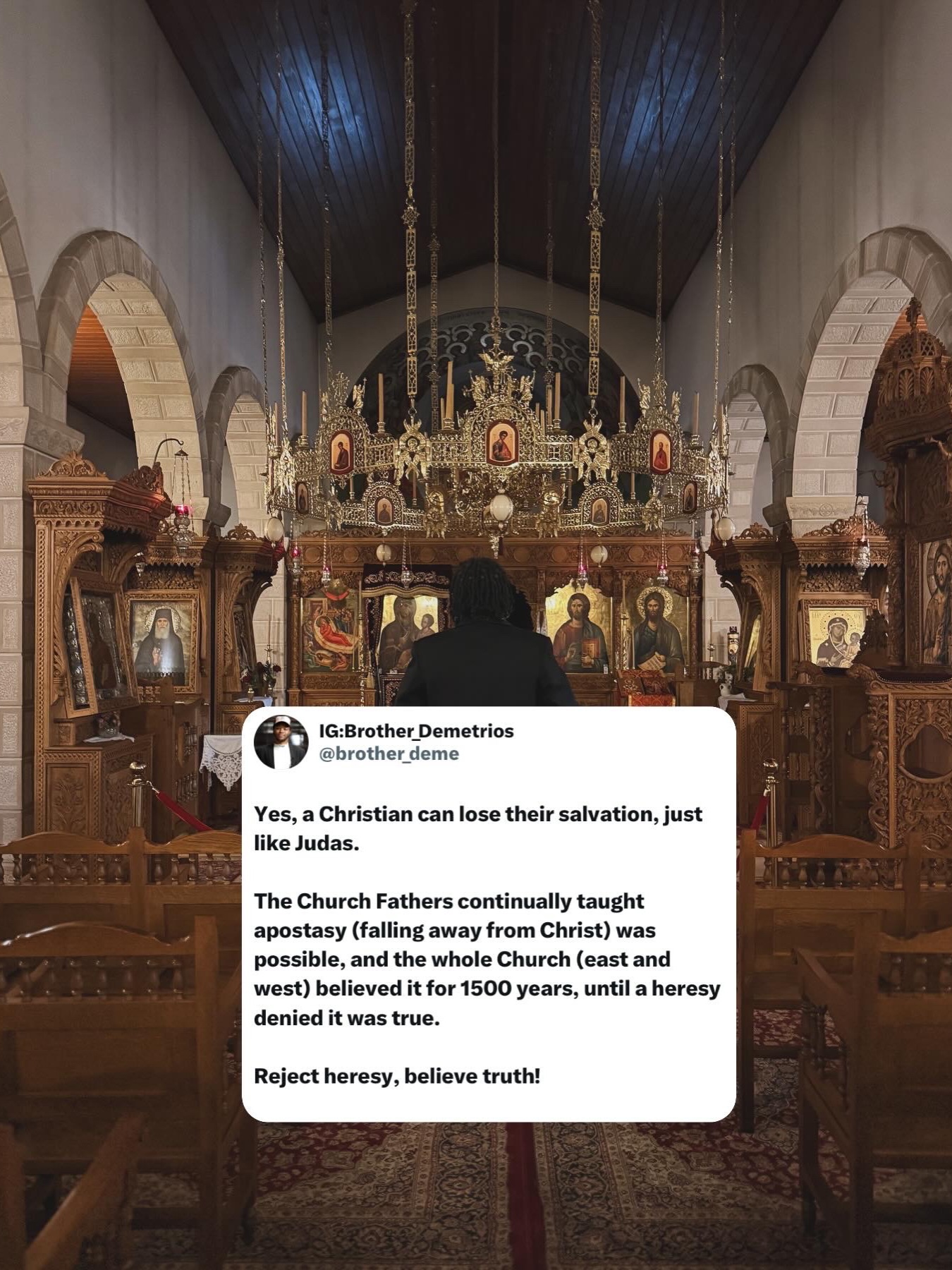
6 opinions in the discussion "Let anyone who thinks that he stands take heed lest he fall." 1 Corinthians 10:12 Read the discussion
Disgruntled Docs with TimothyNegrete Instagram discussion

Luther Added 'Faith Alone' to Romans 3:28

The speaker argues that the Protestant Reformation changed Scripture in two ways: by removing books from the Bible and by adding words to the biblical text. The key example given is Romans 3:28, where Martin Luther added the phrase 'faith alone' to his German translation, even though the phrase does not appear in the Greek text of Paul's letter. The speaker points out that in the Greek New Testament, the phrase 'faith alone' appears only once,…

The speaker argues that the Protestant Reformation changed Scripture in two ways: by removing books from the Bible and by adding words to the biblical text. The key example given is Romans 3:28, where Martin Luther added the phrase 'faith alone' to his German translation, even though the phrase does not appear in the Greek text of Paul's letter.

The speaker points out that in the Greek New Testament, the phrase 'faith alone' appears only once, in the Epistle of James, where it says the opposite of what Luther's addition implies: that a person is not saved by faith alone. From this the speaker draws a conclusion: if salvation by faith alone were a biblical teaching, Luther would not have needed to alter the text of Romans in order to prove it.

The change, in the speaker's view, shows that the doctrine required an adjustment of Scripture rather than support from it. The video closes with a call to return to the apostolic faith and a claim about who determines the canon of Scripture. The speaker argues that the canon was not settled by one man, such as Luther, but belongs to the reception of the entire Church.

The hashtags attached to the post indicate the intended audience: Christians generally, with particular reference to Catholicism and Orthodox Christianity. The argument as presented rests on the textual point about Romans 3:28 and the single occurrence of 'faith alone' in James, and it moves from that textual claim to the broader conclusion about Church authority over the canon.

Key moments

  1. Protestants removed books from the Bible and also added words to Scripture.
  2. Luther added the words 'faith alone' to Romans 3:28.
  3. In the Greek, 'faith alone' appears only in James, which says we are not saved by faith alone.
  4. If we are saved by faith alone, Luther would not have had to change the text to prove it.
  5. We must return to the apostolic faith and not let one man determine the canon, but the reception of the entire Church.
9 opinions in the discussion Revelation 22:18-19: "warn everyone who hears the words of the prophecy of this scroll: If anyone adds anything to them, God will add to that person the plagues described in this scroll. 19… Read the discussion

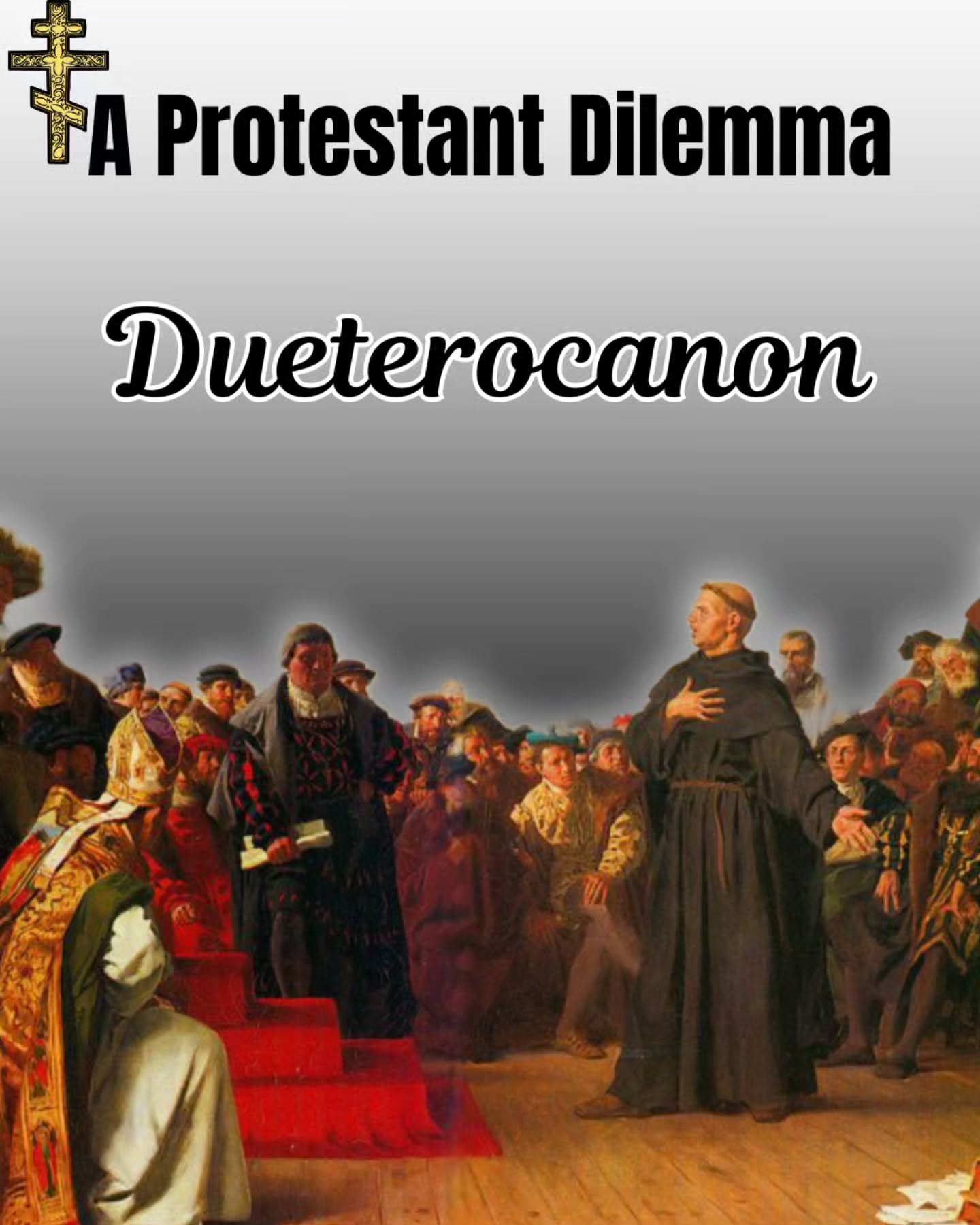
Another question for Protestants: who decided which books are Scripture?

The author raises a familiar but persistent objection to the Protestant rejection of the Deuterocanon, the books such as Tobit, Judith, Wisdom, and the Maccabees that Catholics and Orthodox receive as Scripture but that Protestants place in the Apocrypha. The author notes this is not a first attempt at the topic; they have written on it several times before. What they want to press this time is not the usual historical argument about whether…

The author raises a familiar but persistent objection to the Protestant rejection of the Deuterocanon, the books such as Tobit, Judith, Wisdom, and the Maccabees that Catholics and Orthodox receive as Scripture but that Protestants place in the Apocrypha. The author notes this is not a first attempt at the topic; they have written on it several times before.

What they want to press this time is not the usual historical argument about whether those books belonged in the canon, but an epistemological one: a question about how anyone knows which books are Scripture in the first place. The framing points to the historical Church, the formation of the biblical canon, and the authority that was used to determine which writings count as Scripture.

The implied challenge is that a Protestant who rejects the Deuterocanon must appeal to some standard for making that rejection, and the author suggests that standard deserves examination. If the canon is not self-evident, then some authority, whether the early Church's discernment, councils, or individual judgment, had to settle the list of books, and that authority question cuts against a position that sets Scripture against Church tradition.

The post is short and framed as a prompt for discussion rather than a developed argument, tagged for a general Christian audience. It invites readers to consider how the canon was recognized in the early Church and what that means for the Protestant position on the Deuterocanon.

  • The author has critiqued the Protestant rejection of the Deuterocanon several times before and returns to the topic again.
  • This critique focuses on an epistemological question rather than the usual historical arguments.
  • The question concerns how anyone knows which books are Scripture.
  • The author points to the historical Church, the biblical canon, and the authority used to determine Scripture.
  • The post is framed as a prompt for discussion, not a developed argument.
Read more

Pastor has children smash statue of Mary, says he would smash one of Jesus too

The speaker reacts to a Baptist pastor named Shelly who had children smash statues of the Blessed Theotokos. The pastor added that if somebody sends him a statue of Jesus, he would have them destroy it the same way. The speaker says he is convinced that Baptists do not worship the same God as Orthodox Christians, and he calls the practice disgusting. He objects especially to the fact that children are being made to do the smashing, saying it is…

The speaker reacts to a Baptist pastor named Shelly who had children smash statues of the Blessed Theotokos. The pastor added that if somebody sends him a statue of Jesus, he would have them destroy it the same way. The speaker says he is convinced that Baptists do not worship the same God as Orthodox Christians, and he calls the practice disgusting.

He objects especially to the fact that children are being made to do the smashing, saying it is worse that images of Jesus Christ are destroyed this way by children. The post carries hashtags pointing to Catholic and Orthodox audiences and to apologetics discussions.

Key moments

  1. The speaker states he is fully convinced Baptists do not worship the same God as Orthodox Christians.
  2. He mentions Baptist pastor Shelly, who had children smash statues of the Blessed Theotokos.
  3. The pastor says that if somebody sends him a statue of Jesus, he will do the same thing to the statue of Jesus.
  4. The speaker calls the practice disgusting and objects that children are being made to smash images of Jesus Christ.
Read more
Disgruntled Docs with Ben Instagram

Fr Josiah Trenham: Zionism is foreign to historic Christianity

Fr Josiah Trenham argues that Zionism has no place in Christian faith. He says you could search in vain for 18 and a half centuries to find such teaching in the Church. For him the question is settled by how the New Testament reads the Old: the church is the fulfillment of everything in the Old Testament, and Paul calls the church the new Israel. God's people are Jewish and Gentile believers gathered from every tribe, tongue, people and nation,…

Fr Josiah Trenham argues that Zionism has no place in Christian faith. He says you could search in vain for 18 and a half centuries to find such teaching in the Church. For him the question is settled by how the New Testament reads the Old: the church is the fulfillment of everything in the Old Testament, and Paul calls the church the new Israel.

God's people are Jewish and Gentile believers gathered from every tribe, tongue, people and nation, so membership in Israel is not a matter of ethnicity. He illustrates this with his own parish in Riverside County, which he says should reflect the ethnic makeup of the surrounding county of about 3 million people: 57% Hispanic, 11% African-American, and about 30% Anglo.

He then rejects the premises behind Christian Zionism. The Old Testament came to fruition in Christ, so there is no need to rebuild a temple in Jerusalem, resume animal sacrifices, or restore the Aaronic priesthood. Everything in the Old Testament was a picture of Christ, and Christ himself told the Pharisees that the Scriptures bear witness to him.

The post presents a patristic and sacramental reading of Israel in which promises made to Israel are fulfilled in the church rather than awaiting a future national restoration.

Key moments

  1. 0:00 Zionism has no history in the Christian faith; you could search in vain for 18 and a half centuries to find such teaching.
  2. 0:00 The church is the fulfillment of everything in the Old Testament, and Paul calls the church the new Israel.
  3. 0:36 God's people are made up of Jewish and Gentile believers from every tribe, tongue, people and nation; it is not about ethnicity.
  4. 1:12 The speaker wants his Riverside County parish to reflect the county's ethnic distribution: 57% Hispanic, 11% African-American, about 30% Anglo.
  5. 1:45 The Old Testament came to fruition; there is no need to rebuild a temple, resume sacrifices, or restore the Aaronic priesthood.
  6. 1:45 Everything in the Old Testament is a type of Christ; he told the Pharisees the Scriptures bear witness to him.
Read more

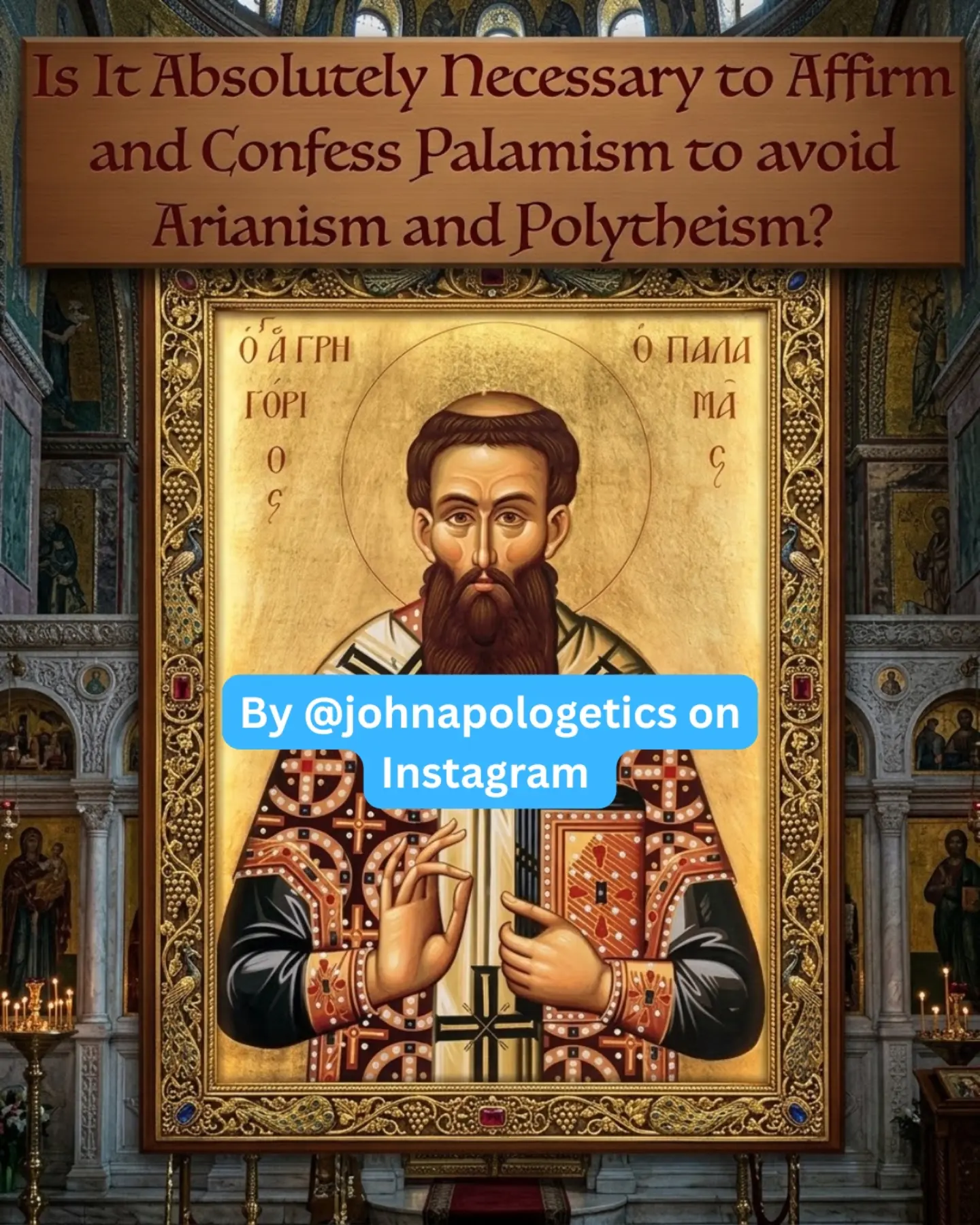
All Roads Lead To Constantinople: Thomism, Aquinas and the Church Fathers

The post consists of a short caption, 'All Roads Lead To Constantinople', followed by hashtags naming Thomism, Thomas Aquinas, the Church Fathers and Orthodoxy. No further text, argument or source material accompanies the caption, so the post itself offers only the slogan and the topics it points to. The phrase suggests a line of thought connecting Western scholastic theology, represented by Thomas Aquinas and the Thomist tradition, with the…

The post consists of a short caption, 'All Roads Lead To Constantinople', followed by hashtags naming Thomism, Thomas Aquinas, the Church Fathers and Orthodoxy. No further text, argument or source material accompanies the caption, so the post itself offers only the slogan and the topics it points to. The phrase suggests a line of thought connecting Western scholastic theology, represented by Thomas Aquinas and the Thomist tradition, with the Orthodox East and the Church Fathers, with Constantinople standing as the focal point.

Because the original post contains no body text, no claims can be attributed to its author beyond the caption and the choice of tags. Readers opening the thread will find the four tagged subjects: the theological system associated with Aquinas, the saint himself, the patristic writers of the early Church, and Orthodox Christianity.

The discussion that the tags imply would concern how these areas relate to one another, but the post does not state any position on that question. Anyone interested in the relationship between Latin scholasticism and Orthodox tradition, or in how the Fathers are read on both sides, will find here a prompt built around a single phrase and four topics rather than a developed argument.

  • The caption reads 'All Roads Lead To Constantinople'.
  • Hashtags name Thomism, Thomas Aquinas, the Church Fathers and Orthodoxy.
  • The post contains no body text beyond the caption and tags.
  • Constantinople is presented as the point toward which the tagged topics lead.
  • No argument or position is stated in the original post.
14 opinions in the discussion theres a good debate/discussion on youtube between a scholar and a dominican priest thats really pretty good. palamism "wins" in that discussion imo but its worth the watch and will dispel… Read the discussion

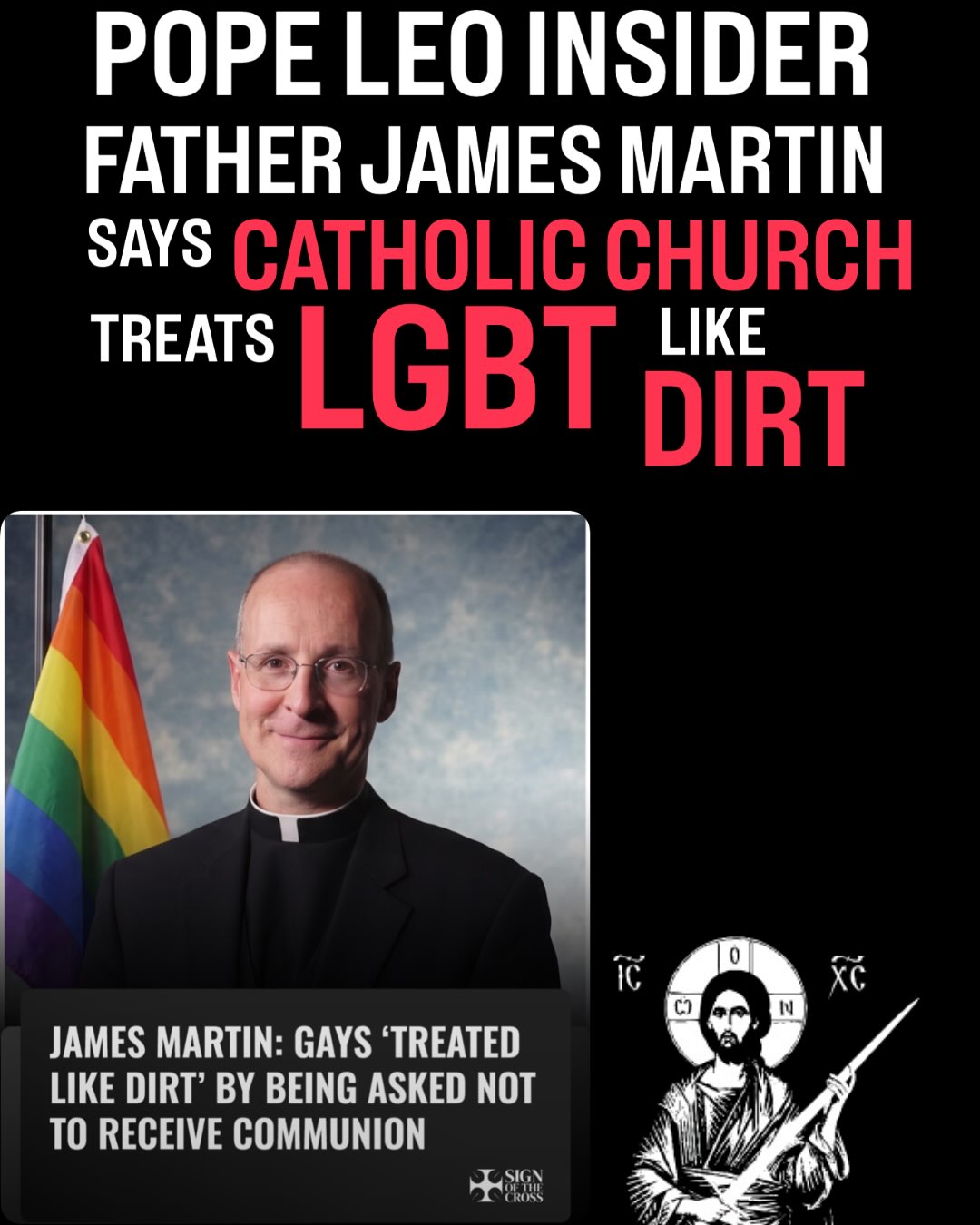
Fr James Martin says the Catholic Church treats LGBT people like dirt over the Eucharist

Fr James Martin says the Catholic Church treats LGBT people like dirt for not giving them the Eucharist.

  • Fr James Martin criticizes the Catholic Church for denying the Eucharist to LGBT people
28 opinions in the discussion Bro, if a priest knows you are in a state of mortal sin, they are required to withhold the Eucharist. Are they not? Read the discussion
Disgruntled Docs with Trust God ☦︎︎︎ Instagram

Saint Symeon the New Theologian on the Eucharist as Real Communion with Christ

The post presents the Orthodox teaching on the Holy Eucharist through the words of Saint Symeon the New Theologian. It states that the Eucharist is not merely a symbol but a real participation in the life of Christ. Saint Symeon emphasized that Christianity is not only about knowing things about God but about encountering Him, receiving Him, and being transformed by His grace. The post cites John 6:56, where Christ says: 'He who eats My flesh…

The post presents the Orthodox teaching on the Holy Eucharist through the words of Saint Symeon the New Theologian. It states that the Eucharist is not merely a symbol but a real participation in the life of Christ. Saint Symeon emphasized that Christianity is not only about knowing things about God but about encountering Him, receiving Him, and being transformed by His grace.

The post cites John 6:56, where Christ says: 'He who eats My flesh and drinks My blood abides in Me, and I in him.' For the Orthodox Church, Holy Communion is not a remembrance of something in the past. It is communion with the living Christ, the medicine of immortality, and a participation in divine life. According to the post, Saint Symeon's spirituality points toward this reality: God does not call us to believe from a distance but to become united to Him and transformed by His presence.

It closes with Psalm 34:8: 'Taste and see that the Lord is good.' The accompanying summary develops the same theme. When we approach the divine mysteries with faith and purity, we receive within ourselves the fire of the Godhead that Christ came to cast upon the earth. This fire consumes sins and illumines souls, making them shine with the brightness of the divine.

The Eucharist is the body and blood of Christ and also the spirit that grants life, light, and divine energy. Whoever partakes becomes one with God, a sharer in the divine nature, and Christ dwells in him as in a living temple. The post ends with Saint Symeon's exclamation: 'How great is the mystery. How unspeakable the condescension of God.'

Key moments

  1. Approaching the divine mysteries with faith and purity brings the fire of the Godhead, the fire Christ came to cast upon the earth, into ourselves.
  2. This fire consumes sins and illumines souls, making them shine with the brightness of the divine.
  3. The Eucharist is the body and blood of Christ and also the spirit that grants life, light, and divine energy.
  4. Whoever partakes becomes one with God, a sharer in the divine nature, with Christ dwelling in him as in a living temple.
  5. Saint Simeon the New Theologian exclaims: 'How great is the mystery. How unspeakable the condescension of God.'
Read more

Paid spiritual mentorship versus the free keys to the Kingdom

The author recalls a conflict on TikTok with a former felon who built a platform on his criminal record, made money in trucking, and then sold courses to vulnerable people from similar backgrounds. The author says those courses actually taught freight fraud and cheated buyers. He sees the same pattern among new age spiritual creators: they may give real guidance and have testimonies to support it, but exceptions do not change the rule. The world…

The author recalls a conflict on TikTok with a former felon who built a platform on his criminal record, made money in trucking, and then sold courses to vulnerable people from similar backgrounds. The author says those courses actually taught freight fraud and cheated buyers. He sees the same pattern among new age spiritual creators: they may give real guidance and have testimonies to support it, but exceptions do not change the rule.

The world is hurting and people are lost, and selling recycled philosophy as comfort instead of offering humility is something he cannot accept. In the Orthodox view, the keys to the Kingdom are free, given by the God-man Jesus Christ, and their proof is the Gospel and the lives of the Saints. Christ, the Apostles, and the Saints never charged money for healing or miracles.

In the accompanying video, the speaker responds to a clip he identifies as new age, Gnostic, or pantheist. He agrees that God is not a man in the sky apart from us, and Orthodox prayers say God is everywhere present and fills all things. But he objects to mixing God with creation: God made the world from nothing and is present in it without being made of it, and confusing the two is what Saint Paul calls worshipping the creature rather than the creator.

He contrasts sellers of secret knowledge with the Orthodox Church, which hides nothing; monasteries freely teach prayer, fasting, repentance, and humility. He closes by saying such philosophy is meaningless because it does not solve death, which only the God-man Christ solved for all mankind, and that charging thousands of dollars for one-on-one mentorship shows its center is money, not spirituality.

Key moments

  1. 0:00 The speaker identifies the video as new age, Gnosticism, or pantheism, and says this spirituality misses salvation.
  2. 0:30 God made the world from nothing; he is present in it but not made of it, and mixing the two is what Saint Paul calls worshipping the creature rather than the creator.
  3. 0:30 The creator is not the creation; he came to meet us in it, and the invitation is to know him, not just feel him.
  4. 1:01 New age and Gnostic creators sell secret knowledge through courses and mentoring, but there is no secret in the Orthodox Church; monasteries freely teach prayer, fasting, repentance, and humility.
  5. 1:31 The playbook of the saints and elders is laid out for everyone, and new age information is repackaged and recycled philosophy.
  6. 2:03 This philosophy and progress are meaningless if they do not solve the fact that we die; only the God-man Christ solved death, and he solved it for all mankind.
  7. 2:03 The speaker criticizes the lack of humility in charging thousands of dollars for a one-on-one mentorship while people are lost and searching for meaning.
  8. 2:33 The creator says 'F the system' while being part of it, because at the center of it all is money, not spirituality.
Read more

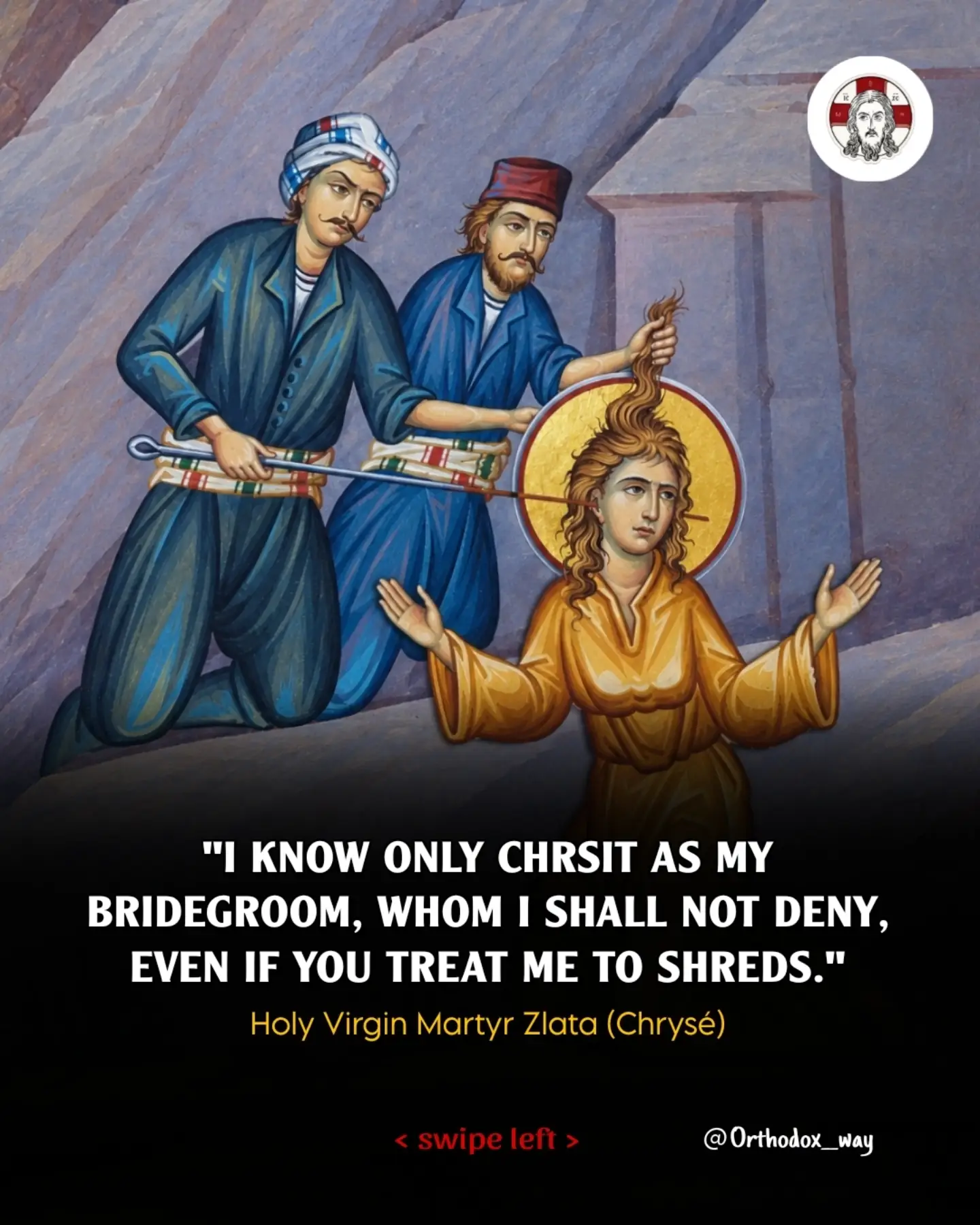
Saint Zlata of Meglena: A New Martyr Who Refused to Renounce Christ

The post tells the life of Saint Zlata of Meglena, a New Martyr of the Eastern Orthodox Church. Zlata was born in the 18th century to a poor peasant family in the village of Slatina in the Meglen region, in what is now Greece, at a time when the Balkans were under Ottoman rule. She grew up known for her piety and virtue. Her life changed when a local Ottoman man kidnapped her and demanded that she convert to Islam and marry him. For months she…

The post tells the life of Saint Zlata of Meglena, a New Martyr of the Eastern Orthodox Church. Zlata was born in the 18th century to a poor peasant family in the village of Slatina in the Meglen region, in what is now Greece, at a time when the Balkans were under Ottoman rule. She grew up known for her piety and virtue. Her life changed when a local Ottoman man kidnapped her and demanded that she convert to Islam and marry him.

For months she endured pressure, false promises of wealth, and psychological manipulation, and she refused to give up her Christian faith. When her captors saw that her resolve could not be broken, they tortured her: she was locked in a dark cell and flogged daily for months. The local authorities then brought her family to the prison, using her weeping parents and sisters to pressure her through fear for their safety.

She refused again and said that her true family was Christ, the Virgin Mary, and the saints. Having exhausted every means of coercion, her tormentors took her outside, tied her to a tree, and cut her body to pieces on October 18, 1795. Local Christians secretly gathered her relics. The Church canonized her as a New Martyr, and the post presents her as an example of steadfast faith under persecution.

  • Saint Zlata was born in the 18th century in Slatina, in the Meglen region of modern-day Greece, to a poor peasant family under Ottoman rule.
  • An Ottoman man kidnapped her and demanded she convert to Islam and marry him; she refused despite months of pressure, promises of wealth, and manipulation.
  • She was imprisoned and flogged daily, and her family was brought to the prison to pressure her; she said her true family was Christ, the Virgin Mary, and the saints.
  • She was martyred on October 18, 1795, tied to a tree and cut to pieces after her captors exhausted all means of coercion.
  • Local Christians secretly collected her relics, and the Eastern Orthodox Church canonized her as a New Martyr.
Read more

How Three Can Be One: The Trinity Without Contradiction

A questioner asks how the Trinity, three co-equal and co-eternal persons, can really be one God. The answer states that the Trinity only sounds contradictory when it is defined badly. The Church does not say God is one person and three persons, or one God and three Gods. It affirms one divine essence existing in three hypostases. The persons are distinguished by their relations of origin. The Father is the one Arche, the source and cause within…

A questioner asks how the Trinity, three co-equal and co-eternal persons, can really be one God. The answer states that the Trinity only sounds contradictory when it is defined badly. The Church does not say God is one person and three persons, or one God and three Gods.

It affirms one divine essence existing in three hypostases. The persons are distinguished by their relations of origin. The Father is the one Arche, the source and cause within the Godhead. The Son is eternally begotten of the Father, and the Holy Spirit eternally proceeds from the Father.

The three are not divided in will, essence, power, or energy, so the distinction between them is hypostatic, not essential. St. Gregory the Theologian is quoted: the three have one nature, God, and the union is the Father, from whom and to whom the order of the persons runs its course. The discussion turns on how unity and distinction are held together.

Monarchy gives the unity, and relation gives the distinction. This holds without collapsing the three into one person or splitting God into three separate beings. The reply stays within classical trinitarian terminology: essence, hypostasis, begetting, procession, and monarchy of the Father.

The questioner's puzzle dissolves once the terms are used precisely, since the alleged contradiction comes from mixing categories of person and essence. The answer closes on the same point it opened with: the Church's formulation avoids both errors, the one that merges the persons and the one that divides the Godhead.

Key moments

  1. A questioner asks how three co-equal, co-eternal persons, Father, Son, and Holy Spirit, can be one God.
  2. The Trinity only sounds contradictory if defined badly; the Church affirms one divine essence in three hypostases, not one person and three persons or one God and three Gods.
  3. The Father is the one Arche, the source and cause within the Godhead.
  4. The Son is eternally begotten of the Father, and the Holy Spirit eternally proceeds from the Father; the persons are distinguished by relations of origin.
  5. The persons are not divided in will, essence, power, or energy; the distinction is hypostatic, not essential.
  6. St. Gregory the Theologian says the three have one nature, God, and the union is the Father, from whom and to whom the order of the persons runs its course.
  7. Monarchy gives the unity and relation gives the distinction, without collapsing the three into one person or splitting God into three.
10 opinions in the discussion The Nicene Creed lays it out too. I believe in ONE God the Father Almighty. The son is begotten and the spirit proceeds. So the son and the spirit share the same divine characteristics.… Read the discussion

Four Biblical Signs of a Godly Woman, According to Christian Dating Advice

The speaker addresses men who are dating and lists four biblical signs of a woman worth building a life with. The first sign is that she knows how to build a home. Proverbs 31 says she watches over the ways of her household and does not eat the bread of idleness, and the speaker describes this as bringing order, peace and warmth so that a husband feels he can walk through the door and breathe. The second sign is a genuine prayer life. The…

The speaker addresses men who are dating and lists four biblical signs of a woman worth building a life with. The first sign is that she knows how to build a home. Proverbs 31 says she watches over the ways of her household and does not eat the bread of idleness, and the speaker describes this as bringing order, peace and warmth so that a husband feels he can walk through the door and breathe.

The second sign is a genuine prayer life. The speaker points to Hannah in 1 Samuel, who prayed with such intensity and faith that Eli thought she was drunk, and says the point is a real relationship with God, not prayer only when life is easy. The third sign is respect. Ephesians 5 speaks of a wife who respects her husband, and the speaker warns men to pay attention if a woman constantly humiliates them, tears them down or competes with them.

The fourth sign is character over appearance. Proverbs 31 says charm is deceitful and beauty is vain, but a woman who fears the Lord is to be praised. The speaker adds that a godly woman is not a perfect woman but someone who continually strives to grow closer to Christ. He closes with a word to the men themselves: if you are looking for a woman with these qualities, you must also be working towards becoming a godly husband.

Beauty may attract you, but character, loyalty, peace and faith are what a marriage is built on, so do not just look for a beautiful woman; look for a woman you can build a Christ-centred life with.

Key moments

  1. She knows how to build a home: Proverbs 31 says she watches over the ways of her household and does not eat the bread of idleness, bringing order, peace and warmth.
  2. She prays with a real relationship with God, like Hannah in 1 Samuel, who prayed with such intensity and faith that Eli thought she was drunk.
  3. She respects you, as Ephesians 5 speaks of a wife who respects her husband; if she constantly humiliates, tears down or competes with you, pay attention.
  4. Look at her character: Proverbs 31 says charm is deceitful and beauty is vain, but a woman who fears the Lord is to be praised.
  5. Beauty gets your attention, but character, loyalty, peace and faith are what you build a marriage on, so choose accordingly.
Read more

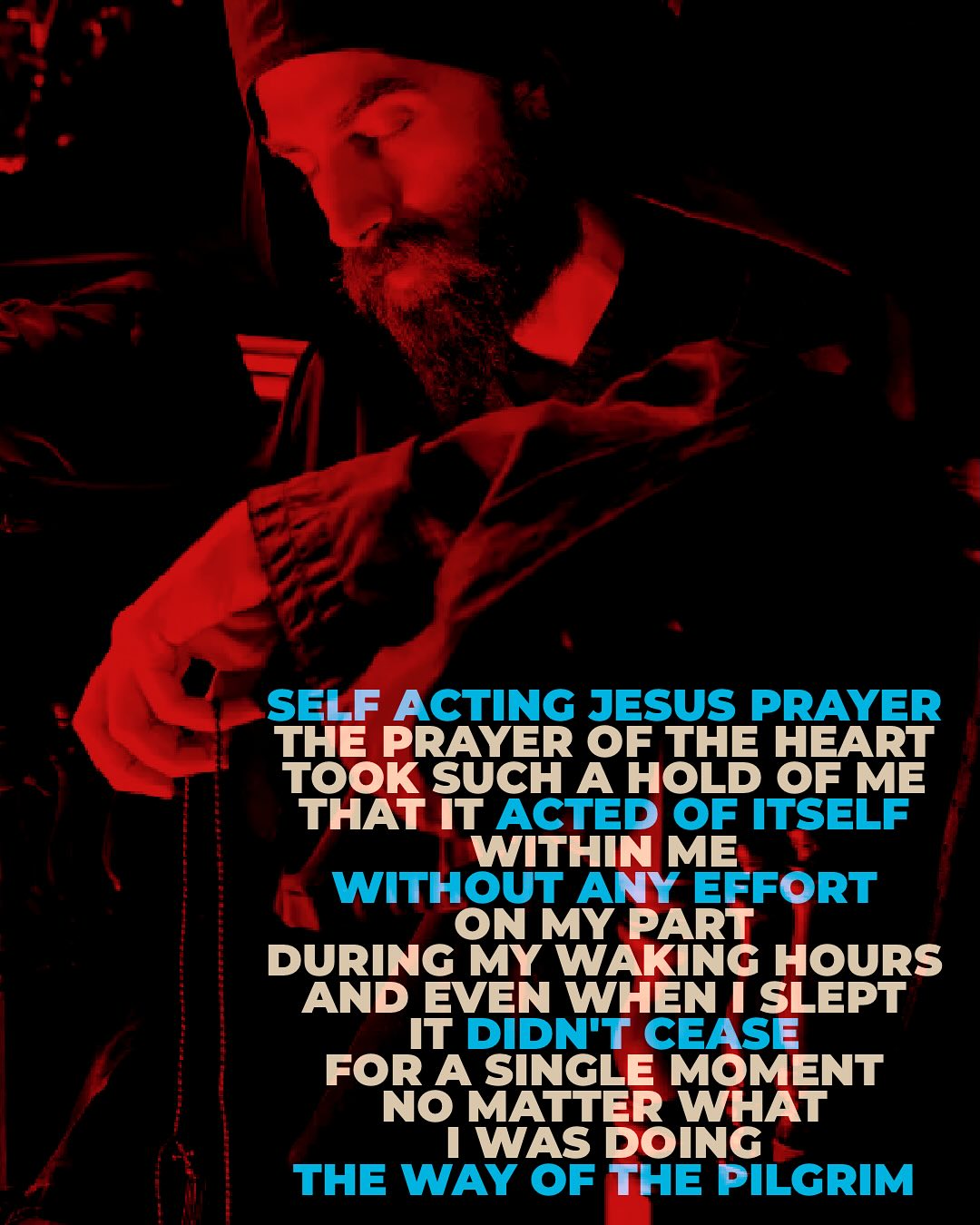
The self-acting Jesus Prayer in The Way of the Pilgrim

The post quotes a passage from The Way of the Pilgrim in which the narrator describes the prayer of the heart taking hold and acting of itself within without any effort on his part. The prayer continued during waking hours and even during sleep, not ceasing for a single moment no matter what he was doing. The accompanying text identifies this phenomenon as the self-active or self-propelling Jesus Prayer within Eastern Christian mysticism,…

The post quotes a passage from The Way of the Pilgrim in which the narrator describes the prayer of the heart taking hold and acting of itself within without any effort on his part. The prayer continued during waking hours and even during sleep, not ceasing for a single moment no matter what he was doing. The accompanying text identifies this phenomenon as the self-active or self-propelling Jesus Prayer within Eastern Christian mysticism, specifically hesychasm.

It explains that this represents an advanced spiritual stage where the prayer transitions from a conscious mental effort into an unceasing, automatic rhythm of the soul. Rather than the practitioner actively pushing to recite the words, the prayer "prays itself" within the heart. This continuous repetition persists even during sleep, work, or conversation.

The post presents both the first-person account from the classic spiritual text and the theological framework that categorizes this experience as a distinct stage of prayer development in the hesychast tradition.

  • The Way of the Pilgrim describes the Jesus Prayer becoming self-acting within the heart
  • The prayer continues without effort during waking hours and sleep
  • In hesychasm this marks an advanced spiritual stage
  • The prayer shifts from conscious recitation to automatic rhythm
  • The prayer "prays itself" continuously through all activities
Read more

God raises new Church Fathers for unseen warfare in the final age

The speaker declares that we live in the final chapters of the age and the most decisive era of spiritual warfare. God is awakening ascetic warriors and raising new Church Fathers like Chrysostom, Basil, Athanasius, and Gregory as commanders of the true Church. These soldiers carry the Jesus Prayer and the uncreated grace of the Holy Spirit. God baptized, chrismated, and feeds them His body and blood for divine purpose, having hunted them down,…

The speaker declares that we live in the final chapters of the age and the most decisive era of spiritual warfare. God is awakening ascetic warriors and raising new Church Fathers like Chrysostom, Basil, Athanasius, and Gregory as commanders of the true Church. These soldiers carry the Jesus Prayer and the uncreated grace of the Holy Spirit.

God baptized, chrismated, and feeds them His body and blood for divine purpose, having hunted them down, engineered their tribulations, protected them from demonic arrows, and transformed their passions into tools of repentance. The speaker calls Orthodox Christians to stop flirting with demons and passions, citing Saint Paul's words about putting away childish things.

They must take up the prayer rope, guard the mind, deal aggressively with ancestral and personal sins, and recognize that an Orthodox Christian who does not fight the passions is no soldier at all. Time is running out; the illusions of the secular world will be destroyed and the separation of wheat from chaff is near. The faithful must pick up their cross, draw the sword of the Spirit, stand watch over the heart, and stop treating favorite sins like pets under a false grace that requires no sacrifice.

Just as the walls of Jericho fell, the strongholds of modern darkness and demonic hierarchy shall fall, and Satan is terrified. The speaker says a divine fire is brewing in the spirits of men, and the flame of the Holy Spirit will invade and expose every hidden darkness. The call is to mount spiritual defenses, wage unseen warfare with ceaseless prayer, and use the divine fire of the Holy Spirit to conquer the flesh and inherit the kingdom of God.

Key moments

  1. 0:00 We are living in the final chapters of the age and the most crucial era of spiritual warfare; God is awakening ascetic warriors and raising new Chrysostoms, Basils, Athanasiuses, and Gregories as commanders of the true Church.
  2. 0:34 Soldiers of the cross carry the double-edged sword of the Jesus Prayer and the uncreated grace of the Holy Spirit; God will use them to gather His faithful flock for a cosmic battle the demons fear.
  3. 1:07 God baptized, chrismated, and feeds His body and blood to each person for divine purpose; He hunted them down, engineered their tribulations, protected them from demonic arrows, and transformed passions into tools of repentance.
  4. 1:37 You are a son of the kingdom and heir to the divine nature through theosis; stop playing with passions and flirting with demons of modern culture, and crush them underfoot as Saint Paul urged putting away childish things.
  5. 2:10 Put away lukewarm spirit, take up the prayer rope, guard the mind, and advance toward Christ; deal aggressively with ancestral and personal sins, for an Orthodox Christian who does not fight the passions is no soldier.
  6. 2:42 Time is running out; the illusions of the secular world will be destroyed and the separation of wheat from chaff is near; stop treating favorite sins like pets under a false grace that requires no sacrifice.
  7. 2:42 Just as the walls of Jericho crumbled, the strongholds of modern darkness and demonic hierarchy shall fall, and Satan himself is terrified; mount spiritual defenses and wage unseen warfare for Christ.
  8. 3:14 Pick up the sword of ceaseless prayer, show the dark age the power of the true faith; a divine fire is brewing, the flame of the Holy Spirit will invade and expose every hidden darkness, use that fire, guard your heart, conquer the flesh, and inherit the kingdom of God.
Read more

Orthros: A Service in Its Own Right, Not Just a Warm-Up

The author writes about the spiritual meaning of Orthros, the morning service of the Orthodox Church. The central claim is that Orthros is not simply a preparation for the next service. The author calls it an act of worship in its own right, with its own purpose and its own content. The post then sets out four aspects of the service that show what this means in practice. The first is repentance. At Orthros the faithful acknowledge their sins and…

The author writes about the spiritual meaning of Orthros, the morning service of the Orthodox Church. The central claim is that Orthros is not simply a preparation for the next service. The author calls it an act of worship in its own right, with its own purpose and its own content. The post then sets out four aspects of the service that show what this means in practice.

The first is repentance. At Orthros the faithful acknowledge their sins and ask God for mercy. The author presents this as a defining note of the service: it begins with the heart turned toward confession and the plea for forgiveness.

The second is the resurrection. The author points especially to Sundays, when the hymns of Orthros proclaim Christ's victory over death. The service carries this paschal theme in its hymnography, and Sunday mornings make it explicit.

The third is veneration. The faithful honour Christ through the Gospel and the holy things of the Church. This ties the service to the sacred objects and texts set apart for worship.

The fourth is preparation. At Orthros the faithful turn their attention away from worldly distractions and toward prayer and the Divine Liturgy. The author keeps this dimension, but places it after and alongside the others, so that preparation appears as one part of the service rather than its whole purpose.

The post closes with a short line of emoji reflecting the themes above: prayer, the cross and Orthodox faith, prayer beads, love, peace, the defeat of death, and flags of Greece and Australia, which indicate the author's background or community. The post is brief and devotional. It reads as a compact catechesis for churchgoers who may think of Orthros as a prelude, listing four ways the morning service stands on its own: repentance, resurrection, veneration and preparation for the Liturgy.

  • The author states that Orthros is an act of worship in its own right, not simply a preparation for the next service.
  • Repentance: at Orthros we acknowledge our sins and ask God for mercy.
  • On Sundays the hymns proclaim Christ's victory over death.
  • The faithful honour Christ through the Gospel and the holy things of the Church.
  • The service turns attention away from worldly distractions toward prayer and the Divine Liturgy.
Read more