WeOrthodox
EN UA

Disgruntled Docs

Instagram ↗ 117 discussions

Doc posting memes ☦️ Reader Nektarios Veteran owned All my opinions are my own

Commenter questions Rick Rubin wearing Orthodox vestments on red carpet

A commenter on a social media post asks why Rick Rubin, who is Jewish, appeared on a red carpet alongside Jay-Z wearing what appears to be Orthodox priestly vestments including a pectoral cross. The commenter questions whether this constitutes mockery of Orthodoxy or a form of role-play, using the term "larping." The post includes hashtags related to Orthodoxy, Orthodox Christian content, Christian reels, the Orthodox Church, and is framed as a…

A commenter on a social media post asks why Rick Rubin, who is Jewish, appeared on a red carpet alongside Jay-Z wearing what appears to be Orthodox priestly vestments including a pectoral cross. The commenter questions whether this constitutes mockery of Orthodoxy or a form of role-play, using the term "larping." The post includes hashtags related to Orthodoxy, Orthodox Christian content, Christian reels, the Orthodox Church, and is framed as a meme.

The commenter expresses exasperation with the situation, writing "What are we doing at this point?" The video summary identifies the commenter as the source of the observation and the questions. The discussion centers on the appropriateness of a non-Christian public figure wearing clerical attire associated with the Orthodox Church, and whether the act is intended as parody or something else.

The commenter notes Rubin's Jewish background, the red carpet appearance with Jay-Z, the specific vestments resembling those of an Orthodox priest, and the presence of a pectoral cross. The commenter then raises two possibilities: that the appearance is mockery of Orthodoxy, or that it is a kind of role-play. The commenter concludes with a rhetorical expression of frustration.

No further context about the event, Rubin's explanation, or additional responses is provided in the source.

Key moments

  1. Commenter notes Rick Rubin is Jewish and appeared on a red carpet with Jay-Z dressed like an Orthodox priest.
  2. Commenter observes Rubin is wearing a pectoral cross.
  3. Commenter questions whether this is mockery of Orthodoxy or larping.
  4. Commenter expresses exasperation: "What are we doing at this point?"
Read more
Disgruntled Docs with Goose’s secret meme page Instagram

Person sings Spanish folk song about homeland and love

A video shows a person performing a Spanish-language song. The lyrics consist of two alternating refrains. The first refrain states "Ay, qué bonito es mi tierra, qué bonito es mi querer" which translates as "Oh, how beautiful is my land, how beautiful is my love." The second refrain states "Ay, mi amor, mi vida, ay, mi amor, mi querer" meaning "Oh, my love, my life, oh, my love, my love." The singer repeats these lines in sequence several times:…

A video shows a person performing a Spanish-language song. The lyrics consist of two alternating refrains. The first refrain states "Ay, qué bonito es mi tierra, qué bonito es mi querer" which translates as "Oh, how beautiful is my land, how beautiful is my love." The second refrain states "Ay, mi amor, mi vida, ay, mi amor, mi querer" meaning "Oh, my love, my life, oh, my love, my love."

The singer repeats these lines in sequence several times: the first refrain appears three times and the second refrain appears three times, interleaved. The performance is delivered without visible accompaniment or additional commentary in the source. The song expresses affection for one's homeland and for a beloved person using simple, repetitive poetry typical of folk traditions. No further context about the singer, the setting, or the song's origin is provided.

Key moments

  1. 0:10 Ay, qué bonito es mi tierra, qué bonito es mi querer, ay, qué bonito es mi tierra, qué bonito es mi querer. Ay, mi amor, mi vida, ay, mi amor, mi querer. Ay, qué bonito es mi tierra, qué bonito es mi querer. Ay, mi amor, mi vida, ay, mi amor, mi querer.
Read more
Disgruntled Docs with Dēmḗtrios(Dema)☦️ Instagram

St. John Chrysostom on sin as a spark in the ocean of God's mercy

The post shares a passage from St. John Chrysostom that compares human wickedness to a spark falling into the wide sea, where it is immediately quenched and overwhelmed by the multitude of waters. The accompanying video summary explains the analogy further: sins are like a burning coal that could burn a hand, a house, or an entire village, while God's mercy is an ocean that extinguishes the coal at once. The sea does not grow smaller because of…

The post shares a passage from St. John Chrysostom that compares human wickedness to a spark falling into the wide sea, where it is immediately quenched and overwhelmed by the multitude of waters. The accompanying video summary explains the analogy further: sins are like a burning coal that could burn a hand, a house, or an entire village, while God's mercy is an ocean that extinguishes the coal at once.

The sea does not grow smaller because of the coal, nor does the coal remain fire. When repentance is sincere, the fire of sin is put out by the abundance of mercy. Chrysostom warns against saying, "I have sinned much, how can I be saved?" because a multitude of sins cannot exhaust the loving kindness of God any more than a single drop can empty the sea.

The discussion turns on the call not to turn away but to draw near with repentance so that the ocean of mercy will swallow up the sinner.

Key moments

  1. Do not be afraid because of the greatness of your sins; look instead at the greatness of God's mercies.
  2. Your sins are like a burning coal that can burn your hand, your house, or an entire village.
  3. God's mercy is an ocean; even if you throw a burning coal into the sea, it is immediately put out.
  4. The sea does not grow smaller because of the coal, nor does the coal remain fire.
  5. When repentance is sincere, the fire of sin is extinguished by the abundance of God's mercy.
  6. Do not say, "I have sinned much, how can I be saved?"
  7. You cannot exhaust the mercy of God; a single drop cannot empty the sea, so neither can a multitude of sins overcome the loving kindness of God.
  8. Only do not turn away, but come near with repentance and the ocean of mercy will swallow you up.
Read more

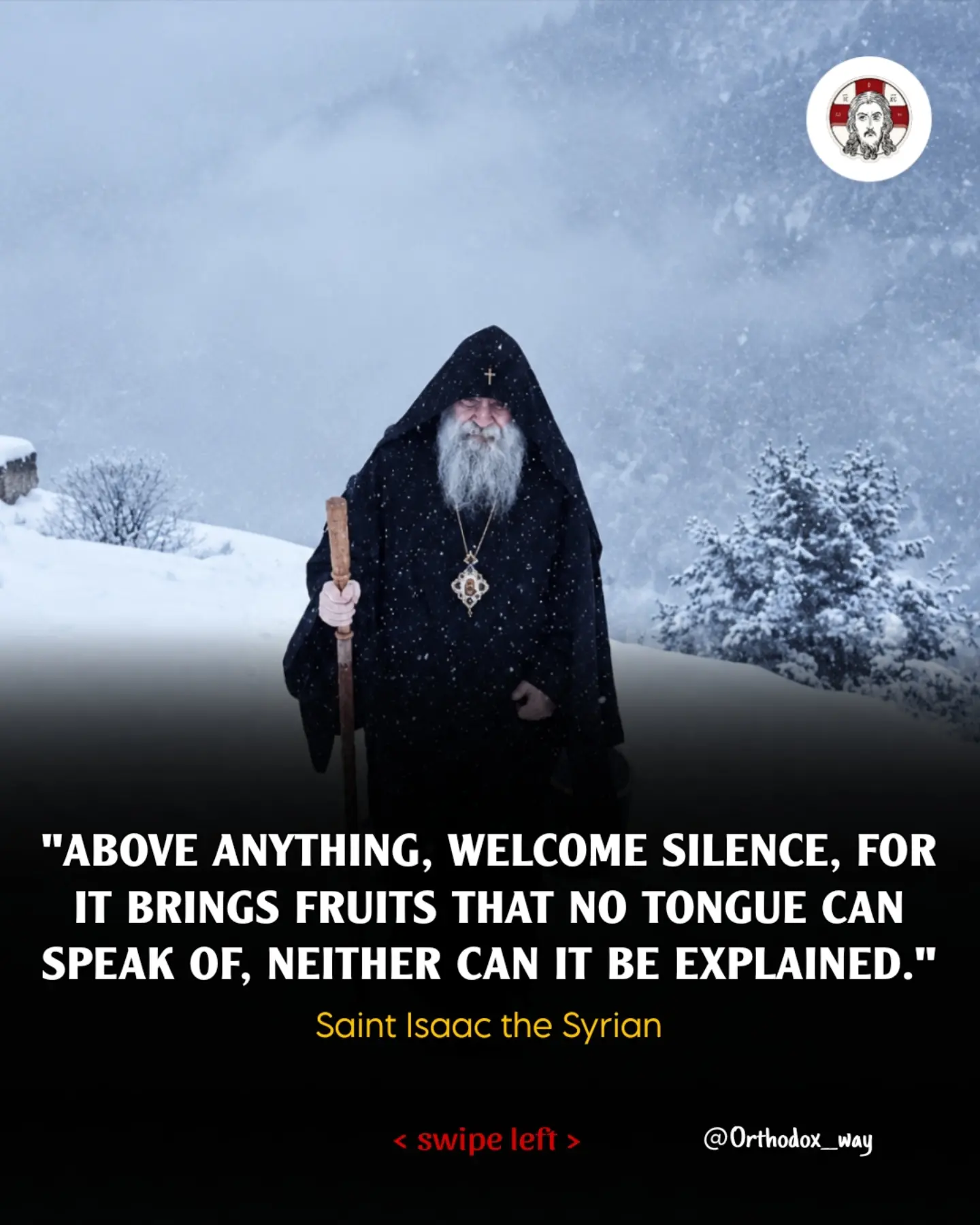
Saint Isaac the Syrian: Bishop, Ascetic, Teacher of Divine Mercy

Saint Isaac the Syrian lived in the seventh century as a bishop, theologian, and ascetic within the Syriac Christian tradition. He accepted consecration as Bishop of Nineveh but held the office only briefly before withdrawing to pursue the solitary life of a monk. In solitude he devoted himself to fasting, vigils, and unceasing prayer, seeking deeper communion with God through silence and repentance. Isaac taught that true spiritual knowledge…

Saint Isaac the Syrian lived in the seventh century as a bishop, theologian, and ascetic within the Syriac Christian tradition. He accepted consecration as Bishop of Nineveh but held the office only briefly before withdrawing to pursue the solitary life of a monk. In solitude he devoted himself to fasting, vigils, and unceasing prayer, seeking deeper communion with God through silence and repentance.

Isaac taught that true spiritual knowledge arises not from books alone but from a purified heart and a life of humility before God. His Ascetical Homilies remain treasured spiritual writings that guide Christians toward inner stillness, tears of repentance, and the transformation of the soul. He is especially remembered for his teaching on the infinite mercy and love of God, which he said extends to the whole of creation.

Isaac urged believers to cultivate a heart full of compassion for every living being, reflecting the boundless love of the Creator. His life demonstrates that the path to holiness is found in humility, silence, prayer, and complete surrender to God's will.

  • Seventh-century Syriac bishop, theologian, and ascetic
  • Briefly served as Bishop of Nineveh before withdrawing to monastic solitude
  • Embraced fasting, vigils, and unceasing prayer as means to communion with God
  • Authored Ascetical Homilies guiding believers toward inner stillness and repentance
  • Taught God's infinite mercy extends to all creation, urging universal compassion
Read more

Orthodox author questions if Baptists worship same God after pastor smashes Marian statue

The author states he is not sure Baptists worship the same God as Orthodox Christians. He describes a video clip in which Pastor Shelly directs children to smash statues of Mary. The pastor quotes the commandment against graven images and tells the children to take a swing. He calls the action awesome and lets them choose their victim, presenting a statue of Mary "for all the Catholics" and declaring "Mary is going down, Catholics." The pastor…

The author states he is not sure Baptists worship the same God as Orthodox Christians. He describes a video clip in which Pastor Shelly directs children to smash statues of Mary. The pastor quotes the commandment against graven images and tells the children to take a swing.

He calls the action awesome and lets them choose their victim, presenting a statue of Mary "for all the Catholics" and declaring "Mary is going down, Catholics." The pastor strikes the statue repeatedly, saying "Bam! All right. Bam! Nailed it. No head now" and compares it to Baal. The author challenges the pastor: "If you claim Jesus is your God, why would you smash images of his mother?" He says he would not want to be the pastor at the judgment and prays "Lord, have mercy."

Key moments

  1. The author states he is not sure Baptists worship the same God as Orthodox Christians.
  2. He describes a clip where Pastor Shelly has children smash statues of Mary.
  3. Pastor Shelly quotes "Thou shall not make unto thee any graven image" and tells the children to take a swing.
  4. Pastor Shelly calls the action awesome and lets the children choose their victim.
  5. Pastor Shelly presents a statue of Mary "for all the Catholics" and says "Mary is going down, Catholics."
  6. Pastor Shelly strikes the statue, saying "Bam! All right. Bam! Nailed it. No head now" and compares it to Baal.
  7. The author challenges the pastor: "If you claim Jesus is your God, why would you smash images of his mother?"
  8. The author says he would not want to be the pastor at the judgment and prays "Lord, have mercy."
Read more

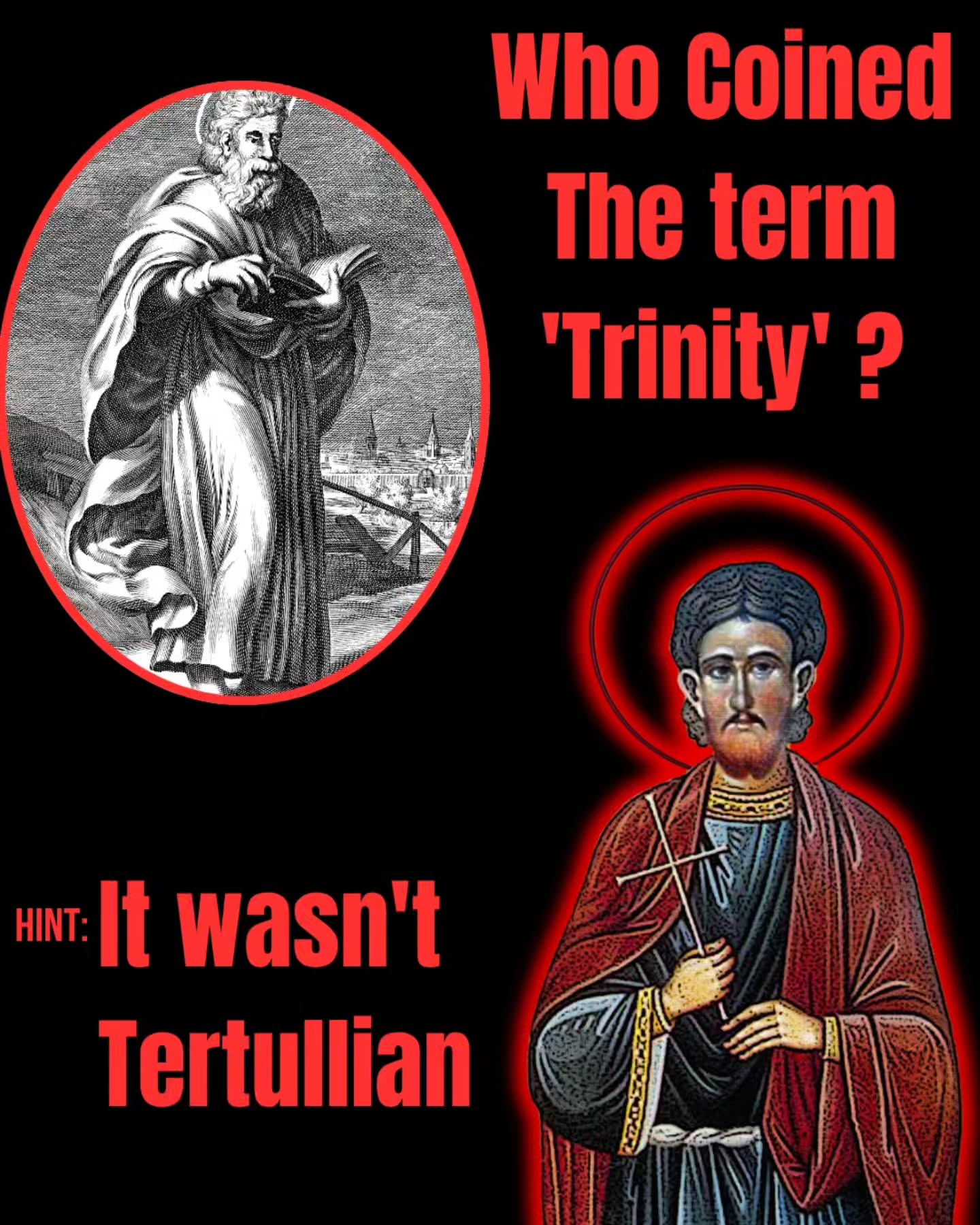
St. Theophilus of Antioch and the earliest use of "Trinity" around 180 AD

The post notes that on October 13 the Orthodox Church commemorates St. Theophilus of Antioch, a second-century bishop and early Christian apologist. Around 180 AD, in his work To Autolycus, he provided the earliest surviving Christian use of the Greek term Trias, meaning "Trinity." He described God, His Word, and His Wisdom, presenting an early Trinitarian framework roughly 145 years before the Council of Nicaea. The post includes hashtags for Christianity, trinity, God, and orthodoxy.

  • St. Theophilus of Antioch commemorated October 13
  • Second-century bishop and apologist
  • Earliest surviving Christian use of "Trias" (Trinity) around 180 AD
  • Found in his work To Autolycus
  • Early Trinitarian framework 145 years before Council of Nicaea
Read more
Disgruntled Docs with history.anastasia Instagram

The Protection of the Mother of God: Vision at Blachernae

The post describes the feast of the Protection of the Most Holy Mother of God, known as Pokrov, celebrated on October 1st or October 14th according to the Julian calendar. The event commemorated occurred in the mid-tenth century in Constantinople at the Blachernae Church, where the Mother of God's veil was kept. During an all-night vigil, Saint Andrew the Fool-for-Christ and his disciple Epiphanius saw the Theotokos walking in the air, shining…

The post describes the feast of the Protection of the Most Holy Mother of God, known as Pokrov, celebrated on October 1st or October 14th according to the Julian calendar. The event commemorated occurred in the mid-tenth century in Constantinople at the Blachernae Church, where the Mother of God's veil was kept. During an all-night vigil, Saint Andrew the Fool-for-Christ and his disciple Epiphanius saw the Theotokos walking in the air, shining with heavenly light and surrounded by angels and saints.

She knelt and prayed at length for humanity. Then she approached the altar, removed her radiant veil, and spread it over the people in the church as protection from visible and invisible enemies. While she remained, the veil was visible and shone brighter than the sun; after her departure it became invisible, though her grace remained with the people.

The feast was established to honor this miraculous vision of protection and intercession. The post includes a traditional prayer: "Remember us in your prayers, O Lady Virgin Mother of God, that we may not perish... cover us from every evil, for in You we hope."

  • Feast celebrated October 1st or 14th (Julian calendar)
  • Vision occurred mid-tenth century at Blachernae Church in Constantinople
  • Saint Andrew the Fool-for-Christ and disciple Epiphanius witnessed the Theotokos
  • She spread her veil over the congregation as protection
  • Veil visible during her presence, invisible afterward while grace remained

Critic asks for theological help for God Logic after debate concession

A social media user criticizes the content creator God Logic for his performance in a recent debate with Metaphysics Mike. In the debate, God Logic conceded that John 6 is symbolic regarding the Eucharist. He argued that Jesus's statements about being the bread of life and a river of water are not literal, and therefore the command to eat his flesh and drink his blood is also not literal. The critic says the situation has deteriorated to the…

A social media user criticizes the content creator God Logic for his performance in a recent debate with Metaphysics Mike. In the debate, God Logic conceded that John 6 is symbolic regarding the Eucharist. He argued that Jesus's statements about being the bread of life and a river of water are not literal, and therefore the command to eat his flesh and drink his blood is also not literal.

The critic says the situation has deteriorated to the point that Muslims are calling out God Logic on this position. The critic asks anyone who knows God Logic personally to walk him through basic theology because he is making "us all look bad." The post frames the concession as a significant theological error that reflects poorly on the broader community God Logic is associated with.

Key moments

  1. The speaker asks for help for God Logic, saying his theology is getting worse.
  2. The criticism comes from a clip of God Logic's recent debate with Metaphysics Mike.
  3. God Logic conceded that John 6 is symbolic when it talks about the Eucharist.
  4. God Logic argued that Jesus saying 'I am the bread of life' is not literal, just as saying he is a river of water is not literal.
  5. God Logic concluded that eating Christ's flesh and drinking his blood is not literal.
  6. The speaker claims the situation is so bad that even Muslims are calling God Logic out on this.
  7. The speaker asks anyone who is friends with God Logic to walk him through basic theology.
  8. The speaker says God Logic is starting to make "us all look bad."
Read more

Congratulations to Fedor Duric with prayer from St. Nikolai Velimirović

The post offers congratulations to Fedor Duric, described as a brother in Christ, on his triumph. The author gives all glory to God and includes a prayer attributed to St. Nikolai Velimirović addressing Christ as the Conqueror of the world and victorious Commander, asking Him to remain close. The text is accompanied by a series of emojis including prayer hands, an Orthodox cross, prayer beads, a heart, a skull, crossed swords, a dove, and a boxing glove.

Key moments

  1. Go get my money take my turn jump up and lock up tough and my body get the song off of me tough of my money tough
  2. get my money take my turn jump up and lock up tough and my body get the song off of me tough of my money tough
  3. get the song off of me tough of my money get my money take my turn jump up and lock up tough and my body get the song off of me tough of my money tough
Read more

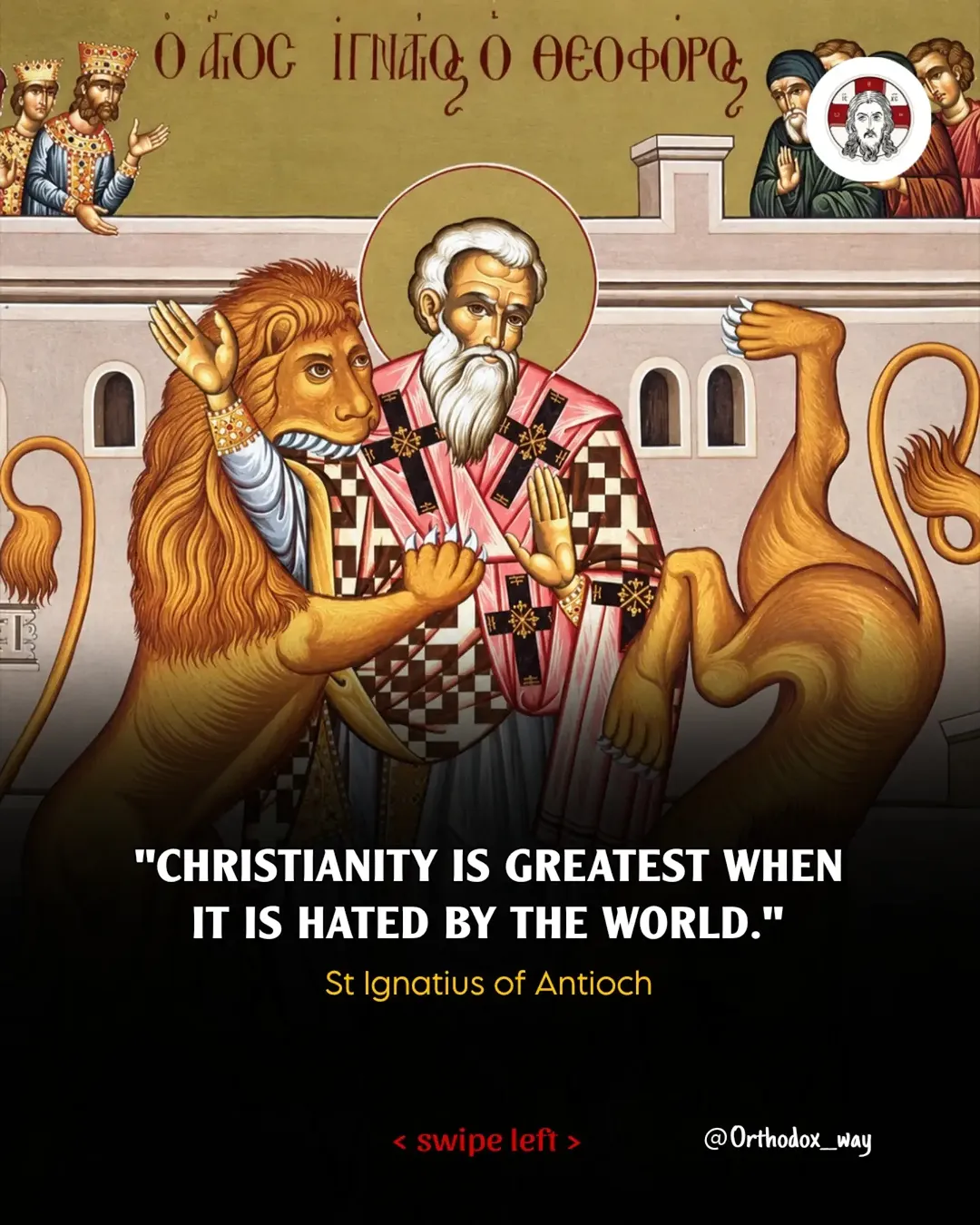
St Ignatius of Antioch on witness through persecution

St Ignatius of Antioch, the third bishop of Antioch, wrote his Letter to the Romans around 107 AD while being marched under guard to Rome for execution by wild beasts in the arena. In the letter he argues that Christian faith does not rest on political power, smooth propaganda, or worldly approval. Instead, he writes that true Christian witness shines brightest when tested by persecution and rejection, mirroring the suffering of Jesus.

  • St Ignatius was the third bishop of Antioch
  • He wrote the Letter to the Romans around 107 AD
  • He was being marched to Rome under guard for execution by wild beasts
  • He argued faith is not about political power, propaganda, or worldly approval
  • True Christian witness shines brightest under persecution, mirroring Christ's suffering
Read more

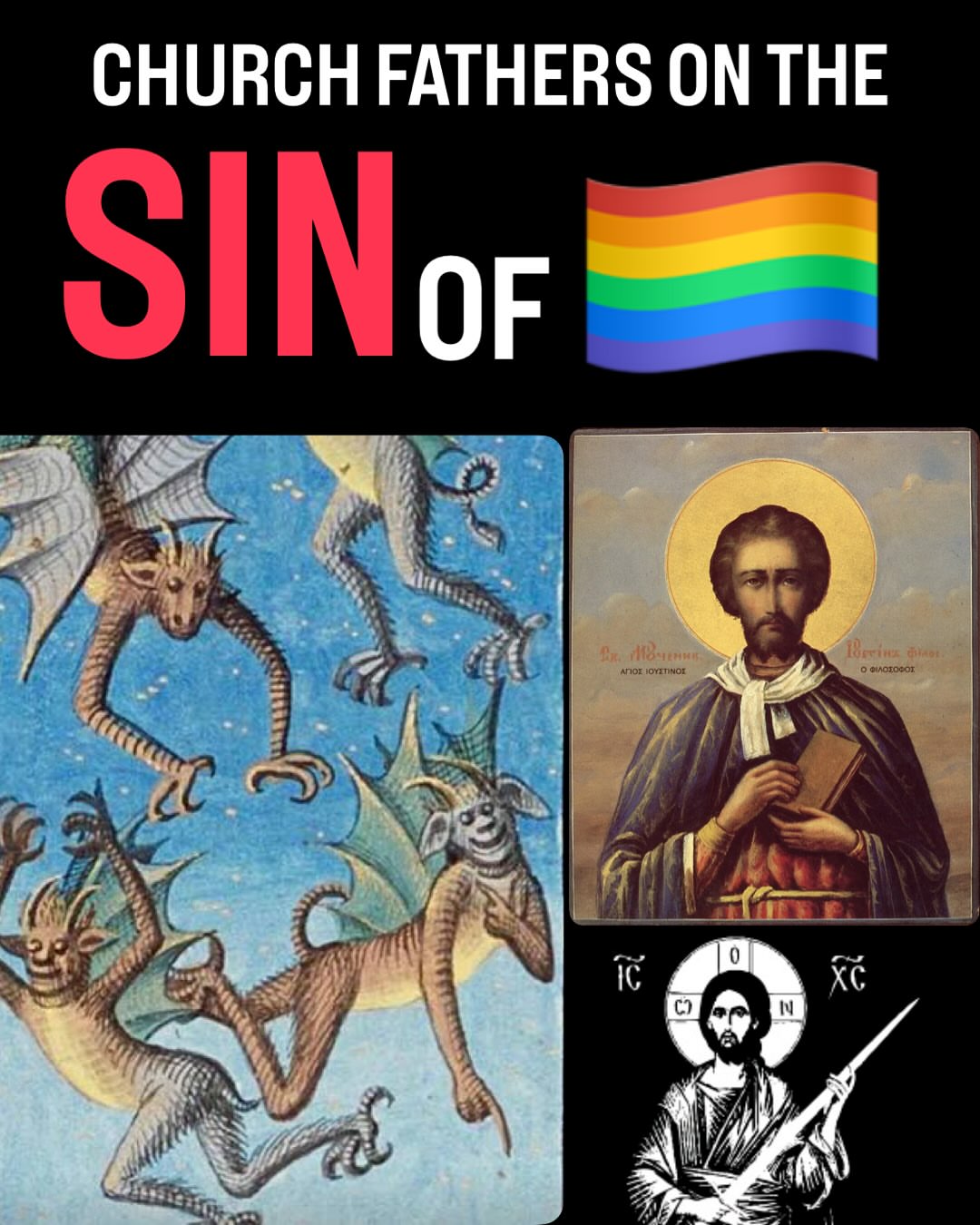
Post cites Church Fathers on homosexuality with Orthodox hashtags

The source text consists of a single line: "Church Fathers on the Sin of 🏳️‍🌈" followed by hashtags for Orthodox Christianity, apologetics, saints, and Christian quotes. No further content, quotations, discussion, or commentary is present in the provided material. The rainbow flag emoji indicates the subject is homosexuality or LGBTQ+ matters. The hashtags suggest the post is framed within Orthodox Christian apologetics and patristic…

The source text consists of a single line: "Church Fathers on the Sin of 🏳️‍🌈" followed by hashtags for Orthodox Christianity, apologetics, saints, and Christian quotes. No further content, quotations, discussion, or commentary is present in the provided material. The rainbow flag emoji indicates the subject is homosexuality or LGBTQ+ matters.

The hashtags suggest the post is framed within Orthodox Christian apologetics and patristic authority. Because the source contains only this title and tags, there is no discussion to summarize, no arguments to outline, and no specific patristic references to report.

  • Title references Church Fathers on the sin represented by the rainbow flag emoji
  • Hashtags identify the post as Orthodox, apologetic, saint-focused, and quote-oriented
  • No patristic quotations, names, or arguments appear in the source text
  • No discussion thread or commentary is included in the provided material
12 opinions in the discussion St. Justinian the Great made it a crime in his empire to be a homosexual. The penalty was death by fire. We have a lot to learn from our ancestors ways Read the discussion

Vainglory and the trap of social media approval

0:52

The post examines vainglory, an ancient passion the Orthodox Church Fathers identified as the desire for admiration and recognition from others. Social media has made this temptation more accessible by encouraging users to post content and then monitor likes, views, and comments, fostering comparison and a sense of living before an invisible audience. Saint John Climacus, in The Ladder of Divine Ascent, warned that vainglory is deceptive and can…

The post examines vainglory, an ancient passion the Orthodox Church Fathers identified as the desire for admiration and recognition from others. Social media has made this temptation more accessible by encouraging users to post content and then monitor likes, views, and comments, fostering comparison and a sense of living before an invisible audience.

Saint John Climacus, in The Ladder of Divine Ascent, warned that vainglory is deceptive and can nullify the spiritual value of good deeds when they are performed to be seen. Christ's words in Matthew 6:1 caution against doing charitable deeds before men to be seen by them. The speaker illustrates how even prayer, giving, and speaking about Christ can become acts of vainglory when motivated by a desire for praise.

There is nothing inherently wrong with sharing life or faith online; the danger begins when identity and self-worth depend on the approval of others. The central question posed is whether one would still perform these actions if nobody were watching. The discussion turns on the distinction between sharing faith online and allowing self-worth to depend on external approval, urging readers to seek God's approval rather than the world's applause.

Key moments

  1. Vainglory is defined as the obsession with being seen, admired, praised, and recognized.
  2. Social media has turned this ancient passion into an epidemic, training users in it every day.
  3. The mechanism involves posting content, then checking who liked, viewed, or commented, and comparing one's life to others.
  4. This creates a condition of living with an invisible audience watching everything one does.
  5. St. John Climacus warned that vainglory is incredibly deceptive.
  6. A person can do something good and immediately destroy its spiritual benefit by wanting to show the world what they have done.
  7. Examples include praying to be seen praying, giving to be seen giving, and talking about God to be admired.
  8. The speaker asks the decisive question: if nobody saw it, would I still do it?
Read more
Disgruntled Docs with Benjamin Merritt Instagram

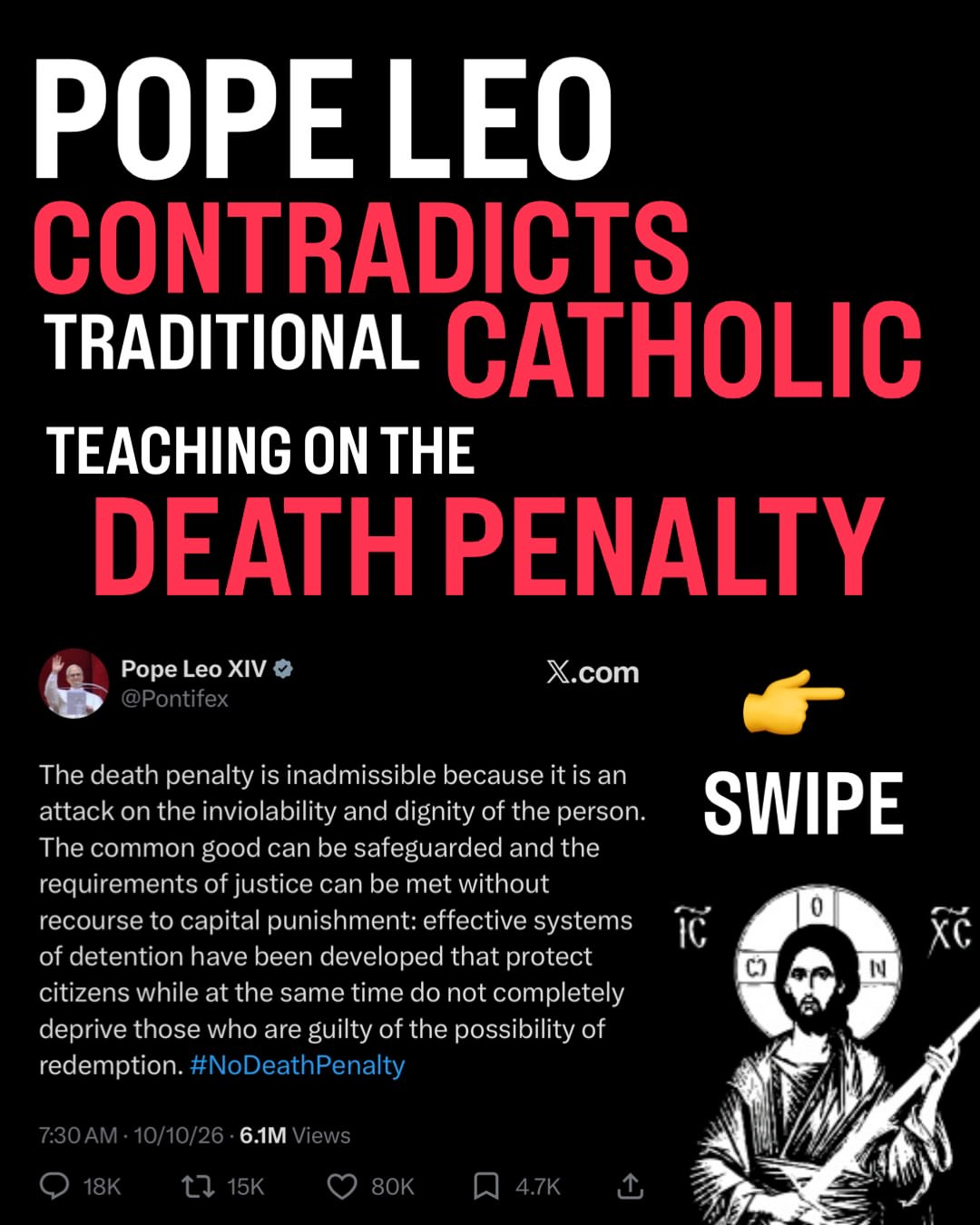
Catholic speaker defends Pope Leo on death penalty, criticizes Orthodox antisemitic terms

1:23

A Catholic speaker publishes a video responding to a post by the Orthodox account 'cleave to antiquities.' The post asserts that Pope Leo's recent statement on the death penalty contradicts traditional Catholic teaching. The speaker opens by quoting Pope Leo's tweet directly. The tweet declares the death penalty inadmissible because it attacks the inviolability and dignity of the person. It states that the common good can be safeguarded without…

A Catholic speaker publishes a video responding to a post by the Orthodox account 'cleave to antiquities.' The post asserts that Pope Leo's recent statement on the death penalty contradicts traditional Catholic teaching. The speaker opens by quoting Pope Leo's tweet directly. The tweet declares the death penalty inadmissible because it attacks the inviolability and dignity of the person.

It states that the common good can be safeguarded without capital punishment. It cites effective modern detention systems that protect citizens while preserving the possibility of redemption for the offender. The speaker argues that this teaching reflects developed circumstances, specifically the existence of modern detention systems, rather than a contradiction of established doctrine.

The speaker then turns to the language used by 'cleave to antiquities.' The speaker criticizes the account for employing antisemitic terminology, pointing to the phrases 'goy pond' and 'goy cage' as examples. The speaker characterizes the broader Catholic response to this criticism as 'cope' and describes it as one of the worst responses they have encountered.

The speaker concludes by indicating that they will present quotations from other popes on the subject in subsequent content. The video's caption remarks that Catholics deserve better arguments and includes hashtags for Catholic, Orthodox, Vatican, Orthodox Christian, and apologetics topics.

Key moments

  1. Speaker identifies "cleave to antiquities" post claiming Pope Leo contradicts traditional Catholic teaching on death penalty
  2. Speaker quotes Pope Leo's tweet: death penalty inadmissible as attack on inviolability and dignity of person
  3. Pope Leo's tweet states common good can be safeguarded without capital punishment
  4. Pope Leo's tweet cites effective detention systems that protect citizens while preserving possibility of redemption
  5. Speaker argues this reflects changed circumstances (modern detention systems) not contradiction of doctrine
  6. Speaker criticizes "cleave to antiquities" for using antisemitic terminology ("goy pond", "goy cage")
  7. Speaker calls the Catholic response to this "cope" and says this is one of the worst responses seen
  8. Speaker indicates they will show quotes from other Popes on the subject
Read more

Athonite Guard attends Liturgy at Saint George Monastery with Bishop Iakovos

The Athonite Guard attended Divine Liturgy at Saint George Monastery in Yellow Rock this morning. His Grace Bishop Iakovos celebrated the service. The post expresses gratitude for the blessing of being present and asks for the Theotokos's protection and Christ's strength. A video accompanying the post presents a sequence of Orthodox Christian hymns to the Theotokos chanted in Greek. The opening prayer asks: "Open my mouth and fill it with…

The Athonite Guard attended Divine Liturgy at Saint George Monastery in Yellow Rock this morning. His Grace Bishop Iakovos celebrated the service. The post expresses gratitude for the blessing of being present and asks for the Theotokos's protection and Christ's strength.

A video accompanying the post presents a sequence of Orthodox Christian hymns to the Theotokos chanted in Greek. The opening prayer asks: "Open my mouth and fill it with spirit, and I will hymn the Queen Mother and appear as a celebrant, and unconfusedly her wonders." The refrain "Most Holy Theotokos, save us" recurs throughout.

The hymns address her with scriptural and liturgical titles: Christ's living book sealed in the Spirit; the great archangel cries "Rejoice, vessel of joy"; the curse of the first mother is loosed; "Rejoice, restoration of Adam, virgin bride; rejoice, heir of Adam; rejoice, throne of the King of all, the Almighty." A doxology to the Trinity follows: "Glory to Father and Son and Holy Spirit."

Then titles continue: "Unfading rose, rejoice, only one that blossomed; my fragrant apple, rejoice, you who budded; seal of the King of all, rejoice, unwedded, salvation of the world. Now and ever and unto ages of ages amen. Rejoice, purity of the breeze; through the fall we rose, rejoice, the breath; Lady lily, gladden the faithful; incense of precious fragrance."

A petition asks: "The hymns of the Theotokos, as an abundant divine source, having composed them, strengthen me spiritually. And in your divine glory, make me worthy of crowns of glory." This petition repeats twice. The final refrain returns to "Most Holy Theotokos, save us" with closing titles: "Ear of corn that sprouted God, as heaven blamelessly; rejoice living table, providing bread of life."

Key moments

  1. 0:00 Opening prayer: "Open my mouth and fill it with spirit, and I will hymn the Queen Mother and appear as a celebrant, and unconfusedly her wonders."
  2. 0:48 First refrain: "Most Holy Theotokos, save us." Titles follow: Christ's living book sealed in the Spirit; the great archangel cries "Rejoice, vessel of joy"; the curse of the first mother is loosed; "Rejoice, restoration of Adam, virgin bride; rejoice, heir of Adam; rejoice, throne of the King of all, the Almighty."
  3. 1:36 Doxology: "Glory to Father and Son and Holy Spirit." Then: "Unfading rose, rejoice, only one that blossomed; my fragrant apple, rejoice, you who budded; seal of the King of all, rejoice, unwedded, salvation of the world. Now and ever and unto ages of ages amen. Rejoice, purity of the breeze; through the fall we rose, rejoice, the breath; Lady lily, gladden the faithful; incense of precious fragrance."
  4. 2:24 Petition: "The hymns of the Theotokos, as an abundant divine source, having composed them, strengthen me spiritually. And in your divine glory, make me worthy of crowns of glory." Repeated twice.
  5. 3:12 Final refrain: "Most Holy Theotokos, save us." Closing titles: "Ear of corn that sprouted God, as heaven blamelessly; rejoice living table, providing bread of life."
Read more

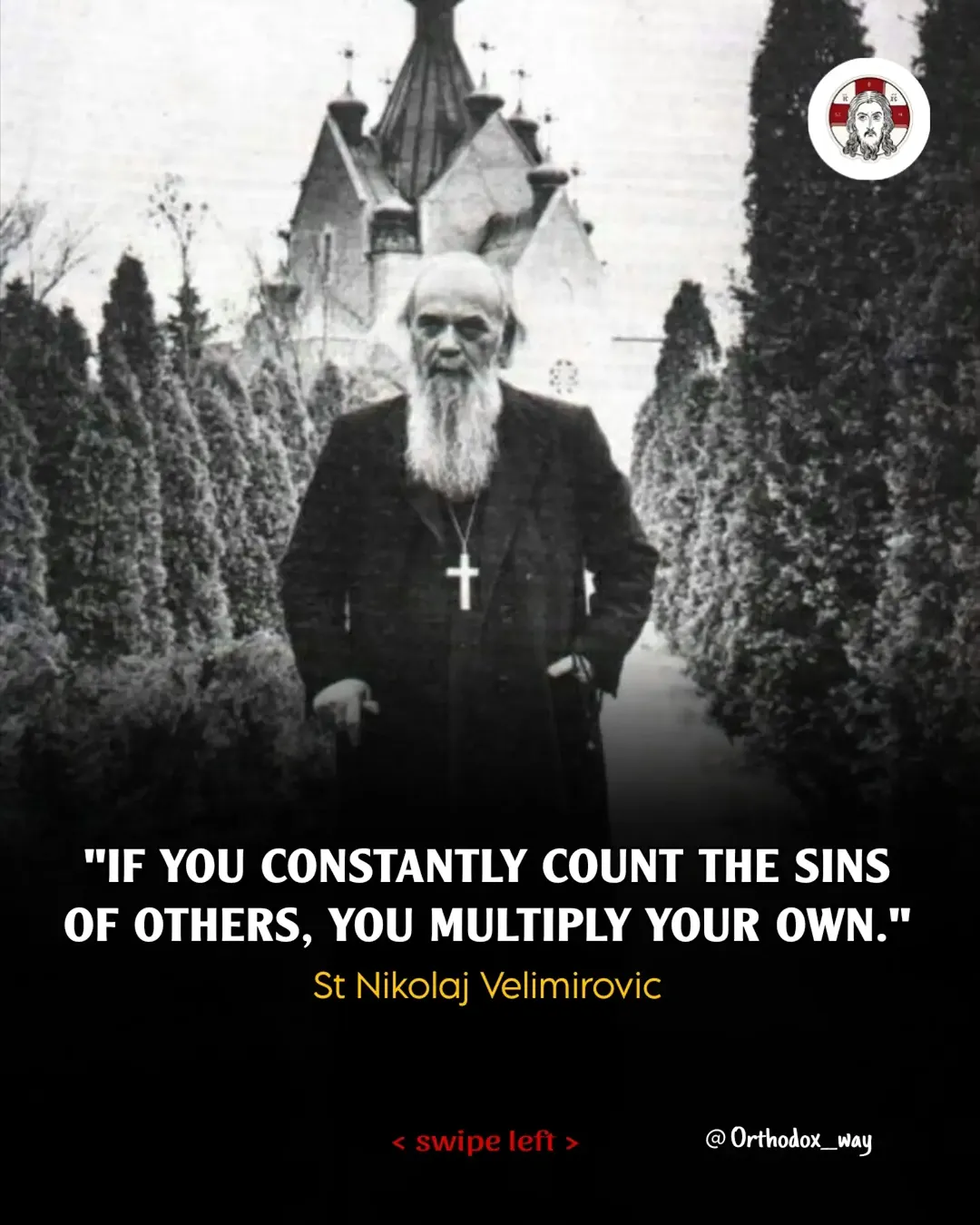
Saint Nikolaj Velimirović: New Chrysostom who endured Dachau

Saint Nikolaj Velimirović (1881-1956) was a Serbian Orthodox bishop, theologian, and spiritual writer known as the New Chrysostom for his eloquence and spiritual wisdom. From early life he devoted himself to Christ and the Orthodox Church, becoming a powerful preacher who called people to repentance, humility, prayer, and genuine Christian living. Despite his learning and influence, he embraced a life of prayer, fasting, and spiritual…

Saint Nikolaj Velimirović (1881-1956) was a Serbian Orthodox bishop, theologian, and spiritual writer known as the New Chrysostom for his eloquence and spiritual wisdom. From early life he devoted himself to Christ and the Orthodox Church, becoming a powerful preacher who called people to repentance, humility, prayer, and genuine Christian living.

Despite his learning and influence, he embraced a life of prayer, fasting, and spiritual discipline. During World War II, the Nazis imprisoned him at Dachau alongside Patriarch Gavrilo of Serbia. He endured suffering and persecution for his faith, yet remained steadfast in Christ, transforming his trials into opportunities for prayer and spiritual reflection.

After his release, Saint Nikolaj continued his ministry in exile, dedicating himself to teaching the Orthodox faith through his writings and spiritual guidance. He reposed in the Lord on March 18, 1956. The Serbian Orthodox Church canonized him in 2003. He remains an example of a saintly life rooted in prayer, humility, endurance, and complete faithfulness to Christ.

  • Serbian Orthodox bishop and theologian known as the New Chrysostom
  • Preached repentance, humility, prayer, and authentic Christian living
  • Imprisoned at Dachau with Patriarch Gavrilo during World War II
  • Continued ministry in exile through writings and spiritual guidance
  • Canonized by the Serbian Orthodox Church in 2003
Read more

Christ's Warning on Wealth: The Rich Young Ruler

2:23

The video presents Mark 10:17-27. A rich young man runs to Jesus and asks what he must do to inherit eternal life. Jesus lists several commandments. The man says he has kept them from youth. Jesus then tells him to sell all he has, give to the poor, and follow him. The man goes away sorrowful because he had great possessions. Jesus tells the disciples how hard it is for the rich to enter the kingdom of God. He says it is easier for a camel to go…

The video presents Mark 10:17-27. A rich young man runs to Jesus and asks what he must do to inherit eternal life. Jesus lists several commandments. The man says he has kept them from youth. Jesus then tells him to sell all he has, give to the poor, and follow him.

The man goes away sorrowful because he had great possessions. Jesus tells the disciples how hard it is for the rich to enter the kingdom of God. He says it is easier for a camel to go through the eye of a needle than for a rich man to enter the kingdom.

When the disciples ask who can be saved, Jesus replies that with God all things are possible. The speaker notes that Christ saw the man's heart was captive to wealth despite his outward righteousness. Christ looked at him and loved him before asking him to surrender his possessions, not to punish but to free him.

The Orthodox perspective emphasizes detachment from worldly possessions and placing Christ above all things.

Key moments

  1. 0:00 The video opens with Mark 10:17 where a rich young man runs to Jesus and asks what he must do to inherit eternal life.
  2. 0:32 Jesus lists several commandments and the man says he has kept them from youth; Jesus then tells him to sell all he has, give to the poor, and follow him.
  3. 1:17 The man goes away sorrowful because he had great possessions, and Jesus tells the disciples how hard it is for the rich to enter the kingdom of God.
  4. 1:50 Jesus says it is easier for a camel to go through the eye of a needle than for a rich man to enter the kingdom, and when the disciples ask who can be saved he replies that with God all things are possible.
  5. 2:20 The speaker notes that Christ saw the man's heart was captive to wealth despite his outward righteousness.
Read more
Disgruntled Docs with Ники́та ☦︎ Instagram

A call to die before death and a steppe night lament

The post presents a saying: "Die before you die, and you shall not die when you die." It urges the reader to crucify the passions before they crucify the soul, to bury pride before the earth buries the flesh, and to repent before the hour when repentance is no longer possible. The text observes that people live as though time belongs to them, yet every breath is a mercy and each moment brings them closer to eternity. It states that the grave is…

The post presents a saying: "Die before you die, and you shall not die when you die." It urges the reader to crucify the passions before they crucify the soul, to bury pride before the earth buries the flesh, and to repent before the hour when repentance is no longer possible. The text observes that people live as though time belongs to them, yet every breath is a mercy and each moment brings them closer to eternity.

It states that the grave is not the greatest terror; meeting Christ unprepared is. It concludes with a call to remember death, take up the cross, and notes that the man who dies with Christ has nothing to fear when death comes. The post also includes a video summary describing a dark night on the steppe where only bullets whistle and wind hums in the wires while stars twinkle dimly.

In that scene a speaker addresses a beloved, saying he knows she is not sleeping and is secretly wiping a tear by a child's crib. The video points are given in Russian, matching the description. The post carries hashtags for Orthodox, Christian, faith, Jesus, and remember death.

Key moments

  1. В тёмную ночь только пули свистят по степи, только ветер гудит в проводах, тускло звёзды мерцают.
  2. В тёмную ночь ты, любимая, знаю, не спишь, и у детской кроватки тайком ты слезу утираешь.
Read more

Saint Gregory the Theologian: Defender of the Trinity

Saint Gregory of Nazianzus, known as Gregory the Theologian, lived from approximately 329 to 390 AD. He ranks among the greatest Fathers of the Orthodox Church and is counted among the Three Holy Hierarchs. His reputation rests on profound wisdom, eloquence, and deep knowledge of Scripture. He devoted his life to defending the Orthodox faith against Arianism and proclaiming the divinity of Jesus Christ. His greatest contribution came through the…

Saint Gregory of Nazianzus, known as Gregory the Theologian, lived from approximately 329 to 390 AD. He ranks among the greatest Fathers of the Orthodox Church and is counted among the Three Holy Hierarchs. His reputation rests on profound wisdom, eloquence, and deep knowledge of Scripture.

He devoted his life to defending the Orthodox faith against Arianism and proclaiming the divinity of Jesus Christ. His greatest contribution came through the Five Theological Orations, delivered in Constantinople around 380 AD. In these orations he defended the divinity of the Son and the Holy Spirit and explained the mystery of the Holy Trinity.

His writings, sermons, and theological poetry became foundational to Orthodox theology, earning him the title The Theologian for his exceptional teaching on the Holy Trinity. Despite his great learning and his position as Archbishop of Constantinople, Gregory valued prayer, humility, and the contemplative life. After facing political and ecclesiastical conflicts, he withdrew from public leadership to devote himself to prayer and writing.

His legacy remains that of a faithful defender of the Trinity, whose words continue to illuminate the faith and life of the Orthodox.

  • One of the Three Holy Hierarchs and greatest Fathers of the Orthodox Church
  • Defended Orthodox faith against Arianism and proclaimed Christ's divinity
  • Delivered Five Theological Orations in Constantinople around 380 AD on the Trinity
  • Writings and poetry became foundational to Orthodox theology
  • Withdrew from archiepiscopal office to pursue prayer and contemplative life
Read more