WeOrthodox
EN UA

Disgruntled Docs

Instagram ↗ 117 discussions

Doc posting memes ☦️ Reader Nektarios Veteran owned All my opinions are my own

Becoming the right husband before seeking a godly wife

Every man says he wants a loyal, God-fearing wife who values marriage and family. But are you actually becoming the kind of man who is ready for her? From an Orthodox Christian perspective, dating should never be driven by lust, loneliness, or physical attraction alone. It is about discernment, patience, intentionality, and finding someone who shares your desire to grow closer to Christ. Do not just look for beauty. Look for character, humility,…

Every man says he wants a loyal, God-fearing wife who values marriage and family. But are you actually becoming the kind of man who is ready for her? From an Orthodox Christian perspective, dating should never be driven by lust, loneliness, or physical attraction alone.

It is about discernment, patience, intentionality, and finding someone who shares your desire to grow closer to Christ. Do not just look for beauty. Look for character, humility, faith, and the qualities of a future mother and wife. And remember, while you are praying for a godly woman, she may be praying for a godly husband.

Before asking God for the right wife, work on becoming the right husband. Marriage is not simply about finding someone to love. It is about two people walking towards Christ together. Ephesians 5:25 says, "Husbands, love your wives, just as Christ also loved the church and gave Himself for her."

  • Every man wants a godly wife, but are you becoming the man ready for her?
  • Dating must be driven by discernment and shared desire for Christ, not lust or loneliness
  • Seek character, humility, and faith over physical beauty
  • While you pray for a godly wife, she may be praying for a godly husband
  • Marriage means two people walking toward Christ together, modeled on Christ's love for the Church
6 opinions in the discussion Why is all of this about what you want a wife to do for you, with no thought about what you bring to the table? Why would the woman you want even be interested in you? You can't change or… Read the discussion
Disgruntled Docs with Ben Instagram

Video argues sola scriptura impossible in first twenty years of church

The video presents an Orthodox challenge to the Protestant doctrine of sola scriptura. The speaker asks how the early church could have practiced sola scriptura during its first twenty years when no completed New Testament existed. He acknowledges that the Old Testament, the Gospels, and oral teaching from prophets and apostles were regarded as infallible in that period. The argument proceeds that during the apostles' lifetime one would not have…

The video presents an Orthodox challenge to the Protestant doctrine of sola scriptura. The speaker asks how the early church could have practiced sola scriptura during its first twenty years when no completed New Testament existed. He acknowledges that the Old Testament, the Gospels, and oral teaching from prophets and apostles were regarded as infallible in that period.

The argument proceeds that during the apostles' lifetime one would not have doubted Paul's teaching simply because it was not yet written down; therefore sola scriptura did not exist while the apostles were alive. The church relied on living apostolic teaching, which later became inscripturated. The speaker also questions what authoritative standard remains after the apostles' deaths and challenges the idea that infallible oral teaching continues today.

He concludes by thanking his debate opponent for conceding that sola scriptura is not apostolic in origin.

Key moments

  1. The speaker asks how sola scriptura could be practiced in the first twenty years of the church when there was no completed Bible or scripture.
  2. The speaker acknowledges that the Old Testament, the Gospels, and oral teaching from prophets and apostles were considered infallible.
  3. The speaker questions what the stand is after the death of the apostles and challenges the idea that there is infallible oral teaching today.
  4. The speaker says that during the apostles' time one would not doubt Paul's teaching just because it was not written down, and concludes that sola scriptura did not exist then; the church had apostolic teaching which later became scripture.
  5. The speaker thanks the opponent for conceding that sola scriptura is not apostolic.
Read more

The 300 Aragvian Martyrs: Defending Faith and King in 1795

The post presents the story of the 300 Aragvian martyrs through a series of illustrated slides. In 1795, three hundred Georgian warriors from the Aragvi region gathered at Saint George's Church as Persian Muslim invaders surrounded Tbilisi. They made a pledge to fight to the death defending their people, their brotherhood, and the city. When the Georgian defenses began to collapse, the Aragvians positioned themselves between the attackers and…

The post presents the story of the 300 Aragvian martyrs through a series of illustrated slides. In 1795, three hundred Georgian warriors from the Aragvi region gathered at Saint George's Church as Persian Muslim invaders surrounded Tbilisi. They made a pledge to fight to the death defending their people, their brotherhood, and the city.

When the Georgian defenses began to collapse, the Aragvians positioned themselves between the attackers and King Erekle II, holding back the Persian advance while the king escaped. They continued fighting despite massive casualties. Their sacrifice did not prevent the overall defeat, but their resistance enabled the king's survival.

In 2008, the Georgian Orthodox Church glorified them as holy martyrs for their sacrifice in defense of their Christian homeland and resistance to Islamic conquest. The post includes their troparion, which honors their steadfast courage and sacrifice, then asks them to intercede with Christ so that the faithful may stand firmly in His commandments.

The hymn includes the line: "May we stand as firmly in obedience to Christ as they stood in battle." A Georgian folk song tribute to the 300 Aragvians is noted as accompanying the presentation and available on Spotify.

  • 300 Aragvian warriors gathered at Saint George's Church in 1795 and pledged to fight to the death against Persian Muslim invaders.
  • They shielded King Erekle II during the collapse of Georgian defenses, allowing his escape while suffering massive casualties.
  • Their resistance did not prevent defeat but secured the king's survival.
  • The Georgian Orthodox Church glorified them as holy martyrs in 2008 for defending their Christian homeland.
  • Their troparion asks for their intercession to stand firmly in obedience to Christ's commandments.
Read more

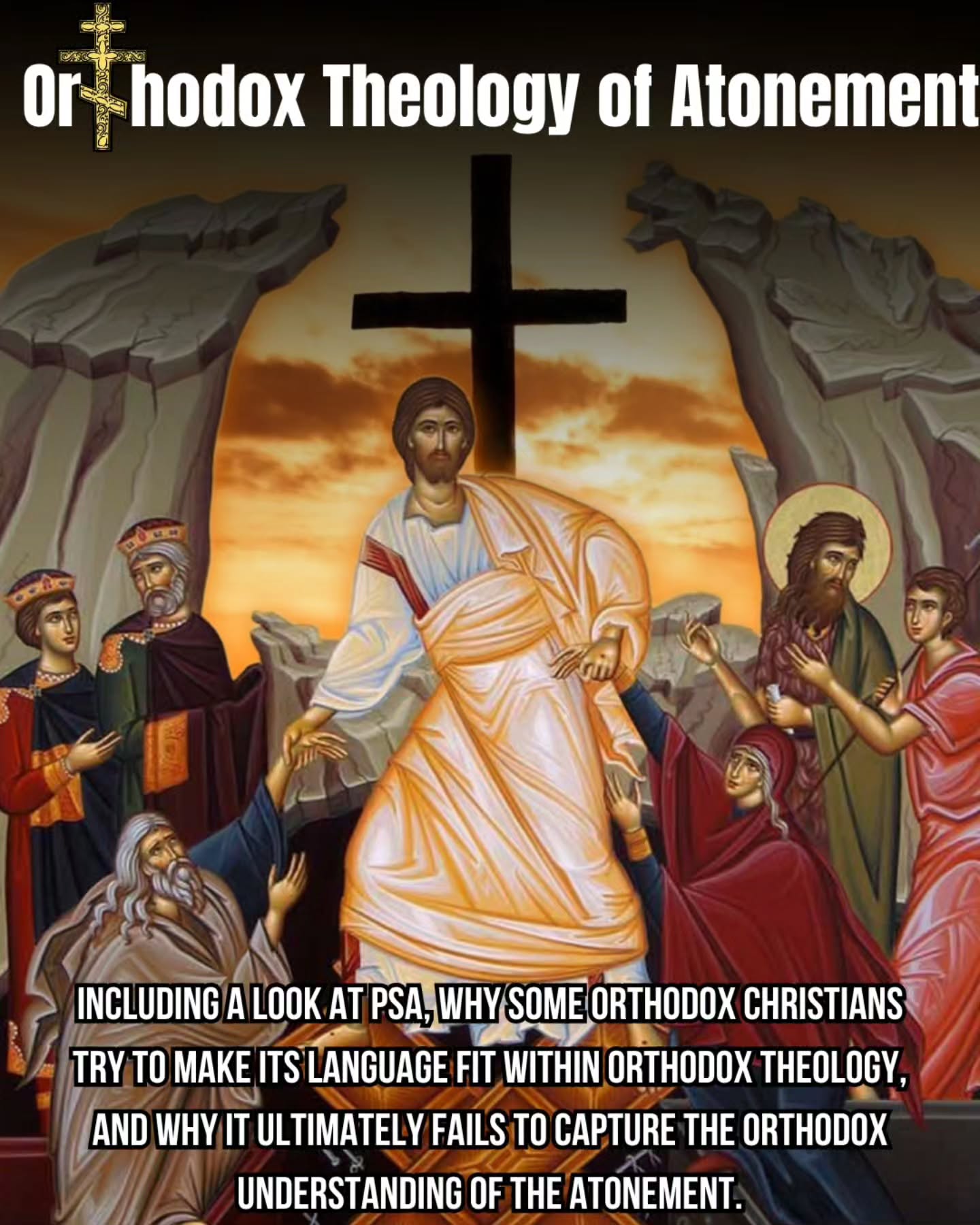
Making PSA compatible with Orthodoxy requires redefining its foundations

Attempting to reconcile penal substitutionary atonement with Orthodoxy forces a fundamental redefinition of its philosophical basis and theological structure. At that point you are no longer defending PSA; you are rebuilding it into Orthodox atonement theology.

5 opinions in the discussion Think about it: PSA goes against the very nature of God, because why would God "need" a legal payment for sin? God needs nothing, he's perfect and depends on nothing. The incarnation… Read the discussion

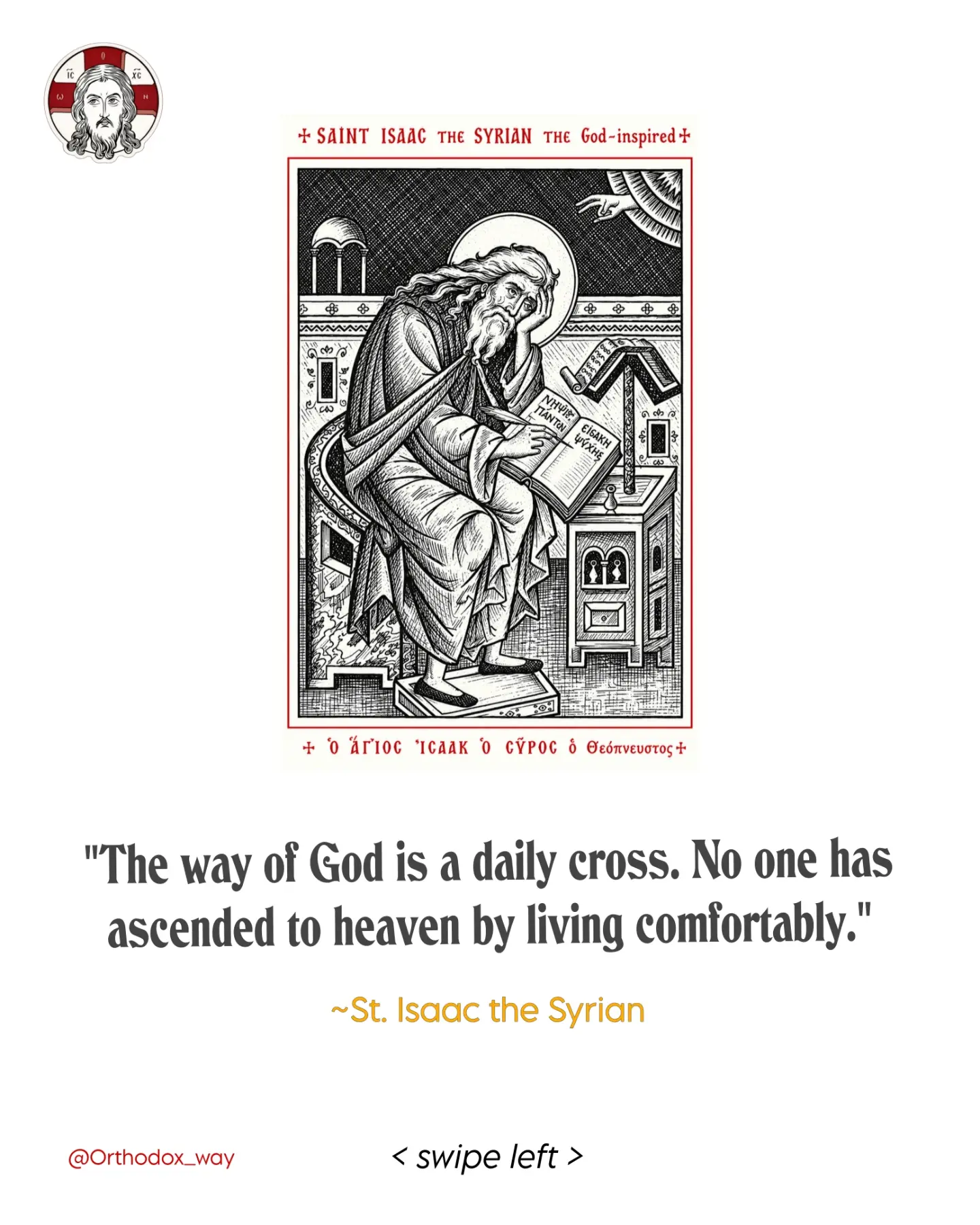
St. Isaac the Syrian on mercy, humility, and boundless love

The post presents St. Isaac the Syrian's teaching that God's love and mercy exceed human understanding. It outlines his view that true spiritual wisdom begins with humility, that repentance opens the door to transformation, and that prayer purifies the heart to perceive God's presence. The text describes his celebrated teaching on the merciful heart, a soul so filled with compassion that it burns with love for all creation, for humanity, for…

The post presents St. Isaac the Syrian's teaching that God's love and mercy exceed human understanding. It outlines his view that true spiritual wisdom begins with humility, that repentance opens the door to transformation, and that prayer purifies the heart to perceive God's presence. The text describes his celebrated teaching on the merciful heart, a soul so filled with compassion that it burns with love for all creation, for humanity, for animals, for enemies, and even for those who cause suffering.

For St. Isaac, holiness is not merely the avoidance of sin but the transformation of the entire human person through the grace of God. He calls believers beyond superficial religion into the hidden depths of the heart, where silence becomes prayer, repentance becomes healing, and compassion becomes the reflection of Christ Himself.

He urges Christians not to judge their neighbour but to recognise their own need for God's mercy. The post concludes that the true measure of closeness to God is not how much one speaks about Him but how deeply one loves His creation, and that to know God is to be transformed by His love; and to be transformed by His love is to learn to love without boundaries.

  • God's love and mercy surpass human understanding
  • Spiritual wisdom begins with humility; repentance and prayer lead to transformation
  • The merciful heart burns with compassion for all creation, including enemies
  • Holiness is transformation of the whole person through grace, not just sin avoidance
  • Closeness to God is measured by depth of love for creation, not words about Him
Read more

Infant baptism defended through circumcision parallel and historical continuity

0:21

The speaker presents an argument for infant baptism by drawing a parallel between baptism and circumcision. Paul writes in Colossians that baptism is a new circumcision, and since infants were circumcised in the Old Testament, the speaker concludes this supports baptizing babies. The argument extends to historical practice, noting that infant baptism was observed continuously throughout Christian history until the 16th century. The Anabaptists…

The speaker presents an argument for infant baptism by drawing a parallel between baptism and circumcision. Paul writes in Colossians that baptism is a new circumcision, and since infants were circumcised in the Old Testament, the speaker concludes this supports baptizing babies. The argument extends to historical practice, noting that infant baptism was observed continuously throughout Christian history until the 16th century.

The Anabaptists are identified as the first group to reject the practice. The speaker then poses a question about how a tradition that contradicts both biblical precedent and historical practice can be maintained.

Key moments

  1. Paul says in Colossians that baptism is a new circumcision.
  2. In the Old Testament, babies were circumcised.
  3. Infant baptism has been a Christian teaching throughout history up to the 16th century.
  4. The Anabaptists in the 16th century were the first group to stop baptizing infants.
  5. The speaker questions how one can follow a man-made tradition that goes against all Christian history and biblical evidence.
Read more

Christ Declared He Would Build His Church: An Orthodox Answer to Skeptics

The author responds to claims that Jesus Christ never established a Church, never wanted to be worshipped, and that Christianity distorted His original teachings. The answer is built on Scripture: Christ said, "I will build My Church" (Matthew 16:18), His disciples worshipped Him (Matthew 28:17), and He instituted the Holy Eucharist at the Last Supper (Luke 22:19). From these passages the author argues that Christ founded a Church and intended…

The author responds to claims that Jesus Christ never established a Church, never wanted to be worshipped, and that Christianity distorted His original teachings. The answer is built on Scripture: Christ said, "I will build My Church" (Matthew 16:18), His disciples worshipped Him (Matthew 28:17), and He instituted the Holy Eucharist at the Last Supper (Luke 22:19).

From these passages the author argues that Christ founded a Church and intended worship. The post then describes how the early Church preserved the apostolic writings, recognised the New Testament canon over time, and handed down the Christian faith through Holy Scripture and Holy Tradition. The Eastern Orthodox Church, according to the author, maintains this apostolic faith to this day.

The author addresses the objection that Christ criticised religious corruption: Christ condemned hypocrisy and corruption, but He did not condemn the Church He established. The closing warning is that people cannot reinvent Jesus Christ to suit their own beliefs and then claim to be following the original Christ. The post carries apologetic hashtags and is written as a defense of Orthodox Christianity against claims that the historical Church departed from the teachings of Jesus.

  • The author cites Matthew 16:18, where Christ says, "I will build My Church."
  • Disciples worshipped Christ (Matthew 28:17), and He instituted the Holy Eucharist at the Last Supper (Luke 22:19).
  • The early Church preserved apostolic writings and recognised the New Testament canon over time.
  • The faith was handed down through Holy Scripture and Holy Tradition, which the Eastern Orthodox Church maintains today.
  • Christ condemned hypocrisy and corruption, but did not condemn the Church He established.
Read more
Disgruntled Docs with MaximosPTO Instagram

Ethnicity persists after conversion, speaker argues via St. Moses icon and Augustine

The post opens with the assertion that people groups are real and that liberalism denies this, framing the opposition as part of a globalist agenda, and invokes Saint Moses the Black. The accompanying video features a speaker who asks why Saint Moses the Black is depicted as black in icons rather than gray, and he argues that this depiction demonstrates that ethnicity remains part of individual identity after conversion. He explains that…

The post opens with the assertion that people groups are real and that liberalism denies this, framing the opposition as part of a globalist agenda, and invokes Saint Moses the Black. The accompanying video features a speaker who asks why Saint Moses the Black is depicted as black in icons rather than gray, and he argues that this depiction demonstrates that ethnicity remains part of individual identity after conversion.

He explains that individual identity retains its layers, including ethnicity, and is not reduced to a radical individualism. He states that identity includes family and other groupings that constitute real metaphysical, ontological links, and that these links do not disappear upon conversion, just as gender does not disappear upon conversion.

He references Paul's declaration that there is neither Jew nor Greek, slave nor free, and he cites Augustine's commentary on Galatians for clarification. Augustine explains that in the eschaton judgment is based on keeping Christ's commandments, yet historical and biological realities remain. The speaker observes that the same Galatians passage is often invoked to claim gender is not real because "in Christ there is no male nor female."

He counters that making masculinity or weight lifting an idol does not invalidate the created order of nations and ethnicities, and that such an argument amounts to castigating God for creating various ethnicities and nations. The discussion centers on the persistence of created distinctions such as ethnicity and gender within the Christian life, and on the misuse of a Pauline text to deny those distinctions.

Key moments

  1. The speaker questions why Saint Moses the Black is shown as black in his icon instead of gray, suggesting ethnicity is not removed by conversion.
  2. He argues that individual identity retains its layers, including ethnicity, and is not reduced to a radical individualism.
  3. Identity includes family and other groupings that constitute real metaphysical, ontological links.
  4. These links do not disappear upon conversion, just as gender does not disappear upon conversion.
  5. He references Paul's statement that there is neither Jew nor Greek, slave nor free, and turns to Augustine's commentary on Galatians.
  6. Augustine says that in the eschaton judgment is based on keeping Christ's commandments, but historical and biological realities remain.
  7. The same Galatians passage is used by some to claim gender is not real because "in Christ there is no male nor female."
  8. The speaker responds that one can make masculinity or weight lifting an idol, but that amounts to castigating God for creating various ethnicities and nations.
Disgruntled Docs with OrthoCraft Instagram

OrthoCraft: Orthodox Minecraft server with iconostases and monasteries

The author announces OrthoCraft, a Minecraft server for Orthodox Christians. Players have constructed iconostases, candle stands, monasteries, and double-headed eagles block by block. The server welcomes Orthodox Christians, catechumens, and anyone curious about the faith. The post provides the server address play.orthocraft.net, a store at shop.orthocraft.net, and a Discord link at discord.gg/Orthocraft. The author uses hashtags to categorize…

The author announces OrthoCraft, a Minecraft server for Orthodox Christians. Players have constructed iconostases, candle stands, monasteries, and double-headed eagles block by block. The server welcomes Orthodox Christians, catechumens, and anyone curious about the faith.

The post provides the server address play.orthocraft.net, a store at shop.orthocraft.net, and a Discord link at discord.gg/Orthocraft. The author uses hashtags to categorize the post: orthodoxminecraft, orthocraft, minecraftserver, orthodoxchristian, minecraftbuilds. The post functions as an open invitation to join the community and participate in building. No further discussion is recorded in the source.

  • OrthoCraft is an Orthodox Christian Minecraft server.
  • Players build iconostases, candle stands, monasteries, and double-headed eagles.
  • The server is open to Orthodox, catechumens, and the curious.
  • Connection details: IP play.orthocraft.net, store shop.orthocraft.net, Discord discord.gg/Orthocraft.
  • Hashtags used for discoverability.
Read more

Feminist doxxes Catholic priest over Islamic invasion warning

A feminist criticized a Catholic priest after he warned his congregation about what he called the Islamic invasion of the West. The priest used the phrase "woke left" and said that people who practice Islam want to kill us. The feminist accused him of being a Zionist because he does not support Islam, stating that it sounded like a Zionist was speaking inside the church. She then posted the priest's parish and contact information in the comments…

A feminist criticized a Catholic priest after he warned his congregation about what he called the Islamic invasion of the West. The priest used the phrase "woke left" and said that people who practice Islam want to kill us. The feminist accused him of being a Zionist because he does not support Islam, stating that it sounded like a Zionist was speaking inside the church.

She then posted the priest's parish and contact information in the comments so that people could harass him. The video creator says he is sick of feminists trying to ruin men's lives for speaking what they consider the truth.

Key moments

  1. A feminist put her priest on blast for warning his congregation against the Islamic invasion of the West.
  2. The priest used words like the woke left and said people who practice Islam want to kill us.
  3. The feminist accused him of being a Zionist because he is not supportive of Islam.
  4. She said it sounded like a Zionist was speaking inside the church.
  5. She posted all his parish information and contact information in the comments for harassment.
  6. The speaker says he is sick of feminists trying to ruin men's lives for speaking the truth.
Read more

Prayer request for Catholics converting to Orthodoxy

The post consists of a single sentence asking readers to pray for Catholics who are becoming Orthodox. It includes five hashtags identifying the topic: orthodox, catholic, orthodoxchristian, vatican, and orthodoxy. There is no additional text, no thread, no discussion, and no further details about who these Catholics are, how many, or what circumstances surround their conversion. The post functions as a brief intercessory request shared on a social media platform.

  • Author asks for prayers for Catholics converting to Orthodoxy
  • Post contains only one sentence and five hashtags
  • No further details or discussion provided
10 opinions in the discussion This is my second visit today to an Eastern Orthodox Church. I'm seriously thinking about converting. Read the discussion

Kissing Icons: Honor to the Person, Not Worship of Wood

The speaker addresses whether Christians should kiss icons by comparing the act to a soldier kissing a photograph of his family. The gesture honors the person represented, not the paper or ink. He cites Exodus, where God commands images of angels on the ark, and Joshua, who bows before the ark, as biblical precedents for making and venerating sacred images. For centuries, icons taught the gospel to Christians who could not read. St. Basil the…

The speaker addresses whether Christians should kiss icons by comparing the act to a soldier kissing a photograph of his family. The gesture honors the person represented, not the paper or ink. He cites Exodus, where God commands images of angels on the ark, and Joshua, who bows before the ark, as biblical precedents for making and venerating sacred images.

For centuries, icons taught the gospel to Christians who could not read. St. Basil the Great writes that honor paid to an image passes to its prototype. Icons function as windows into heaven that direct the heart toward God and the saints who dedicated their lives to him.

The speaker emphasizes that worship remains reserved for God alone; wood and paint are not worshiped.

Key moments

  1. The question "Should we kiss icons?" is answered with a battlefield analogy: kissing a picture of a wife or daughter shows honor and love to the person, not worship of the picture.
  2. In Exodus, God commands the making of images of angels on the ark.
  3. In Joshua, he bowed down before the ark.
  4. For centuries, Christians used icons because they could not read, and icons were how they learned the gospel.
  5. St. Basil the Great writes that the honor paid to the image passes to the prototype.
  6. We do not worship wood and paint.
  7. Icons are windows into heaven to remind our hearts of God and the saints who dedicated their lives to him.
  8. Ultimately, we only worship God alone.
Read more

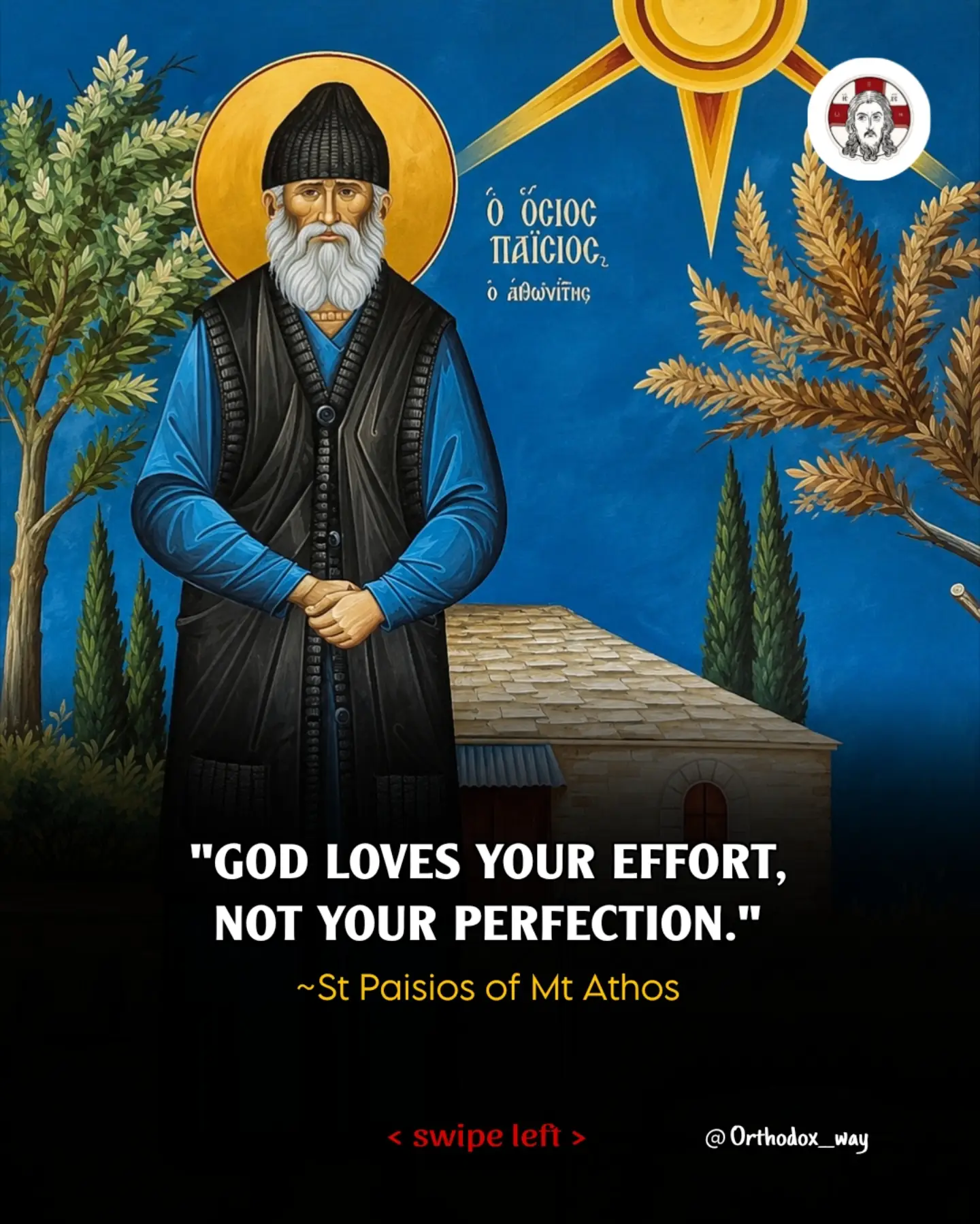
Saint Paisios: The Hermit Who Carried the World's Pain to God

Saint Paisios of Mount Athos (1924-1994) was born Arsenios Eznepidis in Cappadocia. He served as a radio operator during the Greek Civil War, volunteering for the most dangerous missions to spare his comrades. After the war he withdrew to the Holy Mountain of Athos and embraced strict asceticism in primitive hermitages such as the cell of Panagouda. His discipline included radical self-denial, intense fasting, and endless hours of nocturnal…

Saint Paisios of Mount Athos (1924-1994) was born Arsenios Eznepidis in Cappadocia. He served as a radio operator during the Greek Civil War, volunteering for the most dangerous missions to spare his comrades. After the war he withdrew to the Holy Mountain of Athos and embraced strict asceticism in primitive hermitages such as the cell of Panagouda.

His discipline included radical self-denial, intense fasting, and endless hours of nocturnal prayer. He lived on meager rations of dry bread and tea and endured freezing winters without heating. Through these struggles he sought to subdue egoism and cultivate continuous noetic prayer.

Despite his love for solitary silence, his hermitage became a refuge for thousands of pilgrims. He spent his days listening to the brokenhearted, offering psychological and spiritual guidance, and comforting the sick, often sacrificing his own rest so that no visitor left empty-handed. He viewed asceticism not as rigid rules but as a labor of love for God and humanity.

He described himself as a "radio operator" who intercepted the prayers and agonies of the world to pass them along to God. The Ecumenical Patriarchate canonized him in 2015. His legacy continues to inspire millions as an example of how extreme self-denial can blossom into boundless compassion and joy.

  • Born Arsenios Eznepidis in Cappadocia; served as radio operator in Greek Civil War
  • Embraced strict asceticism on Mount Athos in hermitages like Panagouda
  • Lived on dry bread and tea, endured freezing winters without heating
  • Received thousands of pilgrims, offering guidance and comfort at cost of his rest
  • Canonized by Ecumenical Patriarchate in 2015; saw himself as a spiritual radio operator
Read more

Orthodox speaker challenges Maronite Catholic on Eucharist and conversion

An Orthodox speaker responds to a Maronite Catholic who acknowledges Orthodox dogmas such as the Filioque and papal claims but argues conversion is impractical because they already have access to saints, the Eucharist, tradition, and confession. The speaker denies that Maronites possess the Eucharist and states that prayer life and confession differ considerably in Orthodoxy. He accuses the questioner of choosing comfort over truth and placing…

An Orthodox speaker responds to a Maronite Catholic who acknowledges Orthodox dogmas such as the Filioque and papal claims but argues conversion is impractical because they already have access to saints, the Eucharist, tradition, and confession. The speaker denies that Maronites possess the Eucharist and states that prayer life and confession differ considerably in Orthodoxy.

He accuses the questioner of choosing comfort over truth and placing personal convenience above Christ and His exclusive Church. The speaker dismisses the claim that being Maronite is "basically Orthodox," calling it heterodox, and challenges the questioner to abandon worldly attachments and familial ties. He asks why the questioner does not adhere to even older familial ties of being Orthodox, comparing the situation to other cultural heritage claims.

The speaker urges the questioner to reject titles and comfort, submit to the truth, stop putting minor cares over the historic witness, and read the Holy Fathers on ecclesial exclusivity.

Key moments

  1. The questioner grants Orthodox dogmas such as the Filioque and papacy are true but argues conversion is impractical because they already have saint intercession, the Eucharist, tradition, and confession as a Maronite.
  2. The speaker denies that Maronites have the Eucharist and states that prayer life and confession are considerably different in Orthodoxy.
  3. The speaker accuses the questioner of putting ease over truth and personal comfort over the Lord Jesus Christ and His exclusive Church.
  4. The speaker challenges whether the process of becoming a catechumen and finding an Orthodox church truly outweighs the truth for the questioner.
  5. The speaker says this attitude is common and tells the questioner to let go of worldly attachments, including familial ties to being Maronite.
  6. The speaker asks why the questioner does not stick to even older familial ties of being Orthodox, comparing the situation to WASPs today or pseudo-heritage Catholics in the British Isles.
  7. The speaker declares that Maronite is not basically Orthodox but heterodox.
  8. The speaker urges the questioner to reject titles and comfort, submit to the truth, stop putting tiny cares over the historic witness, and read the Holy Fathers on exclusivity.
21 opinions in the discussion I said some really dumb stuff back when I was a Protestant too 😭💀 Read the discussion

Zacharias and Elizabeth: God's timing in Luke 1

The post examines Luke 1:5-25 through a reading and commentary. The speaker begins by introducing the problem of unanswered prayers, then reads verses 5-7, which describe Zacharias and Elizabeth as righteous and blameless before God, yet childless because Elizabeth was barren and both were advanced in years. He then reads verses 13-15, where the archangel Gabriel appears to Zacharias in the temple and tells him that his prayer is heard and…

The post examines Luke 1:5-25 through a reading and commentary. The speaker begins by introducing the problem of unanswered prayers, then reads verses 5-7, which describe Zacharias and Elizabeth as righteous and blameless before God, yet childless because Elizabeth was barren and both were advanced in years. He then reads verses 13-15, where the archangel Gabriel appears to Zacharias in the temple and tells him that his prayer is heard and Elizabeth will bear a son named John, who will be great before the Lord and filled with the Holy Spirit from the womb.

The speaker reads verses 18-20, where Zacharias questions the promise because of their old age, and Gabriel identifies himself as one who stands before God and declares that Zacharias will be mute until the promise is fulfilled because he did not believe the words. The speaker notes that this promised son becomes Saint John the Baptist, the forerunner of Christ who prepares people for the Lord.

The commentary observes that Zacharias and Elizabeth suffered childlessness for years despite their righteousness, but God had not forgotten them. The speaker states that righteousness does not mean freedom from suffering, disappointment, or unanswered prayers, and that even faithful people can struggle with doubt. He emphasizes that God's timing is not our timing, and our responsibility is to remain faithful and trust His wisdom, as His plans may be far greater than we imagine.

Key moments

  1. 0:00 Introduction about unanswered prayers and Luke 1:5-7 describing Zacharias and Elizabeth as righteous and blameless before God
  2. 0:37 Luke 1:13-15 read: Gabriel tells Zacharias his prayer is heard, Elizabeth will bear a son named John who will be great, filled with the Holy Spirit from the womb
  3. 1:15 Luke 1:18-20 read: Zacharias asks for a sign due to old age, Gabriel identifies himself and says Zacharias will be mute until fulfillment because he did not believe
  4. 1:47 Commentary: Zacharias and Elizabeth suffered childlessness for years despite righteousness, but God had not forgotten them
  5. 1:47 The promised son becomes Saint John the Baptist, forerunner of Christ preparing people for the Lord
  6. 2:22 Lesson: righteousness does not mean freedom from suffering, disappointment, or unanswered prayers
  7. 2:22 Even faithful people can struggle with doubt
  8. 2:22 God's timing is not our timing; responsibility is to remain faithful and trust His wisdom, as His plans may be far greater than imagined
Read more

Speaker calls for kneeling, rejects ecumenism and worldly compromise in Orthodox service

The speaker instructs those present to kneel and urges them to hold fast to grace and faith while rejecting worldly influences, ecumenism, and any attempt to make Christianity palatable to the world. He states that such compromises are not of God, not the faith of the apostles, and not the faith of Orthodoxy. He calls for rejecting everything that would water down the faith and make it acceptable to those outside the church. The service…

The speaker instructs those present to kneel and urges them to hold fast to grace and faith while rejecting worldly influences, ecumenism, and any attempt to make Christianity palatable to the world. He states that such compromises are not of God, not the faith of the apostles, and not the faith of Orthodoxy. He calls for rejecting everything that would water down the faith and make it acceptable to those outside the church.

The service continues with liturgical prayers in Church Slavonic. The leader intones "Lord, have mercy" in Church Slavonic and leads the petition: "Hear us, O God our Savior, from all the ends of the earth and those far off at sea." The prayer continues with "Kyrie eleison" repeated three times.

The leader prays for God to be merciful to sinners, addressing Him as merciful and loving, and offers glory to the Father, Son, and Holy Spirit. The congregation responds "Amen." The original post text declares that worship belongs to God alone, that believers bow the knee and prostrate as an offering of worship to the Holy Trinity alone, in obedience to Jesus Christ.

It includes the phrases "DEATH TO THE WORLD," "Reject the spirit of the age," "Stand steadfast in the Holy Orthodox Faith," "Do not conform to the world, but be transformed by the renewing of your mind," and "CHRIST IS IN OUR MIDST! HE WAS, HE IS, AND HE EVER SHALL BE." The Greek phrase "ΔΟΞΑ Τῷ ΘΕῷ ΠΆΝΤΩΝ ἝΝΕΚΕΝ" appears at the end, meaning "Glory to God for all things."

Key moments

  1. 0:00 The speaker tells those present to get on their knees.
  2. 0:00 The speaker says to hold on to grace and faith and reject the influences of the world, motives, ecumenism, and everything that would make Christianity palatable for the world.
  3. 0:00 The speaker states that such compromises are not of God, not the faith of the apostles, and not the faith of Orthodoxy.
  4. 0:00 The speaker calls for rejecting everything that would water down the faith and make it acceptable to those outside the church.
  5. 0:45 The leader intones "Lord, have mercy" in Church Slavonic and leads the petition: "Hear us, O God our Savior, from all the ends of the earth and those far off at sea."
  6. 0:45 The prayer continues with "Kyrie eleison" repeated three times.
  7. 0:45 The leader prays for God to be merciful to sinners, addressing Him as merciful and loving, and offers glory to the Father, Son, and Holy Spirit.
  8. 1:17 The congregation responds "Amen."
Read more
Disgruntled Docs with MaximosPTO Instagram discussion

Speaker links denial of ethnic distinctions in resurrection to Originist heresy

The speaker notes that every tribe, tongue, nation, and people group have members in the eschaton. He questions whether this means distinctions are wiped away in the resurrection, making people "grey goo." He asks if males become non-male in the eternal state. He identifies the erasure of identity and biology as the Originist heresy. He warns that claiming resurrection biology does not matter is Gnostic and Docetic. He connects this to…

The speaker notes that every tribe, tongue, nation, and people group have members in the eschaton. He questions whether this means distinctions are wiped away in the resurrection, making people "grey goo." He asks if males become non-male in the eternal state. He identifies the erasure of identity and biology as the Originist heresy.

He warns that claiming resurrection biology does not matter is Gnostic and Docetic. He connects this to Nestorianism by noting Christ assumed human nature through a specific Hebrew ethnicity. He argues that if ethnic distinctions vanish, the prophecies regarding every tribe and nation cannot be fulfilled.

He concludes this line of thought easily moves into Gnosticism. The original post affirms that ethnicities and people groups are real and that denying this has dangerous outcomes, stating this was not an issue until very recently.

Key moments

  1. The speaker notes that every tribe, tongue, nation, and people group have members in the eschaton.
  2. He questions whether this means distinctions are wiped away in the resurrection, making people "grey goo."
  3. He asks if males become non-male in the eternal state.
  4. He identifies the erasure of identity and biology as the Originist heresy.
  5. He warns that claiming resurrection biology does not matter is Gnostic and Docetic.
  6. He connects this to Nestorianism by noting Christ assumed human nature through a specific Hebrew ethnicity.
  7. He argues that if ethnic distinctions vanish, the prophecies regarding every tribe and nation cannot be fulfilled.
  8. He concludes this line of thought easily moves into Gnosticism.
19 opinions in the discussion The replacement of Whites in their native countries will be looked back on in history as one of the greatest evils of all time. Knowing the church has a responsibility to call this out and… Read the discussion
Disgruntled Docs with TimothyNegrete Instagram

Confession to a priest: the biblical basis explained

The speaker explains that Christians confess sins to a priest because Jesus gave the apostles authority to forgive sins. The Bible instructs believers to confess sins to one another for salvation. This practice has continued throughout all Christian history. The speaker argues that if anyone calls this unbiblical, they should be asked why Jesus would grant such authority to the apostles and expect them not to use it. The argument rests on the…

The speaker explains that Christians confess sins to a priest because Jesus gave the apostles authority to forgive sins. The Bible instructs believers to confess sins to one another for salvation. This practice has continued throughout all Christian history.

The speaker argues that if anyone calls this unbiblical, they should be asked why Jesus would grant such authority to the apostles and expect them not to use it. The argument rests on the connection between the apostolic commission and the ongoing practice of the church. The speaker presents the authority to forgive sins as a gift Jesus gave directly to the apostles, and the instruction to confess to one another as a biblical command for salvation.

Historical continuity is cited as evidence that the early church understood and acted on this authority. The rhetorical challenge to critics focuses on the logic of granting authority without the expectation of its use.

Key moments

  1. Christians confess their sins to a priest
  2. Jesus gave the apostles authority to forgive sins
  3. The Bible tells believers to confess sins to one another for salvation
  4. All Christian history has practiced this
  5. If someone says this is unbiblical, ask why Jesus would give the authority and expect the apostles not to use it
Read more

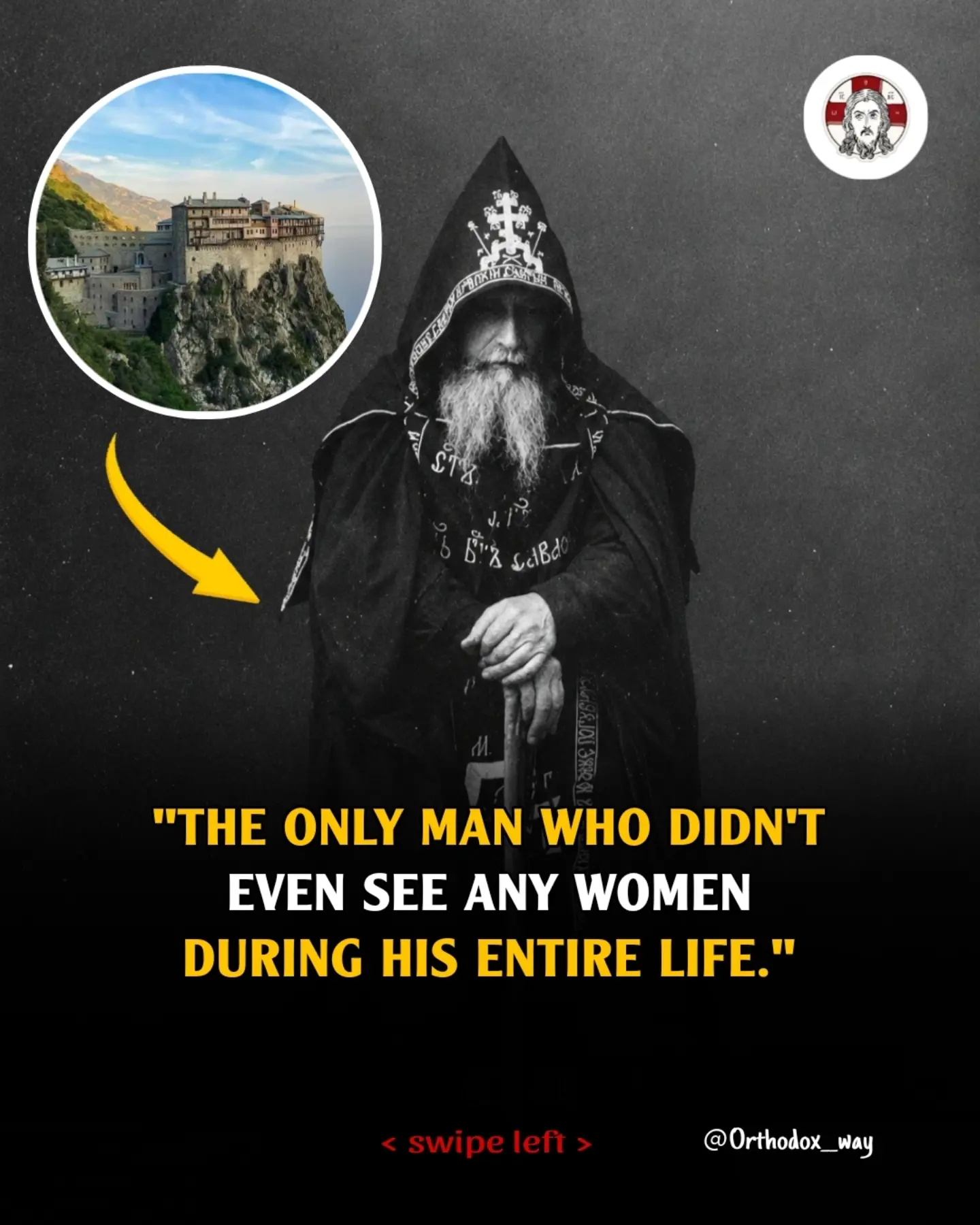
Monk Mihailo Tolotos lived 82 years on Mount Athos without seeing a woman

The text recounts the life of Mihailo Tolotos, a monk born around 1855 on Mount Athos, the Holy Mountain of Eastern Orthodox Christianity in Greece. He lost his mother shortly after birth and was raised by Orthodox monks who brought him up in a life of prayer, worship, obedience, and ascetic discipline. According to tradition, he died in 1938 at the age of 82 without ever having seen a woman. This claim is associated with the Avaton, the ancient…

The text recounts the life of Mihailo Tolotos, a monk born around 1855 on Mount Athos, the Holy Mountain of Eastern Orthodox Christianity in Greece. He lost his mother shortly after birth and was raised by Orthodox monks who brought him up in a life of prayer, worship, obedience, and ascetic discipline. According to tradition, he died in 1938 at the age of 82 without ever having seen a woman.

This claim is associated with the Avaton, the ancient prohibition that bars women from entering the Athonite peninsula. The account presents his story as an illustration of the solitude and devotion that characterize Athonite monasticism, where monks renounce worldly distractions to draw closer to God through humility and continuous prayer.

No further details about his specific monastic duties, writings, or interactions with other monks are provided in the source.

  • Born around 1855, orphaned at birth, raised by monks on Mount Athos
  • Lived under the Avaton, the prohibition against women entering the peninsula
  • Tradition states he died in 1938 without ever seeing a woman
  • Practiced prayer, worship, obedience, and ascetic discipline
  • His life illustrates the Athonite ideal of solitude and devotion
Read more

How to Cense Your Home: Order and Prayers from an Orthodox Family Tradition

This guide walks through the practice of censing the home, from lighting the charcoal to the final blessing of the rooms. After the charcoal is lit and incense or blessed olive leaves are added, one says a prayer before censing: 'Let my prayer be set forth before You as incense; the lifting up of my hands as an evening sacrifice. Hear me, O Lord. We offer incense to You, O Christ our God, as a sweet spiritual fragrance. Having received it upon…

This guide walks through the practice of censing the home, from lighting the charcoal to the final blessing of the rooms. After the charcoal is lit and incense or blessed olive leaves are added, one says a prayer before censing: 'Let my prayer be set forth before You as incense; the lifting up of my hands as an evening sacrifice.

Hear me, O Lord. We offer incense to You, O Christ our God, as a sweet spiritual fragrance. Having received it upon Your heavenly altar, send down upon us in return the grace of your All-Holy Spirit.' The censer is then taken in the right hand. The order of honors follows: the Holy Trinity, Jesus Christ the Son, and the Holy Spirit.

Each honor is given by moving the censer three times in a circular motion while saying, 'In the name of the Father, and of the Son, and of the Holy Spirit. Amen.' For Christ, one turns toward the cross or his icon in the prayer corner. A family tradition from Greece and Cyprus adds a first step: going outside and censing toward the open air in honor of God.

After the Holy Trinity, the icons are censed in one of two ways, either by moving the censer over the icon three times or by making the sign of the cross over the icon three times with the censer, repeating the same words each time. Once all the icons have been censed, one censes oneself, one's loved ones, and the rooms of the home.

The video closes with the reminder that as the incense rises, our prayer also rises before God.

Key moments

  1. Before censing, say the prayer: 'Let my prayer be set forth before You as incense; the lifting up of my hands as an evening sacrifice. Hear me, O Lord. We offer incense to You, O Christ our God, as a sweet spiritual fragrance. Having received it upon Your heavenly altar, send down upon us in return the grace of Your All-Holy Spirit.'
  2. Pick up the censer with the right hand to begin censing.
  3. First honor is given to the Holy Trinity: raise the censer and move it three times in a circular motion while saying 'In the name of the Father, and of the Son, and of the Holy Spirit. Amen.'
  4. In the family tradition from Greece and Cyprus, one first steps outside and censes toward the open air, honoring God.
  5. Second honor is given to Jesus Christ the Son: turn toward the cross or icon of Christ in the prayer corner and cense it three times with the same words.
  6. Third honor is given to the Holy Spirit: raise the censer and cense three times, repeating the same words.
  7. Cense the holy icons in one of two ways: move the censer over the icon three times, or make the sign of the cross over the icon three times with the censer, repeating the same words.
  8. After all icons are censed, cense yourself, your loved ones, and the rooms of your home; as the incense rises, our prayer also rises before God.
Read more