WeOrthodox
EN UA

Orthodox posts, videos and discussions

We follow Orthodox channels, communities and blogs across the web, summarise every post and video, and highlight the conversations with real substance.

M mysteries_of_christendom Instagram

Censer moves on its own before physicist at Monastery of Saint David

The post shares an account from the life of Saint Iakovos of Evia, who reposed in 1991 and was canonized in 2017. The central story involves a young physicist named Maria who did not believe in God. An Orthodox nun invited her to the Monastery of Saint David in Greece. There she met Father Iakovos, an elderly monk who had lived at the monastery for decades and drew visitors from across Greece. Before leaving to take a relic of Saint David to a…

The post shares an account from the life of Saint Iakovos of Evia, who reposed in 1991 and was canonized in 2017. The central story involves a young physicist named Maria who did not believe in God. An Orthodox nun invited her to the Monastery of Saint David in Greece.

There she met Father Iakovos, an elderly monk who had lived at the monastery for decades and drew visitors from across Greece. Before leaving to take a relic of Saint David to a nearby village, Iakovos told Maria he hoped the saint would show her that God exists and that the grace of the Holy Spirit can act beyond natural laws. At the cabinet holding the relic and a censer, Iakovos took the relic and closed the door.

The censer inside the closed cabinet then began to swing on its own for about half an hour while Maria, the nun, and Iakovos watched. Iakovos told Maria the event was allowed for her so she might understand realities beyond ordinary natural laws. Iakovos continued serving at the monastery until his death in 1991.

Many attribute extraordinary occurrences to his prayers. The Orthodox Church canonized him in 2017 as Saint Iakovos of Evia. A photograph developed after his death reportedly shows him standing in an empty room, unaltered. The post asks whether readers have heard of Saint Iakovos before.

Key moments

  1. 0:00 Maria, a young physicist and non-believer, visits the Monastery of Saint David in Greece after an Orthodox nun invites her.
  2. 0:00 She meets Father Iakovos, an elderly monk who has lived at the monastery for decades and attracts visitors from across Greece.
  3. 0:36 Iakovos prepares to take a relic of Saint David to a nearby village and tells Maria he hopes the saint will show her God exists and the Holy Spirit's grace can transcend natural laws.
  4. 0:36 At the relic cabinet, which also contains a censer, Iakovos takes the relic and closes the door.
  5. 1:15 The censer inside the closed cabinet begins to move on its own, swinging back and forth for about half an hour while Maria, the nun, and Iakovos watch.
  6. 1:15 Iakovos tells Maria the event was allowed for her so she might understand realities beyond ordinary natural laws.
  7. 1:54 Iakovos continues serving until his death in 1991; many attribute extraordinary occurrences to his prayers.
  8. 1:54 The Orthodox Church canonizes him in 2017 as Saint Iakovos of Evia; a photograph developed after his death reportedly shows him standing in an empty room, unaltered.
Read more
George Instagram

First confession after 36 years: 'like being reborn'

The speaker, an Orthodox Christian, describes going to confession for the first time in 36 years of life. He explains that speaking everything out, with a priest guiding the process and then reading the prayer of absolution, felt like being reborn. While he stood under the priest's epitrachelion and the prayer was read, he felt like crying, felt a weight leaving his body, and noticed a smile returning to his face. The whole day afterward felt…

The speaker, an Orthodox Christian, describes going to confession for the first time in 36 years of life. He explains that speaking everything out, with a priest guiding the process and then reading the prayer of absolution, felt like being reborn. While he stood under the priest's epitrachelion and the prayer was read, he felt like crying, felt a weight leaving his body, and noticed a smile returning to his face.

The whole day afterward felt beautiful. He says he watched every thought and detail that day because he did not want to pollute his soul again. He acknowledges that he will still sin, but argues that the more often a person confesses, the more strength he receives to fight falling into the same sins. The speaker compares the experience with other help he has tried: sessions with psychologists, coaching, and hypnotherapy.

In his words, nothing compares to how he feels today. He closes by urging viewers who have not confessed to do it and not to waste time as he did. The account stays personal throughout: it is a description of one confession, the physical and emotional sensations during the prayer of absolution, the changed state of mind in the hours that followed, and the resolution to guard his thoughts and return to confession regularly.

Key moments

  1. The speaker confessed for the first time in 36 years and calls it one of the biggest things an Orthodox Christian can do.
  2. He describes the feeling of saying everything, being guided by a priest, and receiving the prayer of absolution as feeling like being reborn.
  3. Under the priest's epitrachelion while the prayer is read, he felt like crying and a weight coming out of his body, and a smile returned.
  4. The whole day afterward felt beautiful, and he observed every little detail and thought because he did not want to pollute his soul again.
  5. He notes he will still sin, but the more often you confess, the more strength you get to fight the same sins.
  6. He says he has done sessions with psychologists, coaching, and hypnotherapy, but nothing compares to how he feels today.
  7. He urges viewers who have not confessed to do it and not to waste time as he did.
Read more
Orthodox Sound YouTube

St Paisios on Injustice, Obedience, and Why God Waits for Our Humility

St Paisios on Injustice, Obedience, and Why God Waits for Our Humility 10:03

A talk drawing on the counsels of Elder Paisios of Mount Athos (Spiritual Counsels #3, Spiritual Struggle, from Hieromonk Christodoulos, 1998) teaches how to respond when people treat us unjustly. The speaker says patient endurance brings God's best solutions, citing Christ's words that only the patient will inherit the kingdom of God: those who hear the word, hold it fast in an honest and good heart, and bring forth fruit with patience. God…

A talk drawing on the counsels of Elder Paisios of Mount Athos (Spiritual Counsels #3, Spiritual Struggle, from Hieromonk Christodoulos, 1998) teaches how to respond when people treat us unjustly. The speaker says patient endurance brings God's best solutions, citing Christ's words that only the patient will inherit the kingdom of God: those who hear the word, hold it fast in an honest and good heart, and bring forth fruit with patience.

God allows relatives, coworkers, and corrupt supervisors to trouble us so we can exercise patience and humbleness, and we should accept these afflictions as means leading to perfection. When treated unjustly, we should be happy and wait for God's justice, which is superior to human justice, while being careful not to pursue unjust treatment ourselves, since that would show lack of love toward others.

On obedience, the speaker says that after voluntarily submitting to a good and humble spiritual father we should obey without questioning. He gives the example of a monk who argues with his abbot about walking through the mountains instead of taking the boat to Lavra Monastery: the monk who follows his own logic may suffer a mishap, while the one who obeys is protected by God.

He also tells a story about obeying a kitten that meowed outside his cell in the rain. The talk closes with Father Paisios's teaching that the spiritual work of a Christian should focus on acquiring humility. The only difficulty God faces is that he cannot help us when our soul is not humble, because any help would harm a person who lacks a humble mindset.

Pride is the cause of every passion, as St. John of the Ladder says, and God will not give us love, prayer, obedience, or the virtues unless we humble ourselves. If our only aim is humility, he gives everything for free, as St. Peter's first epistle says: God opposes the proud but gives grace to the humble.

Key moments

  1. 0:00 Christ assured us that only the patient will inherit the kingdom of God: those who hear the word, hold it fast in an honest and good heart, and bring forth fruit with patience, and he who endures to the end will be saved.
  2. 1:04 The good Christian must endure corrupt supervisors, who are amazed by his good behavior while being unfair to him. God gives temptations and hardships so we become perfect, and temptations cease when we reach perfection.
  3. 1:34 When people treat us unjustly, we should be happy and wait for God's justice, which is superior to human justice, but we must not pursue unjust treatment, since that would be unfair and show lack of love toward others.
  4. 2:38 When God sees we are proud and arrogant, he allows temptations and takes them away only when we humble ourselves. The speaker tells of obeying a kitten meowing outside his cell and letting it in from the rain.
  5. 3:40 After voluntarily submitting to a good and humble spiritual father, we should obey him without questioning. In the example of the boat to Lavra Monastery, the monk who follows his own logic may suffer a mishap on the mountain, while the one who obeys is protected by God.
  6. 5:44 The grace of God is attracted by simple-hearted people who humbly trust their spiritual fathers. The aim of complete obedience is the perfect purification of the monk's mind and the total submission of his will to divine grace.
  7. 6:48 Father Paisios said the spiritual work of a Christian should focus on acquiring humility. The only difficulty God faces is that he cannot help us when our soul is not humble, because any help would harm a person who lacks a humble mindset.
  8. 7:50 Pride is the cause of every passion, as St. John of the Ladder says. God will not give us love, prayer, obedience, or the virtues unless we humble ourselves, but if our only aim is humility, he gives everything for free. St. Peter's first epistle, chapter 5, says: Clothe yourselves with humility, for God opposes the proud but gives grace to the humble.
radioimlemesou Instagram

Know Yourself First, and You Will Come to Know God

Metropolitan Athanasios of Limassol reflects on a well-known patristic saying: "If you want to know God, first know yourself." He explains that the self is the space in which God will appear, and therefore it must be prepared like a dwelling awaiting an honored guest. A person is called to put this inner space in order — to cleanse it, illuminate it, and sanctify it — so as to become ready to receive God, in the words of the Fathers, "Be ready…

Metropolitan Athanasios of Limassol reflects on a well-known patristic saying: "If you want to know God, first know yourself." He explains that the self is the space in which God will appear, and therefore it must be prepared like a dwelling awaiting an honored guest. A person is called to put this inner space in order — to cleanse it, illuminate it, and sanctify it — so as to become ready to receive God, in the words of the Fathers, "Be ready to receive God."

The Metropolitan stresses that God will not enter a soul that is burdened and consumed by sin; even if He were to enter, He would quickly depart, because sin cannot coexist with the grace of God. The teaching is not presented as mere psychology but as a spiritual discipline: self-knowledge is the beginning of the knowledge of God, and repentance — the honest clearing of the inner house — is the way to make room for His presence.

The post is a short homiletic reflection in Greek, quoting the Fathers directly, and is offered as encouragement for readers to examine themselves, order their inner life, and prepare their hearts for encounter with Christ. There is no extended discussion in the comments; the post stands as a concise word of counsel from a contemporary Orthodox hierarch, echoing the classical ascetic tradition that the path to the knowledge of God passes through honest self-examination and purification of the heart.

Key moments

  1. The Fathers taught that forgetfulness of God precedes knowledge of Him.
  2. If you want to know God, first know yourself, because the self is the space where God will appear.
  3. One must arrange, cleanse, illuminate, and sanctify this inner space to make it ready to receive God.
  4. God will not enter a person consumed by sin; sin is incompatible with the grace of God.
Read more
Anthony’s Cell YouTube

Forgive Without an Apology: St. Seraphim of Sarov on Resentment and the Holy Spirit

Forgive Without an Apology: St. Seraphim of Sarov on Resentment and the Holy Spirit 10:13

An audio reading from Anthony's Cell reflects on why Christians must forgive, drawing on the teachings of St. Seraphim of Sarov and St. Nectarios. Forgiveness is presented as a mystery of the heart and an ascetic practice, not a social courtesy or a feeling. God causes his sun to rise on the evil and the good and grants life before we ask for it, so forgiving those who cannot ask is an imitation of God rather than of man. The reading cites St.…

An audio reading from Anthony's Cell reflects on why Christians must forgive, drawing on the teachings of St. Seraphim of Sarov and St. Nectarios. Forgiveness is presented as a mystery of the heart and an ascetic practice, not a social courtesy or a feeling. God causes his sun to rise on the evil and the good and grants life before we ask for it, so forgiving those who cannot ask is an imitation of God rather than of man.

The reading cites St. Seraphim's teaching that anger drives away the presence of the Holy Spirit from the heart, leaving no joy, light, or consolation. Resentment freezes the soul and binds us to the memory of injustice, while forgiveness is our own liberation, not the liberation of the other. Forgiveness does not mean forgetting, excusing, or allowing injustice to continue; it means removing the sin of the other from our heart.

Many people never ask for forgiveness because they cannot: their heart is wounded, darkened, or bound by passions, pride, and fear. Christ on the cross did not wait for his crucifiers to ask; he prayed for them because they did not know what they were doing, and forgiving them becomes a prayer for their enlightenment and healing.

St. Nectarios taught that the most subtle form of pride is wounded speech that pretends to seek justice while actually seeking vindication, and humility breaks these chains. The reading closes with the claim that forgiveness opens the path for the miracles of the heart: even if we never see a result, forgiveness is never wasted and is inscribed in the heart of the one who receives it.

The discussion follows the structure of the reading, moving from forgiveness as healing and imitation of God, through the danger of resentment, to pride and wounded speech, and finally to forgiving without an apology.

Key moments

  1. 0:32 Forgiveness is a mystery of the heart, an invitation from God to pass from darkness into light, and it is our own liberation rather than the liberation of the other.
  2. 1:36 God causes his sun to rise on the evil and the good and does not wait for us to ask before granting life, so forgiveness is imitation of God, not imitation of man.
  3. 2:08 Holding resentment freezes the soul; Saint Seraphim said anger drives away the presence of the Holy Spirit from the heart, leaving no joy, light, or consolation.
  4. 2:39 Forgiveness is a decision and ascetic practice: it does not mean forgetting, excusing, or allowing injustice to continue, but removing the sin of the other from our heart.
  5. 3:42 Many people do not ask for forgiveness because they cannot: their heart is wounded, darkened, or bound by passions, pride, and fear.
  6. 4:13 Christ on the cross did not wait for his crucifiers to ask; he prayed for them because they did not know what they were doing, and forgiving them becomes a prayer for enlightenment and healing.
  7. 5:14 Saint Nectarios said the most subtle form of pride is wounded speech that pretends to seek justice while actually seeking vindication; humility breaks these chains.
  8. 6:46 Forgiveness opens the path for the miracles of the heart; even if we never see a result, forgiveness is never wasted and is inscribed in the heart of the one who receives it.
Athonite Audio YouTube

Pain and Faith: Elder Ephraim's Teaching on Suffering as a Path to Virtue

Pain and Faith: Elder Ephraim's Teaching on Suffering as a Path to Virtue 29:12

This video presents Part 2 of a series on the benefits of pain, covering Chapter 1, 'Confronting Pain: Pain and Faith' (pages 141-154), from a book by Georgia P. Kounavi published by Apostoliki Diakonia of the Church of Greece (first English edition 2001). The speaker quotes Elder Ephraim of Philotheou of Arizona, who teaches that within pain one can detect joy and hope, just as Christ's triumph sprang from his passion, and that great souls owe…

This video presents Part 2 of a series on the benefits of pain, covering Chapter 1, 'Confronting Pain: Pain and Faith' (pages 141-154), from a book by Georgia P. Kounavi published by Apostoliki Diakonia of the Church of Greece (first English edition 2001). The speaker quotes Elder Ephraim of Philotheou of Arizona, who teaches that within pain one can detect joy and hope, just as Christ's triumph sprang from his passion, and that great souls owe their grandeur to the heavy blows of pain.

Theologically, pain is the consequence of the fall and the fruit of disobedience; ethically, it is an opportunity and a means to acquire virtue and attain perfection. Whoever faces pain with the prism of eternity is already a victor. Faith, prayer, and holy patience are named as the antidotes to all forms of pain, the soul-saving medicines by which pain becomes a means of spiritual maturity, humility, and salvation.

Pain is also a severe temptation, since Satan casts doubts into us; doubts may come but should not make a home in us, and for most people the constant prayer remains 'Lord, I believe, help my unbelief' (Mark 9:24). Faith in the crucified and resurrected Christ is tested and strengthened through sorrow, and sorrow works out patience and hope (Romans 5:3-5).

The speaker notes that doubt does not always indicate a lack of faith: faith entails risk and a painful and fearless journey to meet God, being a source of doubt and struggle before it becomes a source of serenity. A Christian should not become a helpless fatalist; we may defend ourselves against injustices, but if there is no other exit, we should pray for wrongdoers to stop their bad deeds.

The Lord shows himself according to the measure of each one's faith, doing few miracles in his own country because of their unbelief. The talk cites Scripture, St. Isaac the Syrian, St. Augustine, St. Cyril of Jerusalem, and St. Demetrius of Rostov, and closes with the prayer: 'Come, my King, sit in the throne of my heart and reign there.'

Key moments

  1. 0:01 Elder Ephraim of Philotheou teaches that within pain one can detect joy and hope, just as Christ's triumph sprang from his passion; great souls owe their grandeur to the heavy blows of pain.
  2. 1:04 Theologically, pain is the consequence of the fall and the fruit of disobedience; ethically, it is an opportunity and a means to acquire virtue and attain perfection.
  3. 2:08 Faith, prayer, and holy patience in God's way are the soul-saving medicines so that pain can be confronted and become a means of spiritual maturity, humility, and salvation.
  4. 2:39 Pain is a severe temptation and test of faith because Satan casts doubts into us; doubts may come but should not make a home in us, and most must cry out, 'Lord, I believe, help my unbelief' (Mark 9:24).
  5. 5:13 In temptations and pains our faith is tested and becomes stronger; sorrow works out patience and hope (Romans 5:3-5), because we are called to believe through a fiery furnace of sorrow in Jesus Christ and him crucified.
  6. 7:18 Doubt does not always indicate a lack of faith; faith entails risk and a painful and fearless journey to meet God, being a source of doubt and struggle before it becomes a source of serenity.
  7. 8:54 A Christian should not become a helpless fatalist; we have the right to defend ourselves against injustices, but if there is no other exit, we should pray for the wrongdoers to stop their bad deeds.
  8. 25:43 The Lord does not show himself in the same manner to all, but according to the measure of each one's faith; in his own country he did few miracles because of their unbelief, while elsewhere he found people who believed.
P Paul Kingsnorth Substack discussion

AI and the Imago Dei: A Christian Argument Against Outsourcing the Mind

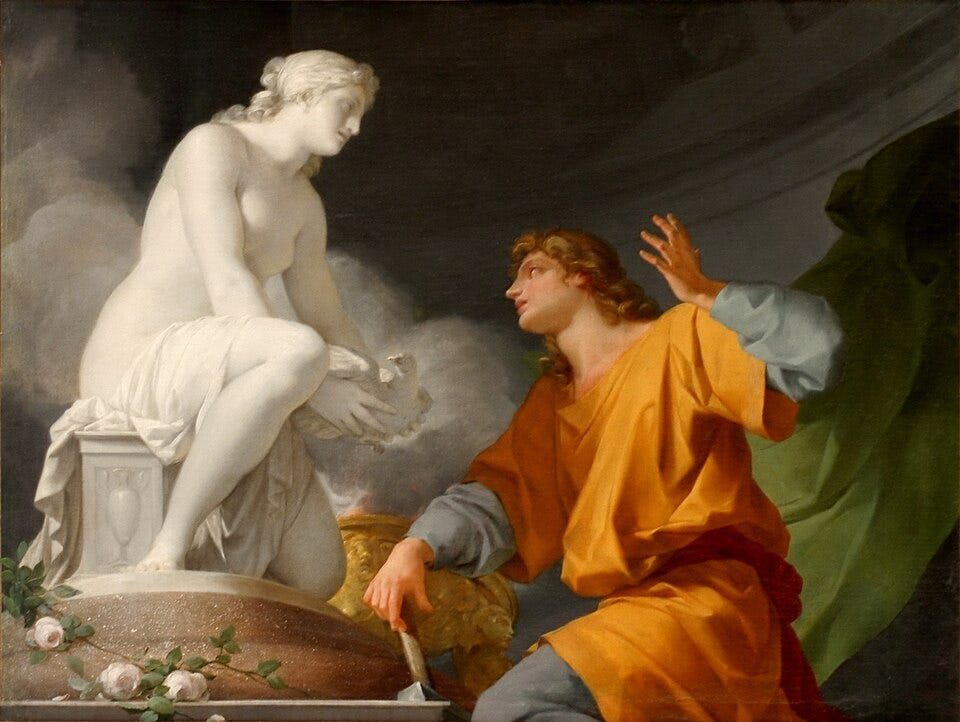
The post shares an article by Andrew Caspersen that reframes the Christian debate on artificial intelligence. Rather than weighing AI’s potential benefits against its risks — the "fruits" of the technology — Caspersen examines the "tree" itself: what AI is by nature. Drawing on the Pygmalion myth and the doctrine of the imago Dei, he argues that the human intellect is a finite image of the infinite Word, given so that we may know and love God.…

The post shares an article by Andrew Caspersen that reframes the Christian debate on artificial intelligence. Rather than weighing AI’s potential benefits against its risks — the "fruits" of the technology — Caspersen examines the "tree" itself: what AI is by nature. Drawing on the Pygmalion myth and the doctrine of the imago Dei, he argues that the human intellect is a finite image of the infinite Word, given so that we may know and love God.

AI, by simulating ideation, composition, analysis, and conversation, offers an "enhanced mind" that tempts us to outsource our God-given cognitive faculties. Accepting this man-made substitute treats the divine gift as inadequate and, by extension, treats the Giver as inadequate. The article addresses counter-arguments, such as the claim that AI is merely artificial and cannot truly replace human intelligence, contending that even a functional replacement constitutes a practical rejection of our created nature.

The discussion in the comments reflects both appreciation for the ontological approach and concern about equating the imago Dei with cognitive function, which could inadvertently devalue persons with impaired reasoning. Other contributors distinguish between tools that enhance human ability and devices that replace it, reference Orthodox and Catholic theological nuances, and share personal experiences of AI’s encroachment on thought and work.

  • AI should be evaluated by its nature, not only by its outcomes or utility.
  • The human intellect bears the imago Dei; outsourcing it to AI rejects that divine image.
  • Using AI as a substitute for thinking treats God’s gift as insufficient.
  • The "tool vs. device" distinction highlights AI’s replacement of human agency.
  • Commenters debate whether the argument risks a functionalist view of the imago Dei.
22 opinions in the discussion There's much to appreciate here, and the tree-and-branches framing rather than just the fruit is genuinely useful. My slight worry is that the piece drifts toward treating the imago dei as… Read the discussion
Holy Resurrection YouTube

Orthodox Perspective on Evolution: Creation as Revelation and Deification

Orthodox Perspective on Evolution: Creation as Revelation and Deification 17:21

This presentation draws from a 2009 letter by Hieromonk Luke Grigoriatis, published with the blessing of Archimandrite George of Gregoriou Monastery on Mount Athos. The text addresses the spiritual prerequisites for an Orthodox Christian engaging with evolutionary theory. It frames creation not merely as a historical event but as an ongoing revelation of God, where the logoi (inner principles) of created beings disclose the divine wisdom and…

This presentation draws from a 2009 letter by Hieromonk Luke Grigoriatis, published with the blessing of Archimandrite George of Gregoriou Monastery on Mount Athos. The text addresses the spiritual prerequisites for an Orthodox Christian engaging with evolutionary theory. It frames creation not merely as a historical event but as an ongoing revelation of God, where the logoi (inner principles) of created beings disclose the divine wisdom and love of the Creator.

Humanity was fashioned in the image of God so that the Logos could assume human nature and deify it — a reality empirically known in the life of the Orthodox Church through the uncreated energies of God. Evolutionary theory, confined to natural processes, cannot account for uncreated gifts such as immortality and theosis, which are granted solely by divine grace.

The letter affirms that science, when properly bounded, does not threaten faith; St. Basil's Hexaemeron exemplifies scientific inquiry offered as doxology. True faith is not ideological assent but participation in the life of the Holy Trinity, cultivated through purification of the heart and the witness of God-bearing saints. The ultimate answer to atheistic reductionism is not argument but the existential certainty found in the lives of saints such as St. Silouan the Athonite and St. Simeon the New Theologian.

Key moments

  1. 0:17 Creation reveals God; understanding the creation narrative is a sign of theognosy, and we can discern the logoi of beings as taught by St. Maximus the Confessor.
  2. 0:48 Failing to see creation as the result of God's creative energy means losing knowledge of the logoi, which are marks of God's paternal love.
  3. 1:20 Man was created in God's image so that human nature could be assumed by the Logos and deified; Christ hypostatically united human body and soul to divinity.
  4. 2:23 Atheists like Dawkins reduce theology to Western scholastic systems and are unaware of the Orthodox empirical experience of theognosy, which shows evolution cannot produce uncreated grace.
  5. 3:25 Evolution is a natural process; nature cannot produce uncreated results—immortality and deification are uncreated gifts from God, not natural attributes.
  6. 5:03 Science does not contradict faith; St. Basil's Hexaemeron scientifically analyzes creation as doxology, and science within its limits helps discern God's traces.
  7. 8:10 Faith is participation in God's life, not mere ideology; Orthodox gnosiology teaches faith is the fruit of uncreated grace leading to theognosy.
  8. 15:58 A young monk on Mount Athos overcame the science-religion debate not by arguments but by the existential certainty from the lives of saints like St. Silouan and St. Simeon.
M mysteries_of_christendom Instagram

Apostle Andrew and the 70-year-old man who carried a gospel into a brothel

The post recounts a story from the Life of the Apostle Andrew. After Christ's resurrection, Andrew carried the gospel and encountered Nicholas, a 70-year-old man who had struggled with lust for years and repeatedly visited prostitutes despite praying for deliverance. During one visit to a brothel, a worker refused to serve Nicholas, called him an angel of God, and said she saw marvelous things about him. Nicholas then realized he had unknowingly…

The post recounts a story from the Life of the Apostle Andrew. After Christ's resurrection, Andrew carried the gospel and encountered Nicholas, a 70-year-old man who had struggled with lust for years and repeatedly visited prostitutes despite praying for deliverance. During one visit to a brothel, a worker refused to serve Nicholas, called him an angel of God, and said she saw marvelous things about him.

Nicholas then realized he had unknowingly carried a gospel text into the brothel. He confessed everything to Andrew and asked for prayer. Andrew wept, prayed for hours, and refused to eat until God showed mercy. After five days of fasting, a voice told Andrew his prayers were granted but that Nicholas must also fast.

Nicholas then lived on bread and water for six months. The fasting helped him stop letting desire direct his actions, and his repentance included good works that reshaped his life before he died peacefully. Andrew later heard a voice declaring that Nicholas had been brought back to God. The original text frames the story as a reminder that the Christian life is not simply about avoiding temptation but learning how to respond when it comes.

Key moments

  1. 0:00 Andrew carried the gospel after Christ's resurrection; Nicholas, 70, came seeking help for a lifelong struggle with lust and repeated visits to prostitutes.
  2. 0:30 At a brothel, a worker demanded Nicholas leave, called him an angel of God, and said she saw marvelous things about him.
  3. 1:02 Nicholas realized he had brought a gospel text into the brothel without intending to.
  4. 1:35 Nicholas told Andrew everything and asked for prayer; Andrew wept, prayed for hours, and refused to eat until God showed mercy.
  5. 2:05 After five days of fasting, a voice told Andrew his prayers were granted but Nicholas must also fast; Nicholas fasted on bread and water for six months.
  6. 2:38 The fasting helped Nicholas stop letting desire direct his actions, and his repentance included good works that reshaped his life.
Read more
Saint Wisdom Instagram

When words wound the grieving heart, prayer asks God to console

The speaker acknowledges that words alone cannot remove deep sorrow and may even cause pain when the heart is severely wounded. They state that prayer is what is needed now. The speaker prays that the Lord will touch the heart, shine His light upon the soul, and bring consolation through His presence. The video presents this as a direct address to someone in grief, moving from the limitation of human speech to the necessity of divine…

The speaker acknowledges that words alone cannot remove deep sorrow and may even cause pain when the heart is severely wounded. They state that prayer is what is needed now. The speaker prays that the Lord will touch the heart, shine His light upon the soul, and bring consolation through His presence. The video presents this as a direct address to someone in grief, moving from the limitation of human speech to the necessity of divine intervention.

The speaker does not offer explanations for suffering or strategies for coping. Instead, the focus remains on a petition to God for immediate comfort. The language is simple and direct, reflecting a pastoral tone rather than a theological treatise. No scriptural citations or patristic references appear in the summary provided.

Key moments

  1. The speaker acknowledges that words alone cannot take away sorrow and that even comforting words can be painful when the heart is deeply wounded. They state that prayer is needed and pray that the Lord will touch the heart, shine His light upon the soul, and bring consolation through His presence.
Read more
Ancient Faith YouTube

Vespers: The Evening Sacrifice That Begins the Liturgical Day

Vespers: The Evening Sacrifice That Begins the Liturgical Day 48:34

The video presents Vespers as the service that inaugurates the Orthodox liturgical day at sunset, rooted in the Genesis pattern of evening and morning and the Jewish evening sacrifice. Deacon Seraphim walks through the structure of Great Vespers, showing how each element moves the worshipper from creation to redemption. The service opens with Psalm 103 (104), the great creation psalm, sung while the royal doors stand open — a sign of Paradise.…

The video presents Vespers as the service that inaugurates the Orthodox liturgical day at sunset, rooted in the Genesis pattern of evening and morning and the Jewish evening sacrifice. Deacon Seraphim walks through the structure of Great Vespers, showing how each element moves the worshipper from creation to redemption. The service opens with Psalm 103 (104), the great creation psalm, sung while the royal doors stand open — a sign of Paradise.

Their closing after the psalm symbolizes humanity's exile. The priest then offers the seven silent prayers of light before the closed doors. At the heart of Vespers stands Psalm 140, "Lord, I have cried," accompanied by the deacon's censing; the Fathers link this evening incense to Christ's sacrifice on the Cross. The evening entrance follows: the doors reopen and the clergy enter singing the ancient hymn "O Gladsome Light" (Phos Hilaron), addressing Christ as the uncreated Light who illumines the darkness.

Old Testament readings, litanies, and the Song of Simeon (Nunc Dimittis) lead the congregation toward peaceful rest, having beheld the beginning of salvation. The deacon explains how the liturgical books and cycles interconnect, and why attending Vespers is essential preparation for Sunday and the great feasts. He also encourages bringing the prayers of Vespers into domestic life, so that ordinary time is shaped by the Church's worship rather than by a secular succession of appointments.

Key moments

  1. 0:00 Introduction to Vespers atmosphere: Saturday afternoon/Wednesday night setting, trimming lamps, scent of charcoal, and the opening words of Psalm 103 (Psalm 104 Hebrew), the great psalm of creation, marking the beginning of the new liturgical day at sunset.
  2. 1:36 Series context: Deacon Sarapim introduces the new section on the daily cycle of worship after completing the holy mysteries; Vespers fills ordinary time and is the summit of preparation for the Eucharist.
  3. 4:43 Liturgical timekeeping: The Orthodox day begins at evening (Genesis 1, Jewish heritage); Saturday evening is already Sunday, feasts begin at Vespers the eve before, and fasting is tied to services, not merely calendar dates.
  4. 10:24 Historical roots: Vespers grows from Israel's evening incense offering (Exodus) and early Christian lamp-lighting thanksgiving; St. Basil (4th century) attests to the ancient Phos Hilaron hymn sung at the lighting of lamps.
  5. 15:40 Structure of Vespers: Opening blessing, Psalm 103 (creation) with royal/holy doors open at Great Vespers; doors close after psalm symbolizing expulsion from paradise; priest reads seven prayers of light quietly before closed doors.
  6. 23:30 Psalm 140 'Lord, I have cried': Center of Vespers; deacon censes while choir sings; prayer asks that our prayer rise as incense; realistic confession of sins of speech; Fathers connect evening sacrifice to Christ's Cross.
  7. 29:13 Evening Entrance and Phos Hilaron: At Great Vespers, clergy enter through opened doors singing 'O Gladsome Light'; hymn addresses Christ as uncreated light; doors reopening signifies paradise restored through Christ.
  8. 35:56 Song of Simeon (Nunc Dimittis): Near the end, the canticle of Simeon (Luke 2) is sung; we ask to depart in peace having seen God's salvation; sleep is a little death, and Christian peace does not require all problems solved.
Read more
Orthodox Sound YouTube

170 Teachings of St. Anthony the Great: A One-Hour Reading from the Philokalia

170 Teachings of St. Anthony the Great: A One-Hour Reading from the Philokalia 1:03:04

The video is a continuous one-hour reading of 170 teachings of St. Anthony the Great, taken from the Philokalia text 'On the Character of Men and on the Virtuous Life: One Hundred and Seventy Texts'. The reading is meant for slow listening during prayer, quiet reflection, rest, or before sleep, with no need to hurry through the teachings. St. Anthony speaks about the virtuous life, freedom from the passions, self-control, humility, death, divine…

The video is a continuous one-hour reading of 170 teachings of St. Anthony the Great, taken from the Philokalia text 'On the Character of Men and on the Virtuous Life: One Hundred and Seventy Texts'. The reading is meant for slow listening during prayer, quiet reflection, rest, or before sleep, with no need to hurry through the teachings.

St. Anthony speaks about the virtuous life, freedom from the passions, self-control, humility, death, divine providence, the immortality of the soul, and the knowledge of God. Among the teachings: true intelligence is not book learning but the ability to discriminate between good and evil and to practice virtue with gratitude to God.

The soul is free, created by God with the power to choose, and no human authority can compel it to evil; if rulers command murders or soul-corrupting acts, one must not obey. God is not the cause of evil: He gave man knowledge, discrimination, and free will, while man's negligence and indolence give birth to evil passions. Death, when understood, is deathlessness; what must be feared is the loss of the soul, which is ignorance of God.

The reading also covers detachment from wealth and bodily desires, the presence of the guardian angel who is sleepless and watchful even behind closed doors, the relationship of intellect, soul, and body in life and death, and how God, who neither rejoices nor grows angry, is said to turn away from the wicked as the sun hides from the blind.

It ends with teachings on plants having life but no soul, and on the soul's continual movement and the need to watch over oneself against sensual pleasure.

Key moments

  1. 0:00 Intelligent men are not those learned in the books of the wise, but those who discriminate between good and evil, avoid what harms the soul, and practice what benefits it.
  2. 1:01 God has given self-control, forbearance, fortitude, and patience as powers to resist the enemy's attacks, so that nothing that befalls us seems unbearable.
  3. 4:09 Those who practice virtue should not pretend to a piety they lack, but like painters should manifest holiness through their works and shun evil pleasures as snares.
  4. 8:16 Human authorities have power over the body alone; if they command murders or soul-corrupting acts, one must not obey, for God created the soul free to choose between good and evil.
  5. 17:30 Death, when understood, is deathlessness; what must be feared is not death but the loss of the soul, which is ignorance of God.
  6. 23:43 When alone behind closed doors, remember the angel God has appointed for each man is present, sleepless and watchful.
  7. 35:09 God is not the cause of evil; He gave man knowledge, discrimination, and free will, while man's negligence and indolence give birth to evil passions.
  8. 55:48 God neither rejoices nor grows angry, for these are passions; saying He turns away from the wicked is like saying the sun hides itself from the blind.
Read more
Kyle YouTube discussion

You Will Die: Why the Orthodox Church Tells You to Remember It Daily

You Will Die: Why the Orthodox Church Tells You to Remember It Daily 16:46

This video is a direct, urgent reflection on the ancient Christian practice of remembering death. The speaker argues that sickness and suffering, for all their pain, have a strange gift hidden in them: they strip the passions of their appeal and drive the soul to cry out, 'God, help me.' In health, by contrast, we easily forget God and assume there will always be another day to pray, repent, and forgive. The Orthodox tradition of remembrance of…

This video is a direct, urgent reflection on the ancient Christian practice of remembering death. The speaker argues that sickness and suffering, for all their pain, have a strange gift hidden in them: they strip the passions of their appeal and drive the soul to cry out, 'God, help me.' In health, by contrast, we easily forget God and assume there will always be another day to pray, repent, and forgive.

The Orthodox tradition of remembrance of death is presented not as morbidity or despair, but as a wake-up call that cuts through the illusion that tomorrow is guaranteed. The speaker is careful to note that pain itself is not good—Christ healed the sick and the Church prays for healing—but that God can use suffering for our salvation, just as the cross became the path to resurrection.

The video then turns practical: if tonight were your last night, you would pray, repent, love, and forgive rather than nurse resentment—so live that way every day, 'dying daily' to sin as St. Paul says. In marriage this means never going to sleep with unresolved anger, reconciling and saying 'I love you' each night, echoing the Scripture 'do not let the sun go down on your wrath' and the evening prayer asking that the bed may become a coffin.

Finally, the speaker contrasts Christian remembrance of death with nihilism: because Christ conquered death, remembering it leads not to hopelessness but to remembering eternity, judgment, the resurrection, and Christ Himself. The challenge posed to the viewer is uncomfortable but simple: why do we need a fever or a scare to remember God, and can we carry the clarity of sickness into our days of health?

Key moments

  1. 0:00 Sickness and pain make temptations lose their appeal and lead naturally to calling on the name of the Lord, while health makes it easy to forget God.
  2. 0:31 The Orthodox Church teaches remembrance of death to wake us up, cutting through the illusion that there will always be another day to repent, pray, or forgive.
  3. 1:32 In weakness the prayer of the heart becomes clear—'God, help me'—so we should give glory to God in both the best and worst moments.
  4. 2:34 Pain itself is not good; Christ healed the sick and we pray for healing, but God can use suffering for our salvation, as the cross became the path to resurrection.
  5. 3:06 The uncomfortable question: why do we need fever or fear before we remember God? The lesson of sickness should continue after health returns.
  6. 4:09 If tonight were your last night, you would pray, repent, love, and forgive rather than feed resentment—this is how we should live every day, dying to sin daily as St. Paul says, 'I die daily.'
  7. 10:25 In marriage, remembering death means not going to sleep with resentment; reconcile, forgive, and say 'I love you' each night, following 'do not let the sun go down on your wrath' and the evening prayer 'this bed may become my coffin.'
  8. 14:33 Christian remembrance of death differs from nihilism: because death is not the end and Christ conquered it, remembering death leads to remembering eternity, judgment, the resurrection, and Christ—so repent, love, and learn to live now.
11 opinions in the discussion I know what I believe and I feel sure about it. But the moment I actually sit and think about death and what comes after, I'm filled with fear. I am genuinely terrified of my own death. Read the discussion

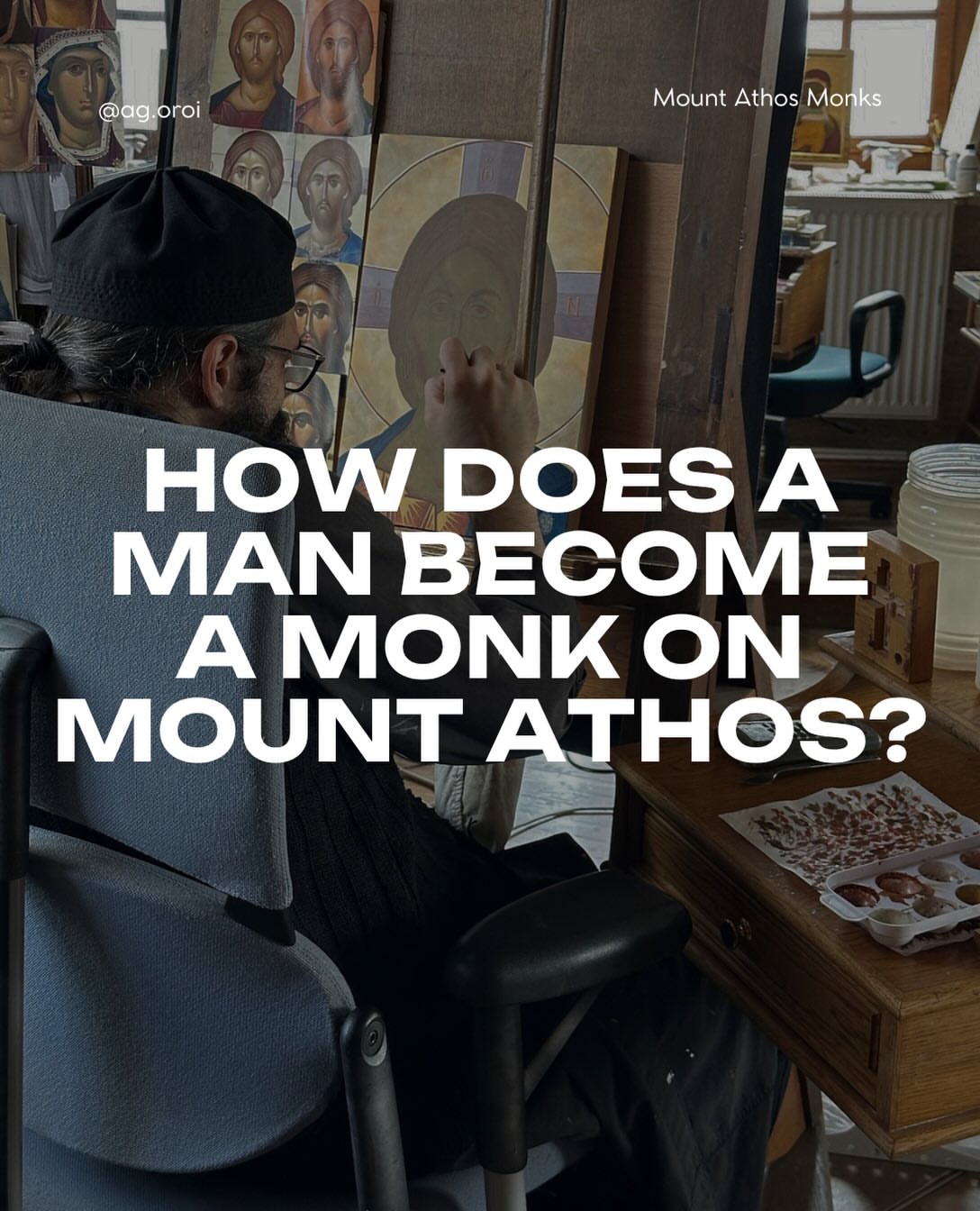
Becoming a Monk on Mount Athos: A Path of Discernment and Obedience

Monastic life on Mount Athos does not begin with a single decision. The post presents becoming a monk on the Holy Mountain as a path that unfolds through discernment, obedience, and dedication to God. A man who feels drawn to the monastic life does not simply arrive and take up the habit; the post describes the beginning of monastic life as a gradual process in which a candidate tests and grows into his calling. Discernment comes first: the call…

Monastic life on Mount Athos does not begin with a single decision. The post presents becoming a monk on the Holy Mountain as a path that unfolds through discernment, obedience, and dedication to God. A man who feels drawn to the monastic life does not simply arrive and take up the habit; the post describes the beginning of monastic life as a gradual process in which a candidate tests and grows into his calling.

Discernment comes first: the call to leave the world and dedicate oneself wholly to God must be recognized and confirmed over time. Obedience follows, as the newcomer places himself under the guidance of the community and its spiritual father, learning the rhythm of prayer, work, and submission to the will of others that marks life on the Holy Mountain.

Dedication to God stands at the center of the whole path, giving direction to each step a candidate takes. The post invites readers to discover what this journey looks like in practice and how monastic life actually begins on Mount Athos, rather than offering a simplified picture of a man arriving one day and becoming a monk the next.

The framing corrects a common assumption: the step into the monastic life is not an instant act of will but a way of life entered slowly, with the guidance of those already living it. The post speaks to readers curious about Orthodox monasticism, to those considering a monastic calling themselves, and to anyone who wonders how the first stages of life on the Holy Mountain take shape.

Its central message is that the door into Athonite monasticism opens through a long path of discernment, obedience, and dedication to God, and that understanding this path changes how one sees the monastic life itself.

  • Becoming a monk on Mount Athos is a path, not a single decision.
  • The path involves discernment, obedience, and dedication to God.
  • The post describes how monastic life begins on the Holy Mountain.
  • It addresses readers who want to know what the journey to monastic life actually looks like.
Read more

The Cross Was Death's Defeat, Not Christ's

The post marks the final day of the Feast of the Holy Cross in the Orthodox Church. The author contrasts two meanings of the same instrument: Rome used the Cross as an instrument of death, while Christ transformed it into the sign of victory. The central claim is that the Cross was not Christ's defeat, it was death's. The post ends with the liturgical acclamation: 'We bow before Your Cross, O Christ, and glorify Your holy Resurrection,' followed…

The post marks the final day of the Feast of the Holy Cross in the Orthodox Church. The author contrasts two meanings of the same instrument: Rome used the Cross as an instrument of death, while Christ transformed it into the sign of victory. The central claim is that the Cross was not Christ's defeat, it was death's. The post ends with the liturgical acclamation: 'We bow before Your Cross, O Christ, and glorify Your holy Resurrection,' followed by a blessing to readers.

The post is a short devotional message with hashtags for Orthodox Christianity, the Holy Cross, and related topics. There is no further discussion in the thread; the post stands as a brief meditation for the closing day of the feast, inviting readers to venerate the Cross together with the Resurrection it led to.

Key moments

  1. Rome raised the cross as a weapon of death, and Christ transformed it into the sign of victory.
  2. The Orthodox Church marks the final day of the Feast of the Holy Cross.
  3. The cross is not proof that Christ lost; it is proof that death did.
  4. The closing prayer: 'We bow before your cross, oh Christ, and glorify your holy resurrection.'
Read more
Giovanni Guaita YouTube

"The Church Is God's Family": A Sermon for the Nativity of the Mother of God

"The Church Is God's Family": A Sermon for the Nativity of the Mother of God 3:49

This post shares a sermon titled "The Church Is God's Family," delivered by Hieromonk John (Guaita) together with Priest Dimitry Sizonenko on September 21, 2024, for the Feast of the Nativity of the Most Holy Mother of God. Filmed in front of the Kazan Cathedral in St Petersburg, the talk reflects on the meaning of the feast in three movements. First, it is a feast of the family: the birth of the Mother of God reminds believers that the Church…

This post shares a sermon titled "The Church Is God's Family," delivered by Hieromonk John (Guaita) together with Priest Dimitry Sizonenko on September 21, 2024, for the Feast of the Nativity of the Most Holy Mother of God. Filmed in front of the Kazan Cathedral in St Petersburg, the talk reflects on the meaning of the feast in three movements.

First, it is a feast of the family: the birth of the Mother of God reminds believers that the Church is the family of God, a community with a beginning, a shared past, and a common future. Second, and more profoundly, the Mother of God has long been an image of the human soul itself — the feminine principle in human nature that receives and unites with Divinity.

Just as at the Annunciation God took flesh within Mary, so He becomes part of the soul that prays; the Nativity of the Mother of God thus becomes a metaphor for what happens in every person who unites with God. Third, since September marks the start of the school year, the feast signifies new beginnings: hopes, promises, and renewal — for the Church the beginning of a new humanity, and for each person a chance to rekindle joy and enthusiasm.

The post includes the day's Gospel reading (Luke 10:38–42; 11:27–28), the story of Martha and Mary, in which Christ says: "Blessed are they that hear the word of God, and keep it" — a fitting echo of the theme of receiving the word within oneself. Links are provided to the full text of the sermon in Russian, English, Italian, French, and Spanish, as well as to a video version and ways to support the channel.

Key moments

  1. 0:34 The feast is first considered a feast of the family: the Church is the family of God, and the Mother's birthday reminds believers they are a united family with a past, a beginning, and a common future.
  2. 1:41 A second, more complex meaning: for generations of Christians the Mother of God has been an image of one's own soul — the feminine principle in human nature that unites with Divinity, as at the Annunciation God becomes an embryo in Mary's womb, just as God becomes part of the praying soul.
  3. 2:18 The Nativity of the Mother of God is thus a symbol and metaphor for what happens to the soul of every person who unites with God.
  4. 2:51 A third aspect: since September begins the new school year, the feast marks a beginning of new hopes, promises, and expectations — for the Church it is the beginning of a new humanity and a renewal each of us needs, an opportunity to rekindle joy and enthusiasm for something new.
  5. 3:27 The host thanks Fr Dmitry, notes the building behind them is the Kazan Cathedral in St Petersburg (not St Peter's Basilica in Rome), and bids viewers farewell.
Read more
Holy Resurrection YouTube

Orthodox Perspective on Evolution: A Letter from Mount Athos

Orthodox Perspective on Evolution: A Letter from Mount Athos 11:33

This post presents a video adaptation of a 2009 letter from Archimandrite George, Abbot of the Holy Monastery of Gregoriou on Mount Athos, addressed to an Orthodox priest in America. Written during the Darwin anniversaries, the letter responds to questions about whether evolution is philosophy, proven fact, or theory, how to address scientific consensus, and what to teach young people. The Abbot argues that macroevolution remains an unproven…

This post presents a video adaptation of a 2009 letter from Archimandrite George, Abbot of the Holy Monastery of Gregoriou on Mount Athos, addressed to an Orthodox priest in America. Written during the Darwin anniversaries, the letter responds to questions about whether evolution is philosophy, proven fact, or theory, how to address scientific consensus, and what to teach young people.

The Abbot argues that macroevolution remains an unproven hypothesis rather than an established scientific fact, noting that adaptation within species is acknowledged but species-to-species evolution lacks confirmation from paleontology and genetics. He emphasizes that the debate is fundamentally metaphysical, rooted in a refusal to acknowledge a Creator, and cites historical scientific frauds such as Piltdown Man and Haeckel's embryos, as well as sociopolitical misuses like eugenics and Lysenkoism.

The Orthodox understanding of Genesis is presented as a theophany and theognosy — a revelation of divine knowledge through Moses' communion with God — not a scientific account. The letter affirms creation ex nihilo and the purpose of human existence as communion with God, concluding that those who know God through the Holy Spirit recognize the Creator in Scripture, while evolution's proponents reject God to avoid accountability.

Key moments

  1. 0:11 2009 Darwin anniversaries prompt media promotion of evolution often at the expense of creation.
  2. 0:44 The debate has scientific, theological, educational, and soteriological dimensions; letter from Abbot George to an Orthodox priest in America.
  3. 1:14 The priest asks whether evolution is philosophy, proven fact, or theory, how to face scientific consensus, and what to teach youth.
  4. 2:46 Scientists acknowledge adaptation within species but contest macroevolution; paleontology and genetics have not confirmed species-to-species evolution.
  5. 4:19 Evolution is a working hypothesis, not indisputable fact; the debate often shifts to metaphysics, with hostility toward creation because it presupposes God.
  6. 5:23 Evolution supporters resist a Creator; if evolution fails, they must accept creation by God; Council of Europe labeled creationism dangerous for schools.
  7. 6:26 Orthodox question evolution due to past scientific deceptions (e.g., Piltdown Man, Haeckel's embryos) and sociopolitical implications (eugenics, Lysenko).
  8. 6:57 Orthodox faith affirms creation ex nihilo; Genesis is a theophany and theognosy, not a scientific account, revealing the Creator through Moses' knowledge of God.
Read more
Athonite Audio YouTube

Metropolitan Neophytos of Morphou Remembers Saint Iakovos of Evia

Metropolitan Neophytos of Morphou Remembers Saint Iakovos of Evia 18:02

Metropolitan Neophytos of Morphou writes about his acquaintance with Saint Iakovos of Evia in an article first published in the magazine Peiraiki Ekklisia (vol. 303) in May 2018. He first met the elder at Pascha of 1982, when Saint Porphyrios directed him, then a 19-year-old student, to Iakovos, calling him the most humble of elders and a great saint because of his simplicity. The Metropolitan recounts the elder's gifts: clairvoyance used…

Metropolitan Neophytos of Morphou writes about his acquaintance with Saint Iakovos of Evia in an article first published in the magazine Peiraiki Ekklisia (vol. 303) in May 2018. He first met the elder at Pascha of 1982, when Saint Porphyrios directed him, then a 19-year-old student, to Iakovos, calling him the most humble of elders and a great saint because of his simplicity.

The Metropolitan recounts the elder's gifts: clairvoyance used pastorally, including a foretelling that Neophytos would become bishop of Morphou; the casting out of demons with the skull of Saint David; prayer as a spiritual father to see into hearts and to forget what he heard in confession, which God granted; and his constant plea of 'Forgive me' toward admirers and critics alike, because he saw himself as having fooled those who admired him and scandalized those who judged him.

To hide his holiness, the elder either spoke with the words of Saint David or called himself 'a fool, a worm of the earth'. The article describes the monastery's abundant hospitality to pilgrims, with coffee and meals prepared for every bus of visitors whether or not they could pay. Elder Cyril, the successor abbot, names spiritual fatherhood as the saint's greatest gift.

The longest section concerns the Divine Liturgy: Saint Iakovos saw angels during the Great Entrance, souls of the reposed at the Proskomide, including his parents, his sister Taisia passing through the toll houses, and Archbishop Makarios III, and beheld the life and passion of Christ. Saint Iakovos told the Metropolitan that when he became a hierarch and spoke about him, he would be speaking about the Holy Spirit who was within him.

The Metropolitan closes by urging contemporary Orthodox Christians to seek the faith and patience of the saints and to experience God rather than merely talk about Him, noting that the Church begets saints in every age.

Key moments

  1. 1:34 Saint Iakovos told Metropolitan Neophytos that when he became a hierarch and spoke about him, he would be speaking about the Holy Spirit who was within him.
  2. 2:07 Saint Porphyrios directed the 19-year-old student to Elder Iakovos, calling him the most humble of them all and a great saint because of his simplicity.
  3. 3:40 The elder either spoke with the words of Saint David or called himself 'a fool, a worm of the earth' to hide his holiness.
  4. 4:10 The monastery showed abundant hospitality, preparing coffee and meals for every bus of pilgrims whether or not they could pay.
  5. 5:12 Saint Iakovos had the gift of clairvoyance, foretelling that Neophytos would become bishop of Morphou, and the gift of casting out demons using the relics of Saint David.
  6. 7:14 As a spiritual father he prayed to see into hearts and to forget what he heard in confession, and God granted his request.
  7. 7:45 He constantly said 'Forgive me' because he saw himself as having fooled those who admired him and scandalized those who judged him.
  8. 10:53 In the Divine Liturgy he beheld angels, souls of the reposed, and the life and passion of Christ; his greatest gift, per Elder Cyril, was his spiritual fatherhood.
Athonite Audio YouTube

Metropolitan Neophytos of Morphou Remembers His Elder, Iakovos Tsalikis

Metropolitan Neophytos of Morphou Remembers His Elder, Iakovos Tsalikis 1:21:55

In a radio interview recorded on December 30, 2015 with journalist Maria Makri and aired by the Radio Station of Peiraiki Ekklisia, Metropolitan Neophytos of Morphou speaks about his spiritual father, the contemporary Elder Iakovos Tsalikis. He explains that he is obeying a will revealed to him by the elder, who told him at his ordination as deacon that he would one day become a bishop in his birthplace and light the elder's lighter so that…

In a radio interview recorded on December 30, 2015 with journalist Maria Makri and aired by the Radio Station of Peiraiki Ekklisia, Metropolitan Neophytos of Morphou speaks about his spiritual father, the contemporary Elder Iakovos Tsalikis. He explains that he is obeying a will revealed to him by the elder, who told him at his ordination as deacon that he would one day become a bishop in his birthplace and light the elder's lighter so that people could receive light from it.

The metropolitan then traces the elder's life. Iakovos grew up in Farakla under his mother Theodora, whom he placed at the same level as great abbesses; as a child of ten or twelve he saw a light around her while she prayed for hours with raised hands. At the chapel of St. Paraskevi, where he struggled ascetically at night, the saint appeared to him under a plane tree and told him Christ had sent her because his prayers pleased her.

She foretold that bishops and patriarchs would confess to him, that he would have many spiritual children, and that money would pass through his hands and be given away. During military service he gave up Holy Week and Pascha at home so a sad comrade could visit his fiancee; while singing 'Christ is risen' at the base, a light came from above and rested on him.

After his mother's death, his great temptation was grief, which he conquered through long prayer so that the joy of the Holy Spirit would come. Before going to Jerusalem he venerated St. David of Evia, whose face matched the icon, and St. David became his second and last elder. The interview closes with the elder's simplicity, his hospitality, his gift of insight in confession, and his constant phrase 'forgive me,' by which he took on others' sins as his own, since all Orthodox Christians belong to one body, the body of Christ.

Key moments

  1. 0:00 Metropolitan Nafos says he is obeying the will of God revealed by his elder, who told him at his ordination as deacon that he would become a bishop in his birthplace and light the elder's lighter so people could get light from it.
  2. 3:06 The elder's mother Theodora taught him asceticism; he placed her at the same level as great abbesses. As a child of 10 or 12 he saw a light around her while she prayed for hours with raised hands.
  3. 11:29 St. Paraskevi appeared to the young Yakovos under a plane tree near her chapel, telling him Christ had sent her because his prayers pleased her; his mother told him to ask her for a heavenly fortune.
  4. 14:39 St. Paraskevi foretold that bishops and patriarchs would confess to him, that he would give birth to many spiritual children, and that money would pass through his hands and be given away with the other.
  5. 20:55 During military service he gave up Holy Week and Pascha at home so a sad comrade could visit his fiancee; while singing 'Christ is risen' at the base, a light came from above and rested on him and he became all light.
  6. 23:00 After his mother's death, the elder's great temptation was grief; he struggled and prayed long to conquer it so the joy of the Holy Spirit would come, and advised Metropolitan Nafos on this struggle.
  7. 28:16 Before going to Jerusalem he venerated St. David at his monastery; the old monk who received him had the same face as the icon, and St. David became his second and last elder.
  8. 39:46 The elder constantly said 'forgive me,' taking on others' sins as his own out of continuous repentance, since all Orthodox Christians belong to one body, the body of Christ.
Athonite Audio YouTube

Metropolitan Neophytos Recalls the Life of Elder Iakovos Tsalikis of Evia (1920-1991)

Metropolitan Neophytos Recalls the Life of Elder Iakovos Tsalikis of Evia (1920-1991) 29:12

Metropolitan Neophytos of Morphou, a spiritual child of Elder Iakovos Tsalikis, wrote this account of the elder's life in 1992, a few months after his repose, while he was still a deacon at the monastery of Saint George the Short in Larnaca, Cyprus. Published in the periodical "Orthodox Witness" of the "Friends of the Holy Mountain" society, it is essentially the first published text about the life of Elder Iakovos. The account follows Iakovos…

Metropolitan Neophytos of Morphou, a spiritual child of Elder Iakovos Tsalikis, wrote this account of the elder's life in 1992, a few months after his repose, while he was still a deacon at the monastery of Saint George the Short in Larnaca, Cyprus. Published in the periodical "Orthodox Witness" of the "Friends of the Holy Mountain" society, it is essentially the first published text about the life of Elder Iakovos.

The account follows Iakovos from his childhood in Asia Minor to his decades at the Monastery of Saint David in Evia. Born in 1920 in Livisi Makri, he came as a refugee to northern Evia in 1922. His mother Theodora, whom he called an ascetic and his Gerondissa, taught him prayer and foresaw her own death; she prayed to the Panagia of Kykkos, and he inherited her love for Cyprus.

The family had seven generations of priests, and the refugees carried a strict, monastic tradition. As a boy he secretly prayed at a chapel of Saint Paraskevi, who appeared to him and promised to take care of his future. From about age 15 villagers called him Father Iakovos because his prayers healed the sick and helped women in labor.

In 1952 he entered the dilapidated Monastery of Saint David, where he struggled in prayer for 39 years. He secretly visited the saint's cave cell at night, at times guided by a star, and was attacked by demons appearing as scorpions. In 1975 he became abbot and spiritual father, and the monastery became a pilgrimage site for all of Greece, with pilgrims finding that the clairvoyant elder spoke of their sins before they said anything.

He saw visions during the liturgy, commemorated Archbishop Makarios III of Cyprus after his death, and commanded Saint David to bring rain. He reposed on the feast of the Entrance of the Theotokos into the temple in 1991, and Elder Porphyrios called him one of the greatest saints of the century.

Key moments

  1. 0:00 The text is by Metropolitan Neophytos of Morphou, written in 1992 a few months after the repose of Elder Iakovos of Evia (1920-1991), and is essentially the first published account of his life.
  2. 0:30 Elder Iakovos was born in 1920 in Livisi Makri in Asia Minor; his mother Theodora prayed to the Panagia of Kykkos, and he inherited her love for Cyprus and the traditions of Asia Minor as a refugee in 1922.
  3. 2:05 When refugee boats reached Piraeus in 1922, the passengers wept at hearing Greeks swearing with the names of Christ and the Panagia; the refugees carried a strict, monastic tradition, and Iakovos came from a family with seven generations of priests.
  4. 3:37 As a boy he secretly prayed at a chapel of Saint Paraskevi, where the saint appeared to him; at his mother's instruction he asked her about his future, and she answered, 'I will take care of your future, a future that many will be envious of.'
  5. 7:15 From about age 15 villagers called him Father Iakovos, a man of God; his prayers healed the sick and helped women in labor, and at 12 or 13 he read a prayer for a priest's wife who gave birth as soon as he left the room.
  6. 9:48 In 1952 he entered the Monastery of Saint David, where Saint David met him and promised that if he kept poverty, virginity, and obedience, bishops would venerate him and wealth would pass before him without his holding on to it.
  7. 13:29 He secretly went at night to pray in Saint David's cave cell; without a lantern he prayed for light, and a star went before him and rested on the cave, and on another night demons appeared as scorpions hanging from the ceiling until he called on Saint David.
  8. 16:06 In 1975 he was appointed abbot and spiritual father; the monastery was restored and expanded, and pilgrims from all over Greece came to him, often finding that the clairvoyant elder spoke of their sins before they said anything.