WeOrthodox
EN UA

Orthodox posts, videos and discussions

We follow Orthodox channels, communities and blogs across the web, summarise every post and video, and highlight the conversations with real substance.

St Anthony’s Youth SA ☦︎ with Dylan☦️ Instagram

Father Seraphim Rose on suffering and the Kingdom of Heaven

0:10

The post shares a quotation from Father Seraphim Rose. The quote states that suffering serves as an indication of another Kingdom toward which Christians look. It adds that if being Christian meant being happy in this life, the Kingdom of Heaven would not be needed. The text appears as a standalone statement without additional commentary or discussion thread.

Hashtags attached to the post include soldiersofyeshua, jesuschrist, christianity, orthodoxy, and orthodoxchristian.

  • Father Seraphim Rose identifies suffering as a sign of the Kingdom to come
  • The quote contrasts temporal happiness with the necessity of the Kingdom of Heaven
  • The post presents the quotation without further explanation or dialogue
  • Hashtags associate the content with Orthodox Christian identity
Read more
Prayer Orthodoxy ® Instagram

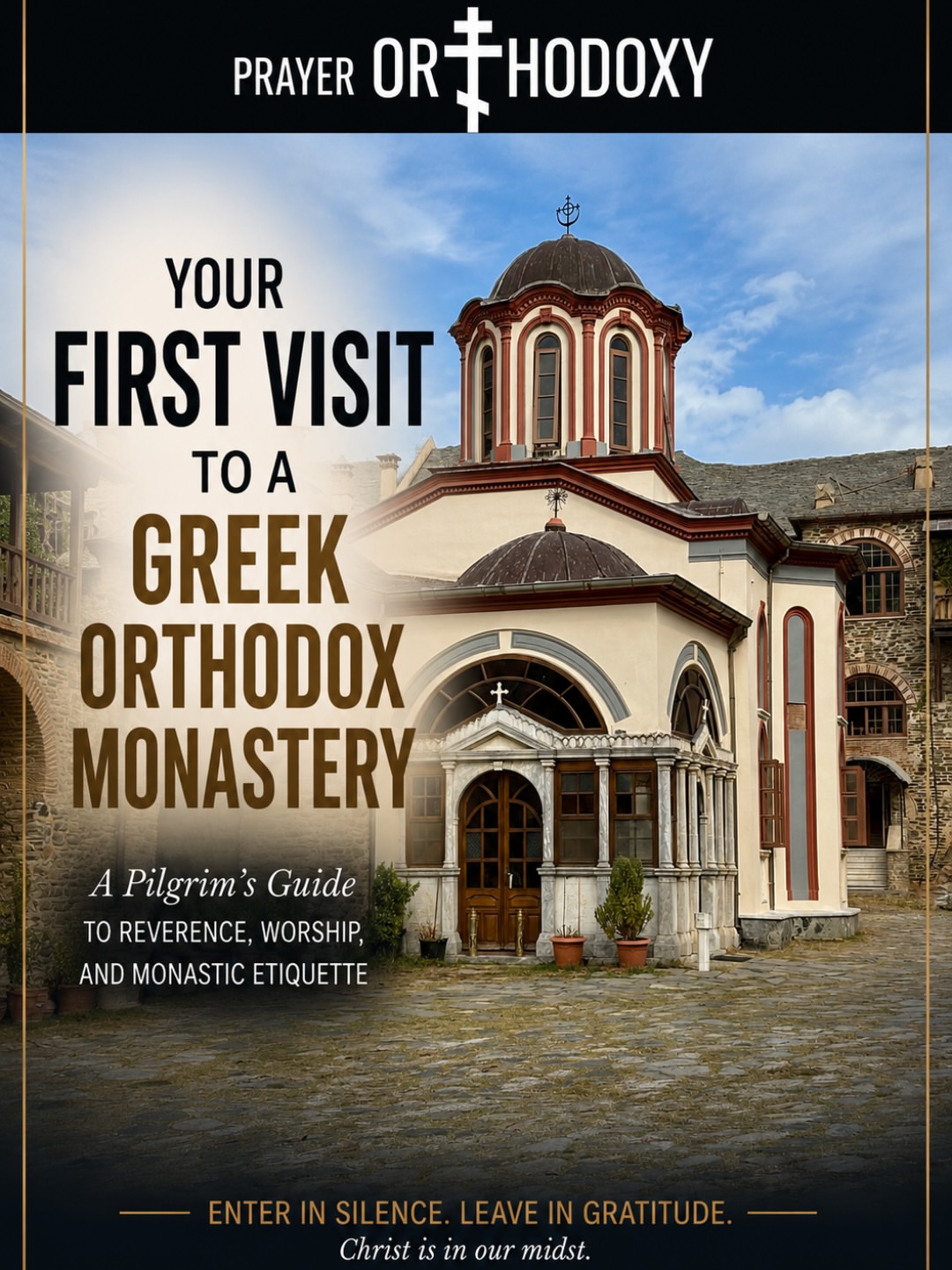
Guidance for a First Visit to an Orthodox Monastery

The text opens by defining an Orthodox monastery as a place of prayer, repentance, worship, and silence. It then gives a series of instructions for a first visit. Visitors should enter with reverence. They should dress modestly. They should follow the customs of the monastery and the guidance of the monastics. During services, they should observe quietly. They should allow the rhythm of monastic life to lead them. The text then explains the…

The text opens by defining an Orthodox monastery as a place of prayer, repentance, worship, and silence. It then gives a series of instructions for a first visit. Visitors should enter with reverence. They should dress modestly. They should follow the customs of the monastery and the guidance of the monastics.

During services, they should observe quietly. They should allow the rhythm of monastic life to lead them. The text then explains the purpose of a pilgrimage. It gives the opportunity to leave worldly distractions behind. It allows one to turn the heart toward God. The entire text is repeated in Greek. The post is identified as an original production of Prayer Orthodoxy.

  • A monastery is a place of prayer, repentance, worship, and silence
  • Enter with reverence and dress modestly
  • Follow the monastery's customs and the monastics' guidance
  • Observe services quietly and follow the monastic rhythm
  • Pilgrimage offers a chance to leave distractions and turn toward God
Read more
Orthodox Sound YouTube

Healing Blindness: From Physical Sight to Spiritual Illumination

Healing Blindness: From Physical Sight to Spiritual Illumination 9:49

The speaker reflects on the Gospel account of two blind men who follow Jesus crying "Have mercy on us, Son of David" and receive their sight through faith. St. John Chrysostom observes that they believed through hearing while many with physical sight refused to believe, and Christ leads them to confess his authority directly. The speaker notes that the healing illustrates how sin distorts perception, making pride appear reasonable, envy dress as…

The speaker reflects on the Gospel account of two blind men who follow Jesus crying "Have mercy on us, Son of David" and receive their sight through faith. St. John Chrysostom observes that they believed through hearing while many with physical sight refused to believe, and Christ leads them to confess his authority directly. The speaker notes that the healing illustrates how sin distorts perception, making pride appear reasonable, envy dress as justice, anger justify cruelty, and self-love conceal wounds.

The fathers see the restoration of sight as an image of the healing every soul needs. The speaker distinguishes knowledge about God from communion with God, stating that true illumination comes through repentance and prayer rather than intellectual effort. The apostle Paul writes that God who commanded light from darkness has shone in our hearts to give the light of the knowledge of the glory of God in the face of Jesus Christ; illumination means the soul purified by grace knows God through his self-revelation in Christ, not by comprehending the divine essence.

The speaker explains that spiritual sight changes how we regard others, replacing condemnation with mercy as we recognize our own need for forgiveness. The more honestly one knows his own need for forgiveness, the less readily he judges his neighbor, remembering the person is not reducible to the sin noticed and that we need the same mercy.

The speaker then turns to the healing of a mute demoniac in Matthew, which shows Christ's authority over the powers that enslave humanity. The man's silence images our spiritual condition where speech abounds but the heart cannot bear truthful witness, and the restoration of voice invites us to consider whether our words bring peace or resentment, confess our sins or expose others.

The speaker adds that the same divine mercy works through the Church's mysteries and ascetic struggle to renew the whole person rather than surround an unchanged heart with sacred activities.

Key moments

  1. 0:00 Two blind men follow Jesus crying "Have mercy on us, oh son of David," recognizing him despite their blindness while many with physical sight refuse to believe.
  2. 0:32 Jesus asks "Believe ye that I am able to do this?" They answer "Yea, Lord," he touches their eyes saying "According to your faith be it unto you," and their eyes are opened; Chrysostom notes Christ leads them beyond "son of David" to a deeper confession of his authority.
  3. 1:34 The fathers see the restoration of sight as an image of the healing every soul needs: sin distorts perception, making pride appear reasonable, envy dress as justice, anger justify cruelty, and self-love conceal wounds.
  4. 2:38 We form judgments about God from desires and fears and mistake them for knowledge; one may speak theology and defend correct words yet remain a stranger to repentance, because knowledge about God and communion with God are not identical.
  5. 3:10 The apostle Paul writes that God who commanded light from darkness has shone in our hearts to give the light of the knowledge of the glory of God in the face of Jesus Christ; illumination means the soul purified by grace knows God through his self-revelation in Christ, not by comprehending the divine essence.
  6. 3:41 Spiritual sight changes how we look at others: without humility we encounter suspicions and grievances instead of the person, seeing an enemy where there is a wounded brother and faults in others while our own passions remain hidden.
  7. 4:44 Christ illuminates the heart so condemnation gives way to repentance and mercy; the more honestly one knows his own need for forgiveness, the less readily he judges his neighbor, remembering the person is not reducible to the sin noticed and that we need the same mercy.
  8. 5:47 The healing of a mute demoniac in Matthew shows Christ's authority over the powers that enslave humanity; the man's silence images our spiritual condition where speech abounds but the heart cannot bear truthful witness, and the restoration of voice invites us to consider whether our words bring peace or resentment, confess our sins or expose others.
Prayer Orthodoxy ® with The National Herald Instagram

Egypt court deadline looms for Saint Catherine's Monastery status

An October 22 deadline approaches for reaching an agreement on the status and properties of Saint Catherine's Monastery in the Sinai peninsula. The situation is a major issue for Greece during the current pre-election period. According to Kathimerini, the critical moment comes before October 24, when a stay on an Egyptian Supreme Court decision expires. Athens considers another extension unlikely after four previous delays. Negotiators face…

An October 22 deadline approaches for reaching an agreement on the status and properties of Saint Catherine's Monastery in the Sinai peninsula. The situation is a major issue for Greece during the current pre-election period. According to Kathimerini, the critical moment comes before October 24, when a stay on an Egyptian Supreme Court decision expires.

Athens considers another extension unlikely after four previous delays. Negotiators face stalling from factions in Egypt and a divided monastic brotherhood. One dissenting monk stated there is no chance the decision will be announced on October 24 and accused those involved of trying to mislead.

Giorgos Kalantzis, a Greek official, has traveled to Jerusalem seeking the intervention of the Patriarchate of Jerusalem, which holds jurisdiction over the monastery. The report draws on material from Kathimerini and was published by The National Herald.

  • October 22 deadline for agreement on monastery status and properties
  • Egyptian Supreme Court stay expires October 24 after four previous delays
  • Greek officials see further extension as unlikely
  • Divided monastic brotherhood and Egyptian factions stall negotiations
  • Greek official Giorgos Kalantzis seeks Patriarchate of Jerusalem intervention

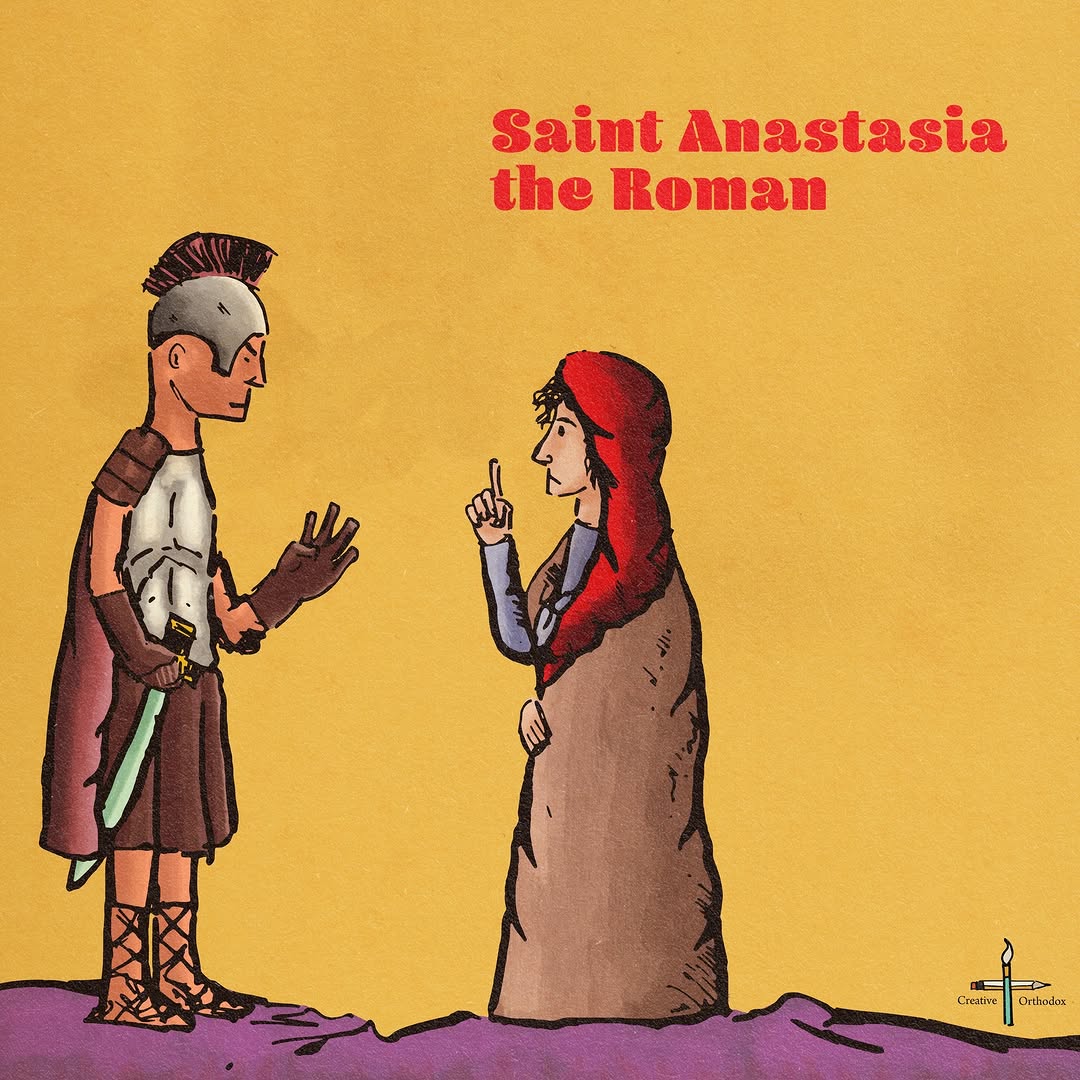
Saint Anastasia's courage rooted in seventeen years of convent asceticism

The post opens by describing Saint Anastasia standing before Roman soldiers to defend persecuted Christians and to confess her own faith. The author then shifts to the background of this act, identifying seventeen years spent as an orphaned girl in a convent as the source of her courage. During those years, the saint embraced a life of asceticism and prayer. The post specifies her diet as bread and salt alone, notes the frequency of her prayer,…

The post opens by describing Saint Anastasia standing before Roman soldiers to defend persecuted Christians and to confess her own faith. The author then shifts to the background of this act, identifying seventeen years spent as an orphaned girl in a convent as the source of her courage. During those years, the saint embraced a life of asceticism and prayer.

The post specifies her diet as bread and salt alone, notes the frequency of her prayer, and highlights her posture of submission and obedience to her abbess. These details frame the convent not as a refuge but as a school of spiritual formation in which daily renunciation and disciplined obedience prepared her for public witness.

The author presents the connection between the hidden monastic routine and the dramatic confrontation as direct and causal: the years of eating little, praying often, and yielding to authority built the capacity to resist imperial power. The text ends with a liturgical address, asking Saint Anastasia to pray for the reader. No further biographical details, historical dates, or scriptural references appear in the post.

The focus remains on the link between ascetic formation and martyrdom, and on the invocation of the saint's intercession.

  • Saint Anastasia confronted Roman soldiers to defend persecuted Christians and her faith
  • Her courage was formed during seventeen years as an orphan in a convent
  • She practiced asceticism, eating only bread and salt
  • She prayed frequently and lived in obedience to her abbess
  • The post concludes with a request for her intercession
Read more
Citations Orthodoxes ☦ Instagram

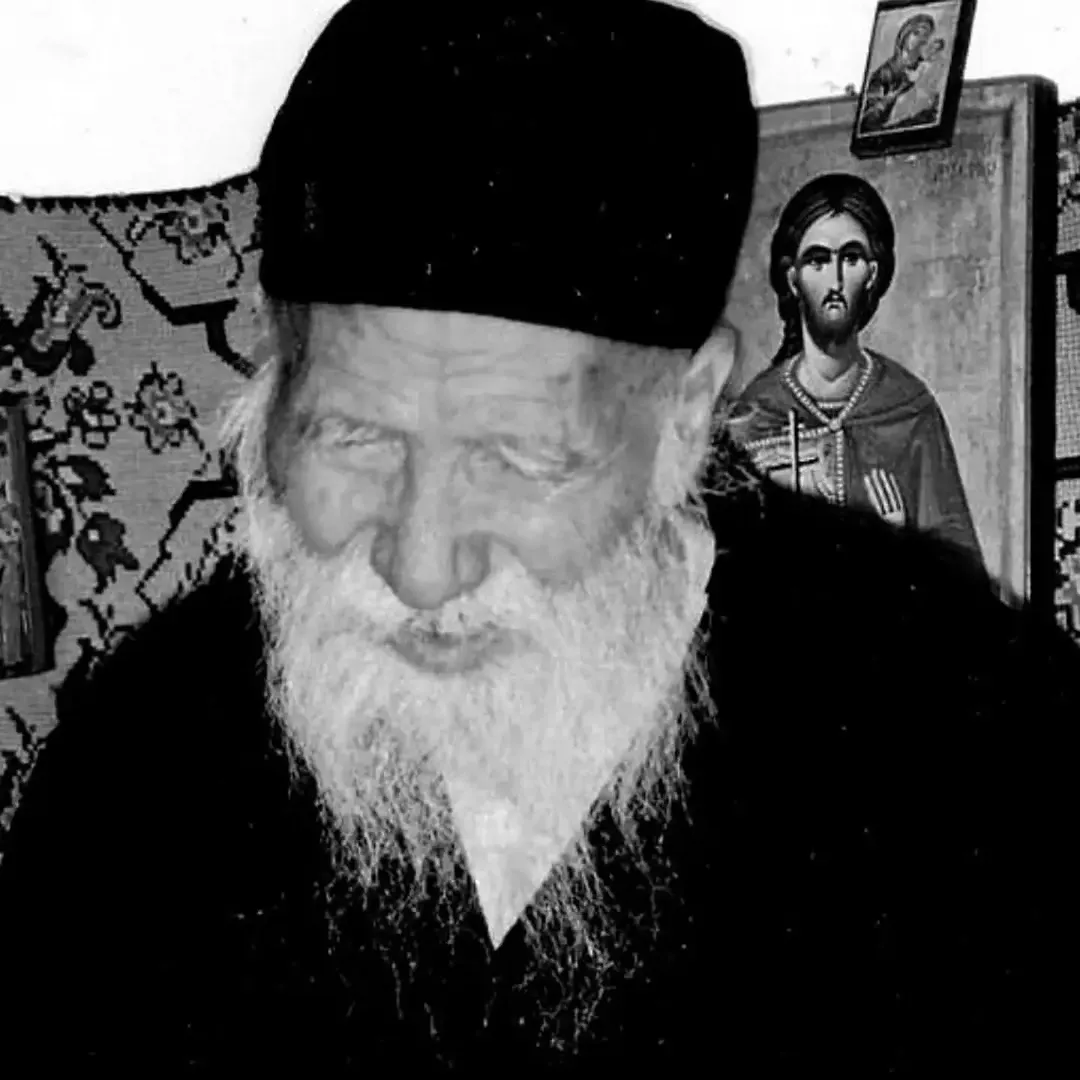
Saint Porphyrios on demanding goodness from others

The post presents a saying attributed to Saint Porphyrios of Kavsokalyvia. The saint observes that one manifestation of the self is the demand that others become good. He explains that this demand arises because the person making it wishes to become good but does not succeed.

Unable to attain goodness personally, the person projects the desire onto others and tries to force them to fulfill it. The quote stands alone without accompanying commentary or discussion thread.

  • Saint Porphyrios identifies demanding goodness from others as a manifestation of the self
  • The root cause is one's own unsuccessful desire to become good
  • People project their unfulfilled aspiration onto others
  • They then attempt to force others to become good
George Instagram

Saint Luke: Physician, Evangelist, and First Iconographer

1:31

The video presents Saint Luke as a physician whom Saint Paul called the beloved physician. Luke traveled with Paul and remained with him when others left. He authored the Gospel of Luke and the Acts of the Apostles. His Gospel provides the Annunciation and Nativity narratives, including the detail that Mary pondered these events in her heart. Many believe Luke received these accounts directly from the Virgin Mary. For over a thousand years the…

The video presents Saint Luke as a physician whom Saint Paul called the beloved physician. Luke traveled with Paul and remained with him when others left. He authored the Gospel of Luke and the Acts of the Apostles.

His Gospel provides the Annunciation and Nativity narratives, including the detail that Mary pondered these events in her heart. Many believe Luke received these accounts directly from the Virgin Mary. For over a thousand years the Church has honored Luke as the first iconographer, crediting him with painting the first icon of the Theotokos holding the Christ Child. His feast is celebrated on October 18.

Key moments

  1. Saint Luke was a doctor, called the beloved physician by Saint Paul.
  2. He traveled with Paul and remained with him when others left.
  3. Luke wrote the Gospel of Luke and the Acts of the Apostles.
  4. He provides the Annunciation, Nativity, and Mary's pondering in her heart.
  5. Many believe he heard these events from Mary herself.
  6. Tradition says Luke painted the first icon of the Mother of God holding Christ.
  7. He is honored as the first iconographer.
  8. His feast day is October 18.
Read more
Disgruntled Docs with Benjamin Merritt Instagram

Catholic speaker defends Pope Leo on death penalty, criticizes Orthodox antisemitic terms

1:23

A Catholic speaker publishes a video responding to a post by the Orthodox account 'cleave to antiquities.' The post asserts that Pope Leo's recent statement on the death penalty contradicts traditional Catholic teaching. The speaker opens by quoting Pope Leo's tweet directly. The tweet declares the death penalty inadmissible because it attacks the inviolability and dignity of the person. It states that the common good can be safeguarded without…

A Catholic speaker publishes a video responding to a post by the Orthodox account 'cleave to antiquities.' The post asserts that Pope Leo's recent statement on the death penalty contradicts traditional Catholic teaching. The speaker opens by quoting Pope Leo's tweet directly. The tweet declares the death penalty inadmissible because it attacks the inviolability and dignity of the person.

It states that the common good can be safeguarded without capital punishment. It cites effective modern detention systems that protect citizens while preserving the possibility of redemption for the offender. The speaker argues that this teaching reflects developed circumstances, specifically the existence of modern detention systems, rather than a contradiction of established doctrine.

The speaker then turns to the language used by 'cleave to antiquities.' The speaker criticizes the account for employing antisemitic terminology, pointing to the phrases 'goy pond' and 'goy cage' as examples. The speaker characterizes the broader Catholic response to this criticism as 'cope' and describes it as one of the worst responses they have encountered.

The speaker concludes by indicating that they will present quotations from other popes on the subject in subsequent content. The video's caption remarks that Catholics deserve better arguments and includes hashtags for Catholic, Orthodox, Vatican, Orthodox Christian, and apologetics topics.

Key moments

  1. Speaker identifies "cleave to antiquities" post claiming Pope Leo contradicts traditional Catholic teaching on death penalty
  2. Speaker quotes Pope Leo's tweet: death penalty inadmissible as attack on inviolability and dignity of person
  3. Pope Leo's tweet states common good can be safeguarded without capital punishment
  4. Pope Leo's tweet cites effective detention systems that protect citizens while preserving possibility of redemption
  5. Speaker argues this reflects changed circumstances (modern detention systems) not contradiction of doctrine
  6. Speaker criticizes "cleave to antiquities" for using antisemitic terminology ("goy pond", "goy cage")
  7. Speaker calls the Catholic response to this "cope" and says this is one of the worst responses seen
  8. Speaker indicates they will show quotes from other Popes on the subject
Read more
Mount Athos Legacy Facebook

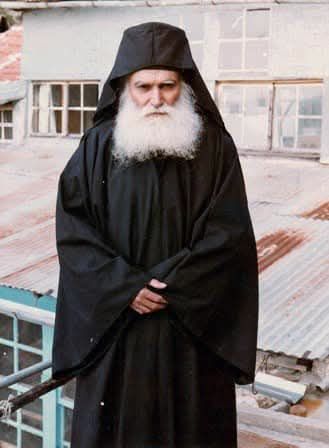
Saint Ephraim of Katounakia on the prayer rope and the Jesus Prayer

The post shares a saying attributed to Saint Ephraim of Katounakia concerning the komboskini, the knotted prayer rope used in Orthodox practice. The saint states that the prayer rope will guide the person who uses it to places they do not know and to higher levels. He advises that one should pray for God to give patience rather than to take away trials, because those trials lead to paradise. The text instructs the reader to learn to work the…

The post shares a saying attributed to Saint Ephraim of Katounakia concerning the komboskini, the knotted prayer rope used in Orthodox practice. The saint states that the prayer rope will guide the person who uses it to places they do not know and to higher levels. He advises that one should pray for God to give patience rather than to take away trials, because those trials lead to paradise.

The text instructs the reader to learn to work the prayer rope. It then gives the words of the Jesus Prayer: "Lord Jesus Christ, have mercy on me." The saint adds that when a person has a problem, they should say this prayer.

The source consists of this single statement; no further discussion or commentary is included in the provided text.

  • The komboskini guides to unknown places and higher spiritual levels
  • Ask God for patience, not for removal of trials
  • Trials lead to paradise
  • Learn to use the prayer rope
  • Say the Jesus Prayer "Lord Jesus Christ, have mercy on me" for any problem
George Instagram discussion

Holy water meant for daily use, not storage

1:17

The speaker explains that holy water is often misused by being stored in drawers or refrigerators and forgotten, then poured down the sink when it gets old. Holy water has been blessed by the prayers of the Church and the grace of the Holy Spirit is in it. It is not meant to be stored as decoration but to be used every day. The speaker instructs that one should drink a small amount each morning on an empty stomach after making the sign of the…

The speaker explains that holy water is often misused by being stored in drawers or refrigerators and forgotten, then poured down the sink when it gets old. Holy water has been blessed by the prayers of the Church and the grace of the Holy Spirit is in it. It is not meant to be stored as decoration but to be used every day.

The speaker instructs that one should drink a small amount each morning on an empty stomach after making the sign of the cross and saying a short prayer. It should be kept in a clean bottle near icons for regular use. It can also be sprinkled on the home, bed, and children while making the sign of the cross.

When disposal is necessary, it must never go down the drain but should be poured onto plants or clean ground where no one walks. Holy water is not a charm that works like magic; it works with faith, prayer, and a heart turning toward God.

Key moments

  1. Most people misuse holy water by storing it in a drawer or fridge and forgetting it, then pouring it down the sink when it gets old.
  2. Holy water has been blessed by the prayers of the Church and the grace of the Holy Spirit is in it.
  3. It is not meant to be stored as decoration but to be used every day.
  4. Drink a little in the morning on an empty stomach, make the sign of the cross, say a short prayer, and drink it with faith.
  5. Keep it in a clean bottle next to your icons as something you reach for daily.
  6. Sprinkle your home, your bed, and your children while making the sign of the cross.
  7. Never pour holy water down the drain; pour it into a plant or onto clean ground where no one will walk on it.
  8. Holy water is not a charm that works like magic; it works with faith, prayer, and a heart turning toward God.
6 opinions in the discussion Every morning antidoron and then holy water. Every day. Read the discussion

Father Lazar of Goranjak on monasticism as divine calling, not escape

Father Lazar of Goranjak Monastery speaks about monasticism as a divine calling and the distinction between worldly life and life in Christ. He recounts falling in love with Christ as a young man without planning it, his heart burning as he felt infinite divine love descend as grace in daily interaction with the Lord. He states that monastic life is not an escape from oneself, failed relationships, existential crisis, or lack of imagination. A…

Father Lazar of Goranjak Monastery speaks about monasticism as a divine calling and the distinction between worldly life and life in Christ. He recounts falling in love with Christ as a young man without planning it, his heart burning as he felt infinite divine love descend as grace in daily interaction with the Lord. He states that monastic life is not an escape from oneself, failed relationships, existential crisis, or lack of imagination.

A person enters a monastery only when there is something to sacrifice. If someone arrives with problems expecting the monastery to solve them, the monastery will swallow and spit them out even more stripped bare. At his tonsure, his mother told him she had been wrong about him because he never finished anything he started, water polo, battalion service, and other pursuits.

He answered that earthly measures have a beginning and an end, while the path to Christ is infinite and eternal.

Key moments

  1. The speaker fell in love with Christ unexpectedly as a young man, feeling his heart burn without planning it.
  2. In everyday interaction with the Lord he experienced infinite divine love descending as grace into his heart.
  3. Monasticism is not for escaping oneself, unhappy loves, existential crisis, or lack of imagination.
  4. One goes to a monastery only when there is something to sacrifice.
  5. If a person enters a monastery with problems thinking they will be solved there, the monastery will swallow and spit them out even more stripped bare.
  6. At his tonsure, his mother said she had been wrong about him because he never finished anything he started, water polo, battalion, and other pursuits.
  7. He replied that earthly measures have a beginning and an end, but the path to Christ is infinite and eternal.
Read more

Fr. Christodoulos Papadeas on Love and Sacrifice in Christian Life

Fr. Christodoulos Papadeas on Love and Sacrifice in Christian Life 3:44

Fr. Christodoulos Papadeas of the Greek Orthodox Metropolis of Denver reflects on love as the essence of Christian life. He explains that agapi, self-giving love, is the heart of the Gospel, revealed in Christ who takes upon Himself the struggles of humanity to heal and purify. Love and sacrifice belong together, and the priest cites St. John Chrysostom that they are two sides of the same coin. The foundation of Christian life is love,…

Fr. Christodoulos Papadeas of the Greek Orthodox Metropolis of Denver reflects on love as the essence of Christian life. He explains that agapi, self-giving love, is the heart of the Gospel, revealed in Christ who takes upon Himself the struggles of humanity to heal and purify. Love and sacrifice belong together, and the priest cites St. John Chrysostom that they are two sides of the same coin.

The foundation of Christian life is love, referencing 1 John's teaching that one who does not love a brother cannot love God. Christ's sacrificial love on the cross is the model: He came down, went to the cross willingly, taking our worries and imperfections so we might become pure and part of His body. Various forms of love, motherly, fatherly, romantic, are gifts from God that lead toward His fullness.

In marriage, suffering arises and one spouse must sacrifice for the other; St. Basil the Great says we wish long life to realize the fullness of love. Husband and wife leave parents to become one and sacrifice for each other and their children. Followers of Christ take up the cross as monastics, clergy, or in worldly vocations such as doctors, lawyers, teachers, social workers, and coaches.

In these roles, Christians use God's gifts to show love, and people feel that love because they know why they do it. Every human relationship becomes a place where love is learned, purified, and deepened. Marriage, family life, suffering, vocation, and service all become opportunities to carry the Cross of Christ.

True love for God is tested in love for the neighbor, as St. John the Evangelist teaches. Christians are called to make the presence of Christ felt through sacrificial love whether as parents, spouses, doctors, teachers, lawyers, or servants of the Church.

Key moments

  1. 0:00 Love and sacrifice are two sides of the same coin (St. John Chrysostom); the foundation of Christian life is love, as 1 John says one who does not love his brother cannot love God.
  2. 0:32 Christian life is founded on Christ's sacrificial love: he came down, went to the cross willingly, taking our worries and imperfections so we might become pure and part of his body; love is the key, and various loves (motherly, fatherly, romantic) are gifts leading to God's fullness.
  3. 1:35 In marriage, suffering arises and one spouse must sacrifice for the other; St. Basil the Great says we wish long life to realize the fullness of love; husband and wife leave parents to become one and sacrifice for each other and their children.
  4. 2:36 Again notes love and sacrifice as two sides of the coin (St. John Chrysostom); followers of Christ take up the cross as monastics, clergy, or in worldly vocations, social workers, teachers, coaches, doctors, lawyers, using God's gifts to show love, and if they are Christian, people feel that love.
George Instagram

Ordinary Distractions Choke Spiritual Growth Despite Outward Piety

1:41

The speaker reflects on the parable of the sower, concentrating on the seed that falls among thorns. The parable describes seed falling on four types of ground: the path, the rock, the thorns, and good ground. The speaker notes that the thorns are the most dangerous because the seed actually grows but gets choked over time. Christ identifies the thorns specifically as the cares, riches, and pleasures of this life. The speaker emphasizes that…

The speaker reflects on the parable of the sower, concentrating on the seed that falls among thorns. The parable describes seed falling on four types of ground: the path, the rock, the thorns, and good ground. The speaker notes that the thorns are the most dangerous because the seed actually grows but gets choked over time.

Christ identifies the thorns specifically as the cares, riches, and pleasures of this life. The speaker emphasizes that these are not dramatic sins but the fabric of everyday life: work obligations, financial concerns, daily worries, the constant presence of the phone, the endless to-do list. From the outside the person appears fine, attending church services and lighting candles, maintaining all the visible marks of religious practice, yet inside nothing ripens to maturity.

A priest's homily compared spiritual life to a farmer who prepares the ground, waters the crop, protects it from threats, and pulls weeds day and night until harvest. The farmer does not simply plant and walk away; the work is continuous and attentive through every season. The speaker says spiritual life requires the same kind of work: prayer, fasting, and confession guided by spiritual fathers.

Spiritual fathers serve to remind us to keep working, to pull the thorns from our lives before they choke what has begun to grow. The reflection ends with a direct call to examine honestly what is growing next to the seed in one's own life, to identify the specific thorns that threaten the crop.

Key moments

  1. The parable of the sower: seed falls on path, rock, thorns, and good ground.
  2. The thorns are the most dangerous because the seed grows but gets choked.
  3. Christ identifies thorns as cares, riches, and pleasures of this life.
  4. These are not big sins but everyday life: work, money, worries, phone, to-do list.
  5. Outwardly one looks fine, going to church and lighting candles, but inside nothing ripens.
  6. Priest's homily: a farmer prepares ground, waters, protects, and pulls weeds day and night until harvest.
  7. Spiritual life requires the same work: prayer, fasting, confession guided by spiritual fathers.
  8. Call to examine honestly what is growing next to the seed in one's life.
Read more
☦️An Orthodox Blog☦️ with Orthodoxy ☦︎ Instagram

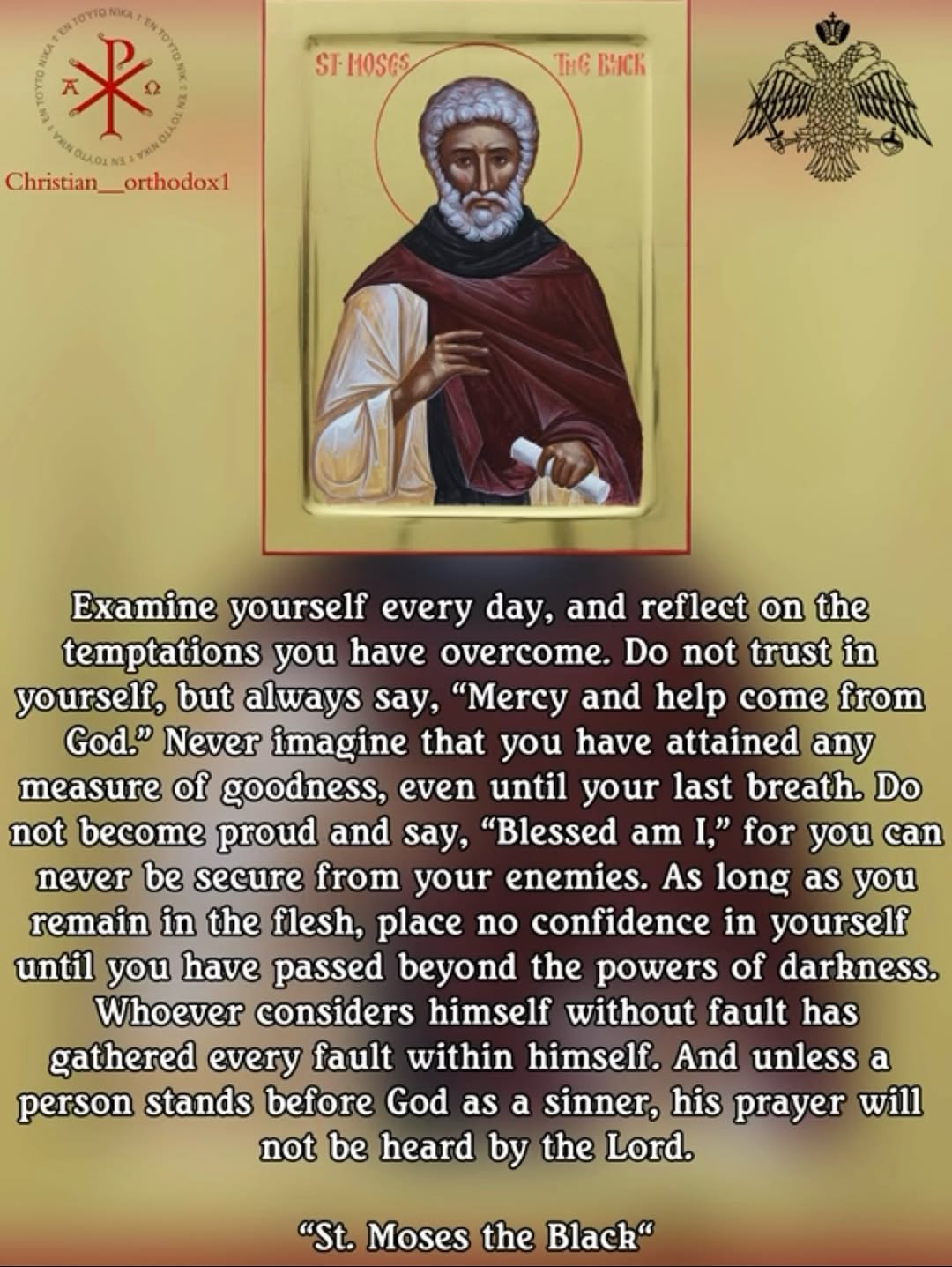
St. Moses the Black on Daily Self-Examination and Humility

The post presents a passage attributed to St. Moses the Black that opens with a call to examine oneself every day and to reflect on the temptations one has overcome. The text immediately counters any impulse toward self-reliance by instructing the reader to say that mercy and help come from God. It then warns against ever imagining that one has attained any measure of goodness, even until the last breath, and against becoming proud or saying…

The post presents a passage attributed to St. Moses the Black that opens with a call to examine oneself every day and to reflect on the temptations one has overcome. The text immediately counters any impulse toward self-reliance by instructing the reader to say that mercy and help come from God. It then warns against ever imagining that one has attained any measure of goodness, even until the last breath, and against becoming proud or saying "Blessed am I." The reason given is that one can never be secure from enemies while remaining in the flesh.

The passage directs that no confidence be placed in oneself until one has passed beyond the powers of darkness. It then states a paradox: whoever considers himself without fault has gathered every fault within himself. The final sentence sets a condition for prayer: unless a person stands before God as a sinner, his prayer will not be heard by the Lord.

The post includes hashtags identifying the content as Christian, Orthodox, church, faith, and church fathers. The source provides no additional commentary, discussion, or context beyond the quotation and the tags.

  • Daily self-examination and reflection on overcome temptations
  • Trust in God's mercy rather than in oneself
  • Never consider oneself good or secure while in the flesh
  • Self-perceived faultlessness indicates gathered faults
  • Prayer requires standing before God as a sinner
CHRISTIANITY UNITED Instagram

Georgian girl venerates icons, continuing 1,600-year faith

The post describes a young girl in Georgia who approaches an icon of the Most Holy Theotokos, makes the sign of the Cross, kisses the icon, and continues to a stone Cross where she brings flowers to a small chapel. The author observes that this simple display shows how children absorb faith by watching their parents pray, make the sign of the Cross, kiss icons, attend the Divine Liturgy, and show respect for holy places. These actions gradually…

The post describes a young girl in Georgia who approaches an icon of the Most Holy Theotokos, makes the sign of the Cross, kisses the icon, and continues to a stone Cross where she brings flowers to a small chapel. The author observes that this simple display shows how children absorb faith by watching their parents pray, make the sign of the Cross, kiss icons, attend the Divine Liturgy, and show respect for holy places.

These actions gradually become part of the children's own lives. The author notes that Georgia has preserved its Christian faith since the fourth century, when Saint Nino preached the Gospel in the ancient Kingdom of Iberia, and that more than 1,600 years later the same faith continues through children like this girl. The post explains that in the Orthodox Church icons are venerated, not worshipped, and that the honor given to an icon passes to the holy person represented; kissing an icon of the Theotokos expresses love and reverence for the Mother of Jesus Christ.

The author expresses hope that the girl will one day teach her own children the same practices, showing how faith survives from generation to generation through daily example as well as words. The post concludes with a prayer asking the Most Holy Theotokos to protect the girl and all children and to lead them closer to her Son, Jesus Christ.

  • Girl in Georgia venerates icon of Theotokos and brings flowers to chapel
  • Children learn faith by observing parents' prayer and reverence
  • Georgia's Christian tradition dates to Saint Nino in fourth century
  • Orthodox veneration of icons honors the person represented, not the object
  • Faith passes through daily example across generations
Read more

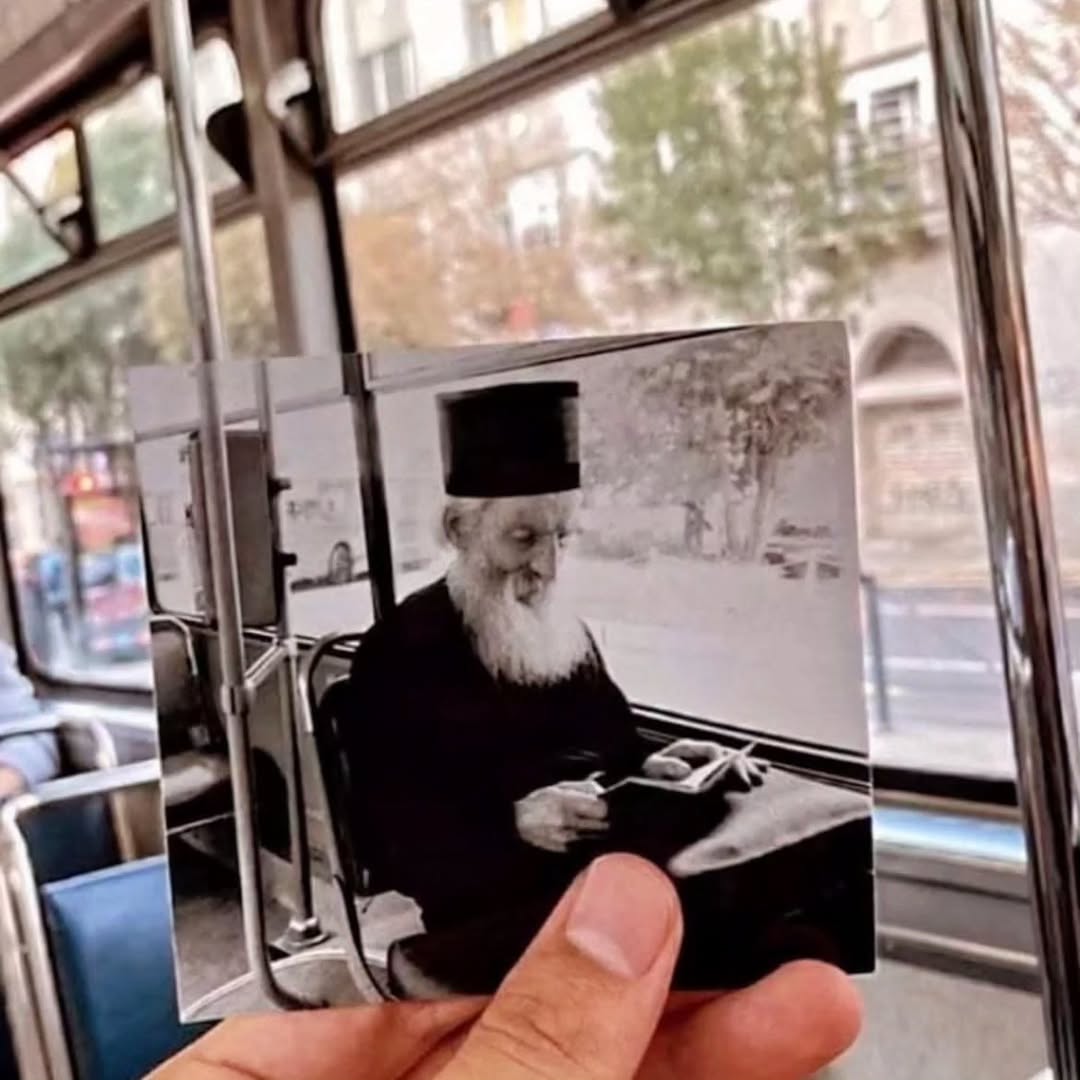
Patriarch Pavle on why slander does not disturb the one who serves God

The quote from Patriarch Pavle contrasts two orientations of the heart. A person gripped by vanity serves only himself and therefore watches anxiously for how others regard him. Criticism wounds him because his self‑worth depends on human opinion. The patriarch describes this condition as a form of suffering: the vain person suffers from vanity and finds that much matters to him what others are toward him. By contrast, the one who serves God…

The quote from Patriarch Pavle contrasts two orientations of the heart. A person gripped by vanity serves only himself and therefore watches anxiously for how others regard him. Criticism wounds him because his self‑worth depends on human opinion.

The patriarch describes this condition as a form of suffering: the vain person suffers from vanity and finds that much matters to him what others are toward him. By contrast, the one who serves God directs all concern toward God alone. That person does not occupy himself with what others say, because his reference point is no longer the crowd but the One he serves.

The patriarch presents the difference as a diagnostic: sensitivity to slander reveals whom we actually serve. If slander disturbs us, the implication is that we are still serving ourselves. If it does not disturb us, we have reoriented our service to God.

The text does not elaborate further or cite Scripture; it states the principle and leaves the application to the reader. The Serbian original uses the verb оговарају (slander, revile) and служи (serve) to draw a sharp line between self‑service and God‑service. The patriarch does not command indifference to reputation; he describes the natural outcome of a changed master.

The logic moves from the internal state (vanity versus devotion) to the external symptom (concern for opinion versus freedom from it). No further commentary or historical context is provided in the source.

  • Vanity makes a person serve himself and fear human judgment.
  • Serving God shifts concern entirely to God.
  • The one who serves God is not occupied with what others say.
  • Sensitivity to slander reveals the true object of service.
  • Patriarch Pavle presents the contrast as a spiritual diagnostic.
Read more
Orthodox Sound YouTube

St. Symeon the New Theologian on the Day of the Lord as divine light

St. Symeon the New Theologian on the Day of the Lord as divine light 14:18

The presentation covers St. Symeon the New Theologian's Tenth Ethical Discourse, "On the Fearful Day of the Lord and the Future Judgement." The speaker notes that interpretation of judgment is difficult because it concerns future and invisible matters, requiring prayer, effort, and purity of intellect from both speaker and listeners. He explains that the day of the Lord is so called because God Himself will shine with the glory of His divinity,…

The presentation covers St. Symeon the New Theologian's Tenth Ethical Discourse, "On the Fearful Day of the Lord and the Future Judgement." The speaker notes that interpretation of judgment is difficult because it concerns future and invisible matters, requiring prayer, effort, and purity of intellect from both speaker and listeners.

He explains that the day of the Lord is so called because God Himself will shine with the glory of His divinity, not because it is the last present day or the day of Christ's return or judgment. At that time the physical sun will be hidden, stars quenched, and visible things rolled up like a scroll; God alone will be day, revealed to all and filling all with endless light.

St. Symeon traces the fall of the first couple who, given free will to acquire virtue by effort and approach God without death, submitted to the enemy and brought corruption and death upon themselves and their descendants. Christ undertook redemption personally, taking on corruptible flesh to save rather than judge, because the naked revelation of His divinity would have destroyed all who lacked faith.

The speaker references Paul's encounter with the unapproachable light which blinded him rather than illumined him, showing that grace is invisible to those in unbelief but revealed to those who keep the commandments in faith and fear. For the repentant, grace becomes the day of judgment now: it illumines, examines, and purifies through divine fire and tears, making them sons of light who will not face the future judgment.

The speaker warns the baptized not to presume they are sons of light while living in negligence, for if they are in darkness now, the day will come upon them as a thief in the night.

Key moments

  1. 0:00 Interpretation of judgment is difficult because it concerns future and invisible matters, requiring prayer, effort, and purity of intellect from both speaker and listeners.
  2. 0:31 The "day of the Lord" is so called because God Himself will shine with the glory of His divinity, not because it is the last present day or the day of Christ's return or judgment.
  3. 1:35 At that time the physical sun will be hidden, stars quenched, and visible things rolled up like a scroll; God alone will be day and God, revealed to all, filling all with endless light.
  4. 2:38 God gave free will to the first couple so they could acquire virtue by effort and approach Him without death, but they submitted to the enemy and fell into corruption, death, and darkness.
  5. 4:43 Christ redeemed humanity personally, taking on corruptible flesh to save rather than judge, because the naked revelation of His divinity would have destroyed all who lacked faith.
  6. 6:54 Paul's encounter with the unapproachable light blinded him rather than illumined him, showing that grace is invisible to those in unbelief but revealed to those who keep the commandments in faith and fear.
  7. 7:56 For the repentant, grace becomes the day of judgment now: it illumines, examines, and purifies through divine fire and tears, making them sons of light who will not face the future judgment.
  8. 12:37 The speaker warns the baptized not to presume they are sons of light while living in negligence; if they are in darkness now, the day of the Lord will come upon them as a thief in the night.

The Jesus Prayer as standing before God; handmade prayer ropes offered

The post opens with a description of the Jesus Prayer said on a prayer rope: it is not a mere repetition of words but a continual standing before the face of the living God so that divine light may descend into the depths of the heart. The author then offers handmade Orthodox prayer ropes in three sizes, 33, 50, and 100 knots, made to order and woven with prayer and love. Contact for orders and inquiries is directed to page messages or WhatsApp.…

The post opens with a description of the Jesus Prayer said on a prayer rope: it is not a mere repetition of words but a continual standing before the face of the living God so that divine light may descend into the depths of the heart. The author then offers handmade Orthodox prayer ropes in three sizes, 33, 50, and 100 knots, made to order and woven with prayer and love.

Contact for orders and inquiries is directed to page messages or WhatsApp. The text closes with the Jesus Prayer itself: "Lord Jesus Christ, have mercy on me, a sinner."

  • The Jesus Prayer on the rope is described as standing before God, not just repeating words
  • Handmade Orthodox prayer ropes available in 33, 50, and 100 knots
  • Ropes are made to order and woven with prayer and love
  • Orders and inquiries handled via page messages or WhatsApp
  • Post includes the Jesus Prayer: "Lord Jesus Christ, have mercy on me, a sinner"
Read more

Opening Prayers Recited: Trisagion, Doxology, and the Lord's Prayer

The video presents a complete recitation of the opening prayers used in an Orthodox Christian service. It begins with the Trisagion, "Holy God, Holy Mighty, Holy Immortal, have mercy on us", chanted three times in succession. The doxology follows immediately: "Glory to the Father and the Son and the Holy Spirit, now and ever and unto ages of ages. Amen." A prayer to the Most Holy Trinity then asks for mercy, cleansing of sins, forgiveness of…

The video presents a complete recitation of the opening prayers used in an Orthodox Christian service. It begins with the Trisagion, "Holy God, Holy Mighty, Holy Immortal, have mercy on us", chanted three times in succession. The doxology follows immediately: "Glory to the Father and the Son and the Holy Spirit, now and ever and unto ages of ages.

Amen." A prayer to the Most Holy Trinity then asks for mercy, cleansing of sins, forgiveness of transgressions, visitation, and healing of infirmities for the sake of God's name. After this prayer, "Lord, have mercy" is repeated three times. The doxology is then recited a second time, repeating the same words: "Glory to the Father and the Son and the Holy Spirit, now and ever and unto ages of ages.

Amen." The sequence concludes with the Lord's Prayer in its traditional form. The recitation includes each petition: the address to the Father in heaven, the hallowing of His name, the coming of His kingdom, the doing of His will on earth as in heaven, the request for daily bread, the forgiveness of debts as we forgive our debtors, the plea not to be led into temptation, and the deliverance from the evil one.

The recording provides the full text of each prayer as it would be spoken at the start of a service, preserving the order and wording used in Orthodox worship.

Key moments

  1. The Trisagion is chanted three times: "Holy God, Holy Mighty, Holy Immortal, have mercy on us."
  2. The doxology follows: "Glory to the Father and the Son and the Holy Spirit, now and ever and unto ages of ages. Amen."
  3. A prayer to the Most Holy Trinity asks for mercy, cleansing of sins, forgiveness of transgressions, visitation, and healing of infirmities for the sake of God's name.
  4. "Lord, have mercy" is repeated three times.
  5. The doxology is repeated a second time.
  6. The Lord's Prayer is recited in its traditional form, including petitions for daily bread, forgiveness of debts, deliverance from temptation, and from the evil one.
Read more
☦️An Orthodox Blog☦️ with Orthodoxy ☦︎ Instagram

Commemoration of Apostle Philip of the Seventy, One of the Seven Deacons

1:30

The post marks the commemoration on 11 October of the Apostle Philip of the Seventy, who is also numbered among the Seven Deacons appointed in Acts 6. A video accompanies the notice and presents the Phos Hilaron, the ancient evening hymn that addresses Christ as the gladsome light of the holy glory of the immortal, heavenly, holy, and blessed Father. The hymn text is described: having come to the setting of the sun and seen the evening light,…

The post marks the commemoration on 11 October of the Apostle Philip of the Seventy, who is also numbered among the Seven Deacons appointed in Acts 6. A video accompanies the notice and presents the Phos Hilaron, the ancient evening hymn that addresses Christ as the gladsome light of the holy glory of the immortal, heavenly, holy, and blessed Father.

The hymn text is described: having come to the setting of the sun and seen the evening light, the singers hymn the Father, Son, and Holy Spirit. The Son of God, the giver of life, is declared worthy to be praised with fitting voices at all times, and therefore the world glorifies him. The post connects the feast of a deacon who served the early church in Jerusalem with the daily vesperal praise that has been sung in the church since the earliest centuries.

Key moments

  1. Christ is addressed as the gladsome light of the holy glory of the immortal, heavenly, holy, blessed Father.
  2. Having come to the sunset and seen the evening light, the singers hymn the Father, Son, and Holy Spirit.
  3. The Son of God, the giver of life, is worthy to be praised with fitting voices at all times.
  4. Therefore the world glorifies him.