
 Michael | Stories of the Desert Fathers
Instagram
Michael | Stories of the Desert Fathers
Instagram
Saint Anastasia's courage rooted in seventeen years of convent asceticism
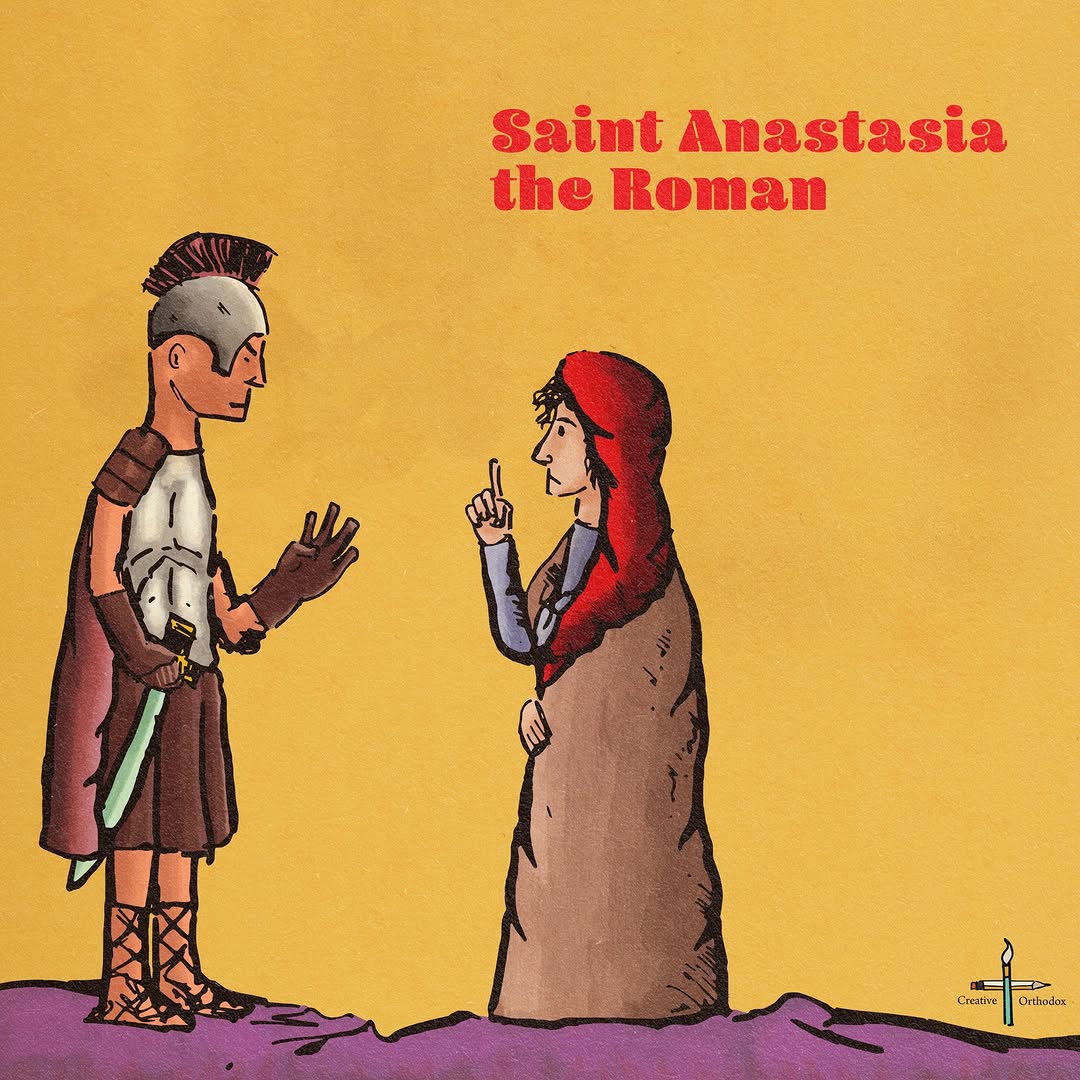
The post opens by describing Saint Anastasia standing before Roman soldiers to defend persecuted Christians and to confess her own faith. The author then shifts to the background of this act, identifying seventeen years spent as an orphaned girl in a convent as the source of her courage. During those years, the saint embraced a life of asceticism and prayer.
The post specifies her diet as bread and salt alone, notes the frequency of her prayer, and highlights her posture of submission and obedience to her abbess. These details frame the convent not as a refuge but as a school of spiritual formation in which daily renunciation and disciplined obedience prepared her for public witness.
The author presents the connection between the hidden monastic routine and the dramatic confrontation as direct and causal: the years of eating little, praying often, and yielding to authority built the capacity to resist imperial power. The text ends with a liturgical address, asking Saint Anastasia to pray for the reader. No further biographical details, historical dates, or scriptural references appear in the post.
The focus remains on the link between ascetic formation and martyrdom, and on the invocation of the saint's intercession.
Main points
- Saint Anastasia confronted Roman soldiers to defend persecuted Christians and her faith
- Her courage was formed during seventeen years as an orphan in a convent
- She practiced asceticism, eating only bread and salt
- She prayed frequently and lived in obedience to her abbess
- The post concludes with a request for her intercession