WeOrthodox
EN UA

Orthodox posts, videos and discussions

We follow Orthodox channels, communities and blogs across the web, summarise every post and video, and highlight the conversations with real substance.

Byzantine music concert and diploma ceremony set for October 28
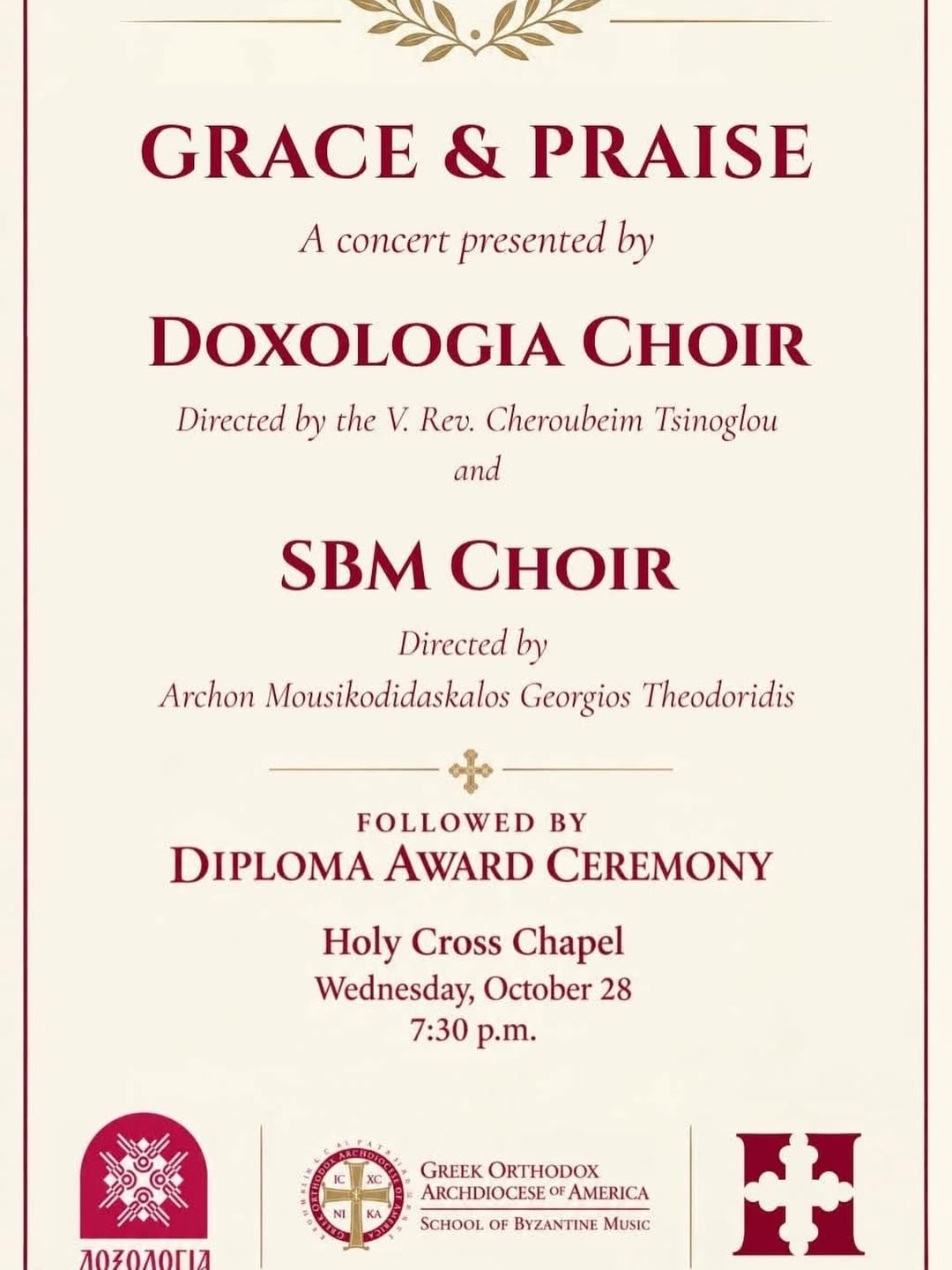
The announcement invites attendees to a Byzantine music concert on October 28 featuring two choirs. The Doxologia Choir, directed by Fr. Cherouveim Tsinoglou, will perform alongside the School of Byzantine Music Choir, directed by Archon Mousikodidaskalos Georgios Theodoridis. The evening also includes a diploma award ceremony honoring American students who completed their examinations in Greece this past summer. These students earned diplomas…

The announcement invites attendees to a Byzantine music concert on October 28 featuring two choirs. The Doxologia Choir, directed by Fr. Cherouveim Tsinoglou, will perform alongside the School of Byzantine Music Choir, directed by Archon Mousikodidaskalos Georgios Theodoridis. The evening also includes a diploma award ceremony honoring American students who completed their examinations in Greece this past summer.

These students earned diplomas and certificates from the School of Byzantine Music of the Metropolis of Thessaloniki. The event marks a collaboration between Greece and America in sacred musical tradition.

  • Concert on October 28 featuring Doxologia Choir and School of Byzantine Music Choir
  • Fr. Cherouveim Tsinoglou directs Doxologia Choir
  • Archon Mousikodidaskalos Georgios Theodoridis directs School of Byzantine Music Choir
  • Diploma ceremony for American students who examined in Greece this summer
  • Diplomas from School of Byzantine Music of the Metropolis of Thessaloniki
Read more

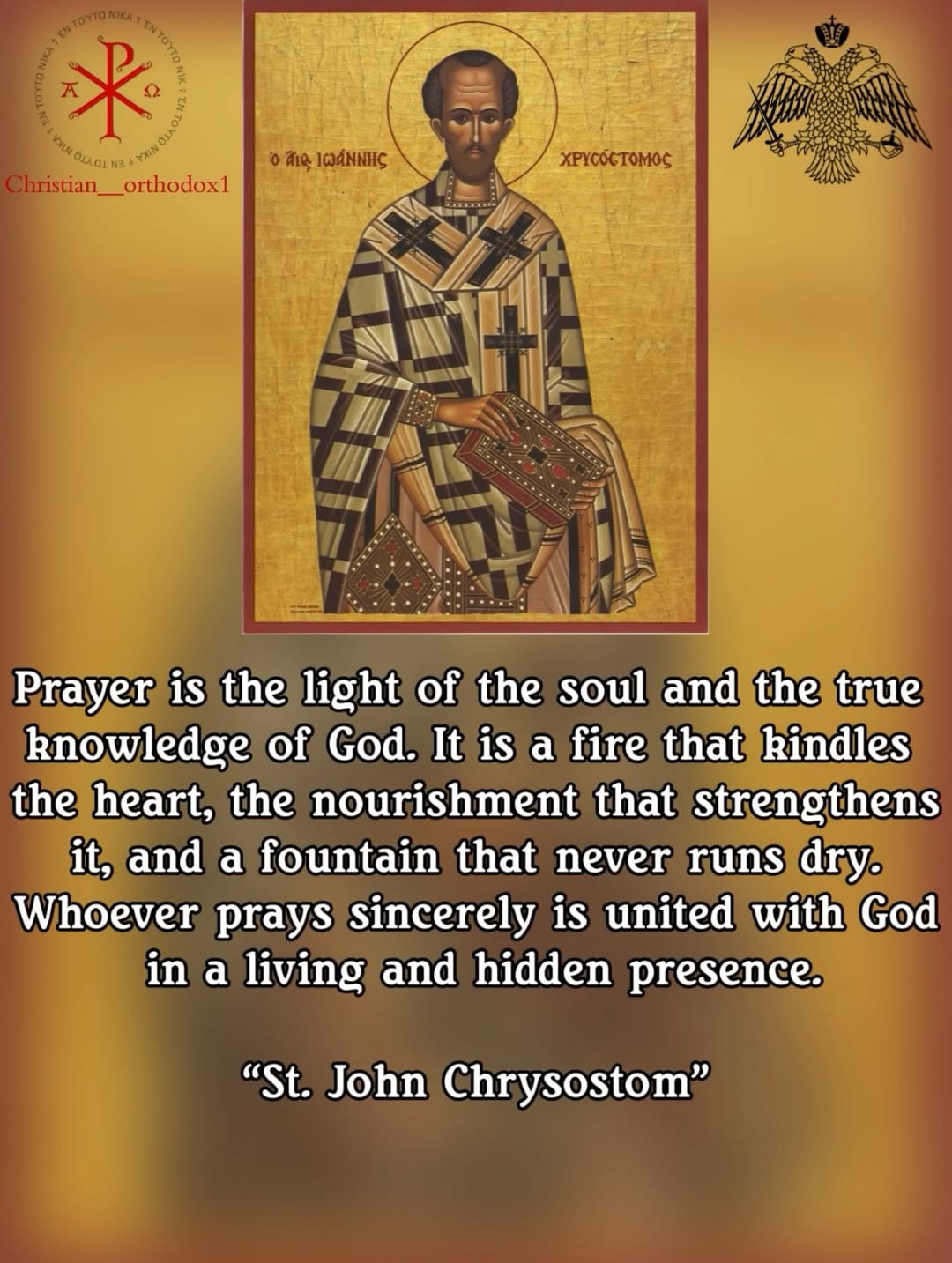
St. John Chrysostom on prayer as light, fire, and fountain

The post shares a passage attributed to St. John Chrysostom describing prayer. The text calls prayer the light of the soul and the true knowledge of God. It compares prayer to a fire that kindles the heart, nourishment that strengthens it, and a fountain that never runs dry.

The passage concludes that whoever prays sincerely is united with God in a living and hidden presence. The post includes hashtags identifying it as Orthodox Christian content from the church fathers.

  • Prayer is called the light of the soul and true knowledge of God
  • Prayer is compared to fire, nourishment, and an unfailing fountain
  • Sincere prayer unites a person with God in a living, hidden presence
  • The passage is attributed to St. John Chrysostom
  • The post is tagged as Orthodox Christian teaching from the church fathers

Critic asks for theological help for God Logic after debate concession

A social media user criticizes the content creator God Logic for his performance in a recent debate with Metaphysics Mike. In the debate, God Logic conceded that John 6 is symbolic regarding the Eucharist. He argued that Jesus's statements about being the bread of life and a river of water are not literal, and therefore the command to eat his flesh and drink his blood is also not literal. The critic says the situation has deteriorated to the…

A social media user criticizes the content creator God Logic for his performance in a recent debate with Metaphysics Mike. In the debate, God Logic conceded that John 6 is symbolic regarding the Eucharist. He argued that Jesus's statements about being the bread of life and a river of water are not literal, and therefore the command to eat his flesh and drink his blood is also not literal.

The critic says the situation has deteriorated to the point that Muslims are calling out God Logic on this position. The critic asks anyone who knows God Logic personally to walk him through basic theology because he is making "us all look bad." The post frames the concession as a significant theological error that reflects poorly on the broader community God Logic is associated with.

Key moments

  1. The speaker asks for help for God Logic, saying his theology is getting worse.
  2. The criticism comes from a clip of God Logic's recent debate with Metaphysics Mike.
  3. God Logic conceded that John 6 is symbolic when it talks about the Eucharist.
  4. God Logic argued that Jesus saying 'I am the bread of life' is not literal, just as saying he is a river of water is not literal.
  5. God Logic concluded that eating Christ's flesh and drinking his blood is not literal.
  6. The speaker claims the situation is so bad that even Muslims are calling God Logic out on this.
  7. The speaker asks anyone who is friends with God Logic to walk him through basic theology.
  8. The speaker says God Logic is starting to make "us all look bad."
Read more
T timotheos.orthodoxy Instagram

Catechumen shares Orthodox journey with fitness and business background

Tim, who uses the handle Timotheos, introduces himself as a catechumen of the Greek Orthodox Church. He explains that his account documents his personal journey toward Orthodoxy, including the things he is learning and the obstacles he faces. Beyond his religious path, he provides biographical details: he has spent almost two decades involved in fitness, some of that time at a competitive level, and he has built a successful business. He…

Tim, who uses the handle Timotheos, introduces himself as a catechumen of the Greek Orthodox Church. He explains that his account documents his personal journey toward Orthodoxy, including the things he is learning and the obstacles he faces. Beyond his religious path, he provides biographical details: he has spent almost two decades involved in fitness, some of that time at a competitive level, and he has built a successful business.

He presents these three strands, Orthodox catechesis, fitness, and business, as the combined focus of his content. He asks readers to follow his account if they are interested in that combination. The post ends with a short doxology giving praise to the Lord.

  • Tim is a catechumen in the Greek Orthodox Church
  • He shares learnings and obstacles on his path to Orthodoxy
  • He has nearly 20 years of fitness experience, some competitive
  • He has built a successful business
  • He invites followers for combined Orthodox, fitness, and business content
Read more
George Instagram

Finding God in silence and the sea's repeated call

The post opens with a reflection on quiet moments: working with hands, stilling the mind, listening to fire, and remembering God's presence in silence where words are unnecessary. The text states that not everything needs words and that silence is where God is heard most. The accompanying video presents a poetic address to the sea. The speaker calls out to the sea directly, saying it has both tortured and longed for them. This invocation is…

The post opens with a reflection on quiet moments: working with hands, stilling the mind, listening to fire, and remembering God's presence in silence where words are unnecessary. The text states that not everything needs words and that silence is where God is heard most. The accompanying video presents a poetic address to the sea.

The speaker calls out to the sea directly, saying it has both tortured and longed for them. This invocation is repeated a second time with the same wording: the sea has tortured and longed for the speaker, and it will come tonight to wake them. The speaker anticipates the sea will return tonight to wake them again.

The two parts of the post, the prose reflection and the poetic video, sit side by side without explicit commentary linking them. The prose recommends deliberate stillness and manual work as a setting for remembering God. The video portrays a relationship with a natural force that disturbs sleep and draws the speaker back through both suffering and longing.

The repetition of the sea address underscores the persistence of this call. The post does not explain how the two parts connect, but both point to a divine presence encountered outside ordinary speech: one in chosen silence, the other in the sea's insistent return.

Key moments

  1. 0:10 The speaker calls out to the sea, saying it has tortured and longed for them, and that it will come tonight to wake them.
  2. 0:45 The speaker repeats the same address to the sea, again stating it has tortured and longed for them and will return tonight to wake them.
Read more
George Instagram

Christianity as lived example, not a checklist of duties

The speaker describes how many people approach Christianity as a list of requirements: knowing everything about God, reading the Bible daily, attending church every Sunday, and never sinning. A bishop, whose name the speaker cannot recall, said Christianity survived through families and people living it by example rather than through traditions alone. The speaker cites Saint Paul: "Even if I understand all mysteries and have all knowledge but I…

The speaker describes how many people approach Christianity as a list of requirements: knowing everything about God, reading the Bible daily, attending church every Sunday, and never sinning. A bishop, whose name the speaker cannot recall, said Christianity survived through families and people living it by example rather than through traditions alone.

The speaker cites Saint Paul: "Even if I understand all mysteries and have all knowledge but I don't have love, I'm nothing." The speaker notes that a person can know every parable, attend church, confess, fast, and do everything the right way yet still miss what God is actually asking. Church attendance, prayer, confession, and Scripture reading are necessary, but they are medicine meant to change a person, not items to check off.

Faith becomes visible in ordinary moments: how someone speaks to family when tired, how they treat people who can offer nothing in return, and how honestly they fight their own sins. The faith was handed down by people who lived it, not by perfect people. The speaker asks viewers to share someone in their life who showed what a real Christian looks like.

Key moments

  1. People think Christianity means checking boxes: know everything about God, read the Bible daily, go to church every Sunday, never sin.
  2. A bishop said Christianity survived through families and people living it by example, not only through traditions; the speaker cannot recall the bishop's name.
  3. You can know every parable, attend church, confess, fast, and do everything the right way yet still miss what God is actually asking.
  4. Saint Paul says: "Even if I understand all mysteries and have all knowledge but I don't have love, I'm nothing."
  5. Church, prayer, confession, and the Bible are needed but they are medicine to change us, not a checklist.
  6. People see faith in how you live: how you speak to your family when tired, how you treat someone who can't give you anything back, and how honestly you fight your sins.
  7. The faith was passed on by people who lived it, not by perfect people.
  8. The speaker asks viewers to share someone in their life who showed what a real Christian looks like.
Read more

Orthodoxia Network connects Orthodox Christians who relocate

The post introduces Orthodoxia Network, a new initiative created for Orthodox Christians who move to a new country and encounter a new language and a new church environment. Even the Church can feel strange in a new place, and the faith that was always home can feel distant. The network exists so that wherever people are, they can find brothers and sisters in Christ who welcome them, pray with them, and walk alongside them. The mission is to…

The post introduces Orthodoxia Network, a new initiative created for Orthodox Christians who move to a new country and encounter a new language and a new church environment. Even the Church can feel strange in a new place, and the faith that was always home can feel distant. The network exists so that wherever people are, they can find brothers and sisters in Christ who welcome them, pray with them, and walk alongside them.

The mission is to build authentic friendships across dioceses so that Orthodox Christians from many traditions can learn from each other's beautiful customs and remain united as one Church. This work is done with the blessing of the parishes with which they collaborate. The network consists of representatives from dioceses of many Orthodox traditions, with a base in England and in the European Union, and they are growing.

Their patron saint is Saint Justin Popović, a Serbian monk and theologian who remained faithful to Christ under the pressure of the communist regime. The post concludes with an invitation to join the family at the Orthodoxia Network handle.

  • Network helps Orthodox Christians who relocate find community and familiarity
  • Mission builds friendships across dioceses and traditions with parish blessings
  • Representatives from many Orthodox traditions based in England and EU
  • Patron saint is St. Justin Popović, Serbian monk faithful under communism
  • Invitation to join at orthodoxia.network
Eastern Orthodoxy Daily He/Who/Is Instagram

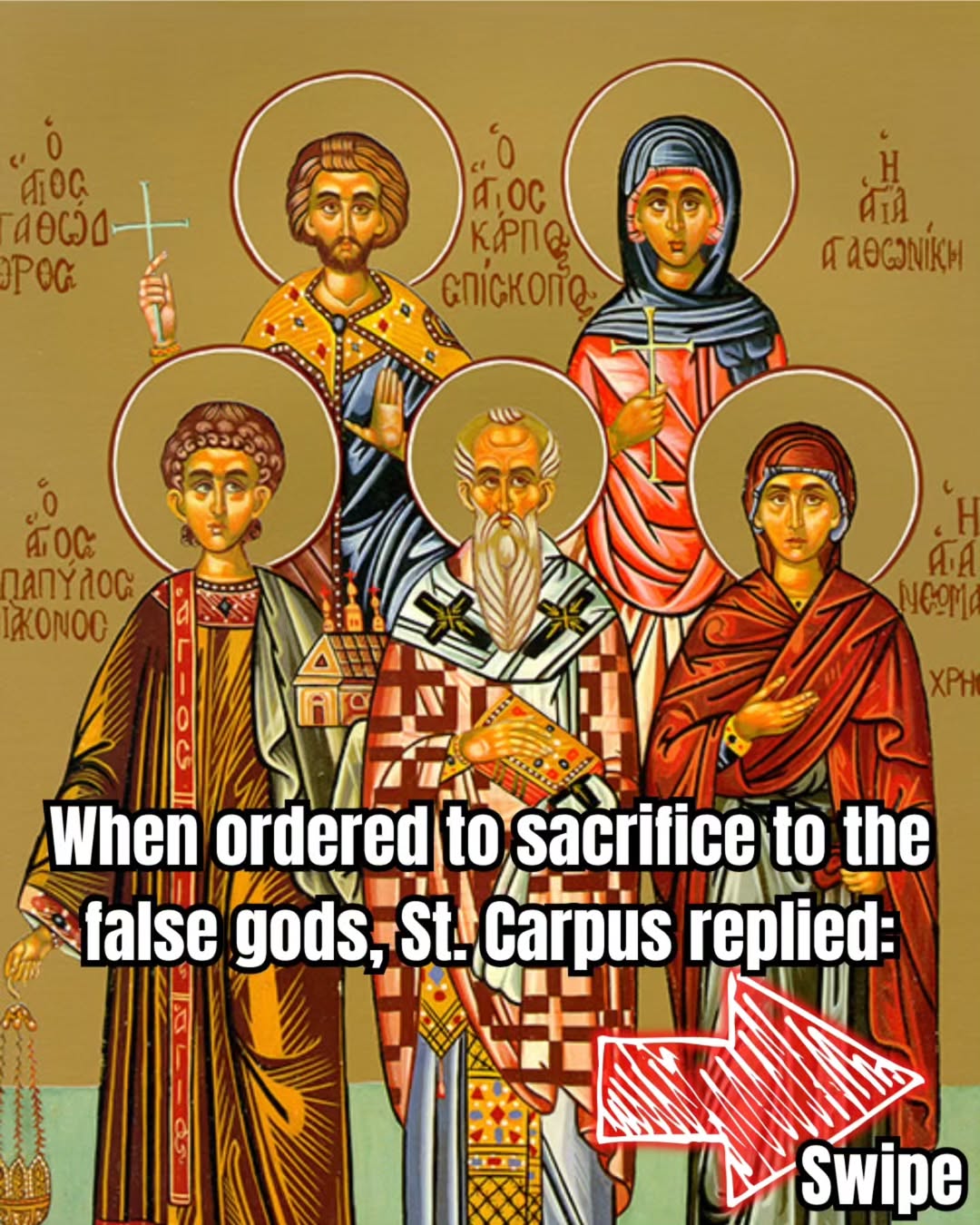
Saints Carpus, Papylus, Agathodorus, and Agathonica commemorated October 13

The post marks the October 13 commemoration of four martyrs: Carpus, Papylus, Agathodorus, and Agathonica. They were executed for refusing to offer sacrifice to pagan gods. The account states they endured torture and the threat of death without renouncing Christ.

At the moment of execution, Carpus is described as rejoicing because he had seen the glory of the Lord. The post presents these details as the basis for their liturgical remembrance in the Eastern Orthodox tradition.

  • Commemoration date: October 13
  • Four martyrs named: Carpus, Papylus, Agathodorus, Agathonica
  • Cause of martyrdom: refusal to sacrifice to pagan gods
  • They withstood torture and death threats without renouncing Christ
  • Carpus rejoiced at execution, having seen the glory of the Lord
CHRISTIANITY UNITED Instagram

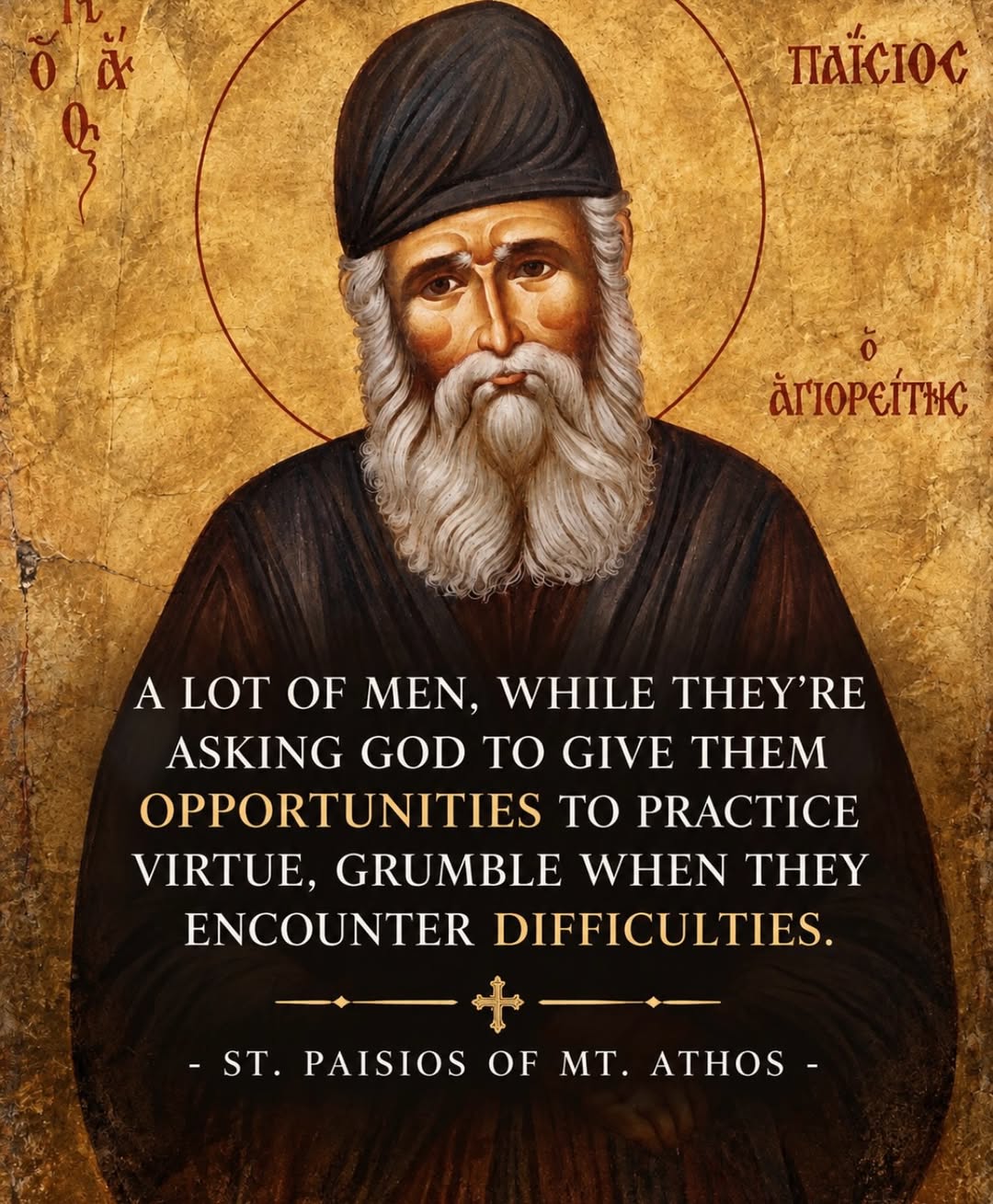
Saint Paisios on how difficulties answer prayers for virtue

The post presents a reflection attributed to Saint Paisios the Athonite (1924-1994), who was born in Farasa, Cappadocia, and spent much of his life as a monk on Mount Athos. He is described as known for his humility, compassion, and spiritual wisdom, having guided countless people toward repentance and a deeper relationship with Christ. The reflection notes a common pattern: people pray for patience, humility, forgiveness, and stronger faith,…

The post presents a reflection attributed to Saint Paisios the Athonite (1924-1994), who was born in Farasa, Cappadocia, and spent much of his life as a monk on Mount Athos. He is described as known for his humility, compassion, and spiritual wisdom, having guided countless people toward repentance and a deeper relationship with Christ.

The reflection notes a common pattern: people pray for patience, humility, forgiveness, and stronger faith, yet become angry, offended, or unwilling to forgive when tested. Saint Paisios reminds readers that the difficulties encountered can become the very opportunities prayed for. The text states that virtue is not developed simply by reading about it or wishing for it; patience is learned by practicing patience, forgiveness by forgiving, and humility by putting aside pride.

The post adds a qualification: this does not mean every hardship comes directly from God or that abuse and injustice should be accepted. However, even in difficult circumstances, God can help a person grow spiritually if the response is made with faith. The spiritual life, according to Saint Paisios, is not about avoiding every difficulty but learning to face life's struggles with prayer, patience, and trust in God.

The post concludes by suggesting that the next time something tests patience or challenges pride, one should remember what has been prayed for, since the opportunity to become more like Christ may arrive disguised as something one would rather avoid.

  • Saint Paisios taught that difficulties can be the opportunities we pray for to grow in virtue
  • Virtue comes through practice, not only reading or wishing
  • We ask for patience, humility, forgiveness but resist the situations that require them
  • Not all hardships come from God; abuse and injustice should not be accepted
  • God helps us grow spiritually when we respond to struggles with faith and prayer
Read more

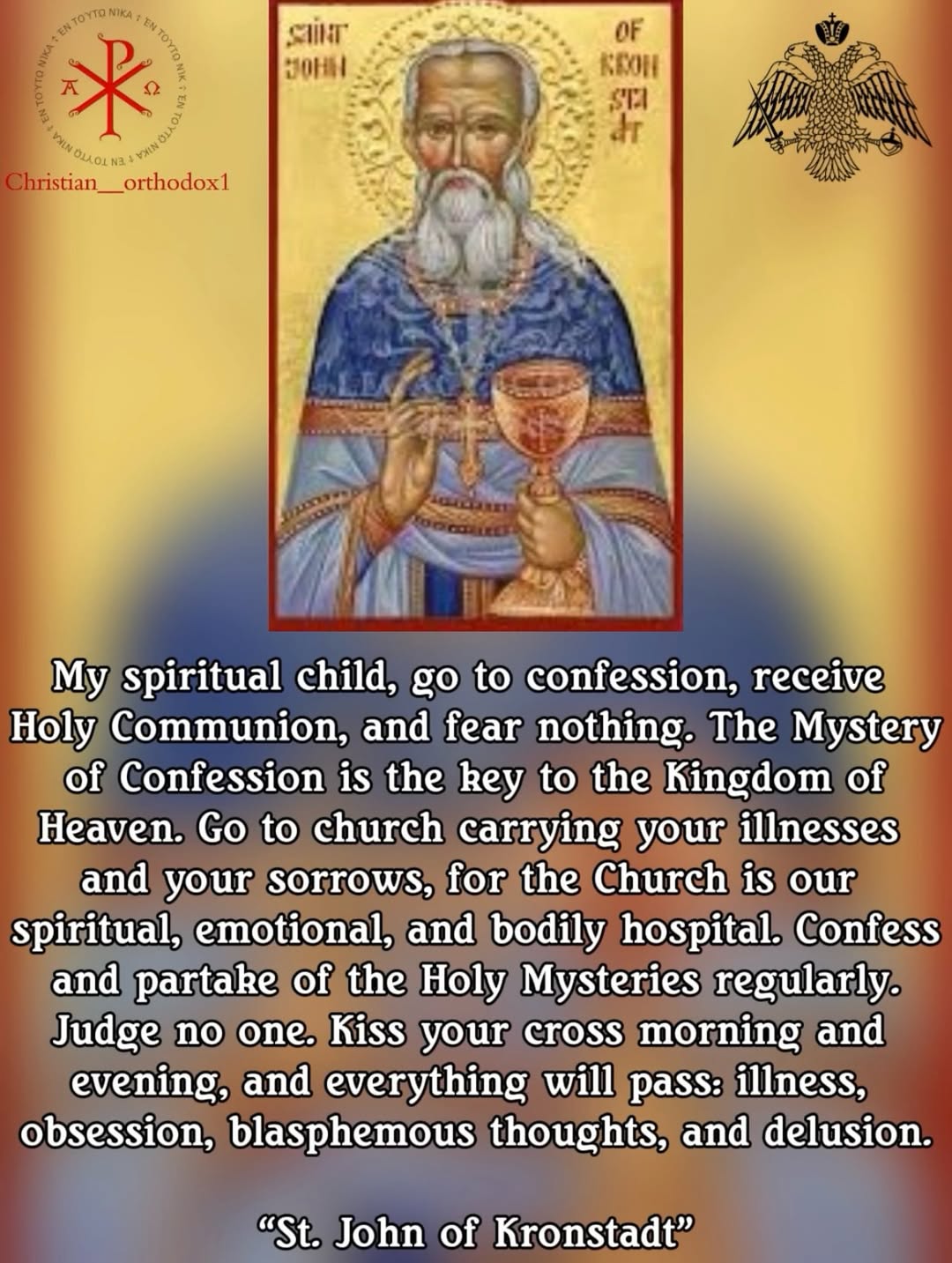
St. John of Kronstadt on confession and the cross

The post shares a passage attributed to St. John of Kronstadt addressed to a spiritual child. The saint issues a series of imperatives beginning with the sacramental life: go to confession, receive Holy Communion, and fear nothing. He identifies the Mystery of Confession as the key to the Kingdom of Heaven. He directs the listener to approach the church while carrying illnesses and sorrows, and he defines the Church as a hospital serving…

The post shares a passage attributed to St. John of Kronstadt addressed to a spiritual child. The saint issues a series of imperatives beginning with the sacramental life: go to confession, receive Holy Communion, and fear nothing. He identifies the Mystery of Confession as the key to the Kingdom of Heaven.

He directs the listener to approach the church while carrying illnesses and sorrows, and he defines the Church as a hospital serving spiritual, emotional, and bodily needs. He calls for regular confession and regular partaking of the Holy Mysteries. He adds a moral command to judge no one. He prescribes a physical devotional act: kiss your cross morning and evening.

He ends with a promise that everything will pass, enumerating four specific afflictions: illness, obsession, blasphemous thoughts, and delusion. The passage moves from sacramental theology to ecclesiology to moral instruction to bodily practice to a list of spiritual pathologies. The attribution to St. John of Kronstadt connects the text to a priest known for frequent communion and pastoral care in late imperial Russia.

The hashtags categorize the post under Christian, Orthodox, church, faith, and church fathers topics. No further discussion or commentary appears in the source text.

  • Confession and Holy Communion are urged as regular practice
  • Confession is called the key to the Kingdom of Heaven
  • The Church is described as a hospital for spiritual, emotional, and bodily ailments
  • The reader is told to judge no one and kiss the cross morning and evening
  • Illness, obsession, blasphemous thoughts, and delusion are listed as things that will pass
Citations Orthodoxes ☦ Instagram

Metropolitan Anthony Bloom: Prayer contradicted by daily life becomes dead words

The post presents a statement by Metropolitan Anthony Bloom of Sourozh on the relationship between prayer and daily conduct. The metropolitan describes a pattern in which a person addresses God with sentimental discourses at both the beginning and the end of the day, while every action in the interval contradicts those prayers. He observes that this repetition has a cumulative effect: the more such prayers are offered, the more the words wear…

The post presents a statement by Metropolitan Anthony Bloom of Sourozh on the relationship between prayer and daily conduct. The metropolitan describes a pattern in which a person addresses God with sentimental discourses at both the beginning and the end of the day, while every action in the interval contradicts those prayers. He observes that this repetition has a cumulative effect: the more such prayers are offered, the more the words wear out and become dead.

The metropolitan identifies the cause as the lack of application and integration into life. He states that only application and integration into life can give prayer substance and intensity. The text is given in French as a direct quotation without additional commentary or discussion.

  • Sentimental prayers at day's start and end become empty when daily actions contradict them
  • Repeated prayer without life integration causes words to wear out and die
  • Substance and intensity in prayer come only from application and integration into life
  • The observation is attributed to Metropolitan Anthony Bloom of Sourozh
T timotheos.orthodoxy Instagram

Catechumen shares Orthodox journey with fitness and business background

Tim, a catechumen of the Greek Orthodox Church, introduces himself and his account timotheos.orthodoxy in a post that combines his spiritual journey with his professional and athletic background. He describes his path toward Orthodoxy, noting he is currently a catechumen and sharing his learnings and obstacles as he moves toward full communion. He also mentions nearly two decades of fitness experience, including some competitive background, and…

Tim, a catechumen of the Greek Orthodox Church, introduces himself and his account timotheos.orthodoxy in a post that combines his spiritual journey with his professional and athletic background. He describes his path toward Orthodoxy, noting he is currently a catechumen and sharing his learnings and obstacles as he moves toward full communion.

He also mentions nearly two decades of fitness experience, including some competitive background, and that he has built a successful business. The accompanying video features the Trisagion prayer, "Holy God, Holy Mighty, Holy Immortal, have mercy on us", repeated three times with no additional commentary. The Trisagion is a standard hymn in Orthodox worship, often sung during services and daily prayer.

Tim invites followers to grow together in Orthodoxy, fitness, and business through his account. The post functions as an introduction to his content, which he indicates will cover all three areas. He concludes with "All praise to the Lord Amen."

Key moments

  1. Holy God, Holy Mighty, Holy Immortal, have mercy on us.
  2. Holy God, Holy Mighty, Holy Immortal, have mercy on us.
  3. Holy God, Holy Mighty, Holy Immortal, have mercy on us.
Read more
T timotheos.orthodoxy Instagram

Catechumen recites Lord's Prayer and outlines path to Orthodoxy

The post opens with a full recitation of the Lord's Prayer, including the doxology to the Father, the Son, and the Holy Spirit. The author identifies himself as Tim, a catechumen of the Greek Orthodox Church who is sharing his learnings and obstacles as he moves toward full communion. He states he has nearly two decades of fitness experience, some of it competitive, and that he has built a successful business. The text invites readers to follow…

The post opens with a full recitation of the Lord's Prayer, including the doxology to the Father, the Son, and the Holy Spirit. The author identifies himself as Tim, a catechumen of the Greek Orthodox Church who is sharing his learnings and obstacles as he moves toward full communion. He states he has nearly two decades of fitness experience, some of it competitive, and that he has built a successful business.

The text invites readers to follow his account for content that combines Orthodox spiritual growth with fitness and business topics. No discussion or replies are included in the source material.

Key moments

  1. Father, our in heaven, hallowed be your name, your kingdom come, your will be done on earth as it is in heaven. Give us this day our daily bread, and forgive us our debts, as we forgive our debtors, and lead us not into temptation, but deliver us from the evil, for yours is the kingdom, and the power, and the glory of the Father, and the Son, and the Holy Spirit, now and forever, and to the ages of ages. Amen.
Read more
Prayer Orthodoxy ® Instagram

Kyrie Eleison: A Simple Prayer of Endless Meaning

The post presents the Jesus Prayer "Kyrie Eleison" (Lord, have mercy) as it is repeated throughout the Divine Liturgy. The author describes the prayer as simple in wording but endless in meaning. The text invites the reader to enter the beauty of Holy Trinity Greek Orthodox Church in Clearwater, Florida, where every icon, candle, and hymn turns the heart toward Christ. The same reflection appears in Greek: "Κύριε Ελέησον Κύριε, ελέησον. Μία…

The post presents the Jesus Prayer "Kyrie Eleison" (Lord, have mercy) as it is repeated throughout the Divine Liturgy. The author describes the prayer as simple in wording but endless in meaning. The text invites the reader to enter the beauty of Holy Trinity Greek Orthodox Church in Clearwater, Florida, where every icon, candle, and hymn turns the heart toward Christ.

The same reflection appears in Greek: "Κύριε Ελέησον Κύριε, ελέησον. Μία προσευχή που ακούγεται ξανά και ξανά στη Θεία Λειτουργία, απλή στα λόγια και βαθιά στο νόημά της. Καθώς αντικρίζουμε την ομορφιά του Ιερού Ναού Αγίας Τριάδος στο Clearwater της Florida, κάθε εικόνα, κερί και ύμνος ας στρέφει την καρδιά μας προς τον Χριστό."

The post is identified as an original production of Prayer Orthodoxy and carries hashtags for Orthodox, Kyrie Eleison, Prayer, Christ, and Liturgy.

  • The Jesus Prayer "Kyrie Eleison" recurs throughout the Divine Liturgy
  • The prayer is described as simple in words but endless in meaning
  • Holy Trinity Greek Orthodox Church in Clearwater, Florida is named as the setting
  • Icons, candles, and hymns in the church direct the heart toward Christ
  • The reflection appears in both English and Greek
Read more
T timotheos.orthodoxy Instagram

Catechumen shares Orthodox journey with fitness and business background

Tim introduces himself as a catechumen of the Greek Orthodox Church. He states that he shares his learnings and obstacles on the path toward Orthodoxy. He also notes nearly two decades of fitness experience, some of it competitive, and that he has built a successful business. He invites readers to follow his account @timotheos.orthodoxy to grow together. The post opens with a Trinitarian invocation and closes with "All praise to the Lord Amen."

  • Tim is a catechumen of the Greek Orthodox Church
  • He shares learnings and obstacles toward Orthodoxy
  • He has nearly 20 years of fitness experience including competitive background
  • He built a successful business
  • He invites followers to his account @timotheos.orthodoxy
Read more

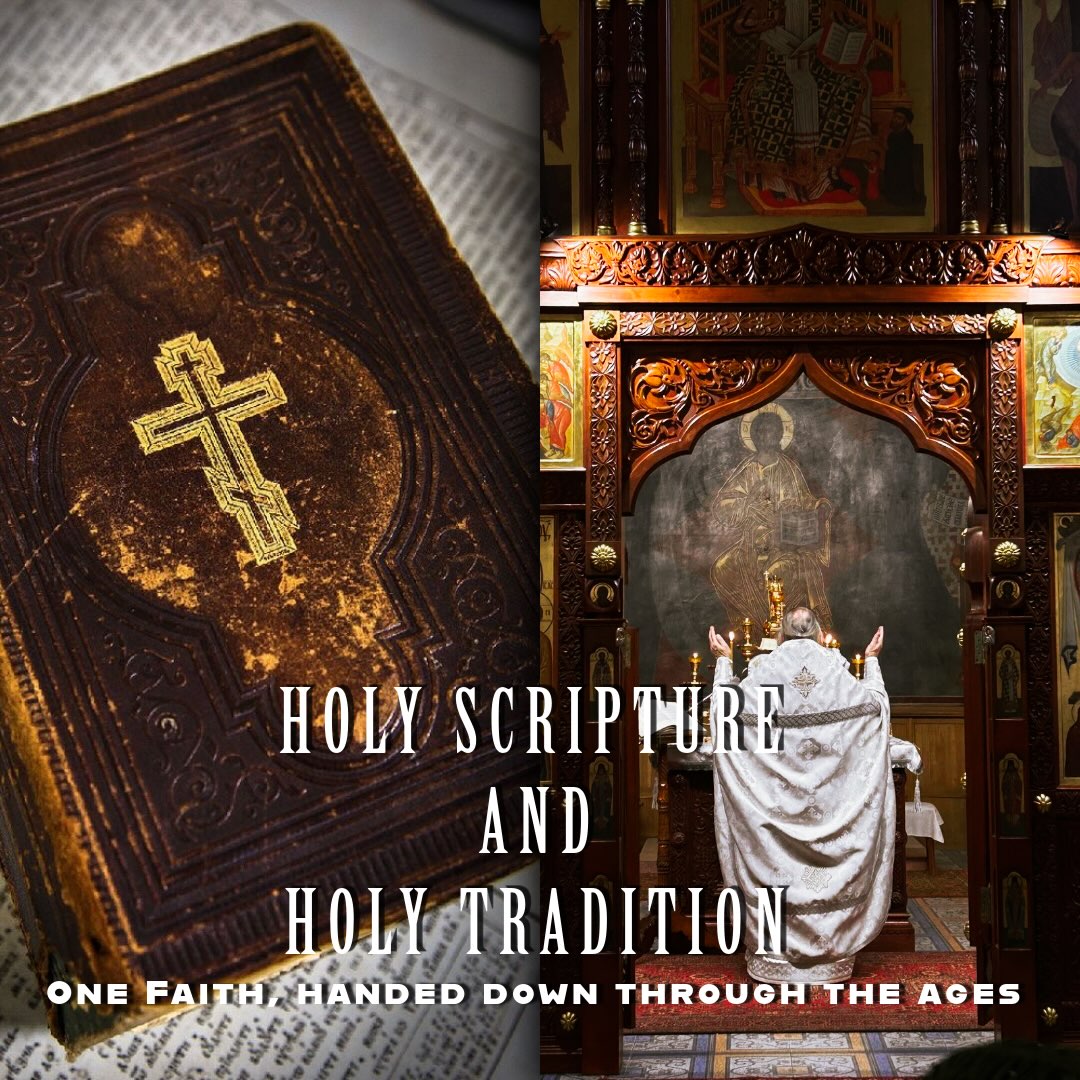
Four patristic and contemporary references cited

The post lists four sources without additional commentary or discussion. The first is a contemporary work, The Orthodox Faith and Baptist Evangelicals by Fr. Gregorios Estephan, cited at page 82. The second is the First Letter of Saint Athanasius to Serapion, paragraph 28. The third is Saint Basil the Great's On the Holy Spirit, Chapter 27, paragraph 66. The fourth is Saint Irenaeus's Against Heresies, Book III, Chapter 2, paragraph 2. No thread or conversation follows these citations.

  • The Orthodox Faith and Baptist Evangelicals, Fr. Gregorios Estephan, page 82
  • First Letter of Saint Athanasius to Serapion, paragraph 28
  • Saint Basil the Great, On the Holy Spirit, Chapter 27, paragraph 66
  • Saint Irenaeus, Against Heresies, Book III, Chapter 2, paragraph 2
Read more
Prayer Orthodoxy ® with orthodoxwomenministry Instagram

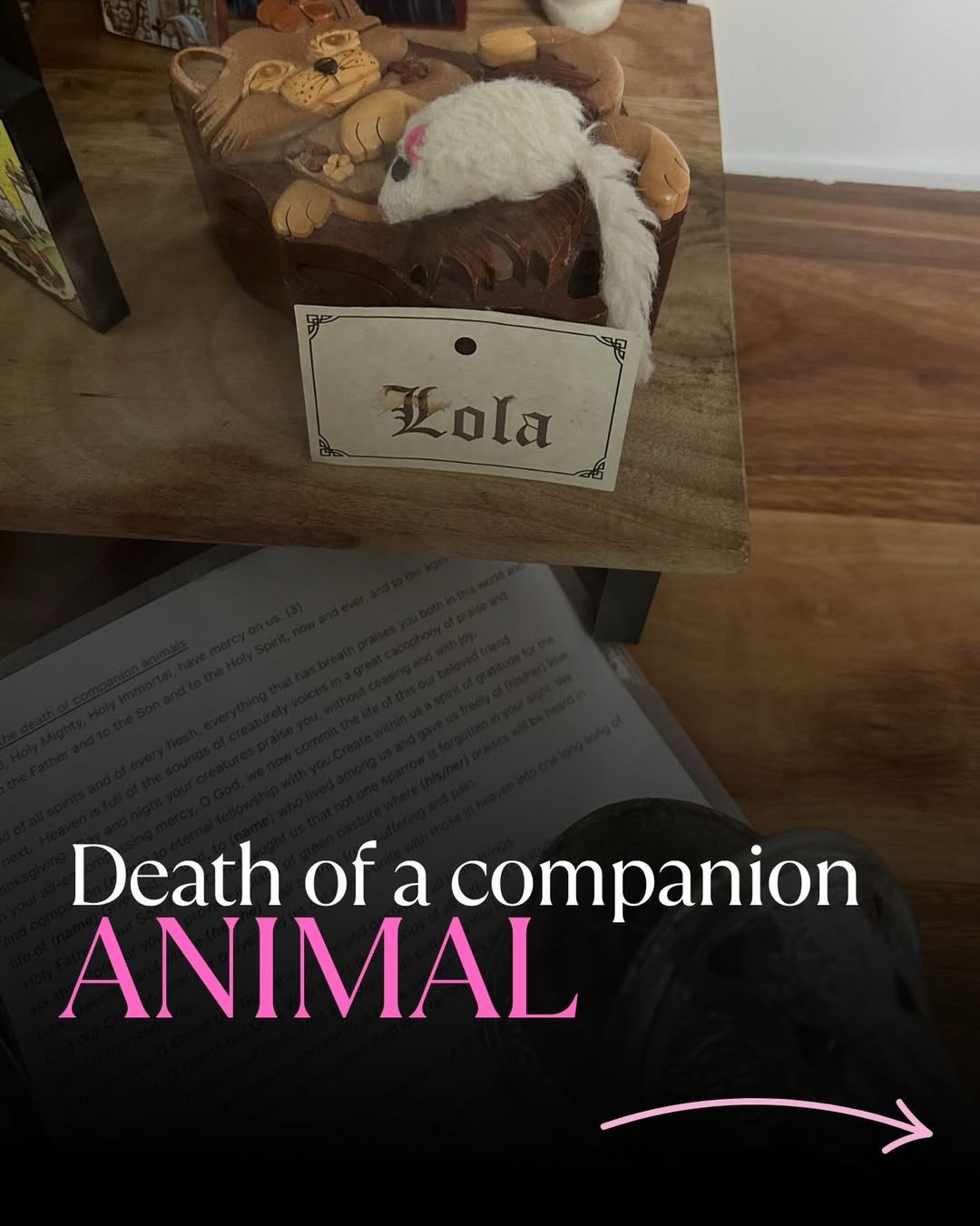
Do pets go to heaven? Grieving and praying for animal companions

The author asks whether cats and dogs go to heaven and how to grieve and pray for an animal companion. The post begins with a disclaimer that the images are focused on cats for personal reasons. The author notes that today marks the three-year anniversary of the loss of her cat, Lola. She describes Lola as her study buddy during her last semester of theological college. The author invites readers to open up and share their own experiences,…

The author asks whether cats and dogs go to heaven and how to grieve and pray for an animal companion. The post begins with a disclaimer that the images are focused on cats for personal reasons. The author notes that today marks the three-year anniversary of the loss of her cat, Lola.

She describes Lola as her study buddy during her last semester of theological college. The author invites readers to open up and share their own experiences, sending hugs to anyone currently going through the loss of a pet. The post raises two direct questions: first, about the eternal destiny of cats and dogs; second, about the proper way to grieve and to pray for a deceased animal companion.

The author does not offer answers but presents the questions from her personal experience as a recent theological graduate. The tone is personal and pastoral, acknowledging the pain of loss while seeking the wisdom of the community. The post is framed as an invitation to conversation rather than a statement of doctrine.

  • The author asks if cats and dogs go to heaven.
  • The author asks how to grieve and pray for a deceased animal companion.
  • The post marks the third anniversary of the death of the author's cat, Lola.
  • Lola was the author's study companion during the final semester of theological college.
  • The author invites others to share their experiences and offers support to those grieving.
Read more

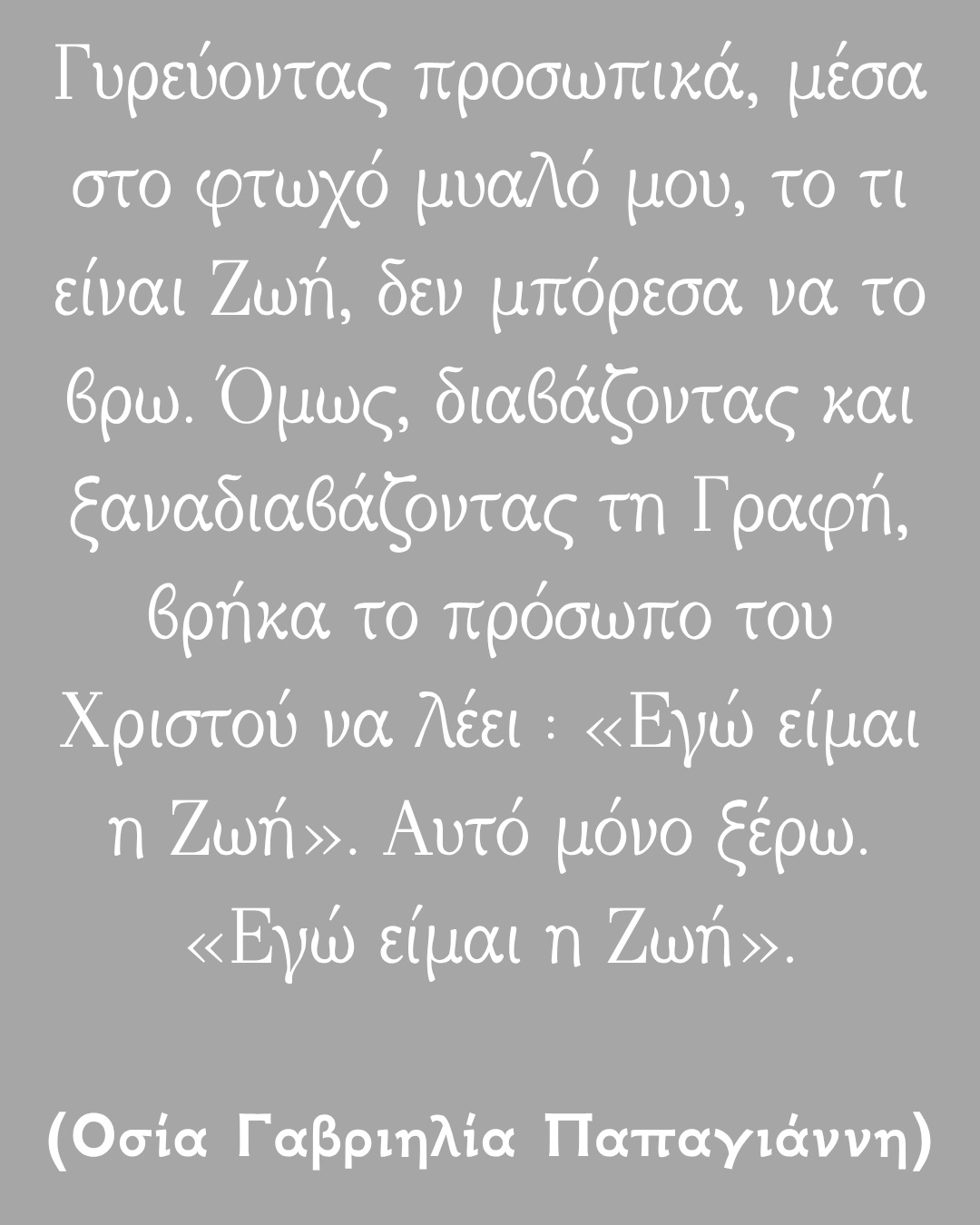
Quote from Gerontissa Gavrilia's "The Asceticism of Love"

The post presents a short excerpt from the book "The Asceticism of Love" by Gerontissa Gavrilia (1897-1992), published by Akritas Editions in May 2023. The excerpt appears on page 200 in the paragraph titled "for what is Life."

  • Excerpt from "The Asceticism of Love"
  • Author: Gerontissa Gavrilia (1897-1992)
  • Publisher: Akritas Editions, May 2023
  • Page 200, paragraph "for what is Life"
  • The post shares this citation
Read more
Fruits of Orthodoxy with ☦︎ICXC•NIKA☦︎ Instagram

Hierarchical Vespers for Saint Demetrios at St Marys Church

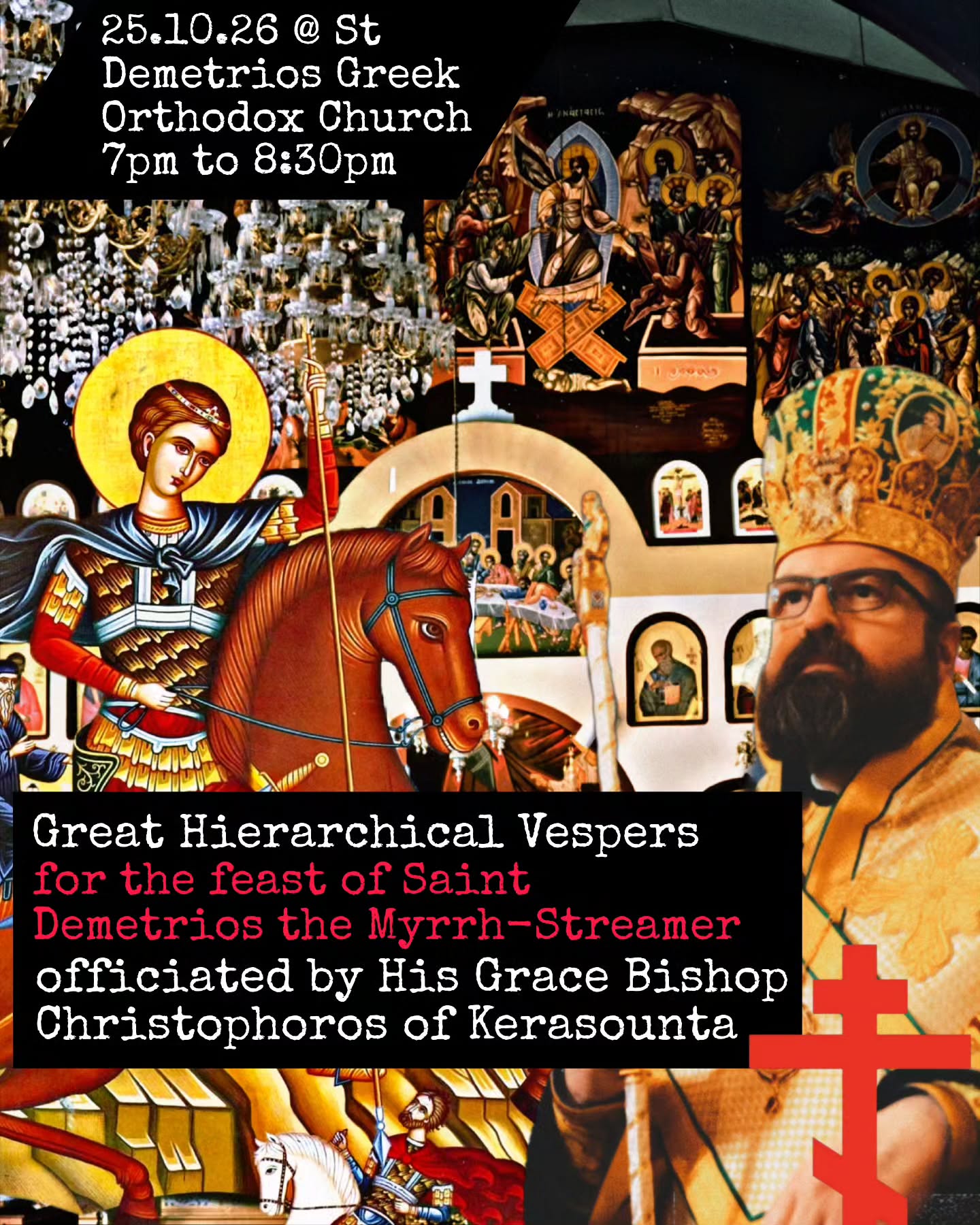
The post announces a Great Hierarchical Vespers service for the Feast of the Holy Glorious Great-Martyr Saint Demetrios the Myrrh-Streamer. The service will take place on Sunday, 25 October 2026, from 7:00 pm to 8:30 pm at St Demetrios Greek Orthodox Church, located at 47 Hobart Street, St Marys, New South Wales 2760, Australia. His Grace Bishop Christophoros of Kerasounta will officiate the service. The announcement includes the full title of…

The post announces a Great Hierarchical Vespers service for the Feast of the Holy Glorious Great-Martyr Saint Demetrios the Myrrh-Streamer. The service will take place on Sunday, 25 October 2026, from 7:00 pm to 8:30 pm at St Demetrios Greek Orthodox Church, located at 47 Hobart Street, St Marys, New South Wales 2760, Australia. His Grace Bishop Christophoros of Kerasounta will officiate the service.

The announcement includes the full title of the saint, Saint Demetrios the Myrrh-Streamer, and concludes with a request for his intercession and a doxology. The event is a hierarchical vespers, indicating that a bishop presides over the evening service. The church is dedicated to the same saint. The notice provides the date, time, location, and officiant, and ends with a traditional Orthodox closing.

The text also includes a series of emojis representing prayer, the cross, a prayer rope, a heart, a skull, a dove, and the flags of Australia and Greece.

  • Great Hierarchical Vespers for the Feast of Saint Demetrios the Myrrh-Streamer
  • Sunday, 25 October 2026, 7:00 pm, 8:30 pm
  • St Demetrios Greek Orthodox Church, 47 Hobart Street, St Marys NSW 2760
  • Officiated by His Grace Bishop Christophoros of Kerasounta
  • Closing invocation to Saint Demetrios and doxology
Read more

Congratulations to Fedor Duric with prayer from St. Nikolai Velimirović

The post offers congratulations to Fedor Duric, described as a brother in Christ, on his triumph. The author gives all glory to God and includes a prayer attributed to St. Nikolai Velimirović addressing Christ as the Conqueror of the world and victorious Commander, asking Him to remain close. The text is accompanied by a series of emojis including prayer hands, an Orthodox cross, prayer beads, a heart, a skull, crossed swords, a dove, and a boxing glove.

Key moments

  1. Go get my money take my turn jump up and lock up tough and my body get the song off of me tough of my money tough
  2. get my money take my turn jump up and lock up tough and my body get the song off of me tough of my money tough
  3. get the song off of me tough of my money get my money take my turn jump up and lock up tough and my body get the song off of me tough of my money tough
Read more