WeOrthodox
EN UA

Orthodox posts, videos and discussions

We follow Orthodox channels, communities and blogs across the web, summarise every post and video, and highlight the conversations with real substance.

Disgruntled Docs with Theophan Instagram

Protesters demand Orthodox walk on flags of Patriarch Kirill and Putin

The video shows a confrontation in which radicals and protesters associated with the OCU try to force Ukrainian Orthodox faithful to walk on a flag bearing the images of Patriarch Kirill and Vladimir Putin. One of the faithful tries to pick the flag up rather than step on it. The audio of the recording consists of a single phrase, 'Get out to Russia!', shouted in Russian over and over. No other speech appears in the transcript: no names, dates…

The video shows a confrontation in which radicals and protesters associated with the OCU try to force Ukrainian Orthodox faithful to walk on a flag bearing the images of Patriarch Kirill and Vladimir Putin. One of the faithful tries to pick the flag up rather than step on it. The audio of the recording consists of a single phrase, 'Get out to Russia!', shouted in Russian over and over.

No other speech appears in the transcript: no names, dates or explanations are given, and the repeated chant is the only content of the recording. The visual content and the audio together show the pressure placed on the faithful and the refusal of at least one person to comply with the demand to step on the flag.

Key moments

  1. The phrase 'Get out to Russia!' is repeated continuously throughout the recording, with no other speech or content present.
Read more
Citations Orthodoxes ☦ with Xristos Pax Instagram

Orthodox icons as daily reminders of Christ in the home

A short devotional announcement presents the Orthodox faith as something lived daily through love rather than words alone. The author writes that every icon reminds us of Christ and brings a piece of Orthodox tradition into the home. The post is framed with the phrases 'wrapped with love, rooted in faith, united in Christ' and closes with practical details: shipping is offered worldwide through the website Xrpx.de. The text carries the hashtags…

A short devotional announcement presents the Orthodox faith as something lived daily through love rather than words alone. The author writes that every icon reminds us of Christ and brings a piece of Orthodox tradition into the home. The post is framed with the phrases 'wrapped with love, rooted in faith, united in Christ' and closes with practical details: shipping is offered worldwide through the website Xrpx.de.

The text carries the hashtags #xristospax, #orthodoxfaith, #orthodoxie, #orthodoxicons and #loveforchrist. There is no discussion in the source, only the announcement itself, so the card reflects what the author states: icons as daily reminders of Christ, faith expressed through love in everyday life, and the offer of worldwide shipping.

  • The author says the faith is more than words and is love lived every day.
  • Icons are described as reminders of Christ that bring Orthodox tradition into the home.
  • The post uses the phrases 'wrapped with love, rooted in faith, united in Christ'.
  • Shipping worldwide is offered through Xrpx.de.
  • Hashtags include #xristospax, #orthodoxfaith, #orthodoxie, #orthodoxicons and #loveforchrist.
Read more

Metropolitan Saba: seek out those absent from the church

Metropolitan Saba says: "We have an opportunity to search for those who have been absent from the church lest they fall away forever, seeking them out for the sake of their salvation."

  • Search for those absent from the church before they fall away forever
  • Seek them out for the sake of their salvation
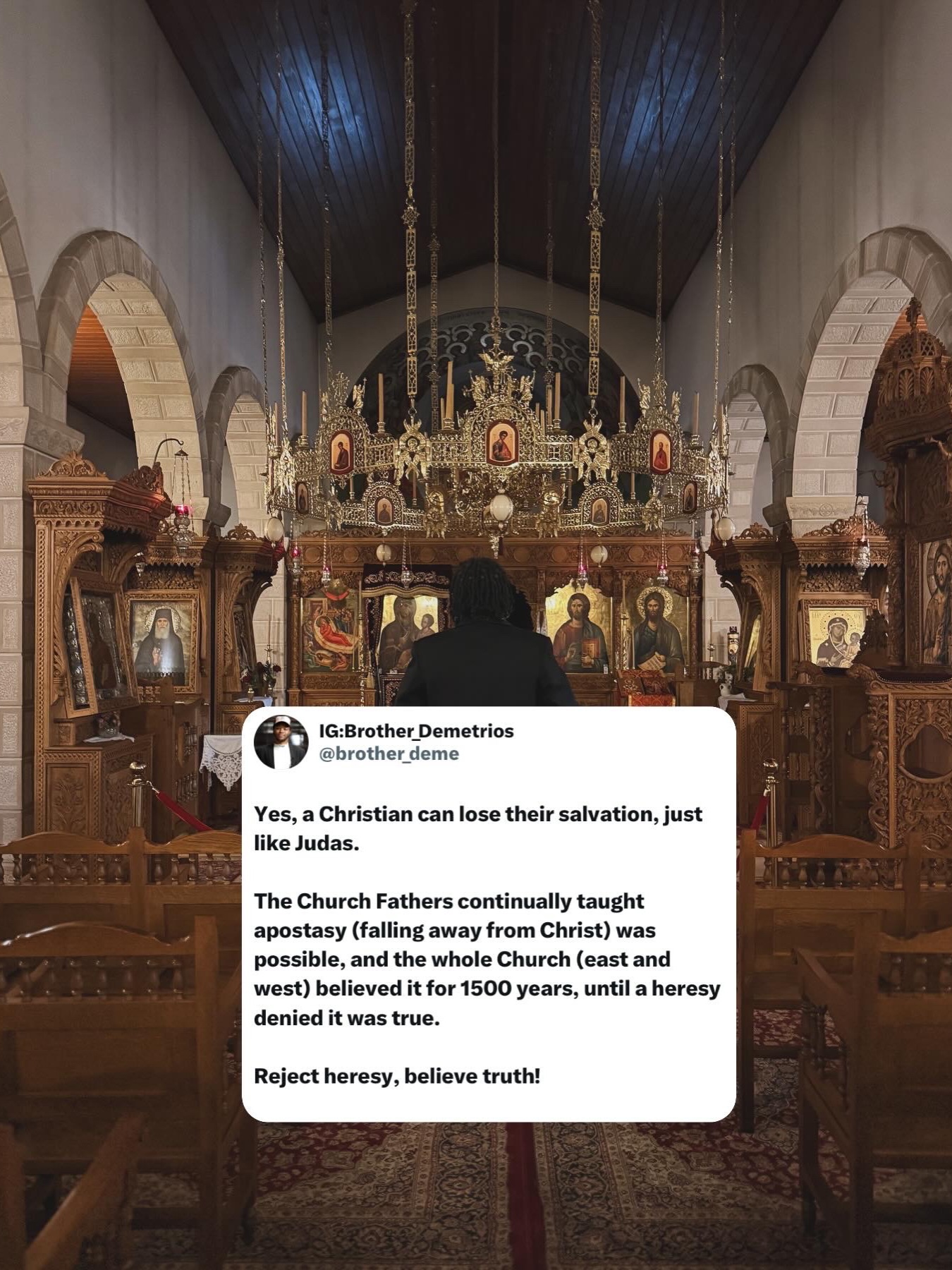
6 opinions in the discussion "Let anyone who thinks that he stands take heed lest he fall." 1 Corinthians 10:12 Read the discussion

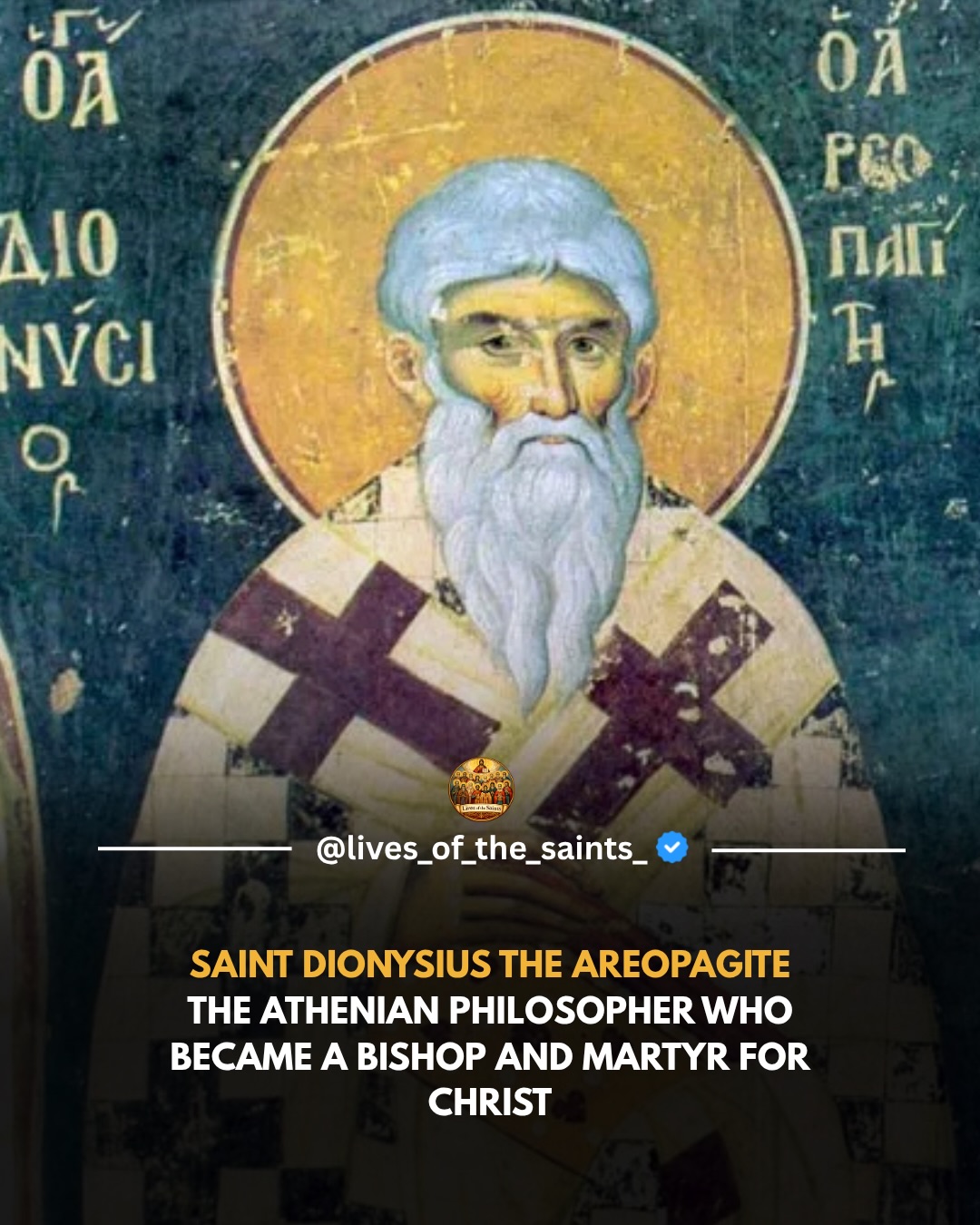
From the Areopagus to Martyrdom: The Life of Saint Dionysius of Athens

A hagiographic account of Saint Dionysius the Areopagite traces his path from pagan philosopher to bishop and martyr. Born into a respected pagan family in Athens and educated in philosophy, Dionysius studied in Egypt, where he witnessed the darkness that covered the earth at the Crucifixion of Christ. He cried out: "Either God, the Creator of the world, is suffering, or this world is coming to an end." Back in Athens he married Damaris and…

A hagiographic account of Saint Dionysius the Areopagite traces his path from pagan philosopher to bishop and martyr. Born into a respected pagan family in Athens and educated in philosophy, Dionysius studied in Egypt, where he witnessed the darkness that covered the earth at the Crucifixion of Christ. He cried out: "Either God, the Creator of the world, is suffering, or this world is coming to an end."

Back in Athens he married Damaris and joined the Areopagus, the city's highest court. When the Apostle Paul preached in Athens, Dionysius believed, was baptized with his household, and was later consecrated Bishop of Athens by Paul. He gave up worldly honor to serve Christ. Church tradition says he traveled to Jerusalem to meet the Most Holy Theotokos and was present at her Dormition.

After Paul's martyrdom, Dionysius wanted to give his own life for Christ. With Saint Rusticus the Presbyter and Saint Eleutherius the Deacon he went to Gaul, where they preached and converted many pagans. In Paris he founded a small church. At age ninety, the three were arrested, tortured, and beheaded for Christ; the account of his life places their martyrdom in the year 96. The post ends with the reflection that even the greatest human wisdom finds its fulfillment in knowing Jesus Christ, followed by a prayer asking the holy hieromartyrs to intercede with God.

The account draws on traditional lives of the saints and presents the events without sources, so readers should understand the details, such as his presence at the Dormition and the date 96, as Church tradition rather than documented history.

  • Dionysius saw the darkness at the Crucifixion while studying in Egypt and exclaimed that either God the Creator was suffering or the world was ending.
  • He married Damaris, served on the Areopagus in Athens, and believed at the Apostle Paul's preaching; Paul consecrated him Bishop of Athens.
  • Church tradition says he was present at the Dormition of the Theotokos in Jerusalem.
  • With Rusticus and Eleutherius he preached in Gaul and founded a church in Paris.
  • At ninety years of age the three were tortured and beheaded; the account dates their martyrdom to the year 96.
Read more
George Instagram

More Time Scrolling Than Praying: What a Desert Monk Taught Me

The speaker admits to spending more time scrolling on a phone than praying. The realization came while watching a documentary about a monk who left everything to live in the same desert where Saint Anthony the Great lived. The speaker describes a pull toward monastic life and solitude, but says that with a family, that is not their path for now. The monks in the documentary have almost nothing: no home, little food, little water, and mostly no…

The speaker admits to spending more time scrolling on a phone than praying. The realization came while watching a documentary about a monk who left everything to live in the same desert where Saint Anthony the Great lived. The speaker describes a pull toward monastic life and solitude, but says that with a family, that is not their path for now.

The monks in the documentary have almost nothing: no home, little food, little water, and mostly no company. They face many temptations and thoughts, and their only possession is prayer. They repeat the Jesus prayer, 'Lord Jesus Christ, Son of God, have mercy on me, a sinner,' all day long, trying to be with God.

The speaker contrasts this with their own full days, where prayer gets little time and it is hard to focus or find extra time for it. The conclusion is that giving even half of the daily scrolling time to prayer would deepen the connection with God. The speaker says we do not have to become monks to spend time with God; we just need a small extra step every day.

The post ends with a question to viewers: how much time do you spend praying, and how much scrolling?

Key moments

  1. The speaker realized they spend more time scrolling on their phone than praying while watching a documentary about a monk who went to live in the desert where Saint Anthony the Great lived.
  2. The speaker feels drawn to monastic life and solitude, but says that with a family, that is not their path for now.
  3. Monks have almost nothing: no home, very little food and water, and mostly no company, while fighting many temptations and thoughts.
  4. The monks' only thing is prayer, often the simple Jesus prayer: 'Lord Jesus Christ, Son of God, have mercy on me, a sinner,' repeated all day long to be with God.
  5. Prayer is our conversation with God, yet the speaker's days are full and it is hard to focus or find extra time for it.
  6. Giving even half of the daily scrolling time to prayer would make the connection with God deeper.
  7. We do not have to become monks to spend time with God; we just need to take a small extra step every single day.
  8. The speaker asks viewers honestly how much time they spend praying and how much scrolling.
Read more
T timotheos.orthodoxy Instagram

A priest's advice to a new catechumen: pray with attention, not with more words

Tim, a catechumen of the Greek Orthodox Church, shares the advice his priest gave him a little over a month after he began his path into Orthodoxy. The priest told him not to worry about increasing the quantity of his prayers. What matters is praying with attention, perseverance, and a heart turned toward God. The priest offered practical options for someone who wants to grow. At certain times of day one may add the Jesus Prayer, 'Lord Jesus…

Tim, a catechumen of the Greek Orthodox Church, shares the advice his priest gave him a little over a month after he began his path into Orthodoxy. The priest told him not to worry about increasing the quantity of his prayers. What matters is praying with attention, perseverance, and a heart turned toward God.

The priest offered practical options for someone who wants to grow. At certain times of day one may add the Jesus Prayer, 'Lord Jesus Christ, Son of God, have mercy on me a sinner,' without becoming concerned with the number of repetitions. Another option is to remain in silence before God for a few minutes, since we do not always need words; abiding in God's presence with attention and recollection is itself a form of prayer.

The priest also warned against rushing to expand one's rule of prayer. He said to continue faithfully with what you are already doing, and when you feel the desire, add spiritual reading, the Jesus Prayer, a few minutes of silence, or spontaneous prayer. The life of prayer grows little by little, and the point is not to pray more things but for our whole life to gradually become communion with God.

Tim introduces himself as someone almost two decades into fitness, partly competitive, and the builder of his own business, and he shares his learnings and obstacles as he moves toward Orthodoxy. He closes by asking others what best advice they have received from their priest, and gives thanks with the words 'All praise to the Lord. Amen.'

Key moments

  1. The priest's advice: do not worry about increasing the quantity of prayers; what matters is praying with attention, perseverance, and a heart turned toward God.
  2. At certain times of day one may add the Jesus Prayer, 'Lord Jesus Christ, Son of God, have mercy on me a sinner,' without becoming overly concerned with the number of repetitions.
  3. Another option is to remain in silence before God for a few minutes, since we do not always need words; abiding in God's presence with attention and recollection is a profound form of prayer.
  4. Do not rush to expand your rule of prayer; continue faithfully with what you are doing, and when you feel the desire, add spiritual reading, the Jesus Prayer, a few minutes of silence, or spontaneous prayer.
  5. The life of prayer grows little by little; the point is not to pray more things but for our whole life to gradually become communion with God.
  6. He asks viewers what the best advice they have received from their priest is.
Read more
T timotheos.orthodoxy Instagram

A catechumen in Brazil uses an online prayer book because printed ones are hard to find

Tim, a German catechumen of the Greek Orthodox Church living in Brazil, explains how he prays without a printed prayer book. He attends a Portuguese-speaking parish and speaks only German and English fluently, and printed Orthodox prayer books are nearly impossible to obtain in Brazil. His solution is the website of the Greek Orthodox Archdiocese of America, which hosts an online version of the Synexidemos, the daily prayers for Orthodox…

Tim, a German catechumen of the Greek Orthodox Church living in Brazil, explains how he prays without a printed prayer book. He attends a Portuguese-speaking parish and speaks only German and English fluently, and printed Orthodox prayer books are nearly impossible to obtain in Brazil. His solution is the website of the Greek Orthodox Archdiocese of America, which hosts an online version of the Synexidemos, the daily prayers for Orthodox Christians.

He lists what the online version contains: the Symbol of Faith, morning prayers, prayers before sleep, small compline, prayers at meal time, and preparation for Holy Communion before and after receiving it. In the post itself he introduces himself as a catechumen who shares his learnings and obstacles on the way to Orthodoxy, alongside nearly two decades of fitness experience, some of it competitive, and his own business.

He closes by asking readers to follow his account and gives thanks, saying all praise to the Lord. In the video he asks anyone traveling to Brazil or Paraguay in the coming weeks or months to contact him, because he would like a printed prayer book to use instead of the online version. The discussion centers on how a convert in a country with few Orthodox resources manages daily prayer, and on the practical help a printed book would give him.

Key moments

  1. The speaker is a German who began this catechism in a Portuguese-speaking parish in Brazil and speaks only German and English fluently.
  2. Books like prayer books are almost impossible to get in Brazil.
  3. He uses the website of the Greek Orthodox Archdiocese of America, which has an online version of the Synexidemos, the daily prayers for Orthodox Christians.
  4. The online version includes the Symbol of Faith, morning prayers, prayers before sleep, small compline, prayers at meal time, and preparation for Holy Communion before and after receiving it.
  5. He asks anyone coming to Brazil or Paraguay in the next weeks or months to let him know, because he would like a printed prayer book to use instead.
Disgruntled Docs with TimothyNegrete Instagram discussion

Luther Added 'Faith Alone' to Romans 3:28

The speaker argues that the Protestant Reformation changed Scripture in two ways: by removing books from the Bible and by adding words to the biblical text. The key example given is Romans 3:28, where Martin Luther added the phrase 'faith alone' to his German translation, even though the phrase does not appear in the Greek text of Paul's letter. The speaker points out that in the Greek New Testament, the phrase 'faith alone' appears only once,…

The speaker argues that the Protestant Reformation changed Scripture in two ways: by removing books from the Bible and by adding words to the biblical text. The key example given is Romans 3:28, where Martin Luther added the phrase 'faith alone' to his German translation, even though the phrase does not appear in the Greek text of Paul's letter.

The speaker points out that in the Greek New Testament, the phrase 'faith alone' appears only once, in the Epistle of James, where it says the opposite of what Luther's addition implies: that a person is not saved by faith alone. From this the speaker draws a conclusion: if salvation by faith alone were a biblical teaching, Luther would not have needed to alter the text of Romans in order to prove it.

The change, in the speaker's view, shows that the doctrine required an adjustment of Scripture rather than support from it. The video closes with a call to return to the apostolic faith and a claim about who determines the canon of Scripture. The speaker argues that the canon was not settled by one man, such as Luther, but belongs to the reception of the entire Church.

The hashtags attached to the post indicate the intended audience: Christians generally, with particular reference to Catholicism and Orthodox Christianity. The argument as presented rests on the textual point about Romans 3:28 and the single occurrence of 'faith alone' in James, and it moves from that textual claim to the broader conclusion about Church authority over the canon.

Key moments

  1. Protestants removed books from the Bible and also added words to Scripture.
  2. Luther added the words 'faith alone' to Romans 3:28.
  3. In the Greek, 'faith alone' appears only in James, which says we are not saved by faith alone.
  4. If we are saved by faith alone, Luther would not have had to change the text to prove it.
  5. We must return to the apostolic faith and not let one man determine the canon, but the reception of the entire Church.
9 opinions in the discussion Revelation 22:18-19: "warn everyone who hears the words of the prophecy of this scroll: If anyone adds anything to them, God will add to that person the plagues described in this scroll. 19… Read the discussion

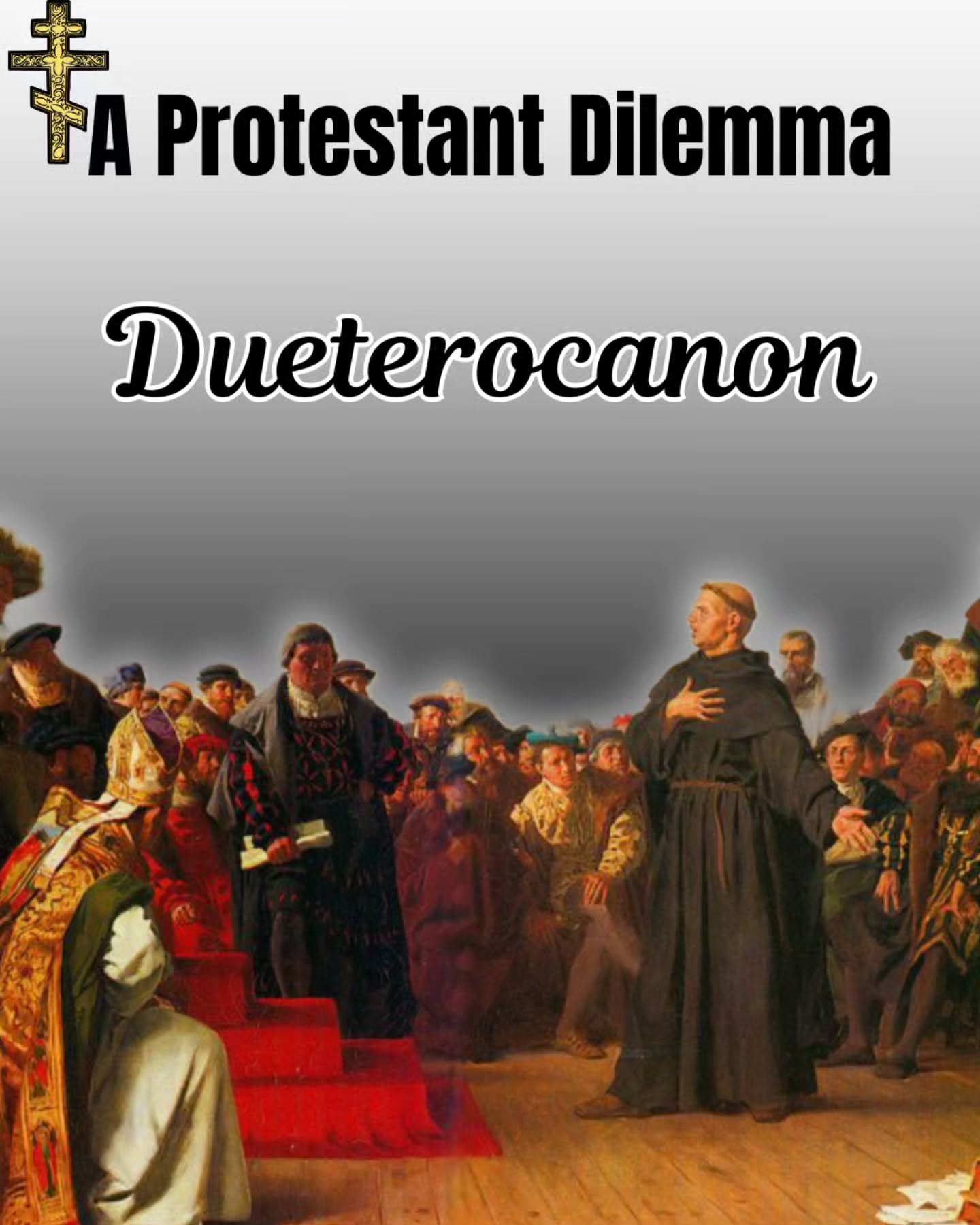
Another question for Protestants: who decided which books are Scripture?

The author raises a familiar but persistent objection to the Protestant rejection of the Deuterocanon, the books such as Tobit, Judith, Wisdom, and the Maccabees that Catholics and Orthodox receive as Scripture but that Protestants place in the Apocrypha. The author notes this is not a first attempt at the topic; they have written on it several times before. What they want to press this time is not the usual historical argument about whether…

The author raises a familiar but persistent objection to the Protestant rejection of the Deuterocanon, the books such as Tobit, Judith, Wisdom, and the Maccabees that Catholics and Orthodox receive as Scripture but that Protestants place in the Apocrypha. The author notes this is not a first attempt at the topic; they have written on it several times before.

What they want to press this time is not the usual historical argument about whether those books belonged in the canon, but an epistemological one: a question about how anyone knows which books are Scripture in the first place. The framing points to the historical Church, the formation of the biblical canon, and the authority that was used to determine which writings count as Scripture.

The implied challenge is that a Protestant who rejects the Deuterocanon must appeal to some standard for making that rejection, and the author suggests that standard deserves examination. If the canon is not self-evident, then some authority, whether the early Church's discernment, councils, or individual judgment, had to settle the list of books, and that authority question cuts against a position that sets Scripture against Church tradition.

The post is short and framed as a prompt for discussion rather than a developed argument, tagged for a general Christian audience. It invites readers to consider how the canon was recognized in the early Church and what that means for the Protestant position on the Deuterocanon.

  • The author has critiqued the Protestant rejection of the Deuterocanon several times before and returns to the topic again.
  • This critique focuses on an epistemological question rather than the usual historical arguments.
  • The question concerns how anyone knows which books are Scripture.
  • The author points to the historical Church, the biblical canon, and the authority used to determine Scripture.
  • The post is framed as a prompt for discussion, not a developed argument.
Read more
T timotheos.orthodoxy Instagram

Five reasons a catechumen gives for converting to Orthodoxy

Tim, a catechumen of the Greek Orthodox Church, explains why he is converting to Orthodoxy. He notes that he is converting rather than returning, since he was never Orthodox before. His first reason is that reading the Bible brought him back to Christianity. The second came from conversations with new-age Christians: seeing that their denominations are less than 50 years old convinced him they cannot be the church established by Christ. Third,…

Tim, a catechumen of the Greek Orthodox Church, explains why he is converting to Orthodoxy. He notes that he is converting rather than returning, since he was never Orthodox before. His first reason is that reading the Bible brought him back to Christianity.

The second came from conversations with new-age Christians: seeing that their denominations are less than 50 years old convinced him they cannot be the church established by Christ. Third, his research showed him that Orthodoxy is essentially the same as it was when the Apostles were alive. Fourth, he found Orthodoxy to be a warm community rather than a cold, sect-like institution.

His fifth reason is his conclusion that Orthodoxy is the truth. He closes by asking viewers to share their own reasons in the comments. In the accompanying text he introduces himself as a catechumen who shares his learnings and obstacles on the way to Orthodoxy, and mentions that he has been involved in fitness for almost two decades, partly at a competitive level, and has built his own successful business.

He invites readers to follow his account, where he covers Orthodoxy together with fitness and business, and ends with a doxology: all praise to the Lord, amen.

Key moments

  1. The speaker is converting to Orthodoxy rather than returning to it, because he was never Orthodox before.
  2. Reading the Bible brought him back to Christianity.
  3. Speaking with new-age Christians whose denominations are less than 50 years old showed him these cannot be the church established by Christ.
  4. Research showed him Orthodoxy is essentially the same since the Apostles were alive.
  5. He found Orthodoxy is a warm community, not a cold, sect-like institution.
  6. He concluded that Orthodoxy is the truth.
  7. He asks viewers to share their own reasons in the comments.
Read more
Kyle YouTube

From 37 Years Lutheran to Orthodox: A Convert Tells His Story

From 37 Years Lutheran to Orthodox: A Convert Tells His Story 26:14

The speaker recounts how he came to Orthodoxy after 37 years in the Wisconsin Evangelical Lutheran Synod. He grew up in a high church, liturgical tradition that used an old Lutheran liturgical book from the early 1900s, and he remembers feeling holiness and reverence there as a small child. In his early to mid-20s his church attendance lapsed, and he noticed the reverence he had known had slowly dissipated, which made him question whether he was…

The speaker recounts how he came to Orthodoxy after 37 years in the Wisconsin Evangelical Lutheran Synod. He grew up in a high church, liturgical tradition that used an old Lutheran liturgical book from the early 1900s, and he remembers feeling holiness and reverence there as a small child. In his early to mid-20s his church attendance lapsed, and he noticed the reverence he had known had slowly dissipated, which made him question whether he was in the right church.

Because Lutheranism came from Catholicism, he spent two years studying Catholic apologetics through books and television, though he never joined RCIA or visited a Catholic church. He rejected the papacy, believing Christ established a brotherhood of bishops with equal authority rather than giving Peter greater power. He also objected to the Filioque added to the Nicene Creed and to the Immaculate Conception, asking why he would need a savior if God could create Mary without sin and death.

He and his wife tried a local megachurch for its children's Sunday school, but on his third visit he felt he could not enter and sat outside reading his Bible. While searching Christian apologetics debates on YouTube, he found Jay Dyer debating J.F. Gariepy, learned Dyer was Orthodox, contacted him, and received book recommendations that began about two years of studying Orthodoxy.

The turning point came on a trip to Britain. In York Minster he sensed God's presence, wept over his sinful double life, prayed for 20 minutes, and asked for a sign that Orthodoxy was the right path. The next day three Orthodox monks sat beside him at Evensong and invited him to the Divine Liturgy in Glasgow, where on August 15th, 2018 he knew he was spiritually home.

He was baptized and chrismated with his wife and four children about 18 months later. The video includes chapters on Lutheranism, his search, Orthodoxy, and his story, plus links to visit an Orthodox church and support the channel.

Key moments

  1. 0:00 The speaker grew up in the Wisconsin Evangelical Lutheran Synod for 37 years, a high church, liturgical tradition using an old Lutheran liturgical book from the early 1900s.
  2. 2:05 In his early to mid-20s his attendance lapsed, and he noticed the holiness and reverence he had felt as a small child had slowly dissipated, leading him to question whether he was in the right church.
  3. 4:41 Since Lutheranism came from Catholicism, he spent two years studying Catholic apologetics through books and television, never joining RCIA or visiting a Catholic church.
  4. 7:16 He rejected the papacy, believing Christ established an ecclesiastical brotherhood of bishops with equal authority rather than giving Peter greater power.
  5. 9:21 He also objected to the Filioque added to the Nicene Creed and to the Immaculate Conception, asking why he would need a savior if God could create Mary without sin and death.
  6. 11:54 He and his wife tried a megachurch for its children's Sunday school, but on his third visit he felt he could not enter and sat outside reading his Bible.
  7. 14:30 While searching Christian apologetics debates on YouTube he found Jay Dyer debating J.F. Gariepy, learned Dyer was Orthodox, contacted him, and received book recommendations that began about two years of study.
  8. 18:40 In York Minster he sensed God's presence, wept over his sinful double life, prayed for 20 minutes, and asked for a sign; the next day three Orthodox monks sat beside him at Evensong and invited him to the Divine Liturgy in Glasgow, where on August 15th, 2018 he knew he was spiritually home.
Read more

Pastor has children smash statue of Mary, says he would smash one of Jesus too

The speaker reacts to a Baptist pastor named Shelly who had children smash statues of the Blessed Theotokos. The pastor added that if somebody sends him a statue of Jesus, he would have them destroy it the same way. The speaker says he is convinced that Baptists do not worship the same God as Orthodox Christians, and he calls the practice disgusting. He objects especially to the fact that children are being made to do the smashing, saying it is…

The speaker reacts to a Baptist pastor named Shelly who had children smash statues of the Blessed Theotokos. The pastor added that if somebody sends him a statue of Jesus, he would have them destroy it the same way. The speaker says he is convinced that Baptists do not worship the same God as Orthodox Christians, and he calls the practice disgusting.

He objects especially to the fact that children are being made to do the smashing, saying it is worse that images of Jesus Christ are destroyed this way by children. The post carries hashtags pointing to Catholic and Orthodox audiences and to apologetics discussions.

Key moments

  1. The speaker states he is fully convinced Baptists do not worship the same God as Orthodox Christians.
  2. He mentions Baptist pastor Shelly, who had children smash statues of the Blessed Theotokos.
  3. The pastor says that if somebody sends him a statue of Jesus, he will do the same thing to the statue of Jesus.
  4. The speaker calls the practice disgusting and objects that children are being made to smash images of Jesus Christ.
Read more
radioimlemesou Instagram

How should we love our spouse? Bishop Athanasios on the difference between man and woman

Metropolitan Athanasios of Limassol speaks about how a husband and wife should love each other. He begins from the difference between the sexes: a man is one thing and a woman is another, and each expresses himself or herself in a different way. He says he has seen cases of people who feel they do not receive from their spouse the love and the behavior they expected and need. A woman, he explains, needs her man to be a man to her, to show his…

Metropolitan Athanasios of Limassol speaks about how a husband and wife should love each other. He begins from the difference between the sexes: a man is one thing and a woman is another, and each expresses himself or herself in a different way. He says he has seen cases of people who feel they do not receive from their spouse the love and the behavior they expected and need.

A woman, he explains, needs her man to be a man to her, to show his love, his interest, his word and his presence as a man, not as a woman. In the same way, a man expects from his wife not a masculine, manly love and presence, but a feminine presence beside him. He gives the reason: she is his other half, his helpmate, and this is what he needs as a man within his marriage.

The talk stays on this single theme, the distinct way each spouse is called to express love according to his or her nature, rather than offering a list of practical rules. The post carries hashtags identifying the speaker as Metropolitan of Limassol Athanasios and linking the clip to Orthodox and Greek Orthodox faith topics. There is no discussion thread attached to the post; the content is the bishop's own words, quoted in Greek, on the mutual expectations of husbands and wives in marriage.

Key moments

  1. A man and a woman are different and each expresses himself or herself in a different way.
  2. Some people feel they do not receive from their spouse the love and behavior they expected and need.
  3. A woman needs her husband to show his love, interest, word and presence as a man, not as a woman.
  4. A man expects a feminine presence from his wife, not a masculine one, because she is his helpmate and this is what he needs in his marriage.
Read more
George Instagram

A Fly or a Bee: Saint Paisios on What We Choose to See

The video presents a saying of Saint Paisios, in which he compares every person to either a fly or a bee. A fly in a beautiful garden ignores the flowers and lands on the one dirty thing it can find. If you ask what it saw, it talks only about the dirt. A bee in the same garden goes only to the flowers, finds the good even in the dirtiest place, and makes honey from it. The video applies this image to daily life. Some people see only the bad in…

The video presents a saying of Saint Paisios, in which he compares every person to either a fly or a bee. A fly in a beautiful garden ignores the flowers and lands on the one dirty thing it can find. If you ask what it saw, it talks only about the dirt. A bee in the same garden goes only to the flowers, finds the good even in the dirtiest place, and makes honey from it.

The video applies this image to daily life. Some people see only the bad in others, while others always find the good. At work, it is easy to notice only the lazy colleague or the boss who does not appreciate you. At home, we see every mistake our partner, parents, or children make, and we judge the people we live with most because we stop seeing the good in them.

The video closes with a practical suggestion: when you notice something bad in someone close to you, stop, look for one good thing in that person instead, and maybe tell them what you found.

Key moments

  1. Saint Paisios said every person is either a fly or a bee.
  2. A fly in a garden full of flowers flies past all of them and lands on the one dirty thing it can find, and only reports the dirt.
  3. A bee in the same garden goes only to the flowers, finds good even in the dirtiest place, and makes honey from it.
  4. Some people see only the bad in others, while others always find the good.
  5. At work it is easy to notice only the lazy colleague or the boss who does not appreciate you.
  6. At home we see every mistake our partner, parents, or children make, and we judge the people we live with most because we stop seeing the good in them.
  7. When you notice something bad in someone close to you, stop, look for one good thing in them instead, and maybe tell them.
Read more
☦️An Orthodox Blog☦️ with Orthodoxy ☦︎ Instagram

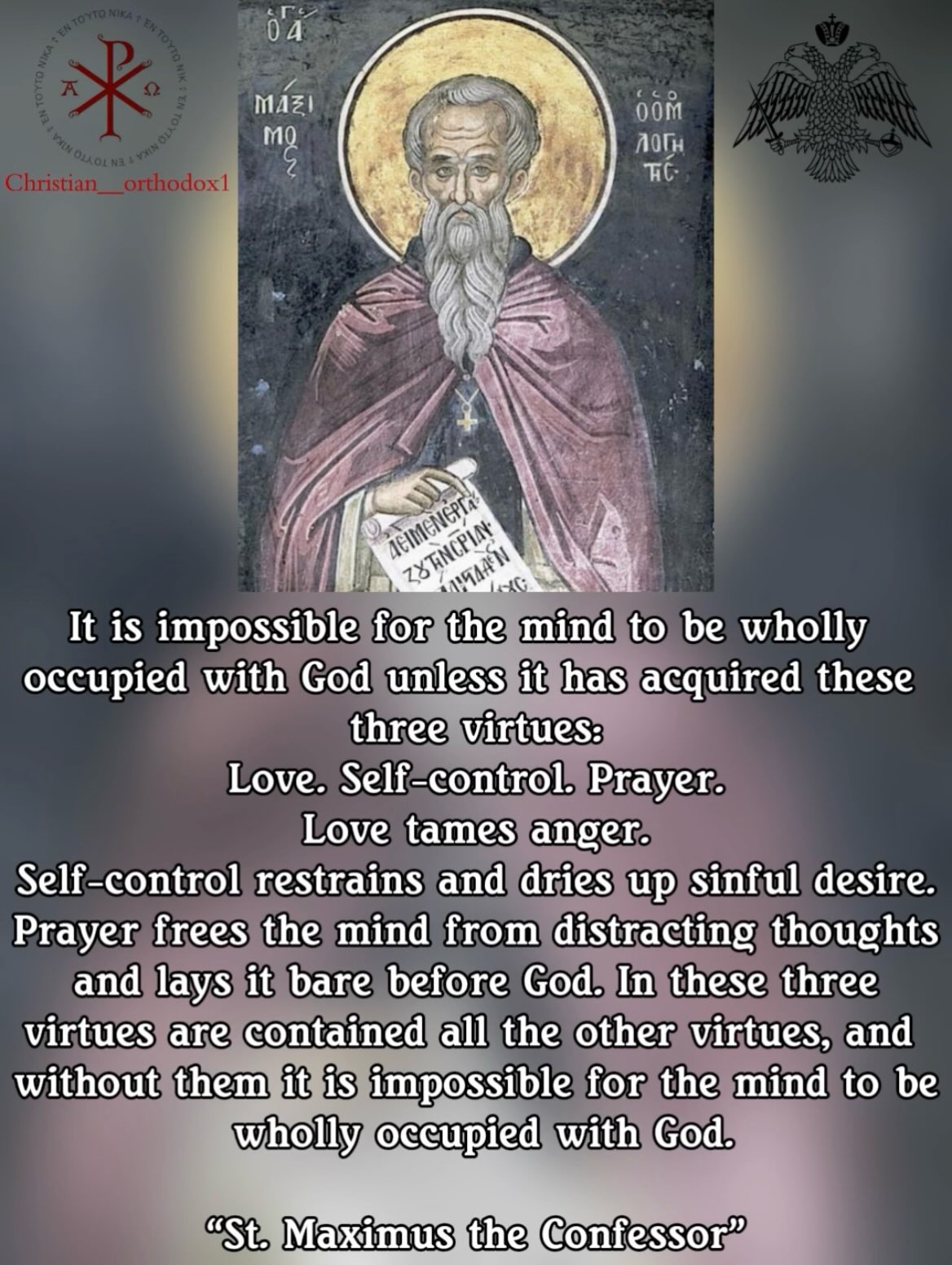
St. Maximus the Confessor: three virtues that let the mind hold fast to God

The post quotes St. Maximus the Confessor on what the mind needs before it can be wholly occupied with God. He names three virtues: love, self-control, and prayer. Each has a distinct work. Love tames anger. Self-control restrains and dries up sinful desire. Prayer frees the mind from distracting thoughts and lays it bare before God. The quoted text states that in these three virtues all the other virtues are contained, and that without them the…

The post quotes St. Maximus the Confessor on what the mind needs before it can be wholly occupied with God. He names three virtues: love, self-control, and prayer. Each has a distinct work. Love tames anger. Self-control restrains and dries up sinful desire.

Prayer frees the mind from distracting thoughts and lays it bare before God. The quoted text states that in these three virtues all the other virtues are contained, and that without them the mind cannot be wholly occupied with God. The post presents the quotation as a single block of text attributed to St. Maximus the Confessor, followed by hashtags marking it as Orthodox Christian content on faith, the church, and the church fathers.

There is no discussion thread attached to the post; the quotation itself is the whole of the content. The teaching follows the ascetic pattern common in the fathers: the passions are first restrained (anger by love, desire by self-control), and then the mind, freed from distracting thoughts, is brought before God in prayer. The claim that all other virtues are contained in these three frames love, self-control, and prayer as a summary of the whole ascetic life rather than as three duties among many.

  • St. Maximus the Confessor names three virtues required for the mind to be wholly occupied with God: love, self-control, and prayer.
  • Love tames anger.
  • Self-control restrains and dries up sinful desire.
  • Prayer frees the mind from distracting thoughts and lays it bare before God.
  • All other virtues are contained in these three, and without them the mind cannot be wholly occupied with God.
CHRISTIANITY UNITED Instagram

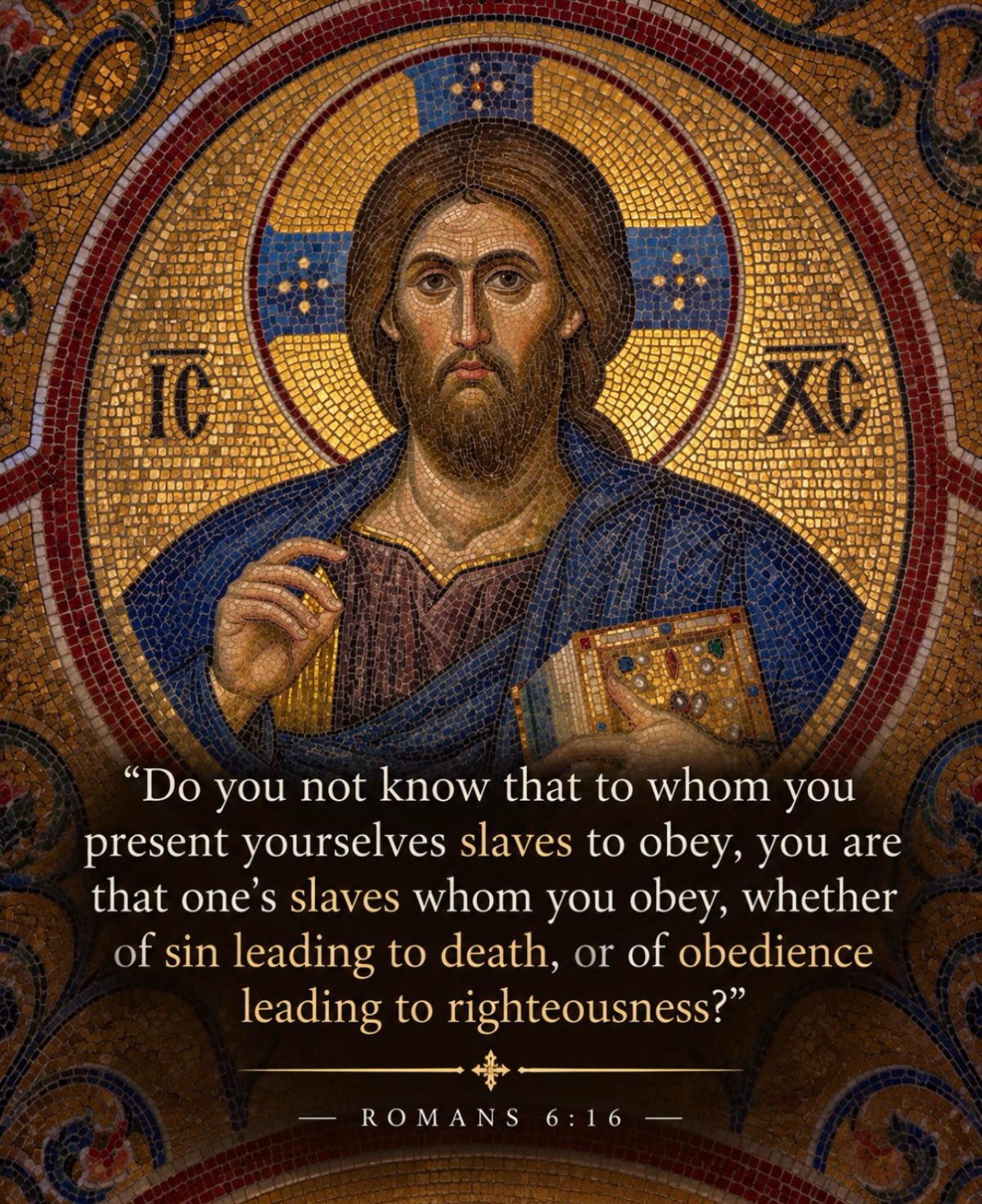
Whatever Controls You Becomes Your Master: On Slavery to Sin and True Freedom

The author reflects on Saint Paul's warning that not everything we choose freely leaves us free, a truth many people grasp only after years of struggling with sin. A habit can begin with lust, pornography, alcohol, gambling, greed, anger, jealousy, or the constant need to satisfy our own desires. At first we believe we are in control and can stop whenever we want, but gradually a choice becomes a habit, and the habit can become something we feel…

The author reflects on Saint Paul's warning that not everything we choose freely leaves us free, a truth many people grasp only after years of struggling with sin. A habit can begin with lust, pornography, alcohol, gambling, greed, anger, jealousy, or the constant need to satisfy our own desires. At first we believe we are in control and can stop whenever we want, but gradually a choice becomes a habit, and the habit can become something we feel powerless to resist.

This is the slavery to sin that Saint Paul warns about, referenced with Romans 6:16. The author explains that in the Orthodox Church these disordered desires are called passions, and the more we feed them, the stronger their hold on our hearts becomes. Christ did not come merely to say that sin is wrong; He came to free us from its power.

The author names the means of this freedom: prayer, fasting, Confession, the Holy Eucharist, and a sincere effort to change our lives, through which we turn away from what enslaves us and return to God. The struggle is not easy. Some habits take years to overcome, and we sometimes fall back into the very sins we are trying to leave.

But falling does not mean surrender. True freedom is not doing everything our desires demand; it is no longer being ruled by them. The author closes with a question for the reader: am I controlling my desires, or are my desires controlling me? A prayer asks Christ to give us strength to break free from everything that separates us from Him.

  • Saint Paul's warning: not everything we choose freely leaves us free; a free choice can become a habit and then slavery to sin.
  • Habits can begin with lust, pornography, alcohol, gambling, greed, anger, jealousy, or the constant need to satisfy our own desires.
  • In the Orthodox Church these disordered desires are called passions; the more we feed them, the stronger their hold on our hearts.
  • Christ came to free us from sin's power through prayer, fasting, Confession, the Holy Eucharist, and a sincere effort to change our lives.
  • Falling does not mean surrender: true freedom is no longer being ruled by our desires.
Read more

Why 'Scripture Alone' Falls Apart Without the Early Church

A speaker answers a commenter who asks why the early church should be treated as an infallible authority when its members were ordinary people filled with the same Holy Spirit. He responds that Christ promised to lead and guide his church, and that in the first century that church was the Orthodox Catholic Church, which he calls a historically undeniable fact. He then traces the sequence of schisms: the West split from the Orthodox Church a…

A speaker answers a commenter who asks why the early church should be treated as an infallible authority when its members were ordinary people filled with the same Holy Spirit. He responds that Christ promised to lead and guide his church, and that in the first century that church was the Orthodox Catholic Church, which he calls a historically undeniable fact.

He then traces the sequence of schisms: the West split from the Orthodox Church a thousand years after the church's establishment, Protestants split from the Catholics 500 years later, and another split 200 to 300 years after that produced non-denominational and Baptist type churches. Anyone in those groups, he argues, stands outside the body to whom the promise was made, so they can make correct inferences from Scripture but never reach certitude unless they rejoin the Orthodox Church.

He cites John 17, the high priestly prayer where Jesus prays that they may be one, and Acts 2, verses 42 through 46, as the fulfillment of that unity. He adds that a Protestant may hold correct teachings, such as monarchical Trinitarianism, but has no way to ground them. If such a person appeals to the early church while rejecting other early teachings, he is picking and choosing.

The discussion turns on whether authority rests in Scripture read privately or in the church that Christ promised to guide, and what it would take for someone outside the Orthodox Church to have certainty in doctrine.

Key moments

  1. 0:00 A commenter asks why the early church should be an infallible authority when its members were people like us, filled with the same Holy Spirit.
  2. 1:07 The speaker answers that Christ promised to lead and guide his church, and in the first century that church was the Orthodox Catholic Church, which he calls a historically undeniable fact.
  3. 1:07 He lists the schisms: the West split from the Orthodox Church 1000 years after the church's founding, Protestants split from Catholics 500 years later, and 200 to 300 years after that non-denominational and Baptist type churches emerged.
  4. 1:42 Anyone in those schismed groups is not part of the body the promise was made to, so they can make correct inferences from Scripture but never have certitude unless they rejoin the Orthodox Church.
  5. 2:17 He cites John 17, the high priestly prayer where Jesus prays that they may be one, and Acts 2 verses 42 through 46 as the fulfillment of that unity.
  6. 2:47 A Protestant may hold correct teachings like monarchical Trinitarianism, but cannot ground them, and appealing to the early church while rejecting other teachings is picking and choosing.
7 opinions in the discussion Well explained, but I don't get it. If you agree it's the "Orthodox" Catholic Church, why leave out the Orthodox part and be vague about whether you mean the Universal Catholic Church? Read the discussion

Icon of Saint Gerasimos the Hymnographer delivered to Metropolitan Athanasios of Limassol

The author of the post describes handing over an icon they painted of Saint Gerasimos the Hymnographer to Metropolitan Athanasios of Limassol. The writer speaks of the moment with joy and emotion, calling it a distinct occasion and a great blessing. They note that the Metropolitan has spoken about the Saint in beautiful words, which made the gift meaningful to them. The post closes with a request for the Metropolitan's blessing, addressed to him…

The author of the post describes handing over an icon they painted of Saint Gerasimos the Hymnographer to Metropolitan Athanasios of Limassol. The writer speaks of the moment with joy and emotion, calling it a distinct occasion and a great blessing. They note that the Metropolitan has spoken about the Saint in beautiful words, which made the gift meaningful to them.

The post closes with a request for the Metropolitan's blessing, addressed to him as Geronda, meaning Elder. The post is tagged with references to Saint Gerasimos, the Metropolitan of Limassol Athanasios, iconography, and Byzantine icon painting. There is no further discussion in the thread; the post is a short personal announcement of the gift rather than a longer account of the meeting or of the icon's creation.

The image itself is identified as Byzantine iconography by the hashtags, and the Saint is identified as Gerasimos the Hymnographer.

  • The author painted an icon of Saint Gerasimos the Hymnographer and gave it to Metropolitan Athanasios of Limassol.
  • The author says the Metropolitan has spoken about the Saint in beautiful words.
  • The writer describes the moment as a distinct occasion and a great blessing.
  • The post ends with a request for the Metropolitan's blessing, addressed to him as Geronda.
  • The post is tagged with references to iconography and Byzantine icon painting.
Read more
Prayer Orthodoxy ® Instagram

Burning Three Olive Leaves in the Home Censer: A Greek Orthodox Family Tradition

The video presents tips for the home prayer corner, centered on a family tradition of burning dried olive leaves in the censer. In Greek Orthodox homes, burning olive leaves is associated with peace, protection, and prayers rising to God. The practice also had a practical origin: in Greece and Cyprus, olive trees were abundant while frankincense was not always available, so families used dried olive leaves as a natural way to scent their homes.…

The video presents tips for the home prayer corner, centered on a family tradition of burning dried olive leaves in the censer. In Greek Orthodox homes, burning olive leaves is associated with peace, protection, and prayers rising to God. The practice also had a practical origin: in Greece and Cyprus, olive trees were abundant while frankincense was not always available, so families used dried olive leaves as a natural way to scent their homes.

The speaker describes the family's custom of using three dried olive leaves, representing the Father, the Son, and the Holy Spirit. Before placing the leaves on the charcoal, they are held over the censer and the sign of the cross is made three times with the words, 'in the name of the Father, and of the Son, and of the Holy Spirit, Amen.' The leaves are then placed on the burning charcoal, and the fragrant smoke is used to cense the icons, the home, and loved ones.

The video also lists related practices: lining the censer with aluminum foil, bringing olive leaves to church to be blessed, and traditionally leaving them near the Holy Altar for 40 days. A further point concerns the reverent treatment of blessed items. Ashes from the censer, blessed incense, olive leaves, and ends of blessed candles are not thrown out casually.

They are buried in a small shallow hole in a quiet place alongside the home, chosen so that people will not walk over them. The speaker frames these customs as traditions passed down through generations and shared to help bring the beauty of Orthodox faith into the prayer corner.

Key moments

  1. Burning olive leaves has long been associated with peace, protection and prayers rising to God in Greek Orthodox homes.
  2. In Greece and Cyprus, where olive trees were abundant and frankincense was not always available, dried olive leaves became a practical way for families to scent their homes.
  3. The family tradition uses three dried olive leaves, representing the Father, the Son and the Holy Spirit.
  4. Before placing the leaves on the charcoal, they are held over the censer and the sign of the cross is made three times, saying, 'in the name of the Father, and of the Son, and of the Holy Spirit, Amen.'
  5. The leaves are placed on the burning charcoal, and the fragrant smoke is used to cense the icons, the home and loved ones.
  6. Blessed items should be treated with reverence.
  7. Ashes from the censer, blessed incense, olive leaves and ends of blessed candles are buried in a small shallow hole in a quiet place alongside the home, where people will not walk over them.
Read more

Father Jovan Vukovic: Let Us Keep Our Eyes on the Lord

Father Jovan Vukovic speaks about watching over ourselves at every moment, both when a miracle happens to us and when it happens around us. He says we are always on trial. If we do not rejoice and do not carry the Spirit of God within us, we become like the Gerasene swineherds, who were disappointed because some personal gain had perished. The person who is with the Lord turns everything to spiritual benefit, rejoices with his brother, and gives…

Father Jovan Vukovic speaks about watching over ourselves at every moment, both when a miracle happens to us and when it happens around us. He says we are always on trial. If we do not rejoice and do not carry the Spirit of God within us, we become like the Gerasene swineherds, who were disappointed because some personal gain had perished.

The person who is with the Lord turns everything to spiritual benefit, rejoices with his brother, and gives him comfort even in sorrow. This, he says, is what the people of God do. Gathered in the temple, the faithful are reminded of this by the word of God. He also notes that the apostles' fast is nearing its end, and that during this time we must continually watch over ourselves and decide whether our free will will be with the Lord or against Him.

Key moments

  1. We are always on trial and must watch over ourselves, including in how we receive miracles.
  2. Without joy and the Holy Spirit within us, we become like the Gerasene swineherds, upset over lost personal gain.
  3. The one who is with the Lord turns everything to spiritual benefit and comforts his brother even in sorrow.
  4. Gathered in the temple, the faithful are reminded by the word of God.
  5. The apostles' fast is nearing its end, and we must continually watch over how we direct our free will, with the Lord or against Him.