WeOrthodox
EN UA

Orthodox posts, videos and discussions

We follow Orthodox channels, communities and blogs across the web, summarise every post and video, and highlight the conversations with real substance.

Come to Me, All Who Labor: Matthew 11:28 Explained by Panagiotis Trembelas
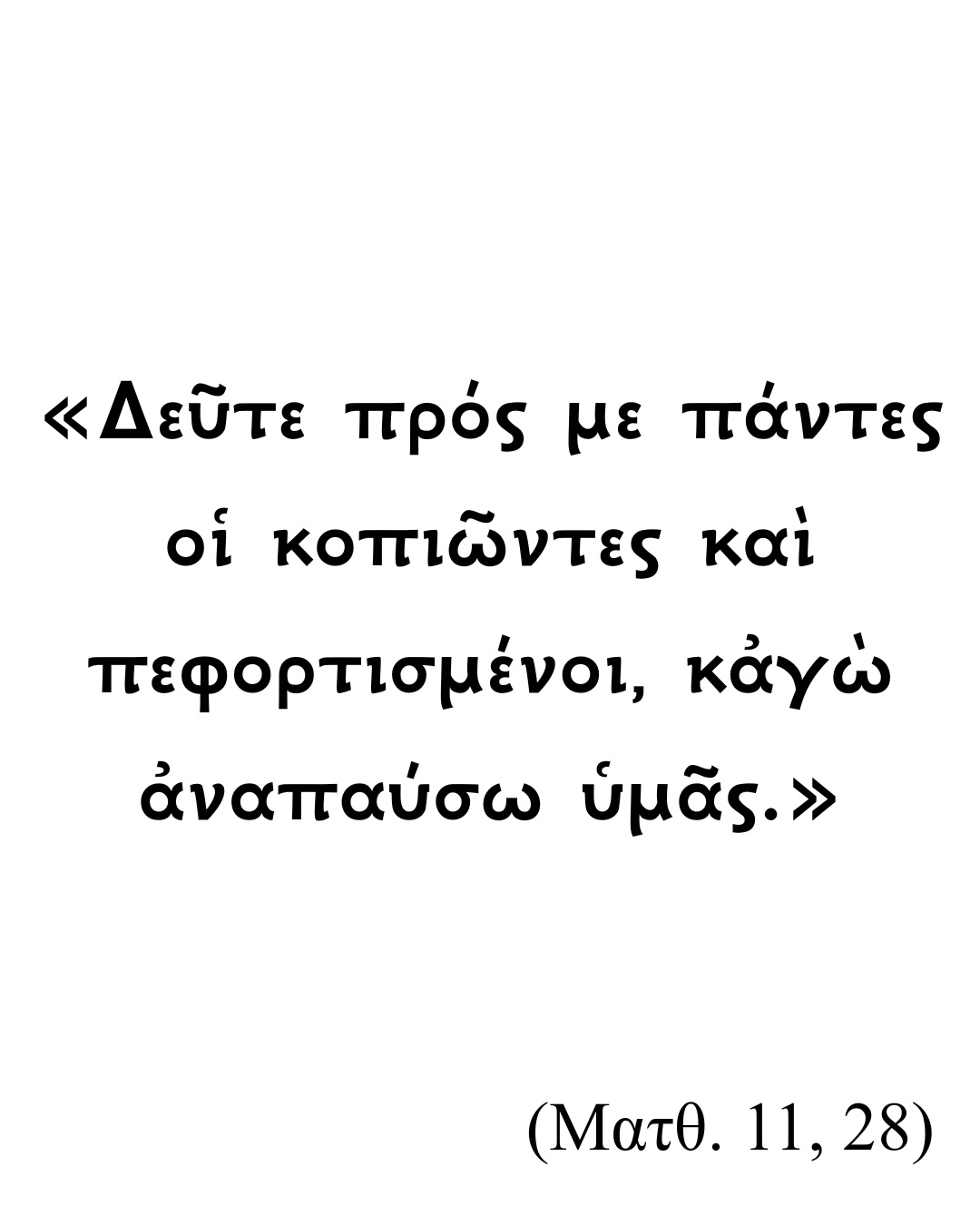
The post presents the verse inscribed on an icon: 'Come to me, all who are weary and burdened by the weight of sin and sorrows, and by the burden of the Pharisaic traditions, with which the God-inspired law was turned into an unbearable load. Come to me, and I will give you rest.' The author cites the text from the Gospel according to Matthew, chapter 11, verse 28, and notes that the icon itself carries both the verse and a short interpretation.…

The post presents the verse inscribed on an icon: 'Come to me, all who are weary and burdened by the weight of sin and sorrows, and by the burden of the Pharisaic traditions, with which the God-inspired law was turned into an unbearable load. Come to me, and I will give you rest.' The author cites the text from the Gospel according to Matthew, chapter 11, verse 28, and notes that the icon itself carries both the verse and a short interpretation.

The interpretation quoted in the image description comes from the book 'The New Testament, with a Brief Interpretation' by the late professor of the Theological School of the University of Athens, Panagiotis N. Trembelas, and the Brotherhood of Theologians 'O Sotir'. The post specifies that the edition used is the 11th edition, published in Athens in May 2025.

The verse itself is given in an expanded form that names what weighs on the weary: the burden of sin, the weight of sorrows, and the load of Pharisaic traditions that turned the divinely inspired law into something unbearable. The promise attached to the call is rest. The post does not reproduce the full text of Trembelas's interpretation; it identifies the source of the commentary printed in the image description and gives the publication details.

The reader is directed to the icon and its accompanying note for the interpretation itself.

  • The icon bears the verse Matthew 11:28: 'Come to me, all who are weary and burdened, and I will give you rest.'
  • The quoted form of the verse names the burdens: sin, sorrows, and the Pharisaic traditions that made the God-inspired law an unbearable load.
  • The short interpretation in the image description comes from Trembelas's 'The New Testament, with a Brief Interpretation'.
  • The author is the late Panagiotis N. Trembelas, professor at the Theological School of the University of Athens, and the Brotherhood of Theologians 'O Sotir'.
  • The edition cited is the 11th, published in Athens in May 2025.
Read more

Saint Zlata of Meglen: Three Months of Torture Could Not Shake Her Faith in Christ

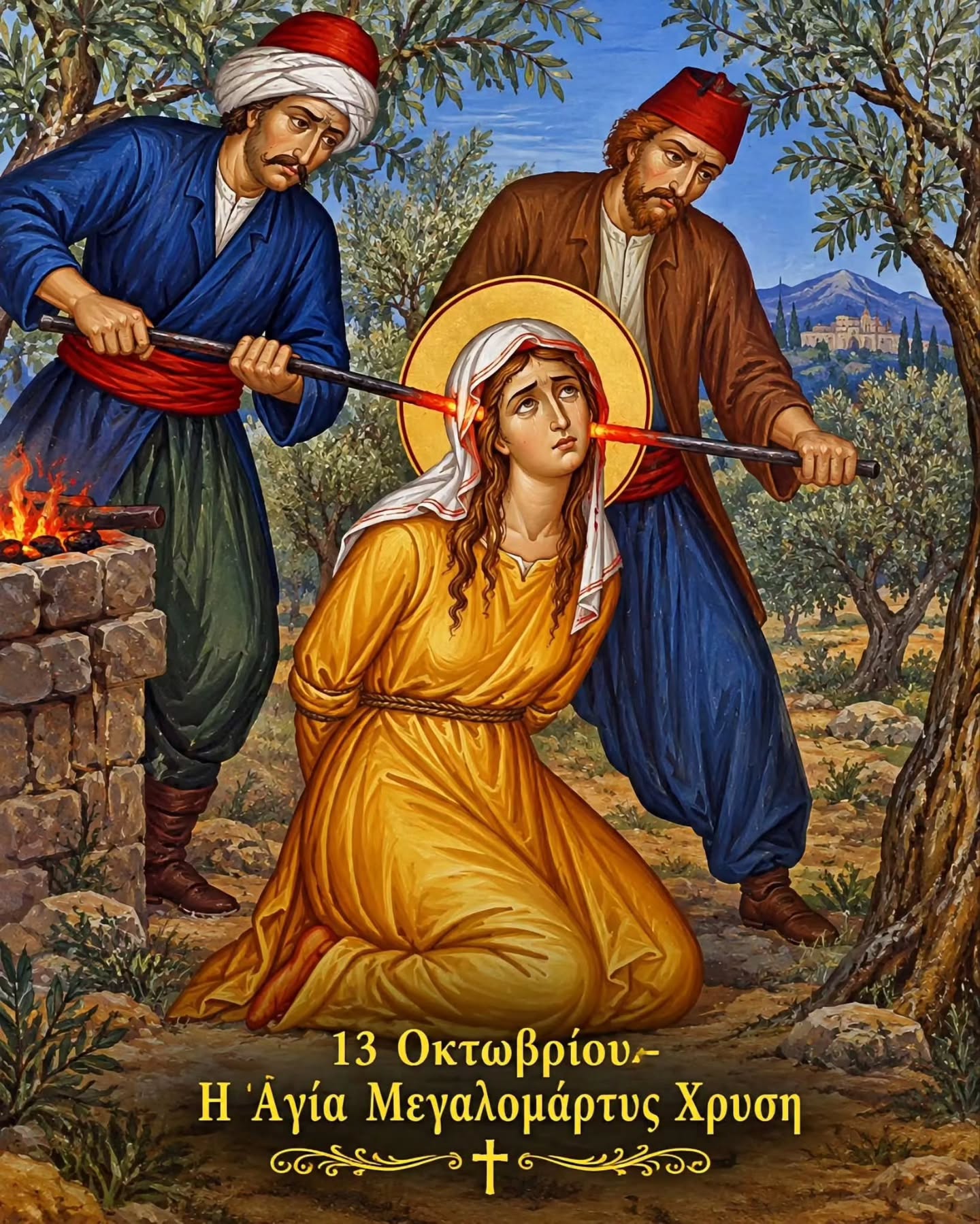
The post marks the feast of the Holy Great Martyr Zlata of Meglen, commemorated on October 13 according to the old calendar. Zlata was born in the village of Slatina in the Meglen region, into a poor but devout family. The author writes that she was known for her meekness, purity of heart, and firm faith in the Lord Jesus Christ. According to her life, her beauty made her a target of violent men who tried to force her to renounce the Christian…

The post marks the feast of the Holy Great Martyr Zlata of Meglen, commemorated on October 13 according to the old calendar. Zlata was born in the village of Slatina in the Meglen region, into a poor but devout family. The author writes that she was known for her meekness, purity of heart, and firm faith in the Lord Jesus Christ.

According to her life, her beauty made her a target of violent men who tried to force her to renounce the Christian faith and accept Islam. Neither promises nor threats moved her. She remained faithful to Christ, confessing Him as her Lord and Bridegroom. Her tormentors imprisoned her and subjected her to daily tortures for three months, trying to break her faith.

The post also notes that pressure from her closest relatives, who feared for her life, did not lead her to deny Christ. Saint Zlata remained unshaken in faith and love for the Lord to the end. She suffered a martyr's death in October 1795, receiving what the author calls a double crown: that of virginity and that of martyrdom.

The post closes with the author's reflection that faith is not only a word we speak but faithfulness to Christ even when we face pressure, injustice, and suffering, followed by a prayer asking Saint Zlata to intercede with God. The post is a short hagiographic notice with a devotional conclusion, presenting the main facts of the saint's life as given in her vita: her origins, her character, the attempt to force her conversion to Islam, her imprisonment and three months of torture, the pressure from her family, and her martyrdom in 1795.

  • Saint Zlata of Meglen was born in the village of Slatina in the Meglen region, into a poor, devout family.
  • Violent men tried to force her to renounce Christianity and accept Islam because of her beauty; promises and threats both failed.
  • She was imprisoned and tortured daily for three months, and pressure from relatives who feared for her life also did not move her.
  • She suffered a martyr's death in October 1795, receiving a double crown of virginity and martyrdom.
  • The author concludes that faith means faithfulness to Christ under pressure, injustice, and suffering, and asks the saint's prayers.
Read more
Lives of the Saints 🙏 Instagram

Saint Hierotheus: Bishop of Athens, Martyr, and Singer at the Theotokos' Dormition

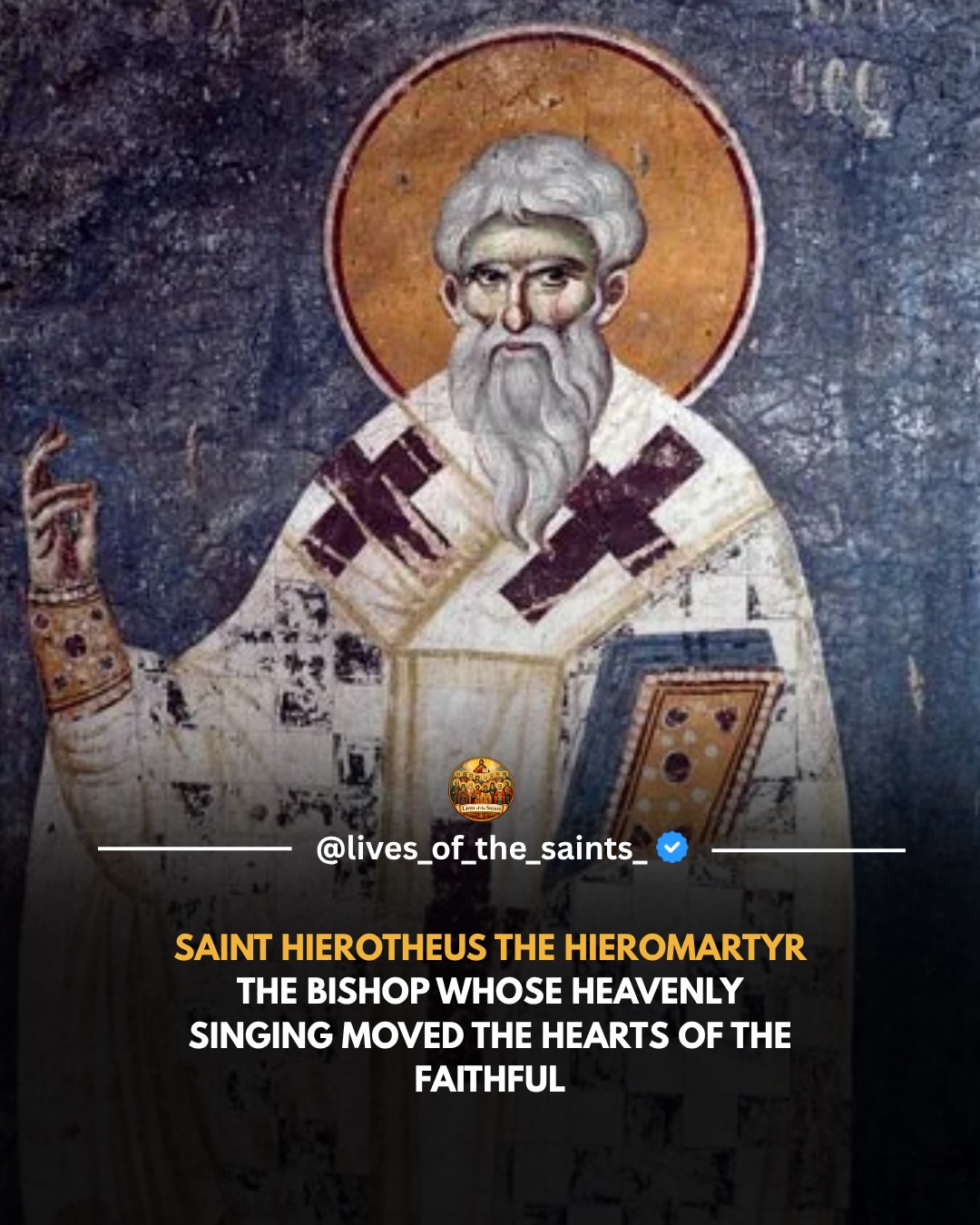
Saint Hierotheus was a close companion of Saint Dionysius the Areopagite and one of the early holy bishops of Athens. Shortly after Saint Dionysius embraced Christianity, Hierotheus also came to believe in the Lord Jesus Christ through the preaching of the Apostle Paul. Recognizing his faith and spiritual gifts, Saint Paul consecrated him Bishop of Athens. Saint Hierotheus devoted himself to preaching the Gospel, guiding the faithful, and…

Saint Hierotheus was a close companion of Saint Dionysius the Areopagite and one of the early holy bishops of Athens. Shortly after Saint Dionysius embraced Christianity, Hierotheus also came to believe in the Lord Jesus Christ through the preaching of the Apostle Paul. Recognizing his faith and spiritual gifts, Saint Paul consecrated him Bishop of Athens.

Saint Hierotheus devoted himself to preaching the Gospel, guiding the faithful, and bringing many pagans to the truth of Christ. According to Holy Tradition, he was present in Jerusalem at the Dormition of the Most Holy Theotokos and took part in her burial. During this sacred gathering, Saint Hierotheus sang with such divine inspiration that his hymns moved the hearts of all who heard him.

His singing was not simply beautiful music; it was prayer flowing from a soul filled with the grace of the Holy Spirit. Throughout his life, he labored tirelessly for the Church, bringing many souls to Christ and faithfully shepherding those entrusted to him. Finally, Saint Hierotheus gave his life as a martyr for the Lord.

He received a double crown in the Kingdom of Heaven: the crown of a holy bishop and the crown of a martyr. The post states that his life reminds us that true worship comes not only from the voice, but from a heart completely surrendered to God. It concludes with the prayer: Holy Hieromartyr Hierotheus, pray to God for us.

  • Saint Hierotheus was a companion of Saint Dionysius the Areopagite and early bishop of Athens.
  • He converted through Apostle Paul's preaching and was consecrated bishop by Paul.
  • Holy Tradition places him at the Dormition of the Theotokos, where he sang divinely inspired hymns.
  • He labored as a bishop, converting pagans and shepherding the faithful.
  • He was martyred, receiving the double crown of bishop and martyr.
Read more

New catechism classes open for high schoolers, students and adults

A parish announces the start of religious education classes (vjeronauka) for young people and adults. The teaching will be organized in three groups: high school students, students and young people up to age 25, and adults. The parish invites all interested people to sign up by sending a message on Viber to the number 069 338 186. The announcement closes with a welcome: everyone is invited to come and learn about the faith together, get to know…

A parish announces the start of religious education classes (vjeronauka) for young people and adults. The teaching will be organized in three groups: high school students, students and young people up to age 25, and adults. The parish invites all interested people to sign up by sending a message on Viber to the number 069 338 186. The announcement closes with a welcome: everyone is invited to come and learn about the faith together, get to know the wealth of Orthodox tradition, and deepen their relationship with God.

The posting is addressed to friends of the community and expresses joy that the classes are beginning. There are no further details in the announcement about meeting times, location, teachers or start date; the practical information given is only the group division and the Viber number for registration. The announcement is written in Serbian and uses the word 'vjeronauka', the traditional term for catechetical or religious instruction, and it addresses both teenagers and adults rather than only children, which means the classes are open to anyone in the community who wants to learn more about the Orthodox faith.

  • Religious education classes are starting for young people and adults
  • Three groups: high school students, students and young people up to 25, and adults
  • Registration is by message on Viber: 069 338 186
  • The stated goal is to learn about the faith, Orthodox tradition, and deepen one's relationship with God
  • No dates, times or location are given in the announcement

What the Heart Is: Grace Within, the Devil Without

A chapter from the book Orthodox Psychotherapy, titled 'What the Heart Is', describes the heart as the center of the spiritual life and the place of the greatest battle. After Holy Baptism the grace of God is present in the center of the heart, while the devil works from outside. Scripture shows Satan invading hearts: the Apostle Peter asked Ananias why Satan filled his heart to lie to the Holy Spirit, and the devil put into the heart of Judas…

A chapter from the book Orthodox Psychotherapy, titled 'What the Heart Is', describes the heart as the center of the spiritual life and the place of the greatest battle. After Holy Baptism the grace of God is present in the center of the heart, while the devil works from outside. Scripture shows Satan invading hearts: the Apostle Peter asked Ananias why Satan filled his heart to lie to the Holy Spirit, and the devil put into the heart of Judas Iscariot to betray Christ.

The Lord teaches that out of the heart proceed evil thoughts, murders, adulteries, fornications, thefts, false witness and blasphemies. At the same time the heart is the supernatural center where the grace of Christ is active. The Apostle Paul writes that God sent the Spirit of His Son into our hearts crying 'Abba Father', and that the love of God has been poured out in our hearts.

Saint Thalassius writes that a good heart produces good thoughts, because its thoughts correspond to its store of treasure. Saint Diadochus says the grace given at baptism conceals its presence in the baptized, waiting to see which way the soul inclines; when one keeps the commandments and remembers the name of Christ unceasingly, the fire of divine grace spreads to the outward organs of perception and burns up the tears in the field of the soul.

Good and evil thoughts come from the heart, but grace and Satan are not in the same place at the same time. Evil ideas are born from the remembrance of evil and from the attacks of the demons, though we feel they arise from the heart. The breath of the Holy Spirit extinguishes the fiery darts of the devil while they are still in mid-air.

When Christ conquers in the heart, inner and outer peace comes, so the combatant's most important work is to enter his own heart and wage war with Satan.

Key moments

  1. 0:00 After Holy Baptism the grace of God is present in the center of the heart, while the devil works from the outside.
  2. 0:00 The Apostle Peter asked Ananias why Satan filled his heart to lie to the Holy Spirit, and the devil put into the heart of Judas Iscariot to betray Christ.
  3. 0:35 The Lord teaches that out of the heart proceed evil thoughts, murders, adulteries, fornications, thefts, false witness and blasphemies.
  4. 0:35 The heart is also the supernatural center where the grace of Christ is active: Paul writes that God sent the Spirit of His Son into our hearts crying 'Abba Father', and that the love of God has been poured out in our hearts.
  5. 1:05 Saint Thalassius writes that a good heart produces good thoughts, because its thoughts correspond to its store of treasure.
  6. 1:05 Good and evil thoughts come from the heart, but grace and Satan are not in the same place at the same time; evil ideas are born from the remembrance of evil and from the attacks of the demons, though we feel they arise from the heart.
  7. 1:36 Saint Diadochus says the grace of God given at baptism conceals its presence in the baptized, waiting to see which way the soul inclines; when one keeps the commandments and remembers the name of Christ unceasingly, the fire of divine grace spreads to the outward organs of perception and burns up the tears in the field of the soul.
  8. 2:07 The breath of the Holy Spirit extinguishes the fiery darts of the devil while they are still in mid-air; the greatest battle takes place in the heart, and when Christ conquers there, inner and outer peace comes, so the combatant's most important work is to enter his own heart and wage war with Satan.
Read more
Holy Resurrection YouTube

Repent Today, for Tomorrow Belongs to God

Repent Today, for Tomorrow Belongs to God 3:50

This reading comes from the Evergetinos, Volume I, Chapter 2, on doing good now and not delaying until the future, and on there being no correction after death. The collection was gathered by Venerable Nicodemus the Hagiorite, and the passage includes sayings from Saint Ephrem and Abba Isaak. A brother asks Abba Pimen about two men who died the same night: a monk who had planned to leave monastic life and a layman who had planned to become a…

This reading comes from the Evergetinos, Volume I, Chapter 2, on doing good now and not delaying until the future, and on there being no correction after death. The collection was gathered by Venerable Nicodemus the Hagiorite, and the passage includes sayings from Saint Ephrem and Abba Isaak. A brother asks Abba Pimen about two men who died the same night: a monk who had planned to leave monastic life and a layman who had planned to become a monk, neither having done what he intended.

The elder answers that the monk died as a monk and the layman died a layman, because a person departs in the state in which death finds him. Other elders add that until a man's last breath he hears the call to repent today, and that this generation seeks tomorrow instead of today. One elder answered the thought of repenting tomorrow with the words, 'I will repent today, and tomorrow let the will of God be done.' The text compares repentance to a fish escaping a net: while we live, God gives us strength to break the enemy's bonds through repentance, but once death overtakes us nothing can help us, like a fish pulled onto dry land.

It warns against saying 'today I will sin and tomorrow I will repent,' since tomorrow belongs to God alone. One who sins hoping to repent later walks in deceit and may be struck by death before the day he counts on. The reading also says that evil not committed is not evil, but good not done is also not good, and that blessed is one who never fell into the enemy's snares, while one who tore the traps and fled slavery to the devil is also worthy of envy.

The post closes with an appeal for monthly and one-time donations toward building a future church home.

Key moments

  1. 0:12 Abba Pimen says the monk died as a monk and the layman died a layman: in whatever state death finds a person, in that state he departs.
  2. 0:43 An elder says that until a man's very last breath he hears the voice, 'Repent today.'
  3. 0:52 An elder says this generation seeks not today but tomorrow; another elder answered thoughts of repenting tomorrow with 'I will repent today and tomorrow let the will of God be done.'
  4. 1:13 An elder says evil not committed is not evil, but good not done is also not good.
  5. 1:13 The earthly life is the time given for repentance; blessed is one who never fell into the enemy's snares, but one who tore the traps and fled slavery to the devil is also worthy of envy.
  6. 2:16 While we live, God gives us authority and strength to break the enemy's schemes and through repentance obtain salvation and inherit the kingdom of heaven; after death nothing can help us, like a fish pulled onto dry land.
  7. 2:47 Do not say 'today I will sin and tomorrow I will repent,' for you cannot be certain of tomorrow; care for tomorrow belongs to God alone.
  8. 3:18 One who stumbles again hoping to repent later walks before God in deceit and may be struck suddenly by death before the day he counted on.
Read more

Christ is not one option among many: one Lord, one faith, one truth

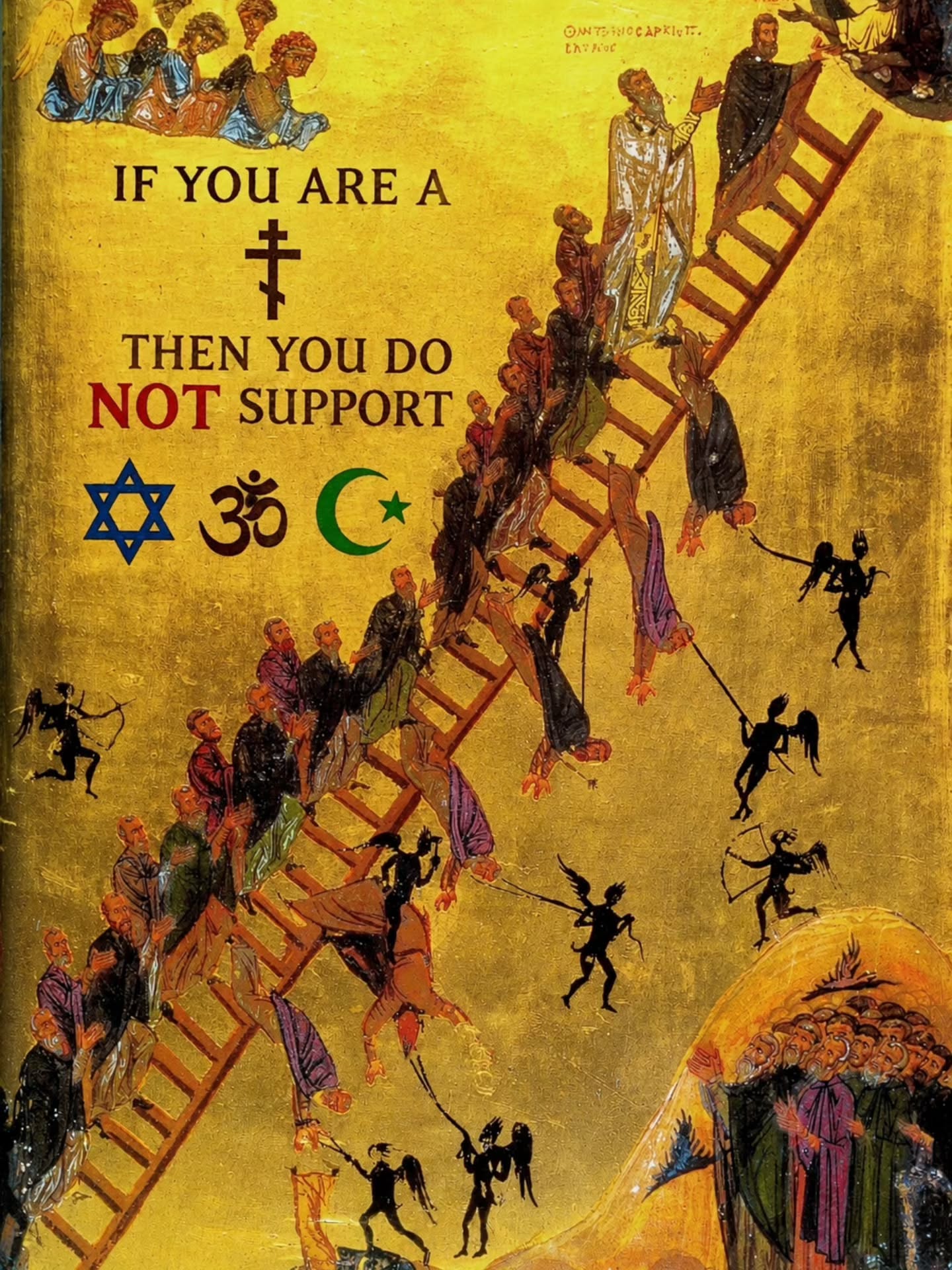
Christianity does not present Christ as one option among many, one teacher among many, or one truth among many. Jesus Christ is the Way, the Truth, and the Life. There is one Lord, one faith, one baptism (Ephesians 4:5). Truth does not change with culture, feelings, or the spirit of the age. Scripture warns that behind idolatry and false worship there can be spiritual deception: "The things which the Gentiles sacrifice they sacrifice to demons…

Christianity does not present Christ as one option among many, one teacher among many, or one truth among many. Jesus Christ is the Way, the Truth, and the Life.

There is one Lord, one faith, one baptism (Ephesians 4:5). Truth does not change with culture, feelings, or the spirit of the age.

Scripture warns that behind idolatry and false worship there can be spiritual deception: "The things which the Gentiles sacrifice they sacrifice to demons and not to God" (1 Corinthians 10:20). That is why Christians are called to discernment: not every spiritual experience, teaching, or religion comes from God.

The apostles did not die proclaiming that every path leads to God. They proclaimed the crucified and risen Christ: "Nor is there salvation in any other, for there is no other name under heaven given among men by which we must be saved" (Acts 4:12).

Christ died. Christ conquered death. Christ is risen and alive forevermore. One Christ. One Gospel. One Faith. One Truth.

If you enjoy the content, feel free to follow and join the community. May Christ guide and strengthen you always.

  • Christ is the Way, the Truth, and the Life, not one option among many
  • One Lord, one faith, one baptism (Ephesians 4:5); truth does not change with culture or feelings
  • Behind idolatry there can be spiritual deception (1 Corinthians 10:20), so Christians need discernment
  • The apostles proclaimed salvation in Christ alone (Acts 4:12), not that every path leads to God
15 opinions in the discussion What's the problem with Judaism? It's the old testament anyway. Read the discussion
Orthodox Life Instagram

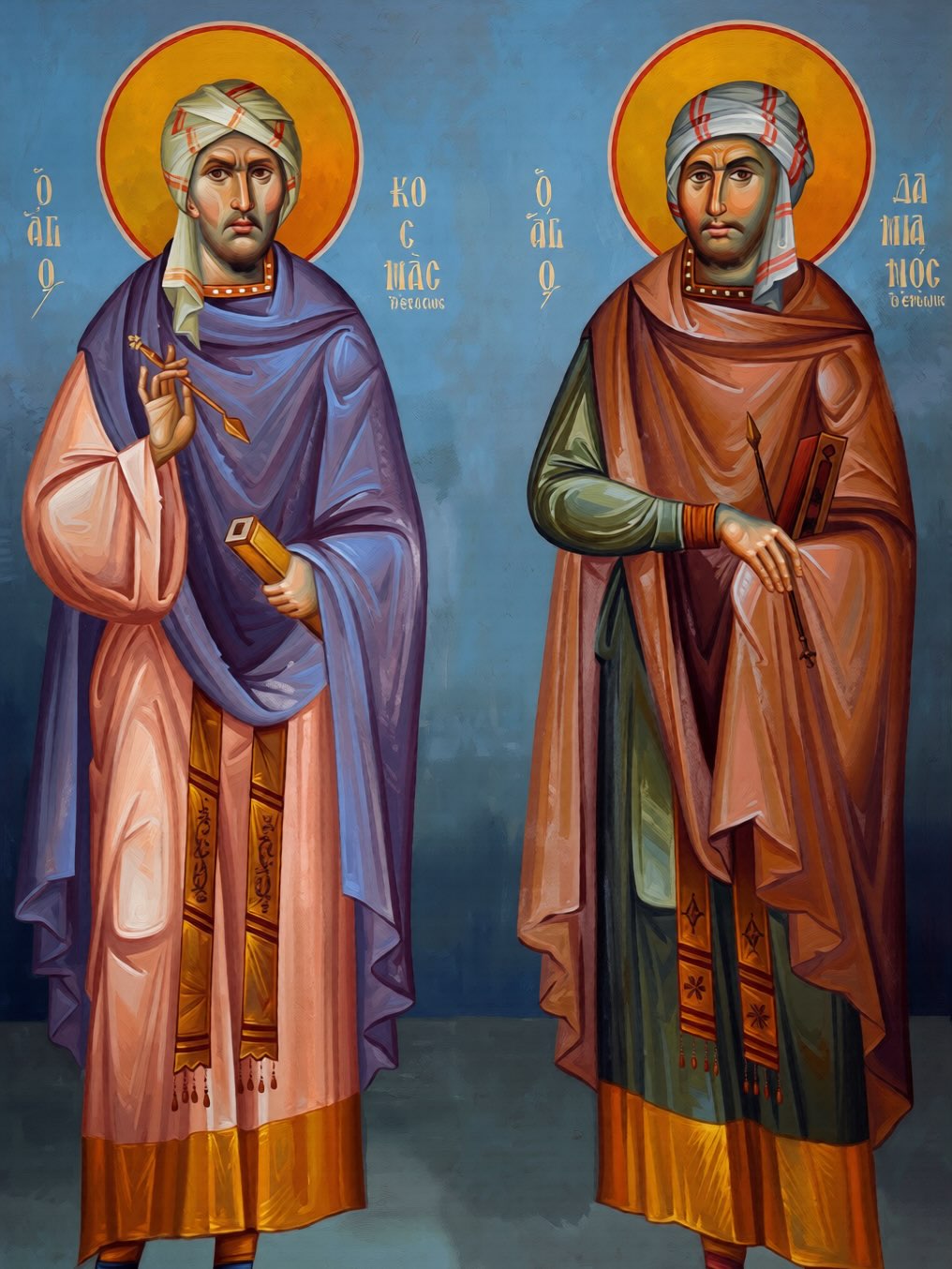
Saints Cosmas and Damian of Arabia: the silverless physicians who healed for free

The post commemorates the Holy Martyrs Cosmas and Damian of Arabia, whose feast falls on October 17. The twin brothers were Christian physicians born in Arabia in the third century. After studying medicine and the sciences in Syria, they became known as master healers. The post notes they are distinct from two other pairs of saints with the same names, one connected with Rome and one with Asia Minor. Out of love for Christ, the brothers refused…

The post commemorates the Holy Martyrs Cosmas and Damian of Arabia, whose feast falls on October 17. The twin brothers were Christian physicians born in Arabia in the third century. After studying medicine and the sciences in Syria, they became known as master healers. The post notes they are distinct from two other pairs of saints with the same names, one connected with Rome and one with Asia Minor.

Out of love for Christ, the brothers refused payment for their medical and surgical work, which earned them the Greek title Anargyroi, meaning the silverless ones. They treated rich and poor alike, cared for both body and soul, and their witness as healers led many pagans to Christianity. They settled in the seaport of Aegeae in the Roman province of Cilicia, where they continued healing and preaching.

When Emperor Diocletian began his persecution of Christians, the brothers were among the first arrested because of their visibility. The local governor, Lysias, demanded they sacrifice to pagan idols. They refused and endured tortures described as both horrific and miraculous: floggings, being bound to heavy stones and thrown into the sea, where an angel rescued them, and being nailed to crosses while stones and arrows thrown at them deflected back on the executioners.

Lysias finally ordered them beheaded around the year 287 or 303 AD. The post presents their lives as an example of unpaid, charitable medicine joined to confession of Christ under persecution.

  • Cosmas and Damian were twin brothers, physicians born in Arabia in the third century, who studied medicine in Syria.
  • They refused payment for treatment, earning the Greek title Anargyroi, the silverless ones.
  • They are distinct from other saint pairs of the same name associated with Rome and Asia Minor.
  • They settled in Aegeae in Cilicia and were arrested under Diocletian's persecution by Governor Lysias.
  • After surviving floggings, drowning, and crucifixion by tradition, they were beheaded around 287 or 303 AD.
Read more
Athonite Audio YouTube

The Fruits of Pain: Sanctification and Salvation Through Tribulation

The Fruits of Pain: Sanctification and Salvation Through Tribulation 20:57

This is an audio reading from 'The Pain,' published by Apostoliki Diakonia, presenting chapter two on the fruits of pain, with the first section on sanctification and salvation. The reader quotes St. Gregory the Theologian, St. John Climacus, and St. John Chrysostom to show that pain purifies the soul, produces virtue and love, and leads to communion with Christ. Christ is presented as the farmer of our souls who plows us with pain and prunes us…

This is an audio reading from 'The Pain,' published by Apostoliki Diakonia, presenting chapter two on the fruits of pain, with the first section on sanctification and salvation. The reader quotes St. Gregory the Theologian, St. John Climacus, and St. John Chrysostom to show that pain purifies the soul, produces virtue and love, and leads to communion with Christ.

Christ is presented as the farmer of our souls who plows us with pain and prunes us as a vine so that we bear more fruit, with a reference to John 15:2. When tribulation purifies the soul, Christ gives it sanctification and his glory, according to John 17:19: 'And for their sake I consecrate myself that they also may be consecrated in truth.' St. John Climacus teaches that sickness sometimes cleanses sins, sometimes humbles the mind, and sometimes purges evil thoughts or passions.

St. John Chrysostom explains that God does not remove grief or temptation but consoles the righteous within them: the three youths in the furnace and Daniel in the lion's den suffered, yet the flames were not extinguished and the lions not killed, and relief came in the midst of the trial. The reader cites the apostle Paul on the chain that runs from tribulation to patience, from patience to tested virtue, and from tested virtue to hope in God, which does not disappoint.

Chrysostom's commentary on the thief on the cross appears in full force: the murderer of wayfarers became a possessor of paradise, a convict on earth became a resident of heaven, because sin began from the wood of a tree and salvation bloomed from the wood of the cross. Chrysostom also says the cross raised the universe, dissolved heresy, made the earth heaven, severed the nerves of death, made Hades powerless, and grants salvation and sanctification.

The reading closes with the call to carry our cross, since in the cross are salvation, life, and sanctification.

Key moments

  1. 0:01 The fruit of pain and of Christ's death on the cross is redemption and salvation; pain is the seed that grows in patience, and we must pass through the sieve of tribulations, slanders, and persecutions to reach the harvest.
  2. 1:34 Christ is the greatest father and unique farmer of our souls, who cultivates us with the plow of pain and prunes us as a vine so we may bear more fruit of love, patience, goodness, faith, hope, sanctification, and salvation (John 15:2).
  3. 3:36 When the soul is purified by tribulation, the Lord Jesus gives it sanctification and his glory, quoting John 17:19: 'And for their sake I consecrate myself that they also may be consecrated in truth.'
  4. 5:11 St. John Climacus teaches that sickness sometimes exists for the cleansing of sins, sometimes to humble the mind, and sometimes cleanses the soul from evil thoughts or passions.
  5. 6:15 St. John Chrysostom explains that God does not remove grief or temptations but consoles us within them, as with the three youths in the fiery furnace and Daniel in the lion's den, where the flames were not put out and the lions were not killed, yet the righteous felt relief.
  6. 8:22 The apostle Paul's words are cited: tribulation produces patience, patience produces tested virtue, and tested virtue produces hope in God, which does not disappoint.
  7. 10:25 Chrysostom describes the thief on the cross: the murderer of wayfarers became a possessor of paradise, a convict on earth became a resident of heaven, for sin began from the wood of a tree and salvation bloomed from the wood of the cross.
  8. 19:45 St. John Chrysostom says the cross of the Lord raised the universe, dissolved heresy and falsehood, made the earth heaven, severed the nerves of death, made Hades powerless, and grants salvation and sanctification to mankind.

A Muslim presses an Orthodox priest to recite the shahada on camera

The video records a street encounter in which a Muslim man addresses an Orthodox priest, greeting him as 'Papaz, my friend', and tries to get him to say the Islamic declaration of faith. The shahada is recited twice in the clip: 'Ashhadu alla ilaha illallah, wa ashhadu anna Muhammadan abduhu wa rasuluh', which confesses that there is no god but Allah and that Muhammad is his servant and messenger. The priest is the person being pressed to repeat…

The video records a street encounter in which a Muslim man addresses an Orthodox priest, greeting him as 'Papaz, my friend', and tries to get him to say the Islamic declaration of faith. The shahada is recited twice in the clip: 'Ashhadu alla ilaha illallah, wa ashhadu anna Muhammadan abduhu wa rasuluh', which confesses that there is no god but Allah and that Muhammad is his servant and messenger.

The priest is the person being pressed to repeat these words, and the exchange is framed by its uploader as an example of harassment tied to apologetics debates between Muslims and Orthodox Christians. The available transcript is fragmentary. After the recitations, the speaker says 'My history, my, alhamdulillah', and the recording offers little further content, so the priest's responses and how the encounter ended cannot be established from the text alone.

The clip is tagged with #islam, #orthodox, #orthodoxchristian, #muslim and #apologetics, indicating it was shared as material in ongoing religious polemics. Readers should treat it as a short, one-sided fragment of a longer conversation rather than a complete record of the exchange.

Key moments

  1. A speaker greets another with 'Papaz, my friend'.
  2. The shahada is recited twice: 'Ashhadu alla ilaha illallah, wa ashhadu anna Muhammadan abduhu wa rasuluh'.
  3. The speaker says 'My history, my, alhamdulillah'.
Read more

Father James: In Orthodoxy, holiness itself is evangelism

The post addresses how evangelism is understood in the Orthodox Church, using a clip of Father James, a former Young Life director who became an Orthodox priest. Father James compares evangelism models from his two contexts and says the power of evangelism in the Orthodox Church is holiness. A sanctified person who does their prayers, loves God, and loves people, and who lives their whole life in Christ, whether a bank teller, priest, mechanic, or housewife, is evangelism. One whole, complete person living in Christ is enough.

Key moments

  1. The speaker, a former Young Life director now an Orthodox priest, is asked how evangelism differs between the two contexts.
  2. He says the power of evangelism in the Orthodox Church is holiness: a person who does their prayers and loves God and loves people.
  3. Evangelism in the Orthodox Church is a sanctified person living their life, whether a bank teller, priest, mechanic, or housewife; one whole, complete person living in Christ is evangelism.
15 opinions in the discussion But is that really enough? People won't grasp and accept the gospel just from seeing a holy Christian. Read the discussion
Orthodox Sound YouTube

Will the Heterodox Be Saved? St. Philaret of New York on Salvation Outside the Church

Will the Heterodox Be Saved? St. Philaret of New York on Salvation Outside the Church 13:56

Saint Philaret the Confessor of New York, in an essay originally published in Orthodox Life in 1984, addresses whether Catholics and Protestants can be saved. He holds together two truths without softening either one: the Orthodox Church confesses herself as the one, holy, Catholic, and Apostolic Church, and Saint Cyprian's words that outside the Church there is no salvation cannot be set aside; yet the eternal judgment of every soul belongs to…

Saint Philaret the Confessor of New York, in an essay originally published in Orthodox Life in 1984, addresses whether Catholics and Protestants can be saved. He holds together two truths without softening either one: the Orthodox Church confesses herself as the one, holy, Catholic, and Apostolic Church, and Saint Cyprian's words that outside the Church there is no salvation cannot be set aside; yet the eternal judgment of every soul belongs to God alone, who says, 'I will have mercy on whom I will have mercy.' Saint Philaret draws a distinction between a person who knowingly rejects the Orthodox faith and a person raised outside it who never consciously turned away from the Church.

The difference concerns knowledge, intentions, and responsibility. He reads the Lord's warning about blasphemy against the Holy Spirit as settled resistance to truth a person has recognized, not honest error. The Apostle Paul's own conversion supports this: he persecuted the church yet acknowledged he acted ignorantly in unbelief, showing that grave errors need not be a person's final condition.

The essay cites Paul's words that God judges those outside the Church, reminding readers that knowledge of another person's spiritual condition is limited. Human virtue is not a substitute for divine grace, and ancestry cannot by itself establish salvation; the Beatitudes describe a righteousness of poverty of spirit, purity of heart, mercy, and meekness that no one achieves apart from grace.

Blessed Theophan the Recluse, asked whether the heterodox would be saved, answered that they have a Savior who desires the salvation of every human being, and told the questioner to examine his own sins instead. Saint Philaret ends with a warning aimed at Orthodox Christians themselves: one who deliberately betrays the fullness of the truth by entering another faith places his own salvation in danger, so possessing the truth should lead to repentance rather than pride.

Key moments

  1. 0:00 Saint Philaret holds two truths together: the Orthodox Church has received the fullness of divine revelation and the means of salvation, yet the eternal judgment of every soul remains in God's hands, who says, 'I will have mercy on whom I will have mercy.'
  2. 1:35 Saint Cyprian of Carthage declared, 'Outside the church, there is no salvation,' a confession that cannot be set aside, though understanding it requires distinguishing the truth entrusted to the Church from God's judgment of individuals.
  3. 3:05 The Apostle Paul asks, 'What have I to do to judge them also that are without? Do not ye judge them that are within, but them that are without God judgeth,' reminding us that our knowledge of another person's spiritual condition is limited while God's is complete.
  4. 4:06 A distinction must be made between someone who has knowingly rejected the Orthodox faith and someone raised outside it who never consciously turned away from the Church; the difference concerns knowledge, intentions, and responsibility.
  5. 5:07 The Lord warns that blasphemy against the Holy Spirit will not be forgiven; Saint Philaret understands this as persistent opposition to the spirit of truth that hardens the heart against what a person has recognized as true.
  6. 6:11 The Apostle Paul persecuted the church before his conversion, yet acknowledged he acted ignorantly in unbelief; his example shows that grave sins and errors need not remain a person's final condition.
  7. 10:22 Human virtue is not a substitute for divine grace, and ancestry cannot by itself establish salvation; the Beatitudes reveal a righteousness of poverty of spirit, purity of heart, mercy, and meekness that no one achieves through self-sufficiency apart from grace.
  8. 11:23 Blessed Theophan the Recluse said the heterodox have a Savior who desires the salvation of every human being and told the questioner to examine his own sins, warning that an Orthodox Christian who deliberately betrays the truth by entering another faith endangers his own salvation.
Prayer Orthodoxy ® with Live Orthodox Instagram

A Short Orthodox Clip With No Words, Only Laughter

The post consists of a video and a set of hashtags: #OrthodoxChristianity, #OrthodoxChurch, #Orthodoxy, #Christianity and #Orthodox. The video has a prayer hands emoji in the post title area, suggesting a devotional framing, but the transcript itself contains no spoken words, no names and no topics. The only audible content is laughter. There is no discussion attached to the post: no comments are reported, no questions are raised and no…

The post consists of a video and a set of hashtags: #OrthodoxChristianity, #OrthodoxChurch, #Orthodoxy, #Christianity and #Orthodox. The video has a prayer hands emoji in the post title area, suggesting a devotional framing, but the transcript itself contains no spoken words, no names and no topics. The only audible content is laughter. There is no discussion attached to the post: no comments are reported, no questions are raised and no explanations are given by the poster.

Because the transcript is empty of speech, nothing can be said about who appears in the video, where it was recorded or what occasioned the laughter. The poster tags the material as Orthodox Christian content, so it was shared with an Orthodox audience in mind, but the audio does not carry any teaching, reading or sermon. Read together, the post is a short tagged clip in which people are heard laughing, posted without commentary.

Readers opening it will find no narration to follow and no stated subject, only the sound of laughter for the length of the recording. The summary of the source states plainly that nothing else can be reported from it, and no further details exist in the available material.

Key moments

  1. 0:00 The transcript consists only of laughter with no spoken content.
Read more
Disgruntled Docs with Trust God ☦︎︎︎ Instagram

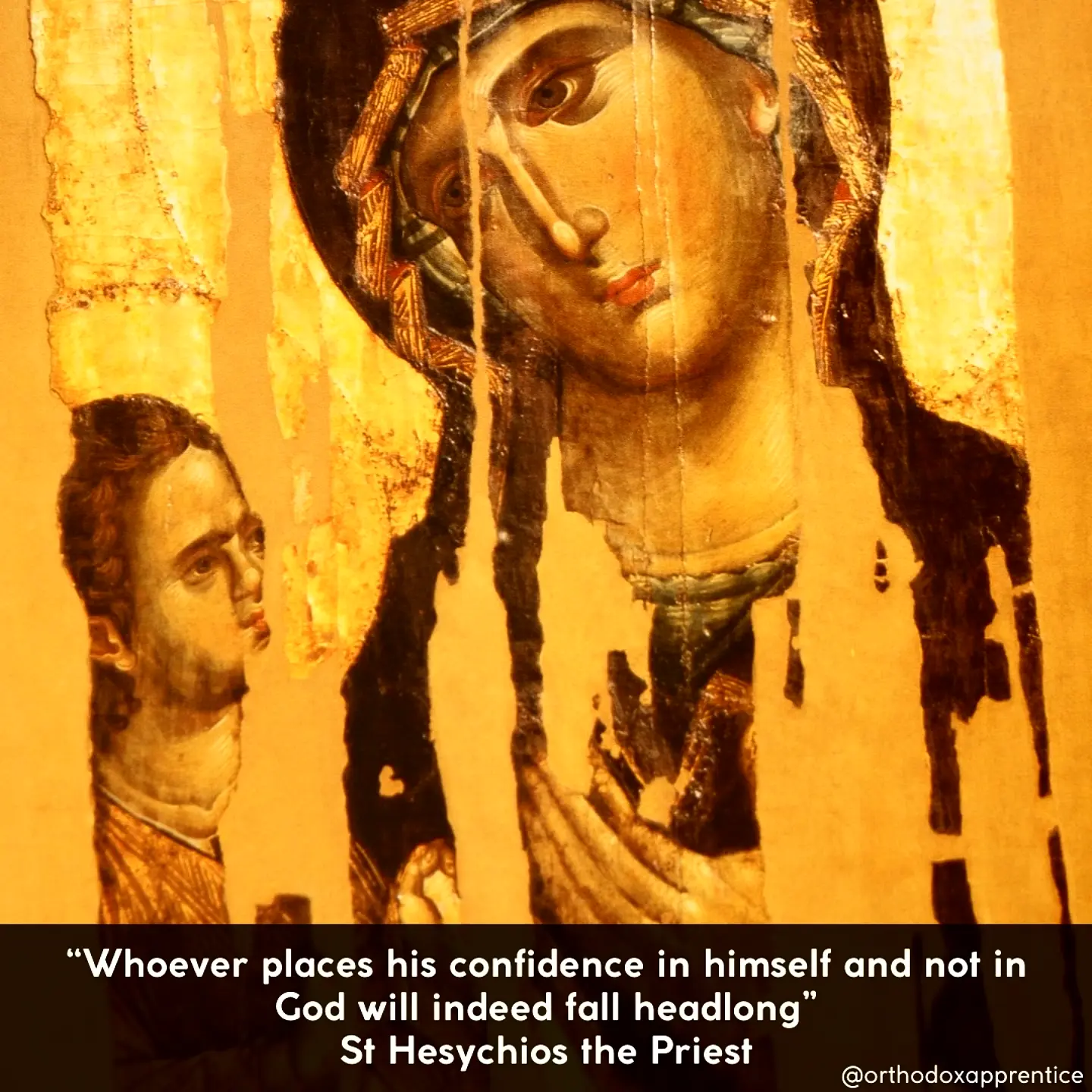
St John Chrysostom on Guarding the Tongue

The post shares a short quotation attributed to St John Chrysostom: 'Lest us always guard our tongue; not that it should always be silent, but that it should speak at the proper time.' The saying draws a distinction between silence and discretion. Guarding the tongue, in the saint's words, does not mean never speaking; it means speaking at the proper time. The post presents the quote as a stand-alone saying for readers, with hashtags marking it…

The post shares a short quotation attributed to St John Chrysostom: 'Lest us always guard our tongue; not that it should always be silent, but that it should speak at the proper time.' The saying draws a distinction between silence and discretion. Guarding the tongue, in the saint's words, does not mean never speaking; it means speaking at the proper time.

The post presents the quote as a stand-alone saying for readers, with hashtags marking it as a saints' quote and Orthodox Christian quote. There is no further commentary, story, or discussion attached to the post; it consists of the quotation and its attribution alone.

  • The post quotes St John Chrysostom on guarding the tongue.
  • The quote says the tongue should not always be silent.
  • It says speech should come at the proper time.
  • The post offers the quote alone, with no added commentary.
  • It is tagged as an Orthodox saints' quote.
Read more
Tzanetos Kavaliotis YouTube

The Greatest Born of Woman: John the Baptist from the Womb to Machaerus

The Greatest Born of Woman: John the Baptist from the Womb to Machaerus 36:01

The video opens at Herod's birthday banquet, where a dancing girl is promised anything she asks, and by morning John the Baptist's head is carried up the stairs on a plate. From there it traces John's whole life. The angel announces to Zechariah in the temple that Elizabeth will bear a son who will go before the Lord in the spirit and power of Elijah; Zechariah's unbelief leaves him mute until the naming. The baby leaps in Elizabeth's womb at…

The video opens at Herod's birthday banquet, where a dancing girl is promised anything she asks, and by morning John the Baptist's head is carried up the stairs on a plate. From there it traces John's whole life. The angel announces to Zechariah in the temple that Elizabeth will bear a son who will go before the Lord in the spirit and power of Elijah; Zechariah's unbelief leaves him mute until the naming.

The baby leaps in Elizabeth's womb at Mary's greeting, and after his birth Zechariah writes 'his name is John' and regains his speech. Scripture covers about thirty years in one verse: John grows in the wilderness until he appears publicly to Israel. He preaches repentance at the Jordan, calls the Pharisees and Sadducees a brood of vipers, and gives the crowds, tax collectors, and soldiers concrete instructions: share clothing and food, collect no more than required, be content with pay.

When Jesus comes to be baptized, John protests that he needs baptism from Jesus, then obeys, and the Trinity is revealed at the Jordan, the moment the Church celebrates at Theophany. John points his own disciples, including Andrew, to Jesus as the Lamb of God and lets them go, answering 'He must become greater, I must become less.' His rebuke of Herod for taking his brother Philip's wife leads to imprisonment, doubt in the cell, and beheading at Herodias's request.

The account draws on St. John Chrysostom's Homilies 36 and 48 on Matthew, St. Ignatius of Antioch, Josephus's Antiquities Book 18, excavations at Machaerus published in Biblical Archaeology Review, and a radiocarbon and DNA study of the Sveti Ivan relics by Oxford and Copenhagen. It closes with Herod's downfall and exile, John's influence after death, and the Church's feasts for him: his Conception on 23 September, Nativity on 24 June, Synaxis on 7 January, and Beheading on 29 August, kept as a strict fast.

Key moments

  1. 0:03 At Herod's birthday banquet a dancing girl is promised anything she wants, and by morning John the Baptist's head is carried up the stairs on a plate.
  2. 1:36 The angel announces to Zechariah in the temple that Elizabeth will bear a son named John, who will go before the Lord in the spirit and power of Elijah; Zechariah's unbelief leaves him mute until the naming.
  3. 3:13 The baby leaps in Elizabeth's womb at Mary's greeting, and after John's birth Zechariah writes 'his name is John' and regains his speech.
  4. 4:15 Scripture covers about thirty years in one verse: John grows in the wilderness until he appears publicly to Israel, fulfilling Malachi's promise of a messenger.
  5. 5:19 John preaches repentance at the Jordan, calls the Pharisees and Sadducees a brood of vipers, and tells the crowd, tax collectors, and soldiers concrete acts: share clothing and food, collect no more than required, be content with pay.
  6. 9:31 Jesus comes to be baptized; John protests that he needs baptism from Jesus, then obeys, and the Trinity is revealed at the Jordan, the moment the Church celebrates at Theophany.
  7. 14:15 John points his own disciples, including Andrew, to Jesus as the Lamb of God and lets them go; when told everyone is going to Christ, he answers 'He must become greater, I must become less.'
  8. 18:28 John rebukes Herod for taking his brother Philip's wife, is imprisoned, sends disciples to Christ from his cell, and is beheaded at Herodias's request during the banquet; Josephus and archaeology at Machaerus confirm the setting, and Herod eventually loses everything and is exiled.
Ancient Faith YouTube

Sign Language at the Liturgy: The Orthodox Christian Deaf Association

Sign Language at the Liturgy: The Orthodox Christian Deaf Association 40:58

Melanie of Ancient Faith Presents interviews Savanna Foster, president of the Orthodox Christian Deaf Association (OCDA). Savanna explains how she became Orthodox at age five at St. George Greek Orthodox Church in Shreveport, Louisiana, and learned American Sign Language as a teenager after meeting two Deaf people at a bookstore. When her father suggested she start a Deaf ministry, she found that no Orthodox deaf organization existed anywhere,…

Melanie of Ancient Faith Presents interviews Savanna Foster, president of the Orthodox Christian Deaf Association (OCDA). Savanna explains how she became Orthodox at age five at St. George Greek Orthodox Church in Shreveport, Louisiana, and learned American Sign Language as a teenager after meeting two Deaf people at a bookstore.

When her father suggested she start a Deaf ministry, she found that no Orthodox deaf organization existed anywhere, so they founded the OCDA. Her own hearing later deteriorated and she now uses hearing aids, which made the ministry personal for her. The association has over 600 members worldwide and works to make Orthodox services accessible to Deaf and hard of hearing people.

It provides interpreters for Divine Liturgies, livestreams services in ASL with rotating interpreters, holds monthly catechism classes, and organizes an annual national conference. A major challenge was the absence of theologically correct Orthodox signs in ASL: there was no sign for Theotokos, baptism, or the Cherubim and Seraphim.

A lexicon team formed by the OCDA under the Assembly of Bishops created new signs that will soon be presented to the bishops for approval. Savanna rejects the idea that standing in the pew is enough for a Deaf person to participate, comparing it to an English speaker attending a parish that speaks only Arabic. She recalls the first conference in Dallas at an OCA cathedral with Bishop Gerasim presiding, where Deaf participants signed 'Lord have mercy' during the Liturgy and a priest called sign language the Word of God incarnate.

She invites listeners to visit the OCDA website, volunteer, donate, and pray for the ministry, and describes hopes for interpreters in every church and accessible theological education for Deaf Orthodox Christians.

Key moments

  1. 1:06 Savanna became Orthodox at age five through the Greek Archdiocese at St. George in Shreveport, Louisiana.
  2. 2:07 At sixteen she saw two people signing at Barnes and Noble, searched YouTube for basic signs, greeted them, and decided to learn ASL through YouTube over the next six months, then immersed herself for six or seven years at a nearby Deaf service center with Deaf friends as her teachers.
  3. 4:09 Her father suggested she serve in an Orthodox deaf ministry; unable to find any existing deaf association in the Orthodox world, she and her father founded the OCDA. About three years ago a doctor told her she needs hearing aids, so the ministry became personal to her.
  4. 6:16 The OCDA's main goal is making Orthodox services accessible to Deaf and hard of hearing people through interpreters at Liturgy, catechism classes, livestreamed Divine Liturgies in ASL, and conferences. It has over 600 members, including over 60 Deaf or hard of hearing people and 38 to 40 who have inquired about the church, with four to five interpreters livestreaming Liturgies.
  5. 11:24 Challenges include the lack of interpreters at services and, discovered early on, the absence of theologically correct Orthodox ASL signs, such as no sign for Theotokos, baptism, or the Cherubim and Seraphim. A lexicon team formed by the OCDA under the Assembly of Bishops created new signs that will soon be presented by Lolla and Hanna to the bishops for approval.
  6. 13:57 Savanna rejects the misconception that standing in the pew and watching means a Deaf person can participate; being in the building and accessing what happens are two different things. She compares it to an English speaker attending an Antiochian parish that speaks only Arabic.
  7. 19:10 For those interested in Orthodoxy, the OCDA offers free membership, monthly catechism classes (soon one taught by a Deaf person and one by a priest), connections to interpreters or agencies, weekly livestreamed Liturgies with rotating interpreters, welcome meetings, social events, and an annual national conference; the first drew over 50 people in Dallas, the second over 40 in Greenville, South Carolina, and the next is planned for California.
  8. 33:06 At the first conference in Dallas at an OCA cathedral, with Bishop Gerasim presiding, the Liturgy in ASL moved her deeply: Deaf participants signing 'Lord have mercy' in response, and tears in their eyes. A priest said sign language is the Word of God incarnate, and she describes this moment as the most beautiful thing she has ever seen.
George Instagram

Glory to God for All Things: The Sin of Complaining We Commit Daily

The speaker examines complaining as a sin committed daily without being noticed. People complain about weather, traffic, work, family and tiredness, and rarely recognize these words as sin. The post turns to the Israelites as an example: after God brought them out of Egypt, he fed them with bread from heaven and gave them water from a rock, yet they complained again and again. Because of their grumbling, that whole generation never entered the…

The speaker examines complaining as a sin committed daily without being noticed. People complain about weather, traffic, work, family and tiredness, and rarely recognize these words as sin. The post turns to the Israelites as an example: after God brought them out of Egypt, he fed them with bread from heaven and gave them water from a rock, yet they complained again and again.

Because of their grumbling, that whole generation never entered the Promised Land. The speaker cites Saint Paul, who writes that believers should do everything without complaining. The argument is that every complaint tells God that what he gave is not good enough; complaining is ingratitude and blinds a person to the good things God gives daily.

The example of Saint John Chrysostom closes the post. He was sent into exile and died on the road, sick and alone, and his last words were, 'Glory to God for all things.' The speaker asks viewers to replace each complaint with that phrase and to consider what they complain about most.

Key moments

  1. Complaining about weather, traffic, work, family and tiredness is a sin we commit daily without noticing.
  2. The Israelites complained even after God fed them with bread from heaven and water from a rock, and their grumbling kept that generation out of the Promised Land.
  3. Saint Paul writes: do everything without complaining.
  4. Every complaint tells God that what he gave is not good enough; it is ingratitude that blinds us to his daily gifts.
  5. Saint John Chrysostom died in exile, sick and alone, saying, 'Glory to God for all things.'
  6. Replace each complaint today with 'Glory to God for all things.'
Read more

Love That Expects Nothing Back

The speaker takes up the question of what love actually is, arguing that love is perhaps the most misused word in human history. When people speak of love, they usually mean love of self-interest: affection or care that returns some benefit to the one who gives it. Against this, the speaker holds up helping someone who has nothing to give back except prayer and gratitude. Such help, given to a person who cannot repay us, is proof and…

The speaker takes up the question of what love actually is, arguing that love is perhaps the most misused word in human history. When people speak of love, they usually mean love of self-interest: affection or care that returns some benefit to the one who gives it. Against this, the speaker holds up helping someone who has nothing to give back except prayer and gratitude.

Such help, given to a person who cannot repay us, is proof and confirmation of true, free love in Christ. The love that costs us something and brings no return is the love that resembles Christ's own. The speaker then draws a connection between how we treat the poor and how we will see God.

If we do not recognise the living God in the eyes of our neighbour, especially the neighbour from whom we expect nothing, we will hardly recognise Him in power and glory. The person who cannot repay us becomes the place where our love is tested and where God is either seen or missed. The teaching moves from a diagnosis of the word love to a concrete practice: giving to those who can offer only prayer and thanks in return, and receiving that prayer as enough.

Key moments

  1. Helping someone who cannot repay us, except by praying for us and giving thanks, is proof and confirmation of true, free Christ-like love.
  2. Love is perhaps the most misused word in human history; what we usually mean by love is actually love of self-interest.
  3. If we do not recognise the living God in the eyes of our neighbour, especially one from whom we expect nothing, we will hardly recognise Him in power and glory.
Read more

Converts from Protestantism and Catholicism are reaching out to an Orthodox priest daily

The author, an Orthodox priest, writes that he receives messages nearly every day from people who are coming into the Orthodox Church. He says these inquirers and converts come from Protestant backgrounds, Catholic backgrounds, and other groups. He is careful to attribute the movement to God rather than to himself, writing that it has nothing to do with him and that all glory belongs to God. In his words, God is moving and calling His people…

The author, an Orthodox priest, writes that he receives messages nearly every day from people who are coming into the Orthodox Church. He says these inquirers and converts come from Protestant backgrounds, Catholic backgrounds, and other groups. He is careful to attribute the movement to God rather than to himself, writing that it has nothing to do with him and that all glory belongs to God.

In his words, God is moving and calling His people into the Ark of Salvation, a traditional Orthodox image for the Church. The post carries hashtags for Orthodox Christianity, Catholicism, Protestantism, and apologetics, and it ends with an Orthodox cross symbol. Because the post is short, the substance is the priest's own testimony: a steady, near-daily stream of messages from people outside Orthodoxy who are seeking to join the Church.

He presents this as evidence of God's action rather than as the result of his own work or outreach. The post does not name specific individuals, numbers, or stories, and no further discussion or replies are included in the source text. It stands as a brief public witness from a priest who says he is personally witnessing a flow of converts from other Christian traditions into Orthodoxy.

  • The author says he receives similar messages nearly every day from people coming into the Orthodox Church.
  • Those reaching out come from Protestant, Catholic, and other groups.
  • He attributes the movement to God, not to himself: 'It has nothing to do with me. All Glory to God.'
  • He describes God as calling His people into the Ark of Salvation, an image for the Church.
  • The post is tagged with Orthodox, Catholic, Protestant, and apologetics hashtags.
Read more

Live Byzantine Chant from Aleppo: Psalm 102 Sung by Two Antiochian Cantors

A live recording from the Archdiocese of Aleppo (2026) presents the chant known as the Akolouthia of the Righteous, performed by Bishop Romanos the cantor and Metropolitan Ephrem Maalouli. The recording is shared under Byzantine chant tags associated with the See of Antioch. The sung text is Psalm 102 in Arabic, a psalm of lament. The chanters voice the words of a sufferer who describes himself through images of desert and ruin. He says he has…

A live recording from the Archdiocese of Aleppo (2026) presents the chant known as the Akolouthia of the Righteous, performed by Bishop Romanos the cantor and Metropolitan Ephrem Maalouli. The recording is shared under Byzantine chant tags associated with the See of Antioch. The sung text is Psalm 102 in Arabic, a psalm of lament. The chanters voice the words of a sufferer who describes himself through images of desert and ruin.

He says he has become like a pelican of the wilderness, a bird of the wastes. He compares himself to a night owl in the ruins, keeping watch through the night. He is like a lone sparrow on the housetop, awake night after night.

His tears have become his bread day and night, day after day. The performance keeps the Arabic text of the psalm within the Byzantine melodic tradition of the Antiochian church, and the live setting ties the singing to the Aleppo archdiocese in 2026.

Key moments

  1. The speaker says he is like a pelican (غتاب) of the wilderness, a bird of the wastes.
  2. He says he has become like a night owl (بومة) in the ruins, keeping watch through the night.
  3. He says he has become like a lone sparrow on the housetop, awake night after night.
  4. His tears have become his bread day and night, day after day.
Read more