WeOrthodox
EN UA

Prayer Orthodoxy ®

Instagram ↗ 196 discussions

Prayer Orthodoxy® Orthodox Christianity Through Scripture, Tradition, and the Saints Deepen Your Understanding of the Faith

Prayer Orthodoxy ® with The National Herald Instagram

Gunmen Open Fire at Greek Orthodox Church in Karak, Jordan

Gunmen opened fire inside a Greek Orthodox church in Karak, Jordan, on Friday, causing a number of deaths and injuries, the kingdom's law enforcement agency said. Authorities did not immediately provide a death toll. The church is located about 180 kilometers south of the capital, Amman. Government spokesman Mohammad al-Momani stated that security services were investigating the shooting. Karak is home to a minority Christian population. The…

Gunmen opened fire inside a Greek Orthodox church in Karak, Jordan, on Friday, causing a number of deaths and injuries, the kingdom's law enforcement agency said. Authorities did not immediately provide a death toll. The church is located about 180 kilometers south of the capital, Amman. Government spokesman Mohammad al-Momani stated that security services were investigating the shooting.

Karak is home to a minority Christian population. The city was previously targeted in 2016 when gunmen ambushed police in a series of attacks, including at a Crusader castle popular with tourists. Those attacks killed ten people, among them seven officers, and wounded dozens. Jordanian security forces killed the gunmen after a long standoff.

  • Gunmen attacked a Greek Orthodox church in Karak, Jordan, on Friday.
  • The shooting caused deaths and injuries; no official toll was released immediately.
  • Security services are investigating, per government spokesman Mohammad al-Momani.
  • Karak has a minority Christian population and experienced a deadly terrorist attack in 2016.
  • In 2016, gunmen killed ten people, including seven police officers, at a Crusader castle and other sites.
Read more
Prayer Orthodoxy ® with Prayer Orthodoxy® Instagram

St. Porphyrios of Kavsokalyvia: Biography and Three Sayings

The post provides a concise overview of the life of St. Porphyrios of Kavsokalyvia. It states that he was born in 1906 on the island of Evia in Greece. As a young boy he went to Mount Athos, where he lived a monastic life. He became widely known for his dedication to prayer, his humility, his love for others, and his gift of spiritual discernment. The saint reposed on December 2, 1991, and was formally canonized in 2013. In addition to the…

The post provides a concise overview of the life of St. Porphyrios of Kavsokalyvia. It states that he was born in 1906 on the island of Evia in Greece. As a young boy he went to Mount Athos, where he lived a monastic life.

He became widely known for his dedication to prayer, his humility, his love for others, and his gift of spiritual discernment. The saint reposed on December 2, 1991, and was formally canonized in 2013. In addition to the biographical details, the post includes three short sayings attributed to St. Porphyrios.

The first saying urges believers to love Christ and to put nothing before that love. The second saying notes that in his own life prayer held the first place. The third saying declares that Christ is everything, identifying Him as joy, life, and light.

The entire text is presented in both English and Greek, with the Greek translation following the English version. There is no further discussion or commentary included in the post.

  • Born 1906 in Evia, Greece; entered Mount Athos as a boy
  • Renowned for prayer, humility, love, and spiritual discernment
  • Reposed December 2, 1991; canonized 2013
  • "Love Christ and put nothing before His Love"
  • "Christ is everything. He is joy, He is life, He is light."
Read more

Paraklesis closing hymn to the Lady of Hamtoura chanted by Archimandrite Yaacoub Hanna

The post shares an archived recording of the closing hymn from the Paraklesis service dedicated to the icon of the Lady of Hamtoura. Archimandrite Yaacoub Hanna chants the hymn. The prayer addresses the Theotokos as the Mother of God and the Lady of the house of God's servant. It describes the stars of the world prostrating before her humility. The speaker places all hope in her and entrusts himself to her protection, asking to be preserved…

The post shares an archived recording of the closing hymn from the Paraklesis service dedicated to the icon of the Lady of Hamtoura. Archimandrite Yaacoub Hanna chants the hymn. The prayer addresses the Theotokos as the Mother of God and the Lady of the house of God's servant. It describes the stars of the world prostrating before her humility.

The speaker places all hope in her and entrusts himself to her protection, asking to be preserved under the cover of her care. The hymn also calls her the protection that gathers and exists in uncreated holiness, and asks for joy and success in life through her intercession. It references those who glorify the Lord who has truly glorified her. The recording is presented without additional commentary.

Key moments

  1. 0:00 The prayer opens with 'Amen, O God,' addressing the Theotokos as the speaker's righteousness and describing stars in the world prostrating to her humility.
  2. 0:32 She is called the protection that gathers, existing in uncreated holiness, and the speaker asks for joy and success in life through her.
  3. 1:03 The speaker references those who glorify the Lord who has truly glorified her, calling her the Lady of the house of God's servant.
  4. 1:39 The prayer concludes by placing all hope in the Theotokos, entrusting everything to her, and asking to be preserved under the cover of her care.
Read more
Prayer Orthodoxy ® with ICXC☦︎NIKA Instagram

Four saints on gratitude, trust, and thanksgiving

The author shares a series of quotations from four Orthodox saints on the themes of gratitude, trust in God, and thanksgiving in all circumstances. The first line reads: "Thank God for what He has given, trust Him with what He has withheld. Glory to God for all things." This is followed by a saying of St Paisios the Athonite: "If a person entrusts himself to God, then God will not abandon him." St Dorotheos of Gaza adds: "When He does not grant…

The author shares a series of quotations from four Orthodox saints on the themes of gratitude, trust in God, and thanksgiving in all circumstances. The first line reads: "Thank God for what He has given, trust Him with what He has withheld. Glory to God for all things." This is followed by a saying of St Paisios the Athonite: "If a person entrusts himself to God, then God will not abandon him."

St Dorotheos of Gaza adds: "When He does not grant him what he needs, He makes him compensate for the thing he needs through the working of the mind and teaches him patience." St Anthony the Great advises: "When you sit down to eat, pray. When you eat bread, do so thanking Him for being so generous to you."

St John Chrysostom concludes: "Let us give thanks for everything, for whatever happens, this is thanksgiving." The post presents these sayings without additional commentary.

  • Opening exhortation to thank God for gifts and trust Him with what is withheld
  • St Paisios on God not abandoning those who entrust themselves to Him
  • St Dorotheos on God teaching patience and resourcefulness when needs are not granted
  • St Anthony the Great on praying and giving thanks at meals
  • St John Chrysostom on thanksgiving for all things as the essence of gratitude
Read more

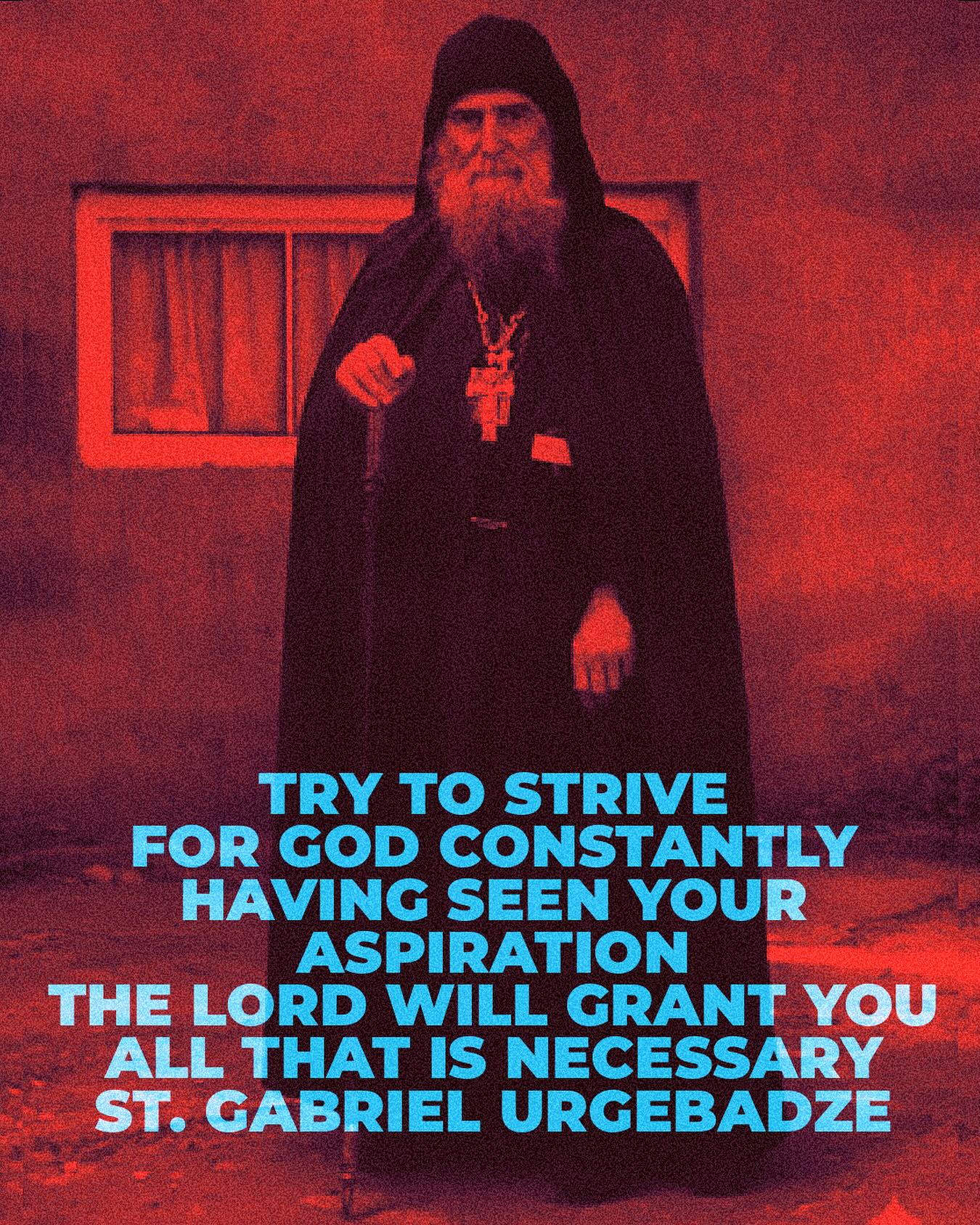
St. Gabriel Urgebadze: Strive for God Constantly

The post shares a saying attributed to St. Gabriel Urgebadze, a Georgian Orthodox saint. The quote reads: "TRY TO STRIVE FOR GOD CONSTANTLY HAVING SEEN YOUR ASPIRATION THE LORD WILL GRANT YOU ALL THAT IS NECESSARY." It encourages believers to maintain continuous effort toward God, with the assurance that God recognizes this aspiration and provides what is needed. No further discussion or commentary is present in the source.

  • Strive for God constantly.
  • The Lord sees your aspiration.
  • He will grant all that is necessary.
  • Attributed to St. Gabriel Urgebadze.
Read more
Prayer Orthodoxy ® Instagram

Saints Who Embraced Monastic Life for Christ

The post presents the witness of saints who entered monastic life, leaving behind possessions, comforts, and ambitions to dedicate themselves to Christ. Through prayer, fasting, obedience, humility, and repentance, these holy men pursued union with God. Their monasteries became places of spiritual healing, and their lives continue to inspire Orthodox Christians across generations. The text identifies their greatest legacy as their holiness,…

The post presents the witness of saints who entered monastic life, leaving behind possessions, comforts, and ambitions to dedicate themselves to Christ. Through prayer, fasting, obedience, humility, and repentance, these holy men pursued union with God. Their monasteries became places of spiritual healing, and their lives continue to inspire Orthodox Christians across generations.

The text identifies their greatest legacy as their holiness, their love for Christ, and their prayers for the world. The same message appears in Greek, describing the saints who followed the monastic path, who struggled for union with God through the same virtues, and whose monasteries became places of spiritual therapy. The accompanying images show several monks and the Monastery of Saint Nektarios of Aegina.

  • Saints left worldly goods and ambitions for monastic life
  • They pursued union with God through prayer, fasting, obedience, humility, repentance
  • Their monasteries became centers of spiritual healing
  • Their legacy is holiness, love for Christ, and prayers for the world
  • Images include monks and the Monastery of Saint Nektarios of Aegina
Read more

The Church as Hospital and Heaven: Chrysostom and Germanus on Orthodox Worship

The post presents two patristic quotes and a brief explanation of Orthodox worship. Saint John Chrysostom describes the Church as a hospital for souls rather than a courtroom. The author notes that every icon proclaims the Gospel, every candle represents prayer, and every act of worship draws the faithful closer to Christ.

Saint Germanus of Constantinople teaches that the Church is an earthly heaven in which the heavenly God dwells and walks. The same content appears in Greek translation.

  • Saint John Chrysostom: the Church is a hospital for souls, not a courtroom
  • Icons proclaim the Gospel, candles symbolize prayer, worship draws us to Christ
  • Saint Germanus of Constantinople: the Church is an earthly heaven where God dwells and walks
  • The text is given in English and Greek
Read more
Prayer Orthodoxy ® with Live Orthodox Instagram

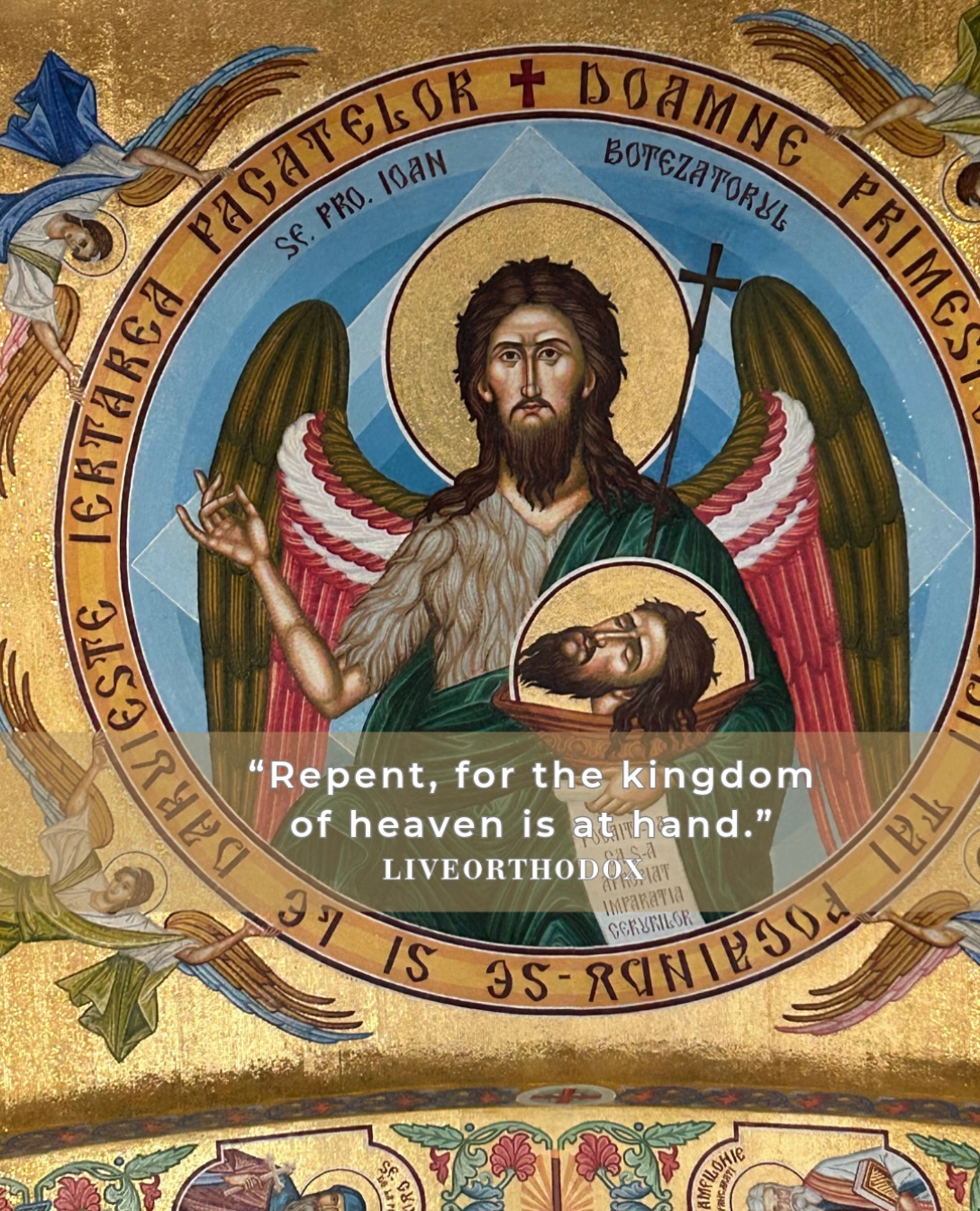
St. John the Baptist's call to repentance as the kingdom draws near

The post presents St. John the Baptist's message that people must change their minds and turn from sin because God's rule has drawn near in Jesus Christ. It cites Matthew 3:2, "Repent, for the kingdom of heaven is at hand," and describes repentance as a complete shift in heart, values, and direction. The post includes Romanian text referencing a prayer to St. John the Forerunner for forgiveness of sins: "Păcătelor Doamne Botezătorul primește Sf.…

The post presents St. John the Baptist's message that people must change their minds and turn from sin because God's rule has drawn near in Jesus Christ. It cites Matthew 3:2, "Repent, for the kingdom of heaven is at hand," and describes repentance as a complete shift in heart, values, and direction. The post includes Romanian text referencing a prayer to St. John the Forerunner for forgiveness of sins: "Păcătelor Doamne Botezătorul primește Sf.

Pr. Ioan iertarea" (For sins, Lord Baptizer receives St. Prophet John's forgiveness). The content connects the Baptist's preaching directly to Christ's arrival and the urgency of metanoia.

  • St. John the Baptist calls for repentance because the kingdom of heaven is at hand
  • Repentance requires a complete change of heart, values, and direction
  • The post quotes Matthew 3:2 directly
  • Romanian text references a prayer to St. John the Forerunner for forgiveness of sins
  • The message links the Baptist's preaching to Christ's presence
Read more

How the New Testament emerged from the life of the early Church

The video addresses a common Western misconception that the Bible appeared as a complete book, similar to the Quran. When Paul and Christ refer to scripture, they mean the Hebrew scriptures, because the New Testament writings did not yet exist. The gospel accounts were written twenty to thirty years after the events they describe. During those decades Christians worshiped, partook of the body and blood of Christ, and were formed by the Hebrew…

The video addresses a common Western misconception that the Bible appeared as a complete book, similar to the Quran. When Paul and Christ refer to scripture, they mean the Hebrew scriptures, because the New Testament writings did not yet exist. The gospel accounts were written twenty to thirty years after the events they describe.

During those decades Christians worshiped, partook of the body and blood of Christ, and were formed by the Hebrew scriptures. The texts of the New Testament were produced by the church community; scripture emerged from the life of the church, not the church from scripture. Chapter and verse divisions were added much later.

Key moments

  1. The Western idea that the Bible fell from the sky like the Quran is ahistorical.
  2. Paul's references to scripture mean the Hebrew scriptures, not New Testament books which did not yet exist.
  3. Chapter and verse divisions were added much later.
  4. The gospel accounts were written 20 to 30 years after the events they describe.
  5. During those decades Christians worshiped, partook of the body and blood of Christ, and were formed by the Hebrew scriptures.
  6. The texts of the New Testament were written out of the community of the church, not prior to it.
Read more
Prayer Orthodoxy ® with Richard (Jonah) Instagram

Hagia Sophia Thessaloniki: 8th-century church history and architecture

0:16

The post presents historical and architectural information about the Cathedral of Hagia Sophia in Thessaloniki, drawn from the Byzantine Legacy website. The church was built on the ruins of the five-aisled episcopal Basilica of Saint Mark after its destruction in the early 7th century. Although the church now stands freestanding at the center of a city block, in the Middle Ages it was surrounded by buildings, including the putative remains of…

The post presents historical and architectural information about the Cathedral of Hagia Sophia in Thessaloniki, drawn from the Byzantine Legacy website. The church was built on the ruins of the five-aisled episcopal Basilica of Saint Mark after its destruction in the early 7th century. Although the church now stands freestanding at the center of a city block, in the Middle Ages it was surrounded by buildings, including the putative remains of the medieval episcopal residence to the north.

Scholars have proposed dates ranging from the mid-6th to the mid-8th century; comparative architectural analysis suggests construction in the third quarter of the 8th century, at the end of the First Iconoclastic period. In its current form, the building is a nearly square concrete cubic structure with a tripartite sanctuary projecting eastward.

The interior features a square cruciform nave measuring approximately 31 by 29 meters, covered by a large dome supported by four barrel vaults of unequal length and slightly different heights (14.75-15.00 meters). Lateral aisles and a narthex surround the nave, forming an ambulatory with three galleries above. The galleries are earlier than the west gallery, which was added in the 10th century.

Excavations in the north and west galleries uncovered building debris and amphoras used to raise the floor level without overloading the domed supports. Numerous lead seals bearing the names of bishops and ecclesiastical officials were found in the southwest corner of the west gallery, indicating that space served for church administration.

The post concludes with a verse from Psalm 64 (65):5 in the Septuagint: "Blessed is he whom You choose and help; He shall dwell in Your courts. We shall be filled with the good things of Your house; Holy is your temple, wondrous in righteousness."

  • Built on ruins of Basilica of Saint Mark after 7th-century destruction
  • Likely constructed in late 8th century, end of First Iconoclastic period
  • Nearly square cubic plan with tripartite sanctuary, cruciform nave, large dome on four barrel vaults
  • Ambulatory with galleries; west gallery added in 10th century; excavations reveal amphoras for floor leveling
  • Lead seals of bishops found in west gallery indicate administrative use
Read more
Prayer Orthodoxy ® Instagram

How one Orthodox Christian ends daily prayer with holy water, antidoron, and myrrh

1:21

The speaker shares three traditions observed after concluding daily prayers in the prayer corner. This is the fifth installment in a series called Tips from the Prayer Corner. First, a sip of holy water, or agiasmos, received from the Orthodox Church, is taken with reverence for God's blessing, purification, and sanctification of soul and body. The water is blessed through the prayers of the church. Second, three small pieces of antidoron, the…

The speaker shares three traditions observed after concluding daily prayers in the prayer corner. This is the fifth installment in a series called Tips from the Prayer Corner. First, a sip of holy water, or agiasmos, received from the Orthodox Church, is taken with reverence for God's blessing, purification, and sanctification of soul and body.

The water is blessed through the prayers of the church. Second, three small pieces of antidoron, the blessed bread from the Divine Liturgy, are consumed. This antidoron comes from the Panagia Vlahernon Greek Orthodox Monastery in Williston, Florida, and is preserved by drying so it lasts through the week, a traditional practice for keeping it in the prayer corner.

The term antidoron means "instead of the gifts." The pieces are eaten with thanksgiving. Third, holy myrrh oil is applied in the form of a cross, touching the forehead, chin, right cheek, and left cheek. While anointing, the speaker asks Jesus Christ for mercy, healing, and protection, making the sign of the cross in the name of the Father, Son, and Holy Spirit.

These practices help end the prayer time with gratitude and carry the remembrance of God into daily life. The post includes both English and Greek text describing the same traditions.

Key moments

  1. After prayers, the speaker takes a small sip of holy water (ayasmos) received from the Orthodox Church.
  2. The holy water is blessed through the prayers of the church and partaken with reverence for God's blessing, purification, and sanctification of soul and body.
  3. The speaker then takes three small pieces of antidoron, the blessed bread from the Divine Liturgy, specifically from the Panagia Vlahernon Greek Orthodox monastery in Williston, Florida.
  4. The antidoron is preserved by drying, a traditional practice to keep it in the prayer corner for consumption throughout the week.
  5. Antidoron means "instead of the gifts."
  6. The speaker consumes the three pieces with thanksgiving and reverence.
  7. The speaker takes holy myrrh oil and anoints in the form of the cross, touching forehead, chin, right cheek, and left cheek.
  8. While anointing, the speaker asks Jesus Christ for mercy, healing, and protection, making the sign of the cross in the name of the Father, Son, and Holy Spirit.
Read more
Prayer Orthodoxy ® Instagram

St. Paisios of Mount Athos: Life and Three Sayings on Humility and Peace

The post presents a concise biography of St. Paisios of Mount Athos (1924-1994) followed by three attributed sayings. It notes his birth in Farasa, Cappadocia, his baptism by St. Arsenios the Cappadocian, his monastic life on Mount Athos, his reputation for humility, prayer, discernment, and love, his repose on July 12, 1994, and his canonization in 2015. The three sayings are: "The more a person forgets himself, the more God remembers him";…

The post presents a concise biography of St. Paisios of Mount Athos (1924-1994) followed by three attributed sayings. It notes his birth in Farasa, Cappadocia, his baptism by St. Arsenios the Cappadocian, his monastic life on Mount Athos, his reputation for humility, prayer, discernment, and love, his repose on July 12, 1994, and his canonization in 2015.

The three sayings are: "The more a person forgets himself, the more God remembers him"; "Peace comes when man entrusts himself to God"; and "God is very close to us, but we do not see Him because we lack humility."

  • Born 1924 in Farasa, Cappadocia; baptized by St. Arsenios the Cappadocian
  • Lived as a monk and spiritual elder on Mount Athos
  • Reposed July 12, 1994; canonized 2015
  • First saying: self-forgetfulness draws God's remembrance
  • Second saying: peace comes through entrusting oneself to God
Read more
Prayer Orthodoxy ® with Live Orthodox Instagram

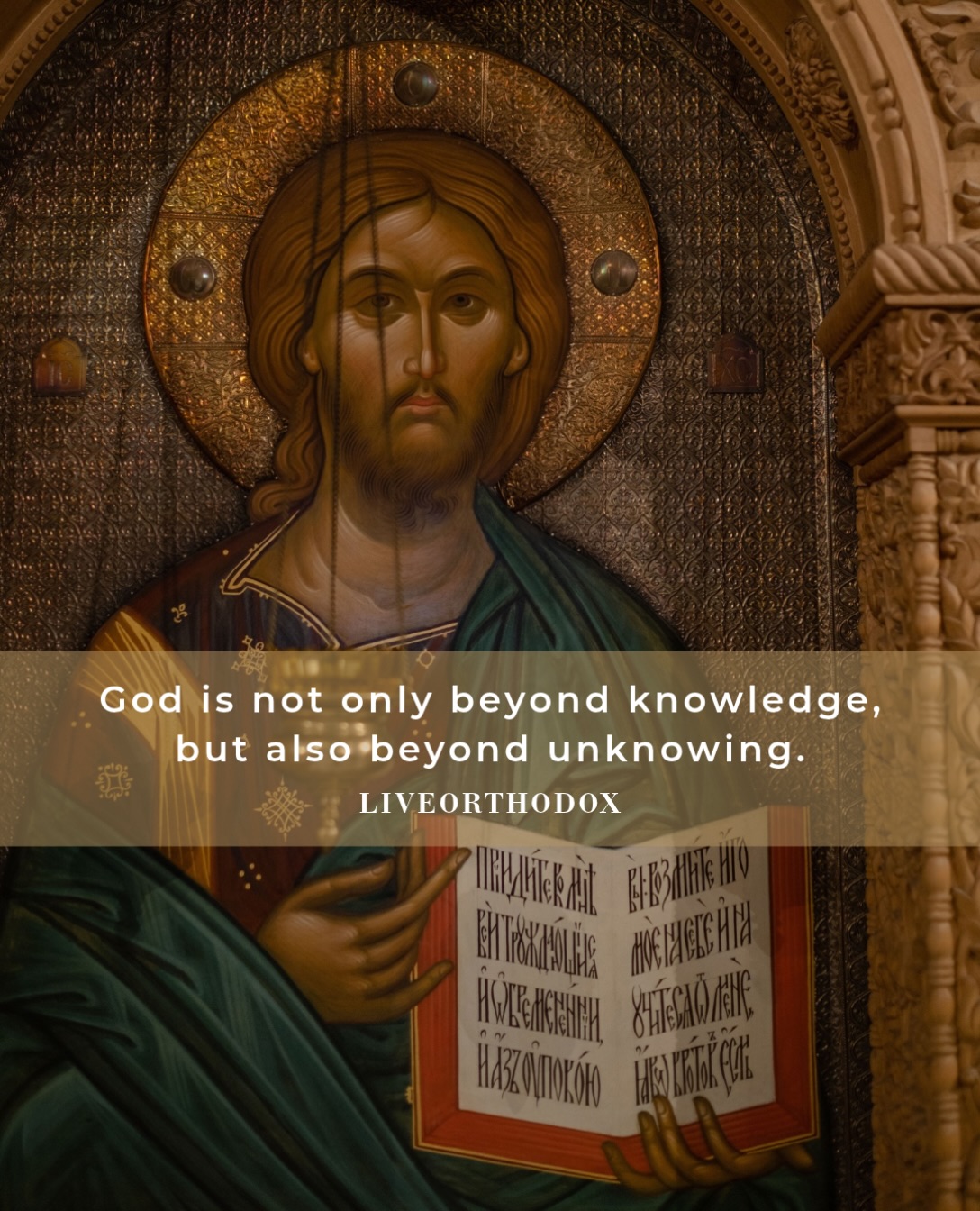
Saint Gregory Palamas on God Beyond Knowledge and Unknowing

The post presents a quotation from Saint Gregory Palamas stating that God cannot be grasped by human thought, nor can God be framed or contained even by the deliberate absence of thought or denial of concepts. An accompanying image text adds a numbered point: God is not only beyond knowledge, but also beyond unknowing. The quote expresses a central theme of Orthodox apophatic theology: the divine reality surpasses every human conceptual…

The post presents a quotation from Saint Gregory Palamas stating that God cannot be grasped by human thought, nor can God be framed or contained even by the deliberate absence of thought or denial of concepts. An accompanying image text adds a numbered point: God is not only beyond knowledge, but also beyond unknowing. The quote expresses a central theme of Orthodox apophatic theology: the divine reality surpasses every human conceptual framework, including the frameworks that attempt to reach God by negating all concepts.

The words indicate that human cognition, whether affirmative or negative, cannot encompass God. Even the intentional suspension of thought, a practice sometimes associated with contemplative prayer, does not by itself constitute a containment of the divine. The image text sharpens the point by placing knowledge and unknowing together as categories that God transcends.

The post attributes the statement to Saint Gregory Palamas, a major figure in Byzantine theology who articulated the distinction between God's essence and energies. The quotation reflects his teaching that God's essence remains utterly inaccessible while His energies are communicated to creation. No further explanation, commentary, or discussion is provided in the post.

The content is limited to the quotation and the single numbered point. The combination of the quote and the numbered point reinforces the same idea from two angles.

  • God cannot be grasped by human thought.
  • God cannot be contained by deliberate absence of thought or denial of concepts.
  • God is beyond knowledge.
  • God is beyond unknowing.
  • The statement is attributed to Saint Gregory Palamas.
Prayer Orthodoxy ® Instagram

Entering the Prayer Corner with Humility and Reverence

1:24

The post presents a sequence of actions for entering a home prayer corner, drawn from Orthodox practice. The speaker removes shoes before stepping into the space, following the example of Moses on holy ground, to leave behind worldly distractions and approach with humility. An oil lamp is lit first, then a candle, while praying for Christ to illuminate the heart and dispel darkness; the flame recalls Christ as the Light of the World. The speaker…

The post presents a sequence of actions for entering a home prayer corner, drawn from Orthodox practice. The speaker removes shoes before stepping into the space, following the example of Moses on holy ground, to leave behind worldly distractions and approach with humility. An oil lamp is lit first, then a candle, while praying for Christ to illuminate the heart and dispel darkness; the flame recalls Christ as the Light of the World.

The speaker then venerates icons in a set order: the Cross of Christ, the icon of Christ, the Theotokos for her intercessions, and Saint John the Baptist as the forerunner who called for repentance. Each act prepares the heart and mind for prayer, turning the corner into a place to withdraw from the noise of the world and seek God's peace and presence.

The text appears in English and Greek, and the video summary expands on the symbolism of each step. No discussion thread is visible; the post functions as a standalone teaching on prayer preparation.

Key moments

  1. The speaker removes shoes before entering the prayer corner to symbolically leave behind the distractions and burdens of the world, just as God commanded Moses to remove his sandals on holy ground, and approaches with humility and reverence.
  2. The speaker lights the oil lamp first, then the candle, and prays asking Jesus Christ to illuminate the heart and dispel the darkness of the world.
  3. The flame of the candle reminds the speaker of Christ as the Light of the World and the constant need for divine illumination.
  4. The speaker approaches the iconostasis to venerate the holy icons, beginning with the cross of Christ through which salvation came into the world.
  5. The speaker then venerates the icon of Jesus Christ.
  6. Next, the speaker venerates the icon of the Theotokos, asking for her intercessions.
  7. Finally, the speaker venerates the icon of St. John the Baptist, the forerunner who prepared the way for Christ and called the world to repentance.
  8. Through these simple acts of reverence the speaker prepares the heart and mind to enter into prayer, and the prayer corner becomes a place to withdraw from the noise of the world and seek the peace and presence of God.
Read more

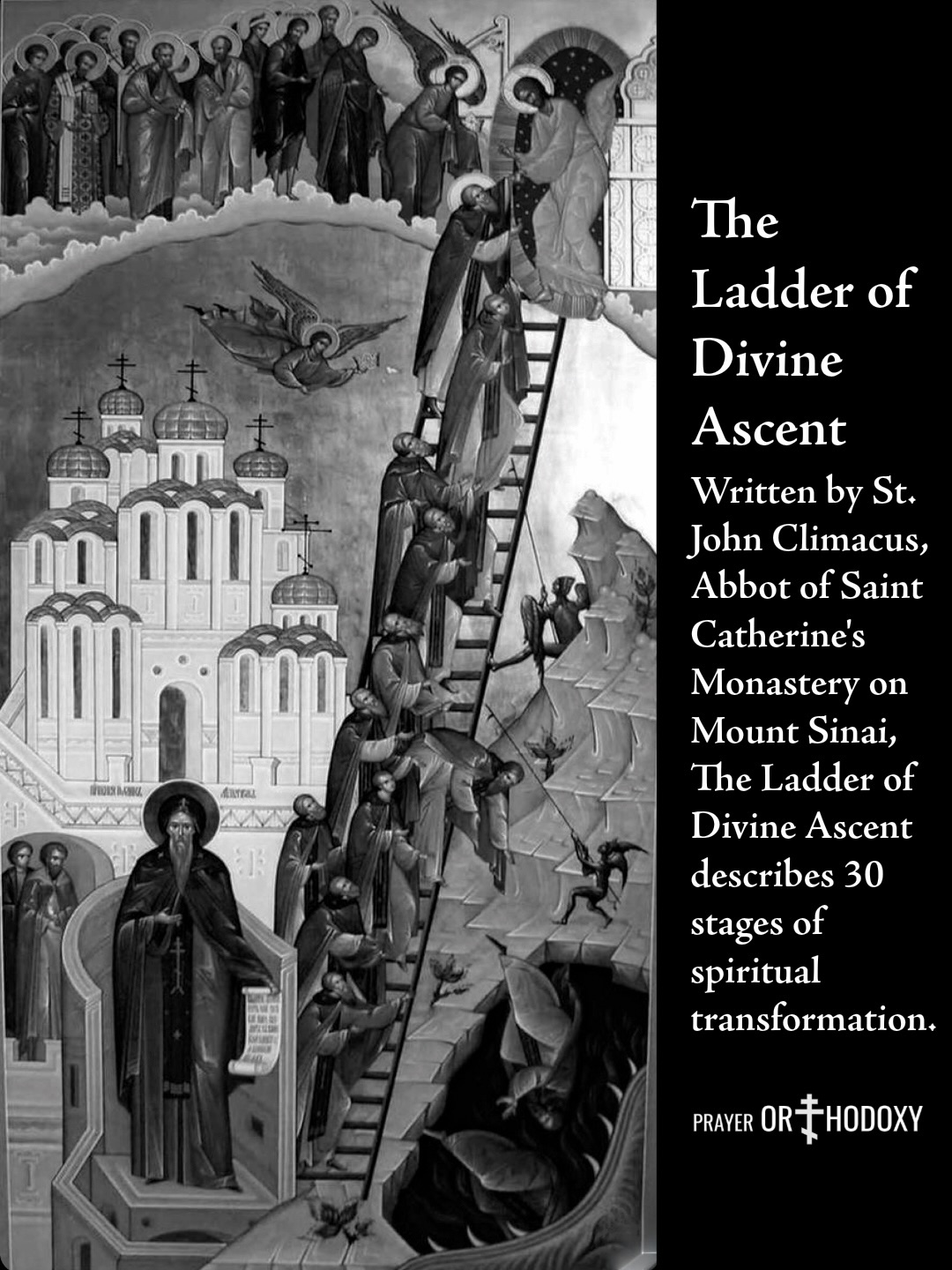
St. John Climacus's Ladder of Divine Ascent: 30 steps toward God

The post presents St. John Climacus's teaching from The Ladder of Divine Ascent. The saint outlines a spiritual journey of 30 steps that leads toward Christ. Each step represents progress in virtues including repentance, humility, prayer, and perseverance. The text identifies love as the highest virtue at the summit of the ladder. The post appears in both English and Greek, with the Greek text naming the work as Η Κλίμακα της Θείας Ανόδου and…

The post presents St. John Climacus's teaching from The Ladder of Divine Ascent. The saint outlines a spiritual journey of 30 steps that leads toward Christ. Each step represents progress in virtues including repentance, humility, prayer, and perseverance.

The text identifies love as the highest virtue at the summit of the ladder. The post appears in both English and Greek, with the Greek text naming the work as Η Κλίμακα της Θείας Ανόδου and the author as Ο Άγιος Ιωάννης της Κλίμακος. The content is marked as an original production of Prayer Orthodoxy.

  • St. John Climacus teaches a 30-step spiritual ascent toward Christ
  • The steps require repentance, humility, prayer, and perseverance
  • Love is identified as the highest virtue
  • The teaching appears in both English and Greek
  • The post is an original production of Prayer Orthodoxy
Read more
Prayer Orthodoxy ® with The National Herald Instagram

Bishop Eirineos: Monasticism as Answer to Secularization

The historic Gouverneto Monastery in Chania, Crete, dedicated to the Virgin Mary, celebrates its feast on Bright Saturday. Thirteen monks live there under the leadership of Bishop Eirineos of Evmenia, who serves as abbot. Most of the monks are young men who have completed or are near completing higher education in Greece and abroad. In an interview, Bishop Eirineos said the Orthodox Church and the world have never needed coenobitic monasticism…

The historic Gouverneto Monastery in Chania, Crete, dedicated to the Virgin Mary, celebrates its feast on Bright Saturday. Thirteen monks live there under the leadership of Bishop Eirineos of Evmenia, who serves as abbot. Most of the monks are young men who have completed or are near completing higher education in Greece and abroad.

In an interview, Bishop Eirineos said the Orthodox Church and the world have never needed coenobitic monasticism more than today. He identified secularization as the removal of the sacred from life and society, the reduction of faith to mere religion, the distancing of the Church from its ecclesial identity, and the Protestantization of Orthodox theology.

He described modern societies as increasingly self-centered and materialistic, pushing the spirit to the margins and ignoring the soul's thirst while banishing God beyond the clouds. He listed consequences: addiction, depression, suicide, abandonment of life's struggles, and ultimately nihilism and resignation. Monasticism, he said, offers an alternative way of life and is Christianity's most authentic expression of itself.

Bishop Eirineos also remarked that Greek-Americans remain the most authentic expression of Hellenism beyond the borders of Greece, despite generations since the first settlers.

  • Gouverneto Monastery is a historic patriarchal and stavropegic monastery in Crete with 13 resident monks.
  • Bishop Eirineos of Evmenia serves as abbot and says the Church and world need coenobitic monasticism more than ever.
  • He defines secularization as removal of the sacred, reduction of faith to religion, loss of ecclesial identity, and Protestantization of theology.
  • He links modern self-centered materialism to addiction, depression, suicide, and nihilism.
  • He calls monasticism Christianity's most authentic expression and Greek-Americans the truest Hellenism abroad.
Read more
Prayer Orthodoxy ® Instagram

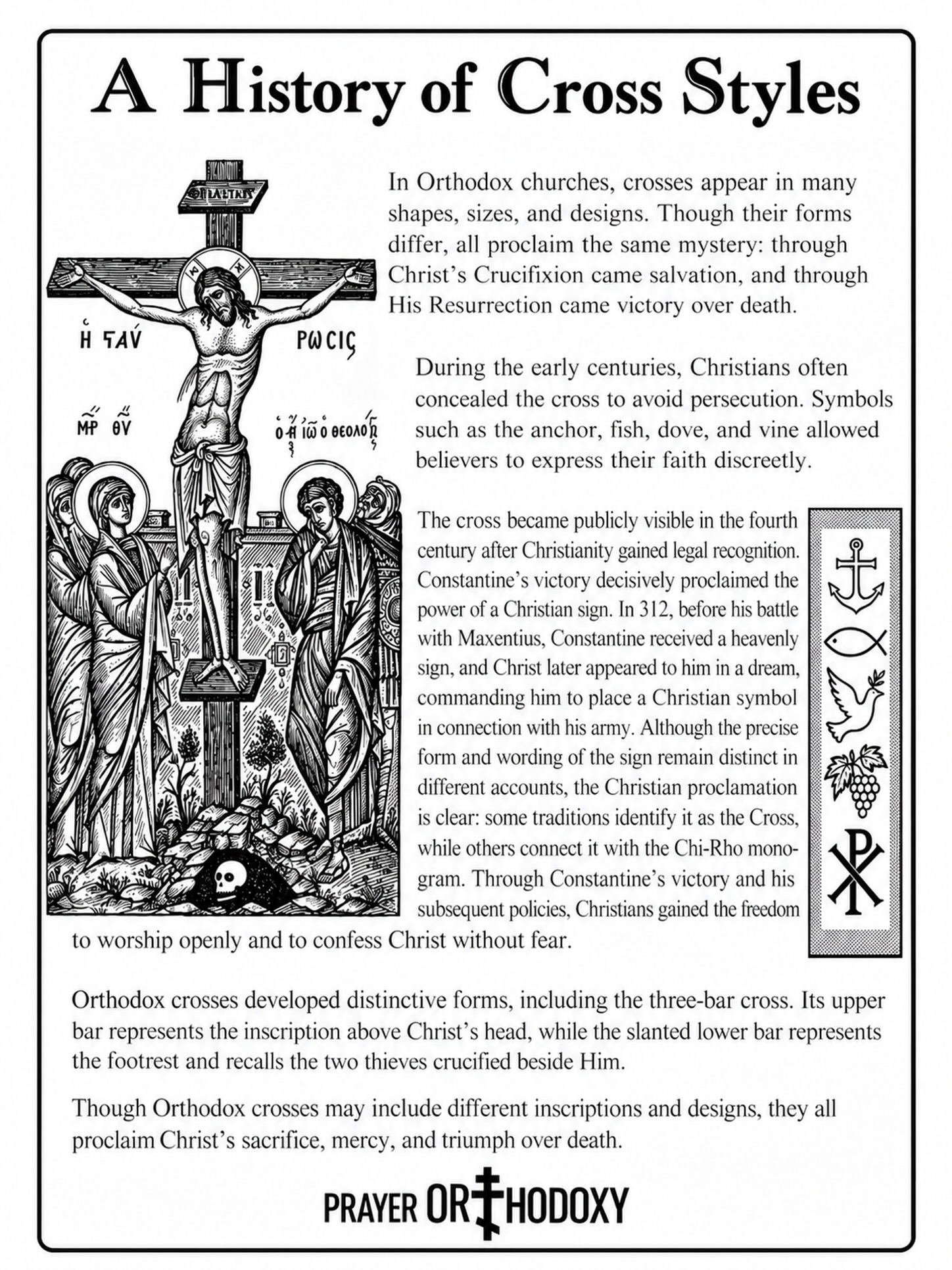
History of Cross Styles from Anchor to Three-Bar Cross

The post outlines a history of cross styles across centuries. It states that the cross remains the symbol of Christ's sacrifice and victory over death. It identifies early Christian symbols such as the anchor and the Chi Rho. It notes the distinctive Orthodox three-bar cross. It says each form carries a rich history and spiritual meaning. It affirms that through his crucifixion and resurrection Christ conquered death and opened the way to…

The post outlines a history of cross styles across centuries. It states that the cross remains the symbol of Christ's sacrifice and victory over death. It identifies early Christian symbols such as the anchor and the Chi Rho.

It notes the distinctive Orthodox three-bar cross. It says each form carries a rich history and spiritual meaning. It affirms that through his crucifixion and resurrection Christ conquered death and opened the way to eternal life. The post is presented in both English and Greek. It is an original production of Prayer Orthodoxy.

  • The cross symbolizes Christ's sacrifice and victory over death.
  • Early Christian symbols included the anchor and the Chi Rho.
  • The Orthodox three-bar cross is a distinctive later form.
  • Each cross style carries its own history and spiritual meaning.
  • Christ's crucifixion and resurrection conquered death and opened the way to eternal life.
Read more

Video repeats Jesus Prayer in Russian; caption mentions St. John of Kronstadt

The post features a video that consists solely of the Jesus Prayer recited continuously in Russian. The prayer text is "Господи Иисусе Христе, Сыне Божий, помилуй мя грешного." Each repetition is identical, and there is no additional speech or explanation in the video. The accompanying text reads "St. John of Kronstadt Quotes" and includes hashtags for orthodox, quotes, saint, john, and kronstadt. The video does not contain any quotations from…

The post features a video that consists solely of the Jesus Prayer recited continuously in Russian. The prayer text is "Господи Иисусе Христе, Сыне Божий, помилуй мя грешного." Each repetition is identical, and there is no additional speech or explanation in the video.

The accompanying text reads "St. John of Kronstadt Quotes" and includes hashtags for orthodox, quotes, saint, john, and kronstadt. The video does not contain any quotations from St. John of Kronstadt; it only presents the prayer. The source material provides no discussion or commentary beyond the video and caption.

Key moments

  1. The Jesus Prayer is recited repeatedly.
Read more

Memorial Service at Orthodox Youth Camp with Athonite Abbot in Belgium

A memorial service took place at an Orthodox youth camp in Zedelgem, Belgium, with the abbot of the Athonite monastery of Pantokratoros presiding. The service included prayers for the departed. According to the video transcript, the prayer states that the continuation is for all, for everyone. It asks God to quicken the souls of his servants because he alone is immortal. It affirms that God is the one for ages of ages. It declares that God alone…

A memorial service took place at an Orthodox youth camp in Zedelgem, Belgium, with the abbot of the Athonite monastery of Pantokratoros presiding. The service included prayers for the departed. According to the video transcript, the prayer states that the continuation is for all, for everyone. It asks God to quicken the souls of his servants because he alone is immortal.

It affirms that God is the one for ages of ages. It declares that God alone is pure and the way and the truth. The post includes hashtags in English and Dutch referencing Orthodoxy and the Orthodox Church.

Key moments

  1. The continuation is for all, for everyone.
  2. Quicken also the souls of your servants, for you alone are immortal.
  3. And and and.
  4. For you are it and the ages of ages amen.
  5. You alone are pure and the way the truth that the of the of the and and the to.
Read more