WeOrthodox
EN UA

Orthodox Life

Instagram ↗ 67 discussions

•ᴅᴀɪʟʏ ᴏʀᴛʜᴏᴅᴏx ɪᴄᴏɴᴏɢʀᴀᴘʜʏ, ᴘʀᴀʏᴇʀꜱ, ᴀɴᴅ ꜱᴘɪʀɪᴛᴜᴀʟ ʀᴇꜰʟᴇᴄᴛɪᴏɴꜱ ☦️ •ᴛʜᴇᴏʟᴏɢʏ ɪɴ ᴄᴏʟᴏʀꜱ 🎨 | ᴡɪɴᴅᴏᴡꜱ ᴛᴏ ʜᴇᴀᴠᴇɴ 🪟 •“ᴛʜᴇ ʙᴇᴀᴜᴛʏ ᴏꜰ ᴏʀᴛʜᴏᴅᴏxʏ”🕊️

Orthodox Life Instagram

Saint Longinus the Centurion: From Golgotha to Martyrdom
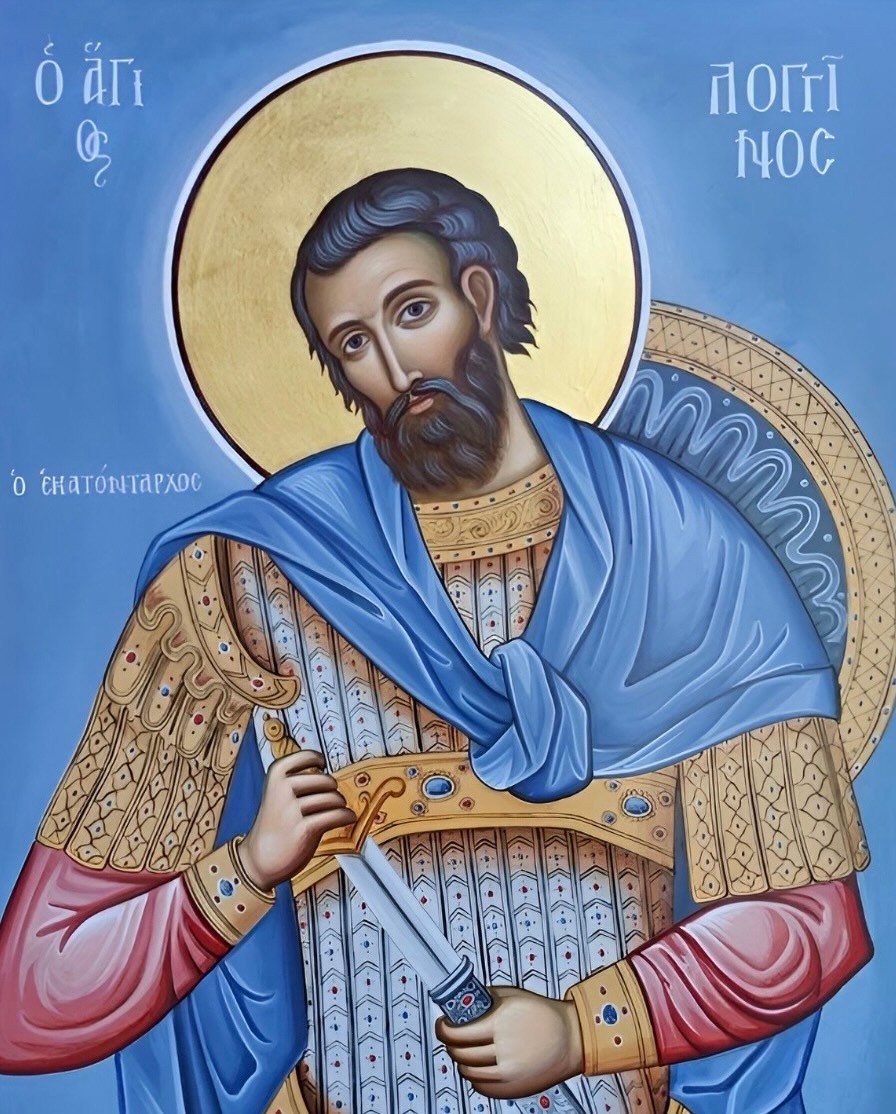
The post marks October 16th, the feast of the Holy Martyr Longinus the Centurion. It recounts his life as a Roman soldier from Cappadocia serving in Judea under Pontius Pilate, commanding the detachment that watched the crucifixion of Christ on Golgotha. Witnessing the final moments of Christ's life, together with the earthquake, the darkening of the sun, and the splitting of the rocks, Longinus confessed before everyone, 'Truly, this was the…

The post marks October 16th, the feast of the Holy Martyr Longinus the Centurion. It recounts his life as a Roman soldier from Cappadocia serving in Judea under Pontius Pilate, commanding the detachment that watched the crucifixion of Christ on Golgotha. Witnessing the final moments of Christ's life, together with the earthquake, the darkening of the sun, and the splitting of the rocks, Longinus confessed before everyone, 'Truly, this was the Son of God'.

According to Orthodox Church Tradition, he was also the soldier who pierced the side of the Crucified Savior with his spear. He suffered from a severe eye affliction, and when blood and water poured from the Lord's wound, a drop touched his eyes and healed him instantly. The post describes this as opening both his physical and spiritual sight, completing his change from an indifferent executioner into a fervent believer.

After the crucifixion, Longinus and his company guarded the Holy Sepulchre and became direct eyewitnesses of the Resurrection. When Jewish elders offered the soldiers gold to spread the lie that Christ's disciples had stolen His body, Longinus and two comrades refused the bribe and proclaimed the truth of the miracle instead. The three left military service and received Holy Baptism from the Apostles.

Longinus returned to Cappadocia, where he lived in prayer and fasting and converted many pagans to Christianity. The Jewish elders then persuaded Pilate to send executioners to kill him and his companions. When the Roman soldiers arrived, Longinus welcomed, fed, and sheltered them without revealing his identity.

Once he disclosed who he was, the soldiers hesitated out of grief and respect, but Longinus and his comrades willingly accepted beheading.

  • Longinus, a Roman soldier from Cappadocia under Pilate, commanded the detachment guarding Christ's crucifixion on Golgotha.
  • He confessed, 'Truly, this was the Son of God', after witnessing the earthquake, the darkened sun, and the splitting rocks.
  • Tradition holds he pierced Christ's side with his spear, and a drop of the blood and water that flowed out healed his eye affliction.
  • He refused the elders' bribe to claim the disciples stole Christ's body, was baptized by the Apostles, and returned to Cappadocia to preach.
  • He hosted his own executioners before revealing himself, and he and two comrades were willingly beheaded.
Read more
Orthodox Life Instagram

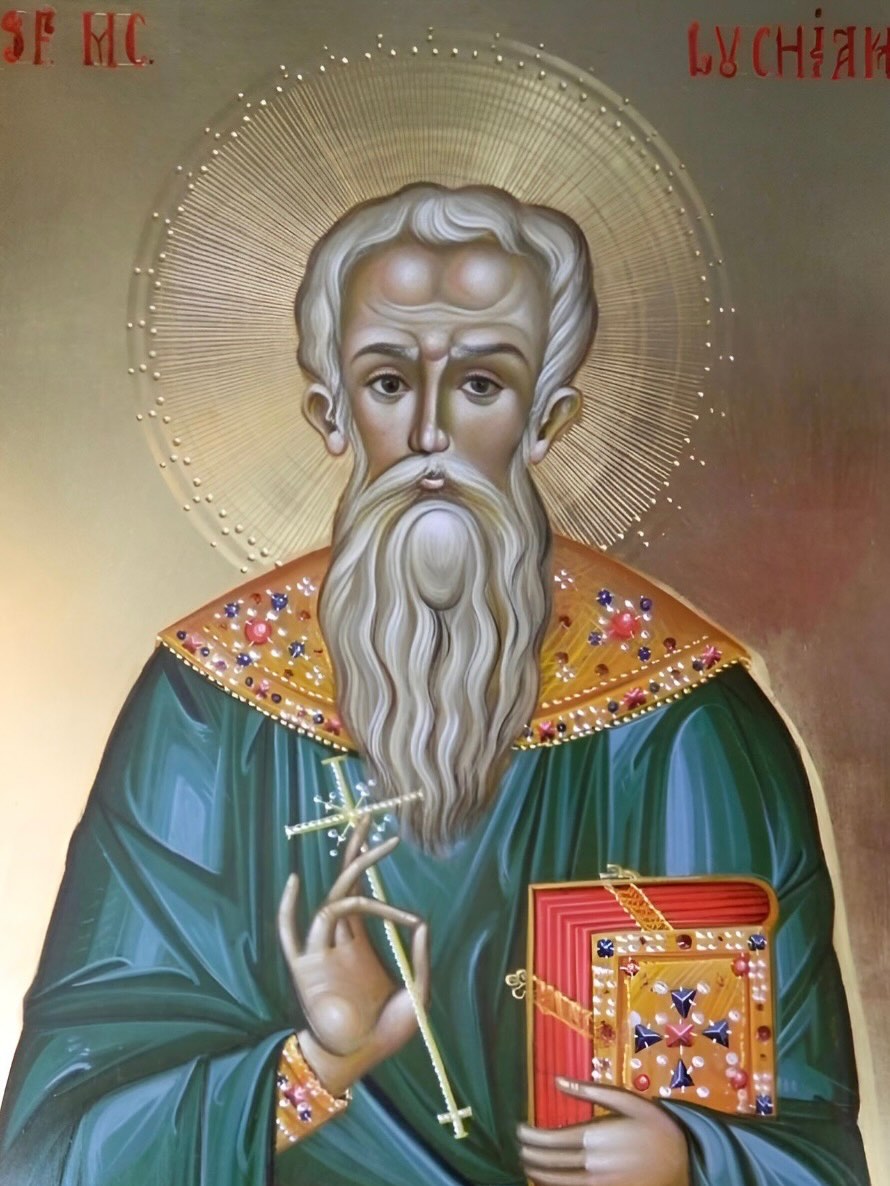
Saint Loukianos of Antioch: scholar, martyr, living altar

The post commemorates Saint Loukianos (Lucian), Priest of Antioch, whose feast falls on October 15. Born around 240 in Samosata, Syria, he was orphaned at twelve, gave his inheritance to the poor, and pursued an ascetic life. He studied Scripture under the confessor Macarius in Edessa and was ordained a presbyter in Antioch. There he founded a theological school that reshaped Christian scholarship and spent years correcting the Greek Septuagint…

The post commemorates Saint Loukianos (Lucian), Priest of Antioch, whose feast falls on October 15. Born around 240 in Samosata, Syria, he was orphaned at twelve, gave his inheritance to the poor, and pursued an ascetic life. He studied Scripture under the confessor Macarius in Edessa and was ordained a presbyter in Antioch. There he founded a theological school that reshaped Christian scholarship and spent years correcting the Greek Septuagint and New Testament, producing a text later prized by Saint Jerome.

During the persecutions of Diocletian and Maximinus, Loukianos was arrested and taken to Nicomedia, where he endured floggings and torture for nine years. He refused food offered to idols, nearly starving while strengthening fellow prisoners. On the Feast of Theophany, chained to a floor strewn with pottery shards and lacking an altar, he celebrated the Eucharist on his own chest so that visiting Christians could receive Communion.

The next day, when guards came, he declared "I am a Christian" three times and died in 312.

  • Born c. 240 in Samosata, orphaned at twelve, gave wealth to the poor
  • Studied under Macarius in Edessa; ordained presbyter in Antioch
  • Founded a theological school and produced a corrected Septuagint and New Testament valued by Saint Jerome
  • Imprisoned nine years in Nicomedia under Diocletian and Maximinus; refused idol food, encouraged fellow prisoners
  • Celebrated his final Eucharist on his chest as a living altar on the Feast of Theophany; martyred in 312
Read more
Orthodox Life Instagram

The Multiplier of Wheat Icon: Commission, Miracles, and Suppression

The post commemorates the Holy Icon of the Most Holy Theotokos known as the Multiplier of Wheat, also called the Prosperess of Loaves or She Who Gives or Multiplies Wheat, observed on October 15. Elder Ambrose of Optina Monastery guided the commissioning of the icon in 1890. Deeply devoted to the Virgin Mary, Ambrose envisioned the icon to comfort a nation facing agricultural hardship and dedicated it specifically to the Shamordino Convent he…

The post commemorates the Holy Icon of the Most Holy Theotokos known as the Multiplier of Wheat, also called the Prosperess of Loaves or She Who Gives or Multiplies Wheat, observed on October 15. Elder Ambrose of Optina Monastery guided the commissioning of the icon in 1890. Deeply devoted to the Virgin Mary, Ambrose envisioned the icon to comfort a nation facing agricultural hardship and dedicated it specifically to the Shamordino Convent he had founded.

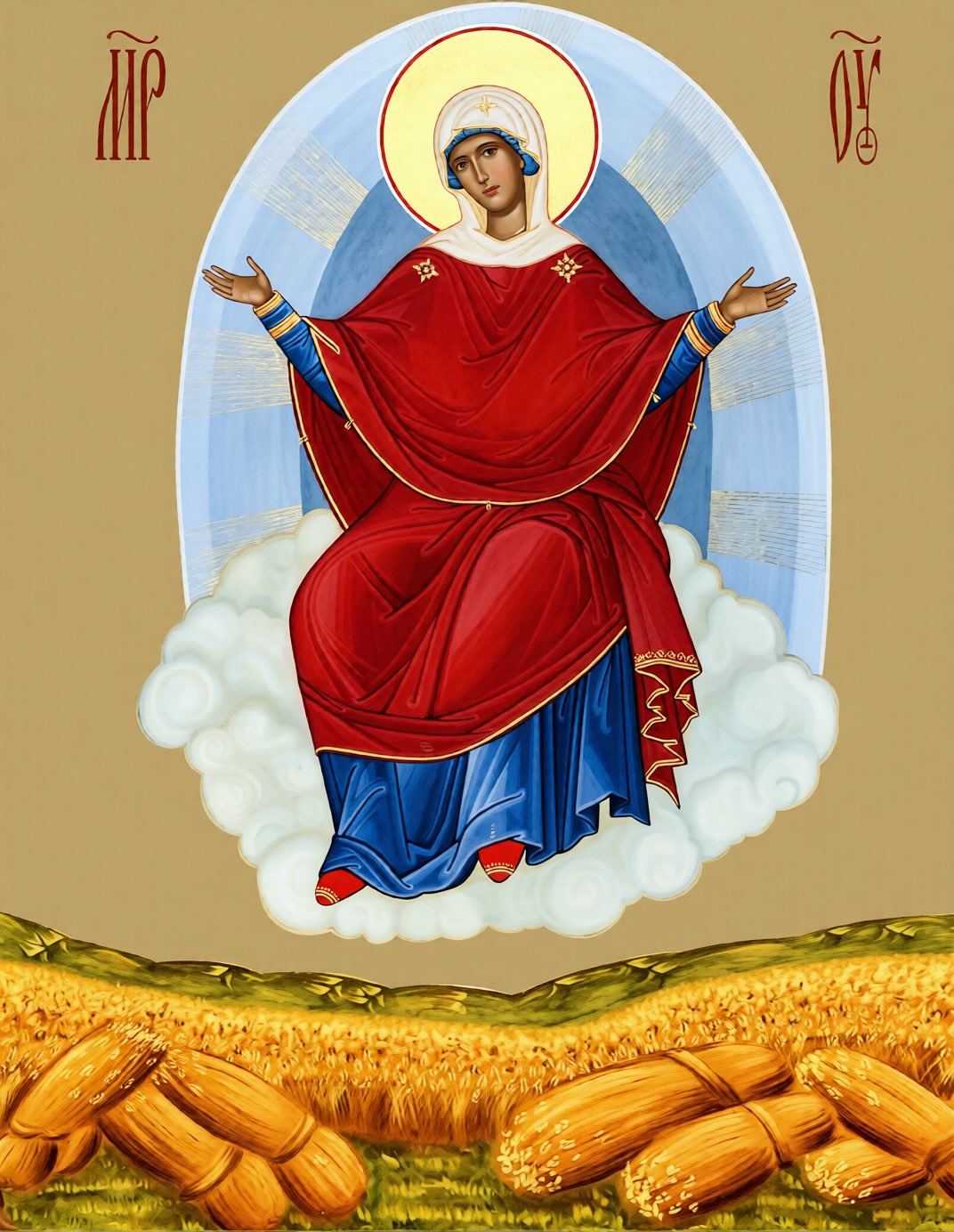
He gave the icon its distinct name to remind the faithful that the Theotokos is a constant helper for humanity in their daily labors to secure physical sustenance. The visual composition uniquely bridges heavenly and mundane spheres by blending a traditional spiritual focus with a realistic agrarian terrain. The Mother of God is depicted seated upon the clouds with her hands extended in blessing.

Beneath her heavenly posture lies a harvested, compressed field filled with sheaves of rye and grass, designed to mirror the actual surrounding fields of the Shamordino region. Her posture signifies active intercession, perpetually showering blessings upon the earth and its crops. Miraculous intervention cemented the icon's legacy almost immediately after its creation.

In 1891, a devastating, widespread crop failure triggered a severe famine across Russia. Despite the surrounding misery, the fields of the Kaluga district and the Shamordino Convent remained remarkably fertile and produced an abundant harvest. A year later, a replica sent to the Pyatnitsa Monastery successfully ended a catastrophic local drought right after a Molieben was celebrated before it.

Despite these early miracles, the icon faced a period of controversy and suppression by church authorities. During the 1890s, the Holy Synod and imperial state decrees banned the image due to its unconventional, realistic art style and its non-traditional title. Nonetheless, its popular veneration persisted through the turbulent Soviet era.

  • Icon commissioned in 1890 by Elder Ambrose of Optina for Shamordino Convent
  • Depicts the Theotokos blessing a realistic field mirroring Shamordino terrain
  • 1891: Kaluga and Shamordino fields yielded abundant harvest during nationwide famine
  • 1892: Replica at Pyatnitsa Monastery ended drought after a Molieben
  • Banned by Holy Synod and imperial authorities in 1890s for unconventional style and title; veneration continued through Soviet era
Read more
Orthodox Life Instagram

Saint Paraskeva of Epivato: 11th-century ascetic who became protector of the sick

The post commemorates Saint Paraskeva of Epivato on October 14. Born in Epivates near modern Istanbul to a wealthy pious family, she gave away expensive clothing to the poor from a young age, angering her parents. Her older brother Euthymius later became Bishop of Madytos. After her parents died, the fifteen-year-old Paraskeva distributed her inheritance and entered monastic life. She fled to Constantinople, spent five years at a monastery in…

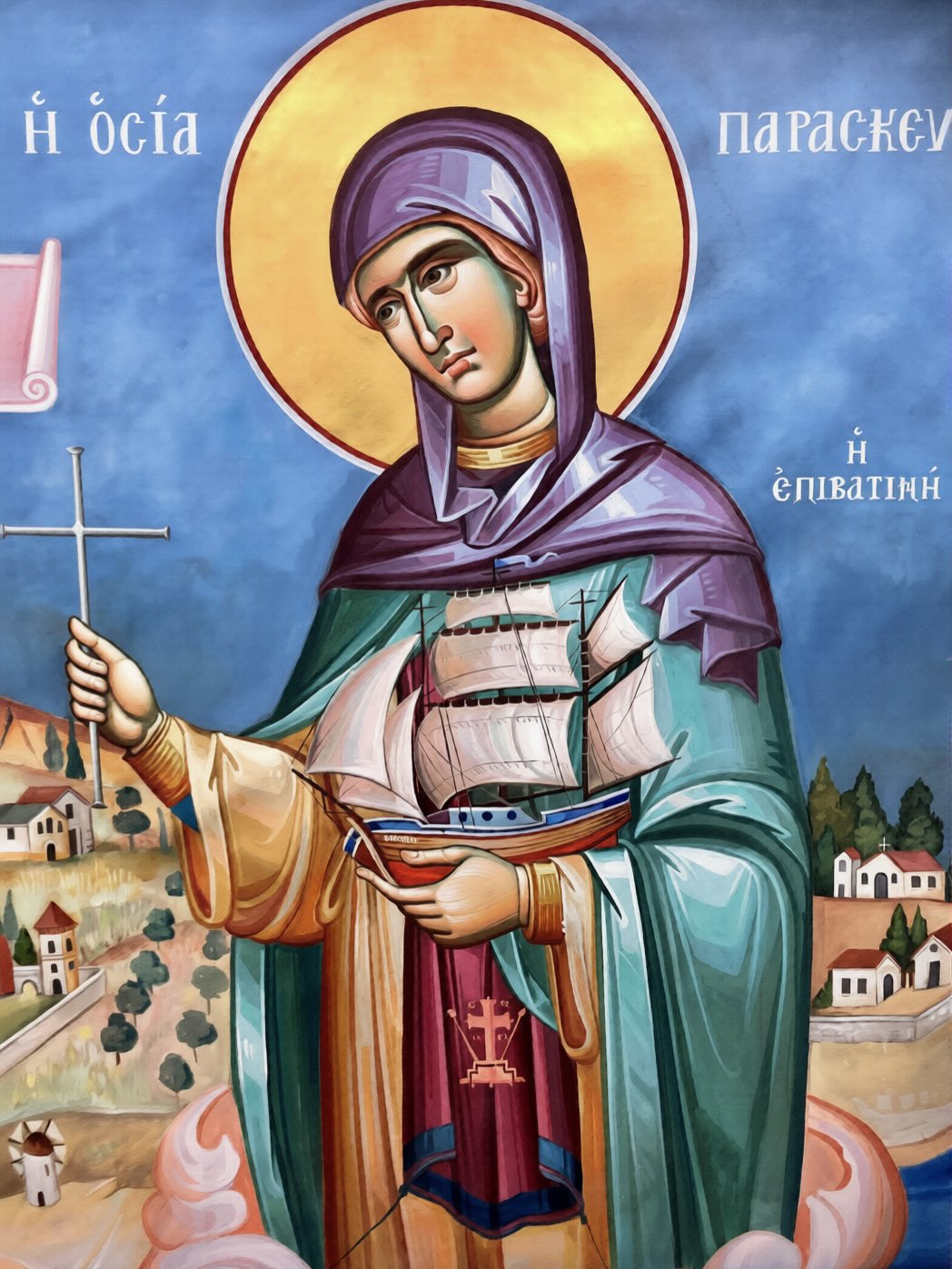
The post commemorates Saint Paraskeva of Epivato on October 14. Born in Epivates near modern Istanbul to a wealthy pious family, she gave away expensive clothing to the poor from a young age, angering her parents. Her older brother Euthymius later became Bishop of Madytos. After her parents died, the fifteen-year-old Paraskeva distributed her inheritance and entered monastic life.

She fled to Constantinople, spent five years at a monastery in Heraclea Pontica, then made a pilgrimage to Jerusalem and lived as a hermit in the Jordanian desert enduring temptations and deprivation. At age twenty-five an angel appeared in a vision and commanded her to return to her homeland to surrender her body to the earth. She obeyed, spent her final two years in Epivato in secrecy, fasting, and continuous prayer, and reposed at twenty-seven.

Buried near the sea as an ordinary stranger, her uncorrupted sweet-scented body was discovered years later after divine dreams revealed its location to villagers. Her relics were placed in the Church of the Holy Apostles in Epivato and became a source of physical and spiritual healings for over a century. Because of the extensive miracles attributed to her, she became one of the most beloved and widely venerated protectors of the sick and marginalized throughout the Balkans.

  • Born in Epivates to wealthy parents; gave away clothing to the poor from youth
  • Brother Euthymius became Bishop of Madytos
  • Entered monastic life at fifteen after parents' death; lived in Constantinople, Heraclea Pontica, Jerusalem, and the Jordanian desert
  • Angelic vision at twenty-five commanded return to Epivato; died at twenty-seven
  • Incorrupt relics discovered after divine dreams; placed in Church of the Holy Apostles; source of healings for over a century
Read more
Orthodox Life Instagram

Saint Chryse (Zlata) of Slatina: Martyred October 13, 1795

The post commemorates Saint Chryse (Zlata) the New Martyr, who was cut in pieces at Slatina in 1795. She was an 18th-century Christian martyr venerated for her faith and courage under persecution. Born in the village of Slatina, in what is today North Macedonia, she grew up in a poor and pious Christian family during the period of Ottoman rule. The author notes that she was known both for her spirituality and for her physical beauty, which drew…

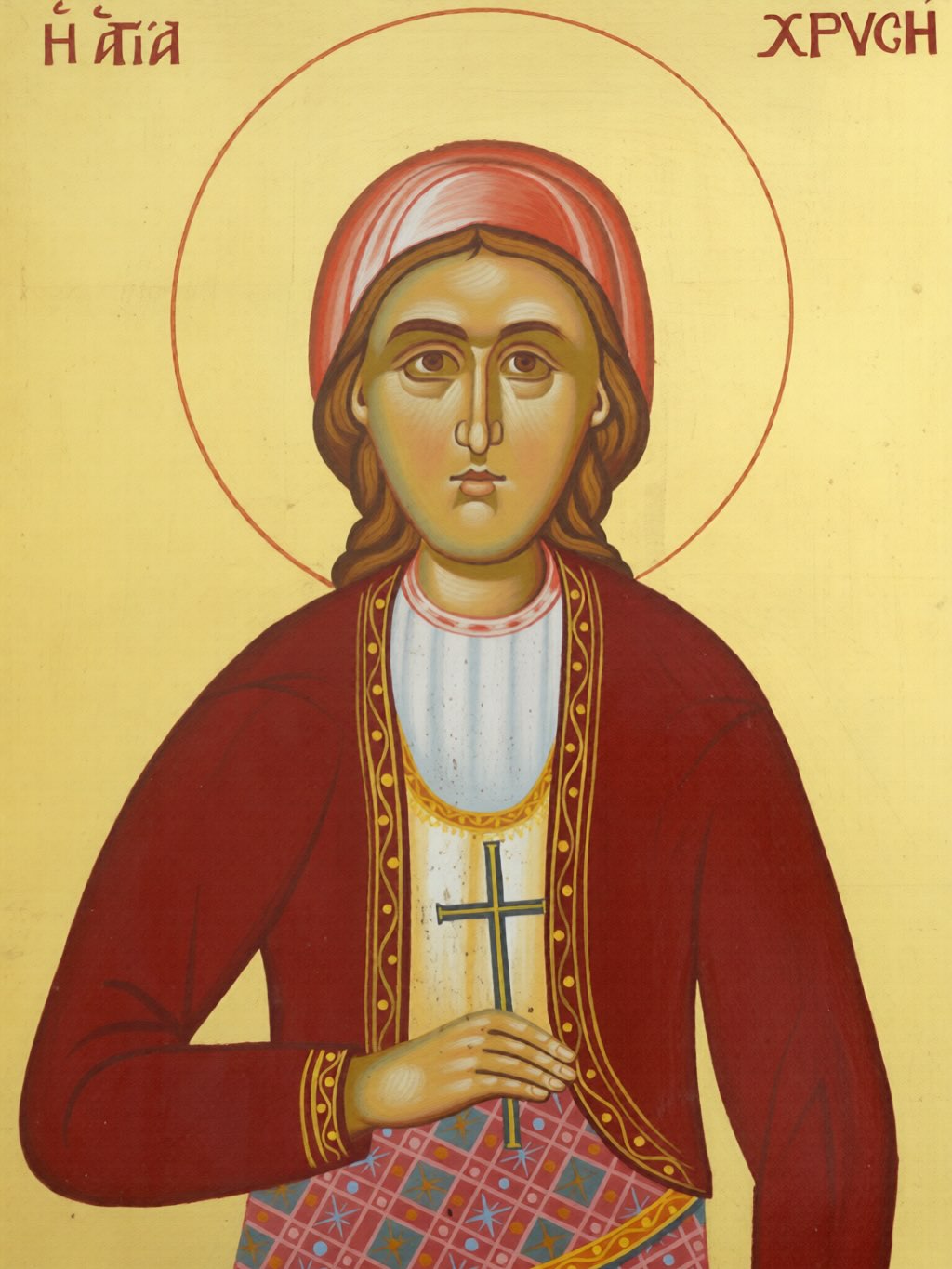
The post commemorates Saint Chryse (Zlata) the New Martyr, who was cut in pieces at Slatina in 1795. She was an 18th-century Christian martyr venerated for her faith and courage under persecution. Born in the village of Slatina, in what is today North Macedonia, she grew up in a poor and pious Christian family during the period of Ottoman rule.

The author notes that she was known both for her spirituality and for her physical beauty, which drew the attention of a local Muslim man. He abducted her and took her to his home, demanding that she convert to Islam so that she could become his wife, and threatened her with severe consequences if she refused. Chryse refused, declaring that Jesus Christ was her only bridegroom and that she would never deny her faith.

Her captors then brought in her own parents and sisters, who wept and begged her to convert outwardly, at least in appearance, to save her life. She refused them as well, saying that when it came to Christ she no longer recognized her earthly family. For many months she was tortured: her captors beat her daily, stripped the flesh from her body with knives, and seared her wounds with hot irons.

The author writes that she remained conscious throughout and prayed continuously, and that her endurance astonished her torturers and further angered them. When it became clear that no amount of torment would force her to deny her faith, she was killed. The post states that she completed her earthly course on October 13, 1795, remaining steadfast in her conviction until her final breath.

The post closes with a cross emoji and no further discussion; it is a hagiographical notice for her feast day rather than a debate thread.

  • Saint Chryse (Zlata) the New Martyr was cut in pieces at Slatina in 1795 and is commemorated on October 13.
  • She was born in Slatina, in modern-day North Macedonia, to a poor, pious Christian family under Ottoman rule.
  • A local Muslim man abducted her and demanded she convert to Islam to marry him; she refused, calling Christ her only bridegroom.
  • Her parents and sisters begged her to convert outwardly to save her life; she refused, saying she no longer recognized her earthly family when it came to Christ.
  • After months of beatings, knifing, and burning with hot irons, during which she prayed continuously, she was martyred on October 13, 1795.
Read more
Orthodox Life Instagram

Saint Symeon the New Theologian: mystic of divine light

The post commemorates Saint Symeon the New Theologian on October 12th. Symeon lived from 949 to 1022 AD as a Byzantine monk, mystic, and poet who remains one of the most influential figures in Eastern Orthodox spirituality. The title "New Theologian" places him alongside John the Evangelist and Gregory of Nazianzus. Born into an aristocratic family in Galatia, he was educated in Constantinople and groomed for a prestigious career in the imperial…

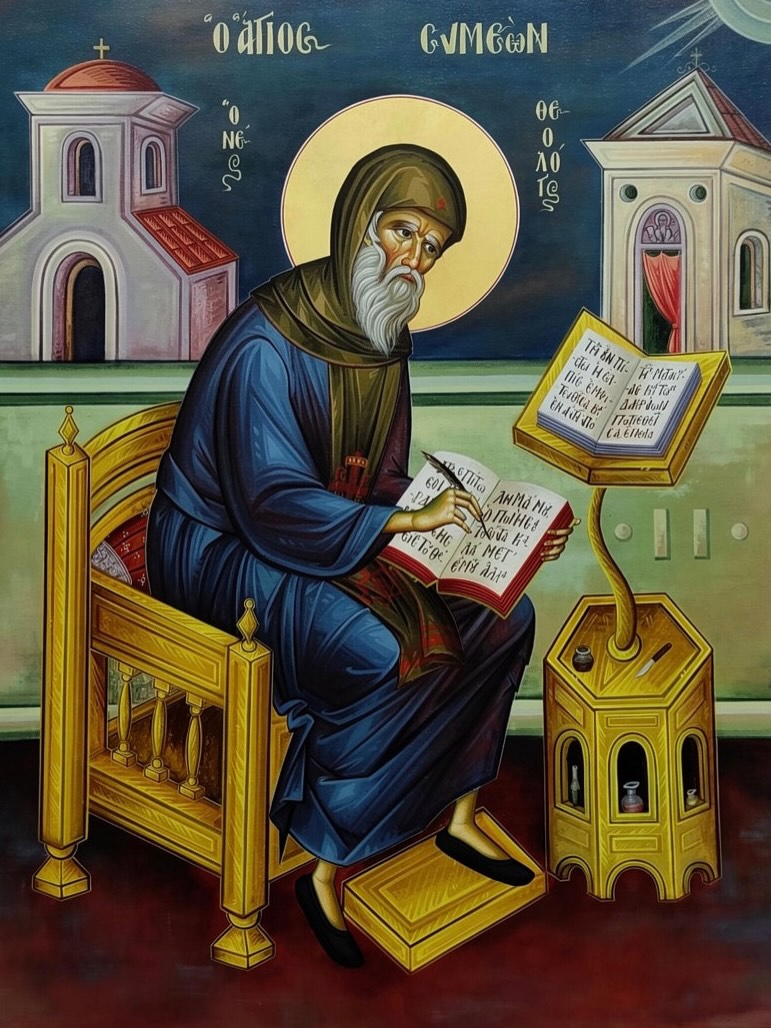
The post commemorates Saint Symeon the New Theologian on October 12th. Symeon lived from 949 to 1022 AD as a Byzantine monk, mystic, and poet who remains one of the most influential figures in Eastern Orthodox spirituality. The title "New Theologian" places him alongside John the Evangelist and Gregory of Nazianzus.

Born into an aristocratic family in Galatia, he was educated in Constantinople and groomed for a prestigious career in the imperial court. Around the age of fourteen he met his spiritual father, Symeon the Pious, at the Monastery of Stoudios. This encounter sparked a spiritual awakening that led him to abandon his secular ambitions, renounce his wealth, and embrace monastic life.

He eventually became abbot of the Monastery of Saint Mamas in Constantinople, where he initiated rigorous spiritual reforms. Symeon taught that Christian life must be rooted in continuous awareness of the Holy Spirit and the visible manifestation of divine grace. His insistence that theology should flow from direct mystical experience rather than mere intellectual study often brought him into sharp conflict with institutional church leadership.

Central to his mysticism was the theology of Divine Light. He frequently described intense spiritual encounters as being completely enveloped by an uncreated, blinding light, which he identified as the living presence of Christ. His extensive writings, particularly the Hymns of Divine Love and Discourses, articulate these ecstatic visions and emphasize the necessity of tears, repentance, and a purified heart to receive this light.

Symeon's teachings laid the essential theological foundations for Hesychasm, a meditative prayer movement that flourished on Mount Athos centuries later and remains central to Eastern Orthodoxy today.

  • Commemorated October 12th; lived 949-1022 AD as Byzantine monk, mystic, poet
  • Title "New Theologian" ranks him with John the Evangelist and Gregory of Nazianzus
  • Met spiritual father Symeon the Pious at fourteen, left court career for monastic life
  • Taught theology from direct experience of God, not intellectual study; conflicted with church leaders
  • Theology of uncreated Divine Light as Christ's presence; writings founded Hesychasm tradition
Read more
Orthodox Life Instagram

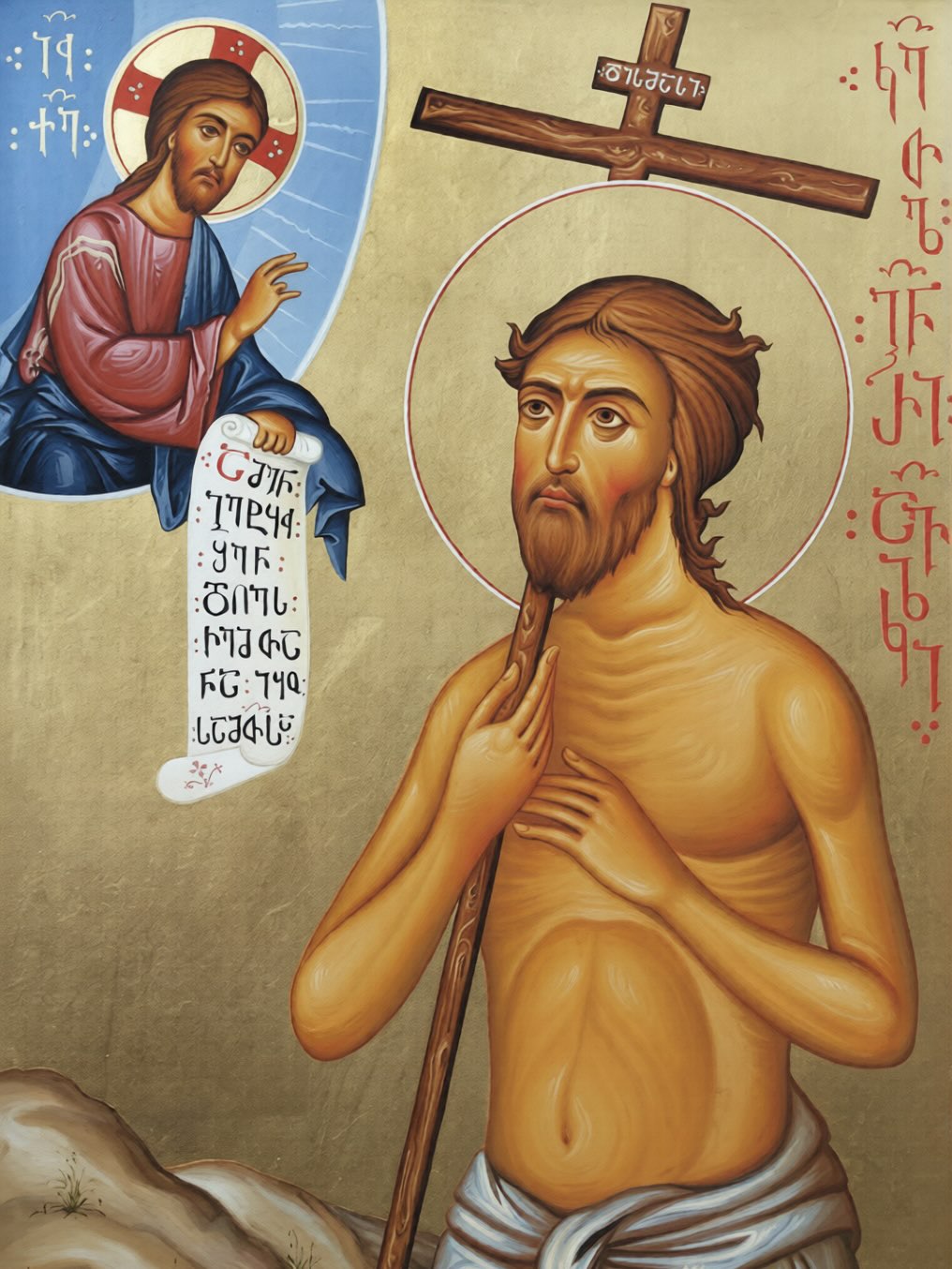
Saint Dismas, the Wise Thief, enters Paradise on October 12

The post commemorates Saint Dismas, known in Orthodox tradition as the Wise Thief, on October 12. Dismas was one of two criminals crucified alongside Jesus. While the other thief mocked Christ, Dismas acknowledged his own guilt and Christ's innocence, rebuked his companion, and prayed, "Remember me, Lord, when You come into Your Kingdom." Jesus answered that Dismas would be in Paradise that same day. Through this promise, Dismas became the first…

The post commemorates Saint Dismas, known in Orthodox tradition as the Wise Thief, on October 12. Dismas was one of two criminals crucified alongside Jesus. While the other thief mocked Christ, Dismas acknowledged his own guilt and Christ's innocence, rebuked his companion, and prayed, "Remember me, Lord, when You come into Your Kingdom."

Jesus answered that Dismas would be in Paradise that same day. Through this promise, Dismas became the first person to enter heaven after the Resurrection. In Eastern Orthodox theology and liturgy, the Wise Thief is a model of repentance.

He appears prominently during Holy Week, especially on Holy Thursday and Good Friday. His conversion shows that a lifetime of sin can be washed away in a moment of genuine confession. Icons traditionally depict him holding a large wooden cross, standing at the gates of Paradise or beside Christ.

The Church's prayers, including the pre-Communion prayer, cite his confession to remind believers that no one is beyond redemption. He remains a symbol of hope that it is never too late to turn to God.

  • Commemorated on October 12 as the Wise Thief
  • Rebuked the mocking thief and prayed for Christ's remembrance
  • Received Christ's promise of Paradise that day
  • First to enter heaven after the Resurrection
  • Central figure in Holy Week services and Orthodox iconography
Read more
Orthodox Life Instagram

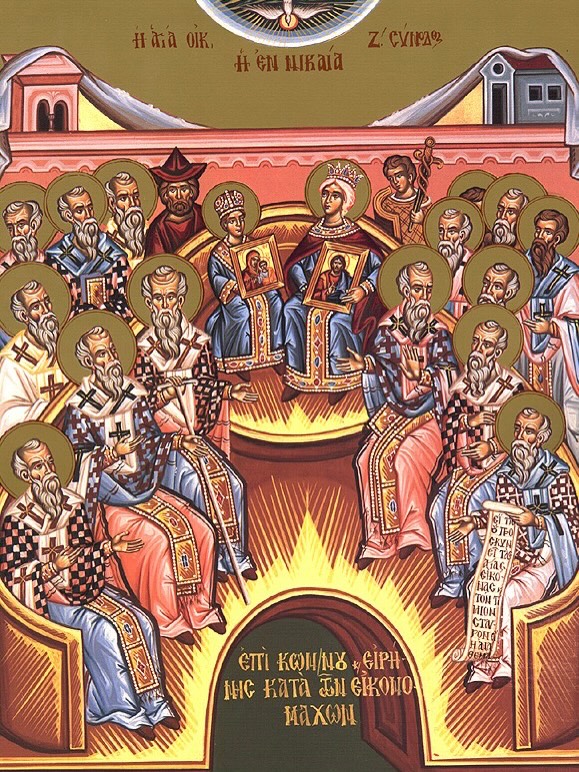
Sunday of the Seventh Ecumenical Council: Icons and the Incarnation

The post explains the commemoration of the Seventh Ecumenical Council, observed annually on October 11 or the nearest Sunday. The Sunday of the Holy Fathers of the Seventh Ecumenical Council is a major liturgical commemoration in the Orthodox Church. The historical council convened at Nicaea in 787 AD with 350 bishops and theologians gathered under Empress Irene and Patriarch Tarasius of Constantinople. They met to settle a century-long dispute…

The post explains the commemoration of the Seventh Ecumenical Council, observed annually on October 11 or the nearest Sunday. The Sunday of the Holy Fathers of the Seventh Ecumenical Council is a major liturgical commemoration in the Orthodox Church. The historical council convened at Nicaea in 787 AD with 350 bishops and theologians gathered under Empress Irene and Patriarch Tarasius of Constantinople.

They met to settle a century-long dispute over sacred images, the Iconoclast heresy that sought to destroy all icons. Guided by the theological writings of St. John of Damascus, the council decisively rejected iconoclasm. It affirmed that the material world is inherently good and that sacred art is a necessary component of Christian worship.

The foundational teaching rests on the Incarnation: because the invisible God truly became a visible man in Jesus Christ, He can be physically depicted. To deny the validity of holy icons is viewed as a denial that God took on real, tangible human flesh to redeem humanity. The council established a vital distinction between the honor given to icons and the worship due to God alone.

It decreed that icons receive veneration and relative honor, called proskynisis, but not absolute worship, called latreia, which belongs strictly to the divine nature. When a believer kisses or bows before an icon, the reverence passes directly to the prototype, the person depicted. During the Divine Liturgy for this Sunday, special hymns praise the Holy Fathers as earthly luminaries who guided the Church to the true faith.

The day traditionally features the scripture reading from the Gospel of Luke regarding the Parable of the Sower, encouraging the faithful to cultivate hearts of good soil to hold fast to the orthodox doctrines passed down through the centuries.

  • Commemorates 350 bishops at Second Council of Nicaea (787 AD)
  • Council rejected Iconoclast heresy under Empress Irene and Patriarch Tarasius
  • Affirmed icons based on Incarnation: God became visible in Christ
  • Defined veneration (proskynisis) distinct from worship (latreia)
  • Sunday liturgy includes hymns to the Fathers and Luke's Parable of the Sower
Read more
Orthodox Life Instagram

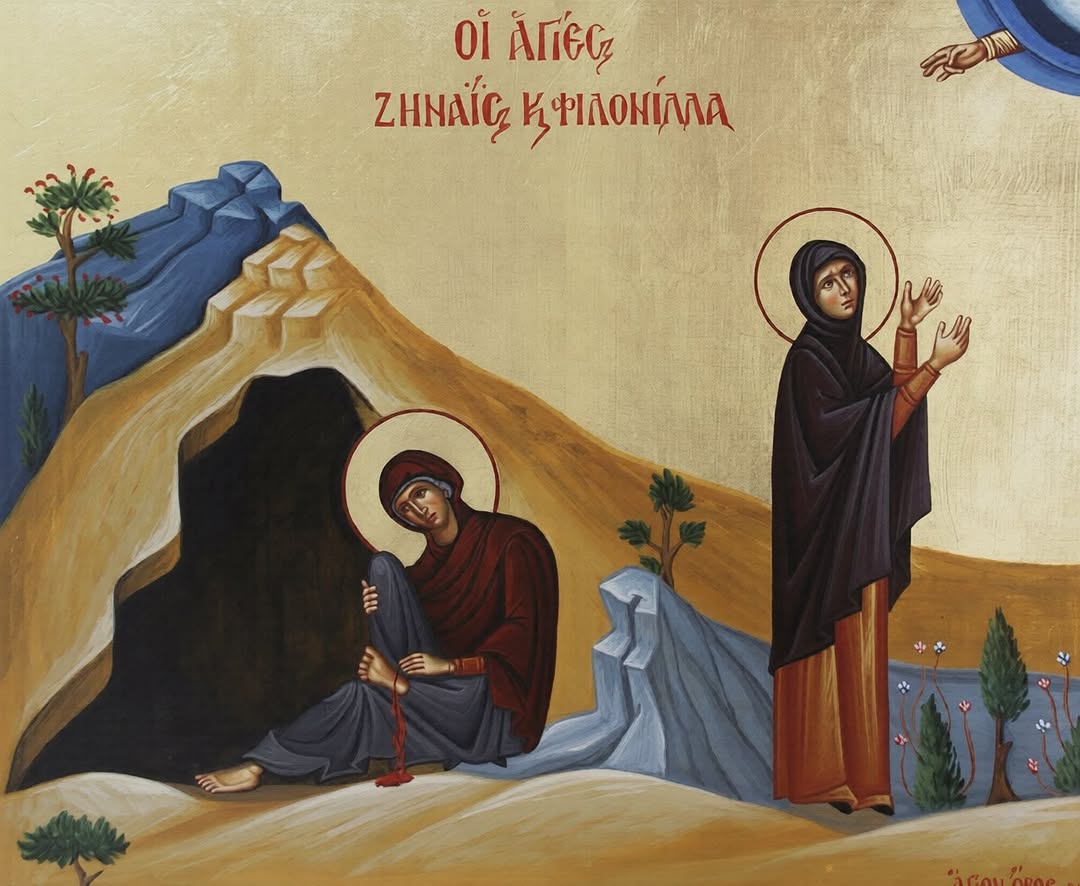
Saints Zenais and Philonella: first Holy Unmercenary Physicians

The post commemorates Saints Zenais and Philonella on October 11. They were first-century Christian sisters from Tarsus, recognized as the first Christian physicians after Luke the Evangelist. They are also known as Zenaida and Philonilla. Born into a well-educated Jewish family, they were reportedly cousins of Paul the Apostle and were baptized by their brother Jason, the Bishop of Tarsus. The sisters studied medicine and philosophy at the…

The post commemorates Saints Zenais and Philonella on October 11. They were first-century Christian sisters from Tarsus, recognized as the first Christian physicians after Luke the Evangelist. They are also known as Zenaida and Philonilla. Born into a well-educated Jewish family, they were reportedly cousins of Paul the Apostle and were baptized by their brother Jason, the Bishop of Tarsus.

The sisters studied medicine and philosophy at the philosophical academy in Tarsus, defying patriarchal norms of an era when those fields were dominated by men. Driven by faith, they relocated to the mountains around Pelion near Demetriada in Thessaly, a region known for mineral healing springs. Local pagan physicians exploited the wealthy with high fees and magical charms.

In opposition, Zenais and Philonella moved into a cave with a natural spring and established a chapel, living quarters, and a free clinic. They refused payment, becoming the first to hold the title Holy Unmercenary Physicians. They combined physical healthcare with spiritual treatment, using scientific methods while teaching that true healing comes through Christ.

The sisters divided work according to their strengths. Philonella dedicated herself to experimental medicine, using systematic approaches that mirror modern medical science to separate effective healthcare from pagan superstition. Zenais focused on pediatrics and early psychiatric medicine, pioneering recognition and treatment of mental illnesses such as clinical depression.

She also became a respected spiritual guide, attracting men and women to her counsel, which inspired her male disciples to build a nearby monastery.

  • First-century sisters from Tarsus, cousins of Paul the Apostle, baptized by their brother Jason, Bishop of Tarsus.
  • Studied medicine and philosophy at the Tarsus academy, defying male-dominated norms.
  • Moved to mountains near Demetriada, established a free clinic in a cave with a spring, refused payment, becoming the first Holy Unmercenary Physicians.
  • Philonella practiced experimental medicine with systematic methods; Zenais pioneered pediatrics and early psychiatric care including clinical depression.
  • Zenais served as a spiritual guide, attracting disciples who built a nearby monastery.
Read more
Orthodox Life Instagram

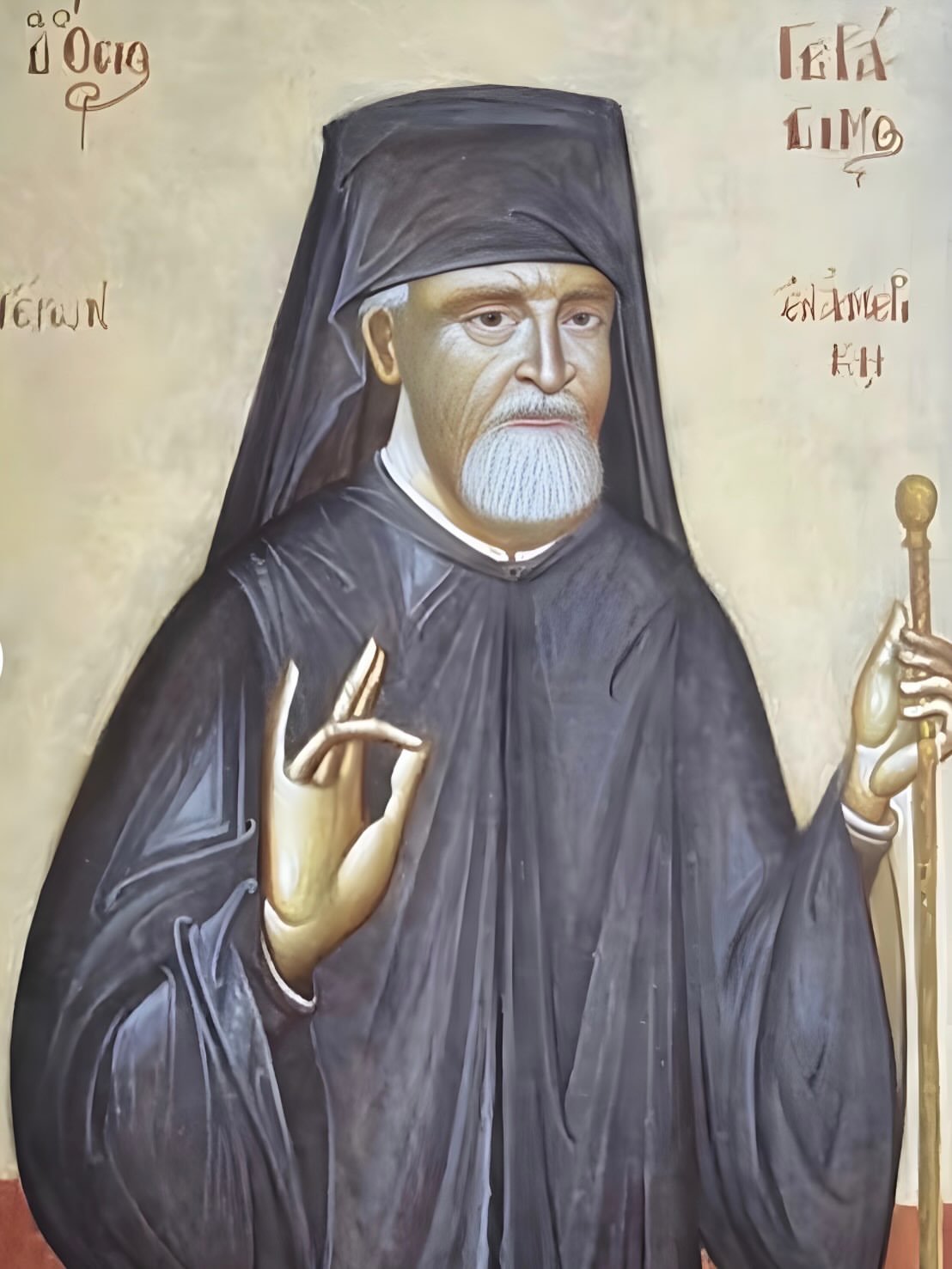
Translation of Bishop Gerasimos' relics at Holy Cross Chapel

The post announces the first commemoration of the translation of relics of Bishop Gerasimos of Abydos on October 10, 2026. Bishop Gerasimos was born Elias Papadopoulos in Bouzi, Corinth, on October 10, 1910. He was ordained deacon on June 17, 1935 by Metropolitan Damaskinos of Corinth and presbyter in May 1941 by Metropolitan Michael of Corinth, who later became Archbishop of America. He graduated from the Theological School of Athens in 1944…

The post announces the first commemoration of the translation of relics of Bishop Gerasimos of Abydos on October 10, 2026. Bishop Gerasimos was born Elias Papadopoulos in Bouzi, Corinth, on October 10, 1910. He was ordained deacon on June 17, 1935 by Metropolitan Damaskinos of Corinth and presbyter in May 1941 by Metropolitan Michael of Corinth, who later became Archbishop of America.

He graduated from the Theological School of Athens in 1944 and served as deacon at the Church of St. Dionysios the Areopagite in Athens. He was chancellor of the Metropolis of Corinth from 1945 to 1947, then went to West Germany to serve as a priest in Munich. In 1952 Archbishop Michael urged him to come to the United States.

On May 20, 1962 he was elected titular Bishop of Abydos and served as auxiliary bishop of the Archdiocese of America. From 1962 to 1967 he was Archiepiscopal Vicar in Boston, and from 1967 to 1977 he had pastoral oversight of the Archdiocesan District of Pittsburgh. He retired on June 19, 1977 and settled at Holy Cross Greek Orthodox School of Theology as spiritual father and groundskeeper, continuing pastoral mentorship until his repose on June 12, 1995.

On Saturday, October 10, 2026, his incorrupt relics were exhumed from behind Holy Cross Chapel in Boston and transferred to the chapel for veneration. The author is attending college at the school. The bishop is soon to be canonized a saint.

  • First commemoration of relic translation held October 10, 2026
  • Bishop Gerasimos born Elias Papadopoulos in Bouzi, Corinth, 1910
  • Served in Greece, Germany, and United States as priest and bishop
  • Retired to Holy Cross School of Theology in 1977, reposed 1995
  • Incorrupt relics exhumed and transferred to chapel for veneration
Read more
Orthodox Life Instagram

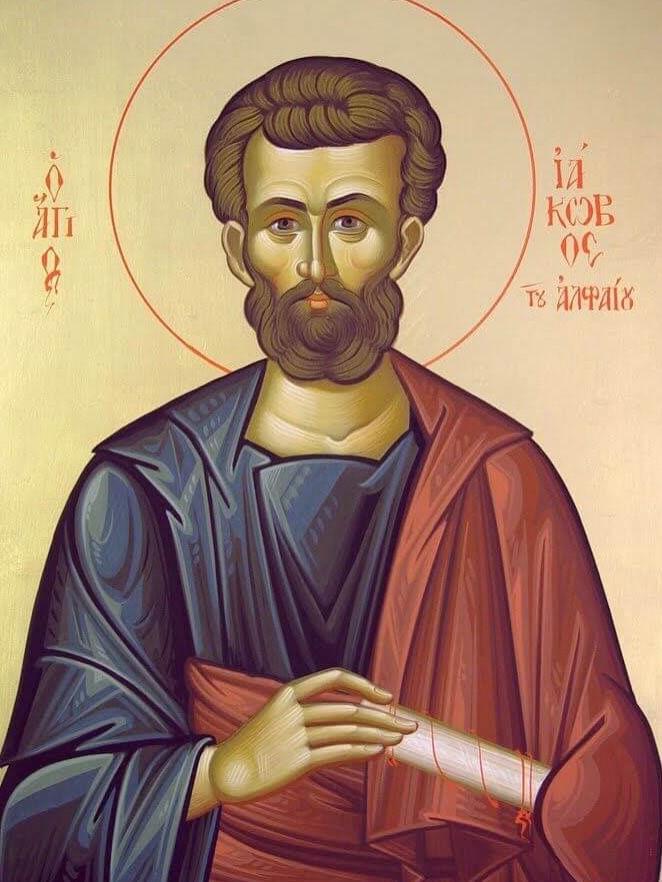
James, Son of Alphaeus: Why the Orthodox Church Separates Him from James the Just

October 9 marks the feast of Saint James the Apostle, son of Alphaeus, whom the Eastern Orthodox Church honors as one of the original Twelve Apostles chosen by Jesus Christ. The author explains that Orthodox Sacred Tradition identifies James as the biological brother of the Holy Evangelist Matthew, who was previously the tax collector Levi, since both are recorded as sons of Alphaeus. The Church commemorates him on October 9 and again on June 30…

October 9 marks the feast of Saint James the Apostle, son of Alphaeus, whom the Eastern Orthodox Church honors as one of the original Twelve Apostles chosen by Jesus Christ. The author explains that Orthodox Sacred Tradition identifies James as the biological brother of the Holy Evangelist Matthew, who was previously the tax collector Levi, since both are recorded as sons of Alphaeus.

The Church commemorates him on October 9 and again on June 30 at the Synaxis of the Twelve Apostles.

The author then turns to a theological distinction in Orthodox Mariology and tradition. James, the son of Alphaeus, is a different person from James the Brother of the Lord, also called James the Just. The author notes that Western traditions often conflate the two, while the Orthodox Church keeps them separate, with different feast days.

James the Just wrote the New Testament Epistle and was the first Bishop of Jerusalem. He is recognized as a son of Saint Joseph the Betrothed from a previous marriage. The son of Alphaeus, by contrast, is counted strictly among the core Twelve.

The author describes James's life during Christ's earthly ministry. He followed the Master closely, heard His words, witnessed His miracles, and beheld His suffering, Resurrection, and Ascension. He was in the Upper Room with the other disciples on the day of Pentecost and received the Holy Spirit in the form of fiery tongues. The author writes that this empowerment transformed him into a bold "fisherman of nations."

After Pentecost, Holy Tradition records that James traveled with fellow disciples, most notably Saint Andrew the First-Called. He preached through Judea, Edessa, Gaza, and Eleutheropolis, proclaiming Christ, destroying pagan idols, and casting out evil spirits. Sentenced to martyrdom in 62 AD, James was crucified, mirroring the passion of his Savior and sealing his earthly testimony with his blood.

  • The Orthodox Church commemorates James, son of Alphaeus, on October 9 and on June 30 at the Synaxis of the Twelve Apostles.
  • Sacred Tradition identifies him as the biological brother of the Evangelist Matthew, since both are recorded as sons of Alphaeus.
  • Orthodox tradition keeps him distinct from James the Just, the Epistle author and first Bishop of Jerusalem, whom it counts as a son of Saint Joseph the Betrothed from a previous marriage.
  • He received the Holy Spirit with the other disciples in the Upper Room on Pentecost, in the form of fiery tongues.
  • He preached with Saint Andrew the First-Called in Judea, Edessa, Gaza, and Eleutheropolis, and was crucified in 62 AD.
Read more
Orthodox Life Instagram

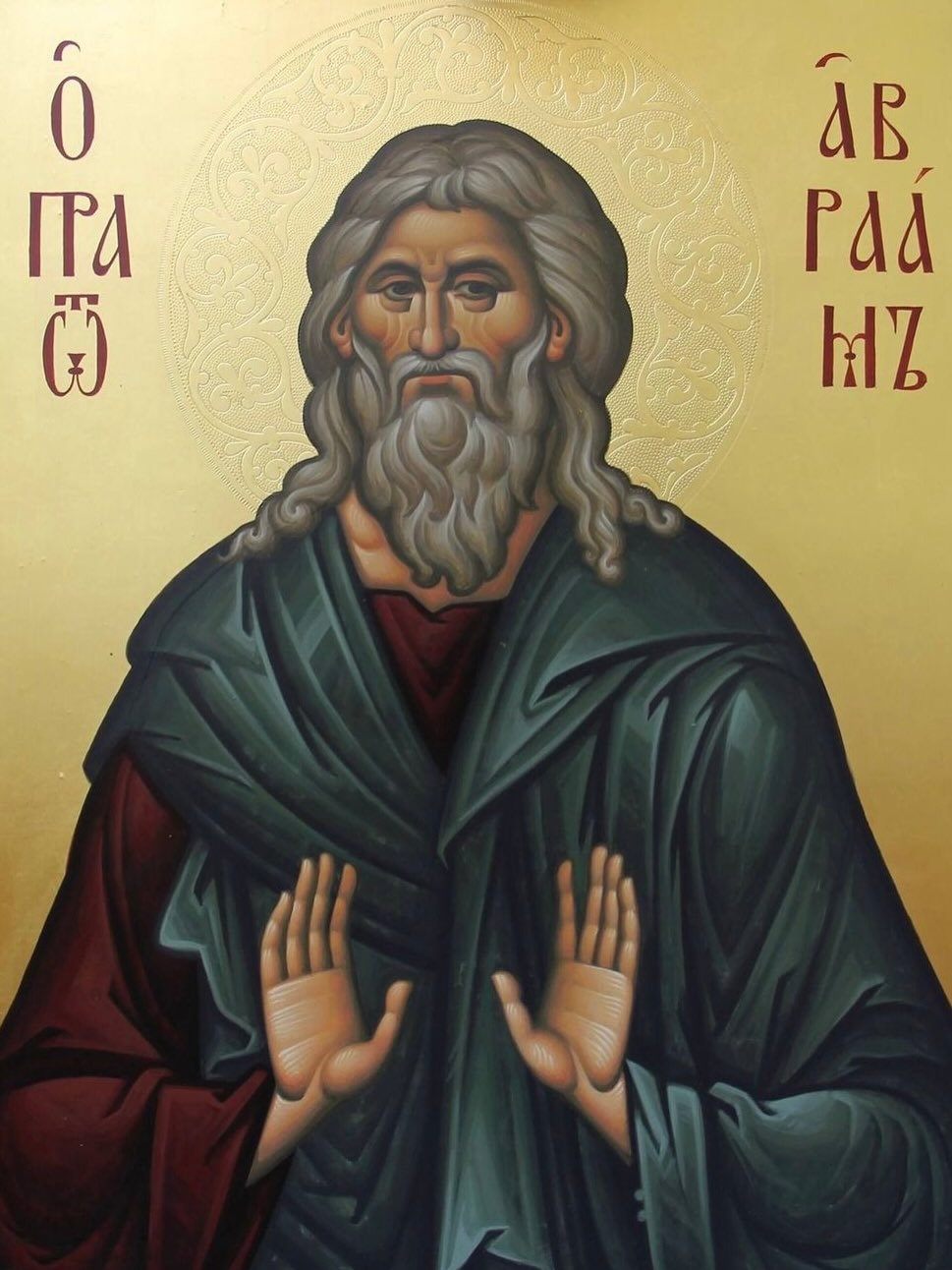
The Righteous Forefather Abraham: Faith, Hospitality, and Intercession

The post commemorates the Righteous Forefather Abraham on October 9. It states that Abraham lived around 2000 B.C. and is known as the Father of a multitude. The author writes that Abraham demonstrated a rare standard of virtue, obedience, and profound humility. In obedience to God's command, he left his ancestral home to journey to Canaan, the Promised Land, where God established a divine covenant promising that all nations of the earth would…

The post commemorates the Righteous Forefather Abraham on October 9. It states that Abraham lived around 2000 B.C. and is known as the Father of a multitude. The author writes that Abraham demonstrated a rare standard of virtue, obedience, and profound humility. In obedience to God's command, he left his ancestral home to journey to Canaan, the Promised Land, where God established a divine covenant promising that all nations of the earth would be blessed through his lineage.

The post connects Abraham's life to the revelation of the Triune God. His extraordinary hospitality at the Oak of Mamre, where he welcomed three mysterious travelers, is understood by the Church as a prefiguration of the Holy Trinity. This event is immortalized in Orthodox iconography, most famously in Andrei Rublev's Hospitality of Abraham (The Trinity), where the three angels symbolize the Father, Son, and Holy Spirit dining in unity.

The text recounts the severe test of Abraham's faith when God commanded him to offer his beloved son Isaac as a sacrifice. Without hesitation, Abraham prepared to fulfill the command, trusting that God could raise his son from the dead. At the final moment, an angel stayed his hand. The Orthodox Church views Isaac's willing submission and Abraham's sacrifice as a direct prophetic type of God the Father offering His Only-Begotten Son, Jesus Christ, on Golgotha for the redemption of the world.

Beyond his obedience, the Righteous Patriarch is celebrated as a powerful archetype of intercessory prayer and mercy. When God revealed His plan to destroy the wicked cities of Sodom and Gomorrah, Abraham courageously stood before the Lord to plead for the innocent. He humbly bargained with God to spare the entire region for the sake of just a few righteous souls, successfully saving his nephew, the Righteous Lot, and illustrating the immense spiritual power of a righteous man's intercession. The post notes that Abraham reposed at the age of 175.

  • Commemoration of Abraham on October 9
  • Abraham's obedience, covenant, and journey to Canaan around 2000 B.C.
  • Hospitality at the Oak of Mamre as a prefiguration of the Trinity, depicted in Rublev's icon
  • The sacrifice of Isaac as a prophetic type of Christ's crucifixion
  • Abraham's intercession for Sodom and Gomorrah, saving Lot, and his repose at age 175
Orthodox Life Instagram

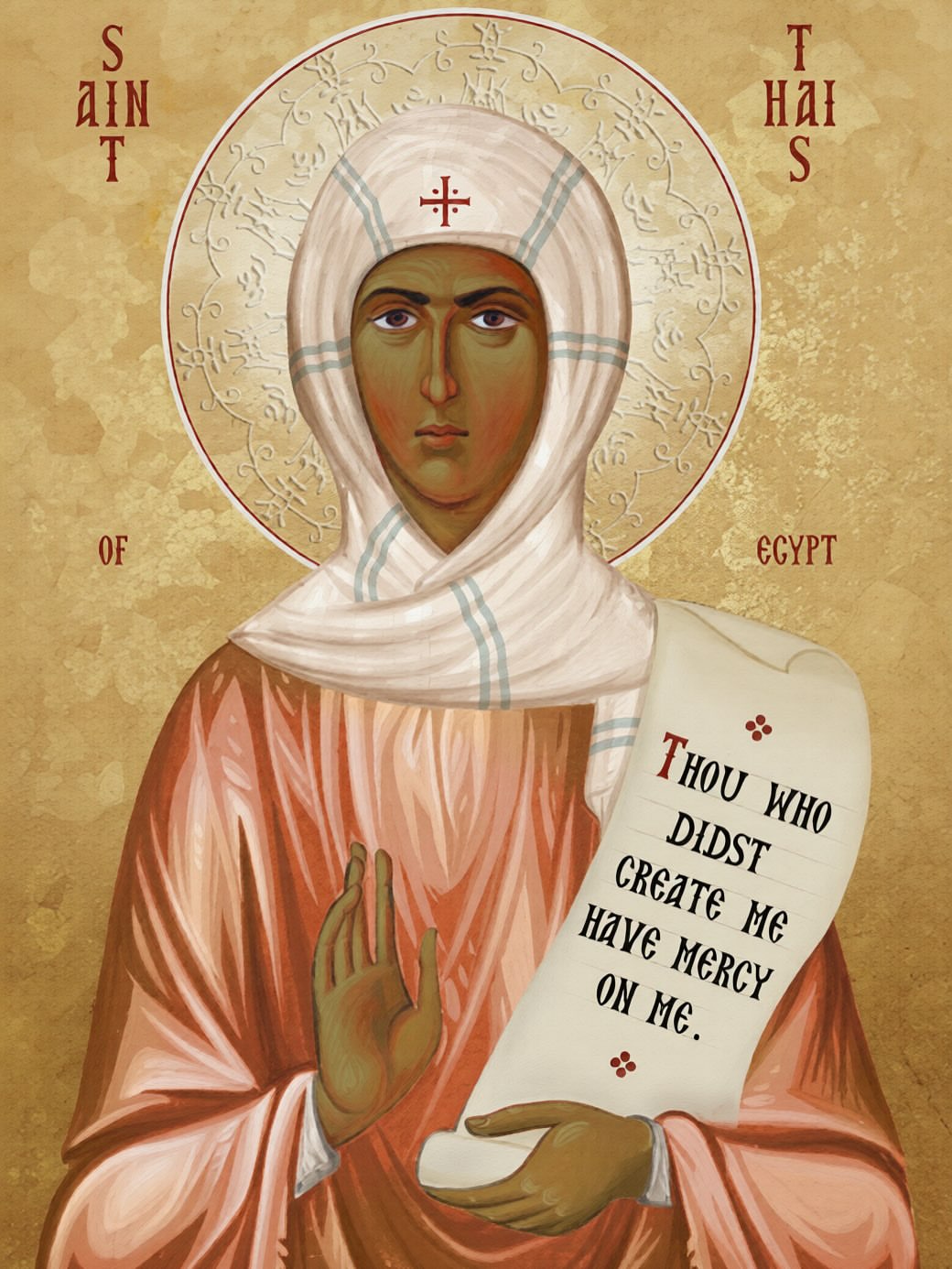
Saint Thais: the Alexandrian courtesan who burned her jewels and spent three years in a desert cell

The post commemorates Saint Thais, the repentant harlot, whose memory is kept on October 8th. Thais was a fourth-century Egyptian woman living in Alexandria, known for her exceptional beauty and her work as a wealthy courtesan. She drew many men into ruinous infatuation: they squandered their fortunes and even fought violently for her favor. Though she enjoyed luxury and notoriety, the post describes her as living without spiritual purpose,…

The post commemorates Saint Thais, the repentant harlot, whose memory is kept on October 8th. Thais was a fourth-century Egyptian woman living in Alexandria, known for her exceptional beauty and her work as a wealthy courtesan. She drew many men into ruinous infatuation: they squandered their fortunes and even fought violently for her favor.

Though she enjoyed luxury and notoriety, the post describes her as living without spiritual purpose, embedded in the sins of her profession. Her life changed when Saint Paphnutius, a desert hermit, heard of her reputation and set out to save her soul. He disguised himself as a worldly suitor, paid to see her in private, and asked whether there was a place they could go where only God could see them.

Thais answered that she believed in God and knew nothing could be hidden from Him. Paphnutius then described the eternal consequences of her way of life, and her conscience was pierced. She was moved to tears and publicly rejected her past: she gathered her costly garments, gold, and jewels in the city square and burned them, cutting all ties to her former wealth.

She followed Paphnutius into the desert for a life of penance under his direction. He placed her in a small, sealed monastic cell with only a tiny opening for food and water. For three years she lived in isolation, weeping and praying.

When she asked how she should pray, Paphnutius told her she was unworthy to utter the name of God; instead she was to look east and repeat, "You who created me, have mercy on me." Thais fell ill and reposed peacefully fifteen days later. The post presents her as a symbol of divine mercy and redemption.

  • Saint Thais was a fourth-century Alexandrian courtesan whose beauty led men to ruin their fortunes and fight for her favor.
  • Saint Paphnutius visited her disguised as a suitor and asked where they could go where only God could see them.
  • Thais burned her garments, gold, and jewels in the city square and followed Paphnutius into the desert.
  • She spent three years in a sealed cell, praying the words: "You who created me, have mercy on me."
  • She fell ill and reposed fifteen days later; her feast is October 8th.
Read more
Orthodox Life Instagram

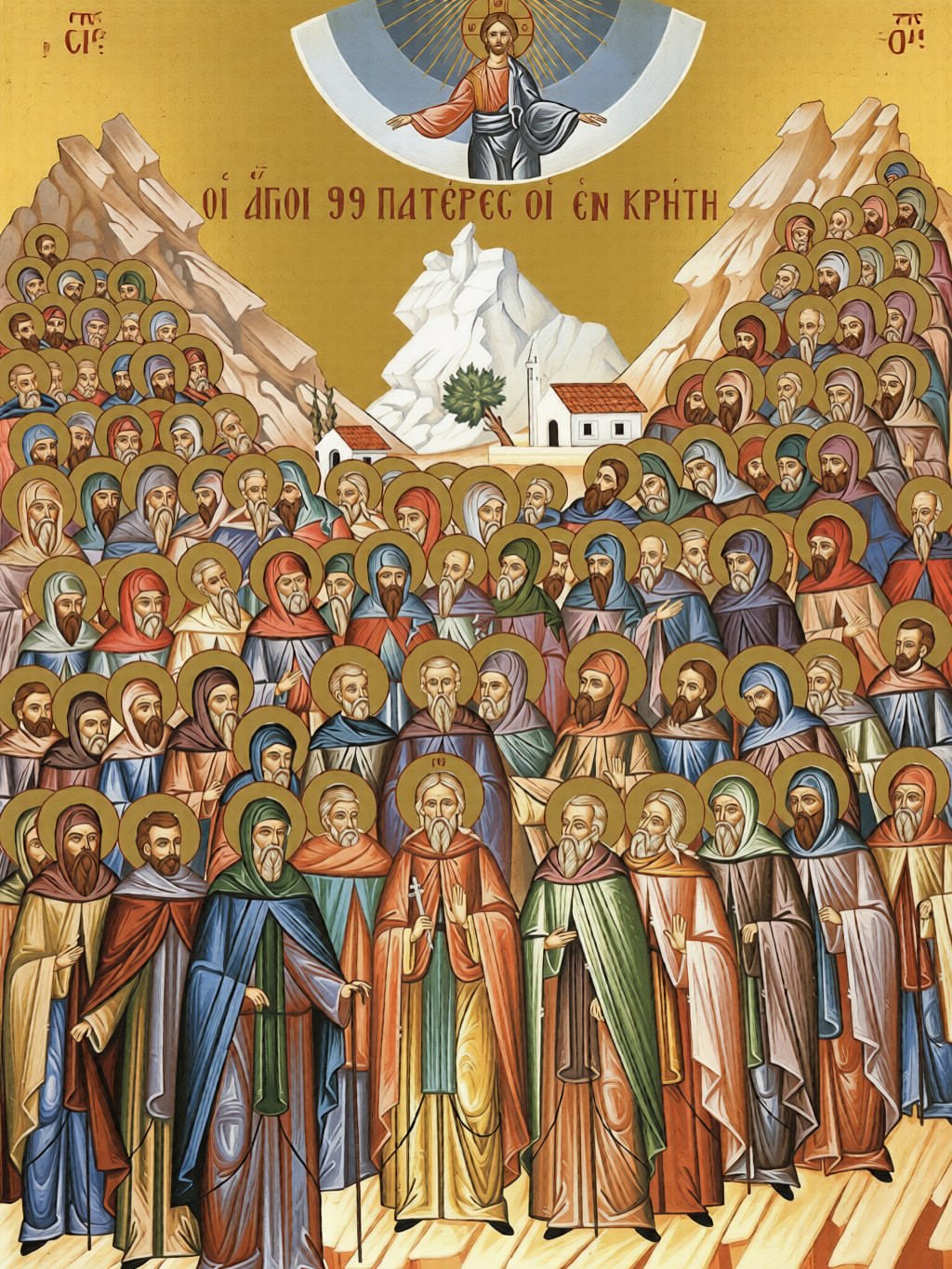
Saint John the Hermit and the 98 Fathers of Crete commemorated October 7

The post commemorates Saint John the Hermit and the 98 Fathers of Crete on October 7. These 14th-century ascetics came from Egypt, Cyprus, and Asia Minor to live a life of prayer and solitude on the Greek island of Crete. Led by Saint John, the group traveled together by sea toward Crete. When a bad storm forced them to stop on the nearby island of Gavdos, a miraculous event occurred. Saint John was left behind by mistake when he became…

The post commemorates Saint John the Hermit and the 98 Fathers of Crete on October 7. These 14th-century ascetics came from Egypt, Cyprus, and Asia Minor to live a life of prayer and solitude on the Greek island of Crete. Led by Saint John, the group traveled together by sea toward Crete. When a bad storm forced them to stop on the nearby island of Gavdos, a miraculous event occurred.

Saint John was left behind by mistake when he became temporarily unseen. He then crossed the open sea to Crete by standing on his cloth tunic. Once they arrived safely on Crete, the ascetics settled into caves near the village of Azogires.

Saint John later moved to a more remote cave in the Akrotiri peninsula. The rest of the fathers stayed together in Azogires under a large plane tree, building a life of deep quiet and continuous prayer. Tragedy struck when a local farmer or hunter mistook Saint John for a wild animal and shot him with an arrow.

According to tradition, the other 98 fathers in Azogires died at that exact same moment. Their shared death reflected their deep spiritual bond and life of prayer. Visitors can still travel to Azogires to see the Holy Fathers' Monastery and the caves where these remarkable men lived and prayed.

  • 14th-century ascetics from Egypt, Cyprus, and Asia Minor settled on Crete
  • Saint John crossed the sea on his tunic after being left behind on Gavdos
  • The group lived in caves near Azogires under a large plane tree
  • Saint John was shot by a farmer who mistook him for a wild animal
  • All 98 fathers died at the same moment as Saint John
Read more
Orthodox Life Instagram

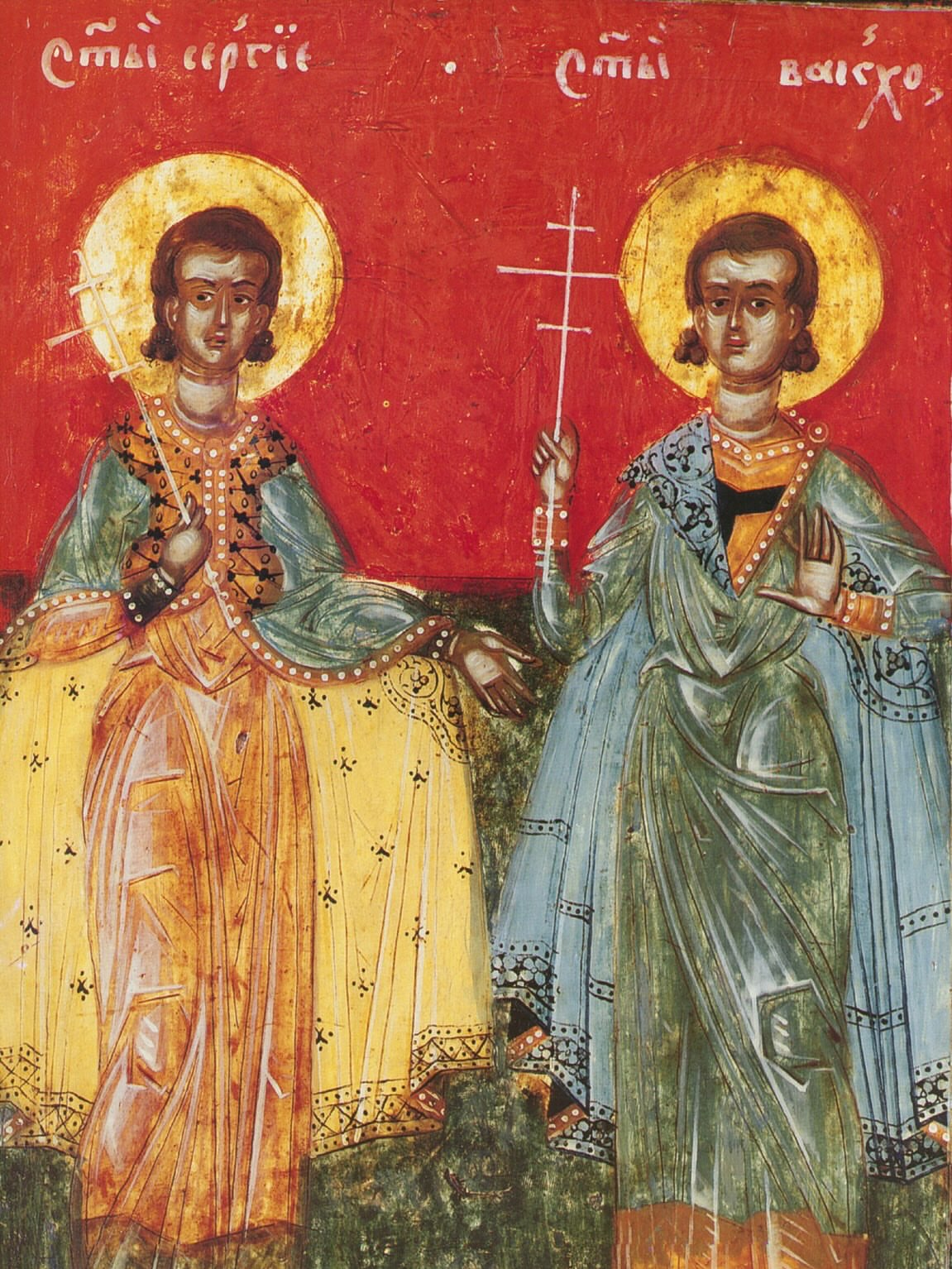
Saints Sergius and Bacchus: Officers Who Refused to Sacrifice to Jupiter

The post commemorates the Holy Great Martyrs Sergius and Bacchus, fourth-century Roman military officers and court nobles who served with distinction on the Syrian frontier under Emperor Maximian. The emperor favored them for their bravery and skill until he learned they were Christians. Their faith became known when they refused to enter a pagan temple to offer sacrifices to Jupiter, declaring that their loyalty belonged only to the one God.…

The post commemorates the Holy Great Martyrs Sergius and Bacchus, fourth-century Roman military officers and court nobles who served with distinction on the Syrian frontier under Emperor Maximian. The emperor favored them for their bravery and skill until he learned they were Christians. Their faith became known when they refused to enter a pagan temple to offer sacrifices to Jupiter, declaring that their loyalty belonged only to the one God.

Maximian stripped them of their military insignia, belts, and rings, then ordered them dressed in heavy feminine clothing and paraded through the streets in iron chains while crowds mocked them. The two remained steadfast, refuting the emperor's arguments and showing the emptiness of idol worship. They were sent to Eastern Syria to face Antiochus, a governor and fierce persecutor of Christians who had risen to power with their help.

When he urged them to sacrifice to the Roman gods, they answered, "For us life is Christ, and to die is gain." Antiochus had Bacchus beaten with raw ox-hides until he died. Sergius was then forced to march in iron sandals lined with upward-pointing spikes that pierced his feet.

After enduring this torture without renouncing Christ, he was beheaded with a sword in the Syrian town of Resapha in 303 AD.

  • Sergius and Bacchus were high-ranking Roman officers on the Syrian frontier under Emperor Maximian, favored until their Christian faith was discovered.
  • They refused to offer sacrifice to Jupiter, saying their loyalty belonged only to the one God.
  • The emperor humiliated them by dressing them in feminine clothing and parading them in chains through the city.
  • Before Governor Antiochus they said, "For us life is Christ, and to die is gain"; Bacchus died under beating with ox-hides.
  • Sergius was marched in spiked iron sandals and beheaded at Resapha in Syria in 303 AD.
Read more
Orthodox Life Instagram

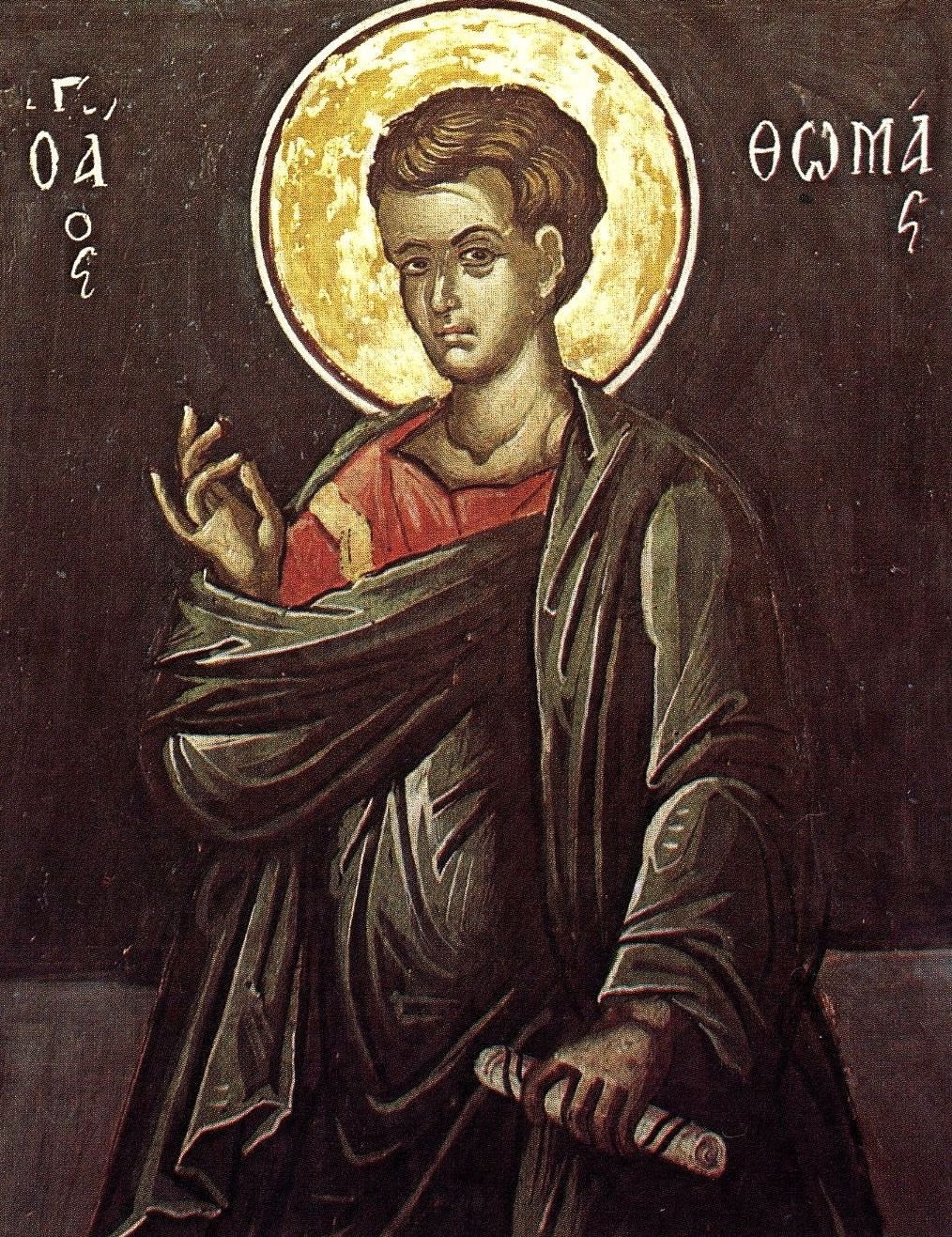
Saint Thomas the Apostle: From 'My Lord and my God' to Martyrdom in India

The post commemorates the Holy Apostle Thomas, one of the Twelve, on his feast day of October 6th. Thomas, also called Didymus, meaning the Twin, was a Galilean fisherman called by Jesus Christ. The author recalls that when Christ set out toward dangerous territory before the resurrection of Lazarus, Thomas urged the other disciples to go with Him, saying, 'Let us also go, that we may die with Him.' The post treats Thomas's doubt about the…

The post commemorates the Holy Apostle Thomas, one of the Twelve, on his feast day of October 6th. Thomas, also called Didymus, meaning the Twin, was a Galilean fisherman called by Jesus Christ. The author recalls that when Christ set out toward dangerous territory before the resurrection of Lazarus, Thomas urged the other disciples to go with Him, saying, 'Let us also go, that we may die with Him.' The post treats Thomas's doubt about the Resurrection as 'blessed unbelief' or 'saving doubt,' because it strengthened the Church's faith.

When Christ appeared to him eight days after Pascha and invited him to touch His wounds, Thomas confessed, 'My Lord and my God!' The post also recounts a tradition in which divine providence used Thomas to confirm the bodily assumption of the Virgin Mary. Arriving three days late to her burial in Jerusalem, he asked that her tomb be opened so he could venerate her.

The empty sepulcher showed her ascent into heaven, and the Mother of God comforted his grief by giving him her holy sash, a relic connected with the feast of the holy belt celebrated on August 31. After Pentecost, Thomas preached outside the Roman Empire in Palestine, Mesopotamia, Parthia, Ethiopia, and India, converting many and building churches.

His preaching provoked a pagan ruler in Meliapur, and he was martyred by being pierced with five spears.

  • Thomas, called Didymus the Twin, was a Galilean fisherman among the Twelve Apostles.
  • Before Lazarus's resurrection he urged the disciples, 'Let us also go, that we may die with Him.'
  • His doubt is called 'blessed unbelief' or 'saving doubt'; seeing Christ's wounds eight days after Pascha, he confessed, 'My Lord and my God!'
  • He arrived late to the Virgin Mary's burial; her empty tomb and the gift of her holy sash confirmed her assumption, remembered on August 31.
  • He preached in Palestine, Mesopotamia, Parthia, Ethiopia, and India, and was martyred in Meliapur by five spears.
Read more
Orthodox Life Instagram

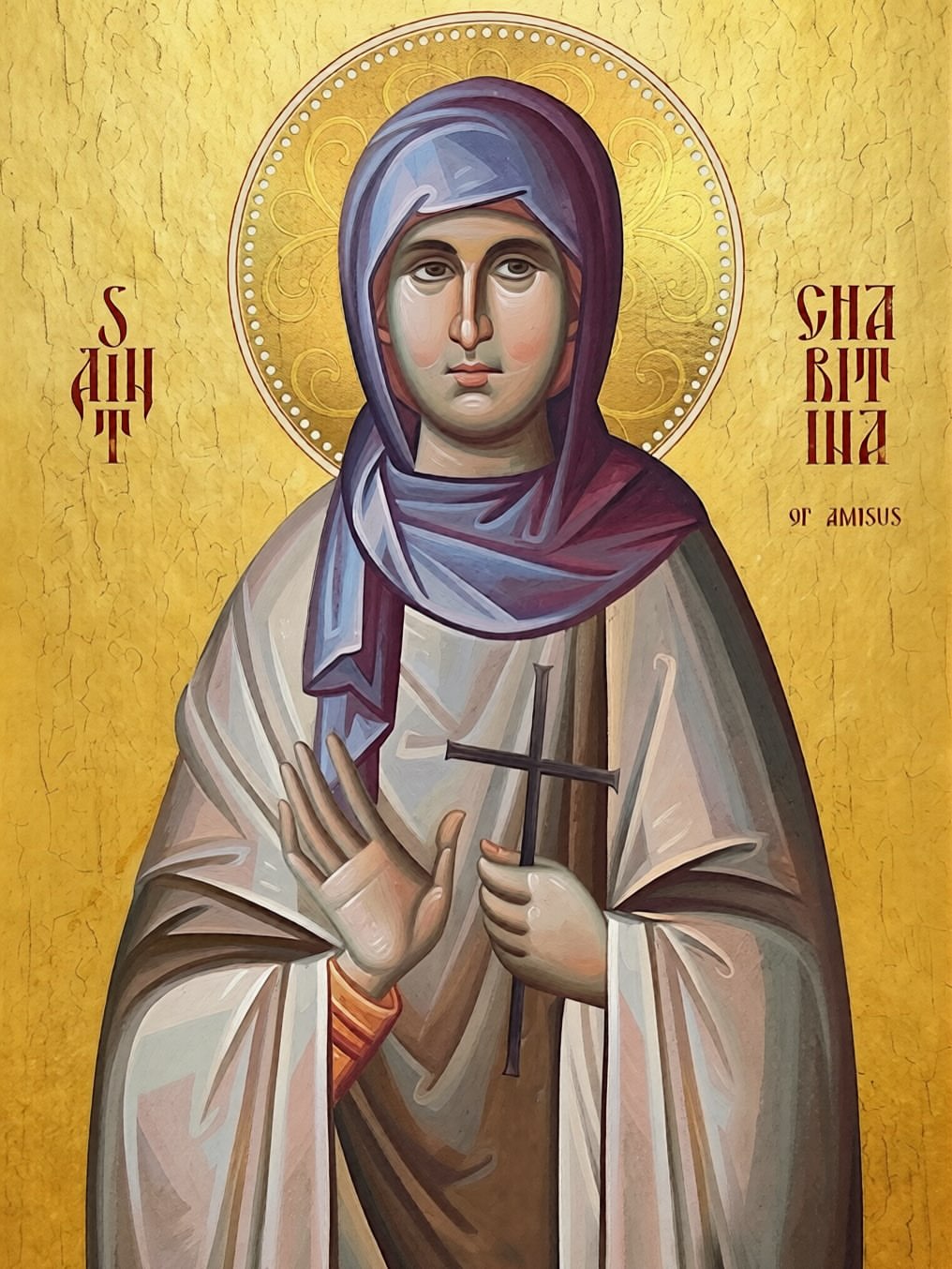
Saint Charitina of Amisus: Virgin and Martyr Under Diocletian

The post commemorates Saint Charitina of Amisus, an early Christian virgin and martyr of the late 3rd and early 4th centuries, whose feast falls on October 5th. Orphaned young in Amisus, modern-day Samsun in Turkey, she was raised by a pious Roman Christian named Claudius as his own daughter. Though not yet formally baptized, she was a Christian at heart, studied divine law day and night, and vowed perpetual virginity. Her example converted many…

The post commemorates Saint Charitina of Amisus, an early Christian virgin and martyr of the late 3rd and early 4th centuries, whose feast falls on October 5th. Orphaned young in Amisus, modern-day Samsun in Turkey, she was raised by a pious Roman Christian named Claudius as his own daughter. Though not yet formally baptized, she was a Christian at heart, studied divine law day and night, and vowed perpetual virginity.

Her example converted many pagans, which drew the attention of Governor Dometius, an official under Emperor Diocletian during his persecution of Christians. Ordered before a tribunal, Charitina confessed Christ and refused to sacrifice to idols. The judge subjected her to tortures: her head was shaved, burning coals were placed on her flesh, and she was thrown into the sea with a stone around her neck.

The post relates that, according to pious tradition, she was preserved or healed each time, and stepped from the sea unharmed, calling the immersion her baptism. The judge then ordered her to public dishonor by dissolute youths. To protect her purity, Charitina knelt and prayed for God to take her soul; she reposed peacefully in 304 AD before her attackers could touch her.

Her foster-father recovered her body after it washed ashore three days later and buried her honorably.

  • Saint Charitina of Amisus, orphaned young, was raised by the pious Christian Claudius and vowed perpetual virginity though not yet baptized.
  • Her conversions of pagans brought her before Governor Dometius during Diocletian's persecution.
  • She confessed Christ, refused sacrifice to idols, and endured shaving, burning coals, and drowning with a stone.
  • Tradition holds she emerged from the sea unharmed, declaring the immersion her baptism.
  • She reposed in prayer in 304 AD; her body washed ashore three days later and Claudius buried her honorably.
Read more
Orthodox Life Instagram

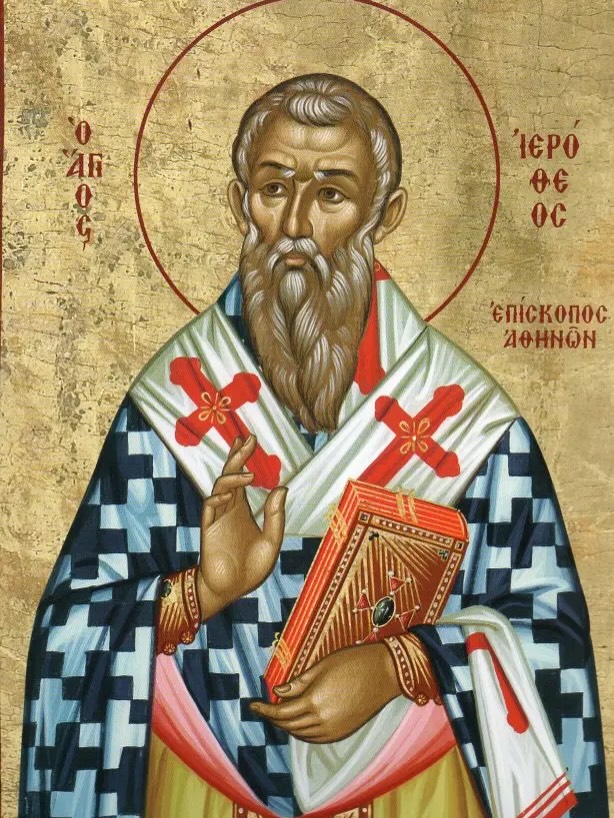
Saint Hierotheos of Athens: Philosopher, Bishop, Hymnographer at the Dormition

The post commemorates Saint Hierotheos, first Bishop of Athens, on October 4. Before his conversion around 52-53 AD, he was a Platonic philosopher and member of the Areopagus, holding the title Thesmothete. When Apostle Paul preached at Mars Hill, Hierotheos and Saint Dionysius the Areopagite accepted baptism. Paul consecrated Hierotheos as bishop of the nascent Athenian church. Hierotheos became spiritual mentor to Dionysius; Paul provided…

The post commemorates Saint Hierotheos, first Bishop of Athens, on October 4. Before his conversion around 52-53 AD, he was a Platonic philosopher and member of the Areopagus, holding the title Thesmothete. When Apostle Paul preached at Mars Hill, Hierotheos and Saint Dionysius the Areopagite accepted baptism. Paul consecrated Hierotheos as bishop of the nascent Athenian church.

Hierotheos became spiritual mentor to Dionysius; Paul provided foundational teaching while Hierotheos initiated Dionysius into deeper mystical secrets, which Dionysius later expanded. Ecclesiastical tradition records that the Holy Spirit transported Hierotheos and Dionysius to Jerusalem for the Dormition of the Virgin Mary. There Hierotheos distinguished himself as a divine hymnographer, transported outside himself while singing spiritual songs in praise of the Theotokos.

He died a martyr in the late first century after defending the faith and evangelizing the pagan population of Athens.

  • First Bishop of Athens, converted by Apostle Paul at Mars Hill circa 52-53 AD
  • Former Platonic philosopher and Areopagus member with title Thesmothete
  • Mentored Saint Dionysius the Areopagite in mystical theology
  • Transported by the Holy Spirit to the Dormition of the Virgin Mary
  • Martyred in late first century while evangelizing Athens
Read more
Orthodox Life Instagram

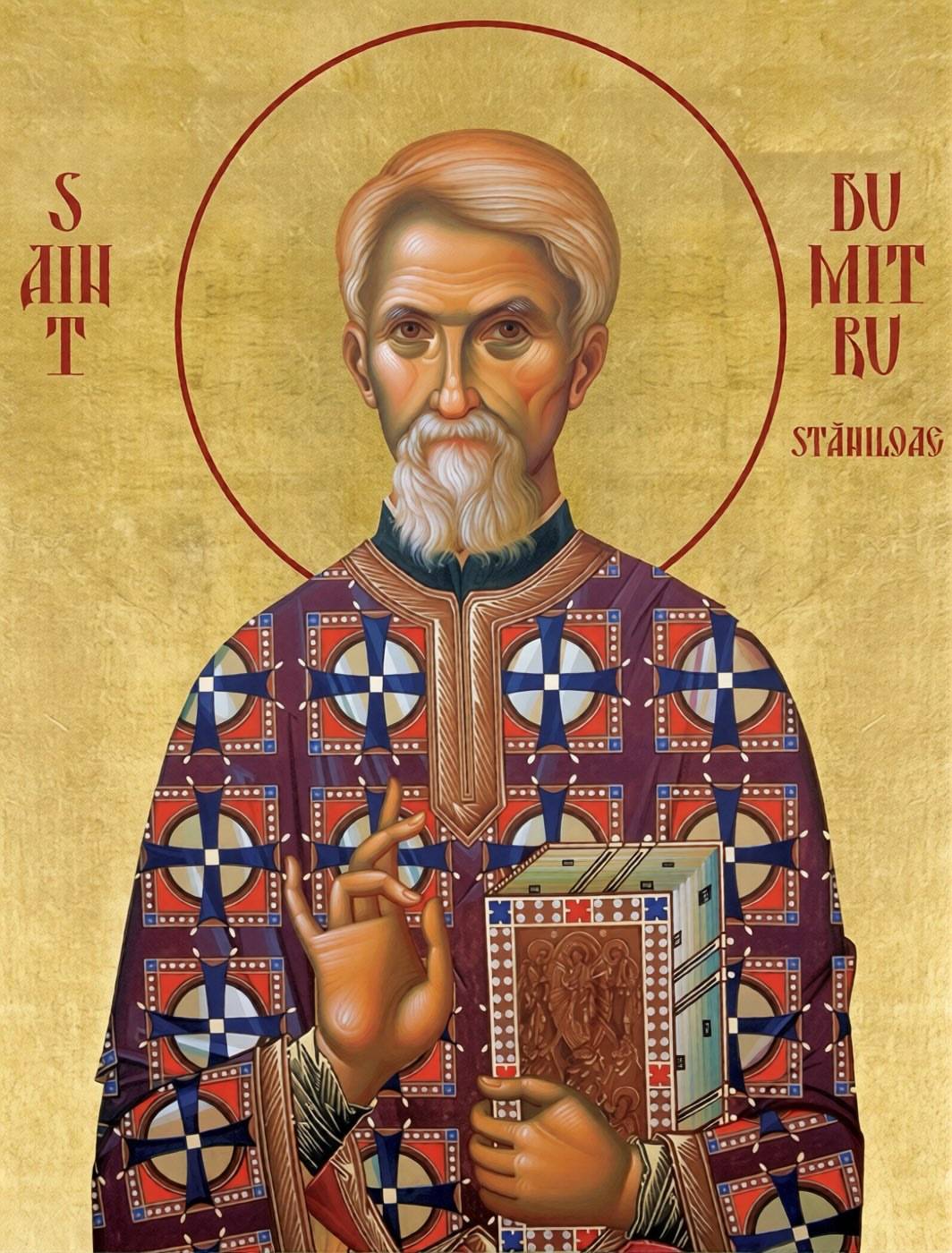
Saint Dumitru Stăniloae: Theologian, Philokalia translator, confessor under communism

Today marks the commemoration of Saint Dumitru Stăniloae, born in Romania in 1903 and recognized as one of the most influential Eastern Orthodox theologians of the 20th century. He spent his life revitalizing Orthodox theology by blending deep patristic tradition with contemporary existential relevance. His work earned him international acclaim, and he is widely regarded as a modern Father of the Church, known for making profound spiritual…

Today marks the commemoration of Saint Dumitru Stăniloae, born in Romania in 1903 and recognized as one of the most influential Eastern Orthodox theologians of the 20th century. He spent his life revitalizing Orthodox theology by blending deep patristic tradition with contemporary existential relevance. His work earned him international acclaim, and he is widely regarded as a modern Father of the Church, known for making profound spiritual truths accessible to the modern world.

His greatest monumental achievement was the translation and expansion of the Romanian Philokalia, a massive 12-volume collection of mystical texts written by early Christian saints. Rather than just translating the ancient words, Stăniloae added extensive commentary that bridged the gap between historical monastic spirituality and the daily lives of ordinary Christians.

This work sparked a widespread spiritual and monastic renewal across Romania. Stăniloae's theological teaching centered on the theology of love and the Holy Trinity. He viewed the universe not as a mechanical accident, but as a gift from God intended to facilitate a loving dialogue between the Creator and humanity.

For him, the ultimate goal of human life was theosis (deification), the process of becoming more like God through a relationship of love, prayer, and community. His faithfulness to the church came at a great personal cost during the rise of the communist regime in Romania. In 1958, he was arrested by the authorities due to his involvement with the "Burning Bush" (Rugul Aprins) spiritual movement.

He endured five years of harsh imprisonment and forced labor, an experience that deepened his humility and solidified his theological insights through real-world suffering. Following his release, he returned to writing and teaching, becoming a crucial voice in global ecumenical dialogues until his repose in 1993.

  • Commemoration of Saint Dumitru Stăniloae on October 4
  • Born 1903 in Romania; influential 20th-century Orthodox theologian and modern Father of the Church
  • Translated and expanded the Romanian Philokalia into 12 volumes with commentary, sparking spiritual renewal
  • Theology focused on love, Holy Trinity, and theosis as the goal of human life
  • Arrested in 1958 for Burning Bush movement involvement; endured five years imprisonment; later key ecumenical voice until 1993
Read more
Orthodox Life Instagram

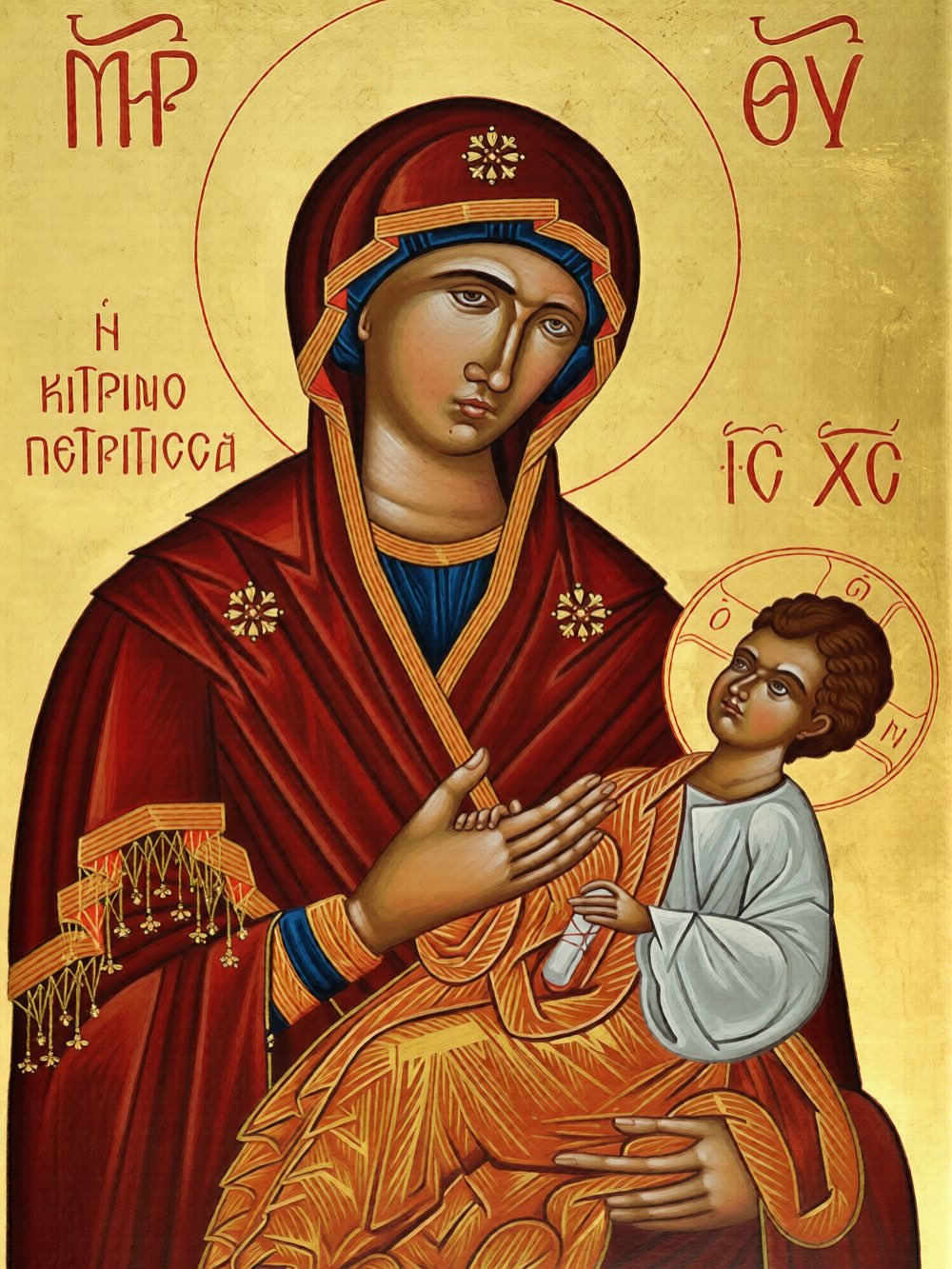
Panagia Kitrinopetritissa: the wonderworking icon of Yellow Rock, Australia

October 4 marks the commemoration of the holy icon of the Theotokos known as Panagia Kitrinopetritissa, Our Lady of Yellow Rock. The wonderworking icon is housed at the Holy Monastery of St George in Yellow Rock, New South Wales, and is described as the first miraculous Orthodox icon formally named after an Australian location. The Greek title translates as All-Holy Mother of the Yellow Rock. The account traces the icon's origin to prophetic…

October 4 marks the commemoration of the holy icon of the Theotokos known as Panagia Kitrinopetritissa, Our Lady of Yellow Rock. The wonderworking icon is housed at the Holy Monastery of St George in Yellow Rock, New South Wales, and is described as the first miraculous Orthodox icon formally named after an Australian location. The Greek title translates as All-Holy Mother of the Yellow Rock.

The account traces the icon's origin to prophetic visions received by a Greek woman, Eleni Federikou, while she lived in London. In these dreams the Virgin Mary commanded her to travel to a distant overseas country and build a church, showing her an unfamiliar landscape of wild bushland, winding creeks and native eucalyptus trees beneath a massive glowing silver cross in the sky.

Eleni and her husband Dimitrianos migrated to Australia in 1958. Their search, at first focused on northern Sydney, was redirected by another dream telling them to move further into the rural west. It ended when they reached the small village of Yellow Rock, which Eleni recognized as the exact property from her visions.

With the blessing of Archbishop Ezekiel, the couple purchased the land on October 4, 1962, laying the groundwork for Australia's first Orthodox monastery. The icon now stands in the monastery's main church and draws Greek Orthodox believers from across Australia and beyond, including students, parishioners and pilgrims seeking blessings and intercession.

  • The icon Panagia Kitrinopetritissa, Our Lady of Yellow Rock, is commemorated on October 4 and kept at the Holy Monastery of St George in Yellow Rock, New South Wales.
  • It is the first miraculous Orthodox icon formally named after an Australian location.
  • Eleni Federikou received visions in London showing bushland, creeks, eucalyptus trees and a glowing silver cross, with an instruction to build a church.
  • She and her husband Dimitrianos migrated to Australia in 1958 and found the site at Yellow Rock after a dream redirected their search westward.
  • With Archbishop Ezekiel's blessing they bought the land on October 4, 1962, founding Australia's first Orthodox monastery.
Read more