
 Orthodox Life
Instagram
Orthodox Life
Instagram
The Multiplier of Wheat Icon: Commission, Miracles, and Suppression
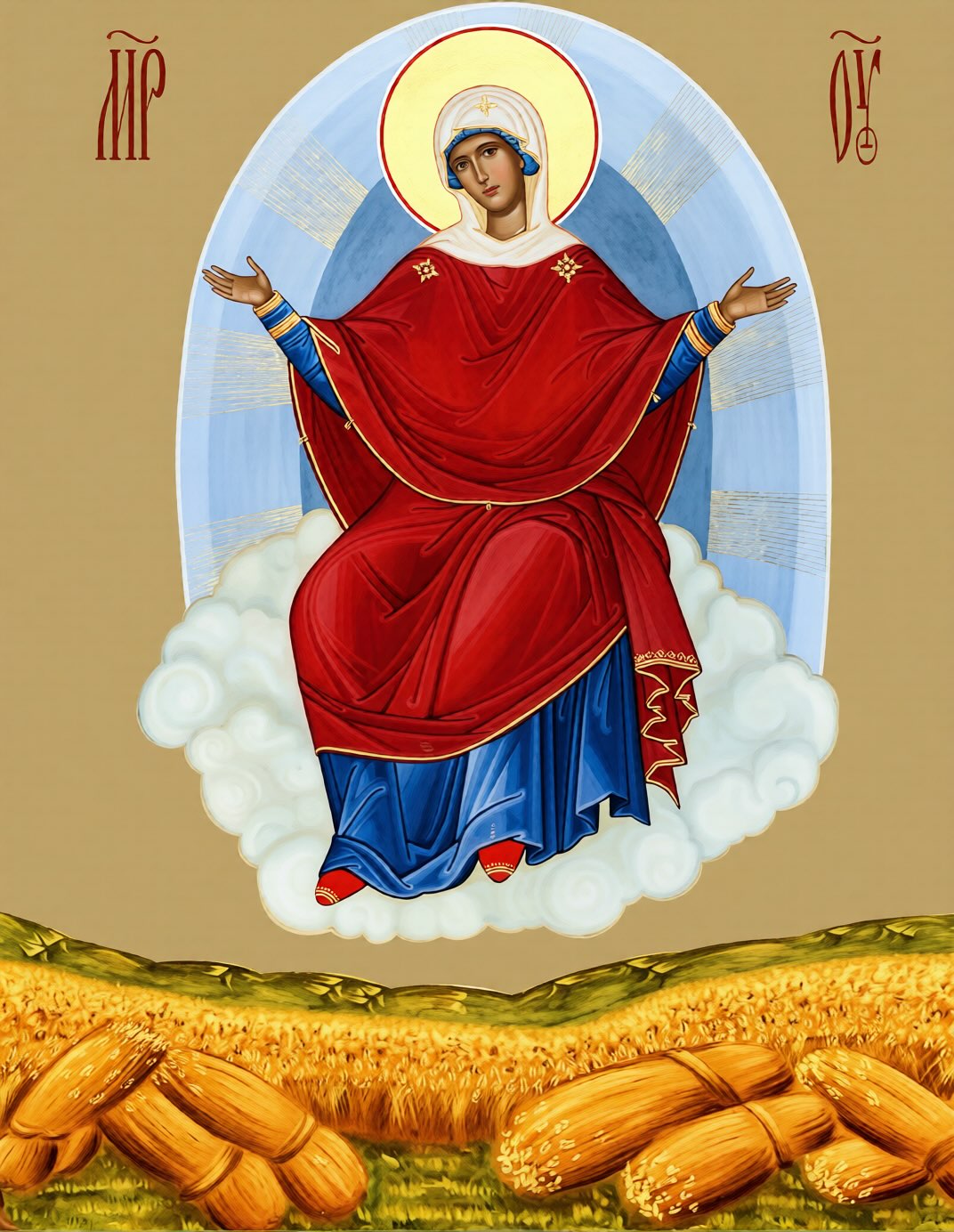
The post commemorates the Holy Icon of the Most Holy Theotokos known as the Multiplier of Wheat, also called the Prosperess of Loaves or She Who Gives or Multiplies Wheat, observed on October 15. Elder Ambrose of Optina Monastery guided the commissioning of the icon in 1890. Deeply devoted to the Virgin Mary, Ambrose envisioned the icon to comfort a nation facing agricultural hardship and dedicated it specifically to the Shamordino Convent he had founded.
He gave the icon its distinct name to remind the faithful that the Theotokos is a constant helper for humanity in their daily labors to secure physical sustenance. The visual composition uniquely bridges heavenly and mundane spheres by blending a traditional spiritual focus with a realistic agrarian terrain. The Mother of God is depicted seated upon the clouds with her hands extended in blessing.
Beneath her heavenly posture lies a harvested, compressed field filled with sheaves of rye and grass, designed to mirror the actual surrounding fields of the Shamordino region. Her posture signifies active intercession, perpetually showering blessings upon the earth and its crops. Miraculous intervention cemented the icon's legacy almost immediately after its creation.
In 1891, a devastating, widespread crop failure triggered a severe famine across Russia. Despite the surrounding misery, the fields of the Kaluga district and the Shamordino Convent remained remarkably fertile and produced an abundant harvest. A year later, a replica sent to the Pyatnitsa Monastery successfully ended a catastrophic local drought right after a Molieben was celebrated before it.
Despite these early miracles, the icon faced a period of controversy and suppression by church authorities. During the 1890s, the Holy Synod and imperial state decrees banned the image due to its unconventional, realistic art style and its non-traditional title. Nonetheless, its popular veneration persisted through the turbulent Soviet era.
Main points
- Icon commissioned in 1890 by Elder Ambrose of Optina for Shamordino Convent
- Depicts the Theotokos blessing a realistic field mirroring Shamordino terrain
- 1891: Kaluga and Shamordino fields yielded abundant harvest during nationwide famine
- 1892: Replica at Pyatnitsa Monastery ended drought after a Molieben
- Banned by Holy Synod and imperial authorities in 1890s for unconventional style and title; veneration continued through Soviet era