
 Orthodox Life
Instagram
Orthodox Life
Instagram
Sunday of the Seventh Ecumenical Council: Icons and the Incarnation
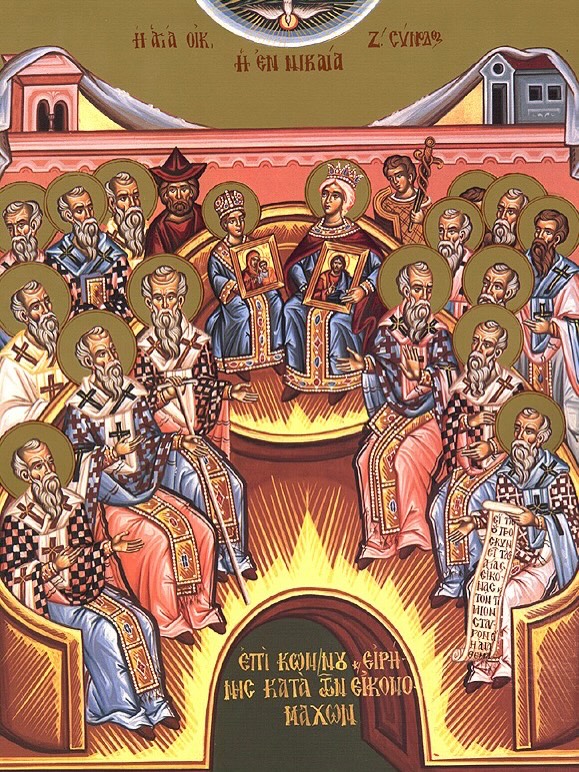
The post explains the commemoration of the Seventh Ecumenical Council, observed annually on October 11 or the nearest Sunday. The Sunday of the Holy Fathers of the Seventh Ecumenical Council is a major liturgical commemoration in the Orthodox Church. The historical council convened at Nicaea in 787 AD with 350 bishops and theologians gathered under Empress Irene and Patriarch Tarasius of Constantinople.
They met to settle a century-long dispute over sacred images, the Iconoclast heresy that sought to destroy all icons. Guided by the theological writings of St. John of Damascus, the council decisively rejected iconoclasm. It affirmed that the material world is inherently good and that sacred art is a necessary component of Christian worship.
The foundational teaching rests on the Incarnation: because the invisible God truly became a visible man in Jesus Christ, He can be physically depicted. To deny the validity of holy icons is viewed as a denial that God took on real, tangible human flesh to redeem humanity. The council established a vital distinction between the honor given to icons and the worship due to God alone.
It decreed that icons receive veneration and relative honor, called proskynisis, but not absolute worship, called latreia, which belongs strictly to the divine nature. When a believer kisses or bows before an icon, the reverence passes directly to the prototype, the person depicted. During the Divine Liturgy for this Sunday, special hymns praise the Holy Fathers as earthly luminaries who guided the Church to the true faith.
The day traditionally features the scripture reading from the Gospel of Luke regarding the Parable of the Sower, encouraging the faithful to cultivate hearts of good soil to hold fast to the orthodox doctrines passed down through the centuries.
Main points
- Commemorates 350 bishops at Second Council of Nicaea (787 AD)
- Council rejected Iconoclast heresy under Empress Irene and Patriarch Tarasius
- Affirmed icons based on Incarnation: God became visible in Christ
- Defined veneration (proskynisis) distinct from worship (latreia)
- Sunday liturgy includes hymns to the Fathers and Luke's Parable of the Sower