WeOrthodox
EN UA

Eastern Orthodoxy Daily He/Who/Is

Instagram ↗ 112 discussions

Scripture, Saints & Satire Left Rome for Home 📍Illinois USA📍 ╬☦️ Dyophysite Eastern Orthodox ☦️╬

How Three Can Be One: The Trinity Without Contradiction

A questioner asks how the Trinity, three co-equal and co-eternal persons, can really be one God. The answer states that the Trinity only sounds contradictory when it is defined badly. The Church does not say God is one person and three persons, or one God and three Gods. It affirms one divine essence existing in three hypostases. The persons are distinguished by their relations of origin. The Father is the one Arche, the source and cause within…

A questioner asks how the Trinity, three co-equal and co-eternal persons, can really be one God. The answer states that the Trinity only sounds contradictory when it is defined badly. The Church does not say God is one person and three persons, or one God and three Gods.

It affirms one divine essence existing in three hypostases. The persons are distinguished by their relations of origin. The Father is the one Arche, the source and cause within the Godhead. The Son is eternally begotten of the Father, and the Holy Spirit eternally proceeds from the Father.

The three are not divided in will, essence, power, or energy, so the distinction between them is hypostatic, not essential. St. Gregory the Theologian is quoted: the three have one nature, God, and the union is the Father, from whom and to whom the order of the persons runs its course. The discussion turns on how unity and distinction are held together.

Monarchy gives the unity, and relation gives the distinction. This holds without collapsing the three into one person or splitting God into three separate beings. The reply stays within classical trinitarian terminology: essence, hypostasis, begetting, procession, and monarchy of the Father.

The questioner's puzzle dissolves once the terms are used precisely, since the alleged contradiction comes from mixing categories of person and essence. The answer closes on the same point it opened with: the Church's formulation avoids both errors, the one that merges the persons and the one that divides the Godhead.

Key moments

  1. A questioner asks how three co-equal, co-eternal persons, Father, Son, and Holy Spirit, can be one God.
  2. The Trinity only sounds contradictory if defined badly; the Church affirms one divine essence in three hypostases, not one person and three persons or one God and three Gods.
  3. The Father is the one Arche, the source and cause within the Godhead.
  4. The Son is eternally begotten of the Father, and the Holy Spirit eternally proceeds from the Father; the persons are distinguished by relations of origin.
  5. The persons are not divided in will, essence, power, or energy; the distinction is hypostatic, not essential.
  6. St. Gregory the Theologian says the three have one nature, God, and the union is the Father, from whom and to whom the order of the persons runs its course.
  7. Monarchy gives the unity and relation gives the distinction, without collapsing the three into one person or splitting God into three.
10 opinions in the discussion The Nicene Creed lays it out too. I believe in ONE God the Father Almighty. The son is begotten and the spirit proceeds. So the son and the spirit share the same divine characteristics.… Read the discussion

Four Biblical Signs of a Godly Woman, According to Christian Dating Advice

The speaker addresses men who are dating and lists four biblical signs of a woman worth building a life with. The first sign is that she knows how to build a home. Proverbs 31 says she watches over the ways of her household and does not eat the bread of idleness, and the speaker describes this as bringing order, peace and warmth so that a husband feels he can walk through the door and breathe. The second sign is a genuine prayer life. The…

The speaker addresses men who are dating and lists four biblical signs of a woman worth building a life with. The first sign is that she knows how to build a home. Proverbs 31 says she watches over the ways of her household and does not eat the bread of idleness, and the speaker describes this as bringing order, peace and warmth so that a husband feels he can walk through the door and breathe.

The second sign is a genuine prayer life. The speaker points to Hannah in 1 Samuel, who prayed with such intensity and faith that Eli thought she was drunk, and says the point is a real relationship with God, not prayer only when life is easy. The third sign is respect. Ephesians 5 speaks of a wife who respects her husband, and the speaker warns men to pay attention if a woman constantly humiliates them, tears them down or competes with them.

The fourth sign is character over appearance. Proverbs 31 says charm is deceitful and beauty is vain, but a woman who fears the Lord is to be praised. The speaker adds that a godly woman is not a perfect woman but someone who continually strives to grow closer to Christ. He closes with a word to the men themselves: if you are looking for a woman with these qualities, you must also be working towards becoming a godly husband.

Beauty may attract you, but character, loyalty, peace and faith are what a marriage is built on, so do not just look for a beautiful woman; look for a woman you can build a Christ-centred life with.

Key moments

  1. She knows how to build a home: Proverbs 31 says she watches over the ways of her household and does not eat the bread of idleness, bringing order, peace and warmth.
  2. She prays with a real relationship with God, like Hannah in 1 Samuel, who prayed with such intensity and faith that Eli thought she was drunk.
  3. She respects you, as Ephesians 5 speaks of a wife who respects her husband; if she constantly humiliates, tears down or competes with you, pay attention.
  4. Look at her character: Proverbs 31 says charm is deceitful and beauty is vain, but a woman who fears the Lord is to be praised.
  5. Beauty gets your attention, but character, loyalty, peace and faith are what you build a marriage on, so choose accordingly.
Read more

St. Isaac the Syrian on solitude and mercy

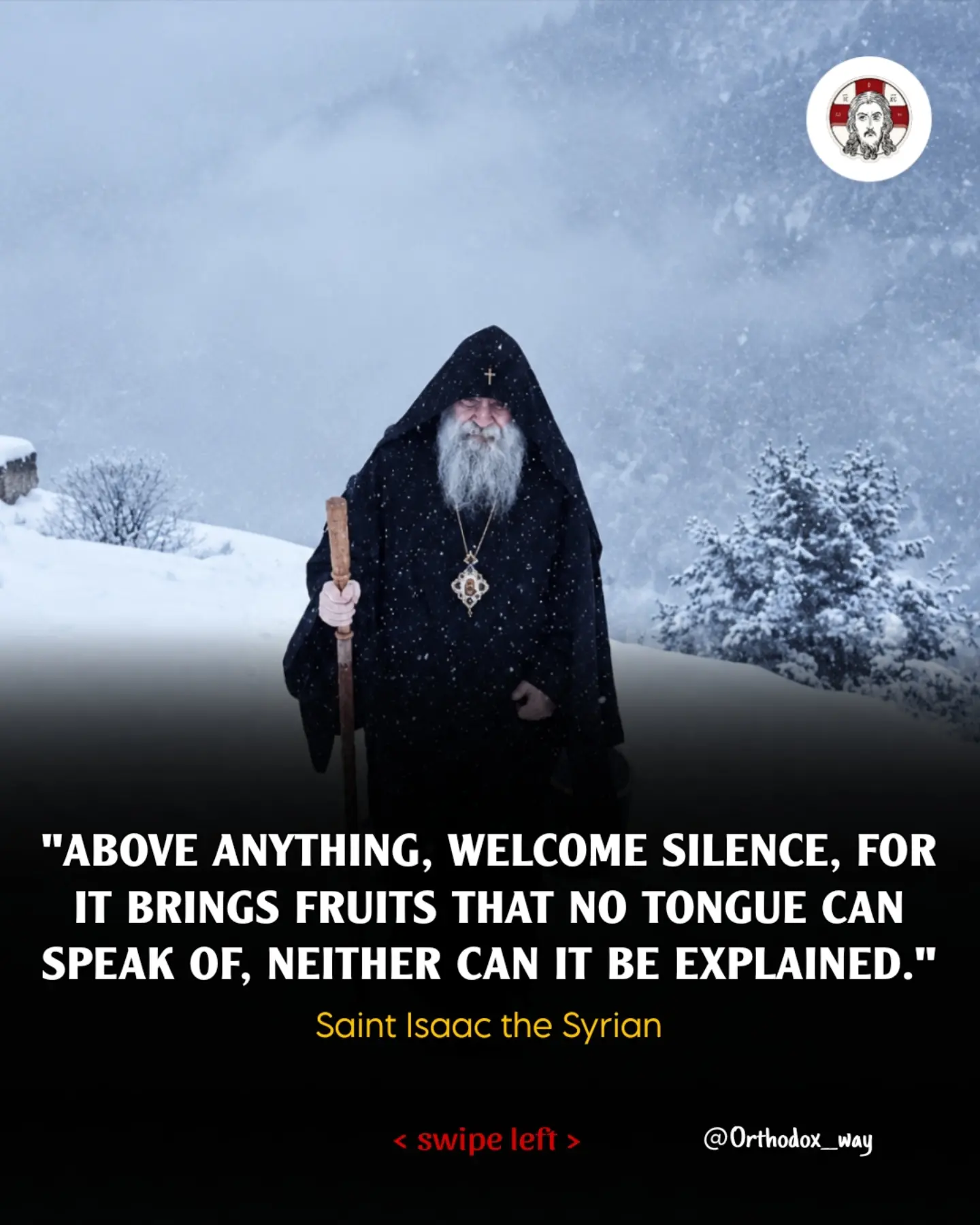
A brother asks St. Isaac the Syrian why solitaries honor solitude more than mercy when Christ defined mercy as similitude to the greatness of the Father in heaven. St. Isaac acknowledges the Gospel comparison is good and tested. He states that solitude is not opposed or rejected as superfluous. Solitaries do not honor solitude without mercy. They try to remain far from care and trouble but do not deny necessary things when they arise. They care…

A brother asks St. Isaac the Syrian why solitaries honor solitude more than mercy when Christ defined mercy as similitude to the greatness of the Father in heaven. St. Isaac acknowledges the Gospel comparison is good and tested. He states that solitude is not opposed or rejected as superfluous.

Solitaries do not honor solitude without mercy. They try to remain far from care and trouble but do not deny necessary things when they arise. They care for solitude because in it they are constantly with God and holy virtues, purifying disturbance and approaching quiet of mind. When necessary, they will not neglect mercifulness. They compel themselves to be inwardly full of mercy toward all rational beings at all times.

Those not wholly under solitude's rule, meeting once a week, do not cut themselves off from showing mercy. Only the very devoted solitary avoids the sight of men. Without love of fellow man the mind cannot become illuminated, but love unto God exists.

Key moments

  1. 0:00 The brother asks why solitaries honor solitude more than mercy when Christ defined mercy as similitude to the greatness of the Father in heaven.
  2. 0:30 St. Isaac acknowledges the Gospel comparison is good and tested; solitude is not opposed or rejected as superfluous.
  3. 1:02 Solitaries do not honor solitude without mercy; they try to remain far from care and trouble but do not deny necessary things when they arise.
  4. 1:32 They care for solitude because in it they are constantly with God and holy virtues, purifying disturbance and approaching quiet of mind.
  5. 2:04 When necessary, they will not neglect mercifulness; they compel themselves to be inwardly full of mercy toward all rational beings at all times.
  6. 2:36 Those not wholly under solitude's rule (meeting once a week) do not cut themselves off from showing mercy; only the very devoted solitary avoids the sight of men.
  7. 2:36 Without love of fellow man the mind cannot become illuminated, but love unto God exists.

Commenter questions Rick Rubin wearing Orthodox vestments on red carpet

A commenter on a social media post asks why Rick Rubin, who is Jewish, appeared on a red carpet alongside Jay-Z wearing what appears to be Orthodox priestly vestments including a pectoral cross. The commenter questions whether this constitutes mockery of Orthodoxy or a form of role-play, using the term "larping." The post includes hashtags related to Orthodoxy, Orthodox Christian content, Christian reels, the Orthodox Church, and is framed as a…

A commenter on a social media post asks why Rick Rubin, who is Jewish, appeared on a red carpet alongside Jay-Z wearing what appears to be Orthodox priestly vestments including a pectoral cross. The commenter questions whether this constitutes mockery of Orthodoxy or a form of role-play, using the term "larping." The post includes hashtags related to Orthodoxy, Orthodox Christian content, Christian reels, the Orthodox Church, and is framed as a meme.

The commenter expresses exasperation with the situation, writing "What are we doing at this point?" The video summary identifies the commenter as the source of the observation and the questions. The discussion centers on the appropriateness of a non-Christian public figure wearing clerical attire associated with the Orthodox Church, and whether the act is intended as parody or something else.

The commenter notes Rubin's Jewish background, the red carpet appearance with Jay-Z, the specific vestments resembling those of an Orthodox priest, and the presence of a pectoral cross. The commenter then raises two possibilities: that the appearance is mockery of Orthodoxy, or that it is a kind of role-play. The commenter concludes with a rhetorical expression of frustration.

No further context about the event, Rubin's explanation, or additional responses is provided in the source.

Key moments

  1. Commenter notes Rick Rubin is Jewish and appeared on a red carpet with Jay-Z dressed like an Orthodox priest.
  2. Commenter observes Rubin is wearing a pectoral cross.
  3. Commenter questions whether this is mockery of Orthodoxy or larping.
  4. Commenter expresses exasperation: "What are we doing at this point?"
Read more

Saint Isaac the Syrian: Bishop, Ascetic, Teacher of Divine Mercy

Saint Isaac the Syrian lived in the seventh century as a bishop, theologian, and ascetic within the Syriac Christian tradition. He accepted consecration as Bishop of Nineveh but held the office only briefly before withdrawing to pursue the solitary life of a monk. In solitude he devoted himself to fasting, vigils, and unceasing prayer, seeking deeper communion with God through silence and repentance. Isaac taught that true spiritual knowledge…

Saint Isaac the Syrian lived in the seventh century as a bishop, theologian, and ascetic within the Syriac Christian tradition. He accepted consecration as Bishop of Nineveh but held the office only briefly before withdrawing to pursue the solitary life of a monk. In solitude he devoted himself to fasting, vigils, and unceasing prayer, seeking deeper communion with God through silence and repentance.

Isaac taught that true spiritual knowledge arises not from books alone but from a purified heart and a life of humility before God. His Ascetical Homilies remain treasured spiritual writings that guide Christians toward inner stillness, tears of repentance, and the transformation of the soul. He is especially remembered for his teaching on the infinite mercy and love of God, which he said extends to the whole of creation.

Isaac urged believers to cultivate a heart full of compassion for every living being, reflecting the boundless love of the Creator. His life demonstrates that the path to holiness is found in humility, silence, prayer, and complete surrender to God's will.

  • Seventh-century Syriac bishop, theologian, and ascetic
  • Briefly served as Bishop of Nineveh before withdrawing to monastic solitude
  • Embraced fasting, vigils, and unceasing prayer as means to communion with God
  • Authored Ascetical Homilies guiding believers toward inner stillness and repentance
  • Taught God's infinite mercy extends to all creation, urging universal compassion
Read more

Orthodoxy as fullness of Christian faith, not added structure

Bryce recounts that many Orthodox people tell him he needs Orthodoxy. He notes that before a suicidal crisis he was advised that religious structure would bring safety, yet such structure outside Christianity does not satisfy. He says he loves tradition, sacraments, and similar things. He explains that Orthodoxy is not about adding rules or religious structure but about receiving the whole Christian faith: doctrine, worship, sacraments,…

Bryce recounts that many Orthodox people tell him he needs Orthodoxy. He notes that before a suicidal crisis he was advised that religious structure would bring safety, yet such structure outside Christianity does not satisfy. He says he loves tradition, sacraments, and similar things. He explains that Orthodoxy is not about adding rules or religious structure but about receiving the whole Christian faith: doctrine, worship, sacraments, spiritual life, and tradition.

He argues that loving tradition and sacraments but not belonging to the church that preserves them falls apart. He says the Eucharist, baptism, and apostolic succession belong to a certain understanding of the church and require existing within the life of that church. He concludes that people urge him toward holy Orthodoxy not for more religion but because without it he lacks the fullness of the Christian faith.

Key moments

  1. Bryce recounts that many Orthodox people tell him he needs Orthodoxy.
  2. He says that before a suicidal period people told him religious structure would make him safe.
  3. He observes that religious structure outside Christianity does not give satisfaction, significance, or security.
  4. He states that he loves tradition, sacraments, and similar things.
  5. He explains that Orthodoxy is not about adding rules or religious structure but about receiving the Christian faith as a whole, including doctrine, worship, sacraments, spiritual life, and tradition.
  6. He argues that loving tradition and sacraments but not belonging to the church that preserves them falls apart.
  7. He says the Eucharist, baptism, and apostolic succession belong to a certain understanding of the church and require existing within the life of that church.
  8. He concludes that people urge him toward holy Orthodoxy not for more religion but because without it he lacks the fullness of the Christian faith.
26 opinions in the discussion When will the Orthodox community online realize that if you keep harassing someone to join the Orthodox Church and if you keep calling them a heretic your pushing them away from the Church… Read the discussion

Orthodox author questions if Baptists worship same God after pastor smashes Marian statue

The author states he is not sure Baptists worship the same God as Orthodox Christians. He describes a video clip in which Pastor Shelly directs children to smash statues of Mary. The pastor quotes the commandment against graven images and tells the children to take a swing. He calls the action awesome and lets them choose their victim, presenting a statue of Mary "for all the Catholics" and declaring "Mary is going down, Catholics." The pastor…

The author states he is not sure Baptists worship the same God as Orthodox Christians. He describes a video clip in which Pastor Shelly directs children to smash statues of Mary. The pastor quotes the commandment against graven images and tells the children to take a swing.

He calls the action awesome and lets them choose their victim, presenting a statue of Mary "for all the Catholics" and declaring "Mary is going down, Catholics." The pastor strikes the statue repeatedly, saying "Bam! All right. Bam! Nailed it. No head now" and compares it to Baal. The author challenges the pastor: "If you claim Jesus is your God, why would you smash images of his mother?" He says he would not want to be the pastor at the judgment and prays "Lord, have mercy."

Key moments

  1. The author states he is not sure Baptists worship the same God as Orthodox Christians.
  2. He describes a clip where Pastor Shelly has children smash statues of Mary.
  3. Pastor Shelly quotes "Thou shall not make unto thee any graven image" and tells the children to take a swing.
  4. Pastor Shelly calls the action awesome and lets the children choose their victim.
  5. Pastor Shelly presents a statue of Mary "for all the Catholics" and says "Mary is going down, Catholics."
  6. Pastor Shelly strikes the statue, saying "Bam! All right. Bam! Nailed it. No head now" and compares it to Baal.
  7. The author challenges the pastor: "If you claim Jesus is your God, why would you smash images of his mother?"
  8. The author says he would not want to be the pastor at the judgment and prays "Lord, have mercy."
Read more

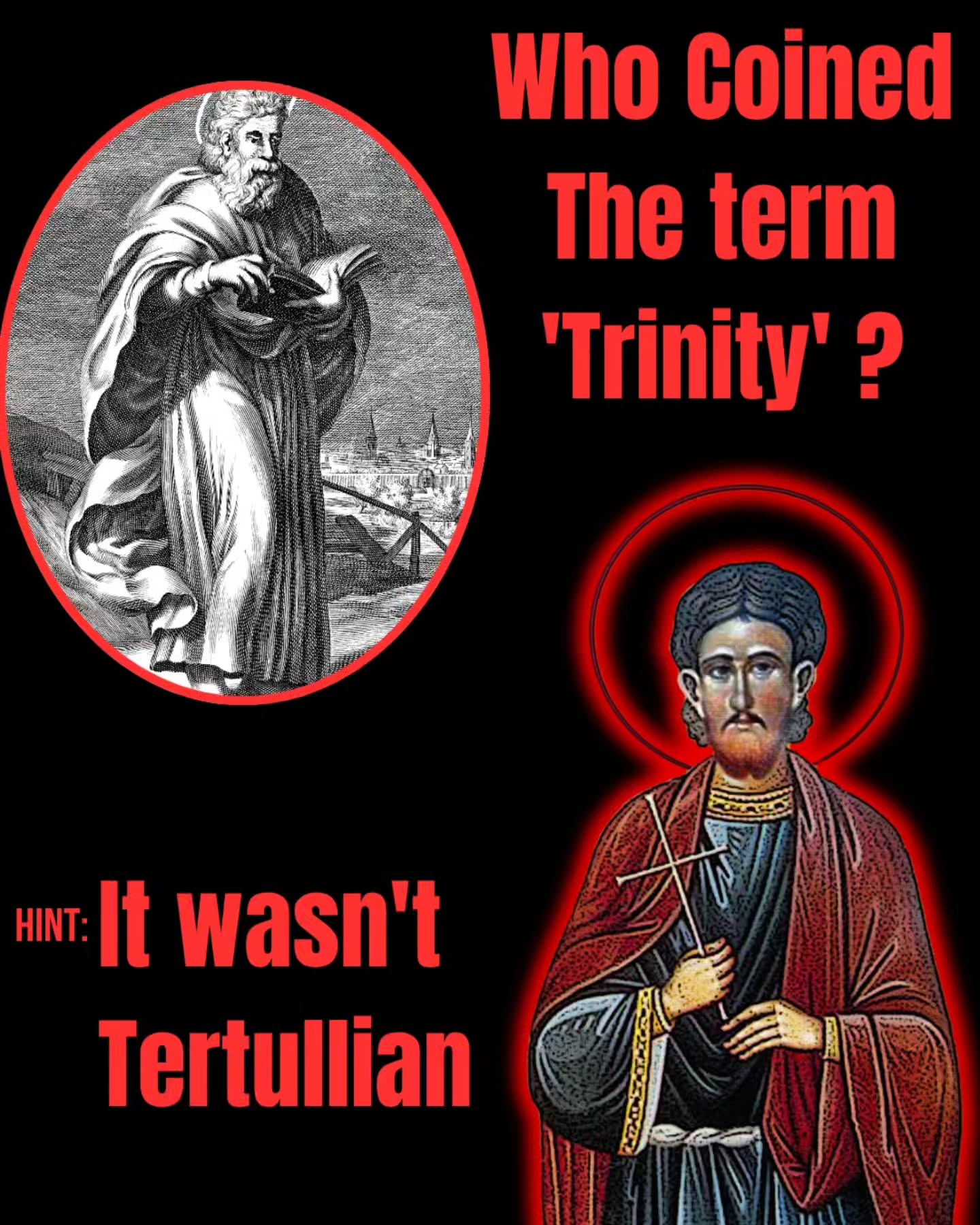
St. Theophilus of Antioch and the earliest use of "Trinity" around 180 AD

The post notes that on October 13 the Orthodox Church commemorates St. Theophilus of Antioch, a second-century bishop and early Christian apologist. Around 180 AD, in his work To Autolycus, he provided the earliest surviving Christian use of the Greek term Trias, meaning "Trinity." He described God, His Word, and His Wisdom, presenting an early Trinitarian framework roughly 145 years before the Council of Nicaea. The post includes hashtags for Christianity, trinity, God, and orthodoxy.

  • St. Theophilus of Antioch commemorated October 13
  • Second-century bishop and apologist
  • Earliest surviving Christian use of "Trias" (Trinity) around 180 AD
  • Found in his work To Autolycus
  • Early Trinitarian framework 145 years before Council of Nicaea
Read more

Metropolitan Hierotheos on the heart as spiritual centre and its purification

The post presents Metropolitan Hierotheos's teaching from his book Orthodox Psychotherapy on the nature and purpose of the human heart. He explains that the heart is the spiritual centre of the human person, not merely the centre of emotions. It is the place where we are called to encounter God. The metropolitan references two scriptural passages to support this understanding. In Ephesians 3:17, the Apostle Paul writes that Christ dwells in the…

The post presents Metropolitan Hierotheos's teaching from his book Orthodox Psychotherapy on the nature and purpose of the human heart. He explains that the heart is the spiritual centre of the human person, not merely the centre of emotions. It is the place where we are called to encounter God. The metropolitan references two scriptural passages to support this understanding.

In Ephesians 3:17, the Apostle Paul writes that Christ dwells in the heart through faith. In Romans 5:5, Paul states that God's love has been poured into the heart through the Holy Spirit who has been given to us. He states that a condition exists for this indwelling: the purification of the heart.

This purification occurs through several practices that he lists explicitly: repentance, prayer, humility, obedience to God's commandments, and the guarding of the nous. The post emphasises that the Kingdom of God is not something we should only seek externally. Christ calls us to discover his presence within us. The final question posed is not simply whether one believes in God, but whether one is actively purifying the heart to receive him.

  • The heart is the spiritual centre of the person, not just the emotional centre.
  • Christ dwells in the heart through faith (Ephesians 3:17).
  • God's love is poured into the heart through the Holy Spirit (Romans 5:5).
  • Purification of the heart requires repentance, prayer, humility, obedience, and guarding the nous.
  • The Kingdom of God is found within through a purified heart.
Read more

Eastern Catholicism and the Problem of Palamas

The speaker considered Eastern Catholicism as a potential middle ground between East and West. After investigation, the speaker concluded it presents a significant problem for Roman Catholics. The specific issue is the veneration of Saint Gregory Palamas. Palamas stated that the devil was speaking through the Latins concerning the Filioque doctrine. The speaker quotes this as meaning the Latins are the devil. Pope John Paul II placed an icon of…

The speaker considered Eastern Catholicism as a potential middle ground between East and West. After investigation, the speaker concluded it presents a significant problem for Roman Catholics. The specific issue is the veneration of Saint Gregory Palamas.

Palamas stated that the devil was speaking through the Latins concerning the Filioque doctrine. The speaker quotes this as meaning the Latins are the devil. Pope John Paul II placed an icon of Palamas at the Vatican next to Thomas Aquinas.

The speaker acknowledges the placement as notable. The speaker sees a contradiction in venerating as a saint someone who spoke that way about the Latin West.

Key moments

  1. The speaker entertained the idea of Eastern Catholicism because it appeared to offer the best of both worlds.
  2. After a brief investigation, the speaker concluded that Eastern Catholicism is a huge problem for Roman Catholics.
  3. The specific problem cited is the veneration of Saint Gregory Palamas.
  4. Palamas said the devil was speaking through the Latins with the doctrine of the Filioque, which the speaker quotes as saying the Latins are the devil.
  5. Pope John Paul II placed an icon of Palamas at the Vatican right next to Thomas Aquinas.
  6. The speaker thinks the icon placement is pretty cool.
  7. The speaker sees a problem in venerating as a saint someone who spoke that way about the Latin West.
Read more

Orthodox response to penal substitutionary atonement

The speaker defines penal substitutionary atonement: penal means penalty for wrongdoing, substitutionary means in the place of, so Jesus receives the penalty in our place for atonement and peace with God. Some Orthodox Christians deny penal substitution, calling it wrong, unbiblical, and a violation of the Trinity, and they offer no biblical argument; they prefer to view Christ's death as an example. The speaker cites Isaiah 53:5 as clear…

The speaker defines penal substitutionary atonement: penal means penalty for wrongdoing, substitutionary means in the place of, so Jesus receives the penalty in our place for atonement and peace with God. Some Orthodox Christians deny penal substitution, calling it wrong, unbiblical, and a violation of the Trinity, and they offer no biblical argument; they prefer to view Christ's death as an example.

The speaker cites Isaiah 53:5 as clear biblical evidence that Christ bore the wrath of God. Orthodoxy does not deny substitution, sacrifice, satisfaction, or language about the wrath of God; the Fathers use all of that language. St. Gregory the Theologian asks to whom the blood was offered and why, and says the Father accepts Christ but neither asked for him nor demanded him.

The Council of Blachernae in 1157 affirmed that Christ offers himself in his humanity, and the Son receives that same sacrifice with the Father and the Holy Spirit. Orthodox writers such as Craig Trulia describe economic atonement as the whole saving work of God in Christ: Christ assumes humanity, enters death, heals corruption, reconciles us to God, and restores what Adam lost.

St. Gregory says Christ came to deliver us and overcome the tyrant; the cross is not exhausted by punishment. Father Daniel Cecil states substitutionary atonement is not heresy but an accurate though not exhaustive expression of orthodoxy.

Key moments

  1. The speaker defines penal substitutionary atonement: penal means penalty for wrongdoing, substitutionary means in the place of, so Jesus receives the penalty in our place for atonement and peace with God.
  2. Some Orthodox Christians deny penal substitution, calling it wrong, unbiblical, and a violation of the Trinity, and they offer no biblical argument; they prefer to view Christ's death as an example.
  3. The speaker cites Isaiah 53:5 as clear biblical evidence that Christ bore the wrath of God.
  4. Orthodoxy does not deny substitution, sacrifice, satisfaction, or language about the wrath of God; the Fathers use all of that language.
  5. St. Gregory the Theologian asks to whom the blood was offered and why, and says the Father accepts Christ but neither asked for him nor demanded him.
  6. The Council of Blachernae in 1157 affirmed that Christ offers himself in his humanity, and the Son receives that same sacrifice with the Father and the Holy Spirit.
  7. Orthodox writers such as Craig Trulia describe economic atonement as the whole saving work of God in Christ: Christ assumes humanity, enters death, heals corruption, reconciles us to God, and restores what Adam lost.
  8. St. Gregory says Christ came to deliver us and overcome the tyrant; the cross is not exhausted by punishment, and Father Daniel Cecil states substitutionary atonement is not heresy but an accurate though not exhaustive expression of orthodoxy.
18 opinions in the discussion Isn't the problem also the language of the Father damning the Son? Read the discussion

Critic asks for theological help for God Logic after debate concession

A social media user criticizes the content creator God Logic for his performance in a recent debate with Metaphysics Mike. In the debate, God Logic conceded that John 6 is symbolic regarding the Eucharist. He argued that Jesus's statements about being the bread of life and a river of water are not literal, and therefore the command to eat his flesh and drink his blood is also not literal. The critic says the situation has deteriorated to the…

A social media user criticizes the content creator God Logic for his performance in a recent debate with Metaphysics Mike. In the debate, God Logic conceded that John 6 is symbolic regarding the Eucharist. He argued that Jesus's statements about being the bread of life and a river of water are not literal, and therefore the command to eat his flesh and drink his blood is also not literal.

The critic says the situation has deteriorated to the point that Muslims are calling out God Logic on this position. The critic asks anyone who knows God Logic personally to walk him through basic theology because he is making "us all look bad." The post frames the concession as a significant theological error that reflects poorly on the broader community God Logic is associated with.

Key moments

  1. The speaker asks for help for God Logic, saying his theology is getting worse.
  2. The criticism comes from a clip of God Logic's recent debate with Metaphysics Mike.
  3. God Logic conceded that John 6 is symbolic when it talks about the Eucharist.
  4. God Logic argued that Jesus saying 'I am the bread of life' is not literal, just as saying he is a river of water is not literal.
  5. God Logic concluded that eating Christ's flesh and drinking his blood is not literal.
  6. The speaker claims the situation is so bad that even Muslims are calling God Logic out on this.
  7. The speaker asks anyone who is friends with God Logic to walk him through basic theology.
  8. The speaker says God Logic is starting to make "us all look bad."
Read more
Eastern Orthodoxy Daily He/Who/Is Instagram

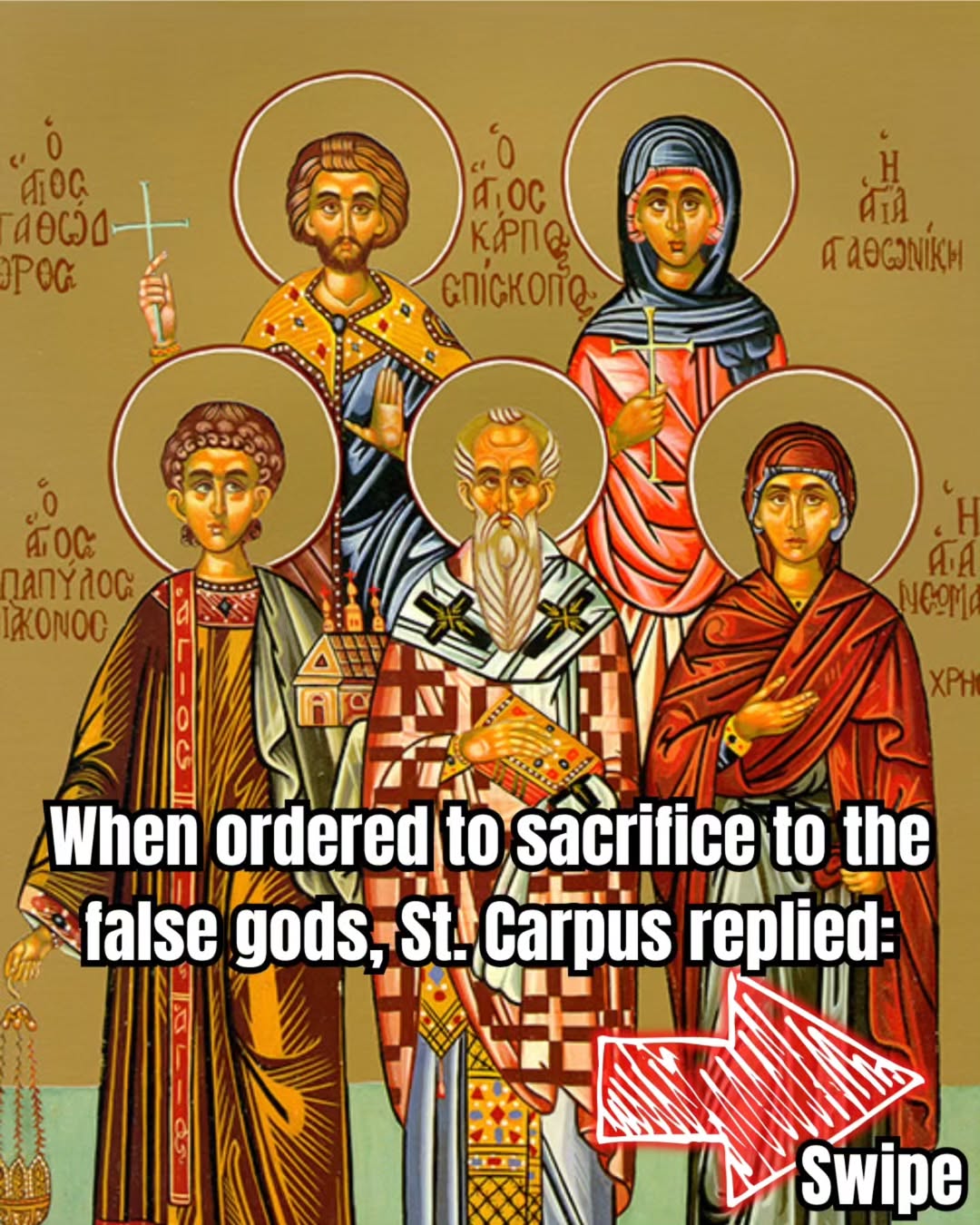
Saints Carpus, Papylus, Agathodorus, and Agathonica commemorated October 13

The post marks the October 13 commemoration of four martyrs: Carpus, Papylus, Agathodorus, and Agathonica. They were executed for refusing to offer sacrifice to pagan gods. The account states they endured torture and the threat of death without renouncing Christ.

At the moment of execution, Carpus is described as rejoicing because he had seen the glory of the Lord. The post presents these details as the basis for their liturgical remembrance in the Eastern Orthodox tradition.

  • Commemoration date: October 13
  • Four martyrs named: Carpus, Papylus, Agathodorus, Agathonica
  • Cause of martyrdom: refusal to sacrifice to pagan gods
  • They withstood torture and death threats without renouncing Christ
  • Carpus rejoiced at execution, having seen the glory of the Lord

Four patristic and contemporary references cited

The post lists four sources without additional commentary or discussion. The first is a contemporary work, The Orthodox Faith and Baptist Evangelicals by Fr. Gregorios Estephan, cited at page 82. The second is the First Letter of Saint Athanasius to Serapion, paragraph 28. The third is Saint Basil the Great's On the Holy Spirit, Chapter 27, paragraph 66. The fourth is Saint Irenaeus's Against Heresies, Book III, Chapter 2, paragraph 2. No thread or conversation follows these citations.

  • The Orthodox Faith and Baptist Evangelicals, Fr. Gregorios Estephan, page 82
  • First Letter of Saint Athanasius to Serapion, paragraph 28
  • Saint Basil the Great, On the Holy Spirit, Chapter 27, paragraph 66
  • Saint Irenaeus, Against Heresies, Book III, Chapter 2, paragraph 2
Read more

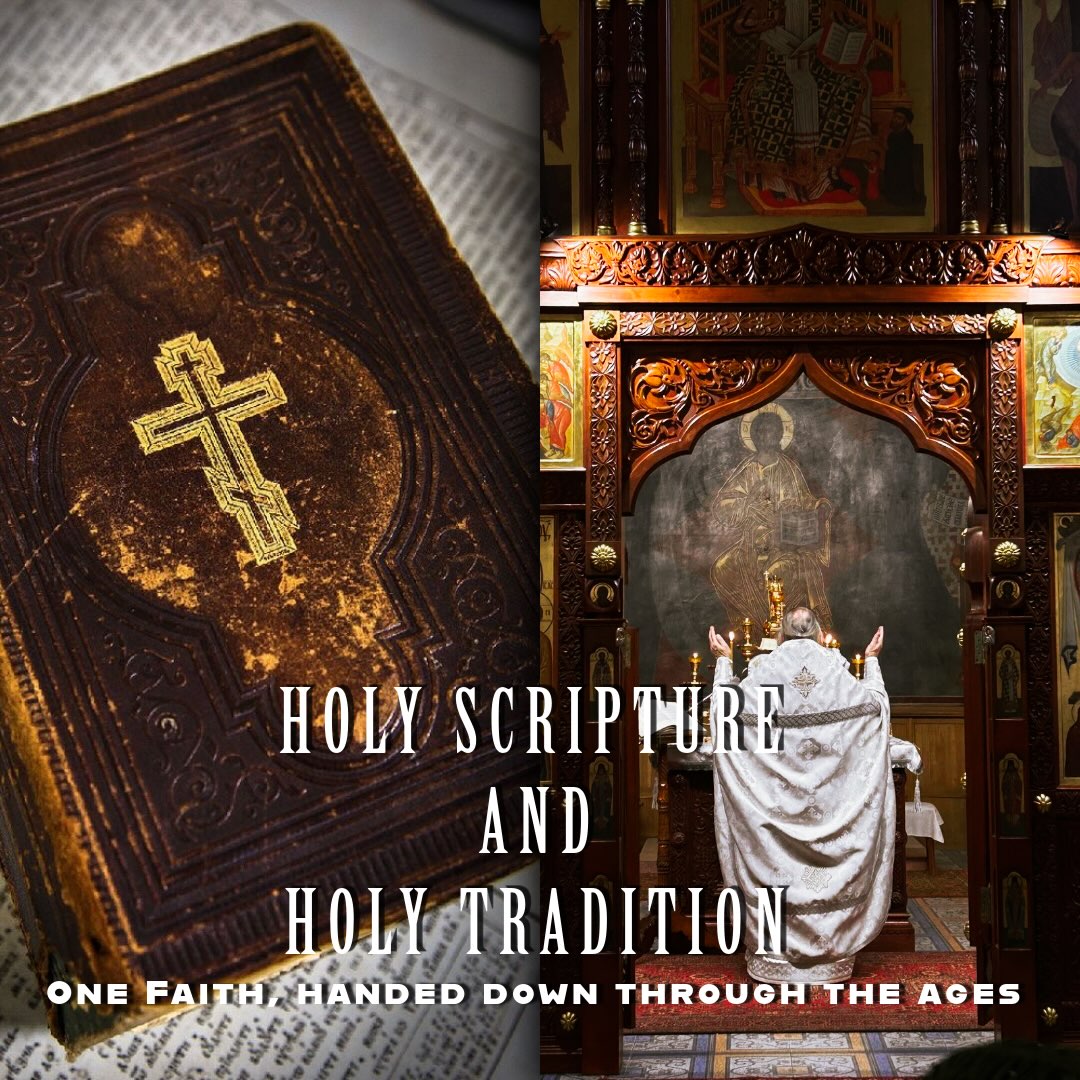
Orthodox worship grounded in Scripture and early Christian practice

The post explains why Orthodox Christian worship differs from modern Protestant services. It states that the Divine Liturgy is rooted in biblical worship, ancient Christian practice, the Holy Eucharist, sacred hymns, and reverence for the presence of God. In contrast, many modern Protestant worship styles developed during and after the Reformation, often emphasizing contemporary music, spontaneity, and personal emotional expression. Orthodox…

The post explains why Orthodox Christian worship differs from modern Protestant services. It states that the Divine Liturgy is rooted in biblical worship, ancient Christian practice, the Holy Eucharist, sacred hymns, and reverence for the presence of God. In contrast, many modern Protestant worship styles developed during and after the Reformation, often emphasizing contemporary music, spontaneity, and personal emotional expression.

Orthodox worship preserves a liturgical tradition stretching back to the earliest centuries of Christianity. The author argues that worship is not simply about how we feel about God, but how the Church offers worship to Him in truth, reverence, and spirit. Emotion has its place, but it must not replace sound doctrine, sacramental life, and the faith handed down through the Apostles.

The post cites John 4:24: "God is Spirit, and those who worship Him must worship in spirit and truth." It concludes by inviting readers to discover the beauty of Orthodox Christianity, the Church Fathers, apostolic tradition, and the biblical foundations of the Divine Liturgy.

  • The Divine Liturgy is rooted in biblical worship, ancient practice, the Eucharist, hymns, and reverence.
  • Modern Protestant worship styles emerged from the Reformation with emphasis on contemporary music, spontaneity, and personal emotion.
  • Orthodox worship maintains a liturgical tradition from the earliest Christian centuries.
  • Worship is understood as the Church offering worship to God in truth, reverence, and spirit, not merely personal feeling.
  • Emotion must not replace sound doctrine, sacramental life, and apostolic faith; the post cites John 4:24.
Read more

The priesthood as terrible beauty: bearing Christ's weight

The speaker describes the priesthood as terrible and beautiful, not a career but a bearing of Christ's priesthood that is fearful. God help us, the majority never understand the weight priests carry. In the Orthodox faith the priest hears confessions, baptizes children, buries the dead, and leads souls to Christ while carrying grief and helping with marriages and family life. The priest then goes home to love his wife as Christ loved the church,…

The speaker describes the priesthood as terrible and beautiful, not a career but a bearing of Christ's priesthood that is fearful. God help us, the majority never understand the weight priests carry. In the Orthodox faith the priest hears confessions, baptizes children, buries the dead, and leads souls to Christ while carrying grief and helping with marriages and family life.

The priest then goes home to love his wife as Christ loved the church, lead his family, account for his own soul, and navigate his own struggles. St. John Chrysostom said the priesthood is exercised on earth but ranks among heavenly ordinances. The speaker thanks priests for hearing confessions, serving the liturgy, answering calls, fielding questions, and helping solve problems, and asks everyone to pray for priests.

Key moments

  1. It's a terrible thing to be a priest. It's beautiful, you know, in some sense.
  2. It's not a career. It's something you just bear... the priesthood is Christ's, and so, you know, it's a fearful thing to be a priest.
  3. The majority of us will never understand the weight that our priests carry.
  4. The priest isn't just a guy who stands in front of the congregation and gives a weekly TED talk. He hears your most abhorrent confessions. He baptizes your children into the faith. He buries you when you die...
  5. ...and he does all of this to lead souls to Christ, whilst carrying our grief, dealing with our sins, and helping us maintain our own marriages and our family life.
  6. Then he goes home and still has his own wife that he needs to love like Christ loved the church, his own family that he needs to lead, his own soul that he needs to account for, and his own struggles that he needs to navigate.
  7. St. John Chrysostom said, the priesthood is exercised on Earth but ranks among heavenly ordinances.
  8. To every priest quietly hearing confessions, serving the liturgy, answering our phone calls, fielding our questions, helping us solve our problems, thank you, and to everyone else, pray for your priests. They're carrying more than we will ever know. All glory to God.
13 opinions in the discussion Brother, this video broke something in me when it started. Now it makes me angry how much in Protestantism priests get looked down on, like what they do is nothing. And confession, such an… Read the discussion

St Ignatius of Antioch on witness through persecution

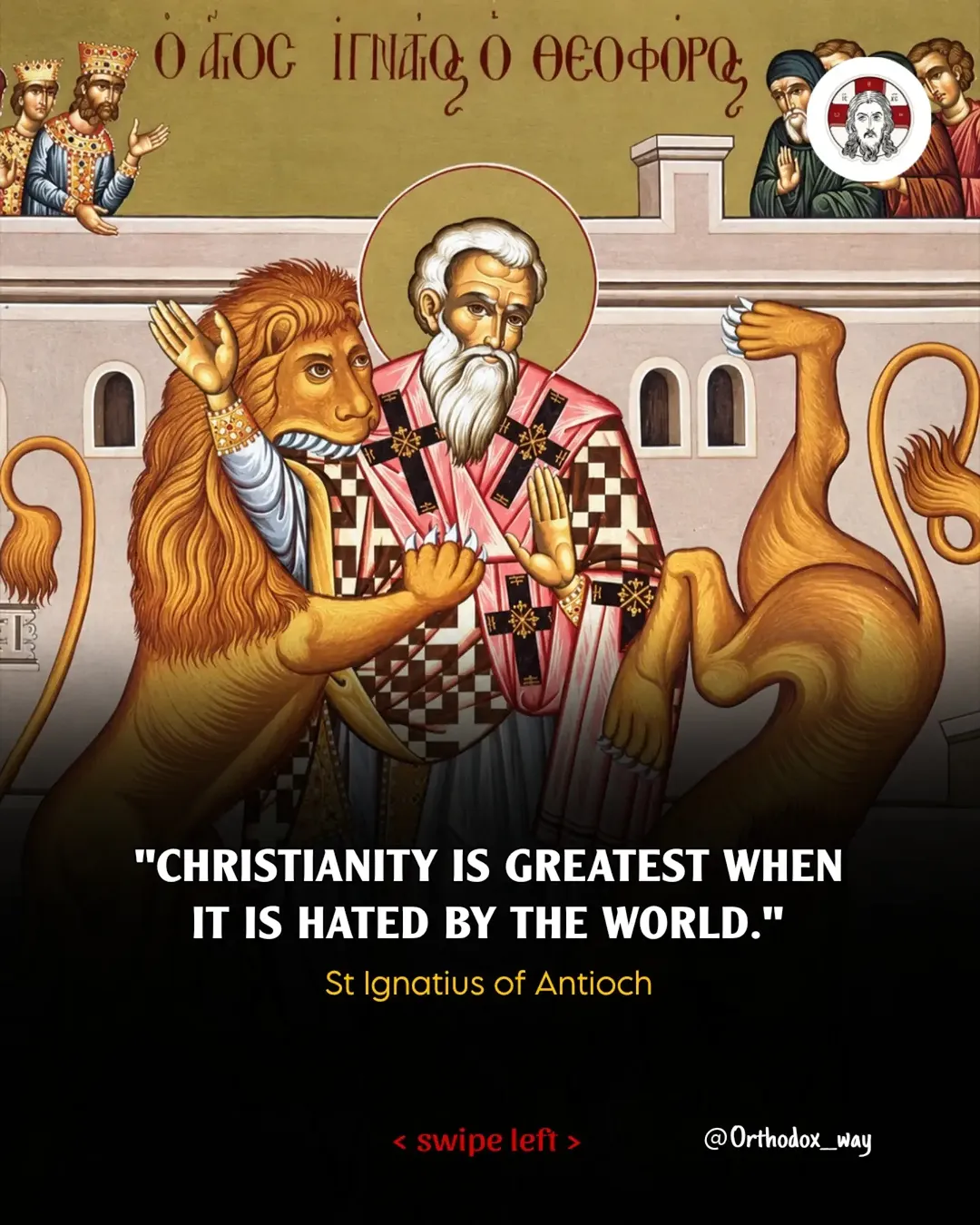
St Ignatius of Antioch, the third bishop of Antioch, wrote his Letter to the Romans around 107 AD while being marched under guard to Rome for execution by wild beasts in the arena. In the letter he argues that Christian faith does not rest on political power, smooth propaganda, or worldly approval. Instead, he writes that true Christian witness shines brightest when tested by persecution and rejection, mirroring the suffering of Jesus.

  • St Ignatius was the third bishop of Antioch
  • He wrote the Letter to the Romans around 107 AD
  • He was being marched to Rome under guard for execution by wild beasts
  • He argued faith is not about political power, propaganda, or worldly approval
  • True Christian witness shines brightest under persecution, mirroring Christ's suffering
Read more

Post cites Church Fathers on homosexuality with Orthodox hashtags

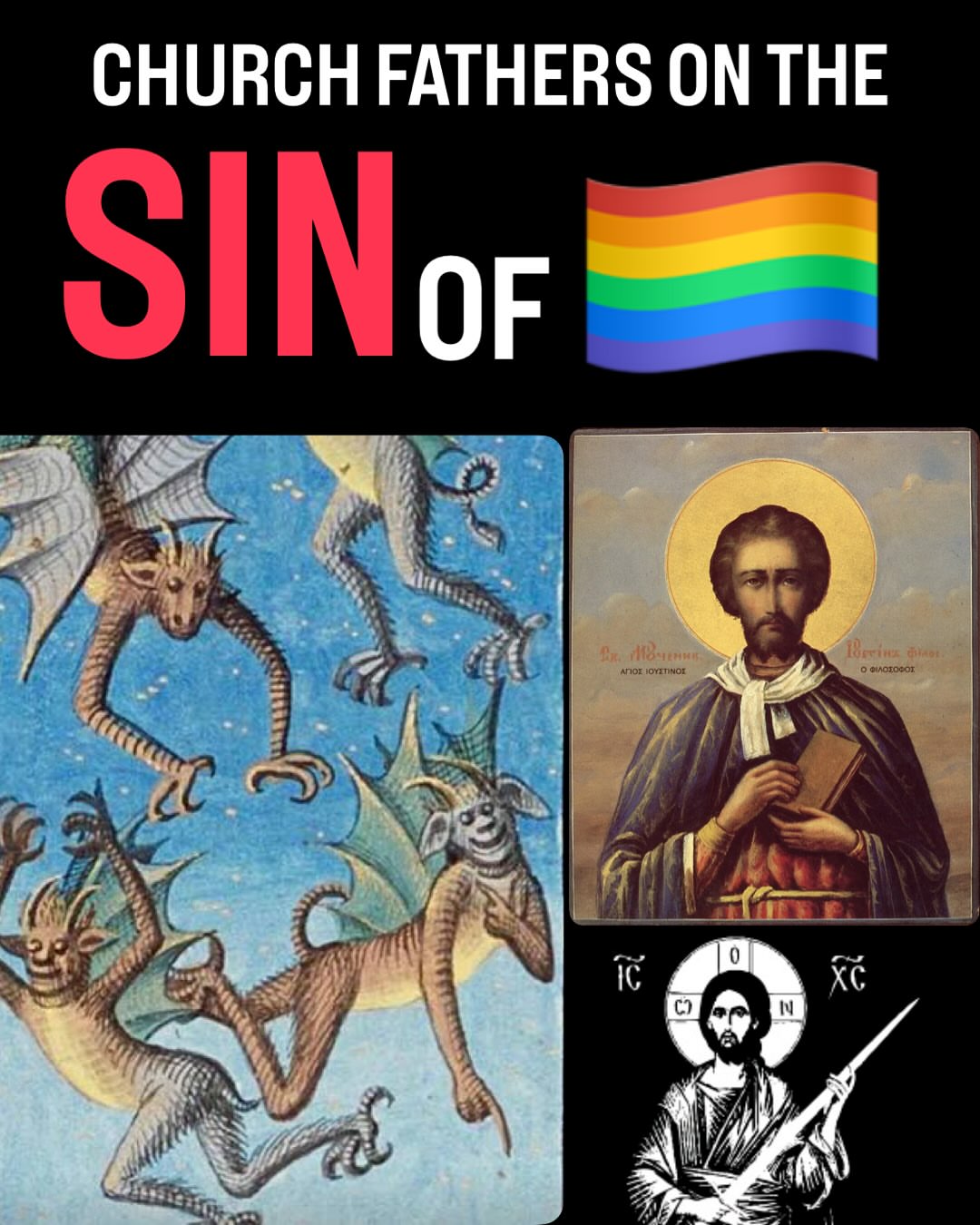
The source text consists of a single line: "Church Fathers on the Sin of 🏳️‍🌈" followed by hashtags for Orthodox Christianity, apologetics, saints, and Christian quotes. No further content, quotations, discussion, or commentary is present in the provided material. The rainbow flag emoji indicates the subject is homosexuality or LGBTQ+ matters. The hashtags suggest the post is framed within Orthodox Christian apologetics and patristic…

The source text consists of a single line: "Church Fathers on the Sin of 🏳️‍🌈" followed by hashtags for Orthodox Christianity, apologetics, saints, and Christian quotes. No further content, quotations, discussion, or commentary is present in the provided material. The rainbow flag emoji indicates the subject is homosexuality or LGBTQ+ matters.

The hashtags suggest the post is framed within Orthodox Christian apologetics and patristic authority. Because the source contains only this title and tags, there is no discussion to summarize, no arguments to outline, and no specific patristic references to report.

  • Title references Church Fathers on the sin represented by the rainbow flag emoji
  • Hashtags identify the post as Orthodox, apologetic, saint-focused, and quote-oriented
  • No patristic quotations, names, or arguments appear in the source text
  • No discussion thread or commentary is included in the provided material
12 opinions in the discussion St. Justinian the Great made it a crime in his empire to be a homosexual. The penalty was death by fire. We have a lot to learn from our ancestors ways Read the discussion

Vainglory and the trap of social media approval

0:52

The post examines vainglory, an ancient passion the Orthodox Church Fathers identified as the desire for admiration and recognition from others. Social media has made this temptation more accessible by encouraging users to post content and then monitor likes, views, and comments, fostering comparison and a sense of living before an invisible audience. Saint John Climacus, in The Ladder of Divine Ascent, warned that vainglory is deceptive and can…

The post examines vainglory, an ancient passion the Orthodox Church Fathers identified as the desire for admiration and recognition from others. Social media has made this temptation more accessible by encouraging users to post content and then monitor likes, views, and comments, fostering comparison and a sense of living before an invisible audience.

Saint John Climacus, in The Ladder of Divine Ascent, warned that vainglory is deceptive and can nullify the spiritual value of good deeds when they are performed to be seen. Christ's words in Matthew 6:1 caution against doing charitable deeds before men to be seen by them. The speaker illustrates how even prayer, giving, and speaking about Christ can become acts of vainglory when motivated by a desire for praise.

There is nothing inherently wrong with sharing life or faith online; the danger begins when identity and self-worth depend on the approval of others. The central question posed is whether one would still perform these actions if nobody were watching. The discussion turns on the distinction between sharing faith online and allowing self-worth to depend on external approval, urging readers to seek God's approval rather than the world's applause.

Key moments

  1. Vainglory is defined as the obsession with being seen, admired, praised, and recognized.
  2. Social media has turned this ancient passion into an epidemic, training users in it every day.
  3. The mechanism involves posting content, then checking who liked, viewed, or commented, and comparing one's life to others.
  4. This creates a condition of living with an invisible audience watching everything one does.
  5. St. John Climacus warned that vainglory is incredibly deceptive.
  6. A person can do something good and immediately destroy its spiritual benefit by wanting to show the world what they have done.
  7. Examples include praying to be seen praying, giving to be seen giving, and talking about God to be admired.
  8. The speaker asks the decisive question: if nobody saw it, would I still do it?
Read more