WeOrthodox
EN UA

Orthodox posts, videos and discussions

We follow Orthodox channels, communities and blogs across the web, summarise every post and video, and highlight the conversations with real substance.

Kyle YouTube discussion

Was Patriarch Cyril Lucaris Really a Calvinist? A Point-by-Point Rebuttal

Was Patriarch Cyril Lucaris Really a Calvinist? A Point-by-Point Rebuttal 39:22

This video responds to a Protestant claim that Patriarch Cyril Lucaris of Constantinople was a committed Calvinist, 'the Luther of the East.' The creator argues this is a serious overstatement, marshaling historical evidence for Cyril's Orthodox life and work: his canonization of saints, support for Mount Athos, printing of Orthodox texts, promotion of Orthodox education, homilies on the Theotokos, icons, and the Eucharist, and his martyrdom…

This video responds to a Protestant claim that Patriarch Cyril Lucaris of Constantinople was a committed Calvinist, 'the Luther of the East.' The creator argues this is a serious overstatement, marshaling historical evidence for Cyril's Orthodox life and work: his canonization of saints, support for Mount Athos, printing of Orthodox texts, promotion of Orthodox education, homilies on the Theotokos, icons, and the Eucharist, and his martyrdom while in communion with the Church.

He highlights Cyril's 1634 and 1637 letters warning against Calvinist heresies, and notes that in 1629 Cyril opposed a Protestant ruler attempting to impose Calvinism on Romanians, calling Calvinism farther from Orthodoxy than Roman Catholicism. On the disputed 1629 Confession, the video stresses that the Synod of Jerusalem (1672) did not anathematize Cyril, as the critic claimed, but declared him innocent of authoring it, condemning him only conditionally 'if' he held Calvinist views.

The speaker also notes that the scholar his opponent cited herself revised her position in 2018 to 'Not Quite a Calvinist,' showing no settled scholarly consensus exists. The video includes an honest apology: the creator admits he used a Reddit user's summary without credit and now provides full sources, including the Acts of the Synod of Jerusalem, academic articles, and Ecumenical Patriarchate materials.

Beyond Lucaris, the video critiques the opponent's arguments on the ELCA, apostolic succession, monasticism, and the Synod of Jerusalem's teaching on Scripture reading, arguing the council warned against untrained private interpretation rather than banning Scripture, since Orthodoxy reads Scripture constantly in its services. The creator explains why he declines to debate someone he judges to be arguing in bad faith.

Commenters add nuance: some note Cyril's icon-related quotes are misread, since Orthodoxy also rejects divine worship of icons; others discuss martyrdom, canonization, vernacular Scripture translations, and 17th-century theological controversies.

Key moments

  1. 0:02 Protestant claims that Cyril Lucaris was a Calvinist 'Luther of the East' are false; his patriarchal work included canonizing saints, supporting Mount Athos, printing Orthodox works, and promoting Orthodox education, and he died a martyr.
  2. 1:05 The speaker admits he copied a Reddit summary without giving credit and apologizes, now providing all sources in this video.
  3. 5:14 Cyril's own words—that the mere opinions of men are held in suspicion while Scripture and the Gospel are true and infallible—are fully Orthodox, referring to human traditions, not holy tradition.
  4. 6:46 The 1629 Confession is unlike his other writings; even if he signed it, political pressure (as at Florence) does not mean he composed it, and in 1634 he warned against Calvinism's heresies.
  5. 8:49 The scholar SeaWorks cites herself revised her view in 2018 to 'Not Quite a Calvinist,' showing there is no settled scholarly consensus.
  6. 12:58 In 1629 Cyril opposed a Protestant king trying to force Calvinism on Romanians, saying Calvinism was farther from Orthodoxy than Catholicism.
  7. 18:10 SeaWorks falsely claimed the Synod of Jerusalem anathematized Cyril; the 1672 council actually declared him innocent of authoring the Confession, only conditionally condemning him 'if' he were a Calvinist heretic.
  8. 30:06 The Synod of Jerusalem's restriction on Scripture reading is not a ban but a warning against untrained private interpretation, while Orthodoxy reads Scripture constantly in its services and encourages its reading within the life of the Church.
12 opinions in the discussion Great work! The problem with CWorks' argument is that he dwells on side issues and stretches them far past what they actually demonstrate. The icon point is a case in point: Cyril rejecting… Read the discussion
Fruits of Orthodoxy Instagram

Do Not Fight Alone: Surrender to Christ and Wield His Name

This brief devotional reflection, attributed to Fr. Spyridon Bailey, offers a compact message of Orthodox Christian encouragement: salvation is not a solitary struggle but a surrender to Christ, whose desire to save us surpasses even our own longing for salvation. The speaker reminds viewers that Christ freely offers salvation and calls each person to struggle obediently for Him, promising His protection and even a share in His victory. The…

This brief devotional reflection, attributed to Fr. Spyridon Bailey, offers a compact message of Orthodox Christian encouragement: salvation is not a solitary struggle but a surrender to Christ, whose desire to save us surpasses even our own longing for salvation. The speaker reminds viewers that Christ freely offers salvation and calls each person to struggle obediently for Him, promising His protection and even a share in His victory.

The central warning is against the temptation to fight spiritual battles alone—following one's own will or path instead of trusting in God's grace. At the heart of the reflection is the invocation of the name of Jesus Christ, described as the most powerful spiritual weapon, a sword that cuts down demons and drives away the passions.

This weapon is to be wielded not outwardly but in the inner battlefield of the heart, with Christ's name constantly on our lips and in our hearts. The post presents this teaching as an essence of Holy Orthodoxy: trust, obedience, and the invocation of Christ's name as the means of overcoming the passions and the spiritual enemy. The card invites readers to watch the full short reflection and consider how surrender to Christ, rather than self-reliance, transforms the daily struggle for salvation.

Key moments

  1. Christ's desire to save us is infinitely greater than our desire to be saved; He offers salvation and calls us to struggle for Him.
  2. If we are obedient to His commands, we will be saved, for He offers every protection and even a share in His victory.
  3. We must resist the temptation to fight alone, follow our own path, or follow our own will.
  4. The name of Jesus Christ is the most powerful spiritual sword and weapon, cutting down demons and driving away the passions.
  5. Let Christ's name be on our lips and in our hearts, wielded as our greatest weapon in the battlefield of the heart.
Read more
Holy Resurrection YouTube

St. Maximus the Greek Refutes the Filioque and Latin Innovations

St. Maximus the Greek Refutes the Filioque and Latin Innovations 18:16

This post presents the first part of St. Maximus the Greek's treatise "Response to Nicholas the Latin," a detailed polemic against several Latin doctrinal and liturgical innovations. Written in response to inquiries about the Latin separation from Orthodoxy, the work addresses four principal points of contention: the Filioque clause, Saturday fasting, mandatory clerical celibacy, and the use of unleavened bread in the Eucharist. St. Maximus…

This post presents the first part of St. Maximus the Greek's treatise "Response to Nicholas the Latin," a detailed polemic against several Latin doctrinal and liturgical innovations. Written in response to inquiries about the Latin separation from Orthodoxy, the work addresses four principal points of contention: the Filioque clause, Saturday fasting, mandatory clerical celibacy, and the use of unleavened bread in the Eucharist.

St. Maximus begins by reciting the Nicene-Constantinopolitan Creed without the Filioque, affirming it as the apostolic faith of the ancient fathers. He then systematically dismantles the Latin justification for the Filioque, particularly their appeal to Christ's breathing on the disciples in John 20:22. Drawing on Scripture and the exegesis of St. John Chrysostom, he demonstrates that this act conferred a partial, preparatory gift of the Spirit — authority to forgive sins and power over demons — ahead of the full outpouring at Pentecost, and does not constitute evidence of the Spirit's eternal hypostatic procession from the Son.

St. Maximus argues that while the Son possesses the Spirit by essence and natural communion, the property of causing the Spirit's procession belongs to the Father alone. He appeals to the consensus of the first seven ecumenical councils and early Roman popes who upheld this teaching and anathematized any alteration of the patristic dogmas.

The treatise frames the dispute as a spiritual struggle for truth, warning against hard-heartedness and love of falsehood.

Key moments

  1. 0:12 St. Maximus the Greek examines principal disagreements between Orthodox and Latin doctrine: Filioque, Saturday fasting, priestly celibacy, unleavened bread, arguing they contradict ancient tradition.
  2. 0:42 Specific arguments: Filioque lacks patristic foundation; Saturday fasting violates Apostolic Canons; mandatory celibacy contradicts Apostles and Sixth Ecumenical Council; unleavened bread derives from Jewish practice and is condemned by canons.
  3. 1:13 St. Maximus writes in response to a request about when/how Latins separated, their use of unleavened bread, and blasphemy against the Holy Spirit.
  4. 2:14 He frames the discourse as a spiritual struggle for truth, quoting Psalm 4:3 against hard-heartedness and love of falsehood.
  5. 4:48 He recites the Nicene Creed (without Filioque) as the apostolic, patristic, Orthodox faith of the ancient forefathers.
  6. 6:52 He refutes the Latin claim that the Filioque was added from foresight, addressing their two proofs based on Christ's bestowals of the Spirit before Pentecost.
  7. 8:26 He demonstrates from Scripture and St. John Chrysostom that Christ's breathing on the disciples gave partial gifts (authority to forgive sins, power over demons) as preparation for the full outpouring at Pentecost, not evidence of eternal hypostatic procession from the Son.
  8. 15:06 He argues the Son possesses the Spirit in essence and natural communion, not as cause of procession; this property belongs to the Father alone, and the early popes and ecumenical councils upheld this teaching, anathematizing any alteration of the fathers' dogmas.
Anthony’s Cell YouTube

While There Is Time: Bishop Augustinos on Spending Our Days for Salvation

While There Is Time: Bishop Augustinos on Spending Our Days for Salvation 13:03

An audio reading from Anthony's Cell presents the discourse 'While There Is Time' by Bishop Augustinos of Florina, built on Isaiah 49:8, 'In an acceptable time I have heard thee.' The bishop observes that people find time for passports, tickets, loans, studies and family duties, yet withhold time from God, who created them for salvation. He contrasts travelers who prepare documents and arrive on time, students who submit applications, and…

An audio reading from Anthony's Cell presents the discourse 'While There Is Time' by Bishop Augustinos of Florina, built on Isaiah 49:8, 'In an acceptable time I have heard thee.' The bishop observes that people find time for passports, tickets, loans, studies and family duties, yet withhold time from God, who created them for salvation.

He contrasts travelers who prepare documents and arrive on time, students who submit applications, and businessmen who pay lenders punctually with the neglect of the soul's preparation for eternity. God did not create us for travel, business, degrees, titles, dowries or weddings; the time of this life, whether twenty, forty, sixty or eighty years, is for salvation.

He addresses specific states of life: the young woman at the mirror, the young man in his car, the housewife at the malls, asking each to kneel and pray daily. He tells the husband buried in papers, TV and magazines to open the Bible with his wife and children. Of the week's 168 hours, God asks one or two for the Sunday liturgy, while people run to dark entertainment centers past midnight yet ask in church how much longer it will last.

Each year is like a komboskini with 365 golden beads, and he urges at least one day of holy confession, the spiritual clinic. He warns that death comes suddenly like a hawk among chickens, citing a mayor of Athens who died of a heart attack at his own birthday party before reaching the table. The discourse closes with the parable of the king's white and black flags: Christ raises his white flag of mercy through the cross, but the time will come when the gates shut and judgment arrives, so we must repent while there is still time.

Key moments

  1. 0:32 The bishop takes his text from Isaiah 49:8, 'In an acceptable time I have heard thee,' and says those who comprehend it will become like lottery grand prize winners.
  2. 1:03 Travelers prepare passports and visas and arrive on time; students submit applications; businessmen pay lenders on time. We make time for all worldly duties.
  3. 2:34 God did not create us for travel, business, degrees, titles, dowries or weddings. The time of this life is for salvation, whether we live 20, 40, 60 or 80 years.
  4. 4:06 He addresses the young woman at the mirror, the young man in his car, and the housewife at the malls: set aside time each day to kneel and pray to God.
  5. 5:10 He tells the husband buried in papers, TV and magazines to open the Bible daily with his wife and children so their eyes may open.
  6. 5:41 Of the week's 168 hours, God asks one or two for the Sunday liturgy, from 'Blessed is the kingdom' to the final 'Amen.' People run to dark entertainment centers past midnight, but in church ask how much longer until it's over.
  7. 6:14 Each year is like a komboskini with 365 golden beads. Dedicate at least one day to holy confession, the spiritual clinic, just as you run to doctors when physical health fails.
  8. 8:48 This year, month, week or day may be our last. A mayor of Athens died of a heart attack at his own birthday party before reaching the table, and death strikes like a hawk among chickens, snatching the elderly and babies alike.
Read more
Ancient Faith YouTube

The Church Was Already Full: Deacon Seraphim on the Communion of Saints

The Church Was Already Full: Deacon Seraphim on the Communion of Saints 34:57

In this episode of 'How to be an Orthodox Christian,' Deacon Seraphim reflects on his first Divine Liturgy, when he realized that an Orthodox church is never empty: Christ, His Mother, the angels, apostles, prophets, martyrs, and saints surround the earthly congregation in heavenly worship. The talk takes up the questions that most often trouble inquirers, especially those from Protestant backgrounds: who the saints are, why Orthodox Christians…

In this episode of 'How to be an Orthodox Christian,' Deacon Seraphim reflects on his first Divine Liturgy, when he realized that an Orthodox church is never empty: Christ, His Mother, the angels, apostles, prophets, martyrs, and saints surround the earthly congregation in heavenly worship. The talk takes up the questions that most often trouble inquirers, especially those from Protestant backgrounds: who the saints are, why Orthodox Christians ask for their prayers, whether this competes with Christ's unique mediation, and why icons and relics receive honor.

Grounding the teaching in Genesis, he distinguishes the image of God from the likeness, explaining theosis as the human calling to become partakers of the divine nature; a saint is simply a Christian in whom that calling has become visibly fruitful. From Scripture he shows that the dead in Christ are alive, citing the God of Abraham, Isaac, and Jacob, Moses and Elijah at the Transfiguration, and Hebrews' vision of worship joined to the heavenly assembly.

He argues that asking the saints' intercession does not bypass Christ but participates in it, since Scripture shows God choosing to work through the prayers of Abraham, Moses, Job, and the apostles. Saints hear prayers through participation in God, not by their own power, and the practice is witnessed to by Cyril of Jerusalem's fourth-century eucharistic prayer.

He carefully distinguishes worship, offered to the Trinity alone, from veneration, whose honor passes to the prototype, and explains the incarnational logic by which matter carries grace, as with Elisha's bones and Paul's handkerchiefs. The episode also covers the Theotokos as first among the saints, canonization, patron saints, and practical steps for newcomers, closing with a preview of lessons on the daily services and the Divine Liturgy.

Key moments

  1. 0:00 The speaker recounts his first Orthodox liturgy: despite preparation, he was lost, but had two strong impressions—he was in the book of Revelation's heavenly worship, and the church was already full through the saints on the icon walls.
  2. 3:38 He introduces the lesson's questions: who are the saints, why ask their prayers, why venerate icons and relics, and does this compete with Christ's unique mediation—acknowledging these are hard for Protestant converts.
  3. 5:12 From Genesis, image and likeness are distinguished: humans are made to grow into God's likeness (theosis, becoming partakers of the divine nature), and a saint is one in whom this calling becomes visible.
  4. 8:51 The dead in Christ are alive: God is the God of the living (Abraham, Isaac, Jacob), Moses and Elijah appear at the Transfiguration, and Hebrews describes Christian worship as approach to the heavenly assembly with the spirits of just men made perfect.
  5. 11:27 Asking saints to pray does not bypass Christ: Scripture shows God choosing to act through Abraham's, Moses', and Job's intercessions, through the apostles' authority, even through Peter's shadow and Paul's cloths—sharing authority displays Christ's kingship rather than diminishing it.
  6. 17:14 Saints hear prayers through participation in God, not independent omniscience; Cyril of Jerusalem's fourth-century eucharistic prayer shows the church has always commemorated the departed and asked their intercessions—this is not necromancy.
  7. 19:18 Worship (the Eucharist, offered to the Trinity alone) is distinguished from honor and veneration: the honor shown to icons passes to the prototype, and relics are venerated because sanctification includes the body, as with Elisha's bones and Paul's cloths.
  8. 23:54 The Mother of God is the first and highest among saints, not a rival divine being; the speaker urges cultivating love for the saints, explains canonization and patron saints, and gives practical steps: learn a saint's life, add a request for their prayers, and greet the icons in church.
Read more
Treadwell YouTube

No Room for Hatred: A Homily on Love, Forgiveness, and Our Guardian Angels

No Room for Hatred: A Homily on Love, Forgiveness, and Our Guardian Angels 7:48

This post features a priest's homily centered on God's constant presence, the ministry of guardian angels, and the incompatibility of hatred with the Christian life. The priest begins with the assurance that God never leaves us and that our guardian angel is always at our side, while the devil's presence in our lives depends on our own choices. From this foundation he develops his central theme: we cannot claim to love God while holding grudges,…

This post features a priest's homily centered on God's constant presence, the ministry of guardian angels, and the incompatibility of hatred with the Christian life. The priest begins with the assurance that God never leaves us and that our guardian angel is always at our side, while the devil's presence in our lives depends on our own choices.

From this foundation he develops his central theme: we cannot claim to love God while holding grudges, anger, or judgment against others, since anger directed at our brothers and sisters is ultimately directed at God Himself. Cutting someone off in anger, he warns, cuts God out of our life as well. He connects the world's suffering to the loss of love, arguing that wars persist because people have come to love themselves, money, power, and control more than God and neighbor.

Drawing on pastoral experience, he describes the difficulty of counseling spouses who battle one another because they have forgotten who made them and who loves them. The homily closes with a direct appeal: kneel and ask forgiveness for the grudges we hold. Forgiveness, he clarifies, does not mean agreeing with everyone, but it does mean forgiving and reaching out.

He reminds listeners that at death they will meet their guardian angel, and that the heart has no room for hatred—only love, which brings peace. A childhood memory about free will underscores the point: God gave us free will precisely so that we could love, though we can also choose to hate and judge. The overall call is to change our hearts and become children of love rather than judgment.

Key moments

  1. 0:00 God is always with us and never leaves us; our guardian angel is likewise always present, while the devil wants to be with us but it is up to us whether he is.
  2. 1:00 Anger, grudges, and judgment toward others are actually toward God, because we are commanded to show love to our brothers and sisters.
  3. 2:02 Cutting off others in anger cuts God off from our life and ourselves from Him; guardian angels constantly remind us to be kind and gentle.
  4. 2:32 God still protects us despite our failures; without love we cannot live rightly or ever know God.
  5. 3:34 Wars around the world exist because people love themselves, money, power, and control, having lost God, brotherhood, and peace.
  6. 4:08 A priest's difficult counseling task is with spouses who battle each other because they forgot who made and loves them, and the Lord's teaching that failing to love one's brother means not loving Him.
  7. 5:09 He begs listeners to kneel and ask forgiveness for holding grudges; forgiveness doesn't mean agreeing with everyone, but it does mean forgiving and reaching out.
  8. 6:10 When we die we will meet our guardian angel; there is no room in the heart for hatred, only love, which brings peace; he recalls a school lesson that God gave us free will so we could love, though we can also choose to hate and judge.

Catechesis as Formation for Life: Beyond Childhood into Mystagogia

Catechesis as Formation for Life: Beyond Childhood into Mystagogia 7:39

This reflection, featuring His Grace Bishop Anthony of Synada, explores catechesis not merely as the transmission of religious information but as the formation of an Orthodox way of life. In multicultural societies, Orthodox Christians frequently need to articulate their faith clearly — explaining practices such as the dating of Pascha, the sign of the cross, and the veneration of icons — so that belief becomes intelligible and lived. Catechesis…

This reflection, featuring His Grace Bishop Anthony of Synada, explores catechesis not merely as the transmission of religious information but as the formation of an Orthodox way of life. In multicultural societies, Orthodox Christians frequently need to articulate their faith clearly — explaining practices such as the dating of Pascha, the sign of the cross, and the veneration of icons — so that belief becomes intelligible and lived.

Catechesis begins with simple, age-appropriate actions, like teaching children to kiss icons and cross themselves, but it must mature alongside the person. The discussion distinguishes between catechesis, which historically preceded baptism, and mystagogia, the post-baptismal unfolding of the grace already received. A central challenge identified is the cessation of formal religious education after high school, leaving young adults unprepared to confront existential questions — suffering, death, divine justice, the meaning of life — with a mature Orthodox framework.

The pandemic unexpectedly accelerated adult education through online platforms, prompting many parishes to adopt hybrid models that now reach adults more effectively. The conversation underscores that catechesis must integrate both doctrinal content and the practice of Christian life within one's concrete context, forming believers who can not only know the faith but live and explain it.

Key moments

  1. 0:00 Catechesis is essential for transmitting the Orthodox faith to the next generation, but most programs end at high school before adults face deep faith questions.
  2. 0:30 Catechetical programs teach all ages "about the faith" because many do not know Orthodox identity, beliefs, or how to explain them.
  3. 1:02 A simple example: explaining why Orthodox Pascha often falls on a different date than Western Easter.
  4. 2:04 Catechesis must cover both the content of faith and the practice of Christian life in one's specific time and place.
  5. 3:06 In the US, religious education occurs mainly in parishes through Sunday schools, adult classes, and summer camps, beginning at home.
  6. 3:36 Historically, catechesis preceded baptism; post-baptismal education is properly mystagogy, explaining the grace received.
  7. 4:08 Education starts with simple actions: teaching children to venerate icons and make the sign of the cross, appropriate to their developmental stage.
  8. 6:45 The pandemic accelerated adult online education, leading many parishes to adopt successful hybrid learning models.
Robel࿇🕊️ Instagram

Saint Athanasius: Only a Truly Divine Son Could Save Us

This post presents a classic argument from Saint Athanasius the Apostolic on why Christ must be truly God and not a created being. The reasoning is straightforward: if the Son were merely a creature, He could not unite humanity to God, because a creature would itself need to be united to God first and could not save the rest of creation. No part of creation can be the salvation of creation, since it would itself stand in need of salvation. Had…

This post presents a classic argument from Saint Athanasius the Apostolic on why Christ must be truly God and not a created being. The reasoning is straightforward: if the Son were merely a creature, He could not unite humanity to God, because a creature would itself need to be united to God first and could not save the rest of creation.

No part of creation can be the salvation of creation, since it would itself stand in need of salvation. Had the Son been a creature, mankind would have remained mortal, never truly united to God, and the work of salvation would have been impossible. Therefore, the post explains, God sent His own Son, who became the Son of Man by taking created flesh upon Himself.

Because all humanity lay under the sentence of death, the Son, being other than all creatures, offered His own body to death on behalf of all. The post is framed with hashtags for Orthodox Christianity, Catholicism, and Christianity generally, indicating its appeal across confessions that affirm the divinity of Christ. The argument reflects the heart of the fourth-century Arian controversy, in which Saint Athanasius defended the Nicene faith against those who taught that the Son was a created being.

His soteriological logic—only God can deify and save—remains a cornerstone of Orthodox theology and of the Church's understanding of why the Incarnation required a truly divine Savior. The card invites readers to reflect on this patristic reasoning and its enduring relevance for Christian faith today.

Key moments

  1. If the Son of God were a creature and not truly God, man would have remained mortal, never truly united to God.
  2. A mere creature could not unite other creatures to God, since it would itself need to be united to Him.
  3. No part of creation could be the salvation of creation, for it would itself need salvation.
  4. Therefore God sent His own Son, who became the Son of Man by taking created flesh.
  5. Since all were under the sentence of death, the Son, being other than them all, offered His own body to death on behalf of all.
Read more
harmony YouTube

St. Tamar of Georgia: The Nun Who Softened Evil Hearts

St. Tamar of Georgia: The Nun Who Softened Evil Hearts 20:01

This post is a short documentary-style video presentation on the life of St. Tamar (Mardzhanova), the twentieth-century Georgian abbess also known as St. Gabriel of Georgia's spiritual contemporary, remembered for her extraordinary humility and love. The video opens with her striking words: 'Let it be around me only filth and stench, let me not see flowers, for in my soul is planted a garden of foreign fruits so sweet' — a saying that captures…

This post is a short documentary-style video presentation on the life of St. Tamar (Mardzhanova), the twentieth-century Georgian abbess also known as St. Gabriel of Georgia's spiritual contemporary, remembered for her extraordinary humility and love. The video opens with her striking words: 'Let it be around me only filth and stench, let me not see flowers, for in my soul is planted a garden of foreign fruits so sweet' — a saying that captures her willingness to embrace hardship and obscurity while nurturing an inner life of prayer and sweetness in Christ.

Written by Moses Broderick and carefully edited with audio and video production, the piece weaves together narration and a rich musical backdrop. The soundtrack draws on traditional and liturgical sources, including chants from the Sisters of the Iveron Monastery ('Lord Have Mercy,' 'Shen Ubitso'), a Georgian 'Our Father' ('Mamao Cheveno') from Dmanisi Monastery, a troparion to St. Sergius of Radonezh from the Holy Trinity–St. Sergius Lavra, and original ambient compositions by Jon Björk and others.

The discussion around the post centers on St. Tamar's reputation for softening even evil hearts — her gentleness, endurance of slander and suffering, and the way her sanctity drew hardened souls to repentance. Viewers reflect on how her example speaks to modern life: choosing inner prayer over outward comfort, meeting cruelty with kindness, and trusting that a soul rooted in God can transform its surroundings.

The post serves both as a devotional meditation and an introduction to a saint who is less well known in the English-speaking world, offering her life as a quiet witness to the power of humility and love.

  • Video presentation on the life and legacy of St. Tamar (Mardzhanova), a twentieth-century Georgian nun
  • Opens with her saying about embracing filth outwardly while keeping a garden of sweet fruits in the soul
  • Highlights her gift for softening evil hearts through humility, patience, and love
  • Soundtrack features Georgian and Slavic monastic chants, including the Sisters of the Iveron Monastery and Dmanisi Monastery
  • Credits a collaborative production team with narration, audio, and video editing
Read more
Giovanni Guaita YouTube

Hieromonk John (Guaita) on the Two Great Commandments: Loving God and Neighbor

Hieromonk John (Guaita) on the Two Great Commandments: Loving God and Neighbor 19:45

Hieromonk John (Guaita) delivers a sermon on Matthew 22:35–46, where Jesus is tested by a lawyer asking which commandment is greatest. The sermon explains how Jesus unites the Shema from Deuteronomy (love God with all heart, soul, mind, and strength) with Leviticus 19:18 (love your neighbor as yourself), declaring that the whole Law and the Prophets hang on these two. The speaker compares the three Gospel accounts: Mark emphasizes that no…

Hieromonk John (Guaita) delivers a sermon on Matthew 22:35–46, where Jesus is tested by a lawyer asking which commandment is greatest. The sermon explains how Jesus unites the Shema from Deuteronomy (love God with all heart, soul, mind, and strength) with Leviticus 19:18 (love your neighbor as yourself), declaring that the whole Law and the Prophets hang on these two.

The speaker compares the three Gospel accounts: Mark emphasizes that no commandment is greater, Matthew stresses that all Scripture depends on them, and Luke links the question to eternal life and the parable of the Good Samaritan. The parable illustrates that true neighborliness is defined by spiritual affinity and self‑giving love, not by ethnic or national boundaries.

The sermon then addresses three fundamental questions: (1) Must a Christian love himself? Yes, as self‑acceptance in accordance with God’s design. (2) Can one love God without loving neighbor? No, because 1 John and James teach that love for God is inseparable from love for neighbor. (3) Can one love neighbor without God?

While implicit love is possible (e.g., Gandhi), authentic love ultimately requires God as its source. As a concrete witness, the sermon highlights the “House with a Lighthouse” children’s hospice in Russia, which embodies the commandments in action. The overall message calls believers to return to the simplicity of the two great commandments, prioritizing love of God and neighbor over secondary practices.

Key moments

  1. 0:00 Introduction to Matthew 22: the expert in the law tests Jesus by asking which is the greatest commandment.
  2. 1:13 Context: the Old Testament contains 613 precepts, causing confusion about which to prioritize.
  3. 2:25 Jesus answers by combining the Shema from Deuteronomy (love God with all heart, soul, mind, strength) with Leviticus 19:18 (love neighbor as self).
  4. 4:11 The three Evangelists report the episode with slight differences: Mark says 'no commandment greater,' Matthew says 'all the Law and Prophets hang on these two,' Luke has the lawyer ask about eternal life and then 'who is my neighbor?' leading to the Good Samaritan.
  5. 6:27 Apostle Paul in Romans teaches that love fulfills the law, confirming the inseparability of the two commandments.
  6. 7:07 The Good Samaritan parable shows true neighborliness is spiritual affinity and willingness to give one's life, not ethnic or national ties.
  7. 8:45 Three fundamental questions arise: (1) Must a Christian love himself? Yes, as self-acceptance and correspondence to God's design. (2) Can one love God without loving neighbor? No, per 1 John and James. (3) Can one love neighbor without God? Possible implicitly (e.g., Gandhi), but authentic love ultimately requires God as source.
  8. 15:38 Concrete witness: the 'House with a Lighthouse' children's hospice in Russia exemplifies living the commandments; the Gospel calls for simplicity, focusing on love of God and neighbor over secondary practices.
Read more
Father Moses YouTube discussion

Seven Minutes on Fighting Lust: An Orthodox Call to Guard the Eyes and Mind

Seven Minutes on Fighting Lust: An Orthodox Call to Guard the Eyes and Mind 6:56

An Orthodox Christian speaker addresses men directly about the daily battle for sexual purity, framing it as a spiritual war with eternal stakes. Lust, he argues, is not a harmless weakness but a weapon the devil uses to degrade a man's mind, defile his vision of women, and separate him from God. The fight begins with the eyes: cutting off every provocative image immediately, taking no second looks, looking only at a woman's face, and shutting…

An Orthodox Christian speaker addresses men directly about the daily battle for sexual purity, framing it as a spiritual war with eternal stakes. Lust, he argues, is not a harmless weakness but a weapon the devil uses to degrade a man's mind, defile his vision of women, and separate him from God. The fight begins with the eyes: cutting off every provocative image immediately, taking no second looks, looking only at a woman's face, and shutting down lustful thoughts at once with the Jesus Prayer.

He insists there are no days off and no partial concessions—giving lust even an inch lets the devil become your ruler. Women must be seen as bearers of God's image, never as objects; a man living in fantasy is 'no man at all.' Though perfection is impossible, men must continually re-enter the fight, since purity of heart is necessary to see and love God.

The comment section became a space of raw honesty and mutual support. One commenter described decades of addiction to pornography and asked for prayer, while others spoke of the internet itself as a near occasion of sin for those struggling with lust. A woman reflected on realizing, after forty years, how her manner of dress had affected men, and now chooses modesty.

Another shared that seeing the Theotokos reflected in women transformed his outlook, and that he is switching to a flip phone to remove temptation. Others noted the link between pornography and human trafficking. The speaker's post also promotes a men's accountability community, with a portion of proceeds supporting the building of a new Orthodox church in Texas.

Key moments

  1. 0:00 Desexualizing begins with cutting out every image and provocation—a daily battle with no days off.
  2. 0:30 The devil fights to degrade a man's mind and heart so he cannot see or connect with God, seeking to drag him into hell through idolatry and the worship of lust.
  3. 1:02 The battle must start with the eyes and mind; the key to overcoming lust is learning to hate and revile it as degrading and dehumanizing.
  4. 2:02 Women must be seen either as made in the image of God or as objects for pleasure—giving lust even an inch lets the devil become your ruler.
  5. 2:34 Every image, whether online or in real life, must be cut off and never used to feed the inclination to sin; zero ground, zero seconds given to viewing women as objects.
  6. 3:05 All corresponding fantasies and thoughts must be cut off—a man living in fantasy is no man at all, while a grounded man honors women as bearers of God's image.
  7. 4:06 Practical steps: look at the face, not below the shoulders, no second takes, and immediately cut off thoughts with the Jesus prayer.
  8. 5:40 If we treat our neighbor as an object, we cannot love God; without taking this battle seriously we risk hell regardless of church attendance, but striving for purity transforms how we see women.
5 opinions in the discussion Once it hits you that every single piece of porn is tied to human trafficking, you'll never want to watch it again. Read the discussion
P Paul Kingsnorth Substack

Writer to Lead Celtic Christianity Pilgrimage Tour of Ireland in 2027

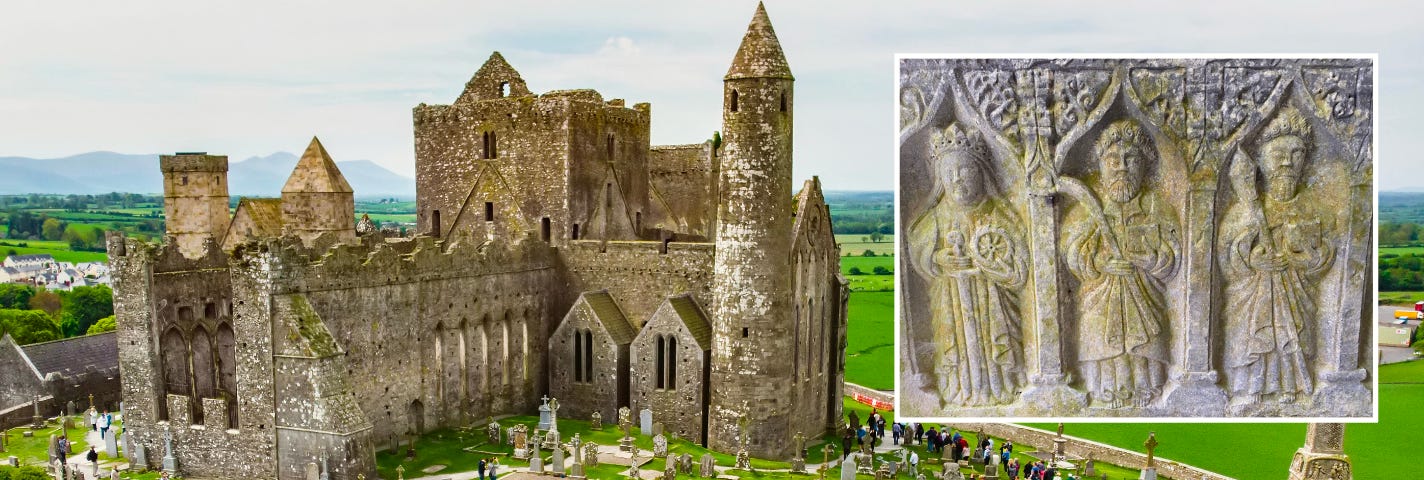
The author of the Abbey blog announces that they have been invited by Select International Tours, an American company specializing in Christian pilgrimages, to design and lead a week-long tour of Celtic Christian sites in Ireland in July 2027. The tour, titled "Celtic Christianity and Sacred Ireland," will visit locations the author has written about extensively, including holy wells in the Burren, St. Colman's cave, the monastic city of…

The author of the Abbey blog announces that they have been invited by Select International Tours, an American company specializing in Christian pilgrimages, to design and lead a week-long tour of Celtic Christian sites in Ireland in July 2027. The tour, titled "Celtic Christianity and Sacred Ireland," will visit locations the author has written about extensively, including holy wells in the Burren, St. Colman's cave, the monastic city of Clonmacnoise, the Aran Islands associated with St. Enda, the Rock of Cashel, Glendalough (St. Kevin's landscape), and the Book of Kells in Dublin.

The author will give illustrated talks on early Irish Christianity throughout the trip. The tour is open to anyone interested in the history and spirituality of these sites, regardless of denomination or nationality, though it is a paid tour with logistics handled by the company. Forty spots are available. The author describes the opportunity as a personal experiment and expresses hope that participants will gain a deep, memorable spiritual experience.

Additionally, the author lists four public speaking engagements for autumn 2024: an "Art of the Tamada" fundraiser in Florida, a conversation with Carl Trueman in Atlanta, events at a university in Madison, Wisconsin, and the Nexus Institute conference in Amsterdam. The author also mentions attending the Symbolic World Summit in Oxford as an audience member.

  • Author selected to design and lead a Celtic Christianity pilgrimage tour of Ireland in July 2027
  • Itinerary includes major early Christian sites: Burren holy wells, Clonmacnoise, Aran Islands, Rock of Cashel, Glendalough, Book of Kells
  • Tour organized by Select International Tours; open to all, not limited to Catholics or Americans
  • Author also announces autumn 2024 speaking events in Florida, Atlanta, Madison, and Amsterdam
  • Author views tour as spiritual experiment to deepen participants' faith through sacred landscape
Read more
Fruits of Orthodoxy Instagram

The Jesus Prayer in Sixteen Languages: One Breath, One Petition

This post presents the Jesus Prayer — 'Lord Jesus Christ, Son of God, have mercy on me, a sinner' — the short invocation traditionally recited with each knot of the prayer rope (komboskini/chotki), translated into sixteen languages, including Romanian, Greek, Albanian, Georgian, Arabic, Slavonic and modern Russian, Mandarin, Cantonese, Japanese, Gaelic, and others. The translation list itself illustrates the prayer's universality across Orthodox…

This post presents the Jesus Prayer — 'Lord Jesus Christ, Son of God, have mercy on me, a sinner' — the short invocation traditionally recited with each knot of the prayer rope (komboskini/chotki), translated into sixteen languages, including Romanian, Greek, Albanian, Georgian, Arabic, Slavonic and modern Russian, Mandarin, Cantonese, Japanese, Gaelic, and others.

The translation list itself illustrates the prayer's universality across Orthodox cultures while the words remain unchanged: a confession of Christ's lordship, His divine sonship, and one's own sinfulness, joined to a plea for mercy. The accompanying text introduces Eastern Orthodoxy to newcomers, describing it as the faith predominant in countries such as Russia, Romania, Bulgaria, Greece, Cyprus, and Serbia, and as the original Church handed down from the Apostles, with a lineage traced to Christ and Pentecost.

The author claims that Orthodox worship and theology have remained continuous with that of the earliest Christians, with little changed. Readers interested in exploring Orthodoxy are encouraged to visit a local Orthodox church and inquire about catechism courses or seminaries. There were no notable discussion comments on the post, so the card centers on the prayer text itself.

The post functions both as a devotional aid — usable word-for-word with a prayer rope in any of the languages given — and as a brief apologetic introduction to Orthodox Christianity for a general social media audience. It closes with an invitation to share the material so that the Eastern Orthodox faith might reach more people.

  • The Jesus Prayer is given in full in sixteen languages, for use with each knot of the prayer rope.
  • The prayer's core structure is constant everywhere: invoking Christ as Lord and Son of God, asking mercy for 'me, a sinner.'
  • The post describes Orthodoxy as the original Apostolic Church, tracing its lineage to Christ and Pentecost.
  • It names Russia, Romania, Bulgaria, Greece, Cyprus, and Serbia among countries where Orthodoxy predominates.
  • Inquirers are directed to a local Orthodox church for catechism courses or seminary offerings.
Read more
Robel࿇🕊️ Instagram

Saint Augustine on the Paradoxical Beauty of God

0:46

This post presents a passage from Saint Augustine describing the God he worships. Augustine identifies God as the Lord God, the only true God and refuge, supreme in goodness, might, power, mercy, and justice. He then unfolds a series of profound paradoxes that characterize the divine nature: God is most hidden yet most present, most beautiful yet most strong, ever enduring yet incomprehensible. God is unchangeable yet changes all things, never…

This post presents a passage from Saint Augustine describing the God he worships. Augustine identifies God as the Lord God, the only true God and refuge, supreme in goodness, might, power, mercy, and justice. He then unfolds a series of profound paradoxes that characterize the divine nature: God is most hidden yet most present, most beautiful yet most strong, ever enduring yet incomprehensible.

God is unchangeable yet changes all things, never new nor old, yet the source of all life. The passage culminates in a personal declaration of devotion: God is Augustine's God, his life, and his holy delight. The text reflects the classic Augustinian synthesis of Neoplatonic philosophy and Christian theology, emphasizing God's transcendence and immanence, immutability and creative dynamism, and the soul's restless desire for its true end.

The language is poetic and devotional, inviting the reader into contemplation of the divine mysteries that exceed human categories while remaining the ground of all being and the object of the heart's deepest longing.

Key moments

  1. The God worshipped is the Lord God, the only true God and refuge.
  2. God is supreme, utmost in goodness, mightiest, all-powerful, most merciful and just.
  3. God is most hidden yet most present among us.
  4. God is most beautiful yet most strong, ever enduring.
  5. God is incomprehensible to us.
  6. God is unchangeable yet changes all things.
  7. God is never new, never old, yet all things have life from Him.
  8. The speaker declares God as their God, life, and holy delight.
Read more
Anthony’s Cell YouTube

St. John of Damascus on Angels: Nature, Ranks, and Ministry

St. John of Damascus on Angels: Nature, Ranks, and Ministry 7:37

An audio reading from Anthony's Cell presents 'Concerning Angels,' a chapter from St. John of Damascus's An Exact Exposition of the Orthodox Faith. The reading follows opening singing and a Trisagion-style invocation, then works through the text in chapters covering the creation of the angels, their definition and incorporeal nature, free will and immortality by grace, communication without speech, their local limitation and manifestation to…

An audio reading from Anthony's Cell presents 'Concerning Angels,' a chapter from St. John of Damascus's An Exact Exposition of the Orthodox Faith. The reading follows opening singing and a Trisagion-style invocation, then works through the text in chapters covering the creation of the angels, their definition and incorporeal nature, free will and immortality by grace, communication without speech, their local limitation and manifestation to man, their guardianship of the earth, and the nine celestial orders.

St. John teaches that God created the angels out of nothing after His own image, as an incorporal race, 'a sort of spirit or immaterial fire,' citing David: 'He maketh his angels spirits and his ministers a flame of fire.' An angel is an intelligent essence in perpetual motion with free will, ministering to God, and only the Creator knows the form and limitation of its essence.

The angelic nature is rational and free but changeable, able to abide in goodness or turn toward evil; angels are immortal by grace rather than by nature, and they are not susceptible of repentance because they are incorporal. They communicate thoughts without words, created through the Word and perfected by sanctification of the Holy Spirit.

They are circumscribed, present in one place at a time, yet not hemmed in by walls, doors, bars, or seals, and they appear to the worthy in forms the beholders can perceive. They guard the divisions of the earth, are set over nations and regions, and behold God according to their capacity. Whether angels are equal in essence, God alone knows; they differ in brightness and position.

Following Dionysius the Areopagite, the text lists nine ranks in three groups: seraphim, cherubim, and thrones; dominions, powers, and authorities; rulers, archangels, and angels. Angels were created before man, and those who call them creators are 'the mouth of their father the devil,' for God alone is uncreated.

Key moments

  1. 0:32 God is the maker and creator of the angels, bringing them out of nothing into being after His own image, an incorporal race, 'a sort of spirit or immaterial fire,' as David says: 'He maketh his angels spirits and his ministers a flame of fire.'
  2. 1:02 An angel is an intelligent essence in perpetual motion, with free will, incorporal, ministering to God; only the Creator knows the form and limitation of its essence, for only the deity is truly immaterial.
  3. 1:33 The angel's nature is rational, intelligent, and endowed with free will, but changeable, with power to abide in goodness or turn toward evil; angels are not susceptible of repentance because they are incorporal, and they are immortal by grace, not by nature.
  4. 2:36 Angels have no need of tongue or hearing but communicate their thoughts and counsels without uttering words; through the Word they were created and through sanctification by the Holy Spirit brought to perfection.
  5. 3:06 Angels are circumscribed: when in heaven they are not on the earth, and when sent down they do not remain in heaven; they are not hemmed in by walls, doors, bars, or seals, and they reveal themselves in a changeable form the beholders can see.
  6. 4:09 Whether angels are equal in essence or differ, God alone knows; they differ in brightness and position, and the higher share their brightness and knowledge with the lower.
  7. 4:40 Angels are guardians of the divisions of the earth, set over nations and regions by their Creator; with difficulty they are moved to evil, and now they are altogether immovable by grace and their nearness to the only good.
  8. 5:41 Following Dionysius the Areopagite, Scripture gives nine names for the heavenly essences in three groups: seraphim, cherubim, and thrones; dominions, powers, and authorities; rulers, archangels, and angels. Angels were created before man, and those who say angels are creators of any essence are 'the mouth of their father the devil,' for God alone is uncreated.
Fruits of Orthodoxy Instagram

Trust God One Day at a Time

This post offers a brief pastoral encouragement drawn from Christ's teaching in the Sermon on the Mount. It reminds the reader that the Christian life does not require having every future circumstance resolved in advance. Instead, the faithful are called to present themselves before God today — to "show up" with whatever burdens, uncertainties, or tasks the present moment holds. The quotation from Matthew 6:34 underscores the biblical basis:…

This post offers a brief pastoral encouragement drawn from Christ's teaching in the Sermon on the Mount. It reminds the reader that the Christian life does not require having every future circumstance resolved in advance. Instead, the faithful are called to present themselves before God today — to "show up" with whatever burdens, uncertainties, or tasks the present moment holds.

The quotation from Matthew 6:34 underscores the biblical basis: "Therefore do not worry about tomorrow, for tomorrow will worry about itself. Each day has enough trouble of its own." This verse is not a dismissal of prudent planning but a warning against the anxiety that paralyzes trust in divine providence. The post's tone is gentle and practical, addressing the common spiritual struggle of projecting fear onto the unknown future.

By framing discipleship as a daily act of surrender — "Trust Him with what's ahead" — it aligns with the Orthodox emphasis on the present moment as the arena of salvation. The hashtags indicate the post's origin within Orthodox Christian social media circles, where such reminders serve as spiritual anchors amid modern pressures. There is no extended discussion or commentary attached; the post stands as a standalone exhortation, likely intended for morning reflection or moments of distress.

  • Christ calls us to trust God daily, not to solve every future problem now
  • Matthew 6:34 warns against anxiety about tomorrow, not against wise preparation
  • Spiritual growth happens in the present moment — "show up today"
  • Orthodox spirituality emphasizes the "today" of salvation (cf. Hebrews 3:13)
  • The post serves as a brief, shareable reminder for daily prayer or reflection
Read more

St. Moses the Black on Bearing Your Own Sins — A Gritty Free Poster

1:45

This post shares a free, gritty, grime-textured poster design created around a saying of St. Moses the Black, the fourth-century desert father and former bandit whose life of radical repentance has made him a beloved figure in Orthodox Christianity. The artist describes the piece with the tagline 'the Cross and the Gun never hurt anyone,' embracing a raw, modern aesthetic that deliberately breaks from polished religious art. The heart of the…

This post shares a free, gritty, grime-textured poster design created around a saying of St. Moses the Black, the fourth-century desert father and former bandit whose life of radical repentance has made him a beloved figure in Orthodox Christianity. The artist describes the piece with the tagline 'the Cross and the Gun never hurt anyone,' embracing a raw, modern aesthetic that deliberately breaks from polished religious art.

The heart of the post is the saying itself: 'If someone bears his own sin, he doesn't see his neighbors.' Abba Moses illustrates it with the Passover in Egypt, when the hand of the Lord struck the firstborn and there was not a single house where someone had not died. Just as a person who has lost their own dead would not go weeping over a neighbor's loss, so a person who truly attends to their own sins has no attention left for the sins of others.

To mourn over a neighbor's faults while ignoring one's own is, in the saint's words, foolish — the spiritual equivalent of leaving your own dead unattended to weep for someone else's. The creative process behind the poster mirrors the unpolished honesty of the saying. The artist worked spontaneously, 'purely off vibes,' using whatever tools felt right — paintbrushes, airbrushes, even cardboard — and even spilled sand on the scanner while working.

The finished design came together unpredictably and turned out darker, more horror-like, than originally expected, but the artist embraces the result.

There is no discussion in the comments; the post stands as a creative offering: a free downloadable artwork meant to spread a challenging word from the desert fathers about humility, self-examination, and the discipline of judging one's own sins before anyone else's.

Key moments

  1. The artist is spilling sand on the scanner while designing a piece on a saying of St. Moses the Black, going all-in on a modern, gritty aesthetic and working purely off vibes with any tool at hand.
  2. The saying: 'If someone bears his own sin, he doesn't see his neighbors.'
  3. Abba Moses cites the Old Testament: when the hand of the Lord killed the firstborn in Egypt, there wasn't a single house where someone hadn't died.
  4. If we allowed ourselves to see our own sins, we wouldn't see our neighbors' sins.
  5. It is stupid for a person to leave his own dead to weep for a neighbor's—the same applies to weeping over our own sins instead of noticing others'.
  6. The finished design came together unpredictably, a bit more horror than expected, but the artist loves it.
Orthodox Christian TV YouTube

A Summer in Greece That Changed How He Prays: One Camper's Ionian Village Story

A Summer in Greece That Changed How He Prays: One Camper's Ionian Village Story 7:20

This interview features Tommy Luka, a high-school senior active in his Greek Orthodox parish and GOYA, who attended Ionian Village this past summer with the help of a new OCN partial scholarship. He walks through what camp life is actually like: daily rotations in Orthodox life, arts and crafts, and athletics; chapel services each day; and shared meals with cabin members that turned strangers into close friends grounded in a common faith. The…

This interview features Tommy Luka, a high-school senior active in his Greek Orthodox parish and GOYA, who attended Ionian Village this past summer with the help of a new OCN partial scholarship. He walks through what camp life is actually like: daily rotations in Orthodox life, arts and crafts, and athletics; chapel services each day; and shared meals with cabin members that turned strangers into close friends grounded in a common faith.

The most powerful moment of his summer was an excursion to Zakynthos, where he venerated the incorrupt relics of St. Dionysios—an experience he describes as deeply moving and faith-deepening. Tommy admits he expected going phone-free to be hard, but found it surprisingly easy; he stayed present in the moment, only briefly regretting missing the World Cup final.

Being surrounded by Orthodox peers his own age—praying together, visiting monasteries, holding nightly devotions, and even starting Bible studies in his cabin—gave him a wider vision of what living the faith can look like in daily life. The effects carried home: he now prays more often, sets aside daily time with God, and follows a priest's practical advice to pray even fifteen seconds, four times a day.

His counsel to prospective campers is simple: 'what you put in is what you get out of it'—approach the summer with openness and it will bear fruit. The episode closes with an invitation: applications and scholarship information for next summer's Ionian Village are available at myocn.net, making this both an honest look at Orthodox summer camp and a practical encouragement for young people considering applying.

Key moments

  1. 0:00 Tommy, a high-school senior active in GOYA and parish life, received the new OCN partial scholarship to attend Ionian Village.
  2. 0:30 Daily camp life included rotations in Orthodox life, arts and crafts, athletics, daily chapel time, and meals with cabin members that built relationships and faith understanding.
  3. 1:30 The excursion to Zakynthos stood out most—venerating the incorrupt body of St. Dionysios was a powerful, faith-deepening experience.
  4. 2:33 He was surprised how easy it was to go without his phone; he stayed present in the moment, even missing the World Cup final only briefly.
  5. 3:34 Being surrounded by Orthodox Christian peers his age—praying together, visiting monasteries, nightly devotions—gave him a broader perspective on living the faith; his cabin even started Bible studies together.
  6. 4:35 Since returning, his faith has strengthened: he prays more often and sets aside daily time with God, following the camp routine and a priest's advice to pray even 15 seconds four times a day.
  7. 6:07 His advice to prospective campers: 'what you put in is what you get out of it'—embrace the experience, deepen your faith, and be open to meeting like-minded Orthodox Christians.
  8. 7:10 Viewers are encouraged to visit myocn.net for information on applying for a scholarship to next summer's Ionian Village camp.
Archim. Christódoulos Papadeas Instagram

What Shall We Render to the Lord? A Labor Day Reflection from Evergreen

This short reflection, recorded in Evergreen, Colorado on Labor Day 2026, opens with a question drawn from the spirit of the Psalms: what can we give back to the Lord in return for all the good things He gives us and continues to give us every day? The speaker does not answer with a list of obligations, but lets the question stand as the frame for the whole meditation, inviting viewers to consider gratitude as the proper response to God's…

This short reflection, recorded in Evergreen, Colorado on Labor Day 2026, opens with a question drawn from the spirit of the Psalms: what can we give back to the Lord in return for all the good things He gives us and continues to give us every day? The speaker does not answer with a list of obligations, but lets the question stand as the frame for the whole meditation, inviting viewers to consider gratitude as the proper response to God's generosity.

The occasion of the reflection is Labor Day, the American national holiday honoring workers. The speaker speaks warmly of the holiday itself, noting that it gives a well-deserved day of rest to people who labor hard throughout the year—those raising families, meeting the demands of work, and paying their bills. In his view, a holiday set aside for rest is a good and worthy thing, because it acknowledges the dignity and the exhaustion of ordinary working people.

The setting of the video is part of the message. The community has come up to Evergreen for the holiday, and the speaker points to the natural beauty of the place as evidence of God's hand: the day is being enjoyed in the midst of God's beautiful creation. Families are out together, happy and relaxed, enjoying the break from routine.

For the speaker, this scene—rest, family, and creation enjoyed together—forms a kind of living answer to his opening question: we respond to God's gifts by receiving them with gratitude, resting as He intends, and recognizing His care in the world around us and in the simple joy of a shared day off.

The post is brief and devotional rather than argumentative, and no discussion followed in the comments. It stands as a gentle invitation to thankfulness on a civil holiday, read through the eyes of faith.

Key moments

  1. The speaker asks what we can give in return to the Lord for all He has given and continually gives us.
  2. Today is Labor Day, a national holiday honoring laborers and their hard work.
  3. The holiday gives workers, who raise families and pay their bills, a day set aside for rest.
  4. The community enjoys the day at Evergreen, in God's beautiful creation, surrounded by happy families.
Read more

Saint Paisios: Why Chasing Comfort Leaves the Soul Empty

Saint Paisios: Why Chasing Comfort Leaves the Soul Empty 7:55

This video presents the teachings of Saint Paisios of Mount Athos (1924–1994) on why modern life, with its pursuit of money, comfort, and social recognition, so often ends in anxiety and an empty soul. Drawing on his words, it argues that worldly success is frequently spiritual failure: the saints were indifferent to wealth and status because they fixed their gaze on eternity, while worldly people rejoice only in temporal things that cannot…

This video presents the teachings of Saint Paisios of Mount Athos (1924–1994) on why modern life, with its pursuit of money, comfort, and social recognition, so often ends in anxiety and an empty soul. Drawing on his words, it argues that worldly success is frequently spiritual failure: the saints were indifferent to wealth and status because they fixed their gaze on eternity, while worldly people rejoice only in temporal things that cannot satisfy the heart.

A key point is that even harmless attachments—things that are not sins—quietly pull the heart away from Christ and lessen our love for Him; indeed, Saint Paisios warns that harmless worldly desires can be more dangerous than sinful ones precisely because they do not trouble our conscience. The video contrasts worldly people who care for the cleanliness of their perishing possessions with spiritual people who cleanse their inner house, the heart where Christ dwells.

It also notes that some religious people live spiritually in a worldly way, more concerned with appearing righteous than with reaching Paradise. A further section covers Saint Paisios' teaching on injustice: it has no excuse, brings God's wrath, and the unjust suffer doubly—from their own conscience and from their victim's resentment—while the honest person may suffer at first but God will raise him up; victims of injustice are even to be seen as benefactors who make us eternally rich, and we must pray for those who wrong us.

The video concludes that the anxiety of modern man stems from worldly attachment, and that true peace (hesychia) comes through purifying the heart, detachment, and daily prayer. A free prayer guide of Saint Arsenios of Cappadocia against anxiety is offered alongside the video.

Key moments

  1. 0:00 Chasing comfort, money, or social status means being deceived—worldly success is spiritual failure, as Saint Paisios explains.
  2. 0:32 One must abandon the worldly spirit, not caring what others say, to draw near to God and the saints.
  3. 1:04 Worldly people care for the cleanliness of their perishing things, while spiritual people cleanse their inner house—the heart where Christ dwells.
  4. 1:35 We must not attach our hearts to material possessions, even to things that are not sins, because they lessen our love for Christ; true joy is found in Christ through prayer.
  5. 3:08 Harmless worldly desires are worse than sinful ones because they do not trouble us; we must also not grow accustomed to small sins.
  6. 3:40 Some religious people live spiritually in a worldly way—concerned with appearing righteous rather than reaching Paradise.
  7. 4:12 Injustice has no excuse and brings God's wrath; we must pray for those who wrong us and even see them as great benefactors who make us eternally rich.
  8. 5:43 The virtuous person is tested at first, but God raises him up; the unjust suffer doubly and injustice can torment their descendants unless they repent and confess.
Read more