WeOrthodox
EN UA

Orthodox posts, videos and discussions

We follow Orthodox channels, communities and blogs across the web, summarise every post and video, and highlight the conversations with real substance.

Holy Resurrection YouTube

St. Mark the Ascetic on Sorrow, Suffering, and Remembering God

St. Mark the Ascetic on Sorrow, Suffering, and Remembering God 3:39

The post presents chapters 57 through 76 of St. Mark the Ascetic's Two Hundred Chapters on the Spiritual Law from the first volume of the Philokalia. The text examines how sorrow affects the wise and the forgetful differently. Sorrow reminds the wise person of God but deepens the sorrow of those who forget Him. Forgetfulness is not passive; it grows through negligence. Acting on the good one remembers reveals what was forgotten. Scripture…

The post presents chapters 57 through 76 of St. Mark the Ascetic's Two Hundred Chapters on the Spiritual Law from the first volume of the Philokalia. The text examines how sorrow affects the wise and the forgetful differently. Sorrow reminds the wise person of God but deepens the sorrow of those who forget Him.

Forgetfulness is not passive; it grows through negligence. Acting on the good one remembers reveals what was forgotten. Scripture identifies hell with ignorance and forgetfulness with destruction. One should attend to one's own sins rather than a neighbor's. Sloth accomplishes no good work, while almsgiving and prayer repay its debt.

Godly sorrow is inseparable from piety. Virtues gained without suffering are without hope. Involuntary suffering serves to purify sins. A person's own firm resolve benefits more than much counsel. Spiritual healing comes through obeying one's conscience, which knows hidden deeds along with God.

God orders the course of deeds according to righteousness. Loving reproof for one's sins is better than praise from men. Good should be done for the sake of the coming reward. When good is done by word or deed, both parties should acknowledge God's grace, though the wiser understands this. Hypocritical praise eventually turns to attack and shame. Ignorance of the snares of enemies and the roots of the passions leads to spiritual ruin.

The chapters connect inner attention with outward practice, showing that the heart's condition determines whether affliction becomes a means of purification or a cause of deeper loss.

Key moments

  1. 0:12 Sorrow gives the wise occasion to remember God but makes the forgetful more sorrowful; forgetfulness has no power in itself but is sustained by negligence and grows with it.
  2. 0:42 One forgets because one neglected to act on what was remembered; doing the good one remembers reveals what is forgotten; Scripture says hell and destruction are manifest before the Lord, referring to ignorance of the heart and forgetfulness.
  3. 1:14 Hell is ignorance and forgetfulness is destruction; concern yourself with your own evil deeds, not your neighbor's; sloth undertakes no good work; almsgiving and prayer repay the debt of sloth; godly sorrow is inseparable from piety.
  4. 1:44 Virtues acquired without suffering are without hope; the purpose of involuntary suffering is the purification of sins; one's own firm resolve is more beneficial than much counsel.
  5. 2:15 Attend to your conscience for spiritual healing; God and the conscience know hidden deeds; a man acts by his will but God orders deeds according to righteousness; loving reproof for sins is better than praise from men.
  6. 2:47 It is better to do good for the sake of the reward to come; when one does good to another, both should acknowledge God's grace helped them, and the wiser understands this.
  7. 3:20 Hypocritical praise leads to later attack and shame; one who does not recognize the snares of enemies easily perishes, and one who does not know the causes and roots of the passions easily falls.
Read more
Prayer Orthodoxy ® Instagram

Readers asked to share favorite Orthodox monasteries and bucket-list destinations

The post from Prayer Orthodoxy asks readers whether they have visited an Orthodox monastery and invites them to name their favorite in the comments. For those who have not yet visited, it asks which monastery tops their bucket list. The text describes a monastery visit as a meaningful experience of prayer, worship, silence, and spiritual renewal. No further discussion or responses are included in the source.

  • Post asks readers to share favorite Orthodox monastery visited
  • Invites those who have not visited to name a monastery on their bucket list
  • Describes monastery visits as experiences of prayer, worship, silence, and renewal
  • Published by Prayer Orthodoxy as an original production
Prayer Orthodoxy ® Instagram

Prayer to the Theotokos: hold us, strengthen us, stay with us

The post presents a prayer addressed to the Virgin Mary, the Theotokos, in both English and Greek. The speaker approaches her without elaborate words, bringing wounds, fears, and unspoken burdens. They ask to be held in her embrace as a mother holds a child without questioning. The prayer requests that she become light for dark nights, calm for troubled thoughts, and strength for each step. It also asks protection for loved ones and for those…

The post presents a prayer addressed to the Virgin Mary, the Theotokos, in both English and Greek. The speaker approaches her without elaborate words, bringing wounds, fears, and unspoken burdens. They ask to be held in her embrace as a mother holds a child without questioning.

The prayer requests that she become light for dark nights, calm for troubled thoughts, and strength for each step. It also asks protection for loved ones and for those who have no one to shelter them, ending with a plea for her to remain with them. The Greek text mirrors the English: "Παναγιά μου, μείνε μαζί μας" (My Panagia, stay with us).

The prayer asks for her prayers, protection, and motherly intercession before her Son, Jesus Christ. It specifically names those who feel alone, the weary, and the suffering, asking the Theotokos to hold them close, strengthen them, comfort them, and lead all to Christ. The post is an original production of Prayer Orthodoxy.

Key moments

  1. The speaker approaches the Virgin Mary as they are, with wounds, fears, and unspoken burdens.
  2. They ask to be held in her embrace like a mother holds a child without questions.
  3. They request she become light for their nights, peace for their thoughts, and strength for their steps.
  4. They ask her to protect those they love and those who have no one to protect them.
  5. They conclude by asking her to stay with them.
Read more
Anthony’s Cell YouTube

Why the Second Commandment Does Not Forbid Icons

Why the Second Commandment Does Not Forbid Icons 4:47

This audio reading presents the article 'Images and Imagery' from the Orthodox Study Bible, which answers the claim that the second commandment forbids sacred images. The reading argues that the prohibition in Exodus 20:4 targets images worshipped as gods, not all artistic representation. Scripture itself records God commanding images: two gold cherubim on the mercy seat, cherubim woven into the tabernacle curtains and veil, and a bronze serpent…

This audio reading presents the article 'Images and Imagery' from the Orthodox Study Bible, which answers the claim that the second commandment forbids sacred images. The reading argues that the prohibition in Exodus 20:4 targets images worshipped as gods, not all artistic representation. Scripture itself records God commanding images: two gold cherubim on the mercy seat, cherubim woven into the tabernacle curtains and veil, and a bronze serpent on a pole that healed those who looked at it.

Solomon's temple held twelve oxen statues supporting the sea and bases engraved with lions, oxen, cherubim, and palm trees, and God filled that temple with glory, saying his eyes and heart would be there perpetually (Third Kings 9:3). The bronze serpent shows the real issue: King Hezekiah destroyed it centuries later because people offered incense to it, so the fault lies in improper use, not in the image.

The reading then turns to the Incarnation. Before God the Son assumed a visible human body, imaging the invisible God was impossible; afterward the church made icons of Christ, his mother, the saints, and angels from the earliest times. Tradition says Saint Luke the Evangelist made at least three icons of Christ and his mother, and every icon of Christ proclaims the Incarnation.

The Seventh Ecumenical Council at Nicaea in AD 787 condemned iconoclasm, distinguished worship (latreia) due to God alone from veneration (proskynesis) given to icons, and declared that honor given to an image passes to its prototype. The reading closes with a hymn for the first Sunday of Great Lent, commemorating the restoration of icons in AD 843: 'The icons that depict thy flesh lead us to the desire and love of thee.'

Key moments

  1. 0:34 Many taught the second commandment prohibits icons, but God commanded artistic representations in Exodus: two gold cherubim on the mercy seat, cherubim woven on the tabernacle curtains and veil.
  2. 1:05 Solomon's temple included 12 oxen statues supporting the sea and bases engraved with lions, oxen, cherubim, and palm trees; God filled the temple with glory and declared his eyes and heart would be there perpetually (Third Kings 9:3).
  3. 1:35 God ordered Moses to make a bronze serpent on a pole to heal the Hebrews; centuries later King Hezekiah destroyed it when the people offered incense to it, showing the fault lies in improper use not the image.
  4. 2:05 The prohibition in Exodus 20:4 is against images worshipped as gods ("gods of silver and gods of gold," Exodus 20:23), not all artistic representations; God knew such images would tempt the Hebrews away from him (Exodus 20:3-5).
  5. 2:38 Before the incarnation it was impossible to image the invisible God, but after God the Son assumed a visible human body, the church naturally created icons of Christ, his mother, the saints, and angels from the earliest times.
  6. 3:10 Church tradition says Saint Luke the Evangelist made at least three icons of Christ and his mother; every icon of Christ proclaims the incarnation, and recognized icons prayerfully made provide trustworthy representations.
  7. 3:41 The Seventh Ecumenical Council at Nicaea in AD 787 condemned iconoclasm, distinguished worship due to God alone from veneration given to icons, and declared that honor given to an image passes to its prototype.
  8. 4:13 Through icons Orthodox Christians are drawn closer to Christ; a hymn for the first Sunday of Great Lent (commemorating the restoration of icons in AD 843) says, "The icons that depict thy flesh lead us to the desire and love of thee."

Orthodox Confession as Hospital, Not Courtroom

The speaker contrasts Orthodox confession with a Western juridical model. He says the Orthodox Church does not treat confession as a courtroom drama but as a hospital for healing the human person. The penitent acknowledges violations of God's laws but comes seeking restoration of heart and soul, crying out for salvation. The speaker states they do not use a moral inventory but acknowledge how they have violated the laws of God. Confession is not…

The speaker contrasts Orthodox confession with a Western juridical model. He says the Orthodox Church does not treat confession as a courtroom drama but as a hospital for healing the human person. The penitent acknowledges violations of God's laws but comes seeking restoration of heart and soul, crying out for salvation.

The speaker states they do not use a moral inventory but acknowledge how they have violated the laws of God. Confession is not about being in handcuffs; it is about longing for Christ. The penitent admits pushing Christ away and wounding the soul and darkening the heart.

In confession the person says: here are the things I have done, I do not want them anymore, I want to see clearly, I want my heart to work and my soul to be alive again. The cry of confession is: I do not want to die, I want to live; save me, save me.

Key moments

  1. The speaker says Orthodox confession is not judicial or a courtroom drama.
  2. The Western Protestant view of the cross is described as juridical and courtroom‑like.
  3. The Orthodox Church views confession as a hospital drama for healing the human person.
  4. The speaker states they do not use a moral inventory but acknowledge how they have violated the laws of God.
  5. Confession is not about being in handcuffs; it is about longing for Christ.
  6. The penitent admits pushing Christ away and wounding the soul and darkening the heart.
  7. In confession the person says: here are the things I have done, I do not want them anymore, I want to see clearly, I want my heart to work and my soul to be alive again.
  8. The cry of confession is: I do not want to die, I want to live; save me, save me.
Read more
CHRISTIANITY UNITED Instagram

Adam's Lament and the Way Back to Paradise

The post presents the Orthodox chant "Adam's Lament" (O Adame, spune nouă…) and its theological meaning. The chant portrays Adam sitting outside the gates of Paradise, weeping not for the lost garden but for the broken communion with God. That loss of closeness is described as the real tragedy of the Fall. Humanity was created for communion with God, yet through disobedience sin and death entered human life. Saint Silouan the Athonite…

The post presents the Orthodox chant "Adam's Lament" (O Adame, spune nouă…) and its theological meaning. The chant portrays Adam sitting outside the gates of Paradise, weeping not for the lost garden but for the broken communion with God. That loss of closeness is described as the real tragedy of the Fall.

Humanity was created for communion with God, yet through disobedience sin and death entered human life. Saint Silouan the Athonite (1866-1938), a Russian monk on Mount Athos, wrote about Adam's sorrow as a mirror of the human soul searching for happiness apart from its Creator. In his writings, Adam's tears are not only about the past; they remind us of our own souls seeking fulfillment in everything except the One who made us.

The hymn itself calls on Adam to describe how he loved the Lord while in Paradise among the living souls, and addresses "my gentle love" who created the speaker to behold divine light through uncreated grace. These phrases repeat to emphasize the longing for that light. The video includes Romanian and English subtitles for the chant.

The post connects Adam's lament to Great Lent, when the Church calls the faithful to repentance, fasting, prayer, and preparation for the Resurrection. Jesus Christ, the New Adam, opens the way back through His Cross and Resurrection. The gates of Paradise are opened, and humanity is called to return to communion with God.

Adam wept because he had lost Paradise; Christians repent because Christ has opened the way home.

Key moments

  1. O, Adam spune-ne cum pe Domnul Îl iubeai când erai în Rai cu Dânsul și printre suli-viețuiai
  2. când erai în Rai cu Dânsul și printre suli-viețuiai
  3. O, iubirea mea cea lină ce pe mine m-a creat ca să văd a sa lumină prin harul cel necreiat
  4. ca să văd a sa lumină prin harul cel necreiat
Read more

Orthodox worship grounded in Scripture and early Christian practice

The post explains why Orthodox Christian worship differs from modern Protestant services. It states that the Divine Liturgy is rooted in biblical worship, ancient Christian practice, the Holy Eucharist, sacred hymns, and reverence for the presence of God. In contrast, many modern Protestant worship styles developed during and after the Reformation, often emphasizing contemporary music, spontaneity, and personal emotional expression. Orthodox…

The post explains why Orthodox Christian worship differs from modern Protestant services. It states that the Divine Liturgy is rooted in biblical worship, ancient Christian practice, the Holy Eucharist, sacred hymns, and reverence for the presence of God. In contrast, many modern Protestant worship styles developed during and after the Reformation, often emphasizing contemporary music, spontaneity, and personal emotional expression.

Orthodox worship preserves a liturgical tradition stretching back to the earliest centuries of Christianity. The author argues that worship is not simply about how we feel about God, but how the Church offers worship to Him in truth, reverence, and spirit. Emotion has its place, but it must not replace sound doctrine, sacramental life, and the faith handed down through the Apostles.

The post cites John 4:24: "God is Spirit, and those who worship Him must worship in spirit and truth." It concludes by inviting readers to discover the beauty of Orthodox Christianity, the Church Fathers, apostolic tradition, and the biblical foundations of the Divine Liturgy.

  • The Divine Liturgy is rooted in biblical worship, ancient practice, the Eucharist, hymns, and reverence.
  • Modern Protestant worship styles emerged from the Reformation with emphasis on contemporary music, spontaneity, and personal emotion.
  • Orthodox worship maintains a liturgical tradition from the earliest Christian centuries.
  • Worship is understood as the Church offering worship to God in truth, reverence, and spirit, not merely personal feeling.
  • Emotion must not replace sound doctrine, sacramental life, and apostolic faith; the post cites John 4:24.
Read more
George Instagram

Lay researcher directs viewers to spiritual fathers for Orthodox guidance

The speaker receives many questions about Orthodoxy but cannot answer them all. He clarifies that he is not a priest or theologian, only a layperson who researches and shares what he learns. He urges viewers not to take his words as authoritative but to consult their spiritual fathers instead.

Finding a spiritual father is the first step for an Orthodox Christian or inquirer. Even spiritual fathers have their own spiritual fathers. He invites viewers to continue learning together but directs them to the church for guidance.

Key moments

  1. He receives many messages and questions he cannot fully answer.
  2. He is not a priest or theologian, just a layperson learning and sharing.
  3. He loves the questions because they make him research deeper.
  4. He urges viewers not to take his word for granted.
  5. The first thing an Orthodox Christian must do is find a spiritual father.
  6. Even spiritual fathers have spiritual fathers.
  7. Spiritual fathers lead people into Orthodoxy and keep them close to God.
  8. He invites viewers to journey together but directs them to church for answers.
Read more
Orthodox Life Instagram

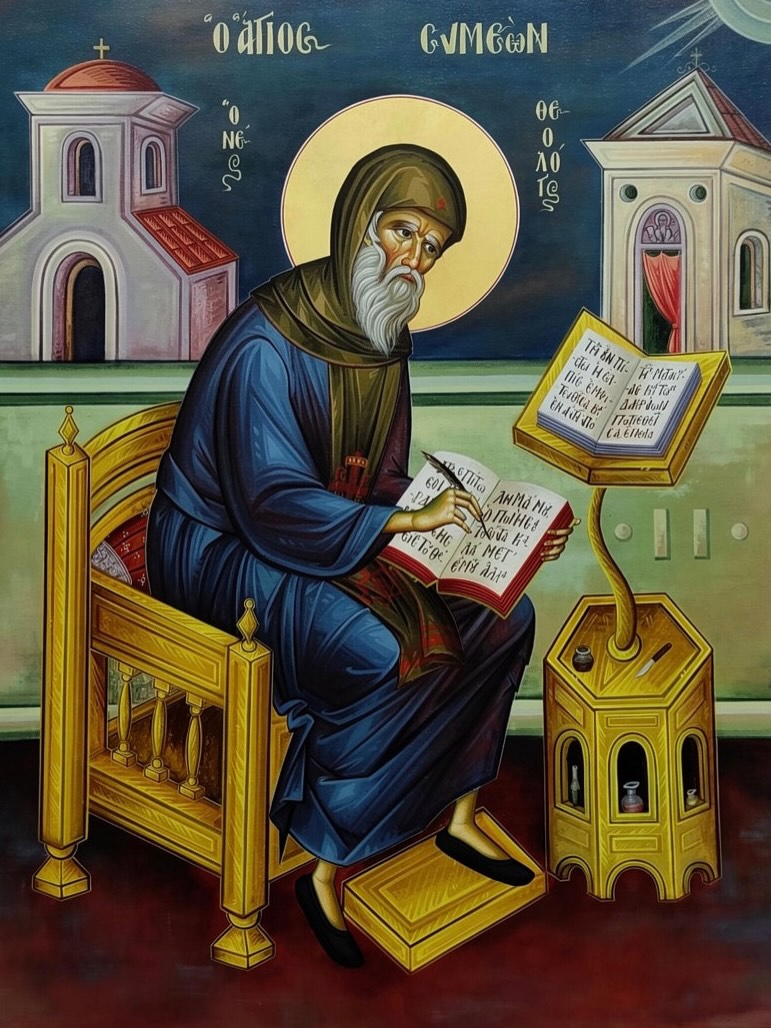
Saint Symeon the New Theologian: mystic of divine light

The post commemorates Saint Symeon the New Theologian on October 12th. Symeon lived from 949 to 1022 AD as a Byzantine monk, mystic, and poet who remains one of the most influential figures in Eastern Orthodox spirituality. The title "New Theologian" places him alongside John the Evangelist and Gregory of Nazianzus. Born into an aristocratic family in Galatia, he was educated in Constantinople and groomed for a prestigious career in the imperial…

The post commemorates Saint Symeon the New Theologian on October 12th. Symeon lived from 949 to 1022 AD as a Byzantine monk, mystic, and poet who remains one of the most influential figures in Eastern Orthodox spirituality. The title "New Theologian" places him alongside John the Evangelist and Gregory of Nazianzus.

Born into an aristocratic family in Galatia, he was educated in Constantinople and groomed for a prestigious career in the imperial court. Around the age of fourteen he met his spiritual father, Symeon the Pious, at the Monastery of Stoudios. This encounter sparked a spiritual awakening that led him to abandon his secular ambitions, renounce his wealth, and embrace monastic life.

He eventually became abbot of the Monastery of Saint Mamas in Constantinople, where he initiated rigorous spiritual reforms. Symeon taught that Christian life must be rooted in continuous awareness of the Holy Spirit and the visible manifestation of divine grace. His insistence that theology should flow from direct mystical experience rather than mere intellectual study often brought him into sharp conflict with institutional church leadership.

Central to his mysticism was the theology of Divine Light. He frequently described intense spiritual encounters as being completely enveloped by an uncreated, blinding light, which he identified as the living presence of Christ. His extensive writings, particularly the Hymns of Divine Love and Discourses, articulate these ecstatic visions and emphasize the necessity of tears, repentance, and a purified heart to receive this light.

Symeon's teachings laid the essential theological foundations for Hesychasm, a meditative prayer movement that flourished on Mount Athos centuries later and remains central to Eastern Orthodoxy today.

  • Commemorated October 12th; lived 949-1022 AD as Byzantine monk, mystic, poet
  • Title "New Theologian" ranks him with John the Evangelist and Gregory of Nazianzus
  • Met spiritual father Symeon the Pious at fourteen, left court career for monastic life
  • Taught theology from direct experience of God, not intellectual study; conflicted with church leaders
  • Theology of uncreated Divine Light as Christ's presence; writings founded Hesychasm tradition
Read more

Bishop Pajsije: The Christian Gives Thanks to God in All Things

Bishop Pajsije speaks about the freedom of a person who rejects what is unimportant and valueless and takes on Christ's yoke by free will. He says nothing is more beautiful or magnificent than this choice, because such worthless things impose themselves on everything around us, and it takes a free decision to turn from them. The one who makes this choice accepts with joy everything met on that path. The bishop is careful to note that no one by…

Bishop Pajsije speaks about the freedom of a person who rejects what is unimportant and valueless and takes on Christ's yoke by free will. He says nothing is more beautiful or magnificent than this choice, because such worthless things impose themselves on everything around us, and it takes a free decision to turn from them. The one who makes this choice accepts with joy everything met on that path.

The bishop is careful to note that no one by nature loves torture, suffering, or hardships; pain is not loved for its own sake. The difference lies in the cause: when sufferings come because of Christ and His name, the true servant of God accepts pain, torture, hardships, and everything that befalls him with joy. The title of the talk states the theme directly: the Christian gives thanks to God in all things.

The talk was posted with tags pointing to church life and mission, and it belongs to a series of short catechetical addresses in which the bishop applies the Gospel to daily endurance of trials. The structure of the thought moves from freedom to acceptance: first the free rejection of what is worthless, then the free acceptance of Christ's yoke, then joy in whatever that path brings, even when it brings suffering.

The bishop does not call believers to seek out suffering; he describes the stance of one who, when suffering arrives for the sake of Christ, receives it with thanksgiving rather than despair. The address is short and spoken, and its force lies in the plain contrast it draws between what imposes itself on us and what we choose freely.

Key moments

  1. Nothing is more beautiful or magnificent than a person freely rejecting the unimportant and valueless.
  2. These unimportant things impose themselves on everything.
  3. The person rejects them by free will and takes on Christ's yoke by free will.
  4. Then everything encountered on that path is accepted with joy.
  5. No one loves torture, suffering, or hardships.
  6. When they come because of Christ and His name, the true servant of God accepts them with joy.
  7. This includes pain, torture, hardships, and everything that befalls him.
Read more
M mysteries_of_christendom Instagram

Saint Seraphim's relics found in Leningrad atheism museum after 63 years

The post recounts the disappearance and recovery of Saint Seraphim of Sarov's relics. Seraphim, a monk who lived in the Russian forest in the early 1800s, died in 1833 and was canonized in 1903. After the Bolsheviks took power, Soviet authorities opened his coffin in 1920 and displayed his remains publicly as part of their campaign against the church. In 1927 they confiscated the relics and removed them from the monastery; their location then…

The post recounts the disappearance and recovery of Saint Seraphim of Sarov's relics. Seraphim, a monk who lived in the Russian forest in the early 1800s, died in 1833 and was canonized in 1903. After the Bolsheviks took power, Soviet authorities opened his coffin in 1920 and displayed his remains publicly as part of their campaign against the church.

In 1927 they confiscated the relics and removed them from the monastery; their location then became unknown for decades. In 1990, workers at the Museum of Religion and Atheism in Leningrad discovered unidentified remains accompanied by a small mitt embroidered with the words "Venerable father Seraphim, pray to God for us." The church compared the remains with historical records, confirmed they were Seraphim's relics, and received them back in 1991.

The video summary notes that Seraphim greeted visitors with "My joy, Christ is risen" and became one of Russia's most beloved saints. The post ends with a prayer to Saint Seraphim and a reference to the Mysteries of Christendom channel for more Orthodox history.

Key moments

  1. Seraphim was a monk in the early 1800s who spent years praying alone in a hut in the Russian forest
  2. He became one of the most beloved saints in Russia, treating everyone with love and greeting them with "My joy, Christ is risen"
  3. He died in 1833 and was buried at his monastery
  4. The church officially recognized him as a saint in 1903
  5. In 1920, Soviet authorities opened his coffin and publicly displayed his remains as part of their campaign against the church
  6. In 1927, they confiscated his relics and carried them away from the monastery; eventually nobody knew where they had gone
  7. In 1990, workers at the Museum of Religion and Atheism in Leningrad found unidentified remains with a small mitt embroidered "Venerable father Seraphim, pray to God for us"
  8. The church compared the remains with historical records, confirmed they were Saint Seraphim's relics, and they were returned to the church in 1991
Read more
George Instagram discussion

Left Crete at 16 for karate, drifted from God for 20 years

1:33

The speaker recounts leaving his Cretan village of about 2,000 people at age 16 to rent a studio near his school, work after classes to pay the rent, and travel by boat to Athens on weekends for training with the national karate team. At the time he felt free and grown up, but looking back he recognizes he was seeking the attention he never received from an absent father and a mother who worked constantly, while his grandparents raised him.…

The speaker recounts leaving his Cretan village of about 2,000 people at age 16 to rent a studio near his school, work after classes to pay the rent, and travel by boat to Athens on weekends for training with the national karate team. At the time he felt free and grown up, but looking back he recognizes he was seeking the attention he never received from an absent father and a mother who worked constantly, while his grandparents raised him.

There was no one to sit with him and say, "Hey, slow down. Let's talk." With no one to slow him down or talk with him, he drifted from God not by a deliberate decision but because he was too young to hold on alone. For 20 years he attended church only for occasional weddings or a small chapel in nature.

He thought he was free but was actually a little boy trying to fill an empty place by himself. He asks the audience when they drifted away from God.

Key moments

  1. At 16, the speaker left his small village in Crete to rent a studio near school and live alone.
  2. He worked after school to pay rent and traveled by boat to Athens on weekends to train with the national karate team.
  3. He felt grown up and free at the time, but now sees he was seeking attention he missed because his father was absent and his mother worked constantly.
  4. His grandparents raised him, and there was no one to sit with him and say, "Hey, slow down. Let's talk."
  5. He let go of God not by decision but because he was too young to hold on alone.
  6. For 20 years he went to church only for a wedding here and there or a little chapel in nature.
  7. He thought he was free but was actually a little boy trying to fill an empty place by himself.
  8. He asks the audience when they drifted away from God.
6 opinions in the discussion As someone whose father was also never there, growing up in a small village while he was always travelling for work, I feel this deeper than you know. Thank you for being so honest and open… Read the discussion
Athonite Audio YouTube

Evergetinos, Vol. 3, Hypothesis 24: Looking to God amid secular life

Evergetinos, Vol. 3, Hypothesis 24: Looking to God amid secular life 7:04

This narration presents Hypothesis 24 from the third book of the Evergetinos: a believer who falls into the tumult of secular life should not conform to external circumstances but should look to God and do what is pleasing to Him. The first example comes from the life of Saint Sabbas. He traveled to Constantinople to ask Emperor Justinian to spare the Christians of Palestine, who were falsely blamed for the Samaritan uprising. Justinian welcomed…

This narration presents Hypothesis 24 from the third book of the Evergetinos: a believer who falls into the tumult of secular life should not conform to external circumstances but should look to God and do what is pleasing to Him. The first example comes from the life of Saint Sabbas. He traveled to Constantinople to ask Emperor Justinian to spare the Christians of Palestine, who were falsely blamed for the Samaritan uprising.

Justinian welcomed him with honor, rising from his throne and kissing the ascetic's sacred head, and offered him a steady income for his monks. Sabbas refused, saying that God who fed the disobedient Israelites in the wilderness and made water gush from a rock would provide for his monks. Instead he asked for tax relief for Palestine, a hospice in Jerusalem for pilgrims to the life-giving sepulchre, an end to the heresies vexing the churches, and strongholds where monks could take refuge during enemy attacks.

The emperor granted everything eagerly and immediately began writing letters, issuing instructions and sending decrees in all directions. At the third hour Sabbas left the emperor and Tribonian to pray and recite the Psalms of David, telling his disciple Jeremiah that the emperor was doing his duty and we are doing ours. The second part draws from the Gerondikon. Amma Theodora teaches that as one can eat from a table of many foods without relish and not be condemned, so one can hear worldly conversations without harm if the heart stays turned toward God.

An elder compares the monk to the bee that makes honey wherever it goes. Abba Sisoes warns that shame before men, the man-pleasing that keeps a person from doing good, brings the accusation of not fearing God. Another elder urges monks to keep their prayer rule wherever they are, like the heron that has a dwelling everywhere.

The book is available from the publisher, and the narration is part of an ongoing audio project supported by a listener fundraiser.

Key moments

  1. 0:01 Hypothesis 24: a believer who falls into the torment of secular life should not conform to external circumstances but should look to God and do what is pleasing to him.
  2. 0:33 Emperor Justinian welcomed Saint Sabbas in Constantinople with great honor, rising from his throne and kissing the ascetic's sacred head, and readily granted his petitions.
  3. 1:37 Sabbas refused the emperor's offer of a steady income for his monks, saying that God who nourished the disobedient people in the wilderness and made water gush from a rock would provide for their needs.
  4. 2:09 Sabbas instead asked Justinian to exempt Palestine from taxes for a time, build a hospice in Jerusalem for pilgrims to the life-giving sepulchre, end the heresies vexing the churches, and construct strongholds where monks could take refuge during enemy attacks.
  5. 3:11 The emperor immediately began writing letters, issuing instructions and sending decrees in all directions to carry out the requests without delay.
  6. 3:42 At the third hour Sabbas left the emperor and Tribonian to pray and recite the Psalms of David, and told his disciple Jeremiah that the emperor was doing his duty and we are doing ours.
  7. 5:17 Amma Theodora taught that as one can eat from a table of many foods without relish and not be condemned, so one can hear worldly conversations without harm if the heart stays turned toward God.
  8. 5:48 An elder compared the monk to the bee that makes honey wherever it goes; Abba Sisoes warned that man-pleasing shame before men brings the accusation of not fearing God; another elder urged keeping the prayer rule wherever one is, like the heron that has a dwelling everywhere.
Orthodox Health Instagram

Fr. Michael Butler on Why the Wellness Crowd Keeps Ending Up in the Church

The host of the Orthodox Health Podcast frames the alternative health world as having a spiritual problem: once health becomes a search for transcendence, wellness can drift into ceremonies, plant medicine, manifestation, energy work, and the endless pursuit of the next breakthrough. He observes that this same hunger often leads people toward the Church. In episode 82, titled "The Noonday Demon: Why You Feel Trapped in Your Career," Fr. Michael…

The host of the Orthodox Health Podcast frames the alternative health world as having a spiritual problem: once health becomes a search for transcendence, wellness can drift into ceremonies, plant medicine, manifestation, energy work, and the endless pursuit of the next breakthrough. He observes that this same hunger often leads people toward the Church.

In episode 82, titled "The Noonday Demon: Why You Feel Trapped in Your Career," Fr. Michael Butler discusses work, sacrifice, masculinity, duty, and what makes a human life good, and he takes a brief detour into the overlap between alternative health and Orthodoxy. The host notes that sometimes the problem is not that the next ceremony failed to heal a person; sometimes the person simply likes the ritual.

In the conversation, Fr. Butler says he has received people into the Church who came from the alternative health world, where plant medicine appeared in nearly every one of their social media bios. He concludes that these people are mostly old hippies who smoke weed and like getting high. He questions how many ayahuasca ceremonies a person needs before being healed, arguing that if the ceremonies worked, people would not have to keep going back for more.

The episode ties this critique to its larger theme: why people feel trapped in their careers and what actually makes a human life good.

Key moments

  1. The speaker says he has received some people into the church, and many of them came from the alternative health world where plant medicine was in every bio.
  2. He decides they are mostly old hippies who smoke weed and like to get high.
  3. He asks how many ayahuasca ceremonies are needed before a person gets healed, saying that if they worked, people would not need to keep returning for more.
Read more

Relics of St. Paraskeva and St. Paisius translated in Iași for patronal feast

0:35

On October 8, 2026, in Iași, the honorable relics of the Venerable Paraskeva and the Venerable Paisius of Sihastria were solemnly translated in a litia around the Metropolitan Cathedral and placed under a specially prepared baldachin for the veneration of the faithful people. By this liturgical act began the celebration of the temple feast of Saint Paraskeva, the protectress of Moldavia. In the days of the feast the arrival of thousands of…

On October 8, 2026, in Iași, the honorable relics of the Venerable Paraskeva and the Venerable Paisius of Sihastria were solemnly translated in a litia around the Metropolitan Cathedral and placed under a specially prepared baldachin for the veneration of the faithful people. By this liturgical act began the celebration of the temple feast of Saint Paraskeva, the protectress of Moldavia.

In the days of the feast the arrival of thousands of pilgrims from Romania and other countries is expected, who come to venerate the holy relics and receive the blessing of the saints. The information was published by the Metropolis of Moldavia and Bukovina, Archdiocese of Iași, on its official portal on October 8, 2026.

Key moments

  1. The speaker calls on the Mother of God: "Mântui-ne maică" (Save us, Mother).
  2. The text references the Cross and Christ: "în cruce ai umblat lui Hristos" (you walked in the Cross of Christ).
  3. It states that through working one learns not to look away from the Cross: "lucrând ai învățat să nu se uite la cruce că este".
Read more
T timotheos.orthodoxy Instagram

Askesis originally meant physical endurance training in ancient Greece

The post introduces Tim, a catechumen of the Greek Orthodox Church who shares his journey toward Orthodoxy alongside two decades of fitness experience and a business he built. In the attached video, he asks whether the viewer knows the original meaning of askesis. He explains that he once understood the term as mental strength or the practice of saying no to things. After researching, he found that the meaning shifted over time. Originally,…

The post introduces Tim, a catechumen of the Greek Orthodox Church who shares his journey toward Orthodoxy alongside two decades of fitness experience and a business he built. In the attached video, he asks whether the viewer knows the original meaning of askesis. He explains that he once understood the term as mental strength or the practice of saying no to things.

After researching, he found that the meaning shifted over time. Originally, askesis referred to physical training, specifically endurance training in ancient Greece. He says this historical sense puts training in a new perspective and hopes the information helps.

Key moments

  1. The speaker asks if the listener knows the original meaning of askesis.
  2. The speaker says he thought it meant mental strength and saying no to things.
  3. The speaker explains he looked into it and realized the meaning changed.
  4. The speaker states that originally askesis was about physical training.
  5. The speaker specifies it was endurance training in ancient Greece.
  6. The speaker says this puts training into a new perspective.
  7. The speaker hopes the information helps.
Prayer Orthodoxy ® with Psifida Instagram

Final part of Saint Nektarios Catacombs visit

The post marks the seventh and final part of a series on the Saint Nektarios Catacombs. The author notes they have reached the exit. Hashtags reference Psifida, Saint Nektarios, travel in Greece, and viral content.

Key moments

  1. The prayer addresses the Lord, asking to be granted the ability to hymn His glory.
  2. It acknowledges that the Lord has deemed the faithful worthy to partake of His holy mystery.
  3. It requests that the Lord strengthen the faithful in His sanctification.
  4. The purpose is to meditate on God's righteousness all day long.
  5. The prayer concludes with a triple Alleluia.
Read more

Pilgrimage to St. Parascheva in Iasi: relics, processions and Liturgy, October 8-15, 2026

0:57

The Archdiocese of Iasi announced a pilgrimage gathering in Iasi, Romania, from October 8 to 15, 2026, for the feast of St. Parascheva, known as St. Petka, the protectress of Moldavia. The gathering opened on Thursday, October 8, at 6 o'clock with the reading of the Akathist to St. Parascheva. After the Akathist, the relics of St. Petka and of St. Paisius of Sihastria were carried in procession around the Metropolitan Cathedral and placed in a…

The Archdiocese of Iasi announced a pilgrimage gathering in Iasi, Romania, from October 8 to 15, 2026, for the feast of St. Parascheva, known as St. Petka, the protectress of Moldavia. The gathering opened on Thursday, October 8, at 6 o'clock with the reading of the Akathist to St. Parascheva. After the Akathist, the relics of St. Petka and of St. Paisius of Sihastria were carried in procession around the Metropolitan Cathedral and placed in a specially prepared reliquary, where the faithful could venerate them.

On Sunday, October 11, at 19:00, the traditional procession 'Path of the Saints' took place, in which the relics marked the prayerful gathering of the faithful through the streets of Iasi. After the procession, around 20:30, the relics were again placed for veneration. On Monday, October 12, the pilgrimage program continued with services in the Metropolitan Cathedral.

On the feast itself, Wednesday, October 14, the Divine Liturgy will begin at 9 o'clock on the plateau in front of the altar of the Metropolitan Cathedral. The liturgical responses will be sung by the Academic Choir 'Byzantion'. The announcement describes the gathering as an occasion for common prayer and veneration of the saint whose relics the faithful have honored for centuries.

The source is the official press release of the Archdiocese of Iasi, 'Sărbătoarea Sfintei Cuvioase Parascheva (Iași, octombrie 2026)', together with the schedule of services from October 8 to 15, 2026. A hymn to the saint accompanies the announcement, calling her the much-helpful one, the flower and protectress of Moldova, with the refrain 'O Holy Mother Parascheva, bless Romania.'

Key moments

  1. The hymn addresses God in His saints who intercede, pray and weep for us.
  2. Saint Parascheva is called 'much helpful, flower and protectress of Moldova'.
  3. The refrain repeats: 'O Holy Mother Parascheva, bless Romania.'
radioimlemesou Instagram

Metropolitan Athanasios of Limassol on finding God in the heart

Metropolitan Athanasios of Limassol states that every person, whether married, unmarried, or in any other life condition, must ultimately find God within the heart and existence. He says we must learn to acquire a stable faith in Christ and let our life depend on Him. Anxiety about what will become of us, how we will go on, how we will manage, and how life will turn out must not consume us.

We must learn to leave everything in Christ's hands, commending ourselves and all else to Christ God, using the phrase "Χριστώ τω Θεώ παραθώμεθα".

Key moments

  1. Whatever a person's state, married, unmarried, or other conditions, the final requirement is to find God in the heart and in one's existence.
  2. We must learn to acquire a stable faith in Christ.
  3. Our life must depend on Christ.
  4. We must not let worry about what will become of us, how we will go on, how we will manage, or how life will be consume us.
  5. We must learn to leave everything in Christ's hands.
  6. Commend ourselves and all else to Christ God.
Read more