WeOrthodox
EN UA

Orthodox posts, videos and discussions

We follow Orthodox channels, communities and blogs across the web, summarise every post and video, and highlight the conversations with real substance.

T timotheos.orthodoxy Instagram

Gluttony and muscle-building: what Scripture and Fathers say

The post examines whether consuming large amounts of food to build muscle constitutes gluttony. The author, a certified personal trainer and catechumen in the Greek Orthodox Church named Tim, references Scripture and St. John Cassian. Cassian identifies three forms of gluttony: eating before the proper time, eating until stuffed, and craving delicacies. The author notes that eating enough to fuel work is not listed among them. He cites the angel…

The post examines whether consuming large amounts of food to build muscle constitutes gluttony. The author, a certified personal trainer and catechumen in the Greek Orthodox Church named Tim, references Scripture and St. John Cassian. Cassian identifies three forms of gluttony: eating before the proper time, eating until stuffed, and craving delicacies.

The author notes that eating enough to fuel work is not listed among them. He cites the angel feeding Elijah twice because the journey was too great (1 Kings 19:7) and Proverbs 25:16: "Eat so much as is sufficient for thee," adding that for a man training hard, sufficient is more. Paul's analogy of the athlete in 1 Corinthians 9:25 ("Every man that striveth for the mastery is temperate in all things") is interpreted to mean a structured meal plan is temperance.

The post then lists when eating becomes gluttony: using "bulking" as an excuse for junk food, eating out of boredom or emotion, constantly thinking about food, and lacking thanks or restraint. When it is not gluttony: planned, measured portions; eating for strength, not pleasure alone; received with thanksgiving (1 Timothy 4:4-5); and done for God's glory (1 Corinthians 10:31).

The author advises consulting one's priest about personal situations and invites followers for more content on Orthodox fasting, training, and fitness. The discussion centers on applying patristic teaching on gluttony to modern fitness goals, distinguishing between disciplined nourishment and excess driven by passion.

  • St. John Cassian's three forms of gluttony: eating before the proper time, eating until stuffed, craving delicacies.
  • Elijah was fed twice by an angel for a hard journey; Proverbs 25:16 says eat what is sufficient, which for hard training is more.
  • 1 Corinthians 9:25 compares the Christian to an athlete who is temperate in all things; a structured meal plan is temperance.
  • Gluttony includes using bulking as excuse for junk, eating from boredom or emotion, constant food thoughts, no thanks or restraint.
  • Non-gluttonous eating: planned portions, for strength not pleasure, with thanksgiving (1 Tim 4:4-5), for God's glory (1 Cor 10:31).
Read more

Passion Is Not Love Intensified: It Is Distorted Love

A teaching graphic on how to distinguish passion from love, framed as a spiritual exercise for the month of November. The author argues that not everything that feels like love is love. Passion wants possession, gratification and emotional fulfillment; love seeks communion, sacrifice and the good of the other. Love asks "What can I give of myself", while passion asks "What can this person give me". Love is measured not by emotional intensity but…

A teaching graphic on how to distinguish passion from love, framed as a spiritual exercise for the month of November. The author argues that not everything that feels like love is love. Passion wants possession, gratification and emotional fulfillment; love seeks communion, sacrifice and the good of the other.

Love asks "What can I give of myself", while passion asks "What can this person give me". Love is measured not by emotional intensity but by willingness to place another before oneself. The post stresses that Orthodoxy does not teach desire itself is evil: desire belongs to our created nature and is meant to be directed toward the good.

It becomes a problem when desire is governed by the passions, so that love is distorted by selfishness, attachment, jealousy and possessiveness. A person then loves the pleasure someone provides instead of recognizing the person as made in the image of God. On marriage, the author writes that it is not the fulfillment of romantic attraction or physical desire but a sacramental union in which husband and wife grow in holiness through humility, patience, forgiveness and self-sacrifice.

The crowns used in the Orthodox wedding service symbolize both honor and martyrdom, the voluntary dying to selfishness for the sake of another. The final contrast is about endurance: passion is sustained by pleasure, attraction and emotional intensity, and when these fade, what was mistaken for love disappears with them. Love endures through suffering, aging, illness, disappointment and sacrifice because its foundation is self-giving rather than gratification.

  • Passion wants possession and gratification; love seeks communion, sacrifice and the good of the other.
  • Love asks "What can I give of myself"; passion asks "What can this person give me".
  • Orthodoxy does not teach that desire is evil; desire becomes harmful when governed by the passions.
  • Marriage is a sacramental union; its crowns symbolize both honor and martyrdom, dying to selfishness for another.
  • Passion fades when pleasure fades; love endures suffering, aging and illness because it rests on self-giving.
Read more

Why are many Orthodox men active gym-goers and what do they eat during fasting?

I notice many Orthodox men who are regular gym-goers and wonder if this is a cultural trend. I also want to know what they eat to keep their muscle mass during fasting periods.

33 opinions in the discussion Working out with weights is among the most beneficial things you can do for your health over the long run Read the discussion
CHRISTIANITY UNITED Instagram

A Georgian Child's Simple Reverence Before an Icon

The post shares a video from Georgia showing a young girl in a traditional headscarf approaching an icon, bowing her head in reverence, and walking away. The author uses this moment to reflect on how Orthodox faith is passed to children through simple actions rather than complex theology. The text provides historical context: Georgia adopted Christianity in the fourth century through Saint Nino, Equal to the Apostles, and families have preserved…

The post shares a video from Georgia showing a young girl in a traditional headscarf approaching an icon, bowing her head in reverence, and walking away. The author uses this moment to reflect on how Orthodox faith is passed to children through simple actions rather than complex theology. The text provides historical context: Georgia adopted Christianity in the fourth century through Saint Nino, Equal to the Apostles, and families have preserved the faith through prayer, worship, fasting, and devotion to saints despite periods of persecution and hardship.

The author notes that a child may not understand the theology behind holy icons or the deeper meaning of the Divine Liturgy, but can learn to bow before an icon, make the Sign of the Cross, whisper a prayer, and recognize the church as a place of holiness. These small moments become the foundation of a lifelong relationship with Christ.

Children learn not only from what they are told but from what they see adults doing, when they see prayer, church attendance, reverence, and love toward others, they understand faith as something lived. The post cites Mark 10:14 about letting children come to Christ. It concludes that the future of the Church is being nurtured in moments like this.

  • Video shows a Georgian girl reverencing an icon with a simple bow
  • Georgia's Christian tradition dates to the fourth century through Saint Nino
  • Orthodox families have preserved faith through prayer, worship, and fasting despite persecution
  • Children learn faith by observing adult practice, not only through instruction
  • The moment illustrates Mark 10:14 on children and the kingdom of God
Read more
radioimlemesou Instagram

Metropolitan Athanasios shares St. Paisios on a factory of good thoughts

The post quotes Metropolitan Athanasios of Limassol recounting a teaching of St. Paisios. The elder spoke of making a factory that produces good thoughts: seeing evil and drawing good from it, seeing sin and not counting it as sin, seeing something blatantly wicked yet not becoming wicked oneself. He compared this to little children who witness many things but remain innocent and understand nothing. By contrast, the wicked eye of an adult can…

The post quotes Metropolitan Athanasios of Limassol recounting a teaching of St. Paisios. The elder spoke of making a factory that produces good thoughts: seeing evil and drawing good from it, seeing sin and not counting it as sin, seeing something blatantly wicked yet not becoming wicked oneself. He compared this to little children who witness many things but remain innocent and understand nothing.

By contrast, the wicked eye of an adult can look at innocent things and turn them into evil thoughts. St. Paisios said this condition is healed by prayer, by humility, and above all by listening when others explain the bad thoughts we hold, and by accepting it when we are told that things are not as we claim they are.

  • St. Paisios's metaphor of a factory that turns evil into good thoughts
  • Seeing evil without becoming evil, like innocent children
  • The corrupt adult eye twists innocent things into evil thoughts
  • Healing comes through prayer, humility, and accepting correction
  • Metropolitan Athanasios of Limassol relayed this teaching
Read more

Fr. Alexei Uminsky Explains How to Understand the Gospel

Fr. Alexei Uminsky Explains How to Understand the Gospel 51:21

Priest Alexei Uminsky answers viewer questions about Gospel interpretation. He says the path to God begins with prayer and a thirst for God, not with resolving doctrinal contradictions, and directs readers to the Sermon on the Mount to hear Christ's voice. On Matthew 10:36, he explains that "a man's enemies will be those of his own household" describes the conflict when a person embraces the Beatitudes' vision of blessedness while their family…

Priest Alexei Uminsky answers viewer questions about Gospel interpretation. He says the path to God begins with prayer and a thirst for God, not with resolving doctrinal contradictions, and directs readers to the Sermon on the Mount to hear Christ's voice. On Matthew 10:36, he explains that "a man's enemies will be those of his own household" describes the conflict when a person embraces the Beatitudes' vision of blessedness while their family clings to earthly notions of well-being.

This division is now seen in families split over war and patriotism versus the Gospel. He addresses the Pharisees' Corban tradition as a legalistic loophole to avoid honoring parents, contrasting it with Christ's care for the widow of Nain's son and His entrusting of Mary to John from the cross. On Luke 14:31, he reads the context: discipleship requires counting the cost, forsaking all, and serious renunciation.

Regarding "turn the other cheek" and "give your cloak," he rejects the view that these avoid self-abasement, citing Chrysostom and Theophylact: they mean stopping evil by absorbing it, doing more than required, and losing property rather than love. He teaches that Christ's bodily healings always accompany spiritual healing ("go and sin no more"), and that Gethsemane shows the God-man taking full human fear and god-forsakenness, submitting His human will to the divine will.

On "sell your cloak and buy a sword," he says "sword" in Christ's mouth always means the Word of God, not a weapon. He dismisses apparent contradictions in the parables of the wedding banquet and the minas: the first speaks of inviting the poor who rejoice, the second depicts the Last Judgment on those who reject Christ, not forced conversion.

Key moments

  1. 2:40 The path to God begins with personal prayer and a thirst for God, not with resolving contradictions between religions; one should start with the Gospel, especially the Sermon on the Mount, to hear Christ's voice.
  2. 4:43 Matthew 10:36 ("enemies of his own household") describes the clash when a convert embraces the Beatitudes' true blessedness while their family holds earthly views of happiness, leading parents to oppose the Christian choice, a division now acute in families split over war and "Holy Rus" propaganda.
  3. 10:30 The Pharisees' Corban rule let people declare money for parents as a gift to God, nullifying the commandment to honor parents; Christ exposes this legalism, contrasting it with His resurrection of the widow of Nain's son (who was her sole support) and His own entrusting of Mary to John from the cross.
  4. 15:44 Luke 14:31's parable of the king with ten thousand illustrates the cost of discipleship: one must forsake all, deny self, take up the cross, and make serious renunciations before following Christ.
  5. 21:58 The Sermon on the Mount commands (turn the other cheek, give cloak, go two miles) are not about avoiding self-abasement but about absorbing evil without retaliation, doing more than required, and losing property rather than love, per Chrysostom and Theophylact.
  6. 29:17 Christ's bodily healings always accompany spiritual healing ("go and sin no more"); behind physical illness stands spiritual illness, and the miracles signify the healing of the soul.
  7. 31:52 In Gethsemane, the God-man (per Chalcedon) takes the fullness of human nature including fear, despair, and god-forsakenness; His human will resists death but submits to the divine will, showing the immensity of divine love.
  8. 42:44 At the Last Supper, Christ's "buy a sword" means the Word of God, not a weapon; the parables of the wedding banquet and the minas depict joyful invitation to the poor and the Last Judgment on those who reject Christ, not forced conversion.
6 opinions in the discussion A maniac who meets resistance stops attacking. If you don't stop him, evil will keep living on. But that's an extreme case. In general, Jesus Christ is right because he is holy. Not… Read the discussion
George Instagram

Praying While Feeling Nothing Is Not Failure: Faith Is Measured by Showing Up

The speaker addresses a common assumption that people who make prayer videos must constantly feel close to God. He says that is not how prayer works. Many believers think that closeness to God should produce feelings every time they pray, and when warmth, peace, or tears do not come, they conclude that their faith is weak or that God is not listening. The speaker rejects both conclusions: if you pray every day and feel nothing, you are not doing…

The speaker addresses a common assumption that people who make prayer videos must constantly feel close to God. He says that is not how prayer works. Many believers think that closeness to God should produce feelings every time they pray, and when warmth, peace, or tears do not come, they conclude that their faith is weak or that God is not listening.

The speaker rejects both conclusions: if you pray every day and feel nothing, you are not doing it wrong, and the absence of feeling is not proof that anything has gone wrong. He gives the example of Saint Silouan of Mount Athos, who saw Christ as a young monk and then spent fifteen years feeling that grace had left him, yet became one of the greatest saints of our time.

He also turns to the Gospel account of the father who brought his sick son to Christ and answered Him with the words "Lord, I believe; help my unbelief." The speaker calls this one of the most honest prayers in the Bible, and notes that Christ healed the son rather than sending the father away. He advises anyone whose faith feels weak to pray exactly that prayer.

The church fathers, he says, warn against chasing feelings or visions, because faith is not measured by what you feel but by whether you keep showing up. He cites Christ's words that he who is faithful in what is least is faithful also in much, and concludes that a person should keep praying, going to church, and doing the small things even on days when they feel nothing, because those days count the most.

Key moments

  1. People assume the speaker always feels something divine because of the prayer videos, but that is not how prayer works.
  2. If you pray every day and still feel nothing, you are not doing it wrong.
  3. Many people believe closeness to God should produce feelings every time, and when it does not, they think their faith is weak or God is not listening.
  4. Saint Silouan of Mount Athos saw Christ as a young monk, then struggled and prayed for 15 years feeling grace had left him, and became one of the greatest saints of our time.
  5. The man in the gospel who brought his sick son to Jesus answered Christ's words with "Lord, I believe; help my unbelief," one of the most honest prayers in the Bible, and Christ healed his son.
  6. If your faith feels weak, pray exactly that prayer.
  7. The fathers of the church warn never to chase feelings or visions, because faith is not measured by what you feel but by whether you keep showing up.
  8. Christ said he who is faithful in what is least is faithful also in much, so keep praying, going to church, and doing the small things even on days you feel nothing, because those days count the most.
Read more

Athanasios Diakos: the deacon who chose death over denying Christ

Athanasios Diakos (1788-1821), born Athanasios Massavetas, entered monastic life young at the Monastery of Saint John the Baptist in Artotina. Around the age of seventeen he was ordained a deacon of the Orthodox Church, and from that rank he took the name Diakos, meaning deacon. He later left monastic life and took up arms against Ottoman rule, becoming one of the leading figures of the Greek War of Independence. At the Battle of Alamana on 22…

Athanasios Diakos (1788-1821), born Athanasios Massavetas, entered monastic life young at the Monastery of Saint John the Baptist in Artotina. Around the age of seventeen he was ordained a deacon of the Orthodox Church, and from that rank he took the name Diakos, meaning deacon. He later left monastic life and took up arms against Ottoman rule, becoming one of the leading figures of the Greek War of Independence.

At the Battle of Alamana on 22 April 1821, Diakos and his fellow Greek fighters faced a far larger Ottoman force commanded by Omer Vrioni and Kose Mehmet. As the Greek forces retreated, Diakos refused to flee. According to tradition, he kept fighting with just 48 men until his sword broke and he was captured, gravely wounded. Impressed by his courage, Omer Vrioni reportedly offered him a position of command in the Ottoman army if he renounced Christianity and embraced Islam.

Diakos refused, answering with the words that remain well known in Greek history: 'I was born a Greek, and I shall die a Greek.' On 24 April 1821 he was executed by impalement in Lamia. A man who had served as a deacon of the Orthodox Church chose death rather than renounce his Christian faith. His sacrifice became a symbol of courage, conviction and the struggle for Greek independence, remembered under the cry 'Freedom or death.'

Key moments

  1. At the Battle of Alamana in Epirus in 1821, Athanasios Diakos stood against the advancing Ottoman army while the Greek forces retreated.
  2. Diakos refused to flee and fought with only 48 men until his sword broke and he was captured, gravely wounded.
  3. Impressed by his bravery, the Ottoman commander offered Diakos a position of command in his army if he abandoned Christianity and embraced Islam.
  4. Diakos refused, declaring, 'I was born a Greek, I shall die a Greek.'
Read more

Pagan Europe Was Not a Golden Age for Women: The Historical Record

The post answers a claim that pre-Christian European societies treated women better than Christianity did. It gathers classical sources and modern scholarship to argue the opposite. Tacitus describes how a Germanic husband punished an unfaithful wife by cutting her hair, stripping her, and flogging her through the village, with no second marriage possible for her. Julius Caesar reports that Gallic husbands held power of life and death over wives…

The post answers a claim that pre-Christian European societies treated women better than Christianity did. It gathers classical sources and modern scholarship to argue the opposite. Tacitus describes how a Germanic husband punished an unfaithful wife by cutting her hair, stripping her, and flogging her through the village, with no second marriage possible for her.

Julius Caesar reports that Gallic husbands held power of life and death over wives and children, and that a widow suspected in her husband's death could be tortured and burned. The post cites Dr. Larry Hurtado's point that worshipping female deities did not make a society equal for living women, since legal and domestic structures stayed male-dominated.

Early Irish and Welsh law, as discussed in Josef Weisweiler's study of women among the Celts, barred daughters from inheriting land except in a limited lifetime case. Girls were married at puberty, often at 12 to 14, because pagan marriage was a transfer between male heads of household. The post contrasts this with the medieval European Marriage Pattern documented by Hollingsworth and Hajnal, in which canon law required consent and capacity, and women commonly married in their late teens to mid-twenties.

It credits canon law, citing Pope Alexander III and Gratian, with making coercion grounds for nullity, so a woman could refuse an arranged marriage. The Church outlawed concubinage, polygyny, and unilateral divorce, citing Augustine and the Council of Trent. Under Roman and Germanic law women needed male guardians for legal acts, while Church courts let women sue for annulments and dowries, as Helmholz documented for medieval England.

The post closes with infanticide and infant exposure, permitted under pagan law, condemned by the Didache and the Council of Elvira, and notes that canon law allowed separation for domestic cruelty.

  • Tacitus and Caesar describe harsh punishments and life-and-death authority of pagan husbands over wives.
  • Hurtado and Weisweiler are cited to show goddess worship did not bring legal equality for women.
  • Canon law required consent for marriage, letting women refuse arranged unions and raising marriage age.
  • The Church banned concubinage, polygyny, and unilateral divorce, binding husbands to one wife for life.
  • Church courts gave women legal standing and condemned infanticide and child exposure as murder.
Read more

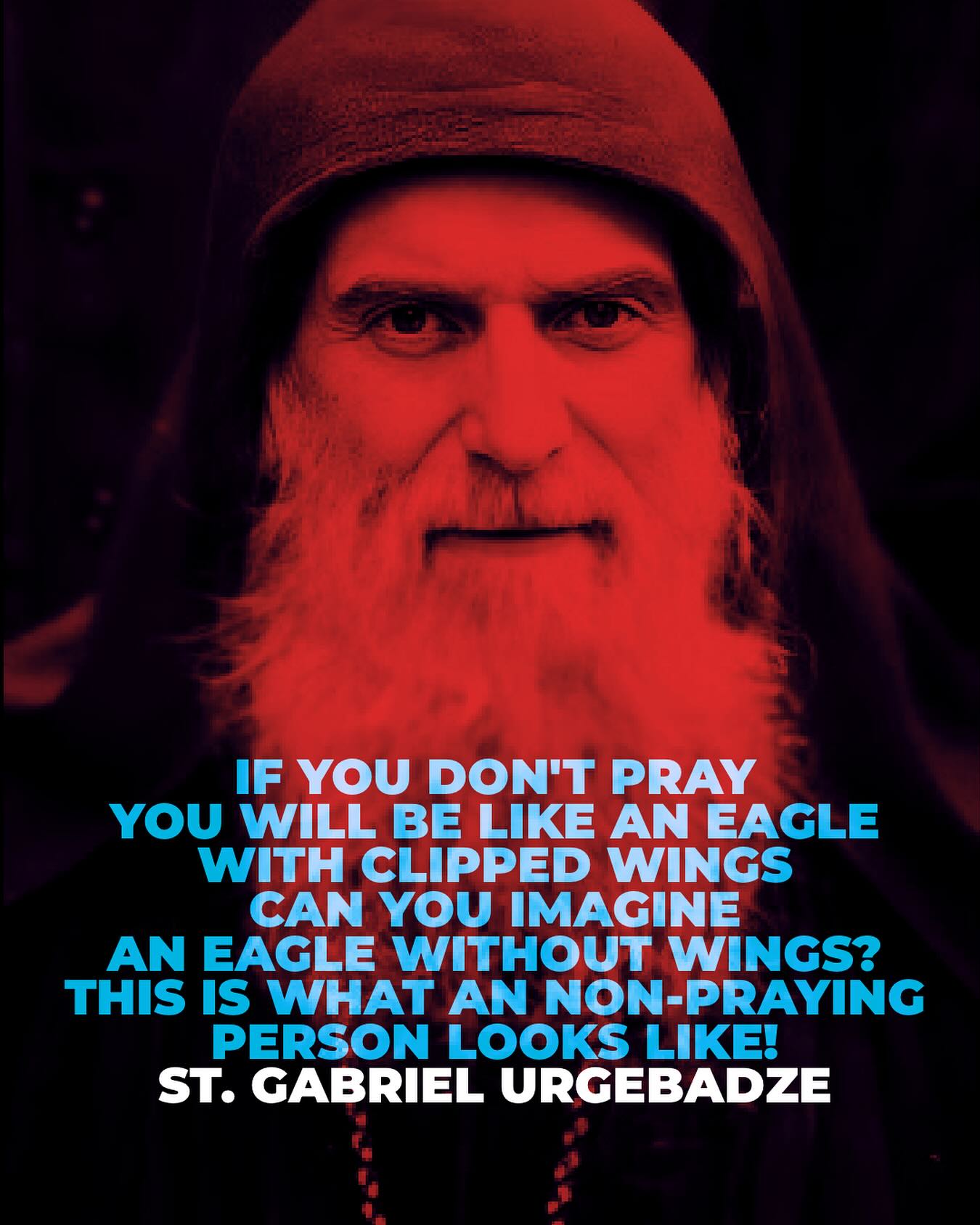
St. Gabriel Urgebadze on prayer as wings for the soul

The post shares a saying attributed to St. Gabriel Urgebadze, a twentieth-century Georgian monk canonized in 2012. He compares a person who does not pray to an eagle with clipped wings, unable to fly. The image text repeats the comparison in capital letters. The surrounding text promotes the Orthodox Church as the original apostolic faith and encourages readers to seek catechesis at a local parish, but the core of the post is the saint's analogy about prayer.

  • St. Gabriel Urgebadze likens a non-praying person to an eagle with clipped wings.
  • The saint teaches that prayer is essential for spiritual flight.
  • St. Gabriel was a Georgian monk who died in 1995 and was glorified in 2012.
  • The post includes a general description of Orthodoxy as the apostolic church.
  • It invites readers to inquire about catechism courses at a local Orthodox parish.
Read more
Holy Resurrection YouTube

St. John Cassian's Threefold Renunciation of the World

St. John Cassian's Threefold Renunciation of the World 6:30

The speaker outlines three kinds of renunciation taught by St. John Cassian in Conference III of the Philokalia. The first is bodily departure from possessions and wealth. The second is abandonment of vices and passions of soul and body, the former way of life. The third is turning the mind from everything present and visible to contemplate the future and desire the invisible and eternal. The Lord's command to Abraham to leave his land, kindred,…

The speaker outlines three kinds of renunciation taught by St. John Cassian in Conference III of the Philokalia. The first is bodily departure from possessions and wealth. The second is abandonment of vices and passions of soul and body, the former way of life. The third is turning the mind from everything present and visible to contemplate the future and desire the invisible and eternal.

The Lord's command to Abraham to leave his land, kindred, and father's house signifies these three renunciations together: land represents worldly wealth, kindred represents habits and vices attached from birth, and father's house represents every remembrance of the world and what appears before our eyes. The third renunciation occurs when, having died with Christ to the elements of the world, we look not at things seen but at things unseen, for the seen are temporal and the unseen eternal, turning our mind toward the eternal dwelling.

The speaker emphasizes that bodily renunciation alone profits nothing if inner passions remain. The Apostle teaches that even giving all goods to the poor and martyrdom without love is worthless. If the inward man remains impatient, wrathful, envious, proud, or self-seeking, the outward renunciation is worthless.

It profits little to accomplish the first renunciation with fervor but not the second with equal zeal; we must attain the third, departing in heart from the house of the former father according to the old man and directing the mind wholly toward the heavenly. We must not imitate the Israelites who, after tasting heavenly manna, longed for the unclean foods of Egypt, saying it was well with them in Egypt; whoever returns to former cares after renouncing the world says the same in thought.

Passions must be cut off and cast away while still in this body, or they will accompany the soul after death. Virtues and vices are the true wealth that remains inseparably with the soul, which no king can give and no enemy can take away, not even death. Those who renounce the world inevitably face warfare against the passions from the very beginning.

St. John Cassian treats this warfare in the fourth and fifth Conferences and in detail in the Institutes, from which the speaker will draw what is most essential.

Key moments

  1. 0:12 There are three kinds of renunciation: bodily leaving riches and possessions, abandoning former way of life and passions of soul and body, and drawing the mind from everything present and visible to contemplate the future and desire the invisible.
  2. 0:43 The Lord's command to Abraham, "Go forth from your land, kindred, and father's house", signifies the three renunciations: land is worldly wealth, kindred is former habits and vices attached from birth, father's house is every remembrance of the world and what appears before our eyes.
  3. 1:14 The third renunciation occurs when, having died with Christ to the elements of the world, we look not at things seen but at things unseen, for the seen are temporal and the unseen eternal, turning our mind toward the eternal dwelling.
  4. 1:46 It profits little to accomplish the first renunciation with fervor but not the second with equal zeal; we must attain the third, departing in heart from the house of the former father according to the old man and directing the mind wholly toward the heavenly.
  5. 2:18 We must not imitate the Israelites who, after tasting heavenly manna, longed for the unclean foods of Egypt, saying "It was well with us in Egypt"; whoever returns to former cares after renouncing the world says the same in thought.
  6. 3:21 The Apostle proclaims that even if one bestows all goods to feed the poor and gives the body to be burned but lacks love, it profits nothing; if the inward man remains impatient, wrathful, envious, proud, or self-seeking, the outward renunciation is worthless.
  7. 4:25 Passions must be cut off and cast away while still in this body, or they will not cease to accompany the soul after death; virtues and vices are the true wealth that remains inseparably with the soul, which no king can give and no enemy can take away, not even death.
  8. 5:57 Those who renounce the world inevitably face warfare against the passions from the very beginning; St. John Cassian treats this warfare in the fourth and fifth Conferences and in detail in the Institutes, from which the speaker will draw what is most essential.
Orthodox Life Instagram

Saints Galaktion and Episteme: Married Ascetics Martyred in Emesa

The post recounts the lives of Saint Galaktion and Saint Episteme, commemorated on November 5. Galaktion was born in Emesa to wealthy pagan parents, Cleitophon and Leucippe, who had been childless until a Christian monk named Onuphrius visited, prayed for them, and foretold a son if they embraced the faith. After their baptism, they raised Galaktion in piety. Though drawn to monasticism, Galaktion obeyed his parents and became betrothed to a…

The post recounts the lives of Saint Galaktion and Saint Episteme, commemorated on November 5. Galaktion was born in Emesa to wealthy pagan parents, Cleitophon and Leucippe, who had been childless until a Christian monk named Onuphrius visited, prayed for them, and foretold a son if they embraced the faith. After their baptism, they raised Galaktion in piety. Though drawn to monasticism, Galaktion obeyed his parents and became betrothed to a pagan woman, Episteme.

He instructed her in Christianity, leading to her baptism, and they agreed to preserve their virginity. They withdrew to Mount Publion, entering separate monastic houses, Galaktion to a men's monastery, Episteme to a women's convent, and lived years of prayer and strict asceticism without seeing each other. During the persecution under Emperor Decius, around 250-253 AD, the governor Ursus arrested both after they were betrayed as Christians.

Before her arrest, Episteme experienced a prophetic vision of their summons to a heavenly kingdom. When Galaktion was whipped, Episteme wept openly, prompting the authorities to arrest and whip her as well. The pagans subjected both to severe tortures: piercing their nails with reeds, cutting off their hands and feet, cutting out their tongues, and finally beheading them.

  • Galaktion born to pagan parents Cleitophon and Leucippe in Emesa; monk Onuphrius foretold his birth after their conversion.
  • Galaktion converted his betrothed Episteme; they agreed to live in virginity and entered separate monasteries on Mount Publion.
  • During Decius' persecution under governor Ursus, both were betrayed as Christians.
  • Episteme had a prophetic vision before arrest; she wept when Galaktion was whipped, leading to her own arrest.
  • Both endured severe tortures including nail piercing, limb removal, tongue excision, and beheading around 250-253 AD.
Read more
M mysteries_of_christendom Instagram

St. Nektarios secretly cleaned toilets for ailing janitor

St. Nektarios of Aegina served as bishop and director of the Rizario Ecclesiastical School in Athens, where young men trained for the priesthood. He taught classes, led services, and wrote books. The school's janitor, Lucianos, suffered sudden kidney failure and was rushed to the hospital for surgery. Doctors said he could not return to work for at least two and a half months, putting his job at risk. Nektarios decided quietly to rise while the…

St. Nektarios of Aegina served as bishop and director of the Rizario Ecclesiastical School in Athens, where young men trained for the priesthood. He taught classes, led services, and wrote books. The school's janitor, Lucianos, suffered sudden kidney failure and was rushed to the hospital for surgery. Doctors said he could not return to work for at least two and a half months, putting his job at risk.

Nektarios decided quietly to rise while the school was still dark and clean the toilets, floors, and any chores the other workers had left undone. He did this day after day for weeks, then went off to teach as if nothing had happened. The strain caught up with him: he came down with headaches, dizziness, and exhaustion, and for fifteen days he practically dragged himself to his own lectures.

Even then, he did not tell anyone what he was doing or why. When Lucianos was finally strong enough to return, his job was still waiting for him because Nektarios had been doing it all along. The original post also recounts that Nektarios endured slander during his life and never fought back, and that the church which condemned him did not lift the condemnation until 1998.

Today he is recognized as one of the most loved saints of the twentieth century. The account is shared as a glimpse into a beautiful soul and as an encouragement to remember those who do good when no one is watching.

Key moments

  1. Nektarios was the bishop in charge of the Rizario school in Athens where young men trained to become priests, and he taught classes, led services, and wrote books.
  2. The janitor Lucianos suffered sudden kidney failure, was rushed to the hospital for surgery, and doctors said he could not return to work for at least two and a half months, putting his job at risk.
  3. Nektarios decided quietly to get up while the school was still dark and clean the toilets, floors, and any chores the other workers had left undone.
  4. He did this day after day for weeks, then went off to teach as if nothing had happened.
  5. The strain caught up with him: he came down with headaches, dizziness, and exhaustion, and for 15 days he practically dragged himself to his own lectures.
  6. Even then, he did not tell anyone what he was doing or why.
  7. When Lucianos was finally strong enough to return, his job was still waiting for him because Nektarios had been doing it all along.
  8. The narrator calls this a tiny glimpse into the beautiful soul of Nektarios.
Read more
Prayer Orthodoxy ® with Live Orthodox Instagram

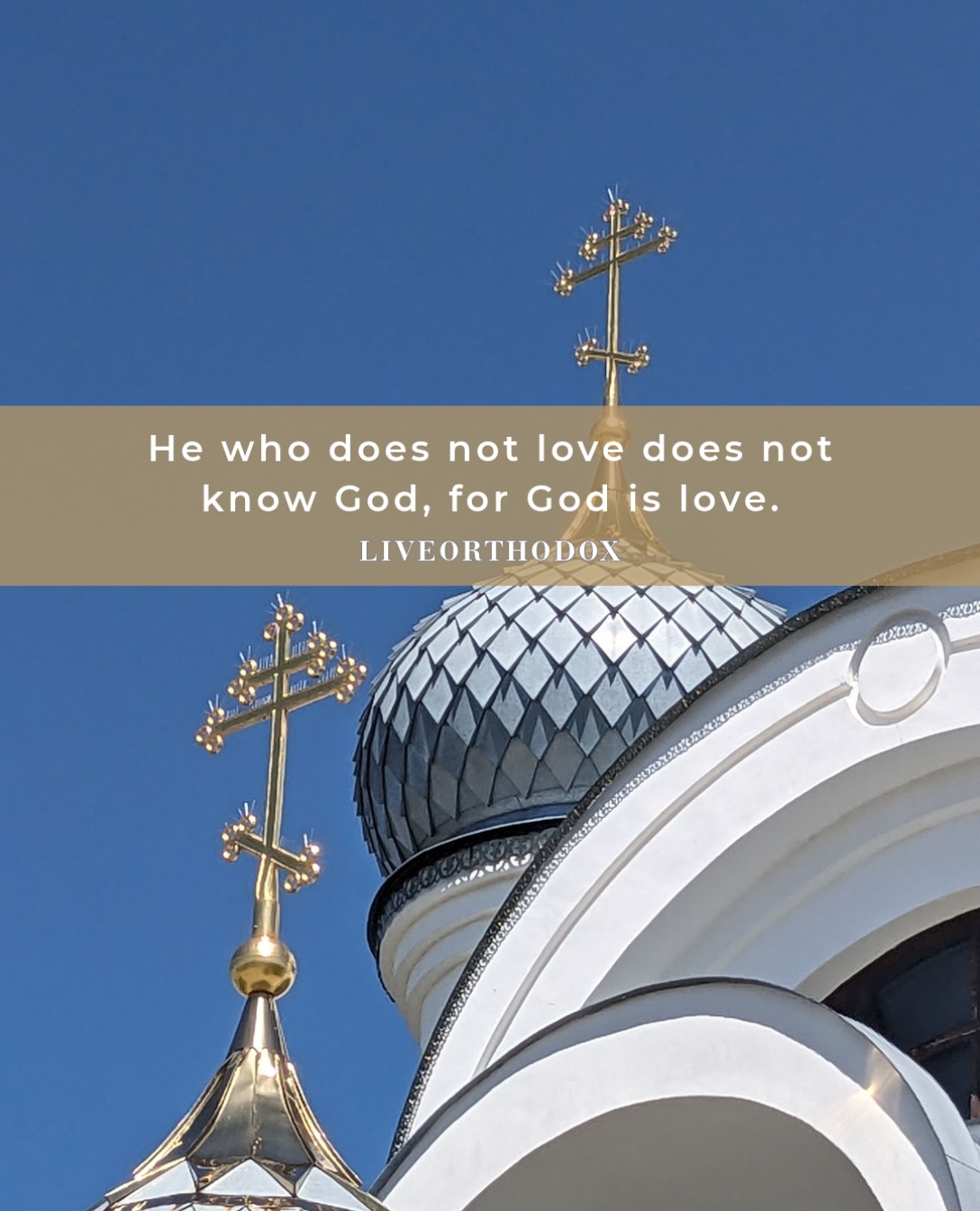
God Is Love: Reflection on 1 John 4:8

The post presents the verse "He who does not love does not know God, for God is love" from 1 John 4:8, followed by a reflection on its meaning. The author writes that love is not merely something we are called to give but a reflection of God's very nature. To know God is to strive to love as He loves, with patience, compassion, humility, and forgiveness. The reflection connects love for God with love shown to one another, and ends with a prayer…

The post presents the verse "He who does not love does not know God, for God is love" from 1 John 4:8, followed by a reflection on its meaning. The author writes that love is not merely something we are called to give but a reflection of God's very nature. To know God is to strive to love as He loves, with patience, compassion, humility, and forgiveness.

The reflection connects love for God with love shown to one another, and ends with a prayer that we may make His love known through words, actions, and hearts, concluding "Glory to God for all things."

  • The verse 1 John 4:8 states that God is love and those who do not love do not know Him
  • Love reflects God's nature, not just a command to follow
  • Knowing God means striving to love with patience, compassion, humility, and forgiveness
  • Love for God is reflected in love for one another
  • The post ends with a prayer to make God's love known through words, actions, and hearts
Read more
Prayer Orthodoxy ® Instagram

The Theotokos as Model and Mount Athos as Her Garden

The post presents the Orthodox tradition that honors the Most Holy Theotokos as the model of purity, obedience, and complete devotion to God for nearly two thousand years. According to ancient tradition, the Theotokos claimed Mount Athos as her inheritance, and it became known throughout the Orthodox world as the Garden of the Panagia. For more than a thousand years, monks have lived and prayed on the Holy Mountain beneath her protection,…

The post presents the Orthodox tradition that honors the Most Holy Theotokos as the model of purity, obedience, and complete devotion to God for nearly two thousand years. According to ancient tradition, the Theotokos claimed Mount Athos as her inheritance, and it became known throughout the Orthodox world as the Garden of the Panagia.

For more than a thousand years, monks have lived and prayed on the Holy Mountain beneath her protection, continually invoking her intercession with the prayer "Most Holy Theotokos, save us." The accompanying video summary adds that the Theotokos bore Christ physically, and all Christians are called to bear Him spiritually. It recounts the tradition that while traveling by sea, her ship was brought to Mount Athos; seeing the mountain, she asked her Son that it might become her inheritance, and Christ granted the request.

Since then, monks have offered their lives to Christ under the protection of His mother, and prayer has continued there from generation to generation.

Key moments

  1. The Theotokos is pure in heart, obedient to God, and wholly devoted to him.
  2. She was the first person to receive Jesus Christ.
  3. According to ancient tradition, the Theotokos was traveling by sea when her ship was brought to Mount Athos.
  4. Seeing the mountain, she asked her Son that it might become her inheritance.
  5. Christ granted her request and Mount Athos became known as the Garden of the Panagia.
  6. For more than a thousand years, monks have lived and prayed on the mountain, offering their lives to Christ beneath the protection of his mother.
  7. Prayer continues there from generation to generation.
Read more
Ancient Faith YouTube

Flowers as Icons: Beauty, St. Ephraim, and Ecotheology

Flowers as Icons: Beauty, St. Ephraim, and Ecotheology 36:23

Dr. Sarah Livick-Moses discusses how flowers in Orthodox worship function like icons and chant, drawing believers toward Christ through beauty as a transcendental value joined to goodness and truth. She traces floral imagery through Scripture, Song of Songs, Psalms, Proverbs, Job, noting the Fathers treated these passages as more than metaphor because creation itself teaches spiritual realities. St. Ephraim the Syrian's Hymns on Paradise present…

Dr. Sarah Livick-Moses discusses how flowers in Orthodox worship function like icons and chant, drawing believers toward Christ through beauty as a transcendental value joined to goodness and truth. She traces floral imagery through Scripture, Song of Songs, Psalms, Proverbs, Job, noting the Fathers treated these passages as more than metaphor because creation itself teaches spiritual realities.

St. Ephraim the Syrian's Hymns on Paradise present flowers as healing agents for the land cursed in Genesis, their fragrance pointing to eschatological hope. Hymn 11 describes paradise blossoms more numerous than stars; Hymn 10 portrays flowers with "pregnant wombs" mirroring lunar cycles of labor, birth, maturity, aging, and rejuvenation, a pattern that mirrors resurrection and the Theotokos as the unfading rose.

Tree imagery in icons, the oaks of Mamre behind Rublev's Trinity, the tree of Jesse at Theophany, the cross as tree of life, shows creation participating in trinitarian revelation before and beyond the incarnation. The conversation turns to Orthodox ecotheology: Patriarch Demetrius I instituted a day of prayer for creation on September 1, 1989, and Patriarch Bartholomew teaches that no neutral relationship to the environment exists.

Sustainable floral design becomes an asceticism of consumption, rejecting conveniences such as floral foam to honor creation, though economic barriers make fully ethical practice difficult. Monastic gardens and gardening itself embody contemplative practice uniting body, spirit, and creation. The goal of spiritual life is to become a flower that bears Christ.

Key moments

  1. 1:31 Flowers in Orthodox worship are not merely decorative but function like icons and chant to draw spiritual perception toward Christ through beauty as a transcendental value paired with goodness and truth.
  2. 4:06 Scriptural natural imagery in Song of Songs, Psalms, Proverbs, and Job is not only literary metaphor but valued by the Fathers because flowers and the natural world have something to teach us spiritually.
  3. 6:10 St. Ephraim the Syrian's Hymns on Paradise present flowers as images of abundance and fruitfulness that cultivate virtue, with cycles of growth, death, and rebirth mirroring the spiritual life.
  4. 8:14 Ephraim's Hymn 11 describes paradise blossoms more numerous than stars whose fragrance heals the land under the Genesis curse, connecting present experience to eschatological hope.
  5. 10:50 Ephraim's Hymn 10 portrays flowers with "pregnant wombs" mirroring lunar cycles of labor, birth, maturity, aging, and rejuvenation, pointing to resurrection and the Theotokos as unfading rose.
  6. 14:30 Tree imagery in icons, the oaks of Mamre behind Rublev's Trinity, the tree of Jesse at Theophany, the cross as tree of life, shows creation participating in trinitarian revelation before and beyond the incarnation.
  7. 19:44 Orthodox ecotheology has gained explicit attention in the last 50 years: Patriarch Demetrius I instituted a day of prayer for creation on September 1, 1989, and Patriarch Bartholomew teaches that humans either harm or steward creation with no neutral ground.
  8. 24:26 Sustainable floral design functions as an asceticism of consumption, rejecting conveniences like floral foam to honor creation, though economic barriers make fully ethical consumption difficult for many.

AOCC begins reconciliation process with GOARCH, seeking information

I saw a Facebook post from Father Don Purdam, press secretary of the American Orthodox Catholic Church, announcing that the AOCC has submitted documentation to the Greek Orthodox Archdiocese of America to formally begin a process of reconciliation, unity, and communion. Father Purdam expresses gratitude to Father Samuel Davis for his efforts in helping this process move forward, and asks for prayers for both churches as they pursue this…

I saw a Facebook post from Father Don Purdam, press secretary of the American Orthodox Catholic Church, announcing that the AOCC has submitted documentation to the Greek Orthodox Archdiocese of America to formally begin a process of reconciliation, unity, and communion. Father Purdam expresses gratitude to Father Samuel Davis for his efforts in helping this process move forward, and asks for prayers for both churches as they pursue this endeavor.

I had not heard of the AOCC before this, but the news seems significant. Does anyone have information about this reconciliation?

  • AOCC has submitted documentation to GOARCH to begin reconciliation
  • Father Samuel Davis is credited with helping the process
  • Request for prayers for both churches
  • Author unfamiliar with AOCC and seeks more information
  • Question about the nature and status of this reconciliation
14 opinions in the discussion They are a wild fringe group with interesting practices. It'll be interesting to see what happens and what it really means, because it would be less "reconcilnig" and more of them have to… Read the discussion

Vine from Saint Simeon's Grave Bears Fruit After 800 Years

A vine has grown from the grave of Saint Simeon the Myrrh-streaming at Hilandar Monastery on Mount Athos for more than eight hundred years. The saint promised the monks that a vine would spring from his empty grave as a comfort to the brotherhood. That vine continues to bear fruit today, eight centuries later. The grave is the original burial site of the saint before his relics were translated to another location. The promise was made to the…

A vine has grown from the grave of Saint Simeon the Myrrh-streaming at Hilandar Monastery on Mount Athos for more than eight hundred years. The saint promised the monks that a vine would spring from his empty grave as a comfort to the brotherhood. That vine continues to bear fruit today, eight centuries later.

The grave is the original burial site of the saint before his relics were translated to another location. The promise was made to the monastic community as an assurance of his ongoing spiritual presence. The vine has persisted through centuries of political upheaval, natural disasters, and the ordinary passage of time on the Holy Mountain.

Each generation of monks at Hilandar has cared for the plant, pruning it and harvesting its fruit. The grapes are collected annually and used by the brotherhood. The story of the vine is told to pilgrims who come to venerate the saint.

It is recorded in the monastery's chronicles and in the lives of Saint Simeon written by his contemporaries. The saint, who was the Serbian ruler Stefan Nemanja before becoming a monk, founded Hilandar with his son Saint Sava in the late twelfth century. His relics are known to stream myrrh, a phenomenon that continues alongside the growth of the vine.

The vine from the empty grave and the myrrh from the relics are both seen as signs of the saint's intercession. The video presenting this account concludes with the observation that what is planted by faith outlives centuries.

Key moments

  1. A vine grew from the grave of Saint Simeon the Myrrh-streaming at Hilandar Monastery on Mount Athos.
  2. The saint promised the monks that a vine would grow from his empty grave as comfort to the brotherhood.
  3. The vine still bears fruit after more than 800 years.
  4. What is planted by faith outlives centuries.
Read more

The Three Youths in the Fiery Furnace

King Nebuchadnezzar erects a golden image and commands all people to worship it, threatening anyone who refuses with a blazing furnace. Shadrach, Meshach, and Abednego refuse to bow to the idol because they remain faithful to God. The king, enraged, orders the furnace heated seven times hotter than usual and has the three bound men thrown into the fire. The intense heat kills the soldiers who cast them in, but the three men walk freely in the…

King Nebuchadnezzar erects a golden image and commands all people to worship it, threatening anyone who refuses with a blazing furnace. Shadrach, Meshach, and Abednego refuse to bow to the idol because they remain faithful to God. The king, enraged, orders the furnace heated seven times hotter than usual and has the three bound men thrown into the fire.

The intense heat kills the soldiers who cast them in, but the three men walk freely in the furnace unharmed. Nebuchadnezzar then sees a fourth figure in the fire, resembling a son of God, and he praises the God who delivers his faithful servants.

Key moments

  1. King Nebuchadnezzar sets up a golden image and orders all to worship it, with the penalty of being thrown into a blazing furnace for refusal.
  2. The three young men, Shadrach, Meshach, and Abednego, refuse to worship the idol because they remain faithful to God.
  3. The enraged king commands the furnace to be heated seven times hotter than usual and has the bound men thrown into the fire.
  4. The intense heat kills the soldiers who throw them in, but the three men walk freely in the fire unharmed.
  5. The king sees a fourth figure in the fire, resembling a son of God, and then praises the God who rescues his faithful servants.