WeOrthodox
EN UA

Orthodox posts, videos and discussions

We follow Orthodox channels, communities and blogs across the web, summarise every post and video, and highlight the conversations with real substance.

George Instagram discussion

Orthodox teaching on tattoos: no canon, historical exceptions, pastoral advice

The speaker explains that the Orthodox Church has no canon permitting tattoos and has historically discouraged them, citing the Old Testament command not to print marks upon the body and St. Paul's reminder that the body is a temple of the Holy Spirit. He notes two historical exceptions: Coptic Christians in Egypt have for centuries tattooed a small cross on the wrist to show they belong to Christ in times of persecution, and many Orthodox…

The speaker explains that the Orthodox Church has no canon permitting tattoos and has historically discouraged them, citing the Old Testament command not to print marks upon the body and St. Paul's reminder that the body is a temple of the Holy Spirit. He notes two historical exceptions: Coptic Christians in Egypt have for centuries tattooed a small cross on the wrist to show they belong to Christ in times of persecution, and many Orthodox pilgrims to Jerusalem received a small cross tattoo to remember their pilgrimage.

The speaker got all his tattoos in the years he was far from Christ; he honestly likes them but would not do it again because God gave him a healthy body and he changed it without asking. He has confessed about his tattoos and now they are part of his story. He will tell his children to think again and to talk to a priest before they put anything permanent on their body.

He emphasizes that tattoos do not stop anyone from being baptized, from confessing, or from receiving communion; God meets each person exactly where they are.

Key moments

  1. There is no canon in the Orthodox Church that says you can have a tattoo.
  2. Most of Christian history, the church discouraged tattoos, referencing the Old Testament command not to print marks upon you and St. Paul's reminder that the body is a temple of the Holy Spirit.
  3. Coptic Christians in Egypt have tattooed a small cross on their wrist for centuries to show they belong to Christ in times of persecution.
  4. Pilgrims to Jerusalem, including many Orthodox, got a small cross tattoo to remember their pilgrimage.
  5. The speaker got all his tattoos in the years he was far from Christ, honestly likes them, but would not do it again because God gave him a healthy body and he changed it without asking.
  6. He has confessed about his tattoos and now they are part of his story.
  7. He will tell his children to think again and to talk to a priest before they put anything permanent on their body.
  8. Tattoos do not stop you from being baptized, from confessing, or from receiving communion; God meets you exactly where you are.
19 opinions in the discussion I'm tattooed from head to toe, including my face. These topics are silly, unless you are heavily modified. When I first came to the Orthodox Church, nobody judged me. And I'm more tattooed… Read the discussion
Prayer Orthodoxy ® with Orthodox News ® Instagram

Archbishop Anastasios of Albania's final reflection: infinity is love

The image shares a final spiritual testament from Archbishop Anastasios of Albania (1929-2025), presented in both Albanian and Greek. The text reads as a personal meditation offered with deep gratitude for the years he lived on earth, which he describes as a voyage on a wondrous cosmic ship traveling toward infinity. He addresses the Holy Trinity directly, thanking God for revealing to him that infinity is love. The Albanian version is signed…

The image shares a final spiritual testament from Archbishop Anastasios of Albania (1929-2025), presented in both Albanian and Greek. The text reads as a personal meditation offered with deep gratitude for the years he lived on earth, which he describes as a voyage on a wondrous cosmic ship traveling toward infinity. He addresses the Holy Trinity directly, thanking God for revealing to him that infinity is love.

The Albanian version is signed "Kryepiskop i Lumur Anastas" (Archbishop of Albania Anastas), and the Greek version bears the title "Ο Μακαριστός Αρχιεπίσκοπος Αναστάσιος" (The Blessed Archbishop Anastasios), indicating this was released after his repose. The message is brief, poetic, and theological: it frames a long life of service as a journey through creation toward the endless, and identifies the nature of that endlessness not as abstract space or time but as divine love.

No further commentary, discussion, or biographical detail accompanies the image; the post consists solely of this bilingual farewell statement.

  • Final message from Archbishop Anastasios of Albania (1929-2025) released after his repose
  • Written in Albanian and Greek as a personal meditation on life and eternity
  • Describes earthly life as a voyage on a cosmic ship moving toward infinity
  • Thanks the Holy Trinity for revealing that infinity is love
  • Signed with his titles in both languages: Archbishop of Albania and Blessed Archbishop Anastasios
Read more
Mount Athos Legacy Facebook

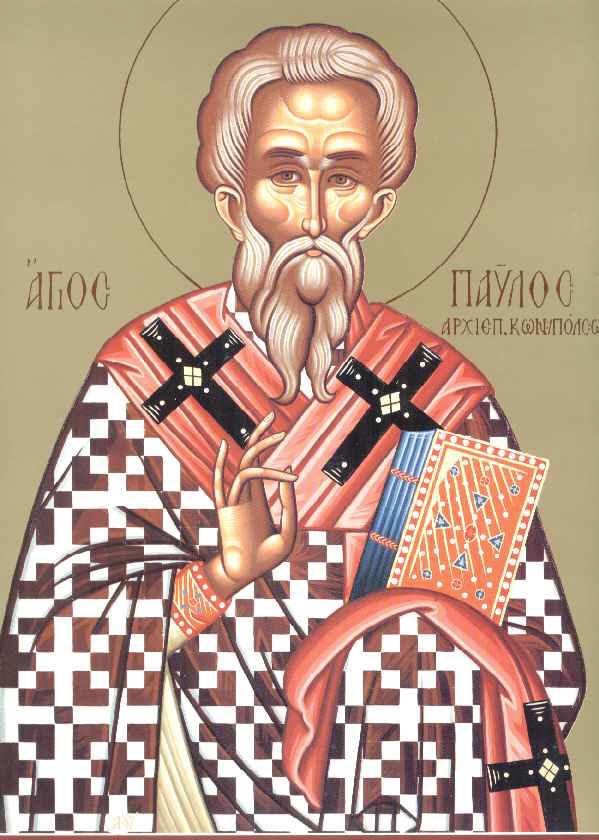
Saint Paul I the Confessor: Patriarch, exile, and martyrdom under Arian emperors

The post recounts the life of Saint Paul I, Archbishop of Constantinople, commemorated today by the Orthodox Church. Born in Thessaloniki in the early fourth century, he served as secretary to Patriarch Alexander. After Alexander's death in 377, Paul was elected patriarch. Emperor Constantius, an Arian supporter, deposed him and installed the Arian-minded Eusebius of Nicomedia. Paul fled to Rome where he found Saint Athanasius, also exiled by…

The post recounts the life of Saint Paul I, Archbishop of Constantinople, commemorated today by the Orthodox Church. Born in Thessaloniki in the early fourth century, he served as secretary to Patriarch Alexander. After Alexander's death in 377, Paul was elected patriarch. Emperor Constantius, an Arian supporter, deposed him and installed the Arian-minded Eusebius of Nicomedia.

Paul fled to Rome where he found Saint Athanasius, also exiled by Constantius. Emperor Constans, Constantius' brother, protested and secured their restoration. After Constans died, Constantius again deposed Paul and exiled him to Cucusus in Armenia.

While celebrating the Divine Liturgy, Arians attacked and strangled him with his own omophorion. The saint thus completed his life and gave his soul to the Lord.

  • Born in Thessaloniki early 4th century, secretary to Patriarch Alexander
  • Elected Patriarch of Constantinople in 377 after Alexander's death
  • Deposed by Arian Emperor Constantius, replaced by Eusebius of Nicomedia
  • Restored briefly after intervention by Emperor Constans
  • Exiled to Cucusus, Armenia, and martyred by Arians during Liturgy
St Anthony’s Youth SA ☦︎ with Dylan☦️ Instagram

Saint Porphyrios on Paradise on earth through love and grace

The post shares a quotation from Saint Porphyrios of Kavsokalyvia, a twentieth-century Greek elder canonized in 2013. The saint identifies four realities, love, the worship of God, longing for God, and union with God, and calls them Paradise on earth. He then states that when a person acquires the grace of God, everything becomes light and joyful, and everything is the blessing of God. The text presents these statements without additional commentary or discussion.

  • Love, worship, longing for God, and union with God are Paradise on earth
  • Acquiring the grace of God makes everything light and joyful
  • With grace, everything becomes the blessing of God
Read more
r/OrthodoxChristianity Reddit

Please pray for my critically ill wife

Dear brothers and sisters, I write this while sitting outside the hospital, my heart crushed by pain and fear. My wife has kidney failure and is on dialysis; I had fully prepared to donate my kidney to her so we could end this suffering together. We endured very harsh and difficult times at first, and we truly saw God's hand and His miracles firsthand in our lives, which changed everything for the better. But tragically and without warning, just…

Dear brothers and sisters, I write this while sitting outside the hospital, my heart crushed by pain and fear. My wife has kidney failure and is on dialysis; I had fully prepared to donate my kidney to her so we could end this suffering together. We endured very harsh and difficult times at first, and we truly saw God's hand and His miracles firsthand in our lives, which changed everything for the better.

But tragically and without warning, just a couple of days ago everything fell apart and her condition worsened terrifyingly. She is now in a severely critical state, literally slipping away as I watch helplessly. I have become so weak and completely drained; I honestly feel this trial is far too heavy, far beyond my strength.

I am dying every second because she is dying before my eyes. I ask for nothing in this world except your sincere prayers from the bottom of your hearts, that God may stretch out His healing hand and perform another miracle to save her. Please, do not withhold your prayers from us.

  • The author asks for sincere prayers for his critically ill wife.
  • His wife suffers from kidney failure and is on dialysis; he had prepared to donate his kidney.
  • They previously witnessed God's miracles during harsh times.
  • Her condition suddenly collapsed days ago and she is now severely critical.
  • He feels utterly weak and overwhelmed, and pleads for another miracle.
Read more

God became man so that man might become god by grace

The post presents the Orthodox teaching on theosis, the process by which humans participate in divine life through grace. The author explains that the Son of God assumed human nature without ceasing to be God, entering fallen humanity to heal and restore it through His death and resurrection. Christ did not come merely to forgive from a distance but to heal human nature and reunite humanity with God. What was separated through sin is reconciled…

The post presents the Orthodox teaching on theosis, the process by which humans participate in divine life through grace. The author explains that the Son of God assumed human nature without ceasing to be God, entering fallen humanity to heal and restore it through His death and resurrection. Christ did not come merely to forgive from a distance but to heal human nature and reunite humanity with God.

What was separated through sin is reconciled in Christ; what was wounded is healed; what was enslaved to death is brought into eternal life. The means of this union are Baptism, the Eucharist, repentance, prayer, and the life of the Holy Spirit. The author cites 2 Peter 1:4 on becoming "partakers of the divine nature" and clarifies that theosis does not mean becoming God by essence, God alone is God by nature, but by grace we share in His life and become conformed to Christ.

Salvation is not simply escaping punishment but healing, restoration, union with God, and eternal life in Christ.

The accompanying video summary argues for the necessity of Christ's full divinity. If the Son of God were a creature rather than truly God, humanity would remain mortal and never achieve true union with God. A creature cannot unite other creatures to God because it would itself require union with God, and no part of creation can save creation since it would itself need salvation.

Therefore, God sends His own Son, and the Son of God becomes the Son of man by taking created flesh. Since all were under the sentence of death, He, being distinct from all, offered His own body to death on behalf of all. The discussion turns on the theological logic that only the uncreated Word can mediate between Creator and creation, and that the Incarnation is the necessary means by which mortal humanity is joined to immortal life.

Key moments

  1. If the Son of God were a creature and not truly God, man would have remained mortal, never truly being united to God.
  2. A mere creature could not unite other creatures to God, since it would itself need to be united to him.
  3. Nor could one part of creation be the salvation of creation, for it would itself have needed salvation.
  4. Therefore, God sends his own son, and the son of God becomes the son of man, taking created flesh.
  5. Since all were under the sentence of death, he, being other than them all, offered his own body to death on behalf of all.
Read more
Fr.TEDTalks Instagram

The ego craves validation; humility finds contentment in God alone

The speaker explains that rejection and betrayal wound us because they strike the ego, which hungers for love, affirmation, and validation. This same drive pushes people to post images online and chase likes from strangers and even bots. The remedy is humility, which tames the ego and frees a person from the need for external approval. Humility means becoming comfortable in one's own skin, accepting both good and bad qualities while alone. The…

The speaker explains that rejection and betrayal wound us because they strike the ego, which hungers for love, affirmation, and validation. This same drive pushes people to post images online and chase likes from strangers and even bots. The remedy is humility, which tames the ego and frees a person from the need for external approval.

Humility means becoming comfortable in one's own skin, accepting both good and bad qualities while alone. The speaker argues that without this inner contentment in solitude, a person will never find lasting contentment with another human being. The teaching connects the modern hunger for digital affirmation to the ancient spiritual struggle against vainglory and points to self-knowledge and reliance on God as the path to freedom.

Key moments

  1. Rejection and betrayal suck because they prick the ego, which wants to be loved and affirmed.
  2. People post pictures online and chase likes from strangers and bots because the ego craves validation.
  3. The antithesis to ego is humility, taming the ego and not chasing external affirmation.
  4. A person must be comfortable in their own skin, content with their good and bad qualities while alone.
  5. If someone is not content with who they are alone, they will never be content with another person in their life.
Read more
Robel࿇🕊️ Instagram

Virgin Mary appears on Coptic church dome in Zeitoun, 1968

On the evening of April 2, 1968, a woman in white appeared on the dome of a Coptic Orthodox church in Zeitoun, Egypt. Bystanders first called out to warn her she might fall, but they soon recognized her as the Virgin Mary, the Mother of God. The apparitions continued for nearly three years, drawing immense crowds from all walks of life. Many witnesses reported seeing the Virgin Mary bow before the cross atop the church and extend her hands in…

On the evening of April 2, 1968, a woman in white appeared on the dome of a Coptic Orthodox church in Zeitoun, Egypt. Bystanders first called out to warn her she might fall, but they soon recognized her as the Virgin Mary, the Mother of God. The apparitions continued for nearly three years, drawing immense crowds from all walks of life.

Many witnesses reported seeing the Virgin Mary bow before the cross atop the church and extend her hands in blessing over the multitudes. Countless miraculous healings were documented, including recoveries from blindness, paralysis, cancer, and other serious illnesses. The events recalled the Holy Family's flight into Egypt and their refuge there, occurring at a time when the Egyptian people faced great political and social turmoil.

The Coptic Orthodox Church officially recognized the apparitions, and the site remains a place of pilgrimage.

Key moments

  1. On April 2, 1968, people saw a woman in white on the church dome and called out to warn her she might fall.
  2. They recognized her as the Virgin Mary, the Mother of God.
  3. The appearances continued for nearly three years and drew immense crowds from all walks of life.
  4. Countless miraculous healings were reported, including recoveries from blindness, paralysis, cancer, and other illnesses.
  5. During the appearances, the Virgin Mary was seen bowing before the cross of her son and blessing the multitudes.
  6. The apparitions echoed the Holy Family's refuge in Egypt, occurring at a time when her people needed her most.
Read more
Orthodox Health Instagram

Potatoes defended as top-tier fasting food in Orthodox nutrition discussion

The post argues that potatoes have been unfairly maligned due to unhealthy preparation methods like deep-frying, and presents them as an excellent carbohydrate source for Orthodox fasting periods. The author notes that during fasts, practical considerations such as energy availability, digestibility, micronutrient content, affordability, and versatility matter more than dietary trends. Potatoes provide potassium, vitamin C, and vitamin B6, and…

The post argues that potatoes have been unfairly maligned due to unhealthy preparation methods like deep-frying, and presents them as an excellent carbohydrate source for Orthodox fasting periods. The author notes that during fasts, practical considerations such as energy availability, digestibility, micronutrient content, affordability, and versatility matter more than dietary trends.

Potatoes provide potassium, vitamin C, and vitamin B6, and can be prepared in numerous ways without requiring expensive imported superfoods. The distinction is made between the potato itself and industrial preparation with repeatedly heated vegetable oils. The post references Episode 85 of the Orthodox Health Podcast, which offers a "Fasting Carb Tier List" placing potatoes in the top tier.

The underlying point is that fasting aims to unite oneself to Christ, and ordinary foods like potatoes can support this spiritual discipline effectively. The discussion turns on the difference between a whole food and its industrial processing, and on the criteria that should guide food choices during fasting periods: not ideological purity but nutritional adequacy, digestive ease, cost, and practical sustainability.

The author suggests that preoccupation with labeling foods as good or bad has obscured the more relevant question of what a food actually provides for the body engaged in the ascetic effort of the fast.

Key moments

  1. Potatoes are placed in the S tier as a carbohydrate source for fasting.
  2. The speaker distinguishes between the potato itself and what is done to it, such as cooking in coconut oil versus industrial fryer oils.
  3. Potatoes are an excellent source of potassium and a respectable source of vitamin C and vitamin B6.
  4. Potatoes are affordable and versatile, allowing a dozen preparation methods to build substantial fasting meals.
  5. No exotic superfood shipped halfway around the world is needed; the potato alone suffices.
Read more
George Instagram discussion

Only God knows every version of you

The speaker observes that no human relationship spans a person's entire life. Parents do not see old age, partners never knew childhood, children never remember youth; each person knows only a fragment. Only two are present for every version of you: yourself and God. You are there because you have no choice; God is there because He chose to be. He was present with the child who cried alone, the teenager who smiled but felt empty, the adult lying…

The speaker observes that no human relationship spans a person's entire life. Parents do not see old age, partners never knew childhood, children never remember youth; each person knows only a fragment. Only two are present for every version of you: yourself and God.

You are there because you have no choice; God is there because He chose to be. He was present with the child who cried alone, the teenager who smiled but felt empty, the adult lying awake with worry, and He knew you even before that, as Scripture says: before I formed you in the womb, I knew you. Yet God is often the one we live for last. We give our time to everyone and everything else, and to Him we give whatever remains at day's end.

We forget Him when things go well and run to Him only when they fall apart. But He never left, not for a single day. The speaker urges talking to God and opening your heart to Him, because He is the only one who has been with you from the very beginning and the only one who will be with you until the very end.

Key moments

  1. Your parents won't see you grow old, your partner never knew you as a child, your children will never remember you young; everyone in your life will only know a piece of you, and nobody will ever know all of you.
  2. Only two will be there for every version of you: you and God.
  3. You are there because you have no choice; He is there because He chose to be.
  4. He was there with the little child who cried alone in his room when nobody was looking, with the teenager who smiled in front of everyone but felt empty inside, and with the adult who lies awake at night worrying about tomorrow, and He knew you even before all of that.
  5. As Scripture says, before I formed you in the womb, I knew you.
  6. Yet He is the one we live for last: we give all our time to everyone and everything else, and to Him we give whatever is left at the end of the day.
  7. We forget Him when things are good and only run to Him when things fall apart.
  8. But He never left you, not for one single day, so talk to Him and open your heart to Him because He is the only one who has been with you from the very beginning and the only one who will be with you until the very end.
2 opinions in the discussion That's exactly why I quietly keep repeating the same seven words again and again: "Lord Jesus Christ, have mercy on me." Read the discussion
Mount Athos Legacy Facebook

St. Peter counts Paradise's guests and finds the Virgin Mary bringing more

A story from Mount Athos recounts that each night St. Peter closed the gates of Paradise and counted how many had entered, writing their names beside those already inside. The next morning he counted again and discovered three more people than the ten he had recorded the previous evening. Puzzled, he went to Christ and asked for an explanation. Christ told him to keep watch. That night St. Peter obeyed and at dawn he had the answer. He reported…

A story from Mount Athos recounts that each night St. Peter closed the gates of Paradise and counted how many had entered, writing their names beside those already inside. The next morning he counted again and discovered three more people than the ten he had recorded the previous evening. Puzzled, he went to Christ and asked for an explanation. Christ told him to keep watch.

That night St. Peter obeyed and at dawn he had the answer. He reported to the Lord that in the evening, when Paradise was closed, the Virgin Mary climbed the walls and brought people in from there. The story illustrates the intercessory power of the Theotokos.

  • St. Peter nightly counts those entering Paradise and records their names.
  • He finds three more people in the morning than he counted the night before.
  • Christ instructs him to keep watch to discover the cause.
  • St. Peter sees the Virgin Mary climb the walls and bring people into Paradise.
  • The account is presented as a traditional story from Mount Athos.
radioimlemesou Instagram

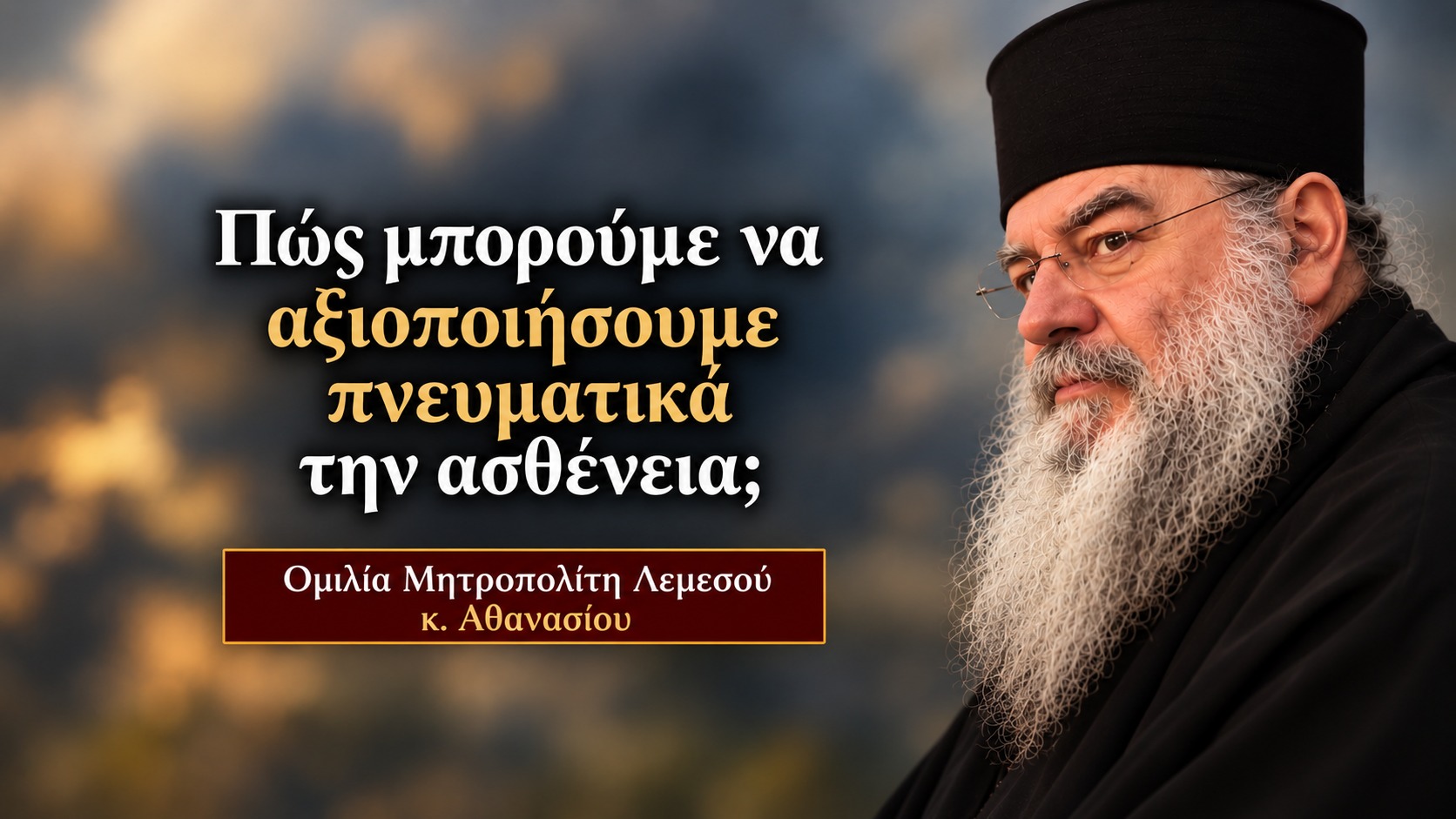
Metropolitan Athanasios of Limassol on illness, death, and spiritual benefit from suffering

Metropolitan Athanasios of Limassol continues a previous homily by addressing illness, pain, and the mystery of death. He states that no human being can avoid death, which is an inevitable reality of earthly life. However, he explains that death is not the end of human existence because Christ conquers death by His own death. Through His sacrifice and Resurrection, Christ abolishes death and opens the prospect of eternal life to humanity. The…

Metropolitan Athanasios of Limassol continues a previous homily by addressing illness, pain, and the mystery of death. He states that no human being can avoid death, which is an inevitable reality of earthly life. However, he explains that death is not the end of human existence because Christ conquers death by His own death.

Through His sacrifice and Resurrection, Christ abolishes death and opens the prospect of eternal life to humanity. The Metropolitan then poses a substantive spiritual question: how can we benefit spiritually from illness? He explains that difficulties, pain, and trials can, when faced with faith and prayer, be transformed into opportunities for spiritual cultivation and blessing.

He also refers to the prayer of people who are tested by serious difficulties, paralleling their spiritual struggle with the martyrdoms of the Saints. He emphasizes that only divine Grace can truly support a person and give the strength to endure the trials of life.

  • Death is inevitable but not the end because Christ conquered death by His own death
  • Christ's sacrifice and Resurrection abolish death and open eternal life
  • Illness and trials can become spiritual opportunities when met with faith and prayer
  • The spiritual struggle of the suffering is paralleled with the martyrdoms of the Saints
  • Only divine Grace gives the strength to endure life's trials

Jesus' Divinity and the Exact-Word Fallacy

The speaker addresses the claim that Jesus never said he was God, identifying it as an exact-word fallacy. In the Synoptic Gospels, Matthew, Mark, and Luke, Jesus does not utter the precise sentence "I am God." However, he refers to himself as the Son of Man over eighty times, a title the speaker connects to his identity. In the Gospel of John, the evidence becomes more explicit: Jesus states that he existed before Abraham, the apostle Thomas…

The speaker addresses the claim that Jesus never said he was God, identifying it as an exact-word fallacy. In the Synoptic Gospels, Matthew, Mark, and Luke, Jesus does not utter the precise sentence "I am God." However, he refers to himself as the Son of Man over eighty times, a title the speaker connects to his identity.

In the Gospel of John, the evidence becomes more explicit: Jesus states that he existed before Abraham, the apostle Thomas directly calls him God, and Jesus teaches that the Son is to be honored just as the Father is honored. The speaker concludes that the truth of Scripture is found in what the text teaches overall, not in whether a particular form of words appears.

Key moments

  1. The argument that Jesus never said he was God is based on an exact-word fallacy.
  2. In Matthew, Mark, and Luke Jesus never says the exact words "I am God."
  3. Jesus calls himself the Son of Man over eighty times, which the speaker says refers to humanity, not divinity.
  4. In John, Jesus declares that he existed before Abraham.
  5. Thomas addresses Jesus as God, and Jesus teaches that the Son deserves the same honor as the Father.
  6. The truth of Scripture is determined by what the text teaches, not by the words one demands.
5 opinions in the discussion In the beginning there was the Word and the Word was with God and the Word was God. Read the discussion
Kyle YouTube

Orthodox Saints: Theosis, Not Infallibility

Orthodox Saints: Theosis, Not Infallibility 12:27

The speaker explains that Christian salvation is not a theology exam requiring perfect doctrinal precision but theosis, union with God through repentance, faith, prayer, sacramental life, love, struggle, and God's transforming grace. Sanctity in Orthodoxy means piety, not infallibility; the Church recognizes those whom God has already glorified, and canonization does not make saints but acknowledges God's work in them. The process begins with…

The speaker explains that Christian salvation is not a theology exam requiring perfect doctrinal precision but theosis, union with God through repentance, faith, prayer, sacramental life, love, struggle, and God's transforming grace. Sanctity in Orthodoxy means piety, not infallibility; the Church recognizes those whom God has already glorified, and canonization does not make saints but acknowledges God's work in them.

The process begins with theosis in a person's life, God's glorification through miracles and veneration, and the Church's formal recognition expanding from local to universal acceptance. Saints can hold theological errors or have been terrible sinners, yet their holiness demonstrates God's power to transform. Theosis does not entail theological infallibility. The speaker distinguishes between being mistaken through ignorance and being a heretic who consciously rejects correction.

Examples include St. Gregory of Nyssa's questions about apocatastasis and St. Augustine's theological positions not adopted by Orthodoxy, yet both submitted to the Church and are recognized as saints. Canonization is an administrative recognition that God has glorified a servant, not a declaration of theological infallibility; veneration of saints is not worship, so even erroneous veneration would not constitute idolatry.

Orthodox epistemology operates in three layers: an undeniable center of apostolic faith (Trinity, ecumenical councils, incarnation, Eucharist, baptism, Church, resurrection), a middle ring of common teaching widely held but not all of dogmatic status, and an outer ring of local calendars, specific saints, fasting customs, liturgical uses, and historical canonical variations.

Universal reception over time is the key criterion, not the pronouncement of any single bishop, saint, or local council. The liturgy serves as the best catechism, showing the Trinity, repentance, and everything about God; saints are witnesses, not individually infallible authorities, and even conciliar citations must be situated within the broader mind and reception of the Church.

The Protestant binary model of authority fails to account for church history, and true understanding requires entering the Orthodox Church and experiencing its liturgical life.

Key moments

  1. 0:00 Salvation is not a theology exam; theosis is union with God in Christ through repentance, faith, prayer, sacramental life, love, struggle, perseverance, suffering, and God's grace that transforms the whole person.
  2. 0:31 The Church does not make saints but recognizes those whom God has already glorified; the process begins with theosis in a person's life, God's glorification through miracles and veneration, and the Church's formal recognition expanding from local to universal acceptance.
  3. 2:06 Canonization is an administrative recognition that God has glorified a servant, not a declaration of theological infallibility; veneration of saints is not worship, so even erroneous veneration would not constitute idolatry.
  4. 3:43 Sanctity means piety, not infallibility; many saints were terrible sinners, and their holiness shows God's power to transform the worst sinner into the greatest saint, salvation would be impossible if it required perfect theology.
  5. 4:47 There is a crucial difference between being mistaken through ignorance, confusion, or poor expression and being a heretic who consciously and obstinately rejects correction like Arius and Nestorius; saints were human and could misunderstand, make poor judgments, and disagree with each other.
  6. 5:50 Theosis does not entail theological infallibility: St. Gregory of Nyssa's writings raised questions about apocatastasis, and St. Augustine held theological positions Orthodoxy does not adopt, yet both submitted to the Church and are recognized as saints.
  7. 6:53 Orthodox epistemology has three layers: the center is the apostolic faith (Trinity, ecumenical councils, incarnation, Eucharist, baptism, Church, resurrection); the middle is common teaching widely held but not all of dogmatic status; the outer ring is local calendars, specific saints, fasting customs, liturgical uses, and historical canonical variations.
  8. 10:34 The liturgy is the best catechism and shows us the Trinity, repentance, and everything about God; saints are witnesses, not individually infallible authorities, and even conciliar citations must be situated within the broader mind and reception of the Church.
Read more
Prayer Orthodoxy ® with The National Herald Instagram

Hellenic College Holy Cross Enrollment Reaches 486 with $1M Donation

At the Archdiocesan Council meeting on October 16 in New York, Interim President Fr. Michael Lambakis reported that combined enrollment at Hellenic College and Holy Cross Greek Orthodox School of Theology now stands at 486 students, including both online and in-person learners, with 114 seminarians. He also announced an anonymous donation of $1 million made in memory of Fr. Savas Constantinou, designated specifically for renovation of the Pappas…

At the Archdiocesan Council meeting on October 16 in New York, Interim President Fr. Michael Lambakis reported that combined enrollment at Hellenic College and Holy Cross Greek Orthodox School of Theology now stands at 486 students, including both online and in-person learners, with 114 seminarians. He also announced an anonymous donation of $1 million made in memory of Fr. Savas Constantinou, designated specifically for renovation of the Pappas Gymnasium on the Boston campus.

Lambakis described the institution's finances as moving in "a very positive direction." In a separate update, Manny Kratsios, a member of the Board of Trustees of St. Michael's Home, said construction of the new 109,000-square-foot facility in Uniondale, New York, is 80 percent complete, with an anticipated opening by the end of 2027.

  • Combined enrollment at Hellenic College and Holy Cross reaches 486 students, including 114 seminarians.
  • Anonymous $1 million donation announced in memory of Fr. Savas Constantinou for Pappas Gymnasium renovation.
  • Interim President Fr. Michael Lambakis reports finances moving in a very positive direction.
  • St. Michael's Home new facility in Uniondale, NY, 109,000 sq ft, 80% complete, expected opening end of 2027.
  • Updates presented at Archdiocesan Council meeting on October 16 in New York.
Read more

Is spiritual dryness and life turmoil normal after starting catechism?

I'm an Orthodox catechumen, and since I started this process, my life feels like it has stalled or gone wrong. I lost my job, I feel stuck, and a heavy hopelessness has come over me. My prayer life has suffered badly; I'm not praying like I used to, and I feel cut off. My catechism studies have also stopped because I can't focus or take anything in. I'm not just venting; I want to ask those further along: is this kind of turbulence, dryness, or…

I'm an Orthodox catechumen, and since I started this process, my life feels like it has stalled or gone wrong.

I lost my job, I feel stuck, and a heavy hopelessness has come over me. My prayer life has suffered badly; I'm not praying like I used to, and I feel cut off. My catechism studies have also stopped because I can't focus or take anything in.

I'm not just venting; I want to ask those further along: is this kind of turbulence, dryness, or resistance normal when entering the Church? How do you keep going when you're too spiritually and mentally exhausted to even pray or study?

Any advice, perspective, or prayers would be greatly appreciated. Thank you.

  • Life has stalled since beginning catechism (unemployment, hopelessness)
  • Prayer life has suffered, feeling disconnected
  • Catechism studies have stopped due to inability to focus
  • Asks if turbulence, dryness, or resistance is normal when entering the Church
  • Asks how to push through when too exhausted to pray or study
12 opinions in the discussion Doesn't surprise me at all that this is happening. The demons hate that you're joining the Church, so they'll do whatever it takes to make things look hopeless. I'd take this as a chance to… Read the discussion
George Instagram discussion

How to Set Up an Orthodox Icon Corner Properly

The speaker observes that most Orthodox homes have icons but arrange them incorrectly, scattering them as decoration next to televisions, between family photos, or with saints placed above Christ. He explains the proper way to create an icon corner: choose one place, preferably on the east wall because Orthodox Christians pray facing east. Place Christ on the right and the Theotokos on the left, matching the arrangement of the iconostasis in…

The speaker observes that most Orthodox homes have icons but arrange them incorrectly, scattering them as decoration next to televisions, between family photos, or with saints placed above Christ. He explains the proper way to create an icon corner: choose one place, preferably on the east wall because Orthodox Christians pray facing east.

Place Christ on the right and the Theotokos on the left, matching the arrangement of the iconostasis in church. Favorite saints may surround them but never be positioned above Christ or the Theotokos. Add a vigil lamp or candle and keep worldly items away, no television, photographs, or decorations.

When an icon becomes damaged, it should never be thrown away; instead, bring it to a priest or burn it respectfully and bury the ashes. The Church calls the home a little church, and the icon corner serves as its altar where the family stands together before God every morning and evening.

Key moments

  1. Most Orthodox homes have icons but set them up wrong, scattering them around the house like decoration next to the TV, between family photos, or with a favorite saint hanging above Christ.
  2. When an icon gets old or damaged, it often ends up in the trash, not because people don't care but because nobody showed them how to do it properly.
  3. Choose one place in your home, on the east wall if you can, because we pray facing east.
  4. Put Christ on the right and the Theotokos on the left, exactly like the iconostasis in church.
  5. Place your favorite saints around them, but never above the Christ or the Theotokos.
  6. Add a vigil lamp or a candle and keep everything worldly away from it, no TV, no photos, no decorations, just the icons.
  7. If an icon gets damaged, never throw it away; bring it to your priest or burn it respectfully and bury the ashes.
  8. The church calls our home a little church, and that corner is its altar where your family stands together in front of God every morning and every evening.
11 opinions in the discussion New converts but this is ours. Small for now. Read the discussion

Biblical Repentance as Transformation of Mind, Not Guilt

The video explains that the biblical Greek word metanoia means literally transformation of the mind, a radical change of perspective and a 180-degree turn in how one sees God, self, and the world. It is not paralyzing guilt or self-condemnation. In the early Church, repentance was not a judicial condemnation to inflict shame but the gateway to life and light. John the Baptist began his preaching in the wilderness with the word metanoeite,…

The video explains that the biblical Greek word metanoia means literally transformation of the mind, a radical change of perspective and a 180-degree turn in how one sees God, self, and the world. It is not paralyzing guilt or self-condemnation. In the early Church, repentance was not a judicial condemnation to inflict shame but the gateway to life and light.

John the Baptist began his preaching in the wilderness with the word metanoeite, meaning transform your mind because the kingdom of heaven has drawn near. Worldly repentance locks a person in the past and produces despair; Christian metanoia opens toward the future and fills with hope. St. John Chrysostom taught in the fourth century that repentance is a medicine that destroys sin, a heavenly gift, a wonderful force that overcomes the severity of the law.

St. John Climacus wrote that metanoia is reconciliation with the Lord through the practice of virtues opposite to sins, purification of the conscience, and firm hope of salvation. When a person experiences true metanoia, they do not stay wallowing in the mud of their errors; they recognize where they have strayed, lift their gaze to Christ, and let the Holy Spirit transform their mind to begin living with a renewed vision.

Key moments

  1. Metanoia in the New Testament language means literally transformation of the mind, a radical change of perspective and a 180-degree turn in how one sees God, self, and the world.
  2. In the early Church, repentance was not a judicial condemnation to inflict shame but the gateway to life and light.
  3. John the Baptist began his preaching in the wilderness with the word metanoeite, meaning transform your mind because the kingdom of heaven has drawn near.
  4. Worldly repentance locks you in the past and produces despair; Christian metanoia opens you toward the future and fills you with hope.
  5. St. John Chrysostom taught in the fourth century that repentance is a medicine that destroys sin, a heavenly gift, a wonderful force that overcomes the severity of the law.
  6. St. John Climacus wrote that metanoia is reconciliation with the Lord through the practice of virtues opposite to sins, purification of the conscience, and firm hope of salvation.
  7. When you experience true metanoia you do not stay wallowing in the mud of your errors; you recognize where you have strayed, lift your gaze to Christ, and let the Holy Spirit transform your mind to begin living with a renewed vision.
Read more

St. Nektarios: fasting is a Church commandment pleasing to God

The post presents a teaching attributed to St. Nektarios the Wonderworker on fasting. It states that fasting is a commandment from the Church that obligates a person to observe it on specific days. The teaching also draws on the Savior's own teaching regarding fasting to conclude that fasting is pleasing to God.

  • Fasting is a Church commandment obligating observance on specific days
  • Christ's teaching shows fasting is pleasing to God
  • Attributed to St. Nektarios the Wonderworker

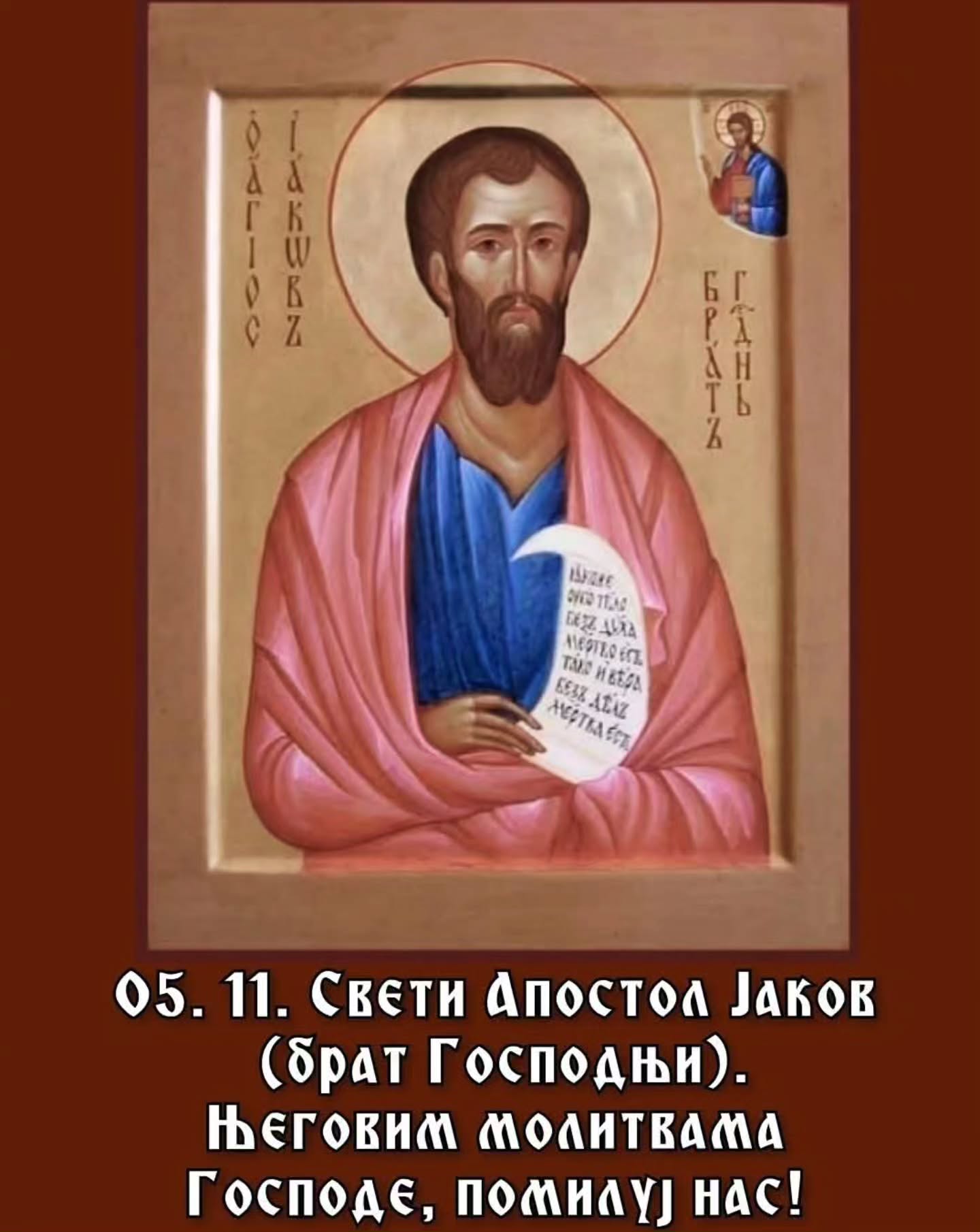
Holy Apostle James, Brother of the Lord: His Life and Martyrdom

The post gives the life of St James, called the Brother of the Lord because he was the son of righteous Joseph, the betrothed of the Most Holy Theotokos. When Joseph was dying he divided his property among his sons and wanted to leave a share to Jesus; his other sons objected, not considering Jesus their brother, but James loved Jesus and declared he would take Him on his share. James was devoted to Jesus from the beginning, and tradition says…

The post gives the life of St James, called the Brother of the Lord because he was the son of righteous Joseph, the betrothed of the Most Holy Theotokos. When Joseph was dying he divided his property among his sons and wanted to leave a share to Jesus; his other sons objected, not considering Jesus their brother, but James loved Jesus and declared he would take Him on his share.

James was devoted to Jesus from the beginning, and tradition says he went to Egypt with the Most Holy Virgin and Joseph when Herod sought to kill the newborn King. After hearing Christ's teaching he lived by it: he ate neither fat nor oil all his life, only bread and water, remained a virgin, and kept vigil and prayed at night. The Lord numbered him among the seventy apostles, and after His Resurrection appeared to him especially, as St Paul testifies (1 Cor. 15).

James was bishop in Jerusalem for thirty years and zealously governed the Church of God. At the Lord's appearing he composed the first liturgy, later shortened by St Basil and St John Chrysostom because it was too long. He converted many Jews and Greeks, and even unbelieving Jews admired his righteousness, calling him James the Just.

When Ananias became high priest, he and other Jewish leaders resolved to kill James as a preacher of Christ. At Pascha, with many people gathered in Jerusalem, the elders told him to climb to the temple roof and speak against Christ. He climbed and instead preached Christ as the Son of God and true Messiah, His Resurrection and eternal glory in heaven.

Furious priests and elders threw him from the roof; he fell and was badly injured but still alive. A man then struck his head with such force that his brains came out, and he died a martyr's death at the age of sixty-three.

  • James was called the Brother of the Lord because he was the son of righteous Joseph, who wanted to leave Jesus a share of his inheritance; James declared he would take Jesus on his own share.
  • By tradition he went to Egypt with the Most Holy Virgin and Joseph during the flight from Herod.
  • He ate only bread and water, remained a virgin, kept night vigils, was among the seventy apostles, and the risen Christ appeared to him especially (1 Cor. 15).
  • As bishop of Jerusalem for thirty years he composed the first liturgy, which St Basil and St John Chrysostom later shortened.
  • On Pascha he preached Christ from the temple roof instead of denying Him, was thrown down and struck on the head, dying a martyr at age sixty-three.
Read more