WeOrthodox
EN UA

Orthodox posts, videos and discussions

We follow Orthodox channels, communities and blogs across the web, summarise every post and video, and highlight the conversations with real substance.

Orthodox Health Instagram

Your Doctor Has a Theology: Healthcare's Hidden Assumptions

The post promotes Episode 86 of the Orthodox Health Podcast, "The Roots of Healthcare: Why Your Doctor Has a Theology," featuring Dr. Zachary Porcu. The episode argues that healthcare categories, healthy, normal, disordered, progress, better, are not neutral. Each assumes a view of what a human being is, what human life is for, and what counts as flourishing. Dr. Porcu contends that science is downstream from a religious worldview because there…

The post promotes Episode 86 of the Orthodox Health Podcast, "The Roots of Healthcare: Why Your Doctor Has a Theology," featuring Dr. Zachary Porcu. The episode argues that healthcare categories, healthy, normal, disordered, progress, better, are not neutral. Each assumes a view of what a human being is, what human life is for, and what counts as flourishing.

Dr. Porcu contends that science is downstream from a religious worldview because there is no human control group outside culture, history, genetics, geography, and worldview. Every person inhabits a story that shapes what they fear, pursue, and expect from healthcare. If comfort becomes the highest good, suffering becomes meaningless.

If technological control becomes salvation, the tower of Babel simply puts on a lab coat. Christianity offers a different account: health is a real good but not the highest good. Illness can wake us up. Prayer, Holy Unction, holy water, and the Eucharist are not techniques of control but part of life in Christ.

The episode asks the underlying question: "What are you getting healthy for?" It compares artificial theosis through technology to Babel, noting that such progress disconnects one from reality. Science can describe how the body works but cannot answer what health is for, what counts as progress, what should be fixed, or what kind of life is worth preserving.

Those questions require a theological anthropology. Therefore, every doctor operates with a theology, whether acknowledged or not.

Key moments

  1. Religion is the top-level view of the world that informs smaller domains like science and culture.
  2. A doctor recommends carpal tunnel surgery while admitting the patient does not have carpal tunnel, showing that medical recommendations assume a definition of health and progress.
  3. Artificial theosis through technology is essentially the tower of Babel.
  4. The more progress achieved through artificial theosis, the less connected one is to the arcade and the less real one becomes.
  5. Science can explain how the body works but cannot determine what health is for, what counts as progress, what should be fixed, or what life is worth preserving.
  6. Answering those questions requires a view of what a human being is, a theological anthropology.
  7. Therefore, your doctor has a theology.

Saint Gregory Palamas: Defender of Hesychasm and Theosis

The post commemorates Saint Gregory Palamas on his feast day, November 14. Born in Constantinople in 1296, he received an imperial education but left court life for monasticism on Mount Athos, where he practiced Hesychasm and the Jesus Prayer. In the 14th century he defended the Orthodox teaching that God's essence is inaccessible while His energies are uncreated and communicable to humanity. This controversy arose against Barlaam of Calabria,…

The post commemorates Saint Gregory Palamas on his feast day, November 14. Born in Constantinople in 1296, he received an imperial education but left court life for monasticism on Mount Athos, where he practiced Hesychasm and the Jesus Prayer. In the 14th century he defended the Orthodox teaching that God's essence is inaccessible while His energies are uncreated and communicable to humanity.

This controversy arose against Barlaam of Calabria, who challenged the hesychast claim that the light of Christ's Transfiguration on Mount Tabor is divine and uncreated. Palamas articulated that through grace human beings truly participate in God's life, the doctrine of theosis, without becoming God by essence. He suffered persecution and imprisonment for this teaching. In 1347 he became Archbishop of Thessalonica, and in 1351 a council solemnly affirmed his theology.
He died in 1359 and is also commemorated on the Second Sunday of Great Lent. The post includes numerous quotations from his homilies, treatises, and the Philokalia on faith and works, the true nature of fasting, the Filioque, the authority of the saints, spiritual struggle against passions, unceasing prayer for all Christians, human culpability beyond Adam, the illumination of the purified heart, and the necessity of repentance for sexual sins.

  • Commemorates Saint Gregory Palamas (1296-1359), Archbishop of Thessalonica, on November 14
  • Defended hesychast theology: God's essence inaccessible, His energies uncreated and participable
  • Taught the Transfiguration light is uncreated divine glory, affirmed at councils in 1347 and 1351
  • Quotations cover faith and works, true fasting, the Filioque, saintly authority, spiritual warfare, unceasing prayer for laity, and repentance
  • Also commemorated on the Second Sunday of Great Lent as a defender of Orthodoxy
Read more
M mysteries_of_christendom Instagram

Saint Nectarios's incorrupt relics and a woman's repentance

Saint Nectarios died in 1920 and was buried at the monastery on the Greek island of Aegina. Years later the nuns reopened his grave and found his body incorrupt, with a beautiful fragrance coming from the remains. A bus traveling below the monastery got a flat tire, and while the passengers waited a woman noticed the fragrance.

She asked where the smell came from and was told it came from Saint Nectarios's grave up the hill. The woman visited the monastery, repented, and left her sinful way of living.

Key moments

  1. Saint Nectarios died in 1920 and was buried at the monastery on the Greek island of Aegina.
  2. When the nuns reopened his grave years later, they found his body had not decomposed and a beautiful fragrance came from his remains.
  3. A bus traveling below the monastery got a flat tire, and while passengers waited a woman noticed the fragrance.
  4. She asked where the smell came from and was told it came from Saint Nectarios's grave up the hill.
  5. The woman visited the monastery, repented, and left her sinful way of living.
Read more
CHRISTIANITY UNITED Instagram

St. Maximus the Confessor on passions and true devotion

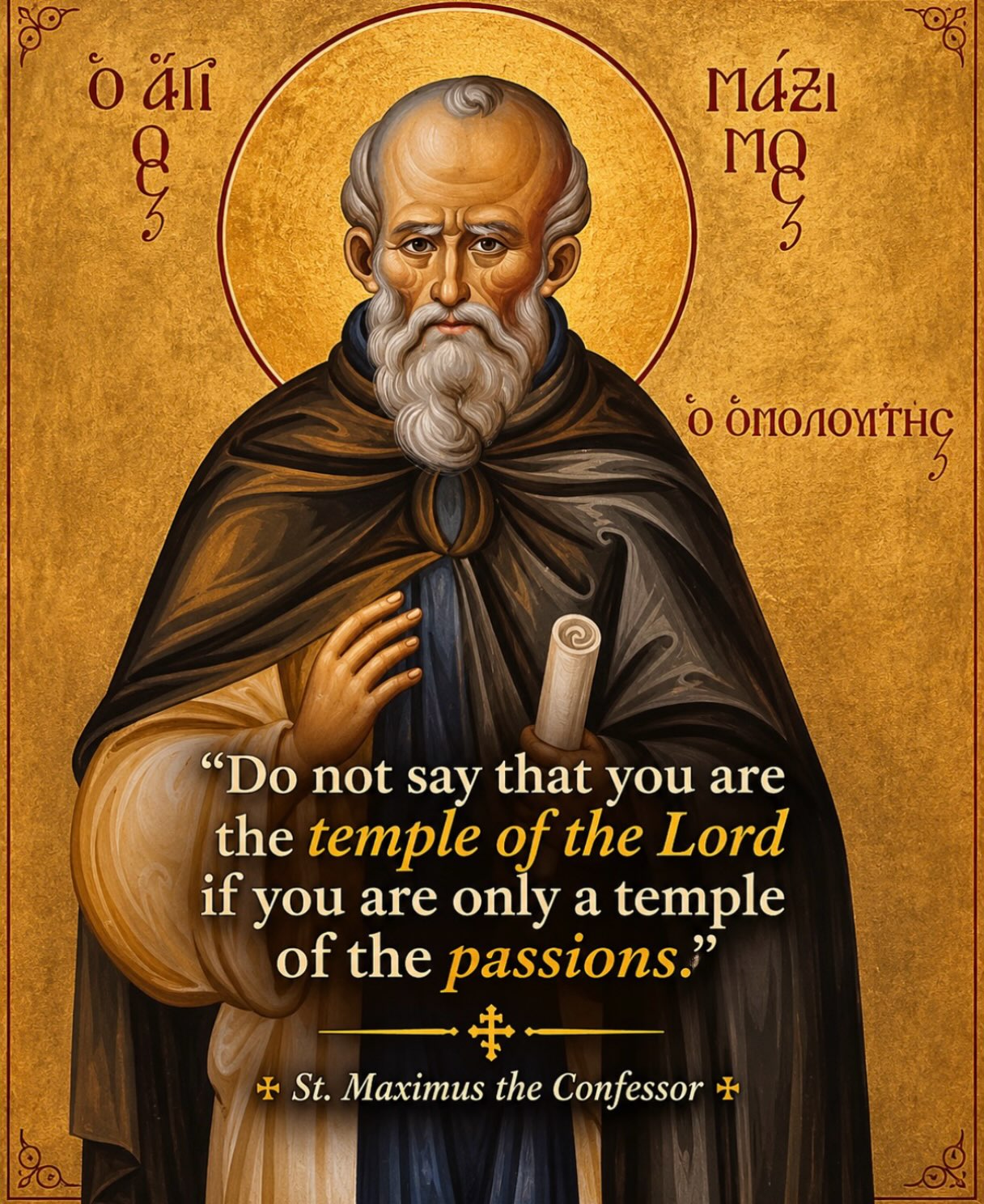
The post warns that outward religious practices, attending church, wearing a cross, kissing icons, fasting, speaking about Orthodoxy, do not guarantee that the heart belongs to God. It introduces Saint Maximus the Confessor (c. 580-662), a Father of the Orthodox Church who taught extensively on the passions. In Orthodox spirituality, passions are disordered desires and habits that enslave a person and draw them away from God. The text lists…

The post warns that outward religious practices, attending church, wearing a cross, kissing icons, fasting, speaking about Orthodoxy, do not guarantee that the heart belongs to God. It introduces Saint Maximus the Confessor (c. 580-662), a Father of the Orthodox Church who taught extensively on the passions. In Orthodox spirituality, passions are disordered desires and habits that enslave a person and draw them away from God.

The text lists pride, envy, greed, lust, anger, and hatred as passions that can gradually control thoughts and actions if not confronted. The greatest spiritual battle is against the sin one refuses to recognize within oneself. Saint Maximus endured persecution, exile, and suffering for defending Orthodox theology, yet his writings insist that defending the truth must be accompanied by living it.

One cannot preach humility while consumed by pride, or speak of Christian love while refusing to forgive. Repentance is not meant to lead to despair; Christ calls the struggling person to rise and allow grace to transform them. Through prayer, confession, fasting, and participation in the Holy Mysteries, believers learn to fight the passions and grow in genuine love for God and neighbor.

Holiness is not about appearing righteous before others but about allowing Christ to reign in the heart where sin once ruled. The post includes a saying attributed to Saint Maximus: "Do not say that you are the temple of the Lord if you are only a temple of the passions."

  • Outward religious acts do not automatically mean the heart belongs to God.
  • Passions are disordered desires that enslave and draw one away from God.
  • The chief spiritual battle is against unrecognized sin within oneself.
  • Defending Orthodox truth must be accompanied by living it.
  • Repentance leads to transformation through prayer, confession, fasting, and the Holy Mysteries.
Read more

Stepping into God's Eternity on Mount Athos

The author reflects on entering the silence of Mount Athos, describing it as stepping into God's eternity away from worldly noise and false lights. In the shadow of the Garden of the Theotokos, every stone path and prayer whispers truth about fragile human nature and God's boundless mercy. True peace is defined not as the absence of storms but as deep, unshakable faith that God remains present even when waves rage. In this holy garden, prayer…

The author reflects on entering the silence of Mount Athos, describing it as stepping into God's eternity away from worldly noise and false lights. In the shadow of the Garden of the Theotokos, every stone path and prayer whispers truth about fragile human nature and God's boundless mercy. True peace is defined not as the absence of storms but as deep, unshakable faith that God remains present even when waves rage.

In this holy garden, prayer becomes the soul's quiet breathing and faith an anchor that keeps one upright. The author writes that whoever carries Christ's peace in their heart sees every temptation only as a gate through which one enters imperishable joy, knowing the human soul is created for heaven, not for the transience of earthly dust.

  • Mount Athos experienced as entry into God's eternity
  • The Garden of the Theotokos as setting for spiritual truth
  • Peace defined as unshakable faith amid storms, not absence of trouble
  • Prayer as quiet breathing of the soul, faith as anchor
  • Temptations seen as gates to imperishable joy for those carrying Christ's peace
Read more
Ancient Faith YouTube

Fr. Jon Braun on the Evangelical Orthodox Church's Journey to Orthodoxy

Fr. Jon Braun on the Evangelical Orthodox Church's Journey to Orthodoxy 1:00:04

Father Jon Braun recounts his journey from a conservative Presbyterian home to the Orthodox Church. His father, a Presbyterian minister, left the denomination when the General Assembly clerk stated that belief in Christ's resurrection was optional. Braun and four other future leaders of the Evangelical Orthodox Church met in Campus Crusade for Christ leadership; the aggressive, performance-oriented parachurch mentality shaped their approach, but…

Father Jon Braun recounts his journey from a conservative Presbyterian home to the Orthodox Church. His father, a Presbyterian minister, left the denomination when the General Assembly clerk stated that belief in Christ's resurrection was optional. Braun and four other future leaders of the Evangelical Orthodox Church met in Campus Crusade for Christ leadership; the aggressive, performance-oriented parachurch mentality shaped their approach, but they left because Campus Crusade explicitly was not the church.

In Isla Vista, their single leader announced he would destroy the doctrine of the Trinity, teaching modalism; Braun and Father Richard Ballew walked out and never returned. At the UCSB library, Ballew discovered the Church Fathers; they read St. Athanasius' On the Incarnation and initially believed the Orthodox Church was dead and they must restart it.

Father Ted Wojcik, sent by Father Alexander Schmemann, walked into their St. Athanasius Academy; after lunch they knew their independent attempt was over and the real journey to canonical Orthodoxy began. Constantinople rejected them; the Greek Archbishop in America declared the Evangelical Orthodox Church did not exist while standing among 17 of its members.

Days later Patriarch Ignatius and Metropolitan Philip received them. The five EOC bishops voluntarily gave up their titles upon entering the Antiochian Archdiocese, asking only to be ordinary Antiochian clergy. About 3,000 people ultimately came into Orthodoxy through this movement.

Father Jon reflects that the most important decision they made was refusing to be special. He sees the current surge of catechumens, hundreds in some parishes, as the delayed fulfillment of his early hope that Americans would recognize Orthodoxy as a good deal; he views the present movement as God-inspired, though the need for more clergy remains a pressing challenge.

Key moments

  1. 0:32 Father John was born into a conservative Presbyterian home; his father was a Presbyterian minister who left the denomination when the General Assembly clerk stated belief in Christ's resurrection was optional.
  2. 5:16 All five leaders of the Evangelical Orthodox Church met in Campus Crusade for Christ leadership; the aggressive, performance-oriented parachurch mentality shaped their approach, but they left because Campus Crusade explicitly was not the church.
  3. 20:26 In Isla Vista, their single leader announced he would destroy the doctrine of the Trinity, teaching modalism; Father John and Father Richard Ballew walked out and never returned.
  4. 23:00 At the UCSB library, Father Richard Ballew discovered the Church Fathers; they read St. Athanasius' On the Incarnation and initially believed the Orthodox Church was dead and they must restart it.
  5. 28:09 Father Ted Wojcik, sent by Father Alexander Schmemann, walked into their St. Athanasius Academy; after lunch they knew their independent attempt was over and the real journey to canonical Orthodoxy began.
  6. 31:51 Constantinople rejected them; the Greek Archbishop in America declared the Evangelical Orthodox Church did not exist while standing among 17 of its members; days later Patriarch Ignatius and Metropolitan Philip received them.
  7. 49:36 The five EOC bishops voluntarily gave up their titles upon entering the Antiochian Archdiocese, asking only to be ordinary Antiochian clergy; about 3,000 people ultimately came into Orthodoxy through this movement.
  8. 53:14 Father John sees the current surge of catechumens, hundreds in some parishes, as the delayed fulfillment of his expectation; he hopes the movement matures and that the church can provide enough clergy to sustain it.
Orthodox Life Instagram

Saint Constantine of Hydra: Apostasy, Repentance, and Martyrdom

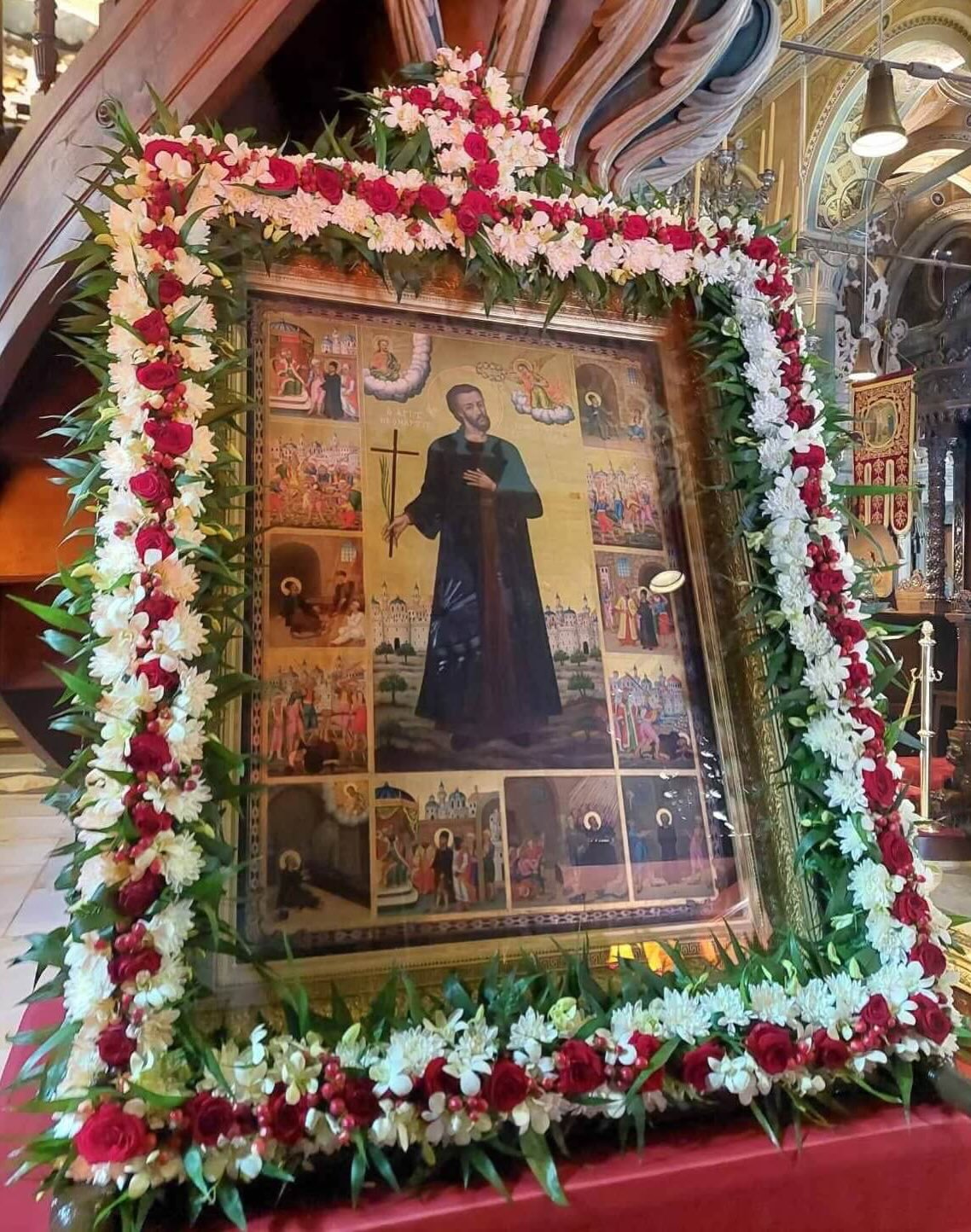
Saint Constantine of Hydra, a New Martyr commemorated on November 14, was born in the late eighteenth century to pious Orthodox parents Michael and Marina on the Greek island of Hydra. Driven by poverty and lack of work, he left home at eighteen for Rhodes to earn a living and support his family. There he entered the service of the local Ottoman governor, Hasan Kapetan. Through deceit and social pressure, he abandoned his Christian faith,…

Saint Constantine of Hydra, a New Martyr commemorated on November 14, was born in the late eighteenth century to pious Orthodox parents Michael and Marina on the Greek island of Hydra. Driven by poverty and lack of work, he left home at eighteen for Rhodes to earn a living and support his family. There he entered the service of the local Ottoman governor, Hasan Kapetan.

Through deceit and social pressure, he abandoned his Christian faith, converted to Islam, and took his master's name, Hasan. For three years he lived in comfort and enjoyed high honors in the governor's household. Overwhelmed by remorse for denying Christ, Constantine sought forgiveness and began giving alms to poor Christians.

When his own family and community rejected him for his apostasy, he traveled to Mount Athos. There he confessed to a spiritual father at the Iveron Monastery and prepared himself through strict fasting and prayer to atone for his sin through martyrdom. Constantine returned to Rhodes and boldly appeared before Hasan Kapetan, openly renouncing Islam and declaring himself a Christian.

Furious at his former servant's defiance, the governor had him thrown into prison and subjected to severe tortures. Throughout his ordeal, Constantine remained steadfast in his faith and prayed continually to God. By order of the Sultan, Constantine was executed by hanging in Rhodes on November 14, 1800, at the age of thirty.

His mother later recovered his relics and brought them back to Hydra, where he is venerated as the island's patron saint on his feast day, November 14.

  • Born on Hydra, left for Rhodes at eighteen to work for Hasan Kapetan
  • Converted to Islam under pressure, lived as Hasan for three years
  • Repented, confessed at Iveron Monastery on Mount Athos
  • Returned to Rhodes, publicly renounced Islam before the governor
  • Executed by hanging in 1800; relics brought to Hydra
Read more
☦️An Orthodox Blog☦️ Instagram

The Nativity Fast: Forty Days to Prepare the Heart for Christ's Birth

The video explains that Christmas for Christians begins not with gifts or lights but with the Nativity Fast, a forty-day period of spiritual preparation starting November 15 and ending December 24. While Western Christians observe Advent, earlier centuries also kept longer fasts before Christmas, known in some regions as St. Martin's Lent. The Orthodox Church maintains this fast because its purpose extends beyond abstaining from certain foods.…

The video explains that Christmas for Christians begins not with gifts or lights but with the Nativity Fast, a forty-day period of spiritual preparation starting November 15 and ending December 24. While Western Christians observe Advent, earlier centuries also kept longer fasts before Christmas, known in some regions as St. Martin's Lent.

The Orthodox Church maintains this fast because its purpose extends beyond abstaining from certain foods. Fasting is described as learning to master desires, strengthening prayer, practicing charity, reconciling with others, and making space for God. The speaker emphasizes that we do not fast to deserve Christ's birth but to prepare our hearts to receive Him with greater awareness and love.

Preparing one's home for Christmas is insufficient; the soul must also be prepared to welcome Christ. The video concludes with a wish that this Nativity Fast become a true path, a Bethlehem, for everyone.

Key moments

  1. 0:00 Christmas for Christians begins not with gifts or celebrations but with a time of fasting and spiritual preparation.
  2. 0:00 The Nativity Fast begins on November 15, also called Christmas Lent, and extends to December 24, forty days to prepare the heart for Christ's birth.
  3. 0:00 Western Christians keep Advent as preparation, but in past centuries longer fasts before Christmas were practiced in some regions, known as St. Martin's Lent.
  4. 0:36 The Orthodox Church continues this practice because fasting is not simply abstaining from certain foods but learning to master desires, strengthen prayer, practice charity, reconcile with brothers, and make space for God.
  5. 0:36 We do not fast to deserve Christ's birth but to prepare our hearts to receive Him with greater awareness and love.
  6. 1:07 It is not enough to prepare our house for Christmas; we must also prepare our soul to receive Christ.
  7. 1:07 The speaker wishes that this Nativity Fast be a true path, a Bethlehem, for everyone.

The universe as temple in Orthodox vision

The post presents a single theological statement: in Orthodoxy the entire universe becomes a temple where every ray of light, every stone, and every moment of life breathes with the presence of the Creator. The statement is accompanied by nine photographs. The images show a church entrance with a mosaic above the doorway; icons and architectural details inside a church; an interior with an iconostasis and pulpit; a crucifix and frescoes on…

The post presents a single theological statement: in Orthodoxy the entire universe becomes a temple where every ray of light, every stone, and every moment of life breathes with the presence of the Creator. The statement is accompanied by nine photographs. The images show a church entrance with a mosaic above the doorway; icons and architectural details inside a church; an interior with an iconostasis and pulpit; a crucifix and frescoes on ceiling and walls; a close-up of a crucifix and icons; extensive frescoes on a vaulted ceiling; carved stone architectural details; an iconostasis with icons and frescoes; and a large ancient olive tree in a courtyard.

The photographs move from built sacred space to a living tree, illustrating the claim that the created world itself participates in the divine presence. No further commentary or discussion is included in the source.

  • The author states that in Orthodoxy the universe becomes a temple permeated by the Creator's presence.
  • Nine photographs accompany the statement.
  • Images depict church architecture, icons, frescoes, and an ancient olive tree.
  • The visual sequence moves from constructed sacred space to a natural element.
  • No additional explanation or discussion is provided.
Read more

Orthodox critique of Catholic confession approach to homosexuality

The speaker recounts confessing to a Catholic priest that he was gay. The priest took him out of the confessional and said he could not confess something he cannot change. The speaker identifies this response as humanism infiltrating the church.

He cites Saint Paul's clarity on sexual immorality and accuses Catholic priests of compromising Christ's teachings to grow their church. He asserts that an apostolic tradition of faith unchanged for 2000 years exists, but states it is not Catholicism.

Key moments

  1. 0:00 The speaker confessed to a priest that he was gay, and the priest took him out of the confessional and said he cannot confess to something he cannot change.
  2. 0:00 The speaker says this is exactly what happens when a church falls into humanism.
  3. 0:00 Saint Paul was clear about sexual immorality, yet Catholic priests are compromising these teachings.
  4. 0:00 In the name of growing their church, Catholic priests are willing to sacrifice the very teachings of Christ.
  5. 0:00 There is an apostolic tradition of faith that has remained unchanged for 2000 years, but it is not Catholicism.
22 opinions in the discussion Elpidophoros baptized the children, not the gay couple, and the Holy Synod of Greece unanimously protested what he did. Meanwhile Pope Francis approved Fiducia Supplicans, which officially… Read the discussion
Giovanni Guaita YouTube

Hieromonk John (Guaita) on the Gadarene Demoniac: Why the Gadarenes Asked Christ to Leave

Hieromonk John (Guaita) on the Gadarene Demoniac: Why the Gadarenes Asked Christ to Leave 14:45

Hieromonk John (Guaita) preaches on the Gospel of Luke 8:26-39, the healing of the Gadarene demoniac. He reads the passage and explains that Gadara was a Greco-Roman city in eastern Palestine where Jews and non-Jews lived together. The non-Jewish inhabitants kept a lucrative pig business, likely selling pork to less observant Jews, a situation the priest compares to Christians producing and selling alcohol in Muslim countries today. The…

Hieromonk John (Guaita) preaches on the Gospel of Luke 8:26-39, the healing of the Gadarene demoniac. He reads the passage and explains that Gadara was a Greco-Roman city in eastern Palestine where Jews and non-Jews lived together. The non-Jewish inhabitants kept a lucrative pig business, likely selling pork to less observant Jews, a situation the priest compares to Christians producing and selling alcohol in Muslim countries today.

The demon-possessed man, who lived among the tombs and was called Legion, meets Jesus. The demons recognize Him as the Son of the Most High God and beg not to be sent to the Abyss. Jesus permits them to enter a nearby herd of pigs, which then rush down the steep bank into the lake and drown.

The townspeople find the formerly possessed man sitting at Jesus' feet, clothed and in his right mind, yet they ask Jesus to leave their region because they are overcome with fear. The priest says what strikes him most is the Gadarenes' reaction: they witnessed a true miracle of God but paid it no heed because their way of life and economic livelihood were threatened.

He applies this to modern believers: many respect Jesus as a good teacher but reject Him when His word disrupts their comfort or business. Jesus is a hindrance not only to atheists who see Him merely as a positive historical figure but also to churchgoers who want the Word of God to remain inside the church and not confront their everyday lives.

The priest tells of a recent sermon where he spoke about war and death on a feast day, and parishioners complained that he had ruined their joy of Holy Communion by raising uncomfortable questions. The Gadarenes' plea echoes the demon's cry: "Do not torment me."

Key moments

  1. 0:00 The priest introduces the Gospel reading from Luke chapter 8 about Jesus arriving in the region of the Gadarenes and meeting a demon-possessed man who lived among the tombs.
  2. 1:09 Jesus asks the demon its name and hears "Legion"; the demons beg not to be sent to the Abyss and request to enter a nearby herd of pigs, which then rush down the steep bank into the lake and drown.
  3. 2:17 The townspeople find the formerly possessed man sitting at Jesus' feet, clothed and in his right mind, yet they ask Jesus to leave their region because they are overcome with fear.
  4. 3:26 The priest notes that Matthew calls the place the country of the Gergesenes but it is the same location: Gadara, a Greco-Roman city in eastern Palestine where Jews and non-Jews lived side by side.
  5. 4:33 The non-Jewish Gadarenes kept a lucrative pig business, likely selling pork to less observant Jews, a situation the priest compares to Christians producing and selling alcohol in Muslim countries today.
  6. 7:25 The priest says what strikes him most is the Gadarenes' reaction: they witnessed a true miracle of God but paid it no heed because their way of life and economic livelihood were threatened.
  7. 11:57 Jesus is a hindrance not only to atheists who see him merely as a positive historical figure but also to churchgoers who want the Word of God to remain inside the church and not confront their everyday lives.
  8. 12:35 The priest tells of a recent sermon where he spoke about war and death on a feast day, and parishioners complained that he had ruined their joy of Holy Communion by raising uncomfortable questions.
Read more
Father Moses YouTube

Father Moses on Gambling as Spiritual Warfare

Father Moses on Gambling as Spiritual Warfare 8:24

Father Moses explains why gambling is the deadliest addiction in America from a spiritual perspective. He connects gambling addiction to spiritual warfare, citing comedian Norm Macdonald's observation that gambling chases a feeling of hope and excitement rather than money. Macdonald joked that when the dice leave your hands there is hope, and hope is a powerful drug; gambling plays on fear, hope, and excitement. The rush of gambling, not the…

Father Moses explains why gambling is the deadliest addiction in America from a spiritual perspective. He connects gambling addiction to spiritual warfare, citing comedian Norm Macdonald's observation that gambling chases a feeling of hope and excitement rather than money. Macdonald joked that when the dice leave your hands there is hope, and hope is a powerful drug; gambling plays on fear, hope, and excitement.

The rush of gambling, not the money, is what people pursue; the feeling fades so they take progressively greater risks to provoke it again. Quoting 2 Timothy 2:4, Father Moses argues that a Christian soldier must avoid entanglements that disturb the peace of the Holy Spirit. He shares how he stopped watching Lakers basketball after realizing it destabilized his heart, not merely providing an escape.

Someone intent on a spiritual life would not be drawn to gambling; Macdonald also noted sports are boring until money is put on them. Gambling progresses from small bets to ruinous risks and has the highest self-harm rate of any addiction; the progression from small to large bets is driven by demonic suggestion. Sports gambling becomes a form of slavery where people handcuff themselves to emotional swings.

While sports can be healthy recreation and teach teamwork, making a team one's identity gives away too much of the heart and causes wild emotional swings that are out of balance. The Christian calling is union with God, not the distractions of this world. Father Moses describes sports gambling as the devil offering handcuffs that people put on themselves, becoming slaves who lose money and exhaust time and energy meant for repentance.

Key moments

  1. 0:00 Norm Macdonald joked that when the dice leave your hands there's hope, and hope is a powerful drug; gambling plays on fear, hope, and excitement.
  2. 0:30 The rush of gambling, not the money, is what people chase; the feeling fades so they take progressively greater risks to provoke it again.
  3. 1:01 Quoting 2 Timothy 2:4, the Christian life is spiritual warfare against demons, and gambling is antithetical to the peace of the Holy Spirit.
  4. 2:03 After years as an Orthodox Christian, he stopped watching Lakers basketball because it was affecting his heart, not merely providing an escape.
  5. 3:07 Someone intent on a spiritual life would not be drawn to gambling; Macdonald also noted sports are boring until money is put on them.
  6. 3:38 Gambling addiction has the highest self-harm rate of any addiction; the progression from small to large bets is driven by demonic suggestion.
  7. 4:39 Sports are not bad in themselves and teach teamwork, but making a team one's identity causes wild emotional swings that are out of balance.
  8. 6:12 Sports gambling is the devil offering handcuffs; people put them on, become slaves, lose money, and exhaust time and energy meant for repentance.
Read more
Kyle YouTube discussion

Gen Z's doom narrative and the Orthodox answer of cross-bearing gratitude

Gen Z's doom narrative and the Orthodox answer of cross-bearing gratitude 23:22

The speaker argues that Gen Z's sense of unique doom comes from comparing the present only to the last sixty years of American middle-class stability, while most of human history involved famine, war, and early death as normal conditions. Modern stress is real but mis-scaled: it is anxiety within unprecedented material abundance, driven by expectations that have risen faster than reality. This framing turns suffering into an identity of…

The speaker argues that Gen Z's sense of unique doom comes from comparing the present only to the last sixty years of American middle-class stability, while most of human history involved famine, war, and early death as normal conditions. Modern stress is real but mis-scaled: it is anxiety within unprecedented material abundance, driven by expectations that have risen faster than reality.

This framing turns suffering into an identity of self-pity, irony, and passivity rather than a call to action, and the speaker admits his own indulgence in the "doomer" narrative. The Christian alternative is to carry one's cross with gratitude and self-offering, letting Christ transform bitterness into sweetness, rather than narrating collapse or seeking salvation in ideologies.

Historical perspective re-anchors gratitude and reduces anger by showing that survival and community continuity were historically rare goods, not defaults. The root problem is a disordered heart, not external systems, so change begins with repentance, prayer, fasting, and loving God and neighbor, practices the saints modeled under far worse conditions.

The speaker concludes that no political or philosophical system can save; only the religion of the cross, lived in the Orthodox Church, redeems suffering and gives meaning. Because death can come at any moment, the time to repent, love, and draw near to Christ is now.

Key moments

  1. 0:09 Gen Z faces economic pressure, AI-driven hiring, unaffordable housing and healthcare, a social-media-fueled sense of permanent emergency, a meaning crisis masked by irony, and deep loneliness from lack of real community and tradition.
  2. 1:42 These are "luxury problems", "luxury poverty", when set against most of human history, where famine, war, plague, and infant mortality were normal and generations lived without security, retirement, or consistent food.
  3. 2:43 The cultural script that Gen Z is uniquely doomed becomes an emotional identity ("I'm the doomer") that rewards self-pity on TikTok and YouTube, turning hardship into a narrative that asks "why me?" instead of "what do I do?"
  4. 4:17 Modern stress is real but mis-scaled: it is anxiety within unprecedented material abundance, and gratitude collapses when expectations outpace reality; the Christian response is habitual gratitude, "glory to God, I'm alive."
  5. 5:51 Interpreting suffering as identity produces passivity, irony, and self-pity; Christian cross-bearing replaces complaint-bearing with self-offering, humility, and outward action toward God and neighbor.
  6. 7:55 The crisis is one of interpretation: Gen Z is uniquely conscious, not uniquely cursed, and the choice is between feeding cynicism or accepting the cross without inflation and acting responsibly within reality.
  7. 9:29 Ideologies (enlightenment, communism, fascism, secular progressivism) promise salvation through structure but collapse because the problem is in the human heart; Christianity begins with the cross as reality where Christ enters suffering and says "my yoke is easy, my burden is light."
  8. 12:02 In Christ, the sour vinegar of life's bitterness, disappointment, limitation, instability, becomes sweetness when received in faith; the cross, a torture device, becomes the path of salvation, and the saints exemplify endurance over comfort.
11 opinions in the discussion Not sure this really connects to what the video is about, but I think it needs to be said. Each of us has a different calling, some are called to be monks, some priests, some to preach...… Read the discussion
Prayer Orthodoxy ® with Hannah Porter Instagram

Why I Stayed Orthodox: Spiritual Warfare and Historical Continuity

The author shares personal reasons for remaining in the Orthodox Church, framed around spiritual warfare during vulnerable life transitions. They argue that no one can judge another's convictions when God is leading them. They question whether God would abandon faithful believers who suffered persecution for 1,500 years before the Reformation. They contrast modern Protestant commentators, John MacArthur, John Piper, Mike Winger, Gavin Ortlund,…

The author shares personal reasons for remaining in the Orthodox Church, framed around spiritual warfare during vulnerable life transitions. They argue that no one can judge another's convictions when God is leading them. They question whether God would abandon faithful believers who suffered persecution for 1,500 years before the Reformation.

They contrast modern Protestant commentators, John MacArthur, John Piper, Mike Winger, Gavin Ortlund, Anthony Philip Mitchell, with the apostles and early Church Fathers who established the Church. They emphasize that Orthodoxy has remained unchanged throughout history, describing it as consistent rather than progressive.

  • Spiritual warfare intensifies during life transitions and deconstruction
  • Personal convictions guided by God cannot be judged by others
  • God would not abandon 1,500 years of faithful believers and martyrs
  • Early Church Fathers and apostles carry more authority than modern commentators
  • Orthodoxy remains historically consistent, not progressive
Read more
Timothy Instagram discussion

Refuting the claim Constantine fabricated Christianity at Nicea

The speaker refutes the popular narrative that Emperor Constantine invented Christianity at the Council of Nicea in 325 AD. According to this false account, Constantine judged Christianity too unwieldy and mysterious, summoned 318 theologians to make it more manageable as a state religion, produced a solution for the Trinity, and discarded 26 of 30 Gospels. The speaker explains that Constantine did call the council, but because division had…

The speaker refutes the popular narrative that Emperor Constantine invented Christianity at the Council of Nicea in 325 AD. According to this false account, Constantine judged Christianity too unwieldy and mysterious, summoned 318 theologians to make it more manageable as a state religion, produced a solution for the Trinity, and discarded 26 of 30 Gospels.

The speaker explains that Constantine did call the council, but because division had arisen in the church and he desired unity. The real crisis was the teaching of Arius, which questioned whether Christ was truly divine. The Council of Nicea addressed this Arian controversy, not the canon of Scripture.

The New Testament canon was established by later councils, not at Nicea. Long before Constantine's reign, the church already possessed bishops, Scripture, worship, and recognized the four Gospels. The speaker asserts that the popular narrative is historically untenable and expresses amazement that people believe it despite freely accessible information, giving glory to God.

Key moments

  1. The false narrative claims that in 325 AD Constantine judged Christianity too unwieldy, complicated, and mysterious, and wanted to eliminate contradictions such as the Trinity.
  2. It says Constantine summoned 318 theologians to Nicea to make Christianity more manageable for use as a state religion to manipulate people.
  3. According to that narrative, the council produced a solution for the Trinity and discarded 26 of 30 Gospels.
  4. Constantine did call the Council of Nicea because there was division in the church and he desired unity.
  5. The real crisis was the teaching of Arius, which questioned whether Christ was truly divine.
  6. The Council of Nicea did not decide the New Testament canon; other councils established the canon.
  7. Constantine did not invent Christianity; the church already had bishops, scripture, worship, and recognized the four Gospels long before his reign.
  8. The speaker expresses disbelief that people believe the false account when the internet is free, and gives glory to God.
14 opinions in the discussion He's Jewish, by the way Read the discussion
Eastern Orthodoxy Daily He/Who/Is with Timothy Instagram

Lew Sapieha's 1622 letters criticize forced union methods

The post presents excerpts from correspondence written by Lew Sapieha, the Roman Catholic Grand Chancellor of Lithuania, to Josaphat Kuntsevych on March 12, 1622. Sapieha supported the Union of Brest but condemned the coercive methods used to impose it upon Orthodox Christians. In the letters, Sapieha writes that the union has brought unrest, discord, and ruin rather than joy, and that it has caused grief and bloodshed. He accuses Kuntsevych of…

The post presents excerpts from correspondence written by Lew Sapieha, the Roman Catholic Grand Chancellor of Lithuania, to Josaphat Kuntsevych on March 12, 1622. Sapieha supported the Union of Brest but condemned the coercive methods used to impose it upon Orthodox Christians. In the letters, Sapieha writes that the union has brought unrest, discord, and ruin rather than joy, and that it has caused grief and bloodshed.

He accuses Kuntsevych of closing churches in Vitebsk and Polotsk, leaving people without divine worship and sacraments, and of abusing authority through ambition and lawsuits. Sapieha states that while it is sinful to reject those who flee to the Catholic Church, it is wicked to compel anyone into union by force.

  • Lew Sapieha, Grand Chancellor of Lithuania, wrote to Josaphat Kuntsevych on March 12, 1622
  • Sapieha supported the Union of Brest but opposed coercive implementation
  • Letters state the union brought unrest, discord, ruin, grief, and bloodshed
  • Accusations include closing churches in Vitebsk and Polotsk, denying sacraments
  • Sapieha declares it wicked to compel union by force
Read more
Anthony’s Cell YouTube

Photios Kontoglou: Icons as Anagogic Art Transforming Sight

Photios Kontoglou: Icons as Anagogic Art Transforming Sight 9:56

Blessed Photios Kontoglou's essay "What Orthodox Iconography Is" presents the theological foundation of Byzantine sacred painting. Kontoglou explains that the Christian religion, as a new creation in Christ (2 Corinthians 5:17), gives rise to a distinct sacred art. This art, called hagiographia, is anagogic and liturgical: it elevates natural phenomena so the faithful can taste the liturgy and perceive immortal life. The purpose of Byzantine…

Blessed Photios Kontoglou's essay "What Orthodox Iconography Is" presents the theological foundation of Byzantine sacred painting. Kontoglou explains that the Christian religion, as a new creation in Christ (2 Corinthians 5:17), gives rise to a distinct sacred art. This art, called hagiographia, is anagogic and liturgical: it elevates natural phenomena so the faithful can taste the liturgy and perceive immortal life.

The purpose of Byzantine iconography is not to please the carnal sense but to transform it into a spiritual sense, enabling the viewer to see what surpasses the visible world. Kontoglou contrasts this with Western illusionistic art that arose in the Italian Renaissance. He describes the Renaissance as a rebirth of ancient pagan carnal thought, where theology followed Greek philosophy and painting followed the art of idolaters.

Western painters copied nature with rationalism, producing Madonnas that pose hypocritically and lack mystery. The Greek people distinguish the sentimental "Frankish virgin" from the austere Odigitria, the true Mother of God. Western art uses clouds, sunsets, and sunbeams to depict heavenly glory, but these are only sentimental and emotional, not spiritual.

The blessedness to come has no relation to sense pleasure, for "eye hath not seen, nor ear heard, neither have entered into the heart of man" (1 Corinthians 2:9). To portray what surpasses nature, iconography must dematerialize visible elements and transmute them from carnal to spiritual, just as faith transmutes passions into love for God.

The material elements pass through the pure soul of the iconographer like gold through a refiner's fire. The beauty of liturgical art is spiritual, not carnal; worldly judges call the figures ugly while the faithful perceive the beautiful transformation. An ascetic who sees created beauty as a reason to glorify God is already incorruptible before the resurrection.

Key moments

  1. 0:53 Because Christ's religion makes the believer a new creation, the art that expresses its mystery is a new art; the church's arts are anagogical, elevating natural phenomena through a beautiful transformation, and liturgical, letting man taste the liturgy and become like the heavenly hosts.
  2. 2:28 Byzantine sacred painting (hagiographia) took form in Byzantium as the mystical ark of Christ's religion; its purpose is not to please the carnal sense of light but to transform it into a spiritual sense so that in visible things we see what surpasses this world.
  3. 2:59 Illusionistic art arose in the Italian Renaissance as a rebirth of the ancient pagan carnal mode of thought; theology followed Greek philosophy and painting followed the art of the ancient idolaters, so Western religious art became materialistic and worldly.
  4. 4:01 Western painters tried to perfect Byzantine iconography by copying nature, faces, clothes, buildings, landscapes, with the same rationalism the theologians applied to doctrine, producing works with no mystery in which men merely masquerade as saints.
  5. 5:02 The Greek people call a woman who pretends to respectability a "Franco Panagia" (Frankish virgin), drawing a sharp distinction between the sentimental Western Madonnas and the true Mother of God, the austere Odigitria.
  6. 6:03 Western painters used clouds, sunsets, and sunbeams to depict heavenly glory, but these are only sentimental and emotional, not spiritual; the blessedness to come has no relation to sense pleasure, for "eye hath not seen, nor ear heard, neither have entered into the heart of man."
  7. 7:03 To portray what surpasses nature, iconography must dematerialize visible elements and transmute them from carnal to spiritual, just as faith transmutes carnal passions into love for God; the material elements of Byzantine iconography pass through the pure soul of the iconographer like gold through a refiner's fire.
  8. 8:06 The beauty of liturgical art is spiritual, not carnal; worldly judges call the figures ugly while the faithful perceive the beautiful transformation, and an ascetic who sees created beauty as a reason to glorify God is already incorruptible before the resurrection.

Gerontas Filimon: The whole struggle is removing the rho to become holy

Gerontas Filimon, the dikaios of the Holy Coenobiatic Pantokratoros Skete of the Prophet Elijah on Mount Athos, speaks on the purpose of life as the pursuit of holiness. He contrasts the present era, in which man remains wild (agrios) instead of becoming holy (agios), and says the entire spiritual struggle consists in removing the letter rho from our lives. God desires to dwell in the human heart, to pitch His tent there, to walk in us, and to…

Gerontas Filimon, the dikaios of the Holy Coenobiatic Pantokratoros Skete of the Prophet Elijah on Mount Athos, speaks on the purpose of life as the pursuit of holiness. He contrasts the present era, in which man remains wild (agrios) instead of becoming holy (agios), and says the entire spiritual struggle consists in removing the letter rho from our lives.

God desires to dwell in the human heart, to pitch His tent there, to walk in us, and to be our Father while we become His beloved children. Citing 2 Corinthians 7:1, he urges cleansing from every defilement of flesh and spirit and perfecting holiness in the fear of God. Christ has conquered death and given meaning to life, showing the destination and directing the path.

The Christian does not live to die but to become a saint, a citizen of God's kingdom, to overcome mortality and become an intimate of God. He concludes with a reference to the Father's house, quoting the line "In the house of my Father, polemōn eim'" (I am warring).

Key moments

  1. 0:00 The speaker contrasts the current era where man remains wild (άγριος) instead of holy (άγιος), saying the whole struggle is to remove the letter rho (ρο) from our lives to become holy.
  2. 0:00 God desires to dwell within us, pitch His tent in our hearts, walk in us, and be our Father while we become His beloved children.
  3. 0:00 Quoting 2 Corinthians 7:1, he calls for cleansing ourselves from every defilement of flesh and spirit, perfecting holiness in the fear of God.
  4. 0:39 Christ has conquered death and given meaning to life, showing us where we are going and directing us.
  5. 0:39 We do not live to die but to become saints, citizens of God's kingdom, to overcome mortality and become intimates of God.
  6. 0:39 He refers to blessed dwellings and quotes "In the house of my Father, πολέμων ειμ'".
Read more
Prayer Orthodoxy ® with Prayer Orthodoxy® Instagram

St. Gregory Palamas commemorated November 14, tomb in Thessaloniki cathedral

The post commemorates St. Gregory Palamas on November 14, identifying him as Archbishop of Thessaloniki and a great teacher of prayer. It notes that his tomb rests in the cathedral bearing his name in Thessaloniki. The same information appears in Greek. The post includes images of the Cathedral of St. Gregory Palamas, a Greek inscription painted on an arch above a fresco of the saint, the holy relics, and fresco inscriptions reading "Synaxis of Saints Triada Family of Gregory Palamas."

  • St. Gregory Palamas commemorated November 14 as Archbishop of Thessaloniki and teacher of prayer
  • His tomb located in the Cathedral of St. Gregory Palamas in Thessaloniki
  • Post includes images of the cathedral, relics, and fresco inscriptions
  • Greek text parallels the English commemoration
  • Fresco inscriptions reference "Synaxis of Saints Triada Family of Gregory Palamas"
Read more

Am I the only one who thinks this Archons post feels especially weird?

Archbishop Elpidophoros of America has now become the first to declare our beloved Patriarch "Bartholomew the Great." The idea for the title was His Eminence's alone, and he made the announcement in the City, at the Grand Banquet marking his 35th anniversary, before guests from around the world, including Archons and pilgrims assembled at the Mother Church.

Going forward, the Archons will address His All-Holiness as Ecumenical Patriarch Bartholomew the Great.

Am I the only one who finds this Archons post especially strange?

7 opinions in the discussion I don't dislike either of these men the way a lot of people apparently do, but this is just strange and I don't see anything positive coming out of it. Read the discussion