
 CHRISTIANITY UNITED
Instagram
St. Maximus the Confessor on passions and true devotion
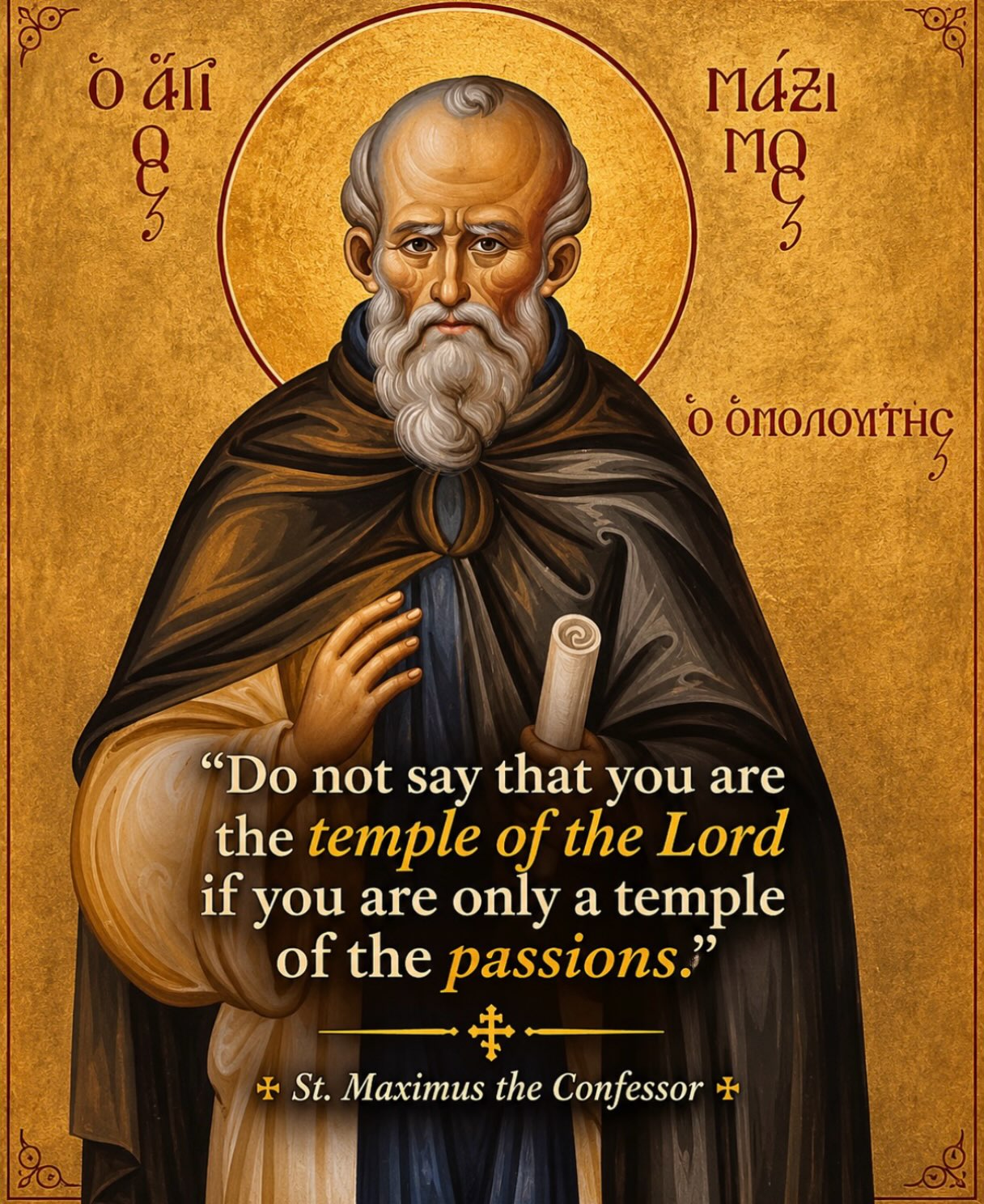
The post warns that outward religious practices, attending church, wearing a cross, kissing icons, fasting, speaking about Orthodoxy, do not guarantee that the heart belongs to God. It introduces Saint Maximus the Confessor (c. 580-662), a Father of the Orthodox Church who taught extensively on the passions. In Orthodox spirituality, passions are disordered desires and habits that enslave a person and draw them away from God.
The text lists pride, envy, greed, lust, anger, and hatred as passions that can gradually control thoughts and actions if not confronted. The greatest spiritual battle is against the sin one refuses to recognize within oneself. Saint Maximus endured persecution, exile, and suffering for defending Orthodox theology, yet his writings insist that defending the truth must be accompanied by living it.
One cannot preach humility while consumed by pride, or speak of Christian love while refusing to forgive. Repentance is not meant to lead to despair; Christ calls the struggling person to rise and allow grace to transform them. Through prayer, confession, fasting, and participation in the Holy Mysteries, believers learn to fight the passions and grow in genuine love for God and neighbor.
Holiness is not about appearing righteous before others but about allowing Christ to reign in the heart where sin once ruled. The post includes a saying attributed to Saint Maximus: "Do not say that you are the temple of the Lord if you are only a temple of the passions."
Main points
- Outward religious acts do not automatically mean the heart belongs to God.
- Passions are disordered desires that enslave and draw one away from God.
- The chief spiritual battle is against unrecognized sin within oneself.
- Defending Orthodox truth must be accompanied by living it.
- Repentance leads to transformation through prayer, confession, fasting, and the Holy Mysteries.